From the Archives

FROM THE ARCHIVES

The Sandhills Fair

By Audrey Moriarty

First held in October of 1914, the Sandhills Fair was sponsored by the Sandhills Board of Trade and the Sandhills Farmers Association. There was sewing, knitting, canning, gardening, woodworking and animal husbandry, all highlighting the work of nearby farms. After the first several years, it was held at the Fair Barn and Harness Track, where a large grandstand was built to accommodate crowds of as many as 3,000 spectators. The Pinehurst Outlook said the fair required “nothing more than a smile for admission” and “was a fair without a midway and doesn’t need one.”

One of the more popular activities was “auto polo,” invented around 1910 by Ralph “Pappy” Hankinson, a Ford dealer from Topeka, Kansas, hoping to increase his sales. Patterned after equestrian polo, matches featured four cars with two players per car: a driver and a “mallet man.” The cars were generally stripped-down Model Ts with no tops, doors or windshields. A regulation-sized basketball was used, although some venues manufactured even larger polo balls. The driver and mallet man had to guide the ball into a 5-foot-tall goal. The mallet men — and, periodically, the driver — were frequently ejected from the vehicle resulting in cuts, broken bones or being run over. Later, the cars were equipped with primitive roll bars above the driver.

The sport caught on in the U.S. but internationally it was viewed with caution and skepticism, being christened “a lunatic game.” Auto polo drew large crowds, but enthusiasm waned during the late 1920s due to the cost of the vehicles and the ensuing necessary repairs.  PS

Audrey Moriarty is the Library Services and Archives director for the village of Pinehurst.

Tea Leaf Astrologer

TEA LEAF ASTROLOGER

Aries

(March 21 – April 19)

This month, you’re giving theatrical bravado — and we’re lapping it up. Mars in your sign from April 9 through mid-May is the energy shot you didn’t need but surely won’t squander. Just don’t move so fast you miss a stellar career opportunity that aligns with yourlong-term goals. A friendly tip: Passion and impulse aren’t always synonymous. Now, channel your inner Freddie Mercury and watch the world respond.

Tea leaf  “fortunes” for the rest of you:

Taurus (April 20 – May 20)

Taste as you go.

Gemini (May 21 – June 20)

Double the recipe. 

Cancer (June 21 – July 22)

Best not to overextend yourself. 

Leo (July 23 – August 22)

Slow down and proceed with wonder.

Virgo (August 23 – September 22)  

Go waffles-for-dinner wild. 

Libra (September 23 – October 22)

Check the expiration date. 

Scorpio (October 23 – November 21)

Try changing the lens. 

Sagittarius (November 22 – December 21)

Two words: flameless candles. 

Capricorn (December 22 – January 19)

It’s time to turn the compost. 

Aquarius (January 20 – February 18)

Read the room, Darling. 

Pisces (February 19 – March 20)

Schedule the oil change. 

Simple Life

SIMPLE LIFE

Garden Reborn

And just maybe, ready for prime time

By Jim Dodson

On a warm and dry afternoon last October, as I mulched and watered my front yard’s 35 parched azaleas in the middle of the most punishing drought in memory, a shiny, white Volvo eased into my driveway.

A pair of well-dressed women emerged.

They introduced themselves as Candy Gessner and Lorraine Neill, committee members from the Greensboro Council of Garden Clubs. They had something to discuss.

For an instant, I wondered what crime against nature I might have unwittingly committed. Unnecessary strain on municipal water supplies? Had neighbors complained about my loud (and entirely inappropriate) oaths issued at a rainless sky?

Instead, Candy smiled and reached for my grubby hand.

“We understand you have a lovely garden,” she said. “We’ve come hoping to view it and ask if you would be interested in having your garden featured on the 2026 garden tour in June.”

Between us, they could have knocked me over with a packet of Burpee seeds. In my time on this Earth, I’ve built three ambitious landscape gardens and never given a passing thought that somebody might wish to see them. Especially a lot of serious gardening somebodies.

My first garden was built on a heavily forested hilltop in Maine, a classic New England woodland garden created on the remains of a vanished  19th-century farm that my cheeky Scottish mother-in-law nicknamed “Slightly Off in the Woods.” It was the perfect name because the only people who ever saw it were the FedEx guy and tourists who’d taken a wrong turn onto our dirt road.

“Nice layout,” the FedEx guy once remarked with a smirk. “But why build a garden like this that nobody will ever see?”

“Because I see it,” I said. “It keeps me sane in a crazy world.”

He thought I was joking. But any serious gardener will tell you that time spent in their garden is a cure for whatever ails the spirit. Most of us, in fact, never imagine that others will desire to see our gardens. We create them for us. The closest we can get to playing God, as a famous English gardener named Mirabel Osler once said to me.

My second garden belonged to a cute little cottage in Pinehurst that my wife, Wendy, and I rented in hopes of eventually buying. The previous owner had been an elderly gardener who let his 2-acre garden run amok. I spent a year cutting back overgrown azalea bushes and battling wicked wisteria vines and even recovered a “lost” serpentine brick fence that had been swallowed whole by English ivy. I also built a beautiful wooden fence around the fully restored garden — just in time for disaster to hit.

The week we planned to officially buy the place, the kitchen floor collapsed, and we discovered that black mold was running like a medieval plague through the walls and floors. We moved out that same afternoon. At least the garden looked fantastic. 

Finally, there is the garden where the women from the garden council and I stood on that afternoon. It is, without question, my final garden and, therefore, a serious labor of love.

A decade ago, we moved back to my hometown, taking possession of a charming mid-century bungalow that the Corry family built in 1951. I grew up two doors away from this lovely old house and always admired it. Al and Merle Corry were my parents’ best friends. Their grown children were thrilled when they learned that a pair of Dodsons would be their childhood home’s second owners.

And so, we set off to fully restore the property.

As Wendy got to work on the interior, I confronted “Miss Merle’s” long-neglected garden. It took a year of weekends just to clear dying trees and dead shrubs from the front yard before I could turn my attention to the backyard so wildly overgrown, I nicknamed it “The Lost Kingdom.”

Over the next decade, neighbors and friends got used to the sight of me getting gloriously dirty every weekend, rain or shine — digging holes, building beds, hauling in new soil and manure, eventually planting a dozen flowering trees in the front yard alone, with banks of hydrangeas and 30-plus azalea bushes, inspired by a former neighbor who did the same during my childhood years.

In due course, our “east” garden became a flowering space with a tiered stone pathway and lush beds that are home to autumn sage, Mexican sunflowers, purple salvia, society garlic, Mexican petunias, Gerbera daisies and red-hot pokers. Knock Out and old-garden rose varieties preside over a trio of butterfly bushes that monarchs swarm upon on late-summer days.

In the former Lost Kingdom out back, I built an Asian-themed shade garden that’s home to nine Japanese maples, scores of autumn ferns and monster-sized hosta plants (I imported from my Maine garden). The final touch was a stone pathway that winds through this tranquil, hidden space, though only I and our three dogs have ever followed it.

Which brings me back to the lovely women from the council.

I thanked them for considering my garden for their June tour but pointed out that drought had taken an alarming toll. Moreover, mine was still a young garden, a mere decade old. It needed time to heal and find its way.

“Another year perhaps?” I suggested.

They wouldn’t hear of it. “Everyone’s garden has been beaten up,” Candy reminded me. “But come spring, they always bounce back like a miracle. Yours will, too.”

So now, friends, April is here and I’m a man in constant motion, fussing, fixing, weeding, mulching, trimming, planting new things and getting gloriously dirty. A garden, of course, is never finished. There is always something to do, to change, to add or subtract, or simply fix. Nature abides no slackers.

Nothing could make me happier than to welcome folks to my reborn garden come June 6-7.

Don’t mind my grubby hands, though. A gardener’s job is never done. 

The Naturalist

THE NATURALIST

Chorus in the Forest

The maniacal echoes of the owls of spring

Story and Photographs by Todd Pusser

The hoots rang out loud and clear, stopping me in my tracks. Squinting into the midday sun, I stared intently in the direction of a tall pine tree. After a few seconds, the hoots echoed through the branches once again, with distinctive barred owl flare, “Who cooks for you?” I smiled. It was my first time hearing this bird of prey on my great-grandfather’s property in Eagle Springs, near the headwaters of Drowning Creek. Just across the creek, a second owl quickly responded. “Who cooks for you? Who cooks for you allllll?”

Up ahead, a shadowy silhouette launched from the pine and flew across the creek, disappearing into a dense thicket of hardwoods. Loud hoots and screeches erupted as the mated pair of raptors greeted one another. For the uninitiated, a maniacal chorus of courting owls can raise the hair on the back of one’s neck. Their otherworldly calls have led to widespread fear and superstition. Many cultures view the nocturnal birds as omens of bad luck. Hearing one means death is near. For me, the calls indicate a healthy and functioning ecosystem.

Of our region’s three common breeding owl species, the barred owl, eastern screech owl, and the great horned owl, it is the barred owl that is the most ubiquitous. This is partly due to the barred owl’s propensity to announce its presence with questioning hoots throughout the day, unlike their more nocturnal brethren. This is especially true during the warm afternoons of spring, when the owls are in the middle of their breeding season and are busy raising chicks.

Standing nearly 20 inches tall, barred owls are big birds. Their feathers are dense and streaked in colors of coffee and cream. Barred owls possess large ear openings — even for owls — which are set asymmetrically on the sides of their head. This offset enables them to triangulate on sound with near supernatural precision. Unlike myself, barred owls are impervious to age-related hearing loss.

Listening to the owls cackling back and forth to each other I wondered if a nest might be nearby. I quickly glanced around for one. Barred owls rarely build their own nests, choosing instead to raise their families in hollow snags or tree cavities.

Years back, I spent several afternoons watching a pair of barred owl chicks in the broken-off snag of a tulip poplar in the heart of Morrow Mountain State Park. The nest was just 20 feet off the ground and made for easy viewing. From a respectful distance, I spent hours observing, and occasionally photographing, the antics of the chicks and noting the prey items brought to the nest by the adults. I remember being surprised at how many crayfish the adults fed their young.

Barred owls are generalist feeders with diverse tastes. Their menu rivals that of any Cheesecake Factory. They will eat pretty much anything that they can get their talons on. Beetles, bunnies, squirrels, mice, rats, moles, millipedes, cicadas, frogs, even screech owls have been recorded as prey. A 30-year study of barred owls in downtown Charlotte found that songbirds, such as cardinals and bluebirds, featured predominantly in their urban diet. A friend of mine once photographed one eating a rough green snake at Alligator River National Wildlife Refuge. Another friend watched a barred owl catch a large, 2-foot long, eel-like salamander known as a two-toed amphiuma, from a roadside ditch bordering Drowning Creek in the Sandhills. Barred owls like to eat local. 

After a few minutes, the owl chorus died down. The forest was silent once again. I decided to walk toward a spot where I had placed a trail camera on the side of a small tree overlooking the creek. Over the years, this particular camera has captured some unusual barred owl behavior. Of particular interest was an owl that would land on a sunny spot of sand next to the creek, right in the middle of the day. It would lay down flat on the ground and stretch out its wings to either side. Then the owl would close its eyes and throw its head back, obviously enjoying the warmth of the sunlight. It did this for a week, at nearly the same time every afternoon. A biologist later told me that the sunbathing owl was likely trying to rid its feathers of parasites.

I spent much of the afternoon looking for the owl’s nest, traversing from one side of the farm to the other, but to no avail. Unfortunately, work took me away the rest of that spring and I was never able to get back to the property and confirm if the pair of barred owls had indeed raised a family.

These events happened nearly 10 years ago. Capable of living to more than 20 years of age, barred owls are long-lived birds. It is possible the same pair are still hunting the creek down on my great-grandfather’s farm. Perhaps this April, I will make another trip out there and get reacquainted with the owls of spring.

Almanac April 2026

ALMANAC

April 2026

By Ashley Walshe

April is a wild maiden, slowly waking.

Before she opens her eyes, she lets the stream of birdsong trickle through her inner landscape, lap against organ and bone, awaken her from the inside out.

Listen. Each trill and warble, an invocation. The dawn chorus, a polyphonic composition of her many dulcet names.

Awaken, Maiden! they sing. Awaken, Ostara! Awaken, Goddess of Spring!

As morning sunlight dances across her face and shoulders, she wiggles her fingers and toes, smiles at the tender kiss of sunbeam, then gently unfurls.

When at last her eyes greet the light of day, the wonder astounds her. She presses her feet into the soft earth, where constellations of glittering dewdrops adorn bluets and clover, and feels the pulse of all creation.

The rhythm moves her. As her feet caress the fertile soil, wildflowers spring forth. Dwarf crested iris. Bluebells. Yellow lady’s slipper. Lub-dub. Lub-dub. Lub-dub.

Hips swaying now, a swirl of swallowtails envelope her in a kaleidoscopic dream. Bees circle hypnotically. Nectar-drunk hummingbirds flash by like jewel-toned meteors.

As she shimmies toward the flowering dogwood, fragrance and color spilling in her wake, pink-and-white bracts appear on bare branches like a spray of immaculate vows.

In graceful flow, the maiden reaches for a dogwood sprig, tucks it into her tousled hair, and drifts along, unhurried.

Like the birds, she calls the names of all awakening. Like the maiden, all of life responds.

Puddle Party

Nothing says spring is here like the site of early swallowtail drifting among native perennials. But have you ever stumbled upon a cluster of them “puddling” together in the mud? Absolute magic.

Supping essential nutrients from the wet earth (namely, sodium and amino acids), male swallowtails absorb that which nectar alone can’t provide. Why? For the offspring, of course. But isn’t everything?

Want to attract butterflies to your own neck of the woods? First and foremost: Forgo pesticides. Consider host plants for the garden (i.e. milkweed for monarchs, violets for fritillaries, pawpaws for zebra swallowtails). According to Conserving Carolina, native trees such as oak, cherry and willow each support hundreds of species of lepidoptera (winged insects including moths and butterflies). Or, fuel their flight with nectar a la purple coneflower, goldenrod, blazing star, black-eyed Susan, ironweed and aster. Everybody wins.

I would spend a morning

With an April apple tree,

Speaking to it softly,

And laughing out in glee.

All the summer sunshine

And all the winter moon

Are shining in the blossoms

That will be gone so soon.

George Elliston, “April Morning,” Through Many Windows, 1924

Words of Wisdom

“In the spring, at the end of the day, you should smell like dirt.”

— Margaret Atwood

Hometown

HOMETOWN

Knuckling Under

The fabulous flutterball

By Bill Fields

My baseball career ended at 13 after I suddenly became afraid of the ball during my first season in Pony League, the destination in those days after aging out of Little League. At the lower level, I’d been a dependable third baseman with no fear at the hot corner even when the strongest boys with the quickest bats came to the plate 60 feet away. There were plenty of “5-3” notations in the Braves’ clay-dusted scorebook.

In a year I went from All-Star to also-ran and, in short order, out of the sport. No more seasoning my glove with castor oil before the first practice. No more Bazooka bubbles between batters. My knuckleball retired with me.

That’s because in addition to my years as an infielder at the sweet little ballfield across Morganton Road from the National Guard Armory in Southern Pines, a dearth of pitchers my last season meant I was recruited to take the mound when I wasn’t playing third.

Possessing a fast ball which wasn’t very speedy and not being able to throw a curve ball — couldn’t hit one either — I had been messing around with a knuckleball in the neighborhood well before using a rosin bag and stepping on the pitching rubber for the first time.

With the knuckles of my index and middle fingers of my right hand touching the ball instead of a normal grip — some early knuckleballers had thrown the pitch that way, but later skilled practitioners used their fingertips — I discovered the ball did funny things when thrown.

With a knuckler, a pitch could become a magic act. And it helped a kid with an average arm sit down some batters.

Because the unique grip minimizes spin, a ball can’t make up its mind when you throw it. The aerodynamics — most of the time — make its flight unpredictable. A knuckler flutters in flight, mimicking a butterfly, its destination uncertain. The mystery novel of pitches, it has confounded generations of hitters and catchers with devilish dances and darting movements.

“The knuckleball,” wrote the famous sportswriter Jimmy Cannon, “is a curve ball that doesn’t give a damn.”

Joe Torre, sometimes tasked with being on the receiving end of the can’t-make-up-its-mind pitch for part of his long and distinguished career in the major leagues, said, “You don’t catch a knuckleball, you defend against it.”

Toad Ramsey, a 19th century pitcher, is cited by some historians as the originator of the fluttering, frustrating pitch, but the ballplayer who first brought a lot of attention to it was Eddie “Knuckles” Cicotte, of the Chicago White Sox. Cicotte possessed a legendary repertoire of junk pitches, a knuckleball among them, before being caught up in the scandal of 1919, when he admitted being one of eight Chicago players taking cash to throw the World Series against the Cincinnati Reds.

My youth coincided with the final seasons of the 21-year knuckleballing career of Hoyt Wilhelm, the most famous athlete to come out of Huntersville, N.C., north of Charlotte, before Drake Maye, the current New England Patriots quarterback. Like successful knuckleballers who followed, Wilhelm, the first relief pitcher to make it into the Baseball Hall of Fame, lasted a long time, appearing in more than 1,000 games and retiring when he was just shy of 50.

Other top knuckleballers enjoyed similarly lengthy and successful careers because the slower pitch is less stressful on the arm: Wilbur Wood, Charlie Hough, Phil and Joe Niekro, R.A. Dickey and Tim Wakefield among them. In 1973, Wood started both games of a doubleheader; knuckleball pitchers can pitch on little rest and don’t have to ice their arm after games.

Despite the plusses, fewer than a hundred major leaguers have thrown the baffling pitch. Speed has become the realm of modern baseball. A lone knuckleball pitcher, Matt Waldron, of the San Diego Padres, is on a MLB roster at the start of this season. The pitch that the Pittsburgh Pirates’ Willie Stargell referred to as “a butterfly with hiccups” is practically grounded, its vexing vagaries left to history.

PinePitch April 2026

PINEPITCH

April 2026

Impatiens, Geraniums, Marigolds, Oh, My!

The Pinehurst Garden Club’s annual plant sale pickup is Sunday, April 26, from 9 a.m. to 3 p.m., at the Green Haven Plant Farm, 255 Green Haven Lane, Carthage. You can make day-of-sale purchases or pre-order plants through April 16. Proceeds fund scholarships for horticultural students at Sandhills Community College as well as beautification projects in Pinehurst. Info: www.pinehurstgardenclub.org.

The Clubhouse Turn

Pinehurst Parks and Recreation and the Pinehurst Driving Club present the 77th annual Spring Matinee Races on Saturday, April 11, at the Pinehurst Harness Track, 200 Beulah Hill Road S., Pinehurst. Gates open at 11 a.m. and the racing begins at 1:30 p.m. We’re shocked, shocked to find there will be gambling going on. No, really, we are. For information go to www.vopnc.org.

April Authors Abound

• Southern Pines native and PineStraw columnist Bill Fields discusses his memoir, A Quick Nine Before Dark: A Life in
Golf,
at the Weymouth Center for the Arts & Humanities, 555 E. Connecticut Ave., at 6 p.m. on Thursday, April 2. Info: www.ticketmesandhills.com.

• Virginia McGee Richards talks about her book The Inner Passage: An Untold Story of Black Resistance Along a Southern Waterway, at The Country Bookshop, 140 N.W. Broad St., Southern Pines, at 6 p.m. on Tuesday, April 14. Info: www.ticketmesandhills.com.

• Taylor Brown discusses his new novel, Wolvers, at 6 p.m. on Wednesday, April 15, at The Country Bookshop, 140 N.W. Broad St., Southern Pines. Info: ticketmesandhills.com.

• Emily Matchar talks about her new book, The Lost Girl of Craven County, at 6 p.m. on Thursday, April 16, at The Country Bookshop, 140 N.W. Broad St., Southern Pines. Info: www.ticketmesandhills.com.

• Julia Hans will be at the Southern Pines Public Library, 170 N.W. Connecticut Ave., at 10:30 a.m. on Saturday, April 18 to share her book, a Penny Postcard History of Southern Pines. Info: www.sppl.net.

• Bob Crawford, bass player with The Avett Brothers, will speak about his book America’s Founding Son: John Quincy Adams, from President to Political Maverick, at 7 p.m. on Wednesday, April 22, at the Sunrise Theater, 250 N.W. Broad St., Southern Pines. Info: www.sunrisetheater.com.

• Michelle Collins Anderson will talk about her new novel, The Moonshine Women, at 3 p.m. on Sunday, April 26, at The Country Bookshop, 140 N.W. Broad St., Southern Pines. Info: www.ticketmesandhills.com.

Happy Heritage Day

The annual Clenny Creek Heritage Day is Saturday, April 18, from 10 a.m. to 4 p.m., at the 1840s James Bryant home and the 1760s McClendon cabin, 3361 Mt. Carmel Road, Carthage. There are old-time activities, a livestock petting area, live music and food. Admission is free. Info: www.moorehistory.com.

Just Fantastick!

The Sandhills Community College theater department presents The Fantasticks beginning Friday, May 1, at 7 p.m., at BPAC’s McPherson Theater, 3395 Airport Road, Pinehurst. There are two additional performances on Saturday, May 2, and another on Sunday, May 3. For more information go to www.ticketmesandhills.com.

The Art of Nature

The Arts Council of Moore County and five artists — Warren Lewis, Nancy Lewis, Sharon Lowey, Frederick Schmid and Linda Storm — combine to present “Palustris: Nature’s Canvas,” beginning at 6 p.m. on Friday, April 3, at the Campbell House Galleries, 482 E. Connecticut Ave., Southern Pines. The show hangs through April 24. For more information go to www.mooreart.org.

Burning Up

Firefest is a two-day celebration of the heat that makes the art at Starworks, 100 Russell Drive, Star. Beginning at 1 p.m. on Friday, April 3, there will be live demonstrations, artist talks and hands-on workshops in ceramics, metal and glass. For info go to www.StarworksNC.org.

Carolina Phil

Maestro David Michael Wolff and the Carolina Philharmonic present an evening of classical masterworks at BPAC’s Owens Auditorium, 3395 Airport Road, Pinehurst, at 7:30 p.m. on Saturday, April 18. For info and tickets call (910) 687-0287 or go to www.carolinaphil.org.

Quittin’ Time

Live After 5 kicks off its 2026 concert series at 5:15 on Friday, April 10, with Cierra Doll, followed by The Ray Band. There will be kids’ activities, food trucks and all the trimmings at the Village Arboretum, 375 Magnolia Road, Pinehurst. For info: www.vopnc.org.

Celebrating America 250

Join the North Carolina Symphony, conducted by Sophie Mok, for an evening of classical masterpieces including works by Leonard Bernstein and Aaron Copland, at 7:30 p.m. on Thursday, April 23, at BPAC’s Owens Auditorium, 3395 Airport Road, Pinehurst. For info go to www.ncsymphony.org.

A Little Love

The Moore County Choral Society’s spring concert, “Perhaps Love,” incorporating a jazz combo and string quartet, will be held Sunday, April 26, at 4 p.m. in BPAC’s Owens Auditorium, 3395 Airport Road, Pinehurst. For information go to www.ticketmesandhills.com.

The Golden Voice

Enjoy a live performance featuring local sensation Julia Golden beginning at 7:30 p.m. on Friday, April 17, at the Sunrise Theater, 250 N.W. Broad St., Southern Pines. What else do you need to know? If there is something, go to www.sunrisetheater.com.

Five Questions with Priscilla Presley

Q: How would you describe an evening with you onstage?

Priscilla Presley: Truth and honesty about my life. People always want to know about Elvis and me, and I keep it very open. They can ask whatever they want, and most of the questions are about him, his life, and the things people don’t usually get to hear.

Q: What’s the one question fans ask you the most?

Priscilla Presley: At every event, someone wants to know if Elvis was a good kisser. You’ll see hands go up, and if one person asks it, others say, “We were going to ask that!” It’s always a funny way to start, but it happens all the time.

Q: With so many versions of your story out there, why is it still important for you to share it in your own words?

Priscilla Presley: Because it’s coming directly from me. There’s no script, no writer, no actor in between. People have seen interpretations of my life, but when we’re in a room together and they can ask what they really want to know, they’re finally hearing my truth in my voice.

Q: How do you hope people feel when they walk out of the theater?

Priscilla Presley: I hope I’ve answered the questions they brought with them, and that they understand Elvis a little better. For me, the best part is that sense of talking directly to everyone — answering what most people want to know, but doing it in a way that feels personal and free.

Q: How did Elvis himself feel about his fans?

Priscilla Presley: He was incredibly grateful from the very beginning. Early on, he’d invite fans up to Graceland — they’d be in the backyard and he’d just hang out with them. You don’t see that today. He always said the fans made him who he was. He knew they were the ones who put him where he ended up, and he never took that for granted.

The Sandhills Fair

By Audrey Moriarty

First held in October of 1914, the Sandhills Fair was sponsored by the Sandhills Board of Trade and the Sandhills Farmers Association. There was sewing, knitting, canning, gardening, woodworking and animal husbandry, all highlighting the work of nearby farms. After the first several years, it was held at the Fair Barn and Harness Track, where a large grandstand was built to accommodate crowds of as many as 3,000 spectators. The Pinehurst Outlook said the fair required “nothing more than a smile for admission” and “was a fair without a midway and doesn’t need one.”

One of the more popular activities was “auto polo,” invented around 1910 by Ralph “Pappy” Hankinson, a Ford dealer from Topeka, Kansas, hoping to increase his sales. Patterned after equestrian polo, matches featured four cars with two players per car: a driver and a “mallet man.” The cars were generally stripped-down Model Ts with no tops, doors or windshields. A regulation-sized basketball was used, although some venues manufactured even larger polo balls. The driver and mallet man had to guide the ball into a 5-foot-tall goal. The mallet men — and, periodically, the driver — were frequently ejected from the vehicle resulting in cuts, broken bones or being run over. Later, the cars were equipped with primitive roll bars above the driver.

The sport caught on in the U.S. but internationally it was viewed with caution and skepticism, being christened “a lunatic game.” Auto polo drew large crowds, but enthusiasm waned during the late 1920s due to the cost of the vehicles and the ensuing necessary repairs. 

Birdwatch

BIRDWATCH

Harbingers of Spring

Return of the swooping swallows

By Susan Campbell

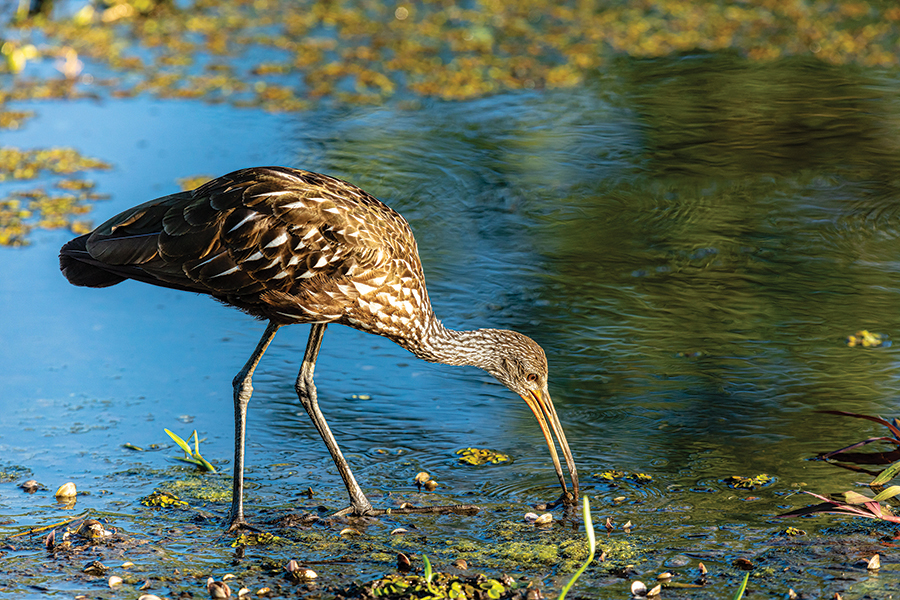
As the days lengthen and the air begins to warm, many of us look forward to the return of migrant songbirds. Dozens of species that breed here spend their winters far to the south, and dozens more spend time feeding here as they migrate to summer haunts in New England and points farther north. Of these, the first to return in central North Carolina are the swallows. In early April, it’s possible to see six different species: barn, rough-winged, tree, bank and cliff, as well as the more familiar purple martin. And since swallows move in mixed flocks at this time of year, encountering three or four kinds in close proximity is not unusual.

Swallows are almost exclusively insectivorous and are built to catch their prey on the wing. They have strong pointed wings and forked tails, which allow for excellent aerial maneuverability. Except for adult male martins, they are all dark on top and light colored below. But each species has a characteristic flight pattern that can be used to identify it even if field marks cannot be discerned. Modern field guides include descriptions of the patterns — where a species flies and how it flies (the combination of flapping and soaring) are unique. This is very helpful, since swallows spend most of their time on the wing and tend to be quite high in the air, so plumage is difficult, if not impossible, to see.

Without a doubt, the best place to find swallows is around water, where insects are most abundant during the warmer months. If one is lucky and there is a snag or wire adjacent to a wet area, the birds may be perched at close range, which should make for ideal viewing conditions. Except for purple martins, sexes are identical. To the human eye, male and female size, coloration and behavior are the same. However, you may be able to pick out the drabber plumage of a juvenile in late summer if you have a pair of binoculars — and a good bit of patience.

Purple martins are the largest of the group and have the darkest feathering. Adult males are a distinctive bluish-black. Females and second-year males have some blue feathering on the back and head but are mainly a dingy gray. Juveniles will be a paler gray with little or no blue feathers in late summer.

Barn swallows have a dark-bluish back, orange face and yellowish underparts. They also have a deeply forked tail. Given this superior rudder, they are capable of low and erratic flight, scooping up insects close to water level or over large grassy expanses such as horse pastures or golf course fairways.

By comparison, rough-winged swallows are stocky and brown above, whitish below with a drab, buffy throat. They spend a lot of time soaring high in the air and, therefore, have a more squared-off tail.

Bank, tree and cliff swallows are less likely to be encountered in central North Carolina. All three have less distinct plumage and short, forked tails. Bank swallows, which may be found in the western part of the state, have light brown backs, thinner wings and quick wing beats. Tree swallows have dark-green backs, broad, long wings and more direct flight behavior with less wheeling involved. Increasingly, they can be found using tree cavities or nest boxes near large bodies of water in the northern Piedmont. And they are quite common in the coastal plain. Cliff swallows, which resemble barn swallows with a short tail and a pale rump patch, fly more deliberately, with slightly slower, more powerful strokes. They favor the protection of overhangs associated with man-made structures such as bridges and overpasses to affix their unique mud nests. Interestingly, for reasons we are not sure of, cliffs are being found in more locations across the state each season.

Although these little birds are well-engineered for flight, they are not known for their song. In fact, their vocalizations consist of short raspy or mechanical calls. Nevertheless, swallows can be quite noisy, whether they are migrating as a flock or in pairs defending a breeding territory. Try to remember to listen and look up this spring; you might just spot some fancy fliers.

Dissecting a Cocktail

DISSECTING A COCKTAIL

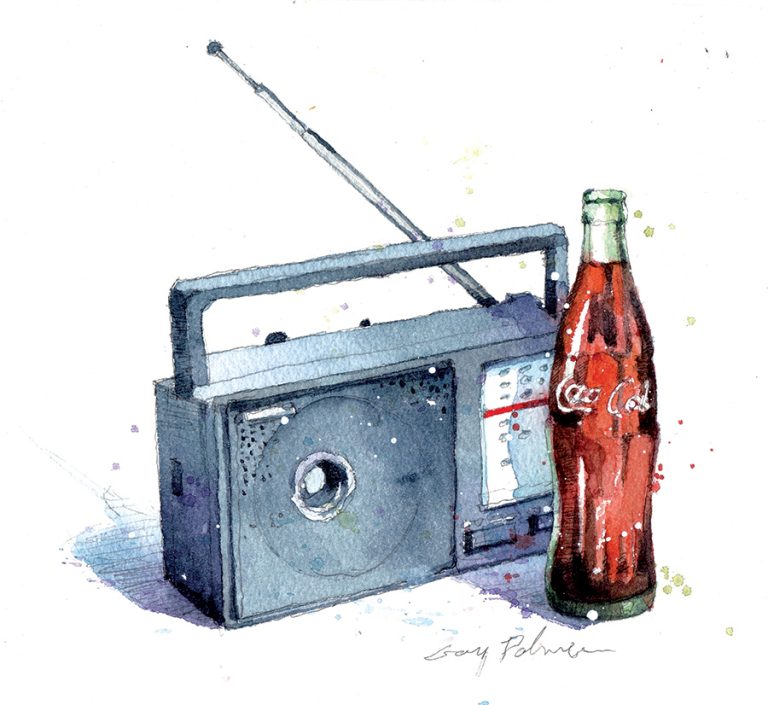
Jack and Coke

Story and Photograph by Tony Cross

The Jack and Coke is, and has been, widely ordered at bars for almost a century. It was the go-to drink of my late brother and my father, who recently passed away, so this is an homage to them.

The first recorded mention of a “Coca-Cola highball” stretches all the way back to 1907. Highballs — cocktails in tall glasses that contain ice, spirit and some variation of soda — were popular but the quality of other sodas was inconsistent. Every location formulated its own drinks; syrups would be improperly stored (lack of refrigeration or ice), leading to a loss of flavor; CO2 variations would leave drinks flat or too acidic from over-carbonation. This gave Coca-Cola an advantage: It tasted the same every time.

Fast forward to the Prohibition years and you’ll read how cola was masking bad-tasting spirits, especially whiskey. This is where Jack Daniel’s came in. The way it charcoal-filtered its whiskey made it softer around the edges, also giving it notes of vanilla and caramel. Pairing that with the sweetness of Coke made the drink an instant classic.

A decade later, the United States was in the middle of a world war. Coca-Cola President Robert Woodruff declared his intention “to see that every man in uniform gets a bottle of Coca-Cola for 5 cents, wherever he is and whatever it costs the company.” In turn, soldiers started ordering Jack and Cokes when they were at bars until the whiskey became hard to find. Down the line, the drink became a favorite of everyone from musicians like Frank Sinatra and Lemmy Kilmister to my father and little brother, who all raised a glass of Jack and Coke during some of the best times of their lives.

Jack Daniel’s and Coca-Cola didn’t create whiskey and soda, but they made it iconic.

Specifications

1 1/2 ounces Jack Daniel’s
No. 7 Whiskey

4-6 ounces Coca-Cola

Execution

Add ice and whiskey in a short or tall glass. Top with ice cold
Coca-Cola. A quick stir is optional.

Golftown Journal

GOLFTOWN JOURNAL

A Family Legacy

Right at home in the Hall of Fame

By Lee Pace

It began with a press release in April 1981 that a new Carolinas Golf Hall of Fame had been created, and the venture continued with an inaugural inductee banquet on June 1 at the Southern Pines Elks Club. All five of those first inductees as designated by a committee headed by Jack Horner of the Durham Herald-Sun and composed of members of the now-defunct Carolinas Golf Reporters Association had some connection to Pinehurst and the Sandhills.

Richard Tufts was the grandson of Pinehurst founder James W. Tufts, a former president of the USGA and a noted authority on the Rules of Golf.

Donald Ross lived in Pinehurst after moving from Dornoch on the northeast coast of Scotland in 1900 through his death in 1948, and designed seven Sandhills area courses and just under 400 nationwide in a prolific career.

Harvie Ward and Billy Joe Patton were North Carolina natives and golfing bon vivants, playing with style and spirit and winking to the gallery while making birdies. Between them, they won four North & South Amateurs from 1948 to 1963.

And Estelle Lawson Page ruled the Women’s North & South Amateur from 1937 to 1945, winning six of nine over that period.

Seventy-five more golfers have entered the Carolinas Golf Hall of Fame (now under the auspices of the Carolinas Golf Association) since then. In the early days, plaques commemorating their inclusion were housed at Seven Lakes Country Club at the behest of Peter Tufts, the Seven Lakes course designer and son of Richard. Later the display moved to Pine Needles Lodge, where it was housed in 2007, when it moved to its current home.

Pinehurst Resort management in the 1990s expanded the 1900 Carolina Hotel eastward with two major projects — the Grand Ballroom as the centerpiece to an expansive new meeting center, and then the spa and fitness center. One elongated hallway leading from the hotel’s East Wing to the ballroom afforded an important opportunity. The resort offered use of one wall for the Carolinas Golf Hall of Fame. Over the next quarter century, the exhibition has grown to 82 members and was recently reorganized to provide additional wall space for the Hall of Fame to grow.

This year the owners of the resort for the last 42 years took their place along that hallway.

Inducted in mid-February were Robert Dedman Sr., whose Club Corporation of America bought the resort in 1984, and Robert Dedman Jr., who took the baton upon his father’s death in 2002 and has guided Pinehurst to unparalleled heights in the last dozen years.

“The Dedmans’ impact cannot be measured simply by courses renovated, courses built or championships hosted but something far more lasting — stewardship,” said longtime family friend and former USGA President Jim Hyler in introducing Dedman Jr. during the induction ceremony held, appropriately enough, in the Grand Ballroom. “They have not only owned the Pinehurst Resort but cared for it. They understood Pinehurst is not just a destination but a trust, passed from one generation to the next, carrying with it the soul of the game itself.”

Also inducted was Jack Nance, the recently retired executive director of the Carolinas Golf Association, which has been headquartered since the 1980s in the Sandhills area. Nance in his remarks paid tribute to what the Dedmans had meant not only to Pinehurst but the region and the state of North Carolina having hosted four U.S. Opens, one U.S. Women’s Open and offering land between the Carolina Hotel and its golf clubhouses for the USGA’s new Golf House Pinehurst and World Golf Hall of Fame.

“What your family has done for golf here in the Carolinas is extraordinary and permanent,” Nance said. “From bringing the U.S. Open to Pinehurst to what we see today across Moore County — the USGA Hall of Fame and satellite headquarters, the massive road renovations, and the never-ending projects, the economic boom — it all traces back to your family’s vision. Your award tonight is well earned, and your legacy will be long-lived.”

Dedman Jr. said his family’s long involvement at Pinehurst had “been a labor of love for two generations” and told of his father’s humble upbringing in Arkansas, his G.I. Bill financed law degree after World War II and his entrepreneurial instincts that hit in the early 1950s. Dedman was playing golf in Palm Springs, California, at a golf community that featured three courses and one central clubhouse operation and it occurred to him that the model could work in a metropolitan area like his own home in Dallas. That launched the idea for Brookhaven Country Club, which opened in 1957 and was the first domino to fall in what would become ClubCorp — a massive global operation with country clubs and city clubs around the world.

“Over the next 50 years, ClubCorp became a world leader,” Dedman said. “My father raised and elevated the standards of excellence in the club industry. He democratized the industry, making clubs more affordable and accessible, clubs that were exclusive but not exclusionary. That has been a guiding principle since the beginning.”

The initiative of Dedman Sr. was restoration — rebuild the facilities that included having a chef fall through a kitchen floor, cultivate quality playing surfaces on the golf courses, bring championship golf back to Pinehurst, add new courses in Nos. 7 and 8 and expand the room inventory with the acquisition of village of Pinehurst properties such as the Holly Inn and Manor Inn.

The initiative of Dedman Jr. has been transformation — green light the restoration of the No. 2 course back to its early 1900s character of bouncy fairways and perimeters of natural hardpan sand and wire grass, redesign and re-engineer No. 4 in a similar fashion, add The Cradle short course and launch a major expansion south toward Aberdeen that will include courses No. 10 and 11. Dedman noted the company has invested some $250 million over the last five years in the facility.

“And there’s more to come,” he said. “These are exciting times in Pinehurst.”

That Pinehurst has had just three owners over 131 years (the Tufts, Maxton native Malcolm McLean and the Dedmans) is remarkable — even more so that one family has been constant for the last four-decades plus.

“In recent years, Bob talks about wanting to be the soul of American golf,” Hyler said. “The Dedmans have been caretakers of an unbelievable asset. I am glad they’re being properly recognized for many years of stability and leadership.”