Becoming Goldfinch

BECOMING GOLDFINCH

Becoming Goldfinch

One woman's journey on the Appalachan Trail

By Jenna Biter

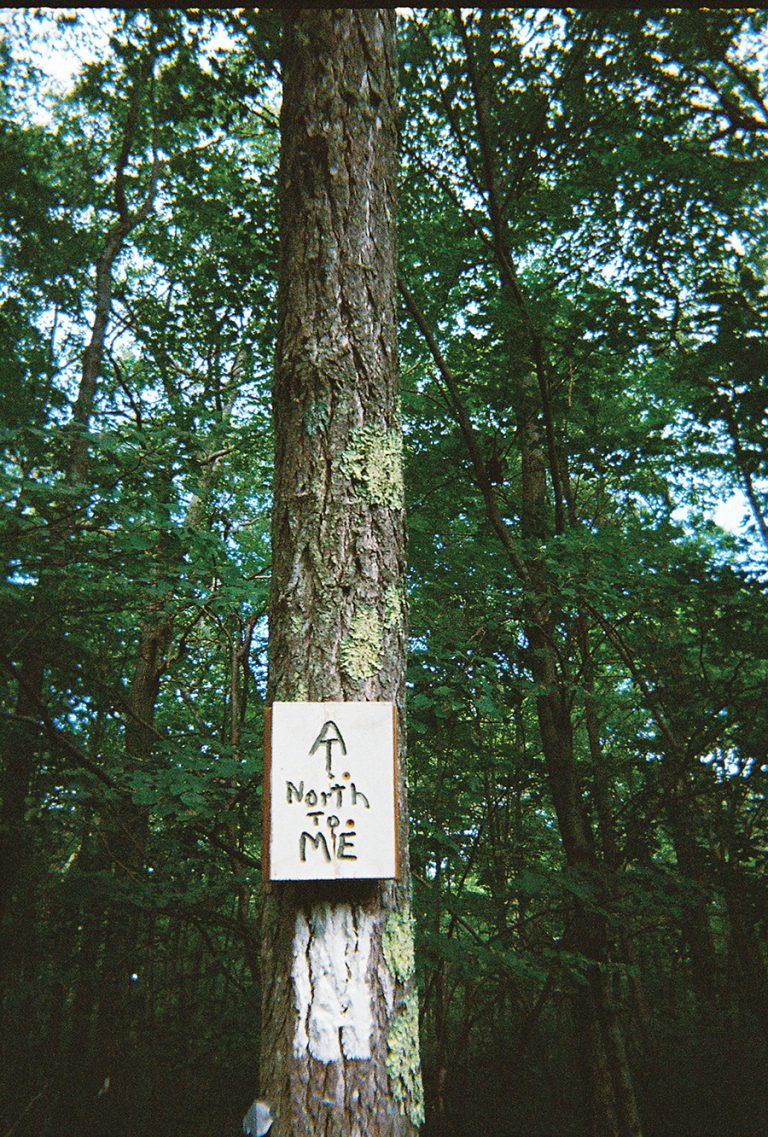
You follow the white blaze,” says Brandi Swarms, uncomplicating the Appalachian Trail. “The white blaze takes you.

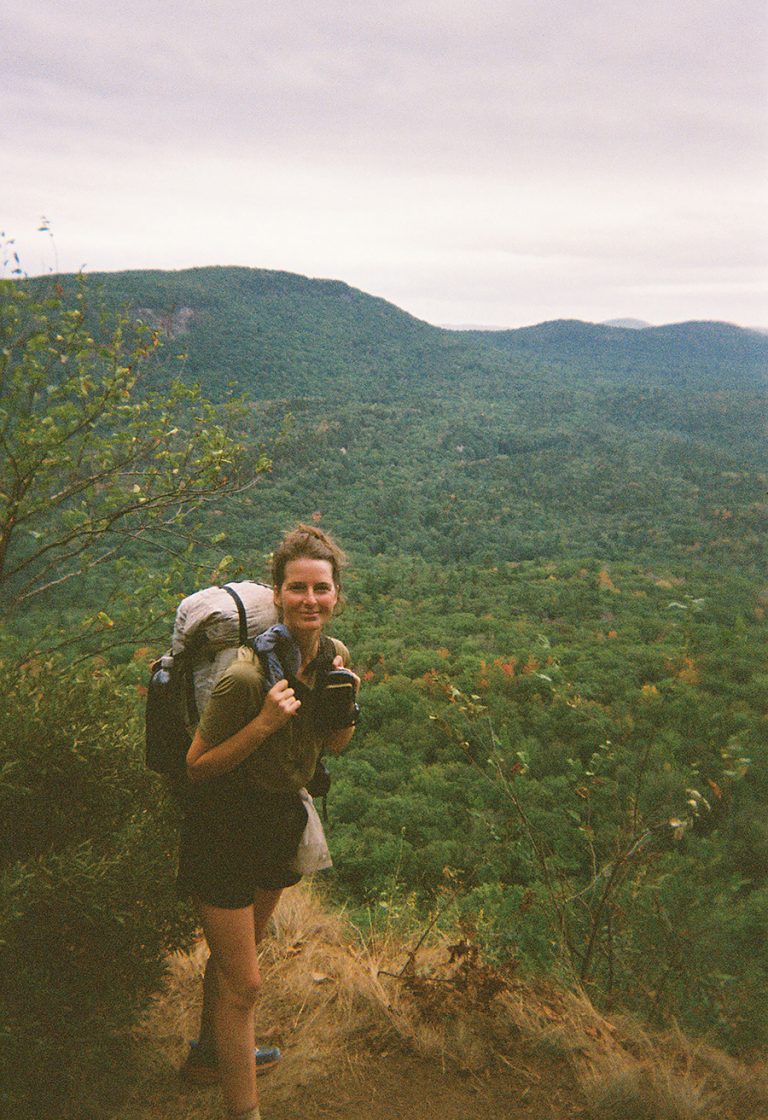
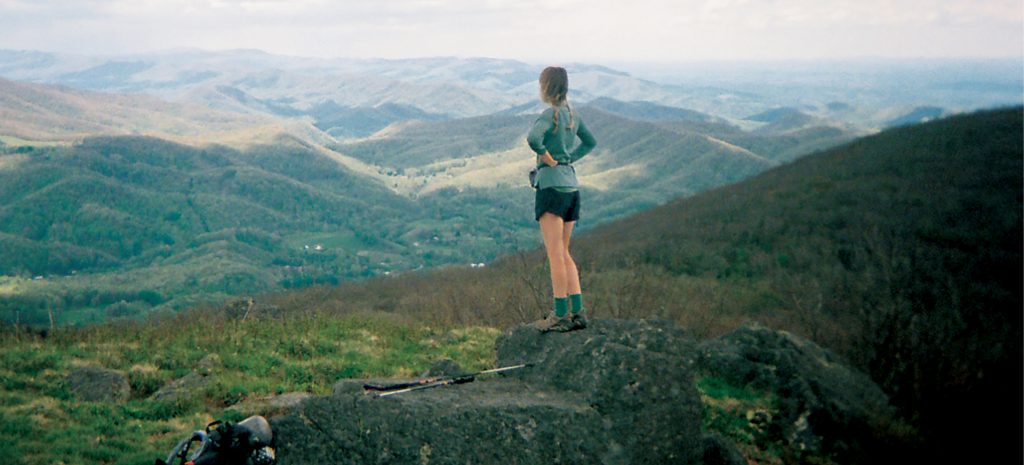
Brandi, trail name “Goldfinch,” is 35 years old, tall as a cornstalk and has eyes as blue as swimming pools. If she was a season, it would be summer. She’s upbeat but thoughtful and a touch romantic, with a quiet vitality bubbling up from her soul. It sprung up in the heartache of a broken childhood home and decades later carried her onto the Appalachian National Scenic Trail, the roughly 2,200-mile-long route that connects Springer Mountain, Georgia, to Mount Katahdin, Maine.

Benton MacKaye conceived of the Appalachian Trail in a 1921 paper. Through the work of trail club members and passionate volunteers, the route was completed in 1937. Somewhere around 3 million people touch the AT every year, on day hikes, long sections of miles lashed together or thru-hikes that push right through all 14 states.

“I heard about the AT from a dear, sweet friend and father figure,” Brandi says, swimming through memories. “I’d heard him talk about it for years. I was probably just enchanted by his stories, but then when I looked it up, I thought, ‘What is this beast?’”

Another five or so years passed, as did her fat, fluffy cat, before Brandi would actually approach the trail. “When she passed, I went to my house, and thought, I can’t live here,” Brandi says, remembering the loss of her beloved hair tie-chasing feline, named Garber. Brandi had gotten the green-eyed kitten when she was in sixth grade, and in turn, the multicolored furball had gotten her through a childhood split between Michigan and North Carolina. Garber died when Brandi was 30, taking her last breath on her owner’s chest.

“These walls are too empty,” Brandi says, recalling the heartbreak. She held a garage sale and came away with $600 to buy hiking gear.

“I had never spent a night alone in the woods by myself before,” she says. “I’m all or nothing. I’m like, all right, I’ll figure it out or I won’t.”
PART I

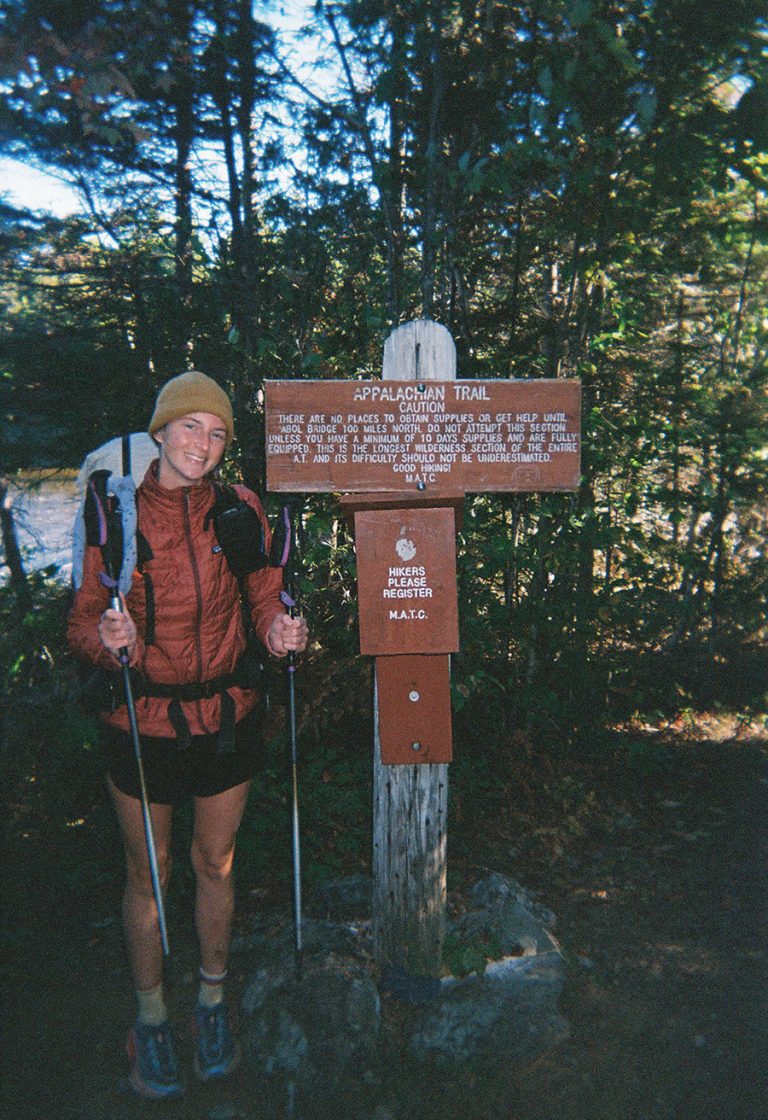
A plaque at the summit of Springer Mountain marks the official northbound start of the Appalachian Trail.  It was March 23, 2021, and Brandi remembers the trailhead humming like a hallway on the first day of school: “Where are you from? What’s your name? Did you hike the approach trail?” Thirty miles to the north, Blood Mountain rises 4,458 feet and is the first real test. “I climbed it and was like, ‘Was that easy? No, but was that completely doable? One-hundred percent. And so I realized quickly that hikers are very dramatic.” Brandi laughs, with a voice like bells.

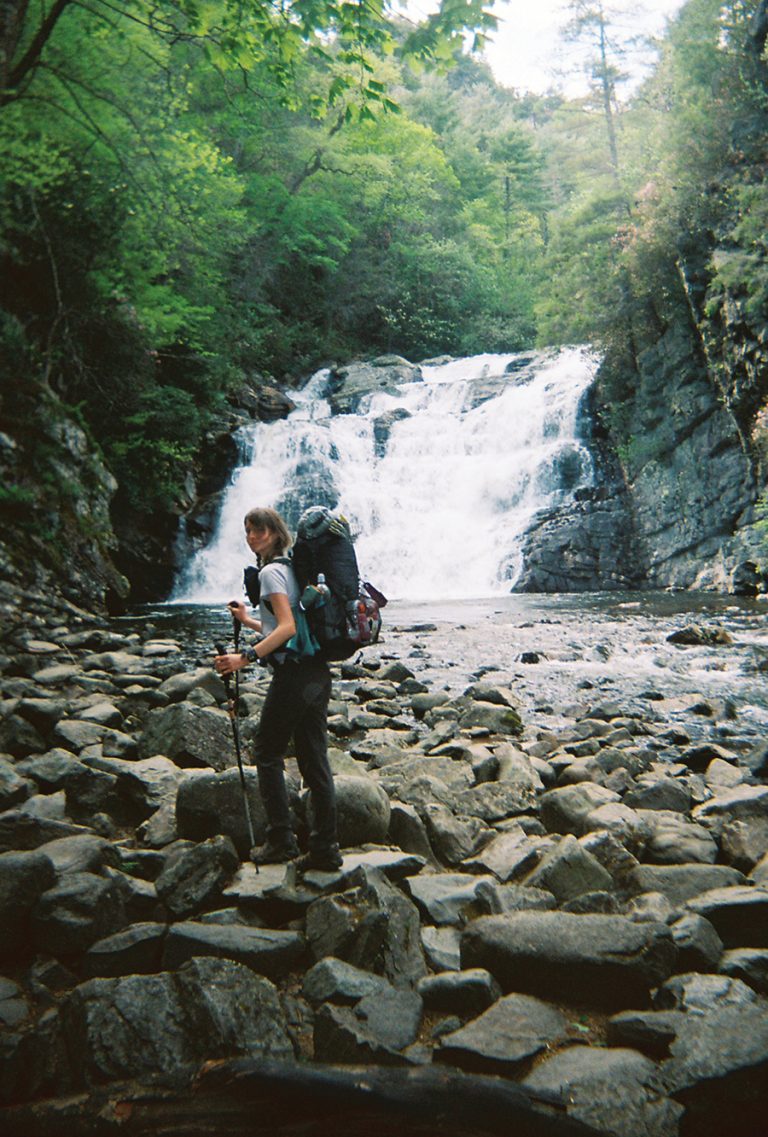
She breezed through Georgia, breaking in her “trail legs,” filtering water from clear Southern streams, and throwing a thumb to hitch a ride to a hostel shower or a resupply in town. She’d always return to exactly the spot she exited even if she had to re-hike miles to get there.

“I was an ‘AT purist,’ so I never skipped a mile,” Brandi says. Purists hike past every white marker, or “blaze,” between Georgia and Maine. That means no “yellow blazing,” bypassing boring or tough sections by car; none of the oh-so-creative “aqua blazing,” floating down nearby waterways; and not even any “blue blazing,” hiking alternate routes due to bad conditions.
The miles climbed into the triple digits, and the characters lined up like a sitcom cast. There was “Little John” and “Homer” and “Purple Haze,” a woman tired of being known as the lady who had been bitten on the butt by a bear. Like the others, Purple Haze is a trail name, the alias a hiker goes by on the AT. A trail name is a gift one hiker bestows on another at some point along the way. Brandi had already passed up lazy attempts like “Legs” and “Sunshine,” until one day, a Florida man burst from a cabin to deem her “Goldfinch.” He’d seen Brandi sharing lunch with the gregarious birds a couple days before.

“I met a lot of Legs and Sunshine and all that,” she says, smiling. “I didn’t meet one other Goldfinch.”

Jeff, trail name unknown, was in his 70s, smoked more weed than he ate food, and was attempting an extended thru-hike from Florida to Nova Scotia for the second time. (Spoiler alert: He makes it.) Jeff taught Brandi how to hike 20-mile days so she could try to traverse the Great Smoky Mountains before snow blew through. The new skill became a superpower.

“I’m hiking consistently 20-mile days at this point, and I’m feeling really good about them,” Brandi says. “Not only is there a freedom, but there’s a ‘well done’ every day.”

She bounced back and forth between Tennessee and North Carolina as the trail snakes north along the state border. She passed through some regular old towns and hiker-friendly towns and often turned bends to find goodies put out by “trail angels.”

“You’ll come around the corner, and there’s a huge chocolate cake, and you’re like, ‘Manna!’” she says.

About eight weeks and 500 miles into the hike, Brandi was approaching the Virginia border town Damascus, a magical but very real land of brambleberry milkshakes and “wild ponies.” (Technically speaking, they’re feral, the descendants of domesticated horses loosed on the mountainside meadows to keep them well shorn.) “Right before I got to the wild ponies, I came off the trail for a week to go to a friend’s wedding, and when I came back, I had gotten a text from my mom that she had found a lump in her breast,” she says. Brandi didn’t hesitate. She left the trail to be with her mom as she battled stage 3 triple-negative breast cancer.
PART II

Two years came and went, and the wild called again. It was June 6, 2023, Mom had beaten the aggressive cancer, and Brandi had a new companion to join her on the trail. “I had a new kind of difficulty with a dog. I had the dog food, and that was very heavy,” Brandi says, patting the red golden retriever at her feet. “Rapture got the trail name ‘Freeloader’ because I didn’t make him carry anything.”

The pair found a like-minded hiker, this one human, in “Happy Feet” — “Happy,” for short. “He was like a little brother,” Brandi says. “It’s weird to find someone on the AT that you want to spend time with because it’s low-key getting married. You have to be able to be silent, and you have to be able to have conversation.”

The merry band was getting along and hiking well through the Shenandoah Mountains. “One day Rapture literally stopped and I looked at him, and he looked at me, and he put his paw up, and I said, ‘You’re done.’” With Happy riding shotgun in a rental car, Brandi drove Rapture to Michigan before flipping a U-turn and gunning it back to the trail. The round trip took two days. “This time, I was like, nothing’s stopping me. I’m coming back right away,” Brandi says. “Nothing could stop me.”

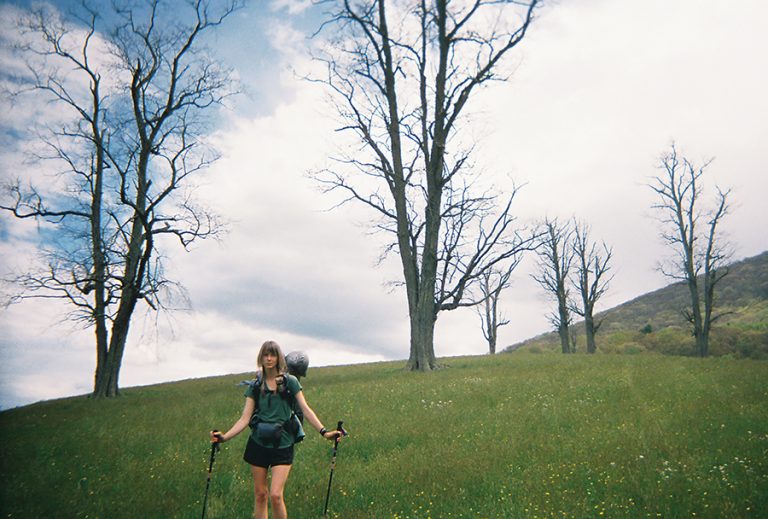
Virginia is a long state. The AT  runs 557 miles through it, making Virginia the longest stretch in any state. Many a hiker hangs up their boots. Injuries stack up. People get bored. Others are behind schedule to reach Mt. Katahdin by mid-October, when Baxter State Park closes for the winter. “There’s something called the rollercoaster in Virginia — you hike it in one day — but it is just a constant up and down four or five or six times.” It was hot. Brandi was steaming with sweat. She remembers crawling into her tent at night with a layer of salt crystallized on her skin. She kept hiking.

Home to the Appalachian Trail Conservancy headquarters, where thru-hikers officially register their hike, Harpers Ferry, West Virginia, is known as the “psychological halfway.” It’s also where Brandi was stung on the ankle by a honeybee. The site swelled to the size of a baseball and oozed green. In Pennsylvania, home to the AT’s actual halfway mark and one of Brandi’s favorite states, she was plagued by mosquitoes and tripped up by rocks. “I remember I hitchhiked with a woman. I got in the car, and I closed the door, and I said, ‘Man, I love Pennsylvania so much.’ And she laughed and said, ‘I’ve never heard a hiker say that.’” Apparently hikers refer to the state as “Rocksylvania.” Still, Brandi kept going.

She crossed into New Jersey and then New York. “The hiker drama is that you don’t know if the rocks are literally going to stop at the state line or pour over, and unfortunately, they keep going for a while,” Brandi says, setting the record straight. She scooched past a protective mama black bear and four cubs and day-tripped to Manhattan with Happy to see the city sights.

“It feels like slow motion now, but I was walking, I looked up and there was a huge hornet’s nest. I looked down and then all of a sudden, I felt like a hot knife on the back of my skull.” Brandi screamed, “Happy help me!” Her throat swelled, and she started to panic. “Will my breath leave me or not?” Brandi dug through her well-stocked first aid kit — “most people have two Band-Aids and a dirty Q-tip” — and popped some Benadryl while Happy found a shortcut off the trail. A hive-covered Brandi knocked on the first door they found. An old woman answered and drove Brandi into Pawling, New York, where she got another ride to urgent care a few towns over. “I had this looming feeling,” she says. Brandi left the trail again.
PART III

Another two years and countless immunotherapy treatments came and went. It turned out Brandi was deathly allergic to yellow jackets, white-faced hornets, yellow hornets and wasps. She also learned that the AT wasn’t her identity. “I think there was some of that wrapped up in me, but I wanted to finish what I started,” she says. Clear-eyed but nervous, she hit the trail again on July 29, 2025.

“When I got dropped off, I re-hiked the miles to where I got stung because I’m a purist,” Brandi says, remembering the overwhelming fear. The fateful spot came and went, but literally and figuratively, Brandi wasn’t out of the woods. Before leaving home, she had forgotten to check the status of her water purifier — it was broken — and the lapse brought her low. “I just felt such turmoil of, what are you doing? You don’t belong here.” She borrowed from another hiker, and his kind words urged her on.

“Next morning, I got stung by a bunch of yellow jackets.” Before starting immunotherapy the strings could have been lethal. She wept for two hours sitting in the front yard of what happened to be a medic’s house. “Then I got up, brushed it off, and just went on,” says Brandi.

She made it into Connecticut and back to 20-mile days. Vermont brought maple syrup everything. This time Rapture stuck with her until “the Whites,” the treacherous but beautiful mountains that run from New Hampshire to Maine. “All the hikers talk about the Whites, and I will say, it’s the one time they’re right,” Brandi says. They’re beautiful, and they’re grueling. “It was hard to leave Rapture, but it was almost full circle, how it would finish was how it had started.”

Brandi missed Happy but found like-minded hikers in a family of nine. “It was the dad, who had wanted to hike the trail since he was like 12 years old, and this incredible mother and seven children. I mean, there was a 5-year-old, his name was Jackson, and when I met him, he literally just jumped from rock to rock.” Brandi tosses her head. “What a childhood.”

She continues, “I got to Maine and something in my spirit blew up. I got so re-energized.” The famous hostel before the Hundred-Mile Wilderness is owned by a legend called “Poet.” “You hear about Poet all the way down in Georgia,” Brandi says. “So, I’m finally meeting Poet, and he’s as cool as you’d think he’d be, and the food is as good as you’d hoped it’d be.” He drives hikers to the wilderness edge for the last stretch of the Appalachian Trail.

I pop out of the 100-mile wilderness, and I just shout, and I holler, and I scream, and I run, and I was just so happy,” Brandi says. “Boy, I was just like, I don’t know, is euphoric the right word? I just felt like a piece of heaven came down and met me.”

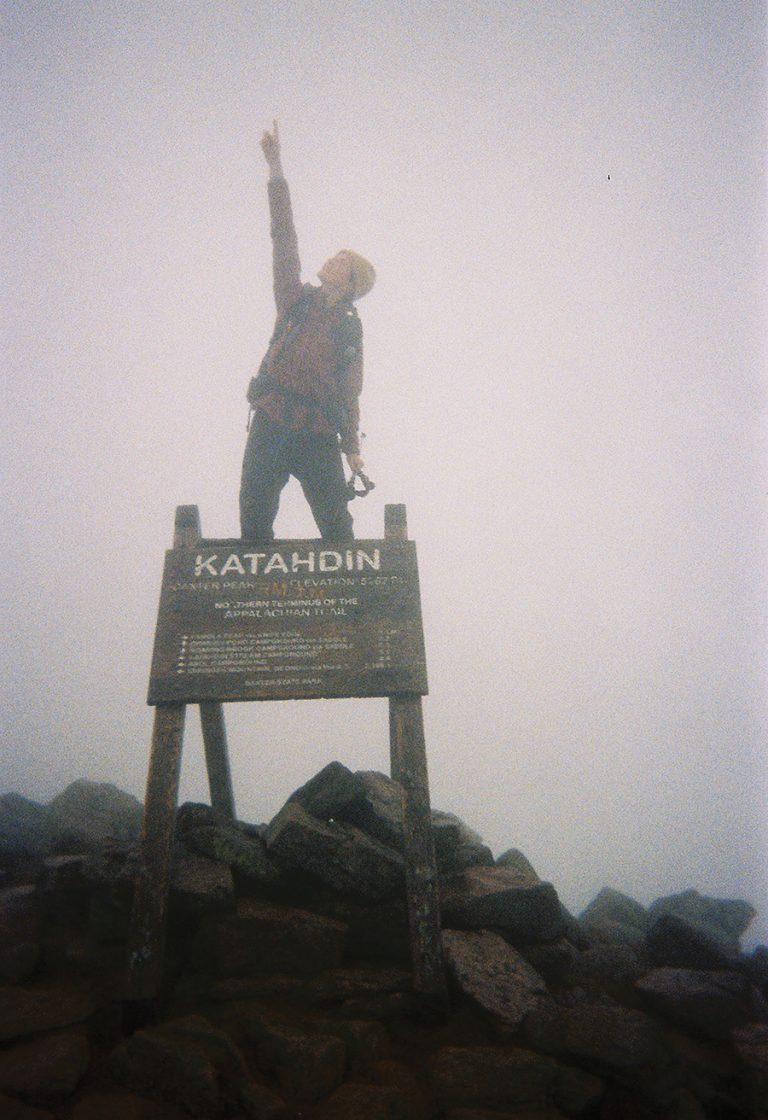
Mt. Katahdin was an arduous climb, but she made it to the summit. It was totally gray. “It’s funny because a few days before I was like, I’m going to wait until it’s sunny up there because I didn’t come this far . . . no, I was just pumped to get up there, and then it was over.”

Brandi was at the airport that night: Sept. 25, 2025. Pieced together, it took her about six months to hike the Appalachian Trail from start to finish. “A few months later I was reading a book, and I just stopped and was like, dude, you hiked the whole AT.”

Golftown Journal

GOLFTOWN JOURNAL

The Happy Plodder

Getting a feel for the land

By Lee Pace

Bill Coore arrived at the site of the new No. 11 course at Pinehurst early one Saturday morning in April. He parked his rental car near the abandoned clubhouse of The Pit Golf Links, the course that existed from 1985 to 2010 before going under due to financial duress. Its demise allowed Pinehurst Resort owner Bob Dedman to later purchase and repurpose the land for two new courses pegged The Sandmines, a salute to the tract’s purpose a century ago as a source for sand in highway construction.

First came Pinehurst No. 10 opening in the spring of 2024 with 18 holes designed by Tom Doak. Now in the works are 18 more to be known as No. 11 from the architectural wizardry of Coore and partner Ben Crenshaw.

Coore had been in Pinehurst all week working with chief design associate Ryan Farrow and the construction crew in finishing shaping the greens and taking a final inspection tour before heading to South Carolina and the grand opening of the new Coore & Crenshaw course called Anson Point in Bluffton.

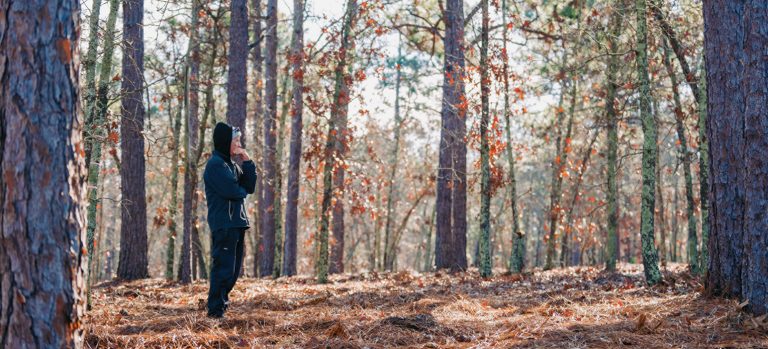
That there was no golf cart left by Pinehurst staff for Coore’s use was no surprise. There was no need. He applied some sunscreen, grabbed a bottle of water and set off as he always does on his golf course design projects — on foot.

“I try not to get into a golf cart,” he says. “I like to walk and feel the land with my feet. You can see things and sense things going slowly and walking that you might otherwise miss. You see and feel the details better. Someone once said that I’m a plodder. That’s probably right. On a great piece of land, you can do it more justice on foot.”
Coore spent considerable time walking this same ground 15 years ago when he was in town working on the restoration of Pinehurst No. 2. He was looking for 18 new holes on this Aberdeen site that at the time Dedman was considering for what would be designated Pinehurst No. 9. But, in the spring of 2012, Dedman pivoted and bought Pinehurst National, weaving it into the resort and club fabric as the new No. 9. He sat for a decade on the Aberdeen site until the demand for more golf in 2022 prompted him to the pull the trigger. Coore & Crenshaw would have designed that course, but they were too busy with other projects, ergo the pivot to Doak.

“I have high hopes for this course,” Coore says. “That we didn’t build that original course and now are building this one has worked out great. Hindsight is 20-20, but it’s worked out better for all parties involved. The course we laid out in 2011 would have been interesting, but the course we have out here now is far better. The routing is better.”
Over four hours, Coore dissected the flow of the course and its many nuances.

Most notable was the ruggedness of the ground. The course that Pinehurst native Dan Maples designed in the 1980s was called The Pit because the land had been mined for sand in the early 1900s, and it was never touched. The furrows and burrows from long-ago excavation machinery were left intact, with years of wild plant and tree growth adding to the texture.

“This site was totally manufactured years ago, with the piles and mounds of material they didn’t want,” Coore says. “It sat there for decades, and trees grew up through them. You’re left with a site that looks totally natural for golf.”

Because the land was so untamed, Coore & Crenshaw designed a course with relatively benign putting surfaces. And there is only one water hazard, a lake behind the seventh green that is largely out of play. There is enough drama in the ground itself that multi-tiered greens and water to suck up poorly struck shots are simply not needed to make the course interesting and testing.

“The greens on this course are almost the supporting cast,” Coore says. “There are not a lot of contours and movement. They are pretty subtle because everything around them is so wild. It felt like if the greens had a lot of contouring, it would be way too much. The land is up and down and twisting and turning. If you get to the greens and have the same thing, it would be too much.”

Construction crews began clearing in November 2024, with the machines moving dirt and shaping fairways in October 2025. As of April 2026, the holes had been largely designed and sculpted, and the greens all “floated out” in the parlance of golf construction. The course will be sodded in the summer and open at some point in mid-2027.

During the 2010-11 restoration of No. 2 — in which he and Crenshaw removed hundreds of acres of Bermuda rough, reshaped the fairways and bunkers, and restored the perimeters of hardpan sand and wiregrass — Coore would stop to speak at length to the workers on the art of installing irrigation heads so that the water didn’t leave green grass in uniform lines, and of planting wiregrass so it looked random and unplanned.

Similarly on No. 11, he conferred often with the tree removal crew and Pinehurst superintendent Kevin Robinson on which trees to remove and which ones to leave alongside the fairways.

“We did that slowly and deliberately in artistic fashion, intuitive fashion,” Coore says. “It’s not like having a highway crew coming in here and clear-cutting. There are some nice rolls to the edges of the holes; they meander.”

As Coore walked the course, he talked of the process of finding the holes, applying the brush strokes and supervising the shapers and diggers.

“It’s like putting a puzzle together,” he says. “You see these interesting landforms and say, ‘OK, that’s a great spot for a green here.’”

Among the interesting puzzle pieces is the par-3 sixth hole that runs downhill and back up to the green, inspired when Crenshaw suggested that a hole similar to Harry Colt’s eighth at St. George’s Hill in Surrey, England, might fit nicely.

“Inspiration? It comes from anywhere and everywhere,” Coore says.

One feature prompted him to say, “Hang on to your hat.”

Another elicited a smile and a shake of the head. “Who could imagine some of this stuff?”

There are old mounds in fairways with pot bunkers cobbled out, leaving Coore to make another comparison to U.K.-style golf.

“This is just a punch-wedge out to safety. You go, ‘OK, I’ve gotta get out of here and not worry about aiming for the green.”

There are vestiges of the ancient mining operation, including a piece of railroad track on the 13th that Coore moved to the periphery of the hole — out of the line of a bouncing golf ball but within eyesight.

“This will be an eccentric golf course. I call it ‘wildly wonderful.’ It’s different. I have very high hopes for it,” he says.

Coore turned 80 in December 2025, and Crenshaw is 74. But they’re still active, with current projects in the Bahamas, Montana, Colorado and Northern Michigan.

“As long as I’m physically able and people want you to do their work, I’ll keep doing it,” Coore says. “Fortunately, we’re still in demand. If you have interesting sites, you are constantly motivated and excited to work them. I feel like a kid out here playing in the dirt.”

Almanac June 2026

ALMANAC

Almanac

June 2026

By Ashley Walshe

June is a blueberry banquet, a living shrine, a procession of sun-loving pilgrims.

Here they come, with their sun hats and baskets. Wonderstruck and reverent; wide-eyed and ravenous.

There’s no wrong way to worship.

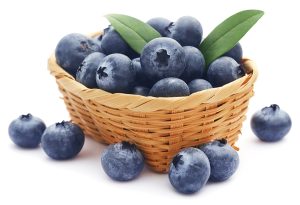
Aging fingers work methodically, rolling over ripe berries as if they were prayer beads on an endless mala. Mothers guide tiny hands from fruits of red to deepest blue. Kitchen mystics pluck to the mantra of blueberry ice cream, blueberry cobbler, blueberries all summer through.

Life buzzes in all directions.

Cat stalks field crickets. Puppy chases swallowtails. Children sneak plump berries from brimming buckets by the handful.

The seekers come and go, each with their simple offerings: bliss, open palms, purple-stained prayers.

At blueberry church, Mmmmmmm is a sacred hymn. A pop of sweetness spells amen.

As balmy morning melts into sun-drenched afternoon, the hum of bees could bring one to their dirt-smudged knees.

Thank you, a berry pilgrim sings, praising the miracle of all creation.

Between the spike of mosquitos and the early fireflies, the birds blurt Glory! Glory!, same as they did at sunrise.

And so it goes, summer day after summer day. Baskets runneth over. Bellies fill with sweetness. All who seek shall find magic at the blueberry jubilee.

Midsummer Nights

What could be dreamier than a day in June? A midsummer night.

The field crickets crackle like warm vinyl. Moonflower and night-blooming jasmine perfume the balmy air. Drink it in. And don’t forget to look up.

According to NASA, the Venus and Jupiter conjunction on June 8 and 9 is one of the most notable astronomical events of the year. Look low in the western sky a half-hour after sunset to see these two luminous planets seemingly close enough to touch, no telescope required.

The strawberry moon — first full moon of summer — will rise on June 29, one week after the solstice (June 21). The Old Farmer’s Almanac notes that Native American Algonquian tribes, and the Ojibwe, Dakota and Lakota peoples, marked this month’s moon by the “ripening of June-bearing strawberries” across the fertile land. Other names for this month’s moon include the berries ripen moon (Haida), the hatching moon (Cree), the honey moon and the mead moon. One could also call it dreamy.

And what is so rare as a day in June? Then, if ever, come perfect days.

— John Keats

All Warmed Up

It’s not too late to sow some garden magic. Cucumbers, squash, pumpkins and melons. Beets, carrots, chard and scallions. Beans, basil, marigolds and sunflowers. The soil is warm and ready. Plant the seeds. Woo the pollinators. Behold miracles. 

Hometown

HOMETOWN

Movin' on Up

Taking on the big city

By Bill Fields

By Bill Fields I met a friend for breakfast one Sunday morning this spring at a Connecticut diner. With its bustling vibe, vinyl-covered booths, menu the size of a novella and servers with a sixth sense for a coffee cup in need of topping off, the restaurant could have been anywhere in the Northeast.

In between bites and conversation, my mind wandered to a time when eating at such a place was new, not routine, when I was young and eager and, like so many people before and after me, ready to take on New York.

Forty years ago, ostensibly for a magazine job but more accurately to experience a city I had known from books and magazines, movies and television, I moved north. Before relocating from the first floor of a house on East Maine Avenue in Southern Pines to an apartment in Brooklyn’s Carroll Gardens neighborhood, my exposure to the Big Apple was limited to two brief visits a handful of years earlier, during and soon after college. I truly didn’t know what I was getting myself into, but America’s largest city attracted me like a paper clip to a magnet.

The inexorable pull was expensive. The $175 monthly rent for a one-bedroom in North Carolina became $775 in New York, and there wasn’t a fireplace or a yard at my new residence. What I believed was a huge bump in salary nearly disappeared in housing alone.

After signing the lease on my exorbitant digs, I motored up Interstate 95 as filled with anxiety as the U-Haul truck (pulling my Ford Escort) was with my belongings. Upon recovering from the stress of the back-rattling drive and settling in, the fretting was replaced by the excitement of where I now was and what I was doing, although my newly purchased twin-sized futon in no way mimicked the pillow-top mattresses in the very few fancy hotels I’d experienced.

New York’s subway fare had gone up to a dollar per ride earlier in 1986. On the morning of my first 25-minute (assuming no delays) commute from Carroll Street station to 34th Street-Herald Square on the F train, I shelled out a $10 bill to fill my pocket with enough penny-sized, bi-metal tokens — “Good For One Fare” on one side, “New York Transit Authority” on the other — to get through the work week. The train made 10 stops before my destination, the stations familiar still: Bergen, Jay, York, East Broadway, Delancey, Second Avenue, Broadway-Lafayette, West Fourth, 14th and 23rd.

After coming above ground at my stop, I walked several blocks east along 34th Street, going right past the Empire State Building, to the Golf Illustrated offices at 3 Park Avenue. There was a pinch-me period when I realized that, yes, I indeed was working in the metropolis that I had seen so many Novembers on TV as a backdrop to the Macy’s Thanksgiving Day Parade.

My mother, then slightly younger than I am now, was able to take Amtrak’s Silver Star north for a visit on my first Thanksgiving in New York, where, bundled up on a sunny but cold morning, she saw the floats and bands in person. Mom would be back in a couple of years, taking in the Rockettes at Radio City Music Hall and paintings at the Metropolitan Museum of Art, a long, long way from her roots in sleepy Jackson Springs.

I made that daily subway trip from Brooklyn to Manhattan for two years and rode a commuter train from Connecticut to the city for three more. Then Golf Illustrated, along with the other magazines owned by its parent company, went belly up, and I left New York with more doubts than the ones that had accompanied me there. But life would play out just one state away. Golf World magazine, born in Moore County, had relocated under new ownership to Connecticut very shortly after I moved there from Brooklyn. The publication — from which I had departed to go to Golf Illustrated — and I reunited in short order. We stayed together for more than two decades, until Golf World ran its course, too, a victim of changing habits in a changing world. You tap your phone to ride the subway these days; tokens have gone the way of the typewriter.

If I’m in the mood to glimpse personal history, I’m a 90-minute train ride and eight-block walk from 3 Park Avenue. I take that trip a couple of times a year, find a diner, and have one of those turkey club sandwiches that rises high off the plate, looking like a skyscraper tall with dreams.

Surely Home

SURELY HOME

Surely Home

For there the heart can rest

By Jenna Biter

Photographs by John Gessner

It’s a very, very livable house,” says Ginger Monroe.

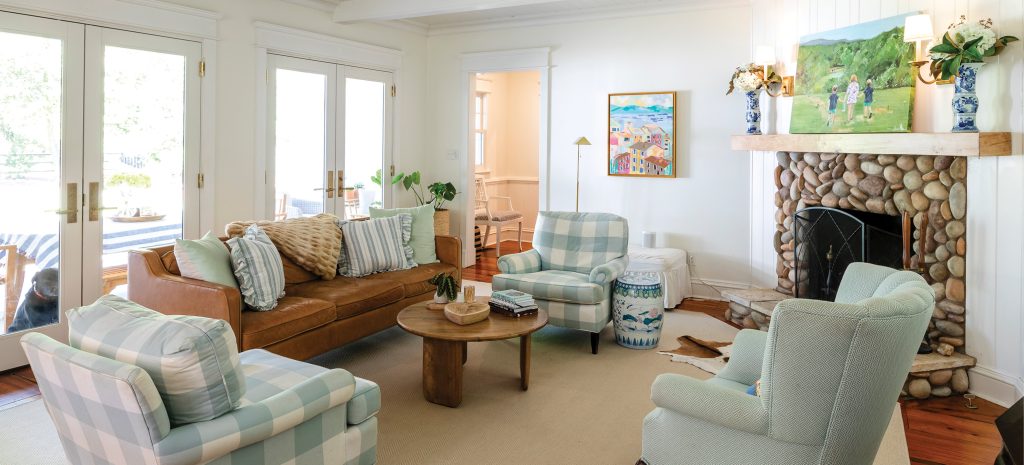
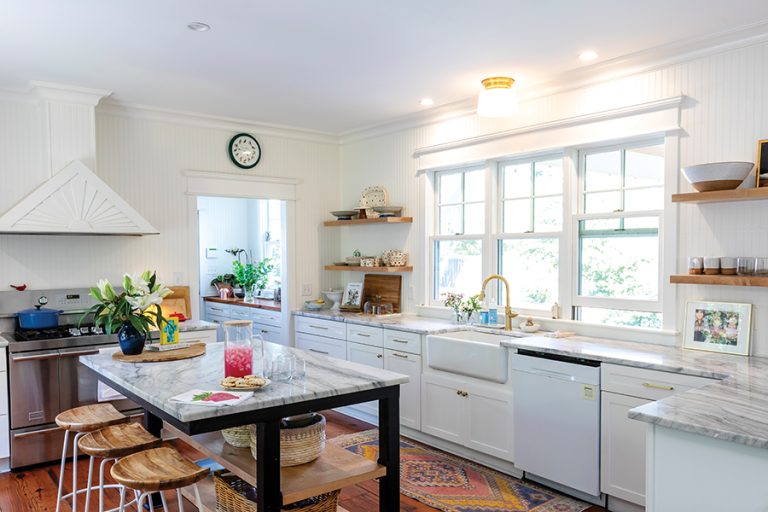
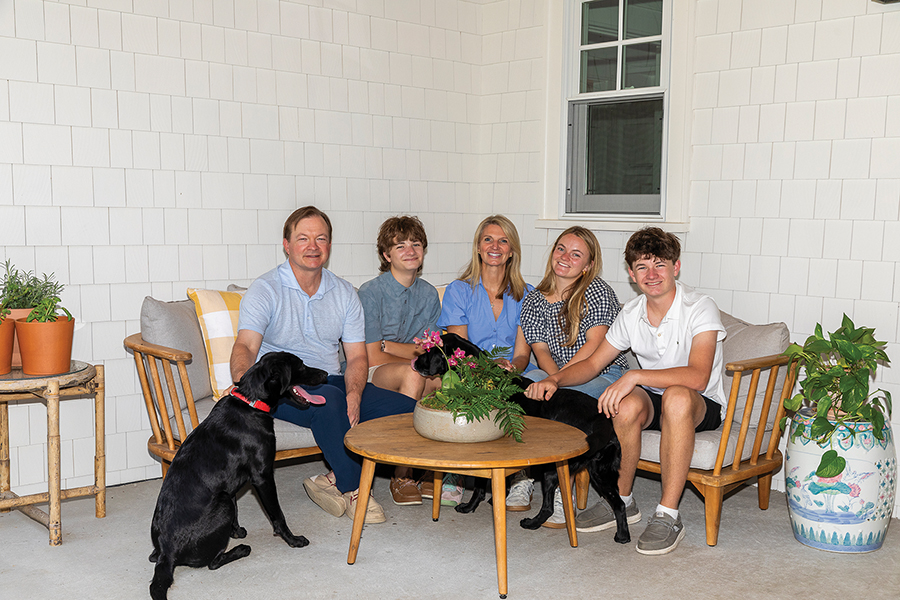
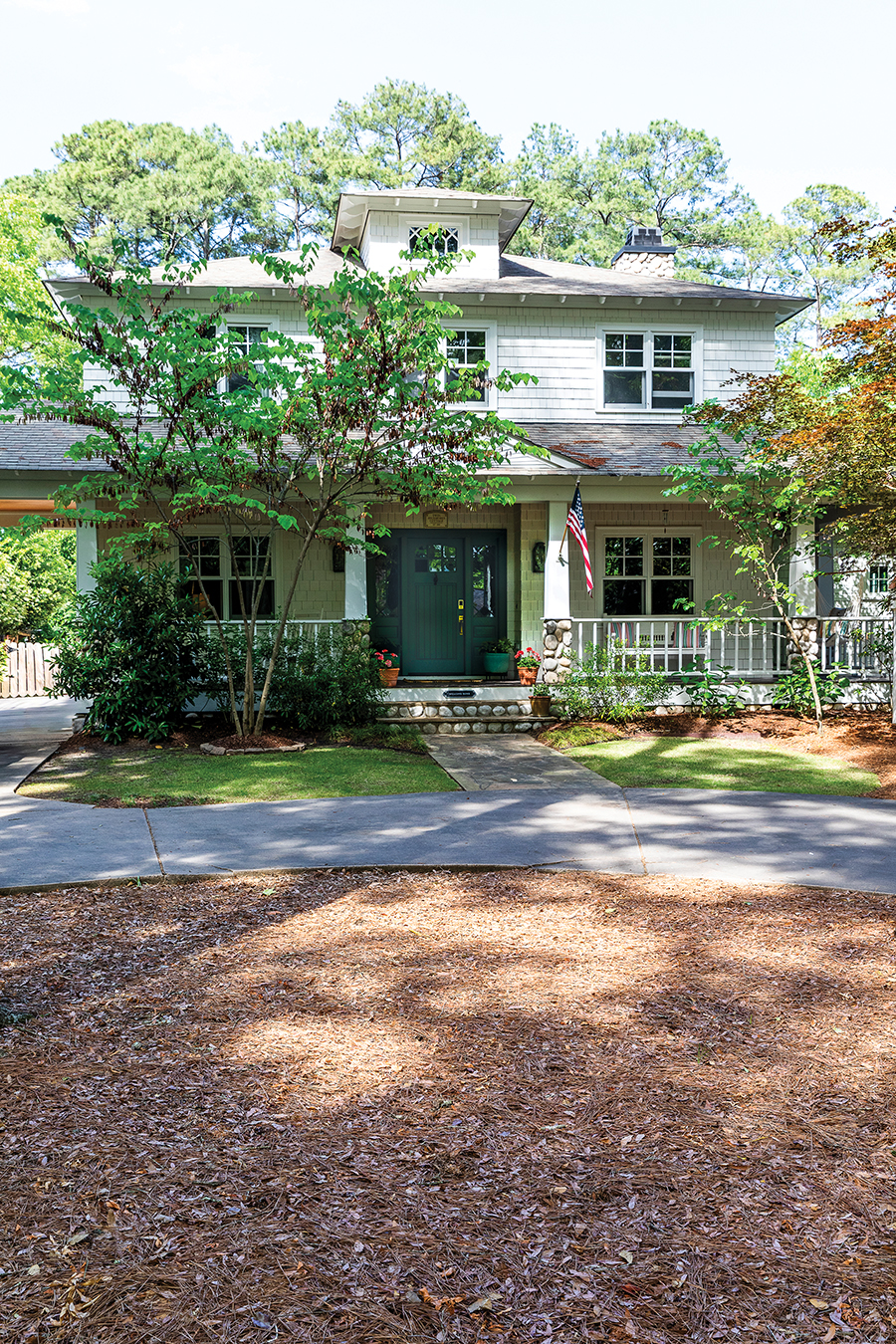
She’s standing in the kitchen, the heart of her family’s Pinehurst home. The Southern cottage, wooden clad and painted dove white, measures more than 4,000 square feet but less than five. There’s a guest house out back, and the property sits on a dash less than an acre. It’s the perfect size for the Monroe family of five, seven if you include black Labs Scottie and Bonnie.

“Twin Sycamores” is a real charmer — a home, not just a house — and that’s what drew Ginger to it. An interior designer by trade, she aims for a space that feels like the last stanza of American poet Henry van Dyke’s “A Home Song”:

But every house where Love abides,

And Friendship is a guest,

Is surely home, and home-sweet-home:

For there the heart can rest.

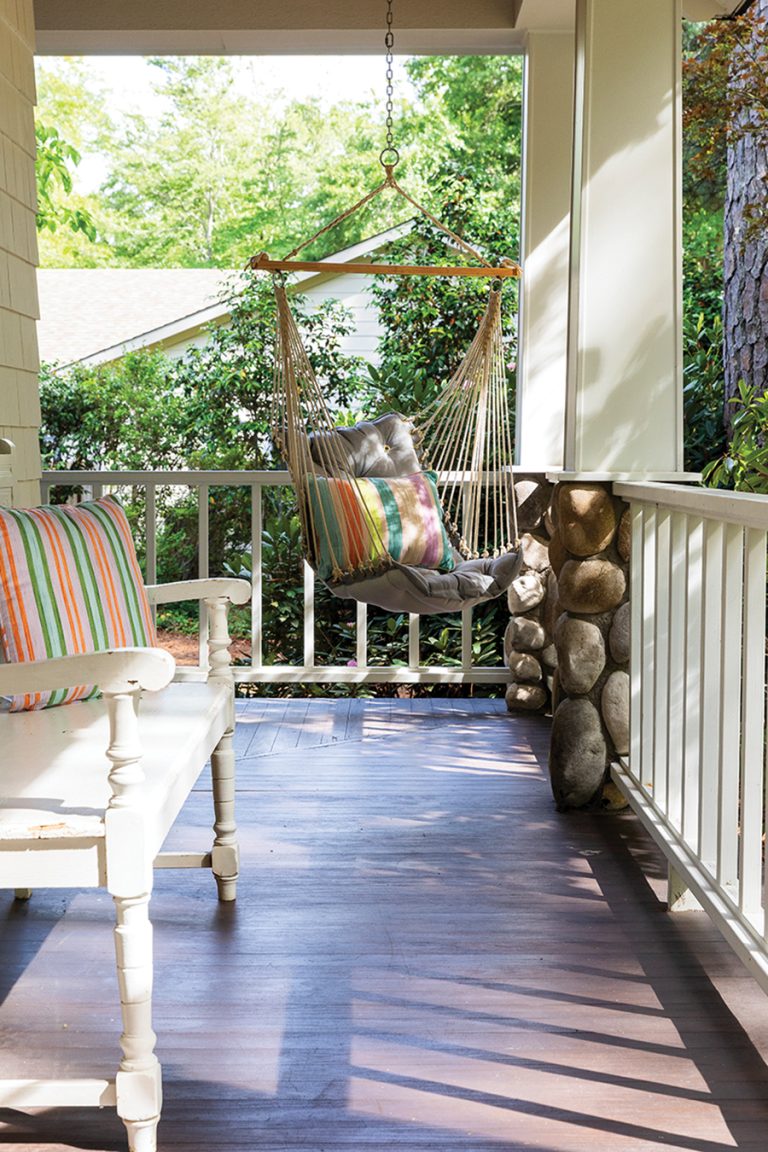
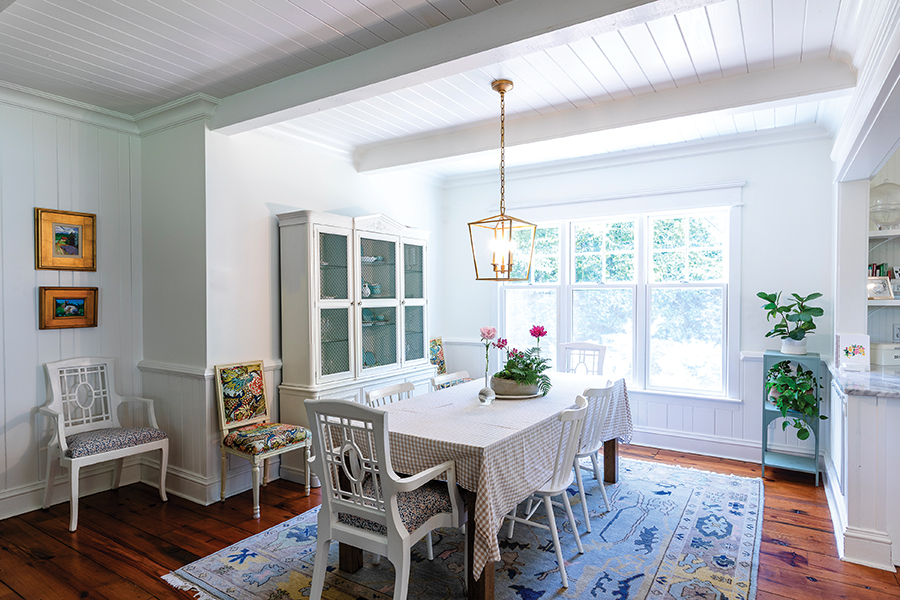
Ginger and Edward Monroe didn’t design the house on Fields Road. From what they’ve pieced together, a European couple built the house in 2009 and clearly had a knack for bringing the Old World to a new build. There are wider-than-wide old knotty pine floorboards, and what looks like a vintage newel post on the staircase and pediment above the stove. With honest-to-goodness historical (or at the very least historically convincing) details, the house hides its youth among the 20th-century cottages that define the Pinehurst Historic District.

“I’m always drawn to houses that just make you feel welcome when you walk in,” Ginger says, “that have the appeal of being old even if they’re not — and loved.”

The Monroes settled into the home in 2019, just in time for the COVID pandemic to lock the family away with plenty of time to make the place their own. The couple laid sod and restained the front porch. Edward defeated diabolical invasive wisteria with “roots that looked like big sweet potatoes.” Ginger points at the wisteria’s replacement. “This garden, this is my husband’s.” It’s a prim little thing off the side of the house, just outside the dining room window. A perky pink rosebush stands out against sunshine ligustrum. “He loves to garden,” Ginger says. It’s a creative outlet, a break from his dental practice in Southern Pines.

Twin Sycamores, named for the couple’s twin boys and two trees out front, features an open first floor good for family time as well as their annual Good Old-Fashioned Cocktail Party. Edward mixes old-fashioneds, and Ginger makes Brunswick stew. Guests flow in and out of the living room, dining space and kitchen, but there are still nooks to cozy into. A table and chairs converse on the covered back porch, and a pair of leather armchairs, mini fridge and TV relax in the “green room,” a moody space called by its Pinehurst-perfect color. “My favorite thing to do for a house is color,” Ginger says. “I’m drawn to the artist’s eye.”

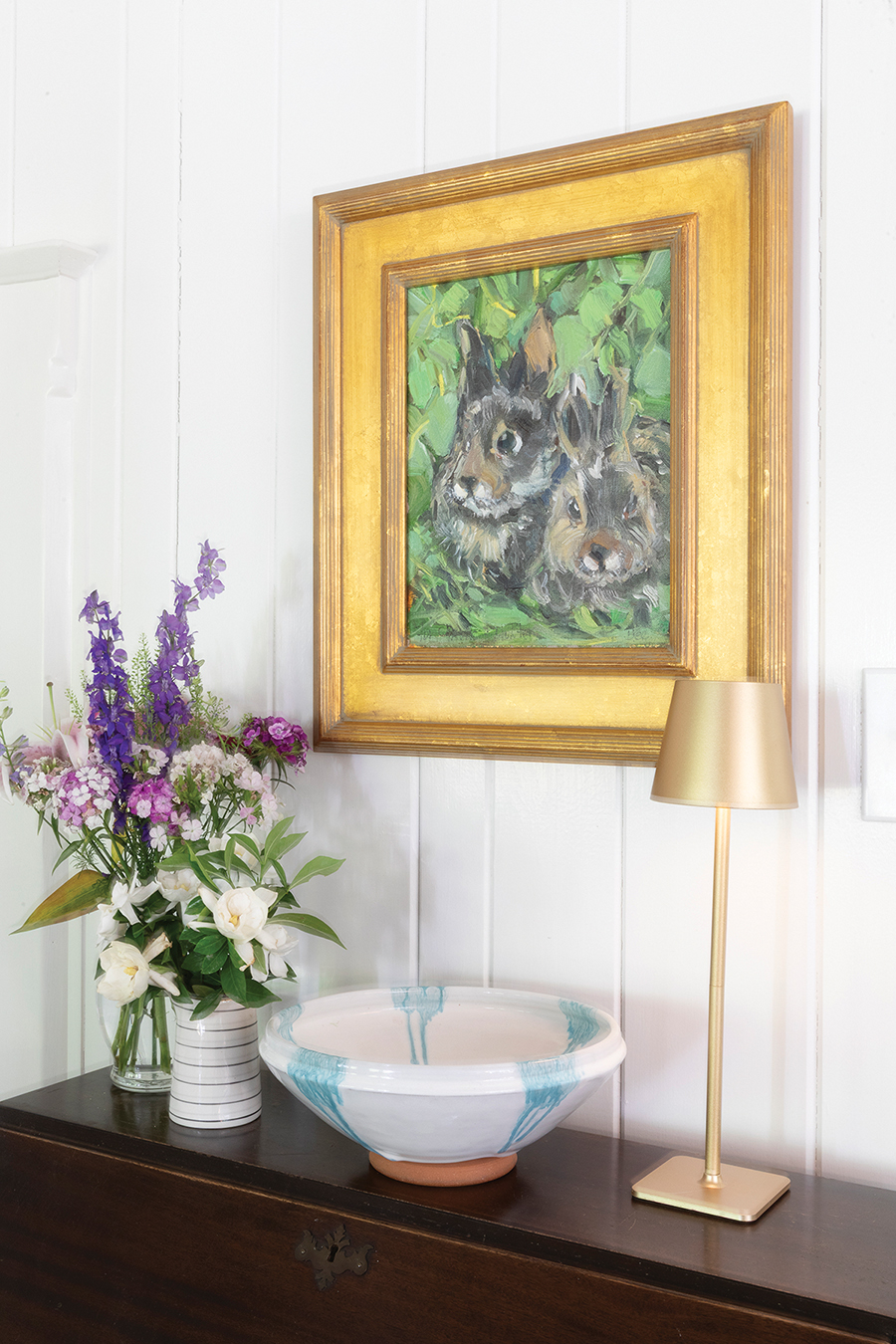
Local works hang on the walls. There’s a painting of rabbits by artist and family friend Bee Sieburg, a gift when Hunter and Charlie were born. There’s a painting of lambs by Ginger’s mom, Cindy Groce, and an artwork by Ginger herself.

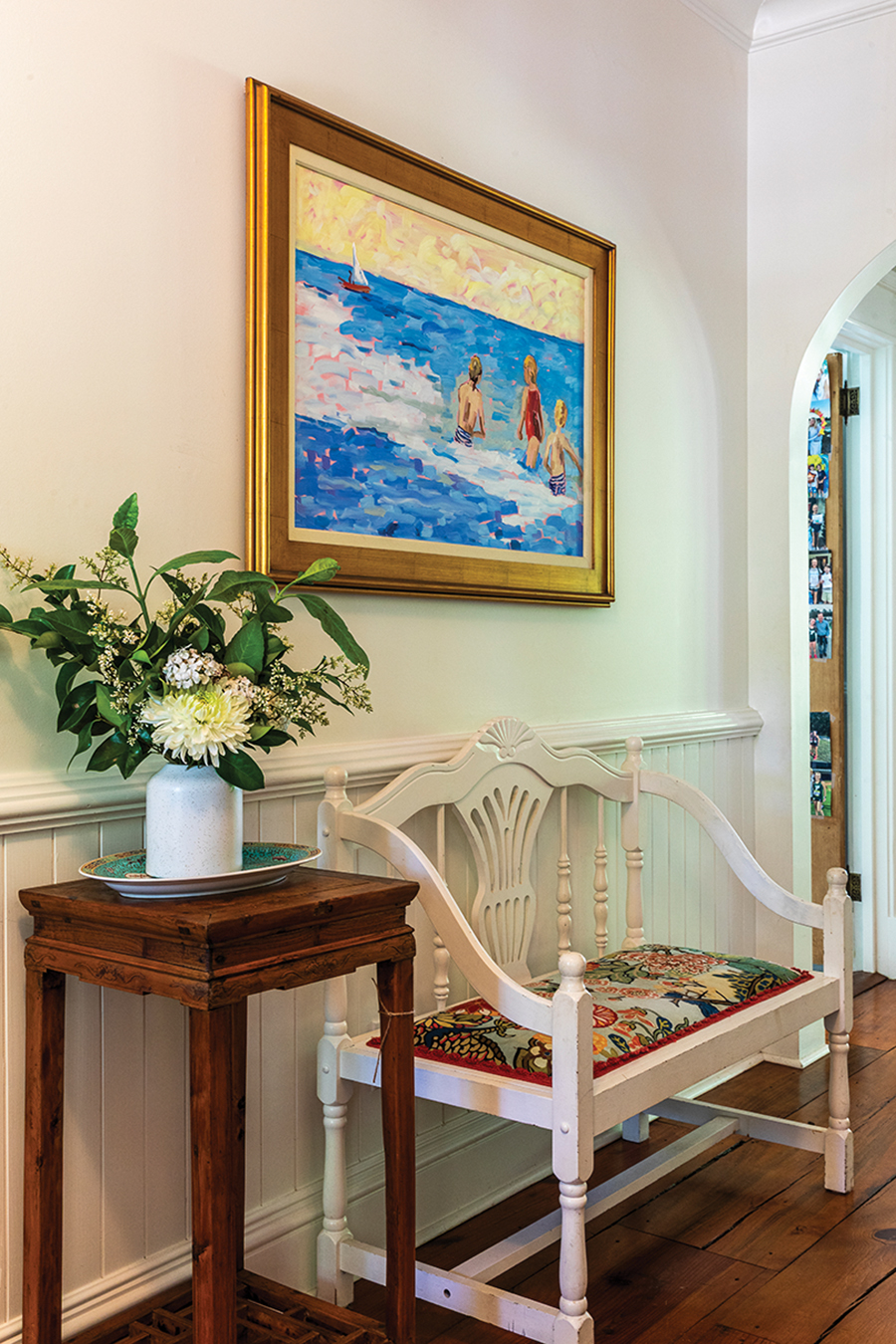
“This is my favorite, though,” she says, pointing to a painting above the mantel. “This is from a photo that I took at Biltmore.” Ginger’s friend Lanie Mann painted the scene showing Janie, the Monroes’ daughter, walking hand-in-hand with her younger brothers. “I love it because I remember being right there taking that picture.”

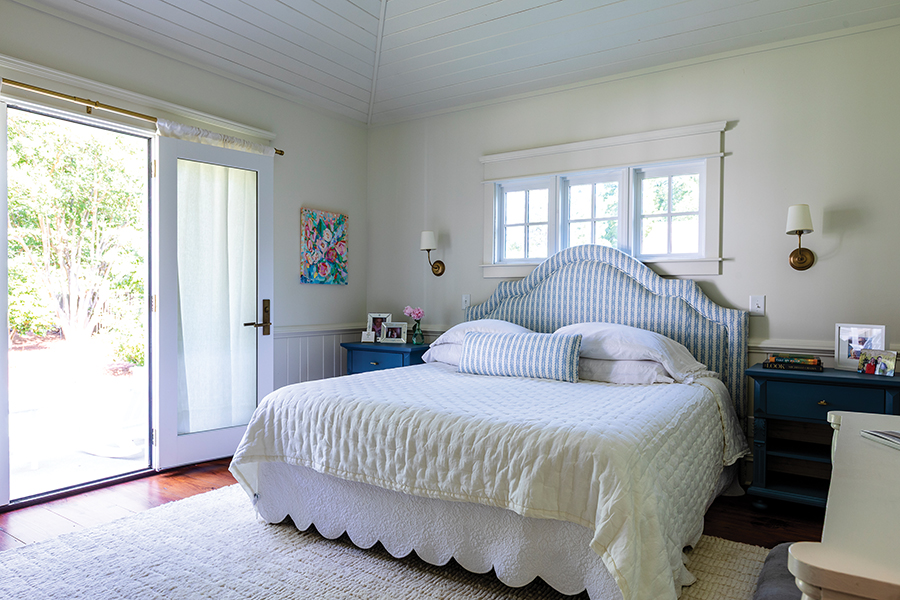
Past the fireplace is the master en suite. When the Monroes moved in, they enclosed the screened-in porch to make the new room, upsizing the main house’s original footprint. The teenagers have the run of the upstairs, each with their own bedroom. “Janie kind of lucked out in this whole situation,” Ginger says, walking into the middle of her 18-year-old daughter’s yawning room, “because this was the master.” Of course, Hunter and Charlie wondered who would move into Janie’s room when she leaves for UNC in the fall. Ginger dodged that one. “It will still be Janie’s room.”

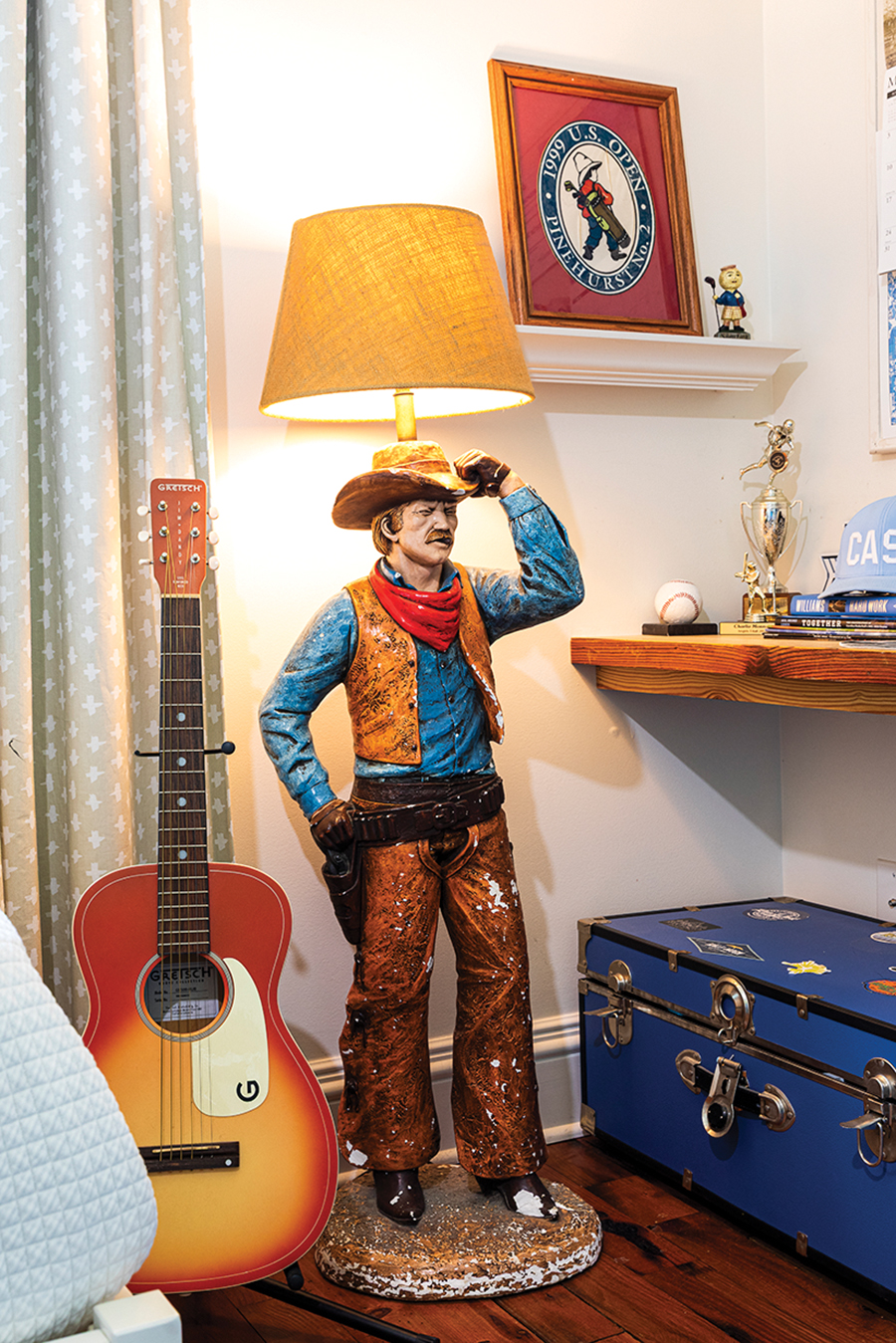
The boys’ bedrooms show “how different they are,” Ginger says. Hunter has a windowsill of plants. There’s a Christmas cactus, aloe and even a crocheted plant on his side table. Like father, like son. Ginger crosses the hall to Charlie’s room. “Night and day,” she smiles. Charlie likes golf and hunting. There’s a hand-on-his-holster cowboy floor lamp that belonged to his dad. Ginger uncovered it in her in-laws’ basement and had it restored.

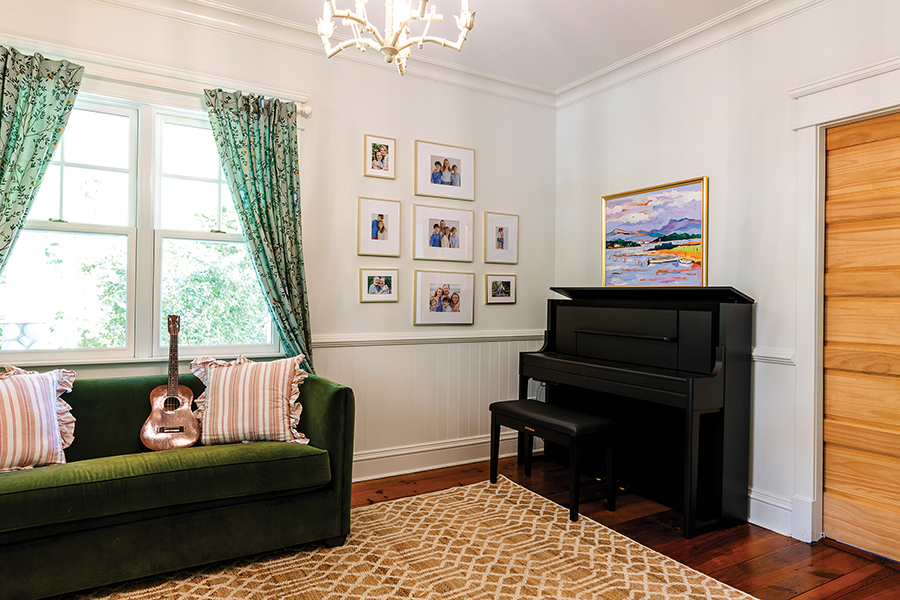
Back downstairs, Charlie likes the green room. Opposite the entry hall is Hunter’s favorite room, the music room, where he plays piano. Janie spends time in the living room or doing her homework on the back porch.

“I love the kitchen,” Ginger says. “That’s where we gather, and I love it when the kids’ friends come over. It makes me so happy to open our doors and invite people in.”

It’s a Puzzle

IT'S A PUZZLE

It's a Puzzle

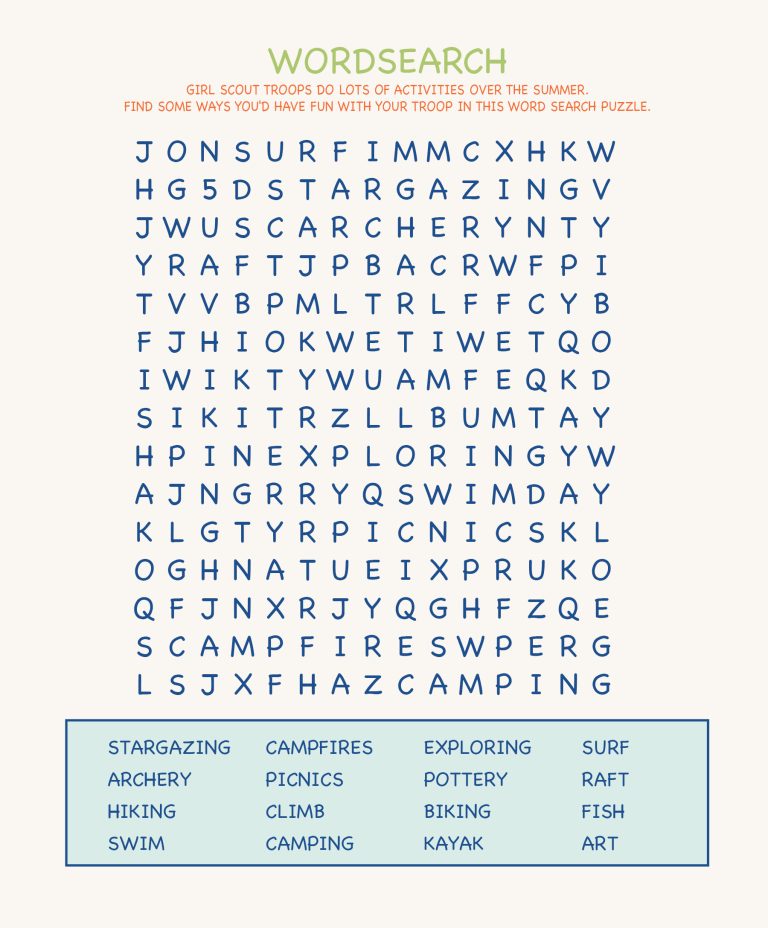
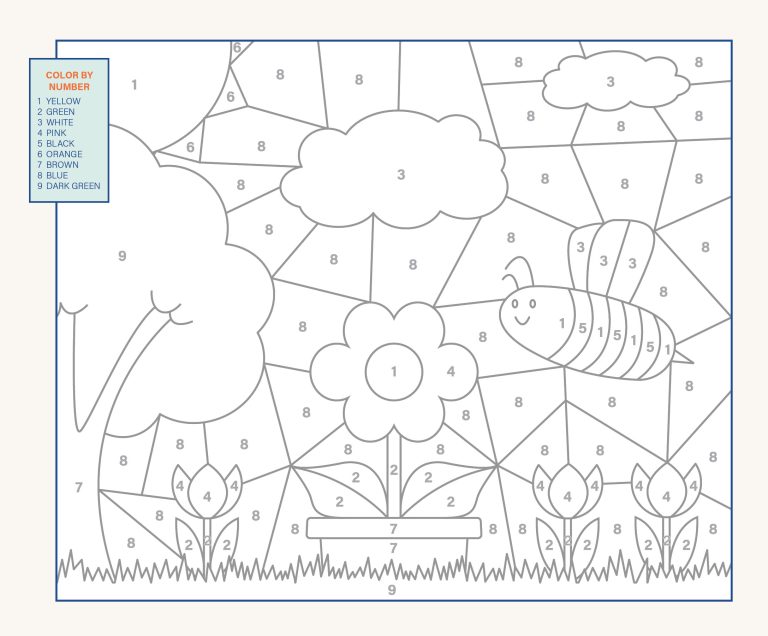
Girl Scout Troop 2301 wants to share some of its adventures with you. From slang definitions to crosswords, word search to fill in the blanks — it's simply "a-mazing." Take a journey of the imagination and maybe a friend along the way.

Out of the Blue

OUT OF THE BLUE

Hang 'em High

And to their best advantage

By Deborah Salomon

My reputation as an anti-tech — or at least a suspicious subscriber — is well-documented. My computer, a desktop, has a tower, a monitor, a printer and a big-button keyboard. The buttons are yellow. I adore it. My new TV streams but I don’t, although I have listened to a few podcasts, previously known as radio. The horror on colleagues’/friends’ faces when they learn the only apps on my simple cellphone are for airlines is almost comical. Like, if I want to watch Duke basketball, it won’t be from the dentist’s waiting room or a park bench. Ditto a movie.

I’d look silly laughing at Robin Williams as Mrs. Doubtfire on a 3-inch screen. Marlon Brando doesn’t shrink well either. Nor does Kindle own the right heft.

Cellphones are magical inventions that have revolutionized communication. Their tendency, however, to fill every minute of our waking hours with some fact or sound or image leaves me exhausted. Several years ago, I encountered the ultimate: “fine art” channels that stream paintings into and out of a TV hanging over the mantelpiece. They appear, pause, then march off.

That reminded me of how important backgrounds are when “hanging pictures.” Also, the subjects of wall art whether paintings, photos, collections, artifacts. After 17 years of profiling Moore County’s most stunning homes, let me pass along display methods shared by interior designers and homeowners:

Don’t crowd. Give a big piece its own wall, which can be small, to accentuate the painting’s bigness.

Try leaning small frames against the wall, from a narrow shelf.

In a grouping, vary the size of individual pieces.

Think twice before displaying nudes or dead animals, especially with children in residence.

Go 3-D with baby dresses, costumes, dolls enclosed in a deep frame or shadowbox. No better place for a Japanese kimono than a living room wall.

Save family photos for a hallway, to encourage up-close viewing. Number the photos and post identification at the end: “Mom and Dad do a London pub, circa 1985.”

A bathroom is perfect for cartoons or old magazine covers. One homeowner plastered her entire guest powder room with New Yorker covers, which she had saved for the purpose. Another had a life-sized cardboard President George W. Bush welcoming guests. The replica of a dear departed cocker spaniel curled up in his wire crate seemed a bit much.

Before selecting a wall, sit down on nearby chairs and sofas to check line of sight. Same for shafts of sunlight. 

Art in the kitchen is uber-trendy, especially flowers and vegetables, like a basket of shiny purple eggplants or a sliced tomato oozing juice. You can’t go wrong with grazing Holsteins. Antique kitchen implements suspended from pegs work. Use metal or glass pitchers, a blue enamel campfire percolator for vases. I have seen a pizza-shaped clock.

Frame or dry-mount a favorite recipe in Granny’s handwriting. Hang a small blackboard near the back door for messages that won’t fit into a text.

But back to the fine art slide show continuing its march over the mantel, the paintings colorful as pastries in a cafeteria line — I’ll take the apple crumb pie, please, with a scoop of vanilla.

Dissecting a Cocktail

DISSECTING A COCKTAIL

One Way Trigger

By Tony Cross

Almost all the cocktails you see on bar menus and in social media and books are either classics or a spin on a classic.

The caipirinha is a South American cocktail, almost like a daiquiri on the rocks, but different, and there’s a reason why it’s the national drink of Brazil. I wanted to use the traditional recipe as a template and hopefully create a drink that would keep the integrity of the original while adding the nuanced flavors of a favorite fruit and spice: pineapple and ginger. At the time, I had just started making a rich ginger syrup, so the idea seemed like a no-brainer. Muddling pineapple chunks in caipirinhas was nothing new, so I decided to go another route: pineapple-infused cachaça, a sugar cane-based rum indigenous to Brazil. This, with muddled limes and the rich ginger syrup, would do it. Super simple, incredibly tasty. The One Way Trigger was one of my most popular cocktails and, to this day, it’s still one of the best cocktails I’ve ever made. Don’t take my word for it, build one yourself and let me know what you think.

Specifications

2 ounces pineapple-infused cachaça*

1/2 ounce rich ginger syrup**

3/4-1 lime, quartered

Execution

Combine quartered limes and ginger syrup in a rocks glass. Muddle to extract juice and release oils. Add pineapple-infused cachaça and cracked ice. Stir to incorporate ingredients.

* Core and dice one pineapple. Put in a glass container and add 750 milliliters of cachaça. Store at room temperature for 2-3 days, agitating container once daily. Strain through nut milk bag, rebottle and refrigerate. Good for one month before flavors begin to dissipate.

** Place 1 cup of chopped unpeeled and washed ginger in food processor or blender and process until finely chopped. Combine ginger, 1 cup of sugar and 3 cups of water in a pot. Bring to a boil, then reduce to a simmer and cook until a rich syrup is created. Let cool and strain through a nut milk bag. Bottle and refrigerate.

From the Archives

FROM THE ARCHIVES

Connective Tissue

When two cottages became one hotel

By Audrey Moriarty

Photographs from the Tufts Archives


In the earliest days of Pinehurst, James Walker Tufts had his hands full trying to keep up with the demand for rooms at his winter resort. The Holly Inn was always full, and several other rooming houses were taxed to capacity.

In the summer of 1898, two cottages, the Oak (pictured to the left), and the Hanover (pictured to the right), were joined. Located just beyond the Magnolia Inn, the two large cottages were connected by an addition built between them that included a covered piazza, reading room and additional bathrooms. A spacious veranda and mudroom ran the length of the building, lined in windows and sporting a large open fireplace. The new structure became the Berkshire Hotel, and it could seat 100 people comfortably at dinner.

The Berkshire featured “quiet home-like surroundings for refined people of moderate means,” according to the Pinehurst Outlook. In season, it cost $2 a day, or $10 a week. Croquet grounds were laid out directly opposite the hotel, for the entertainment of the guests. Many guests chose to stay there every season, and the group was genial, forming long-term friendships. They often had croquet matches, card games and “disguise” parties, where guests tried to hide their identity.

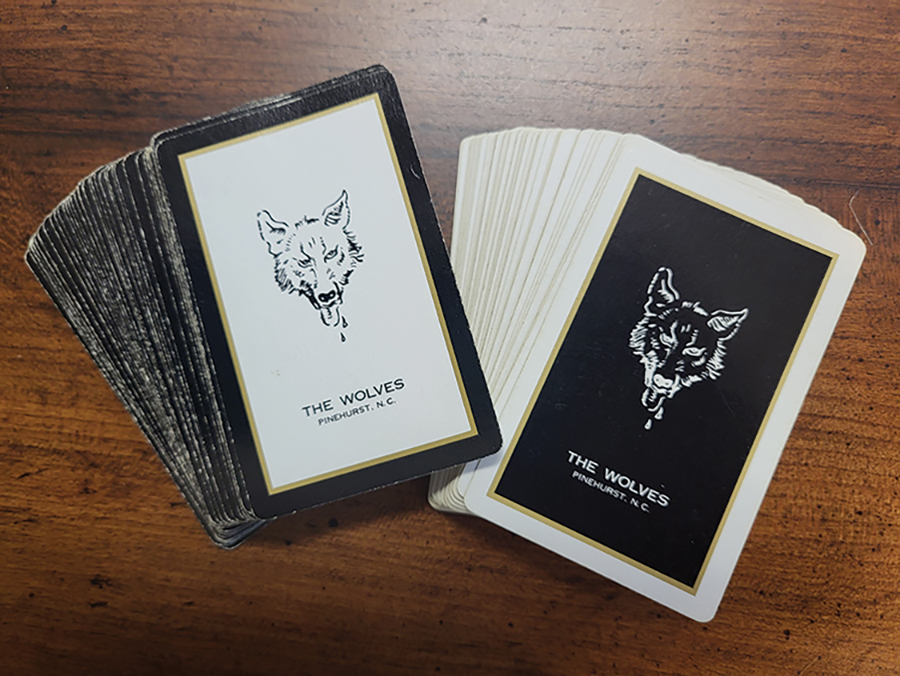
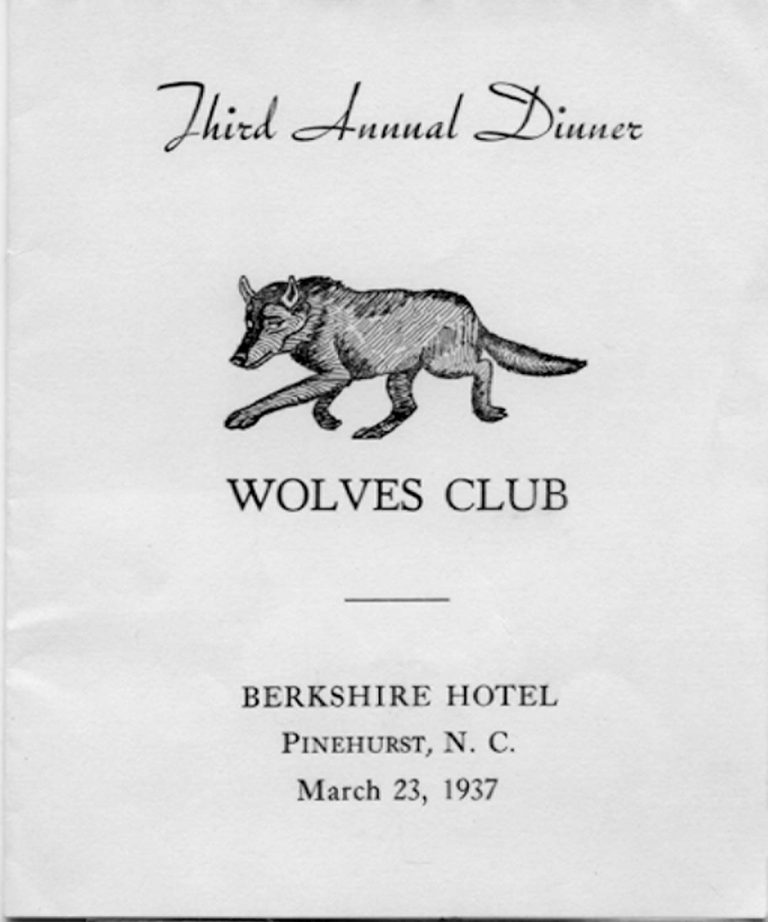
While the Tufts family owned the Berkshire, they leased it to Edwin S. Blodgett, who managed it. In 1957, a room was added for a long-standing gentlemen’s bridge group called The Wolves. In 1959, Blodgett passed away, and his wife, Bessie, finished off the remaining portion of the lease. In May 1960, after 62 years of operation, it was decided to close the Berkshire and demolish it. The Wolves area was left standing, and the club members paid to erect the necessary walls to properly enclose it. It is now part of a private home. Bessie Blodgett went on to become the librarian at Given Memorial Library from 1964-1982. PS Audrey Moriarty is the Library Services and Archives director for the village of Pinehurst.

Poem June 2026

POEM


A Swift Thought

A car engine rattling.

A busted radio preaching the end 

of the world. That soft, hazy sun racing 

behind the horizon, peaking only for the 

thought of crashing. The Earth’s breath, 

hot and fast, blowing the trickled sweat 

from my hairline to my forehead. A swished 

whiskey hits the adrenaline, causing 

a swerve left, then right. The radio speaks, 

Blazing temperatures bring hysteria! I turn it 

off without a care in the world and without a 

second to spare.

— Joi Floyd