Out of the Blue

OUT OF THE BLUE

Hang 'em High

And to their best advantage

By Deborah Salomon

My reputation as an anti-tech — or at least a suspicious subscriber — is well-documented. My computer, a desktop, has a tower, a monitor, a printer and a big-button keyboard. The buttons are yellow. I adore it. My new TV streams but I don’t, although I have listened to a few podcasts, previously known as radio. The horror on colleagues’/friends’ faces when they learn the only apps on my simple cellphone are for airlines is almost comical. Like, if I want to watch Duke basketball, it won’t be from the dentist’s waiting room or a park bench. Ditto a movie.

I’d look silly laughing at Robin Williams as Mrs. Doubtfire on a 3-inch screen. Marlon Brando doesn’t shrink well either. Nor does Kindle own the right heft.

Cellphones are magical inventions that have revolutionized communication. Their tendency, however, to fill every minute of our waking hours with some fact or sound or image leaves me exhausted. Several years ago, I encountered the ultimate: “fine art” channels that stream paintings into and out of a TV hanging over the mantelpiece. They appear, pause, then march off.

That reminded me of how important backgrounds are when “hanging pictures.” Also, the subjects of wall art whether paintings, photos, collections, artifacts. After 17 years of profiling Moore County’s most stunning homes, let me pass along display methods shared by interior designers and homeowners:

Don’t crowd. Give a big piece its own wall, which can be small, to accentuate the painting’s bigness.

Try leaning small frames against the wall, from a narrow shelf.

In a grouping, vary the size of individual pieces.

Think twice before displaying nudes or dead animals, especially with children in residence.

Go 3-D with baby dresses, costumes, dolls enclosed in a deep frame or shadowbox. No better place for a Japanese kimono than a living room wall.

Save family photos for a hallway, to encourage up-close viewing. Number the photos and post identification at the end: “Mom and Dad do a London pub, circa 1985.”

A bathroom is perfect for cartoons or old magazine covers. One homeowner plastered her entire guest powder room with New Yorker covers, which she had saved for the purpose. Another had a life-sized cardboard President George W. Bush welcoming guests. The replica of a dear departed cocker spaniel curled up in his wire crate seemed a bit much.

Before selecting a wall, sit down on nearby chairs and sofas to check line of sight. Same for shafts of sunlight. 

Art in the kitchen is uber-trendy, especially flowers and vegetables, like a basket of shiny purple eggplants or a sliced tomato oozing juice. You can’t go wrong with grazing Holsteins. Antique kitchen implements suspended from pegs work. Use metal or glass pitchers, a blue enamel campfire percolator for vases. I have seen a pizza-shaped clock.

Frame or dry-mount a favorite recipe in Granny’s handwriting. Hang a small blackboard near the back door for messages that won’t fit into a text.

But back to the fine art slide show continuing its march over the mantel, the paintings colorful as pastries in a cafeteria line — I’ll take the apple crumb pie, please, with a scoop of vanilla.

Out of the Blue

OUT OF THE BLUE

Old-Fashioned Flick

Laugh out loud or shed a tear

By Deborah Salomon

I didn’t watch the Academy Awards. I knew that I hadn’t seen a single nominated film. Nor were more than a few actors’ names familiar. Their outfits indicated star quality more than their names. Names of the designers, that is. I felt a pang, especially since most gowns/jumpsuits/pant outfits were downright ugly.

Then, on a wave of “background” music, I was transported to the days when most movies were entertainment, not films or art — when Wednesday night “dinner and a movie” became a ritual for parents who could get a babysitter. When the experience was a rite of passage — a first date for 10th-graders. Will he hold your hand? Will it be slick from buttered popcorn? Remember, no mammoth soda or you’ll be running to the little girl’s room.

All gone with the wind, so to say.

Technology has enriched our lives in so many ways that I feel guilty dumping on it. Still, it has also taken away certain events including . . . the movies. When coming attractions were announced in full-page ads in Life magazine, which revealed a classification, be it Western, comedy, mystery, war, romance, thriller, history, cartoons. Animal stories were always tearjerkers. You could count on a two-hour duration. Four-letter words, absolutely not. Same for nudity.

The theater would be on the main drag, with a marquee protruding from the entrance like the Sunrise Theater. On it, the movie title, maybe a descriptive adjective. “Blockbuster” comes to mind, attached to James Bond flicks released in the 1960s.

On weekends get there early, stand in line and hope for two seats together. If you missed the first 10 minutes no problem, because with run-on showings you could see the beginning two hours after the ending.

First off the newsreel, the coming attractions, hopefully a cartoon, often Roadrunner. Some big cities had all-newsreel theaters popular during pre-TV World War II.

The ticket booth was free-standing, stranded in a covered space where the line formed. Cash was the only tender, and kids got in for a dime.

The larger Southern theaters wafted an aroma that wasn’t just popcorn. Once through the set of doors into the lobby we were hit by a blast which, pre-residential AC, seemed reason enough to watch a mediocre flick. In fact, on an especially steamy day, management hung a “COOL INSIDE’’ banner from the marquee, sometimes obstructing John Wayne or June Allyson, Doris Day or Burt Lancaster.

Ah . . . movie stars. Teenage girls had faves. Most of these glamour pusses, postmortem, are memorialized in a concrete Hollywood sidewalk. Mine was Gregory Peck: looks, talent, intelligence, charisma, he was the total movie star package. As an adult I shifted to Daniel Day-Lewis after a regrettable fling with James Bond.

DDL brings up the maturation of movie — sorry, film — plots. Sure, films outgrew the “movie’’ definition long before Lewis copped the 1989 Academy Award. But My Left Foot was different, as were “foreign film” think pieces unrelated to an IMAX sensory overload.

A movie with a strong and relevant plot plus solid acting doesn’t need too many frills. One Flew Over the Cuckoo’s Nest comes to mind. I know every word of The Godfather.

Oops. I’ve gone uppity when all I mourn is a midweek movie preceded by the Wednesday meatloaf special. I want to laugh out loud or shed a quiet tear. I want to forget my troubles and be transported, with the transit mode being an 8-cylinder rig with whitewall tires. Leave out the bare bits and gimme a gritty story, something I can relate to.

Because when the water gets too deep I just want to buy a little pink ticket . . . and watch a movie.

Out of the Blue

OUT OF THE BLUE

Drama! Stat!

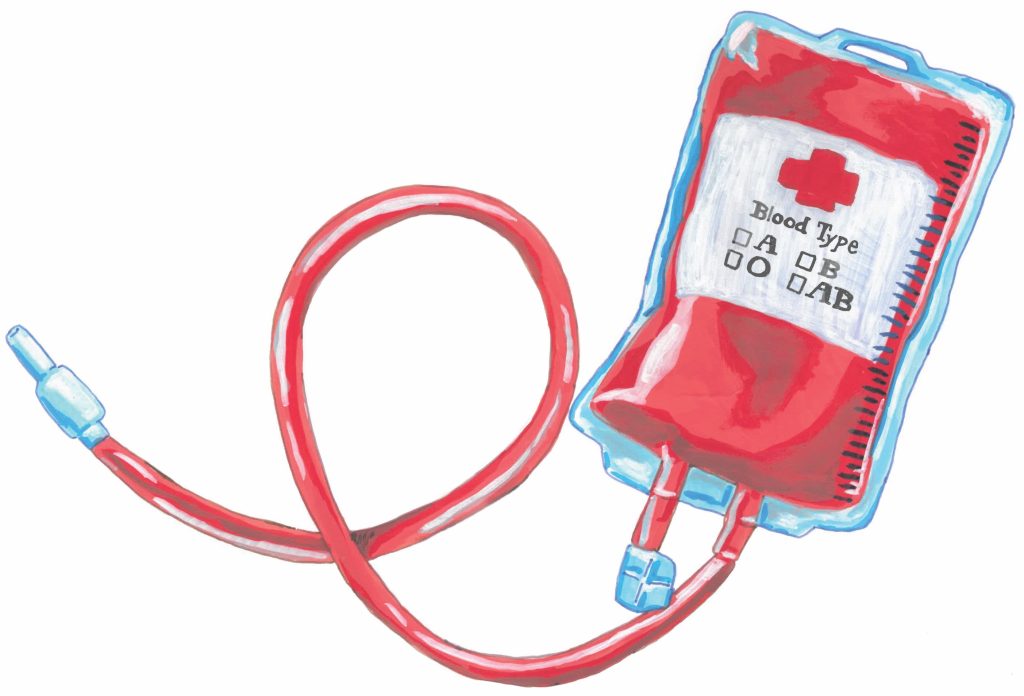
Blood on demand

By Deborah Salomon

A man clutches his throat and falls to the floor of the church/theater/stadium. “Is there a doctor in the house?”

You bet. He/she, almost life-sized, hangs on the family room wall, surrounded by hospital personnel and patients in various stages of maladies du jour.

Long live the medical drama!

Google, er, cough up Marcus Welby, Ben Casey, Doc Martin, Doogie Howser, Dr. Quinn operating on Chicago Med, Chicago Hope, Brilliant Minds, Nip/Tuck, St. Elsewhere, New Amsterdam and dozens more. Some mildly entertaining, slightly informative. Others silly and manipulative. Now, the genre has come full circle led by — yes! — Noah Wyle, who earned his TV-MD as Dr. John Carter on ER.

Now, Wyle’s back as Dr. Michael Robinavitch, the bearded, graying chief resident at a busy Pittsburgh hospital known only as The Pitt, hence the name of the show. Meek ’n’ mild Carter, now irascible, overplays every emotion. He hugs, he storms, he whines, he cries and comforts for which he cleaned up at the Emmys, both as an actor and as a producer/director.

Never mind that the jargon is spit out faster than viewers can absorb, let alone comprehend.

Each episode covers a shift, 8 a.m. till whenever. The cases, mostly emergencies, vary: a snatched-from-the-headlines mass shooting, to an autistic young man’s ankle broken while playing Ping-Pong, to a fistfight (two women) in the waiting room, to a cringe-worthy birth and several deaths. Lots of profanity, of course (cable On Demand), but how about this foray during opening credits — “nudity in a medical setting.”

Fear not, there’s nothing erotic about watching a corpulent lady soak in an ice bath.

The only familiar face is Wyle’s. None of his fellow actors suffered carryover from lawyer shows. But they did display diversity: Latino, Indian, Asian, Black, Caucasian, young, ripped, paunchy, bald, beards and assorted ethnic head coverings.

The hour raced by. I loved it.

My primary bone to pick, so to speak: blood everywhere. On the injured, of course, but spilling off the gurneys onto the floor, running down white fabric and clear plastic gowns, soaking through bed linens? The janitor mopping it up reminded me of the gravedigger scene from Hamlet.

Then, the soundtrack is loud and mostly jargon. I missed many words but, oh, the rolling eyes, the knowing looks. The scary part, assuming situations are realistic and thoroughly vetted, is outcome uncertainty in a busy teaching hospital.

By now you’ve guessed that I’m still a cable subscriber so I endure the ads for prescription drugs. The list of contraindications, it seems, is longer than the benefits, and sometimes ends in death. Yet the medication itself is described in glowing terms by happy, healthy actors. Recently 150-year-old Eli Lilly spent a bundle reimaging itself as “a medicine company” with the m-word replacing scarier “drug.’’ Their TV spokespeople are more likely dairy farmers than stockbrokers. Their profits, just imagine.

I asked a local physician about the dire tech stuff. He said it’s for protection in court proceedings.

“You were warned!”

Another warning: I’m not sure The Pitt will survive many seasons . . . too much medical, not enough drama. Although to its credit, the hour left me with a splitting headache.

Out of the Blue

OUT OF THE BLUE

Strong to the Finish

’Cause I eats my spinach

By Deborah Salomon

Life is a highway, full of bumps and potholes. Signs, too, that mark the journey. A recurring billboard on mine shouts “Spinach.”

Weird. I know.

Spinach has grown into a nutritional superpower, in formats unrecognizable to pre-baby boomers who hated it with a passion reserved for liver.

Who could blame them? We knew it only as tough stringy leaves caked in sand, cooked to slime or, more likely, a ready-to-heat slime from a can touted by Popeye.

Popeye or not, my mother had me convinced the grim reaper would retaliate against non-consumers. So I learned to eat around it, then beg a tummyache, accompanied by retching sounds.

When that failed I insisted that spinach gave me a rash.

Where? Show me, Mommy demanded.

“But you told me never to . . . ”

I was a clever child, inventive even.

I have a faint memory of liking spinach at the Automat, that famous chain of Manhattan cafeterias, after swirling it into their fabulous mashed potatoes. But I celebrated my 10th birthday without ever choking down a plain, stringy, sandy leaf.

Our move to Asheville introduced co-ed junior high and a new breed of spinach called Birds Eye frozen into bricks, either whole leaf or chopped, which my mother cooked to death. She served the mish-mash sans salt, swimming in cooking water. With no divine mashed potatoes. I had to swallow a few spoonfuls — not bad, especially the creamed kind at the S&W cafeteria where we ate supper Wednesday evenings, same time as my first boyfriend and his widowed mother.

My own mother never guessed from whence came this sudden preference. So she stocked the pantry with Popeye. Yuck.

I can’t remember spinach making an appearance at the Duke dining halls, but — and I may be wrong — Anna Maria’s famous bootleg pizzeria in her Durham kitchen lavished leaves on an incredible crust.

Those were the good days, the happy days.

The ’70s and ’80s brought on the glorious California veggie revolution, where color, freshness, nutrition ruled. Some smart grower developed a baby spinach with velvety leaves, short stems and mild flavor. As a food writer I was all over the movement. Spinach was so cool, even chic. It was everywhere: in omelets, smoothies, stir-fries, salads, soups. When in Florence I ordered the famous veal Florentine, smothered in spinach. When my vegetarian daughter came home from Duke, where Anna Maria had become a legend, I invented a baby spinach, sliced strawberry and mushroom salad.

Fresh spinach is now available year-round. A handful cooks down to a spoonful in seconds, so spinach-haters needn’t suffer longer than one swallow. I still add ribbons to my turkey stuffing and, for color, homemade chicken soup.

Life’s highway now approaches an off ramp, but not without a final nod to the Sailor Man. For decades I have lobbied against frozen main and side dishes: too much salt, too many preservatives, too expensive. But Stouffer’s Spinach Souffle makes a tasty meal either as pictured on the box or microwaved and mixed into angel hair pasta.

Thanks for the ride, Popeye. For a guy pushing 100 you’re lookin’ pretty good. Must be the spinach. 

Out of the Blue

OUT OF THE BLUE

We Have a Day for That

From groundhogs to presidents

By Deborah Salomon

One thing Americans excel at, regardless of political affiliation: assigning a persona or a product or an event to every month, ostensibly to inform, otherwise for profit.

Is there another reason to glorify a rodent on national TV, on Feb. 2?

February is top-heavy with such occasions, most celebrated by eating specific foods, beginning with Groundhog Day.

Huh?

No, braised groundhog is not on the menu. Then why the fuss? Something about a shadow and the remaining days of winter despite such a wide weather variant from Maine to the Carolinas that its significance is lost, especially in the era when AI does the thinking and people, the heavy lifting.

Next: Abe Lincoln’s birthday, which for ages was correctly observed on Feb. 12. Then the Uniform Monday Holiday Act of 1968 had the effect of merging Abe with George Washington, born on Feb. 22. When the new law bumped George to a Monday, Lincoln inevitably came to join him, anchoring Presidents Day weekend, which made ski resorts positively ecstatic.

Let Congress do the advertising! French onion soup baked in a crock, a skier’s delight, replaced George’s cherry pie. Lincoln wasn’t much on food. Hence the gaunt cheeks and bony fingers. His favorite meal: corned beef and cabbage.

Sorry, Abe. That doesn’t happen ’til March.

No mention of the other two February birthday boys: Ronald Reagan and William Henry Harrison.

Chinese New Year, a moveable feast this year occurring Feb. 17, is a huge deal in big-city Chinatowns. First parades, then multi-course banquets, each food representing a wish for the coming year (including luck and money), are a prized invitation from chefs wanting to thank loyal customers.

Just don’t ask too many questions about ingredients, in this Year of the Horse. Fire Horse, that is.

Oops, we jumped right over Valentine’s Day, Feb. 14. Maybe that’s a good thing, given chocolate has almost doubled in price since Cupid last launched an arrow. Another conflict: Feb.17 is also Mardi Gras, “Fat Tuesday,” a final splurge before the Lenten deprivations. I visited New Orleans just before Lent, in the Cajun-crazed 1990s, and learned to simmer a gumbo, throw together a po’ boy sandwich. Divine and quite different from bread fried in bottom-of-the-barrel lard used up by European peasants.

Then, certain holidays have been mismatched with their modernized versions. I learned that Thanksgiving, a harvest feast, probably originated in October — and seafood, bountiful off the Massachusetts coast, would have been favored over scrawny, flat-chested wild turkeys spit-cooked over an outdoor fire.

But plump lobster meat dipped in butter . . . fantastic. Ditch Butterballs. Make mine a Butterclaw.

February recalls a poignant memory.

My grandparents lived in Greensboro, on Lee Street, in the house where my mother and her brothers were born. That meant fireplaces, a wood stove, one bathroom tacked onto the back, a half-acre garden where Grandaddy grew a winter’s worth of vegetables that Nanny “put up,” along with pears falling from the tree and grapes from the arbor. The southeast side of the house got full, unobstructed sunshine all winter. By late February Nanny’s daffodils poked through the ground and leaned against the clapboards. She would pick a few still in bud, wrap them in damp rags and then a plastic bread bag, secure the bunch in a cardboard box and mail them to me, stuck in wintry Manhattan. Once in water and sitting on the windowsill, buds burst into bloom.

Nanny was gone (followed soon by Granddaddy, who had come to live with us) when the city appropriated their land, knocked down the house, uprooted the pear tree to widen, and in 2013 rename the street Gate City Boulevard. In February I still mourn Nanny’s faithful daffodils, a promise that spring would eventually warm the concrete city where I waited, impatiently, for my reward. 

Out of the Blue

OUT OF THE BLUE

Ode to Snoball

A kitty worth the scratch

By Deborah Salomon

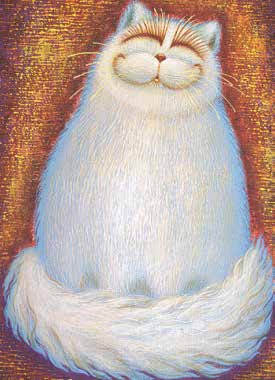
I am a lifelong animal lover/rescuer/advocate. I don’t just donate. I adopt. Since the 1970s I have opened my door and heart to one, two or more hungry, cold, injured, pregnant kitties at a time. Three years ago, when my precious black satin Lucky and fussbudget Missy passed on, I decided it was time to retire. Then, on a frigid January night, a pure white apparition with blue eyes and pink mouth appeared at my door. Her family had moved on, left her behind, I later learned. I opened the door. She crept inside. End — no, beginning — of story.

I named her, obviously, Snoball.

I allow myself just one kitty column a year, in January. The subject is usually behavior. Because cats could not be more fascinating, even when destroying furniture.

Snoball, a princess of incredible beauty, is also a chatterbox: She talks. With inflections that, I imagine, express her opinions on many things, from a big black beetle scurrying across the floor to my reluctance to let her climb into the fridge crisper. Snoball likes lettuce. Even better, she likes chewing the plastic around the lettuce. Maybe cats know their people are polluting the world with plastic. They’re just trying to help.

Other times her chatter sounds like two grannies outbragging each other re: grandkids’ achievements. Snoball plays the lawyer card, which always wins.

I know from experience that two cats are easier, although more expensive, to live with than one. They keep each other busy. Ever noticed how noses twitch silently as they watch stupid commercials on TV? If it’s a “fixed” male-female duo the gal usually calls the shots. Sometimes she develops a fetish. I once had a kitty named Sophie who had a corn fetish. She would attack the grocery bags I brought in, looking for an ear of corn. Woe was me if the supermarket failed in December. I would put the ear on the floor where Sophie covered it, like nesting with kittens. She lost interest when the husks dried up.

Cats are tricky eaters — a problem since their food is so varied and expensive. Instead of canned I usually buy boneless chicken on sale, boil, chop fine and freeze with broth in batches, which I thaw and mix with high-quality kibble. Snoball greets this yummy meal with mixed reactions, which include sniffing, walking away, waiting to see if anything better’s forthcoming before returning to lick-’n’-pick.

But if a meal is late, she lets me know with a dirty look and snide remark. I guess she forgot about being outside, cold and hungry.

Despite a reputation for aloofness, kitties do know how to initiate and return love. Snoball’s signal is the long-handled brush. Brushing puts her in a trance. So does stretching out across my lap for the rubdown, which releases a cloud of white fur requiring a special rake to pry it off the carpet.

When not napping on my sofa or upholstered chairs, Snoball, an inside only kitty, follows the sun around five window perches. Two overlook bird feeders. She chatters the squirrels away, much preferring bird antics, which she follows like a tennis match.

Only once did she attempt an escape . . . in the pouring rain. Lesson learned.

Still unlearned . . . to keep those wicked claws furled. My hands and arms are black and blue with bruises, just from play, of course. But when Snoball wants to play, “no” is not an answer. Her favorite nip is a bare ankle. I bought an expensive hopping toy for distraction. She bestowed a deprecating look and swatted my knee.

But knowing she’ll be at the door when I arrive home, and at my feet when I climb under the covers, is worth a few drops of blood.

Because she’s my Snoball . . . and I love her. 

Out of the Blue

OUT OF THE BLUE

Double the Spirit

Warm, kind and generous

By Deborah Salomon

By rights, this column should be brimming with “Christmas spirit.’’ But Santa looks worried. Can the “Christmas spirit” survive with Yule merch suffering tariff shock?

I am the product of a mixed marriage. My father grew up in the Lower East Side Manhattan ghetto of poor Russian and Polish immigrants — all ultra-orthodox Jews. He rejected the strict confines but loved the culture, especially the food. My mother was raised strict Southern Baptist, in Greensboro: no dancing, playing cards or drinking.

They both loved Christmas — the gifts, a big tree with lights, the cookies and fruitcake. Who wouldn’t love the Christmas pageant at Radio City Music Hall with a live donkey, and the animated windows at the Fifth Avenue department stores? Maybe this wasn’t proper but it sure was fun, especially with a new Mary Poppins book under the tree.

I never heard of Hanukkah, or latkes (potato pancakes fried in symbolic oil), or lighting candles for eight days to remember a brave military leader and the miracle of a lantern burning eight days on enough oil for only one.

That changed when we moved to Asheville, which had a vibrant Jewish community. We joined the Reform Temple. I attended religious school.

I married into a relaxed Jewish family and lived for decades in an orthodox Montreal neighborhood. I learned all the intricacies of orthodoxy, but our family was staunchly Reform. Plenty of latkes. No Christmas. But the two holidays, celebrating vastly different events but often falling within the same week, shared one thing: spirit. A spirit more ecumenical than divisive. A happy, respectful spirit. A spirit that addresses the secular and the sacred.

By the ’60s,“Happy Hanukkah’’ had joined the American holiday lexicon. Christian friends enjoyed chanting the alliterative words without knowing the backstory . . . or the preferred spelling. Everybody enjoyed the enthusiasm, the small gifts, one on each of eight nights. Better yet were the close family moments with grandparents and cousins. In other words, the Hannukah “spirit.”

This year Hanukkah ends a few days before Christmas. But a kind spirit is not lit by candles or Rudolph. Certainly not by the latest techno-gadget which will, like those must-have Cabbage Patch dolls, fade from favor. I don’t measure the Christmas spirit in cash. It could be an outing for a senior who no longer drives. Or gently used children’s coats, freshly dry cleaned, in a zippered hanging bag. Maybe an IOU for a dozen rides to church, or a tabletop tree decorated with tiny lights and peppermint Life Savers. I once had a friend who gave out complimentary car washes; another, free babysitting. In many cities Jewish organizations take over volunteer jobs at hospitals on Chistmas day, while church choirs carol at nursing homes.

The Christmas spirit is warm and kind and generous no matter how it’s implemented, and by whom. Participate. Enjoy. Finish off the crown roast with crispy potato latkes. Then pick a language and say a prayer for a better year ahead.

Out of the Blue

OUT OF THE BLUE

Fashionista Frocks

Be-wear the bell bottom

By Deborah Salomon

No, no. Say it isn’t so.

Bell bottoms are back, either solo or as the mean end of a neon pantsuit, maybe with a nipped-in jacket.

Who’s wearing them? Start with the fashion forward TV anchors not yet born in the ’70s, when a similar craze swept America. Of course then they were stretched across the lean, lithe body of John Travolta, gyrating in Saturday Night Fever.

Have you seen him lately?

This second coming snuck back last spring, first as “relaxed” or “unstructured” pants that relieved decades of stovepipe straights and skin-tights. Trouble was, they just looked baggy. Pajama-bottom baggy, especially the jeans.

Jeans, I realize, are like martinis, not to be messed with. Boot cut? Maybe. But never baggy.

Bell bottoms, which flare below the knee, became part of the British Royal Navy uniform in the 1800s. They could be rolled up to prevent getting wet when wearers swabbed the decks. Sailors were even instructed to, in an overboard situation, remove their pants, fill the legs with air, tie them together and use it as a flotation device. I immediately pictured King Charles II thusly occupied and fell over laughing.

Bell bottoms have no place on cowboys, either. Flapping denim might become entangled with stirrups. Boot cuts were as wide as you needed to go to fit over, well, your boots.

Fashion has become a quixotic state of affairs, an art form that reveals much about its wearer. Amish apparel, for example, reflects the tenets of their faith and their extreme modesty. In the secular world our eyes become so accustomed to a fashion that a sudden variant provokes consternation. I remember when, after a decade of miniskirts, the maxi came into vogue, provoking gasps of horror until eyes and minds adjusted.

Horror belongs on the same page as bell bottoms. These pants, as well as leisure suits and sideburns, opened the door to generations of severely repressed men, to whom wearing a pink button-down was practically a federal offense. Ditto earrings and psychedelic prints. “Free at last,” the former preppies shouted as they boogied across the dance floor to “Stayin’ Alive.”

New for fall, ladies can puzzle over the baby doll dress with high waist and very short circular skirt worn over bare legs. In truth, fashion has been an issue since Eve wore fig leaves. Giorgio Armani’s recent funeral turned into a glitterati fest. The clock missed a tick or a tock when Anna Wintour retired from Vogue. And Mona Lisa continues to smirk as she fills out a frumpy brown frock revealing an inch of cleavage. Now, like a fat bear approaching hibernation, I will cease my occasional fashion appraisal, pull on some sweats and take a nap.

Out of the Blue

OUT OF THE BLUE

Sound It Out

A serious case of onomatopoeia

By Deborah Salomon

Lately, when trying not to think about the mess this world is in, my mind wanders to the etymology, history, development, significance of words, especially when uttered by powerful people. Words are free. Anybody can invent a word. Maybe it will enter the lexicon, maybe not. I attempt a colorful vocabulary as a writer and, before that, a student. Nothing a professor likes better than a term paper livened with 50-cent words. Spelled and used correctly, of course.

My favorite words showcase onomatopoeia . . . quite a whopper itself, meaning imitating the sound it defines. The usual illustration is Edgar Allen Poe’s “The Bells,” where sing-song repetition (and alter-whoppers like “tintinnabulation”) suggest Quasimodo pulling the ropes at Notre Dame. The cathedral, not the university. Strange how Americans pronounce those two words differently when referring to the dames residing in Paris and South Bend.

Next conundrum: Which came first, the sound or the word? My mind began spilling out more candidates than M&Ms on an assembly line — a gross exaggeration called hyperbole. Yeah, there’s right much hyperbole floating around these days.

Consider “whistle.” In order to articulate the word, one must purse the lips — as though to whistle. How about “gallop’’ which, when rhythmically repeated mimics the clip-clop of a horse’s hooves. “Soar,” dragged out a bit, allows the kite, then the voice, to rise before leveling off.

“Peck” is as staccato as a hen wandering the barnyard. “Pitter-patter” has no meaning, except how a toddler sounds running across a bare floor in his or her first real shoes. Sadly, it faces obsolescence since most contemporary kiddie footwear belongs to the rubber-soled variety, formerly sneakers until diversified to fit a variety of sports, yet stubbornly called “running” shoes.

Maybe I’m putting the cart before the clip-clop. Not if you agree that “thunder” owns an unspoken rumble that influences enunciation. Same with “scream,” commonly accompanied by a facial contortion, à la Janet Leigh in a Bates Motel shower.

Occasionally, a trope inspires physical rendering, the best being “describe a spiral staircase without using your hands.”

I even dredged up a few words that connect only to their sound, without a clear meaning, like the ocean that “laps” the shore. Lap? Maybe a kitten lapping milk from a saucer —more peaceful than a runner going once around the track in rubber-soled footwear.

Some words, of themselves, trigger action. Say “blink” without blinking.

Once upon a time, meaning what follows may be apocryphal, schools divided their curriculum into headings. My favorite was Language Arts, which likens the study of English to painting sunflowers, a lily pond, maybe a girl with a pearl earring. Right on, especially when active verbs move the brushstroke along. “Mona Lisa smiles . . . ” captures the action better than “Mona Lisa is smiling,” which she isn’t, according to cognoscenti, who mention bad teeth. “Noah fears the water” hits harder than the passive “Noah is afraid of the water.”

Good thing he got over that.

But my best word is “exacerbates,” which shivers like sharp edges clashing.

Conclusion: Words began as a collection of rumbles, splashes, whispers, clicks, chimes, growls, grunts and rustles. Written or spoken, words have become the palette, the gradations, the pictograms, an evolving commodity and, thank goodness, the only thing for which I’m rarely at a loss.

Out of the Blue

OUT OF THE BLUE

Wrap and Roll

Judging a Hershey’s Kiss by its cover

By Deborah Salomon

These days, given world trade issues, where products originate has become a political issue. Halloween and Christmas won’t be the same if tariffs outprice merch made in China, where neither holiday is celebrated but manufacturing, even with shipping, costs less than producing the stuff Stateside.

Pondering that reminds me of how the Industrial Revolution brought about factories filled with machines that turned out never-dreamed-of products. Some resulted in humorous truisms like, “You can’t put the toothpaste back into the tube.”

How it got there in the first place? Some clever fellow designed and built an assembly line performing a series of functions that turned a flat piece of metal into a tube filled with paste.

These literal “machinations” made mass production possible . . . and a lotta engineers rich, since each product required the design and production of its own machine. Some machines became famous in their own right — like Hershey Kisses, wrapped on a conveyer belt the size of the Jersey Turnpike at the rate of 20,000 a minute at the Hershey, Pennsylvania, factory.

Ever wonder how Oreos are assembled? Are the round wafers identical, top and bottom? The Nabisco website isn’t exactly forthcoming, fearing patent infringement, I guess. At the rate of 400 billion a year in myriad varieties, their machines are calibrated for uniformity. The three-step process turns the chocolate or vanilla wafer on its back, releases the vanilla filling, adds the second wafer. No overhang tolerated. Temperature keeps the filling from oozing out . . . but how is that temp maintained in a factory?

Any malfunction in the process results in the loss of thousands of cookies, which must be converted into the crumbs populating ice cream, yogurt, pie crusts, maybe toothpaste.

I still haven’t figured out how frozen green peas get into plastic bags without spilling all over the factory floor. Another packaging puzzler: the sodden pad that comes between chicken parts and the polystyrene tray. Do we pay for this run-off weighing half a pound?

The most fascinating mechanical wonder is the machine that makes individually wrapped slices of orange processed “cheese.” Betcha never noticed that packages are labeled American “slices” or “singles,’’ not “cheese,” because their formula does not conform to government standards. Unfortunately, Americans value wrappings and convenience more than the flavor of natural cheddar, which melts nicely but develops mold if not properly wrapped and stored. Grilled cheese lovers are squeamish about trimming specks of mold — another quirk for the French to mock.

By the mid-20th century, packaging rendered a brand or product instantly recognizable. Oatmeal still comes in cardboard cylinders, maple syrup in glass jugs with handles, eggs in sectioned boxes. Mayonnaise jars are the same shape, but plastic. The glass originals still deliver soup to a sick friend. Better pasta sauces and a few fruits still come in canning jars with metal twist lids, priced accordingly. Occasionally I see a tall, tin saltines container. In the past, these monoliths enjoyed rebirth as crayon bins. Or Lego storage. The kids made little magnetic Scottie dogs creep up the sides.

Am I the last granny to remember Velveeta bricks in wooden “crates” with sliding tops? Or individual serving yogurts in half the flavors but with snap-on lids?

I still wonder why granulated sugar comes in paper bags, which absorb enough moisture to allow hardening into a brick.

As with mayo jars, I try to reuse containers with secure lids instead of buying new ones at the $1.25 store. For years, the best were 32-ounce Food Lion house brand semi-opaque sherbet containers with a tight lid, perfect for stacking homemade chocolate chip cookies for the flight north to my grandsons. Then FL changed the size and material.

Darn. Took me forever to find a replacement, this time at Lowes Foods: 54 ounce Kemps sherbet, with a secure lid and room for extra cookies.

But first somebody has to eat 54 ounces of sherbet.

Wild strawberry’s the best.