The Naturalist

THE NATURALIST

Sunny with a Chance of Murmurations

The amazing spectacle of blackbird flocks in eastern North Carolina

Story and Photographs by Todd Pusser

A cold, frosty morning gives way to bright blue skies over rural Tyrell County. Vast agricultural fields, interspersed here and there with patches of dense forest, border the dusty backroad. This region, just west of Lake Phelps, North Carolina’s second largest natural lake, is the winter home to an incredible wildlife spectacle.

The road continues straight as an arrow for miles and miles, providing clear, unobstructed views across freshly plowed fields. Far up ahead, above the edge of an immense soybean field, I spy what looks like a plume of black smoke rising up from the ground high into the Carolina blue sky. As I drive closer, the plume morphs into a pulsating cloud that suddenly splits in half, as if cut by an invisible ax, only to rejoin a few seconds later. The cloud rapidly changes shape again, this time looking like a massive black beachball dancing above the horizon. A few seconds later, it transforms into a thin-waisted hourglass. Then, a tornado-like funnel.

I pull off the shoulder of the road and hop out of the car with a pair of binoculars in hand. The amorphous cloud soon reveals its true identity: an immense flock of blackbirds twisting and turning together in perfectly coordinated movements. Scientists describe such behavior as a murmuration. I describe it as jaw-dropping.

Soon, the flock passes directly overhead. The birds’ high-pitched chirps, combined with the sound of thousands of wings flapping together in unison, is almost deafening. For nearly a full minute, the flock flies by uninterrupted and settles into a row of leafless trees on the opposite side of the road. There, they perch and begin to preen their feathers. The bare branches of the trees look as if they are draped in thousands of black Christmas ornaments.

The pause in the aerial acrobatics allows me the opportunity to examine the flock in more detail. Staring through my binos, I note that the vast majority are red-winged blackbirds, a beautiful species in which the males sport jet-black bodies and bright red shoulder patches that glow like campfire embers under the afternoon sun. Scattered here and there among the blackbirds are hundreds of common grackles and brown-headed cowbirds.

Before long, the birds take off from the trees, cross back over the road and land in the middle of the field, where they begin to forage for an afternoon snack. This is the moment I have been waiting for. I pull out my tripod from the back of the car, and grab my camera and telephoto lens.

More and more birds settle down into the field. Soon the ground looks like it is covered by a living black carpet. Experience has taught me that this many birds together in one place will not go unnoticed for long. Hungry eyes will be watching this all-you-can eat buffet.

As if on cue, the arching flight of a northern harrier appears over an irrigation ditch running along the far side of the field. With rapid wingbeats, the hawk suddenly dives toward the ground, near the edge of the flock. Instantly, thousands and thousands of birds launch simultaneously into the air, arching high above the horizon. A new murmuration has formed.

It rolls across the field like a giant black tidal wave. I marvel how each individual bird can instantly change direction to match its closest neighbor. Essentially, a murmuration acts as a single giant superorganism. Scientists have applied all sorts of fancy logarithms and computer modeling to help explain the mechanics of murmurations. Despite their best efforts, the intricacies of such vast coordinated movements of birds remain something of a mystery.

However, one fact is clear. A whirling mass of blackbirds can easily confuse a predator like the northern harrier. And if by chance a predator is successful in procuring a meal, the odds against one particular bird being the victim, out of tens of thousands, is small. There is safety in numbers.

Murmurations in coastal Carolina are often due to the presence of an aerial predator. Over the years, I have witnessed peregrine falcons, merlins, Cooper’s hawks, sharp-shinned hawks and northern harriers all pursuing the vast flocks of blackbirds. Once, I watched a northern harrier successfully knock a red-winged blackbird to the ground. As it stood over the bird, picking feathers off its breast, a bald eagle suddenly swooped in and chased the harrier away, claiming the blackbird as its own prize.

On this occasion, the northern harrier is less successful. As the murmuration suddenly pivots, the harrier falls behind.

Continuing to careen and pirouette across the sky, the avian ballet moves farther away and disappears across the far side of the field, leaving me standing alone. All that remains are a few feathers scattered here and there on the ground, the only clues left behind by one of nature’s most amazing shows.

Focus on Food

FOCUS ON FOOD

Hearty Breakfast in Bed

For the love of eggs and toast

Photograph and Story by Rose Shewey

Here is a piece of advice I would give to my younger self: Celebrate. Everything.

So what if Valentine’s Day is a commercial holiday? Get out the heart-shaped waffle iron; make a card if you don’t want to buy one; pick some wild blooms and simply enjoy the privilege of celebrating with the people you love. Which, of course, you can do any day of the week. There’s no need to wait around for a specific day in February, but there’s also no need to not do these things come Valentine’s Day. There is no better excuse to start the morning with mimosas and hugs, because — why not?

No gifts, though. I won’t budge on this. My husband knows and, I am fairly certain, appreciates it. He’s having a hard enough time picking gifts for the usual occasions (I’m impossible to shop for), so he’s off the hook for this quasi-holiday. He never fails to make cards for me together with our son, though, which is the most precious gift of all.

But back to heart-shaped things. Here is a subtle but eye-catching way of adding romantic flair to your morning meal: Try this heart shaped egg toast with herb butter. It’s quick and easy. You won’t need Barbie-pink frosting or rainbow glitter sprinkles and, with a minor adjustment using plain butter instead of garlicky butter, the youngest family members will dig in, too.

Garlic and Rosemary Butter Bread with Eggs

(Serves 4)

6 ounces butter, room temperature

1-2 cloves garlic, minced

1 sprig rosemary, finely chopped

4 thick slices of bread (such as fresh sourdough)

4 eggs

Salt and pepper, to taste

In a small bowl, combine the butter, garlic and rosemary. Mix with a fork until all ingredients are well incorporated; set aside. Using a heart shaped cookie cutter (or working freehand with a knife), remove the center of the bread, but be sure to leave enough of an edge so the bread won’t fall apart. Spread a generous amount of butter on one side of the bread and the cut-out center piece. Melt 1-2 tablespoon of prepared butter in a skillet and fry the bread and cut-out center piece over medium heat on the plain side first for 2-3 minutes, then flip the bread and cook the buttered side for an additional 2-3 minutes. Turn down heat to low and crack an egg into the center of the bread; cover with a lid. Cook on low heat until the egg has the desired level of doneness, about 3-7 minutes. Add salt and pepper, to taste, and serve immediately.

PinePitch

PINEPITCH

PinePitch

Spinning Wheel

Have a spot of tea with the people who make the pots on Saturday, March 8, shop-hopping along the N.C. Pottery Highway in Seagrove, from 10 a.m. to 5 p.m. Enjoy tea tasting, homemade treats and samples from The Table, Seagrove Cafe and Carriage House Tea. For additional information visit www.teawithseagrovepotters.com.

Oh, How Times Have Changed

In 1946, with a campaign budget of $100, Jane Pratt was elected by a landslide to represent the state of North Carolina in the United States Congress. The Moore County Historical Association, in association with the Weymouth Center for the Arts & Humanities and The Country Bookshop, will host Marion Elliott Deerhake in discussion with Kimberly Daniels Taws about Deerhake’s book Jane Pratt: North Carolina’s First Congresswoman, on Thursday, Feb. 6, at 11:30 a.m. For further information go to www.ticketmesandhills.com.

And Not a Drop to Drink

The Artists League of the Sandhills will hold an opening reception featuring the work of its members in the exhibit “Water, Water, Everywhere” on Friday, Feb. 7, from 5 p.m. to 7 p.m., at the Artists League of the Sandhills, 129 Exchange St., Aberdeen. For additional information visit www.artistleague.org.

A Not So Hasty Judgment

The Ruth Pauley Lecture Series presents “Everyone’s a Critic,” with Adam Feldman, on Tuesday, Feb. 18, at 7 p.m. in BPAC’s Owens Auditorium, 3395 Airport Road, Pinehurst. Feldman is the chief theater critic at Time Out New York. He covers Broadway, off-Broadway, and off-off-Broadway, as well as cabaret, dance shows and other events of interest in New York City. He’s the president of the New York Drama Critics’ Circle, a position he has held since 2005. The lecture is free of charge, but registration is required at www.ticketmesandhills.com.

Be the Best Lawn You Can Be

Sure, it’s February, but can spring be far away? Flowers bloom. Birds sing. And the front yard is a disaster. When do I fertilize? How much water is too much? Where’d all those weeds come from? On Friday, Feb. 21, at 1 p.m. Dr. Grady White, a turf extension specialist at N.C. State, will answer those questions and more in a lecture at the Ball Visitors Center in the Sandhills Horticultural Gardens, 3245 Airport Road, Pinehurst. To register for his talk go to the Sandhills Horticultural website at www.sandhills.edu/horticultural-gardens and click on “upcoming events.”

Encore!

Joe DeVito reprises, well, Joe DeVito when the comedian from Fox News channel’s “Gutfeld!” returns to BPAC at 7 p.m. on Friday, Feb. 28, in the Owens Auditorium, 3395 Airport Road, Pinehurst. For information and tickets go to www.ticketmesandhills.com.

Big Voices in Little Bodies

The Sandhills Repertory Theatre presents Tiny Giants, a salute to the petite powerhouses from Judy Garland to Lady Gaga, with Kelli Rabke and John Fischer, beginning Saturday, Feb. 8, at 7 p.m., at the Sunrise Theater, 250 N.W. Broad St., Southern Pines. There will also be a matinee performance on Sunday, Feb. 9, at 2 p.m. To learn more go to www.sandhillsrep.org or call (910) 692-3611.

Swing and a Hit

The Sandhills Community College Jazz Band gets you in the mood for Valentine’s Day with its concert “Swingin’ Sounds of Love and Romance,” featuring classic and modern songs in Big Band arrangements, on Monday, Feb. 10, from 6:30 p.m. to 8 p.m., at BPAC’s Owens Auditorium, 3395 Airport Road, Pinehurst. For further information go to www.ticketmesandhills.com.

Birdwatch

BIRDWATCH

Early Nesters

Winter suits great horned owls

By Susan Campbell

It is mid-winter across the Old North State: a time of cold temperatures, wet weather and hints of the longer days to come. Despite the seemingly inhospitable conditions, there is a group of birds already preparing to raise new families: owls. Of the three species that are regulars in our area — great horned, barred and eastern screech-owl — great horned owls are the first of the year to breed.

Being nocturnal creatures, owls are not as appreciated or as well understood as other raptors. Though owls are known for their impressive ability to locate and catch prey under the cover of darkness using their phenomenal hearing and night vision, few people are acquainted with their natural history. Great horneds are adapted to breed very early, well ahead of their cousins, the hawks, when rodents are plentiful and nesting locations are unoccupied by other species.

Great horned owls, whose name originates from ear-like feather tufts on the top of their heads, are one of the most common owls in North America. They can be found in a variety of habitats across the continent. This species is considered the top avian predator in most ecosystems with individuals preying on assorted small mammals and birds, including other owls. Great horneds are even capable of displacing eagles if they are so inclined. These birds are non-migratory, and individuals associate with the same mate year-round on an established territory. In our area, they are found in open agricultural fields, mixed grassy and wooded areas like golf courses, and in both pine stands and hardwood forests. Until late fall, when they begin their distinctive hooting, they tend to go unnoticed.

Pairs of great horneds begin courtship calling or “dueting” around Thanksgiving. The four-hoot reply of the female is somewhat higher pitched than the hooting of the male. Mates typically strengthen their bond by the end of December. In January they will choose a nest site, usually a nest built by another species such as a red-tailed hawk, crow or even gray squirrels. They make few improvements other than perhaps lining their nest with some of their soft body feathers. The female lays one to five eggs, and then both adults share incubation duties for the next month. When the young hatch, they are covered in thick downy feathers but must be continuously brooded by the parents for the first two weeks, until they are large enough to thermoregulate independently.

Even though the temperatures are chilly, nights are long and mean more hours for the parents to hunt food for their ravenous offspring. At eight weeks, the youngsters begin to make short flights away from the nest, though they are closely watched and fed by their parents for several more weeks. Like the adults, the immature owls have gray, brown and black striped plumage, which is effective camouflage against the nest or vegetation during daylight hours.

Although hearing a great horned owl calling at night in winter is not terribly unusual, seeing one during daylight is a special treat — no matter what.

Golftown Journal

GOLFTOWN JOURNAL

The Babe

And the overlooked Slam Bang

By Lee Pace

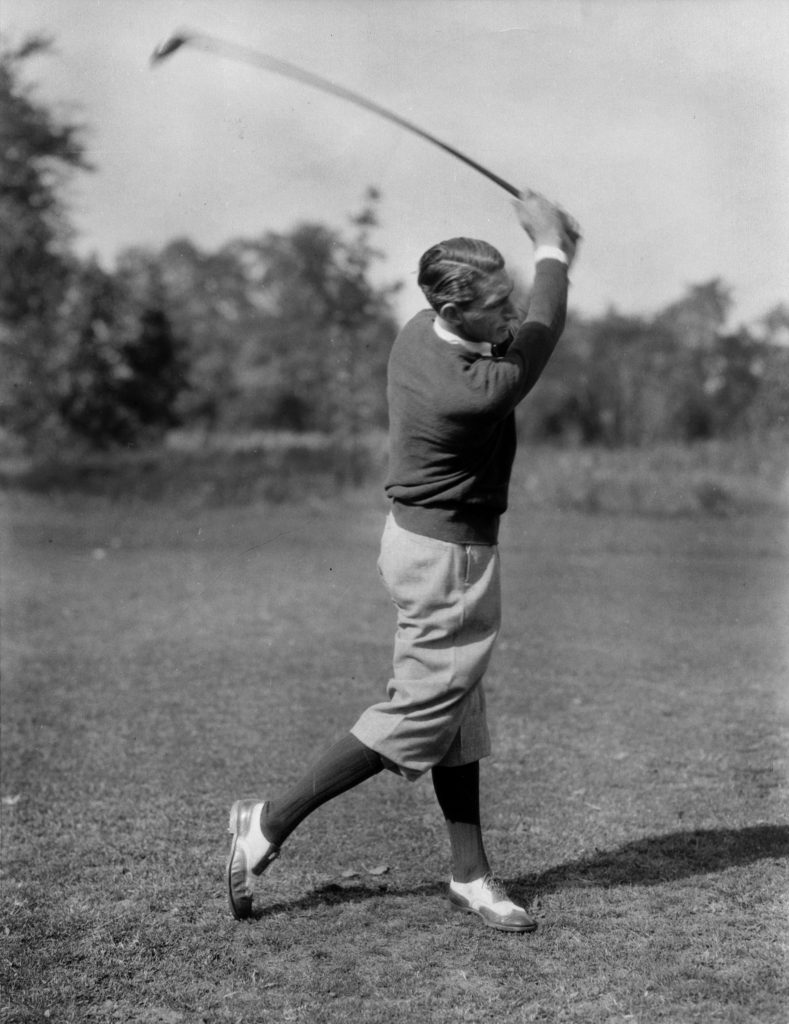
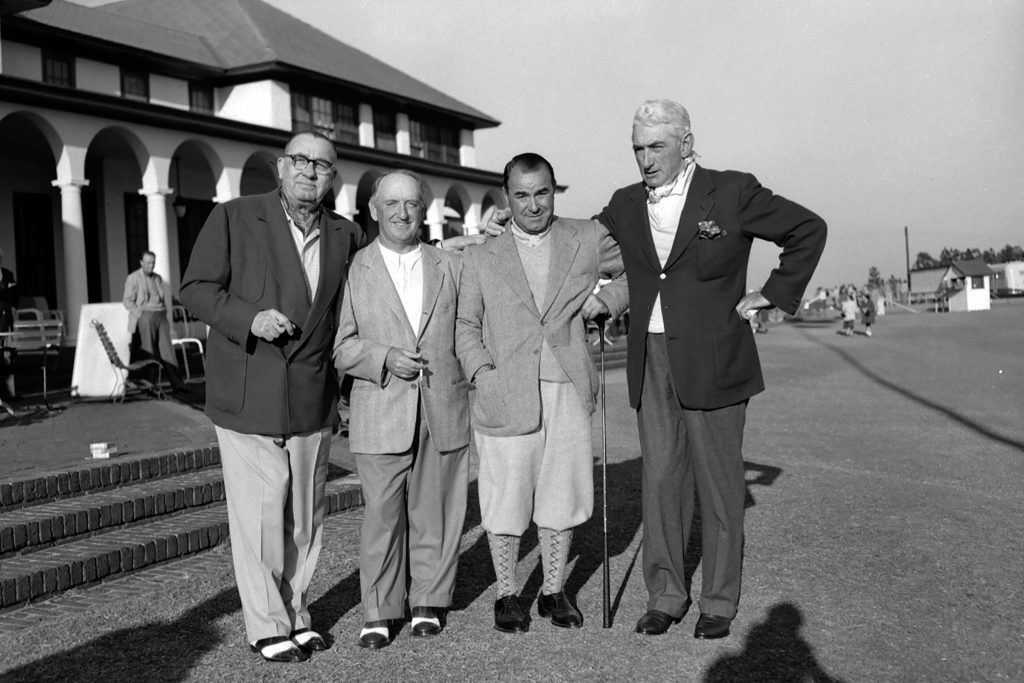
Golf history is full of memorable win streaks — Bobby Jones and the original “Grand Slam” in 1930, Byron Nelson and his 11 straight PGA Tour wins in 1945, and of course the “Tiger Slam” accomplished over the 2000-01 major championship seasons by Tiger Woods.

Not as well known, however, is the “Slam Bang” that Babe Didrikson Zaharias compiled in 1946-47 by winning 17 consecutive golf competitions, from Texas to Pinehurst, from Miami to the nation’s capital. In fact, perhaps no source other than The Pinehurst Outlook referred to Zaharias’ unprecedented run of domination in such cutesy fashion. Run an internet search on the phrase in that context and you’ll come up dry.

But there it is in one of the Outlook’s weekly editions in early April 1947 as it chronicles the Babe “winning everything in sight on the winter and spring tour” and being “under unusual strain as she wanted to complete the most remarkable sequence of victories ever accomplished in women’s golf.”

After winning two gold medals and one silver in track and field in the 1932 Olympics, taking up golf in 1935 and playing in 1938 in a men’s pro golf tournament, the Los Angeles Open, Zaharias had regained her amateur status in golf in 1942 and was at the top of the game’s talent pyramid as World War II came to an end. She channeled her immense athletic skills into golf by hitting a thousand balls a day. Her strength and power off the tee gave her a huge edge on the field — she amazed sportswriter Grantland Rice by hitting two shots to the edge of the 523-yard seventh green at Brentwood Country Club in Los Angeles. And her confident (some would say cocky) personality augmented her aggressive, go-for-broke style on the course.

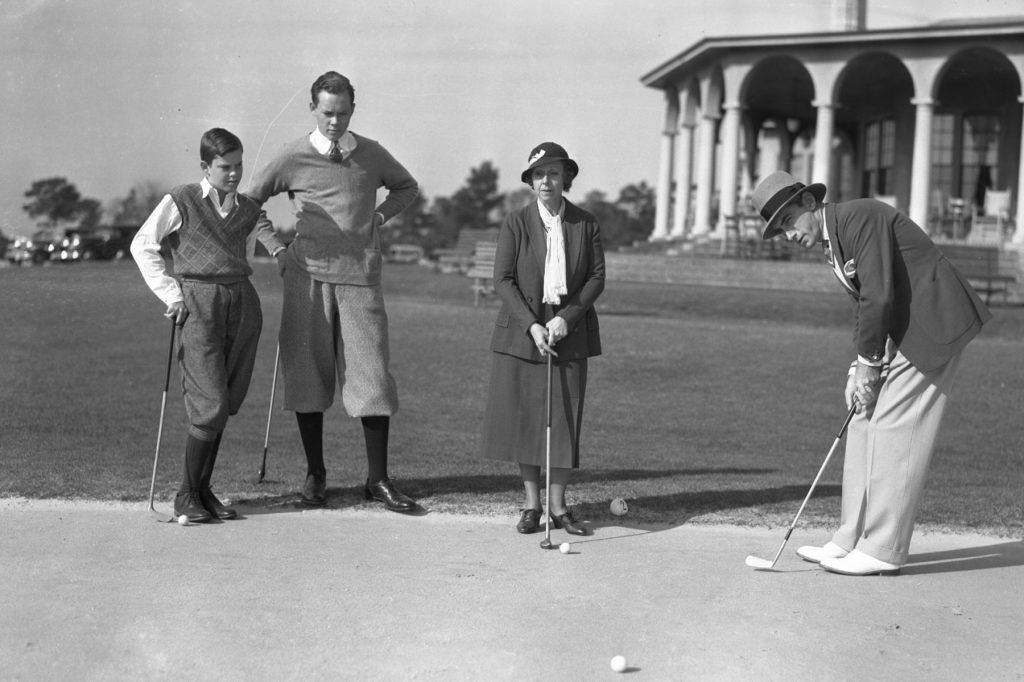
Peggy Kirk Bell, the matriarch of Pine Needles Lodge & Golf Club in Southern Pines from 1953 through her death in 2016, first met Zaharias in the mid-1940s on the women’s amateur circuit and one day got an invitation to be Zaharias’ partner in the Women’s International Four-Ball in Hollywood, Florida.

“Babe said, ‘I need a partner, and you might as well win a tournament,’” Peggy said. “That’s how confident she was. I was really nervous the day of the first round. She could sense that I was on edge, and she told me to relax. ‘I can beat any two of them without you,’ she said. ‘I’ll let you know if I need you.’ Of course, we won the tournament.”

The Babe’s winning streak started in the summer of 1946 in the Trans-Mississippi in Denver and continued with the Broadmoor Invitation and All-American Championship, and then Zaharias’ one and only victory in the U.S. Women’s Amateur, that coming at Southern Hills Country Club in Tulsa. She won the Texas Women’s Open in the fall of 1946 and took the rest of the year off, relaxing at home in Denver with her husband, George.

“I was ready to take a long layoff from golf competition and just enjoy my home for a while,” Zaharias said. “But George had other ideas. He said, ‘Honey, you’ve got something going here. You’ve won five straight tournaments. You want to build that streak up into a record they’ll never forget. There are some women’s tournaments in Florida at the start of the winter. I think you should go down there.’”

So Babe opened 1947 with wins in Tampa, Miami, Orlando and Palm Beach, then teamed with Peggy Kirk (who would marry hometown sweetheart Warren Bell in 1953) in the International Four-Ball. The tour moved northward to Ormond Beach, St. Augustine and then The Titleholders in Augusta, Georgia, victories all. She had won 13 straight when the Women’s North and South opened on Pinehurst No. 2 the second week of April.

The Outlook noted that Babe was “getting even odds” versus the entire field, and the implication was that a bet could be placed at the Pinehurst clubhouse. It reported that in an early match Zaharias “hit a screaming brassie that left the gallery gasping” and counted the spectators for the championship match featuring Zaharias against Louise Suggs at approximately 2,500 — “the largest gallery ever.”

Suggs was a 23-year-old golfer from Atlanta who had won two North and South Amateurs in 1942 and ’46 and would later become a heated rival with Zaharias on the LPGA Tour that was founded in 1950. The Outlook noted that Suggs seemed to garner the sympathy of the gallery and that it was only human nature as the fans “wanted to see the little one beat the strong one.” Suggs conceded an early putt to Zaharias and soon after Zaharias refused the same courtesy toward Suggs, who then missed the short putt.

“After this incident, the match became a real fight,” the newspaper noted.

Babe was 1-up going to the 18th hole, but her approach shot flew to the right and landed against a tree. She tried a bank shot against the tree that didn’t work out and lost the hole, extending the match.

“That almost killed me,” Babe said. “George was just going crazy. He later said, ‘I thought for sure you were going to lose one and break the string.’”

Suggs flew the green with her approach on the second extra hole, made bogey, and Zaharias left Pinehurst with victory No. 14 secure. From there she won the women’s division of an event called the National Celebrities Tournament in Washington, D.C., traveled to Scotland to win the Women’s British Amateur, and returned home to win the Broadmoor Invitation again. Her streak of 17 ended when she lost in October in the Texas Women’s Open. Soon after, Babe accepted $300,000 from a Hollywood film maker for a series of golf instructional films and turned pro.

The name Babe Didrikson Zaharias occupies a mere one line on the champions board in the Pinehurst clubhouse, but when you probe beneath the surface, it was an important win and a neat part of golf history.

Almanac

ALMANAC

Almanac February

By Ashley Walshe

February is a vision quest, a serenade, a love note in the wide open wood.

On this day, though winter’s grip seems only to have tightened, the cloudless sky is otherworldly-blue. The vibrancy of color hones your senses. At once, a dreary world is clear and bright.

Follow your breath toward the luminous yonder. Above, a red-tailed hawk settles in a web of silver branches. Below, dead leaves perform their unbecoming, spilling into humus at the speed of dirt. What more is there to know?

Wander noiseless as a doe. Can you fathom the vastness of sky, the medicine of silence, the wisdom of barren earth? Can you grasp the full potential of this frozen pause?

As the cold air stings your face and lungs, a shock of yellow rises from the forest floor. Daffodil buds, swollen with promise. Look closely. Do you see your own reflection? Do you feel the inner workings of your own becoming?

Walk gently. Feel the sun caress your back and shoulders. Listen to the whisperings of trees.

The deeper you drift, the more you can sense your own emptiness and fullness. The days begin to stretch. Ensembles of daffodils open. A cardinal sings a song of spring.

Winter has changed you. Prepared you for your own luminous unfurling. There was no other way but through.

Give thanks to this frozen pause, the sting of cold, the promise that was always here. Even when you couldn’t yet see it.

Year of the Snake

The Chinese Lunar New Year, which began on Wednesday, January 29, culminates with the Lantern Festival on the Full Snow Moon (February 12). Cue the paper puppets for the Year of the Wood Snake. Ancient myth tells that 12 animals raced to the Jade Emperor’s party to determine which order they would appear in the zodiac. Sneaking a ride round the hoof of swift-and-mighty horse, snake was sixth to complete the great race, crossing the finish line before horse, ram, monkey, rooster, dog and pig. Those born in the Year of the Wood Snake are known to be highly perceptive, intuitive and adaptable. How will the wood snake shape your destiny? The Times of India predicts a year of profound transformation and growth. If you’re searching for direction, you’ll find it within.

Love Songs

Perhaps nothing says spring is nigh so clearly as the sudden swell of chorus frogs screaming from the wetlands and darkening woods. Spring peepers, whose hypnotic high-pitched calls stretch throughout the night, have but one objective. The louder and faster they peep, the better their chances of attracting a mate. Do you hear that? Love is in the air indeed.

Art of the State

ART OF THE STATE

Wishes into Art

Paper and fiber artist Elizabeth Palmisano’s particular alchemy

By Liza Roberts

For Charlotte artist Elizabeth Palmisano, inspiration comes from many sources: the material she works with, often handmade paper and fiber; her community, which includes students, fellow artists and complete strangers; and lately and most importantly, from a deeply felt calling to collect and transform the hopes and wishes of those people into art.

That art is often three-dimensional and always colorful. It typically makes a bold statement through scale, composition or unexpected materials, but does so disarmingly, with a beguiling beauty. Her work has been exhibited at Charlotte’s Mint Museum and McColl Center, and Palmisano has twice been voted Best Visual Artist by the Charlotte’s Queen City Nerve newspaper.

It’s not surprising that her community — which she incorporates into nearly everything she does — loves her back. As a self-described wishkeeper, Palmisano has been actively collecting their anonymously submitted wishes to use in her art for the last few years, most recently gathering more than 1,000 handwritten ones to incorporate into a massive, multidimensional mural on Charlotte’s 36th Street. Completed in September, NoDa Cloud Wall transforms a 23,000-square-foot parking garage wall into a colorful skyscape featuring three-dimensional clouds inscribed with those wishes.

“It’s really beautiful to see all the similarities that people have, from all walks of life,” she says. “We all kind of want the same things: Always love, then wishes for family, or for children. Love and family are always first. It’s wild to me how vulnerable people will be if you give them an anonymous spot to ask for what they want.”

The pandemic started it all. “It was really hard for me,” she says. “I’m an artist with a capital A first and foremost, but I teach classes and workshops because I love being with people. And I couldn’t do anything like that. So this was my way to collaborate with people without being in the same room. I asked them to digitally submit a wish, and it could be anonymous, and I was going to make a piece of art for each wish submitted. Those were my first wishes, 58 wishes, and I created a piece of art for each one.” One recent morning, at uptown’s McColl Center, Palmisano was busy printing a limited series of card decks that feature her illustrations alongside wishes and affirmations: “I love fiercely, beginning and ending with myself” was one.

She jokes that her focus on affirmations and wishes allows her to be “a professional fairy princess at 40 years old,” but “because I’m an artist, I can get away with it.”

Still, so much outward, public focus can take an artist away from her own center, her own source of creativity. A recent fellowship at the McColl Center, during which she made paper vessels and curated an exhibit, “iminal Divine,” that included her work and that of six other McColl fellows, inspired her to look back within.

“I want to make art for me for at least the next six months or so,” she says. “So I’m diving really deeply back into my handmade paper and fibers.” The paper vessels at McColl and a recent commission to create a 60-foot-long piece of handmade paper and fiber to hang indoors allowed her to return to the delicate medium that she started with.

As a child in South Carolina and as a young adult living on her own without a high school diploma, Palmisano not only had no access to art materials, she didn’t know “artist” was something someone could be. “I grew up in poverty, in a culture of poverty,” she says. Those roots underpin everything she does today. The first time she took discarded scraps of paper and fiber and reworked them entirely into a piece of handmade paper and sold it at an art show, she says, it was a revelation; she felt she’d performed a work of alchemy.

“It made me think of the way I grew up and where that came from,” Palmisano says. “Using someone else’s trash. You figure it out when you have no other choice. You can’t say, ‘I’m not going to eat today.’ Or, ‘I’m just not going to get to work today.’ Or, ‘I’m just not going to have clean clothes today.’ You figure it out. And I think that has served me well.”

In late 2019, when she filled a giant wall at the Mint Museum with Incantation, an ethereal, abstracted skyscape made of handmade paper, paint and collage, it was the first time many viewers had encountered fiber art in a blue-chip museum.

“Boundary-pushing” is how the museum described the piece, both for its use of recycled materials and for “breathing new life into objects not typically considered for use in the creation of art.”

It’s clear that the process of taking something discarded, breaking it down to its elements, and reworking it into something valuable and beautiful is not just empowering for Palmisano, it’s metaphoric.

And it’s always new. “Right now, I’m leaning deep into: ‘what do I want to make?’ I’ve got a lot of experimentation underway,” she says. “In the spring, I’m sure there’ll be something. I’ll be excited, like a kid walking up and handing you a dandelion they just picked: ‘Here’s my offering.’ Good work takes time, and I really want to give myself that time, because I want to continue to be able to do this work.”

Side by Side

SIDE BY SIDE

Story of a House

Side by Side

When home is next door, too

By Deborah Salomon 
Photographs by John Gessner

A Pinehurst palace outfitted with the accoutrements of fine living was not what Cathy Vrdolyak and spouse Marilyn Barrett, both successful Chicago professionals, sought in 2013. They wanted a retreat, a vacation home, something as low-key as their three-level, 3500-square-foot loft in a historic Chicago industrial building was top-echelon.

Golf and climate factored in, given the Windy City’s often brutal winters. Barrett knew the area; her father, a lawyer and musician, had performed and later retired to the Sandhills. What they found — a neglected cottage bordering a public works facility, probably built to house a tradesman’s family — became the rock from which they chiseled a mini homestead, unique in having wooden pegs instead of closets and a few refrigerated drawers instead of a hulking Sub-Zero.

Really? No closets? Classic utensils but no refrigerator? Not necessary, they decided, for a cuisine based on farmers’ wares, homegrown produce and a simple but interesting menu. Once completed, Barrett said the interior was “like walking into a hug.”

The women named their getaway, renovated by Pinehurst architect Christine Dandeneau, “Bloomsbury Cottage” after the literary coterie formed in the early 20th century that included British feminist author Virginia Woolf. The cottage layout and contents became the palette for the designer.

“She got it,” Barrett says of Dandeneau’s plans.

In addition to the cottage, Vrdolyak and Barrett have compact freestanding studios overlooking the gardens, lap pool, deck and a tall brick Croatian barbecue-oven.

Nearly a decade of weekends and vacations passed happily at Bloomsbury. Retirement loomed. The cottage has two tiny bedrooms and a loft accessed by a steep ladder, a tough ask for the nimblest houseguest. Besides, their elegant furnishings and collections from the Chicago loft needed a proper home.

As usual, the possibilities ran perpendicular to the norm. Maybe build a unit beside, but not connected to, the cottage, on the sliver of land tucked between Bloomsbury and the public works fence? Call it The Salon, in keeping with the European theme. Give it a 16-foot high wall of windows, a statuesque gas fireplace with exposed stovepipe and whitewashed wood floors laid in a chevron pattern. Opposite the window wall, construct shelves displaying dozens of cookbooks plus New York Times besties, writings of Virginia Woolf, crystal objets and, in the center, a bed that unfolds out, not down. Include a full bathroom, an ice machine, hot plate and, most importantly, a well-stocked wine refrigerator.

Here, detail-oriented CPA/attorney Vrdolyak calls attention to a barely discernable chevron pattern lining the sink and its handsome brass hardware that coordinates with the chevron floor. Their cottage may lack closets but The Salon, in addition to creativity and quality, offers ample storage.

The idea of a separate dwelling unit intrigued Dandeneau, who recognized it as part of a trend, limited in square footage but not in usage. “They are lovely clients who build with character,” Dandeneau says, “and they’re not afraid.” She was able to overcome a glitch locating the wall-hung fireplace but fulfilled her clients’ desire for a multi-purpose space suitable for social occasions as well as sipping mid-morning tea. The location screens The Salon from street view, not that theres much traffic anyway.

Its predominant color is a dusty navy blue — drawn from the blue, crimson and yellow in the area rugs — that offers a striking background for oversized French wine posters, some liberated on their travels, and adored by Barrett.

“They were advertisements and I was in advertising,” she says. “So vibrant, they make me happy.” Two red velveteen, 1940s-ish easy chairs from Barretts’ parents’ home, further the retro mood. What better setting for a dinner party, game night, business meeting, or book club?

“It’s as though you’re going into a different era,” Vrdolyak says of The Salon décor. “Even the dogs come running, as though they’re going to another place.” Barrett, who practices yoga there, is still able to glance from her mat into the cottage through aligned windows. “It’s like getting a break from the everyday,” she says.

This side-by-side life “is definitely not for everybody,” says Barrett. But who cares? The concept, its execution and livability, is definitely for them.

Dissecting a Cocktail

DISSECTING A COCKTAIL

Scotch + Apple

Story and Photograph by Tony Cross

Every now and then, I’ll come across a cocktail from an influencer on Instagram that intrigues me. A few months ago ex-bartender Chris Leavitt posted a reel for a drink he’d tasted at the annual New Orleans cocktail festival, Tales of the Cocktail. “My memory served me that it was just two ingredients: blended Scotch and fresh apple juice,” wrote Leavitt. “However, the results online provided the addition of lime juice (I assume for a boost of acid) and some Drambuie (a honey/Scotch liqueur). I don’t regularly have Drambuie, so I opted for honey syrup to achieve the sweetness it provided.”

The only time I’ve worked with fresh apple juice is when I carbonated Reverie Cocktail’s version of an appletini. It turned out so well that I knew right away I wanted to try this with whiskey. I’m happy to report that the Scotch + apple is crushable: The fresh apple juice and malt/smoke from the Scotch are a great pairing. What’s fun about this cocktail is that you can play around with the specs and still have a great drink. I swapped out the Scotch and replaced it with a split base of rye and applejack (switching the lime juice with lemon, too) and loved it as much as the original.

Note that this drink will not work if you’re using store-bought juices. The apple and lime juices need to be freshly squeezed. When juicing your own apples — or if you stop by a store that can do it for you — make sure to add a little bit of ascorbic acid (you can break apart a vitamin C capsule and use the powder inside) to the juice immediately after it’s pressed to keep it from browning. 

Specifications

1 1/2 ounce blended Scotch (Monkey Shoulder is great)

1/2 ounce honey syrup*

1/2 ounce lime juice

Top with fresh-pressed apple juice (Leavitt used Granny Smith apples in his reel)

*Honey syrup: Combine 3 parts local honey with 1 part hot water. Stir until evenly mixed. Let cool and store in glass bottle. Refrigerate. Lasts for at least one month.

Execution

Combine lime, honey syrup and Scotch into a highball glass with ice. Stir to incorporate. Top with freshly pressed apple juice. Garnish with an apple slice.

Pleasures of Life

PLEASURES OF LIFE

What’s in a Name?

Stelis hallii ‘Southern Pines Hallmark’ makes its debut

By Jason Harpster

Philadelphia has its cheesesteak and Chicago has its deep-dish pizza. Although people are more familiar with its golf and equestrian heritage, Southern Pines has a rich history with orchids that goes back to the 1920s, when Cattleya orchids were grown for cut flowers and shipped on rail to cities for corsages. Carolina Orchid Growers Inc. started in 1927 in Southern Pines and published its first catalog in 1933. At the height of its popularity, the business had a collection that spanned 17 greenhouses and included over 25,000 plants.

Southern Pines is the place the late Jack Webster chose to call home as he traveled and collected orchids from across the globe. Born in Buenos Aires to English parents in 1926, Webster worked in South America as an advertising executive and chose to relocate his family to Southern Pines in 1982. In addition to starting multiple orchid societies across North Carolina, he amassed a collection of over 2,000 orchids and received a total of 16 American Orchid Society awards over 30 years. He shared his love of orchids with others by organizing shows across the state, including three beloved shows at the Weymouth Center for the Arts & Humanities in Southern Pines.

Known for being an artful negotiator, Jack worked with customs and vendors from Brazil, India, Thailand and the Philippines to import plants for local orchid societies. He named all of his awarded plants after his wife, Jean Webster. You can still find divisions of orchids for sale today with her name.

The town of Southern Pines has multiple orchids named after it including, most recently, Stelis hallii ‘Southern Pines Hallmark.’ It was awarded a certificate of horticultural merit on June 15, 2024, at the monthly meeting of the Carolinas Judging Center in Concord, North Carolina. Since this is the first award on record for the species, additional photographs and measurements had to be taken to verify the validity of the species.

When an orchid is awarded by the AOS, a clonal name is recognized to distinguish the plant from others of the same species or grex. ‘Southern Pines Hallmark’ is an aptly chosen name given its showy, distinctive flowers, which are yellow and orbicular. Other species in the genus tend to be less vibrantly colored, with diminutive flowers. Stelis is a genus of over 500 species found in cloud forests in Central and South America. These plants need high humidity, cool to intermediate temperatures and bright indirect light to thrive.

For the botanical enthusiast, the award description is: 58 flowers and 27 buds alternately arranged on 17 basal, sequential inflorescences to 26-centimeters long borne on a 48-centimeters wide by 35-centimeters high plant grown on an 8-centimeters by 14-centimeters wooden mount; leaves oblanceolate, ascending, 2.5-centimeters wide by 11-centimeters long; sepals broadly ovate, light yellow-green, petals and lip darker minute, yellow-green; column and anther cap yellow-green; substance firm; texture matte; recognized for rarity in cultivation and attractive flowers; native to Colombia, Ecuador and Peru; exhibitor noted that longest inflorescences had been in bloom for over one year.

If a town can be called great based on the things named after it, Southern Pines may not taste as good as Philly or Chi-town, but it’s a lot prettier.