Tea Leaf Astrologer

TEA LEAF ASTROLOGER

Aries

(March 21 – April 19)

This month, you’re giving theatrical bravado — and we’re lapping it up. Mars in your sign from April 9 through mid-May is the energy shot you didn’t need but surely won’t squander. Just don’t move so fast you miss a stellar career opportunity that aligns with yourlong-term goals. A friendly tip: Passion and impulse aren’t always synonymous. Now, channel your inner Freddie Mercury and watch the world respond.

Tea leaf  “fortunes” for the rest of you:

Taurus (April 20 – May 20)

Taste as you go.

Gemini (May 21 – June 20)

Double the recipe. 

Cancer (June 21 – July 22)

Best not to overextend yourself. 

Leo (July 23 – August 22)

Slow down and proceed with wonder.

Virgo (August 23 – September 22)  

Go waffles-for-dinner wild. 

Libra (September 23 – October 22)

Check the expiration date. 

Scorpio (October 23 – November 21)

Try changing the lens. 

Sagittarius (November 22 – December 21)

Two words: flameless candles. 

Capricorn (December 22 – January 19)

It’s time to turn the compost. 

Aquarius (January 20 – February 18)

Read the room, Darling. 

Pisces (February 19 – March 20)

Schedule the oil change. 

Lucky No. 7

LUCKY NO. 7

Lucky No. 7

A future custom-built for family

By Jenna Biter 
Photographs by John Gessner

A checkerboard of grass and pavers leads to the glass-paneled double doors of Charles and Amy Crabtree’s white brick home. “Sebastian, come on, buddy,” says Amy, opening the doors. The 12-year-old miniature schnauzer skates across the wide oak planks running the length of the entry hall. To the right is a blue study lined with books and sports memorabilia. To the left is a music room showcasing a K. Kawai baby grand and a commissioned painting of Charlie Brown and Snoopy.

“This is how it’s supposed to be — I can see through the house,” Amy says, looking from the front doors all the way to sliding glass doors at the back.

The Crabtrees retired to their custom build overlooking Donald Ross’ masterpiece in 2020 after splitting time between Palm Beach Gardens, Florida, and Bethany Beach, Delaware. The Holly Inn in Pinehurst would often be the couple’s stopover on road trips back and forth. The village charmed them off their feet and eventually out of their far-flung homes. “We sold both homes within a two-month period,” says Charles.

Pinehurst was the draw, but family was the clincher. Once the Crabtrees’ daughter, Courtney, moved to North Carolina and had their first grandchild, the future was set. “It was an easy decision,” says Amy. Now Courtney and her brother, Chase, both live in the Forest Creek community with their families. “We have our four grandchildren here, and they’re just a five-minute ride away,” Charles says.

Down the entry hallway, past a bellowing grandfather clock shipped to the States from Germany, the house opens up. A slate-blue built-in displays family photos beside one of the home’s five fireplaces. This one is in the living room. There’s another through the sliding glass doors in the outdoor dining room, which overlooks the wide landing, a grandkid-approved infinity swimming pool and ultimately the golf course fairway.

“We were on our last day looking for property, and we had kind of exhausted everything,” Charles says. “We thought, maybe this isn’t going to work, and then all of a sudden, the Realtor said, ‘These wooded lots here — I think one of them — we might be able to talk to someone to see if they’re interested in selling.’”

“We asked, ‘Well, where is it?’ They said, ‘This is No. 2.’”

They bought the .89-acre wooded lot and Huntley Design Build got to work combining favorite elements of their previous homes into one 6,850-square-foot dream build. It was the COVID era, but fortunately for the Crabtrees, their building materials had already been delivered, so construction wasn’t delayed by the supply chain crisis. “From the time we moved the first tree off the lot, which was July, 2019, to the time we were in the home on June, 2020 . . . ” Charles says.

“Eleven months start to finish,” says Amy, completing the thought.

Back inside the living room, turn in one direction to enter the Crabtrees’ personal sports bar with pine wood from the lot lining the ceiling and a wine cellar that holds up to 1,500 bottles. There’s a golf simulator, neon Putter Boy sign paying homage to the Pinehurst Resort and two signed, limited edition prints by sports artist LeRoy Neiman, one of Jack Nicklaus and the other of Cal Ripken Jr. breaking Lou Gehrig’s record for playing the most consecutive games in Major League Baseball. Turn the other way, and you’re in the dining room and kitchen. A long table seats 10, enough to fit the Crabtree family, grandkids and all. “We try to do a Sunday dinner, or some sort of event, once a week if we can,” Amy says.

The upstairs is home to three guest en suites, a gym and a bunkroom for the grandkids. “When they come over, this is where they hang out,” Charles says. There are two sets of bunk beds, a cushy sectional and TV, and plenty of floor space to play. “They’ll be up here having a big old time, all four of them, and then when we come up after they leave, it’s a complete disaster,” he says affectionately, like only a grandfather can.

The Crabtrees themselves don’t spend much time upstairs, only to play with the grandkids, work out or if they need to fix something. “Between the master and the kitchen and this room, everything is right here,” Amy says, sitting at the bar top. It’s as if they built an apartment within a house, enabling maximal time together.

They drink early morning mugs of coffee in the master bedroom and slip out a side door to the hot tub. When they play golf it’s as a couple, and they’re even together in the art on their walls. Mixed-media collages by British artist Tom Butler dot the house, and if you look closely the likeness of Charles and Amy can be seen in many of them. “We said we’re retiring early, and when we retire early, we’re going to be together,” Charles says. Here they are in front of the Eiffel Tower. There they are in New York. It’s a personalized Where’s Waldo. The only thing missing is Sebastian the miniature schnauzer, who has yet to make a cameo.

Backyard Breaks

BACKYARD BREAKS

Backyard Breaks

A miniature Himalayas at home

By Jenna Biter     Photographs by John Gessner

In the neighborhood of Pinehurst No. 9, Bob and Maria Milligans’ white stucco house lounges near the back of a lot shaded by mature pines, oaks and flowering dogwoods. Rhododendrons, hydrangeas, azaleas, camellias — the front yard is a gardener’s dream. The backyard is a golfer’s paradise.

“I love to play golf, so you’ll notice we’re walking from the patio to my . . .” Bob motions with his hands like he’s unveiling the grand prize on a game show “. . . putting green.”

This mini-Thistle Dhu, or micro-Himalayas, was fashioned from a seamless 20-by-20 piece of artificial turf, molded for a natural roll and sped up with hundreds of pounds of sand worked into the surface. There are three cups to aim at and enough contour to keep a tour pro scratching his head. “Sometimes it breaks left, sometimes it breaks right,” says Bob. The longest putt is roughly 15 feet.

McNeill’s Landscaping Services of Aberdeen installed the green when they overhauled the Milligans’ backyard in 2025. Upgrades included a rock garden, patio and walking paths, the continuation of a retaining wall, and in addition to the green, the replacement of the yard’s grass with turf. “I can’t stress enough how good of a job McNeill’s Landscaping did,” says Bob, surveying his domain. The backyard’s facelift was the final step in a home makeover that began just after the Milligans purchased the home in 2021.

“This is our Florida . . . I guess you call it a Carolina Room here,” Milligan says. The outdoor living space is situated on a deck they converted from a split-level to a single tier in 2022. Later they installed a pergola with remote control-operated louvres that can divert the sun any time of day and even keep out the rain. Four or five seating arrangements spill off the deck and into the backyard, ready to accommodate the Milligans’ frequent entertaining. A teakwood dining table seats 14. There are two gas-powered fire pits, plus a grill. “It’s the only thing he’s good at besides golf,” says Maria, grinning.

“We love to have more than just two or three friends over,” she says. They regularly commune with a group of six couples, the self-proclaimed “dirty dozen.” “Our new friends all love to come here because they can just chill, unwind and open a few bottles of good wine,” says Maria. “It’s relaxing.”

Dark blue cushions, pillows and pots finish the backyard. It’s a fitting color for a Navy family. Bob served 27 years in uniform before retiring as a captain in 1999. After their first life moving around the country, overseas and on the seas, followed by a second life in northern Virginia, the Milligans finally settled in Pinehurst. Their home sits across the street from the fairway of the fifth hole of No. 9, the Jack Nicklaus-designed course originally known as Pinehurst National.

“It was fate,” says Maria. Friends were moving to the area and the Milligans traveled south for a visit. “I walked into a shop, and the owner gave a hello-how-are-you,” says Maria, still dumbfounded. “I don’t get that in northern Virginia.”

Pretty soon the Milligans were searching for their own place in Pinehurst. “It took us three months,” says Maria. They liked the floor plan of their now-home and could see the property’s potential. “We could make it our own,” she says.

The Milligans moved into the nearly 4,000-square-foot house in 2021 and immediately got to work updating bathrooms and the kitchen, painting from top to bottom, essentially redoing everything indoors except for the layout. Then they shifted their focus outdoors.

“It was overgrown. It looked more like a jungle than anything else,” says Bob. “The backyard was nothing but pine needles, so it wasn’t really usable.” They hacked, trimmed, shaped and reshaped the potential they saw into reality. Thirteen trees were removed, so the surviving stand could flourish. They left the sprawling azaleas untouched.

“I love flowers. I want flowers,” Maria says. “I have these gorgeous azaleas throughout, I have rhododendrons, I have camelias, I have jasmine, roses, gardenias.” Whites, reds and pinks color the scene. “During the spring, this place is unbelievable as far as the color goes,” Bob says. Plus the Milligans’ home is just under a mile from the clubhouse. “Why do you think we moved down here?” Maria teases as Bob cracks a smile.

“The people I play with say that I have an advantage over them,” he says, eyeing the backyard’s crown jewel. A golfer-gnome watches the emerald turf from his home in a garden bed, lanterns illuminate the playing surface for after-hours practice and a pair of loungers offer respite to tired putters. “They’re older, I keep reminding them, so they putt and they sit,” says Maria.

Pathways puzzled together from geometric pavers circulate guests to and from the main attraction, and a golf-themed bird bath completes the scene. The yard’s full of robins, blue jays, woodpeckers and hummingbirds, especially when the flowers are out. It’s nearly a private aviary. “You can barely see our neighbors through the trees. You can’t see our neighbors at the back. We love it here because we’re in the community, but we can also get up early in the morning, have a cup of coffee on the deck and not worry about golfers.”

Unless they’re playing at Milligans National.

Simple Life

SIMPLE LIFE

Garden Reborn

And just maybe, ready for prime time

By Jim Dodson

On a warm and dry afternoon last October, as I mulched and watered my front yard’s 35 parched azaleas in the middle of the most punishing drought in memory, a shiny, white Volvo eased into my driveway.

A pair of well-dressed women emerged.

They introduced themselves as Candy Gessner and Lorraine Neill, committee members from the Greensboro Council of Garden Clubs. They had something to discuss.

For an instant, I wondered what crime against nature I might have unwittingly committed. Unnecessary strain on municipal water supplies? Had neighbors complained about my loud (and entirely inappropriate) oaths issued at a rainless sky?

Instead, Candy smiled and reached for my grubby hand.

“We understand you have a lovely garden,” she said. “We’ve come hoping to view it and ask if you would be interested in having your garden featured on the 2026 garden tour in June.”

Between us, they could have knocked me over with a packet of Burpee seeds. In my time on this Earth, I’ve built three ambitious landscape gardens and never given a passing thought that somebody might wish to see them. Especially a lot of serious gardening somebodies.

My first garden was built on a heavily forested hilltop in Maine, a classic New England woodland garden created on the remains of a vanished  19th-century farm that my cheeky Scottish mother-in-law nicknamed “Slightly Off in the Woods.” It was the perfect name because the only people who ever saw it were the FedEx guy and tourists who’d taken a wrong turn onto our dirt road.

“Nice layout,” the FedEx guy once remarked with a smirk. “But why build a garden like this that nobody will ever see?”

“Because I see it,” I said. “It keeps me sane in a crazy world.”

He thought I was joking. But any serious gardener will tell you that time spent in their garden is a cure for whatever ails the spirit. Most of us, in fact, never imagine that others will desire to see our gardens. We create them for us. The closest we can get to playing God, as a famous English gardener named Mirabel Osler once said to me.

My second garden belonged to a cute little cottage in Pinehurst that my wife, Wendy, and I rented in hopes of eventually buying. The previous owner had been an elderly gardener who let his 2-acre garden run amok. I spent a year cutting back overgrown azalea bushes and battling wicked wisteria vines and even recovered a “lost” serpentine brick fence that had been swallowed whole by English ivy. I also built a beautiful wooden fence around the fully restored garden — just in time for disaster to hit.

The week we planned to officially buy the place, the kitchen floor collapsed, and we discovered that black mold was running like a medieval plague through the walls and floors. We moved out that same afternoon. At least the garden looked fantastic. 

Finally, there is the garden where the women from the garden council and I stood on that afternoon. It is, without question, my final garden and, therefore, a serious labor of love.

A decade ago, we moved back to my hometown, taking possession of a charming mid-century bungalow that the Corry family built in 1951. I grew up two doors away from this lovely old house and always admired it. Al and Merle Corry were my parents’ best friends. Their grown children were thrilled when they learned that a pair of Dodsons would be their childhood home’s second owners.

And so, we set off to fully restore the property.

As Wendy got to work on the interior, I confronted “Miss Merle’s” long-neglected garden. It took a year of weekends just to clear dying trees and dead shrubs from the front yard before I could turn my attention to the backyard so wildly overgrown, I nicknamed it “The Lost Kingdom.”

Over the next decade, neighbors and friends got used to the sight of me getting gloriously dirty every weekend, rain or shine — digging holes, building beds, hauling in new soil and manure, eventually planting a dozen flowering trees in the front yard alone, with banks of hydrangeas and 30-plus azalea bushes, inspired by a former neighbor who did the same during my childhood years.

In due course, our “east” garden became a flowering space with a tiered stone pathway and lush beds that are home to autumn sage, Mexican sunflowers, purple salvia, society garlic, Mexican petunias, Gerbera daisies and red-hot pokers. Knock Out and old-garden rose varieties preside over a trio of butterfly bushes that monarchs swarm upon on late-summer days.

In the former Lost Kingdom out back, I built an Asian-themed shade garden that’s home to nine Japanese maples, scores of autumn ferns and monster-sized hosta plants (I imported from my Maine garden). The final touch was a stone pathway that winds through this tranquil, hidden space, though only I and our three dogs have ever followed it.

Which brings me back to the lovely women from the council.

I thanked them for considering my garden for their June tour but pointed out that drought had taken an alarming toll. Moreover, mine was still a young garden, a mere decade old. It needed time to heal and find its way.

“Another year perhaps?” I suggested.

They wouldn’t hear of it. “Everyone’s garden has been beaten up,” Candy reminded me. “But come spring, they always bounce back like a miracle. Yours will, too.”

So now, friends, April is here and I’m a man in constant motion, fussing, fixing, weeding, mulching, trimming, planting new things and getting gloriously dirty. A garden, of course, is never finished. There is always something to do, to change, to add or subtract, or simply fix. Nature abides no slackers.

Nothing could make me happier than to welcome folks to my reborn garden come June 6-7.

Don’t mind my grubby hands, though. A gardener’s job is never done. 

The Naturalist

THE NATURALIST

Chorus in the Forest

The maniacal echoes of the owls of spring

Story and Photographs by Todd Pusser

The hoots rang out loud and clear, stopping me in my tracks. Squinting into the midday sun, I stared intently in the direction of a tall pine tree. After a few seconds, the hoots echoed through the branches once again, with distinctive barred owl flare, “Who cooks for you?” I smiled. It was my first time hearing this bird of prey on my great-grandfather’s property in Eagle Springs, near the headwaters of Drowning Creek. Just across the creek, a second owl quickly responded. “Who cooks for you? Who cooks for you allllll?”

Up ahead, a shadowy silhouette launched from the pine and flew across the creek, disappearing into a dense thicket of hardwoods. Loud hoots and screeches erupted as the mated pair of raptors greeted one another. For the uninitiated, a maniacal chorus of courting owls can raise the hair on the back of one’s neck. Their otherworldly calls have led to widespread fear and superstition. Many cultures view the nocturnal birds as omens of bad luck. Hearing one means death is near. For me, the calls indicate a healthy and functioning ecosystem.

Of our region’s three common breeding owl species, the barred owl, eastern screech owl, and the great horned owl, it is the barred owl that is the most ubiquitous. This is partly due to the barred owl’s propensity to announce its presence with questioning hoots throughout the day, unlike their more nocturnal brethren. This is especially true during the warm afternoons of spring, when the owls are in the middle of their breeding season and are busy raising chicks.

Standing nearly 20 inches tall, barred owls are big birds. Their feathers are dense and streaked in colors of coffee and cream. Barred owls possess large ear openings — even for owls — which are set asymmetrically on the sides of their head. This offset enables them to triangulate on sound with near supernatural precision. Unlike myself, barred owls are impervious to age-related hearing loss.

Listening to the owls cackling back and forth to each other I wondered if a nest might be nearby. I quickly glanced around for one. Barred owls rarely build their own nests, choosing instead to raise their families in hollow snags or tree cavities.

Years back, I spent several afternoons watching a pair of barred owl chicks in the broken-off snag of a tulip poplar in the heart of Morrow Mountain State Park. The nest was just 20 feet off the ground and made for easy viewing. From a respectful distance, I spent hours observing, and occasionally photographing, the antics of the chicks and noting the prey items brought to the nest by the adults. I remember being surprised at how many crayfish the adults fed their young.

Barred owls are generalist feeders with diverse tastes. Their menu rivals that of any Cheesecake Factory. They will eat pretty much anything that they can get their talons on. Beetles, bunnies, squirrels, mice, rats, moles, millipedes, cicadas, frogs, even screech owls have been recorded as prey. A 30-year study of barred owls in downtown Charlotte found that songbirds, such as cardinals and bluebirds, featured predominantly in their urban diet. A friend of mine once photographed one eating a rough green snake at Alligator River National Wildlife Refuge. Another friend watched a barred owl catch a large, 2-foot long, eel-like salamander known as a two-toed amphiuma, from a roadside ditch bordering Drowning Creek in the Sandhills. Barred owls like to eat local. 

After a few minutes, the owl chorus died down. The forest was silent once again. I decided to walk toward a spot where I had placed a trail camera on the side of a small tree overlooking the creek. Over the years, this particular camera has captured some unusual barred owl behavior. Of particular interest was an owl that would land on a sunny spot of sand next to the creek, right in the middle of the day. It would lay down flat on the ground and stretch out its wings to either side. Then the owl would close its eyes and throw its head back, obviously enjoying the warmth of the sunlight. It did this for a week, at nearly the same time every afternoon. A biologist later told me that the sunbathing owl was likely trying to rid its feathers of parasites.

I spent much of the afternoon looking for the owl’s nest, traversing from one side of the farm to the other, but to no avail. Unfortunately, work took me away the rest of that spring and I was never able to get back to the property and confirm if the pair of barred owls had indeed raised a family.

These events happened nearly 10 years ago. Capable of living to more than 20 years of age, barred owls are long-lived birds. It is possible the same pair are still hunting the creek down on my great-grandfather’s farm. Perhaps this April, I will make another trip out there and get reacquainted with the owls of spring.

Almanac April 2026

ALMANAC

April 2026

By Ashley Walshe

April is a wild maiden, slowly waking.

Before she opens her eyes, she lets the stream of birdsong trickle through her inner landscape, lap against organ and bone, awaken her from the inside out.

Listen. Each trill and warble, an invocation. The dawn chorus, a polyphonic composition of her many dulcet names.

Awaken, Maiden! they sing. Awaken, Ostara! Awaken, Goddess of Spring!

As morning sunlight dances across her face and shoulders, she wiggles her fingers and toes, smiles at the tender kiss of sunbeam, then gently unfurls.

When at last her eyes greet the light of day, the wonder astounds her. She presses her feet into the soft earth, where constellations of glittering dewdrops adorn bluets and clover, and feels the pulse of all creation.

The rhythm moves her. As her feet caress the fertile soil, wildflowers spring forth. Dwarf crested iris. Bluebells. Yellow lady’s slipper. Lub-dub. Lub-dub. Lub-dub.

Hips swaying now, a swirl of swallowtails envelope her in a kaleidoscopic dream. Bees circle hypnotically. Nectar-drunk hummingbirds flash by like jewel-toned meteors.

As she shimmies toward the flowering dogwood, fragrance and color spilling in her wake, pink-and-white bracts appear on bare branches like a spray of immaculate vows.

In graceful flow, the maiden reaches for a dogwood sprig, tucks it into her tousled hair, and drifts along, unhurried.

Like the birds, she calls the names of all awakening. Like the maiden, all of life responds.

Puddle Party

Nothing says spring is here like the site of early swallowtail drifting among native perennials. But have you ever stumbled upon a cluster of them “puddling” together in the mud? Absolute magic.

Supping essential nutrients from the wet earth (namely, sodium and amino acids), male swallowtails absorb that which nectar alone can’t provide. Why? For the offspring, of course. But isn’t everything?

Want to attract butterflies to your own neck of the woods? First and foremost: Forgo pesticides. Consider host plants for the garden (i.e. milkweed for monarchs, violets for fritillaries, pawpaws for zebra swallowtails). According to Conserving Carolina, native trees such as oak, cherry and willow each support hundreds of species of lepidoptera (winged insects including moths and butterflies). Or, fuel their flight with nectar a la purple coneflower, goldenrod, blazing star, black-eyed Susan, ironweed and aster. Everybody wins.

I would spend a morning

With an April apple tree,

Speaking to it softly,

And laughing out in glee.

All the summer sunshine

And all the winter moon

Are shining in the blossoms

That will be gone so soon.

George Elliston, “April Morning,” Through Many Windows, 1924

Words of Wisdom

“In the spring, at the end of the day, you should smell like dirt.”

— Margaret Atwood

Hometown

HOMETOWN

Knuckling Under

The fabulous flutterball

By Bill Fields

My baseball career ended at 13 after I suddenly became afraid of the ball during my first season in Pony League, the destination in those days after aging out of Little League. At the lower level, I’d been a dependable third baseman with no fear at the hot corner even when the strongest boys with the quickest bats came to the plate 60 feet away. There were plenty of “5-3” notations in the Braves’ clay-dusted scorebook.

In a year I went from All-Star to also-ran and, in short order, out of the sport. No more seasoning my glove with castor oil before the first practice. No more Bazooka bubbles between batters. My knuckleball retired with me.

That’s because in addition to my years as an infielder at the sweet little ballfield across Morganton Road from the National Guard Armory in Southern Pines, a dearth of pitchers my last season meant I was recruited to take the mound when I wasn’t playing third.

Possessing a fast ball which wasn’t very speedy and not being able to throw a curve ball — couldn’t hit one either — I had been messing around with a knuckleball in the neighborhood well before using a rosin bag and stepping on the pitching rubber for the first time.

With the knuckles of my index and middle fingers of my right hand touching the ball instead of a normal grip — some early knuckleballers had thrown the pitch that way, but later skilled practitioners used their fingertips — I discovered the ball did funny things when thrown.

With a knuckler, a pitch could become a magic act. And it helped a kid with an average arm sit down some batters.

Because the unique grip minimizes spin, a ball can’t make up its mind when you throw it. The aerodynamics — most of the time — make its flight unpredictable. A knuckler flutters in flight, mimicking a butterfly, its destination uncertain. The mystery novel of pitches, it has confounded generations of hitters and catchers with devilish dances and darting movements.

“The knuckleball,” wrote the famous sportswriter Jimmy Cannon, “is a curve ball that doesn’t give a damn.”

Joe Torre, sometimes tasked with being on the receiving end of the can’t-make-up-its-mind pitch for part of his long and distinguished career in the major leagues, said, “You don’t catch a knuckleball, you defend against it.”

Toad Ramsey, a 19th century pitcher, is cited by some historians as the originator of the fluttering, frustrating pitch, but the ballplayer who first brought a lot of attention to it was Eddie “Knuckles” Cicotte, of the Chicago White Sox. Cicotte possessed a legendary repertoire of junk pitches, a knuckleball among them, before being caught up in the scandal of 1919, when he admitted being one of eight Chicago players taking cash to throw the World Series against the Cincinnati Reds.

My youth coincided with the final seasons of the 21-year knuckleballing career of Hoyt Wilhelm, the most famous athlete to come out of Huntersville, N.C., north of Charlotte, before Drake Maye, the current New England Patriots quarterback. Like successful knuckleballers who followed, Wilhelm, the first relief pitcher to make it into the Baseball Hall of Fame, lasted a long time, appearing in more than 1,000 games and retiring when he was just shy of 50.

Other top knuckleballers enjoyed similarly lengthy and successful careers because the slower pitch is less stressful on the arm: Wilbur Wood, Charlie Hough, Phil and Joe Niekro, R.A. Dickey and Tim Wakefield among them. In 1973, Wood started both games of a doubleheader; knuckleball pitchers can pitch on little rest and don’t have to ice their arm after games.

Despite the plusses, fewer than a hundred major leaguers have thrown the baffling pitch. Speed has become the realm of modern baseball. A lone knuckleball pitcher, Matt Waldron, of the San Diego Padres, is on a MLB roster at the start of this season. The pitch that the Pittsburgh Pirates’ Willie Stargell referred to as “a butterfly with hiccups” is practically grounded, its vexing vagaries left to history.

Celebrating Poetry

CELEBRATING POETRY

Celebrating Poetry

Spurred on by the success of Black History Month and Women’s History Month, the American Academy of Poets organized the first National Poetry Month in April 1996. Over its 30 years of existence, it has grown into the largest literary celebration in the world, involving readers, students, teachers, librarians, booksellers, publishers, events and, oh yes, the occasional poet. It’s possible to sign up to receive a “Poem-a-Day” in your inbox (curated by Dorianne Lux), request a National Poetry Month poster, encourage participation in the “Dear Poet” project for students in grades five through 12, and consult a “Poetry Near You” calendar. To quote Emily Dickenson, “If I feel physically as if the top of my head were taken off, I know that is poetry.” You may feel free to lose your head every month of the year, but April
is a good place to start.

I first read Naomi Shihab Nye’s poetry in the mid-1990s. I quickly became a fan of her work, and “Valentine for Ernest Mann” has long been one of my favorites. The quirkiness of the first stanza — the idea of ordering a poem like ordering a taco — made me smile and want to read on. Then in the second stanza comes the kindness and generosity that shine through all her work. Instead of dismissing this rather audacious request (which was an actual demand from a middle school student), Naomi leads him, and us, into an exploration of how we too can find our own poems. “What we have to do/is live in a way that lets us find them.” She reminds us that we all have poetry in us, if we are attentive to the small meaningful moments in our lives. She doesn’t lecture us about it; instead, she gives us that wonderful example of the man who saw skunks as beautiful, and her images make them beautiful too. Her gentle and genuine words make us realize there is beauty everywhere if we are open to seeing it.

This poem has stuck with me over the years. When I was teaching both children and adults, I would share it to encourage students to make lists of where they could find their own poems. When I was writing my first book of poetry I came back to the line “Maybe if we re-invent whatever our lives give us/we find poems” and realized that was exactly what I was doing. Naomi’s work shows us that poetry is a way of accessing our true feelings, be they of beauty or wonder or moving through difficult times. Born to an American mother and Palestinian father, Naomi Shihab Nye captures in her poetry the humanity that connects us all. She has spent over 40 years traveling the world leading poetry workshops with both children and adults that spread that humanitarian spirit. I am grateful for her presence through poetry.   

    — Joanne Durham

Valentine for Ernest Mann

By Naomi Shihab Nye

You can’t order a poem like you order a taco.
Walk up to the counter, say, “I’ll take two”
and expect it to be handed back to you
on a shiny plate.

Still, I like your spirit.
Anyone who says, “Here’s my address,
write me a poem,” deserves something in reply.
So I’ll tell a secret instead:
poems hide. In the bottoms of our shoes,
they are sleeping. They are the shadows
drifting across our ceilings the moment 
before we wake up. What we have to do
is live in a way that lets us find them.

Once I knew a man who gave his wife
two skunks for a valentine.
He couldn’t understand why she was crying.
“I thought they had such beautiful eyes.”
And he was serious. He was a serious man
who lived in a serious way. Nothing was ugly
just because the world said so. He really
liked those skunks. So, he re-invented them
as valentines and they became beautiful.
At least, to him. And the poems that had been hiding
in the eyes of skunks for centuries 
crawled out and curled up at his feet.

Maybe if we re-invent whatever our lives give us
we find poems. Check your garage, the odd sock
in your drawer, the person you almost like, but not quite.
And let me know.

From Red Suitcase, by Naomi Shihab Nye. Copyright 1994 Naomi Shihab Nye. Used by permission of the author.

I’m sure I had read persona poems before I encountered Gabrielle Calvocoressi’s debut collection, but certainly none had struck me the way this one did. The excerpt I’ve selected is the last of 10 sections in the poem, which is also the title of the book. Each section is written from the poet’s imagined first-person perspective of an individual who was touched by Amelia Earhart’s final flight and disappearance, beginning with an ordinary bystander in section I all the way to her husband in section X. The facts of Earhart’s story (which I vividly remember learning in elementary school) are compelling enough. But when Calvocoressi filters them through the eyes of carefully curated characters — some who knew her personally and some who didn’t — those facts simultaneously gain dimension and become more intimately human. I had been under the impression that contemporary poetry was generally supposed to derive from personal experience, influenced on occasion by outside research. Reading The Last Time I Saw Amelia Earhart and the other suites of persona poems in this book allowed me to see just how a poet could use their imagination in service of their work, bringing fictional narrative into lyrical verse and giving the reader an even deeper insight into something we thought we already knew. Though it’s taken me years to come around to it, it’s given me permission to do the same.

— Morrow Dowdle

The Last Time I Saw Amelia Earhart

(An Excerpt)

By Gabrielle Calvocoressi

X. George Putnam, husband

Afterwards she was everywhere:

a map in the glove compartment,

shoes on the stairs, her wedding ring

on the bathroom sink. I found

her house keys by the phone

and wondered how she’d get back

inside. Of course I wasn’t the only

one: everybody thought they’d seen

her, especially children

who wondered if she was hiding

from me. One girl wrote,

When my father yells

I hide in the barn. Do you have a barn?

The last time I saw Amelia Earhart

she was three steps ahead of me,

crossing to the other side

of the street. I almost died trying

to reach her, called her name

over the traffic and when she turned back

it was a young man, startled

by my grasping hand, saying sorry

but I was mistaken. Then she was gone;

clothes sent, car sold, nothing left

to look for. Except airplanes

where are everywhere now

and take me back to her, turning

away from our expectant faces.

Excerpt from The Last Time I Saw Amelia Earhart by Gabrielle
Calvocoressi, Persea Books, 2005.

I am a graduate of SUNY Brockport, where I chose to continue my study of reading and writing poetry after finding my way to it in community college. As it happened, two poets who’d become, for me, extremely important influences, preceded me at Brockport, Michael Waters and Li-Young Lee. Style-wise, these are different poets entirely, except for the attention to poetic craft and texture both bring to their work.

The recipient of many awards and honors, Li-Young’s backstory is as extraordinary as his poetry. He was born in 1957 in Jakarta, Indonesia, to Chinese parents, and his father had been a personal physician to Mao Zedong while in China.  

Eating Together is a poem in which his father figures prominently, and the poem’s title presents us with an irony. That is, the family is not together as the recently deceased father is absent.

Rooted in Confucian principles of respect, it is a common and traditional practice in Chinese culture for the head of the household (often the father or the eldest member) to be honored with the head of the fish. Therefore, this is a poem of transition. The mother now assumes the father’s role as head of the family and is afforded that respect.

Like so much of Lee’s poetry, this selection is notable for its quiet tone and sensory texture. Grief is in the poem, of course, but the fact need not be uttered. Instead, the reader is provided a closure of beauty and, at its core, an extraordinary simile. The dead father is compared to a snow-covered road in a pine forest, and we understand that here, death is blessed relief, as he is “lonely for no one.”

— John Hoppenthaler

Eating Together

By Li-Young Lee

In the steamer is the trout   

seasoned with slivers of ginger,

two sprigs of green onion, and sesame oil.   

We shall eat it with rice for lunch,   

brothers, sister, my mother who will   

taste the sweetest meat of the head,   

holding it between her fingers   

deftly, the way my father did   

weeks ago. Then he lay down   

to sleep like a snow-covered road   

winding through pines older than him,   

without any travelers, and lonely for no one.

This poem, from the volume In the Lateness of the World, eloquently speaks to the work of witness both externally and internally. “Early Confession” resonates with my own work as a documentary poet whose work also questions and engages in the interior domains of political, social and personal struggle. Carolyn Forché has always evoked and amplified beauty in the difficult and often traumatic everydayness and ordinariness of life, mirroring ourselves in the webs of each other’s experiences and humanity. I’ve never known how to walk away from suffering, and I too have asked, what might my path have been if I had not chosen this path? What if I had lain down in the drifts to finish a dream? The pastoral imagery and metaphors create a wisp of a trailing scent; an invocation, or a lamentation for life, death, consciousness, and our intimate lives. “Early Confession” is an invitation to seek clarity, declare purpose, and assume agency both given and liberated. This poem is an affirmation for my ethic of wonder and need to focus my creative intentions and resolutions on the wonders and realities of the world. Forché has always written poetry that returns us over and over again to how to purposefully witness wonder and humility as wholesome emotions that will never exist with destruction. “Early Confession” reawakens a primal portal for becoming receptive to what lies around us in our communities that are inherently worth preserving and protecting. The poem draws me personally to bear witness to my own self-cultivation for learning how to fully inhabit the path that I’ve chosen and that chooses me back. I am grateful for the vast landscape this singular poem constructs, reminding the reader to forge new connections with the self that guide us to inhabit and forge new connections on the path, guiding our sense of wonderment outward toward full radical amazement.

          — Jaki Shelton Green

Early Confession

By Carolyn Forché

If I had never walked the snow fields, heard the iced birch,

leant against wind hard toward distant houses, ever distant,

wind in the coat, snow over the boot tops, supper fires

in windows far across the stubby farms, none of them

my house until the end, the last, and late, always late, despite how early

I’d set off wearing gloves of glass, a coat standing up by itself.

If I had never reached the house, but instead lain down in the drifts

to finish a dream, if I had finished, would I have

reached the rest of my life, here, now, with you whispering:

must not sleep, not rest, must not take flight, must wake.

When I was at NC State in the late 1960s, Guy Owen was already a legend. The journal he founded and edited, the Southern Poetry Review, was well-established. His second novel, The Ballad of the Flim-Flam Man, had been made into a movie. His collection of poetry, The White Stallion and Other Poems, won the Roanoke-Chowan award. There wasn’t much he hadn’t done or wasn’t doing. At the time there was an active revolt against traditional forms, against poetry for the ear. I felt that revolutionary spirit too. But having had a grandmother who would, at the drop of a hat, recite verse, I wanted the sounds, the music, as well. When I read Owen’s poem, I was taken by how different it was than the early 20th century verse my grandmother loved and how different from the writings of the Beats that so attracted young poets like me in the late 1960s. The poem is so full of sound and surprise. In just 16 lines, it manages to be psychologically complex and simple, dream-like and real, innocent and wise, showing tension between father and son. Although I was a computer science major who had failed introductory English (I am a terrible speller), Guy talked with me a little and was kind. Not long after, I published the longest poem ever in the student literary journal, the Windhover. (Someone else checked and corrected my spelling). Guy remembered that. A few years later at the first North Carolina Writers Conference I attended, he remembered me in the best way; he invited me to share his whiskey. We talked about poetry. I mostly listened. The horse, he admitted, had been black, but at the Bread Loaf Writers’ Conference the editor of Poetry told him that if the horse was white as a ghost or as dawn it would be a better poem and would be published in his respected journal. It was published in Poetry as “The White Horse.” Somewhere along the way, the horse now white became a stallion. I learned a lot about how small revisions and particular details can greatly improve a poem. Today, 20 years older than Guy was when he died in 1981, I return to “The White Stallion.” It seems to me a masterpiece. So accessible and so mysterious. I can hear Guy talk about it again. I can taste his whiskey. Jack Daniel’s, since you asked. — Paul Jones

The White Stallion

By Guy Owen

A white horse came to our farm once

Leaping, like dawn, the backyard fence.

In dreams I heard his shadow fall

Across my bed. A miracle,

I woke up beneath his mane’s surprise;

I saw my face within his eyes.

The dew ran down his nose and fell

Upon the bleeding window quince. . . .

But long before I broke the spell

My father’s curses sped him on,

Four flashing hoofs that bruised the lawn.

And as I stumbled into dawn

I saw him scorn a final hedge,

I heard his pride upon the bridge,

Then through the wakened yard I went

To read the rage the stallion spent.

I once had a poetry teacher who said try and write lines so good someone will want to have them tattooed on their body. Quite a goal, indeed, but Joe Mills’ poems are full of such lines.

I could have picked a dozen of his poems but I chose Savings from his collection, This Miraculous Turning, which won the 2015 Roanoke-Chowan Award for Poetry. I’m a huge fan of what I think of as the classic Mills’ poem: accessible, personal, often funny and about family, with an ending that kicks you in the gut but also somehow lifts you up. Mills is the author of seven poetry collections and a professor at the University of North Carolina School of the Arts, where he holds the Susan Burress Wall Distinguished Professorship in the Humanities. While his poems are smart, they are not the sort of poems that feel like a puzzle to be solved. Not that that means they are “easy.” You do have to do some work, but his poems pull you in and share something about his life that also feels universal.

One of the things that strikes me first about Savings is the conversational tone. It starts off with a narrator telling you a simple story of setting the clocks back for daylight saving, but it can’t just be about that, can it?  By the second stanza, it’s becoming more personal as the poet brings in the scale and his wife’s blood pressure pills. The third and final stanza really gets to what the poem is about — family and how we want to hold on for as long as we can, whether it’s for an aging parent, a spouse, or in this case, your children. I have a friend who, upon reading a book he really enjoyed, throws the book across the room. Perhaps as a sign of respect, or awe, or I wish I’d written that. Whenever I read a Joe Mills book, I throw it good and hard across the room. But not too far, because I know I’ll soon want to pick it up and read more of his lovely poems.

          — Steve Cushman

Savings

By Joe Mills

Last night we set the clocks back

gaining an extra hour to sleep

or drink or read, and I walked

through the house changing the time

in the coffee maker, the stove,

the VCR, the thermostat

then I went into the bathroom

to twist the dial on the scale

a few pounds lighter

and I moved the numbers down

on the blood pressure machine

so my wife wouldn’t need as many pills,

then to the children’s rooms

to erase the doorframe marks

and repencil them slightly lower,

not to the point we again would need

strollers or slings, just an inch or two,

to make these days last longer.

One of many things I love about reading poetry is seeing a poet’s thought process unfold as I read. How they move from wonder to thought to wonder. At the core of Taylor Johnson’s poetics seems to be making visible his thoughts, his concerns, and his loves. “Menace to” is such a great example of the Venn diagram of Taylor’s mind. The poem draws a diagram around the speaker’s enemies: money and plastic. On the other side of that diagram, comrades. As he does, Taylor complicates the speaker’s position. Wi-Fi is an enemy as well, allowing the speaker to reach out to those comrades. Thus, as the speaker states, “wifi is a money for me,” while Wi-Fi kills the houseplants. The speaker is aware of his complicity, as he states: “My enemy is distance growing dark, distance growing politely in my pocket as connection.” The Venn diagram becomes even more complicated as the enemy grows larger, into a drone that is literate, “well-read and precise and quiet,” yet is still connected to the “money” that opens the poem and the wifi in the second stanza. Taylor ends by turning the poem back on himself, the new computer, enemy as well, becomes a tool to destroy the enemy, to reach again, comrades. 

— Tyree Daye

Menace To

By Taylor Johnson

after June Jordan

Nightly my enemies feast on my comrades 
like maggots on money. Money being my enemy 
as plastic is my enemy. My enemy everywhere 
and in my home as wifi is 
a money for me to reach my comrades 
and kills my house plants. My enemy
is distance growing dark, distance growing 
politely in my pocket as connection. 
I must become something my enemies can’t eat, don’t have 
a word for yet, my enemies being literate as a drone is 
well-read and precise and quiet, as when I buy something 
such as a new computer with which to sing against my enemies, 
there is my enemy, silent and personal.

PinePitch April 2026

PINEPITCH

April 2026

Impatiens, Geraniums, Marigolds, Oh, My!

The Pinehurst Garden Club’s annual plant sale pickup is Sunday, April 26, from 9 a.m. to 3 p.m., at the Green Haven Plant Farm, 255 Green Haven Lane, Carthage. You can make day-of-sale purchases or pre-order plants through April 16. Proceeds fund scholarships for horticultural students at Sandhills Community College as well as beautification projects in Pinehurst. Info: www.pinehurstgardenclub.org.

The Clubhouse Turn

Pinehurst Parks and Recreation and the Pinehurst Driving Club present the 77th annual Spring Matinee Races on Saturday, April 11, at the Pinehurst Harness Track, 200 Beulah Hill Road S., Pinehurst. Gates open at 11 a.m. and the racing begins at 1:30 p.m. We’re shocked, shocked to find there will be gambling going on. No, really, we are. For information go to www.vopnc.org.

April Authors Abound

• Southern Pines native and PineStraw columnist Bill Fields discusses his memoir, A Quick Nine Before Dark: A Life in
Golf,
at the Weymouth Center for the Arts & Humanities, 555 E. Connecticut Ave., at 6 p.m. on Thursday, April 2. Info: www.ticketmesandhills.com.

• Virginia McGee Richards talks about her book The Inner Passage: An Untold Story of Black Resistance Along a Southern Waterway, at The Country Bookshop, 140 N.W. Broad St., Southern Pines, at 6 p.m. on Tuesday, April 14. Info: www.ticketmesandhills.com.

• Taylor Brown discusses his new novel, Wolvers, at 6 p.m. on Wednesday, April 15, at The Country Bookshop, 140 N.W. Broad St., Southern Pines. Info: ticketmesandhills.com.

• Emily Matchar talks about her new book, The Lost Girl of Craven County, at 6 p.m. on Thursday, April 16, at The Country Bookshop, 140 N.W. Broad St., Southern Pines. Info: www.ticketmesandhills.com.

• Julia Hans will be at the Southern Pines Public Library, 170 N.W. Connecticut Ave., at 10:30 a.m. on Saturday, April 18 to share her book, a Penny Postcard History of Southern Pines. Info: www.sppl.net.

• Bob Crawford, bass player with The Avett Brothers, will speak about his book America’s Founding Son: John Quincy Adams, from President to Political Maverick, at 7 p.m. on Wednesday, April 22, at the Sunrise Theater, 250 N.W. Broad St., Southern Pines. Info: www.sunrisetheater.com.

• Michelle Collins Anderson will talk about her new novel, The Moonshine Women, at 3 p.m. on Sunday, April 26, at The Country Bookshop, 140 N.W. Broad St., Southern Pines. Info: www.ticketmesandhills.com.

Happy Heritage Day

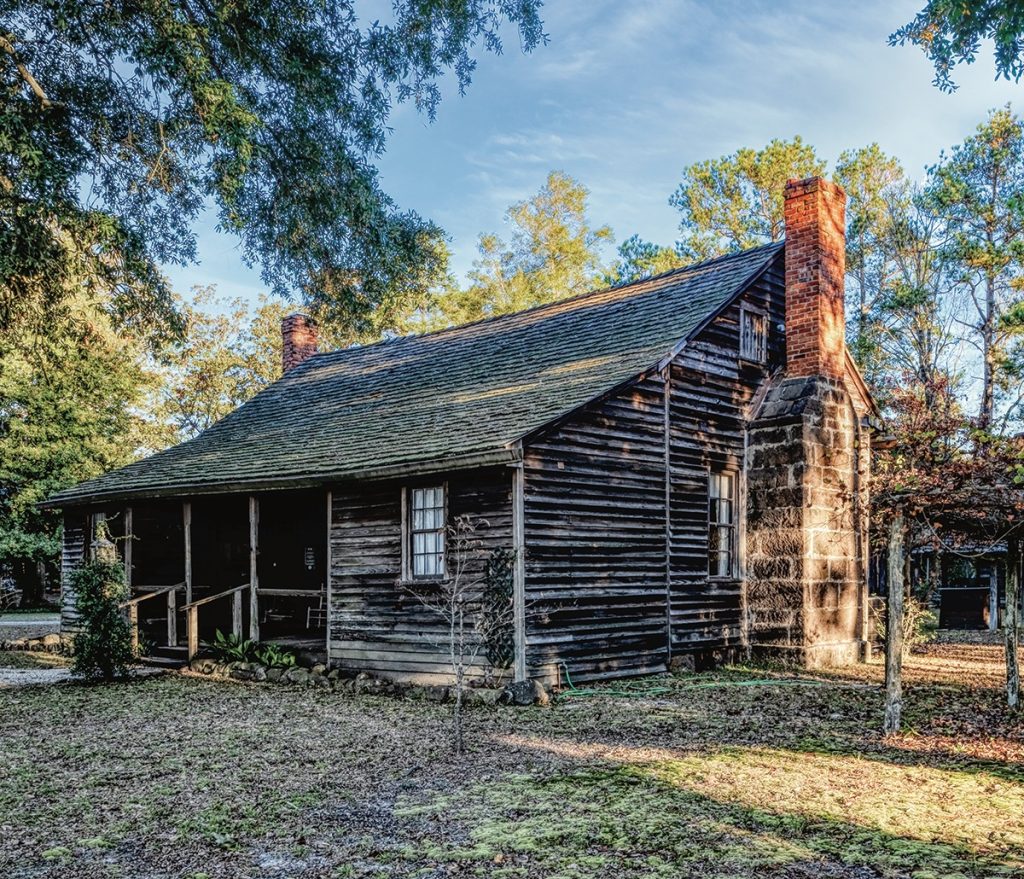
The annual Clenny Creek Heritage Day is Saturday, April 18, from 10 a.m. to 4 p.m., at the 1840s James Bryant home and the 1760s McClendon cabin, 3361 Mt. Carmel Road, Carthage. There are old-time activities, a livestock petting area, live music and food. Admission is free. Info: www.moorehistory.com.

Just Fantastick!

The Sandhills Community College theater department presents The Fantasticks beginning Friday, May 1, at 7 p.m., at BPAC’s McPherson Theater, 3395 Airport Road, Pinehurst. There are two additional performances on Saturday, May 2, and another on Sunday, May 3. For more information go to www.ticketmesandhills.com.

The Art of Nature

The Arts Council of Moore County and five artists — Warren Lewis, Nancy Lewis, Sharon Lowey, Frederick Schmid and Linda Storm — combine to present “Palustris: Nature’s Canvas,” beginning at 6 p.m. on Friday, April 3, at the Campbell House Galleries, 482 E. Connecticut Ave., Southern Pines. The show hangs through April 24. For more information go to www.mooreart.org.

Burning Up

Firefest is a two-day celebration of the heat that makes the art at Starworks, 100 Russell Drive, Star. Beginning at 1 p.m. on Friday, April 3, there will be live demonstrations, artist talks and hands-on workshops in ceramics, metal and glass. For info go to www.StarworksNC.org.

Carolina Phil

Maestro David Michael Wolff and the Carolina Philharmonic present an evening of classical masterworks at BPAC’s Owens Auditorium, 3395 Airport Road, Pinehurst, at 7:30 p.m. on Saturday, April 18. For info and tickets call (910) 687-0287 or go to www.carolinaphil.org.

Quittin’ Time

Live After 5 kicks off its 2026 concert series at 5:15 on Friday, April 10, with Cierra Doll, followed by The Ray Band. There will be kids’ activities, food trucks and all the trimmings at the Village Arboretum, 375 Magnolia Road, Pinehurst. For info: www.vopnc.org.

Celebrating America 250

Join the North Carolina Symphony, conducted by Sophie Mok, for an evening of classical masterpieces including works by Leonard Bernstein and Aaron Copland, at 7:30 p.m. on Thursday, April 23, at BPAC’s Owens Auditorium, 3395 Airport Road, Pinehurst. For info go to www.ncsymphony.org.

A Little Love

The Moore County Choral Society’s spring concert, “Perhaps Love,” incorporating a jazz combo and string quartet, will be held Sunday, April 26, at 4 p.m. in BPAC’s Owens Auditorium, 3395 Airport Road, Pinehurst. For information go to www.ticketmesandhills.com.

The Golden Voice

Enjoy a live performance featuring local sensation Julia Golden beginning at 7:30 p.m. on Friday, April 17, at the Sunrise Theater, 250 N.W. Broad St., Southern Pines. What else do you need to know? If there is something, go to www.sunrisetheater.com.

Five Questions with Priscilla Presley

Q: How would you describe an evening with you onstage?

Priscilla Presley: Truth and honesty about my life. People always want to know about Elvis and me, and I keep it very open. They can ask whatever they want, and most of the questions are about him, his life, and the things people don’t usually get to hear.

Q: What’s the one question fans ask you the most?

Priscilla Presley: At every event, someone wants to know if Elvis was a good kisser. You’ll see hands go up, and if one person asks it, others say, “We were going to ask that!” It’s always a funny way to start, but it happens all the time.

Q: With so many versions of your story out there, why is it still important for you to share it in your own words?

Priscilla Presley: Because it’s coming directly from me. There’s no script, no writer, no actor in between. People have seen interpretations of my life, but when we’re in a room together and they can ask what they really want to know, they’re finally hearing my truth in my voice.

Q: How do you hope people feel when they walk out of the theater?

Priscilla Presley: I hope I’ve answered the questions they brought with them, and that they understand Elvis a little better. For me, the best part is that sense of talking directly to everyone — answering what most people want to know, but doing it in a way that feels personal and free.

Q: How did Elvis himself feel about his fans?

Priscilla Presley: He was incredibly grateful from the very beginning. Early on, he’d invite fans up to Graceland — they’d be in the backyard and he’d just hang out with them. You don’t see that today. He always said the fans made him who he was. He knew they were the ones who put him where he ended up, and he never took that for granted.

The Sandhills Fair

By Audrey Moriarty

First held in October of 1914, the Sandhills Fair was sponsored by the Sandhills Board of Trade and the Sandhills Farmers Association. There was sewing, knitting, canning, gardening, woodworking and animal husbandry, all highlighting the work of nearby farms. After the first several years, it was held at the Fair Barn and Harness Track, where a large grandstand was built to accommodate crowds of as many as 3,000 spectators. The Pinehurst Outlook said the fair required “nothing more than a smile for admission” and “was a fair without a midway and doesn’t need one.”

One of the more popular activities was “auto polo,” invented around 1910 by Ralph “Pappy” Hankinson, a Ford dealer from Topeka, Kansas, hoping to increase his sales. Patterned after equestrian polo, matches featured four cars with two players per car: a driver and a “mallet man.” The cars were generally stripped-down Model Ts with no tops, doors or windshields. A regulation-sized basketball was used, although some venues manufactured even larger polo balls. The driver and mallet man had to guide the ball into a 5-foot-tall goal. The mallet men — and, periodically, the driver — were frequently ejected from the vehicle resulting in cuts, broken bones or being run over. Later, the cars were equipped with primitive roll bars above the driver.

The sport caught on in the U.S. but internationally it was viewed with caution and skepticism, being christened “a lunatic game.” Auto polo drew large crowds, but enthusiasm waned during the late 1920s due to the cost of the vehicles and the ensuing necessary repairs.