
CHARACTER STUDY
Kitchen Communion
Caring for community with a home-cooked meal
By Jenna Biter
Every other Friday, a half-dozen volunteers gather in Darcie Davis’ kitchen, tie on homemade aprons and cook up a warm meal for the domestic violence, sexual assault and human trafficking survivors staying in Friend to Friend’s shelters. Depending on occupancy, that could mean cooking for 30 or so residents between the Serenity House emergency shelter and the Butterfly Cottage for human trafficking victims.
“You mean you just bring this food from your kitchen to us?” Davis was asked one evening after a dinner delivery.
“Sure, you deserve it,” she replied.
“I just don’t know anybody who does that,” the woman continued, seemingly unable to compute the kindness.
For its part, the Sandhills nonprofit Friend to Friend has been providing survivors of interpersonal violence with services free of charge since 1988. For hers, Davis has been delivering the shelters home-cooked meals since she moved to the area in 2019. Along the way, more than 30 volunteers, collectively “the cooking team,” have joined Davis, dropping off sides and desserts, donating ingredients and, on a sign-up basis, cooking the main dish in Davis’ kitchen on service days every other Friday.
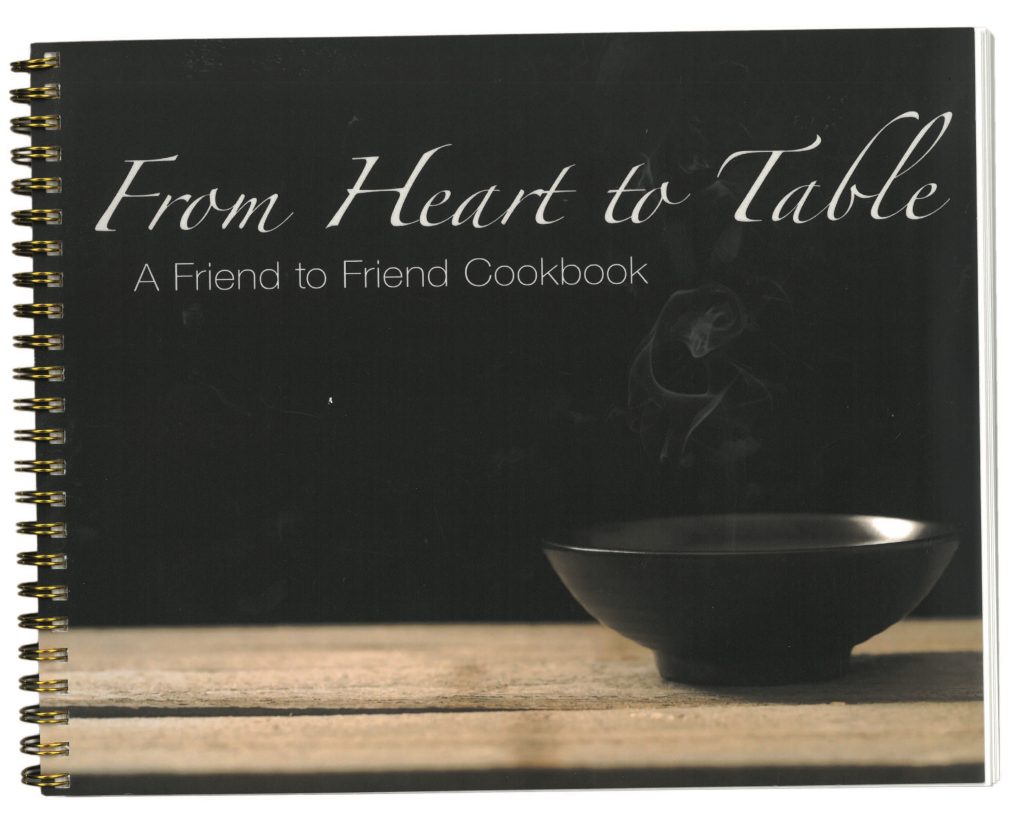
The years of kitchen communion culminated in the printing of From Heart to Table, a cookbook of Davis and company’s recipes spiral-bound as a fundraiser for Friend to Friend. “Last year I attended a volunteer appreciation event Friend to Friend was holding, and everyone was going around introducing themselves,” Davis says, retelling the cookbook’s origin story. “When it was my turn, I mentioned that we’re the people who take a meal every other Friday.” People started asking questions. Which people? What meal? How long has this been going on? Board member Norma Piggott was gobsmacked. She approached Davis, saying, “Darcie, this is amazing. How come nobody knows about this?”
Davis initially volunteered at the Serenity House until the COVID pandemic hit. “I couldn’t go to the shelter, but they have to eat, so I just whipped up a meal and said, ‘Can I take this to them?’”
One meal led to two, then two to three. For a while, Davis cooked the main dish herself, then crisscrossed Moore County to collect sides and desserts before meeting with a nonprofit staffer who would take all the food to the shelter.
Davis halved the operation’s complexity when she started delivering the food herself, and the complexity gave way to simplicity when she moved into the Pinewild community in 2022. Neighbors quickly converted to fellow volunteers who eagerly drop off dishes like fresh pear salad and graham cracker toffee, or all the ingredients for recipes with names like “lemony Greek meatball soup” and “fancy lasagna.” Others stop by to help cook the main meal, leaving the kitchen spotless in their wake.
“The kind of abuse these men and women go through is at a whole other level,” Piggott says about the shelters’ residents. “Anything that you can do to bring them back and help them and enrich their lives is so important.”
After discovering the cooking team’s quiet work, Piggott asked Davis if she’d be willing to collect the recipes they’d been using and turn them into a cookbook that could help fundraise for Friend to Friend, which runs on government grants and donations. A self-proclaimed “spreadsheet gal,” Davis welcomed the task, neatly compiling everything from “easy chicken burritos” on page 17 to “lazy cookie bars” on page 105.
Davis plans the menus weeks in advance and posts a signup sheet online. “I mean, these people are jazzed,” she says. “I’ve got three, maybe four, Fridays online and almost all the spots are taken. I have to keep putting more on because this is a big team of people.” They’ve even channeled their overflow generosity into breakfast casseroles to last through the weekend.
Although they’re known as the cooking team, the group does so much more than cook. Once they sewed 50 pillowcases for the moms and dads and kids to take after they left emergency housing. “There’s a brand-new baby this week, so we’ll be putting something together,” Davis says. Recently she discovered the shelter didn’t have enough bowls and was running low on cutlery. Now they have an abundance of both.
After the chopping and stirring and simmering ends, but before the food makes it out the door for a 4 p.m. delivery, Davis’ husband, David Herring, slips in freshly printed menu cards that include artwork, an encouraging or whimsical quotation like “happiness is hot soup on a cold day,” and the signatures of the volunteers who helped prepare the meal. Then Davis and another volunteer or two load up the aluminum serving trays and make the delivery. She talks with some of the shelters’ residents and snaps pictures of the food before heading home and writing an email to her distribution list of volunteers, filling them in on the drop-off.
“They’re shocked to know we’re neighbors,” Davis says, reflecting on her experiences. “We’re just some neighbors who might be in that same position, and some of us have been in the same position, and we just want them to know they’ve got some support.”
For at least a night, that comes in the form of a warm, home-cooked meal. “Even if they can’t fully articulate it, this is one of the things that helps them come back to themselves and to their humanity,” Piggott says.
Jenna Biter is a writer and military wife in the Sandhills. She can be reached at jennabiter@protonmail.com.
Visit www.friendtofriend.me to learn more, sign up for volunteering opportunities or donate. For any donation of $50 or more, you’ll receive the From Heart to Table cookbook as a thank you. To join “the cooking team,” email hellodarcie@gmail.com.