
Bookshelf

BOOKSHELF

May Books

FICTION

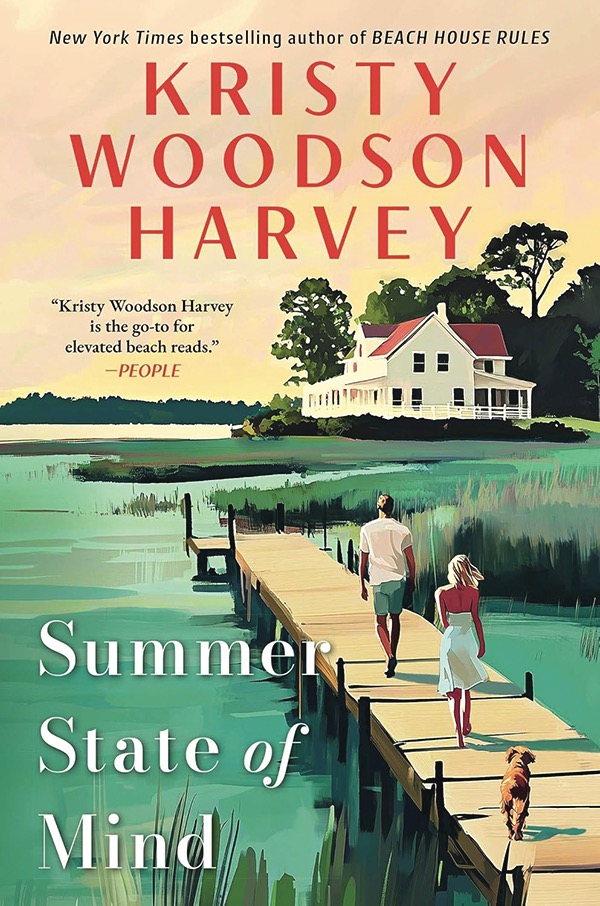
Summer State of Mind, by Kristy Woodson Harvey

After the worst day of her professional life, burnt-out NICU nurse Daisy Stevens flees to Cape Carolina, North Carolina, looking for a new life. On her first day at her new job, high school baseball coach Mason Thaysden discovers an abandoned baby, sending ripples through the entire tight-knit town of Cape Carolina. Mason is still struggling to reconcile the scars of the injury that kept him out of the big leagues, stuck in his hometown, and searching for a way out. This newcomer, and the child they’ve saved together, might be just the motivation he needs to stay put. Sparks fly as Mason acquaints Daisy with Cape Carolina, introducing her to his friends and family, including his batty Aunt Tilley, who is looking for her own fresh start and relief from long-buried family secrets. But as Daisy becomes increasingly attached to this abandoned child, and begins facing her own demons in the process, a startling discovery is made that threatens to rip the entire town apart, placing Daisy, Mason and Tilley in the center of the storm.

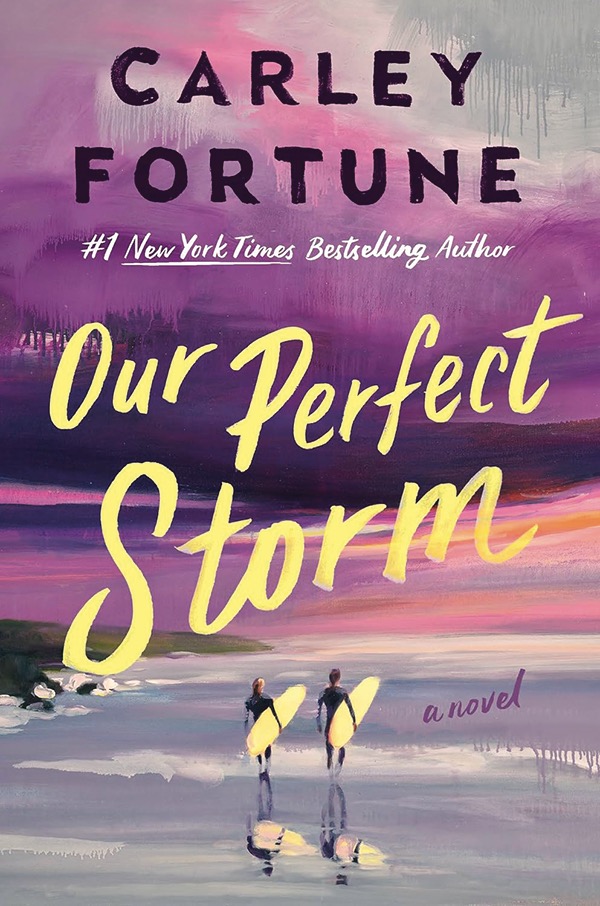
Our Perfect Storm, by Carley Fortune

Frankie and George have been best friends since they were 8 years old. Passionate, impulsive and headstrong, they’ve always clashed . . . and come back together again. Until now. It’s the eve of Frankie’s wedding weekend, and she doesn’t know where they stand or even if George will show up as her best man. Then, at the start of the festivities, in walks George. For one glorious evening, surrounded by her loved ones, Frankie’s life is finally perfect. It all comes crashing down when her fiancé dumps her the next morning, leaving only a note as an explanation. Crushed and confused, Frankie returns to her family’s home, but George has a different idea and a plan for healing Frankie’s broken heart. He wants her to go on her honeymoon — with him — for one week to the lush rainforests and misty beaches of Tofino. Frankie agrees, seeing the trip for what it really is: one last chance to repair their friendship, even if it means unearthing secrets and long-buried feelings neither knows how to handle.

NONFICTION

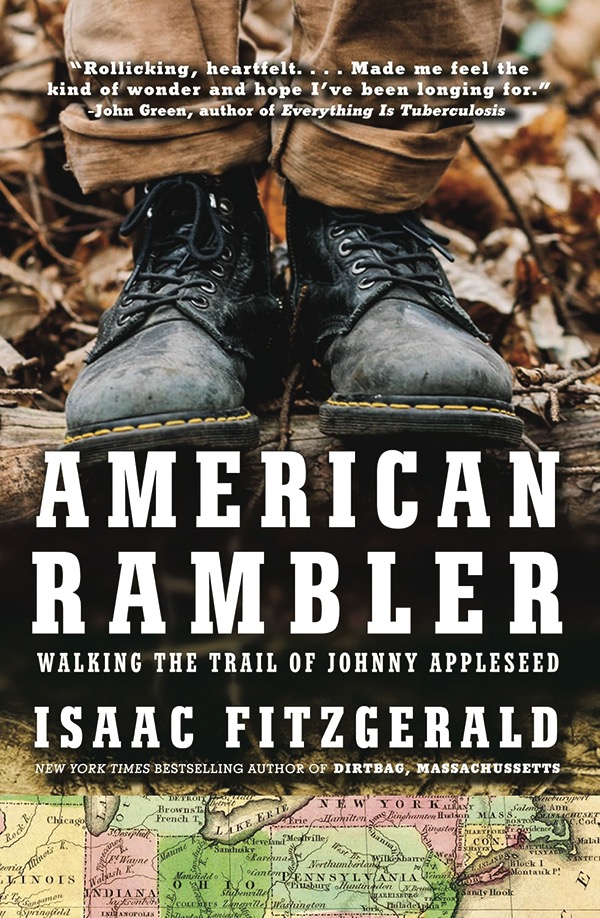
American Rambler: Walking the Trail of Johnny Appleseed,
by Isaac Fitzgerald

In American Rambler, Fitzgerald sets out on a year-long journey to follow Appleseed’s path, walking (OK, sometimes driving, and at one point, even floating downstream) from Massachusetts to Indiana. On this journey, he turns a childhood fascination into a profound reckoning of loss and grief, ritual and faith, grimy gas station bathrooms and scenic apple picking. He is followed by a mysterious creature, camps in hostile environments, trespasses more than once, and is warmed by the generosity of strangers at every turn. American Rambler is at once an ode to the American heartland, a meditation on escaping the breakneck pace of modern life, and a clear-eyed look at the myths at the very core of American identity and history.

Make Believe: On Telling Stories to Children, by Mac Barnett

Barnett champions the profound joys of literature and the importance of reading for pleasure. Make Believe is a rallying cry for art and imagination, and a celebration of the power of storytelling in all our lives. Incisive, intimate and timely, it’s an invitation to approach children’s literature not only as an art form worthy of deep study, but as a portal into the lives of the children.

CHILDREN'S BOOKS

The Outermost Mouse, by Lauren Wolk

The Outermost Mouse loves her life at the tip of the beach. Best of all is the house, a huge nest she has made her own. But a storm is coming. When the sky goes dark and a cold wind rises, the little mouse must do everything she can to protect her home. Even though she’s small enough to fit into a teacup, she is smart, strong, and brave. (Ages 4 – 8.)

Seahorse Is Furious: And There Is Nothing You Can Do About It,
by Morag Hood

Seahorse is furious. It is a bad day. In a terrible week. In an awful ocean. And nothing in that whole entire, awful ocean is going to make him feel better. That’s right: nothing. Not even his favorite things or his closest friend or the cuddliest bunny will help. Unless . . . no, no he’s furious. And there’s nothing you can do about it. (Ages 4 – 8.)

Find the Sun, by Andy Harkness

Eddie doesn’t like Mondays. He’d rather burrow under the covers than face the day. Then an unexpected friend arrives to take him on a journey. Eddie is afraid, but that’s OK, journeys can sometimes be frightening. Step by step Eddie grows braver. Before long, he understands — through any storm, you can always find the sun. (Ages 3 – 6.)


PinePitch May 2026

PINEPITCH

PinePitch

May 2026

Hang ’Em High

The Artists League of the Sandhills and the Arts Council of Moore County are each hosting opening receptions on Friday, May 1. The Artists League reception, at 129 Exchange St., Aberdeen, runs from 5 to 7 p.m. The exhibit, “Eclectic,” will be on display until the end of May. The Arts Council of Moore County reception, at the Campbell House, 482 E. Connecticut Ave., is from 6 to 8 p.m. celebrating the opening of “Pottery and Paper,” featuring the pottery of Ben Owen and paintings by Barbara Burlingame. The exhibition hangs through May 29. For more info go to www.artistleague.org or to www.mooreart.org.

American Classics

The Moore Philharmonic Orchestra will perform its annual spring concert, “America, Cinema & Symphony,” at 7 p.m., Saturday, May 16, at the Lee Auditorium, Pinecrest High School, 250 Voit Gilmore Lane, Southern Pines. Admission is by the donation of your choice. For additional information go to www.mooreart.org.

On the Stage

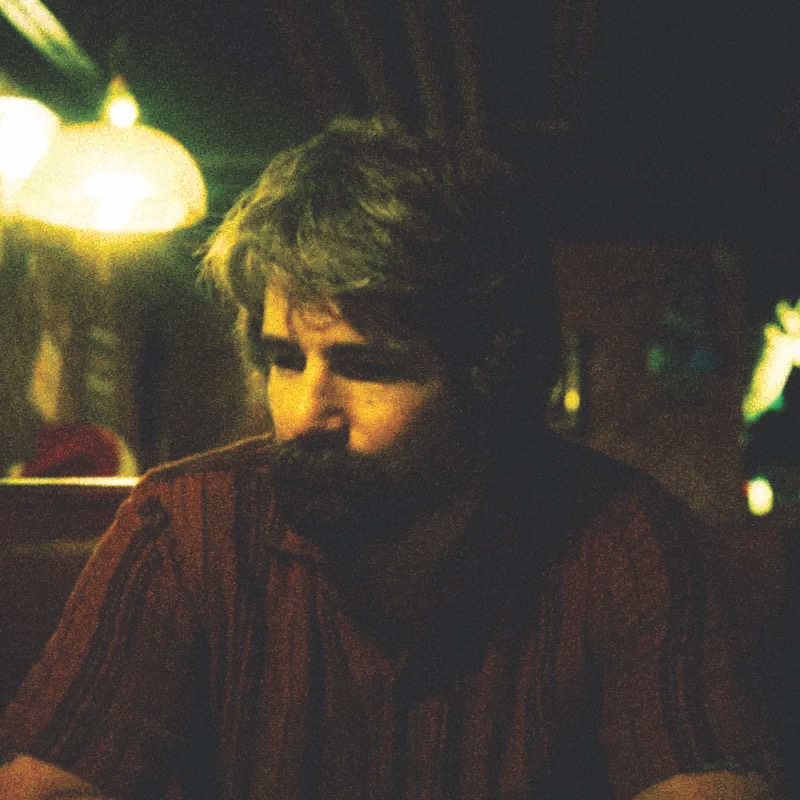
Pushing the boundaries of alt-country and Americana, singer-songwriter John R. Miller takes the stage at the Sunrise Theater, 250 N.W. Broad St., Southern Pines, on Friday, May 8, at 7:30 p.m. His debut album, Depreciated, is a collection of 11 gems combining country, folk, blues and rock, painting a portrait of his native Shenandoah Valley. For more info go to www.sunrisetheater.com.

In the Mood

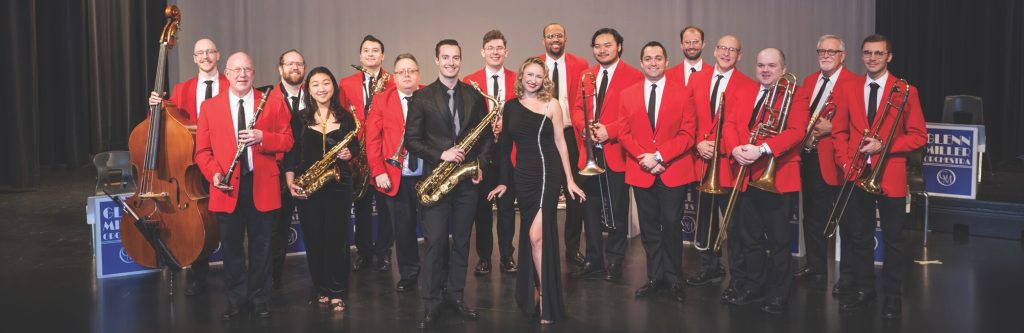
The Glenn Miller Orchestra was the most popular and sought-after group of the Big Band Era. The present iteration was formed in 1956 and has been touring ever since. They bring their swinging sound to BPAC’s Owen’s Auditorium, 3395 Airport Road, Pinehurst, on Monday, June 1 at 7 p.m., For info and tickets go to
www.ticketmesandhills.com.

Bohemian Rhapsody

If you want to break free, experience the music of Queen performed by the ultimate tribute band, Extreme Queen, on Saturday, May 23, at the Sunrise Theater, 250 N.W. Broad St., Southern Pines. There will be a 3 p.m. matinee and an 8 p.m. evening show. Tickets are $46 to get in the door and $78 for the upgrade. Who knows, they might be the champions. For information go to www.sunrisetheater.com.

At the Met2

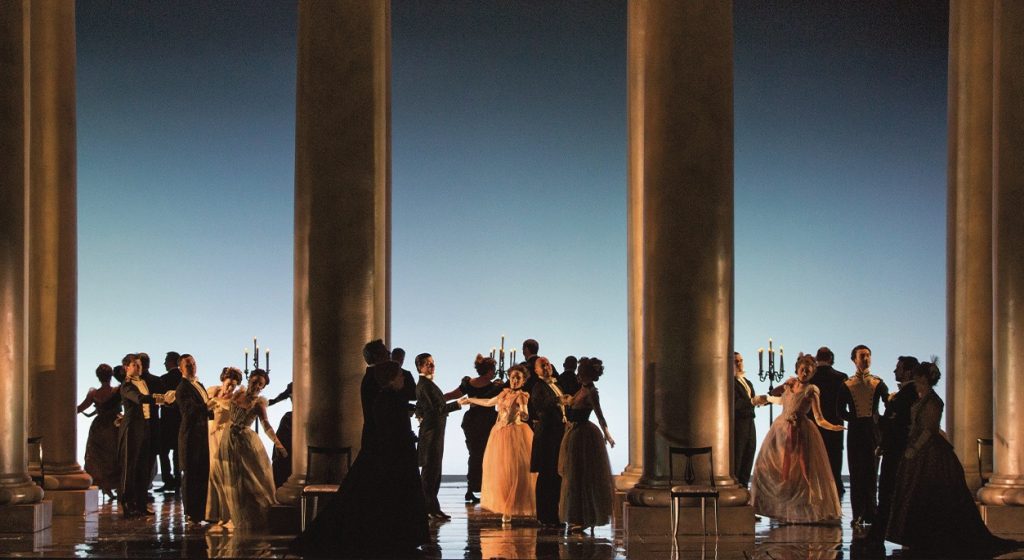
The Sunrise Theater, 250 N.W. Broad St., in Southern Pines, will show The Met’s performance of Pyotr Ilyich Tchaikovsky’s timeless opera Eugene Onegin on Saturday, May 2, from 1 to 5 p.m. If you didn’t get your aria on early in the month, The Met returns on Saturday, May 30, from 1 to 5 p.m. with El Último Sueño de Frida y Diego, Gabriela Lena Frank’s portrayal of the artistic power couple Frida Kahlo and Diego Rivera. For more info go to www.sunrisetheater.com.

The Zootopia PD

Follow the adventures of the pit viper Gary De’Snake and the conspiracy theorist beaver Nibbles Maplestick in Zootopia 2 on the giant outdoor screen at 8:15 p.m. on Friday, May 15, at the Downtown Park in Southern Pines. Bring a blanket or lawn chair. The movie is free, and concessions will be available for purchase. For information call (910) 692-7376.

Garden Party

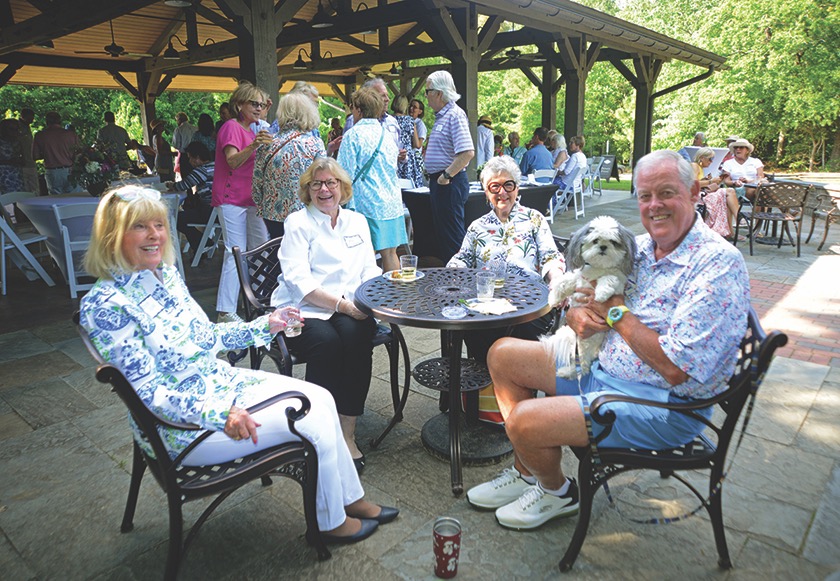
Rub on some SPF 30 and wear a wide-brimmed hat for the Spring Garden Party at the Village Arboretum’s Timmel Pavilion, 105 Rassie Wicker Drive, Pinehurst, on Tuesday, May 5, from 4 to 6 p.m. Tickets are $44.35 and proceeds benefit the privately funded arboretum landscaping. For more information go to www.ticketmesandhills.com.

Live After 5

Follow the food trucks to Live After 5 on Friday, May 8, at the Village Arboretum, 375 Magnolia Road, Pinehurst. Whiskey Pines kicks off the music at 5:15 p.m., followed by The Parks Brothers Band from 6 to 9 p.m. Picnic baskets, yes; outside alcohol, no. (You can buy it there.) For more information go to www.vopnc.org.

Derby Day at Weymouth

Watch the Show Jumping Invitational, open to all and on the house, on Saturday, May 2, from 2 to 5 p.m. then buy a ticket for the Derby Watch Party from 5 to 8 p.m., at the Weymouth Center for the Arts & Humanities, 555 E. Connecticut Ave., Southern Pines. Proceeds benefit the Weymouth Equestrians program. For additional information go to www.weymouthcenter.org.

Book ’Em

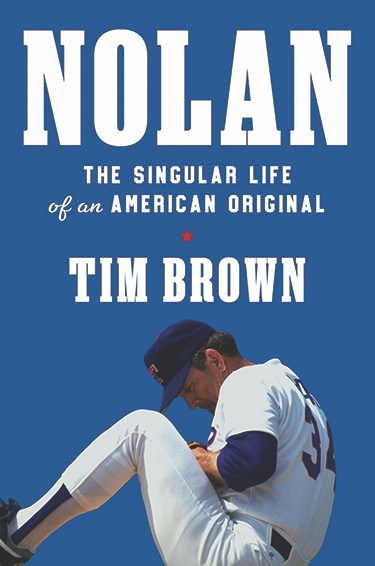
Chanda Prescod-Weinstein will discuss her book, The Edge of Space-Time: Particles, Poetry, and the Cosmic Dream Boogie, via Zoom on Wednesday, May 6, from noon to 1 p.m. On Tuesday, May 19, The Country Bookshop will partner with Moore Montessori to host Brandon Webb talking about his book, Puddle Jumpers: Powerful Mental Techniques from a Navy SEAL, Performance Coach and Father of Three, at Moore Montessori, 255 S. May St., Southern Pines. On Wednesday, May 20, Tim Brown will discuss his book, Nolan: The Singular Life of an American Original, at The Country Bookshop, 140 N.W. Broad St., Southern Pines. Dr. Gail Crowther will virtually discuss her book Marilyn and Her Books: The Literary Life of Marilyn Monroe on Wednesday, May 27 from 12 – 1 p.m. with The Country Bookshop. For information about all four events go to www.ticketmesandhills.com.

Exchange Rate

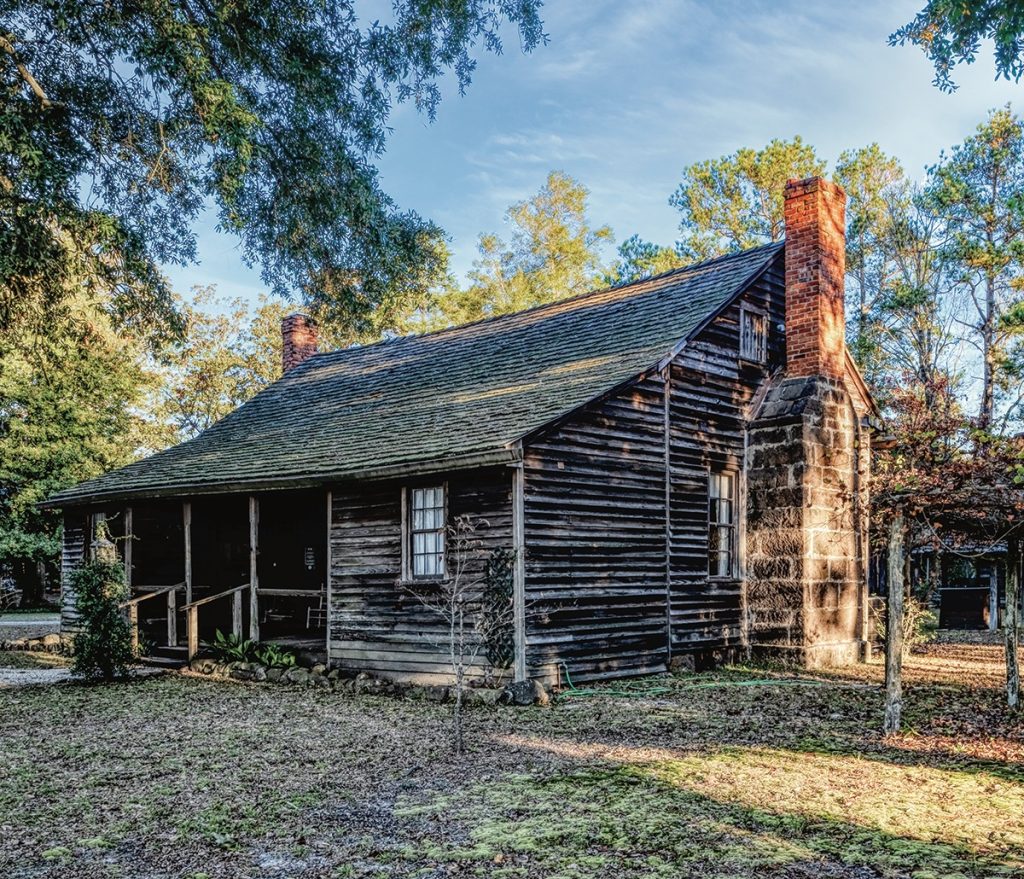
On Saturday, May 16, the Sandhills Woman’s Exchange will host the “Raise a Cup to the Cabin” tea party and fundraiser, from 1 to 3 p.m., at the historic cabin, 15 Azalea Road, Pinehurst. Enjoy a spot o’ tea and some delicious nibbles. The cost is $65 per person, and reservations are required. The cabin closes for the summer season on Friday, June 5. For info and booking call (910) 295-4677.

The Good Ol’ Days

Colonial Day at the Shaw House, 110 W. Morganton Road, Southern Pines, features period crafts, re-enactors, short history talks and tours of the historic homes, from 10 a.m. to 4 p.m., on Saturday, May 30. Food and drink will be available from the Pinecrest High School Wrestling Club. There is no charge for admission. For additional information visit www.moorehistory.com.

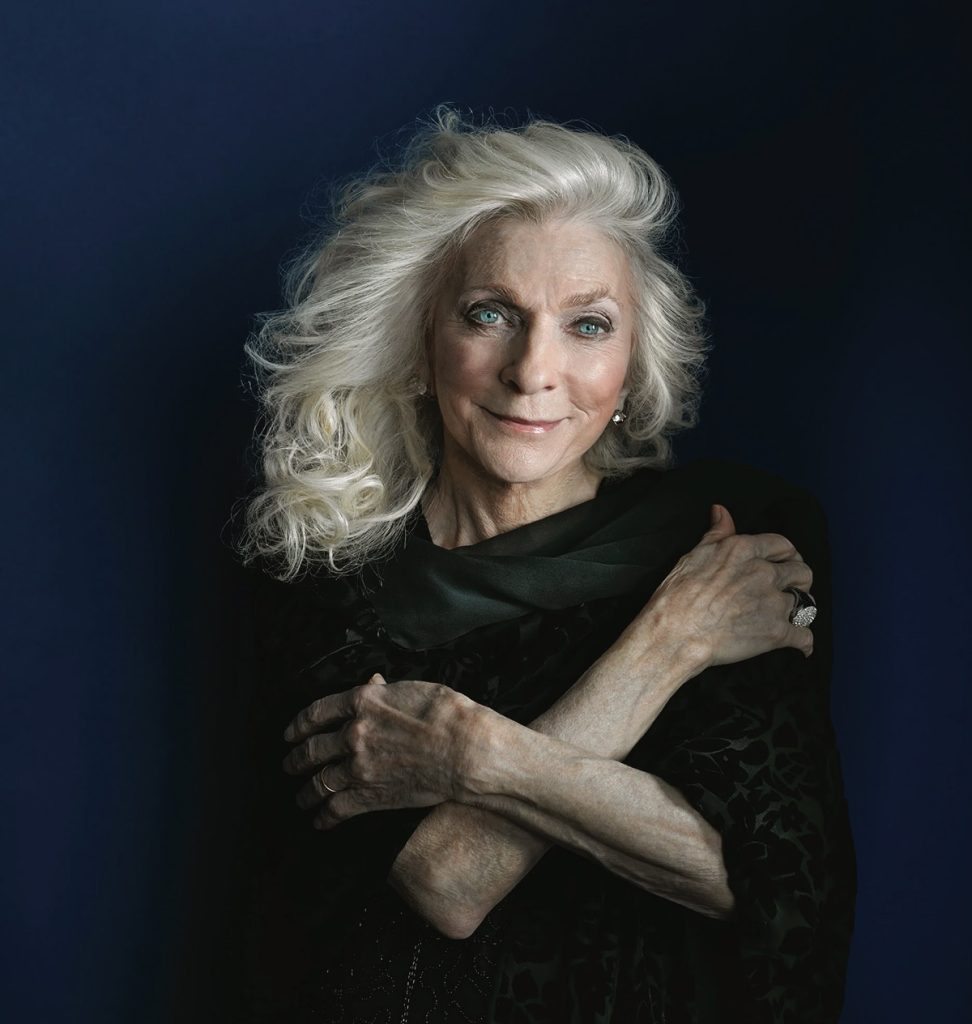
Four Questions with Judy Collins

By Stan Pillman

Q: When you walk on stage today, how do you introduce yourself to an audience that may know the hits but not your full journey?
Judy: I do the whole thing. Every audience gets a similar experience, but I never do the same show twice. Around four o’clock each afternoon, I sit down with my songbook and build a new set list based on how I feel. Sometimes I open with “Both Sides Now,” sometimes not. I include the songs people love, but I also follow my instincts. They get what I like — and that’s what keeps it alive.

Q: You came up during a transformative era in music and culture. Do you see parallels between then and now?
Judy: Every era is different, but there are similarities. In the ’60s, we were responding to war and trying to bring people together through music. In many ways, we’re still doing that. The need for connection, for meaning — that doesn’t change.

Q: You’ve explored so many creative outlets — music, writing, painting. How do they influence each other?
Judy: Everything feeds everything else. On stage, I make choices that reflect all those parts of my life. I want the audience to participate, to sing, to feel connected. Creativity isn’t separate — it’s one continuous thread.

Q: When the show ends and people head home, what do you hope stays with them?
Judy: I hope they feel happy and optimistic. I want them to have had a moment where they could be present — really listening, really thinking. We don’t get many of those moments anymore. If they leave feeling lifted and a little more connected to themselves, then I’ve done my job.

Poem May 2026

POEM

FLOATING

A hawk drifted over as I backstroked

through the neighborhood pool.

It glided more effortlessly

than I’d imagined possible,

circling and diving on the breeze

without thrash or beat of wing,

so I puffed up my chest

and floated awhile, wondering

if he’d spy me and swoop down

to make a meal of my laziness.

Maple seeds helicoptered

into the depressions

between ripples, bobbing expectantly.

Drowned, fat caterpillars

littered the blue between lanes.

There are graveyards

where the bones rest

less tranquil than that afternoon,

but I ripped it into lines,

and still I am ripping it into lines,

looking for sad, explosive meaning,

proof that I skimmed

that particular magnificence

and didn’t go under.

— Ross White

Dissecting a Cocktail

DISSECTING A COCKTAIL

The Tin Whistle

By Tony Cross

A few years ago, I was asked to create a cocktail for Pinehurst No. 2. When I delved into the history books, I learned that Pinehurst’s founder, James Walker Tufts, and I have one major connection: Both of us have/had businesses that deal with carbonated beverages.

Tufts owned Arctic Soda Fountain Co. before forming the American Soda Fountain Co., where he acted as the first president. By 1908, there were more than 75,000 of his soda fountains across the nation. The largest was 33 feet high and equipped with 104 taps offering syrups, mineral and soda water. Old advertisements for Tuft’s Arctic Soda Water included scenes of a tropical paradise with sick men and women arriving to drink the “fountain of youth.” Another ad shows winged demons and skeletal forms dancing between fire and ice with the pristine soda fountain representing purity, power and refreshment.

With my background in cocktails and carbonated elixirs, I knew I wanted to create a highball cocktail as an homage to one of Tufts’ carbonated sodas. I decided to keep it simple and create a candied lemon highball, The Tin Whistle, named after the oldest men’s golfing society in the United States, founded in Pinehurst in 1904. As for the spirit? Even though whiskey was king of the South, gin was especially popular in resorts. Though different than the London Dry and Old Tom of yesteryear, I chose Sutler’s Spirit Co. because its citrus-forward and mixed botanical gin pairs perfectly for this highball. This built cocktail is very straightforward: gin, candied lemon syrup, sparkling water and acid phosphate (soda fountains used this phosphate because it was lead-free, shelf-stable and not tainted with adulterants). The cocktail is an excellent choice after a round of golf on the famed No. 2 course or on any beautiful sunny day in the Pines.

Specifications

1 3/4 ounces Sutler’s
Spirit Co. gin

1 1/4 ounces candied
lemon syrup*

1 teaspoon acid phosphate

6 ounces sparkling water

lemon wheel

*Candied lemon syrup: Make a simple syrup of 3 parts sugar to 2 parts water; add a heavy 1/8 teaspoon of food-grade candied lemon (or plain lemon) oil per 8 ounces of syrup.

Execution

Add gin, syrup and acid phosphate in a tall glass. Briefly stir. Add ice. Top with sparkling water. Briefly stir and top with lemon wheel.

Golftown Journal

GOLFTOWN JOURNAL

Love in the Air

A romance with golf

By Lee Pace

I was first attracted to the sport of golf during the summer of 1971, when I found Jack Nicklaus, Lee Trevino and an amateur named Jim Simons riveting theater on ABC-TV’s grainy images from Merion Golf Club in the U.S. Open. My dad bought me some clubs, and I tried to teach myself the game from some stupid and dangerous cover story in Golf Digest called “Square to Square,” which is perhaps why it took nearly a decade for golf to supplant my seasonal devotion to football, basketball and baseball. When I ventured into the newspaper business in 1979 and found the golf beat among my domains, the love affair was ignited. The more I wrote, the more I played. The more I played, the more I wrote.

My romance with golf has evolved over four-plus decades of writing and playing, of course with the requisite to-and-fro cycles. As a Spanish playwright once mused, “When love is not madness, it is not love.” I have posted sweet scores and nasty numbers. I have met saints and scoundrels. I have discovered “it” — whatever it might be on a given day — and have at other times been rendered clueless. But the tryst continues unabated.

Now spring is upon us once again. The fairways are green and taut. The sun lingers well into the evening, inviting that golden hour nine holes. It’s time to sweat again walking up that fairway on the back nine, to remember all the reasons we’re smitten with golf.

Today I love the sport because of the number at the end of the round. I am what my scorecard says I am. I am a 78. Or a 92. Period. If I played golf on the PGA Tour, I’d post my score and bolt. No talking to the media. The number says it all. Which is why I run for the hills when I casually ask, “How’s your golf game?” and the guy wants to take me hole-by-hole. And I love knowing, whatever my score says I am today, I can be something better tomorrow.

I love tinkering on the practice range — long thumb or short thumb? Flared feet or square? Good connection at the top. Dead hands with the wedges. Get the toe of the club through the ball. Good posture (flat back, not rounded). Follow the shot with the body.

I love lugging my bag around an old Donald Ross golf course — Mid Pines in Southern Pines, Hope Valley in Durham, Forsyth in Winston-Salem, Biltmore Forest in Asheville, Cape Fear in Wilmington, among them. I love the compactness, the quirky and smallish greens, the fairway undulations, the classic old homes lining the fairways. I love to see these heirlooms are being well taken care of by a strong greens chairman who knows the benefit of cutting down some trees. You want healthy grass? Give it some air and some light.

I love the outliers in golf — Pete Dye, bunker rakes with wooden tines, poa annua greens, courses with nothing more than a simple mark at 100, 150 and 200 yards, clubs that do not have a painting of a guy in a red coat hanging on a wall, small scorecards of uncoated card stock that fit easily into your pocket. And I know the kids need the work and mean well, but I really love it when I drive up to a golf course and am left alone to gather my clubs, shoes and accouterments at my own leisurely pace.

I love the quirks of golf course architecture. Seth Raynor had his squared-off edges on some greens, spines running through others and his signature holes like Alps, Redan, Road, Short, Cape, Biarritz and Punchbowl. Mike Strantz had his blind shots, right angles, sand pits, berms and ridges. Perry Maxwell had his dramatic rolling greens like the gems found today at Old Town Club in Winston-Salem. And Tom Fazio has his knack of unveiling a golf course with everything properly outfitted in cashmere and pearls. As one client, William McKee of Cashiers, has said: “There’s nothing loud, just soft, rolling, curving lines. Tom simply has this uncanny ability to create courses that have an evolved appearance, courses with instant patina.”

And God do I love going to the British Isles to play golf. There is the drive north to Dornoch and the deranged Scottish skies, sunny to the left, stormy to the right. There are the trophy courses, Ballybunion and St. Andrews and Turnberry, but there are the hidden gems, Enniscrone and Ballyliffin in northwest Ireland, the Lahinch Old Course farther south, and the northeast corner of Scotland with Nairn and Brora.

I love the literature of the game, especially with Charles Price commiserating about the old days in Pinehurst, Dan Jenkins recreating the glory days at Goat Hills and P.G. Wodehouse with another side-splitting work of fiction. I love ducking into the Old Sport & Gallery in the village of Pinehurst and rifling through the collectibles and vintage books, of rounding the corner to the Old Golf Shop and marveling at the reproductions of famous golf paintings — a watercolor of the ninth tee at Hoylake, Old Tom Morris in front of his golf shop at St. Andrews, golfers enjoying the game on a rudimentary course beneath Edinburgh Castle.

I love the peach cobbler and pimento cheese at Augusta National, the stovies at St. Andrews, the clam chowder at Pine Lakes in Myrtle Beach, the omelets cooked to order at The Carolina, the ice cream sandwiches at the turn at Eagle Point in Wilmington and the BBQ chicken wraps at Old Chatham in Durham.

And boy do I love the Zone, when I find it. You know that 10-foot putt is bottoms, you pick a fairway stripe off the tee and nail it, your mind is so pure and uncluttered and that click at impact so sweet and soft. I once shot near-par with two swing thoughts: Stop (at the top) and GO!

I love the friends I’ve made, the people I’ve met in golf. I lament that colorful personalities like Harvie Ward, Billy Joe Patton and Bill Campbell have long departed. As Campbell, a gentleman’s gentlemen in the game, so aptly noted, “In golf there are no strangers, only friends we have not yet met.”

And of course I love golf because of Pinehurst. There’s nothing quite like the rocking chairs at The Carolina, the stroll from the old hotel past Ailsa House, Beacon House, Heart Pine House and Little House to the golf courses. The spires of The Village Chapel loom above us all, serenading us with hymns throughout the day. The No. 2 course at sunrise is quite sublime: an orange orb flashing behind the third green, for example, through the trees separating the fourth and fifth holes, bathing the convex putting surface and all the dips and hollows around it in blissful light and shadows. Mist hangs in the air. Woodpeckers chuck away in the pine forests.

Scottish golf pro Tommy Armour felt the love many decades ago: “I have seen strangers, jaded and dull, come to Pinehurst and after a few days be changed into entirely delightful fellows.”

There’s a lot to love in that sentiment. 

Out of the Blue

OUT OF THE BLUE

Old-Fashioned Flick

Laugh out loud or shed a tear

By Deborah Salomon

I didn’t watch the Academy Awards. I knew that I hadn’t seen a single nominated film. Nor were more than a few actors’ names familiar. Their outfits indicated star quality more than their names. Names of the designers, that is. I felt a pang, especially since most gowns/jumpsuits/pant outfits were downright ugly.

Then, on a wave of “background” music, I was transported to the days when most movies were entertainment, not films or art — when Wednesday night “dinner and a movie” became a ritual for parents who could get a babysitter. When the experience was a rite of passage — a first date for 10th-graders. Will he hold your hand? Will it be slick from buttered popcorn? Remember, no mammoth soda or you’ll be running to the little girl’s room.

All gone with the wind, so to say.

Technology has enriched our lives in so many ways that I feel guilty dumping on it. Still, it has also taken away certain events including . . . the movies. When coming attractions were announced in full-page ads in Life magazine, which revealed a classification, be it Western, comedy, mystery, war, romance, thriller, history, cartoons. Animal stories were always tearjerkers. You could count on a two-hour duration. Four-letter words, absolutely not. Same for nudity.

The theater would be on the main drag, with a marquee protruding from the entrance like the Sunrise Theater. On it, the movie title, maybe a descriptive adjective. “Blockbuster” comes to mind, attached to James Bond flicks released in the 1960s.

On weekends get there early, stand in line and hope for two seats together. If you missed the first 10 minutes no problem, because with run-on showings you could see the beginning two hours after the ending.

First off the newsreel, the coming attractions, hopefully a cartoon, often Roadrunner. Some big cities had all-newsreel theaters popular during pre-TV World War II.

The ticket booth was free-standing, stranded in a covered space where the line formed. Cash was the only tender, and kids got in for a dime.

The larger Southern theaters wafted an aroma that wasn’t just popcorn. Once through the set of doors into the lobby we were hit by a blast which, pre-residential AC, seemed reason enough to watch a mediocre flick. In fact, on an especially steamy day, management hung a “COOL INSIDE’’ banner from the marquee, sometimes obstructing John Wayne or June Allyson, Doris Day or Burt Lancaster.

Ah . . . movie stars. Teenage girls had faves. Most of these glamour pusses, postmortem, are memorialized in a concrete Hollywood sidewalk. Mine was Gregory Peck: looks, talent, intelligence, charisma, he was the total movie star package. As an adult I shifted to Daniel Day-Lewis after a regrettable fling with James Bond.

DDL brings up the maturation of movie — sorry, film — plots. Sure, films outgrew the “movie’’ definition long before Lewis copped the 1989 Academy Award. But My Left Foot was different, as were “foreign film” think pieces unrelated to an IMAX sensory overload.

A movie with a strong and relevant plot plus solid acting doesn’t need too many frills. One Flew Over the Cuckoo’s Nest comes to mind. I know every word of The Godfather.

Oops. I’ve gone uppity when all I mourn is a midweek movie preceded by the Wednesday meatloaf special. I want to laugh out loud or shed a quiet tear. I want to forget my troubles and be transported, with the transit mode being an 8-cylinder rig with whitewall tires. Leave out the bare bits and gimme a gritty story, something I can relate to.

Because when the water gets too deep I just want to buy a little pink ticket . . . and watch a movie.

Character Study

CHARACTER STUDY

Kitchen Communion

Caring for community with a home-cooked meal

By Jenna Biter

Every other Friday, a half-dozen volunteers gather in Darcie Davis’ kitchen, tie on homemade aprons and cook up a warm meal for the domestic violence, sexual assault and human trafficking survivors staying in Friend to Friend’s shelters. Depending on occupancy, that could mean cooking for 30 or so residents between the Serenity House emergency shelter and the Butterfly Cottage for human trafficking victims.

“You mean you just bring this food from your kitchen to us?” Davis was asked one evening after a dinner delivery.

“Sure, you deserve it,” she replied.

“I just don’t know anybody who does that,” the woman continued, seemingly unable to compute the kindness.

For its part, the Sandhills nonprofit Friend to Friend has been providing survivors of interpersonal violence with services free of charge since 1988. For hers, Davis has been delivering the shelters home-cooked meals since she moved to the area in 2019. Along the way, more than 30 volunteers, collectively “the cooking team,” have joined Davis, dropping off sides and desserts, donating ingredients and, on a sign-up basis, cooking the main dish in Davis’ kitchen on service days every other Friday.

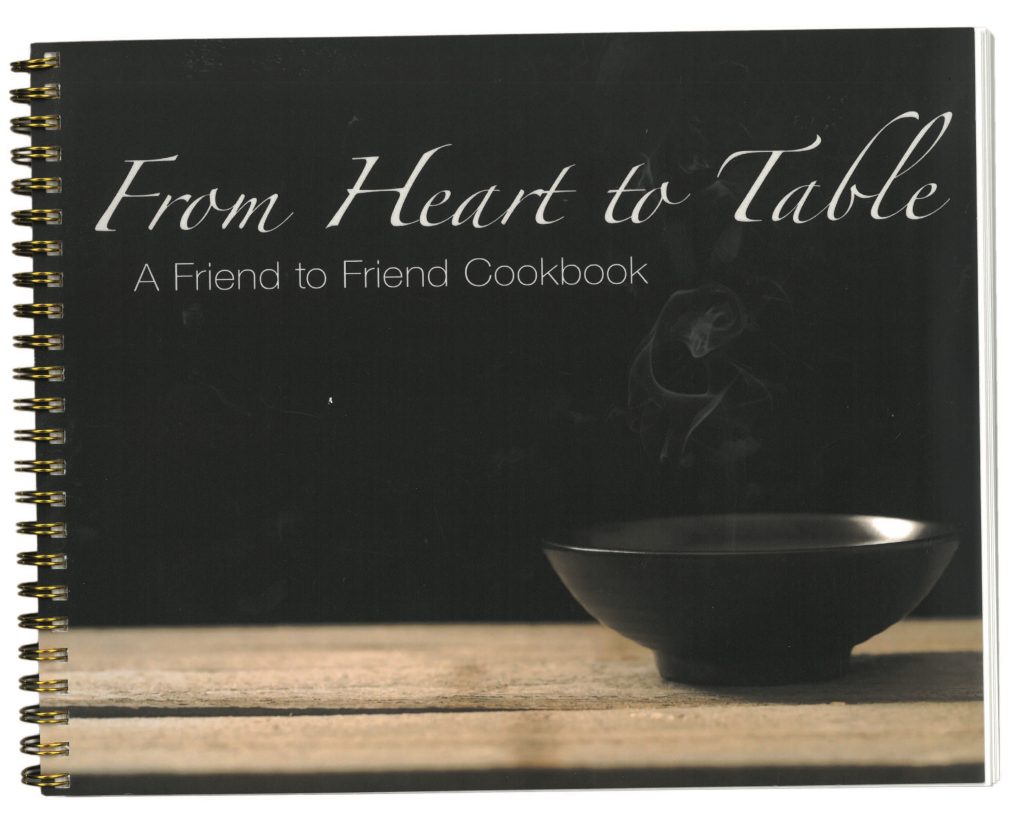
The years of kitchen communion culminated in the printing of From Heart to Table, a cookbook of Davis and company’s recipes spiral-bound as a fundraiser for Friend to Friend.Last year I attended a volunteer appreciation event Friend to Friend was holding, and everyone was going around introducing themselves,” Davis says, retelling the cookbook’s origin story. “When it was my turn, I mentioned that we’re the people who take a meal every other Friday.” People started asking questions. Which people? What meal? How long has this been going on? Board member Norma Piggott was gobsmacked. She approached Davis, saying, “Darcie, this is amazing. How come nobody knows about this?”

Davis initially volunteered at the Serenity House until the COVID pandemic hit. “I couldn’t go to the shelter, but they have to eat, so I just whipped up a meal and said, ‘Can I take this to them?’”

One meal led to two, then two to three. For a while, Davis cooked the main dish herself, then crisscrossed Moore County to collect sides and desserts before meeting with a nonprofit staffer who would take all the food to the shelter.

Davis halved the operation’s complexity when she started delivering the food herself, and the complexity gave way to simplicity when she moved into the Pinewild community in 2022. Neighbors quickly converted to fellow volunteers who eagerly drop off dishes like fresh pear salad and graham cracker toffee, or all the ingredients for recipes with names like “lemony Greek meatball soup” and “fancy lasagna.” Others stop by to help cook the main meal, leaving the kitchen spotless in their wake.

“The kind of abuse these men and women go through is at a whole other level,” Piggott says about the shelters’ residents. “Anything that you can do to bring them back and help them and enrich their lives is so important.”

After discovering the cooking team’s quiet work, Piggott asked Davis if she’d be willing to collect the recipes they’d been using and turn them into a cookbook that could help fundraise for Friend to Friend, which runs on government grants and donations. A self-proclaimed “spreadsheet gal,” Davis welcomed the task, neatly compiling everything from “easy chicken burritos” on page 17 to “lazy cookie bars” on page 105.

Davis plans the menus weeks in advance and posts a signup sheet online. “I mean, these people are jazzed,” she says. “I’ve got three, maybe four, Fridays online and almost all the spots are taken. I have to keep putting more on because this is a big team of people.” They’ve even channeled their overflow generosity into breakfast casseroles to last through the weekend.

Although they’re known as the cooking team, the group does so much more than cook. Once they sewed 50 pillowcases for the moms and dads and kids to take after they left emergency housing. “There’s a brand-new baby this week, so we’ll be putting something together,” Davis says. Recently she discovered the shelter didn’t have enough bowls and was running low on cutlery. Now they have an abundance of both.

After the chopping and stirring and simmering ends, but before the food makes it out the door for a 4 p.m. delivery, Davis’ husband, David Herring, slips in freshly printed menu cards that include artwork, an encouraging or whimsical quotation like “happiness is hot soup on a cold day,” and the signatures of the volunteers who helped prepare the meal. Then Davis and another volunteer or two load up the aluminum serving trays and make the delivery. She talks with some of the shelters’ residents and snaps pictures of the food before heading home and writing an email to her distribution list of volunteers, filling them in on the drop-off.

“They’re shocked to know we’re neighbors,” Davis says, reflecting on her experiences. “We’re just some neighbors who might be in that same position, and some of us have been in the same position, and we just want them to know they’ve got some support.”

For at least a night, that comes in the form of a warm, home-cooked meal. “Even if they can’t fully articulate it, this is one of the things that helps them come back to themselves and to their humanity,” Piggott says.

Focus on Food

FOCUS ON FOOD

All Hearts Rising

Sweet bread for Mother’s Day

Story and Photograph by Rose Shewey

Mother’s Day makes me long for simpler times. At the risk of romanticizing the good old days — after all, simple is not synonymous with easy — I can’t help but feel that there was so much more beauty and calm in how we celebrated holidays just a few decades ago.

In my childhood, on mother’s special day, I typically set my alarm clock to wake up early, then tiptoed out the door to cycle to a little flower meadow beyond the forest that surrounded our village. I picked the most cheerful blooms and arranged them in a little bouquet that I set on the kitchen table, together with whatever I had crafted that year: a card, a crocheted potholder, a necklace made of wooden beads.

We usually had a cozy breakfast and went for a hike in the woods on Mother’s Day. It was simple, but meaningful. No store-bought greeting cards, chocolates or greenhouse flowers, just things we kids gathered or made by hand. No extravagant brunch or dinner; we ate at home. To be fair, my mom still had to do all the cooking, just because no one, including herself, wanted to eat what the rest of us were capable of making. 

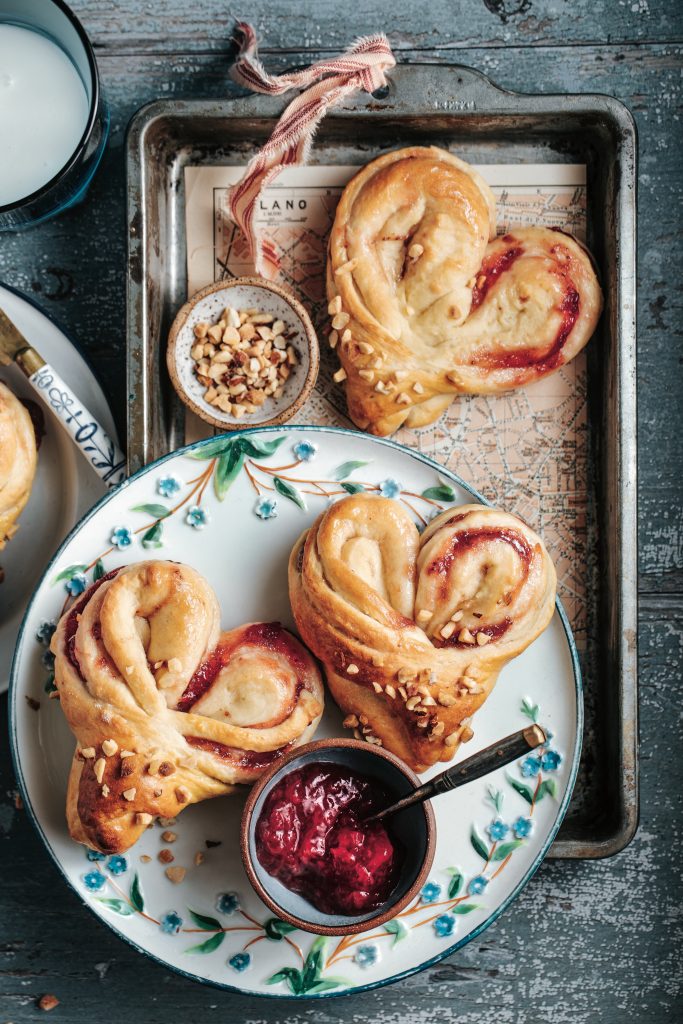
And to my memory, at least, there has never been a single holiday without yeast bread — sweet bread was omnipresent in times of celebration. Naturally, Germans have made bread into an art form, so yeast dough would be skillfully shaped to represent the occasion. Little good luck piglet-shaped bread rolls on New Year’s Day; bunnies or lambs for Easter; hearts for Mother’s Day; or just plain old yeast dough wreaths on ordinary weekends.

If simple sounds good to you this year — simplicity is the essence of yeast dough — try your hand at these heart-shaped rolls with strawberry jam layers. Mom will love it.

Sweet Bread Rolls

(Makes 8-10 heart-shaped rolls)

For the dough:

7 grams active dry yeast

250 milliliters milk, lukewarm (about 110F)

90 grams plus 1 teaspoon granulated sugar, divided

500 grams all-purpose wheat flour

1 medium egg

70 grams butter, room temperature

1 teaspoon vanilla extract

Pinch of salt

For assembly:

1/2 cup jam, strawberry or raspberry

1 egg yolk

1 tablespoon milk

Chopped nuts, optional


Method

In a cup, combine the yeast with the lukewarm milk and one teaspoon of sugar. Stir until the sugar and yeast have dissolved.

Place the flour in a large bowl and press a mold into the center. Pour the lukewarm yeast-milk mixture into the mold. Add the remaining sugar and mix lightly with some flour. Cover the bowl with a kitchen towel and allow to rest for about 15 minutes.

Add the remaining ingredients (egg, butter, vanilla, salt) and mix everything together. Knead the dough until it is smooth. Cover the dough and allow to rise for at least 45 minutes or until the dough has doubled in size.

Once the dough is ready to be processed, knead once more and take about 100 grams of dough (or divide dough into 8-10 equal parts) and shape into a ball. Roll out into a circle and spread a scant tablespoon of jam through the center of the dough (less is more).

Roll up the dough (just like a jelly roll), then fold in the center. Pinch the two raw edges together to seal them. With a knife, cut the folded, bulging side lengthwise about 2/3 down the middle to create a heart shape. Fan the cut sides out to display the jam layers. Repeat with the remaining dough and place hearts on a baking sheet and allow them to rest for another 20 minutes.

Preheat the oven to 350F. Brush hearts with a mixture of beaten egg yolk and milk and sprinkle with chopped nuts. Bake the hearts for about 15-20 minutes or until they are cooked through, with a golden crust.

Golf Town Getaway

GOLF TOWN GETAWAY

Golf Town Getaway

From city to country and back again

By Jenna Biter 

Photographs by John Gessner

Mary and Mike Patterson have breezed between their Raleigh home and Pinehurst golf retreat for going on two decades. “It’s an hour and 15 minutes door-to-door,” says Mary Patterson. Because the drive’s short, the Pattersons can come and go as they please. “It’s just a nice getaway,” she says.

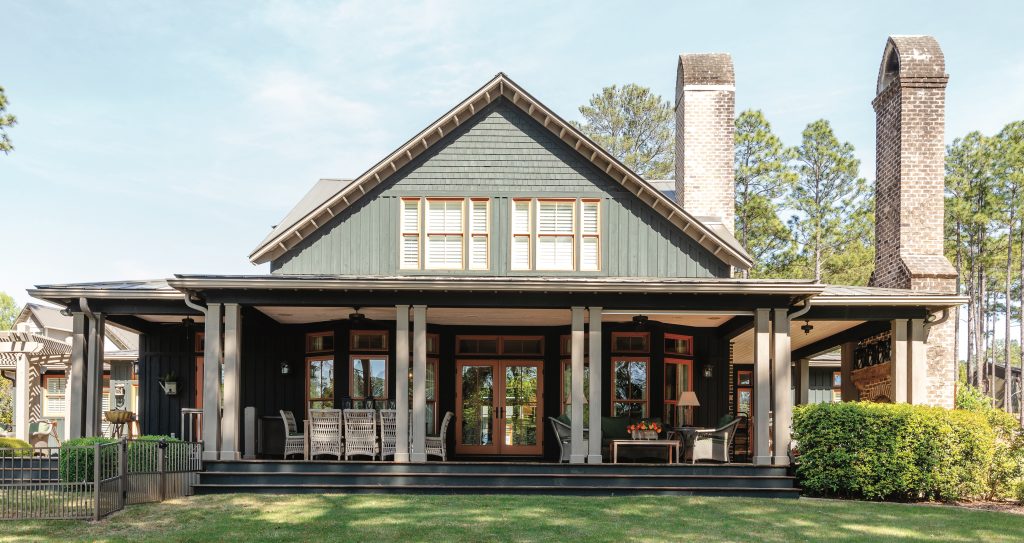
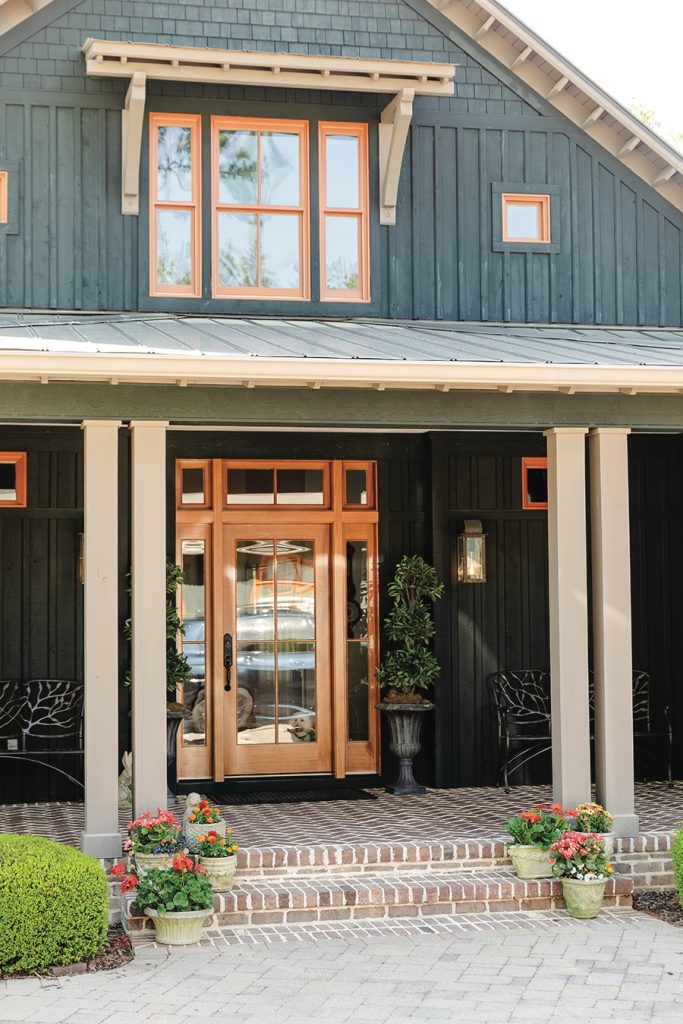
The couple purchased the ivy-colored farmhouse in the Country Club of North Carolina in 2008. “It’s funny, we drove down the driveway, and I looked at Mike, and I said, ‘Oh, I don’t know about this house — the first thing I need to do is change that orange trim,’” Patterson says. “But I’ve grown to like it.”

In fact, there was a lot to like. The house is right-sized, in the ballpark of 3,000 square feet, and well-placed, tucked down a curlicue of a driveway with a picture-perfect lake view out the back. A wide wraparound porch steps onto a lawn that slopes down to the glittering water. The fourth hole of the Dogwood golf course lies on the other side.

“We looked on and off here for years,” Patterson says, recalling the process. Mike became a member of CCNC years before they bought. From regular trips to play golf, the Pattersons knew they liked the community — and the golf — well enough to buy in. “You can’t get better golf than around here,” she says matter-of-factly.

The neat little farmhouse had been on the market for a while, and in hindsight, Patterson is not sure why they hadn’t considered it sooner. “When we did, I thought, ‘Yeah, this would work,’” she says. “Most of the houses here are traditional homes: formal living room, formal dining room, den, kitchen, breakfast room. We just didn’t need that.” They wanted something more compact.

An entry hall leads into the house, revealing an open living room/dining room/kitchen configuration that flows onto the back porch with the enviable view, birds swooping and soaring over the lake.

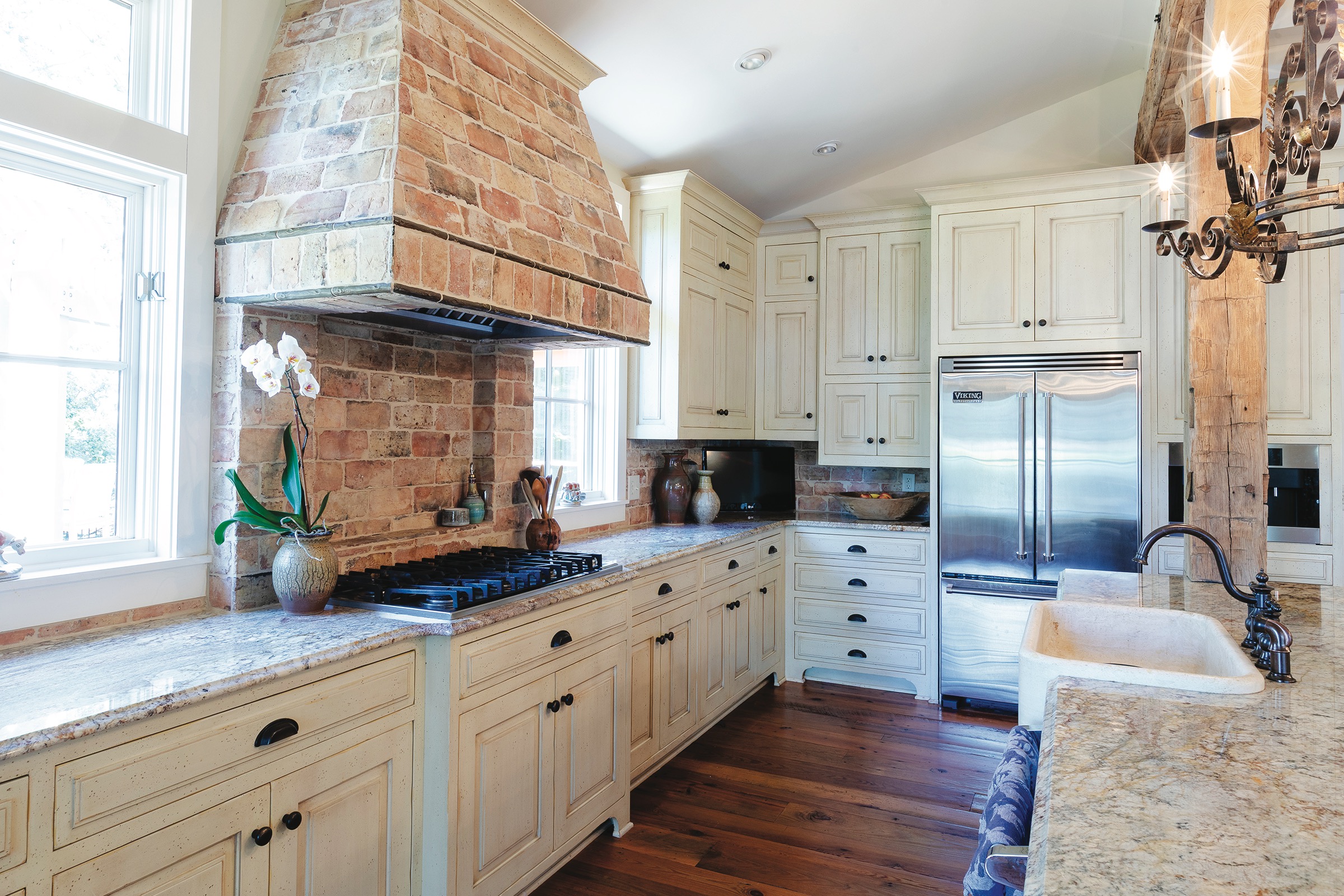
The wooden floors came from an old tobacco barn. “The beams, I’m not sure where they got those,” Patterson says, motioning to the rustic wood running intermittently overhead. The couple replaced an old beam fireplace with limestone that counterbalances a burly brick range hood across the way in the kitchen. Earth-toned ceramics from Seagrove potters decorate the counters. The urns are for show, but the serving bowls see plenty of use.

“We got furniture from a mixture of consignment shops and antique shops — I love a deal,” Patterson says. That includes a set of 10 matching dining chairs she’s particularly proud of. “I thought, ‘I cannot get these in my car fast enough.’”

The home reads traditional with a touch of English flair. Staffordshire dog figurines accompany guests in the living room, as does a real-life miniature goldendoodle named Biscuit. Whites and creams warm the space and the rest of the home. In the master bedroom, an off-white four-poster bed and a black and white abstract painting by Raleigh artist Gerry Lynch softly contrast with sea glass-colored walls.

“We made a few little changes to make it our own,” Patterson says about the structure of the house. “And it just works perfectly for us.” They removed a wall to add a bar and transformed the first-floor guest room into a sprawling entertainment space complete with a TV, seating area and a pool table backdropped by a dozen or so old Perrier advertisements featuring golf cartoons. One frame shows a golfer staring down at his ball impossibly and perfectly wedged between the ground and a falling-down fencepost with a caption that reads, “Rule XII: When a ball lies in or touches a hazard, nothing shall be done to improve its lie.”

Through a nearby hallway, there’s a generously sized and especially appreciated laundry room. Up a set of wooden stairs are mirror-image guest rooms with equally splendid views of the lake. A fourth bedroom is just a short walk away in a detached-garage-turned-guesthouse with a second floor perfect for visiting grandkids.

“It just kind of all came together,” Patterson says. “You know, it’s comfortable enough, but it has the look, too.”

State of Mind

STATE OF MIND

The High Ground

Finding ways to thrive

By Tommy Tomlinson

Recently we spent a fine Saturday afternoon in Mount Pleasant. I should specify that it was the Mount Pleasant in North Carolina. It turns out there are dozens of Mount Pleasants all over the country, sometimes more than one in the same state. You can see the appeal. Names can be destiny. Name yourself Mount Pleasant and you’re halfway to pleasantness itself.

The “Mount” part is trickier. I grew up near a Mount Pleasant in south Georgia that was as flat as a shuffleboard table. The North Carolina version doesn’t exactly require hiking poles either. Then again, the Piedmont is known for puffing itself up when it comes to height. One of the reasons Charlotte calls its downtown “uptown” is that there’s a slight rise from the edge of the center city to the main intersection of Trade and Tryon streets. You might not even notice if you’re driving. But it is, technically, “up,” so “uptown” it is. And if Mount Pleasant, out on the eastern edge of Cabarrus County, sits on a patch of relative high ground . . . well, a mountain can be a state of mind.

It’s not far from where we live — less than an hour’s drive — but neither my wife, Alix, nor I had spent time there. Our loss. This time we made it there for a literary festival at the Mount Pleasant library, which is bright and clean and beautiful. It doubles as a rec center. Kids were out on the fields playing baseball, and there was a line at a food truck. It was a busy spot in a busy town.

Not all small towns are like that. You’ve probably taken the back roads through some towns where you wonder if you wandered into the zombie apocalypse. Small towns have been hit hard over the last 50 or 60 years by everything from interstate highways to chain stores to the slow death of local manufacturing. Sometimes all you see is a bunch of boarded-up buildings and a Dollar General. It can make more sense to move, either into the city or out to the country. Sometimes the worst place to be is in between.

But other small towns figure out ways to thrive. Mount Pleasant has a crisp little downtown, old houses in good shape, a distillery housed in an old prison. (They make a bourbon called Conviction.) We met a guy who researches town history, a woman who worked in PR all over the country, and a flock of librarians I would follow into the deep stacks anywhere. Every time we drive through a small town, my wife glances around at the houses and I can see her daydreaming. If Alix likes what she sees, sometimes she’ll say, “What would you think about buying a house and moving somewhere like here?”

She said that about Mount Pleasant.

I grew up in a midsized town — about 30,000 people — and got most of my perspective on small towns from watching TV. For the longest time I thought of small towns as being on either end of a wide range. One end was Mayberry, where almost nothing bad ever happened, except when Aunt Bee made pickles. The other end was Cabot Cove, Maine, where somebody got poisoned, stabbed or shot to death every damn week on Murder, She Wrote. (I still can’t believe nobody figured out that Jessica Fletcher was the most prolific serial killer in human history. None of that happened before she got to town!)

Modern life has flattened a lot of the differences between small towns and everywhere else. Streaming services bring the most obscure movies and shows to anyone with Wi-Fi. Worldwide delivery can put pretty much anything you want on your doorstep by tomorrow morning. A small town might not have a fancy ramen place, but Amazon can send you the ingredients and YouTube can show you the instructions.

The truth, though, is that small towns have never been that different than everywhere else. The settings might be different, but our hearts are the same: We all need to love and be loved, to find pursuits that fulfill us, to grieve when life hands us losses, to reach for something bigger than ourselves.

Those things are true no matter whether you live in a hamlet of 200 or a city of 2 million.

Every person is complicated and so every collection of people is more complicated still. It’s easy to write off a place for thinking or acting a certain way, but remember, that might be a majority, but it’s not a monolith. I’m not sure I could get a two-thirds vote in my own family on any subject except banana pudding. Our love for one another brings us together, but our differences are what makes life interesting.

It took me a long time to learn that you can make your own Mount Pleasant, wherever you are. You can just decide to live on higher ground. You can just decide to be decent to others. You can just decide to make a small town out of your friends and loved ones, even if you live in the middle of the city.

We are not likely to move to the actual Mount Pleasant, even though we enjoyed it. What we hope to do, though, is keep the little bits of it that we brought home with us — the warm feelings, the new friendships, the sense of discovery. I’m sitting here looking at a North Carolina map right now. I’ve been all over this state but there are so many places I still haven’t been. Time to gas up the car.