On the Cusp

ON THE CUSP

On the Cusp

Karina McMillan: Lumbee artist and generational talent

By Liza Roberts

Portraits by John Gessner

hen the artist Karina McMillan was growing up in rural Robeson County, she spent long days outside in the woods and in the surrounding fields of cotton, soybean and tobacco near her house, and long hours with her family, steeped in the culture of the Lumbee Tribe of North Carolina. Never far from her side were the ballpoint pens and paper she used to draw all of it, and all of them.

“One of my first memories is my dad telling me, ‘If you don’t know how to spell something, draw a picture,’” McMillan, now 27, recalls. “I didn’t really know how to spell a lot of things, so I would just draw.”

One day in kindergarten at Hawk Eye Elementary, she drew a picture of the school’s mascot. She was surprised that her teachers made such a fuss over her hawk, hanging it in the school’s lobby, even turning it into a postage stamp for the campus mail system.

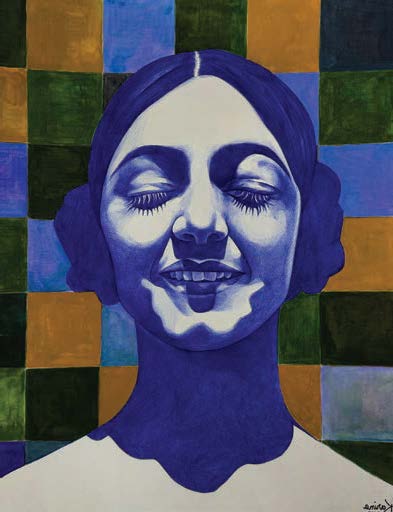
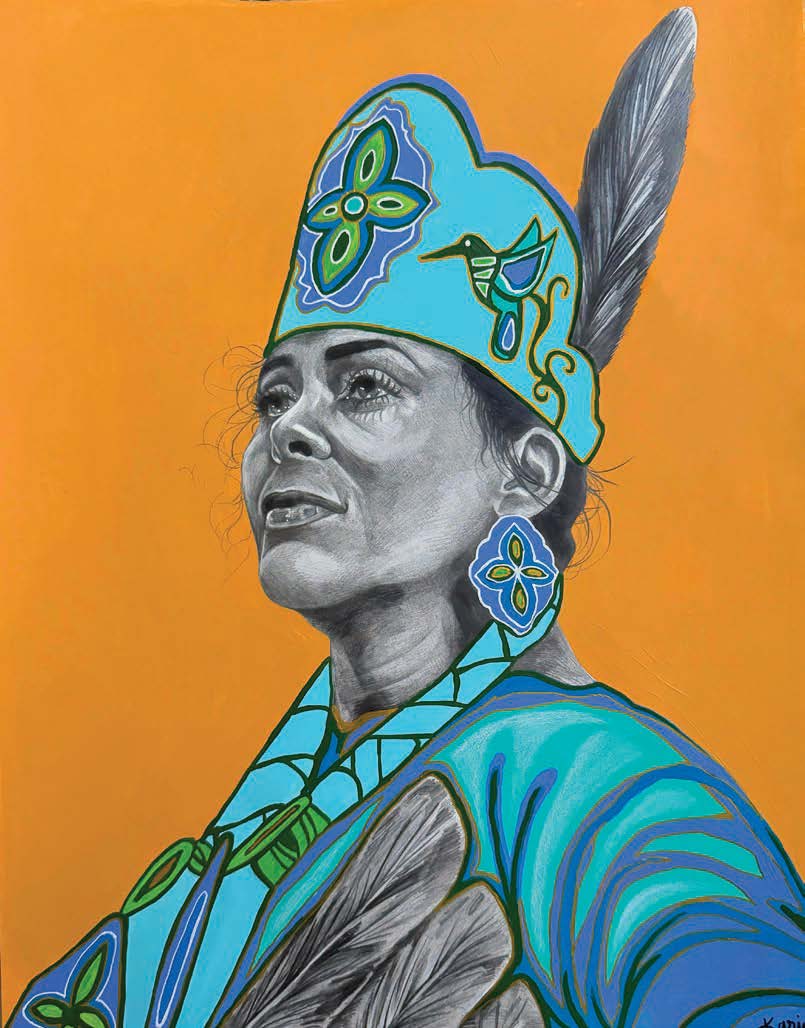
More than 20 years later, McMillan’s hawk is still hanging in the school’s lobby, and a standard-issue blue Bic ballpoint pen is still her favorite way to draw. Her subtle, shadowed, soulful portraits of Lumbee and other Native people and their landscapes may look painted from even a short distance, but up very close, the fine detail of McMillan’s hashed and feathered pen strokes becomes clear, emerging from an image as the grooves of a fine-grained woodcut do. In some of her works, she uses acrylic paint in bright hues for backgrounds, clothing and textile patterns, and to create glowing haloes for her subjects.

“Karina McMillan’s work is extraordinary,” says Sara Segerlin, director of the Gregg Museum of Art & Design at N.C. State University. “Her paintings carry a power that goes far beyond color or technique. She brings forward portraits of resilience, memory, pain and strength, stories that refuse to be forgotten.”

McMillan’s work has been exhibited and won awards and recognition all over the state and beyond, and is primed to find a larger audience, says Nancy Strickland Chavis, director and curator at the Museum of the Southeast American Indian at the University of North Carolina at Pembroke. Indeed, Chavis says, an artist like McMillan emerges from her region just once in a generation.
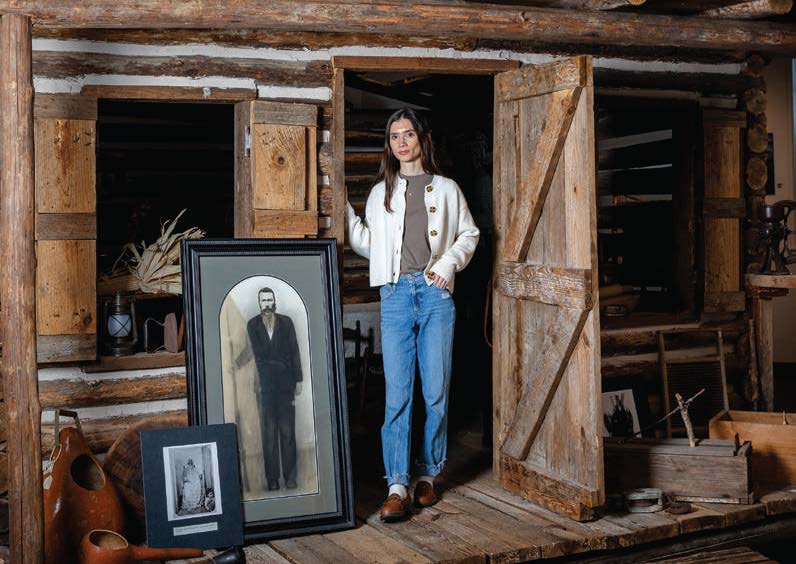
“She will define what this era of native art is for native artists,” Chavis says. “I think that she will lead the way for her age group, moving forward along with other greats like Jessica Clark (Lumbee, in her 40s), and Gene Locklear (Lumbee, in his 70s), to really push the envelope on what the possibilities are.”

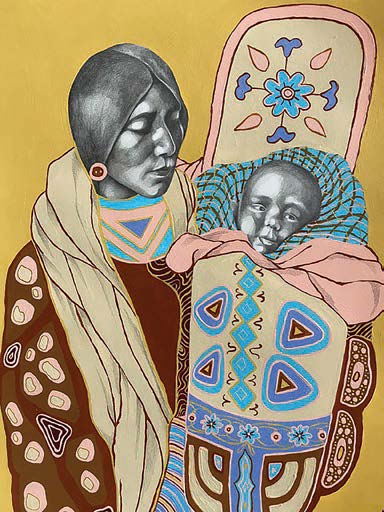
McMillan’s Mother Nature, a portrait of a Lumbee woman holding ears of corn rendered in ballpoint pen and acrylic paint, exemplifies the young woman’s technical virtuosity and her ability to depict her people authentically, Chavis says, without the “tropes” deployed by some artists painting Native Americans. She notes that the woman McMillan depicts in Mother Nature is immediately recognizable as Lumbee, and the corn she holds represents the corn reclamation program currently underway to return ancestral strains of corn to the Lumbee people.

Chavis says the portrait is characterized by humility and gentleness, and resonates deeply with audiences who see true reflections of themselves within it. “When I saw it, I lost it,” says Chavis, who is also a member of the Lumbee Tribe. “We don’t have a lot of artists that are doing the type of work that Karina is doing.”

Chavis awarded the piece best in show at her museum’s annual 9/9 Native South Juried Exhibition last September and purchased it for the museum’s permanent collection.
Corn, pine cones, birds and animals native to Robeson County are among the images that appear in McMillan’s work, as are other symbols and patterns that represent her heritage as a member of the Lumbee Tribe.

Learning about her forebears and their traditions as a child made a big impact on her, McMillan says, and remains central to her identity as a young adult. Currently working as a preschool art teacher at Cary’s Ivybrook Academy, she wears a Lumbee pine cone ring on her hand and spends every evening creating works that celebrate her culture.

“I like making art about it to show people that we’re still here,” she says. “We’re still Native. We’re not riding horses and living in tepees, but we’re still here.”

It’s a timely message. Last December, the Lumbee Tribe, which has been recognized by the state of North Carolina since 1885, was finally granted full federal recognition. With a population of more than 56,000 in North Carolina, many of whom live in Robeson County, the Tribe is the largest in the state and the largest east of the Mississippi River. “The history of the Lumbee Tribe long predates the history of the state of North Carolina itself,” Governor Josh Stein noted in celebrating its federal recognition.

“The fight’s been going on since the 1800s,” McMillan says. “So I feel like now we’re finally getting what we’ve deserved for the longest time. It makes me sad and breaks my heart that some people aren’t around to see that we’re federally recognized. Like my great-grandma, my great-grandpa, they’re gone . . . but at least I get to see it. This is a big moment in history, and I’m just really blessed that I get to see it happen.”

McMillan returned to Robeson County to complete her education at UNC Pembroke after two years in college at UNC Charlotte, and to be closer to her family. It was at UNCP, she says, that her artistic voice truly began to take shape.

It’s also where she decided to embrace the humble tool that got her started and has now become her hallmark: the ballpoint pen. It’s what was plentiful and close at hand growing up, when the nearest art store was an hour away. “I thought, ‘How am I going to get these art supplies?’ I just figured, I guess, I’ll draw with what I have. So that’s why I stick to the cheap mediums like ballpoint pen,” she says.

To know it is apparently to love it. McMillan says the medium is both more exacting and more malleable than you might imagine. “If you make one mistake with a ballpoint pen, you can’t go back and fix it. So I’m super focused,” she says. “And it creates the most beautiful — to me — the most beautiful values in a portrait. It can go from light to dark. You just have to keep building up the color. There have been times where I’m working on a piece, and I have to step away from it because the ink is wet. To create more layers and more values, I have to come back later, maybe like an hour later, because it has to dry before I can build up more.”

McMillan’s use of a medium that’s easy to come by puts her squarely in the Native artist tradition. “It reminds me of a lot of Native art, made out of what is accessible, from traditional to what has evolved as modern work,” says Chavis. “Whether it’s grass, pine needles, split oak, clay, all of these things that make our traditional art are what’s accessible.”

Native American artists with connections to North Carolina, including McMillan, are the focus of the exhibit “Stories Told by Breath: Native American Voices in North Carolina,” at N.C. State’s Gregg Museum of Art through Sept. 26.

McMillan’s work — she will have 11 pieces on show — will be in good company. Other artists include Senora Lynch (Haliwa-Saponi), Harlen Chavis (Lumbee), Aaron Baumgardner (Catawba), Coda Cavalier-Keck (Occaneechi Band of the Saponi Nation), Amy PostOak (Eastern Band of Cherokee Indians) and Johnny PostOak (Muscogee Creek) of Three Sisters Designs, Rhiannon “Skye” Tafoya (Eastern Band of Cherokee and Santa Clara Pueblo), Joshua Adams (Eastern Band of Cherokee), Idalis Dial (Coharie), Tim Locklear (Lumbee), N.C. State students Ashytn Thomas (Lumbee) and Victoria Wilson (Haliwa-Saponi), and Gwen Locklear (Lumbee).

McMillan says she’s excited for the opportunity to see her work at the Gregg among other Native American artists. Segerlin, the museum’s director, says McMillan’s work should make an impact. “I hope more people will come to know Karina through her work and spend time with her iconic paintings. They stay with you long after you leave,” she says.

McMillan’s hoping for the same. “I want to be in more museums,” she says. “I’ve had art in different shows in different states, but I want my art to be all over the country, maybe even overseas. I just want more people to see it so they can see who Lumbees are, and what we are as people.”

Chavis says the young artist has every reason to believe in herself. “The sky’s the limit for Karina. Her work is so good. I think that the art world might take her to places she never imagined.” 

Pleasures of Life

PLEASURES OF LIFE

A Little Tall Tale

By Barrie Reynolds

Our mother grew up in New York City, the daughter of a man who worked as a leather tanner in the garment district and a woman who made bathtub gin. Maybe because she grew up during the Depression, and because she had virtually nothing from her own childhood — not a doll or a book or a blanket — our mother became something of a hoarder. Growing up, my sister and I built a tunnel in our basement to find a way through all the stuff our mother refused to part with: a pinball machine, a basketball hoop, planters, old lawn furniture, small appliances and much, much more. Each and every item had a special story to explain why it had to stay exactly where it was.

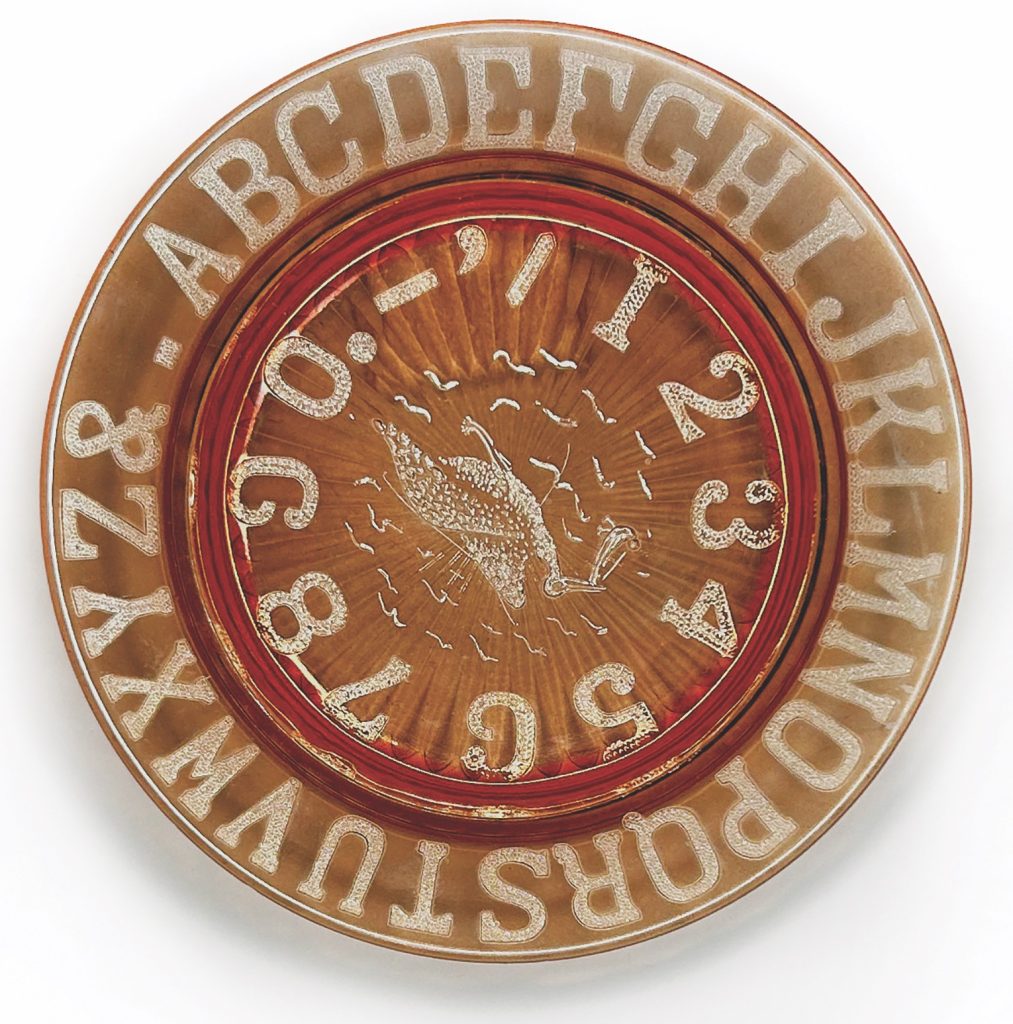
When my mother was in her 60s and I was in my 30s, with great fanfare, she passed down to me her Carnival Glass baby dish. And it, like everything else, had a story to go with it. She told me her mother’s sister — her Aunt Tilly — visited their New York home shortly after my mother was born. Tilly, my mother explained, worked for the Philadelphia Railroad’s Pittsburgh office. When Mom was born, Tilly was desperate to see her new niece. It was during the war but, even so, Tilly managed to get four days off with pay. She had a coach ticket on the train, fruit and snacks, and a beautiful baby cap she had knitted for the newborn girl.

When Aunt Tilly arrived in the city, Mom continued, she decided to walk the 16 blocks to Houston Street, dragging her suitcase behind her. On the way, she paused to rest on a park bench. A stranger sat down beside her, and Aunt Tilly wanted to show this woman the knit baby cap, but it was gone! She’d left it behind on the train or lost it on the way. Distraught and in tears, it was at that moment that a beat cop walked by. Noticing how distressed Aunt Tilly appeared, he asked if she was OK. Through her tears, Aunt Tilly explained she’d lost an item precious to her. The cop was holding a wrapped package in his hands and said he’d found it nearby. He asked Tilly if that was what she’d lost. “No,” she replied, but she seemed so heartbroken the cop gave the package to her anyway. After he walked away, she opened it. Inside was a little amber miracle, a perfect gift for the newborn child. It was a baby dish — the very one my mother was now passing down to me.

Of course, I cherished my mother’s baby dish for many, many years. Then, one day, long after my mother had passed away, I visited my cousin, my Auntie Esther’s daughter Leslie, in Florida. My eyes were drawn to something in her china cabinet, an amber baby dish.

I was dumbfounded. “Matching baby dishes?” I wondered. Then I told Leslie the story behind mine. After she stopped laughing, Leslie explained that Uncle Louie — Auntie and Mom’s brother — once owned a gift shop in Mystic, Connecticut. And that, as they say, is the rest of the story.

I never did question the authenticity of my mother’s tall tales. And I’m glad I didn’t. The heart, like a little baby dish, holds everything.

Birdwatch

BIRDWATCH

A Fascinating Little Bird

The trickery of the killdeer

By Susan Campbell

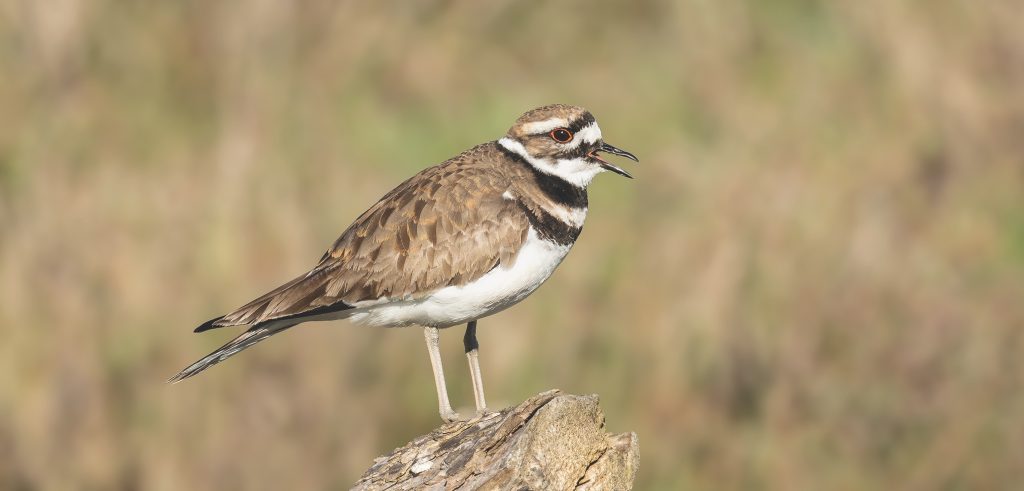
The killdeer is a small, brown-and-white shorebird that breeds in the Sandhills and Piedmont of North Carolina. The species can be found here year-round in the right habitat — and it need not be all that wet. Widespread in North America, most of the killdeer population lives away from the water’s edge. In fact, for egg laying, the drier the spot, the better. In truth, our sandy soil is not unlike the beaches where one would expect to find a shorebird.

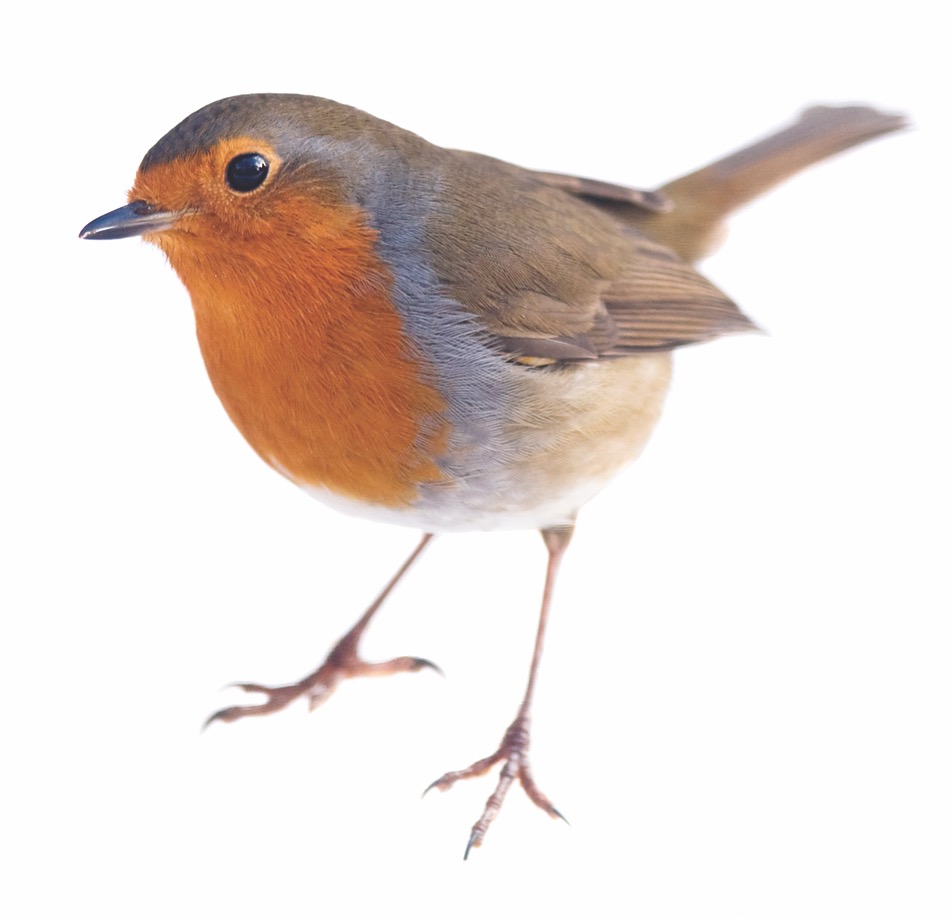
This robin-sized bird gets its name from its call: a loud “kill-deer, kill-deer,” which can be heard day or night. During migration, individuals frequently vocalize on the wing, high in the air. In early spring adults will circle above their territory calling incessantly.

On the ground, killdeer are a challenge to spot. They blend in well with the dark ground, hidden against the mottled surface of a tilled field or a gravel covering. Killdeer employ a “run-and-stop” foraging strategy searching for insect prey on the ground. As they run, they may stir up insects, which will be gobbled up as the birds come to a quick halt. Although they live in close proximity to humans, killdeer are quite shy and more likely to run than fly if approached. When alarmed, they frequently use a quick head bob or two, likely a strategy to make the birds appear larger than they are.

During the winter months, flocks of killdeer concentrate in open, insect-rich habitat such as ball fields, golf courses or harvested croplands. Come spring, pairs will search out drier substrates, preferring sandy or rocky areas for nesting. They may even use flat, gravel rooftops. The female merely scrapes a slight depression where she lays four to six speckled eggs that blend in with the surroundings. She will sit perfectly still on her nest and incubate the eggs for three to four weeks. If disturbed by a potential predator, the female killdeer will employ distraction displays to draw the intruder away from the eggs, going so far as to feign a broken wing. The mother bird will call loudly and with her tail spread — to be as noticeable as possible — limp along dragging a wing on the ground. This “broken wing act” can be very convincing, giving the predator the idea that following the female will result in an easy meal. Once away from the nest, the killdeer will fly off, not returning to the eggs until she is convinced the coast is clear. Should distractions by the adults not be effective, the pair will find a new nesting location and begin again. A very determined nester, killdeer are capable of producing up to three broods in a summer.

When the eggs hatch, it will be a synchronous affair. As soon as they have dried off, the downy, long-legged young will immediately follow their mother away from the nest to a safer, more protected area nearby. They will follow her, being fed and brooded along the way, for several weeks. Once they are fully feathered, the young will have learned not only how to escape danger but how and where to find food.

So, if you hear a “kill-deer” over the next couple of months, stop and look closely. You may be rewarded with a peek into the summer life of this fascinating little bird.

Almanac May 2026

ALMANAC

Almanac

May 2026

By Ashley Walshe

May is a blessing, a benediction, a rhythmic string of sacred prayers.

May robin, cardinal and wren sing the dawn sky pink and sweet.

May the warmth of sun nourish all that grows.

May hummingbird carry the laughter of one thousand flowers everywhere he goes.

May fox kits emerge from their dens, plump and playful. May the bluebirds hatch, the bluestar bloom, the bullfrogs blast their jug-o-rums.

Let the passion vines blossom with whimsy. Let the wild indigo paint the open woods. Let the last of the dainty bluebells ring out.

Let there be rainfall. Let titmouse bathe in shallow pools of water. Let the earthworms feast on spoiled fruit.

Let go of last season’s sorrow. Let this new day surprise you. Let what is here be enough.

The woody scent of yarrow. The hum of bees. Green leaves in golden light.

Breathe in the bouquet of microbes and wild strawberry. Breathe it out. Now, breathe it in again.

Behold the majesty of magnolia, the bliss of cartwheels, the grace of speckled fawn in soft grass.

May the whippoorwill return, and when he does, may every wild thing taste the sweetness of its own name, chanted one hundred times over.

May the wind keep the secret of each dandelion. May the garden feed body and soul. And, above all, may spring be a hymn of thanks for and from this fertile earth.

Ring of Fire

The ancient Celts celebrated the changing seasons with four cross-quarter festivals: Samhain (Oct 31–Nov. 1), Imbolc (Feb. 1–2), Bealtaine (May 1) and Lughnasadh/Lammas (Aug. 1). On Bealtaine, a Gaelic May Day festival honoring the fecund soils of the Earth, fire rituals were said to bring purification and fertility to the land, livestock and couples wishing to conceive.

According to Scottish author James Napier, dew collected on the first day of May “preserved the skin from wrinkles and freckles, and gave a glow of youth” (Folk Lore: Superstitious Beliefs in the West of Scotland Within This Century, 1879). And how might one collect said droplets? Dew tell.

If it’s drama that you sigh for,

plant a garden and you’ll get it.

You will know the thrill of battle

fighting foes that will beset it.

If you long for entertainment and

for pageantry most glowing,

Plant a garden and this summer spend

your time with green things growing.

                            — Edgar Guest, “Plant a Garden”

Mamas and Moons

The mothers are tending. Bluebird, to her hatchlings. Doe, to her fawn. Racoon, to her litter of kits.

This month, Mother’s Day lands on Sunday, May 10. Honor the ones who tend in the ways that feel true to you — and them.

And while we’re on the topic of feminine glory: May will be graced by two full moons — the full flower moon on May 1, and a blue moon on May 31.

Captain’s Choice

CAPTAIN'S CHOICE

Captain's Choice

Matchmaking in Pinehurst, controversy in Augusta

By Bill Case

Twice a Ryder Cup player, winner of the Belgian and French Opens and several important British tournaments, Arthur Lacey had accomplished much in golf, including meritorious service to the game as chairman of the British PGA. At age 47, with his best golf a decade in the past, the Englishman’s selection as the non-playing captain of Great Britain and Ireland’s 1951 Ryder Cup team represented a fitting capstone to a stellar career.

The appointment provided Lacey the chance to achieve a goal he had set in 1933 after narrowly losing a Ryder Cup singles match to Walter Hagen. “From that day,” he confided, “it has been my ambition to captain a British Ryder Cup team to victory.”

The ’51 matches would be played on foreign soil in Pinehurst, North Carolina. The captain could never have anticipated that his two weeks in the town would ultimately lead to his moving to America and establishing a winter home in the very place the matches were contested. Nor could he have known that his second life would include one of the most memorable rules controversies in golf history.

Captain Lacey faced an uphill battle in the ’51 Ryder Cup. The GB&I team — all of Europe didn’t join the fray until 1979 — had not been victorious in any of the four previous cups on U.S. soil. And while most of the American players had competed on Pinehurst’s No. 2 course annually in the North and South Open, this trip would mark the first time any of the GB&I players would have seen it.

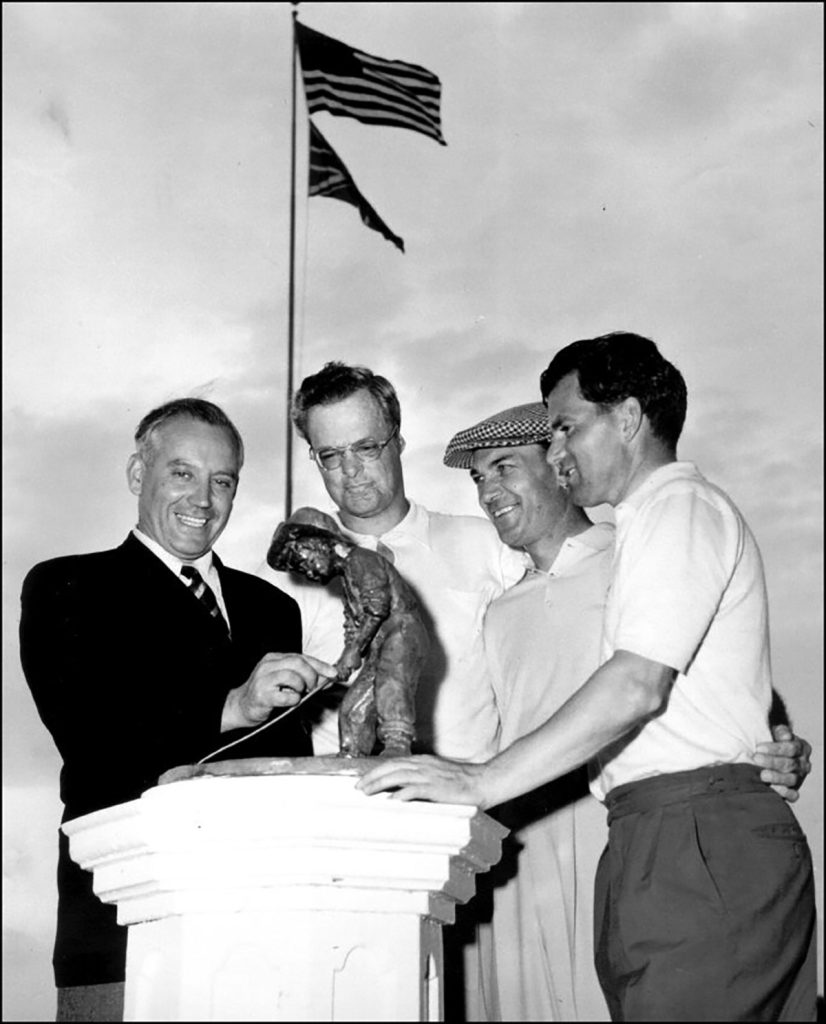
But, pure and simple, the chief difference between the two squads was talent. While GB&I did boast two Open Championship winners in Max Faulkner and Fred Daly, the American team featured five men who would eventually be inducted into the World Golf Hall of Fame: Sam Snead (the playing captain of the ’51 U.S. side), Ben Hogan, Jimmy Demaret, Jack Burke Jr. and Lloyd Mangrum.

Sailing across the Atlantic aboard the Queen Mary, the GB&I team arrived in New York on Sunday, Oct. 21. Both teams were feted at a celebratory dinner at the Waldorf Astoria courtesy of Bob Hudson, the Portland, Oregon mogul who had previously footed the bill to bring the ’47 GB&I team to America while the financially challenged United Kingdom recovered from the ravages of war. The next stop was Washington, D.C., where Lacey’s team toured the Capitol and was greeted by Harry S. Truman at the White House. They played a practice round at Columbia Country Club on Wednesday, Oct. 24, enjoyed another reception and rushed to Union Station to catch the night train to Southern Pines.

Arriving at the town depot Thursday morning, the visitors were, according to the Pinehurst Outlook, “whisked to Pinehurst in a bus which rattled with the sound of the war clubs with which they will try to take the No. 2 championship course apart.” After a flag-raising ceremony at Pinehurst Country Club, the weary travelers checked in at the Carolina Hotel, where they, along with the members of the American team, occupied the hotel’s east wing.

With the matches commencing the following Friday, GB&I had six days to prepare. Lacey was guardedly optimistic. “We have yet to gain our first success in America in this series,” he said, “but I am sufficiently optimistic to think we have brought the best team so far to attempt this difficult task.” When asked about his duties as captain, Lacey couldn’t resist a cheeky response. “Looking after the trophy aboard ship when we return,” he said.

Lacey’s squad was offered the option of playing the “small ball” ( a minimum of 1.62 inches in diameter pursuant to the rules promulgated by the R&A in contrast to the 1.68 inch minimum prescribed by the USGA). The smaller ball flew farther than its American counterpart and tended to perform better in the windy conditions found in links golf. Lacey declined, saying, “We came here to win these matches, and since they are to be played in this country, we will play by your rules.”

Frequent blurbs relative to the comings, goings and social engagements of Pinehurst’s “Cottage Colony” residents were a staple of the Pinehurst Outlook’s reportage throughout the paper’s existence. It was no different simply because the Ryder Cup was coming to town. A week before the golfers arrived the Outlook reported that Mrs. Thomas B. Lockwood, whose primary residence was Buffalo, New York, would be arriving in Pinehurst “to open her cottage, ‘Holly Hill,’ on Midland Road.”

Mildred Lockwood was a widow. Her second husband, Thomas Lockwood, a Buffalo attorney, banker, politician and philanthropist, had passed away in 1947. She acquired Holly Hill, a house bordering the fifth hole of the No. 2 course, in 1949, and it became her lodging during Pinehurst’s so-called “winter season” of November to May. She was a member of the Silver Foils, Pinehurst’s longstanding women’s golf society.

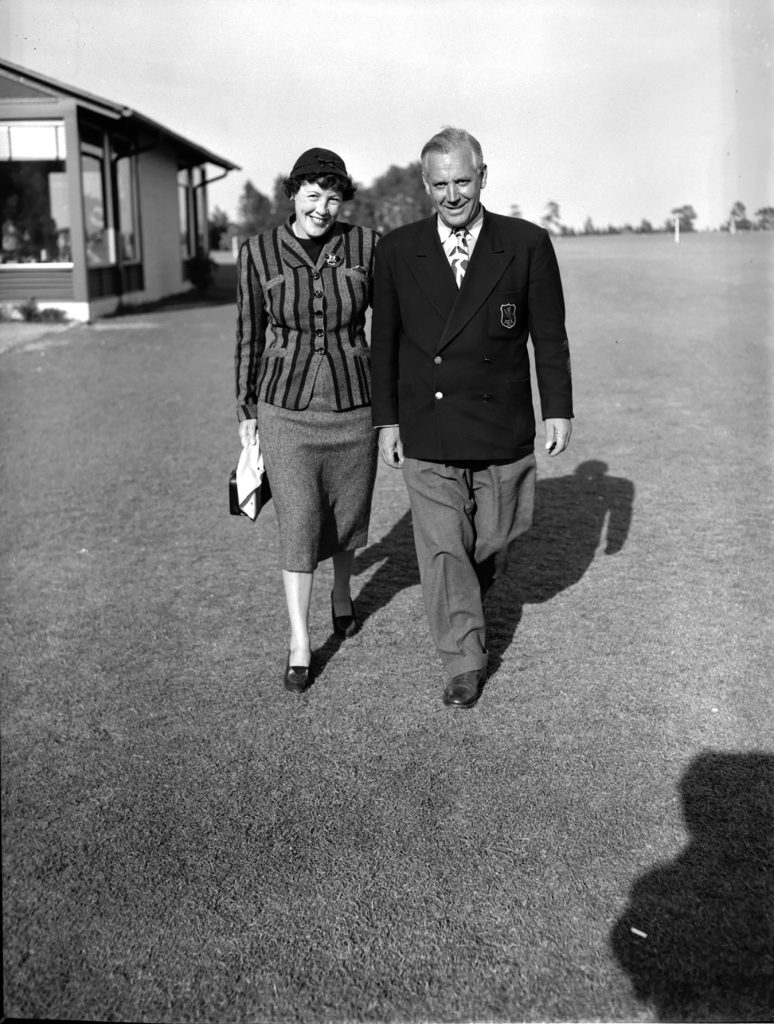
Lacey and Lockwood would marry 14 months after the Ryder Cup. Nothing reported then or thereafter disclosed the circumstances by which the couple met. If their mutual attraction began the week of the matches — or the North and South Open, held in Pinehurst the following week — both kept mum about it.

The 1951 cup matches were a truncated affair compared to the modern Ryder Cup. The teams played 12 matches in two days of competition. The first day involved four foursomes matches. The second day featured eight singles matches. In a head-scratching schedule that would be unimaginable today, the Ryder Cup took a break on Saturday. Both teams were encouraged to attend a college football game in Chapel Hill between the University of North Carolina and the Tennessee Volunteers. London Sunday Times journalist Henry Longhurst was among those who joined the GB&I players in the Kenan Stadium press box. “I simply don’t understand what is going on,” Longhurst wrote. “All I know is that I am doing OK as long as I holler, ‘To hell with Tennessee.’” The Vols blew out the Tarheels 27-0. The American captain, Snead, was not among those attending the game. He picked up a few bucks elsewhere giving an exhibition instead.

Results from the foursomes matches on Friday suggested Lacey’s dream of an upset was just that, a dream. The U.S. won three of the four matches. The teams of Hogan-Demaret and Snead-Mangrum both won 5 and 4. The lone GB&I win, by Arthur Lees and Charlie Ward, prevented a shutout.

When the matches resumed on Sunday it was more of the same, except worse for GB&I. The U.S. won six of the eight matches, mostly by lopsided margins. The only British winner was Lees, who bested Porky Oliver. The final tally was U.S. 9 1/2 to  GB&I’s 2 1/2.

During Sunday’s “Victory Dinner” at Pinehurst Country Club, Lacey presented a silver pitcher to Bob Hudson and a silver cigarette case to Richard Tufts in appreciation of their unstinting efforts in making the British team’s visit enjoyable. Regarding the outcome, the handsome, graying Lacey simply stated, “We were beaten on merit.”

Tufts had arranged for the North and South Open to immediately follow the Ryder Cup, assuming that since the members of both teams were already in town, they would certainly want to stay to compete in the prestigious tournament. That proved true for the British team, but not so much the Americans. The PGA had recently set a minimum prize money floor of $10,000 for tournaments. Tufts balked at complying with this edict. Hogan, Demaret, Mangrum and Burke declined to enter the North and South. Several who did stay, including Snead, failed to hide their dissatisfaction. In what was perceived as a quasi-boycott, four American team members withdrew subsequent to the first round. Only one, Henry Ransom, played all 72 holes. Miffed by the behavior of the American players, Richard Tufts would discontinue the N&S, ending its storied 50-year run.

By contrast, each of the British team members played in Tufts’ tournament, as did their captain, who made the cut and played all four rounds. Following the tournament, the members of the GB&I team sailed back to England but Lacey would soon return. In July, 1952 Britain’s Golf Monthly magazine reported that Lacey had left the position he’d held for 18 years as golf professional at Ascot’s Berkshire Golf Club and was moving to America.

On Jan. 27, 1953, Mildred Lockwood and Arthur Lacey were married at the First Presbyterian Church in Reno, Nevada. According to the Outlook, after two weeks in California, “Mr. and Mrs. Lacey will be at their home on Midland Road here until the middle of May, when they will open their residence in Buffalo, for three months, later sailing for a sojourn in the British Isles.”

That itinerary foreshadowed the couple’s peripatetic travels throughout their 26 years together. Typical was their six-month trip around the world in 1955. Sailing from San Francisco, the Laceys visited Japan, Hong Kong, Thailand, Singapore, Indonesia, the wilds of Africa, the Holy Land, Turkey, Greece and England.

In their wanderings, they rubbed elbows with the rich, famous and royal. The Earl and Countess of Carrick joined them for a three-week fishing trip in Boca Grande, Florida. While visiting the low countries, Lacey played rounds with King Leopold of Belgium. Though his competitive form was waning, Lacey would occasionally work in a tournament or two during his European excursions.

Despite prolonged absences from Pinehurst and her hometown of Buffalo, Mildred Lacey engaged in an astonishing array of charitable endeavors in both locales. She was a major benefactor of the University at Buffalo. After purchasing poet Robert Graves’ original manuscripts, she donated the collection to the university’s Lockwood Memorial Library, named to honor Mrs. Lacey’s previous husband, who endowed its construction.

In Buffalo, she served as president of the Ingleside Home for unmarried mothers; chairman of the Building Committee and Fund Raising for the community’s YWCA; a member of the board of directors for two hospitals; the first female member of the Buffalo Chamber of Commerce; and the organizer and president of the Buffalo and Erie County Chapter of Infantile Paralysis. Eliminating polio was a matter of special interest to her. Her brother, Dr. Thomas Francis Jr., designed, supervised, and analyzed the field trials that validated the use of Jonas Salk’s life-saving vaccine.

Mrs. Lacey was equally active in Pinehurst. Her list of services to the community included: member of the board of directors of The Village Chapel; treasurer of the Sandhills Woman’s Exchange; secretary of the Women’s Auxiliary of Moore Memorial Hospital; and president of the Silver Foils golfing society. She worked with the Open Door Nursery School and Child Care Center in Taylortown, helping to start the charity, raising the money to sustain it, and serving as its chairman for 15 years. Today the Wyatt School Age Program in Taylortown continues the work she began.

Arthur Lacey joined The Tin Whistles, after the society tweaked its by-laws to allow dues-paying pros to enter most of its tournaments. For her part, “Queenie,” as Mildred was known by friends, was a high handicapper who participated enthusiastically in Silver Foils’ weekly competitions. In Feb. 1958, she and her husband teamed up in the Silver Foils Mixed Fourball Tournament. The Laceys tied for first before losing in a playoff.

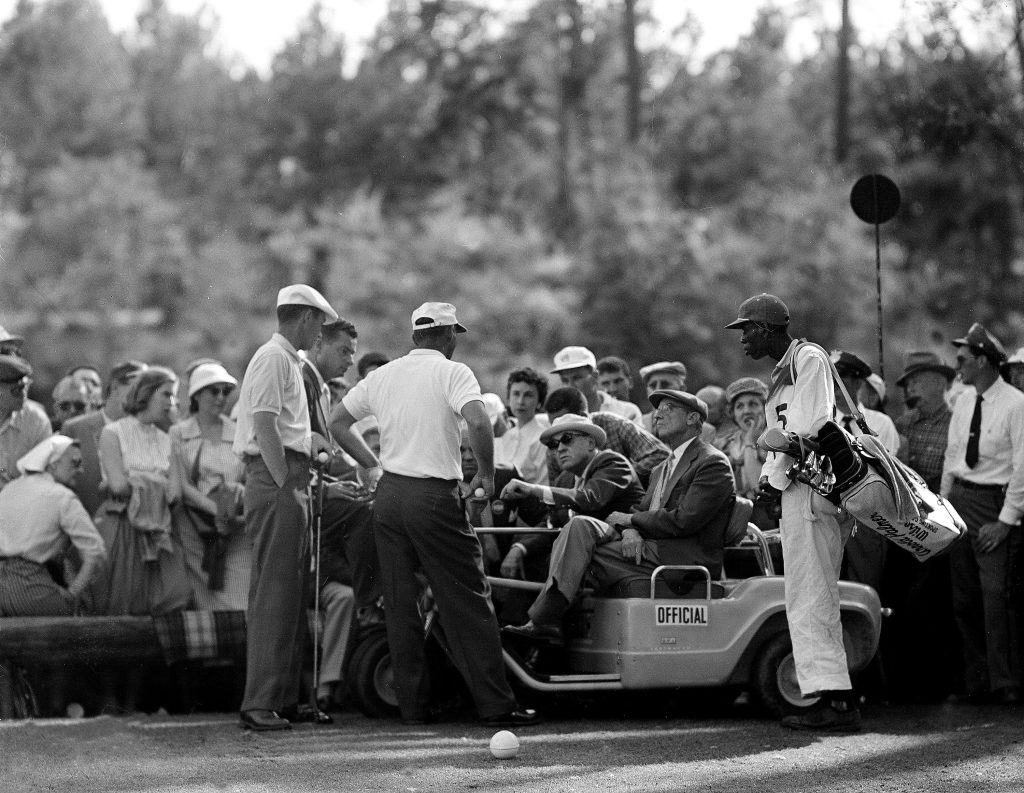
Just over a month later, Lacey, then 53, drove to Augusta National Golf Club, where he had agreed to be a rules official for the 1958 Masters. His service in that capacity was uneventful until the late stages of the final round. He was stationed at the par-3 12th when the pairing of Arnold Palmer and Ken Venturi arrived on the tee. Palmer — who would go on to win the first major title of his illustrious career — led the field with Venturi hot on his heels, one stroke behind.

Both Venturi and Palmer struck their iron shots a bit too far, their balls landing beyond the putting surface. Venturi’s ball spun back onto the green. According to legendary golf writer Herbert Warren Wind, who was on-site, “Palmer’s ball struck low on the bank about a foot or so below the bottom rim of a back-side trap and embedded itself. It had rained heavily during the night and early morning, and parts of the course were soggy.”

When Palmer reached his ball, he called Lacey over and asked for relief from his embedded ball lie. Lacey denied the request, informing Palmer he would need to play the ball as it lay. To some, Lacey’s ruling and the dramatic — and still swirling — controversy it precipitated, would overshadow his substantial accomplishments in the game.

Under the USGA’s Rules of Golf at the time, there was no provision granting a player relief for an embedded ball. However, Augusta National could put in place a “wet weather” local rule that would allow such relief in inclement weather. Given Sunday’s rainy conditions, Augusta National had adopted such a temporary rule for that day’s play. Its precise wording is unknown. However, in a Golf World magazine article following the Masters, it was reported that this wet weather rule provided for embedded ball relief “through the green,” meaning virtually everywhere on the golf course except hazards, bunkers, and tees and greens of the hole being played.

Given the local rule, what basis did Lacey have for denying Palmer relief? There are differing accounts of his rationale. Venturi, who overheard at least part of the conversation between Lacey and Palmer, wrote in his 2004 autobiography, Getting Up & Down, that Lacey told Palmer his ball was, “not embedded. It’s only half-embedded.”
Years after the ruling, Lacey would relate a different explanation in a discussion with writer Al Barkow. The veteran golf journalist wrote that under the rule handed down by the Masters committee early Sunday morning, “Lacey was given to understand (rightly or wrongly) that a player would be allowed a free lift from an embedded lie only if his ball was on the green or fairways.” Palmer’s ball was neither.

That was merely the beginning of the debacle. More instances of “he said, he didn’t say” followed regarding whether Palmer used proper procedure in deciding to play a “second ball.” In situations like the one Palmer faced, a player could opt to play a second ball along with the first, then have the tournament committee decide which ball should count as his score. To do so, the rule stated that a competitor “must” declare his intention to play a second ball prior to playing the first ball. The competitor was further required to announce which ball he wished to count for his score. Furthermore, he was supposed to play both balls “at the same time” until both were holed.

Palmer would later say he advised Lacey of his intention to play a “provisional ball” (technically he should have said “second ball”) before proceeding. Venturi emphatically denied this occurred.

Palmer then played the embedded ball and did not recover well, finishing the hole with a double-bogey 5. He returned to the spot where his tee shot had embedded to play a second ball, and took a drop. From a much better lie, Palmer chipped close and holed his putt for what he hoped was a 3.

Venturi was visibly upset. He told Palmer he could not invoke the rule because of his alleged failure to declare a second ball before hitting his first one. “Suppose,” Venturi bristled, “you had chipped in with the other ball. Would you still be playing a second?” Palmer replied he had followed proper procedure.

But did it really matter whether Palmer verbalized his intention to play a second ball before hitting his first one? Rule 11(5) then stated, “Should the competitor fail to announce in advance his procedure or selection, his score with the second ball shall be his score for the hole if played in accordance with the rules.” This provision, as written, appears to excuse a player’s failure to announce his intentions. The sloppily written rule (later changed) seemingly permitted the “two bites of the apple” scenario advanced by Venturi.

So did Palmer have a 5 on the 12th or a 3? A 5 meant he was now a shot behind Venturi, who parred the hole. With a 3, Palmer would remain one shot ahead. The two would be uncertain how they stood until the Masters Tournament Committee reviewed the situation.

Venturi believed this muddled situation may have led Palmer to play the par-5 13th more aggressively than he might have otherwise. Venturi laid up short of the water hazard fronting the green. Palmer, after initially pulling an iron, returned it to his bag, pulled out a wood and struck a sensational shot onto the green, then holed the putt for an eagle. Venturi birdied. That would make Palmer either two strokes ahead of Venturi or even with him, depending on the committee’s ruling.

While the leaders were playing 14, they were informed that the committee had decided in favor of Palmer. An incensed and rattled Venturi imploded. He 3-putted three of the final four holes and faded to fourth. Palmer hung on for a one-stroke victory over Doug Ford and Fred Hawkins, capturing his first green jacket.

After signing his scorecard, Venturi sought out Clifford Roberts, Augusta National’s chairman, to complain that Palmer had broken Rule 11 by failing to timely announce his intention to play a second ball. “I was wasting my breath,” Venturi wrote in his book. But not wanting to take no for an answer, he asked that Roberts bring in Lacey. “Only one problem,” wrote the exasperated Venturi. “Lacey, I was told, had already left the golf course, and there was no way to track him down. There were no cellphones in 1958. A pretty quick exit from the premises, don’t you think? I certainly don’t have any evidence that Mr. Roberts, anxious to avoid controversy, made sure Lacey got off the grounds in a hurry, but it sure looks fishy.”

So Lacey became something of a fall guy in this strange episode. He, according to the tournament committee (apparently Bobby Jones and Roberts), had made an incorrect decision. But no matter; all’s well that ends well. Palmer, an extremely popular winner, had addressed Lacey’s mistake appropriately, and there was nothing more to be said.

Golf writer Guy Yocom admits to a fascination regarding the brouhaha. He maintains that regardless of how much one studies the available evidence, certainty regarding what actually happened is elusive.

Yocom feels Lacey may have gotten a bad rap. “There is a possible distinction to be made between the traditional application of ‘through the green,’ and how Augusta National applied its rule,” Yocom says. “Why would Lacey, a man with decades of golf experience at the highest level, claim the rule applied to fairways and greens only, if it wasn’t so? Officials don’t just make this stuff up.” And if Lacey made a mistake, why didn’t he acknowledge it to Barkow? “There’s no shame in admitting it,” says Yocom, “because officials make mistakes all the time.”

It’s possible, Yocom believes, that when rules officials were briefed on the local rule Sunday morning, they might have been orally instructed to construe the phrase “through the green” as applying only to balls embedded in fairways and greens, notwithstanding that phrase’s more expansive defined meaning in the Rules of Golf. That scenario would be consistent with what Lacey told Barkow.

Over the years, the dispute drifted away from public consciousness until Venturi rekindled it with his 2004 book. Lacey’s actions were criticized anew. Venturi and Palmer were still around, and the book reopened scars for both men. The sensitive Venturi was accused of exhibiting sour grapes. Writers asked why Venturi had signed Palmer’s scorecard if he felt the ruling was wrong. Other pundits interpreted Venturi’s account as an accusation of cheating on Palmer’s part. Venturi vehemently denied this. And Palmer, viewed by the golf world as a paragon of golf ethics, was hurt by any suggestion he had won his first major by skirting the rules.

When Lacey died in 1979 while working in his garden, no one in Pinehurst appears to have given thought to the Masters controversy. Locals who knew him recalled other things about him. Lacey’s neighbor and friend, Pilot columnist Evelyn de Nissoff, remembered him as a man of “pleasant personality” and “quiet humor.” She had purchased Lacey’s treasured yellow Renault, which he had brought over from England. When encountering her at the post office, Lacey would invariably inquire, “How is the Renault working out?”

From all that is known, Lacey did not appear to have been overly anguished by what happened in the 1958 Masters. If he dwelled on it at all, he kept, as the Brits say, a stiff upper lip. And though his team may have been trounced in the ’51 Ryder Cup, Lacey managed to find the storybook ending anyway.

From the Archives

FROM THE ARCHIVES

It’s Not Smokey

A trained bear visits Pinehurst

By Audrey Moriarty

Dancing bears were common in Europe and Asia from the Middle Ages up to, and in some cases into, the 20th century. Travelers with a trained bear were popular in Europe between 1870 and 1914. Many of the bears came from the French Pyrenees, where local men would capture bear cubs and train them to perform special tricks. In general, the bears were female, as they were considered more docile. Often trainers would travel across the continent to the coast, making money along the way, to earn passage to the United States.

Dancing bears were trained to stand on their hind legs when trainers fed them from above while simultaneously giving a signal. Eventually, the bear would learn to stand hearing the signal alone. Sometimes the training methods were crude and cruel. One example involved piercing the snout and running a rope through it, then pulling on the rope to force the bear to stand. Another included playing music while the bear stood on a heated surface, or hot coals, forcing it to move its feet, thus conditioning the bear to “dance” when it heard music. Some trainers denied sufficient food to make the bears less aggressive.

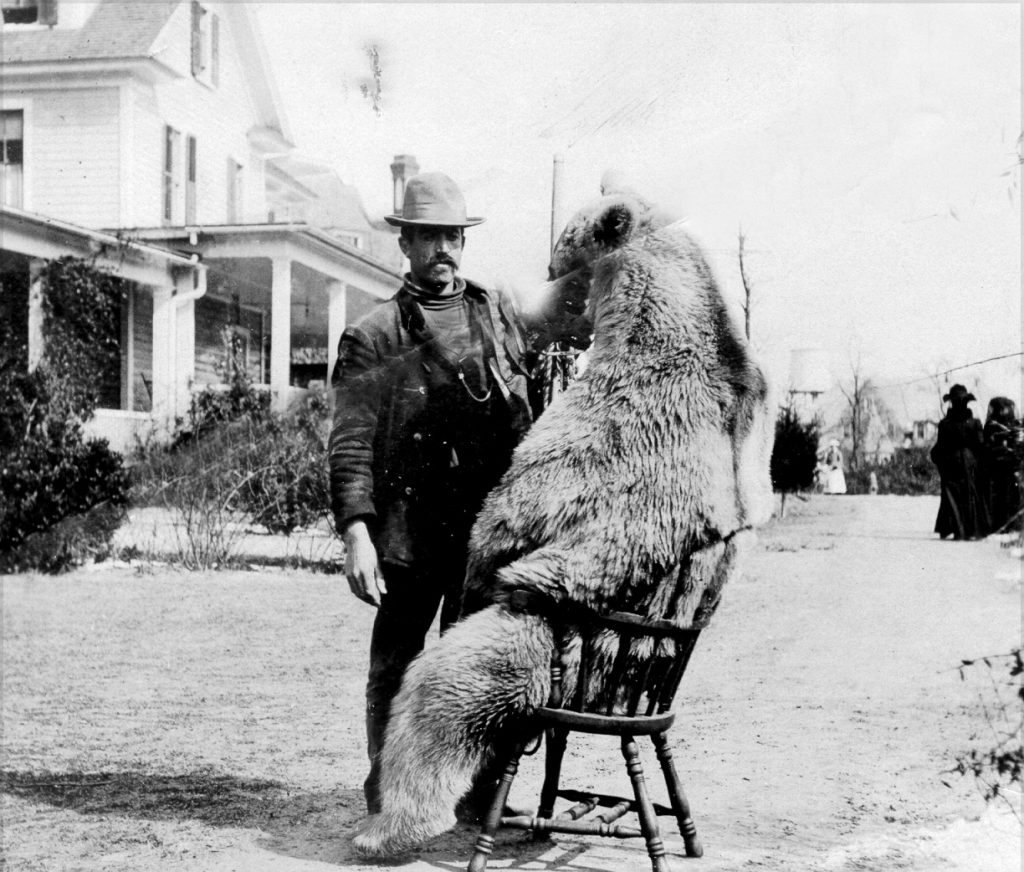
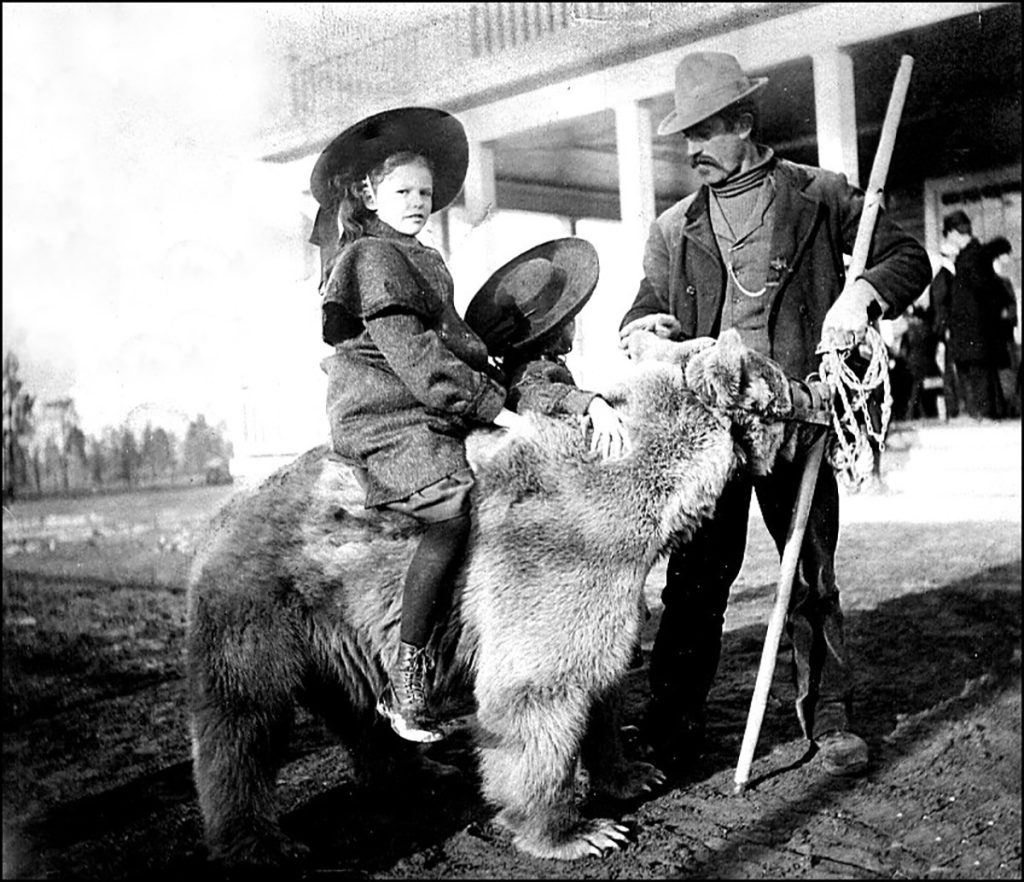
The trained bears were popular in circuses, vaudeville, festivals and fairs. Often, bears were used to entice people to enter pubs and drinking establishments. These bears were trained to dance, ride bicycles, roller skate and play musical instruments. The bear pictured here and its handler were in Pinehurst in 1904, a novelty in a new resort. The trainer and bear walked freely among the villagers and guests, often offering children rides on the bear.

By the early 1900s, beatings and training methods based on fear and pain were deemed harsh, and the use of hot coals, sensory deprivation and withholding food were decried. Enlightened crowds began to avoid the shows where the abuse was evident, and the popularity of the dancing bears waned. Gradually, the abusive techniques used to train animals were replaced with science-based training and reward inducements.

Sporting Life

SPORTING LIFE

A River Adventure

Snakes, snags and mosquitoes

By Tom Bryant

“The Lumbee is a winding stream that gradually increases in breadth as it becomes a noble river.”    — Mid-Winter Canoe Club

John Mills, the unofficial official historian of Pinebluff, recently sent me a clipping of an article published in The Pilot many years ago about a booklet with information about the Mid-Winter Canoe Club, a small canoeing organization with headquarters on Drowning Creek. The booklet, published in 1911, disowned the name of the creek, Drowning, indicating it was an offshoot of superstitions originating with the local population. The correct name of the waterway should be Lumbee, a reference to the Native American tribe that frequented the river and often lived close to the tributary.

“All rivers lead to the sea, but there is no water road to or from the ocean within easy reach of tourists in the sand hills or those who live in the great centers of life and industry along the Atlantic Seaboard, which can be reached so conveniently and traveled so freely in winter as the fascinating course offered by The Lumbee, The Little Pee Dee and The Great Pee Dee Rivers.”

The writer of the booklet went on to describe the waterway as it looked at the turn of the century. “The timber growth along the river is semi-tropical, an unbroken wilderness that has never seen an axe except where the bluffs make into the river (once in six to 10 miles) and serve as landing places or camping grounds. Unusual bathing facilities are afforded on sandy points opposite these bluffs. Gum, cypress, juniper, pine and water oak are the prevailing woods. The green of winter is afforded by the ever-present holly trees, the pale green mistletoe, the bay bush and pine.”

Pinebluff, described as the station south of Pinehurst, served as the headquarters of the Mid-Winter Canoe Club. The president of the club was John Warren Achorn, M.D., who lived in Pinebluff during the winter and in Annisquam, Massachusetts, during the summer months. Levi Packard, of Pinebluff, served as secretary and treasurer. Directors were E.G. Gay, whose home was in Maine; Wayne McNeill, of Wagram; and Dr. Achorn.

It’s pretty clear that the good old boys who headed up the canoe club described the river in a promotional way to influence more folks to locate to the area and take advantage of the pleasures offered by the club. The ad guys at Pinehurst golf courses did the same thing in 1911, pretty successfully I might add, more so than the promoters of the Lumbee.

So that’s how it was in 1911. Later, in more modern times, three of us would have a little different experience on the river.

John Mills, Andy Alcroft and I had spent most of our childhood roaming the woods of the southern part of Moore County, but the swamps of Drowning Creek were off limits. In the early ’50s, Manly Wade Wellman, a good friend of Johnny Mills’ father, wrote a book, The Haunts of Drowning Creek. He even dedicated it to John’s dad. After reading Wellman’s novel, it was hard to keep us off the river.

One summer when all three of us were on break from college and home in Pinebluff, everything came together, and we had ample time to experience what we considered the adventure of a lifetime. The plan was to launch our skiff at the creek bridge between Aberdeen and Laurinburg, follow the creek south until it flowed into the Lumber River, then paddle on down to the Little Pee Dee, which would eventually merge with the Big Pee Dee and then on to our destination, Georgetown, South Carolina, and the mighty Atlantic Ocean.

Our most important tool for the trip was a little 14-foot skiff owned by our friend Cliff Blue. He was glad to lend us the boat and even agreed to pick us up at the end of the trip in Georgetown, but when we asked him to join us he said, “Man, there are things on that river that’ll kill you. You Pinebluff boys have always been a little strange.”

We allowed ourselves about two weeks to complete the trip, and we were cutting it close. Summer was coming to an end, and we would soon have to be back in school.

I remember we had quite an entourage when we shoved off at the bridge on Highway 501. John’s sister had a slumber party at his house the night we loaded all our gear, and the girls wanted to come to the bridge and watch us push off the next day. I was supposedly the expert on swamps and low country river traveling. My grandfather had a house and camp on the Little Pee Dee in South Carolina, and I had spent many summers fishing the sandbars of that river. The Lumbee River was about to teach me how little I knew about Drowning Creek.

We were all decked out in our jungle finery. We had pith helmets on our heads and Bowie knives strapped to our sides. Ernest Hemingway would’ve been proud. We left on a bright Sunday morning. The weather was perfect. We got the skiff off the trailer and launched it into the creek with only minor difficulty. When the boat was fully afloat, we saw there was little freeboard and we’d have to be careful when we hit the big rivers farther south. We pushed off and rounded the bend out of sight of our spectators on the bridge.

Thirty minutes later we came to our first obstacle. Three huge pines lay across the river. This makeshift bridge blocked our way. It was the first of many portages we would make. The boat had to be unloaded, hauled over the pines, and reloaded, a chore we would soon get used to.

Snakes were everywhere. As a matter of fact, they were so numerous we eventually lost our fear of them and adopted a laissez-faire attitude. There were about as many snakes as there were mosquitoes that buzzed around our heads. At one point we were all in the water lifting the boat over a downed tree when a cottonmouth swam right by us. I splashed him with water and he kept on swimming.

The trip was grueling. After sleeping in jungle hammocks, eating C-rations, boiling creek water to drink and about to run out of time, we decided to call a halt to this adventure at the next sign of civilization.

As the crow flies, we probably traveled only 50 or 60 miles, but taking into account the circuitous flow of the water — often we could look over the bank and see the same stretch of river we had just paddled — there’s no telling how far we actually traveled. That was our modern day experience on the Lumbee. I’ll continue calling it Drowning Creek. That name fits it better.

And Cliff Blue, bless his heart, was right when he said, “There are things on that river that’ll kill you.”

Simple Life

SIMPLE LIFE

Letter to a June Bug

From a Homegrown Ogden Nash

By Jim Dodson

My daughter, Maggie, was born in 1989.

That year became known as the “Year of Revolutions,” a turning point in world affairs that witnessed the opening of the Berlin Wall, a Velvet Revolution in Czechoslovakia, and the end of communism in Europe’s eastern bloc. It also saw the end of Apartheid in South Africa, the birth of the World Wide Web and the first commercial internet providers — social revolutions of a different kind. 

Mugs, as I called my beautiful baby girl from day one, was born in the aftermath of a huge snowstorm in Maine. We took her home to our cottage on Bailey Island on day two, after her paternal grandparents arrived from North Carolina. 

One of my fondest memories is of sliding on my rump down the deep, snowy hill behind our cottage,  my bundled-up baby clutched to my chest. When I looked at my daughter’s tiny face, I swear she was almost smiling. 

Upon returning home to Carolina, my dad, a veteran newspaperman with a poet’s heart, jotted me a note of gratitude with a bit of whimsical verse attached. He fancied himself, I think, a homegrown Ogden Nash. 

Sadly, I can only remember the opening lines of the ditty because I kept it in my office desk forever until it apparently migrated into attic boxes stuffed with half a century of manuscripts, letters and correspondence. Someday, I hope to unearth it. In the meantime, here’s the only bit that I can recall, advice from a happy grandpa: 

There’s nothing in this whole wide world / As precious as a baby girl / who someday soon will surely be / A child as happy as can be / Your job, my son, is take her hand . . . at which point my memory fails.

When Maggie and husband Nate visited us in the autumn of ’24, she graciously offered to plow through my mountains of archives and work papers, giving me hope that she might find my dad’s wise, little verse. 

Instead, she found a pile of letters from my early career that included an unopened one from legendary New Yorker magazine editor William Shawn. He complimented me for an investigative piece on a forgotten African American community I’d written for the Sunday magazine of The Atlanta Journal-Constitution, where I was a staff writer. He’d read it while waiting for a plane home to New York from Major League Baseball’s spring training in Florida. He also wondered if I had interest in writing for his magazine.

I laughed at this discovery because my career ambition in those early days was to someday write my way to The New Yorker.

My daughter was incredulous. “Dad,” she playfully chided, “how could you have not opened this letter?”  

Sheepishly, I explained that I had a habit in those days (and even today) of setting aside important letters to read and properly answer later. “I probably just put it in my cluttered desk and forgot about it,” I theorized. “Crazy, I know.” 

But if a dream job at The New Yorker was never to be, I added, perhaps my mistake was a perfect, unanswered prayer. 

For, if I’d achieved my ambition to work for The New Yorker, I probably never would have burned out covering crime, politics and racial justice in the so-called New South and fled to a winding trout stream in Vermont, where I soon became the first senior writer of Yankee Magazine, married her mom, built a gorgeous house on a forested hill in Maine, and became the father of two beautiful babies. Moreover, I never would have also found my way home to North Carolina, where I wrote a dozen books and helped start several popular arts-and-culture magazines across my home state that are thriving today. 

Last May, we were thrilled to learn that Maggie was pregnant with our first grandchild, a baby girl due on Christmas Eve.  

June Sinclair Prescott arrived early, born seven days before Christmas Eve, weighing in at a healthy 9.9 pounds. I immediately nicknamed her “June Bug,” because they are said to bring good luck and my spring garden is always full of them.

Maggie’s mom and my first wife, Alison, flew to Los Angeles first to be with mother and baby as they got better acquainted.

The plan called for “Nana and PopPop,” aka Wendy and Jim, to follow in early January. Unfortunately, a powerful ice storm struck the day before our flight was to depart. A flow of adorable photos and videos of “June Bug” had to suffice. In half of them, she appeared to be smiling and even belly laughing. Like her mama at the same age.

Two weeks later, we tried again. This time on the eve of departure, it snowed 13 inches and thousands of flights up and down the East Coast got cancelled. Including ours. 

The day after the big snowstorm — shades of Maggie’s own birthday in 1989 — the sun popped out and I stepped outside to fill the bird feeders and think about my spring garden. An old idea suddenly came to me.  

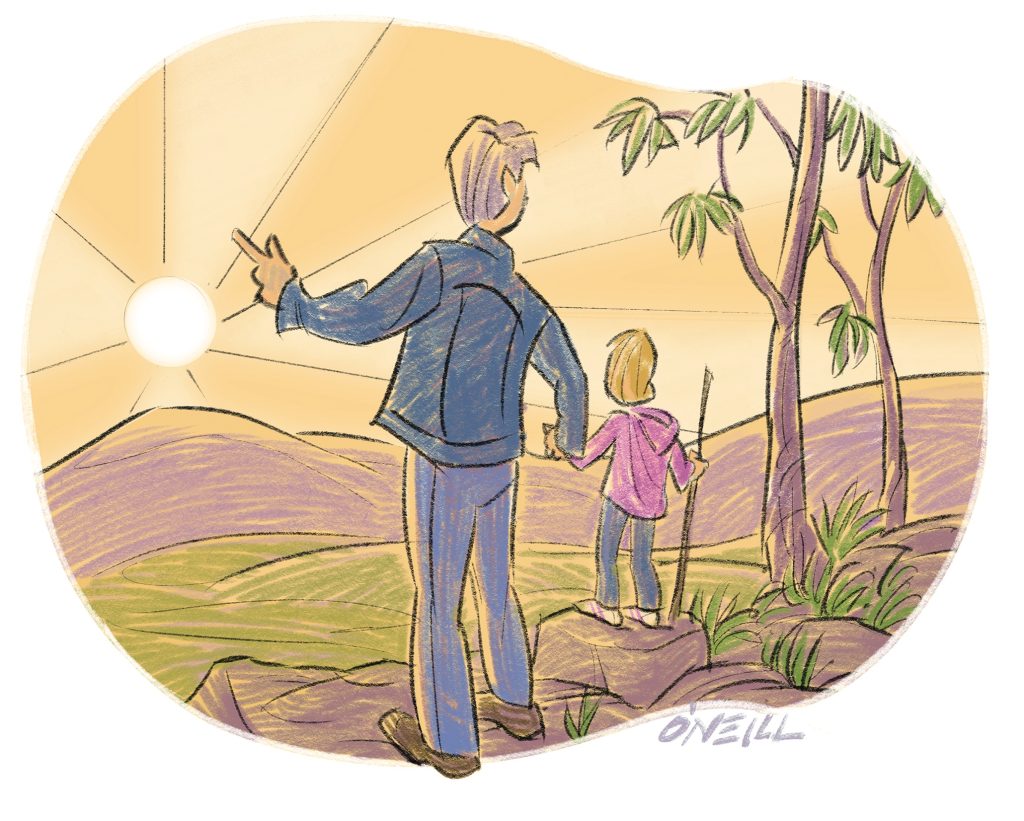
Pushing the snow off my favorite wooden chair, I sat down and jotted a letter in light verse to my new grandchild like the homegrown Ogden Nash who preceded me. I also asked my good friend, artist Harry Blair, to illustrate it.  

Dear June Bug,

Someday while you are still a tyke, 

I’ll take you on a wondrous hike

To see the world from on a hill

And all the places that will fill

Your life ahead with joyful things —

Like winter snows and golden springs.

For nature is the ideal guide

To leafy paths that cannot hide

The glory of a world that’s wide —

With loving souls so full of grace

Who’ll help you find your perfect place

To live the life your heart desires —

With faith — and strength — that never tires.

                   With my love forever, 

                    PopPop 

Our third effort to reach Los Angles proved a charm. 

We took the illustrated verse, lots of cute, new baby clothes and a lovely Swedish bear to finally meet our beautiful new grandchild. All we did for five days was rock, hike, hold, cuddle, feed and play with the June Bug and her mama.

Like her mother, baby June was born at a moment of revolutionary change and turmoil across the planet. But I have a feeling that our laughing June Bug will bring good luck and happiness to anyone she meets on her life’s journey, just as her mother has.

Hometown

HOMETOWN

Home, Sweet (Not) Home

But it’ll do after a long day

By Bill Fields

Near the end of a recent stretch of hectic business travel that included four canceled flights in a week, I arrived in Houston late on a Wednesday evening. After having to employ debating-level skills to convince a skeptical rental car agent that “Bill” was in fact a common nickname for “William,” I secured a vehicle and drove to my hotel, arriving past midnight.

Entering my room, I deadbolted the door and took a deep breath.

In the calm of my temporary quarters on the 12th floor 1,600 miles from home, the frustrations of the not-so-friendly skies eased. The spacious room was quiet and cool, with crisp, fresh sheets on a king bed. The flat screen television was large, the desk ample. Unpacking enough to settle in for the night, it struck me that as wearying as life can become when the travel gods are angry, a room on the road is one of my happy places.

Certainly, I don’t qualify as an ultimate road warrior, the kind of person who leaves on Monday and returns on Friday, week after week for most of the calendar. There were years, though, when I was away covering golf upwards of 25 weeks. My travel has been about half that annually in the last decade but with periods of concentrated trips. During those busy times, a comfortable room is a sanctuary for sleep, work or watching a favorite movie that just happens to be on TV.

I’ve had a fascination with motels and hotels since early childhood when my visiting grown-up cousins lodged at the Charlton Motel on U.S. 1, long since replaced by a convenience store. Whether jumping on the bed or into the pool, which was tucked amid tall pines behind the building, the novelty of the experience made it seem as if I were much farther away from home than a couple of miles.

My family didn’t travel often, but most summers we ventured to the beach. If not accommodated in a cottage, we stayed in one of the oceanfront motels. The Buccaneer on Ocean Drive comes to mind: room key attached to a plastic fob; water glasses wrapped in paper; a window-unit air conditioner to soothe skin after hours on the strand; sand on the carpet; an ice machine nearby.

We ventured to Atlanta once to visit Six Flags Over Georgia and stayed in a suburban Holiday Inn near an Interstate exit. I pored over the room service menu before pestering my parents to let me order a hamburger and a Coke. Getting a delivered meal was almost as cool as riding the log flume at the amusement park.

The thousands of nights on the road since those first trips have been spent in all kinds of places, from a plush Ritz Carlton on the Gulf of Mexico — turndown service! — to a grim budget chain on a trucking route in Kansas, where I was stuck in a “smoking” room so stale it was the only time I expensed Lysol spray. There were mouse sightings too, but I fared better that week than a cadre of tour caddies who booked a motel so sketchy they purchased sleeping bags to put atop the bedding.

On a few of my first trips to the Masters, during the 1980s, I was lodged in a motel distinguished by its unusual color scheme. The “Purple Palace,” as we called it, was $29.99 a night 51 weeks a year, a rate that soared to five times that much the second week of April.

Although a chocolate on your pillow is a nice touch, when you travel a lot the basics are what matters: walls thick enough to neutralize noisy neighbors; a bed that neither swallows you up nor makes it seem as if you’re lying on plywood; a shower with plenty of pressure and hot water whose sliding door doesn’t have a mind of its own.

I can take or leave fluffy towels, but I appreciate a sink at the right height. The only time I hurt myself in a hotel room was in Binghamton, New York. Leaning way over to shave one morning, I tweaked my back and ended up on the floor in pain, causing me to look scruffy and smell of Bengay the rest of my stay.

Mostly, you want your room to be your room. Checking into a Denver hotel one night a couple of years ago, I encountered a clerk with problems greater than nickname awareness. Upon reaching my assigned room, when the key card turned the light green and I pushed the door open, it slammed loudly into the security lock. Hearing someone rustling inside, I didn’t stick around for a conversation.