
FROM THE ARCHIVES
It’s Not Smokey
A trained bear visits Pinehurst
By Audrey Moriarty
Dancing bears were common in Europe and Asia from the Middle Ages up to, and in some cases into, the 20th century. Travelers with a trained bear were popular in Europe between 1870 and 1914. Many of the bears came from the French Pyrenees, where local men would capture bear cubs and train them to perform special tricks. In general, the bears were female, as they were considered more docile. Often trainers would travel across the continent to the coast, making money along the way, to earn passage to the United States.
Dancing bears were trained to stand on their hind legs when trainers fed them from above while simultaneously giving a signal. Eventually, the bear would learn to stand hearing the signal alone. Sometimes the training methods were crude and cruel. One example involved piercing the snout and running a rope through it, then pulling on the rope to force the bear to stand. Another included playing music while the bear stood on a heated surface, or hot coals, forcing it to move its feet, thus conditioning the bear to “dance” when it heard music. Some trainers denied sufficient food to make the bears less aggressive.
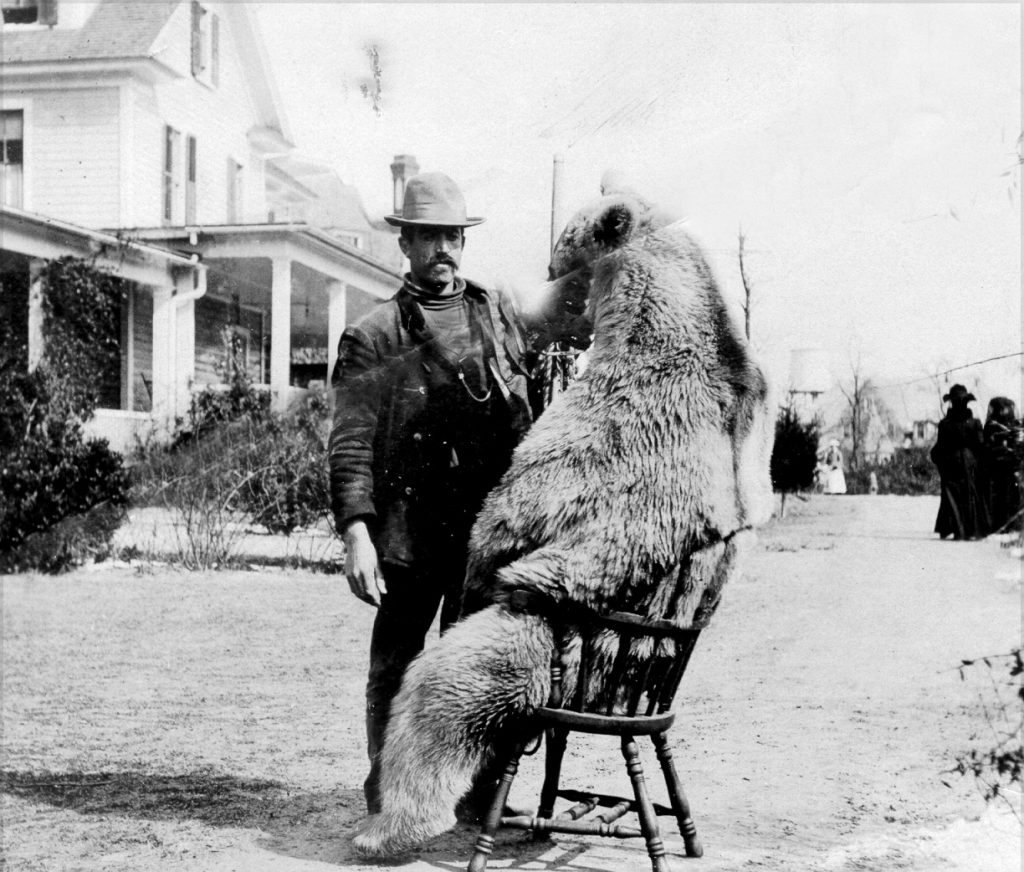
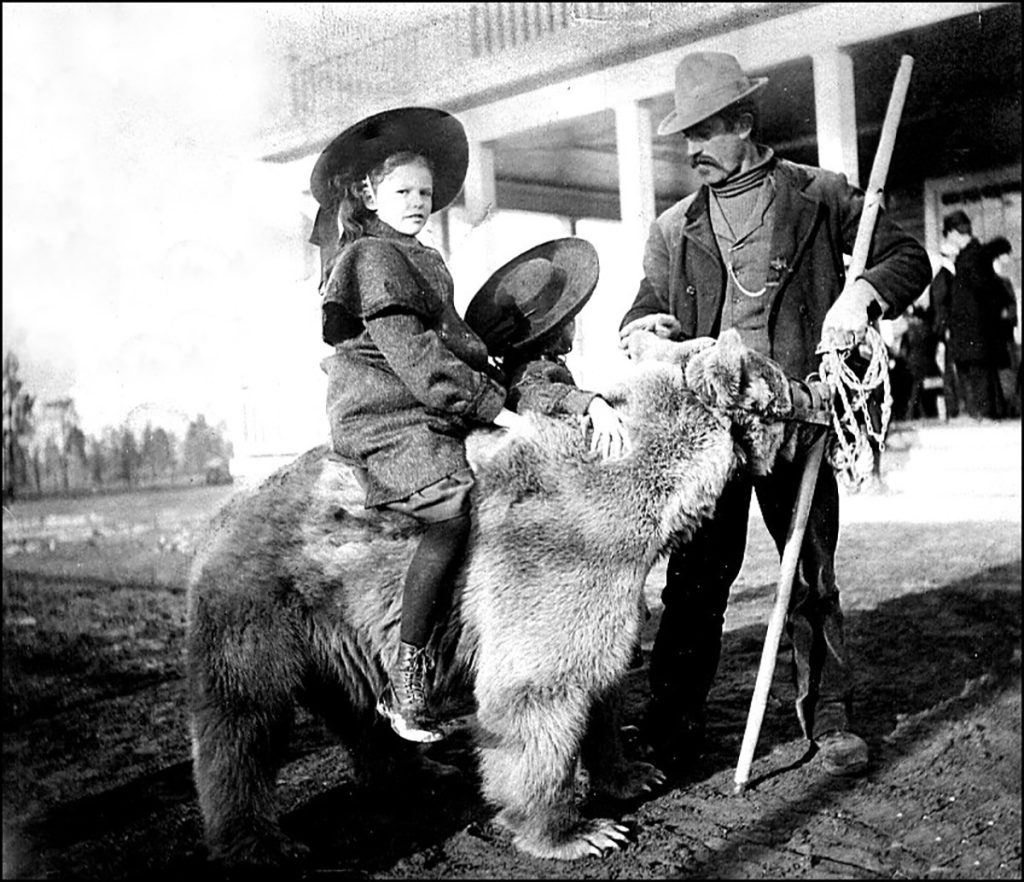
The trained bears were popular in circuses, vaudeville, festivals and fairs. Often, bears were used to entice people to enter pubs and drinking establishments. These bears were trained to dance, ride bicycles, roller skate and play musical instruments. The bear pictured here and its handler were in Pinehurst in 1904, a novelty in a new resort. The trainer and bear walked freely among the villagers and guests, often offering children rides on the bear.
By the early 1900s, beatings and training methods based on fear and pain were deemed harsh, and the use of hot coals, sensory deprivation and withholding food were decried. Enlightened crowds began to avoid the shows where the abuse was evident, and the popularity of the dancing bears waned. Gradually, the abusive techniques used to train animals were replaced with science-based training and reward inducements.