Southwords

SOUTHWORDS

And They’re Off!

My day at the Kentucky Derby

By Tom Allen

March owns the Madness. April, the Masters. But the first Saturday in May belongs to the Kentucky Derby, and during my seminary years in Louisville, Kentucky, one magnificent Saturday found me in the high-dollar seats watching the “The Most Exciting Two Minutes in Sports.”

Every January the word went out that Churchill Downs, the iconic home of the Derby, was accepting usher applications. My part-time job as a hospital lab tech usually found me volunteering to work Derby Day, but I wanted to close out my senior year in Louisville experiencing Kentucky’s most beloved tradition.

In the spring of 1989, graduation loomed. Finding a job consumed much of my time. The Derby was just the break I needed. On application day, a couple of buddies and I got to Churchill Downs early and waited in brutal western Kentucky wind and cold to snag an usher badge as coveted as the blanket of roses that adorned the winning horse. And snag that badge, I did.

Among the long list of usher rules was no drinking, no smoking, and no betting. I guess the stereotype of a Baptist seminary student made us trustworthy employees. Most worked the corporate box crowd — seats passed down through generations to family and business owners. A few unlucky chaps were assigned to the track’s infield, a grassy area with few seats and an atmosphere that, rumor had it, rivaled New Orleans during Mardi Gras with hookups, breakups, fights, and the occasional wedding.

Usher training focused on hospitality, first aid and learning the layout of the Downs, as well as how to deal with attendees who sipped one too many mint juleps. Walkie-talkies were handed out if security was needed.

May 6, 1989, dawned cloudy, cool and wet. A muddy race is the last thing Derby-goers hope for, but by late afternoon, the track was drying out. Derby Day is packed with 14 races, on the Downs’ turf as well as dirt tracks, culminating in the 1 1/4 mile race for elite 3-year-old Thoroughbreds.

The corporate crowd I was assigned to was chatty and kept me busy answering questions, making bets, grabbing drinks. They soon found out I was a minister in training. I met their jokes and gentle ribbing with a smile and a few quick comebacks. Tipping swelled. True to the occasion, everyone was decked out in Derby attire — floral print dresses, pastel blazers and bowties, and those over-the-top hats. That day I learned what a fascinator was, having years before heard the word during televised royal weddings.

Just before the big race, one of my spectators, mellow from a few Kentucky bourbons, handed me a $100 bill and asked me to fetch him a mint julep. When I returned, he told me to keep the change, along with a request to “say a little prayer” for his chosen horse, Sunday Silence. Earlier in the week I had given a work associate two bucks to put down a bet on a horse for me, based solely on a name I liked — Sunday Silence.

I watch the Derby on TV every year, but there’s nothing that compares to being there, hearing the trumpeter sounding the call to post, then watching those grand steeds and their petite jockeys parading to the starting gate to “My Old Kentucky Home.” Electrified magnets hold the doors shut until a starter pushes a button, breaks the current, and the horses throttle off to the cheers of 150,000 spectators.

The Derby takes roughly two minutes, 120 seconds. When riders make the turn in front of the Downs’ iconic twin spires, the crowd’s roar intensifies. Win, place or show, hearts race. Sunday Silence, with jockey Pat Valenzuela up, was the unlikely winner that day, beating the favorite, Easy Goer, by 2 1/2 lengths. My big tipper was ecstatic, handed me a 20, and thanked me for whatever divine assistance he imagined I invoked. I smiled knowing my $2 bet had snagged me another 20. Coupled with a nice paycheck and tips, it was a very fruitful first Saturday in May.

One month later, I graduated. Two years later I married a Georgia girl I met in Louisville. We moved to Raleigh for my first call, then seven years later, to Southern Pines, a haven for equestrians, and us.

For 23 years on my ride to work, passing horse farms that rival anything in the Bluegrass State, I couldn’t help but smile whenever I saw a horse and rider on Youngs Road.

Omnivorous Reader

OMNIVOROUS READER

Doubling Down

Finding the familiar in the extraordinary

By Jim Moriarty

“If you don’t tell their story, who will?”

This was the question posed to Christina Baker Kline by Lesley Looper, a cousin and Duke University librarian, about the lives of the renowned “Siamese twins” Chang and Eng Bunker and their wives, Sarah and Adelaide Yates — Kline’s distant relatives.

The short answer is that a lot of people have. The famous brothers, conjoined at the chest, who came to America in 1829 and eventually settled in North Carolina, have been satirized in poetry, made cameo appearances in works by Herman Melville and Mark Twain, been used as a metaphor during the War Between the States, and been the subject — or at least the literary device — of 21st-century musicals, plays and movies. Does the fact that Kline’s genealogical family tree includes them make her imaginings somehow more prescient? Since the twins died 152 years ago, probably not. What is quite clear from the earliest pages of Kline’s The Foursome, due out this month, is that she has taken extraordinary care to imagine her characters less as curiosity and more as men and women in full, portrayed with distinct traits, virtues and flaws, and very much creatures of their age, one of America’s most turbulent times.

Here’s a Wikipedia-worthy primer: Chang and Eng were brought to the United States from Siam (today’s Thailand) by the Scottish merchant Robert Hunter and a sea captain named Abel Coffin, who put them “on tour” in Britain and America. The on-again, off-again business wound up a decade later with the brothers touring on their own with their own staff, becoming wealthy in the process. In July 1839 they made an appearance in Jefferson, North Carolina, and in October of that year, they returned to purchase 150 acres in Wilkes County, where they would meet and marry the Yates sisters. This is where the novel takes over.

When Kline realized that Sarah (Sallie) was not buried in the same resting place as Chang, Eng and her sister, Adelaide, she discovered the voice of her narrator. Sallie is as clear-eyed about herself as she is every other character in the novel. “Addie possessed the self-assurance of the beautiful. She was used to being seen, and it made her bold about being heard,” writes Kline. “I inherited our mother’s round cheeks, her solid bones and small gray eyes, her unruly auburn hair. Addie took after Papa’s family: tall and lean, with dark-fringed lashes and high cheekbones. She shone in contrast to my ordinariness. She was charming while I was shy.”

The vivacious Addie is drawn to Chang, the more dominant brother. “Addie claimed she’d fallen in love with Chang, and maybe she had. She said she felt it deeply. But Addie felt everything deeply,” writes Kline. “Somehow, though I’d voiced my misgivings from the beginning, I’d let the months unspool without taking a firm stand. Now I found myself swept up in my sister’s insistence that marrying the brothers was the right, the only, thing to do.”

Kline doesn’t shy from the physical awkwardness of this union squared, though neither does she dwell on it. The mantra for Sallie is compartmentalization. Don’t think about everything, “only the next thing.”

The sisters’ conversation on their wedding day is portrayed like this:

“Everyone will be staring at us,” I whispered.

“Of course they will. We’re the brides.”

“They’re thinking about — about tonight.”

“Don’t be silly. Nobody’s thinking about that, except maybe you. You’ll be fine. Remember: only the next thing. All right?”

“All right.”

The foursome marries in 1843. After finessing the physical, Kline does an admirable job of portraying these two families through the next 30-plus, turbulent years, through war, peace, the inevitable loss of parents, the birth, and sometimes tragic death, of children and the eventual death of Chang and Eng. In fact, it is this dramatization of the travails of two families that, in a way, normalizes that which is anything but. The couples eventually live in separate houses, one in Surrey County, one in Wilkes County, spending three days at each. “During the three days in the home of the host, the visiting brother will conduct no business and express no opinions. He is to be a silent partner,” declares Chang. Between them the two families would have 21 children who would grow into an assortment of cousins devoted to one another.

Though joined at the chest, the brothers are not the same person. “Eng liked to gamble, his eyes brightening with each new hand. Chang preferred to drink. Neither quite approved of the other’s vice.” Chang could be cruel and moody, Eng the peacemaker. “Eng’s instinct was to ignore or concede, but even he had his limits. Sometimes, like a cat poked too often, he struck back. More than ever, I saw how tightly the band bound him to his brother. What had once been a tether now felt like a shackle.”

Every time their financial picture darkens, the brothers go back on the road to refill the coffers, but the way they are perceived has changed. What once was a curiosity has given way to ridicule. They eventually hook up with P.T. Barnum, who dislikes the brothers because of their independent streak as much as they detest the famous showman for his exploitation.

Chang and Eng are free men of color who become slaveholders and supporters of the Southern cause. Two sons, one from each family, fight for the Confederacy. “The brothers had learned early on that the world is divided into those with power and those without. Those who own and those who are owned. They’d decided — perhaps from the moment they first felt the weight of coins in their palms — where they stood on that divide.” The families feel the depravations of war and struggle with issues of race. “The shortages deepened. Every stitch of fabric was repurposed, every scrap of food stretched.” Stoneman’s cavalry came. The world changes, the enslaved are enslaved no more. “The hardest part wasn’t learning to do things for ourselves, though that was difficult enough. It was learning to see people we’d spent years looking through. To acknowledge that the women who had wiped our children’s tears had children of their own whose hurts had gone unseen.”

If the world paid attention to Chang and Eng, Kline gives more than equal time to Sallie and Addie and the place of women in the 19th century, dramatized throughout, from unwanted pregnancies at the hands of unscrupulous men; to Eng, the slaveowner taking advantage of the enslaved Grace; to the assured figure of Sallie’s lesbian aunt, Joan. Given all that, The Foursome stretches beyond the voyeuristic, attempting to paint a fuller picture of two brothers and two sisters, tethered by more than just flesh. 

Tea Leaf Astrologer

TEA LEAF ASTROLOGER

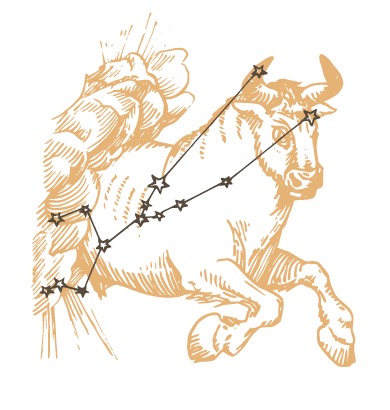
Taurus

(April 20 – May 20)

You’re a glutton for luxury, it’s true. But this month, amid the blur of artisanal cocktails and regenerative facial serums, you’ll ache for something simple: direction. As luck would have it, a Mercury cazimi in Taurus will deliver a moment of crystal clarity on May 14. Combine that with the new moon on May 16 and a slap on the hindquarters from Mars (May 18), and you’ve got yourself a road map. Pack your ahimsa silk pillowcase, sweetheart. Life may be guiding you someplace you never imagined. 

Tea leaf  “fortunes” for the rest of you:

Gemini (May 21 – June 20)

Three words: guac and chips. 

Cancer (June 21 – July 22)

Release the outcome. 

Leo (July 23 – August 22)

Beware of shiny objects. 

Virgo (August 23 – September 22)  

Don’t let the light bulb drive you crazy.

Libra (September 23 – October 22)

Opt for the linen.

Scorpio (October 23 – November 21)

Three o’clock, darling.

Sagittarius (November 22 – December 21)

Retire the busted ones. 

Capricorn (December 22 – January 19)

Delete the app.

Aquarius (January 20 – February 18)

Try taking smaller bites. 

Pisces (February 19 – March 20)

Leave a paper trail. 

Aries (March 21 – April 19) 

BYO hot sauce.

Tea Leaf Astrologer

TEA LEAF ASTROLOGER

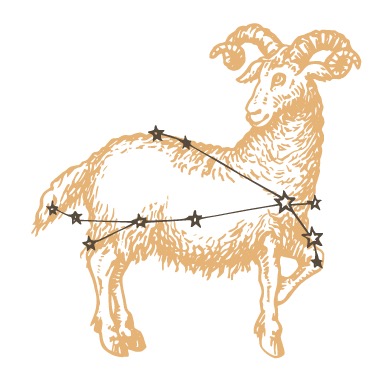
Aries

(March 21 – April 19)

This month, you’re giving theatrical bravado — and we’re lapping it up. Mars in your sign from April 9 through mid-May is the energy shot you didn’t need but surely won’t squander. Just don’t move so fast you miss a stellar career opportunity that aligns with yourlong-term goals. A friendly tip: Passion and impulse aren’t always synonymous. Now, channel your inner Freddie Mercury and watch the world respond.

Tea leaf  “fortunes” for the rest of you:

Taurus (April 20 – May 20)

Taste as you go.

Gemini (May 21 – June 20)

Double the recipe. 

Cancer (June 21 – July 22)

Best not to overextend yourself. 

Leo (July 23 – August 22)

Slow down and proceed with wonder.

Virgo (August 23 – September 22)  

Go waffles-for-dinner wild. 

Libra (September 23 – October 22)

Check the expiration date. 

Scorpio (October 23 – November 21)

Try changing the lens. 

Sagittarius (November 22 – December 21)

Two words: flameless candles. 

Capricorn (December 22 – January 19)

It’s time to turn the compost. 

Aquarius (January 20 – February 18)

Read the room, Darling. 

Pisces (February 19 – March 20)

Schedule the oil change. 

Lucky No. 7

LUCKY NO. 7

Lucky No. 7

A future custom-built for family

By Jenna Biter 
Photographs by John Gessner

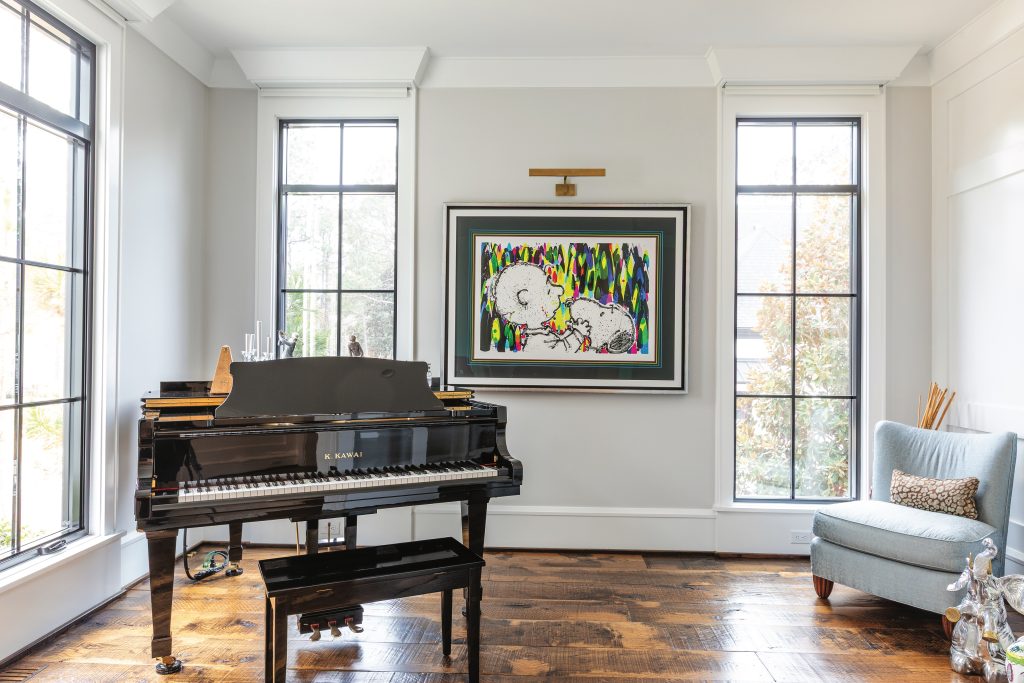
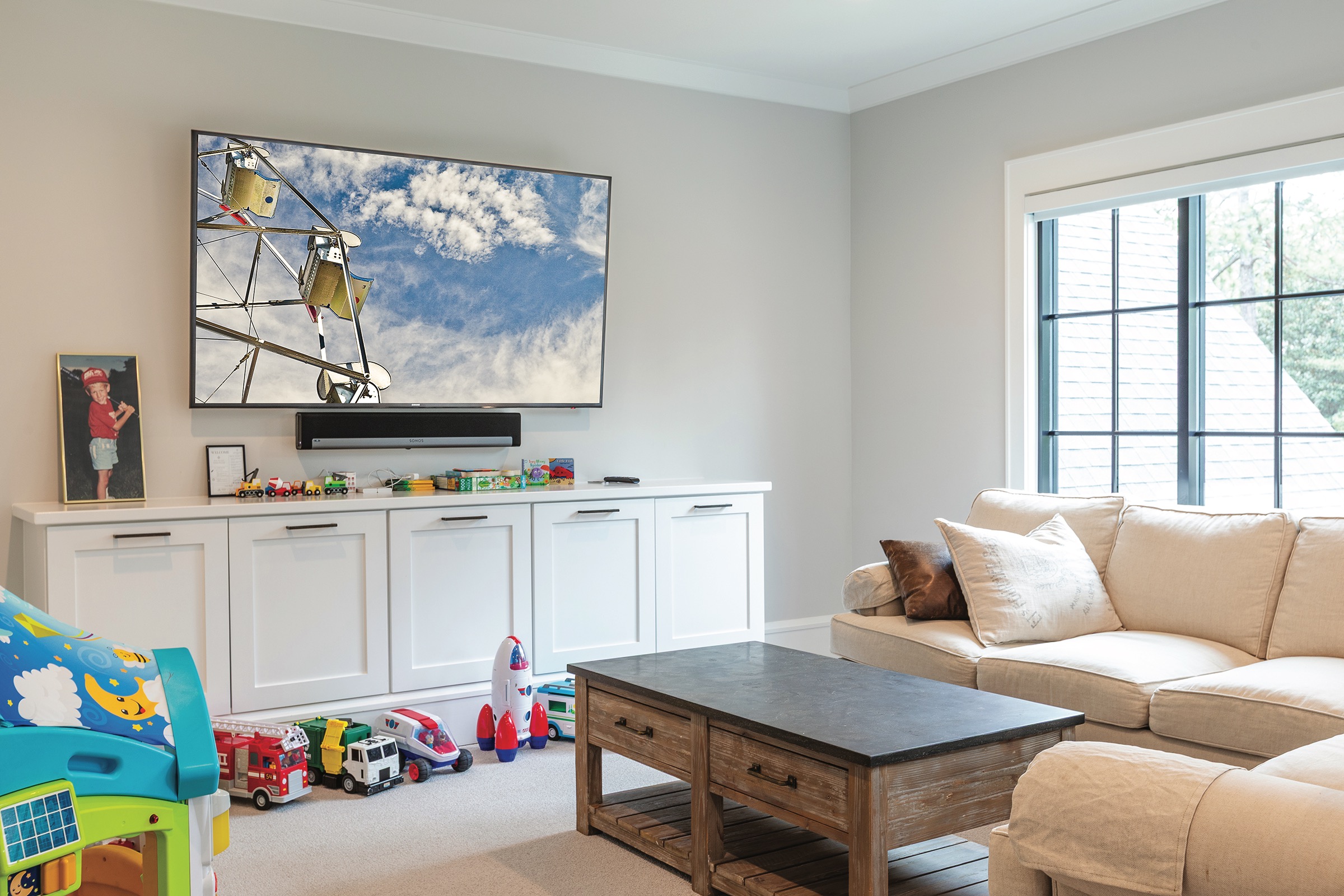
A checkerboard of grass and pavers leads to the glass-paneled double doors of Charles and Amy Crabtree’s white brick home. “Sebastian, come on, buddy,” says Amy, opening the doors. The 12-year-old miniature schnauzer skates across the wide oak planks running the length of the entry hall. To the right is a blue study lined with books and sports memorabilia. To the left is a music room showcasing a K. Kawai baby grand and a commissioned painting of Charlie Brown and Snoopy.

“This is how it’s supposed to be — I can see through the house,” Amy says, looking from the front doors all the way to sliding glass doors at the back.

The Crabtrees retired to their custom build overlooking Donald Ross’ masterpiece in 2020 after splitting time between Palm Beach Gardens, Florida, and Bethany Beach, Delaware. The Holly Inn in Pinehurst would often be the couple’s stopover on road trips back and forth. The village charmed them off their feet and eventually out of their far-flung homes. “We sold both homes within a two-month period,” says Charles.

Pinehurst was the draw, but family was the clincher. Once the Crabtrees’ daughter, Courtney, moved to North Carolina and had their first grandchild, the future was set. “It was an easy decision,” says Amy. Now Courtney and her brother, Chase, both live in the Forest Creek community with their families. “We have our four grandchildren here, and they’re just a five-minute ride away,” Charles says.

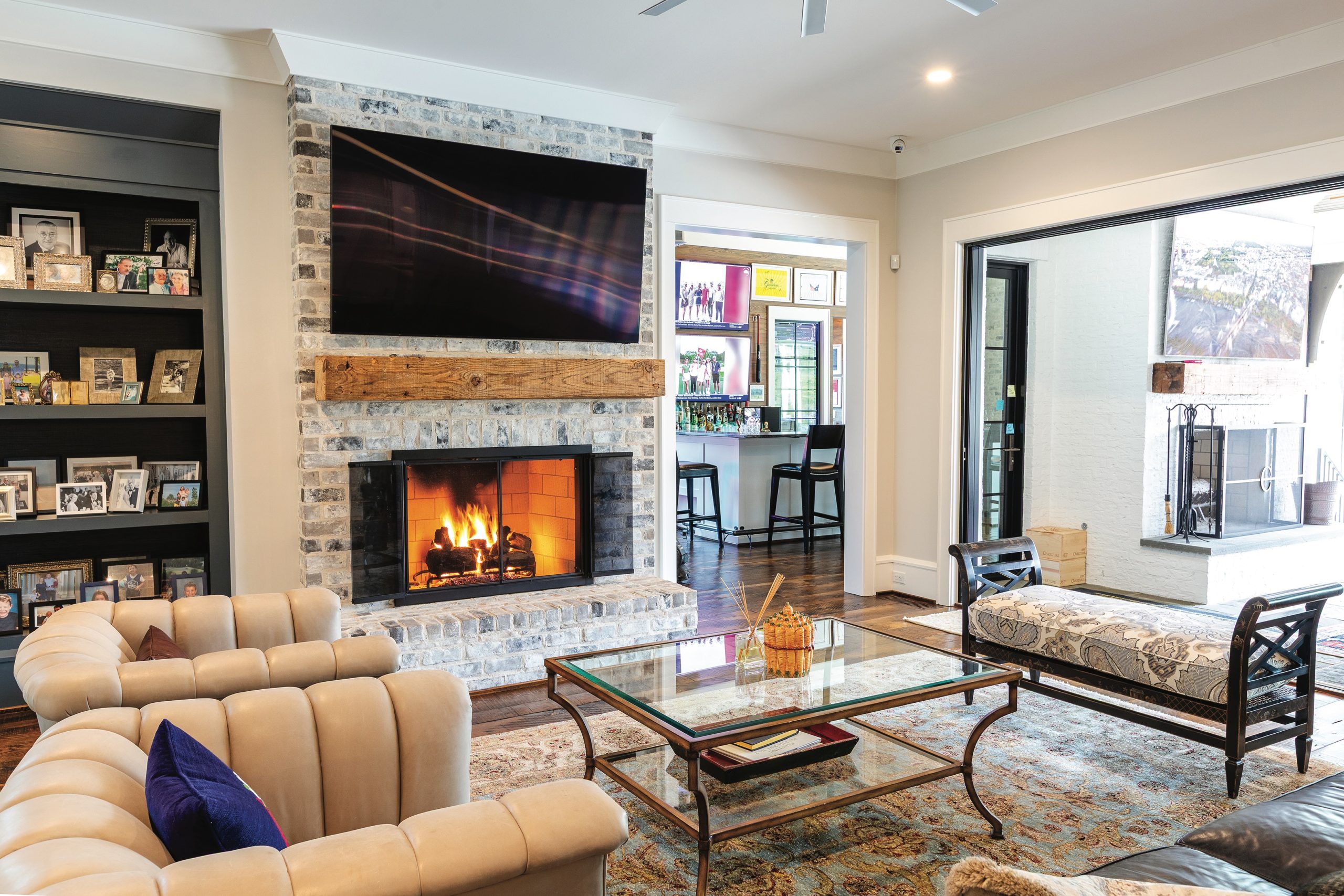
Down the entry hallway, past a bellowing grandfather clock shipped to the States from Germany, the house opens up. A slate-blue built-in displays family photos beside one of the home’s five fireplaces. This one is in the living room. There’s another through the sliding glass doors in the outdoor dining room, which overlooks the wide landing, a grandkid-approved infinity swimming pool and ultimately the golf course fairway.

“We were on our last day looking for property, and we had kind of exhausted everything,” Charles says. “We thought, maybe this isn’t going to work, and then all of a sudden, the Realtor said, ‘These wooded lots here — I think one of them — we might be able to talk to someone to see if they’re interested in selling.’”

“We asked, ‘Well, where is it?’ They said, ‘This is No. 2.’”

They bought the .89-acre wooded lot and Huntley Design Build got to work combining favorite elements of their previous homes into one 6,850-square-foot dream build. It was the COVID era, but fortunately for the Crabtrees, their building materials had already been delivered, so construction wasn’t delayed by the supply chain crisis. “From the time we moved the first tree off the lot, which was July, 2019, to the time we were in the home on June, 2020 . . . ” Charles says.

“Eleven months start to finish,” says Amy, completing the thought.

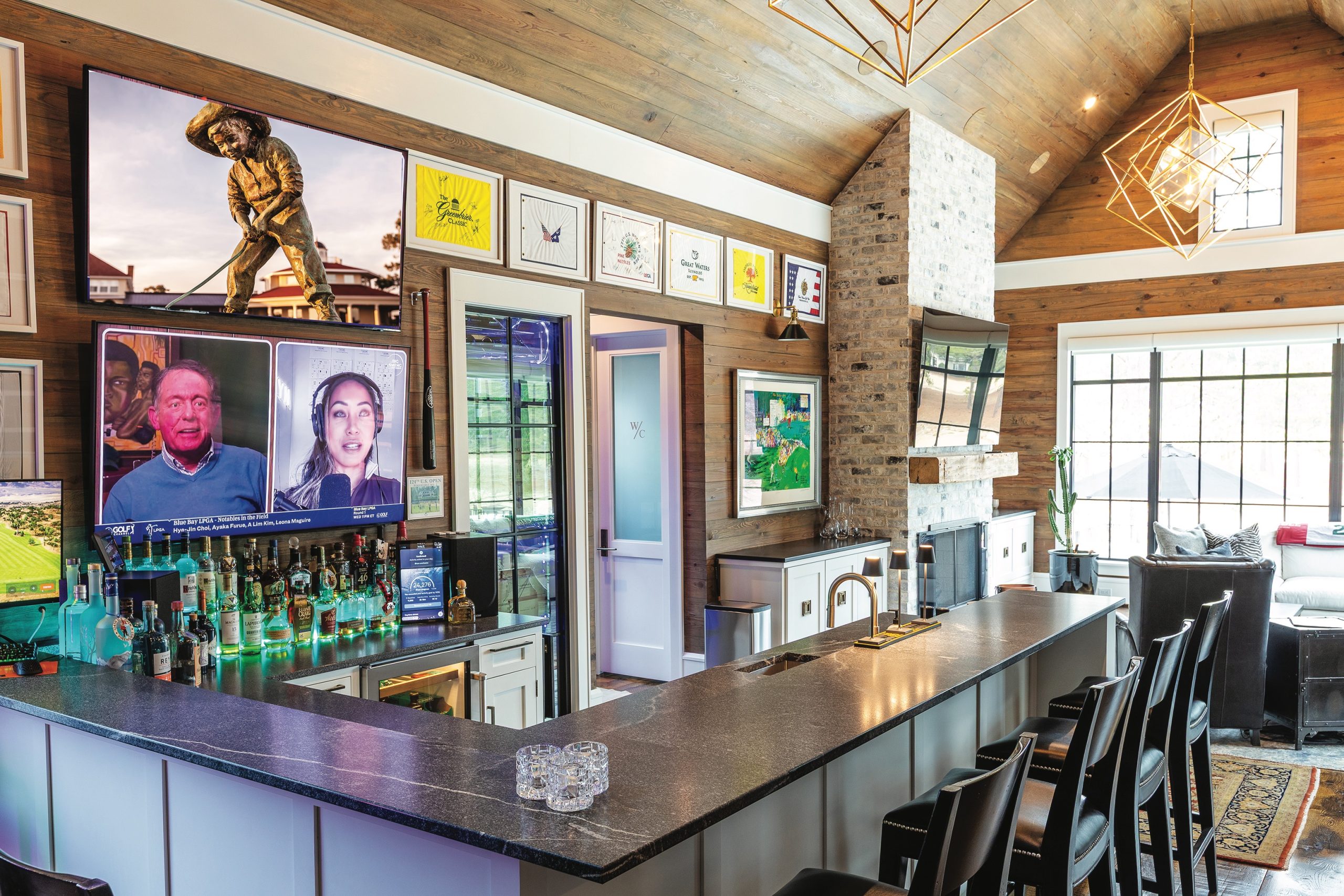
Back inside the living room, turn in one direction to enter the Crabtrees’ personal sports bar with pine wood from the lot lining the ceiling and a wine cellar that holds up to 1,500 bottles. There’s a golf simulator, neon Putter Boy sign paying homage to the Pinehurst Resort and two signed, limited edition prints by sports artist LeRoy Neiman, one of Jack Nicklaus and the other of Cal Ripken Jr. breaking Lou Gehrig’s record for playing the most consecutive games in Major League Baseball. Turn the other way, and you’re in the dining room and kitchen. A long table seats 10, enough to fit the Crabtree family, grandkids and all. “We try to do a Sunday dinner, or some sort of event, once a week if we can,” Amy says.

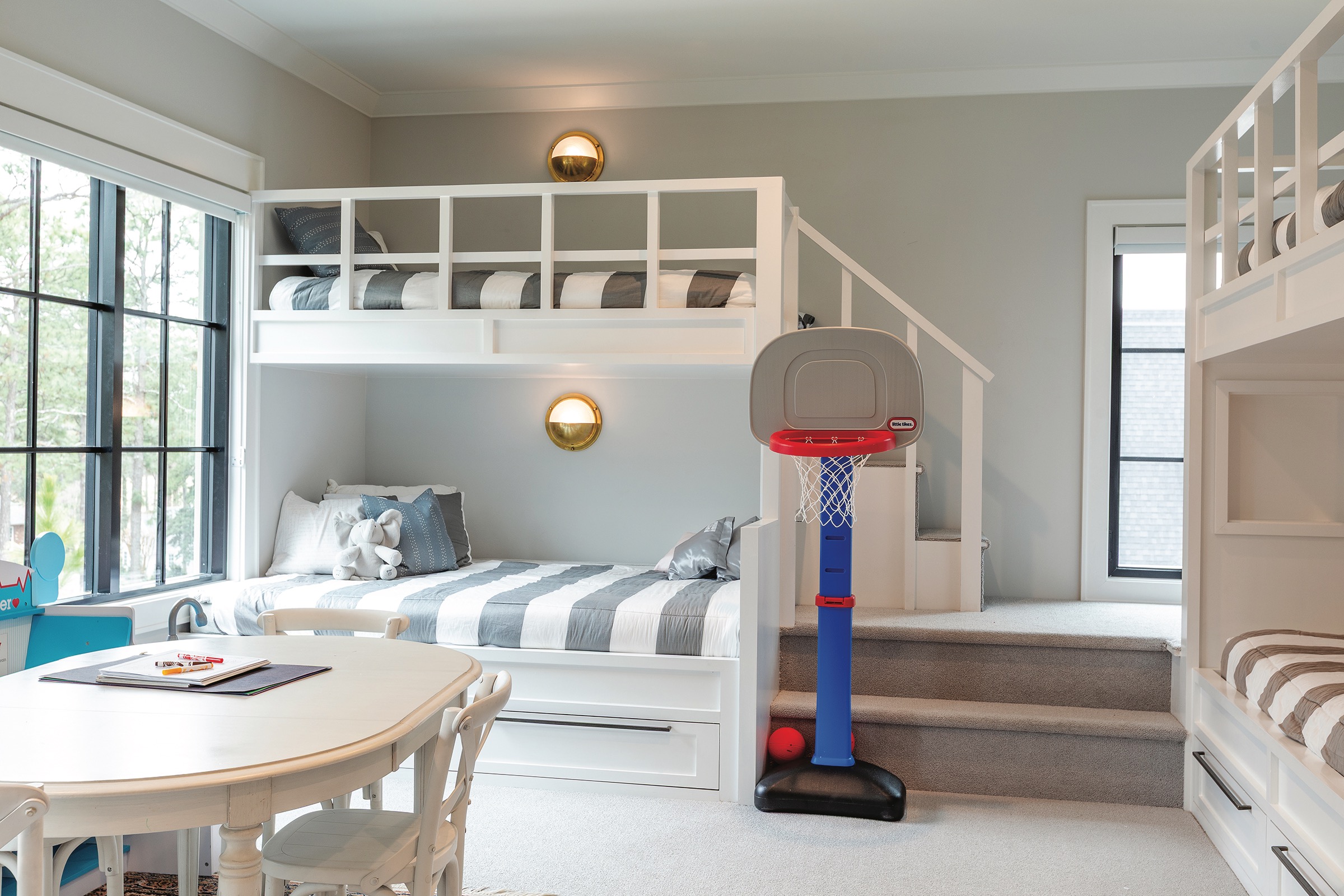
The upstairs is home to three guest en suites, a gym and a bunkroom for the grandkids. “When they come over, this is where they hang out,” Charles says. There are two sets of bunk beds, a cushy sectional and TV, and plenty of floor space to play. “They’ll be up here having a big old time, all four of them, and then when we come up after they leave, it’s a complete disaster,” he says affectionately, like only a grandfather can.

The Crabtrees themselves don’t spend much time upstairs, only to play with the grandkids, work out or if they need to fix something. “Between the master and the kitchen and this room, everything is right here,” Amy says, sitting at the bar top. It’s as if they built an apartment within a house, enabling maximal time together.

They drink early morning mugs of coffee in the master bedroom and slip out a side door to the hot tub. When they play golf it’s as a couple, and they’re even together in the art on their walls. Mixed-media collages by British artist Tom Butler dot the house, and if you look closely the likeness of Charles and Amy can be seen in many of them. “We said we’re retiring early, and when we retire early, we’re going to be together,” Charles says. Here they are in front of the Eiffel Tower. There they are in New York. It’s a personalized Where’s Waldo. The only thing missing is Sebastian the miniature schnauzer, who has yet to make a cameo.

Backyard Breaks

BACKYARD BREAKS

Backyard Breaks

A miniature Himalayas at home

By Jenna Biter     Photographs by John Gessner

In the neighborhood of Pinehurst No. 9, Bob and Maria Milligans’ white stucco house lounges near the back of a lot shaded by mature pines, oaks and flowering dogwoods. Rhododendrons, hydrangeas, azaleas, camellias — the front yard is a gardener’s dream. The backyard is a golfer’s paradise.

“I love to play golf, so you’ll notice we’re walking from the patio to my . . .” Bob motions with his hands like he’s unveiling the grand prize on a game show “. . . putting green.”

This mini-Thistle Dhu, or micro-Himalayas, was fashioned from a seamless 20-by-20 piece of artificial turf, molded for a natural roll and sped up with hundreds of pounds of sand worked into the surface. There are three cups to aim at and enough contour to keep a tour pro scratching his head. “Sometimes it breaks left, sometimes it breaks right,” says Bob. The longest putt is roughly 15 feet.

McNeill’s Landscaping Services of Aberdeen installed the green when they overhauled the Milligans’ backyard in 2025. Upgrades included a rock garden, patio and walking paths, the continuation of a retaining wall, and in addition to the green, the replacement of the yard’s grass with turf. “I can’t stress enough how good of a job McNeill’s Landscaping did,” says Bob, surveying his domain. The backyard’s facelift was the final step in a home makeover that began just after the Milligans purchased the home in 2021.

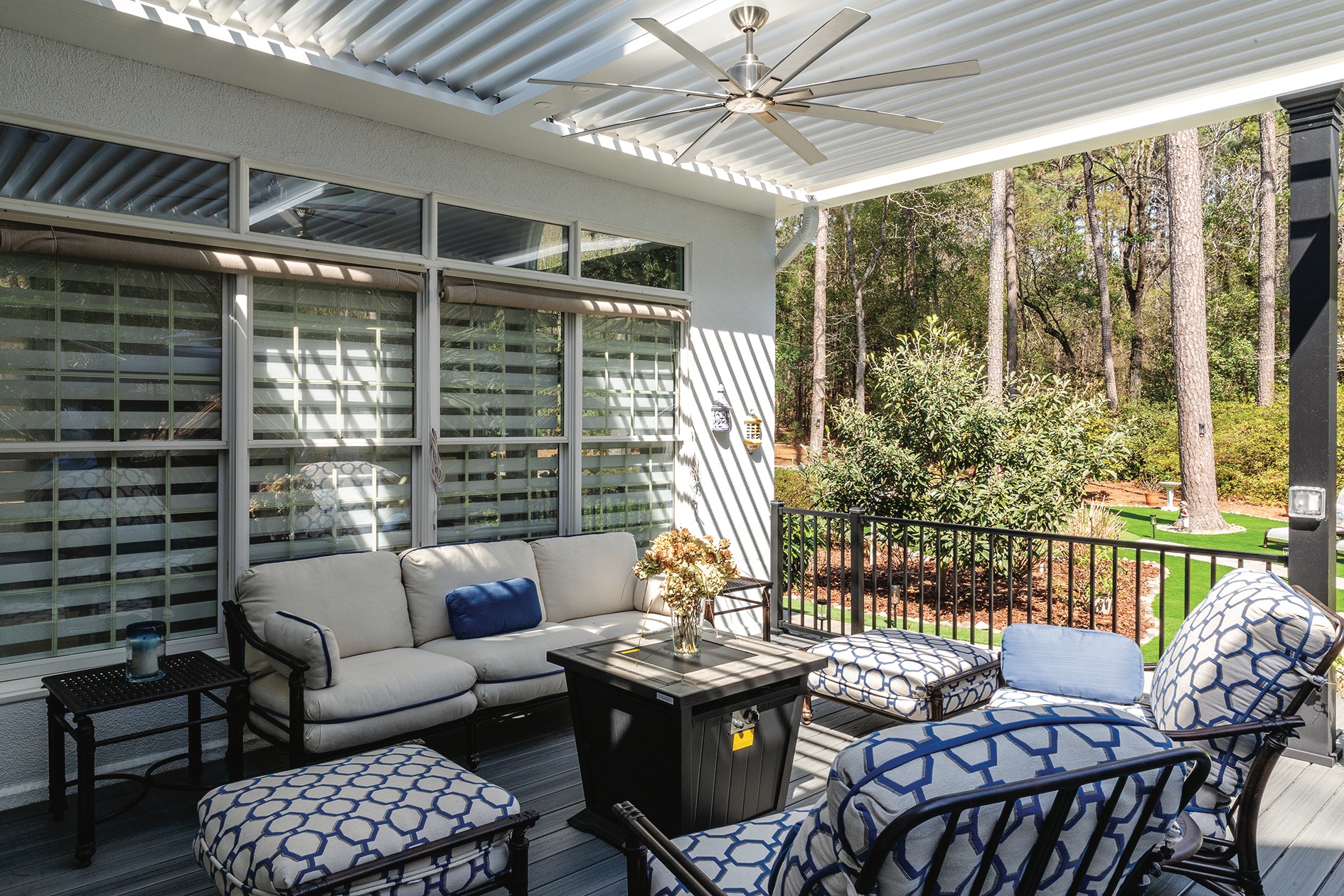
“This is our Florida . . . I guess you call it a Carolina Room here,” Milligan says. The outdoor living space is situated on a deck they converted from a split-level to a single tier in 2022. Later they installed a pergola with remote control-operated louvres that can divert the sun any time of day and even keep out the rain. Four or five seating arrangements spill off the deck and into the backyard, ready to accommodate the Milligans’ frequent entertaining. A teakwood dining table seats 14. There are two gas-powered fire pits, plus a grill. “It’s the only thing he’s good at besides golf,” says Maria, grinning.

“We love to have more than just two or three friends over,” she says. They regularly commune with a group of six couples, the self-proclaimed “dirty dozen.” “Our new friends all love to come here because they can just chill, unwind and open a few bottles of good wine,” says Maria. “It’s relaxing.”

Dark blue cushions, pillows and pots finish the backyard. It’s a fitting color for a Navy family. Bob served 27 years in uniform before retiring as a captain in 1999. After their first life moving around the country, overseas and on the seas, followed by a second life in northern Virginia, the Milligans finally settled in Pinehurst. Their home sits across the street from the fairway of the fifth hole of No. 9, the Jack Nicklaus-designed course originally known as Pinehurst National.

“It was fate,” says Maria. Friends were moving to the area and the Milligans traveled south for a visit. “I walked into a shop, and the owner gave a hello-how-are-you,” says Maria, still dumbfounded. “I don’t get that in northern Virginia.”

Pretty soon the Milligans were searching for their own place in Pinehurst. “It took us three months,” says Maria. They liked the floor plan of their now-home and could see the property’s potential. “We could make it our own,” she says.

The Milligans moved into the nearly 4,000-square-foot house in 2021 and immediately got to work updating bathrooms and the kitchen, painting from top to bottom, essentially redoing everything indoors except for the layout. Then they shifted their focus outdoors.

“It was overgrown. It looked more like a jungle than anything else,” says Bob. “The backyard was nothing but pine needles, so it wasn’t really usable.” They hacked, trimmed, shaped and reshaped the potential they saw into reality. Thirteen trees were removed, so the surviving stand could flourish. They left the sprawling azaleas untouched.

“I love flowers. I want flowers,” Maria says. “I have these gorgeous azaleas throughout, I have rhododendrons, I have camelias, I have jasmine, roses, gardenias.” Whites, reds and pinks color the scene. “During the spring, this place is unbelievable as far as the color goes,” Bob says. Plus the Milligans’ home is just under a mile from the clubhouse. “Why do you think we moved down here?” Maria teases as Bob cracks a smile.

“The people I play with say that I have an advantage over them,” he says, eyeing the backyard’s crown jewel. A golfer-gnome watches the emerald turf from his home in a garden bed, lanterns illuminate the playing surface for after-hours practice and a pair of loungers offer respite to tired putters. “They’re older, I keep reminding them, so they putt and they sit,” says Maria.

Pathways puzzled together from geometric pavers circulate guests to and from the main attraction, and a golf-themed bird bath completes the scene. The yard’s full of robins, blue jays, woodpeckers and hummingbirds, especially when the flowers are out. It’s nearly a private aviary. “You can barely see our neighbors through the trees. You can’t see our neighbors at the back. We love it here because we’re in the community, but we can also get up early in the morning, have a cup of coffee on the deck and not worry about golfers.”

Unless they’re playing at Milligans National.

Simple Life

SIMPLE LIFE

Garden Reborn

And just maybe, ready for prime time

By Jim Dodson

On a warm and dry afternoon last October, as I mulched and watered my front yard’s 35 parched azaleas in the middle of the most punishing drought in memory, a shiny, white Volvo eased into my driveway.

A pair of well-dressed women emerged.

They introduced themselves as Candy Gessner and Lorraine Neill, committee members from the Greensboro Council of Garden Clubs. They had something to discuss.

For an instant, I wondered what crime against nature I might have unwittingly committed. Unnecessary strain on municipal water supplies? Had neighbors complained about my loud (and entirely inappropriate) oaths issued at a rainless sky?

Instead, Candy smiled and reached for my grubby hand.

“We understand you have a lovely garden,” she said. “We’ve come hoping to view it and ask if you would be interested in having your garden featured on the 2026 garden tour in June.”

Between us, they could have knocked me over with a packet of Burpee seeds. In my time on this Earth, I’ve built three ambitious landscape gardens and never given a passing thought that somebody might wish to see them. Especially a lot of serious gardening somebodies.

My first garden was built on a heavily forested hilltop in Maine, a classic New England woodland garden created on the remains of a vanished  19th-century farm that my cheeky Scottish mother-in-law nicknamed “Slightly Off in the Woods.” It was the perfect name because the only people who ever saw it were the FedEx guy and tourists who’d taken a wrong turn onto our dirt road.
“Nice layout,” the FedEx guy once remarked with a smirk. “But why build a garden like this that nobody will ever see?”

“Because I see it,” I said. “It keeps me sane in a crazy world.”

He thought I was joking. But any serious gardener will tell you that time spent in their garden is a cure for whatever ails the spirit. Most of us, in fact, never imagine that others will desire to see our gardens. We create them for us. The closest we can get to playing God, as a famous English gardener named Mirabel Osler once said to me.

My second garden belonged to a cute little cottage in Pinehurst that my wife, Wendy, and I rented in hopes of eventually buying. The previous owner had been an elderly gardener who let his 2-acre garden run amok. I spent a year cutting back overgrown azalea bushes and battling wicked wisteria vines and even recovered a “lost” serpentine brick fence that had been swallowed whole by English ivy. I also built a beautiful wooden fence around the fully restored garden — just in time for disaster to hit.

The week we planned to officially buy the place, the kitchen floor collapsed, and we discovered that black mold was running like a medieval plague through the walls and floors. We moved out that same afternoon. At least the garden looked fantastic. 

Finally, there is the garden where the women from the garden council and I stood on that afternoon. It is, without question, my final garden and, therefore, a serious labor of love.

A decade ago, we moved back to my hometown, taking possession of a charming mid-century bungalow that the Corry family built in 1951. I grew up two doors away from this lovely old house and always admired it. Al and Merle Corry were my parents’ best friends. Their grown children were thrilled when they learned that a pair of Dodsons would be their childhood home’s second owners.

And so, we set off to fully restore the property.

As Wendy got to work on the interior, I confronted “Miss Merle’s” long-neglected garden. It took a year of weekends just to clear dying trees and dead shrubs from the front yard before I could turn my attention to the backyard so wildly overgrown, I nicknamed it “The Lost Kingdom.”

Over the next decade, neighbors and friends got used to the sight of me getting gloriously dirty every weekend, rain or shine — digging holes, building beds, hauling in new soil and manure, eventually planting a dozen flowering trees in the front yard alone, with banks of hydrangeas and 30-plus azalea bushes, inspired by a former neighbor who did the same during my childhood years.

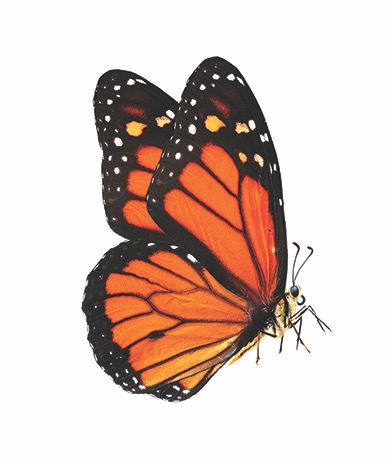
In due course, our “east” garden became a flowering space with a tiered stone pathway and lush beds that are home to autumn sage, Mexican sunflowers, purple salvia, society garlic, Mexican petunias, Gerbera daisies and red-hot pokers. Knock Out and old-garden rose varieties preside over a trio of butterfly bushes that monarchs swarm upon on late-summer days.

In the former Lost Kingdom out back, I built an Asian-themed shade garden that’s home to nine Japanese maples, scores of autumn ferns and monster-sized hosta plants (I imported from my Maine garden). The final touch was a stone pathway that winds through this tranquil, hidden space, though only I and our three dogs have ever followed it.

Which brings me back to the lovely women from the council.

I thanked them for considering my garden for their June tour but pointed out that drought had taken an alarming toll. Moreover, mine was still a young garden, a mere decade old. It needed time to heal and find its way.

“Another year perhaps?” I suggested.

They wouldn’t hear of it. “Everyone’s garden has been beaten up,” Candy reminded me. “But come spring, they always bounce back like a miracle. Yours will, too.”

So now, friends, April is here and I’m a man in constant motion, fussing, fixing, weeding, mulching, trimming, planting new things and getting gloriously dirty. A garden, of course, is never finished. There is always something to do, to change, to add or subtract, or simply fix. Nature abides no slackers.

Nothing could make me happier than to welcome folks to my reborn garden come June 6-7.

Don’t mind my grubby hands, though. A gardener’s job is never done. 

The Naturalist

THE NATURALIST

Chorus in the Forest

The maniacal echoes of the owls of spring

Story and Photographs by Todd Pusser

The hoots rang out loud and clear, stopping me in my tracks. Squinting into the midday sun, I stared intently in the direction of a tall pine tree. After a few seconds, the hoots echoed through the branches once again, with distinctive barred owl flare, “Who cooks for you?” I smiled. It was my first time hearing this bird of prey on my great-grandfather’s property in Eagle Springs, near the headwaters of Drowning Creek. Just across the creek, a second owl quickly responded. “Who cooks for you? Who cooks for you allllll?”

Up ahead, a shadowy silhouette launched from the pine and flew across the creek, disappearing into a dense thicket of hardwoods. Loud hoots and screeches erupted as the mated pair of raptors greeted one another. For the uninitiated, a maniacal chorus of courting owls can raise the hair on the back of one’s neck. Their otherworldly calls have led to widespread fear and superstition. Many cultures view the nocturnal birds as omens of bad luck. Hearing one means death is near. For me, the calls indicate a healthy and functioning ecosystem.

Of our region’s three common breeding owl species, the barred owl, eastern screech owl, and the great horned owl, it is the barred owl that is the most ubiquitous. This is partly due to the barred owl’s propensity to announce its presence with questioning hoots throughout the day, unlike their more nocturnal brethren. This is especially true during the warm afternoons of spring, when the owls are in the middle of their breeding season and are busy raising chicks.

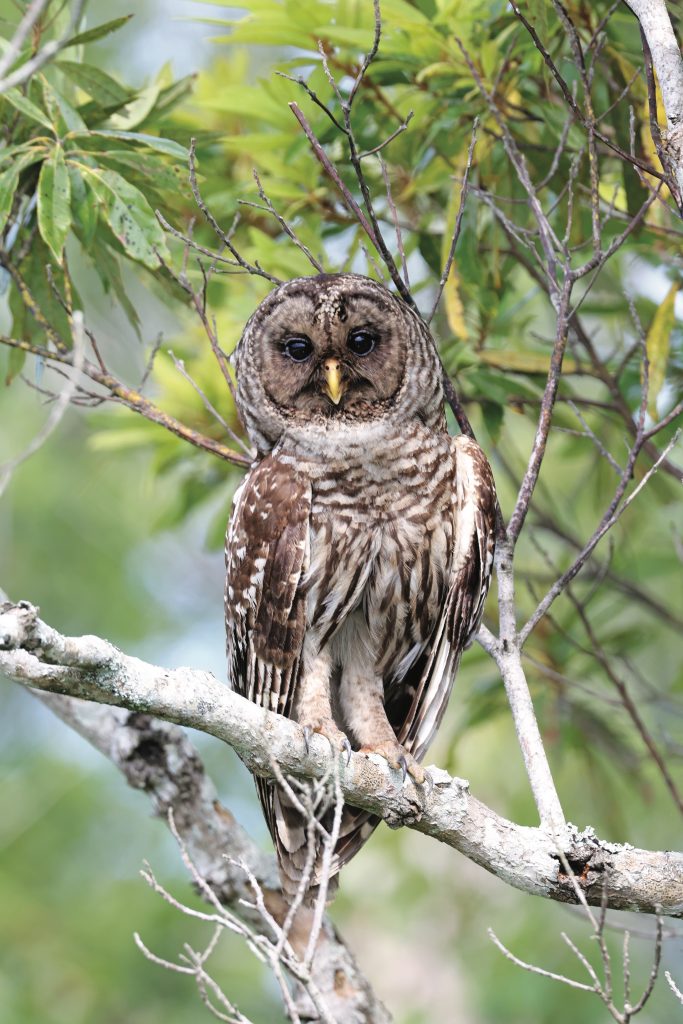
Standing nearly 20 inches tall, barred owls are big birds. Their feathers are dense and streaked in colors of coffee and cream. Barred owls possess large ear openings — even for owls — which are set asymmetrically on the sides of their head. This offset enables them to triangulate on sound with near supernatural precision. Unlike myself, barred owls are impervious to age-related hearing loss.
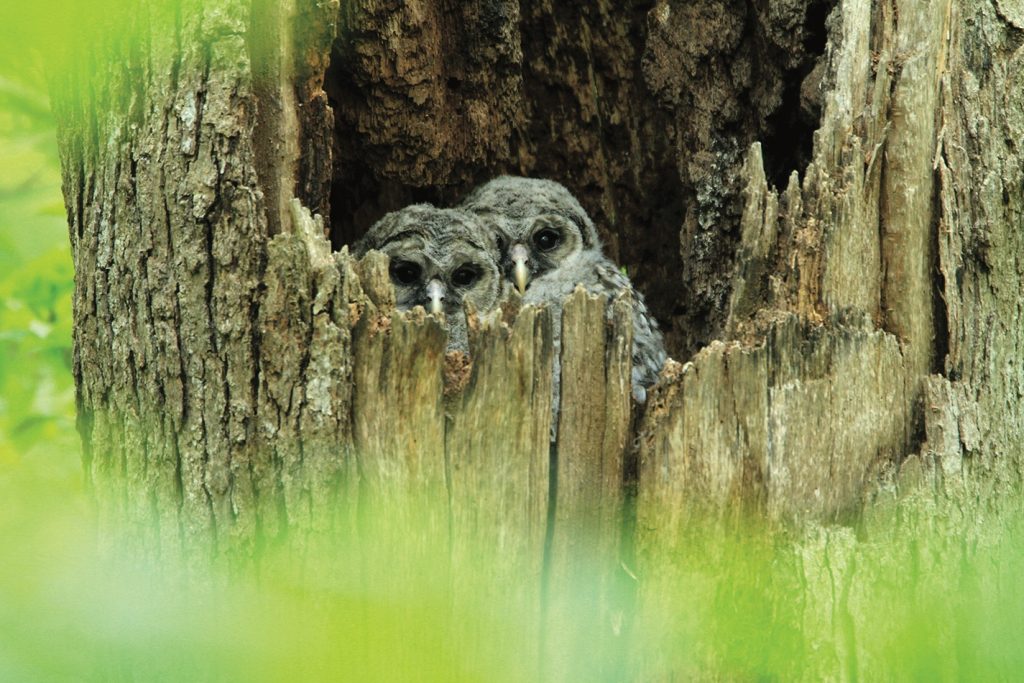
Listening to the owls cackling back and forth to each other I wondered if a nest might be nearby. I quickly glanced around for one. Barred owls rarely build their own nests, choosing instead to raise their families in hollow snags or tree cavities.

Years back, I spent several afternoons watching a pair of barred owl chicks in the broken-off snag of a tulip poplar in the heart of Morrow Mountain State Park. The nest was just 20 feet off the ground and made for easy viewing. From a respectful distance, I spent hours observing, and occasionally photographing, the antics of the chicks and noting the prey items brought to the nest by the adults. I remember being surprised at how many crayfish the adults fed their young.

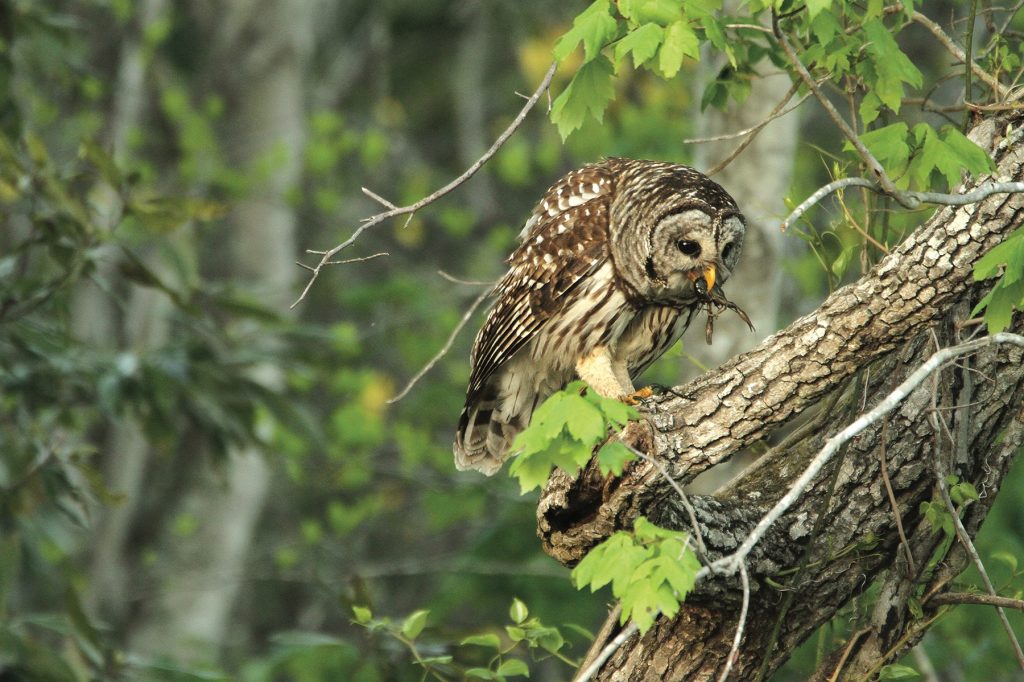
Barred owls are generalist feeders with diverse tastes. Their menu rivals that of any Cheesecake Factory. They will eat pretty much anything that they can get their talons on. Beetles, bunnies, squirrels, mice, rats, moles, millipedes, cicadas, frogs, even screech owls have been recorded as prey. A 30-year study of barred owls in downtown Charlotte found that songbirds, such as cardinals and bluebirds, featured predominantly in their urban diet. A friend of mine once photographed one eating a rough green snake at Alligator River National Wildlife Refuge. Another friend watched a barred owl catch a large, 2-foot long, eel-like salamander known as a two-toed amphiuma, from a roadside ditch bordering Drowning Creek in the Sandhills. Barred owls like to eat local. 

After a few minutes, the owl chorus died down. The forest was silent once again. I decided to walk toward a spot where I had placed a trail camera on the side of a small tree overlooking the creek. Over the years, this particular camera has captured some unusual barred owl behavior. Of particular interest was an owl that would land on a sunny spot of sand next to the creek, right in the middle of the day. It would lay down flat on the ground and stretch out its wings to either side. Then the owl would close its eyes and throw its head back, obviously enjoying the warmth of the sunlight. It did this for a week, at nearly the same time every afternoon. A biologist later told me that the sunbathing owl was likely trying to rid its feathers of parasites.

I spent much of the afternoon looking for the owl’s nest, traversing from one side of the farm to the other, but to no avail. Unfortunately, work took me away the rest of that spring and I was never able to get back to the property and confirm if the pair of barred owls had indeed raised a family.

These events happened nearly 10 years ago. Capable of living to more than 20 years of age, barred owls are long-lived birds. It is possible the same pair are still hunting the creek down on my great-grandfather’s farm. Perhaps this April, I will make another trip out there and get reacquainted with the owls of spring.

Almanac April 2026

ALMANAC

April 2026

By Ashley Walshe

April is a wild maiden, slowly waking.

Before she opens her eyes, she lets the stream of birdsong trickle through her inner landscape, lap against organ and bone, awaken her from the inside out.

Listen. Each trill and warble, an invocation. The dawn chorus, a polyphonic composition of her many dulcet names.

Awaken, Maiden! they sing. Awaken, Ostara! Awaken, Goddess of Spring!

As morning sunlight dances across her face and shoulders, she wiggles her fingers and toes, smiles at the tender kiss of sunbeam, then gently unfurls.

When at last her eyes greet the light of day, the wonder astounds her. She presses her feet into the soft earth, where constellations of glittering dewdrops adorn bluets and clover, and feels the pulse of all creation.

The rhythm moves her. As her feet caress the fertile soil, wildflowers spring forth. Dwarf crested iris. Bluebells. Yellow lady’s slipper. Lub-dub. Lub-dub. Lub-dub.

Hips swaying now, a swirl of swallowtails envelope her in a kaleidoscopic dream. Bees circle hypnotically. Nectar-drunk hummingbirds flash by like jewel-toned meteors.

As she shimmies toward the flowering dogwood, fragrance and color spilling in her wake, pink-and-white bracts appear on bare branches like a spray of immaculate vows.

In graceful flow, the maiden reaches for a dogwood sprig, tucks it into her tousled hair, and drifts along, unhurried.

Like the birds, she calls the names of all awakening. Like the maiden, all of life responds.
Puddle Party

Nothing says spring is here like the site of early swallowtail drifting among native perennials. But have you ever stumbled upon a cluster of them “puddling” together in the mud? Absolute magic.

Supping essential nutrients from the wet earth (namely, sodium and amino acids), male swallowtails absorb that which nectar alone can’t provide. Why? For the offspring, of course. But isn’t everything?

Want to attract butterflies to your own neck of the woods? First and foremost: Forgo pesticides. Consider host plants for the garden (i.e. milkweed for monarchs, violets for fritillaries, pawpaws for zebra swallowtails). According to Conserving Carolina, native trees such as oak, cherry and willow each support hundreds of species of lepidoptera (winged insects including moths and butterflies). Or, fuel their flight with nectar a la purple coneflower, goldenrod, blazing star, black-eyed Susan, ironweed and aster. Everybody wins.

I would spend a morning

With an April apple tree,

Speaking to it softly,

And laughing out in glee.

All the summer sunshine

And all the winter moon

Are shining in the blossoms

That will be gone so soon.

George Elliston, “April Morning,” Through Many Windows, 1924

Words of Wisdom

“In the spring, at the end of the day, you should smell like dirt.”

— Margaret Atwood