Hometown

HOMETOWN

Knuckling Under

The fabulous flutterball

By Bill Fields

My baseball career ended at 13 after I suddenly became afraid of the ball during my first season in Pony League, the destination in those days after aging out of Little League. At the lower level, I’d been a dependable third baseman with no fear at the hot corner even when the strongest boys with the quickest bats came to the plate 60 feet away. There were plenty of “5-3” notations in the Braves’ clay-dusted scorebook.

In a year I went from All-Star to also-ran and, in short order, out of the sport. No more seasoning my glove with castor oil before the first practice. No more Bazooka bubbles between batters. My knuckleball retired with me.

That’s because in addition to my years as an infielder at the sweet little ballfield across Morganton Road from the National Guard Armory in Southern Pines, a dearth of pitchers my last season meant I was recruited to take the mound when I wasn’t playing third.

Possessing a fast ball which wasn’t very speedy and not being able to throw a curve ball — couldn’t hit one either — I had been messing around with a knuckleball in the neighborhood well before using a rosin bag and stepping on the pitching rubber for the first time.

With the knuckles of my index and middle fingers of my right hand touching the ball instead of a normal grip — some early knuckleballers had thrown the pitch that way, but later skilled practitioners used their fingertips — I discovered the ball did funny things when thrown.

With a knuckler, a pitch could become a magic act. And it helped a kid with an average arm sit down some batters.

Because the unique grip minimizes spin, a ball can’t make up its mind when you throw it. The aerodynamics — most of the time — make its flight unpredictable. A knuckler flutters in flight, mimicking a butterfly, its destination uncertain. The mystery novel of pitches, it has confounded generations of hitters and catchers with devilish dances and darting movements.

“The knuckleball,” wrote the famous sportswriter Jimmy Cannon, “is a curve ball that doesn’t give a damn.”

Joe Torre, sometimes tasked with being on the receiving end of the can’t-make-up-its-mind pitch for part of his long and distinguished career in the major leagues, said, “You don’t catch a knuckleball, you defend against it.”

Toad Ramsey, a 19th century pitcher, is cited by some historians as the originator of the fluttering, frustrating pitch, but the ballplayer who first brought a lot of attention to it was Eddie “Knuckles” Cicotte, of the Chicago White Sox. Cicotte possessed a legendary repertoire of junk pitches, a knuckleball among them, before being caught up in the scandal of 1919, when he admitted being one of eight Chicago players taking cash to throw the World Series against the Cincinnati Reds.

My youth coincided with the final seasons of the 21-year knuckleballing career of Hoyt Wilhelm, the most famous athlete to come out of Huntersville, N.C., north of Charlotte, before Drake Maye, the current New England Patriots quarterback. Like successful knuckleballers who followed, Wilhelm, the first relief pitcher to make it into the Baseball Hall of Fame, lasted a long time, appearing in more than 1,000 games and retiring when he was just shy of 50.

Other top knuckleballers enjoyed similarly lengthy and successful careers because the slower pitch is less stressful on the arm: Wilbur Wood, Charlie Hough, Phil and Joe Niekro, R.A. Dickey and Tim Wakefield among them. In 1973, Wood started both games of a doubleheader; knuckleball pitchers can pitch on little rest and don’t have to ice their arm after games.

Despite the plusses, fewer than a hundred major leaguers have thrown the baffling pitch. Speed has become the realm of modern baseball. A lone knuckleball pitcher, Matt Waldron, of the San Diego Padres, is on a MLB roster at the start of this season. The pitch that the Pittsburgh Pirates’ Willie Stargell referred to as “a butterfly with hiccups” is practically grounded, its vexing vagaries left to history.

Celebrating Poetry

CELEBRATING POETRY

Celebrating Poetry

Spurred on by the success of Black History Month and Women’s History Month, the American Academy of Poets organized the first National Poetry Month in April 1996. Over its 30 years of existence, it has grown into the largest literary celebration in the world, involving readers, students, teachers, librarians, booksellers, publishers, events and, oh yes, the occasional poet. It’s possible to sign up to receive a “Poem-a-Day” in your inbox (curated by Dorianne Lux), request a National Poetry Month poster, encourage participation in the “Dear Poet” project for students in grades five through 12, and consult a “Poetry Near You” calendar. To quote Emily Dickenson, “If I feel physically as if the top of my head were taken off, I know that is poetry.” You may feel free to lose your head every month of the year, but April
is a good place to start.

I first read Naomi Shihab Nye’s poetry in the mid-1990s. I quickly became a fan of her work, and “Valentine for Ernest Mann” has long been one of my favorites. The quirkiness of the first stanza — the idea of ordering a poem like ordering a taco — made me smile and want to read on. Then in the second stanza comes the kindness and generosity that shine through all her work. Instead of dismissing this rather audacious request (which was an actual demand from a middle school student), Naomi leads him, and us, into an exploration of how we too can find our own poems. “What we have to do/is live in a way that lets us find them.” She reminds us that we all have poetry in us, if we are attentive to the small meaningful moments in our lives. She doesn’t lecture us about it; instead, she gives us that wonderful example of the man who saw skunks as beautiful, and her images make them beautiful too. Her gentle and genuine words make us realize there is beauty everywhere if we are open to seeing it.

This poem has stuck with me over the years. When I was teaching both children and adults, I would share it to encourage students to make lists of where they could find their own poems. When I was writing my first book of poetry I came back to the line “Maybe if we re-invent whatever our lives give us/we find poems” and realized that was exactly what I was doing. Naomi’s work shows us that poetry is a way of accessing our true feelings, be they of beauty or wonder or moving through difficult times. Born to an American mother and Palestinian father, Naomi Shihab Nye captures in her poetry the humanity that connects us all. She has spent over 40 years traveling the world leading poetry workshops with both children and adults that spread that humanitarian spirit. I am grateful for her presence through poetry.   

    — Joanne Durham

Valentine for Ernest Mann

By Naomi Shihab Nye

You can’t order a poem like you order a taco.
Walk up to the counter, say, “I’ll take two”
and expect it to be handed back to you
on a shiny plate.

Still, I like your spirit.
Anyone who says, “Here’s my address,
write me a poem,” deserves something in reply.
So I’ll tell a secret instead:
poems hide. In the bottoms of our shoes,
they are sleeping. They are the shadows
drifting across our ceilings the moment 
before we wake up. What we have to do
is live in a way that lets us find them.

Once I knew a man who gave his wife
two skunks for a valentine.
He couldn’t understand why she was crying.
“I thought they had such beautiful eyes.”
And he was serious. He was a serious man
who lived in a serious way. Nothing was ugly
just because the world said so. He really
liked those skunks. So, he re-invented them
as valentines and they became beautiful.
At least, to him. And the poems that had been hiding
in the eyes of skunks for centuries 
crawled out and curled up at his feet.

Maybe if we re-invent whatever our lives give us
we find poems. Check your garage, the odd sock
in your drawer, the person you almost like, but not quite.
And let me know.

From Red Suitcase, by Naomi Shihab Nye. Copyright 1994 Naomi Shihab Nye. Used by permission of the author.

I’m sure I had read persona poems before I encountered Gabrielle Calvocoressi’s debut collection, but certainly none had struck me the way this one did. The excerpt I’ve selected is the last of 10 sections in the poem, which is also the title of the book. Each section is written from the poet’s imagined first-person perspective of an individual who was touched by Amelia Earhart’s final flight and disappearance, beginning with an ordinary bystander in section I all the way to her husband in section X. The facts of Earhart’s story (which I vividly remember learning in elementary school) are compelling enough. But when Calvocoressi filters them through the eyes of carefully curated characters — some who knew her personally and some who didn’t — those facts simultaneously gain dimension and become more intimately human. I had been under the impression that contemporary poetry was generally supposed to derive from personal experience, influenced on occasion by outside research. Reading The Last Time I Saw Amelia Earhart and the other suites of persona poems in this book allowed me to see just how a poet could use their imagination in service of their work, bringing fictional narrative into lyrical verse and giving the reader an even deeper insight into something we thought we already knew. Though it’s taken me years to come around to it, it’s given me permission to do the same.

— Morrow Dowdle

The Last Time I Saw Amelia Earhart

(An Excerpt)

By Gabrielle Calvocoressi

X. George Putnam, husband

Afterwards she was everywhere:

a map in the glove compartment,

shoes on the stairs, her wedding ring

on the bathroom sink. I found

her house keys by the phone

and wondered how she’d get back

inside. Of course I wasn’t the only

one: everybody thought they’d seen

her, especially children

who wondered if she was hiding

from me. One girl wrote,

When my father yells

I hide in the barn. Do you have a barn?

The last time I saw Amelia Earhart

she was three steps ahead of me,

crossing to the other side

of the street. I almost died trying

to reach her, called her name

over the traffic and when she turned back

it was a young man, startled

by my grasping hand, saying sorry

but I was mistaken. Then she was gone;

clothes sent, car sold, nothing left

to look for. Except airplanes

where are everywhere now

and take me back to her, turning

away from our expectant faces.

Excerpt from The Last Time I Saw Amelia Earhart by Gabrielle
Calvocoressi, Persea Books, 2005.

I am a graduate of SUNY Brockport, where I chose to continue my study of reading and writing poetry after finding my way to it in community college. As it happened, two poets who’d become, for me, extremely important influences, preceded me at Brockport, Michael Waters and Li-Young Lee. Style-wise, these are different poets entirely, except for the attention to poetic craft and texture both bring to their work.

The recipient of many awards and honors, Li-Young’s backstory is as extraordinary as his poetry. He was born in 1957 in Jakarta, Indonesia, to Chinese parents, and his father had been a personal physician to Mao Zedong while in China.  

Eating Together is a poem in which his father figures prominently, and the poem’s title presents us with an irony. That is, the family is not together as the recently deceased father is absent.

Rooted in Confucian principles of respect, it is a common and traditional practice in Chinese culture for the head of the household (often the father or the eldest member) to be honored with the head of the fish. Therefore, this is a poem of transition. The mother now assumes the father’s role as head of the family and is afforded that respect.

Like so much of Lee’s poetry, this selection is notable for its quiet tone and sensory texture. Grief is in the poem, of course, but the fact need not be uttered. Instead, the reader is provided a closure of beauty and, at its core, an extraordinary simile. The dead father is compared to a snow-covered road in a pine forest, and we understand that here, death is blessed relief, as he is “lonely for no one.”

— John Hoppenthaler

Eating Together

By Li-Young Lee

In the steamer is the trout   

seasoned with slivers of ginger,

two sprigs of green onion, and sesame oil.   

We shall eat it with rice for lunch,   

brothers, sister, my mother who will   

taste the sweetest meat of the head,   

holding it between her fingers   

deftly, the way my father did   

weeks ago. Then he lay down   

to sleep like a snow-covered road   

winding through pines older than him,   

without any travelers, and lonely for no one.

This poem, from the volume In the Lateness of the World, eloquently speaks to the work of witness both externally and internally. “Early Confession” resonates with my own work as a documentary poet whose work also questions and engages in the interior domains of political, social and personal struggle. Carolyn Forché has always evoked and amplified beauty in the difficult and often traumatic everydayness and ordinariness of life, mirroring ourselves in the webs of each other’s experiences and humanity. I’ve never known how to walk away from suffering, and I too have asked, what might my path have been if I had not chosen this path? What if I had lain down in the drifts to finish a dream? The pastoral imagery and metaphors create a wisp of a trailing scent; an invocation, or a lamentation for life, death, consciousness, and our intimate lives. “Early Confession” is an invitation to seek clarity, declare purpose, and assume agency both given and liberated. This poem is an affirmation for my ethic of wonder and need to focus my creative intentions and resolutions on the wonders and realities of the world. Forché has always written poetry that returns us over and over again to how to purposefully witness wonder and humility as wholesome emotions that will never exist with destruction. “Early Confession” reawakens a primal portal for becoming receptive to what lies around us in our communities that are inherently worth preserving and protecting. The poem draws me personally to bear witness to my own self-cultivation for learning how to fully inhabit the path that I’ve chosen and that chooses me back. I am grateful for the vast landscape this singular poem constructs, reminding the reader to forge new connections with the self that guide us to inhabit and forge new connections on the path, guiding our sense of wonderment outward toward full radical amazement.

          — Jaki Shelton Green

Early Confession

By Carolyn Forché

If I had never walked the snow fields, heard the iced birch,

leant against wind hard toward distant houses, ever distant,

wind in the coat, snow over the boot tops, supper fires

in windows far across the stubby farms, none of them

my house until the end, the last, and late, always late, despite how early

I’d set off wearing gloves of glass, a coat standing up by itself.

If I had never reached the house, but instead lain down in the drifts

to finish a dream, if I had finished, would I have

reached the rest of my life, here, now, with you whispering:

must not sleep, not rest, must not take flight, must wake.

When I was at NC State in the late 1960s, Guy Owen was already a legend. The journal he founded and edited, the Southern Poetry Review, was well-established. His second novel, The Ballad of the Flim-Flam Man, had been made into a movie. His collection of poetry, The White Stallion and Other Poems, won the Roanoke-Chowan award. There wasn’t much he hadn’t done or wasn’t doing. At the time there was an active revolt against traditional forms, against poetry for the ear. I felt that revolutionary spirit too. But having had a grandmother who would, at the drop of a hat, recite verse, I wanted the sounds, the music, as well. When I read Owen’s poem, I was taken by how different it was than the early 20th century verse my grandmother loved and how different from the writings of the Beats that so attracted young poets like me in the late 1960s. The poem is so full of sound and surprise. In just 16 lines, it manages to be psychologically complex and simple, dream-like and real, innocent and wise, showing tension between father and son. Although I was a computer science major who had failed introductory English (I am a terrible speller), Guy talked with me a little and was kind. Not long after, I published the longest poem ever in the student literary journal, the Windhover. (Someone else checked and corrected my spelling). Guy remembered that. A few years later at the first North Carolina Writers Conference I attended, he remembered me in the best way; he invited me to share his whiskey. We talked about poetry. I mostly listened. The horse, he admitted, had been black, but at the Bread Loaf Writers’ Conference the editor of Poetry told him that if the horse was white as a ghost or as dawn it would be a better poem and would be published in his respected journal. It was published in Poetry as “The White Horse.” Somewhere along the way, the horse now white became a stallion. I learned a lot about how small revisions and particular details can greatly improve a poem. Today, 20 years older than Guy was when he died in 1981, I return to “The White Stallion.” It seems to me a masterpiece. So accessible and so mysterious. I can hear Guy talk about it again. I can taste his whiskey. Jack Daniel’s, since you asked. — Paul Jones

The White Stallion

By Guy Owen

A white horse came to our farm once

Leaping, like dawn, the backyard fence.

In dreams I heard his shadow fall

Across my bed. A miracle,

I woke up beneath his mane’s surprise;

I saw my face within his eyes.

The dew ran down his nose and fell

Upon the bleeding window quince. . . .

But long before I broke the spell

My father’s curses sped him on,

Four flashing hoofs that bruised the lawn.

And as I stumbled into dawn

I saw him scorn a final hedge,

I heard his pride upon the bridge,

Then through the wakened yard I went

To read the rage the stallion spent.

I once had a poetry teacher who said try and write lines so good someone will want to have them tattooed on their body. Quite a goal, indeed, but Joe Mills’ poems are full of such lines.

I could have picked a dozen of his poems but I chose Savings from his collection, This Miraculous Turning, which won the 2015 Roanoke-Chowan Award for Poetry. I’m a huge fan of what I think of as the classic Mills’ poem: accessible, personal, often funny and about family, with an ending that kicks you in the gut but also somehow lifts you up. Mills is the author of seven poetry collections and a professor at the University of North Carolina School of the Arts, where he holds the Susan Burress Wall Distinguished Professorship in the Humanities. While his poems are smart, they are not the sort of poems that feel like a puzzle to be solved. Not that that means they are “easy.” You do have to do some work, but his poems pull you in and share something about his life that also feels universal.

One of the things that strikes me first about Savings is the conversational tone. It starts off with a narrator telling you a simple story of setting the clocks back for daylight saving, but it can’t just be about that, can it?  By the second stanza, it’s becoming more personal as the poet brings in the scale and his wife’s blood pressure pills. The third and final stanza really gets to what the poem is about — family and how we want to hold on for as long as we can, whether it’s for an aging parent, a spouse, or in this case, your children. I have a friend who, upon reading a book he really enjoyed, throws the book across the room. Perhaps as a sign of respect, or awe, or I wish I’d written that. Whenever I read a Joe Mills book, I throw it good and hard across the room. But not too far, because I know I’ll soon want to pick it up and read more of his lovely poems.

          — Steve Cushman

Savings

By Joe Mills

Last night we set the clocks back

gaining an extra hour to sleep

or drink or read, and I walked

through the house changing the time

in the coffee maker, the stove,

the VCR, the thermostat

then I went into the bathroom

to twist the dial on the scale

a few pounds lighter

and I moved the numbers down

on the blood pressure machine

so my wife wouldn’t need as many pills,

then to the children’s rooms

to erase the doorframe marks

and repencil them slightly lower,

not to the point we again would need

strollers or slings, just an inch or two,

to make these days last longer.

One of many things I love about reading poetry is seeing a poet’s thought process unfold as I read. How they move from wonder to thought to wonder. At the core of Taylor Johnson’s poetics seems to be making visible his thoughts, his concerns, and his loves. “Menace to” is such a great example of the Venn diagram of Taylor’s mind. The poem draws a diagram around the speaker’s enemies: money and plastic. On the other side of that diagram, comrades. As he does, Taylor complicates the speaker’s position. Wi-Fi is an enemy as well, allowing the speaker to reach out to those comrades. Thus, as the speaker states, “wifi is a money for me,” while Wi-Fi kills the houseplants. The speaker is aware of his complicity, as he states: “My enemy is distance growing dark, distance growing politely in my pocket as connection.” The Venn diagram becomes even more complicated as the enemy grows larger, into a drone that is literate, “well-read and precise and quiet,” yet is still connected to the “money” that opens the poem and the wifi in the second stanza. Taylor ends by turning the poem back on himself, the new computer, enemy as well, becomes a tool to destroy the enemy, to reach again, comrades. 

— Tyree Daye

Menace To

By Taylor Johnson

after June Jordan

Nightly my enemies feast on my comrades 
like maggots on money. Money being my enemy 
as plastic is my enemy. My enemy everywhere 
and in my home as wifi is 
a money for me to reach my comrades 
and kills my house plants. My enemy
is distance growing dark, distance growing 
politely in my pocket as connection. 
I must become something my enemies can’t eat, don’t have 
a word for yet, my enemies being literate as a drone is 
well-read and precise and quiet, as when I buy something 
such as a new computer with which to sing against my enemies, 
there is my enemy, silent and personal.

PinePitch April 2026

PINEPITCH

April 2026

Impatiens, Geraniums, Marigolds, Oh, My!

The Pinehurst Garden Club’s annual plant sale pickup is Sunday, April 26, from 9 a.m. to 3 p.m., at the Green Haven Plant Farm, 255 Green Haven Lane, Carthage. You can make day-of-sale purchases or pre-order plants through April 16. Proceeds fund scholarships for horticultural students at Sandhills Community College as well as beautification projects in Pinehurst. Info: www.pinehurstgardenclub.org.

The Clubhouse Turn

Pinehurst Parks and Recreation and the Pinehurst Driving Club present the 77th annual Spring Matinee Races on Saturday, April 11, at the Pinehurst Harness Track, 200 Beulah Hill Road S., Pinehurst. Gates open at 11 a.m. and the racing begins at 1:30 p.m. We’re shocked, shocked to find there will be gambling going on. No, really, we are. For information go to www.vopnc.org.

April Authors Abound

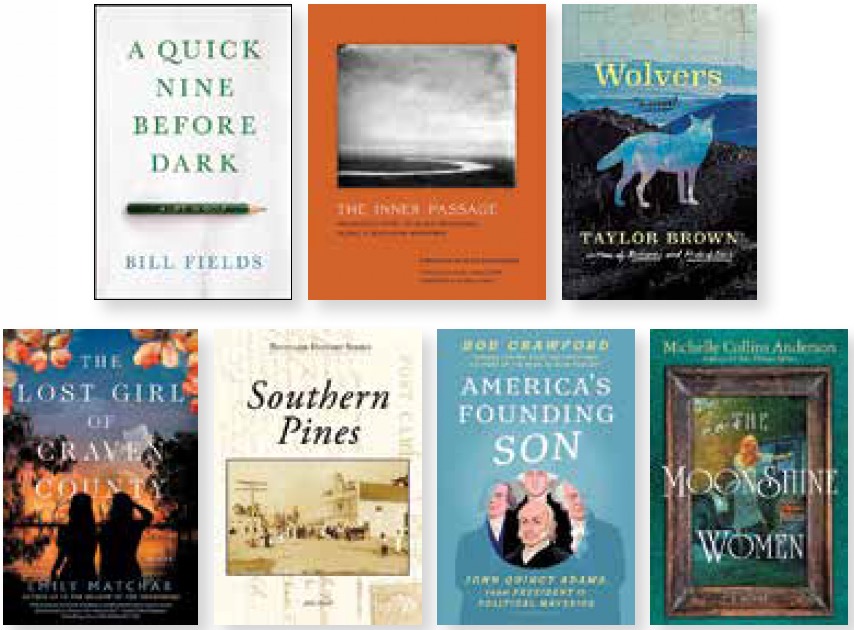
• Southern Pines native and PineStraw columnist Bill Fields discusses his memoir, A Quick Nine Before Dark: A Life in
Golf,
at the Weymouth Center for the Arts & Humanities, 555 E. Connecticut Ave., at 6 p.m. on Thursday, April 2. Info: www.ticketmesandhills.com.

• Virginia McGee Richards talks about her book The Inner Passage: An Untold Story of Black Resistance Along a Southern Waterway, at The Country Bookshop, 140 N.W. Broad St., Southern Pines, at 6 p.m. on Tuesday, April 14. Info: www.ticketmesandhills.com.

• Taylor Brown discusses his new novel, Wolvers, at 6 p.m. on Wednesday, April 15, at The Country Bookshop, 140 N.W. Broad St., Southern Pines. Info: ticketmesandhills.com.

• Emily Matchar talks about her new book, The Lost Girl of Craven County, at 6 p.m. on Thursday, April 16, at The Country Bookshop, 140 N.W. Broad St., Southern Pines. Info: www.ticketmesandhills.com.

• Julia Hans will be at the Southern Pines Public Library, 170 N.W. Connecticut Ave., at 10:30 a.m. on Saturday, April 18 to share her book, a Penny Postcard History of Southern Pines. Info: www.sppl.net.

• Bob Crawford, bass player with The Avett Brothers, will speak about his book America’s Founding Son: John Quincy Adams, from President to Political Maverick, at 7 p.m. on Wednesday, April 22, at the Sunrise Theater, 250 N.W. Broad St., Southern Pines. Info: www.sunrisetheater.com.

• Michelle Collins Anderson will talk about her new novel, The Moonshine Women, at 3 p.m. on Sunday, April 26, at The Country Bookshop, 140 N.W. Broad St., Southern Pines. Info: www.ticketmesandhills.com.

Happy Heritage Day

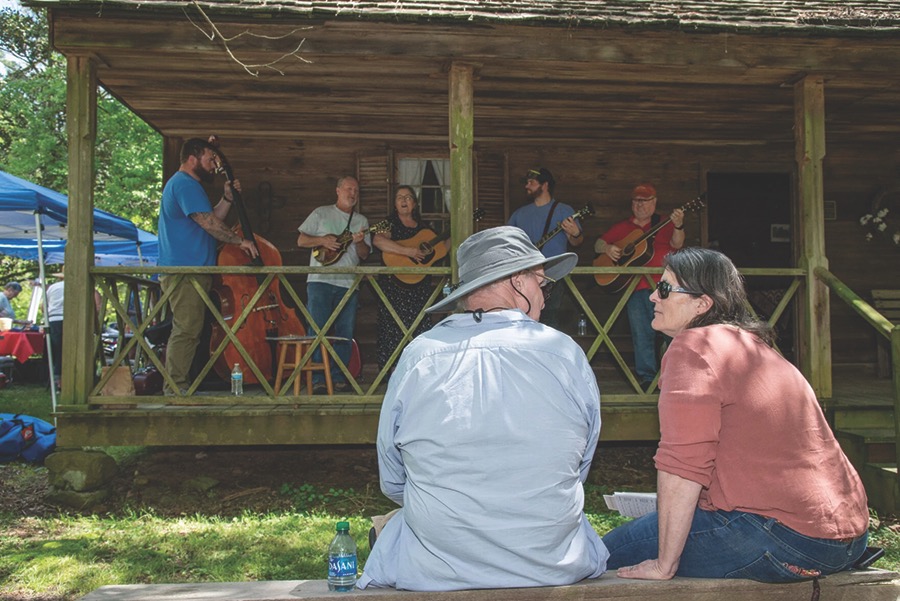
The annual Clenny Creek Heritage Day is Saturday, April 18, from 10 a.m. to 4 p.m., at the 1840s James Bryant home and the 1760s McClendon cabin, 3361 Mt. Carmel Road, Carthage. There are old-time activities, a livestock petting area, live music and food. Admission is free. Info: www.moorehistory.com.

Just Fantastick!

The Sandhills Community College theater department presents The Fantasticks beginning Friday, May 1, at 7 p.m., at BPAC’s McPherson Theater, 3395 Airport Road, Pinehurst. There are two additional performances on Saturday, May 2, and another on Sunday, May 3. For more information go to www.ticketmesandhills.com.

The Art of Nature

The Arts Council of Moore County and five artists — Warren Lewis, Nancy Lewis, Sharon Lowey, Frederick Schmid and Linda Storm — combine to present “Palustris: Nature’s Canvas,” beginning at 6 p.m. on Friday, April 3, at the Campbell House Galleries, 482 E. Connecticut Ave., Southern Pines. The show hangs through April 24. For more information go to www.mooreart.org.

Burning Up

Firefest is a two-day celebration of the heat that makes the art at Starworks, 100 Russell Drive, Star. Beginning at 1 p.m. on Friday, April 3, there will be live demonstrations, artist talks and hands-on workshops in ceramics, metal and glass. For info go to www.StarworksNC.org.

Carolina Phil

Maestro David Michael Wolff and the Carolina Philharmonic present an evening of classical masterworks at BPAC’s Owens Auditorium, 3395 Airport Road, Pinehurst, at 7:30 p.m. on Saturday, April 18. For info and tickets call (910) 687-0287 or go to www.carolinaphil.org.

Quittin’ Time

Live After 5 kicks off its 2026 concert series at 5:15 on Friday, April 10, with Cierra Doll, followed by The Ray Band. There will be kids’ activities, food trucks and all the trimmings at the Village Arboretum, 375 Magnolia Road, Pinehurst. For info: www.vopnc.org.

Celebrating America 250

Join the North Carolina Symphony, conducted by Sophie Mok, for an evening of classical masterpieces including works by Leonard Bernstein and Aaron Copland, at 7:30 p.m. on Thursday, April 23, at BPAC’s Owens Auditorium, 3395 Airport Road, Pinehurst. For info go to www.ncsymphony.org.

A Little Love

The Moore County Choral Society’s spring concert, “Perhaps Love,” incorporating a jazz combo and string quartet, will be held Sunday, April 26, at 4 p.m. in BPAC’s Owens Auditorium, 3395 Airport Road, Pinehurst. For information go to www.ticketmesandhills.com.

The Golden Voice

Enjoy a live performance featuring local sensation Julia Golden beginning at 7:30 p.m. on Friday, April 17, at the Sunrise Theater, 250 N.W. Broad St., Southern Pines. What else do you need to know? If there is something, go to www.sunrisetheater.com.

Five Questions with Priscilla Presley

Q: How would you describe an evening with you onstage?

Priscilla Presley: Truth and honesty about my life. People always want to know about Elvis and me, and I keep it very open. They can ask whatever they want, and most of the questions are about him, his life, and the things people don’t usually get to hear.

Q: What’s the one question fans ask you the most?

Priscilla Presley: At every event, someone wants to know if Elvis was a good kisser. You’ll see hands go up, and if one person asks it, others say, “We were going to ask that!” It’s always a funny way to start, but it happens all the time.

Q: With so many versions of your story out there, why is it still important for you to share it in your own words?

Priscilla Presley: Because it’s coming directly from me. There’s no script, no writer, no actor in between. People have seen interpretations of my life, but when we’re in a room together and they can ask what they really want to know, they’re finally hearing my truth in my voice.

Q: How do you hope people feel when they walk out of the theater?

Priscilla Presley: I hope I’ve answered the questions they brought with them, and that they understand Elvis a little better. For me, the best part is that sense of talking directly to everyone — answering what most people want to know, but doing it in a way that feels personal and free.

Q: How did Elvis himself feel about his fans?

Priscilla Presley: He was incredibly grateful from the very beginning. Early on, he’d invite fans up to Graceland — they’d be in the backyard and he’d just hang out with them. You don’t see that today. He always said the fans made him who he was. He knew they were the ones who put him where he ended up, and he never took that for granted.

The Sandhills Fair

By Audrey Moriarty

First held in October of 1914, the Sandhills Fair was sponsored by the Sandhills Board of Trade and the Sandhills Farmers Association. There was sewing, knitting, canning, gardening, woodworking and animal husbandry, all highlighting the work of nearby farms. After the first several years, it was held at the Fair Barn and Harness Track, where a large grandstand was built to accommodate crowds of as many as 3,000 spectators. The Pinehurst Outlook said the fair required “nothing more than a smile for admission” and “was a fair without a midway and doesn’t need one.”

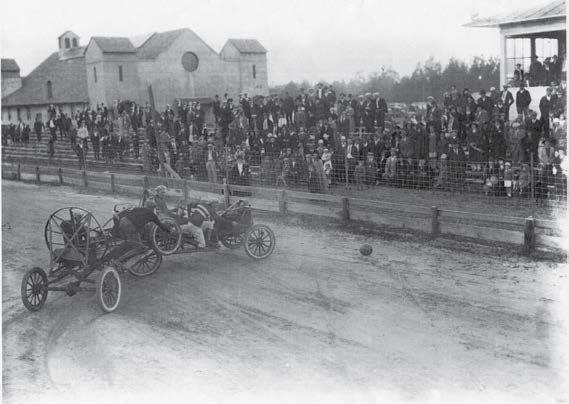
One of the more popular activities was “auto polo,” invented around 1910 by Ralph “Pappy” Hankinson, a Ford dealer from Topeka, Kansas, hoping to increase his sales. Patterned after equestrian polo, matches featured four cars with two players per car: a driver and a “mallet man.” The cars were generally stripped-down Model Ts with no tops, doors or windshields. A regulation-sized basketball was used, although some venues manufactured even larger polo balls. The driver and mallet man had to guide the ball into a 5-foot-tall goal. The mallet men — and, periodically, the driver — were frequently ejected from the vehicle resulting in cuts, broken bones or being run over. Later, the cars were equipped with primitive roll bars above the driver.

The sport caught on in the U.S. but internationally it was viewed with caution and skepticism, being christened “a lunatic game.” Auto polo drew large crowds, but enthusiasm waned during the late 1920s due to the cost of the vehicles and the ensuing necessary repairs. 

Birdwatch

BIRDWATCH

Harbingers of Spring

Return of the swooping swallows

By Susan Campbell

As the days lengthen and the air begins to warm, many of us look forward to the return of migrant songbirds. Dozens of species that breed here spend their winters far to the south, and dozens more spend time feeding here as they migrate to summer haunts in New England and points farther north. Of these, the first to return in central North Carolina are the swallows. In early April, it’s possible to see six different species: barn, rough-winged, tree, bank and cliff, as well as the more familiar purple martin. And since swallows move in mixed flocks at this time of year, encountering three or four kinds in close proximity is not unusual.

Swallows are almost exclusively insectivorous and are built to catch their prey on the wing. They have strong pointed wings and forked tails, which allow for excellent aerial maneuverability. Except for adult male martins, they are all dark on top and light colored below. But each species has a characteristic flight pattern that can be used to identify it even if field marks cannot be discerned. Modern field guides include descriptions of the patterns — where a species flies and how it flies (the combination of flapping and soaring) are unique. This is very helpful, since swallows spend most of their time on the wing and tend to be quite high in the air, so plumage is difficult, if not impossible, to see.

Without a doubt, the best place to find swallows is around water, where insects are most abundant during the warmer months. If one is lucky and there is a snag or wire adjacent to a wet area, the birds may be perched at close range, which should make for ideal viewing conditions. Except for purple martins, sexes are identical. To the human eye, male and female size, coloration and behavior are the same. However, you may be able to pick out the drabber plumage of a juvenile in late summer if you have a pair of binoculars — and a good bit of patience.

Purple martins are the largest of the group and have the darkest feathering. Adult males are a distinctive bluish-black. Females and second-year males have some blue feathering on the back and head but are mainly a dingy gray. Juveniles will be a paler gray with little or no blue feathers in late summer.

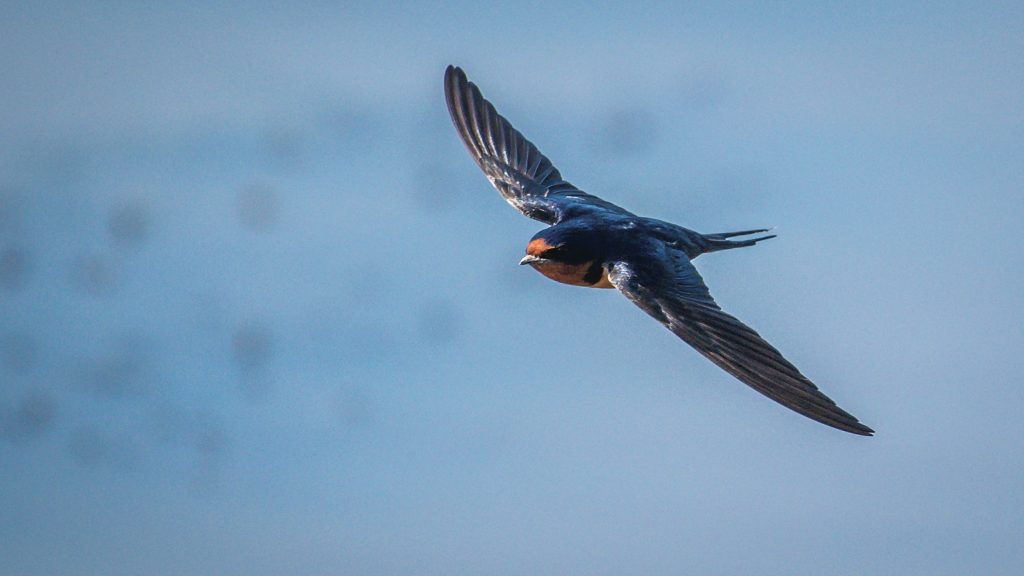
Barn swallows have a dark-bluish back, orange face and yellowish underparts. They also have a deeply forked tail. Given this superior rudder, they are capable of low and erratic flight, scooping up insects close to water level or over large grassy expanses such as horse pastures or golf course fairways.

By comparison, rough-winged swallows are stocky and brown above, whitish below with a drab, buffy throat. They spend a lot of time soaring high in the air and, therefore, have a more squared-off tail.

Bank, tree and cliff swallows are less likely to be encountered in central North Carolina. All three have less distinct plumage and short, forked tails. Bank swallows, which may be found in the western part of the state, have light brown backs, thinner wings and quick wing beats. Tree swallows have dark-green backs, broad, long wings and more direct flight behavior with less wheeling involved. Increasingly, they can be found using tree cavities or nest boxes near large bodies of water in the northern Piedmont. And they are quite common in the coastal plain. Cliff swallows, which resemble barn swallows with a short tail and a pale rump patch, fly more deliberately, with slightly slower, more powerful strokes. They favor the protection of overhangs associated with man-made structures such as bridges and overpasses to affix their unique mud nests. Interestingly, for reasons we are not sure of, cliffs are being found in more locations across the state each season.

Although these little birds are well-engineered for flight, they are not known for their song. In fact, their vocalizations consist of short raspy or mechanical calls. Nevertheless, swallows can be quite noisy, whether they are migrating as a flock or in pairs defending a breeding territory. Try to remember to listen and look up this spring; you might just spot some fancy fliers.

Dissecting a Cocktail

DISSECTING A COCKTAIL

Jack and Coke

Story and Photograph by Tony Cross

The Jack and Coke is, and has been, widely ordered at bars for almost a century. It was the go-to drink of my late brother and my father, who recently passed away, so this is an homage to them.

The first recorded mention of a “Coca-Cola highball” stretches all the way back to 1907. Highballs — cocktails in tall glasses that contain ice, spirit and some variation of soda — were popular but the quality of other sodas was inconsistent. Every location formulated its own drinks; syrups would be improperly stored (lack of refrigeration or ice), leading to a loss of flavor; CO2 variations would leave drinks flat or too acidic from over-carbonation. This gave Coca-Cola an advantage: It tasted the same every time.

Fast forward to the Prohibition years and you’ll read how cola was masking bad-tasting spirits, especially whiskey. This is where Jack Daniel’s came in. The way it charcoal-filtered its whiskey made it softer around the edges, also giving it notes of vanilla and caramel. Pairing that with the sweetness of Coke made the drink an instant classic.

A decade later, the United States was in the middle of a world war. Coca-Cola President Robert Woodruff declared his intention “to see that every man in uniform gets a bottle of Coca-Cola for 5 cents, wherever he is and whatever it costs the company.” In turn, soldiers started ordering Jack and Cokes when they were at bars until the whiskey became hard to find. Down the line, the drink became a favorite of everyone from musicians like Frank Sinatra and Lemmy Kilmister to my father and little brother, who all raised a glass of Jack and Coke during some of the best times of their lives.

Jack Daniel’s and Coca-Cola didn’t create whiskey and soda, but they made it iconic.

Specifications

1 1/2 ounces Jack Daniel’s
No. 7 Whiskey

4-6 ounces Coca-Cola

Execution

Add ice and whiskey in a short or tall glass. Top with ice cold
Coca-Cola. A quick stir is optional.

Golftown Journal

GOLFTOWN JOURNAL

A Family Legacy

Right at home in the Hall of Fame

By Lee Pace

It began with a press release in April 1981 that a new Carolinas Golf Hall of Fame had been created, and the venture continued with an inaugural inductee banquet on June 1 at the Southern Pines Elks Club. All five of those first inductees as designated by a committee headed by Jack Horner of the Durham Herald-Sun and composed of members of the now-defunct Carolinas Golf Reporters Association had some connection to Pinehurst and the Sandhills.

Richard Tufts was the grandson of Pinehurst founder James W. Tufts, a former president of the USGA and a noted authority on the Rules of Golf.

Donald Ross lived in Pinehurst after moving from Dornoch on the northeast coast of Scotland in 1900 through his death in 1948, and designed seven Sandhills area courses and just under 400 nationwide in a prolific career.

Harvie Ward and Billy Joe Patton were North Carolina natives and golfing bon vivants, playing with style and spirit and winking to the gallery while making birdies. Between them, they won four North & South Amateurs from 1948 to 1963.

And Estelle Lawson Page ruled the Women’s North & South Amateur from 1937 to 1945, winning six of nine over that period.

Seventy-five more golfers have entered the Carolinas Golf Hall of Fame (now under the auspices of the Carolinas Golf Association) since then. In the early days, plaques commemorating their inclusion were housed at Seven Lakes Country Club at the behest of Peter Tufts, the Seven Lakes course designer and son of Richard. Later the display moved to Pine Needles Lodge, where it was housed in 2007, when it moved to its current home.

Pinehurst Resort management in the 1990s expanded the 1900 Carolina Hotel eastward with two major projects — the Grand Ballroom as the centerpiece to an expansive new meeting center, and then the spa and fitness center. One elongated hallway leading from the hotel’s East Wing to the ballroom afforded an important opportunity. The resort offered use of one wall for the Carolinas Golf Hall of Fame. Over the next quarter century, the exhibition has grown to 82 members and was recently reorganized to provide additional wall space for the Hall of Fame to grow.

This year the owners of the resort for the last 42 years took their place along that hallway.

Inducted in mid-February were Robert Dedman Sr., whose Club Corporation of America bought the resort in 1984, and Robert Dedman Jr., who took the baton upon his father’s death in 2002 and has guided Pinehurst to unparalleled heights in the last dozen years.

“The Dedmans’ impact cannot be measured simply by courses renovated, courses built or championships hosted but something far more lasting — stewardship,” said longtime family friend and former USGA President Jim Hyler in introducing Dedman Jr. during the induction ceremony held, appropriately enough, in the Grand Ballroom. “They have not only owned the Pinehurst Resort but cared for it. They understood Pinehurst is not just a destination but a trust, passed from one generation to the next, carrying with it the soul of the game itself.”

Also inducted was Jack Nance, the recently retired executive director of the Carolinas Golf Association, which has been headquartered since the 1980s in the Sandhills area. Nance in his remarks paid tribute to what the Dedmans had meant not only to Pinehurst but the region and the state of North Carolina having hosted four U.S. Opens, one U.S. Women’s Open and offering land between the Carolina Hotel and its golf clubhouses for the USGA’s new Golf House Pinehurst and World Golf Hall of Fame.

“What your family has done for golf here in the Carolinas is extraordinary and permanent,” Nance said. “From bringing the U.S. Open to Pinehurst to what we see today across Moore County — the USGA Hall of Fame and satellite headquarters, the massive road renovations, and the never-ending projects, the economic boom — it all traces back to your family’s vision. Your award tonight is well earned, and your legacy will be long-lived.”

Dedman Jr. said his family’s long involvement at Pinehurst had “been a labor of love for two generations” and told of his father’s humble upbringing in Arkansas, his G.I. Bill financed law degree after World War II and his entrepreneurial instincts that hit in the early 1950s. Dedman was playing golf in Palm Springs, California, at a golf community that featured three courses and one central clubhouse operation and it occurred to him that the model could work in a metropolitan area like his own home in Dallas. That launched the idea for Brookhaven Country Club, which opened in 1957 and was the first domino to fall in what would become ClubCorp — a massive global operation with country clubs and city clubs around the world.

“Over the next 50 years, ClubCorp became a world leader,” Dedman said. “My father raised and elevated the standards of excellence in the club industry. He democratized the industry, making clubs more affordable and accessible, clubs that were exclusive but not exclusionary. That has been a guiding principle since the beginning.”

The initiative of Dedman Sr. was restoration — rebuild the facilities that included having a chef fall through a kitchen floor, cultivate quality playing surfaces on the golf courses, bring championship golf back to Pinehurst, add new courses in Nos. 7 and 8 and expand the room inventory with the acquisition of village of Pinehurst properties such as the Holly Inn and Manor Inn.

The initiative of Dedman Jr. has been transformation — green light the restoration of the No. 2 course back to its early 1900s character of bouncy fairways and perimeters of natural hardpan sand and wire grass, redesign and re-engineer No. 4 in a similar fashion, add The Cradle short course and launch a major expansion south toward Aberdeen that will include courses No. 10 and 11. Dedman noted the company has invested some $250 million over the last five years in the facility.

“And there’s more to come,” he said. “These are exciting times in Pinehurst.”

That Pinehurst has had just three owners over 131 years (the Tufts, Maxton native Malcolm McLean and the Dedmans) is remarkable — even more so that one family has been constant for the last four-decades plus.

“In recent years, Bob talks about wanting to be the soul of American golf,” Hyler said. “The Dedmans have been caretakers of an unbelievable asset. I am glad they’re being properly recognized for many years of stability and leadership.”

Out of the Blue

OUT OF THE BLUE

Drama! Stat!

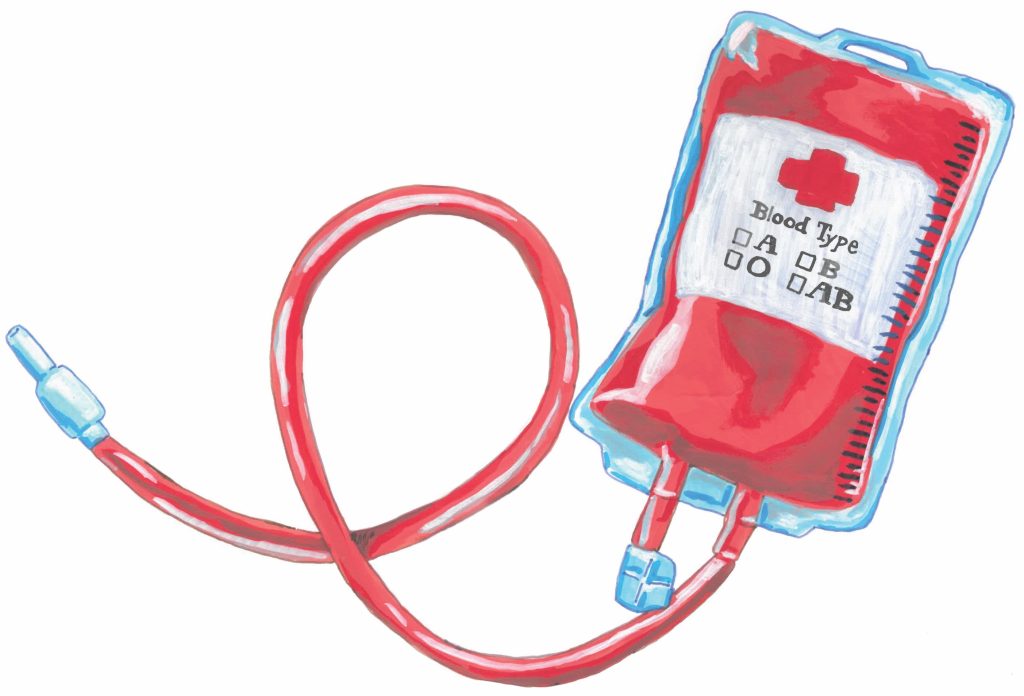
Blood on demand

By Deborah Salomon

A man clutches his throat and falls to the floor of the church/theater/stadium. “Is there a doctor in the house?”

You bet. He/she, almost life-sized, hangs on the family room wall, surrounded by hospital personnel and patients in various stages of maladies du jour.

Long live the medical drama!

Google, er, cough up Marcus Welby, Ben Casey, Doc Martin, Doogie Howser, Dr. Quinn operating on Chicago Med, Chicago Hope, Brilliant Minds, Nip/Tuck, St. Elsewhere, New Amsterdam and dozens more. Some mildly entertaining, slightly informative. Others silly and manipulative. Now, the genre has come full circle led by — yes! — Noah Wyle, who earned his TV-MD as Dr. John Carter on ER.

Now, Wyle’s back as Dr. Michael Robinavitch, the bearded, graying chief resident at a busy Pittsburgh hospital known only as The Pitt, hence the name of the show. Meek ’n’ mild Carter, now irascible, overplays every emotion. He hugs, he storms, he whines, he cries and comforts for which he cleaned up at the Emmys, both as an actor and as a producer/director.

Never mind that the jargon is spit out faster than viewers can absorb, let alone comprehend.

Each episode covers a shift, 8 a.m. till whenever. The cases, mostly emergencies, vary: a snatched-from-the-headlines mass shooting, to an autistic young man’s ankle broken while playing Ping-Pong, to a fistfight (two women) in the waiting room, to a cringe-worthy birth and several deaths. Lots of profanity, of course (cable On Demand), but how about this foray during opening credits — “nudity in a medical setting.”

Fear not, there’s nothing erotic about watching a corpulent lady soak in an ice bath.

The only familiar face is Wyle’s. None of his fellow actors suffered carryover from lawyer shows. But they did display diversity: Latino, Indian, Asian, Black, Caucasian, young, ripped, paunchy, bald, beards and assorted ethnic head coverings.

The hour raced by. I loved it.

My primary bone to pick, so to speak: blood everywhere. On the injured, of course, but spilling off the gurneys onto the floor, running down white fabric and clear plastic gowns, soaking through bed linens? The janitor mopping it up reminded me of the gravedigger scene from Hamlet.

Then, the soundtrack is loud and mostly jargon. I missed many words but, oh, the rolling eyes, the knowing looks. The scary part, assuming situations are realistic and thoroughly vetted, is outcome uncertainty in a busy teaching hospital.

By now you’ve guessed that I’m still a cable subscriber so I endure the ads for prescription drugs. The list of contraindications, it seems, is longer than the benefits, and sometimes ends in death. Yet the medication itself is described in glowing terms by happy, healthy actors. Recently 150-year-old Eli Lilly spent a bundle reimaging itself as “a medicine company” with the m-word replacing scarier “drug.’’ Their TV spokespeople are more likely dairy farmers than stockbrokers. Their profits, just imagine.

I asked a local physician about the dire tech stuff. He said it’s for protection in court proceedings.

“You were warned!”

Another warning: I’m not sure The Pitt will survive many seasons . . . too much medical, not enough drama. Although to its credit, the hour left me with a splitting headache.

A Southern Pines Fairytale

A SOUTHERN PINES FAIRYTALE

A Southern Pines Fairytale

Whimsical blooms with an intoxicating scent

By Jason Harpster
Photographs by Paige Ramsey Moody

Fairies and fairytales hold a special allure in the hearts and minds of children and adults alike. We grow up enchanted by the possibilities of magic and often wonder if such possibilities are real. In Southern Pines, this question seems a bit less far-fetched. We are home to the world’s oldest longleaf pine tree and are known for our old-growth forest. What other towns have an annual festival celebrating a tree’s birthday? It seems only fitting that it should have a fairy named after it, too.

If fairies do exist, then their form surely would be fleeting and ethereal. Whether you call them woodland nymphs, pixies or sprites, one thing is certain: They are rare and special. Only the most fortunate may catch a glimpse. To capture one in a photograph, timing must be perfect. One such sprite has been seen, documented and officially confirmed by the Species Identification Task Force. No kidding.

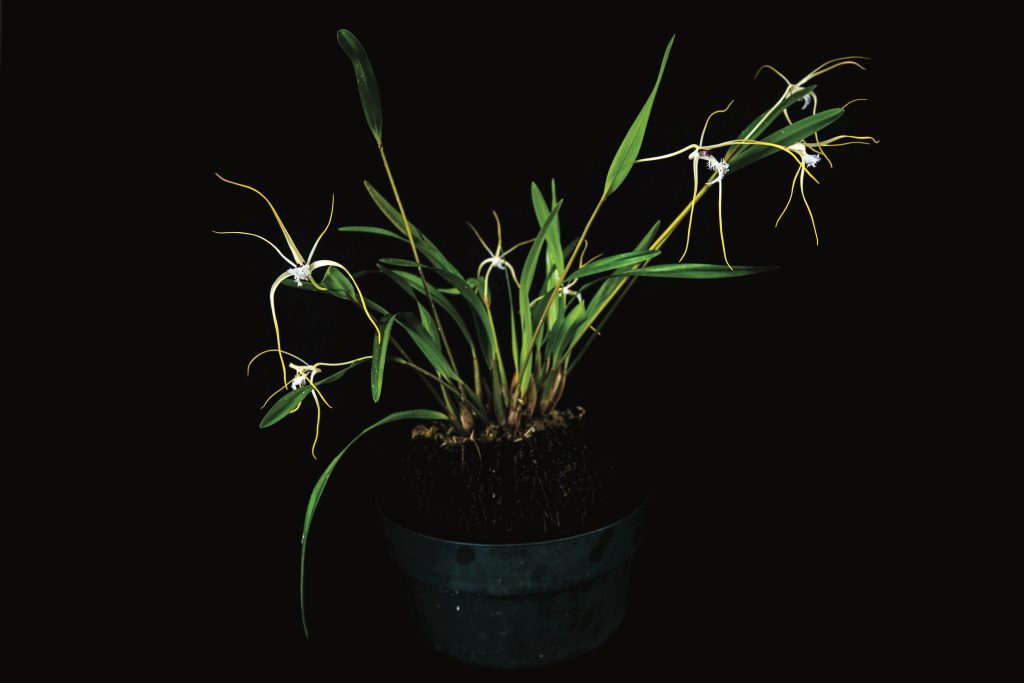
When Dendrobium tipuliferum ‘Southern Pines Sprite’ was presented to American Orchid Society judging on Aug. 13, 2023, conditions were just right. Native to Fiji, this diminutive orchid is capable of blooming multiple times a year, producing flowers that are so delicate and ephemeral that they often go unnoticed. The whimsical blooms have an intoxicating watermelon fragrance. Like many other orchids, the more fragrant the bloom, the shorter its life. The flowers of Dendrobium tipuliferum last less than 24 hours, so it’s not entirely surprising that this was the first time this species had been exhibited for judging.

The plant received a Certificate of Horticultural Merit with a score of 86 points for its form, color, floriferousness and overall aesthetic appeal. The judges commented that the filamentous petals, serrated lip and brilliant yellow color were especially striking. The photos speak for themselves.

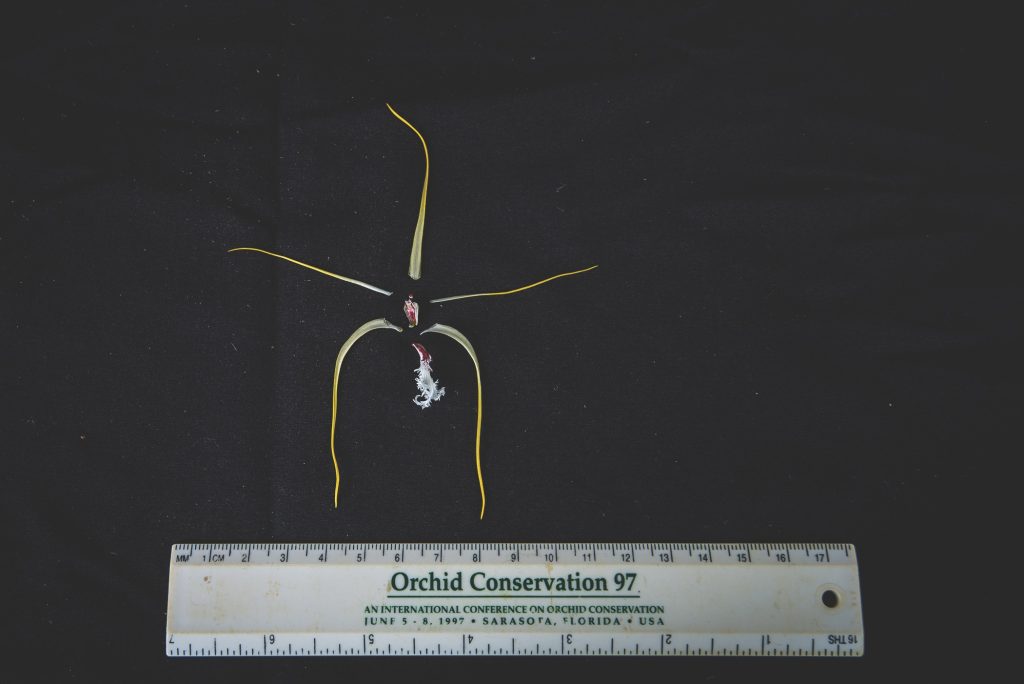
The clonal name ‘Southern Pines Sprite’ was chosen as the stellate flowers seem to wave and beckon you closer, just before hitting you with the magical watermelon fragrance. Since this was the first award ever granted to the species, one of the blooms had to be carefully dissected, measured and described for official verification by the Species Identification Task Force.

Some plants and flowers have anthropomorphic features that give them seemingly human qualities. Dracula flowers, or monkey-faced orchids, are one such example. Dendrobium tipuliferum is truly a special species as its flowers look like fairies gracefully dancing in the breeze. The flower chosen for the award photograph is especially cheerful as it looks like it is waving hello.

It seems the fairies in Southern Pines are rather friendly and have a propensity for making people smile.

Focus on Food

FOCUS ON FOOD

Potluck Go-To

Piece of cake for a buffet

Story and Photograph by Rose Shewey

Gatherings at our house are a well-practiced routine: We provide all food and drink, you just show up in your party hat. In fact, don’t bring anything at all. From first course to last, wine included, we have it covered. I have always been inclined to encourage our guests to come empty-handed, but one fateful Easter brunch solidified my stance on the matter.

A few years ago, we spent Easter Sunday at a friend’s house — a classic potluck affair. One by one, we arranged our dishes on the dining table, complimenting each other’s handiwork. Then one of the guests slid a half-eaten, shriveled quiche onto the table. As we awkwardly eyeballed his contribution, quiche-guy paused, then retrieved his tray. “I should probably taste this first to make sure it’s still good,” he said cheerfully, then added with a shrug, “Leftovers from last weekend!” Off he went to the kitchen, clattering around for a fork to sample his contribution.

And yes, he decided in favor of the quiche and boldly brought it back to the table to share. That was enough to set my house rules in stone: I cook, you eat, the end.

Although potlucks are a bit of a gamble, if called upon, I will faithfully bring a dish to a friend’s house. I have a number of stand-by offerings I typically prepare, but recently I have truly been enjoying sheet pancakes, or skillet pancakes, which are an excellent addition to buffets when kids are included. Instead of flipping cakes for half an hour, you just pour the batter right into a skillet, bake it for 25 minutes or so, and you’re done.

And don’t stop there! Who says pancakes have to be sweet? Try this savory version with herbs and whipped goat cheese — or create your own medley of spring flavors.

Savory Skillet Pancakes with
Garden Herbs and Whipped Goat Cheese

(Serves 4)

For the whipped goat cheese:

8 ounces fresh goat cheese (chèvre)

1/4 cup Greek yogurt

1/2 teaspoon honey

1/4 teaspoon garlic powder

1/4 teaspoon onion powder

1/4 teaspoon salt

2 tablespoons chopped chives

For the pancakes:

1 cup all-purpose Einkorn flour

1 1/4 teaspoons baking powder

1/4 teaspoon baking soda

1/2 teaspoon salt

1 egg

1/2 cup milk (dairy-free, if desired)

1/2 cup Greek yogurt

1 1/2 tablespoons melted butter or melted coconut oil

1/4 cup scallions, finely chopped

1/4 cup fresh herbs, such as parsley, chives, dill, basil

Optional toppings:

Boiled eggs, prosciutto, sprouts, diced cucumber and radishes, pine nuts, more fresh herbs and scallions for serving.

Method

To make the whipped goat cheese, add all ingredients except for the chives to the bowl of your stand mixer or, if using a handheld mixer, to a medium size bowl. Whip until the cheese is smooth and creamy, then fold in chives and transfer to a serving bowl. Refrigerate until ready to use.

To make the skillet pancakes, preheat oven to 375F. If using a cast iron skillet (10-inch), set it in the oven while it heats. In a medium-size bowl, sift together the flour, baking powder, baking soda and salt. In a large bowl, whisk egg with milk, yogurt and butter. Add the flour mixture to the bowl with the wet mixture and whisk briefly to smooth out the batter. Fold in scallions and herbs. Pour the batter into the skillet and bake for 20-25 minutes, or until the center is cooked through. Serve with whipped goat cheese and toppings of your choice.

Sandhills Photo Club

SANDHILLS PHOTO CLUB

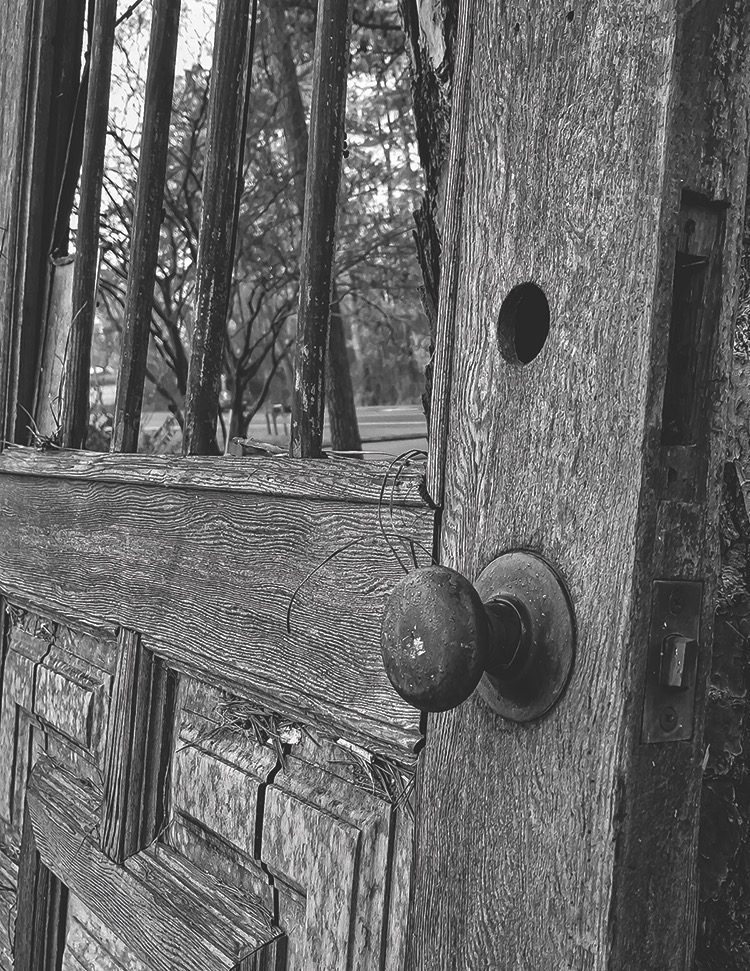
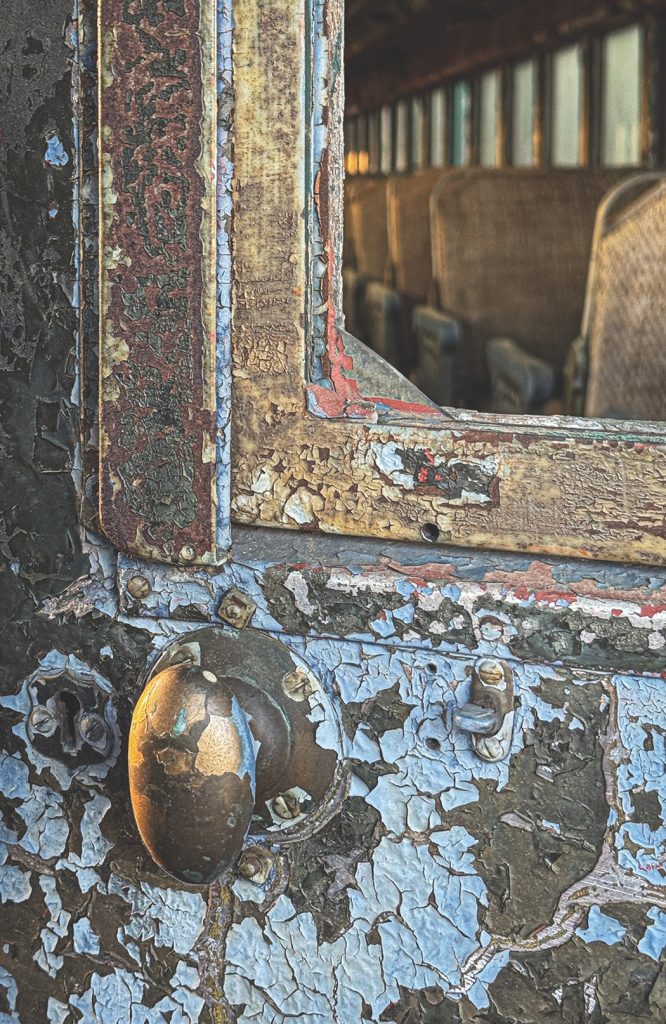
Doorknobs

Tier 1 Winners

Tier 1, 1st Place: Weathered by Faith by Mary Bonsall
Tier 1, 2nd Place: Door Wanted by Jean Antholzner
Tier 1, 3rd Place: Portal to a Tormented Soul by Steve Bonsall

Tier 2 Winners

Tier 2, 1st Place: Enchanted Threshold by Michael Sassano
Tier 2, 2nd Place: Artistic Entryway by Donna Sassano
Tier 2, 3rd Place: Unhinged by Susan Batts

Tier 3 Winners

Tier 3, 1st Place: Final Destination by Dale Jennings
Tier 3, 2nd Place: Anno Domini 1928 by Gisela Danielson
Tier 3, 3rd Place: No Entry to the Caboose by Neva Scheve