Omnivorous Reader

OMNIVOROUS READER

Finding Everyman

Breaking a 19th century code

By Anne Blythe

Anybody who delights in being an attic archaeologist and parting the curtains of cobwebs in dim, dank corners to excavate layers of dust and forgotten family history will find much to like in Cipher: Decoding My Ancestor’s Scandalous Secret Diaries.

Jeremy B. Jones, an associate English professor at Western Carolina University, was digging around in boxes at his grandmother’s house one day when he came across a newspaper clipping that proved to be a golden ticket taking him back in time to the 19th century and the fascinating life of an ordinary man.

That man was William Thomas Prestwood, Jones’ great-great-great-great-grandfather, who had traveled many of the same lands and roads Jones has. Learning the details of his kinsman six generations removed was anything but typical family lore handed down from one generation to the next. Prestwood, as the newspaper clipping from 1979 revealed, had been a prolific diarist, but not the kind of journal keeper who seemed intent on preserving his life story beyond his death 166 years ago.

The details of the daily life of this militia man, Appalachian farmer, teacher, philosopher and prolific philanderer might have been lost to the annals of time had a man not salvaged a stash of Prestwood’s hand-sewn journals from a Wadesboro house scheduled for demolition in 1975. Those notebooks weren’t filled with the elegant and elaborate penmanship of the 19th century. They were written in code, a series of shapes, numbers and symbols that added an element of intrigue that eventually landed them on the desk of a state archivist.

Unable to solve the mystery of what the journals’ author had written, the archivist copied a few pages and sent them off to a National Security Agency cryptanalyst who had retired in the Appalachian Mountains. The expert in encryption and decryption quickly cracked the code, eventually transcribing the journals’ pages, revealing the many brief but telling details of an Everyman’s life in the Carolinas.

Prestwood wrote about collecting turkey eggs, hunting for a horse on the loose, farming, visiting neighbors, drinking rum, eating watermelon, playing music, strife with his father, the births of his children, deaths in the family, dreams, and his many sexual conquests and unrequited longings worthy of Tom Jones. He gives a glimpse of a public hanging and even the eclipse of 1821 — not with the flourish of a wordsmith but in the short sentences or fragments of an ordinary person.

“In 1859, a forgettable man died,” Jones writes in the opening sentence of Cipher’s first chapter. “He left behind bedclothes, a spyglass, cooking pots and an umbrella. He left history books and algebra books and mineralogy books and Greek grammar books and astrology books.” He lists the daughters and sons who preceded Prestwood in death and the debt he left behind, a sum that his “landholdings and scattershot of personal property — sold for a total of $11.94” didn’t cover. Prestwood, Jones writes, “entered the ground penniless.”

The journals he left behind, the treasure trove that Jones learned about from the yellowed 1979 newspaper article in The Asheville Citizen-Times — have proven to be priceless, though. They give a glimpse, as the codebreaker wrote, “of the very essence of Everyman’s life from the cradle to the grave.”

Jones toggles between Prestwood’s life and his own, turning to archives, property records and other historical accounts to help flesh out his ancestor’s story. Occasionally, he fills in gaps with his own imagination and hypotheticals to further a narrative that includes slave ownership and womanizing.

Jones struggled with whether he should lay bare the details of a long-dead man’s thoughts and his comings and goings. After all, those specifics were cloaked in a code cracked more than a century after the last journal entry.

“He’d blanketed his shin-skinning and corn-planting and woman-laying in code for a reason, and what right did I have to come along two hundred years later and run my fingers along the edges of his life in a library in the middle of the state?” Jones asked himself while viewing the diaries in a special library collection in Raleigh. “Was I shrinking his life by bringing it out into the open, making him smaller than he ever was, less of a man?”

In Cipher, Jones not only has brought Prestwood to life again — scandalous warts and all — he has created a memoir of sorts, a depiction of his own everyday life exploring today’s connection to this country’s complicated past. Jones has given us yet another chapter in Everyman history, an interesting read for anyone who likes to look at what America once was and has become. 

Out of the Blue

OUT OF THE BLUE

Double the Spirit

Warm, kind and generous

By Deborah Salomon

By rights, this column should be brimming with “Christmas spirit.’’ But Santa looks worried. Can the “Christmas spirit” survive with Yule merch suffering tariff shock?

I am the product of a mixed marriage. My father grew up in the Lower East Side Manhattan ghetto of poor Russian and Polish immigrants — all ultra-orthodox Jews. He rejected the strict confines but loved the culture, especially the food. My mother was raised strict Southern Baptist, in Greensboro: no dancing, playing cards or drinking.

They both loved Christmas — the gifts, a big tree with lights, the cookies and fruitcake. Who wouldn’t love the Christmas pageant at Radio City Music Hall with a live donkey, and the animated windows at the Fifth Avenue department stores? Maybe this wasn’t proper but it sure was fun, especially with a new Mary Poppins book under the tree.

I never heard of Hanukkah, or latkes (potato pancakes fried in symbolic oil), or lighting candles for eight days to remember a brave military leader and the miracle of a lantern burning eight days on enough oil for only one.

That changed when we moved to Asheville, which had a vibrant Jewish community. We joined the Reform Temple. I attended religious school.

I married into a relaxed Jewish family and lived for decades in an orthodox Montreal neighborhood. I learned all the intricacies of orthodoxy, but our family was staunchly Reform. Plenty of latkes. No Christmas. But the two holidays, celebrating vastly different events but often falling within the same week, shared one thing: spirit. A spirit more ecumenical than divisive. A happy, respectful spirit. A spirit that addresses the secular and the sacred.

By the ’60s,“Happy Hanukkah’’ had joined the American holiday lexicon. Christian friends enjoyed chanting the alliterative words without knowing the backstory . . . or the preferred spelling. Everybody enjoyed the enthusiasm, the small gifts, one on each of eight nights. Better yet were the close family moments with grandparents and cousins. In other words, the Hannukah “spirit.”

This year Hanukkah ends a few days before Christmas. But a kind spirit is not lit by candles or Rudolph. Certainly not by the latest techno-gadget which will, like those must-have Cabbage Patch dolls, fade from favor. I don’t measure the Christmas spirit in cash. It could be an outing for a senior who no longer drives. Or gently used children’s coats, freshly dry cleaned, in a zippered hanging bag. Maybe an IOU for a dozen rides to church, or a tabletop tree decorated with tiny lights and peppermint Life Savers. I once had a friend who gave out complimentary car washes; another, free babysitting. In many cities Jewish organizations take over volunteer jobs at hospitals on Chistmas day, while church choirs carol at nursing homes.

The Christmas spirit is warm and kind and generous no matter how it’s implemented, and by whom. Participate. Enjoy. Finish off the crown roast with crispy potato latkes. Then pick a language and say a prayer for a better year ahead.

Focus on Food

FOCUS ON FOOD

Spectacular Speculaas

Cookies for St. Nicholas

Story and Photograph by Rose Shewey

Speculaas cookies are works of art with a wonderfully charming backstory. Not quite as popular as gingerbread — unjustly so, I might add — speculaas were originally made with hand-carved wooden molds that produce filigran shapes with extraordinary relief details. That’s how I make mine — but sit tight, there are other options for those of you without fancy mold contraptions.

The original cookies depicted the story of St. Nicholas, the bishop of Myra (modern day Turkey), who is said to have brought treats to children in December. St. Nicholas was known as the “Speculator” (overseer or observer), and legend has it that in the evenings he would peer (as in, speculate) through the windows of the poor to see who needed help. This may explain both the curious name and why the speculaas is a customary St. Nicholas Day sweet treat, especially in the Netherlands, where these cookies likely originated. And it’s probably why the most famous speculaas cookie these days depicts a windmill.

Known as speculaas in Dutch, spéculoos in French or spekulatius in German, you might encounter any of the three names while on the hunt for recipes or store-bought cookies. These sweet treats have as much tradition and lovely, wintery warm spices as gingerbread but are much easier to prepare (gingerbread dough is traditionally started two months ahead of time and left to rest) and, dare I say, more refined and delicious.

In place of the wooden molds, lots of folks use a carved or embossed rolling pin or cookie cutters. The simplest way of preparing these is, however, to roll out the dough and slice it into smaller rectangles, which can be decorated with a piece or two of sliced almonds. The recipe I use is adapted from the German Baker’s Guild, which represents a basic version with room for growth — adjust the amount of spices used or add some of your own. To make butter speculaas, increase the amount of butter by 100 grams and add an extra egg. 

Speculaas Cookies

(Makes about 40 pieces)

150 grams butter, room temperature

1 egg

110 grams brown sugar

Zest of 1 lemon

60 grams almond flour

2 teaspoons ground cinnamon

1/2 teaspoon ground cloves

1/2 teaspoon ground cardamom

300 grams wheat flour

Directions

Cream the butter, egg and sugar with an electric mixer for at least 8-10 minutes until light and fluffy. Stir in the lemon zest, spices and ground almond, then add flour into the mixture. Knead all the ingredients together by hand to form a firm dough. Shape the dough into two balls, wrap them in cling film, and chill for about 1 hour. Remove one portion of dough from the refrigerator. If using a speculaas mold, tear off small sections of the dough and press them into the lightly floured molds. Use a knife or a piece of thread to cut excess dough from the mold to create a nice, flat cookie backside and smooth edges, then gently tap the mold on your working surface until the cookies pop out. Transfer to a baking sheet lined with parchment paper. If using cookie cutters, roll out the dough thinly (about 4 millimeters) between two sheets of parchment paper. Dust lightly with flour. Cut out shapes and set them on a baking sheet lined with parchment paper. If using a speculaas (or embossed) rolling pin, gently but firmly roll over the rolled out dough to cut out shapes. Carefully separate the speculaas shapes using a butter or pastry knife and transfer them to a baking sheet lined with parchment paper. Knead the leftover dough together again and roll it out anew. Chill cookies for about 2 hours before baking. Heat the oven to 350F and bake for about 8-10 minutes, but keep a watchful eye on the cookies, they burn quickly. The cookies will seem soft right after baking but will harden once they cool. Repeat with the remaining dough.

The Naturalist

THE NATURALIST

A Few Magical Moments

Sighting a hawk as white as snow

Story and Photographs by Todd Pusser

Several years ago, on a crisp December morning, I found myself traveling down the dusty backroads of Alligator River National Wildlife Refuge under a brilliant blue sky. I had a few hours to kill before a planned meeting at the nearby Outer Banks History Center and thought a drive through the refuge might yield a sighting of a black bear or a river otter — and if I was really lucky, perhaps an endangered red wolf.

About a mile into my drive, I noticed a large white bird lift off the ground from the middle of a freshly plowed field and fly toward some tall pine trees several hundred yards out in front of my car. Based on its size and stiff-winged flight, I could tell it was some sort of bird of prey, but with its unusual white coloration, I could not readily make out the species. Perhaps, I thought, it was a snowy owl, a spectacular resident of Arctic climes, that occasionally ventures south to North Carolina during winter months. 

As I pulled my car up to the pine trees, I was stunned to see something much rarer than a snowy owl. Off to the side of the dirt road, sitting on a branch of a tall loblolly, was a white red-tailed hawk. Its luminous feathers contrasted sharply with the golden needles of the pine and the intense Carolina blue sky. In eastern North America, adult red-tailed hawks typically possess brown backs and white bellies and chests lined by dark streaks. Their tail is brick red, hence the name. The hawk in the pine was anything but typical. It was stunning. In the bright morning light, the pale hawk gave off a surreal, almost otherworldly glow.

Red-tailed hawks are notoriously skittish, and I figured the bird would fly away when I lowered my car window and pointed a large telephoto lens at it. To my surprise, the hawk remained focused on the field from whence it flew and paid me little attention. As I fumbled with my camera settings, adjusting the aperture and shutter speed, the hawk glanced occasionally in my direction. Still, the bird held its position and continued to stare out into the field. 

Unusually white animals have captured human imagination for time immemorial and are frequently viewed as omens of good fortune. Among certain Native American cultures, a white buffalo represents hope and harmony among all people and are considered the most sacred of animals. In Thailand, some believe that white elephants contain the souls of people who have crossed over into the spirit world. In Celtic and English folklore, white deer are frequently endowed with supernatural powers and magical abilities. Exceptionally white animals have even permeated popular culture — none more so than Captain Ahab’s great nemesis, the white sperm whale Moby Dick.

Studying the details of the pale red-tailed hawk more closely through my telephoto lens, I realized the bird was not completely white. Numerous light brown feathers were scattered about its wings and head. Zooming in on the hawk’s eye on the back of my camera’s LCD, I noticed its black pupil, a feature that told me that the bird was not an albino. True albino birds lack any pigment in their feathers and have pink eyes. Genetic mutations that cause abnormally white feathers in birds are numerous and are not well understood. Without a thorough analysis of its blood, the condition causing the unusual white coloration of the hawk would remain unknown.

After nearly 15 minutes of me taking photos, something finally caught the hawk’s attentive gaze. With a crouch and a quick spread of its wings, the raptor launched off the pine and flew low over the ground to the far side of the field. Like some ghostly apparition, the white red-tail disappeared over the distant trees and was gone.

All I have to prove this magical encounter actually happened are a few pixels stored on a hard drive and the pale image etched permanently into my memory bank. To this day, the hawk remains one of the most spectacular and beautiful birds I have ever encountered.

Southwords

SOUTHWORDS

Santa’s Coming, Regardless

By Robert Inman

It starts every year, without fail, the day after Thanksgiving. Grownups begin to threaten young people over Santa Claus. The air is full of dire predictions about what might happen Christmas Eve if children aren’t something close to saintly. It is the bludgeon used to produce clean plates at mealtime, tidy rooms, impeccable manners and timely homework.

Of course, adults have been putting the evil eye on children’s behavior since time immemorial. My grandmother, for example, had a special word of terror for young folks who trampled her flowers, tracked mud on her rug, or swung too high in her porch swing. “Nasty stinkin’ young’uns,” she’d bark, “I’m gonna pinch your heads off.” Mama Cooper was a sweet and kind person who never would have pinched the head off a radish, much less a child, but she could strike fear into her grandchildren. We were careful around her flowers, her rug and her porch swing.

So the grownup weapon of fear is a time-honored tradition. But the direst predictions of ruin and misfortune, it seems, are always saved for the Christmas season. “If you don’t clean up your plate, Santa Claus won’t come.” “Act ugly one more time, buster, and you’ll find a bag of switches under the tree for you on Christmas morning.” Well, baloney.

I came to my senses about the Santa Claus business when I met Jake Tibbetts, a crotchety old newspaper editor who appeared in my imagination one day and then took over the pages of my first novel, Home Fires Burning. Jake had a built-in bull-hockey detector, and he could spot nonsense a mile away. Jake’s grandson Lonnie lived with Jake and his wife, Pastine, and when Christmas rolled around, Mama Pastine put the pox on Lonnie about Santa’s upcoming visit.

At the breakfast table one morning, Lonnie let a mild oath slip from his 10-year-old lips. Mama Pastine pounced. “Santa Claus has no truck with blasphemers,” she said.

“Hogwash,” Daddy Jake snorted. “Santa Claus makes no moral judgments. His sole responsibility is to make young folks happy. Even bad ones. Even TERRIBLE ones.”

“Then why,” Lonnie asked, “does he bring switches to some kids?”

Jake replied, “This business about switches is pure folklore. Did you ever know anybody who really got switches for Christmas? Even one?”

Lonnie couldn’t think of a single one.

“Right,” said Daddy Jake. “I have been on this Earth for 64 years, and I have encountered some of the meanest, vilest, smelliest, most undeserving creatures the Good Lord ever allowed to creep and crawl. And not one of them ever got switches for Christmas. Lots of ’em were told they’d get switches. Lots of ’em laid in their beds trembling through Christmas Eve, just knowing they’d find a stocking full of hickory branches come morning. But you know what they found? Goodies. Even the worst of ’em got some kind of goodies. And for one small instant, every child who lives and breathes is happy and good, even if he is as mean as a snake every other instant. That’s what Santa Claus is for, anyhow.”

Well, Daddy Jake said it better than I ever could. I believe with all my heart that he is right, just as I have always believed fervently in Santa Claus and still do.

I believed in Santa Claus even through the Great Fort Bragg Misbehavior of 1953. My father was stationed at Fort Bragg with the Army, and I was in the fourth grade at the post elementary school. The day before school let out for the Christmas holidays, Santa Claus landed on the playground in an Army helicopter. It was, to me and my classmates, something akin to the Second Coming. When we went out to welcome Santa, the teachers stationed the first- through fourth-graders on one side of the playground and the fifth- and sixth-graders on the other. When Santa’s chopper landed, I learned why. We little kids were yelling our heads off for Santa to leave us some goodies under the tree a few nights hence. Across the way, the fifth- and sixth-graders were yelling, “Fake! Fake!”

Some of my classmates were crestfallen. It never fazed me. I figured those big kids were wrong then, and still do. Santa Claus is for real. Just look in a kid’s eyes and you’ll see him.

(By the way, I’m sure the fifth- and sixth-graders didn’t get switches for Christmas. Maybe they should have, but they didn’t.)

Grownups are wrong, too, when they threaten kids with the loss of Santa. Daddy Jake was right. We adult types need to grant the kids their unfettered moment of magic. If they act up, threaten to pinch their heads off. But leave Santa out of it. 

Bookshelf

BOOKSHELF

December Books

FICTION

Burner: And Other Stories, by Katrina Denza

Denza writes about women in conflict: attempting to woo a man via a burner phone; discovering the best friendships are those grounded in reality; subscribing to a hologram service to speak to a deceased husband; reclaiming power only to realize power is an illusion; discovering there is no safe haven; confronting the frustrations of being an artist; and reckoning with mistakes made as a mother. Wrestling with connections and disconnections, highs and lows, and the vagaries of modernity, Burner and Other Stories touches how we live.

NONFICTION

Van Gogh: The Pop Up Book

See the vibrant artistry of Vincent van Gogh burst into life through dazzling three-dimensional interpretations of five of his most celebrated works. This imaginative book transforms renowned masterpieces into interactive pop-up creations, offering a new and tactile appreciation of one of history’s most visionary artists. Each scene draws readers into Van Gogh’s universe, revealing the swirling night sky of The Starry Night in dramatic relief; the serene intimacy of The Bedroom; and the vibrant colors of Wheatfield with Cypresses. The street scene of Café Terrace at Night and the delicate beauty of Almond Blossom emerge in meticulous detail, emphasizing the dynamic movement and profound emotion of his technique. These exquisite pop-ups amplify the expressive contours and vibrant hues that define his genius, bringing Van Gogh’s unparalleled vision to life in an unforgettable way.

Wings: The Story of a Band on the Run, by Paul McCartney

Drawn from over 500,000 words of interviews with McCartney, family, band members and other key participants, Wings recounts — now with a half-century’s perspective — the musical odyssey taken by a man searching for his identity in the aftermath of The Beatles’ breakup. Soon joined by his wife — American photographer Linda McCartney — on keyboard and vocals, drummer Denny Seiwell, and guitarist Denny Laine, McCartney sowed the seeds for a new band that would later provide the soundtrack of the decade. The narrative begins when a 27-year-old superstar fled with his new wife to a remote sheep farm in Scotland amid a sea of legal and personal rows. The setting gave McCartney time to create, and it was there where this new band emerged. Wings follows the group as they play unannounced shows at university halls, tour in a sheared-off double-decker bus with their children, survive a robbery on the streets of Nigeria, and eventually perform blockbuster stadium shows on their world tour, all while producing some of the most enduring music of the time. Introduced with a personal, heartfelt foreword by McCartney, the volume contains 150 black and white and color photographs, many previously unseen, as well as timelines, a gigography and a full discography.

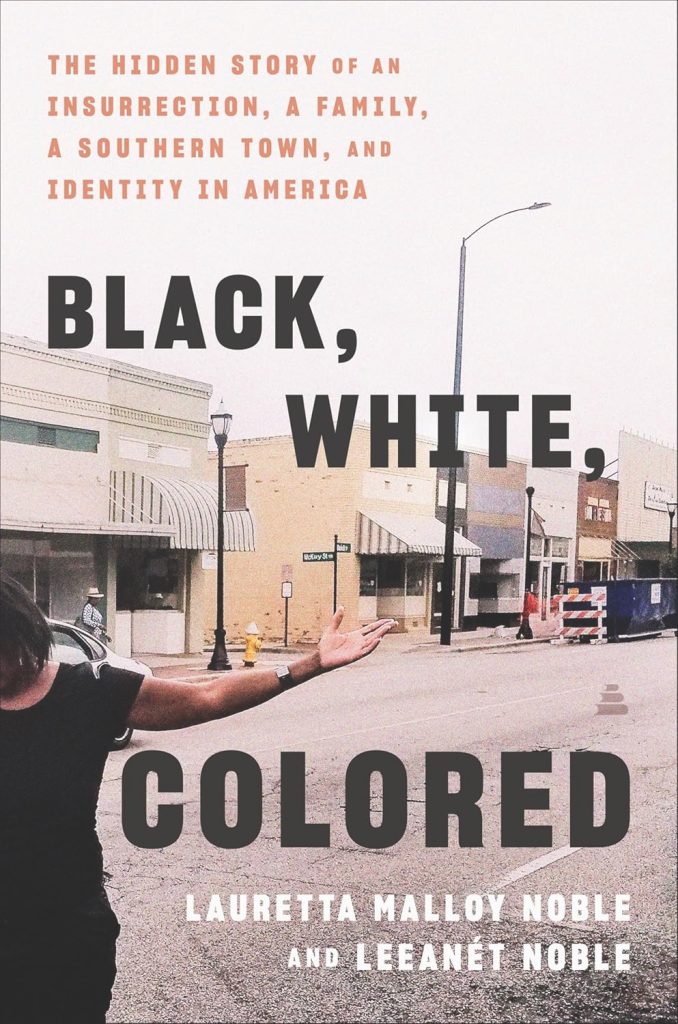
Black, White, Colored: The Hidden Story of an Insurrection, a Family, a Southern Town, and Identity in America, by Lauretta Malloy Noble, LeeAnét Noble

In the late 19th century, Laurinburg, North Carolina, was a beacon of racial calm — a place where Blacks and whites could live and work together. Black families like the Malloys became landlords, business owners and doctors, thriving together and changing the economic landscape. But that progress was shattered on the eve of Election Day, 1898, when supremacist groups launched a bloody attack, forcing Laurinburg’s Black citizens to flee. With meticulous research drawn from sources including The New York Age and census records, the mother and daughter authors — descendants of the town’s early Black leaders — uncover the trailblazing achievements of their ancestors, piecing together proof of Black resilience in a region shaped by profound adversity whose contributions extended beyond Laurinburg to institutions including Howard University and Meharry Medical College.

CHILDREN’S BOOKS

The Millicent Quibb School of Etiquette for Young Ladies of Mad Science: Secrets of the Purple Pearl, by Kate McKinnon

From the Saturday Night Live legend comes this highly anticipated second about mad science, three peculiar sisters, and the mysterious Millicent Quibb! The Porch Sisters are in trouble. It’s summertime in Antiquarium, and everyone has flocked to the majestic lakeside Purple Pearl Hotel, including the Krenetics Research Association, a nefarious group of mad scientists. They haven’t given up on resurrecting their fearsome leader, Talon Sharktūth, and now they’re hot on the trail of the legendary Purple Pearl, a source of power that is rumored to be lost at the bottom of Lake Kagloopy. But Gertrude, Eugenia and Dee-Dee are on to them and their mentor, Millicent Quibb, has a plan! Is it a good plan? Hard to say! But it does involve finding a mysterious creature called a Shrimpmaid and retrieving the pearl before the KRA gets its evil hands on it! (Ages 8 – 12.)

The Apprenticeship of Andrew Weyth: Painting a Family Legacy, by Gene Barretta

Before Andrew Wyeth found his creative voice, he was a boy growing up in an artistic family, spending his time in rural Pennsylvania and Maine. Andy, as he was called by his family, was trained by his father, renowned artist N.C. Wyeth, but they didn’t always see eye to eye. Pa wanted his son to fill his compositions with exciting characters and places. But to Andy, the most exciting stories to paint were the ones he lived every day, that featured the familiar people and places he loved most. (Ages 5 – 9.)

Hometown

HOMETOWN

Christmas in a Nutshell

The spirit lingers in little things

By Bill Fields

Most of the presents I received long ago, on those Christmas mornings of excitement and eggnog which seemed as if they would never arrive, are long gone. The Rock ’Em, Sock ’Em Robots, those red and blue plastic heavyweights, haven’t gone 12 rounds in years. No rough representations of cats or dogs have appeared in squiggly lines on the Etch A Sketch in forever. The future-telling of a Magic 8-Ball is far, far in the past.

But my “Christmas Nutshell Library” still sits on a shelf, a symbol of the season to be checked out each December, more than 60 years since it appeared under our tree and I marked it as mine, the black letters forming my name on the slipcase now very faint or claimed by time.

Growing up, I loved little things: a 10-cent water pistol that could be hidden in a palm; pocket-sized checkers set; “Tot 50” Swingline stapler about the size of my index finger; Matchbox cars that could race on a windowsill.

Given that the volumes in the holiday collection each measured just 2 7/8 x 3 7/16 inches, they were right up my alley. Talk about truth in advertising — the $2.95 set, published by Harper & Row in 1963, was promoted as “four small books for small people.” The Lilliputian release was Harper & Row’s follow-up to the 1962 publication of the popular “Nutshell Library” by noted children’s author and illustrator Maurice Sendak. The Christmas-themed encore was entrusted to another giant of the genre, Hilary Knight.

Knight, whose father, Clayton, and mother, Katherine, were talented illustrators and immersed him in art when he was a child, was well known by the early 1960s for having illustrated author Kay Thompson’s 1955 Eloise: A Book for Precocious Grownups, about a mischievous 6-year-old girl who lives with her nanny, dog and turtle on “the tippy-top floor” of the Plaza Hotel in New York City. The character, based on an imaginary friend Thompson had as a child, was further developed in three Eloise book sequels by Thompson and Knight in the late 1950s: Eloise in Paris, Eloise at Christmastime and Eloise in Moscow.

For the “Christmas Nutshell Library” Knight drew the artwork for Clement Moore’s classic The Night Before Christmas. He wrote and illustrated the other three books: A Firefly in a Fir Tree, a parody of “The Twelve Days of Christmas”; Angels & Berries & Candy Canes, an alphabet book; and A Christmas Stocking Story, accurately described in one 1963 review as “a merry mix-up yarn.”

I enjoyed the tiny books, again and again, across numerous childhood Christmases. The missing dust jackets are a casualty of how often I read them each holiday season. One particularly loosened binding, though, reveals my favorite.

A Christmas Stocking Story is the charming, rhyming tale of eight creatures — Stork, Hippo, Lion, Fish, Elephant, Snake, Fox and Bug — to whom Santa Claus delivers ill-suited gifts to their stockings. “Fish fell in a solemn hush,” Knight wrote, “finding hers held comb and brush.”

But the recipients go from glum to giddy when they “found each had what the next preferred” and remedy the situation by swapping presents. Among the happy do-overs:

“Stork, who suffered from sore throats, wore his sleeve with winter coats.”

“Hippo, hiding giggling fits, shyly showed her lacy mitts.”

“Snake, who yearned for gaudy things, slipped into her diamond rings.”

Knight’s skilled hand brought the critters’ emotions — dejection at first, followed by delight — to vivid life. His 1964 Where’s Wallace? is the tale of an orangutan who repeatedly flees the zoo and has escapades around the city. Young readers were challenged to find the ape in Knight’s detailed panoramic illustrations nearly a quarter-century before kids began searching for a human character in Where’s Waldo?

Over a career that extended into his 90s, Knight has illustrated more than 50 books, created artwork for magazine and record album covers, advertisements, greeting cards and Broadway shows.

“I got a lot of work to do,” Knight told Forbes.com when he was 90. “I have to take care of myself because I have to live at least another 10 years.”

The man who provided children plenty of pleasure celebrated his 99th birthday last month.

Tea Leaf Astrologer

TEA LEAF ASTROLOGER

Sagittarius

(November 22 – December 21)

There’s a fine — and in your case, blurred — line between passionate and possessive. When Venus struts into Scorpio on Nov. 6 (where she’ll glamp out until month’s end), that line is primed to become a short leash if left unchecked — and nobody wants to be on the other end of that. A word of advice: Don’t smother the fire. Tempted as you may be to cling fast and tight, a little space will keep the coals glowing red hot.

Tea leaf “fortunes” for the rest of you:

Capricorn (December 22 – January 19)

Go easy on the eggnog. 

Aquarius (January 20 – February 18)

Keep a knuckle of ginger on standby. 

Pisces (February 19 – March 20)

Add a splash of maple syrup. 

Aries (March 21 – April 19) 

Fold in a little extra sweetness.

Taurus (April 20 – May 20)

Reshuffle the deck. 

Gemini (May 21 – June 20)

Dress for an adventure. 

Cancer (June 21 – July 22)

Make way for true romance.

Leo (July 23 – August 22)

Use your mulligan.

Virgo (August 23 – September 22)  

Stretch those hip flexors. 

Libra (September 23 – October 22)

Try not to overextend yourself. 

Scorpio (October 23 – November 21)

Serve yourself the first slice. 

Pleasures of Life

PLEASURES OF LIFE

Life in Mugs

My cup overfloweth . . . with coffee

By Emilee Phillips

“Oh look, another Keurig,” I said as I unwrapped the gift, unsure if I was being punked. Four coffee makers — in four different colors — sat on the floor in front of me in the jumble of Christmas debris. The situation was so ridiculous, it only took half a beat for me to burst into laughter. Apparently no one in the family communicated that year when shopping for my present. But I was grateful that everyone wanted to make sure I had my caffeine fix. That was the year I’d gone off to college and you could say I was a tad — OK, a lot — coffee obsessed.

Having previously worked at a coffee shop, you couldn’t blame me. I had one leg up on addiction. But higher education made it worse. I relied on it so much to get me through the long days — between morning workouts, the A/C always blasting a smidgen too much and Mr. Dean’s sleep-inducing class —  it hardly gave me the jitters anymore. My roommate and I used our Keurig so much that it didn’t survive first semester.

Friends and family might describe me now as a coffee snob, which I would argue is not entirely true. I can recognize a good cuppa from an over-roasted, bitter or stale one, but that doesn’t mean I wouldn’t drink it to endure the “brilliant” podcast my sister insists is life-changing.

If coffee is an acquired taste, I’ve acquired it. Much like being a wine sommelier, the more you drink the more you understand what the terms that could describe fabrics — “velvety,” “light,” and “floral” — mean in the coffee context.

Admittedly, since my college days I have upgraded my brew methods. I grind the beans fresh for each pot. It has become a morning ritual of sorts, one that humors me. I’m as guilty as the next guy of not being able — or, rather, refusing — to function without their morning cup of joe. Hey, we’re creatures of habit.

There are people who enjoy the sentiment of coffee more than the concoction itself. There’s something exciting about wrapping your hands around a steaming cup as if you’re lounging in a ski chalet in Aspen or, for those who prefer iced drinks, making your way through a castle of whipped cream to get a sugar fix before diving into the caffeine pool at the bottom.

These days the real appeal to me, other than getting a much needed jolt in the morning, is that “going for coffee” can be an outing in itself. The coffee shop can serve as a “third place” — a pleasing space between home and work where the aroma of a fresh brew and the hum of conversation bring people together. Whether it’s catching up with an old friend, powering through online tasks or enjoying a good book, there’s something motivating about stepping out of the house and into a welcoming atmosphere.

Some of my best ideas happen in coffee shops. I enjoy hearing the sounds of the grinder, the steam of the espresso machine and the soft mingling around me. After a while you begin to notice things like “plaid shirt guy isn’t here today,” or “the lady who always asks for her drink to be kid’s temperature got a tea today,” or “chai latte girl must have finally finished that paper.”

In college, that little coffeemaker became my personal barista, churning out cups during all-nighters and early morning cram sessions. I’d sit at my desk with my laptop, a mug in hand and pretend I was anywhere but a cramped, cluttered dorm room.

Oh, and in case you’re wondering, I kept the black Keurig for my college dorm. The other three went back for spending money.

Season of Giving

SEASON OF GIVING

Season of Giving

By Lara Sierra     Photographs by John Gessner

The spirit of giving, celebrating all the good in this world, is never felt more profoundly than during the holidays. We’re fortunate to have a plethora of charitable organizations — far too numerous to mention here — that embody this spirit every month, every day, of the year. They thrive because of the dedicated and willing volunteers who selflessly share their compassion and talents.

Each of the volunteers featured here was quick to insist that they were just one of many who donate precious time to help others. To us, they represent a veritable legion of the kindhearted. They spoke about their pride, not in awards or accolades, but in the work itself and the satisfaction and enjoyment they gain from it — the person who says a quiet thank you; a beautiful, thriving garden; the look on an animal’s face going home with its forever family; the bond fostered between a human and a horse. Without fail, they talked about the relationships they built. Their service delivers a simple message: A life of giving is the best present of all.

Habitat for Humanity
Sandra Thomas

When Thomas was no longer working full time, “I just couldn’t sit around at home,” she says. She saw an advertisement for a volunteer orientation at Habitat for Humanity of the NC Sandhills. Ten years and 5,000 hours later, she’s going to have a street named after her in a development in Aberdeen. “Habitat’s goal is to get people into affordable housing,” she says. The pathway to homeownership often involves sweat equity, contributing to building someone else’s home. Thomas works full shifts three times a week — and any other time she can get there. “I have so much gratitude to the people who donate goods and the people who buy, which is how we raise money. Habitat is up there with my commitment to church and my commitment to God,” she says.

On days when she’s not volunteering, Thomas likes to visit the latest Habitat project. “The new development has eight to 10 houses with a circular drive,” she says with obvious pride. “The camaraderie with the people around here is special. Building houses isn’t getting any cheaper. We try to keep our prices reasonable, but it’s hard. My hope is that people can always be kind, always be thoughtful.”

Sunrise Theater
Leigh Bozich

When Bozich inherited a house and moved to Moore County from Florida, she was a stranger in a strange land. A big movie fan, that feeling didn’t last long once she became involved with the Sunrise Theater. “It gave me access to the community,” Bozich says. “I’ll work concessions, in the box office or as an usher. You get to see everyone in town. Really, it gave me a connection, which is kind of what I needed. And I got to see movies that I wouldn’t normally be able to see at the big movie theaters.”

Another coveted role is sitting on the film committee. “Working out what films people want to see isn’t always easy. We bring diverse films and diverse programming that sometimes are harder to find. I personally tend to seek out socially conscious things. Sometimes you just kind of throw it out there and see if they come.” Leigh has an obvious passion for her subject matter, but what is it that keeps her coming back? “I get that connection with our community,” she says. “And I get to share my love of film with others.”

Prancing Horse Center for Therapeutic Horsemanship
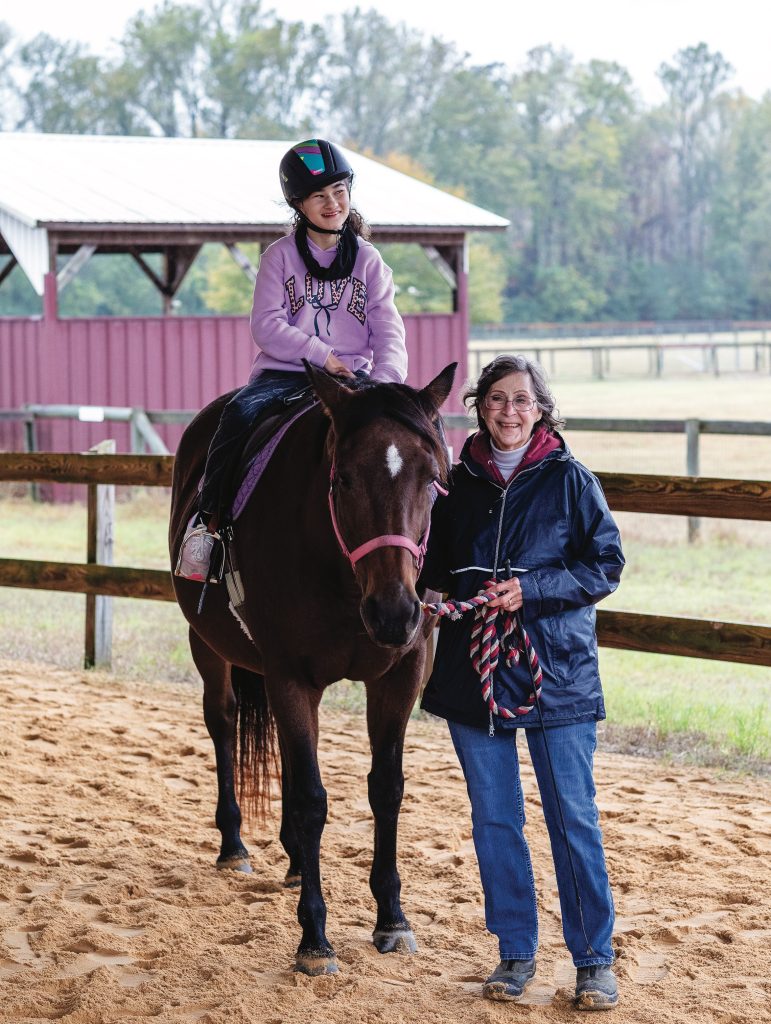
Barbara Brazer

The Prancing Horse Center for Therapeutic Horsemanship is a refuge of calm amid its 15 horses, two goats, a cat, and a part-time dog. “We are a therapeutic horse facility,” says Brazer. “Horses have a very good intuitive aura about them, and they can bond to people with all kinds of issues — physical, autistic, mental, cognitive, stress-related and so on. But we’ve expanded a lot from just horse riding lessons. We wanted to do more. For example, we had a group of all wheelchair users. They came out and brushed the horses, fed them treats and just spent time bonding with them.”

Prancing Horse now includes a military veteran’s program. “The veterans don’t necessarily ride but do a lot of that groundwork, brushing and so on, just generally interacting and getting that emotional regulation that helps with anxiety and PTSD. Some people immediately bond with a horse, and it’s lovely to watch. Just being around the animals gives people benefits.” As for the goats? “Well, really, they just provide comic relief,” Brazer says.

She began volunteering at Prancing Horse shortly after moving to Moore County. “It brings people so much joy, especially the kids,” she says. “Some start off absolutely terrified, and usually by the end they don’t want to get off the horse. Personally, seeing their faces light up is what gives me the benefit.”

Moore Free & Charitable Clinic
Shirley Baldwin

Baldwin, a retired nurse, has been volunteering at the Moore Free Clinic for 17 of the 20 years of its existence. “I started as a triage nurse and now I do education for diabetes, high blood pressure, nutrition, that sort of thing,” she says. “The reality is there are a lot of individuals who cannot afford their health care. Because really, if you had to choose between health insurance or putting food on the table, what would you do? We give fantastic quality primary care for people who can’t afford to see a doctor otherwise.”

Supported entirely by donations and volunteers, the clinic offers a wide range of services. “This, in essence, is a doctor’s office,” says Baldwin. “We now have a dental clinic. A gynecologist comes in and volunteers. We have an optometrist and someone who’ll be coming in to do physical therapy. We have medication in our pharmacy. It runs the whole gamut.”

It’s more than the impressive range of care that drew her to the clinic. “I enjoy this. I don’t plan on retiring until they kick me out because I get the satisfaction of helping those who can’t help themselves,” says Baldwin. “A former patient just came in and said, ‘I’ve gotten off track and I need to see you.’ Or someone might just say, ‘Thank you for listening.’ And that’s a million-dollar payment to me.”

Weymouth Center for the Arts & Humanities Dirt Gardeners
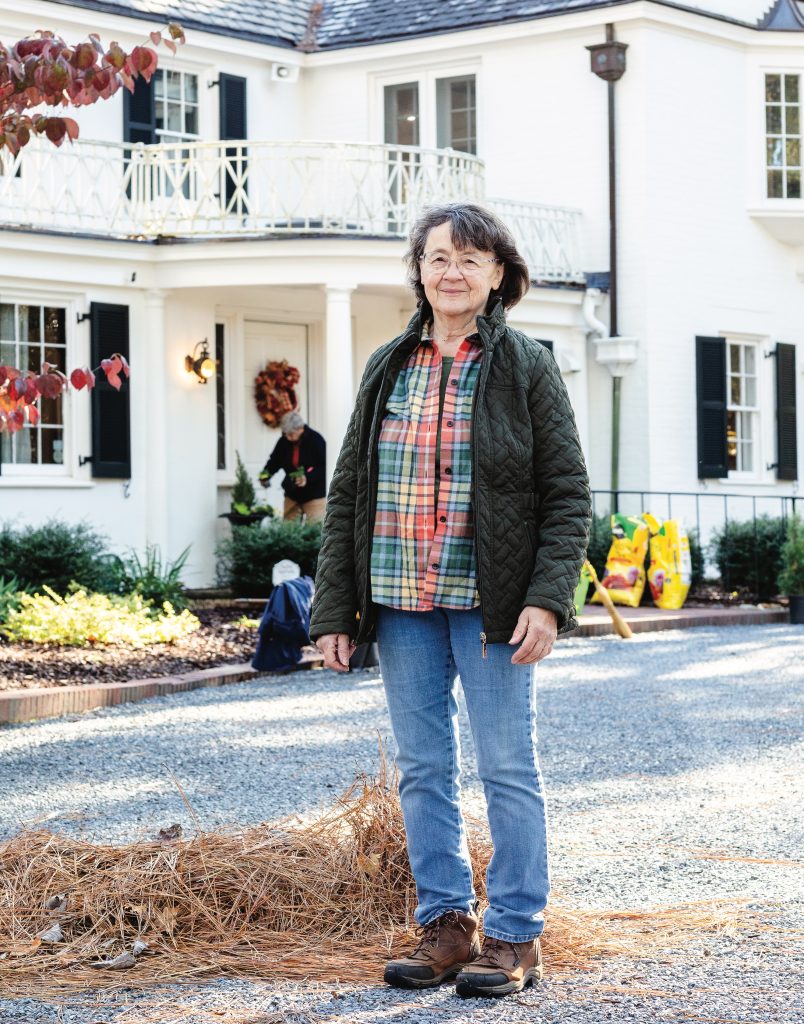
Lucy Meldrum

“I was a vegetable gardener in New Jersey, but it’s hard to grow vegetables down here,” says Meldrum. “Everyone thinks they know gardening until they move here!” She’s gotten her gardening fix helping to maintain the grounds surrounding the Boyd House, the elegant home of the Weymouth Center for the Arts & Humanities. The work of keeping the estate looking as cared for as it did in the days of Katharine and James Boyd falls to the group known as the Dirt Gardeners. “I’ve been volunteering for around 13 years,” says Meldrum. “The work we do is your usual garden maintenance. We clean up the front, put in plants and do a lot of weeding.” They also propagate plants for the annual plant sale fundraiser.

Spending so much time with the land, Meldrum notices the intricate changes that increasingly affect how things grow. “Everything is growing late this year,” she says. Projects and plantings go hand in hand. She points to a pathway the Dirt Gardeners are putting in for children. “There’s always something that people can do even if they don’t know much about gardening,” she says. “Soon enough everyone enjoys working with the plants — seeing them grow, making a place thrive.”

Sandhills/ Moore Coalition for Human Care
Donna Blasingame

“This place has been a lifeline for me,” Blasingame says over the hubbub of trucks, volunteers and customers queued up outside the Coalition for Human Care. Customers are asking if the doors can be opened early; tables are being moved to make way for suitcases; trucks are waiting to park and unload. All the while, Blasingame carefully weaves her way around the site, answering questions, repricing items and checking in on her fellow volunteers. “We are affiliated with 70 churches, so we are always busy, and every penny stays in Moore County,” she says.

The Coalition has four stores, each selling different wares, from home goods to electricals, budget buys to a slightly more expensive boutique. They even sell wedding dresses. One store is called Miss Hallie’s House, named for the woman who donated her house to the Coalition in her will. “We are very blessed with donations,” Blasingame says, “but we still need people to support us because in order for the coalition to work we need volunteers. We are so busy.”

Blasingame’s husband passed away two years ago. “I’m among very supportive people. That’s why this place has been such a lifeline,” she says. In a back room of one of the stores, volunteers celebrate a birthday with doughnuts and friendly chitchat. Before long, they are all up, sorting, pricing, moving and doing their bit.

Moore Humane Society
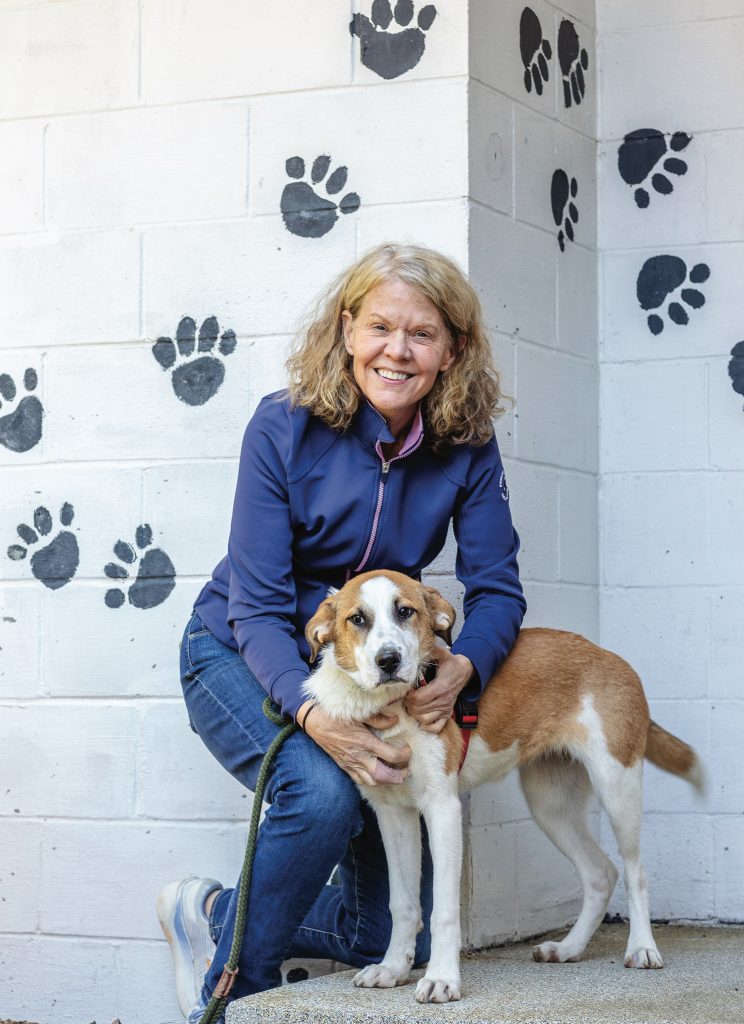
Karen Kocher

“I started volunteering after I was at a friend’s house and a farmer brought in a crate of six puppies,” Kocher says. “We took them over to the shelter and I realized that’s just a day in the life of a volunteer — in comes someone who needs help with the animals, and in come people who adopt them. I thought, what a joyous place, so I signed up straight away.”

The Moore Humane Society, a no-kill shelter, quickly became the place where she invested her time. That connection has lasted nine years. “What amazes me about volunteering there is discovering how many people truly love animals enough to give up their own time to care for them,” she says. “There are people who’ve donated hundreds and hundreds of hours. To see the love that these people have for animals that are not their own is special. So I’ve found my people, the people who really feel that every animal deserves an awesome life. I’m so incredibly grateful to be able to see the little look on the face of an animal when they get the leash put on to go to their new home. Seeing the delight of the animals and their owners.”

And what does the society need from the community? “Everything we get is from donations, and every little bit counts. So if people feel compelled to donate funding or unused food, beds, leads and so on, they can drop it off. And of course, we also need volunteers. We could always use the help.”