Southwords

Who Would Do That?

The greatest play call ever

By Jim Moriarty

It’s September and the air is thick with footballs. While there remains no doubt we are living in a deeply divided nation, I feel certain there is one thing upon which we can all agree. When the Seattle Seahawks had the ball on the New England Patriotsʼ 1-yard line, trailing 28-24 in Super Bowl XLIX, and Russell Wilson threw it instead of turning around and handing it off to Marshawn (Beast Mode) Lynch, it was the worst single play call since prehistoric man tried to bring down a woolly mammoth with a thigh bone and a piece of quartz.

I mention this not to give my offshore gambling friends, and you know who you are, hair-raising and ghastly flashbacks, but simply by way of comparison since I, in fact, witnessed the best single play call ever made in a game of football. The puntrooskie.

It was Sept. 17, 1988. I was photographing the Florida State-Clemson game and, though I don’t recall it raining during the second half that Saturday afternoon, the field was sloppy from early in the day. The visiting Seminoles were ranked No. 10 in the nation and the Tigers No. 3. With the game tied 21-21, Clemson had succeeded in bottling the Seminoles up in their own end of the field. There was just 1:30 left in the fourth quarter, and Florida State was going to have to punt the ball away on 4th and 4 from their own 21 yard line. But Bobby Bowden, the Seminoles coach, had other ideas.

I was kneeling in the back of the end zone, focusing on the punter, Tim Corlew, in the event Clemson would come after him hard trying to block the kick. The Seminoles lined up in punt formation and when the center snapped the ball, Corlew leapt high in the air as if it had sailed over his head, then turned and ran after what would turn out to be a nonexistent loose ball. I frantically searched for it through my lens. Nothing. By the time I put my camera down on the ground in front of me, I couldn’t believe my eyes.

This is what happened. The center had direct snapped the ball at a slight angle to an up back, fullback Dayne Williams, who was in normal punt formation ready to block opposing players rushing the punter. Williams, in turn, passed the ball between his legs to LeRoy Butler (who, incidentally, had a 12-year career in the NFL, played in two Super Bowls and was just inducted into the Pro Football Hall of Fame). Butler bent over with the ball tucked in his stomach, hiding it the best he could, and just kind of stood there. Williams and the rest of the Seminoles all broke to their right, essentially faking the fake punt, and the Clemson pursuit went with them, some even bumping into the guy who actually had the ball.

Afterward, Butler explained it this way: “When I looked up, nobody was there.” He took off running and was finally forced out of bounds on the Clemson 1. Florida State would kick a field goal to win 24-21.

In the interview room after the game, Bowden was, of course, asked about the play’s design. “Would you like me to show you?” he replied. Bowden got the writers to get up out of their seats, then he started rearranging their folding chairs to show them who was where and how the whole thing worked. But the truth is, it worked because no one — no one — would ever make that call in that situation. With a minute and a half left in the game? On your own 21? On a wet field? All Butler had to do was slip and they lose. Utterly ridiculous.

Beano Cook, who had been the sports information director at the University of Pittsburgh for a decade and went on to become a colorful commentator for ESPN, called it “the greatest play since My Fair Lady.”  PS

Jim Moriarty is the Editor of PineStraw and can be reached at jjmpinestraw@gmail.com.

Almanac

The summer ended. Day by day, and taking its time, the summer ended.

— James Baldwin, Just Above My Head

September takes you by surprise again.

She told you she was coming. Tried to, anyway. Back in July, when the butterflies were puddling on the wet earth, she sent her first announcement — a tulip poplar leaf: half orange, half yellow.

“See you soon,” she scribbled across its waxy surface.

Perhaps it slipped through the cracks.

In August, when the hummingbirds were weaving among hibiscus, she scattered a few more notes. The marbled muscadine leaf, swirled with gold, brown and rust. The crimson maple leaf, brilliant as a summer flower. The star-shaped sweetgum leaf, splotched like a palette with autumn’s fiery hues.

Somehow you missed them.

Suddenly, it seems, September is here, playfully tugging at the loose threads of summer.

But she doesn’t just surprise you once.

On cool mornings, she permeates the air, perfume thick with earth and musk. Now and again, she pinches your cheeks; tousles your hair. Her very presence is electric.

The trees shiver and blush.

Chimney swifts and swallows haunt the evening sky with dark, flickering clouds.

A screech owl sings out, voice quavering like a treble violin.

Now that she’s got your attention, she begins to unravel the golden season leaf by marbled, rust-colored leaf. She doesn’t rush, nor does she dawdle. She just sips the light from the summer sky, strips the green from the rustling trees and, sometimes, surprises herself.

Equinox Flower

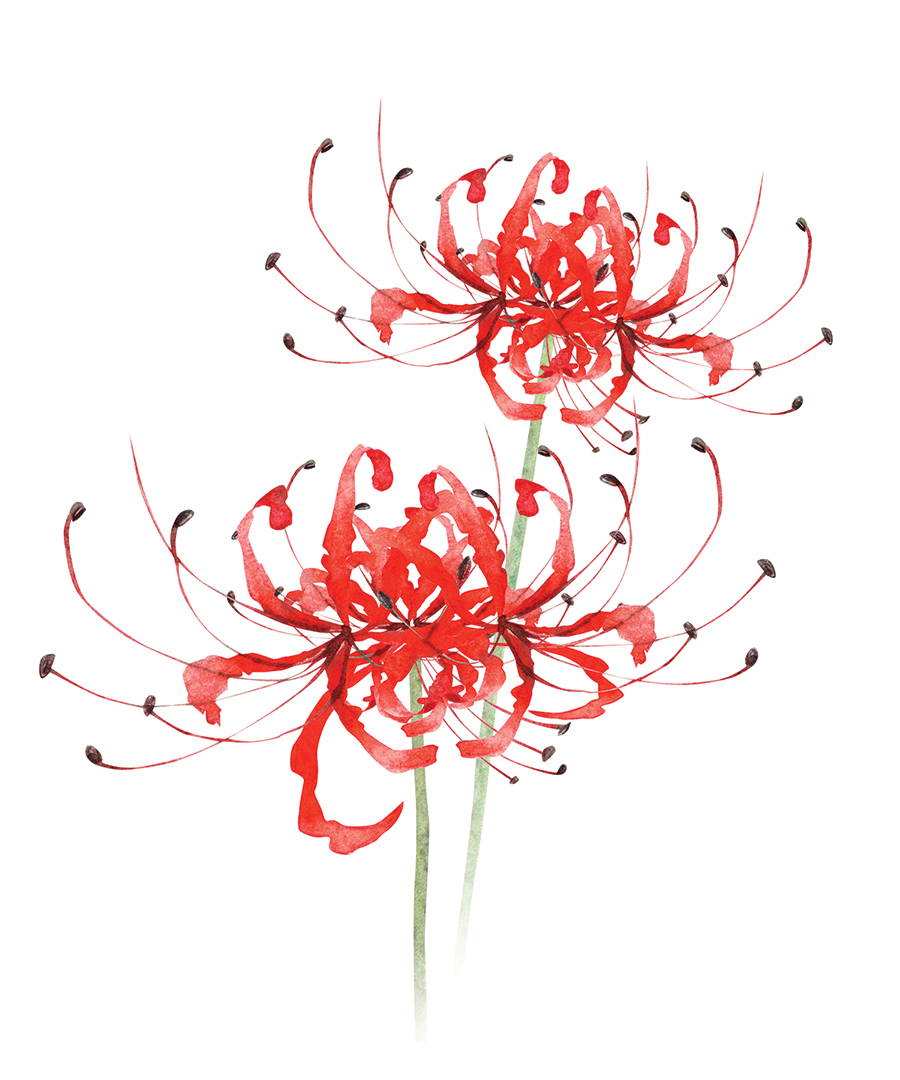
The apples are falling. Figs, drooping. And among the early fall bloomers — crape myrtle, chrysanthemum and autumn crocus — one has a name truly fit for the season: the equinox flower. Lycoris radiata (also known as the red spider lily, red magic lily and surprise lily) bloom on naked stalks, often after a heavy rainfall. The coral-red blossoms comprise an explosion of curled petals with long stamens that resemble the legs of a you-know-what (see alternate names). Winter foliage follows.

In Japan, the name for the red spider lily — Manjushage — means “flower of the heavens.” While this dazzling flower is often associated with death and the afterlife, don’t let that stop you from planting it in your own garden. The butterflies love them. Japanese rice farmers use them to deter mice. But should they attract the lost soul of some distant ancestor, ancient Buddhist text tells that this eye-catching beauty will help to guide them along.


On This Harvest Moon

The full harvest moon rises on Saturday, Sept. 10 — 12 days before the autumnal equinox, aka, the first day of fall.

And what of the harvest?

Garlic, garlic, garlic. Bushels of apples and sweet, plump figs. Potatoes, tomatoes and greens galore.

Don’t forget the honey.

The days are growing shorter. As the golden season fades, savor what is here, now: the nectar and fruits of a waning summer. PS


In the Spirit

Hidden Gems

Knock the dust off these old bottles

Story and Photograph By Tony Cross

A few weeks ago, I was gifted a few bottles from a friend who was cleaning out her bar. She told me she had some spirits collecting dust on her shelf and wanted to know if I’d take them off her hands. I quickly obliged even before I knew what the bottles were. The small box I picked up contained almost full bottles of Luxardo Maraschino liqueur, Green Chartreuse (another liqueur), and Fair Game Beverage Company’s “No’Lasses.” Part of me felt like I was taking candy from a baby. Here’s why.


“No’Lasses” Sorghum Rum

Sure, my love of rum is showing, but when I got home with this bottle, I flipped it around and saw that it was from the very first batch — No. 001 — produced by the distillery in Pittsboro, North Carolina. Chris Jude, the creator, and former distiller for Fair Game (currently the head distiller at High Wire Distilling Co. in Charleston, South Carolina) is a friend of mine, so I took a picture of the back label and sent it his way with the caption “Looky, Looky.” He messaged me immediately, “Where did you get that?” He explained that “batch 1 was probably the best because it was made with all syrup. It’s funny to think of how many orphaned bottles may be out in the world.” Years back, I was lucky enough to whip up a few drinks when Fair Game had its private release party, and a few years later when Chris added his Amber Rum and his limited-edition Carolina Agricole Rum to Fair Game’s repertoire. Rest assured, even if you can’t find a bottle from batch 1 of No’Lasses, all are delicious.


Sorghum Smash

2 ounces Fair Game No’Lasses

1/2 ounce fresh lime juice

1 teaspoon cane sugar

2 cubes pineapple

1 small peeled and diced piece of ginger

Muddle sugar, pineapple, and ginger in a shaking vessel. Add sorghum rum, lime juice and ice. Shake hard for 10 seconds and dump all ingredients into a rocks glass.


Green Chartreuse

I was shocked to be gifted a free bottle of one of my favorite liqueurs of all time. This retails for around $60 — another reason I was taken aback. This liqueur is great on its own as a nightcap, but even better when added to gin cocktails.

The whopping 55 percent ABV will give you lucid dreams if imbibed in said nightcap. If you’re unfamiliar with this Chartreuse (there is also a yellow Chartreuse — lower in ABV, with a completely different flavor profile), read the back label. Though it might sound like malarky, the story is true. “Chartreuse is made only by Carthusian Monks of La Grande Chartreuse near Grenoble, France. Chartreuse today is still made from 130 alpine herbs according to an ancient 1605 formula. The secret method of preparation is shared by three Carthusian brothers and is protected buy vows of silence.” Flavors of menthol, a touch of anise and spice stick out to me, but this is really a spirit you’ll need to sample for yourself, there’s so much going on. Try this in a gin sour and notice how just a little bit of Chartreuse goes a long way.


Goodnight Ladies

(Actually, call it whatever you want.)

1 1/2 ounce Sutler’s Spirit Co. gin (any new style of gin will work here, e.g., Durham Distillery or Hendrick’s)

1/4 ounce green Chartreuse

3/4 ounce fresh lemon juice

1/2 ounce simple syrup (2:1)

Combine all ingredients in a shaking tin with ice. Shake hard until tin is ice cold, then double strain into a chilled coupe. Garnish with lemon wheel.


Luxardo Maraschino Liqueur

In keeping with the original recipe from 1821, this liqueur is made with real marasca cherries. Harvested every summer, the cherries are put “in alcoholic infusion in larch-wood vats together with some leaves and branches of the same trees for up to three years. Only the heart of the distillate is then allowed to mature in ash-wood vats. The last process consists in transforming the distillate in liqueur by adding a simple syrup of water and sugar lowering the ABV.” (www.luxardo.it) This is a dry liqueur with a touch of spice. When I first started bartending, I saw many recipes using this liqueur. I was expecting a sweet, cherry liqueur. Boy, was I wrong. Like the Chartreuse, a little bit goes a long way. You may notice this bottle the next time you’re at your favorite cocktail bar — there’s no mistaking the tall, green bottle that’s wrapped in straw with a red cap. There are lots of cocktails that call for Luxardo but I’ll share one of my favs, the Last Word, which also uses green Chartreuse.


The Last Word

3/4 ounce gin

3/4 ounce green Chartreuse

3/4 ounce Luxardo Maraschino liqueur

3/4 ounce fresh lime juice

Combine all ingredients in a shaking tin with ice. Shake hard for 10 seconds, then double strain into a chilled coupe. No garnish.  PS

Tony Cross is a bartender (well, ex-bartender) who runs cocktail catering company Reverie Cocktails in Southern Pines.

Hometown

Home Again

The World Golf Hall of Fame returns

By Bill Fields

As a 15-year-old, on a Sept. 11 when that date was just another day, I watched the World Golf Hall of Fame get off to a rousing start in Pinehurst. They let us out of school early so we could see President Gerald R. Ford, who had committed to the appearance before his very recent promotion, and a dais full of golf legends as the facility was dedicated and the inaugural class of 13 individuals was inducted. In a subdued dark suit, Ben Hogan looked as if he had stepped out of 1953, but Jack Nicklaus’ red sport coat and wide tie made sure everyone knew it was 1974.

Like the Golden Bear’s attire, the World Golf Hall of Fame would go out of fashion quickly. Exhibits were thin. Honoree bronzes were unattractive. Attendance was sparse. As I knew from working there in 1981-82 and having put out buckets between writing press releases, the roof leaked badly. There were plenty of good intentions and no lack of effort among those involved with the WGHOF over the decades — both in Pinehurst and in St. Augustine, Florida, where it has been situated off Interstate 95 since 1998 — but in both locales it has been the institutional equivalent of a golfer with potential who can’t shoot a number.

The third time just might be the charm.

As announced this summer, the World Golf Hall of Fame is returning to its roots in 2024, when it will become part of the USGA’s Golf House Pinehurst, a 6-acre campus being developed not far from the Pinehurst Resort and Country Club main clubhouse. Fifty years after the hall’s first honorees were inducted a pitch shot away from the fifth tee of the Pinehurst No. 2 course, induction ceremonies will coincide with the 2024 U.S. Open on No. 2. In 2029, when the U.S. Open and U.S. Women’s Open are held in consecutive weeks as they were in 2014, another group of Hall of Famers will get their due.

If things go as planned in the handful of years between those U.S. Opens, the relocated and reimagined World Golf Hall of Fame will have become what many hoped for a long time ago: a secure, vital part of the golf landscape where the past is treasured and shown off in a thorough and distinctive way that makes visitors want to come.

“We look forward to celebrating the greatest moments and golf’s greatest athletes by including the World Golf Hall of Fame as an important part of our Pinehurst home,” said Mike Whan, CEO of the USGA. “Simply put, it just makes sense.”

The Hall of Fame will continue to be an independent organization, part of the World Golf Foundation, and will still administer the induction process. (Who votes, who does or doesn’t get in, and how honorees are categorized remain legitimate, longstanding questions that aren’t answered by the move.)

But the USGA, whose Golf Museum and Library in Liberty Corner, New Jersey, are first-class, will be in charge of day-to-day operations in the new location and will be able to draw upon its huge collection of golf artifacts — some of which never get seen by the public — to beef up what is on display in Pinehurst. The USGA and Hall of Fame will collaborate on digital and interactive content about WGHOF members.

There will never be one, see-everything-important repository in golf, just as there is no single art museum housing all the great works. The USGA’s counterpart across the Atlantic, the R&A World Golf Museum in St. Andrews, possesses many items. Some valuable collectibles are in private hands around the globe. For fans of the guy who wore the garish jacket in ’74, the Jack Nicklaus Museum in Columbus, Ohio, is the place to go. But as someone who occasionally played major championship highlight films on a 16 mm projector to a mostly empty theater in the old Pinehurst facility, the prospect of a fantastic visitor experience in the forthcoming home is enticing.

In an ideal world, the Hall of Fame wouldn’t have begun as a commercial venture, would have been housed in a suitable building instead of a white elephant, and never would have left Pinehurst. In the real world, it’s wonderful to see it coming home.  PS

Southern Pines native Bill Fields, who writes about golf and other things, moved north in 1986 but hasn’t lost his accent.

Hot Trends

Legends of the Fall

The Madcap Cottage gents know the days get shorter but the fun doesn’t

By Jason Oliver Nixon and John Loecke


Think of England!

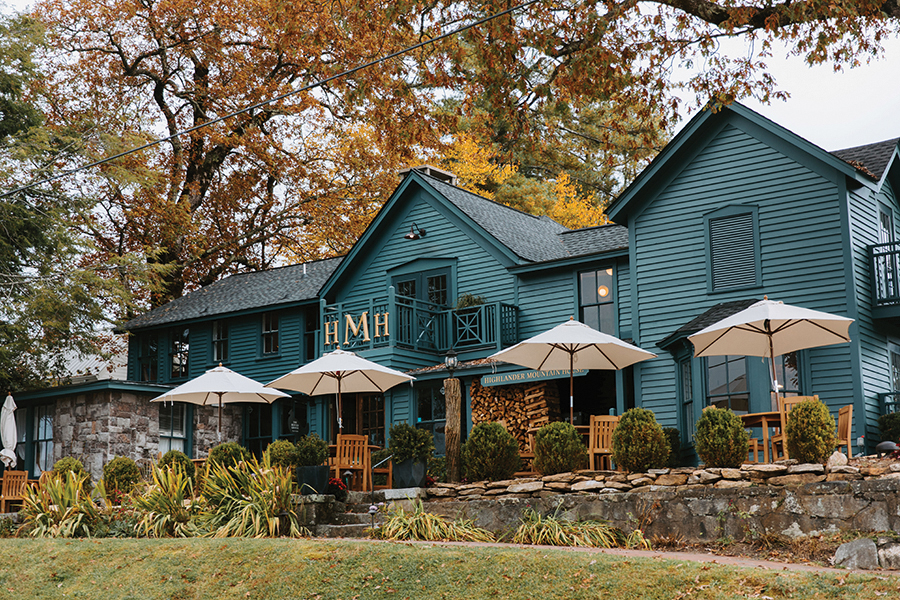
The layered, timeless English country house style is top of mind and not just because we spent a few weeks in August bopping from one National Trust property to another in Norfolk and Hampshire. Or that we savored a long weekend at English-inspired Highlander Mountain House in Highlands, North Carolina. Think antiques married with the contemporary, heaps of portraits, a raging fire, muddy wellies by the front door, and floral prints paired with tartans and Indian hand-block fabrics. Bring the look home, and capture a relaxed, easy-breezy vibe.


Mad for Martinis 

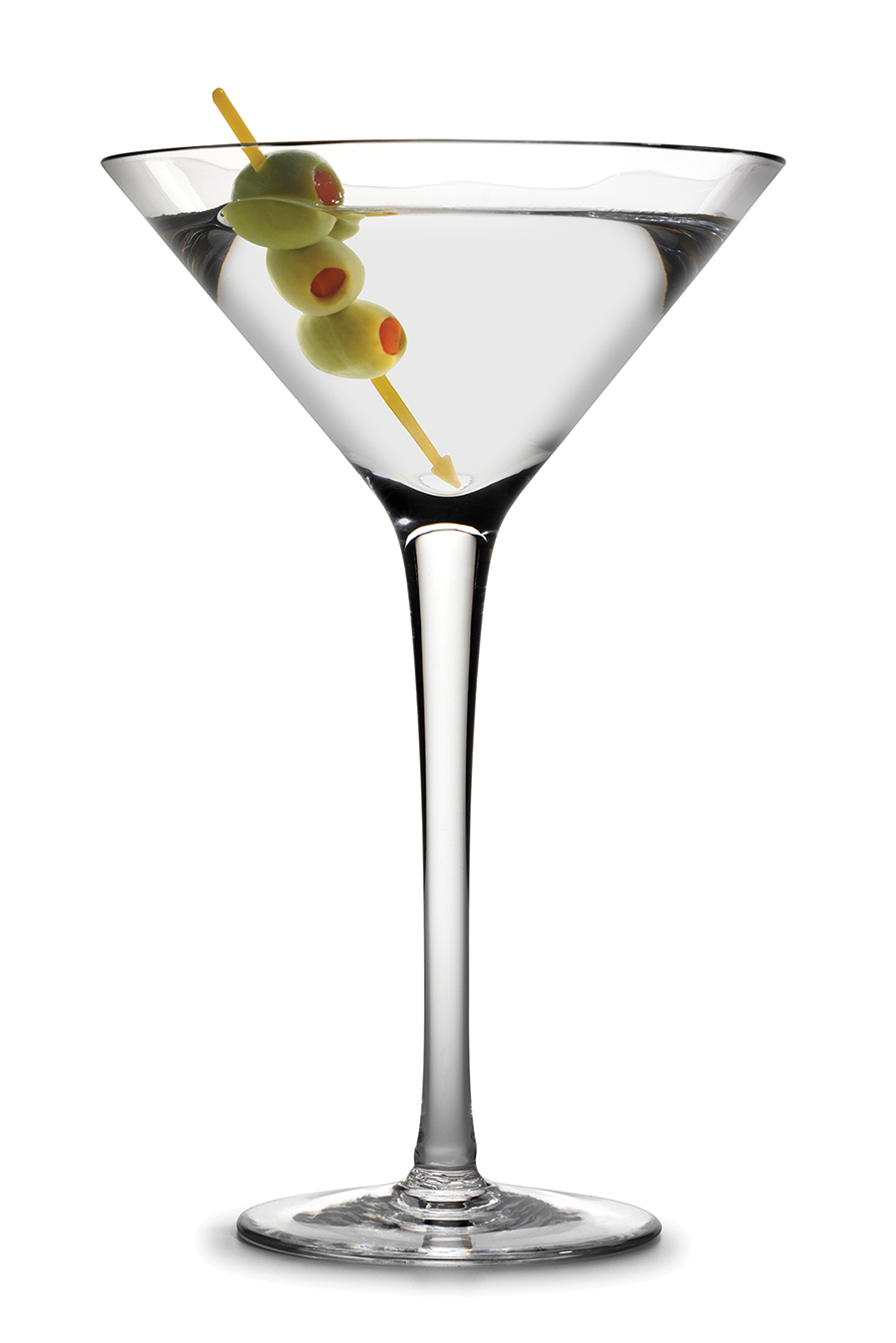
A recent Wall Street Journal article proclaimed that millennials are eschewing wines for marvelous martinis. And why not? Says Pinehurst resident and the force behind Instagram phenomenon “Meet Me on McCaskill” Cara Mathis, “What could be more glamorous than a martini? Our favorite spot to tipple these classic confections is the North & South Bar at The Manor. Not only does this historic haunt dish out some of the best drinks in town, but you get to enjoy them surrounded by the Art Deco elegance of a bygone era. It really makes you feel like you’ve gone back in time.” Named for the historic amateur golf championship that’s been played at Pinehurst since 1901, the North & South Bar features nearly 70 styles of bourbons, whiskeys, ryes and Scotch, as well as new-age stylings on all the classics. Perfection.


Grand Millennial Gorgeous 

More of more is absolutely more. After years of beige and linen hues taking center stage, we have finally broken through the fog into a tantalizing world packed with prints, patterns, and color. Hurrah! And layering is back. Embellishment. And trim. So bye-bye, minimalism. It was mediocre knowing you. Bust out and bring on the wallpaper. After all, if you want to live in a museum, well, good luck.


Why Don’t You? 

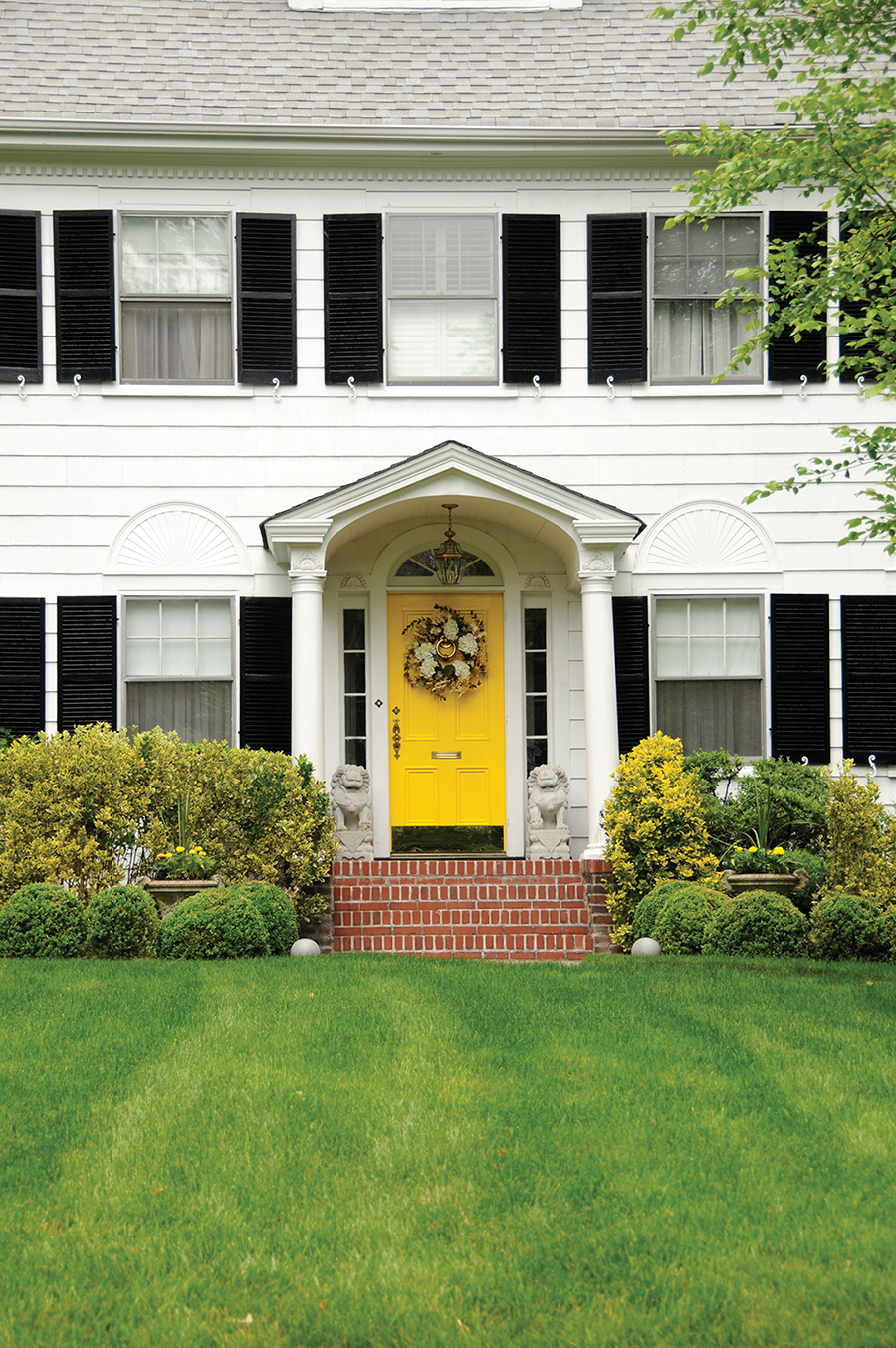
Paint your front door a bright color. Wallpaper a powder room. Open a bottle of champagne — just because. Run a bath and add two extra helpings of bubble bath. Turn up the stereo and do a spontaneous dance. Color your hair. And install a disco ball in your living room.


Tip, Top, Throwback

Throwback restaurants are having a big resurgence, possibly because we could all use a spirited dash of nostalgia in these crazy days. In Manhattan, there’s Donohue’s Steak House on Lexington. In Palm Beach, the locals flock to Ta-boo. In Atlanta you will find us at The Colonnade. And London celebrates Maggie Jones’s.

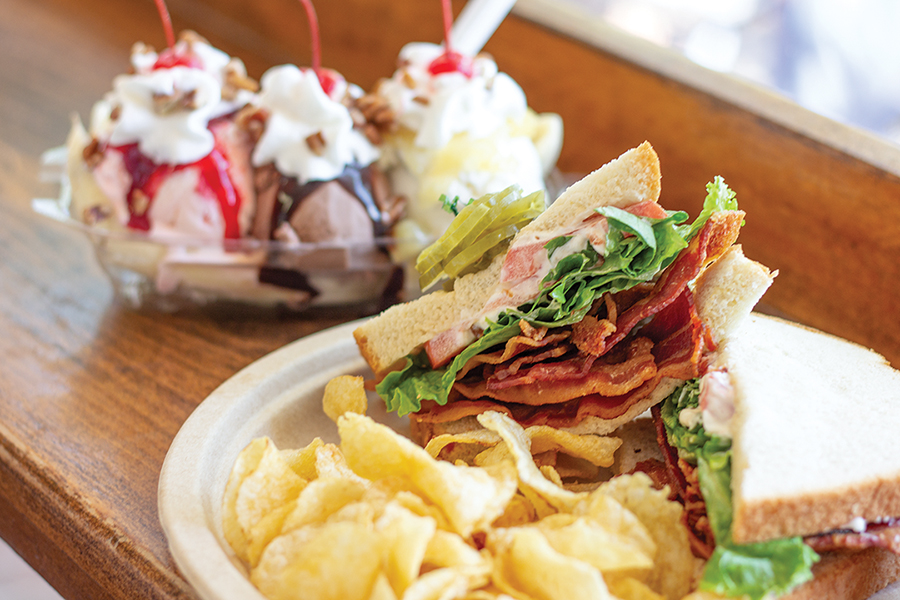
More locally, you will find us happily ensconced at the Pinehurst Track Restaurant eating blueberry pancakes, diving into Fletcher’s BLT with mayo and a banana split at the Ice Cream Parlor in Southern Pines, and savoring spaghetti with meatballs at Kitchen Roselli Red Sauce Joint in Winston-Salem-adjacent East Bend (well worth the field trip). The shock of the new is truly so overrated. We prefer places where they know our name and the menu rarely changes. And, yes, that was us on the porch at the Pine Crest Inn with martinis and the port wine cheese and crackers appetizer.


Love and Other Outdoor Sports 

During the pandemic, so many outdoor sports had a resurgence — from golf to pickleball and bocce. But we have fallen under the spell of a favorite lawn game that we hadn’t played in years, croquet. Croquet is the new black and orange. So hit the court. Just be forewarned: We play the game like the gals in the classic ’80s movie Heathers. Says John, “We love that you can sip a little rosé between strikes.”


Deco Drama 

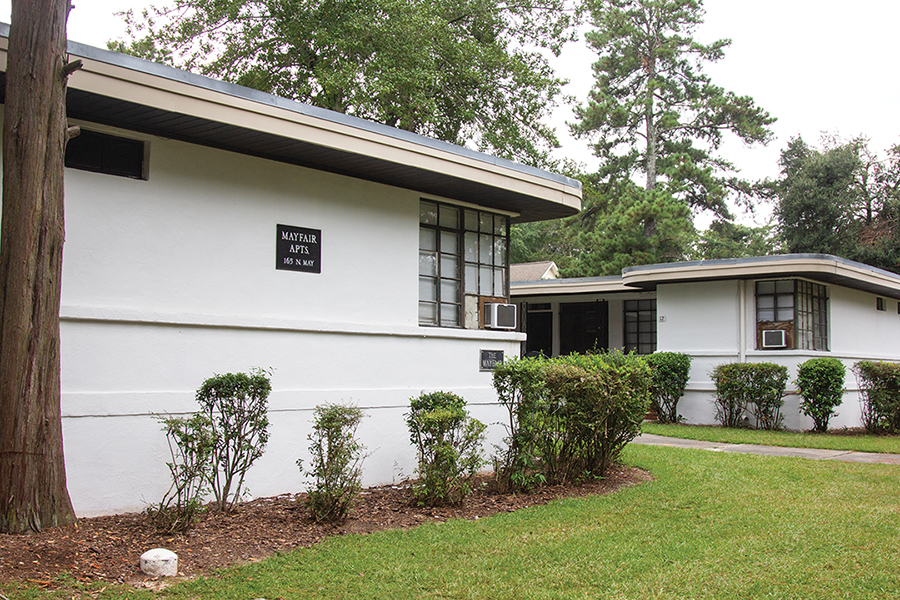
John and I are having a big Art Deco “moment” whether in architecture or furnishings. Yes, that was us drooling in front of the Deco-dramatic apartment building around the corner from Weymouth in Southern Pines (aka, Mayfair Apartments) and us stocking up on groovy chairs last weekend at Design Market. Timeless, yet forward thinking. Bring the adventure home.  PS

Jason Oliver Nixon and John Loecke are the duo behind Thomasville-based Madcap Cottage.

Focus on Food

Truffle Treasure

Getting a kick from Champagne

Story and Photograph By Rose Shewey

If I were to change my path in life and choose a different craft, I’d become a truffle hunter. I would train a Lagotto, a curly-coated dog famous for its truffle hunting qualities, and move to the Piedmont region in Italy where I would happily spend my days roaming the outdoors, looking for subterranean treasures.

If you have ever tasted a fully ripened, wild truffle — not the second-rate, cultivated stuff — you’re likely on board. The musky, sweet and gamey aroma of truffles is intoxicating and has you scheming for ways to get your hands on more.

In fact, I would happily hunt for any wild edible fungi for the rest of my days even though, truthfully, I have never dared to go mushroom picking without an expert guide. I have it on good authority that even in the U.S. Army’s own SERE (Survival, Evasion, Resistance, Escape) school, students are instructed to avoid mushrooms at all costs as the chance of, well, survival is greatly diminished if you accidentally ingest the wrong kind.

Wild mushrooms are as mysterious and elusive as they are feverishly sought. Neither plant nor animal, mushrooms are a fascinating world of their own. With their velvety caps, tender gills and whimsical, almost otherworldly appearance, mushrooms have always held a special place in my heart.

When it comes to preparing mushrooms I take a page out of the Alsatian playbook. To some, it may seem decadent, but in the cuisine d`Alsace folks have known for centuries that modest, earthy crops shine like a star once infused with Champagne, as the pearly acidity rounds out their natural flavors. I have quasi-celebrity backup on this: Goethe, Bismarck and Voltaire, all staunch Champagne enthusiasts, would have given us the thumbs-up, no doubt about it.


Mushroom Champagne Tagliatelle with Truffle Oil   (Generously serves 2)

16 ounces mushrooms (wild if available or a gourmet mix), sliced or quartered

2 tablespoons oil

1 shallot, diced

Several sprigs fresh thyme

3-5 cloves fresh garlic, minced

1 tablespoon arrowroot flour or all-purpose flour

1 cup Champagne or sparkling wine (demi-sec for sweetness, otherwise brut)

1 cup chicken or vegetable stock

1/2 cup heavy cream or full-fat coconut cream

Salt and freshly ground black pepper, to taste

1/2 pound tagliatelle pasta, cooked to taste

Truffle oil or Parmesan cheese for serving

Mushrooms are best dry-sautéed: Heat a heavy skillet over medium to high heat, add mushrooms and stir frequently until they release their juices. Add oil, shallot and fresh thyme. Sauté until mushrooms are brown and tender, stirring occasionally. Add garlic and cook for an additional minute, then add flour and slowly pour in wine and stock, stirring to scrape browned bits from the pan. Simmer until liquid is reduced by half. Turn down the heat, stir in heavy cream and season with salt and pepper to taste. Serve over cooked pasta with grated Parmesan cheese or truffle oil.  PS

German native Rose Shewey is a food stylist and food photographer. To see more of her work visit her website, suessholz.com.

Loving Caretakers

The Dirt Gardeners of Weymouth

By Claudia Watson
Photographs By Laura Gingerich
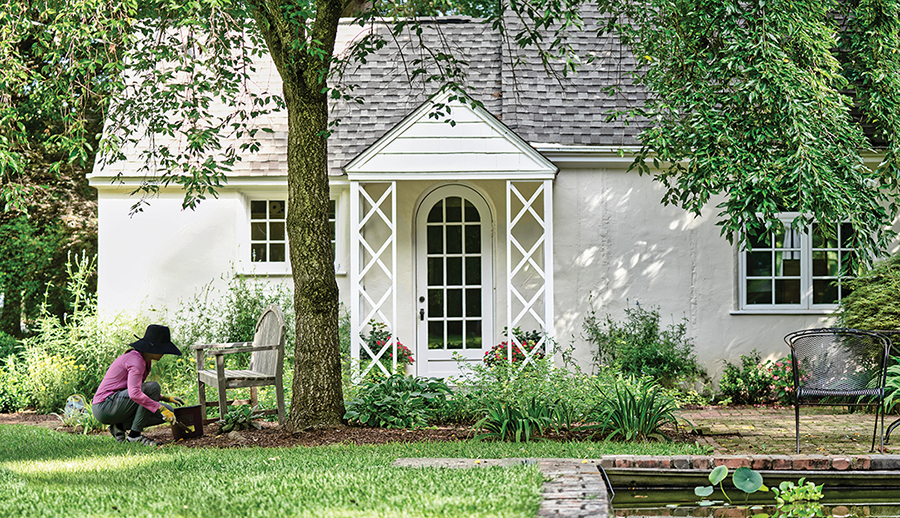
    

The morning sun breaks through the treetops, weaving golden threads through the allée of ancient sycamores and pines. In the nearby meadow, the morning chatter of insects and birds gives way to soft voices gathered around a rustic table under a grove of shade trees in the distance.

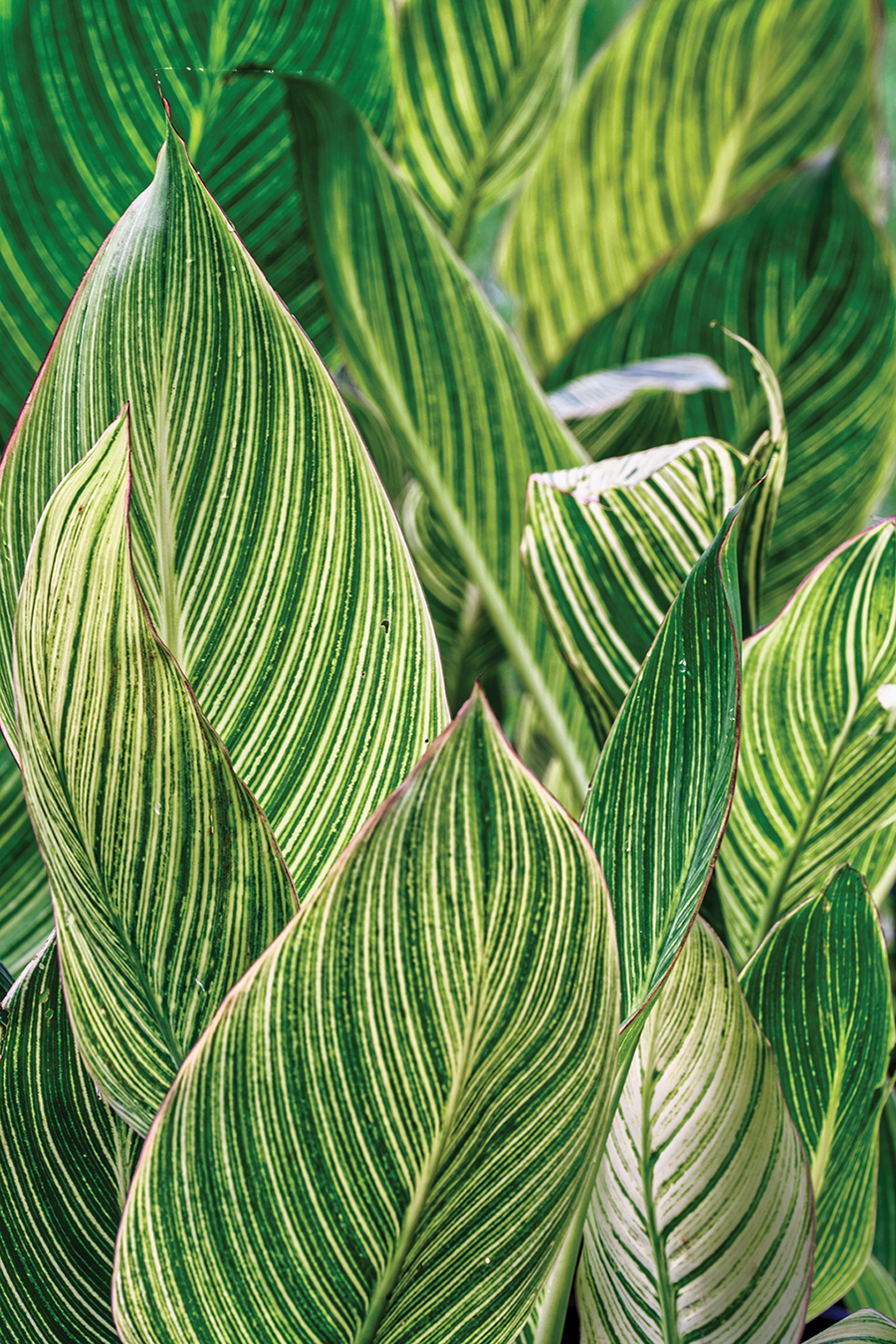
A damp cardboard box hits the table with a thump, releasing a tumble of dirt and clumps of canna lily tubers.

“Someone’s donated these, and they need to be repotted,” says Marylouise Bailey, her fingers gently tucking a knobby bulb into the fresh soil mix, tamping it off. “We’ll easily have 30 big pots of them. Then, we’ll weed,” she adds, wiping her dewy brow. “But we’re in the shade, so it’s an enviable task.”

The work of this small group at the table in the propagation area is part of the larger story of the Dirt Gardeners of the Weymouth Center for the Arts & Humanities. For nearly 45 years, the dedicated volunteer corps has worked to tame and beautify the 26-acre historic grounds of the Weymouth estate, transforming it into one of the Sandhills’ most significant landscapes.

During the late 19th century, James Boyd Sr., the heir of coal, steel and railroad investments, purchased 1,570 acres in Southern Pines, including the last remaining virgin longleaf forest in the country. He named the estate Weymouth because the pines reminded him of the trees in Weymouth, England.
    

After Boyd’s death in 1910, the heirs conveyed the large family residence and the surrounding acreage to grandson James Boyd Jr., the aspiring writer. Boyd commissioned Aymar Embury II to construct a new country house and refashioned the landscape to complement it, tapping Alfred B. Yeomans, his cousin, to do the design work. Educated at Princeton, Yeomans was practicing as a landscape architect in Chicago in the 1900s when he relocated to Southern Pines in 1920 to work on the grounds of Highland Pines Inn, the Weymouth Heights subdivision, and the gardens of Weymouth.

Yeomans’ work showed the influence of the popular Colonial Revival mode of the early 20th century with its classical, symmetrical box-shaped borders in a parterre on the upper terrace. Tall privet hedges radiated from a central axis intersected by tidy paths. Camellia standards, brickwork steps and low walls established structure. Flowers were subservient to greenery.

Until James Boyd’s sudden death in 1944, Weymouth and its landscape provided the backdrop of an accomplished life that encompassed his literary fame, rising pleasure in hunting and equestrian sport, and an enlarged family circle. Three decades later, his widow, Katharine, who died in 1974, willed her estate to the Sandhills Community College Foundation, which held it for several years. Subsequently, the Friends of Weymouth, a nonprofit organization, purchased the property to preserve its heritage and use it as a center for the arts and humanities. The acreage close to the house was transferred to the Weymouth Woods Nature Preserve, leaving the current property of 26 acres. In the years following the death of Mrs. Boyd, the estate’s landscape suffered despite the good intentions of the property’s stewards.
         

In 1979, after a short career as an actress and a long career as a constitutional lawyer, Charlotte Ganz and her husband moved from Bucks County, Pennsylvania, to Southern Pines to retire. A devoted naturalist and conservationist, Ganz was interested in helping restore the Boyd house, finding her way to the estate’s overgrown and poorly tended gardens.

“Only the Japanese cherries and some of the ornamental shrubs survived, although even those were almost overwhelmed by the rank growth of invasive shrubs, vines and weeds,” she said in an interview in 2008.

In short order, and without anyone appointing her to the job, Ganz enlisted the assistance of like-minded friends, including Elizabeth “Buffie” Stevenson Ives, Tom and Helen Greene, and Charles Passapae. The group divided tasks, conquering the annoying brush and invasive shrubs. The original ornamental shrubs were pruned, renovating their shape. While others searched the community for donations of suitable plants to fill its borders, the energetic Ganz tackled the weeding.

Despite their zeal, the volunteer arrangement didn’t last too long, as one member passed away, others moved, and the man who mowed the lawns simply gave up. Ganz found herself alone, trying to weed the long beds, the herb garden and the other spaces. If not for a few new volunteers, who in turn recruited more, the grounds “would have reverted quite shortly to the state close to the one it was found in,” she said.

The gardeners added plants from their own gardens, but there was no money to purchase supplies. Then an idea sprouted. They would sell some of the Weymouth irises and daylilies, initially clearing the princely sum of $100.

Over the years, others stepped in to help, some bringing carloads of plants. Garden clubs provided generous amounts of money, and a diligent team of men offered their time and talent restoring areas, adding improvements and developing new sections like the rose and camellia gardens.

By the mid-1990s, the garden was the wedding-worthy venue Ganz envisioned, providing a stunning natural backdrop, a constant flow of visitors and much-needed donations. A few years later, as volunteers came and went, the remaining core group felt they needed an identity to mark their contributions as a team effort and took the name Dirt Gardeners.

“We wanted to indicate to our prospective volunteers that we were a group that worked directly in the soil, we really got our hands dirty, and there was real labor involved,” said Ganz, the group’s founding member and inspirational leader. She continued to manage the gardens well into her 90s, driving a golf cart purchased for her and pointing her cane here and there, instructing the volunteers on what areas needed work. She died in 2015 at age 105.
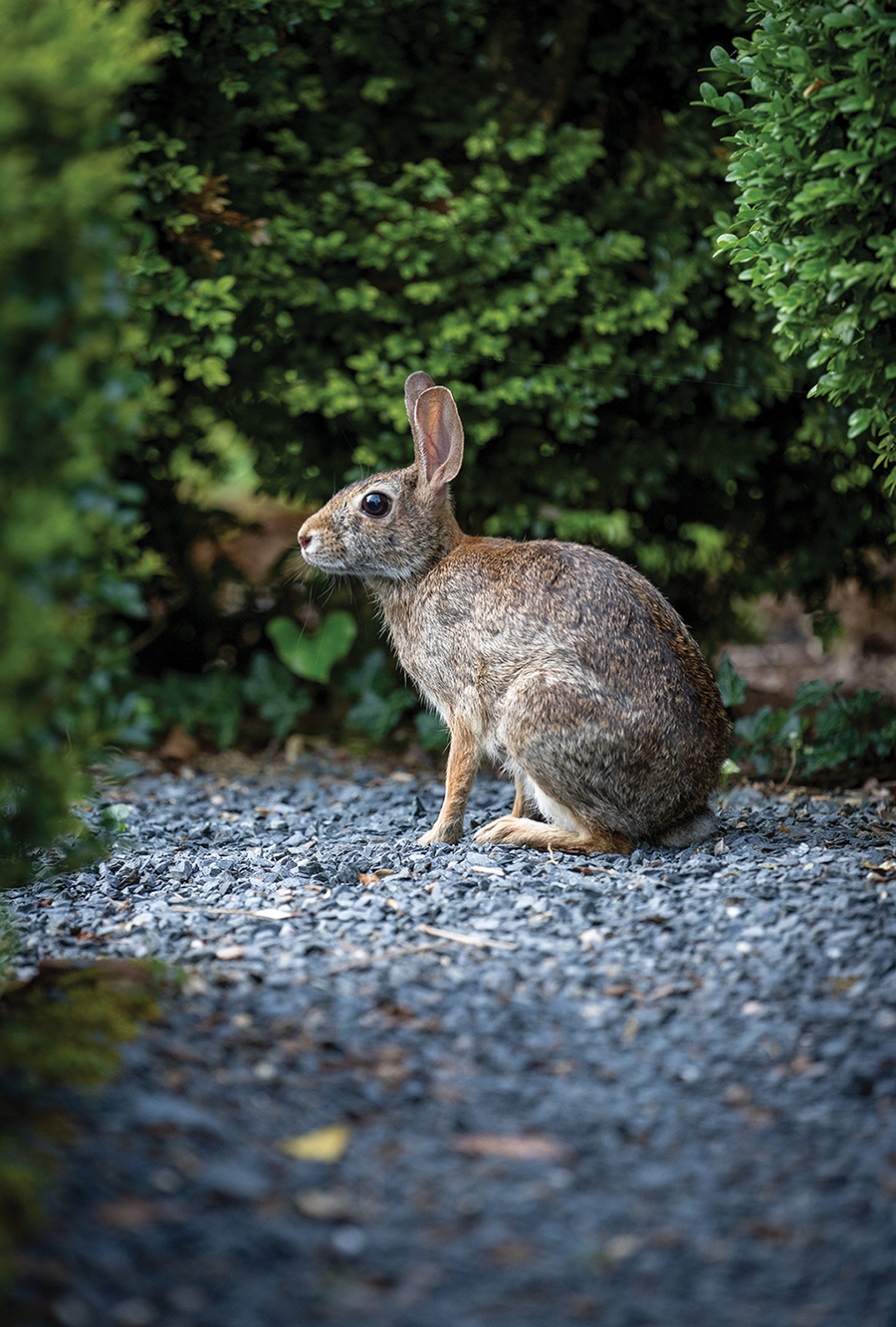


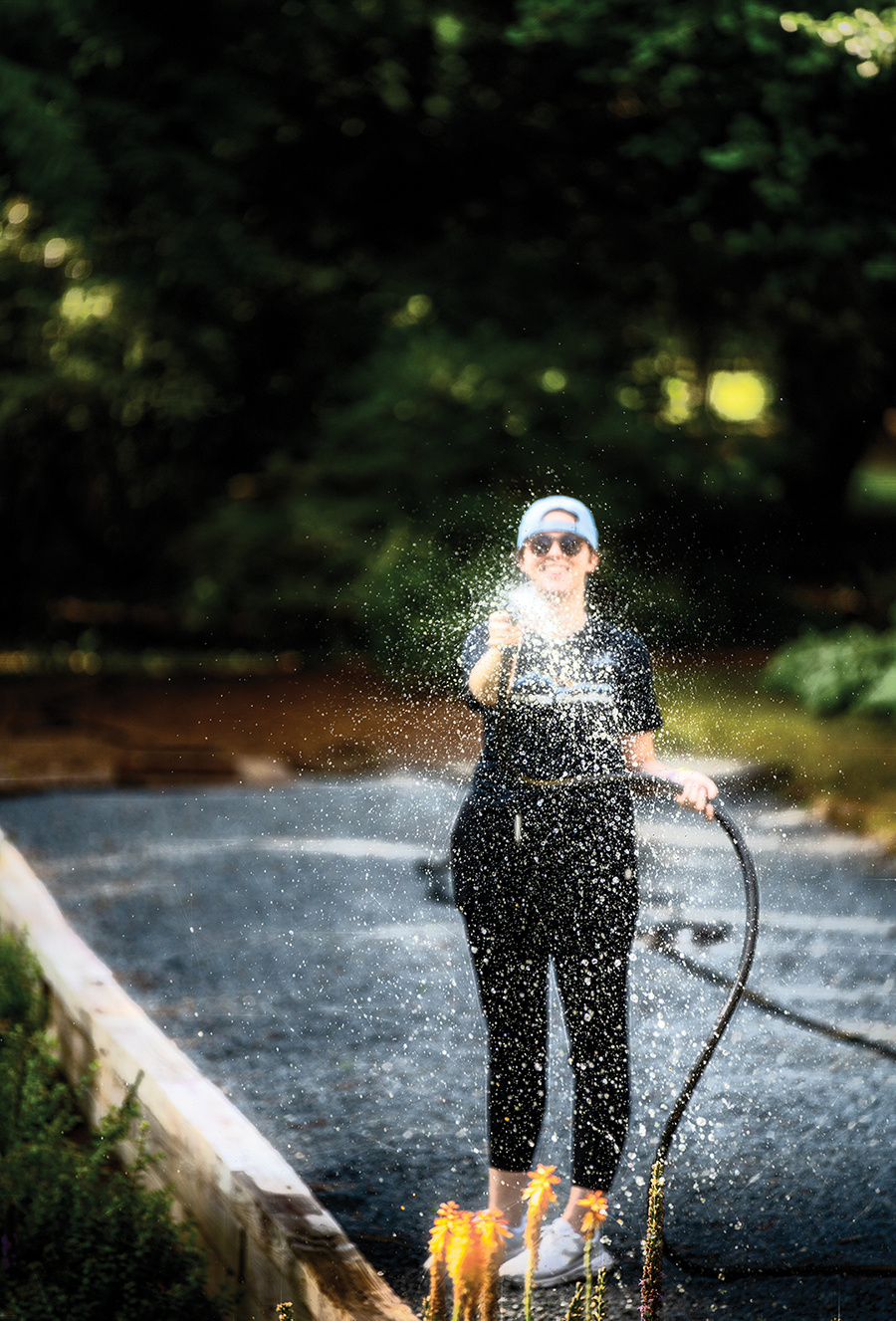
On this particular warm, sunny morning, there is an unusual amount of activity as the Dirt Gardeners hustle back and forth with tools, water hoses and deer spray, seemingly on a special mission.

“There’s a wedding tomorrow,” says Alex Klalo as the clang-clang of workers pounding tent posts into the ground reverberates. Klalo, the director of property management, is in the garden’s formal parterre below the terraces, handling the intricate process of pruning the dwarf holly hedge that replaced the diseased boxwood that was an element of most Colonial Revival landscapes. “I’m just touching up,” he says as his hand pruners snip-snip.

Klalo has worked at Weymouth for 20 years. He moved here with his family from New Jersey, where he used to install air conditioning units and later worked in a computer support group in an office. “I realized I needed to be outdoors. I love it here,” he says with a broad smile, looking out over the gardens below. He’s in charge of Weymouth’s 26 acres and all the buildings.

“It’s a lot of work, but it’s good work, you know?” he says reassuringly. “But without the volunteers this place wouldn’t be here. It’s all them.”

Below the terraces and parterre, Yeomans designed simple raised beds for flowers suiting Katharine Boyd’s interest in an emerging trend for a naturalistic garden rich in color, texture and movement. A kitchen garden, positioned near the house, included cold frames and herbs, and was shielded from terrace views by hedgerows.

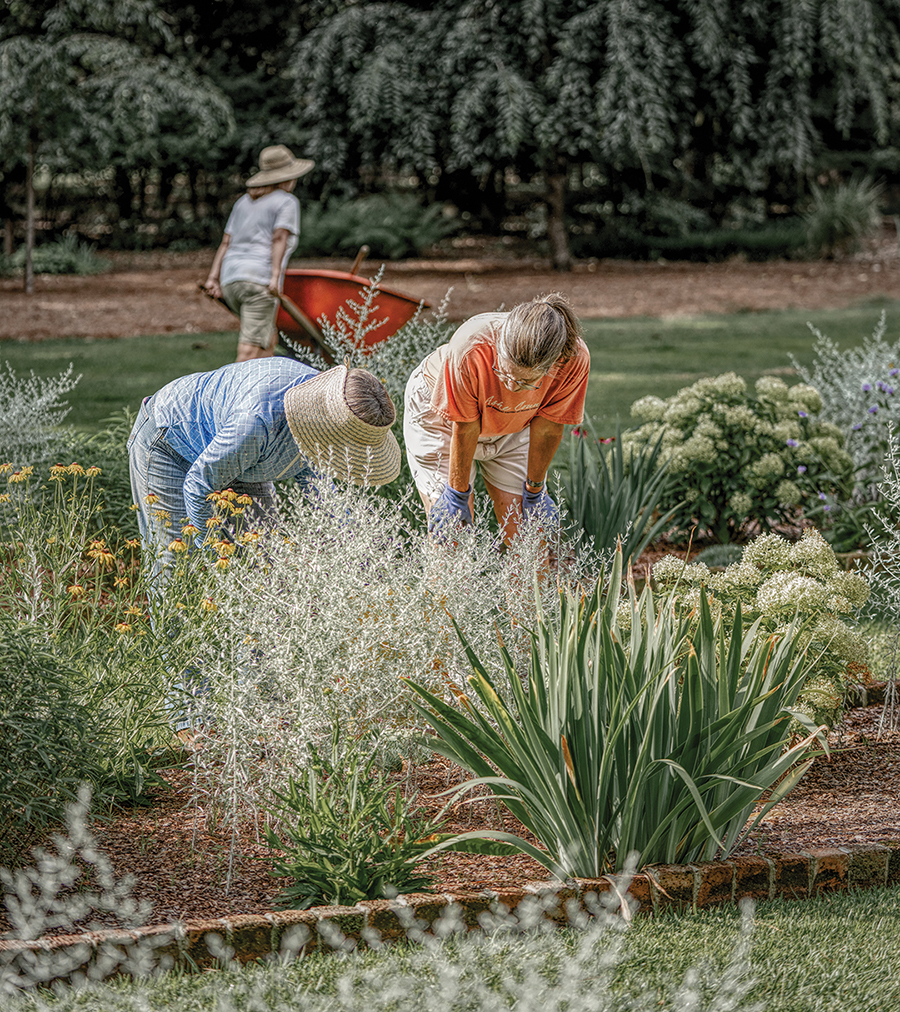
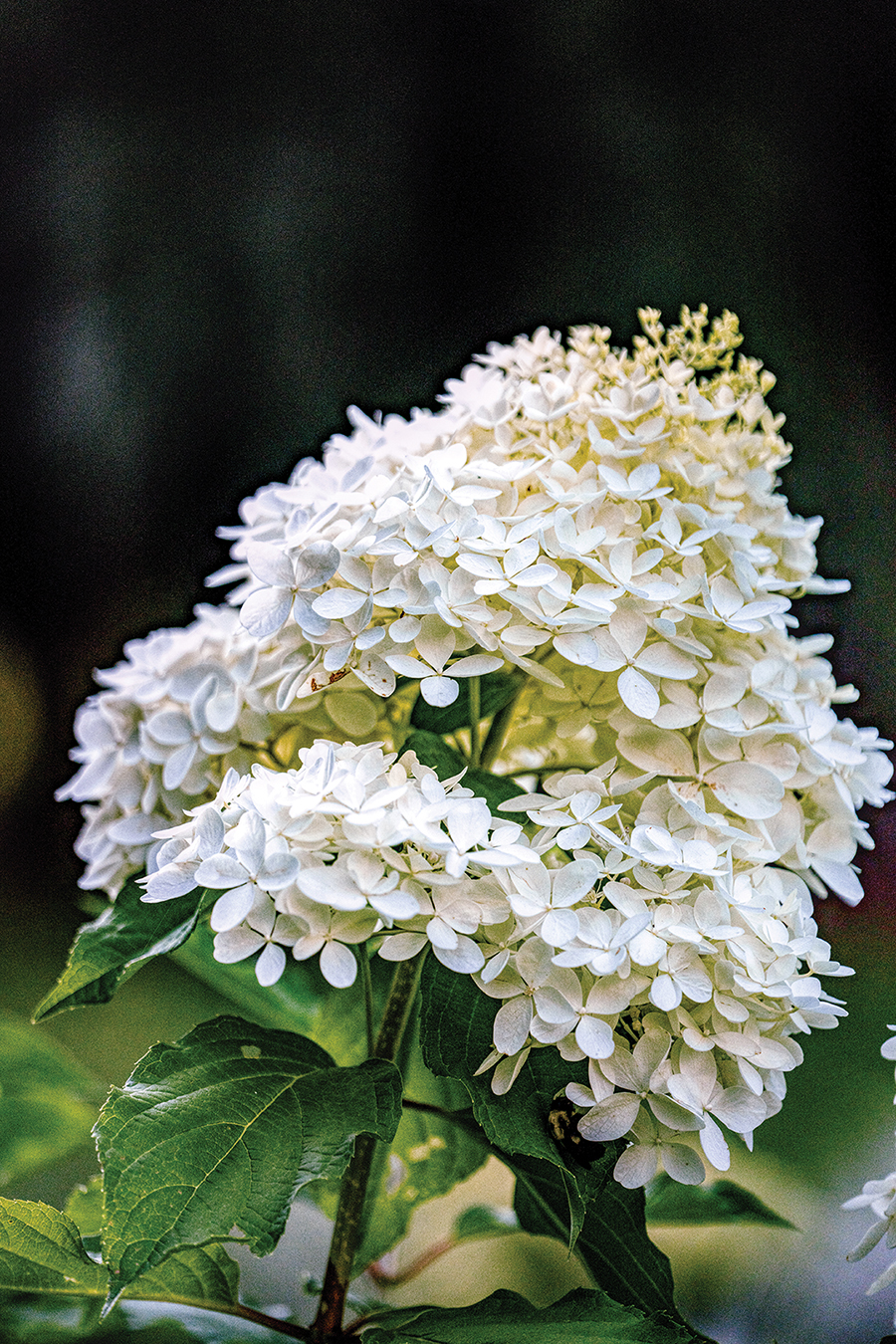
Lucy Meldrum, a 10-year veteran of the Dirt Gardeners and their representative to the Weymouth board, says she has become the caretaker of the long beds by default. “I’m always here in the summer when these beds need a lot of care. It’s a lot of fun, even if it’s in the sun,” she says while weeding around the hydrangeas (Hydrangeas arborescens ‘Invincibelle Limetta’), which are at their peak.

“These are enormous and gorgeous. A great backdrop for a wedding,” says Meldrum, carefully balancing a bloom in her hand. Two of the beds are 80 feet long and 5 feet wide. The third bed, smaller in size, fills an area left behind by one of the old cold frames. Dismantled years ago, only the brick foundation and a wall dubbed the “ruins” remain.

Realigned with equal spacing between the three beds and new brick edging on the two longest beds, they provide an enhanced area planted with parings of the same varieties of eye-catching perennials and annuals, filling the garden with color throughout the seasons.

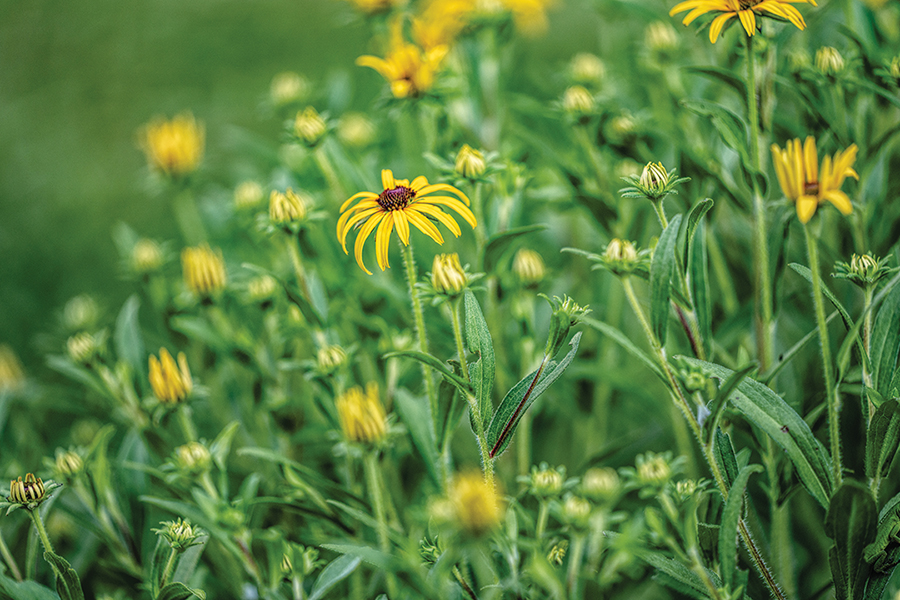
“Oh, look at these little ones,” says Meldrum, pointing out the tiny native bees dancing around the coneflower (Echinacea purpurea ‘Pow Wow Wildberry’), the bold black-eyed Susans (Rudbeckia hirta ‘Indian Summer’), and Little Suzy black-eyed Susans (Rudbeckia fulgida var. speciosa ‘Viette’s Little Suzy’).

A carefully planned array of colorful foxglove, silvery artemisia, reblooming bearded iris (Iris germanica ‘Immortality’), salvia, dahlia (Dahlia ‘Dalaya Pink with Rose Eye’) and Landmark Rose Sunrise lantana provide a delight for visitors. Despite its odd name, bog sage (Salvia uliginosa) displays a cloud of spikes in light blue flowers.

Meldrum stoops, brushing her hand through the bushy Mexican bush sage (Salvia leucantha). “It’s stunning when it blooms in September,” she says of the tall shrubby perennial, with cascades of soft purple flower spikes contrasting with the chartreuse leaves of nearby pineapple sage.
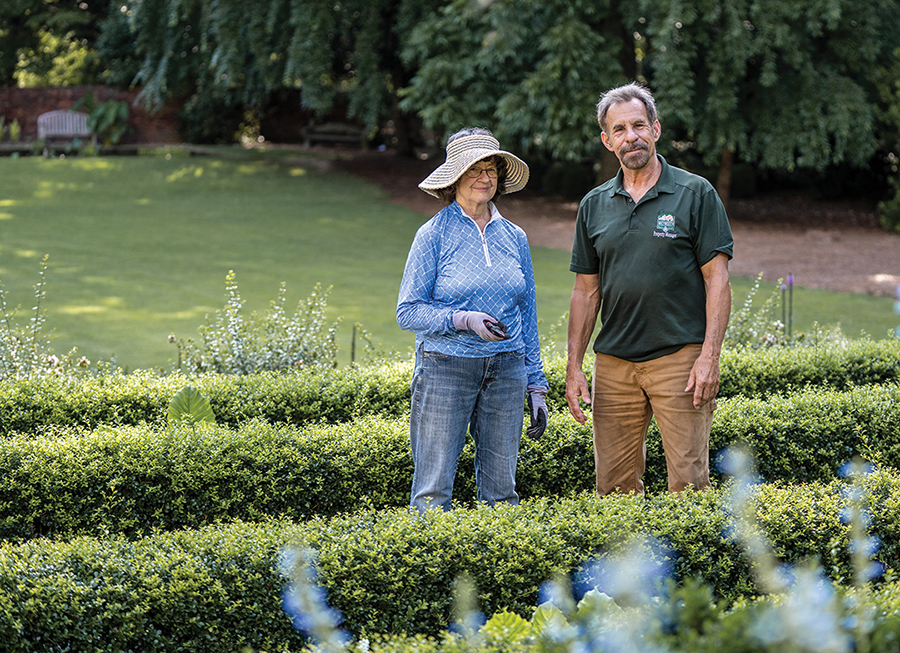
 

Lucy Meldrum and Alex Klalo

Below the long beds and the great lawn, the Boyd family’s old swimming pool was successfully adapted into a two-part ornamental water garden. Volunteer Martha Parsons, now retired, used to drive over on her motorbike from her home on Midland Road.

“She’d put her high boots on and climb into the pool to weed and fertilize the plants. It was one of her favorite things to do here,” says Kathy Luckhaus, the Dirt Gardeners’ volunteer coordinator. “She also tended the little garden of hellebores with a birdbath and bench in the shade. She loved it because it was the garden Charlotte Ganz established and tended.”

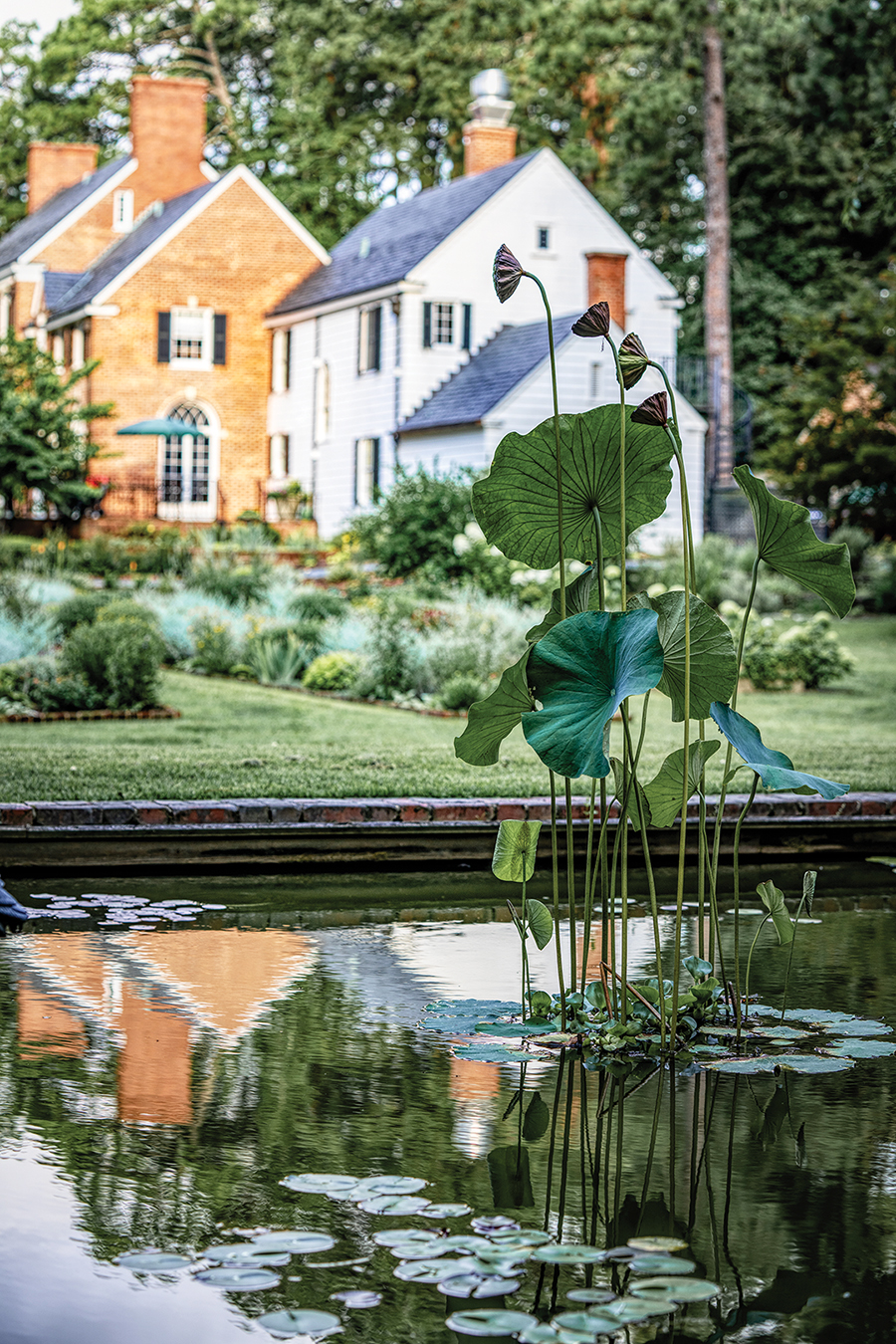
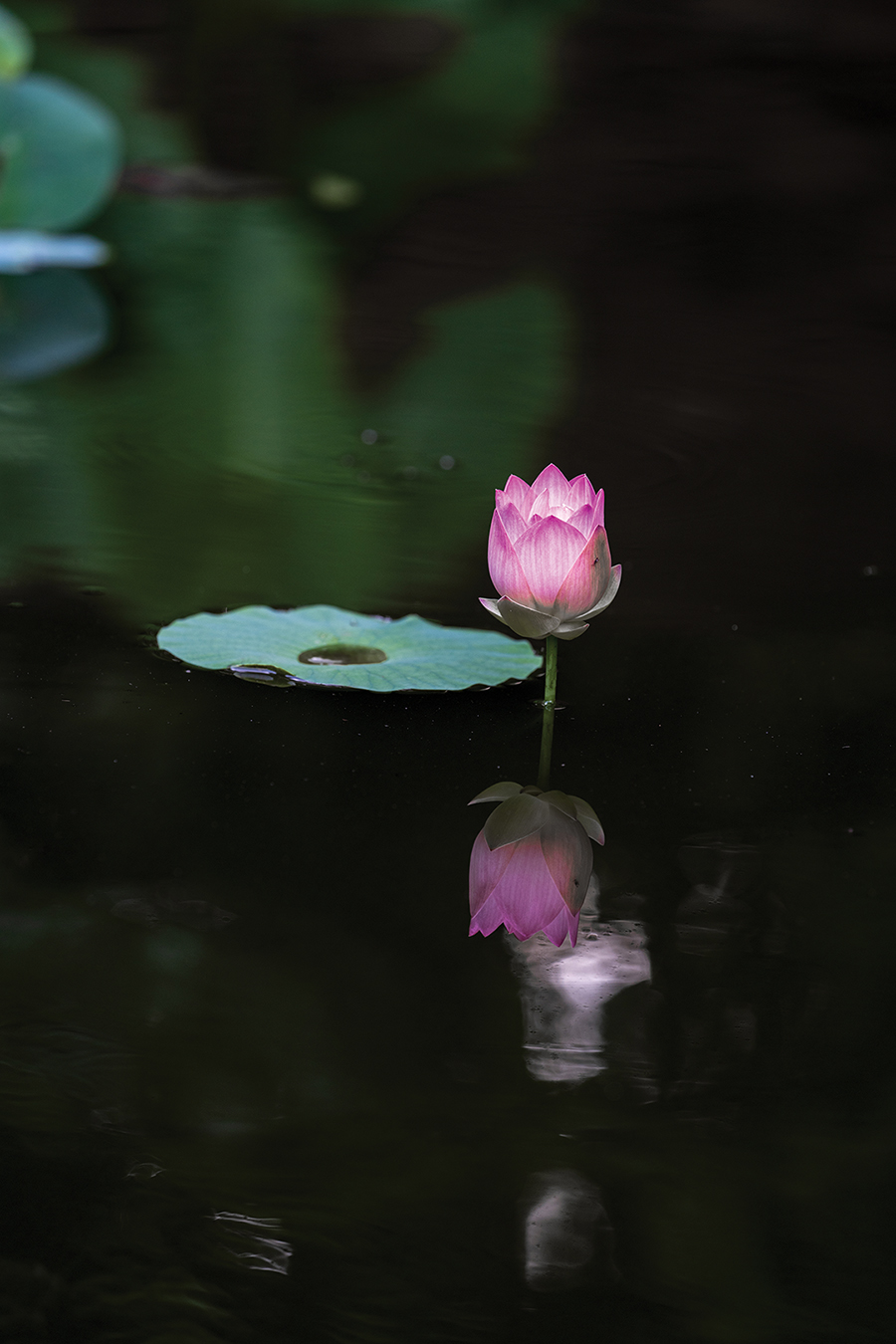
Visitors flock to the shady poolside patio and the nearby benches to view the American lotus seed pods that look like shower heads, and the floating green mat of water hyacinth. The red blooms of a red aquatic canna lily and a bog lily attract hummingbirds and butterflies. But the real treat is what lives in the pool — goldfish, shy turtles and the bellowing bullfrogs.

“I love working here by the pond with the bullfrogs,” says Debbie Lalor, a new Dirt Gardener who moved to Pinehurst from the Eastern Shore of Virginia. “That bullfrog talks to me, and the turtles dive deep if they see my shadow and then float to the top and watch me. This garden is forest bathing on steroids, and it’s why people come here. It’s restful and restorative.”

When gardeners find Weymouth, most stay for years, just like Luckhaus. She showed up 13 years ago, decided to create an email list of the volunteers to improve the group’s communications, and never left. “In those days the only way anyone communicated was in person or on the phone. So, I decided to put a bit of organization into the effort. That’s just what I do,” she quips.

Luckhaus shows some volunteers the day’s work when they arrive, while other gardeners take specific areas to work on a regular basis. “This is what you do if you have free time, so it’s a pretty loose thing,” says Luckhaus. “I also realize that if people get this place in their blood they will come back because their work here provides something truly special for them.”

Joann Mackara, who has worked in the garden for about 11 years, is dressed in cute garden clogs, an apron and a sun visor. She wields her narrow steel rake with precision, removing errant weeds and pine straw in the beds at the “front of the house.”

“I’ll see her or sometimes hear her singing outside my window, and it’s so reassuring,” says Katie Wyatt, executive director of the Weymouth Center for the Arts & Humanities. “She takes great pride in her work, and the area is always pristine.”

Luckhaus worked in the long beds when she began and studied the surrounding area. “It was a bit wilder then,” she says, pointing toward the woods. “One of the other volunteers, Linda Gibbs, and I liked to get into the big stuff, get dirty. We’d be in the woods pulling thorny smilax vines out of the trees, cutting stuff down and opening areas that had not seen the light of day for years. Little by little, we tamed areas. It’s been satisfying because you get one spot done and you move onto the next, and before you know it the landscape is visible and returned as an asset to Weymouth.”
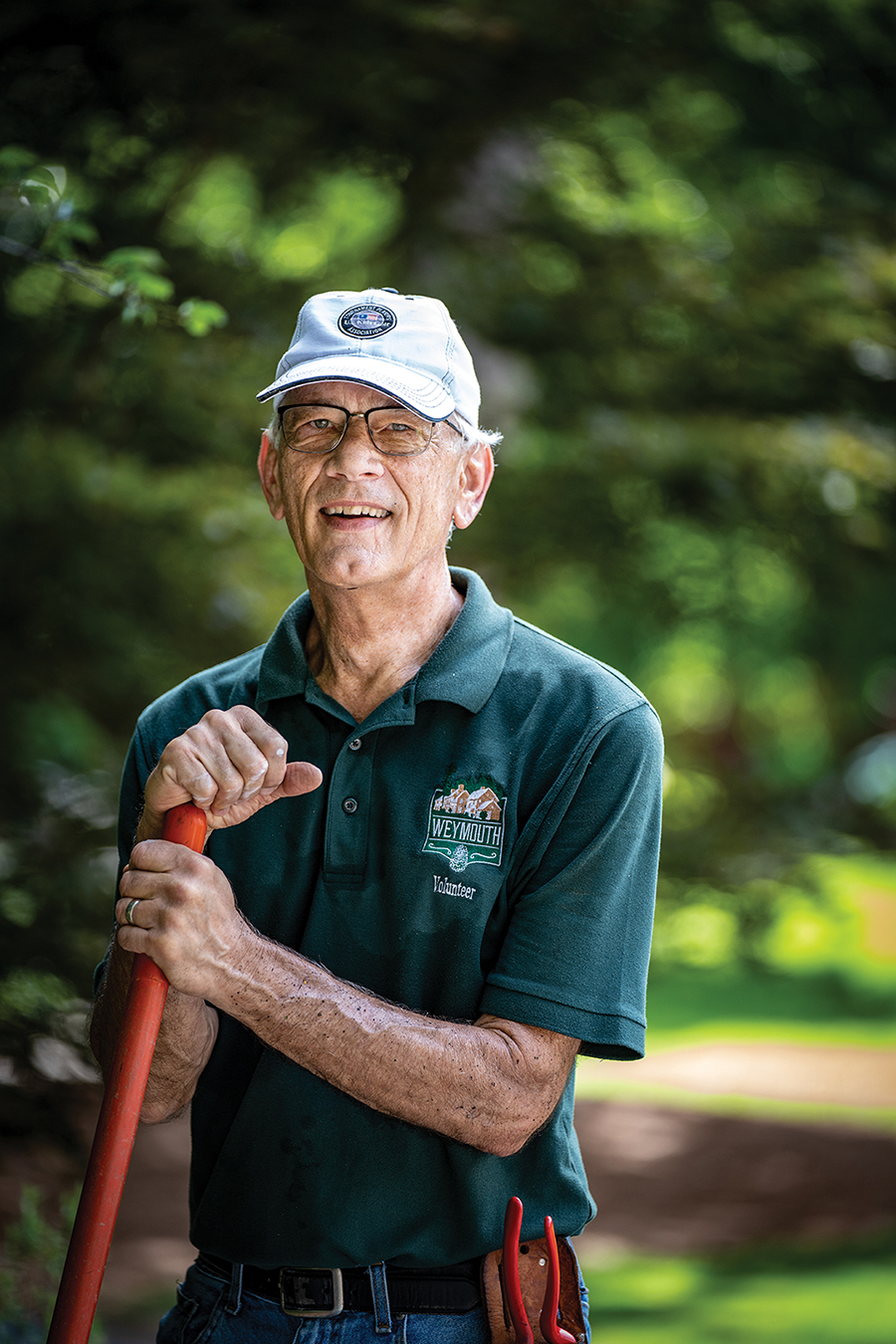


Ashley Turner and Mike Malone

When the men come, they repair fences and remove large branches from trees as far as they can reach without equipment. They help Klalo with the mowing and the routine clearing of invasive dogfennel in the urban forest area, which requires a bush hog.

They also help with other restoration and repairs on the property. Mike Malone, a retired audiologist and Dirt Gardener since 2015, has enhanced many spaces. Today, he’s sitting in a bed of dirt at the rear of the house, tearing out old bricks that have sunken into the soil.

“This place takes a lot of TLC,” he sighs while rechecking his plumb line before resetting the bricks into some crush-n-run stone. “I really enjoy this work. I get out, exercise, sweat a little, have fun and enjoy talking to people who stop by. Weymouth gets something from us by staying nice looking, and we get exercise and socialization.”

Malone recently connected with HortTube personality Jim Putnam, a gardening video creator in Raleigh who consulted on some of the Weymouth landscape areas around the house that needed revitalization. As a result of Putnam’s involvement, Southern Living Plant Collection donated several thousand dollars’ worth of plant materials.

When Wyatt joined Weymouth, she assumed the 26 acres of forest and landscaped property had a core team of contractors working weekly to maintain the property. “I was amazed when I found out it was the Dirt Gardeners who do the work, and I couldn’t wait to meet them.”
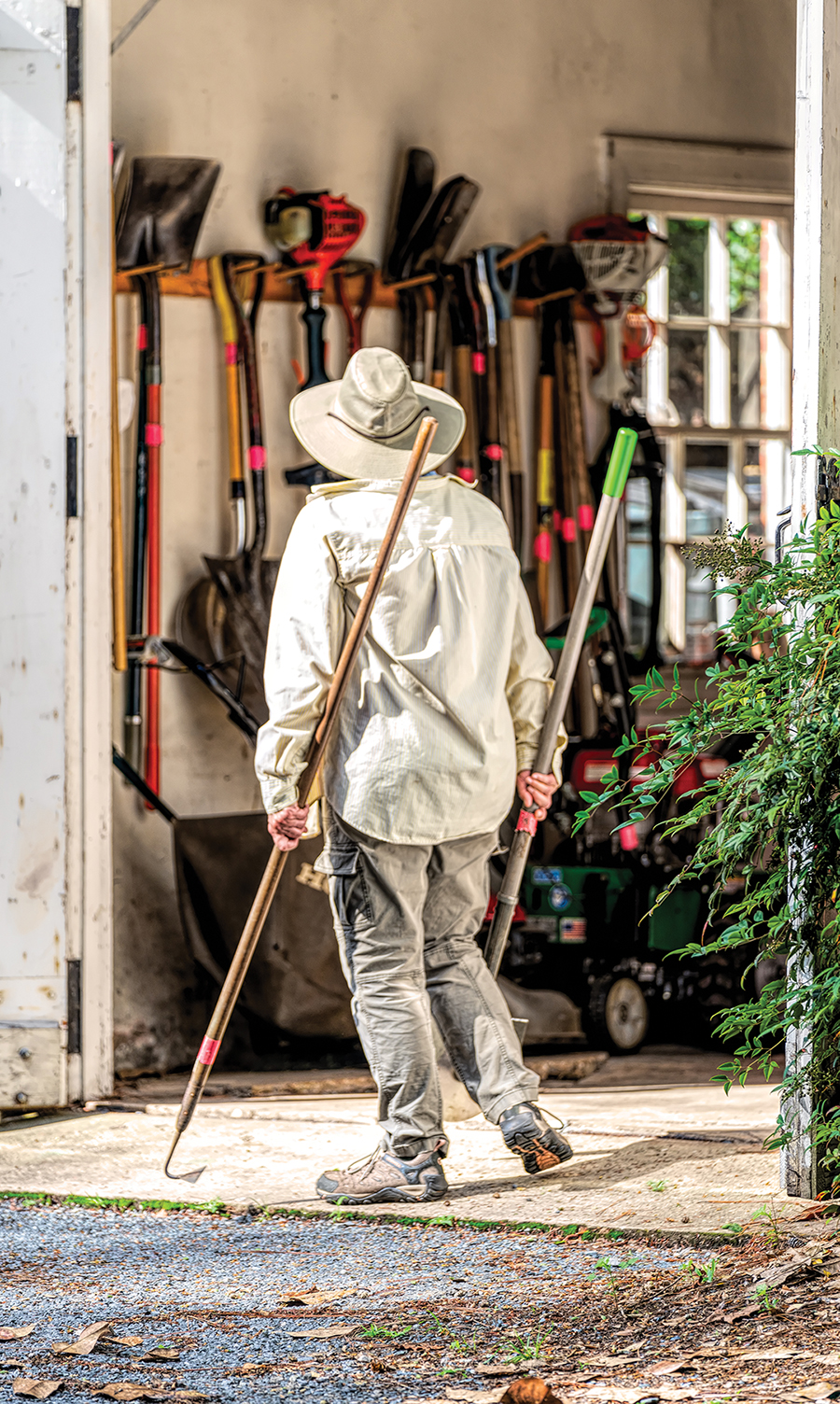
Last year, the Dirt Gardeners contributed 3,300 hours, says Sue Huston, who tallies the volunteer work effort. Huston, known for planting and tending the daffodil collections at Weymouth, joined the group in 2007 and served as the Dirt Gardeners board representative several years ago.

“Every hour counts,” she says while adjusting the broad brim of her straw garden hat. “Whether they put in 40 hours a month or three, it all makes a difference.”

In addition to the volunteer work, the organization values the personal equipment, supplies and plants the gardeners provide and the donations they solicit from the community — everything from pots, plants, fertilizer, soil amendments and more. And according to Wyatt, the value of the in-kind donations of materials, labor and time, coupled with the income generated by the most-anticipated plant sale in the county, pushed the overall value of the group’s 2021 contribution to Weymouth to nearly $100,000.

“The community’s love of gardening and nature is reflected in the Dirt Gardeners work,” she says. “It’s not only impressive, but also a creative way to maximize volunteer potential and a great example of a nonprofit’s marriage of need and volunteer capability.”
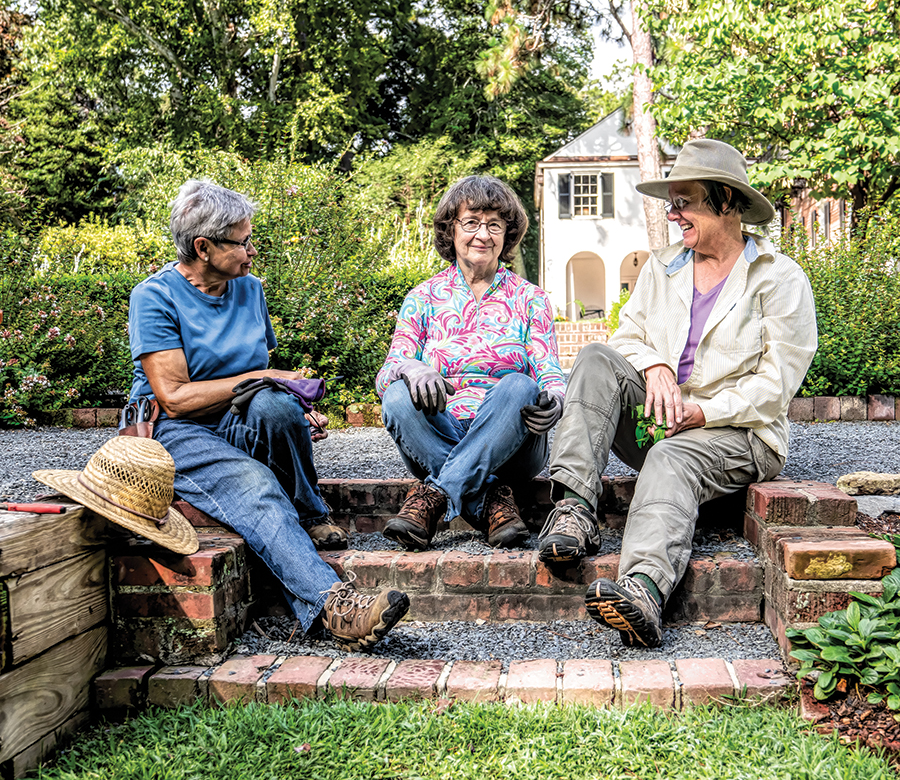
 

Kathy Luckhaus, Lucy Meldrum, Catherine Grimes

Wyatt also notes that the area’s strong gardening ethos is reflected in the robust support of Weymouth by nearly 15 garden clubs. “They are all very active members who attend and generously sponsor many of our events,” she says.

It’s a short walk back to the shady propagation area in the meadow, where the heavy air holds the musky smell of moss and soil. Louise Kamp is getting dirty. She’s busily reorganizing the plants in the fenced growing areas to ensure they get adequate irrigation, air circulation and sunshine.

“It’s constant juggling here,” she says as she calls to one of her team to shut a gate to keep the deer and rabbits out. “We’re a hardy bunch, and we work here year-round, despite the weather, to propagate 2,500 – 3,000 plants for the spring plant sale,” she adds, pointing to hundreds of empty stacked pots waiting for their glory day.

“Every plant in this nursery has a story,” says Kamp, who can tell you each of them. “It’s the community that donates every one of the plants like those canna lily tubers we are potting today. It gives me chill bumps to think of it all. The people, their stories, the volunteers who over the years created and left their mark on this garden, and the donors who support the effort so generously. Everyone owns a piece of this incredible place.”  PS

For more information on becoming a Dirt Gardener, contact the Weymouth Center for the Arts & Humanities at (910) 692-6261.

Claudia Watson is a frequent contributor to PineStraw and The Pilot and finds joy in each day, often in a garden.

Golftown Journal

Dare to Dream

The message of the U.S. Adaptive Open

By Lee Pace

Mike Whan, the chief executive officer of the USGA, was talking one morning in late July about the decision to recruit the World Golf Hall of Fame in St. Augustine and move it into 9,000 square feet on the second floor of Golf House Pinehurst, the USGA’s new facility under construction and set to open in 2023.

“It was the right thing to do, the right thing for golf,” said Whan.

Then he quickly drew a parallel with the just-completed U.S. Adaptive Open, which the USGA had conducted the week before on Pinehurst’s No. 6 course. Ninety-six players aged 15 to 80 from around the world played 54 holes of golf. Some played with one leg or no legs. Some with one arm. They played despite having cerebral palsy and muscular dystrophy. They found a way to aim and fire even though some were legally blind.

“The Adaptive Open is the same,” Whan continued. “Certain things you do because it’s the right thing to do. That is one of them. I cannot tell you how much money we lost. It’s a staggering number. But I could not feel better about it because it was the right thing to do for the game.”

Whan said he asked a fellow USGA official for the one word that would best describe the week at No. 6, and the word was “joy.”

“I thought he meant the athletes,” Whan said. “I knew they’d appreciate it and enjoy it. But he actually meant the joy of our own team. This was a 25-year employee of the USGA and he said, ‘Mike, this is a top-two experience.’ I said, ‘What’s the other one?’ He said, ‘Give me a minute. There has to be something.’”

The U.S. Adaptive Open came to fruition after decades of the USGA taking incremental steps to provide more opportunity and awareness for golfers with some degree of disability. In 1991 it announced a grant program for golfers with disabilities. In 1997 it published some modifications to the Rules of Golf to accommodate some of the challenges disabled golfers might encounter. To promote opportunities for golfers with disabilities, the USGA in 1999 partnered with trick-shot artist Dennis Walters, sponsoring his golf exhibitions and elevating the message that having a disability should not keep people from achieving their golf dreams. 

And in 2017, the USGA pledged its intent to stage a national championship for disabled golfers. The vision was delayed by COVID-19 until it was announced in late 2021 that the inaugural championship would be held at Pinehurst No. 6 the following July.

“Players in the adaptive space just want to be like everyone else — they just want to be golfers,” said John Bodenheimer, the chief championships officer for the USGA. “We are proud to give them that opportunity. We hope it inspires others in the industry to make the game and its competitions more welcoming to all.”

The golfers came from as far away as Korea, Ireland, Sweden, Belgium, Japan, South Africa, England, and Argentina. Allowances were made for challenges the golfers might have faced. Seated players got four club-length drops from penalty areas and could move the ball 6 inches in bunkers because it could be difficult to find the desired address position in a mechanized scooter. Double par was the max score on any hole.

“When I found out about this, I was intrigued,” Walters said. “It’s a historical event. It’s like 1895 and you’re Horace Rawlins. You’re the first one. That’s why I wanted to be here.”

They were uniformly amazed at the sophistication of the organizational structure — from the bunting and signage around the facility to the volunteer support to a press facility that hosted writers from all the major golf publications.

“This is big time, this is just like the U.S. Open, only smaller,” said Eli Villanueva, a retired Army sergeant from Fort Bragg who plays with a 2-handicap despite an arm impairment. A radial head fracture of his left elbow 30 years ago has left him with limited use of his left arm. Looking around at other competitors, Villanueva marveled at the more severe challenges many have overcome to play golf.

“This is a U.S. Open atmosphere,” he said. “I hope this inspires others. All over the country they’ll see what golfers here have overcome and say, ‘I can do that, too.’ Hopefully it will be the start of more good things to come. An Adaptive British Open? Sounds good to me.”

Two former professional golfers were in the field. Walters was 24 years old and playing the mini tours in 1974 when a golf cart he was driving down a steep incline had brake failure and crashed, leaving him as a T-12 level paraplegic. Ken Green, a five-time winner on the PGA Tour in the 1980s and ’90s, had his lower right leg amputated following a highway crash in 2009. Walters started a traveling trick-shot show that he presents with his dog, Gus, and Green has relearned the game and competed on a sponsor’s exemption in one PGA Tour Champions event and teed it up in the 2019 Senior PGA Championship.

“I am completely captivated and absolutely amazed at what I see,” Walters said. “This is phenomenal. Every one of these people can play golf. They are proving what I have been trying to say for 45 years. I’ve been trying to show, with every swing I make, that golf can be a game for all. This proves it.”

“This is competitive and we’re grinding our tails off,” said Green. “But this is the first event you’ll ever play that if you finish second, fifth or seventh, you’re still walking away smiling. You’ve got an edge in life and that’s what life is about. This is a home run.”

Simon Seungmin Lee, a 25-year-old Korean who was born with congenital autism, won the men’s title with a trilogy of 71s. Kim Moore, a 41-year-old from Michigan who was born without a right foot, a severely clubbed left foot and a slight case of spina bifida, collected the women’s trophy by carding 76-80-76.

“I think what has been seen this week around the world, around the country, is going to elevate the amputee community, the adaptive community, and it’s pretty cool to see,” said Moore.

After the complications arising from the COVID-19 pandemic, Whan said the USGA considered holding off a year or two to give the logistics and protocols more study, but he’s delighted the organization went ahead as scheduled in 2022.

“Sometimes you have to jump off the cliff and not worry about how you splash at the bottom,” he said.

The championship will return to No. 6 again in 2023. After that, the USGA has to decide whether it wants to move it around or establish a permanent home in the Sandhills. No matter, it will have plenty of entries and attention.

“I tell people, have a dream, and if it doesn’t work out, that’s OK. Get another dream,” Walters said.

Green has faced a marriage breakup, clinical depression, financial woes and a son who died of a drug and alcohol overdose. He was driving an RV in rural Mississippi in 2009 when a tire blew, careening the vehicle off the road and killing his brother, girlfriend and dog. He survived but hasn’t had two legs since. The significance of a week in Pinehurst playing in the inaugural U.S. Adaptive Open with 95 other golfers who’d also been dealt a tough hand was huge indeed.

His message to his fellow competitors: Take a bow.

“You were able to pull yourself out of that hole that life gave you,” Green said. “And then you went on to do something really good. You can’t ask for anything more than that. You won both sides of the game — life and golf.”  PS

Lee Pace has written for Pinestraw Magazine since 2008 and is the author of eight books about Sandhills golf history and the people who’ve made it special. Write him at leepace7@gmail.com and follow him @LeePaceTweet. 

Naturalist

The Lords of the Rings

Innovation among dolphins in a salt marsh

Story and Photographs by Todd Pusser

Tucked back in a western Florida salt marsh, far from the open ocean, a trio of bottlenose dolphins swim slowly through shallow waters searching for fish among a labyrinth of small, muddy islands covered in needlerush and a bright blue sky. Herons and pelicans, sensing an opportunity, patiently follow along, hopping from one mud bank to another as the dolphins continue their hunt through waters stained the color of a vanilla latte.

All of a sudden, one dolphin raises its tail high out of the water and brings it down forcibly, creating a massive splash and an audible “thwack” that can be heard throughout the expansive marsh. The predators have found their prey.

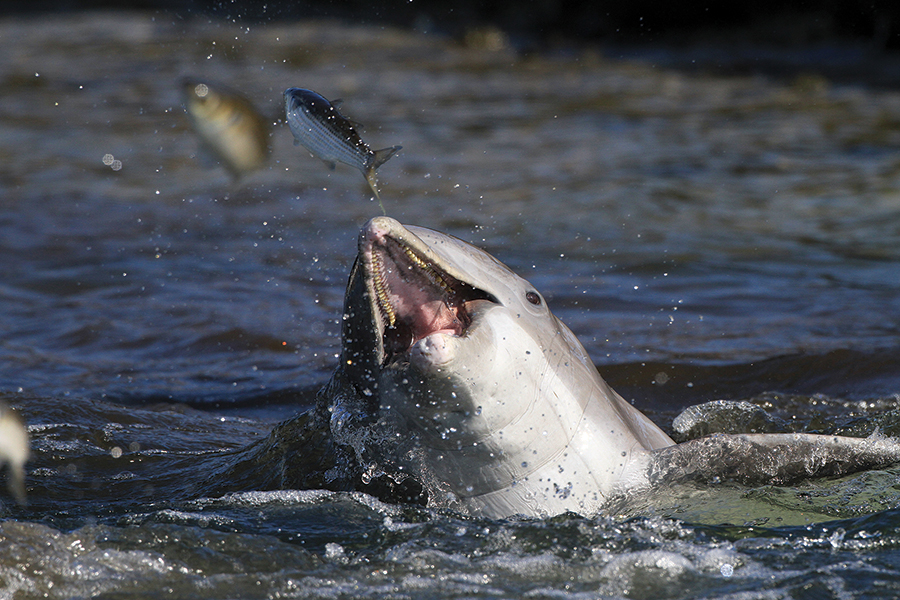
In water just a few feet deep, the dolphin starts to swim rapidly in a circle, vigorously pumping its tail up and down, stirring up the muddy bottom, creating a perfectly oval mud ring. The other dolphins swim over and the trio lift their heads out of the water along the edge of the mud ring, open their mouths, and wait.

A school of mullet, trapped inside the rapidly closing mud ring, starts to panic. Not wanting to swim through a wall of mud, the fish opt instead to leap out of the water, over the edge of the mud ring — right into the mouths of the waiting dolphins.

It’s all over in the blink of an eye. Each dolphin, having successfully caught a fish, lowers their head back into the murky water and continues hunting the narrow channels of the salt marsh. Before the morning is over, they will repeat this behavior dozens of times until fully satiated.

Bottlenose dolphins are renowned for their intelligence and adaptability. After humans and a few primates, they have the largest brain-to-body ratio of any living animal. Incredibly social, they have perfected innovative hunting techniques to maximize efficiency in capturing prey, no matter the environment.

In the Bahamas, bottlenose dolphins swim along shallow waters, using echolocation to scan sandy bottoms for buried flounder and razorfish. When prey is located, a dolphin will stick its head into the loose sand and push water out of its mouth to flush the fish from hiding. In tidal marshes along the South Carolina coast, bottlenose dolphins intentionally throw their bodies completely out of the water up onto mud flats, chasing fish they have trapped against the shoreline. In the deep waters surrounding Cocos Island, bottlenose dolphins work as a team to corral schools of baitfish into tight balls against the ocean’s surface, which prevents their prey from escaping. Off North Carolina, bottlenose dolphins have learned to follow shrimp boats, who regularly toss their unwanted bycatch overboard, providing easy meals for the hungry predators.

All of these distinctive feeding strategies reveal rich, sophisticated cultures, shaped by a level of intelligence and creativity not often seen in the animal kingdom, and are passed down from generation to generation.

The bottlenose dolphins that use the mud ring feeding technique do so only along the shores of Florida and nowhere else in the world. The behavior, first described from the shallow waters of the Everglades and the Florida Keys, has since been observed at various spots along the state’s west coast up into the Panhandle. 

I first witnessed mud ring feeding back in the early 1990s when I traveled down to Florida to complete my open water scuba certification with a class from the University of North Carolina.  Since that time, whenever I travel to the coastal waters of the Sunshine State, I keep a sharp eye out for these cunning predators. 

The last time I was fortunate enough to observe mud ring feeding, it involved a group of four dolphins, one of which was a small calf. I was first alerted to their presence by a pair of brown pelicans rapidly diving headfirst into the water along the edge of an immense marsh. The ungainly birds would surface, take wing, fly a few yards, and then dive again into the murky water. It took a minute or two before I saw the telltale grey, shark-like fins of the dolphins out in front of the pelicans.

Knowing immediately what the dolphins were up to, I grabbed my binoculars and settled into the seat on my aluminum jonboat to enjoy the show. Right on cue, the lead dolphin smacked its tail onto the surface of the water and began to swim in a tight circle, stirring up the mud in the process.

The pelicans, seeing the dolphin complete the circle, swoop in just as the other dolphins swim over and lift their heads from the water. Dozens of mullet suddenly burst forth from the surface of the water inside the mud ring, like an erupting volcano. A-free-for-all ensues, as both mammals and birds lunge from side to side trying to catch the leaping fish.

The dolphin calf, too young for solid food just yet, does not lift its head out of the water. It simply stays close to Mom, intently watching her every move. There is no doubt that this is an important teachable moment for the youngster. I can’t help but marvel at how their complex social lives so closely mirror our own.

The dolphins regroup and swim around a sharp bend in the marsh, quietly disappearing into the murky green waters, searching for the next school of fish.  PS

Naturalist and photographer Todd Pusser grew up in Eagle Springs. He works to document the extraordinary diversity of life both near and far. His images can be found at www.ToddPusser.com.

Golftown Journal

All in Good Time

The pause at the top

By Lee Pace

“Beware the fury of a patient man.”   — John Dryden

Over a lifetime I have collected baseball cards, vintage postcards, spy novels, golf headcovers, Matchbox cars and bottles of hot sauce. Now I’m into collecting Instagram posts, most notably those portending to help with the golf swing and within that subculture those addressing the transition at the top of the backswing.

There’s a post with a collage of Fred Couples swings, one per annum over three decades in rapid fire, his buttery move sending balls flying the nation over. Couples has talked over his illustrious career of “gathering” and “buying time” at the top. “One drill I have done is take a 9-iron, hold it at the top for a split second and then go ahead and hit it,” Couples says. “I think slow and lazy swing.”

In another post, Michael Mitnick, an Ohio college student and aspiring club professional, executes this very drill, what he calls “The Pause Drill.” He addresses a ball, takes the club back, holds it at the top about a one-Mississippi breath, then delivers his blow and launches the ball high into the sky. “Having a deliberate pause will help you not rush your swing and develop a fluid tempo,” he offers.

And one I really like is a snippet of Justin Thomas hitting a half-wedge over a bunker and stopping it inches from the cup. “The patience in transition is enviable,” PGA Tour golfer Parker McLachlin says in his Instagram feed, adding a pair of salivating emojis. “There’s not a rush to hit the ball.”

Indeed, in this world rife with kryptonite-laced golf balls and nuclear-tipped driver heads, where college players get home in two with a driver and a 6-iron, where swing speeds are measured on Ferrari dashboards, there remains one corner of the world for calm and quiet.

The top of the backswing.

That’s right. After all, if you’re going one way and then want to go in reverse 180 degrees, you have to stop. It’s science. So what’s your hurry?

The great Bobby Jones once remarked, “No one ever swung a golf club too slowly.” Another talented golfer by the name of Julius Boros, who as a young man married into the Mid Pines Inn and Golf Club ownership family, was nicknamed “Old Man River” for his sweet tempo and even wrote a book titled Swing Easy, Hit Hard.

Renowned instructor Bob Toski tells his students to use the “Coca-Cola Swing,” employing a “pause that refreshes” at the top of the backswing.

“There should be no flash of speed at the top of your swing,” Toski told Golf Digest years ago. “The club should be quiet and not bouncing. This gives you a chance to move the lower body down into the swing. You want to feel that you push the club back and pull it through. Think push, pause, pull.’”

Englishman Justin Rose has fought the tendency to get tense at the top and to rush his transition, so he thinks of “collecting” himself at the top and simply letting his arms “fall from the top, rather than jerking the club down,” he says.

“The transition in the full swing is what separates the good player from the bad player,” says David Orr, the Pine Needles-based instructor who has Rose among his clients.

The famous “secret” espoused by Hall of Famer Ben Hogan has been parsed to a fare-thee-well by golfers, instructors, commentators and biographers. One theory is that the secret was a cupping motion of the left wrist at the top. Another school of thought has that Hogan’s key to the golf kingdom was the way he braced his right knee to initiate the swing, followed by his inward push toward the ball of his knee on the downswing.

A friend and fellow competitor from the mid-20th century pro tour, Tommy Bolt, says Hogan’s secret was actually a trigger he found at the top of his backswing. Bolt went through a period in the late 1950s of hitting everything with a pronounced right-to-left pattern, and Hogan, who battled an incessant hook himself for many years, told him, “Tommy, you’re not going to last long fighting that hook.”

Hogan invited Bolt to visit him at his home in Fort Worth and promised to help Bolt work the hook out of his game. First Hogan weakened Bolt’s grip to take the left side out of play. The second instruction Hogan gave him was to feel both hands secure on the club at the top of the swing.

“It will put your club in great position at the top of the swing,” Hogan said. “It will shorten your swing and allow you to have an accelerated motion coming into the ball.”

After several days of hitting balls and playing the course at Shady Oaks Country Club, Bolt felt he had made progress and prepared to go back out on tour.

“Ben, what do I owe you?” Bolt asked.

“Nothing,” Hogan said. “Well, you owe me one thing. If someone asks you what we worked on, you can tell them I weakened your grip. But as a favor, don’t tell them about keeping both your hands on the club at the top. Tommy, that’s the ‘secret.’ That stays between us.”

Bolt’s face would brighten as he told the story many years later.

“So when they talk about Ben Hogan’s secret,” Bolt said, “I’m the only one who knows what that secret is. At the top of the swing, you make sure you feel both hands secure on that golf club.”

I was reminded of the value of this pause that refreshes during the recent U.S. Women’s Open at Pine Needles. Golfers on the women’s circuit wield silk and syrup as their stocks in trade. Watch Michelle Wie West. She’ll take three beats to the top of her backswing, then one beat to impact. Three-to-one, over and over and over again. Woe to the golfer, particularly the Type-A male, who can’t benefit from a half hour watching these symphonic swings on the practice range.

“Men walk fast, eat fast, drive fast, think fast,” says Ed Ibarguen, a longtime teaching pro at Duke University Golf Club in Durham. “They have very active minds. In the golf swing, that often translates to active hands. They can certainly benefit by watching the elite female player.”

All of these collected perspectives on the transition from backswing to downswing came to mind recently after I’d turned a 1-over through eight holes start into hash with a succession of pull-hooks I instinctively knew had occurred because I didn’t finish my backswing and was rushing to hit the confounded ball.

I took a deep breath hitting three from the fairway on the 15th hole after jacking my tee shot into a lake. Exaggerate your pause at the top on your practice swing. Feel your hands on the club at the top. Push, pause, pull. Collect yourself at the top.

I played the last three holes even par and took my dear sweet time along the way.  PS

Lee Pace has written “Golftown Journal” since 2008. Contact him at leepace7@gmail.com and follow him on Instagram at @leepaceunc.