Romantic Fever

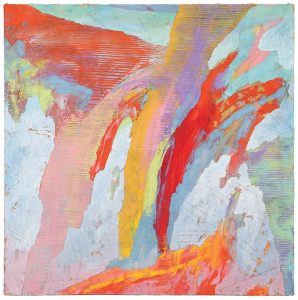
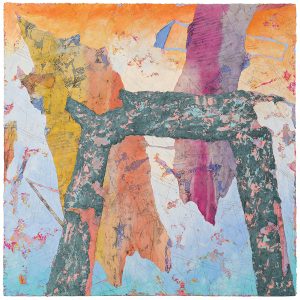
Fiction by Lee Smith     Illustrations by Matthew Shipley

The house I grew up in was one of a row of houses strung along a narrow river bottom like a string of beads. We were not allowed to play in the river because they washed coal in it, upstream. Its water ran deep and black between the mountains, which rose like walls on either side of us, rocky and thick with trees.

My mother came from the flat exotic eastern shore of Virginia, and swore that the mountains gave her migraine headaches. Mama was always lying down on the sofa, all dressed up. But there was no question that she loved my father, a mountain man she had chosen over the well-bred Arthur Banks of Richmond, “a fellow who went to the University of Virginia and never got over it,” according to Daddy. Mama suffered from ideas of aristocracy herself. Every night she would fix a nice supper for Daddy and me, then bathe and put on a fresh dress and high heels and her bright red lipstick, named “Fire and Ice,” and then sit in anxious dismay while the hour grew later and later, until Daddy finally left his dime-store and came home.

By that time the food had dried out to something crunchy and unrecognizable, so Mama would cry when she opened the oven door, but then Daddy would eat it all anyway, swearing it was the most delicious food he’d ever put in his mouth, staring hard at Mama all the while. Frequently my parents would then leave the table abruptly, feigning huge yawns and leaving me to turn out all the lights. I’d stomp around the house and do this resentfully, both horrified and thrilled at the thought of them upstairs behind their closed door.

I myself was in love with my best friend’s father, three houses down the road. Mr. Owens had huge dark soulful eyes, thick black hair, a mustache that dropped down on either side of his mouth, and the prettiest singing voice available. Every night after supper, he’d sit out in his garden by the river and play his guitar and sing for us and every other kid in the neighborhood, who’d gather around to listen.

Mr. Owens played songs like “Wayfaring Stranger” and “The Alabama Waltz.” He died the year we were thirteen, from an illness described as “romantic fever.” Though later I would learn that the first word was actually “rheumatic,” in my own mind it remained “romantic fever,” an illness I associated with those long summer evenings when my beloved Mr. Owens played the old sad songs while lightning bugs rose like stars from the misty weeds along the black river and right down the road — three houses away — my own parents were kissing like crazy as night came on.

II

The link between love and death intensified when my MYF group (that’s Methodist Youth Fellowship) went to Myrtle Beach, where we encountered many exotic things such as pizza pie and Northern boys smoking cigarettes on the boardwalk. Our youth leader, who was majoring in drama at a church school, threw our cigarettes into the surf and led us back up onto the sandy porch of Mrs. Fickling’s Boardinghouse for an emergency lecture on Petting.

“A nice girl,” she said dramatically, “does not Pet. It is cruel to the boy to allow him to Pet, because he has no control over himself. He is just a boy. It is all up to the girl. If she allows the boy to Pet her, then he will become excited, and if he cannot find relief, then the poison will all back up into his organs causing pain — and sometimes — death!” She spat out the words.

We drew back in horror and fascination.

III

Of course it wasn’t long before I found myself in the place where I’d been headed all along: the front seat of a rusty old pickup, heading up a mountain on a dark gravel road with a wild older boy — let’s call him Wayne — whom I scarcely knew but had secretly adored for months. This was not the nice boy I’d been dating, the football star/student government leader who’d carried my books around from class to class all year and held my hand in study hall. My friends were all jealous of me for attracting such a nice boyfriend; even my mother approved. But, though he dutifully pressed his body against mine at dances in the gym whenever they played “The Twelfth of Never,” our song, it just wasn’t happening. That fiery hand did not clasp my vitals as it did in Jane Eyre whenever she encountered Mr. Rochester.

So I had seized my chance when Wayne asked me if I’d like to ride around sometime. “You bet!” I’d said so fast it startled him. “I’d love to!” Wayne was a big, slow-talking boy with long black hair that fell down into his handsome, sullen face. He wore a ring of keys on his belt and a pack of cigarettes rolled up in the sleeve of his T-shirt. He did not play sports. I admired his style as much as I admired his family — or lack of family, I should say, for he lived with his uncle in a trailer out near the county line. Wayne smoked, drank, and played in a band with grown-up men. He was always on the Absentee Hot List, and soon he’d be gone for good, headed off to Nashville with a shoebox full of songs. 

We jolted up the rutted road through dense black woods. My mother would have died if she’d known where I was. But she didn’t. Nobody did.

I was determined to Pet with Wayne even if it killed him.

Finally we emerged onto a kind of dark, windy plateau, an abandoned strip mine set on top of the mountain. He drove right up to the edge, a sheer drop. I caught my breath. On the mountainside below us were a hundred coke ovens sending their fiery blasts like giant candles straight up into the sky. It was like the pit of hell itself, but beautiful. It was the most beautiful thing I’d ever seen. For some reason I started crying.

“Aw,” he said. He screwed the top off a mason jar and gave me a drink, which burned all the way down. “You know what?” He pulled me over toward him. He smelled like smoke, like alcohol, like the woods.

“What?” I said into the sleeve of his blue jean jacket

“They was a boy killed in one of them ovens last month — fell in, or throwed himself in, nobody ever did know which.”

“Was there?” I scooted closer.

“Yep, it was a boy from over on Paw Paw, had a wife and two little babies. Gone in the twinkling of a eye, just like it says in the Bible.” He snapped his fingers. “Right down there,” he said into my hair.

“That’s awful.” I shuddered, turning up my face for his kiss, while below us the coke ovens burned like a hundred red fountains of death and I felt the fiery hand clutch my vitals for good.

Finally, I thought.

Romantic fever.   PS

The First Funeral

Fiction by Clyde Edgerton

Illustrations by David Stanley


1977, Hurt, Tennessee

A great big lady goes under the funeral tent in her high heels and sings “How Great Thou Art.” She just belts it out. She’s wearing glasses with thick, black rims. And she’s got on a brown hat with a black feather. It’s Mrs. Britt’s funeral and Mrs. Britt is a hundred years old. Or was a hundred years old.

This is my first funeral in the Funeral Militia, and I don’t want to do anything wrong.

Jimbo Summerlin is the captain and he graduated from high school last year and everybody else in the Funeral Militia is about the same age as him. I’m in the fourth grade. There are seven of us here today. The Quaker’s Son is the head of the Funeral Militia and he works at the nuclear bomb place and had to be there today. He’s the oldest one and his granddaddy was a famous Quaker.

The big lady is singing the song in a real big way.

If we join the Funeral Militia though we sign a contract about never joining the Army. Mama signed mine. This all started ten years ago, right after some people came home from Vietnam.

Jimbo calls cadence when the Funeral Militia marches. Hup, two, three, four. I want to be the caller when I get big enough.

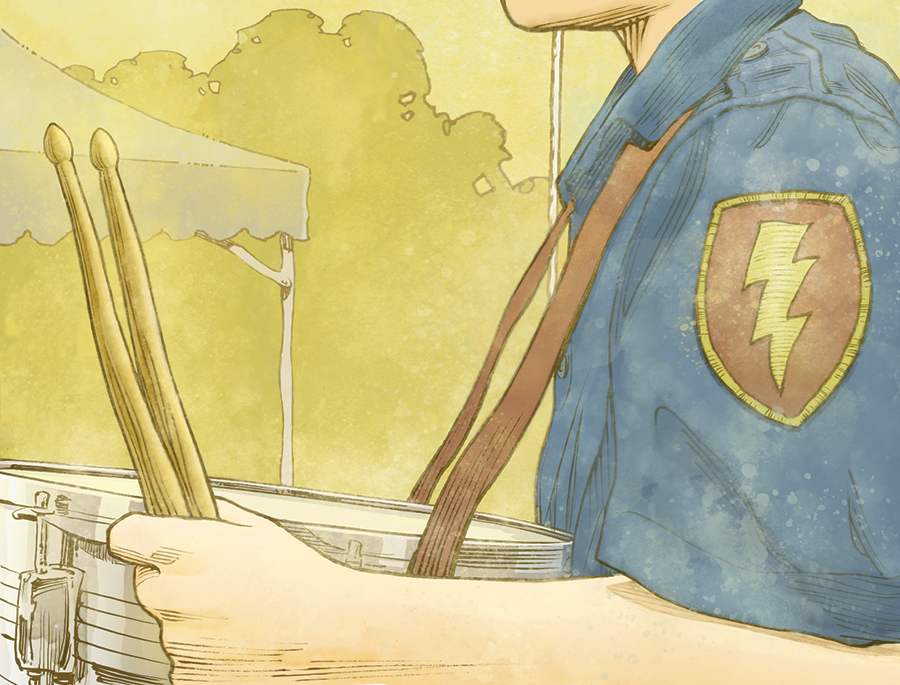
A yellow lightning bolt is on the left sleeve of my uniform, like the others. There’s a plow on the right side. Then it says Funeral Militia in a curve on my front pocket. The uniform is dark blue and the writing and stuff is yellow.

We stand outside the tent while the funeral goes on underneath it — with the family sitting down. We are at Quaker Field. A lot of people stand around outside the tent listening to the song. The seats under the tent are filled up.

The sun is hot, and you can smell the cut grass from where Dennis Warton just finished mowing around the Quaker House and on out here. I will do a drum roll while Lonnie plays the Red River Valley on the trumpet at the very end of everything. Lonnie plays a trumpet instead of a bugle. Jimbo does the fold-up-and-present the flag part when it’s a man who has served in the armed forces.

The preacher is talking. Preacher Knight. He is almost all the way bald-headed and has this big Adam’s apple and is a little bit skinny. The whole funeral was at the Methodist church where we sat in the balcony, but they brought Mrs. Britt here to get buried. The pall bears loaded her into the back end of the hearse while we stood at attention right there close by. A lot of people get buried out here.

A man from Knoxville came to a funeral one time and said the Funeral Militia is against the law.
We stand in two rows just outside the tent. Today, it’s three in the front row and four in the second row. I get to stand at the end of the second row. The reason Jimbo is in the Funeral Militia is because his uncle got killed in World War Two and some other people got killed and the Quaker’s Son started the Funeral Militia like it had been started a long time ago but died out with Hitler and them. Everybody has to look straight ahead while we stand here, and I think about how Jimbo can run really fast and he throws a baseball side-armed when he pitches. Sometimes he chews tobacco. He’s kind of a buddy with the Quaker’s Son.

I hold my drumsticks in my left hand whether I’m at attention or at ease, and my right thumb has to hold tight against the seam on my pants when I’m at attention. My hands go behind me when it’s “at ease.” I have to keep my drum quiet by not hitting it or scraping against it and all that.

The singer lady is real big and like I said has got this brown hat that has a black feather up out of it. She is wearing a tan dress that kind of holds up her front end. She finishes the song. She sang a little bit like a opera singer. She is wearing high heel shoes that I wonder if they are going to stick in the ground. Mama has some shoes that are a little bit high.

This is the biggest funeral I’ve ever seen at Quaker Field.

Mr. Knight is reading a scripture.

When it’s over, Lonnie plays Red River Valley while I do the drum part. It’s not hard.

It’s the next day now and I can tell you what happened right after the funeral finished and we did Red River Valley. The opera lady walked right straight into this open grave that was not Mrs. Britt’s grave. That grave was covered up with a great big green rug that looked like grass. Somebody had covered up the open part of the grave instead of the dirt that came out of the grave. They was supposed to just cover up the dirt and put planks over the grave. It was a big mistake. It might have been Dennis or Tiny, or the Mustees.

I had just looked at her when she was kind of walking out from under the tent — because you kind of wanted to look at her with her big padded shoulders, and then I looked at something else, and was waiting for “attention,” and somebody hollered, and when I looked back I noticed that she had just disappeared from the earth.

Everybody started over toward the open grave, except not the people who were already down where the cars were parked. That’s where Mama was. I slid my drum strap off, put the drum down easy, and ran over to the grave where I got up right to the edge of it. The lady was down in there pretty covered up by the rug.

I had thought about how big she was when she was singing “How Great Thou Art.” She had these shoulder pads under her dress on her shoulders like Mama does when she dresses up. She had a big, you know, chest, too. The dress was tan, which I think I said.

Then she got part of the rug all moved back and she’s laying on her back looking up. Baby Jesus in swaddling clothes popped in my head. Her head was kind of rolling back and I figured she’d had the breath knocked out of her because she was looking like that, that look, and her hat was still on and it must have been pinned on or something. It is a brown hat with a black feather, if I didn’t say that. But her glasses were gone with the wind.

Everybody got quiet and I looked around. Preacher Knight was standing there, and Jimbo was kind of kneeling down across the grave from me. I was wondering about what he was thinking, about what he was going to do.

Preacher Knight said to me, “Son, don’t get too close to the edge.” He said it like he might be a little bit mad, so I backed up.

Jimbo didn’t say anything to me, though. He didn’t even look at me. He started talking to the lady. “Are you okay?” he says.

And she breathes kind of deep and says, “Hell, no. I’m not okay. Jesus God.”

With her talking like that, I looked up at Preacher Knight.

He said to her, “Can you stand up?”

“I wouldn’t be on my ass if I could stand up,” she says. She’s from Nashville, and that’s probably why she talks like that.

The preacher just said, “Well . . . “

Some other people were coming back up from down where the cars were parked. But I didn’t see Mama. All the Funeral Militia were standing around and I wondered what Jimbo was going to do.

The preacher says, “That was a wonderful rendition of ‘How Great Thou Art.’”

Floyd says, kind of quiet, “I’ll say how great thou art.”

More people were standing around now, and some more people were coming up.

Mr. Knight says, “Somebody needs to get down in there and get her out.”

I thought about me. I wondered if Jimbo thought about me or about hisself or somebody else.

Lonnie says, “There ain’t no room down there, man.” Lonnie is the biggest one in the Funeral Militia.

“We need a ladder,” said Kenny.

I thought about me going down in there, but I didn’t know if I wanted to or not. I might do something wrong. And I didn’t know the lady. Then I thought about Jimbo maybe choosing me to go down in there and help her out.

“Just pull her up with the tractor bucket,” said Lonnie.

“What?” said Jimbo.

“We can get one of those kids’ swings,” said Lonnie, “from behind the Quaker House and hang it on the bucket with some S hooks. She sits in it and we pull her up.”

“Go get the tractor,” said Jimbo. “The keys is in it.” He was getting to be in charge. I figured he would.

I looked at the preacher and wondered what he would say.

Jimbo said to Carl, “Go get a swing down off that swing set.”

Lonnie was walking on toward the tractor. It sits under a shed in the edge of the woods.

Preacher Knight said, “Can’t we just get a ladder?”

“We’re going to rig up a swing,” says Jimbo. “That way she don’t have to climb out.”

“Wouldn’t a ladder be simpler?” says Preacher Knight.

“I’d be nervous on a ladder,” says the lady up to the preacher. “I might be hurt.”

Everybody was quiet and we heard the tractor crank up down at the edge of the woods.

She was still on her back. I looked around. Some people still didn’t know about what happened because they weren’t coming over.

“This will be easy, ma’am,” said Jimbo. I was across the grave, watching him talk down to her. “We got a tractor coming with a bucket on the front, with hydraulics, and we are going to hang a swing set on it.”

“A bucket?” she says.

“Yes ma’am. Kind of like a big shovel. Like a bulldozer blade, sort of. We are going to hook a swing to it. So you can just sit in it and get lifted right up and out.”

Floyd quiet-like started singing, “Love lifted me.” Him and Lonnie get goofy sometimes.

Now the crowd is a little bigger and pretty close up to the grave.

“I think we better get somebody down in there and help you stand up. Is that okay?” said Jimbo. But he didn’t look across at me.

“It’s too bad she didn’t land sitting up,” said Lonnie.

“What?” said the lady.

“I was just talking to Floyd,” Lonnie says.

Then Mrs. Knight, the preacher’s wife, walks up from down where the family cars were — where Mama still was. “What happened?” she says. Then she sees and says, “Oh, my goodness.”

“She fell in the grave,” says Jimbo.

“Oh my goodness,” says Mrs. Knight again, and then she says down into the grave, “Are you okay, Myrtle?”

“I don’t know. I don’t know if I can get up. Is that you, Pauline?” says the lady. “I can’t half see. My glasses fell off. I hope to hell they’re not broke.”

“These boys will get you out,” says Mrs. Knight. “Lord knows they do everything else around here. Where is the Quaker’s Son?”

Lonnie said, “He’s at Oak Ridge today.”

“They’re getting a tractor,” said Mr. Knight. “The boys are getting a tractor.”

“A tractor?” says Mrs. Knight.

Jimbo says, “We’re going to drop down a swing, number one. She sits, number two. We lift her right out. Bingo.”

“Oh,” says Mrs. Knight. “The song was beautiful, Myrtle.”

“Well, thank you. Then I busted my ass.”

I looked up at Mr. Knight. I wondered why she kept saying bad words. I wondered who put the rug over the grave.

Mr. Knight said, “Maybe you could just turn over on your stomach and then get up on your knees and hands?”

Floyd said, “That’s easy for you to say.”

The tractor was coming up with the front-end bucket that you can lift up high. Then in the next minute or two they got it all rigged up so the bucket was up high and the swing was hanging from it.

“How about letting the boy down to help her get set, get that carpet off her?” said Mr. Knight.

Jimbo looked at me, and then at Mr. Knight. And I wondered what he was going to say. But he didn’t say anything. He was going to pick somebody else, I figured.

Then he looked straight at me and here’s what he said, “Go ahead, Gary.” Gary is my cousin’s name. He didn’t know who I was. He said, “Try to get that grass rug — carpet — off her first.”

“Okay,” I said. I wished he’d called me my name, Ozzie. I thought about what if I messed up. “Can I ride the swing down?” I said.

“Good idea,” said Kenny. “Get on there.”

I got in the seat and they let me down and I got off right beside her so I wasn’t standing on her, but I was on the grass rug, and I could smell the inside of the earth and it smelled like fishing worms down in there and mixed in was her perfume. They pulled the swing back up.

The top of the ground was up above my head. I started pulling back on the rug to get it from around her waist and around her feet, but I had to kind of go slow and keep my balance because the grave was so narrow.

“What’s your name, son?” she said.

“Ozzie,” I said. I looked at her and she had makeup on her eyes. I looked up for Jimbo, but he was over at the tractor, I guess. I could hear the tractor motor.

She was helping me kind of get the rug-carpet thing from around her and kind of working herself out of it, and she was on her side, starting to turn over. She stopped moving and looked at me and said, “Ozzie, where did you get that uniform?”

“I’m in the Funeral Militia,” I said.

“What is that?”

“We do military funerals but they ain’t military funerals. They are CC’s. Commemorative Ceremonies, but they are kind of like military funerals, except that’s not what they are.”

She got all the way out from under the rug thing, and while she was getting out, she said, “Did you know Mrs. Britt?”

“Yes ma’am.”

“She was my aunt. She was my daddy’s sister. She was one hundred years old.” Then she looked at her feet. “Can you pull off my damn shoes?”

“Yes ma’am.”

“Thank you, Ozzie. I hope I don’t last a hundred years,” she says. She was working herself up to a sit-up position. “Do you think you can find my glasses?” she said. “I think they might be under me. I hope they’re not broke. Hell, I could just go ahead and get buried now.” She was looking at me and smiled and I liked her even after she said those words.

I looked around, and there were her glasses in the corner nearest by. “Here they are,” I said. I got over to them and picked them up and handed them to her and all the while I was smelling the damp dirt and the perfume.

“Who the hell would dig a grave and then cover it up with a carpet?” she said.

“I don’t know,” I said.

Jimbo said down to her, “If you can sit in the swing, we’ll lift you right out.”

She reached out toward me and I grabbed her hand.

“Grab my elbow,” she said, and I did. She almost pulled me right down on top of her, but she got up to sitting, and then worked her way up to standing. She brushed off the bottom part of her dress.

Somebody up top said, “Can she maybe sing a song from down there?”

Somebody else said, “Sentimental Journey.”

“Ha, ha,” she said, but she wadn’t laughing. “I don’t think so,” she said. “I’ve got some pain in my shoulder,” and she gets in the swing, and is just sitting there. “Mercy, Lord,” she says. The swing starts up and it gets her feet almost up to my knees and one of them S hooks starts slipping up at the top of the bucket thing, sliding down the edge of it, and the swing goes crooked and she’s got one foot on the ground and one in the air and she starts turning in a little circle, holding on to the chains with that one foot on the ground. “Shit,” she says. “What the hell?” She looks up at the tractor.

“My fault, my fault,” yells Kenny. He was driving the tractor. He let the swing down and she slipped out of the swing and stood up there beside me up close, and I smelled the perfume and she turned toward me and I was sort of looking right at her chest, and I remember dancing with Mama at the Ruritan club one time.

Carl told us the S hook was fixed.

“I don’t think she’s going to get out for awhile,” said Lonnie.

They tried again and lifted her up slow with everybody quiet, and you could hear the seat make a tiny cracking sound, and I heard some crows, until she was up there clear of the grave. Then Kenny turned it and swung her slow over the ground and she did a odd thing right then. I could see her top half over the edge of the grave from where I was — she started swinging like you do in a swing, and then she started singing, “Gonna take a sentimental journey. Sentimental journey home.”

I kind of liked her, except she said those ugly words.

They dropped the swing back down and I got in and rode up and out. We didn’t march I formation back to the Quaker House because it was like a whole different day once we got her out. What happened was they got the rug out and we all started walking back to the Quaker House and just when we started, Jimbo walked over to me and didn’t say anything. He turned me around and put his hands under my armpits and lifted me up till I was on his shoulders and he walked me like that all the way to the Quaker House. I held onto his head under his chin. I felt like it was okay that he got my name wrong. I would ask Mama to tell him who I was. It was the end of my first day in the Funeral Militia.

It’s tonight, and all that happened yesterday, and tonight I take Addie out to pee. It’s kind of warm and cloudy. Addie is our dog that stays in the house. I sit on the steps and wonder about what would happen if Addie fell into an open grave. I wonder how many dogs have ever fell into open graves. I get to thinking about all the stars that I can’t see because of the low clouds that are covering up everything.  PS

In the Spirit

Mai Tai

Just another reason to drink rum

By Tony Cross

I’ve got way too many bottles of rum in my closet. Yes, my liquor “cabinet” is a closet — judge if you must. All that rum got me thinking about the drinks I’ll be whipping up this summer, and that got me thinking about the classic Mai Tai. (A mind is a terrible thing to waste.)

Jeff “Beachbum” Berry explains in his book Beachbum Berry Remixed — A Gallery of Tiki Drinks how the origin of the Mai Tai cocktail has been debated over time: “The Mai Tai war has raged for over half a century, and it ain’t over yet,” Berry writes. “Bandleader Harry Owens claimed he introduced the Mai Tai to the world in 1954. Trader Vic claimed he invented the Mai Tai in 1944, and in 1970 won a court case to prove it. That verdict aside, Donn Beach’s widow, Phoebe Beach, insists that Donn invented the Mai Tai in 1933.”

Berry goes on to explain the battle that Victor Bergeron (Trader Vic) pursued and won in court. He also explains Phoebe Beach’s claims, but ultimately settles on Trader Vic being the first to put it on his menu. Berry says that although Donn Beach may have created it, there’s no proof of the Mai Tai popping up on any menu in the 1930s.

So, what’s in a Mai Tai, anyway? There are several recipes below, but the main ingredients are the same: Jamaican and Martinique rums, lime juice (and wedge), orange curaçao, mint and orgeat. The last ingredient, orgeat (pronounced “or-zha”), is a syrup made from almonds. It’s great in a ton of tiki drinks and is also a key ingredient in the classic Japanese Cocktail.


Mai Tai

(Trader Vic recipe)

1 ounce fresh lime juice

1/2 ounce orange curaçao

1/4 ounce orgeat

1/4 ounce sugar syrup

1 ounce dark Jamaican rum

1 ounce amber Martinique rum

Shake well with plenty of crushed ice. Pour unstrained into a double old-fashioned glass. Sink your spent lime shell into the drink. Garnish with a mint sprig.


Mai Tai

(From Shannon Mustipher’s book
Tiki — Modern Tropical Cocktails)

2 ounces aged rum

1/2 ounce rhum agricole blanc 100 proof

1/2 ounce orange curaçao

1/2 ounce orgeat

1/2 ounce lime juice, lime shell reserved

Combine all ingredients in a shaker with cubed ice. Shake and dump into a double rocks glass. Garnish with a mint sprig and the reserved lime shell.


Mai Tai

(From Death & Co: Modern Classic Cocktails)

1 lime wedge

1 ounce El Dorado 15-year rum

1 ounce Appleton Estate V/X rum

1/4 ounce La Favorite Rhum Agricole Blanc

1/2 ounce Rhum Clément Créole Shrubb

3/4 ounce orgeat

1 dash Angostura bitters

Squeeze a lime wedge into a shaker and drop it in. Add the remaining ingredients and short shake with 3 ice cubes. Strain into a snifter filled with crushed ice. Garnish with the mint bouquet and serve with a straw.

There will always be variations on the classics. In the Trader Vic recipe, there’s only 1/4 ounce of orgeat (adding another 1/4 of simple syrup), yet the Death & Co Mai Tai uses 3/4 of an ounce. The use of different rums (even though they are still from Jamaica and Martinique) make for subtle changes on the palate as well.

Last, but not least, the orgeat. Here is Death & Co’s recipe, but feel free to look online or at other great cocktail books and try another. With D&C, your finished product will keep for one month refrigerated.


Orgeat 

12 ounces toasted almond milk (see below)

16 ounces superfine sugar

2 1/2 teaspoons Pierre Ferrand Ambre Cognac (substitute
if necessary)

2 1/2 teaspoons Lazzarone Amaretto (substitute if necessary)

1/4 teaspoon rose water

In a saucepan, combine the almond milk and sugar. Cook over medium-low heat, stirring occasionally and without bringing to a boil, until the sugar is dissolved. Remove from the heat and stir in the Cognac, amaretto, and rose water. Store in the refrigerator.


Toasted Almond Milk

1 cup blanched sliced almonds

2 cups plus 2 tablespoons warm water

In a large, dry saucepan, toast the almonds over medium-low heat, stirring constantly, until golden brown. Transfer to a blender and add the water. Pulse until the almonds are finely chopped, then blend for 2 minutes. Strain through a cheesecloth-lined sieve (a nut milk bag will do the job and save you a lot of mess).   PS

Tony Cross is a bartender (well, ex-bartender) who runs cocktail catering company Reverie Cocktails in Southern Pines.

Almanac

By Ashley Walshe

The month of August had turned into a griddle where the days just lay there and sizzled.

— Sue Monk Kidd, The Secret Life of Bees


August is equal parts ecstasy and agony.

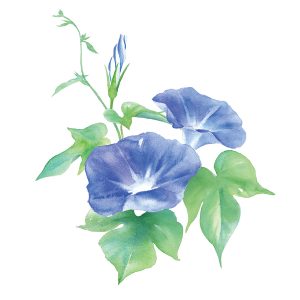
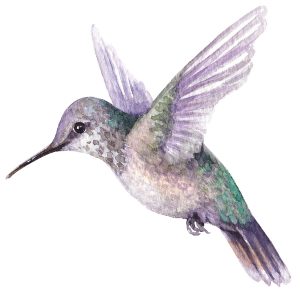
At dawn, a shimmer of hummingbirds dips and weaves among cascades of morning glories and a sweeping sea of hibiscus. In one day, the nectar of one thousand flowers will have sweetened their bellies and tongues. In one month, when the blossoms fade, the tiny birds will disappear, taking summer with them.

The honeybees have multiplied. They drift in dizzying circles, supping joe-pye weed and purple coneflower as if the future of the hive depends on it. And it does. The bees know that the season is slipping with each precious sip. They know not to waste it.

Swallowtails orbit goldenrod and lemon balm, ring around the butterfly bush, float like dreams from blossom to fragrant blossom. Soon they, too, will vanish.

Yet — for now — all is lush and dreamy. All is warm and sticky-sweet. Never mind that each kiss between bee and flower could be the last. The golden season always dims to black.

And so, you savor the last glorious slice of it. Absorb it with your whole body like the water snake sunning on the rock. Cradle it like a sipping spirit; inhale deeply, drink slowly, let the textures and flavors roll around on your tongue.

Sprawl out across the summer grass. Float from flower to flower. Drink the nectar of one thousand blossoms.

Harvest the fruits of the garden. Sink your teeth into them. At night, dance among the fireflies, here for a glittering moment, and then gone.

The cicadas know. As they scream out in rapturous longing — ecstasy and agony and nothing in-between — you soak up the sweetness of summer as if the future depends on it. As if it will carry you through the darkest days of winter. 

Sweet Morning Glory Late Summer Harvest

The morning glories have run wild. Twining vines with heart-shaped leaves and fragrant, tubular flowers, these late summer bloomers are hummingbird magnets. They thrive in full sun and, given a trellis or fence, will climb up to 20 feet.

Among the most common varieties are Heavenly Blue (sky-blue with white-and-yellow throats), Grandpa Ott (a royal purple heirloom from Germany), Fieldgrown (an amalgam of white, pink and purple blossoms) and Crimson Ramblers (a hummingbird favorite).

True to its name, the blossoms open in the morning, each lasting for just one glorious day.

Late Summer Harvest

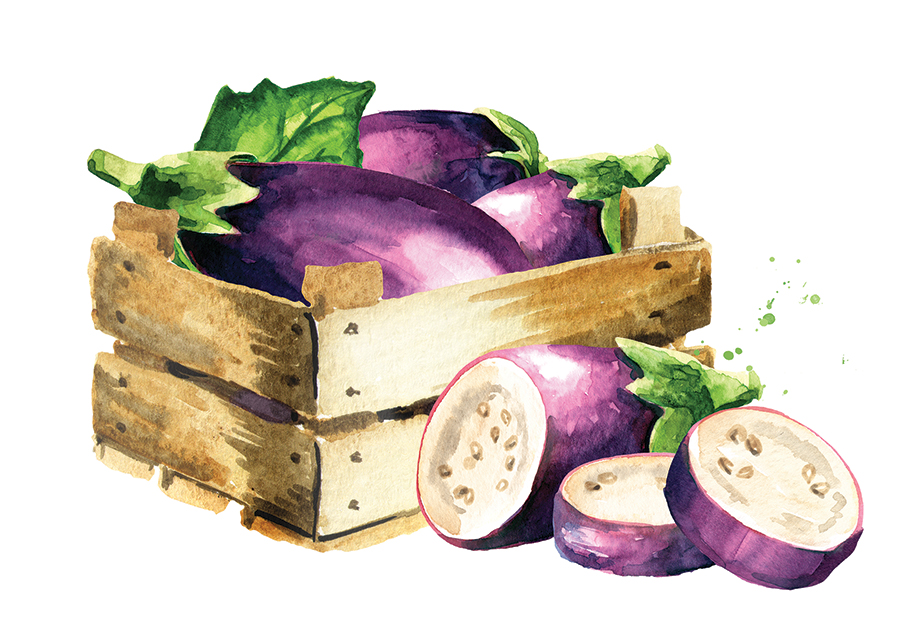
The garden gives and gives. August offers eggplant, green beans and peppers. The last of the sweet corn. The earliest apples, pears and figs. And — oh, yes — an endless stream of plump tomatoes.

But what to do with them?

The ’Mater Sammich never fails (make mine with Cherokee Purple, balsamic glaze and pesto mayo — I’m no purist). Cook them down into sauces. Dice them for pico de gallo. Make bruschetta, pasta salad and summer quiche.

Better yet, pluck them straight off the vine, sprinkle with salt and enjoy.  PS

Tea Leaf Astrologer

Leo

(July 23 – August 22)

Here’s what the other signs struggle to understand about Leos: You’re not seeking the spotlight; you are the spotlight. Nothing delights you more than basking the ones you love most in your incomparable generosity and warmth. Unless it’s your birth month. They should know that one day is not enough to celebrate the vastness of your glory; it’s your turn to be pampered and spoiled. That said, if they happen to blow it — very likely — try channeling your wrath into something productive. Like making better friends.   

Tea leaf “fortunes” for the rest of you:

Virgo (August 23 – September 22) 

Digest this: It’s not your problem to fix.

Libra (September 23 – October 22)

Take your vitamins.

Scorpio (October 23 – November 21)

Just walk away.

Sagittarius (November 22 – December 21)

The miracle isn’t always obvious.

Capricorn (December 22 – January 19)

One word: moderation.

Aquarius (January 20 – February 18)

Try giving a tinker’s damn.

Pisces (February 19 – March 20)

Watch your step.

Aries (March 21 – April 19) 

Dust off your dancing shoes.

Taurus (April 20 – May 20) 

It’s all the same coin.

Gemini (May 21 – June 20)

You’re fooling no one.

Cancer (June 21 – July 22)

The drawing board is your friend.   PS

Zora Stellanova has been divining with tea leaves since Game of Thrones’ Starbucks cup mishap of 2019. While she’s not exactly a medium, she’s far from average. She lives in the N.C. foothills with her Sphynx cat, Lyla. 

Summer Reading Issue 2022

William Faulkner invented Yoknapatawpha County as a place for his imagination to live, and every Southern writer knew where it was, even if it wasn’t on any map. Ernest Hemingway loaded his readers onto a double-decker bus and transported them to a fiesta in Pamplona, Spain, with its wine skins and dusty plaza de toros. Allan Gurganus created the fictional small town of Falls, North Carolina. In the hands of a fine craftsman, a sense of place in a piece of fiction can be so compelling it almost becomes its own character in the narrative. In our Summer Reading Issue three of North Carolina’s greatest writers deliver on this promise, taking us to West Virginia coal country, the Smoky Mountains of North Carolina, and the bottom of a freshly dug grave. Our guides for these adventures are Lee Smith, Ron Rash and Clyde Edgerton.

— Jim Moriarty


Lee Smith is the author of 14 novels, including Fair and Tender Ladies, Oral History, Saving Grace and Guests on Earth, as well as four collections of short stories.  Her novel The Last Girls was a New York Times bestseller as well as co-winner of the Southern Book Critics Circle Award. A retired professor of English at North Carolina State University, she has received an Academy Award in Fiction from the American Academy of Arts and Letters, the North Carolina Award for Literature,  and the Weatherford Award for Appalachian Literature. Her latest book, Silver Alert, will be available in the spring of 2023.


Ron Rash is the author of seven novels, seven collections of short stories and four volumes of poetry. He has been honored with The Sherwood Anderson Prize and was a finalist for the PEN/Faulkner Award for Fiction for his collection Chemistry and Other Stories, and for his New York Times bestselling novel Serena. His other novels include Saints at the River, Above the Waterfall and The Risen. He is the Parris Distinguished Professor in Appalachian Cultural Studies at Western Carolina University, where he teaches poetry and fiction writing.


Clyde Edgerton is the author of 10 novels and two books of non-fiction. His novels include Raney, Walking Across Egypt, The Floatplane Notebooks, Killer Diller and Lunch at the Piccadilly. Both Walking Across Egypt and Killer Diller were adapted for the screen. He has been the recipient of a Guggenheim Fellowship and has also received the North Carolina Award for Literature. He is the Thomas S. Kenan III Distinguished Professor of Creative Writing at the University of North Carolina Wilmington.

Art of the State

Into Being

Painter Herb Jackson creates meticulous, vibrant abstracts

By Liza Roberts

Jester’s Retreat

“I don’t want you to know how I work unless I tell you, because I want it to seem spontaneous,” says Herb Jackson. He’s in his Davidson studio, surrounded by the unmistakable works that have made his name; the vibrant, abstract paintings that convey energy and light and appear to have been made with swift, gestural strokes. But in reality, he notes, holding two fingers up in a narrow pinch, “I’m working about that much at a time.”

“The tricky thing is to make it not look like that,” Jackson says. “It’s a little archaeological. There’s a lot of drawing that goes on. I can work for hours on an area, and the next day completely cover it.” These palette-knifed layers accumulate, day by day, sometimes into the triple digits; many he scrapes away or sands with pumice. “If it’s not up to what I want it to be, then I just keep working,” he says. Light and shape and color and texture shift and morph, disappear and re-emerge. About two-thirds of the way through, a painting “will begin to assert itself,” and when they’re finished, “they tell me,” he explains.

Art has been communicating with Jackson since he was a child. He won his first art award when he was still a teenager as part of a juried exhibition at the North Carolina Museum of Art; his work has now been collected by more than 100 museums, including London’s British Museum, has been shown in more than 150 solo exhibitions around the world and has won him North Carolina’s highest civilian honor. After college at Davidson College and an MFA at the University of North Carolina at Chapel Hill, Jackson returned to this college town to teach, eventually serving as chair of the art department at Davidson College for 16 years.

Along the way, Jackson created a prolific and ongoing series he calls Veronica’s Veils, all of the same size (60 by 48 inches) and format. The name refers to the historic Christian relic thought to have received an image of the face of Jesus when Saint Veronica used it to wipe his face at the sixth Station of the Cross. Jackson says these works “have nothing to do with Jesus, but have a lot to do with Veronica and her luck, being at the right place at the right time.” When one of his paintings “comes into being,” Jackson says, “that’s basically my Veronica moment.”

Deep Dive

That moment coheres not any particular concept, but the confluence of everything he’s ever experienced, “which is much bigger than any one idea.” All of that can take some wrangling. “Occasionally, they’ll go beyond what I expected as far as challenging me, and I’ll put them up there and stare at them for several days, to just be absolutely sure,” he explains. “Because once I decide you’re finished, then I don’t go back in.” To do so, he says, would violate a painting’s integrity. “There are paintings from 18 years ago where I spot something I would have done differently — but I was a different artist then.”

For the last 50 years, Jackson has had two or three solo exhibitions of his paintings a year, but has recently decided to curtail those to focus on what matters most: painting for its own sake. “Committing to exhibitions became confining,” he says. “I just want to make my work.”

The Raleigh native has been drawing every day since he was a young child and selling paintings since he was 12, time enough to be many different artists. He’s still amazed by the experience and the process: “Where a painting comes from and how it comes together for me is still mystical, and has been for 60 years.” He credits his subconscious, but assumes some of his inspiration must come from art and travel and nature, from exploring the woods and creek and digging in the earth near his childhood home near the old Lassiter Mill. Some also must come, he says, from the pre-Renaissance and Byzantine paintings of the Kress Collection, which formed the foundational basis of the North Carolina Museum of Art in its original downtown home — works he regularly took the bus to go see.

“Those paintings were so formative for me. If there hadn’t been the North Carolina Museum of Art, I don’t know what would have happened to me.”  PS

This is an excerpt from the forthcoming book Art of the State: Celebrating the Art of North Carolina, to be published by UNC Press this fall.

Out of the Blue

Frozen in Time

The hottest month of all

By Deborah Salomon

August means hot. Serious hot.

Not that hot means much. We’re such weather wimps — dash from AC car to AC house, or store, or office. As the joke goes, were there still phone booths, they would be air-conditioned. A system failure rates emergency status, right up there with a blocked toilet or a computer meltdown.

Meltdown, a good August word when applied to an orange Popsicle that tints the tongue and stains the T-shirt.

In August, you can do without lights but not that icy AC blast.

Global warming will only exacerbate this annual woe.

I am the wimp described above. ’Twas not always so. I remember when the very heat we flee heightened our senses, prescribed our activities.

I spent every childhood summer in Greensboro, with my grandparents, in the house shaded by pin oaks, where my mother was born.

Talk about hot.

This isn’t the first time, or the second or third I’ve dredged up those summers not out of laziness but regret, since icons have drifted away like August afternoon clouds, once their rain has caused steam to rise from the asphalt.

In the North, at least, summer started with spring and the wearing of “spring coats.” Lordy, I haven’t heard that word pairing in years. By late spring, kids were allowed to shed undershirts . . . ah, the freedom, the unbinding. The last day of school meant a trip to the shoe store for sturdy leather sandals or breathable canvas “sneakers.” Both would be in tatters by Labor Day.

Where have all the children’s shoe stores gone?

How delicious, the wiggling of bare toes, unknown to kids shod year-round in “running shoes.”

Polio overshadowed those summers. No large gatherings, no swimming pools or amusement parks. Splash pads had not been invented but oh, what we could accomplish with a garden hose and a variable nozzle. Squeals of horror followed a strong, pulsating stream. “Mmmm . . . ” after a total-body misting. I remember feeling the heat rising up and escaping from my skin, whether bare or covered with shorts and a T-shirt.

Nobody bothered with bathing suits.

Then, somebody told us that holding an ice cube in back of a bended knee would cool the whole body. What giggles, as the melt trickled down our legs. Another granny advised soaking feet in cold water worked the same magic. I can still see the oval tin wash basin we used for soaking.

But nothing — and I mean nothing — cooled better than a nickel Coca-Cola from the big red cooler (with built-in bottle opener) at the corner store.

My mother didn’t allow soft drinks. Granddaddy slipped me nickels when she wasn’t looking.

Those power-guzzling coolers, now prized retro décor, fetch big bucks at antique stores.

Supper on hot nights would be cold: cold fried chicken, potato salad, huge tomatoes from the garden, sprinkled with salt. Maybe biscuits left over from breakfast. I don’t remember the house being unbearable at night, perhaps because of oscillating fans, more likely because children sleep better, especially happy children exhausted from squealing through the sprinkler, catching fireflies in Mason jars, guzzling Kool-Aid, wiggling toes around leather sandal straps, reading comic books on the porch swing, playing stick-ball, dressing paper dolls.

AC? Only at the movie theater where the blast merited a sweater.

We survived August, then returned to the North, where autumn appeared in chilly early mornings and earlier sunsets, when children bought notebooks and pencil-sharpeners, rulers, protractors, lunch boxes, knee socks and saddle shoes for school. Before cellphones and laptops and face masks and lockdowns.

Before schools became dangerous.  PS

Deborah Salomon is a writer for PineStraw and The Pilot. She may be reached at debsalomon@nc.rr.com.

The Creators of N.C.

The Family You Find

The world of Sarah Addison Allen

By Wiley Cash

Photographs by Mallory Cash

.     

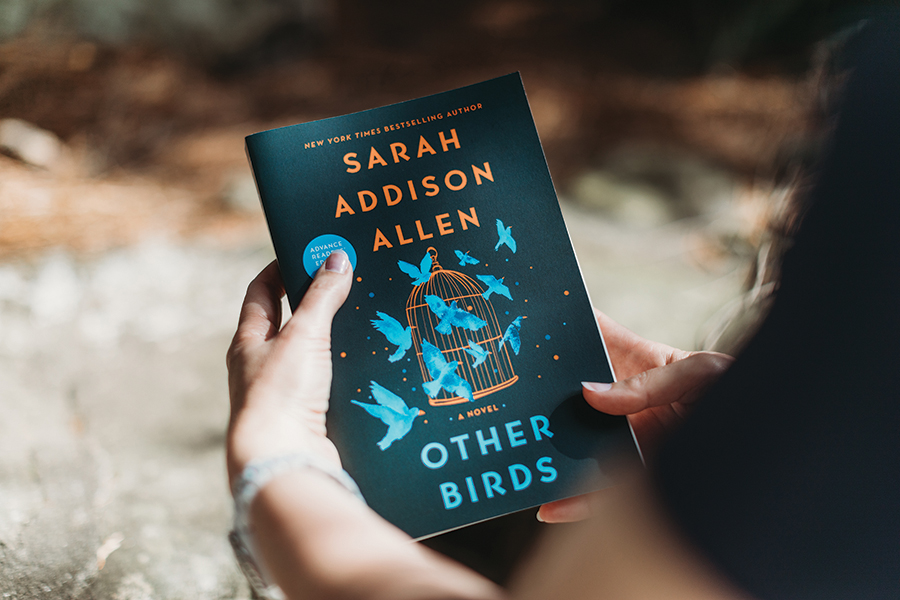
In Sarah Addison Allen’s new novel, Other Birds, an 18-year-old woman named Zoey Hennessey returns to her long-dead mother’s condominium on fictional Mallow Island off the coast of South Carolina to reconnect with her mother’s spirit by tapping into the spirit of the place. Upon her arrival, Zoey finds a historic building that houses a collection of mysterious misfits, all of them bearing their own personal stories driven by pain and longing. Although Zoey is heartbroken to learn that virtually nothing of her mother remains in the condo, she is pleased to make a home among the Dellawisp’s eccentric tenants.

Not only is the Dellawisp haunted by the lives of the people who currently live there, it’s also haunted by the lives of the people who lived there once upon a time, for the living are not alone in the old, rambling complex. Spirits hover on the margins of people’s lives just like the tiny turquoise birds that have overtaken the Dellawisp’s courtyard. While navigating the past and present of these myriad lives, Zoey reclaims her own life, and she learns that family is something you can create when you need it most.

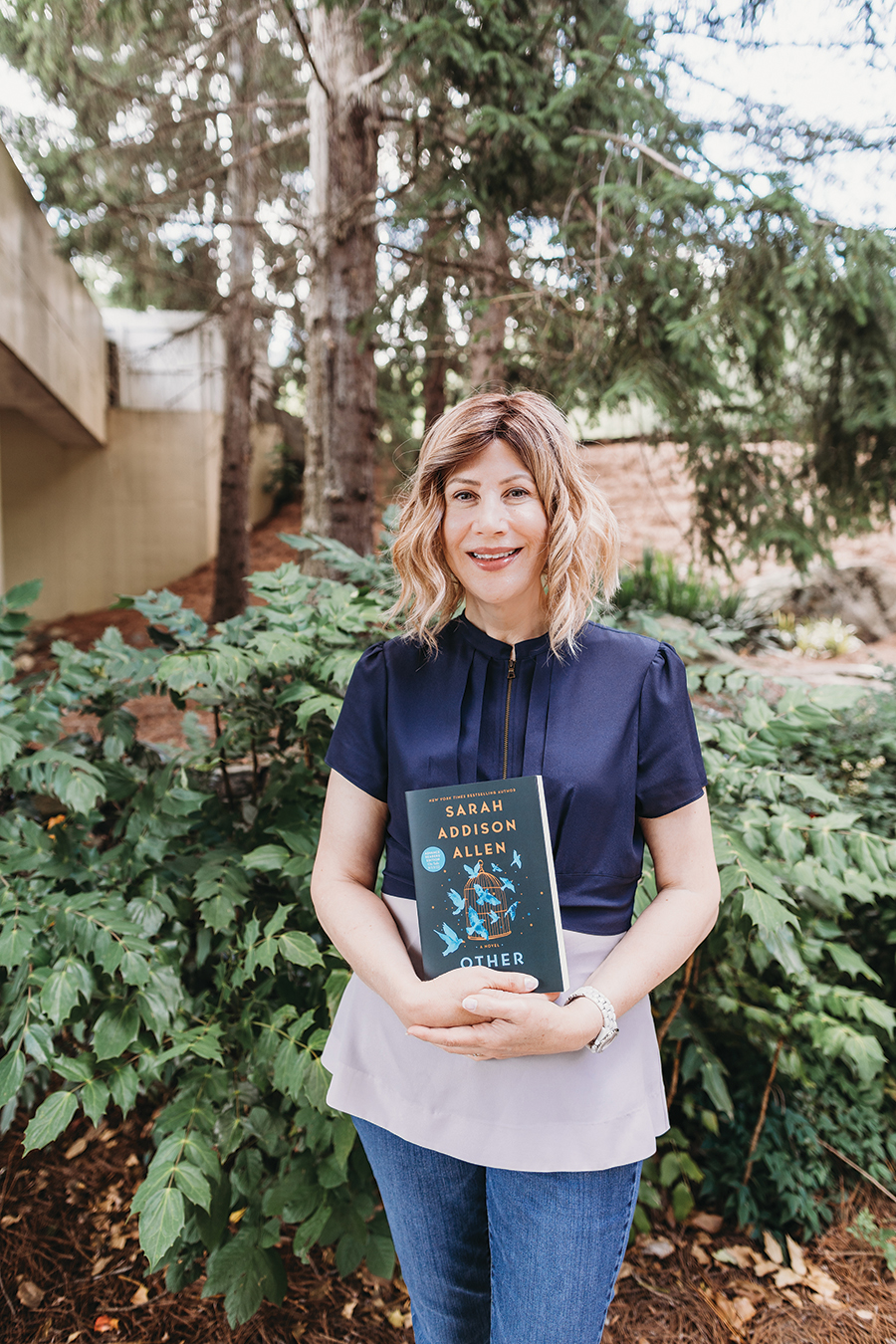
On a Saturday morning in mid-June, I meet Allen in the lobby of Asheville’s historic Grove Park Inn. While tourists and bellhops bustle all around us — the din of voices and laughter carrying along the great lobby’s stone floors — Sarah and I make our way to the verandah that overlooks the golf course. In the distance, the city of Asheville sits like a pink jewel among the swells of misty blue mountains. If the setting sounds magical it’s because it is. It’s also because my head is still buzzing with the possibility of magic after finishing Other Birds. All of Sarah’s previous novels contain magical elements, beginning with her 2007 debut novel, Garden Spells, which tells the story of the Waverley family, whose garden bears prophetic fruit and edible flowers with special powers. The novel was an instant New York Times bestseller. Since then, Sarah has published five novels that have gone on to sell millions of copies.

While Other Birds is certainly as magical as Sarah’s previous novels, it seems much more personal. When I ask her if this is true, she doesn’t hesitate. “Without a doubt,” she says. Just as several characters in Other Birds must confront tragedy and grief, Sarah has had to do the same in her own life.

“I started the book, and then my mom had a catastrophic brain injury,” she says. “For four years I watched her die. It was horrible. And then 10 days before my mom passed away, my sister died. I’d put this book on hold while caring for my mom and going through that grieving process.”

When Sarah returned to work on her novel, she found that not only had her sense of the novel changed, her sense of herself had changed as well. “I came at it from the point of view of learning a lot about life that I didn’t really want to learn,” she says. “I learned a lot about grief, and I learned a lot about what to let go of and how we hang on.”

Sarah explains to me that if this book feels different it’s because she’s different. While Other Birds is just as hopeful as her previous books, it confronts the reality of grief with a stark realism shrouded in elements of magic once ghosts begin to join the chorus of characters.

“My grief came out in those ghost stories,” Sarah says. “Even though the characters don’t know the ghosts of their mothers are there, they’re still there. I like that sort of wishful thinking in terms of losing my mom. Maybe I haven’t really let her go, or maybe she hasn’t really let me go. In some way she’s still here.”

Sarah grows quiet, and I imagine memories of her mother playing through her mind, and I wonder how those memories found their way to the page. “My mom was my best friend,” she finally says. “The characters in the book deal with the losses of the people who are supposed to care for them. But in the end they learn how to let go and move on and find family among themselves.”

Grief is not something new to Sarah’s life. Ten years ago she was diagnosed with stage four cancer, but after losing her mother and sister, her own medical journey was put into perspective. “It’s the difference between the fear of leaving and the fear of being left,” she says.

Sarah’s readers certainly marked her absence during the seven years between the publication of her last novel, First Frost, and her new novel. Once the publication date of Other Birds was announced, online book chatter erupted in celebration. In her own quiet way, Sarah celebrated her return to the page as well. She tells me that getting back to work on Other Birds after losing her mother and sister was a return to something that felt normal. “Getting back into the swing of things felt good,” she says.

Meeting with Sarah in one of Asheville’s most iconic locations feels right because she’s a writer whose identity is inextricably tied to western North Carolina. “My heart is here in Asheville,” she says. “The farther I get away from Asheville, it feels like a rubber band being stretched taut. I need to snap back. I need to come home.

“My sense of belonging is something I want to give to my characters,” she says. “They’re all in search of a place to belong. A lot of times that’s a physical place, but a lot of times it’s an emotional place, and sometimes it’s the people you surround yourself with.”

I understand the point she’s making, both because Asheville feels like home to me, but also because my own writing relies heavily on my characters having a sense of belonging to a particular place. But I also understand Sarah’s ties to Asheville because we are alumni of the University of North Carolina Asheville, where we both majored in literature just a few years apart from one another, studying under the same professors and encountering many of the same books that left lasting impressions on us both, books like North Carolina native Fred Chappell’s novel I Am One of You Forever.

Sarah sees that novel as one of the first books that introduced her to magical realism while showing her that western North Carolina could be a setting for her own work. She says that reading Chappell’s novel at UNC Asheville was like “cracking open a geode and seeing the sparkle inside.” She still remembers how Chappell’s use of folklore and ballads in the novel resonated with her as a native of western North Carolina. “That was my territory,” she says. “That was something that hit close to home.”

I was so affected by Chappell’s novel that I borrowed the name of the main character from I Am One of You Forever for my debut novel, A Land More Kind Than Home. Chappell named his young protagonist Jess Kirkman; I named mine Jess Hall.

When Sarah’s debut Garden Spells was published in 2007 I was entering my final year of graduate school in Louisiana, and the fact that an alumnus of UNC Asheville had hit the publishing big time was both emboldening and daunting for someone like me, who desperately wanted to join her. But in talking with Sarah I learn that her 13-year path to publishing Garden Spells after graduating college was long and hard. According to her, during those years she had written dozens of full-length manuscripts and been rejected by scores of literary agents.

“I was writing as close to full time as I could get,” she says. “I was doing part-time and seasonal jobs. By the time I wrote Garden Spells I was just about ready to give up. I’d gone back to school, and I hated it, and I thought, ‘Let me give it one more go.’ And I wrote Garden Spells, and suddenly, there it was. I sent off 12 or 15 queries to agents, and only one of them wanted to see the novel. That’s the agent I have today.”

Both Sarah’s new novel, Other Birds, and her path to publication prove one thing: If you look, there is a family waiting for you.

“Your tribe is out there,” she says. “Your people are out there. Just keep looking.”  PS

Wiley Cash is the Alumni Author-in-Residence at the University of North Carolina at Asheville. His new novel, When Ghosts Come Home, is available wherever books are sold.