Almanac

By Ash Alder

April doesn’t make a grand announcement.

She’s subtle. Sort of hums to let you know she’s close. Flutters in the periphery. And when she lands — like the ruby-throated hummingbird at the garden feeder — the world sings out.

April is a month of sweet transition. Purple martins replace purple finches. Yellow jessamine twists, climbs, dances across the landscape. Silver maple is flowering, and on the ground beneath it, you find the first of hundreds of brilliant green samaras (seed pods) that will spiral to the earth in the coming weeks. You pick up the fruit, spin it between your thumb and forefinger, hold it in your palm as if you are holding the wings of some tiny, mythical creature.

A ragtag choir of a dozen songbirds blurts out their threats and primal longings, and just beyond the flowering maple, a skinny tabby all but grins while brushing past the garden path.

The mornings are knit scarf- and corduroy-cool, but in the afternoon, your feet are bare, and you are sunning in a patch of tender young grass.

April is the last frost, dahlias in the garden, spring rain and fresh asparagus.

And as the first seeds of summer crops are sown (green beans, melons, cukes and squashes) you realize this: April is your answered prayer. Here and now. Late winter’s wish, come true.

In the spring, at the end of the day, you should smell like dirt. — Margaret Atwood, Unearthing Suite, 1983

Rain and Glory

Cows lie down this month same as any. But if you’re curious to know when the April showers are coming, observe a pine cone (they close when rain is on its way).

Of course, you don’t have to wait until May for the flower show. This month, fragrant jessamine and blooming azalea would be enough to satisfy any flower-loving gardener. But look and see hummingbird candy everywhere: coral honeysuckle, iris, buckeye, wild columbine.

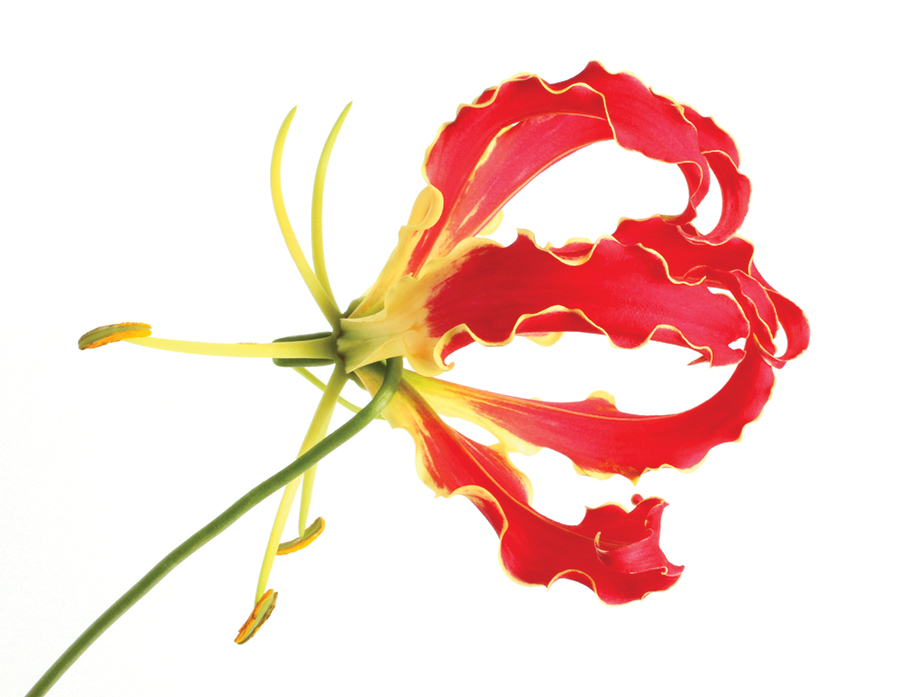
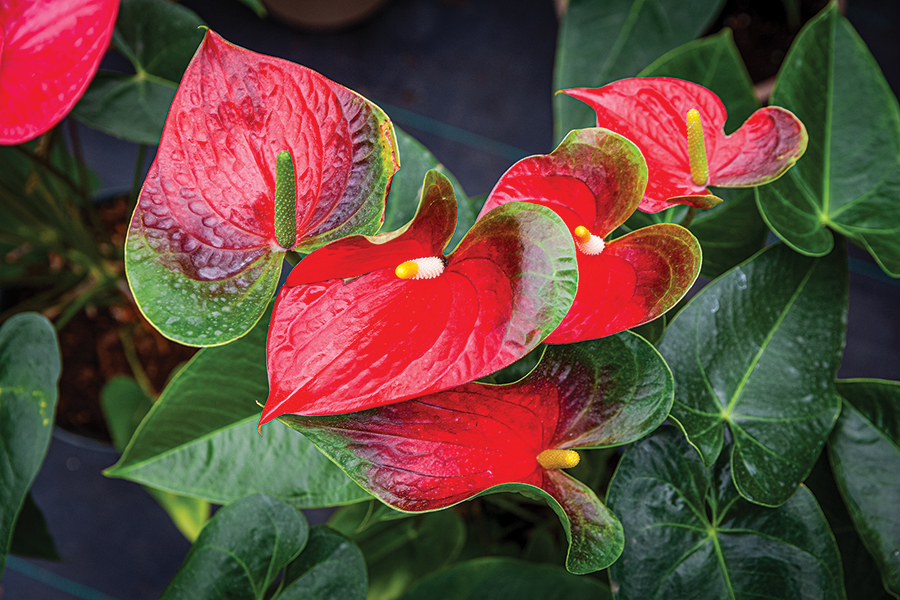
Now is time to plant dahlias, petunias, angelonia, heliotrope, lantanas and begonias. And in late April, color your midsummer garden electric with glory lily tubers. This tropical vine grows fast, climbing upward of 7 feet with its curling, grasping tendrils. Its flaming red and brilliant yellow flowers make it an absolute showstopper, and with its long, bright green stamen dangling beneath its down-facing petals, this deer-resistant “Flame of the Woods” resembles, to this nature-lover, some kind of exotic jellyfish.

Oh, lovely April: Bring on the rain, bring on the glory. 

Hug a Tree

April is a month of celebration. Easter Sunday, of course, on April 12. Earth Day on Wednesday, April 22. And on Friday, April 24, Arbor Day.

According to the Arbor Day Foundation, “One large tree can provide a day’s supply of oxygen for up to four people.”

Let that land for just a moment. Breathe it in, if you will. And if you’re interested in learning about the foundation’s bold “Time for Trees” initiative and how you can get involved, visit www.arborday.org.

April is a promise that May is bound to keep. — Hal Borland 

April Sky Watch

According to Space.com, two of the 10 “Must-See Skywatching Events to look for in 2020” occur this month.

First: the “Glory Nights” of Venus. April 2 and 3, Venus will appear high in the sky and as close to the Pleiades star cluster as it can get, lighting up the blue-white stars in such a way you’re sure to go all dreamy. Venus hasn’t been this close to the Pleiades since April 2012, and it won’t again for another eight years. Catch it if you can.

Next, on April 7, get ready for the supermoon — the biggest full moon of the year and, because of its closeness to Earth, “a dramatically large range of high and low ocean tides.”

Warm Your Bones

Spring is here, yes. But if you can’t seem to shake the final chill of winter, here’s one for you: golden milk. Warm and delicious and, according to Ayurvedic medicine, a powerful healing tonic for inflammation and digestive issues, this holistic, dairy-free beverage gets its golden color from its star ingredient: turmeric.

There are dozens of recipes available online. Most call for coconut or almond milk. Here’s one borrowed from WellnessMama.com that serves four. Golden milk in five glorious minutes. But if you’re worried about the possibility of staining your blender and/or countertops, this may be risky business.

Ingredients

2 cups milk of choice, such as almond pecan, coconut or dairy

1 teaspoon turmeric

1/2 teaspoon cinnamon

Pinch of ground pepper

Tiny piece of fresh peeled ginger root or 1/4 teaspoon ginger powder

Pinch of cayenne pepper (optional)

1 teaspoon raw honey or maple syrup or to taste (optional)

Instructions

Blend all ingredients, except cayenne pepper and honey, in a high-speed blender until smooth.

Pour mixture into small saucepan and heat for 3-5 minutes over medium heat until hot, but not boiling.

Add cayenne pepper and honey, if desired; stir to combine. Drink immediately.

Golftown Journal

Out of the Box

A new teacher, and concept, in town

By Lee Pace

Jim Nelford grew up in Vancouver in the 1960s and, as the youngest of four kids, developed a keen competitive spirit and an abiding love for all sports. He played baseball, hockey and basketball among them. He learned golf on summer visits to an uncle’s cabin, where the family had access to a rudimentary course with sand greens. “I loved to cross-train,” he says. “I loved to play basketball, I loved to play hockey, skiing, anything that was fun. One of my goals growing up was certainly to be a professional athlete, but if that ended, I wanted to own a sporting goods store. I could be around games and the coolest equipment all day, every day.”

Which is why this former PGA Tour golfer and golf instructor, today ensconced at Mid Pines Inn and Golf Club in Southern Pines, brings a different approach to playing and teaching the game. A lesson with Nelford will be built around references to key motions in other sports — throwing a football, shooting a basketball, hitting and pitching a baseball, executing a slap shot in hockey. The bedrock fundamental will not be making a full turn or releasing the club through impact or keeping a still head. 

It will be about using the lower body. 

Golf Digest once said, ‘Jim Nelford, pound-for-pound, is the longest hitter on the PGA Tour,’” says Nelford, who turns 65 in June. “They first started testing how fast you could swing a golf club in the early ’80s. We were at the Buick Open and just hitting balls into a net. My average speed was 116, 117, which is what Justin Thomas is today. They said, ‘Can you swing faster?’ I said, ‘Of course I can, that was just my Tour swing, get it in the fairway.’ So I hit 123. They said, ‘The fastest we have is Jim Dent. He’s 123 also.’

“I was 5-9 and 155 pounds. As a smaller guy, I had to use my body better. I had to be more athletically inclined and use my whole body to be able to get it up with the big guys. And I was able to do that.”

Nelford played golf at Brigham Young University and in his senior year made All-American, won two Canadian Amateurs in 1975-76 and the Western Amateur in 1977. He earned his Tour card and began hitting the Monday qualifying circuit in 1978. By 1982, he was making cuts consistently and in 1984 was tagged by Golf Digest as a “guy to look out for.” His best money-winning year was 1983, when he won $110,000 and had three top-10 finishes.

Nelford was on the cusp of his first Tour win at the Bing Crosby Pro-Am at Pebble Beach in 1984 and in the clubhouse with a one-shot lead over Hale Irwin. Irwin came to the tee of the par-5 18th and yanked his drive to the left, over the Carmel Bay coastline, rocks and sand. He flailed his arms in horror. 

But the ball miraculously hit a rock and bounced into the fairway. Irwin birdied the hole to tie Nelford and won a playoff on the second hole.

“That shaped Jim Nelford’s whole life,” said Ben Wright, a CBS golf commentator of that era. “If he had gone on to win a tournament he flatly deserved to win, his whole career might have taken off.”

A more critical juncture in Nelford’s life followed one afternoon in September 1985 when a freak boating accident while water-skiing on a lake outside Scottsdale ripped his right arm to shreds. Doctors considered amputating the arm. They told him he’d never play golf again. But Nelford and his parents implored the doctors to put his arm back together and give him the chance at a full recovery.

Nelford told his friend Lorne Rubinstein, the Toronto-based sportswriter, “There hasn’t been a Ben Hogan story recently.”

Nelford made his way back to the Tour, essentially playing “with half a right arm,” and by 1988 had made 16 more cuts to reach the Tour-mandated 150 to secure his pension. But his days competing at the highest level were essentially over.

In the ensuing three decades, Nelford has worked in broadcasting — even getting a brief gig with CBS on Masters telecasts — but his niche and passion today is teaching the golf swing. And his approach to teaching is built around the tenets he learned playing all sports as a kid.

“What do you do in other sports and what is similar — is there a similar move in every sport?” Nelford says. “I didn’t swing it the way everyone else did, and I knew that. But there was no teaching on that side of it, of the athletic side of the game. It was basically square lines golf, which I call ‘golf in a box.’”

Nelford and his fiancée, Paula Allen, had been living in Florida when he reconnected with former BYU teammate and tour traveling companion Pat McGowan, the son-in-law of the late Peggy Kirk Bell and a longtime instructor at Pine Needles. Nelford worked with McGowan’s son Michael and helped him shore up his ball-striking enough to finish 13th in the Latin America Tour Q-School and shoot 64-65 en route to a tie for second in an early 2020 Golden State Tour event. Nelford has relocated to the Sandhills and is working to establish a teaching practice at Mid Pines. 

“It’s stunning how well Michael’s hitting it,” Pat said in late February. “What Jim has brought to his game is so refreshing. I thought Michael needed a fresh set of eyes. He is now bombing it with effortless power and a controlled trajectory.

“I think Jim’s on to something with his approach. He’s seen about 25 people and helped all 25.”

Nelford has a sharp intellect and a deep reservoir of stories and comparisons to great golfers and athletes across all sports. He might talk of Seattle quarterback Russell Wilson learning to connect on the deep ball by perfecting his footwork. He’ll cite Rod Carew as a great singles hitter but a lousy power hitter because he didn’t use his lower body well. He’ll draw on an adult golfer’s memories of playing American Legion baseball and how the lower body and instinctive rocking motion are paramount to making solid contact at the plate.

“Shoot a basketball? You’d better use your legs,” Nelford says. “Does a pitcher sway? Of course he does. Does a hockey player move? Of course he does. Nobody’s trying to keep their head steady. Your engine is always your lower body, and it’s dynamic. We do move it because we need momentum. It’s why a pitcher goes back and forth, they have momentum.”

Exhibit A in golf is Jack Nicklaus, who in his prime would gird up over a shot with his lower body while letting his arms hang loose.

“Jack comes in with soft hands and arms, which obviously means he’s not fighting where the club is going,” Nelford says. “He’s letting it go. Where is he operating from? That big ass and legs, and he loads them up. That left heel comes off the ground, and he fires his legs hard. We do that in every sport.”

Nelford rails against standard teaching protocol built on perfect alignment and bromides like “turning in a barrel.” He’ll cite elite golfers who tell him they’ve gone an entire career with no one teaching them to use their legs. He’s evangelical talking about the need for innovation in golf instruction, and how the “glacial pace of learning the game” restricts its growth. Don’t bother with parallel alignment sticks on the tee with Nelford; his ideal stance is slightly closed to the target line to allow more room to turn off the ball. He emphasizes rotation of the hips, not of the shoulders.

“Focus on the lower body, and the upper body will go where it needs to,” he says. 

It adds up to being an athlete, not just being a golfer. Nelford knows of what he speaks from six-plus decades of doing both: “I am giving you permission to get out of the box, permission to act like an athlete.”  PS

Lee Pace hit a two-run, last-inning double in Little League but it was downhill from there. He hopes to reclaim his limited athleticism on the golf course soon. Meanwhile, contact Jim Nelford at jimnelfordgolf@gmail.com to learn more of his approach.

Branching Out

Branching Out

A dream home comes true

By Deborah Salomon     Photographs by John Koob Gessner

The story of this house starts like many others: Retired executives Linda and Don Branch — well-traveled golfers — fall in love with Moore County, secure a lot in a gated community, build a showplace home, make friends and live happily ever after.

Carefully integrated details set it apart.

Location, location, location: Linda drove through the gates of Forest Creek and said, “I’m done. I feel both elevated and relaxed. Don’t try to sell me on anything else.”

The architecture: faintly chateau, with pinkish bricks resulting from a white frosting, designed by an architect whose “find” was a fluke.

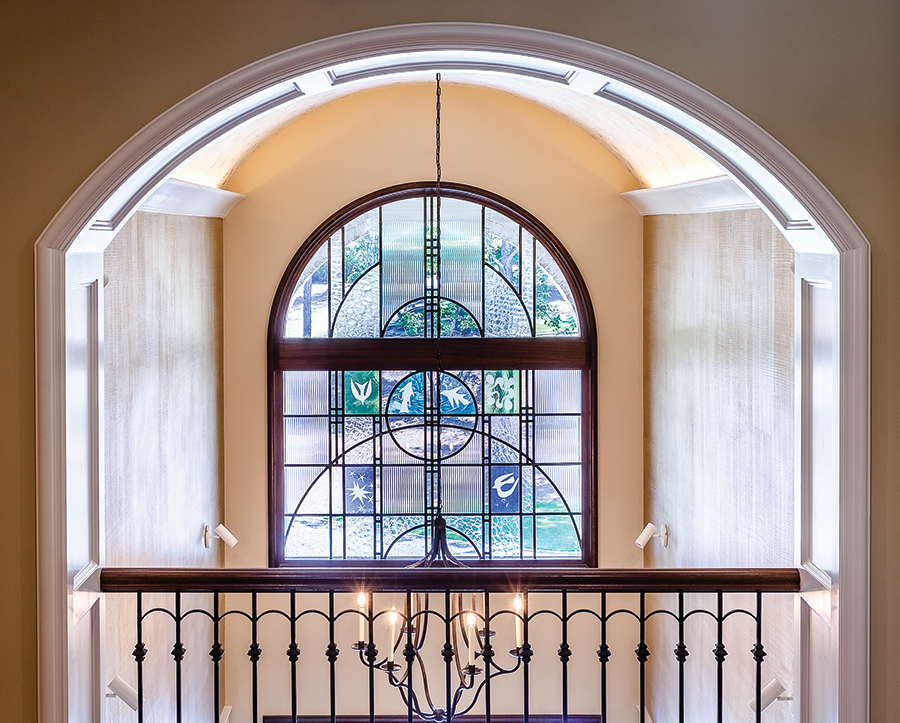
The foyer: a two-story atrium with balcony, adorned by stained glass panels that diffuse and tint sunlight.

The layout: upstairs, a private two-bedroom apartment for golfing guests.

Adaptations: a master kitchen with two cooking triangles bridged by a 14-foot granite island.

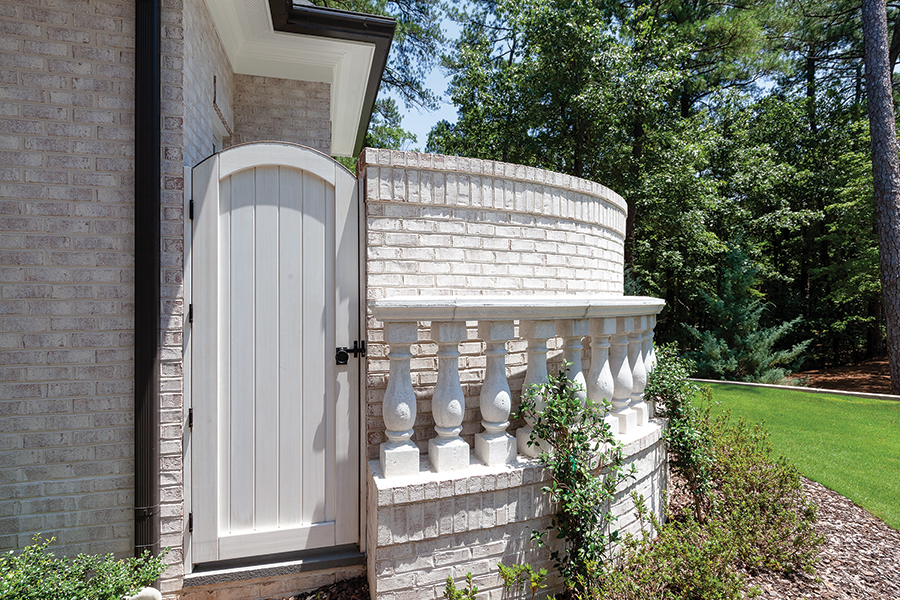
Unique: a high-walled private garden with shower protruding from the front — not back or side — façade.

Convenience: a sweet little elevator tucked beside the staircase.

Memorabilia: a piece of the Berlin Wall, Post-it Notes and a Cuban cigar press as décor artifacts. Who else does this?

Last but most unusual: an adjoining lot that they purchased as a habitat for red pileated woodpeckers.

Definitely different, even in an enclave where triple crown moldings and coffered ceilings, waterfall showers, wine caves, media centers and doggie grooming salons are de rigueur.

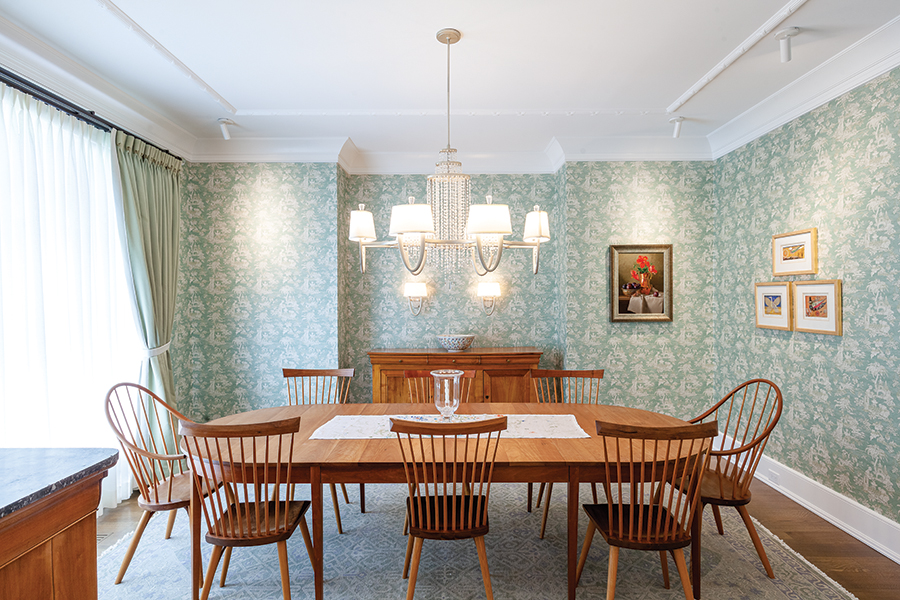
Linda and Don were ready to retire after 37-year careers with 3M. Living in Brussels, Paris and elsewhere made them crave a subtle European flair played out against minimalist precepts. The ornate retro-green handpainted Asian wallpaper in the dining room, located just beyond the foyer, comes from London; in the same room, a Louis Phillipe breakfront occupies a niche built to accommodate it. The American cherrywood table speaks Shaker simplicity, and plays against the chandelier and heavy tapestry drapes.

First impressions made by the stained glass stylized bird panels set into foyer windows hint at drama within.

Linda explains: “We wanted light but privacy, too, and pieces of color,” provided by the antique hand-blown glass. This feature was so important that architect Bill Hirsch traveled to Minnesota to see how the same panels had been installed in the house where they lived, enabling him to plan their removal and relocation.

How the Branches connected with Hirsch — pure serendipity.

Linda and Don had purchased a lot in Forest Creek for a permanent home rather than do the snowbird commute from Minnesota. They were living in Belgium at the time, making plans. By coincidence, Don found online Designing Your Perfect House, a best-seller by Hirsch. The book was just what they needed to refine their ideas. Lo and behold Hirsch, who has worked all over the world, lives in West End.

Hire that man!

Not only did he understand their goals, but introduced Linda to Agnes Preston-Brame, an artist and interior designer from Budapest who lives in Greensboro. She added the European undertones Linda sought. “I really needed help. Because we’re eclectic I wanted someone to help me pull together what we had (with new purchases).”

The two women stormed the High Point Market, furnishing the entire house in less than a week.

The result is full of surprises.

Just inside the front door is a two-part powder room and, beyond that, the stunning dining room which, along with a passageway through a hall, leads into a mostly white kitchen of magnitude and placement that render it the main-floor hub. Linda and Don, both experienced multi-ethnic cooks, have separate black granite sinks, preparation and storage areas, burners on the range top.

“In our old house we kept stepping over each other,” Linda recalls.

At the end of the kitchen stands a small marble-topped breakfast table. “My grandfather was a pharmacist,” Don says. “This marble was part of the soda fountain (in his store). It gives us a sense of history.”

Remnants from trimming the marble slab were made into trivets.

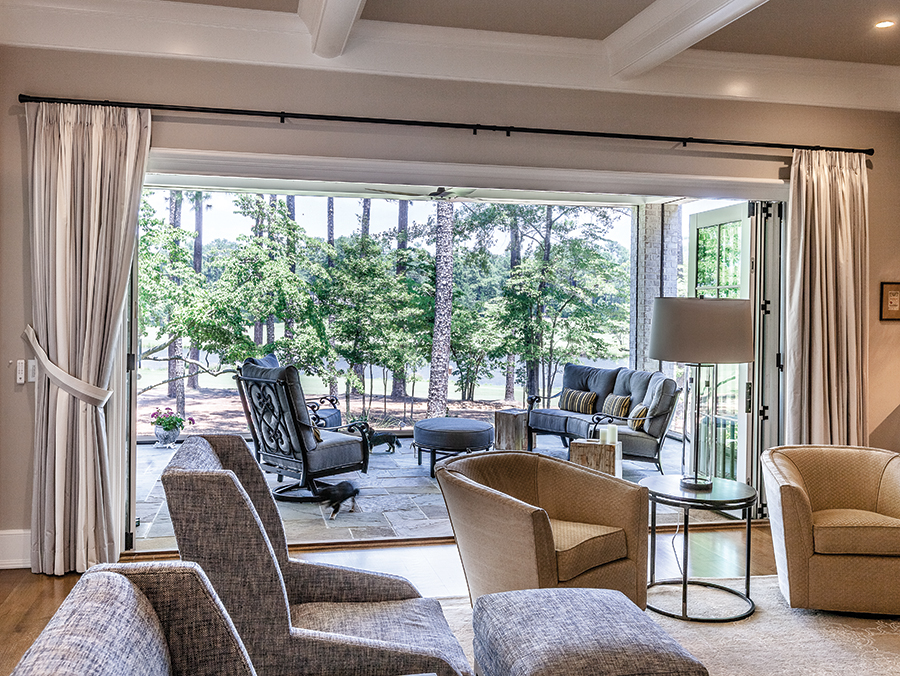
A half wall separates the palatial kitchen from a seating area which, conforming to a popular trend, replaces a formal living room. Furnishings here are contemporary but not stark, some with Scandinavian lines. This carries forward a long-standing preference.

“Our first house had Stressless recliners,” Don says, of the Norwegian design similar to Eames, conceived in the 1930s. Don insisted on a wood-burning fireplace. Linda agreed, “If he promised to take care of it.”

The covered veranda beyond the kitchen is protected by motorized phantom screens that, at the push of a button, swish down without poles interrupting a view of the pond.

The main floor master suite with seating nook is a slightly more traditional foray in soft retro green (similar to the dining room, which Linda finds restful) flowing around a massive sleigh bed in dark woods. A hallway of closets leads to the bathroom, with a glass-enclosed shower that opens directly into the secret garden enclosing another shower. High walls offer privacy but no barrier to falling leaves and pine needles.

Don and Linda first experienced this bathing arrangement on their honeymoon, in the Virgin Islands. Hirsch had seen something similar in Bali. Other luxury homes have outdoor showers for muddy kids, sweaty golfers and equestrians but not as a bathroom extension, with garden. Its placement allows for Linda or Don, still lathered up, to hear guests arriving at the front door.

Guest apartments, usually second floor or over a free-standing garage, for children and grandchildren, are common features in this echelon of 6,000-plus square foot homes, many built, as was this one, by Will Huntley. Since Linda and Don have neither, they devised The Locker Room: closed-off quarters with two bedrooms (one, a delightfully feminine lavender modifying the clubby masculinity elsewhere), workout equipment, a common room, bathrooms, kitchenette/dining area and, of all things, golf lockers where frequent guests can leave equipment, clothing, toiletries. A few friends have earned a locker nameplate. “We’ve had as many as 100 in a year,” Linda says.

Even Bella, their tiny Papillon mix, has her own gated condo behind the kitchen for mealtime and quiet snoozes.

Although most of their furnishings reflect High Point rather than heirloom, Linda has incorporated personal items, including a painting of herself by a European artist friend, which hangs on the balcony overlooking the atrium-foyer: The scarf she wears in the stylized action portrait is her real-life favorite; the MiniCooper detail reminds her of when a similar car ran over her foot. Across from it hangs Don’s choice, an enlarged Wine Spectator cover by Andy Powell.

Both Don and Linda grew up in less-impressive surroundings, Linda in a split-level ranch, Don in several homes he describes as decidedly middle class. This house fulfills Linda’s requirement for a happy retirement: a beautiful home and time for travel. In February, instead of running away to Florida or the Caribbean, they spent several weeks in Vietnam.

Linda and Don’s longstanding method of selecting and furnishing their homes, including paintings from artists met along the way, worked.

“When we agree on something we just do it,” Linda explains. “So far, all our decisions have been good.” Especially this one, which they call “rightsizing,” since it is slightly larger than their former residence.

Techie Don, after settling a few issues with Electra, agrees. “From the time we married, home and house were very important to us. People who walk in say it’s comfortable. That’s how we planned it, intuitively, to be practical for the way we live.”

His final thought represents the combined efforts of architect, builder and occupants.

“This really is our dream home.”  PS

The Kitchen Garden

Ode to Compost

Dig in when the mood strikes

By Jan Leitschuh

April is a month to stir the winter-sluggish soul. Soft temperatures and sunshine tempt us out into the yard. Bulbs, blossoms and shoots poke forth in the garden.

An ancient craving takes root: Turn up some soil and plant something.

Here in the Sandhills, our sandy soils can be worked earlier than those with more clay-based underpinnings. Tilling the tight, wet clay characteristic of other areas of the Piedmont too early can result in virtual pottery — clumps and chunks of garden not conducive to deep root structure or drainage. It’s hard to wreck the loose soil structure of our well-drained, sand-based soil. So, we can get to it as soon as the mood and temperature strikes.

But we need to do some critical soil preparation first.

Our unique Carolina Sandhills is an area about 10-35 miles wide within the state’s southwestern coastal plain, a unique region that bleeds down into South Carolina and Georgia. Strong winds from the last glaciation kicked up sand dunes from the shallow seas of the area — putting the “hills” in Sandhills.

It’s no accident the Sandhills was the last area of the state to be developed agriculturally, but peaches, tobacco, blueberries and cotton eventually thrived alongside the longleaf pine and wiregrass. Over time, area farmers learned how to manage sand’s natural tendencies and lower fertility to grow an agricultural bounty.

We kitchen gardeners can, too. Sandy soils have several pluses but need a little love. In some cases, a lot of love.

The East Coast is blessed with plenty of rainfall in a year’s time. This bounty also tends to wash minerals down into the deeper levels of the soil. This descent is accelerated on sand, as you might imagine. This is one reason that our sandy soils here tend to be quite acidic.

Our sandy soils also drain so well that when summer’s heat bakes, we find our seeds drying up and our sets needing daily watering. Skip a day and your plants might stress and drop blossoms — no blossoms, no veggies.

Vegetables need a deep and well-drained soil with adequate moisture, organic matter, and a much gentler pH. Sand has some of these plusses.

Our sandy soils are deep and well-drained, so good news there. Roots can penetrate easily. Sandy soils also warm up earlier than clay soils, so heat-loving plants can go in somewhat earlier.

Sand’s negatives include difficulty holding moisture and nutrition. Luckily, there is a simple solution: loads and loads of compost.

Organic matter, broken down, will loosen the tightest clay and “fatten” the fastest-draining Candor sand. Compost helps sand hold more water. Digging the soil is a dream, easy. And the decomposition process of organic matter feeds the soil biome, adding nutrients as it further breaks down the organic matter.

Compost also captures the nutrients we might apply. It helps hold soil fertility and manage the pH. This is especially beneficial in the case of, say, nitrogen, which may otherwise wash down into the water table. Why not hold on to what you paid for, and let it benefit the plant?

At Cottage Garden Farm, fertility and compost start in the fall. I beseech my landscaper husband to bring home bags and bags of the autumn leaves he scoops up for clients who want to discard them.

My favorites are crape myrtle and maple leaves, since their small size and tender composition break down easily. Whole oak and magnolia leaves are too waxy to break down quickly, and layers of them can form a mat that smothers the plants beneath. But, run over these with the mower and chop them into bits and the tough leaves break down much quicker. I dump these on the garden, around the fruit trees and blueberries each fall. They cover the soil, protect the roots and feed the worms before breaking down into lovely soil. Tilling the garden in spring is a pleasure, seeing the rich dirt turning up. Four inches of fall leaves are more than enough.

Grass clippings are also useful if you know they have not been sprayed. I tend to not use these in my vegetable garden, where I grow food I might eat. I use them around ornamental trees and such. But, with all the Bermuda grass grown in this area, you might be adding weed seeds. Experiment in a small area if you have access to some.

Do not use uncomposted sawdust, fall leaves or straw right now because as it breaks down, it will rob the soil of nitrogen and, consequently, starve the plants of this essential nutrient. These need to be piled to compost.

On other occasions we have planted a cover crop in the fall. Vetch, winter rye and crimson clover send their roots down deep, “digging” plenty of organic matter into the garden all by themselves. Many studies have shown the benefits of keeping roots in the garden over winter — they hold soil and provide places for the soil biome to colonize and expand. Come spring, if you can bear to weed-whack down the gorgeous crimson clover blossoms, you have added “green manure” or even a mulch to your garden, depending on whether you till it or not.

If you have done neither last fall — and now it’s spring — it’s time to haul in bags of compost. Some local businesses offer compost by the scoop if you have access to a truck and strong backs for unloading. Dump your coffee grounds directly into the garden. Start a compost pile — there are many good how-to resources online.

What about the abundant horse manure in this equestrian area?

It’s a valuable resource, and I’ve loved it, but it pains me to acknowledge it is not without problems.

Has it composted? You don’t want it too fresh, to damage plants. Ask the owners if they spray their fields for broad-leaved weeds — a persistent herbicide often used that can wreak havoc with your garden for years. Sometimes, even if the owners don’t spray, the herbicide can come in via the hay.

Finally, the harsh acidity of our sand. Compost helps here too. If you have limed your garden appropriately, compost will help stabilize the pH.

How do you know if you need lime, or another common soil deficiency here, potassium?

You probably need it, unless you are growing blueberries. But the only way to know for sure is to test your soil. The Agriculture Extension Soil Conservation program in your county offers free (April-October) or very low-cost (November-March) soil test kits. You may even be able to have the kit mailed to you. Then simply follow the directions and mail it to the enclosed address at NC State, or drop it off at your local extension office. They will mail or email your results and the staff/master gardener volunteers at the extension office will help you interpret and develop a plan to correct any problems.

So, give in to that urge. Turn that soil, spade your compost into your garden area. Toss in some seeds and sets. You are participating in a spring ritual as old as agriculture itself, one that does the body, and soul, good.  PS

Jan Leitschuh is a local gardener, avid eater of fresh produce and co-founder of Sandhills Farm to Table.

Passion of the Garden

Keeping Pinehurst forever in bloom

By Claudia Watson   •   Photographs by John Koob Gessner

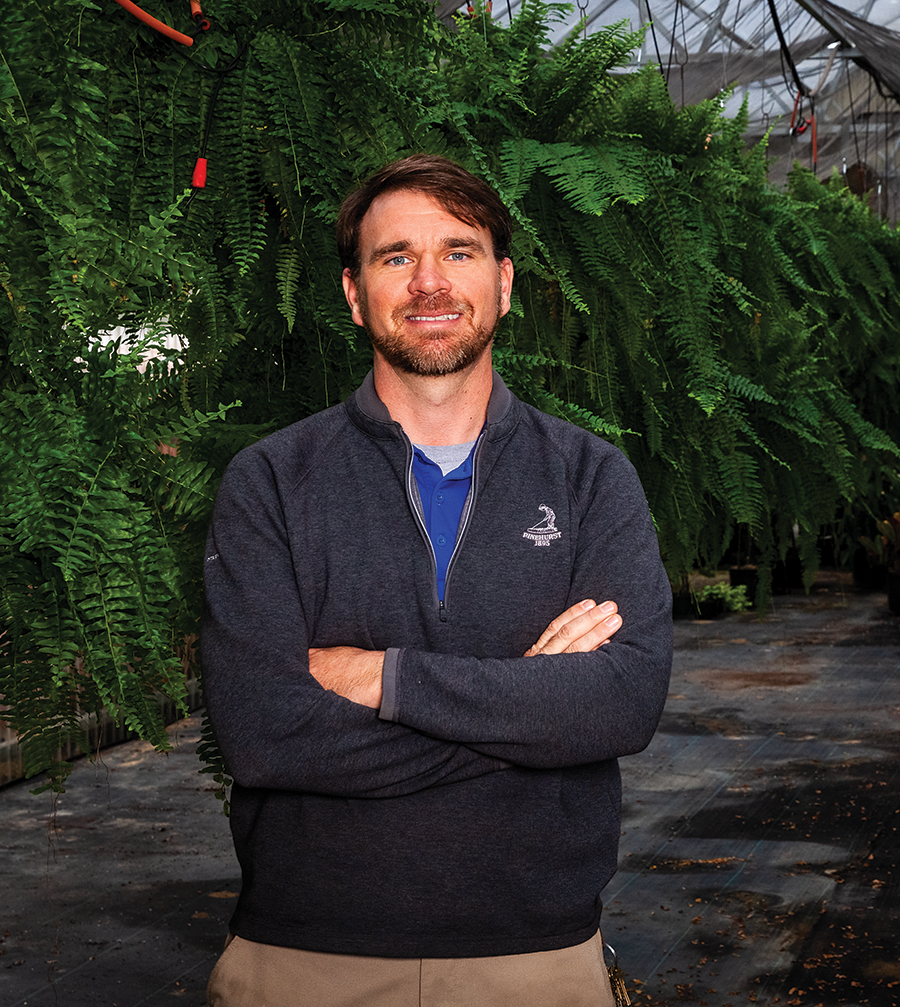
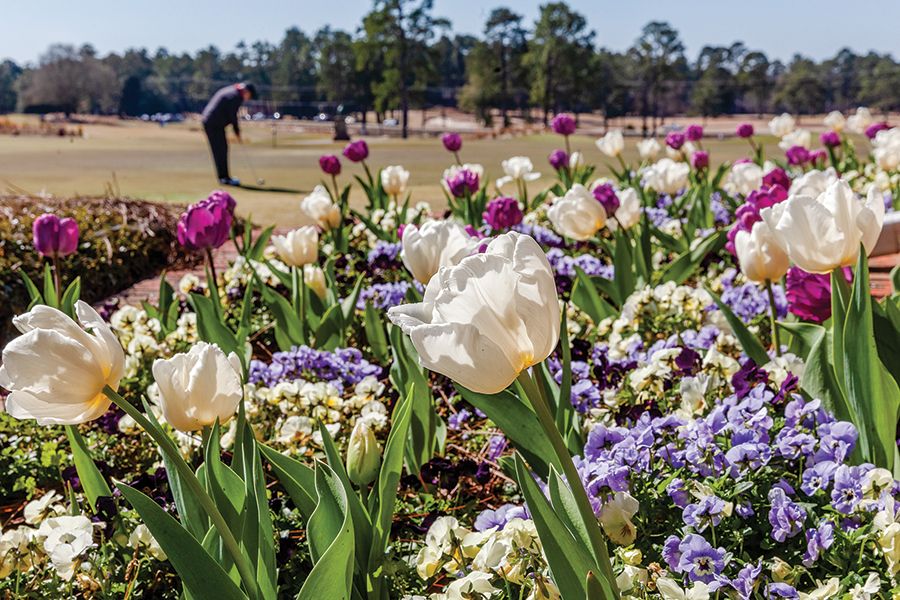
Chris Jones has the soul of a gardener. As assistant superintendent of the grounds department at Pinehurst Resort, he eagerly awaits the Eastertime explosion of colorful tulips extending from the Midland Road roundabout to The Carolina Hotel.

“It’s short-lived but quite beautiful, and I always stop to appreciate the moment,” he says of the over 12,000 bulbs his crew planted last fall. “It brings a lot of smiles to our community.”

The annual tulip bloom is a seminal moment for a resort that takes pride in extending the spirit of Pinehurst’s character and charm, showcasing its beauty beyond golf. For 17 years, the affable Jones has been the hands-on and boots-on-the-ground kind of guy who, like any gardener, is always looking at the land, no matter how familiar, for new possibilities.

He was just 16 when he took his first job in a greenhouse in his hometown, Rocky Mount, North Carolina. Though he didn’t grow up living on a farm, he often visited relatives who did, in an extended family that had farmed vegetables, row crops and tobacco for generations. His mom, who loved to garden, had vegetable and flower gardens.

“She let me experiment in the garden as a kid. We’d work in the flowerbeds tending her favorite bearded irises, and other days we’d pick beans and corn on my aunt’s farm,” he recalls. “My fascination with growing things was always there for me — it’s something of an inheritance from my family.”

With an avid interest in plant science, he jumped at the chance to take specialized horticulture courses in high school and later received a landscape gardening degree from Sandhills Community College.

After college and an 18-month internship at Homewood Nursery in Raleigh, he found his way back to the Sandhills. When Pinehurst Resort hired him and told him they had a greenhouse, he knew he had found the answer to his career dreams. Encouraged by the department’s manager, Chris Burrows, Jones spends his time directing crews, working with suppliers, designing the landscape, and ordering the plants and materials needed to keep the resort’s grounds in top shape and beautiful.

A team of 10 full-time employees, augmented by a few temporary summertime workers, maintains acres of flowerbeds, shrubs and turfgrass along Carolina Vista to The Carolina Hotel, and all of the hotel and spa grounds. The Holly Inn, Manor Inn, Pinehurst Brewery, as well as the Member’s Club, pool and tennis complexes, and soon, the renovated marina complex are also in their charge.

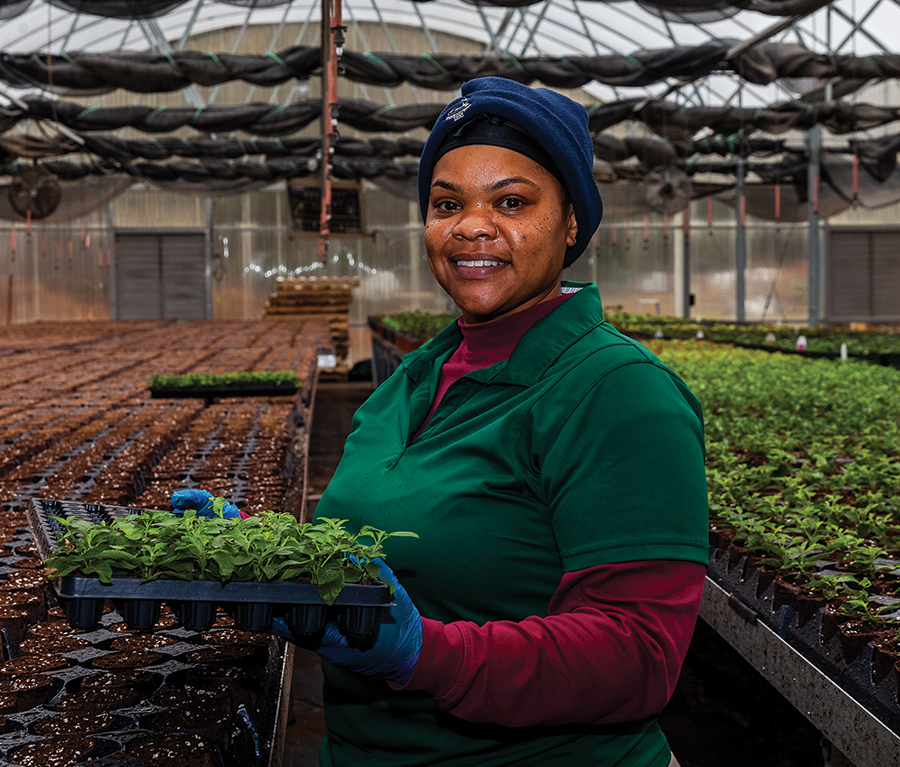
Two additional employees handle duties in the nearly 20-year-old greenhouse nurturing the crop held there and often transferring numerous towering ficus trees and areca palms to meeting spaces at the hotels. A massive potted, 25-year-old sago palm, dubbed the “granddaddy” of the greenhouse, is retired and quietly watches the activity with nowhere to go.

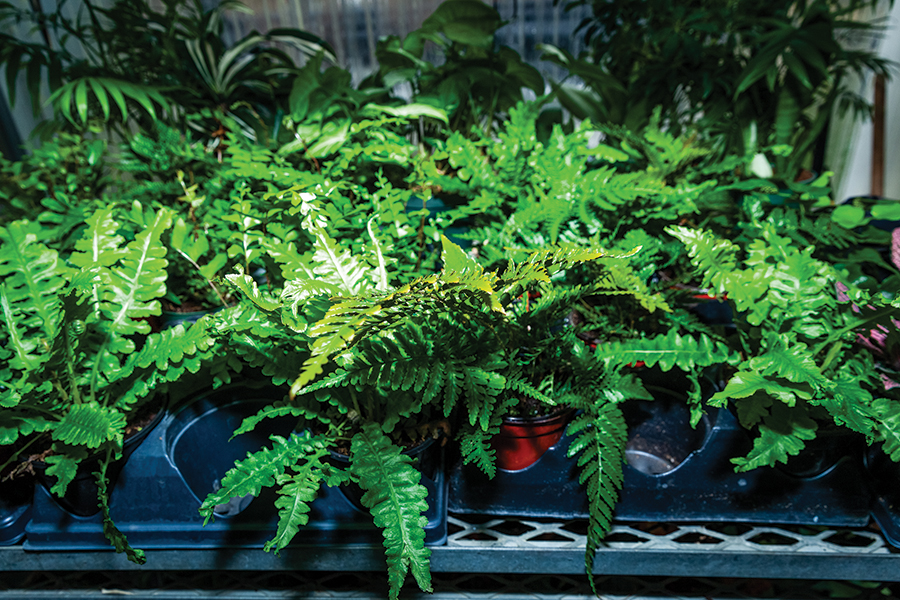
Springtime means moving 60 Boston ferns from the greenhouse’s cozy climate to the wide porches of The Carolina Hotel and designing 125 pots with panache to enliven the resort’s grounds. And, there is no reprieve during the holidays when they tend to 500-600 poinsettias on display in the hotel.

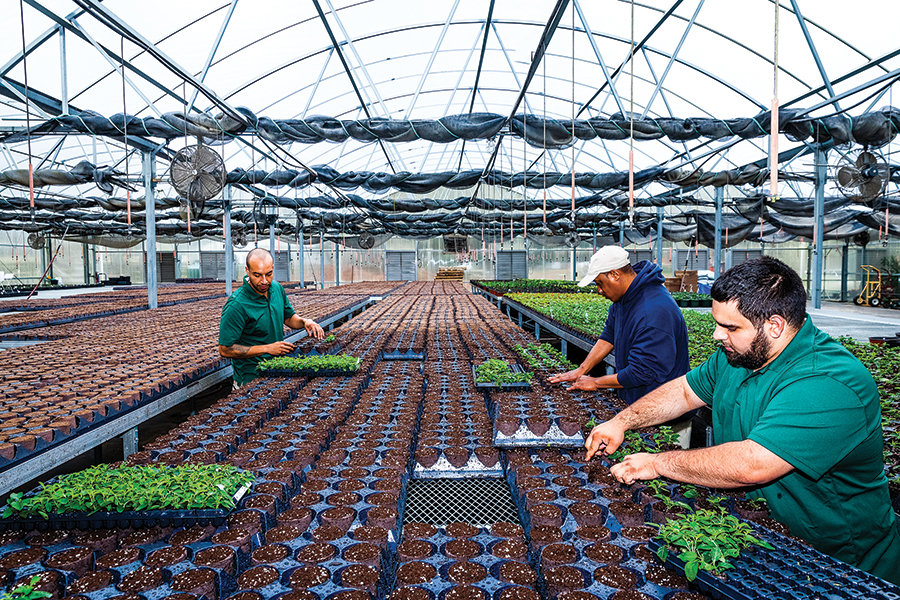
From late winter to early May, the resort’s 17,000-square-foot greenhouse, tucked behind the stables at the Pinehurst track facility, becomes the hub for Jones’ operations. With nearly 2 acres of beds planted each spring and fall, he has the effort down to pure science and timing.

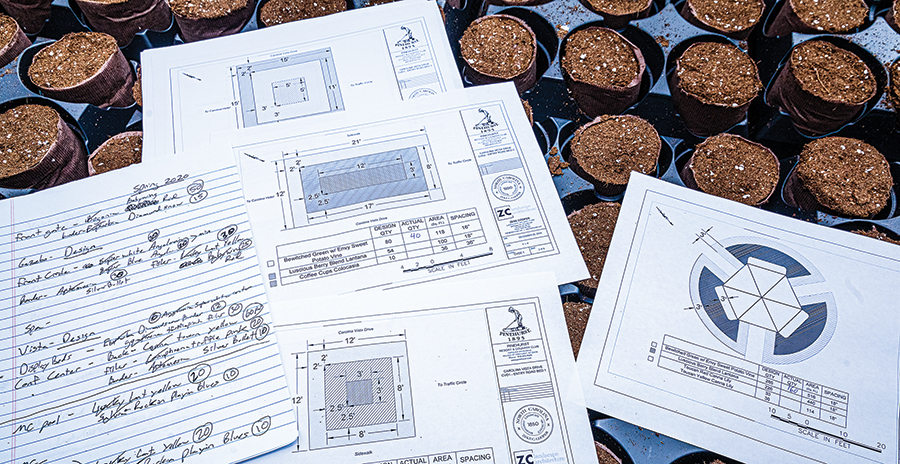
Work on this year’s spring beds began last fall, when he tested the soil, selected plants, calculated quantities and placed orders. In the early spring, the grounds crew tills organic matter from Brooks Contractor into the soil, readying the beds for planting.

The suppliers’ trucks begin arriving in late February to off-load thousands of seedling plugs grown in cell trays. In a typical year, Jones will order over 100,000 plant plugs.

“This is when things start happening in the greenhouse,” he says with a wink. “It’s crazy fun and often challenging if the weather isn’t cooperating.”

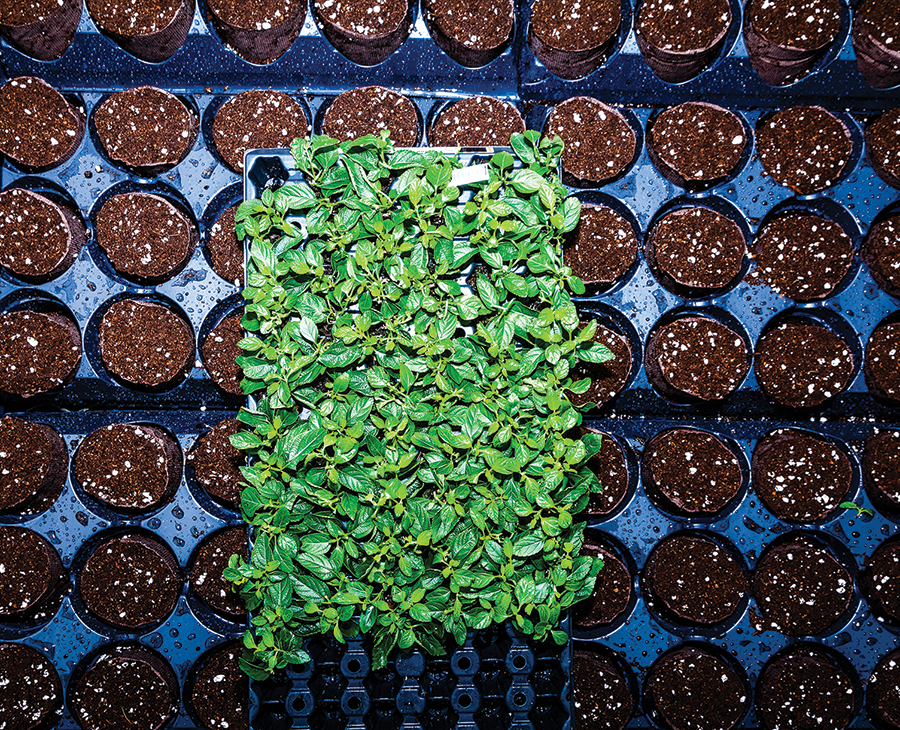
The grounds team gathers and begins the labor-intensive process of pulling the delicate seedling plugs from their cells and transplanting them into the larger Ellepots. The advanced organic paper pots are made in the U.S. on a machine from Denmark and decompose in three to five months.

The spring season order includes many different kinds of plants with a wide range of growing requirements, from tender annuals and perennials to succulents and just about everything in between. Under Jones’ management, the plugs grow large enough to transplant into the ground within five weeks.

“Our greenhouse is full and beautiful for six weeks,” he says, emphasizing it’s also one of the busiest times of the year.

“In mid-April we start planting, and it takes three to four weeks. The entire crew works quickly pulling out old plant material, tilling the soil, and planting all of the new beds on the property.”

Jones designs both large and small landscapes throughout the resort. He knows that most Pinehurst visitors are there to play golf and not to appreciate it as a garden space, “but gardens are important to our Southern charm and history, so we want to make them enjoyable and beautiful.”

And they don’t happen by accident. Jones says the first tip is to follow the golden rule of gardening: The better the soil, the better the garden.

To build good soil, a soil test is essential. “A soil test gives the baseline of your flowerbeds, vegetable gardens, and turf,” he says. “If your plants are looking bad or dying, it could be because they’ve used up most of the available nutrients from the soil, or possibly the pH is off from the optimal range of what you are trying to grow.”

Jones recommends consulting the North Carolina Cooperative Extension office in Carthage. Soil test kits and analysis are free or low-cost, and the analysis results arrive by mail or email in a few weeks. The Cooperative Extension’s master gardeners are available to answer questions about soil tests or gardening concerns. He also suggests that homeowners review the plant’s cultural requirements — essential information about the soil, sunshine, water and the climate needs. It can be found on the plant’s tag (though that information is generic and, hence, sometimes wrong) or by researching the plants.

Jones has had his share of vexing challenges, from frostbitten and dead plants to the deer that recently discovered the buffet of tulips and pansies along Carolina Vista. He regularly sprays Liquid Fence to keep them away.

Experience being the teacher, Jones uses only time-tested, durable plants that resist disease, pests, and tolerate the Sandhills growing conditions.

He calls heat-loving lantana a workhorse. “It offers options for color and size, and it doesn’t mind sandy soil or require lots of irrigation, plus it’s a butterfly magnet.”

Last year, at the Holly Inn, he used a combination of New Gold lantana, a low-growing, dense variety, and mixed in a spikey, deep blue salvia, Rockin’ Playin’ the Blues, Salvia longispicata x farinacea, from Proven Winners.

“It was outstanding, full, and very natural,” he says. “It looked sensational into fall and generated lots of compliments.”

Another of his favorites is Lemon Coral, sedum mexicanum, a beautifully textured succulent with chartreuse foliage that edged the beds along Carolina Vista last spring.

“It held up and grew back despite being trampled during the U.S. Kids Golf Parade of Nations,” he laughs. “Now, that’s a great plant!”

A homeowner can spend a lot on their landscape only to see plants and shrubs fail because they are not well-suited to our climate, soil, or they have low disease resistance. Jones recalls the candy-colored beds of impatiens planted each spring along Carolina Vista and throughout the community.

“They were gorgeous, but an invasion of impatiens downy mildew (a fungus-like water mold that is wind-borne) ended their reign. When that happened, suppliers and consumers got turned off. We looked for newer varieties with greater disease resistance,” he recalls.

“The same thing happened with begonias. Some of those have terrible disease resistance, but many of the newer varieties perform beautifully, and we’re using them in beds.”

Shrubs can also succumb to disease and old age. Recently, Jones needed to replace some hollies and laurels in the resort’s landscape and introduced distylium, a broadleaf evergreen that provides the backdrop to a more modern view.

“I wanted something that had a lovely, full look and didn’t need excessive pruning,” he says, echoing homeowners weary of their shrubs pruned to look like “meatballs.”

“We’re using it as a mid-range low shrub for the foundation, and it’s adapted well and is now the go-to replacement as we renovate.”

Jones, a flower lover at heart, also cautions homeowners who are tempted by the big, showy blooms in garden centers.

“Look for a plant that has a bud that’s still closed,” he says. “If you buy the one that is in mid- or full-bloom, you’ve already missed the first couple weeks of their beauty.”

He uses angelonia, a late-summer blooming annual, for continuous color in combination pots or the garden.

“We plant it as a mature plug with glossy green foliage. But when the summer heat comes on, it gets taller and fuller with upright spikes of color — so it’s working for the season, not just a few weeks.”

And, like home gardeners, he understands the temptation to tear out plants that didn’t work or are deteriorating and plant anew.

“I see areas that we want to update with something more than azaleas, camellias and hollies,” he says. “As we introduce new plants, some perennials and shrubs, the landscape is becoming more visually exciting.”

A few years ago, an area across from the member’s pool and tennis facilities needed renovating. Shaded by towering longleaf pines that notoriously suck up soil nutrients and moisture, the understory beds were robbed of life.

Now renewed, the space features lovely miscanthus sinensis Adagio and panicum virgatum Thundercloud grasses and colocasia esculenta Coffee Cups, a graceful tropical plant that grows to 6-feet tall. The black stems support cup-like foliage, which collects rainwater, and when full, the stem bends to pour the water.

In 2017, after the renovations of the hotel’s east wing, his interest was sparked when asked to redesign the large, overgrown area that runs hundreds of feet in length from the east wing to the spa.

Jones introduced many plants not used anywhere else in the resort, including beds of hydrangea paniculata Tardiva, a cold-hardy, late-blooming variety of hydrangea. Its showy white flower heads turn purplish-pink in the late fall as the foliage changes from yellow to mahogany.

“It’s a fabulous space for weddings and small outdoor gatherings,” he says. “And it takes your breath away when it’s in bloom during the late summer.” The project was a source of well-deserved praise and a sense of pride for him.

“I designed this on paper,” he says. “I researched plants, studied their cultural requirements, made the soil amendments, and designed and installed a new irrigation system. I was on hand for the entire process. And I loved it. When I walk by it now, I think, wow, I created this.”

Jones is among only 11 commercial landscape professionals in the U.S. who carry the credential “Proven Winners Certified Landscape Professional.” And he is a founding member of that company’s advisory committee. The award designates that he has professional expertise in the use of their branded plants and expertly showcases them in landscape designs.

His professional growth as a respected landscape professional doesn’t outweigh his centering passion. “My favorite place is still the greenhouse. It’s enjoyable and always uplifting to be able to create beautiful things,” he says. “At the end of a week after planting, fertilizing, and watering all those seedling plugs, there’s nothing better than opening that door on Monday morning and seeing a bunch of buds coming on.”  PS

Claudia Watson is a frequent contributor to PineStraw and The Pilot and finds the joy in each day, often in a garden.

Sporting Life

Airstream Adventures

Wit and wisdom of the campground

By Tom Bryant

When late winter rolls around, opening the door to an early spring, Linda, my bride, and I saddle the 4Runner and hitch up the little Airstream for our escape south to Chokoloskee Island below Everglades City, Florida.

It’s a good ride and we take our time, stopping along the way for needed R&R and also to see the sights. Fishing is ostensibly behind the outing, but these trips really have evolved into a chance to have great conversations with fellow campers. It seems as if everybody has a good fish story, and I try to get these folks to share some of their best tales.

Camping is a really great sport, and more and more people are getting into it. On our last summer camping trip to Huntington Beach State Park in South Carolina, we were surrounded by a whole slew of tiny RVs that were just big enough to house a bed and maybe enough headroom to allow changing clothes. But the little units didn’t seem to have much more room than that.

We’ve noticed that as the baby boomers retire, many have discovered the fine art of outdoor life; and with some that means the open road. Most of the campers we’ve met are quite competent; but unfortunately, there has been an encounter or two with folks who don’t have a clue about how to handle a trailer.

One example was a gentleman we met in a small campground in Florida. He was towing a 30-foot Montana fifth-wheel, and it was a pain to watch him try to back that huge trailer into his camping spot. We were camped right across the road, and I tried to help his red-faced wife with hand instructions, and in her situation, shouts to keep the exasperated fellow from running into a tree or knocking over a water spigot. It wasn’t pleasant.

It was a particularly hot day, and after about 15 minutes, he finally got parked. When he stepped out of the big 350 Ford tow vehicle, he was drenched in sweat. I walked back over to commiserate with him, and he looked at me bleary-eyed and said, “If I ever get this blankety-blank camper home, I’m gonna sell it, and my next outdoor adventure will be at a Holiday Inn.”

“Nah, man. You’re just getting the hang of it. In a couple more weeks, you’ll be an old hand.”

“The folks who sold me this thing didn’t tell us that there would be so many problems. I mean you have to hook up, unhook, do the water, the electric, the sewer line. I mean it’s almost like you have to build a house before you can sit down, have a drink and enjoy yourself. No, man, I realized on this trip I’m not designed to be a camper.”

I’m afraid that there are a lot of people just like this guy. They have charged into the camping fray without actually realizing that there is more to it than cruising down the highway. It reminded me of that classic movie The Long, Long Trailer with Lucille Ball and Desi Arnaz and all the problems they had.

That evening after supper we were sitting outside enjoying a glass of wine when the couple next door came over. We invited them to join us for a spell. It turned out that this was their first jaunt into the camping world, too, and they were seriously thinking about giving up and going home.

Linda laughingly told them about our first adventure driving home from the Airstream dealer when I wasn’t sure how to unhook the trailer when we got home. “Tom got out the manual and stood there scratching his head staring at the camper. He said, ‘Honey I think we’re gonna have to haul this thing around forever. I don’t know how to get it off the car!’”

We all laughed, then Linda followed up with, “We made one practice trip to Huntington Beach, though, and then two weeks later, we packed up the little ‘Stream,’ as we call her, and shoved off for Alaska. We were gone two months and drove over 11,000 miles. What a great trip!”

She looked over at me grinning, “Tom turned into a long-distance truck driver and has never looked back.”

We talked a little more, and it seemed as if the couple was not as upset and crestfallen as they had been when they first arrived. It could have been the couple of glasses of wine they had while sitting under our awning, but I hope they decided to give the sport a little more time. We left early the next morning, so I don’t know how things worked out with them.

We have run across the least experienced campers in our adventures but also some of the most knowledgeable. There was one old gentleman we met in Iowa, actually while on our trip to Alaska. The campground was right on the banks of a beautiful river, and as we were checking in, the manager said, “I know how you Airstream folks like to stick together, so I have a real surprise for you. I’m putting you right across from another Airstream, and I’m sure you’ll be pleased to meet the gentleman who owns it.”

That was an understatement. As we pulled into our site, I saw that the Airstream the manager was talking about was a real vintage model. I was just finishing the chore of unhooking and attaching the water and electric when a bearded fellow walked over and said, “I like your Bambi. I own the old unit across the way. Soon as y’all get settled come over and join me for a cocktail. Tonight I’m having martinis.”

“We’ll do that, and I’m looking forward to it,” I replied.

After we got settled, Linda and I ventured over to the site where the antique Airstream was parked. The bearded gentleman was sitting under his awning enjoying a libation.

“Hey folks, come on and sit.” There were a couple of vacant chairs right next to a small wooden table with a half-full pitcher of martinis on it.

Our host poured drinks and we began talking about our adventures. We learned that his Airstream had belonged to his uncle, who gave it to him when he came home from the Vietnam War. He had completely restored it and it looked great. Since then he had traveled to every state in the union except Hawaii and related that he had no real desire to see that part of the world again.

The conversation drifted here and there as we shared stories about different experiences on the road. Before long, we had to head home for supper.

As we shook hands, I asked him what his most memorable time with his Airstream was.

“Well, I noticed that you folks were kind enough not to mention that I have only one arm. I was in pretty bad shape when I came home from that lousy war. Left my other arm over there. Isn’t it funny how we won all the battles but still lost the war?”

He paused and patted his Airstream and said, “This little baby brought meaning back to my life. Hope to see y’all in the morning.”  PS

Tom Bryant, a Southern Pines resident, is a lifelong outdoorsman and PineStraw’s Sporting Life columnist.

Wine Country

Neighbors to the North

Virginia wines come into their own

By Angela Sanchez

When driving through the rolling hills outside of Charlottesville, Virginia, you see beautiful farmland with wineries, cider houses and breweries. Tucked away in Central Virginia, these places have breathtaking views and lovely, preserved agricultural spaces. It’s where Thomas Jefferson worked voraciously to grow French wine varietals in the fields of Monticello, his plantation home.

Full of American history and family-owned farms, minutes away from cities, colleges and culture, this area boasts a thriving wine industry. It’s only fitting that today Central Virginia is on the map for winemaking and viticulture. Once considered mediocre, at best, today the wines are worth a closer look.

While Virginia is broken into numerous growing districts, Central Virginia is the most interesting. Encompassing Albemarle and Nelson counties — a short drive from Charlottesville, minutes from Wintergreen ski park in the Appalachian Mountains and an hour-and-a-half from Richmond — the area is beautiful, accessible, and capable of producing wines on par with those of America’s more heralded wine regions.

The Central Virginia growing district encompasses the Monticello AVA (American Viticultural Area), named for Jefferson’s home. A well-know Francophile when it came to all things wine, Jefferson not only collected French wines but toiled over French varietals in his own vineyards, trying to find the right “fit” for the land.

Today, the land has decided. Granite-based clay soil is very fertile, and provides the structure behind the beautiful wines produced there. Lesser-known French varietals have taken hold. Viognier, cabernet Franc and petit verdot have grown, adapted, and are thriving in the rich soil, continental climate and the extended growing season of over 200 days a year. As of late, better-known varietals like cabernet sauvignon and chardonnay are shining, too.

At most of the wineries you will find Bordeaux-style blends leading the tastings as favorites, lending an “expression of place” that is uniquely Central Virginia. The wines are structured with a restrained power that allows the balance and fruit character to shine. Some have great aging potential, though most producers are making wines that can, and should, be enjoyed young. Whites and rosés are aromatic and, at their best, show notes of minerality. The growers and vintners have developed wines of style based on their place, soil, climate — terroir, if you will — rather than emulating other growing areas. Working with what the land gives them has added greatly to the success of the region, what Virginiawine.org calls “pushing back against a tyranny of sameness.”

The wineries of the Central Virginia growing district are beautiful, like the landscape they occupy. The fertile, green, rolling hills, undeveloped farmland and the backdrop of the Blue Ridge Mountains make for idyllic production. Some of the wineries are stately, some modern farmhouses, all offering their unique expression of place, and all accommodating. A few offer full menus while others just showcase their wines, allowing you to bring in food. Most are kid-friendly, and all are couple- and friend-friendly. A large majority are family-owned, and a few are owned by famous faces.

Flying Fox Vineyard, a family-owned winery that not only makes amazing wines but has introduced a line of outstanding vermouths, is one of my favorites. Others include Pippin Vineyards, with a full restaurant and culinary gardens; Pollack Vineyards, with a beautiful tasting room and big lush wines; and Blenheim Vineyards (owned by rock star Dave Matthews), with gorgeous views, picnic areas and a glass floor in the tasting room that shows off the winery. All are easy to get to and open every day of the year except Christmas.

The reds and whites produced by these wineries are balanced, generous and a great bang for the buck. I like to pair the wines with cheese produced in Virginia, too. Try one of the signature red Bordeaux-style blends of cabernet, merlot, petit verdot and syrah from Blenheim with cheese from Meadow Creek Dairy. Appalachian, a tomme-style cheese with a rich, yellow hue and deep nutty and grassy flavor from the grazing herds, pairs well with a crisp, fruit forward rosé from Pippin Vineyards.

Beautiful farmland, wines distinct to place, and the roots of America’s history are a day trip away.  PS

Angela Sanchez owns Southern Whey, a cheese-centric specialty food store in Southern Pines, with her husband, Chris Abbey. She was in the wine industry for 20 years and lucky enough to travel the world drinking wine and eating cheese.

The Accidental Astrologer

Moonstruck

Keep an eye on La Luna’s transits this spring

By Astrid Stellanova

Star children, consider the moon.

All things lunar delight me: moonlight, moon bathing, Moon Pies, moon races — and swooning beneath the moon with Beau.

Without the glorious moon, we would be stuck with he paler light of Venus in the night sky. And the sea tides would be punier. Days would be much shorter but our years much longer. The axis of the Earth would be wonky. Seasons would no longer exist.

The brightest moon this month, a “worm” moon, will light things up on March 9th. Another super moon, a “pink” moon, falls on April 8th. Watch lunar lovers, in wonder.

Pisces (February 19–March 20)

Somebody has to bring the chaos, and somebody else has to be the designated chaos coordinator. Pull up your boots and just deal with it, Darlin’. You’ve had many skills that are being tested; but there is no one better to handle what is in front of you. The good news is your trials are soon resolved and the Magic 8-Ball agrees: The future looks bright.

Aries (March 21–April 19)

You ain’t a flower, but if you stand in the sunlight you might get straightened out. The past dark months bent you out of shape, and your focus was the view from a dark corner of your mind. The days are longer, and you grow stronger and more resilient with each cycle.

Taurus (April 20–May 20)

Paddle your own canoe. Stay in your own lane. Mind your own beeswax. Write this on your hand and read it, Sugar. The temptation to meddle is mighty, but the payoff to resist is profound.

Gemini (May 21–June 20)

Can’t everybody be the monarch, or who would bow down and kiss your patootie? That’s right, Honey Bun. Have you realized how much you need to make others subservient? Watch The Crown, but don’t wear one.

Cancer (June 21–July 22)

Lordamercy, Child! Seems like you’ve got too many tabs open in that brain of yours. Consolidate your energy and focus upon things in an orderly way. Being too scattered hurts your peace of mind.

Leo (July 23–August 22)

Don’t let life become a spaghetti Western. You know the player, Honey, who enters the room and immediately turns everything into a Survivor episode. This drama is costly. Two steps back will save your sanity.

Virgo (August 23–September 22)

Those who love and know you say this: You’ve been like a mother or father figure, but cooler. A reputation for being kind and nurturing can be useful in mentoring. This will be important to your legacy.

Libra (September 23–October 22)

Running out for beer, coffee or doughnuts is not exercise. Love Bug, you have neglected your own well-being but developed your social life. Now to combine both for the sake of a longer, healthier, loving life.

Scorpio (October 23–November 21

If you’ve grown up around boys, nothing can scare you. You already know that. Your sense of mystery is so deep; sometimes shyness is at the root. Saying you’re scared isn’t your way; but Honey, just say it.

Sagittarius (November 22–December 21)

Your cat may think you’re cool as beans . . . but outside the house you baffled your human friends. What is in play has confused others but you do have an end game. Talk about it. Gain support for your actions.

Capricorn (December 22–January 19)

Those crazy relatives helped build character. Now you are one — a real-life Southern character. A fun time in your sun cycle, and unexpectedly, you air some whole new eccentricities. Sugar, fly your freak flag!

Aquarius (January 20–February 18)

Your face is saying what your mouth just can’t, but being an open book type, you had no idea. Wearing a game face is absolutely impossible. No Vegas cards for you; maybe Tarot? Consult the charts; stay calm. PS

For years, Astrid Stellanova owned and operated Curl Up and Dye Beauty Salon in the boondocks of North Carolina until arthritic fingers and her popular astrological readings provoked a new career path.

Good Natured

What’s Your pH?

Finding balance in the body

By Karen Frye

There has been much study and information published about the importance of balancing our body’s pH level. The term pH (potential of hydrogen) refers to the acidity or alkalinity of a substance. If you have a fish tank or a swimming pool, you understand that maintaining the proper pH balance is very important. The theory is relevant to the human body as a way to reduce the risk of many diseases. When the clear fluids like saliva remain in the healing pH range of 7.1 to 7.5, a slightly alkaline condition, the body is able to perform cellular repair and maintain good health.

Lack of pH balance can lead to poor health. A few of the conditions of an over-acidic body are arthritis, high blood pressure, diabetes, tooth decay, osteoporosis, asthma and fibromyalgia. Nearly all degenerative, chronic disease thrives in an over-acidic state of health. One way back to better health is finding that acid/alkaline balance your body works hard to maintain.

Our body is designed to be self-healing. When there is a balance of alkaline and acid, the body can repair itself. The food we eat directly influences the state of our health. Changing your diet is one of the tools to balance pH and maintain the proper balance of the bodily fluids that impact every cell in the body.

Sometimes the change can be a radical one, especially if you eat the standard American diet. A diet of highly processed and refined food, lacking enzymes and nutrients, can, over time, create major stress on the body because of over-acidity. An acidic condition wreaks havoc on the major organs, glands, bones and teeth.

It is also important to know that you do not want to be too alkaline, as the vital organs and muscles need to remain in the slightly acidic pH range. The blood seeks to stay in the constant pH of 7.365 to 7.425 to maintain homeostasis.

What should you eat, and what should you avoid? There are many books that contain vast amounts of information about the foods you need to include in your diet. Vegetables are at the top of the list; they contain the most alkaline-forming nutrients. Red, yellow, purple, and especially the greens; almonds, Brazil nuts, raisins, dates, and fruits are the way to go (citrus fruits are thought of as being acid-forming, but actually have an alkalizing effect in the body).

Another item you can add to the list is raw apple cider vinegar. The acid-forming foods include all refined and processed foods, flour-based food and grains, dairy, most nuts and seeds, sugar and food with added sugar, along with most drugs including aspirin, coffee, tea, soft drinks and alcohol. You can find a complete list in books, and online.

Checking your pH is easy. You can find the litmus paper at most natural foods stores (like Nature’s Own) or a pharmacy. You use the paper to test the saliva and urine. There is a color strip included to measure your readings. Usually once a week is enough. There are pH balancing drops available that you can add to your water daily to help you achieve your “perfect health” balance. The long-term results are worth all your efforts as you gradually see and feel your health conditions improve.  PS

Karen Frye is the owner and founder of Nature’s Own and teaches yoga at the Bikram Yoga Studio.

The Painted Herd

A new breed of pony in the Pines

By Jenna Biter   •   Photograph by Tim Sayer and John Koob Gessner

Southern Pines recently gained a handful of new temporary residents, 10 painted ponies courtesy of a fundraiser for the Carolina Horse Park, a charitable nonprofit corporation committed to the upkeep of grounds for equestrian and recreational use. Located in Hoke County, the 315-acre park is a nationally recognized equestrian competition site, and it’s a horse lover’s paradise.

Now, the painted ponies of Southern Pines may not be living and breathing animals, but they’re the next best thing: life-size lookalikes painted by local artists and sponsored by local businesses. Together, each artist and sponsor(s) brainstormed and, ultimately, chose a theme for the artist to execute on the blank canvas of fiberglass horseflesh. And boy, did they execute.

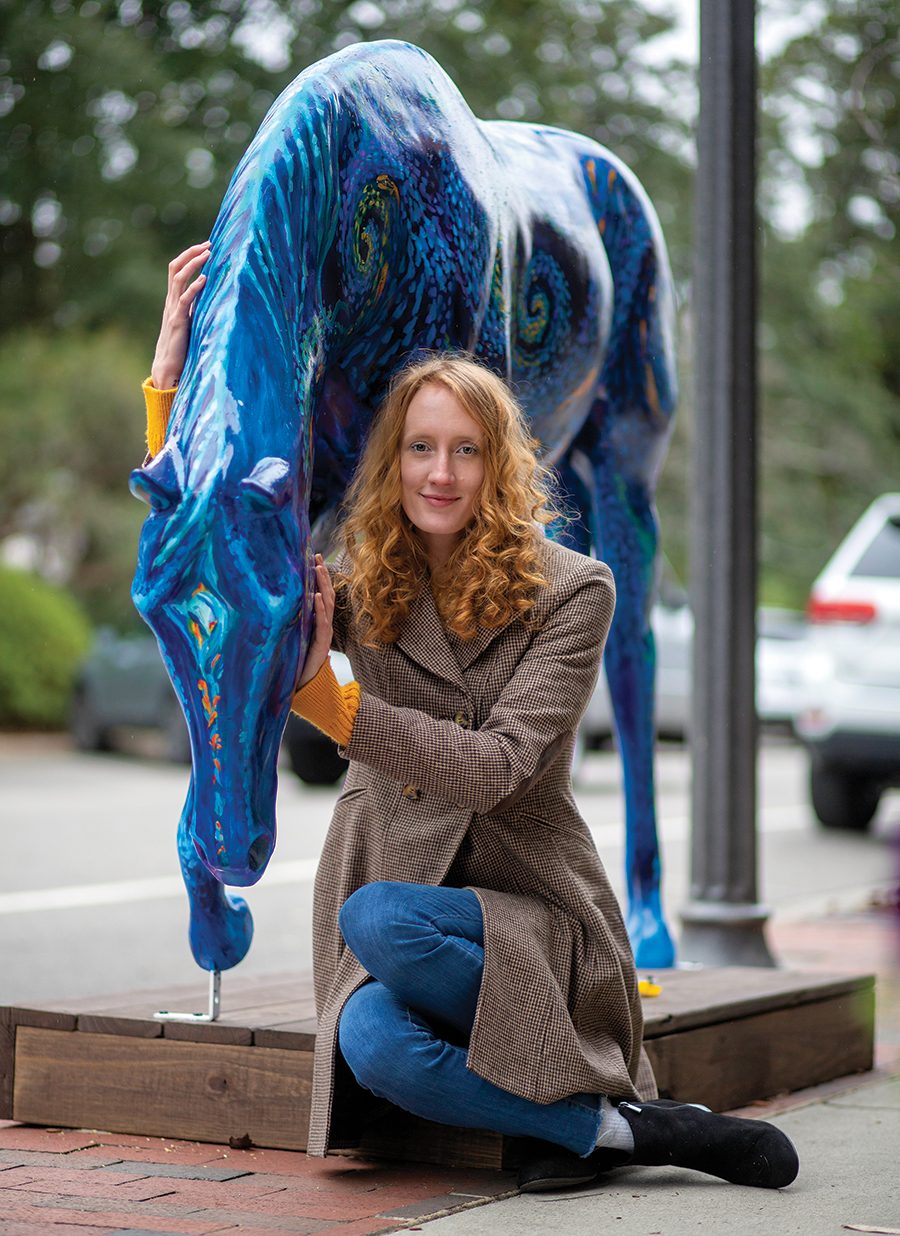
The themes run the gamut from a sporting art take on life in the Pines to an impressionistic rendering inspired by Van Gogh’s Starry Night. One pony even has a three-dimensional copper horn and wings, transforming it from equine into magical alicorn – but more on that later. At Big Sky Farm, on April 4, the painted ponies will be auctioned off to their permanent owners with all proceeds going to the Carolina Horse Park, so admire them downtown before March slips by. First, sneak a peek here.

Water for Horses
Artist: Jenay Jarvis
Sponsor: The Country Bookshop

“I love nature and creativity and have a very real passion for impressionism, which has fueled my love of painting,” says Jenay Jarvis, who studied fine arts at the University of North Carolina Asheville. “I specifically used Starry Night to inspire this piece,” she adds, referencing her painted pony Water for Horses.

Vincent van Gogh painted Starry Night, possibly his most recognized work, in 1889 during his time at the asylum of Saint-Paul-de-Mausole in France. Despite his tragically short life of only 37 years, van Gogh produced over 2,000 works — most of them in his last two years. Ever since, artists like Jarvis have looked to this master.

“I like my work to appear like the images in my mind: dreamy and surreal with a focus on color and movement,” she explains. “My work is fluid and often associated with water.” Although Starry Night doesn’t feature water, the blue and swirling sky makes the leap easy.

“Water itself could represent a number of things,” Jarvis continues. “It’s an open interpretation as with all art, and I’d like to leave that up to the viewer.” Regardless of how you interpret the work, from a distance, you can spot its famous inspiration, but take a closer look, and you’ll see Water for Horses come into its own.

Love Your Local
Artist: Ashley Van Camp
Sponsor: Ashten’s Restaurant and Moore Equine Feed and Pet Supply

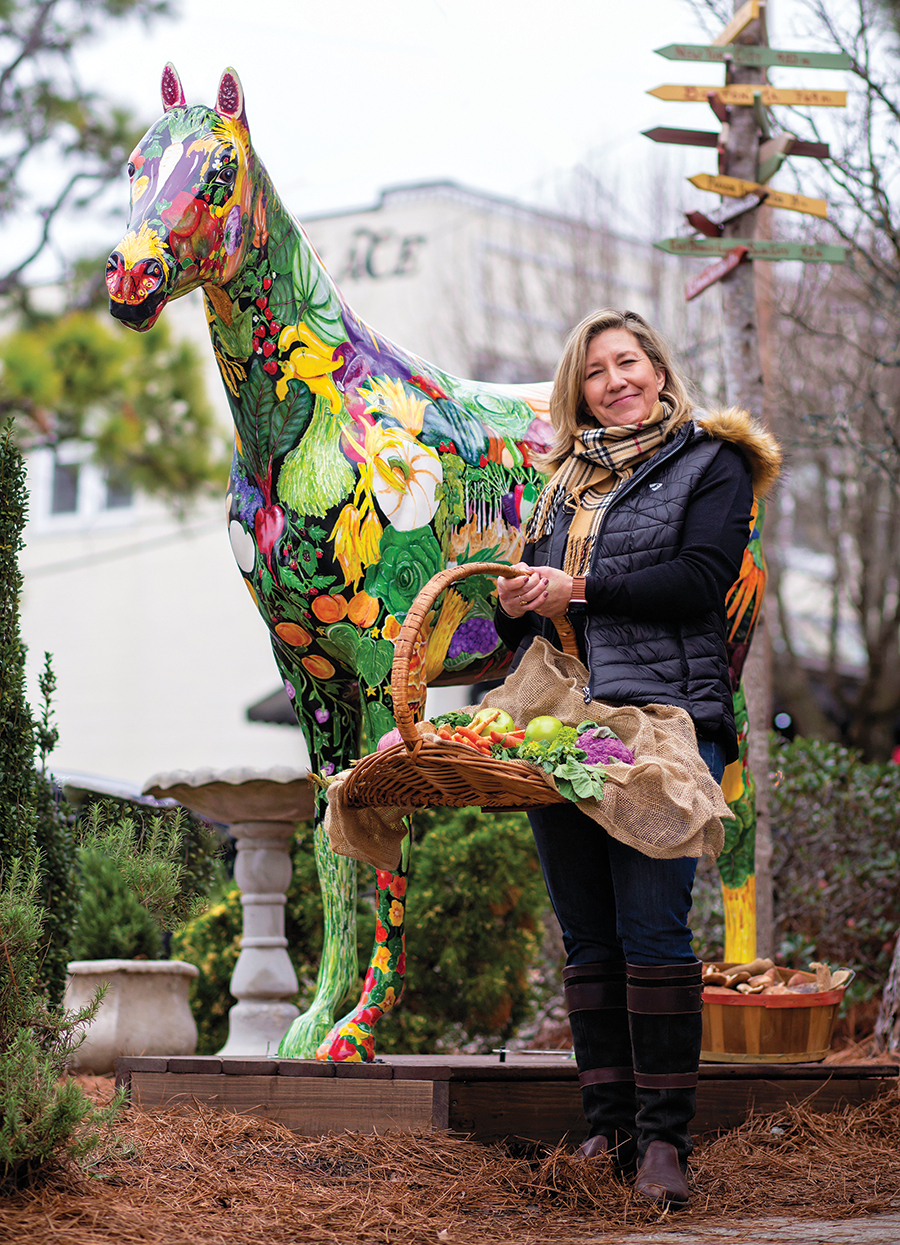
Ashley Van Camp, owner and chef of Ashten’s Restaurant, didn’t study visual arts in college, but she says, “I’ve spent a lot of time around food being a chef, so I think that’s helping me with our (artwork’s) theme, which is all about keeping it local.” Local food and local business. Appropriately, her painted pony’s name is Love Your Local…although, for those who know him well, he prefers to go by Lyle. Donning a Technicolor coat of produce, he pays homage to small businesses, specifically his sponsors Ashten’s Restaurant and Moore Equine Feed and Pet Supply.

“The things that our businesses have in common are that they are locally owned, and we both provide sustenance — she to horses and me to people,” says Van Camp of Moore Equine and her own restaurant. Lyle is the hypothetical offspring of these livelihoods. He sports ripened watermelons, an assortment of shiny red and green tomatoes, leafy purple cabbage, dainty flowers climbing his forelegs, and a carrot for a marking on his forehead. He’s a well-bred stallion foaled by small town love and sired by local abundance, Van Camp explains, and his artwork reflects his parentage.

While Ashten’s restaurant and Moore Equine Feed and Pet Supply nourish the stomachs of our Sandhills community, Lyle feeds our eyes with a visual feast. If he could see himself, he’d be drooling.

Horsefeathers
Artist: Beth E. Roy
Sponsors: Hampton Inn & Suites, TownePlace Suites and Hilton Garden Inn

Lewis Carroll didn’t let reality stop him from transporting Alice down the rabbit hole, and J.K. Rowling didn’t let it stop her from inventing a boy wizard to defeat the also invented He-Who-Must-Not-Be-Named (But-We’ll-Name-Him-Anyway) Voldemort. Fantasy writers and children have that in common; they don’t let reality stop them from creating. Regular old adults shouldn’t either: Beth E. Roy definitely hasn’t.

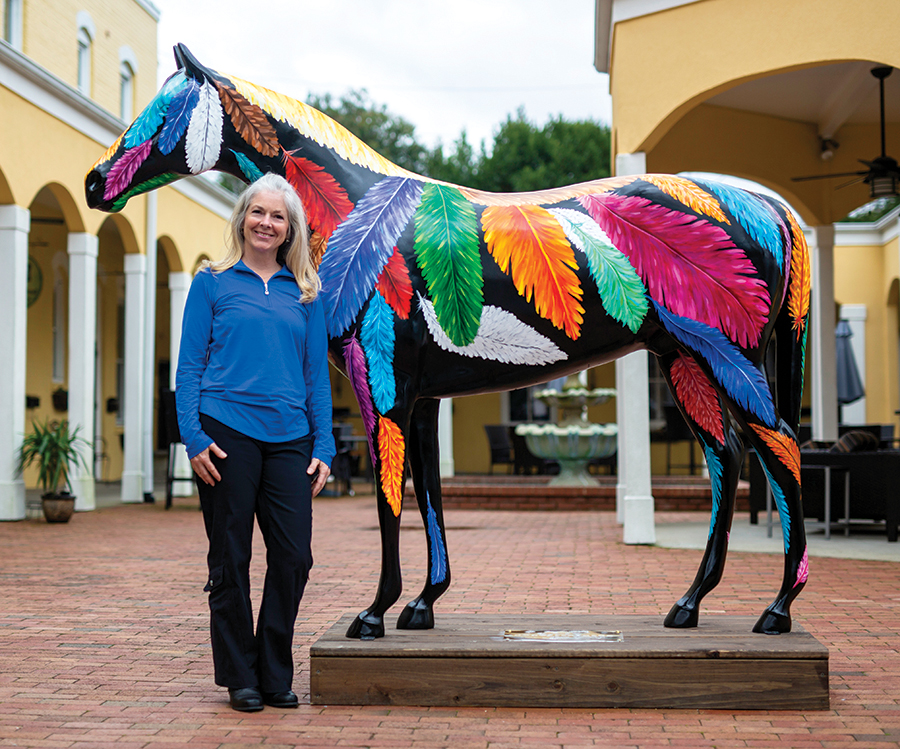
“My mother would not swear but used colorful words put together. When she expressed herself by saying, ‘Oh, horsefeathers,’ I had a vision of a horse covered in beautiful feathers,” says Roy of a childhood memory. And that’s how we got her painted pony, the imagination of a child brought to life by an adult — a very skilled adult. Professionally trained at Austin Peay State University and Christopher Newport College, Roy painted as a watercolorist for 15 years before moving to Southern Pines and taking up oils in the early 2000s.

She’s traveled to Italy and Mexico among other locales to participate in artist workshops, and she’s completed many commissioned works. Her art hangs in several galleries, and her painted pony Horsefeathers currently stands at Belvedere Courtyard in downtown Southern Pines. Its plumage of celadon, ivory, fiery orange and more lay against a black background that makes the colors buzz, causing us to wonder, is it about to take flight?

“Dream Big,” says the Alicorn
Artist: Nikki Lienhard
Sponsors: Better Homes and Gardens Lifestyle Property Partners, Opulence of Southern Pines and Patricia

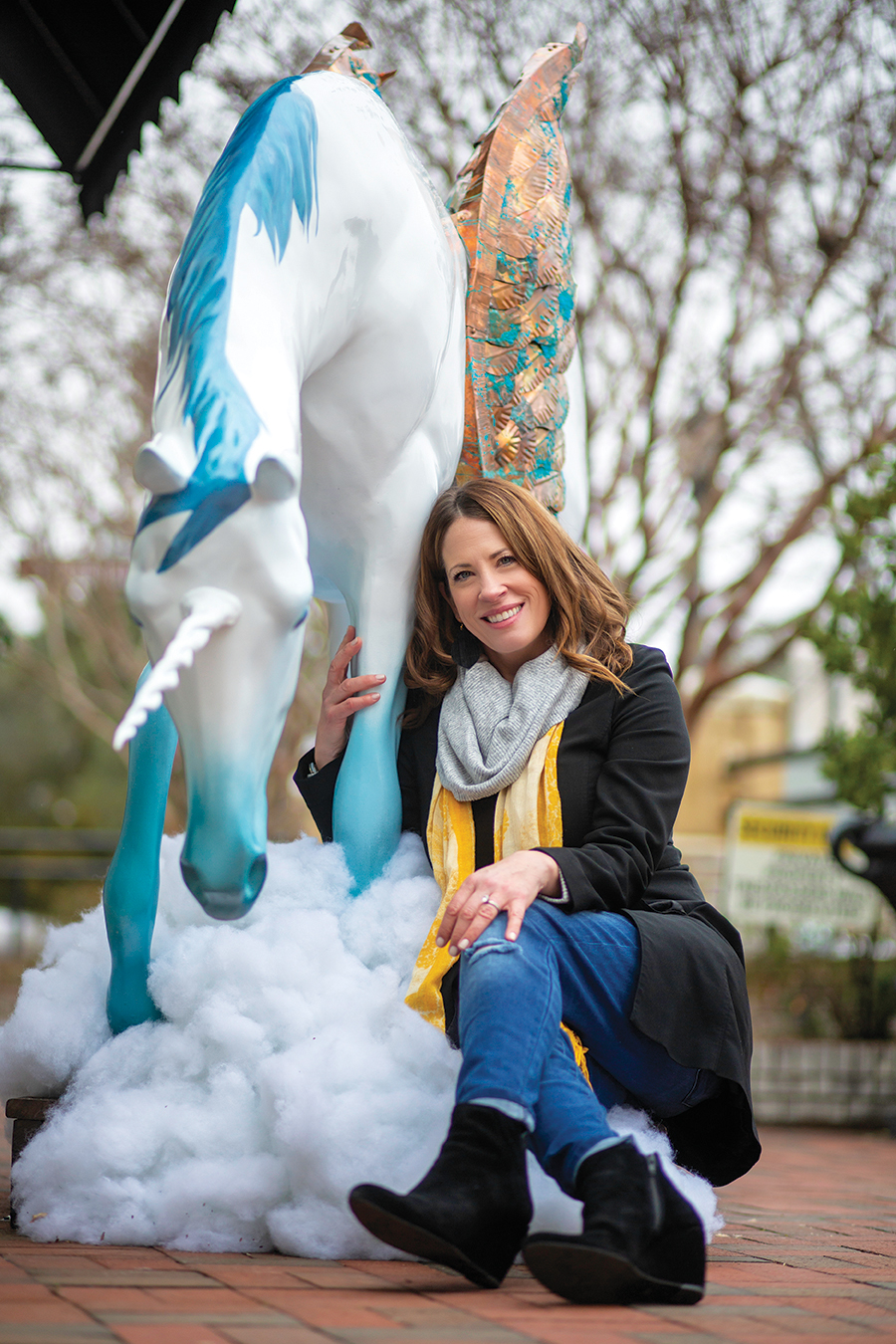
“I was struggling with a design concept,” says graphic designer Nikki Lienhard of her painted pony. Until one day her 9-year-old daughter, Jesse, suggested over dinner, “Why don’t you do an alicorn?” Reflexively, Lienhard and her husband replied, “What the heck is an alicorn?”

“It’s a Pegasus with a horn,” Jesse informed them. And, although the term “alicorn” historically refers to the horn of a unicorn, Jesse is right. The kids’ TV show My Little Pony: Friendship is Magic and other media have culturally popularized the alicorn as a winged unicorn. Sometimes, pegacorn or unipeg are terms referring to this magical ungulate, while other times, it goes entirely unnamed. But regardless of the creature’s name or lack thereof, it’s the crossbreed of two storied legends: Pegasus and the unicorn.

According to Greek mythology, Poseidon, the god of the sea, and Medusa, the mortal woman with snakes for hair and a face that turns men to stone, parent Pegasus. After the hero Perseus beheads Medusa, Pegasus and his brother Chryasor are born into the world from their mother’s severed head — what an entrance. On the other hand, the Greeks classified unicorns not as mythology but as natural history; they believed the animals lived in India.

But back to Lienhard: “Before I knew it, I was creating this magical alicorn with copper wings and a horn, something right out of a fairytale.” Right out of a fairytale and into the Sandhills.

Royal Tashunka
Artist: Mary Ann Welsch
Sponsor: WhitLauter by Leann Parker

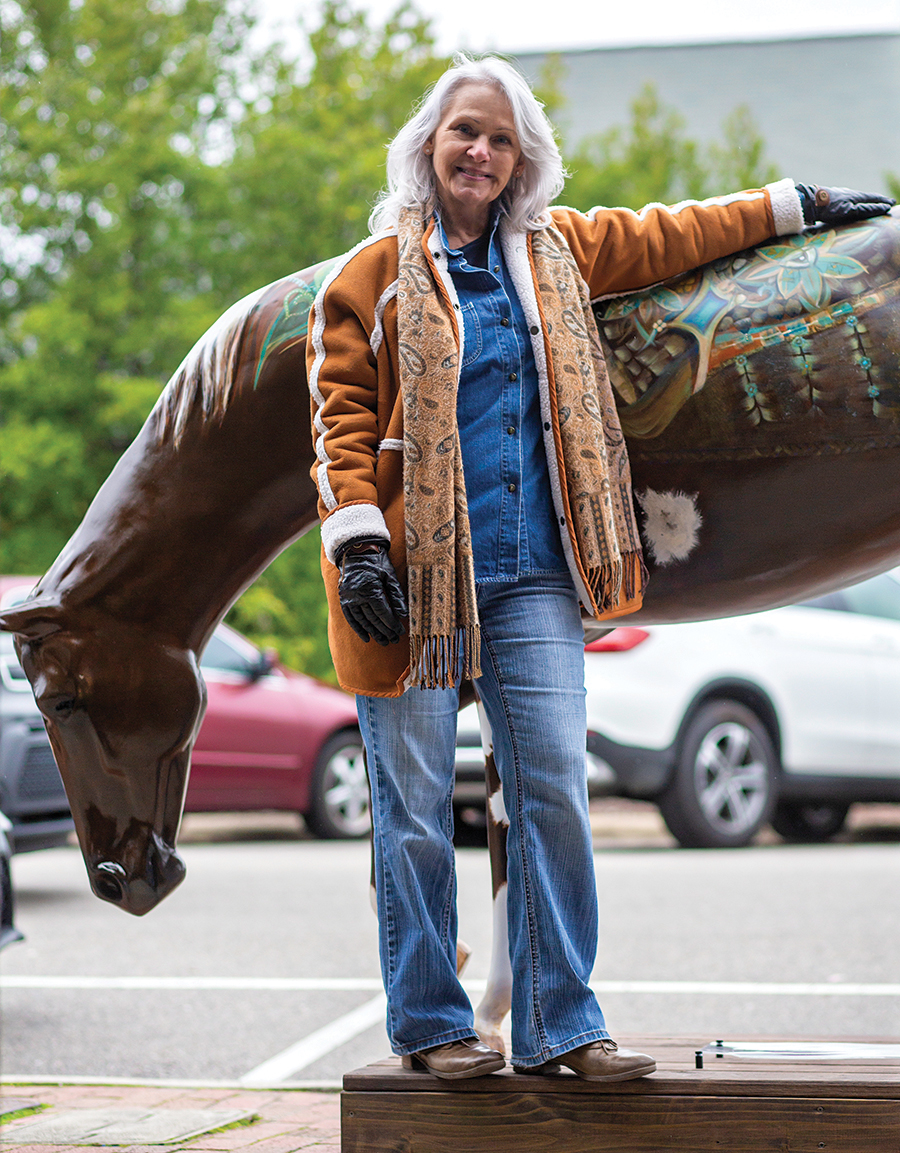
Mary Ann Welsch and her painted pony’s sponsor are a match made in horsey heaven. “I found out that my sponsor was WhitLauter (Estate Jewelry), so I went down to introduce myself. I started looking at all the beautiful jewelry, and I thought, where does the concept of jewelry come from? How long has it been around?” says Welsch.

Turns out, it’s been around for 135,000 years, provable by a necklace made of eagle talons. A little odd, no? But a different ancient necklace inspired Welsch: a 40,000-year-old Kenyan piece made of ostrich eggshells. “The women actually still do it. Like a little puka bead, they take that shell and then crush it up into small pieces and make jewelry out of it,” she explains, pointing at the eggshell beads painted on her pony’s back. Combine these beads with gems, succulents, horse tack and a little bit o’ the Southwest — all on the canvas of a tobiano pony — and, voila, it’s Royal Tashunka.

Fun fact: Tashunka is the Siouan word for horse. Thanks to Welsch’s attention to detail in both research and artistic execution, her painted pony’s disparate components (see succulents and horse tack) meld into a cohesive whole that feels new. Corroborating this take, Welsch comments, “I like to make things that don’t exist.”

Living in the Pines
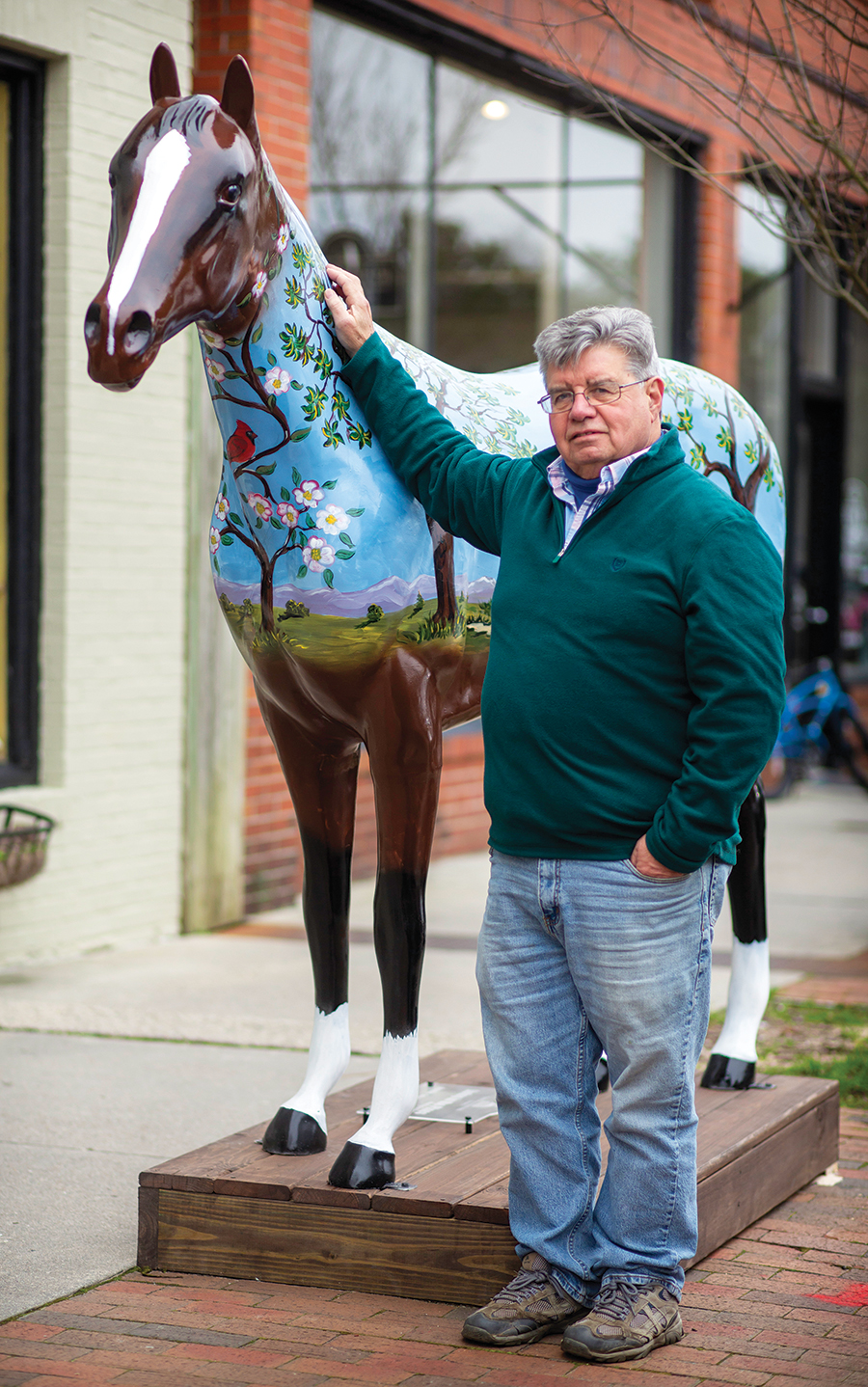
Artist: Gene Fletcher
Sponsor: The Pilot

British sporting art is exactly what it sounds like: artwork that depicts British sport. This eventually includes sports like cricket and boxing, but originally, it meant country pursuits like fishing, foxhunting and horse racing. Gene Fletcher is a fan of the originals.

“I’ve always been really attracted to the British sporting artists. The 18th century, 19th century sporting artists — they’re the ones I really admire, so this was kind of natural,” says Fletcher, pointing to his painted pony, Living in the Pines. One flank shows two horses at pasture, while the other shows a mounted hunt complete with two hounds and a fox. Purple mountains and a blue sky provide the backdrop for both scenes. “Of course, the fox didn’t get captured,” Fletcher jests. “He’s looking (and) saying, ‘Ha-ha, you missed me, right?’”

The victorious fox peers at huntsman & co. from behind a tree papered with a flier that reads, “The Pilot 100 years.” The detail is a nod to the artwork’s sponsor and its centennial anniversary. A flowering dogwood and cardinal grace the neck of the painted pony as homage to the North Carolina state flower and bird.

Fletcher’s work, in a snapshot, shows the tradition of the Sandhills through a mostly equestrian lens. And it makes sense. Horses are significant to the area and, lucky for Fletcher, “In 30 seconds or less, I can draw a horse,” he quips.

Little Red Truck
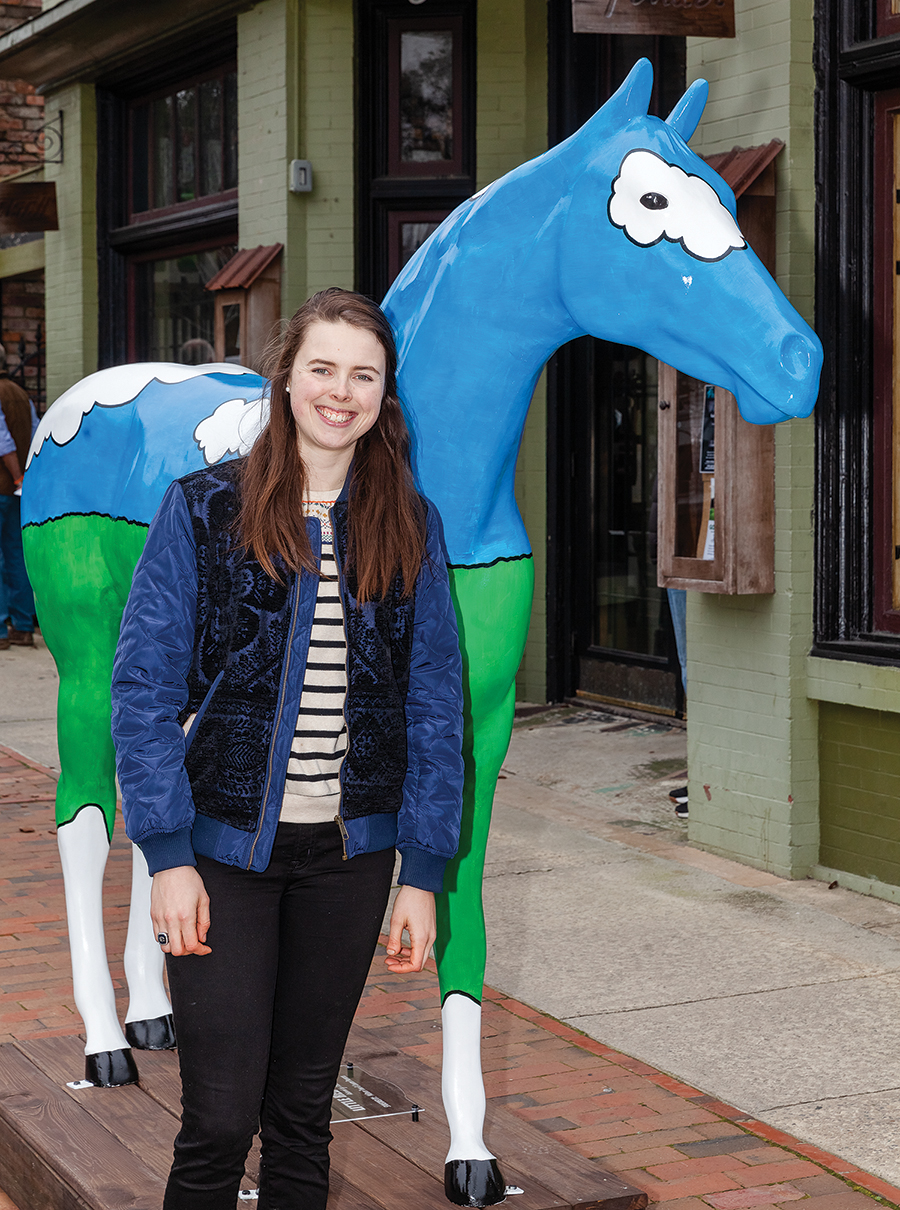
Artist: Claire Connaghan
Sponsor: McDevitt Town & Country Properties

Rising to prominence in the 1950s, pop art rejected fine art and embraced the commonplace: advertisements, comic strips, and objects like Campbell’s tomato soup cans and Brillo boxes. Critics tut-tutted the movement, but the general population adored its rebuff to the art world’s members-only vibe, catapulting artists like Andy Warhol and Roy Lichtenstein into the limelight. Claire Connaghan’s Little Red Truck is reminiscent of this 20th century movement.

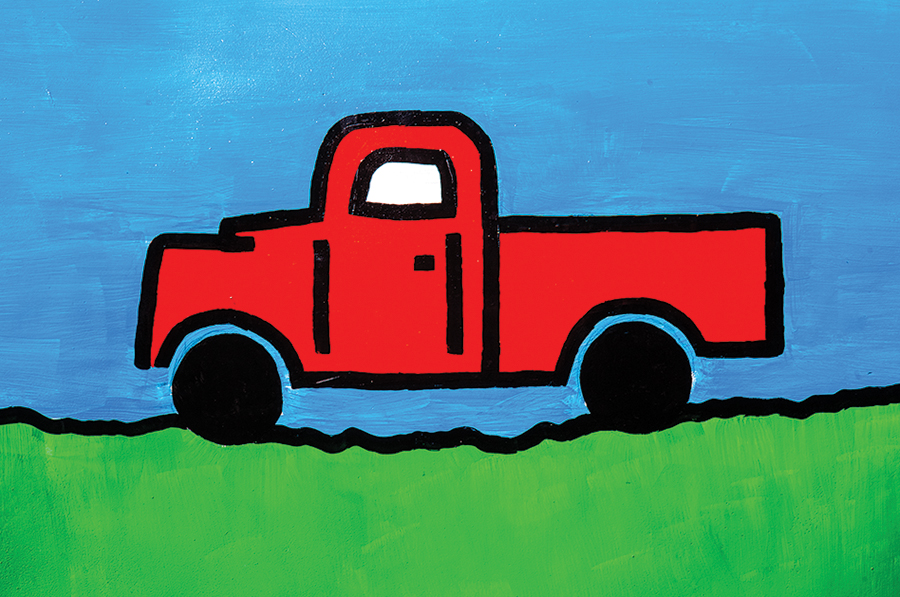
“I chose to keep a simple and colorful illustration style with a little country scene and a little red truck in the middle,” says the 25-year-old graphic designer. Her edited design, flat application of color and black outlines combine for a cheery and approachable work. The upper half of the pony is an unshaded blue sky spattered with cartoonish white clouds, while the lower half is a solid grassy foreground. Smack dab in the middle of the left flank is a little red truck, the heart and soul of her sponsor, McDevitt Town & Country Properties. Jamie McDevitt, owner of her eponymous business, once had a red truck, and made it her logo. Then, the truck moved on, and her logo changed, but the vehicle is still at the core of her business.

With that big, blue sky consuming half of her pony, Connaghan’s interpretation of the McDevitt icon is a breath of fresh air.
Horses Connect Us All
Artist: Shelly Turner
Sponsors: Pinnock Real Estate & Relocation Services, C.Cups Cupcakery and Longevity Massage & Bodywork Therapy Center

Although horses appeared in cave art 30,000 years ago, their domestication (the genetic reorganization that took them from wild animal to pet) didn’t come until later — and that date is hotly debated. Most researchers agree that equine domestication happened around 2,000 BC at the latest, but some claim it occurred over 1,000 years earlier. The exact date isn’t the point. It’s that the human-horse relationship is long, notable and indivisible from history.

“From farming to military, pleasure to show, therapy work to pasture pet, horses have been and continue to be such an important, integral element in the world,” says Shelly Turner, owner of and interior designer at Canter Lane Interiors. “Think of just about any topic and horses can be linked.” Even the Carolina Horse Park’s fundraiser proves Turner correct, validating her artwork’s title, Horses Connect Us All.

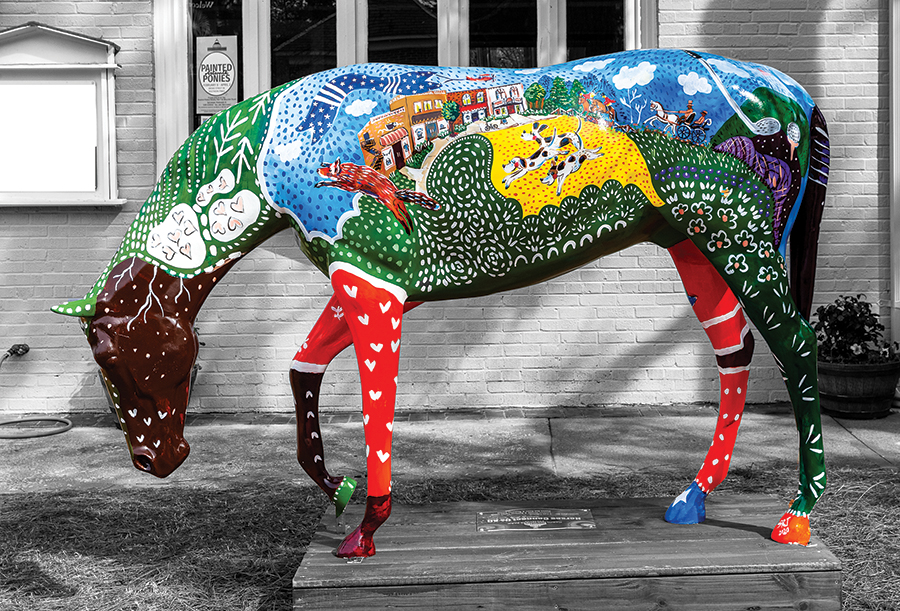
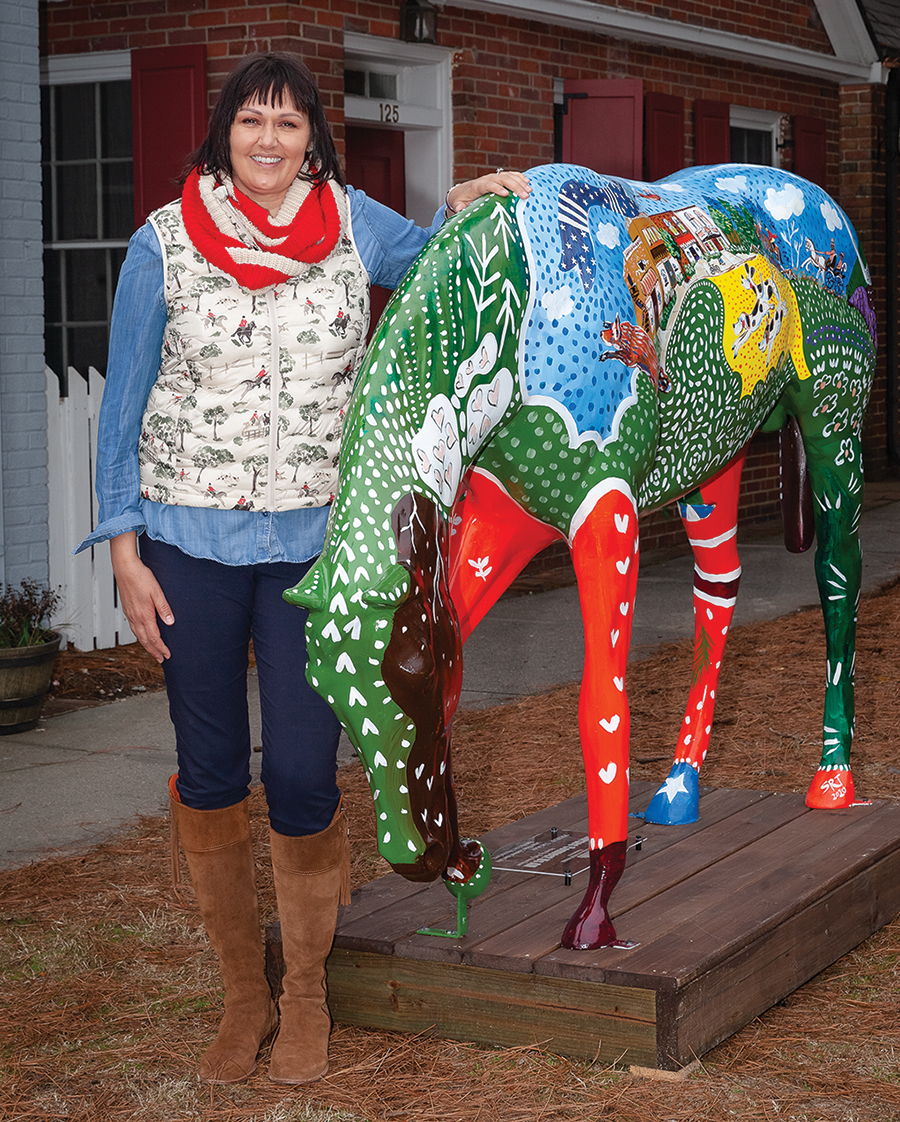
“With his head to the ground, he seemingly breathes in the world around him,” she says of her painted pony. “I (expressed) this notion by painting the soil from his muzzle to cheeks and showing plant roots that bloom into a colorful palette of local elements.” These elements include agriculture, golf and the military painted in a style visually similar to that of a 19th century American quilt.

Turner concludes, “I think that my upbringing and love for folk art, animation and tribal embellishment and design combined to inspire and create this eclectic piece.”

Between the Ears
Artist: Darlene Ivey
Sponsor: English Riding Supply

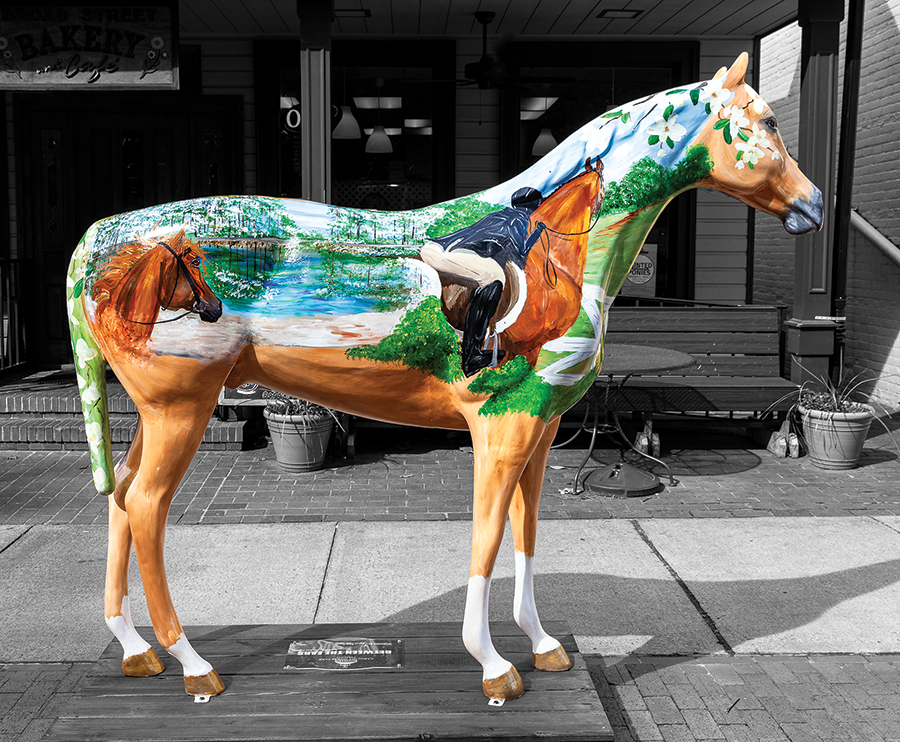
“My mom is an artist; she taught me how to draw, and I’ve always been into horses, so that’s what I learned to draw,” says Darlene Ivey. Thankfully, she had plenty of support that helped to take her artwork far. When Ivey was in high school, her dad encouraged her to make and sell paintings. This eventually led to commissions. Roll all of that together, and that’s how Ivey ended up here: an equestrian apparel rep and the artist of Between the Ears.

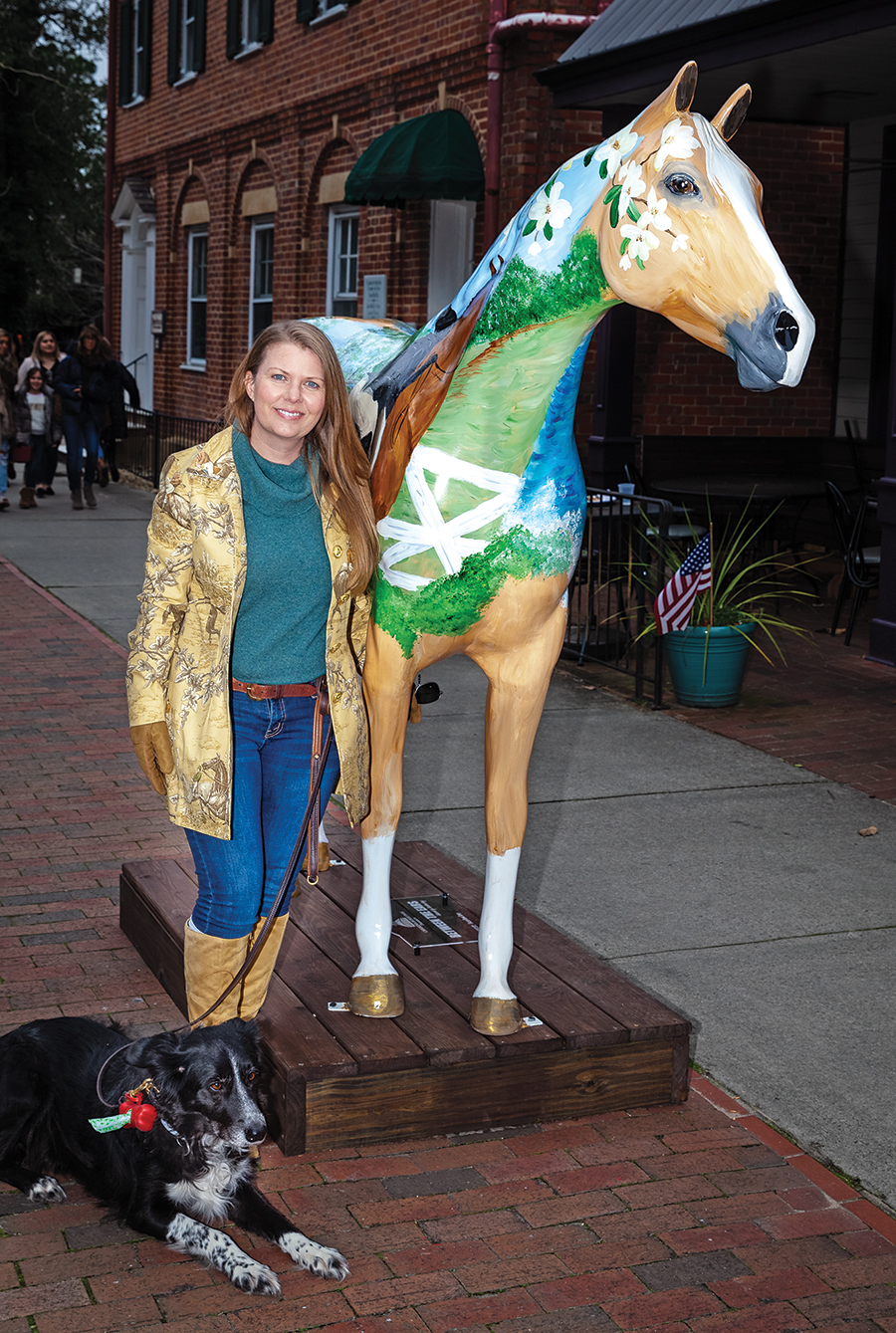
Her painted pony is the merger of the horses in her life; they’re joined into a sort of visual equestrian calendar, consisting of four tableaus, one for each season. The winter scene shows a lakeside horse ride, while the spring is a glimpse into horse show season. Summer is a ride on the beach that ultimately ends up in the ocean waves and, on this, Ivey comments, “A lot of horse people don’t ride on vacation, but I always try to.” The fourth and final scene represents fall, and it depicts the treasured foxhunts of Moore County. All four tableaus come from photographs Ivey has taken, and they’re layered over a palomino background.

Ivey elaborates on the horse at the center of it all, “My palomino Lacey was my childhood horse. My dad got her when she was 3, and she passed at 26. Most of my life she was with me.” Thanks to Between the Ears her spirit still is.
The Chief’s Pony
Artist: Tiffany Teeter
Sponsors: Cabin Branch Tack Shop and BB&T

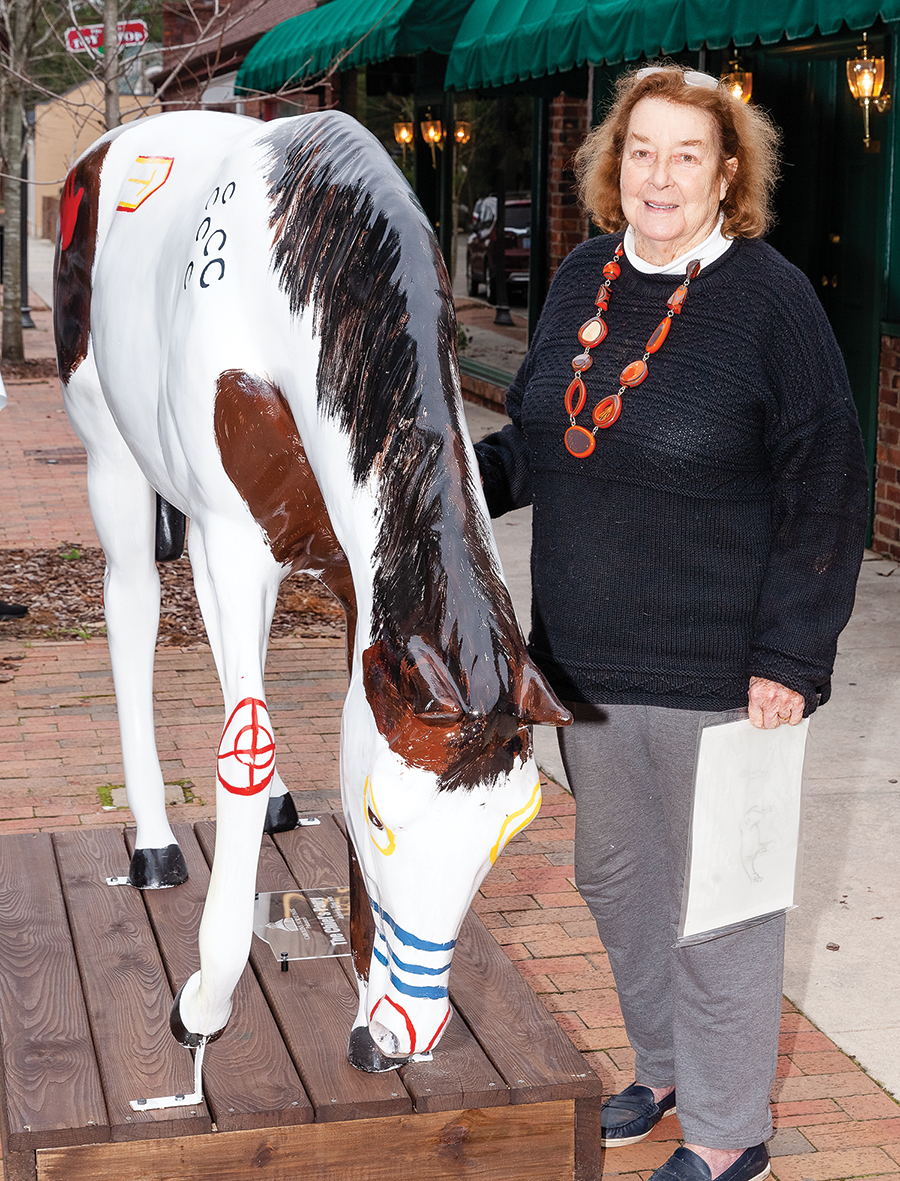
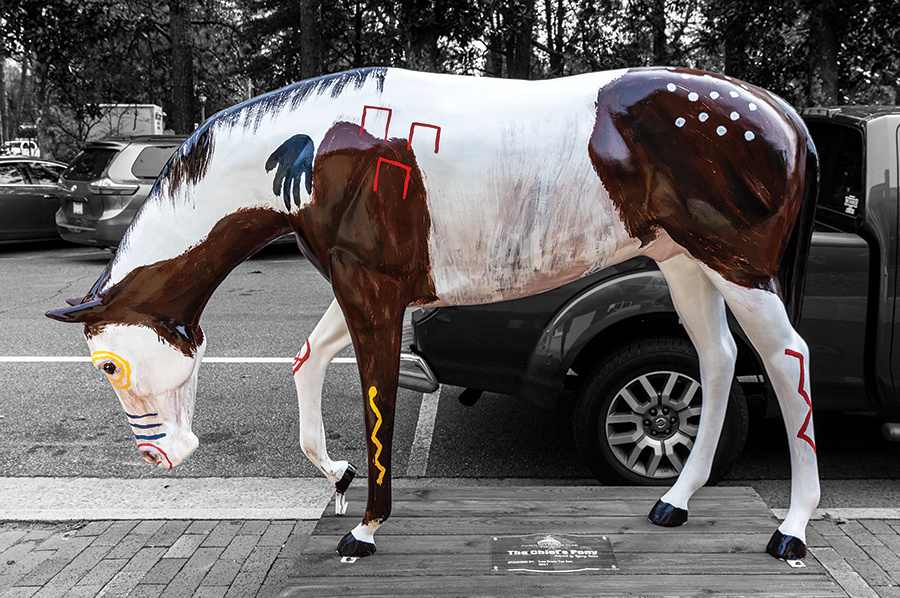
“When I was a kid, you know, I was sure every Christmas I was going to get a pony, but my father said, ‘Listen, there’s six of you kids, if you want a horse you got to go buy it.’ I saved up my money, and I did: $85,” says Tiffany Teeter. That $85 led to foxhunting, a barnful of 65 horses at any given time (two of them Olympians), and a son who competed as a steeplechase jockey. It’s no surprise that now, with only one 23-year-old horse left, Teeter gets her equestrian fix elsewhere — painting a life-size doppelganger called The Chief’s Pony. He’s inspired by Native American warhorses.

“It’s what you call a medicine hat pony. You see the markings on his head?” asks Teeter, pointing to her pinto’s mostly white face. “Only the chiefs were allowed to ride that marking.” Only the chiefs and other powerful figures like medicine men and great warriors. Any pinto with an all-white head, except for its poll and ears, is a medicine hat pony, but the most beloved only had these markings. Add blue eyes, and it was even more revered. Because of their rarity, these ponies were thought to be good luck, able to prevent the deaths of their riders.

Referring to primary-colored symbols on her artwork, Teeter continues, “All these markings mean something. That means danger, those are captured ponies and this means may hail fall on your enemy . . . I like that one.”  PS