Birdwatch

Sneaky Beak

The street-smart American crow

By Susan Campbell

The crow is an oft-maligned bird, even feared by some. It is both smart and sneaky. Historically, crows were considered a bad omen: a common familiar of witches. Groups are still referred to as “murders.” Today the species remains the bane of farmers, being a large bird with a big appetite that tends to arrive with “murderous” intent when it comes to their crops.

Our common, year-round crow is the American crow. However, for a good part of the year we also have fish crows in the area. They, too, breed here but move east (and probably south) in the fall in large groups. Interestingly, they are often one of the first migrants to return to the Sandhills by early February. Although not noticeably different, fish crows are a bit smaller than their American cousins and have not a one- but a two-syllable call that is a very nasal “a-ah.” And as their name implies, these birds are drawn to wetter environments where they may feed upon the remains of fish and other aquatic creatures. (Ravens are a bird of a different feather and deserve a whole column of their own one of these days.)

Crows are more scavengers than they are predators. Without hesitation, they will take advantage of defenseless young birds and animals, but are more likely to be found picking at prey left by others or feeding on roadkill. They lack talons and the raptorial grip of hawks and owls. Their bills are very strong, however. Crows can bite, tear and dig through a variety of materials.

Vision is the one of the sharpest of their senses. In wet habitat, they will seek out female turtles laying eggs and lie in wait until the nest is complete. Even though the turtle may carefully rearrange the vegetation or leaf litter to disguise the nest’s location, the crows aren’t fooled and after the female turtle has crawled off, they’ll make a meal of the eggs buried in the soil.

Not only do they possess tremendous visual acuity, crows have demonstrated the ability to remember familiar patterns, such as the faces of people who feed them, or, conversely, torment them. In feeding experiments, not only were American crows able to remember where food was hidden, but in what order investigators left a series of treats. They have also been observed using tools: deliberately manipulating sticks with their bills to pry insect prey from cracks and crevices.

For large birds, crow nests are well-concealed. In our area, they often use abandoned hawk or squirrel nests. When they do create a nest from scratch, it is most likely a stick-built affair, hidden at the very top of a tall pine. The only hint of its location tends to be parents chasing away intruders. Watch for a soaring hawk that is being harassed or a squirrel being pursued as it makes its way from tree to tree. But finding a nest’s exact spot requires the sharpest of eyes and may take some time, especially after the arrival of the young, prompting parents to make frequent trips in and out of the nest.

American crows often gather in loose aggregations to breed. Two or three nests may be close to one another. That results in not only better protection but more eyes on the lookout for food resources. Also, adolescents — young from the previous year — may act as helpers during their first spring. It comes as no surprise that crows tend to be rather successful breeders.

With our gardens, henhouses, bird feeders and compost piles, humans are a major source of food for crows. Given their patience and perseverance, they have figured out how to take advantage of us. Maybe the time has come for us to step back and appreciate them for the amazing creatures that they are.  PS

Susan would love to hear from you. Send wildlife sightings and photos to susan@ncaves.com.

Golftown Journal

Seventies Shooter

When the pros returned to No. 2

By Lee Pace

The decade of the ’70s was marked by oil shocks, stagflation, bell-bottoms, hot pants, flower prints, sideburns, disco music, geometric architecture, lava lamps and round multi-purpose sports stadiums. It was a decade of transition from the turbulent ’60s to a softer decade of the ’80s when the baby boomers moved into their peak earning years and the “Me Generation” emerged.

And the ’70s marked quite the era of transition for Pinehurst.

From 75 years of ownership by the Tufts family to a modern resort/residential developer named Diamondhead.

From closed during the summer to round-the-year operation with air-conditioning.

From a golf-only environment to one more inclusive of the family with a new tennis facility and lake/beach club.

The 1970s also marked the return of professional golf to Pinehurst after a two-decade hiatus, which seems hard to fathom given No. 2’s firm spot in the modern USGA rota of major championship sites. The North and South Open was an anchor on the pro golf tour from its inception in 1902 until it was discontinued by owner Richard Tufts in 1951 over a dispute with golfers over the tournament purse. Then, after Diamondhead bought the resort and country club on Dec. 31, 1970, company president Bill Maurer believed Pinehurst should be back on golf’s center stage.

“We’re always talking about Pinehurst being the golf capital of the world, so you could have the ‘World Championship’ at Pinehurst,” Maurer said.

He sold Joe Dey, commissioner of the Tournament Players Division of the PGA of America, on the idea of a “World Open” at Pinehurst — eight rounds over two weeks for the astronomical purse of half a million dollars and $100,000 to the winner. The dates were blocked for November 1973.

A field of 240 players, including a sizable international contingent, convened in Pinehurst Nov. 8-17 for the World Open, played on courses 2 and 4. Miller Barber collected the title and the hundred grand prize, totaling 570 over eight rounds to edge tour rookie Ben Crenshaw by three shots. The veteran and youngster were tied through 13 holes on the final day, but Barber birdied 14 and 18, and Crenshaw bogeyed 16 after a wild drive to provide the final chapter.

Pinehurst was back in the professional golf business and would be for exactly one decade. The finest golfers of the era would win at Pinehurst and place their stamps on the Pinehurst history scroll — Johnny Miller, Hale Irwin, Tom Watson and Raymond Floyd were among the victors on Pinehurst No. 2. Jack Nicklaus added to his North and South Amateur win in 1959 with a professional triumph in 1975. But it was also a star-crossed decade with a soft golf course played at bad times of the year, and events with shaky financial underpinnings throughout.

The 1974 World Open, contested Sept. 12-15, coincided with the opening of the new World Golf Hall of Fame, a $2.5 million structure built behind the fourth green and fifth tee of No. 2. President Gerald Ford presided over the ceremony to induct the 13 charter members of the Hall of Fame — eight of them living (Ben Hogan, Sam Snead, Byron Nelson, Arnold Palmer, Gary Player, Gene Sarazen, Patty Berg and Nicklaus); and five inducted posthumously (Bobby Jones, Walter Hagen, Francis Ouimet, Harry Vardon and Babe Zaharias).

The Hall of Fame was certainly a good idea, as the game of golf, for all of its rich history, had nothing along the lines of baseball’s Cooperstown or football’s Canton. Diamondhead funded the brainchild of Maurer, who was understandably sensitive to cynics who didn’t like the Hall of Fame funded by a company in the business of selling real estate and hotel rooms.

“Everybody else had a shot at doing it for 600 years, and nobody did,” Maurer said. “If somebody else wants to build another one, fine. But I like the score I’m in the clubhouse with.”

The 1974 tournament was a success, with warm weather, good galleries and Miller beating Nicklaus, Frank Beard and Bob Murphy in a playoff on the second extra hole. Miller laced a 3-wood second shot on the par-5 16th hole for a two-putt birdie and the victory.

“So I lost another golf tournament,” Nicklaus said, “but I never enjoyed playing a golf course more. Pinehurst No. 2 is fabulous. I learned about five things about design this week — on a course 50 years old.”

Tour dates in August and September the rest of the decade proved a wicked time to compete on a golf course that Donald Ross designed to run firm and fast. Course maintenance staff had to keep the greens, converted from Bermuda to bent in the summer of 1972, well-hydrated in the Southern heat and humidity; their softness allowed golfers to aim at flagsticks with abandon. For much of the 1970s, Diamondhead’s maintenance staff allowed the rough to grow thick around the putting surfaces, never understanding the concept of the Ross chipping areas.

“Get rid of the rough and return the greens to Bermuda, and I’ll put No. 2 back in my top five in the world,” Tom Watson said after winning in 1978.

Pinehurst officials did exactly that, but when Colgate departed as the headline sponsor following the 1979 tournament, financial problems suffocated the event. The Hall of Fame Classic lasted three more years but was gripped in a downward spiral of momentum. There wasn’t a big enough purse to attract the best players. Without the best players, the gate dwindled. And the purse got smaller. Diamondhead itself was in major arrears with its creditors as the early 1980s evolved; the company had lost Pinehurst, and the resort was in the hands of a consortium of banks when the last Hall of Fame Classic was held in September, 1982.

It was during the 1970s as well that Pinehurst officials first reached out to the USGA with the idea of hosting the U.S. Open on No. 2. Those talks never went very far, however, as USGA executive director for rules and competitions P.J. Boatwright knew the course intimately from having lived in Pinehurst from 1955-59 while running the Carolinas Golf Association and was not happy with Diamondhead’s stewardship.

But things changed over the 1980s: Robert Dedman Sr. bought the resort and club in 1984, restored its financial stability, and funded a total golf course and infrastructure expansion and overhaul. Penn G-2 grass was developed to allow golf greens to play firm and fast in the summer, and the greens were converted in 1996. The Open finally came to Pinehurst for successful runs in 1999, 2005 and 2014 with a one-off pairing that final year with the Women’s Open the next week.

And now the clock’s been turned back to before that decade of the ’70s, with No. 2 reliving its earlier golden era of closely mown chipping areas, wide and firm fairways and sandy wastelands beyond the fairways. The changes came under the auspices of architects Bill Coore and Ben Crenshaw and were executed over two years from 2010-12.

“P.J. talked so lovingly about what No. 2 had been years ago,” says David Fay, who began his USGA career under Boatwright in the 1970s and retired in 2010 as its executive director. “That picture he painted of No. 2 has always remained in my mind.

“Yes, P.J. would love the changes.”

One of those winners from the ’70s had a local perspective, with Floyd having grown up in Fayetteville and getting the occasional opportunity to play at Pinehurst with friends of his father, who ran the Fort Bragg golf course, or in junior competitions.

“I remember my first trip was in the winter and the grass was dormant,” says Floyd, today retired from competitive golf and living in South Florida. “And I remember how tough it played, especially the front nine. I was excited because it was a treat to be leaving town to play another golf course, but I wasn’t even aware of the history or tradition. Back then, there was no such thing as rough. There was sand and pine straw and the natural environment was the rough.”

Floyd beat Jerry McGee in a playoff for the 1976 Colgate championship. His last competitive rounds on No. 2 were played in the 1994 Senior Open there.

“I was really impressed with the course that week because it was in such great condition,” Floyd says. “Among the players, No. 2 was known as a great golf course, maybe top five or top 10 in the world, but that wasn’t for its conditioning. It was just such a great layout.

“Pinehurst is a golf mecca now with all the history and the great people of golf who have been there and won there. And Donald Ross was such a great architect. It’s definitely one of the world’s top golf destinations and there’s a lot of history there. Pinehurst No. 2 is one of great golf courses in the world and it’s always fun to play it.”

And thankfully no one plays it today wearing bell-bottoms and Nehru jackets. PS

Chapel Hill writer Lee Pace has written about Pinehurst, its golf courses and its personalities for more than three decades and has never sported the “full Cleveland look” on any of the resort golf courses.


Mom Inc.

Lunchbox Wars

Win some, lose some, some go into extra innings

By Renee Whitmore

“Where is it, Kevin?”

“Where is what?”

“My lunchbox — I know you took it and hid it somewhere. It’s not funny.”

“No, I did not.”

“Where is it?”

“I don’t know, David!”

“You hid it — I know you did!”

“I did not take your stupid lunchbox!” he yelled as he stomped off to his room.

I sat on the couch, grading papers on my computer, trying to ignore it all.

“Mom, I know he took it. He thinks he’s funny, and he’s not. Who else would take it?”

“Did you leave it in the car?” I asked, without looking up from my computer.

He headed out the front door to check the backseat of the car, opening the door and slamming it shut at ludicrous speed. “It’s not in the car,” he said.

“Did you leave it at school?”

“No,” he frowned, considering. “I don’t think so. I guess it could be in the wrestling room.”

“Well, look tomorrow. You can put your lunch in a Walmart bag.”

“OK,” he murmured.

That night we looked around for the missing lunchbox, but it was nowhere to be found. The next morning, I put his ham, cheese and ranch dressing sandwich, peanuts, Pringles and an apple — that I knew he wouldn’t eat — in a plastic Walmart bag and handed it to him.

When I picked him up from wrestling practice, the first thing I asked was if he found his lunchbox. Nope. Still missing in action.

That evening I packed the boys’ lunches for the next day (I really feel like I have my life together when I do that), and looked around some more, but no lunchbox. Another Walmart bag it was.

The next day after school it was time to do a grid search of all known or suspected lunchbox locations. Everywhere we could think of — under the car seats, in his room, in the living room, in the bathroom, under the bed — it could be anywhere.

Finally, I decided I was tired of looking for it. I said a small prayer over its memory, praised it for its long and devoted service, and told him I’d pick him up another lunch box at Walmart for five bucks.

“I’ll get another one at the store,” I told him.

“I liked that one,” he said, and then he mumbled something about Kevin hiding it and how ridiculous it was that Kevin still plays these types of games.

Whatever. I scratched “lunchbox” on my Walmart list. Before I left, I asked David to unload the dishwasher.

“When will you be home?” he asked. He wanted to wait until the last second, of course, hoping to coincide placing the last dish in the cupboard with the sound of me turning the doorknob.

“I don’t know. It could be 20 minutes — it could be an hour,” I said as I grabbed my keys.

I barely made the Walmart parking lot when I got a text message from David:

“Kevin hid my lunchbox he lied”

I sighed. “How do you know?” I texted.

“Bc I was unloading the dishes and put the strainer thing up and”

His message, cut short for dramatic effect. It was followed by a picture.

The picture showed the pots and pans piled on top of each other in the cupboard — a strainer tossed on top — and near the back, between the lids, there was a splash of blue. The missing lunchbox.

Had I put his lunchbox in the cupboard without thinking? Hell, I found cereal in the refrigerator the other day that I put away with the milk.

“Don’t blame Kevin. I might have put it in there,” I texted.

“He did it hes laughing about it,” David replied.

I took my pen and scratched lunchbox off my grocery list. At least I hadn’t lost my mind. Yet.

The next day David sent a text from school: “there was a wasp in my lunchbox kevin put it in there”

And away we go.  PS

When Renee isn’t teaching English or being a professional taxi driver for her two boys, she is working on her first book.

The Kitchen Garden

Be It Ever So Humble

Sweet potatoes and apples, the perfect pair

By Jan Leitschuh

Come November, when the days (finally!) can crisp up and take on a chill, I crave a favorite fall dish. It’s a superstar in our household for four simple reasons: It’s simple to make; it’s seasonal; it’s highly nutritious; and it tastes splendid. It’s a humble dish, but so very satisfying on so many levels.

Perhaps you’d like a crack at it, too.

The recipe pairs two iconic fall superstars, sweet potatoes and apples, and the resulting marriage blends as comfortingly as turkey and stuffing. You can make a big dish of it at the beginning of the week and spoon it onto your plate as a side dish (or, dessert) all week.

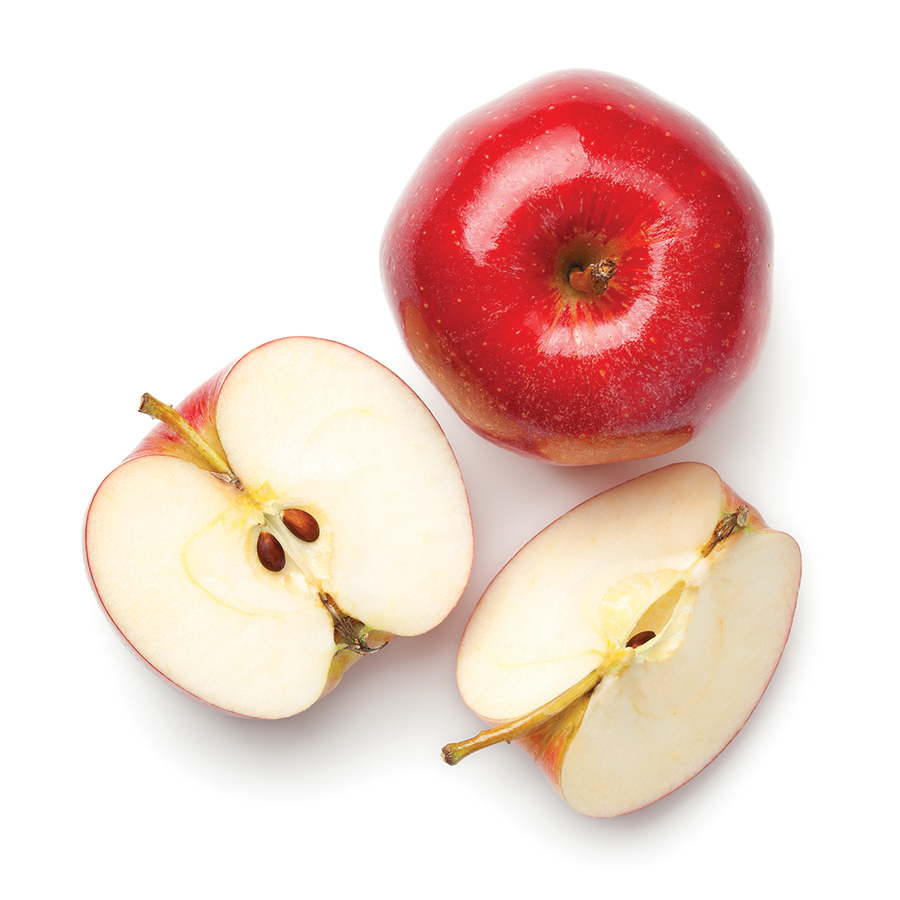
Sweet potatoes and apples — one is a root vegetable, and one is a fruit. Just use regular old orange sweet potatoes and any apples. I’m especially fond of Granny Smiths and Honeycrisps in this dish, but often use several varieties — whatever is available. The recipe is simple: Chop up some of both, drizzle with some wet stuff and spices, and roast until soft and bubbly. More on that later.

Of course, this simple dish is not Thanksgiving-worthy, but only because every family has their own iconic dishes to trot out each Turkey Day. Otherwise, sweet potatoes-and-apples are the belly-filling, late-fall dish at our house, great to serve with pork, turkey leftovers, grilled cranberry and Brie sandwiches or just by itself.

We know we’re supposed to eat five to nine fruits and vegetables a day for better health. I find this dish a most pleasant option to knock out at least two.

Apples are rich in gut-friendly pectin, according to the North Carolina Apple Growers Association. Pectin and mild acids found in apples help fight body toxins, aid digestion and pep up the whole system. Pectin also has been associated with helping to keep cholesterol levels in balance and is significant in helping to reduce the incidence of certain types of heart disease.

And, as we approach cold season, November is the time to consume apples. Studies have demonstrated a correlation between regular apple consumption and a reduced incidence of colds and other upper respiratory ailments. The old saying “an apple a day keeps the doctor away” has its roots in fact.

Sweet potatoes are full of soluble and insoluble fiber — good for gut health — and packed with vitamins, too. Incredibly rich in beta-carotene, the antioxidant responsible for the vegetable’s bright orange color, sweet potatoes promote eye health and support the immune system. In fact, one cup of baked orange sweet potato, with skin, provides more than seven times the amount of beta-carotene than the average adult needs per day

So much for health. Then there’s the seasonal/local aspect.

You couldn’t eat more local. For almost 50 years, North Carolina has been the top sweet potato-producing state in the nation. While we may wilt in heat and humidity, the humble sweet potato thrives. In 2016, North Carolina dug and marketed over 1.7 billion pounds of sweet potatoes, nearly three times as many as California — the second highest producing state. North Carolina grows more sweet potatoes than the rest of the United States combined.

And the Tar Heel State holds its own with apples, too. North Carolina ranks seventh nationally in apple production. North Carolina growers favor apple varieties such as Rome, Golden Delicious, and Delicious, Fuji, Gold Rush, Honeycrisp, Jonagold and Pink Lady. Up to 4 million bushels of apples can be produced in a given year. How about them apples?

As for taste, these two fall friends not only marry well, they invite others to share their autumnal happiness. At various times, with a free hand, I have tossed in a number of other additions that really upped the flavor quotient, nutrition and/or visual interest.

To the chopped (or cubed, or sliced) dish I have added, variously, a drizzle of maple, sugar-free ginger syrup, or honey. Some prefer brown sugar — or no sweetener at all. For fall spices, I like cinnamon (especially with a tiny dash of warming cayenne to kick up the heat), fresh or chopped crystallized ginger, or pumpkin-pie spice — even a little curry or chai spice, if I’m feeling adventurous.

Chopped orange peel (not the white pith, but the outer orange rind) also adds a nice variety and flavor. Even crumbled bacon adds a compatible twist.

For variety, I might top with roasted pecans or walnuts, or throw in a handful or two of fresh, washed cranberries. A can of Mandarin oranges mixes in well with the basics too.

Cautious cook? Give yourself permission to experiment with this dish and your favorite flavors. Mix and match — combine ginger-orange, say, or maple-pecan, or even cranberry-walnut.

In our house, we top the whole shebang with dabs of butter or coconut oil — hey, it’s fall, and it’s chilly! — but you may prefer a non-fatty apple cider or orange juice to get things bubbling and the flavors mixing. Near the end of the cooking, you could even add a splash of bourbon, rum, Calvados or Grand Marnier to class up the humble fall fare.

This is one of those dishes that tastes better and better as the days move along. By the third day the flavors have married so well, and we eat it so heartily, it’s time to make another batch.

So, chop up some sweets and apples, and toss them in the oven to roast. Still want a recipe? Here is a good starting point, from Bon Apetit magazine. Adjust it to fit your tastes. The basic recipe is very forgiving — and tastes just like fall.

Maple-Roasted Sweet Potatoes
and Apples

Ingredients:

3 pounds orange-fleshed sweet potatoes (about 3 very large), peeled and cut crosswise into 1/4-inch-thick rounds

1 3/4 pounds tart green apples, (or any apples), peeled, halved, cored, cut into 1/4-inch-thick slices

3/4 cup pure maple syrup

1/4 cup apple cider

1/4 cup (1/2 stick) unsalted butter, cut into pieces

1/2 teaspoon salt

Preheat oven to 375°F. In 13x9x2-inch glass baking dish, alternate potato and apple slices in rows, packing tightly. Combine remaining ingredients in heavy medium saucepan and bring to boil over high heat. Pour hot syrup over potatoes and apples. Cover dish tightly with foil and bake 1 hour. Uncover casserole. (Can be prepared 3 hours ahead. Let stand at room temperature, basting occasionally with pan juices.)

Reduce temperature to 350°F. Bake until potatoes and apples are very tender and syrup is reduced to thick glaze, basting occasionally, about 45 minutes. Let stand 10 minutes.  PS

Jan Leitschuh is a local gardener, avid eater of fresh produce and co-founder of the Sandhills Farm to Table cooperative.

In the Spirit

Divide and Conquer

There’s a place for a keg

By Tony Cross

It’s common knowledge to those close to me: I don’t bartend much these days. Yes, that’s right — you’ve been duped. I’ve been making this up as I go along. Kidding. Well, kind of. It is true that you will not find me behind any bar, besides the one in my apartment. And by “the one in my apartment” I mean my kitchen.

I’m still very passionate about cocktails and everything that goes in them, it’s just that I’ve been completely devoured by my business. Oh, and if you haven’t heard, we batch cocktails for you to drink on draft. And while there are some in the cocktail community that are opposed to my business plan, I’d like to outline what I’ve learned in the past three years, and why I respectfully disagree.

I got the idea to chime in on this because of an Instagram post I read the other day from a popular online magazine. The post went something like this: “Draft cocktails have divided the cocktail world. With a mix of avid supporters and vocal detractors, the practice of putting cocktails on tap is controversial as some ask: Are draft cocktails taking the craft out of craft cocktails? Sound off below.”

As I scrolled through the comments, I was a little shocked (and delighted) to see more positive than negative feedback on draft cocktails. Now, the folks that are skeptical, or are just adamantly opposed to this style of drink, might be voicing opinions based on experiences in cocktail lounges. A common theme for naysayers is the fact that draft cocktails take away from the whole experience when you’re in a nice cocktail bar. Indeed, it does. And a few people didn’t like the fact that they’ve been to a quality cocktail bar, only to pay the same price for a draft cocktail as one made from scratch right in front of them. I agree with that as well. And then there were those that just had a crap cocktail that came from a keg. First impressions are lasting, and to those that experienced a bad drink on draft, I get it.

My turn. I don’t think cocktails coming out of a keg are going to be huge in well-established cocktail bars around the world. Draught cocktails do help bars get out a drink when it’s very busy and, sure, there are some that do it exclusively (Yours Sincerely in Brooklyn and Draft Land in Hong Kong), but all other bars are making their drinks in front of you. And I like that.

Where I do see draft cocktails expanding are places where you’re a bartender (maybe one who’s not devoted to making his own) who would like to figure out how to do draft cocktails to help with busy nights. If that’s the case, you’ll need a to do a few things. First, make sure your recipe is tight — it’s one thing when coming up with a new cocktail and learning to get the balance right, but it’s another when you’ve got 250-plus ounces at once. That’s a lot of cocktails (and money) down the drain with each mistake.

Once you have your recipe ready to go and you’re making everything fresh (I hope), you’ve got about a week to sell this keg before it turns. Oh, and make sure you’re shaking the keg every couple of hours to ensure separation of ingredients. Now get to it. But wait. If you don’t know how to make a proper drink to begin with, how in the hell are you going to understand balance? You’re not. And I am not knocking any bartender that doesn’t. I know plenty of great bartenders that can whip my butt serving a ton of customers in a busy dive bar/club/etc. on a busy night.

So, what am I saying? Over the past three years, my business, Reverie Cocktails, has catered to the needs of businesses that want a good drink that’s fast, consistent, and tastes good. You don’t need to sell our kegs in a week’s time (though, there are plenty of our accounts that do); our drinks hold just as long as beer and are made with quality ingredients. You’re probably not going to see our draft handle in any craft cocktail lounge, but you will see it in dive bars, large bars, restaurants, country clubs, breweries, music venues and more. We’re represented in three states (Indiana, North Carolina and Ohio) and will soon land a trial run in a NCAA arena. Fingers crossed.

I totally understand the purists out there. There’s nothing like walking up to a bar and having a skilled bartender whip up a delicious Manhattan on a chilly night. However, Reverie has legs. And while it’s taken some time to really get going, the best is yet to come. There are waaaayyy more Average Joe bars than there are craft cocktail bars in this nation. I like those odds.  PS

Tony Cross is a bartender (well, ex-bartender) who runs cocktail catering company Reverie Cocktails in Southern Pines.

The Accidental Astrologer

Gob(ble)-smacked!

The universe serves up a cosmic feast this November

By Astrid Stellanova

An astral shout-out to Turkey, NC! Then, let’s time-travel to 1621 to the first Thanksgiving ever. Now, before we set the table with those stubborn ol’ things called facts, here’s what my third-grade teacher swore up and down was the historical truth: Those Pilgrims boiled the turkey and roasted the duck, serving up eel, cod and clams, too. Savory pudding of hominy for a side and a pudding of Indian corn meal with dried whortleberries. They gave us more than a holiday. Mayflower descendants include Julia Child, Clint Eastwood, Dick Van Dyke and Marilyn Monroe. Remember, Star Children, when you want to strangle your cousin after the pumpkin pie, at least one turkey gets pardoned every Thanksgiving.

Scorpio (October 23–November 21)

There’s an old saying at our house: It’s never good for the turkeys when pigs choose the holiday menu. A pal in your circle has been guilty of promoting their own interests over yours. They don’t even realize how much this might hurt your friendship, so call them out. It started in innocence. Let it end there, too, Sugar.

Sagittarius (November 22–December 21)

Lordamercy, bad news! You just tested Jell-O-positive. Why in the round world are you being such a chicken? Remember who raised you, stand up against the bullies, the meanies and even the monsters under the bed. This, too, shall pass.

Capricorn (December 22–January 19)

Here’s some can’t-miss advice. Don’t diss his Mama . . . remember, he loves that crazy woman. Time to put the shut to the up-and-smile like you just got voted most likely to succeed, Sugar. ’Cause if you can do this, you are most definitely gonna catch a sweet whiff of that thing called success.

Aquarius (January 20–February 18)

Yassssirreee, you flung yourself into change and stretched. What’s next — buying a blue apron and auditioning as Flo for a Progressive ad? Think of your health, Sweet Thing, cause you are not that kind of a sap. You are a different kind altogether.

Pisces (February 19–March 20)

Pop a can of Beanie Weenies and call it a picnic. You showed up, brought what you had, and even if your contribution wasn’t finger-lickin’ fried chicken, you did what you could. Sometimes, poor folks just got poor ways of doing, like my Mama said.

Aries (March 21–April 19)

You stand to gain if everything goes your way. But there is a weather event on the horizon, so to speak, that might or might not involve crazy-making s@#t storms. There is still time for you to decide if you want to stick around and find out.

Taurus (April 20–May 20)

You just won a world medal for backtracking. Everybody changes their mind, but there’s a possibility you just plain lost yours. Look at the story that you are laying down now versus then. Not everybody is picking up what you laid on ’em, Sugar.

Gemini (May 21–June 20)

Beware of purses big enough to hide an axe — and one carrying one. You may think nobody noticed a little double-crossing that went down, but, hell-o, they sure did. It pays for you to stay low for at least long enough for them to blow off steam.

Cancer (June 21–July 22)

Get away from the fan when things hit. What started unwinding last month is not done, and you are near to the epicenter. You could or could not be directly involved, but you got the whiff of some nasty business by standing too close.

Leo (July 23–August 22)

Look me in the eye and tell me water ain’t wet. That’s right. I’m going to be like Mabel Madea Simmons: Here’s some truth-telling. Surely you already know the best direction for your life is not getting in line with a bunch of rabid lemmings. 

Virgo (August 23–September 22)

You two just go together like taters and gravy. That’s why when your buddy calls you are all in, every time. Enjoy this fun because there’s a sweet old karmic relationship at work here that you have earned and you definitely need. 

Libra (September 23-October 22)

Grandpa loves to say it ain’t in their best interest for turkeys to vote for Thanksgiving. When it comes to making changes, be sure it is for the greater good, Honey. Check your mule tracks and be sure you like where you’ve been.  PS

For years, Astrid Stellanova owned and operated Curl Up and Dye Beauty Salon in the boondocks of North Carolina until arthritic fingers and her popular astrological readings provoked a new career path.

Curtain Up, Light the Lights

How The Nutcracker brought two families together

By Deborah Salomon

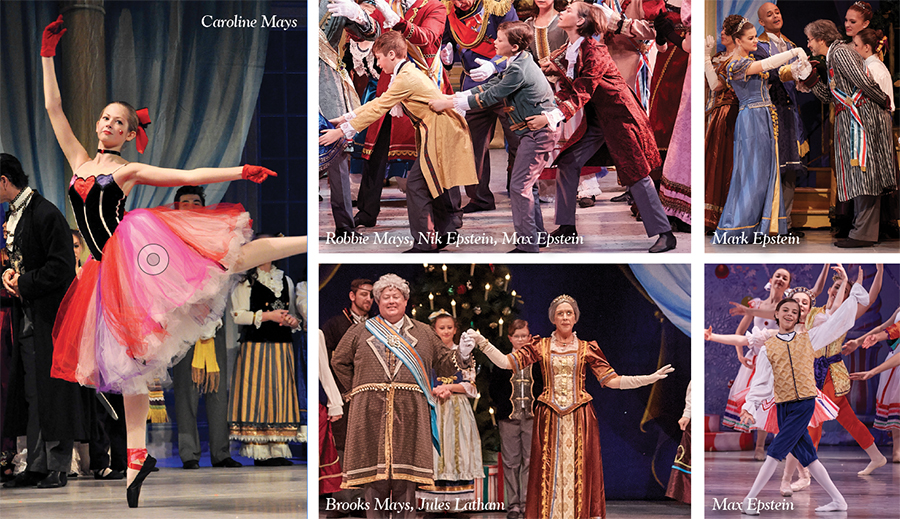
Show biz runs in families: the Barrymores, Redgraves, Fondas, von Trapps, Sutherlands, the Sinatras, the Douglases, Judy Garland/Liza Minnelli, Debbie Reynolds/Carrie Fisher. Dancing their way onto the local list: the Epsteins and the Mays, where parents and children have appeared in Gary Taylor Dance’s production of The Nutcracker practically forever — which is one way to avoid hiring a babysitter during rehearsal season.

Cast of Characters:

Dr. Brooks Mays, endocrinologist, guitarist, local Dancing with the Stars participant.

Katie Mays, family manager.

Caroline Mays, 17, Pinecrest High School.

Brooks Mays, 15, Pinecrest High School.

Robbie Mays, 13, The O’Neal School.

Mark Epstein, financial consultant, veganic farmer, musician.

Jules Latham (Epstein), attorney, social activist, Imagine Youth Theater managing director.

Max Epstein, 14, The O’Neal School.

Nik Epstein, 11, The O’Neal School.

As an aggregate, since 2008 they have performed almost every supporting role, since most dancers play more than one part. Casting memories bring shrieks of laughter, as when an onstage married couple is an off-stage father-daughter.

Or something like that.

Auditions begin in June, rehearsals (mostly in High Point) in July, boot camp in August. Commit and commute are bywords for the Mays-Epstein gang. But, given their enthusiasm, so worth it.

In 40 years of ballet involvement, Rita Taylor has seen no equal. Parts were never assigned pursuant to a family member’s involvement: “Each one earned their spot because they do a great job.”

The two families met through ballet. “I was looking for a place to dance,” Caroline says. She was 5. Mom Katie found Rita and Gary Taylor. Rita’s enthusiasm impressed her. Coincidentally, Jules took ballet classes and, with her college minor in dance, did some teaching. She met Katie, not knowing they lived a mile apart in almost-twin houses built by the same builder. Friendship blossomed. Then, Rita needed parents to appear in the ballet’s party scene.

“We just had to do some ‘stately walking,’” Katie recalls. Fine with dad Brooks, who had theater experience in high school. “I’ve always enjoyed the arts,” he says. “I like putting on makeup and wigs.”

By age 7, Caroline was invited to join the ensemble. Eventually her brothers followed. Stagehand duties were assigned to Brooks Jr., who has autism.

“Remember when Brooks saved the Christmas tree?” which had been caught in the curtain, Katie says, provoking chatter and laughs.

The Epstein boys found their calling a different way:

“I started as Max in The Nutcracker at 6,” Jules begins. “He played Fritz — a really big role for a really little boy.” (Fritz is Clara’s jealous younger brother, who breaks the nutcracker.) Where the girl participants had their mothers in the dressing room, Max faced navigating makeup and costume changes alone. Jules convinced daddy Mark to get involved by helping Max in the dressing room. Rita Taylor took one look and invited Mark onto the stage.

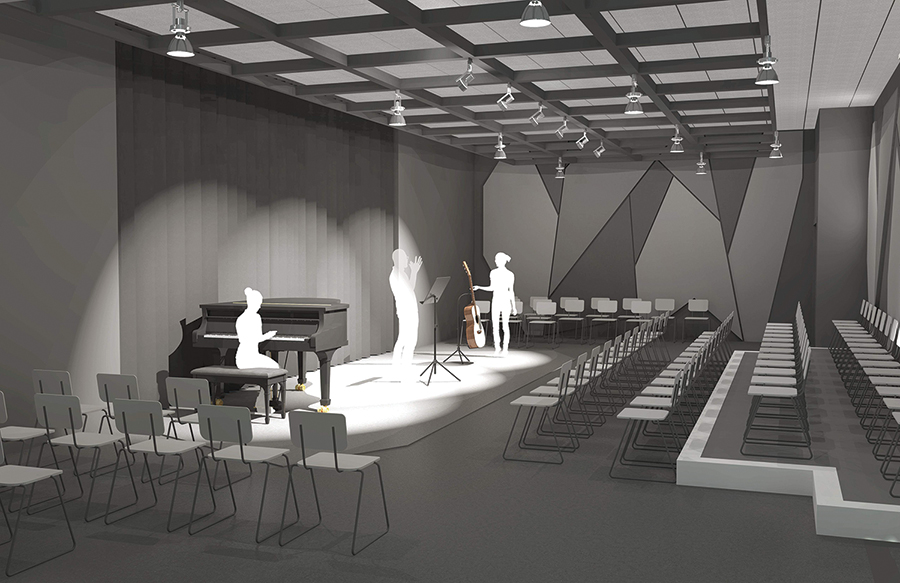
Four adults, five children, months of rehearsals, and almost a dozen performances between Thanksgiving and Christmas, including three at Sandhills Community College Nov. 29 – Dec. 1. The logistics — formidable, but not insurmountable.

Caroline: “I do speech and debate at Pinecrest. I pick and choose (other activities). It can be hard, but I make it work.” She was forced to sit out a year for knee surgery, but returned.

Robbie’s into soccer and views dancing as another sport. He was afraid a broken ankle might keep him from participating this year, but as of now, he will be onstage, in costume sharing the role of the Prince with Max.

“He’ll do everything the role requires except dance,” Katie explains.

No problem, since the expression “break a leg” originated backstage.

utcracker has become an integral part of both families.

“I’ve never experienced it without my parents being there,” Nik says. “It’s convenient.”

“We got roped in from the beginning,” Katie adds. “We never just dropped the kids off.”  Dancing, a vigorous exercise, builds energy and keeps the kids in shape. They do homework on the way to rehearsals in High Point. Dinner is often take-out except for the Epsteins, who are strict vegans, which means Jules prepares snacks and meals-to-go.

The Mayses don’t mind missing a traditional Thanksgiving. Performance schedule precludes visiting family, which means family comes here. “Our cousins look forward to it,” Caroline says. Visitors attend a performance, then everybody goes out for dinner.

Experience breeds confidence. Off-season, the Epstein and Mays siblings participate in school productions, from classics like Cinderella and Mary Poppins to a less-gritty version of Rent. Robbie has joined Max’s dance club. Caroline is looking for a college with a strong dance program, not as a career, but an activity that has been part of her life since little girlhood. Katie and Jules speak every day. The Mays kids swim in the Epsteins’ pool. The families even take a “beach week” together in the summer.

“We’ve become really close,” Caroline says. As for the dance part, “It’s a welcoming environment. (Looking back) I laugh about the blisters and pain of point shoes.”

Nik, the youngest, remembers the “friends and jokes and stuff,” calling the experience “an amazing journey.” Max labels the group “a big, slightly dysfunctional family.” All because of The Nutcracker, which this year will add a sensory-friendly performance with toned-down music and action for adults, children and families with special needs, such as autism.

The idea was born, in part, because of Brooks Jr.’s participation.

Rita Taylor sees dance as a discipline. “Students who train in the arts translate this into the courtroom, the boardroom, the operating room. They are building both physical and mental stamina.”

Jules also sees benefits beyond curtain calls and backyard barbecues:

“You know how we measure kids’ (growth) by lines on the wall? This is a way to measure kids artistically, a yardstick to measure their growth as performers and people. I see already how they take care of the smaller kids.”

Mark adds: “It’s a very professional production . . . nice to be part of it in our community.”

Is there a less-hectic life for the Epsteins and Mayses after The Nutcracker?

“Yes,” Brooks senior chimes in emphatically. “The kids put so much time and effort into it. For nine years, Nutcracker has been part of our lifestyle, like when it’s fall, it’s Nutcracker season.”

Katie adds: “We’re fortunate to do something together. Otherwise, (the children) would have gone in different directions. This put us all in the same space doing something they enjoy.”

Also something that contributes to the enjoyment of others.

These days, few stories have happy endings. Breathe easy. Clara gets her nutcracker back. Tchaikovsky’s dreamy music gets its seasonal airing. And, once again, two families revel in the smell of grease paint, the roar of the crowd. PS

Full feature performances: 7:30 p.m. Friday, Nov. 29; 2:00 p.m. Saturday,
Nov. 30; 2:00 p.m. Sunday, Dec. 1. Student performance series: 9:30 a.m. and
11 a.m. Tuesday, Nov. 26. Sensory friendly performance: 10:30 a.m., Wednesday,
Nov. 27. Bradshaw Performing Arts Center, Sandhills Community College.
Reserved seating tickets $22-$30 available at https://taylordance.org/nutcracker.

PinePitch

Take a Turkey Hike

Work up an appetite on Thanksgiving morning with a refreshing walk guided by a park ranger at the Weymouth Woods-Sandhills Nature Preserve, 1024 Fort Bragg Road, Southern Pines. (Ahem, that’s Nov. 28, ya’ll.) For additional information, call (910) 692-2167 or go to www.ncparks.gov. Bon appétit.

Parade to the Park

The 2019 Southern Pines Veterans Day Parade on Saturday, Nov. 9 will be followed by “Parade to the Park: A Veterans Day Event,” at the Downtown Park, 145 S.E. Broad St., from 11 a.m. to 4 p.m. There will be live music by the 82nd Airborne Rock Band and Jaycee, a beer garden of local breweries, food trucks, a vintage car show, tons of kids activities from LAMM Entertainment and the USO mobile unit and over 10 Veterans support agencies. Sponsors are Cooper Ford, The Heritage Flag Company and Cox’s Double Eagle Harley-Davidson.

Van Gogh at the Sunrise

Van Gogh & Japan is the first of a two-part art series on Vincent van Gogh, with an introduction by Ellen Burke. Though Van Gogh never visited Japan, the film details the inspiration arising from the Japanese art the great painter saw in Paris. Van Gogh & Japan will be shown on Nov. 7 at the Sunrise Theater, 244 N.W. Broad St., Southern Pines. The second film in the series, At Eternity’s Gate, starring Willem Dafoe as the lucid, mad, brilliant artist, will be shown on Nov. 14. Both films begin at 10 a.m.

Art Reception

The Artists League of the Sandhills will have an opening reception for the 25th Annual Fall Show and Sale from 5 to 7 p.m. on Nov. 8 at 129 Exchange St., Aberdeen. The show and sale continue on Nov. 9 from 10 a.m. to 4 p.m. For more information call (910) 944-3979 or go to www.artistleague.org.

Treasure Hunting

Find one-of-a-kind treasures at the Brownson Arts and Crafts Fair on Saturday, Nov. 9, from 9:30 a.m. to 2 p.m. at Brownson Presbyterian Church, 330 S. May St., Southern Pines. Handmade items from skilled artisans will include pottery, original art, baskets, jewelry, baked goods and more. There will be a silent auction and a cash raffle. For more information call (910) 585-1924.

Veterans Day Parade

Show your support and appreciation at the annual Veterans Day Parade on Saturday, Nov. 9, in downtown Southern Pines. Pre-parade festivities, including a flyover by vintage aircraft, will begin at 9:40 a.m. The parade, featuring motorcycles, marching bands, ROTC groups, fire trucks, antique cars and, of course, our vets, begins at 10 a.m. For more information go to
www.sandhillsveteransfestival.com.

Festival of Trees

The 23rd annual Sandhills Children’s Center Festival of Trees begins on Wednesday, Nov. 20, and runs through Sunday, Nov. 24, at the Carolina Hotel, 80 Carolina Vista Drive, Pinehurst. There will be beautifully decorated trees, wreaths, mailbox garlands and gift baskets available for bids in an online auction. The Festival Gift Shop will have stocking stuffers. Admission is by any monetary donation at the door. All proceeds benefit children who have special developmental needs.

Sparkling Lights

Ring in the holidays with the annual tree lighting celebration in downtown Southern Pines on Saturday, Nov. 30, beginning at 4:30 p.m. Enchanted trees will twinkle on Broad Street and Pennsylvania Avenue. Don’t forget to keep an eye out for Santa Claus.

Living with the Prince of Tides

The Country Bookshop presents Cassandra King Conroy, who will talk about her memoir, Tell Me a Story: My Life with Pat Conroy, at the Country Club of North Carolina, 1600 Morganton Rd., Pinehurst, on Nov. 10, at 4 p.m. Tickets include an autographed copy of the book and can be purchased at ticketmesandhills.com. For more information go to
thecountrybookshop.biz.

It’s a Wonderful Life

Adapted from Frank Capra’s 1946 movie starring Jimmy Stewart and produced in the style of an old-fashioned radio show, the Sunrise Theater will present a live rendition of the holiday classic at 2 p.m. on Nov. 30 at the Sunrise, 244 N.W. Broad St., Southern Pines. For information call (910) 692-3611 or go to www.sunrisetheater.com.

Giving Guinness a Run

“Read for the Record” will try to break the world record for the number of people reading the same book on the same day, beginning at 4 p.m. on Nov. 7. This year the featured book is Thank You, Omu! The event is sponsored by the Southern Pines Public Library, 170 W. Connecticut Ave., Southern Pines. For more information call (910) 692-8235 or visit www.sppl.net.

The Rooster’s Wife

Friday, Nov 1: Idlewild South. Allman Brothersstyle band founded by keyboardist and vocalist Don Eason, a veteran musician whose initial influence came from a live performance of The Allman Brothers on Easter weekend of 1970 at The Winter’s End Concert in Bithlo, Florida. Cost: $20.

Sunday, Nov. 3: Shawn Camp. You may not know Shawn, but you know his work. He’ll bring some mighty talented friends with him, including Mike Bub, Guthrie Trapp and Larry Atamanuik. Cost: $25.

Friday, Nov. 8: Sam Baker. In 1986, Baker was on a train in Peru when a bomb planted by the terrorist group Shining Path exploded in the luggage rack above him. He suffered a brain injury and severe hearing loss, and required more than 15 reconstructive surgeries. Somehow during his long recovery, songs started coming to him. One great writer, and listener. Cost: $15. (Baker also performs at the Cameo Arthouse Theatre Thursday, Nov. 7, at 7:00, and offers a writing workshop Saturday, Nov. 9.) For more details: theroosterswife.org or call (910) 944-7502.

Sunday, Nov. 10: Jamie Laval and Megan McConnell take their audiences on an exciting musical journey through Celtic lands, reimagining Gaelic love songs, boisterous peasant dances and ancient, mythic tales. Laval is recognized throughout the United States and Britain as one of the premier performers of Celtic music on the international touring circuit. Vocalist Megan McConnell is lauded for the ethereal, lyric beauty of her singing and her captivating theatrical style. Cost: $20.

Wednesday, Nov. 13: Jontavious Willis and Jerron Paxton. Every generation or so, a young bluesman bursts onto the scene and sends a jolt through the blues community. Willis has just that effect on people. Through original lyrics, the gifted musician delivers a timeless album that features dynamic vocals and every variety of blues: Delta, Piedmont, Texas and Gospel. Although still in his 20s, Jerron “Blind Boy” Paxton is one of the greatest multi-instrumentalists you haven’t heard of — yet. Cost: $20.

Sunday, Nov. 17: Jill Andrews began writing songs at 19. She went on to found The Everybodyfields, leaving the band in 2009 to embark on a solo career. Cost: $15.

Sunday, Nov. 24: Chris Jones and The Night Drivers. Jones is a quadruple threat as a singer, songwriter, guitarist and — thanks to his role hosting SiriusXM’s Bluegrass Junction — one of the most widely heard broadcasting voices in bluegrass music. His immediately recognizable voice, warm sense of humor and abundance of talent have combined to make him one of music’s most distinctive personalities, and one of its strongest artists. He brings along a band of equals — accomplished writers, singers, musicians all. Cost: $20.

Unless otherwise noted, doors open at 6 p.m. and music begins at 6:46 at the Poplar Knight Spot, 114 Knight St., Aberdeen. Prices above are for members. Annual memberships are $5 and available online or at the door. For more information call (910) 944-7502 or visit www.theroosterswife.org or ticketmesandhills.com.

Out of the Blue

Hungry No More

Wouldn’t it be pretty to think so?

By Deborah Salomon

Thanksgiving wears many faces: the college freshman’s first time home. The soldier deployed away from home. The traveler stranded by weather on the way home. The waiter serving “homestyle” mashed potatoes with “Grandma’s” giblet gravy.

Oenophiles pairing Beaujolais nouveau with turkey. Homeless men eating processed turkey and canned green beans, gratefully, in a church hall. Xenophobes insisting that only born-in-the-USA Americans are entitled to celebrate a holiday based, ironically, on natives helping immigrants.

Mustn’t forget pumpkin pie, football and early-bird Black Friday bargains.

Putting aside commercial elements and recent traditions, Thanksgiving is about addressing hunger. Fifty percent of the Plymouth colonists died during the first year, many from illnesses exacerbated by a poor diet, since not enough food was grown and put by for the harsh Massachusetts winter.

Perhaps the only thing worse than starving is starving sick, in the cold.

Americans hear a lot about starvation. During World War II children were cajoled to clean their plates using the specter of “starving children in Europe.” Then, the babies of Bangladesh with swollen bellies and sunken cheeks. I have heard a 40-day hunger strike survivor describe the symptoms: headache, cramps, delusions.

Men, women and children suffer these symptoms every day, not just in the hurricane-ravaged Bahamas or famine-ridden African nations. They exist in the Appalachians and inner-city ghettos. A few stand outside Walmart and Harris Teeter in Aberdeen, holding signs that say “I’m hungry.”

Why? There’s no food shortage in the United States, no famine. Just the opposite. Despite flooding and global warming there’s still a glut. Yet prices keep rising, in part because Americans are spoiled rotten. Not enough white meat on your bosomy Butterball? Roast a separate breast in the same pan. Brussels sprouts must be baby and cranberries fashioned into chutney. Choose from a hundred flavors/varieties of yogurt, as well as milk from cows and half a dozen plant sources. Apples fly halfway around the world on first class tickets, the price suggests. Vegetarians want “impossible burgers” with a meat mouthfeel. Food has become fashion, which means the industry caters to those who can afford indulgence, pay almost $5 for a loaf of sliced bread, rather than finding ways to distribute basics at low prices — or free.

You’ve heard of inner-city “food deserts” where no supermarkets exist, forcing those without transportation to pay exorbitant prices for canned goods at corner stores — and no fresh produce or meats at all. What’s the good of food stamps without a place to buy food? Shame, shame in a nation with surpluses. Shame on the public school that recently gave a 9-year-old an “alternate lunch” because his account was a few dollars overdue. Shame on food producers who spend (and often lose) hundreds of millions diversifying mayonnaise into 10 flavors.

The United States needs many things: One of them is not an entire supermarket aisle devoted to breakfast cereals, another to soft drinks.

Local initiatives like food shelves and BackPack Pals soldier on. I’m wanting something grander. C’mon, Heinz. Let’s go, Nabisco, Coke, Kraft and Kellogg’s. Donate, without fanfare, year-round free meal programs to economically depressed areas. You could even use up all those ridiculous products that bomb.

Imagine how many hungry folks could be fed for the price of a 30-second Super Bowl commercial.

Here come the letters: “You oversimplify. It’s much more complicated.” No it’s not. Putting a man on the moon 50 years ago was complicated. Feeding the hungry couldn’t be simpler.

Thanksgiving, originally an October harvest festival, has evolved as a food/family event best portrayed by Norman Rockwell in his iconic painting which, don’t forget, was titled Freedom from Want, not Happy Thanksgiving — part of a series illustrating the Four Freedoms proclaimed by FDR in 1941. I have ridden a turkeymobile delivering holiday groceries to low-income families. I have attended Oxfam “hunger banquets” and many Thanksgiving dinner adaptations, including one where a historical museum recreated, as far as possible, the first: a tough, gamey wild turkey cooked outdoors over a spit, accompanied by corn bread and winter squash baked in the coals with maple-sweetened apples. The food was awful but spirits remained strong.

I have also carried this crusade from job to job: fewer permutations, more basic foods easily accessible and at lower prices so everyone, every day, not just on Thanksgiving, can celebrate Freedom From Want as did Pilgrim immigrants and Wampanoag natives on that autumn afternoon in Massachusetts, in 1621.

That, indeed, would be a reason to give thanks.  PS

Deborah Salomon is a staff writer for PineStraw and The Pilot. She may be reached at debsalomon@nc.rr.com.

Artist in Residence

Decades later LeRoy Neiman still makes an impression

By Jim Moriarty

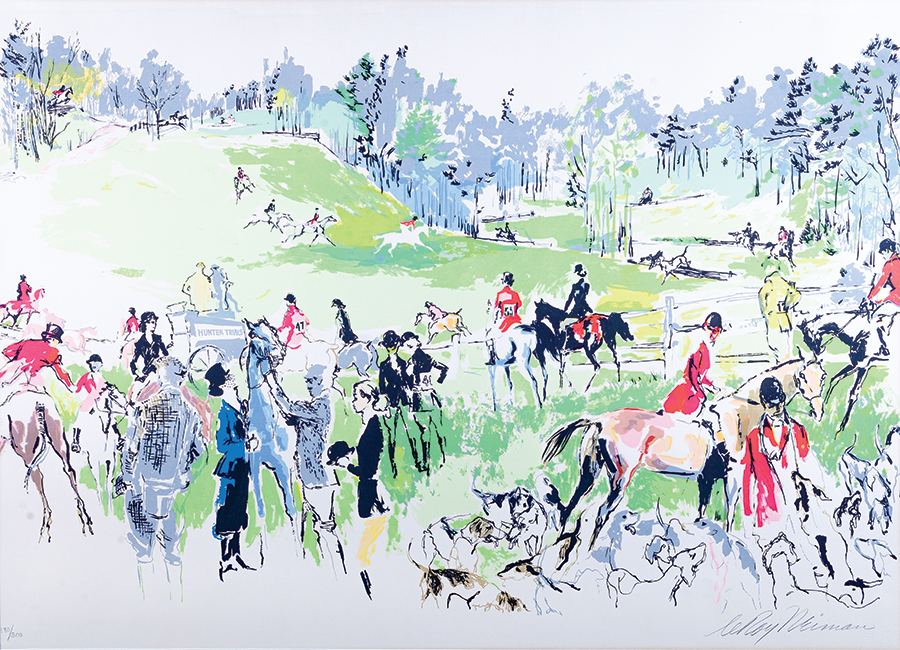
If the beautiful people were there so was LeRoy Neiman, up close, with a sketchpad, a cigar and a mustache that, over his lifetime, seemed to grow in its flamboyance at the same rate as the artist’s renown. In 1959 one of those places was the Hunter Trials in Southern Pines, where the heirs of generational fortunes amassed in businesses as romantic as diamonds and gritty as tobacco gathered to ride to the hounds.

Neiman came to illustrate his “Man at His Leisure” column in the risqué (at the time) Playboy magazine, so new it was barely more than a puppy itself.

Outside the barn at Ginny and Pappy Moss’ Mile Away Farm, the epicenter of the hunt, Leonard Short ran into the painter. “I remember LeRoy Neiman introducing himself to me,” says Short, hardly more than a boy at the time. “I didn’t pay any attention to who he was. He asked if he could sketch some horses there. I said by all means, because we have a lot of artists around town that would do that anyway. Come to find out he was there to do the Hunter Trial course.”

Sixty years later Short discovered a Neiman serigraph done in 1977 available at Leland Little Auction in Hillsborough. “That’s kind of one of my hobbies,” says Short, “much to my chagrin. It keeps me in the poorhouse. He was an impressionistic artist, which I never cared for, but I had to have that one with a little bit of Southern Pines history in it.”

As stylistic as Neiman’s work could be, Short had no problem identifying Neiman’s representations of Margaret “Wiffi” Smith, W.O. (Pappy) Moss and Mrs. Winston Guest.

“So it was,” said the Hunter Trail piece in Playboy, “that Neiman entered this world apart, observed the ancient and arcane sport of pursuing renard over hill and dale, met the well-favored followers of the hounds, observed them in their recherché habitat and transferred his vivid impressions to sketch pad and canvas. The scene has been written about by insiders and for insiders; it has been rendered in etching and old print. This is probably the first time, however, that a contemporary urban artist has spent five days as the guest of a hunt, caught its spirit and savored with total freshness of vision, and made notes — in words and pictures — of those things which struck him as unique and memorable.”

Born LeRoy Runquist in St. Paul, Minnesota, in 1921, Neiman was raised mostly by his mother, whom he describes in his autobiography All Told as “a reckless woman, but I loved her. She was wild and irresponsible, got married several times. Feisty, she wouldn’t put up with this or that guy’s nonsense. She was a big influence on me. Her influence came through her independent spirit . . . she was a freewheeling soul and that’s what I got from her.”

Having appropriated the last name of one of his mother’s husbands as his own, Neiman grew up hardscrabble during the Depression. “That’s where the Roaring Twenties went and where flashy small-time hustlers, stool pigeons, mutts and rummies acted out their dreams. You’re in a bar. You tell a story. It’s a tall tale, but as long as happy hour is going on, everybody buys it, so it becomes true,” he wrote.

For entertainment Neiman and a friend would hop freights “to Duluth, Grand Forks, sometimes as far as Chicago . . . Looking out the open sliding door, it’s like a movie flashing by.”

He sketched his way across Europe in World War II. “I fought at the battle of Normandy, I slogged through the Ardennes, and I celebrated the liberation of Paris on the streets with beautiful French girls throwing flowers at me. I said good-bye to my first true love and discovered what I really wanted to do with my life.” And, at one point, was arrested for being AWOL.

Back in America he studied with Clement Haupers in St. Paul, then enrolled in the School of the Art Institute of Chicago. He married, divorced, became an instructor at the Art Institute and stumbled upon what would become his style.

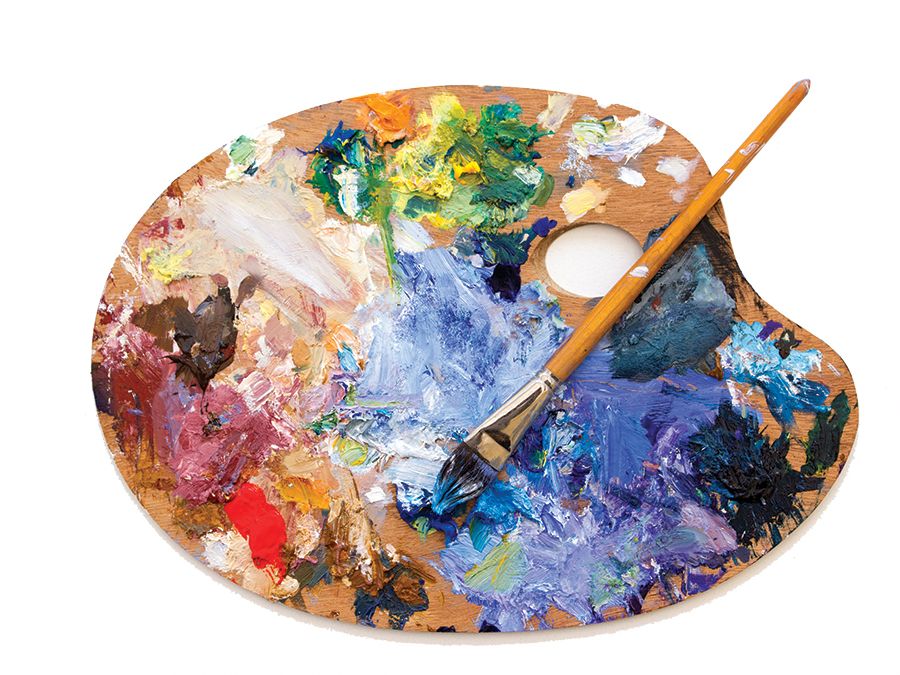
“I was still teaching full time . . . and getting into group and solo shows — but truth be told, I hadn’t figured out who I was as a painter,” writes Neiman. “In every artist’s life there’s an epiphany, the turning point that crystallizes everything that came before. I remember my turning point as if it were yesterday. One Saturday afternoon in ’52, Louie, the janitor for the apartment building next to my studio, was carting wheelbarrows of quart and gallon paint cans to a dump truck. When I asked what he was up to, he shrugged. ‘Gotta get rid of all these half-empty cans left over from painting the apartments!’ I looked at the labels. All high-gloss enamels. ‘Can I take them off your hands?’ I asked.

“Louie was more than happy to let me have the lot. Back in my basement I lost no time pouring and dripping straight from the can, the paint dribbling and splattering, puddling and meandering like multicolored snakes. Then with artist’s palette knife and basic plastering tools I began spreading and swiping the thick, lustrous fluids. Since that day, liquid enamel paint and later adding in liquid acrylics have been my chosen medium.”

The ’50s wanted nothing quite so much as to put war and Depression behind them. Neiman wanted to help. He was dating a woman, his future wife, Janet Byrne, who worked as a copywriter at the department store Carson Pirie Scott. One of her co-workers was a young man named Hugh Hefner.

“Then one day Janet and I are walking down the street, and here comes Hef in the other direction. Without missing a step as we passed each other, he shouted out, ‘Hey, LeRoy, I’m starting a magazine. Will you do something for it?’” In the blink of a bunny, LeRoy Neiman was Playboy’s artist in residence.

Then came Muhammad Ali, Frank Sinatra, Eddie Arcaro, Lenny Bruce, Joe Frazier, Dizzy Gillespie, John F. Kennedy, Rudolph Nureyev, Arnold Palmer, George Plimpton, Andy Warhol, Super Bowls, Masters tournaments, Kentucky Derbys, World Series, Toots Shor’s, casinos, Yogi Berra, Stanley Cups, Bill Clinton, Rocky Balboa, Mickey Mantel, Elvis, and even the Hunter Trials of 1959.

While it’s unclear whether or not Neiman ever returned for the traditional Thanksgiving opening of the hunt season, he refers to it obliquely in his autobiography. “They say a proper initiation into the upper classes involves killing something,” Neiman wrote. “My introduction to this grand old pageant had kicked off in Southern Pines, North Carolina, where I witnessed the blessing of the hounds, as close to religion as I’d been since my wedding day. Considering these exquisite but high-strung creatures were born and bred to kill, I wondered if the blessing was an act of absolution.”

Despite the massive popularity Neiman’s work achieved, and the storybook life he led, he didn’t enjoy the critical success reserved for “serious” artists. “Whatever the critics said about me, though, people were buying my paintings,” he wrote. “If the critics didn’t like it, to hell with them. I didn’t know how to paint any other way or, for that matter, how to live any other way. In fact, I was proud of my brash new style. I continued to exhibit, my solo shows embraced by the public but snubbed by the critics.”

He sold canvases as fast as he could paint them, eventually becoming an industry of his own. “They wanted a Neiman and I was going to give it to them, no matter what any of the art police had to say about me.” It was a blessing all his own.  PS