Papadaddy’s Mindfield

Outdoors Is Not Closed

A gift that amazes the child in all of us

By Clyde Edgerton

I’m writing these words in late March 2020.

My gentle editor recently told me that the Salt magazine theme for May’s issue would be “the outdoors.” I took a walk to think about how to write about that subject during these dark times.

More people are taking walks, riding bicycles — missing beaches and closed parks. I can only guess at how things will be in early May, when you are (now) reading these words. It does not seem far-fetched to guess that, by then, you or I — or both of us — will have lost people we knew, and perhaps loved. I know of no time since World War II during which I could have said that.

On my walk, I notice a wisteria vine behind a neighbor’s house. I think about how, unchecked, it will begin to take over bushes, shrubs, trees — a nuisance vine. But the beauty of its blossom may counter that, depending on your relationship to the vine; that is, if it’s growing in the woods you can admire it, but in your yard it may become invasive and unwelcomed. The reason I notice the vine on this walk is because late March and early April are days of Wilmington’s wisteria blooming — light purple — for its three- or four-week colorful span.

I rarely, if ever, see a wisteria vine without remembering a particular wisteria vine. My mother remembered it being planted in about 1915 at the base of a trellis in her grandmother’s backyard. That would have been three years before the Spanish flu epidemic. Twenty-one years later, in 1936, the federal government bought 5,000 acres in the vicinity of the homeplace, where the vine grew on its trellis, and offered it to the state of North Carolina for a dollar, with the understanding that the acreage would become a recreational site. The site became the William B. Umstead State Park, situated between Raleigh and Durham. Graveyards, as well as stone and glass remnants of an entire community, can still be found near trails and streams.

The wisteria vine planted by my grandmother survived the land transfer, and once every year for the past 70 years or so, I’ve helped family members clean the family graveyard near the site of the homeplace. By the 1950s, the wisteria vine began taking over wild shrubs and pine trees around the graveyard, and for a while in the early ’80s it arched magnificently over a dirt road that ran through the park. This memory of it in bloom, reaching up into and over pine trees, and over the road, is unforgettable. Park rangers painstakingly extinguished the vine in the 1990s. Sadly, in my view.

My guess is that you remember an outdoor childhood spot — near a certain tree, or creek or hillside. Perhaps there was a path that led to a secret place. While outdoors interests adults, it often amazes children. When did you last climb a tree?

In a sense, outdoors is childhood. And outdoors is a gift, like a sense of humor, like strong relationships with people we like and love. Gifts. Not acquisitions growing from what we don’t need.

Granted, we need toilet paper, but it’s not free.

Outdoors is free.  PS

Clyde Edgerton is the author of 10 novels, a memoir and most recently, Papadaddy’s Book for New Fathers. He is the Thomas S. Kenan III Distinguished Professor of Creative Writing at UNCW.

Southwords

What’s a Drop Cloth?

(And why on earth would you ever want one?)

By Jim Moriarty

In 6 Jimmy Breslin, the famous New York columnist and author, ran for the president of the city council with his buddy, Norman Mailer, who was campaigning for the office of mayor. Their insurgent platform — hey, it was still the ’60s — was that the boroughs of the Big Apple should secede from the remainder of the state. As it turned out, this proposition was not looked upon favorably by the general population and the Mailer/Breslin ticket was crushed at the polls. In a rather terse concession speech Breslin said that his everlasting regret was that he was “mortified to have taken part in a process that required bars to be closed.”

In our most recent — or, God forbid, current — situation, I find myself in complete agreement. My own pub, which I affectionately refer to as the Bitter and Twisted, was long ago deemed nonessential. While the finer points of that opinion may be a personal matter of some dispute, there is no getting around the fact that I’d have been better off if the governor had extended his catalog of places to avoid to include Lowe’s Home Improvement.

For some reason my wife, the War Department, got it in her mind that since the hours previously occupied by the Bitter and Twisted had now been “freed up” — her words, I’m afraid — this would be a grand time to paint the living room. To my untrained eye the living room looked just fine. In fact, I was just getting used to it. A cobweb here and there. Maybe a nick or two from the time she thought it was a good idea for me to move the furniture about like a game of shuffleboard. And, I’ll grant you, there are the extra holes — generally falling into the three-to-seven range — required for me to hang any picture. They’re hidden, of course, though we all know where they are. More obvious are the scratches where the Alaskan malamute, owned by some boy my daughter dated for 15 minutes in high school (she’s now 43), carved out of the side door like Freddy Krueger. It’s not that I’m opposed to change, per se. But why fix something that’s not broken or that, at the very least, is bound to require a great deal of, well, doing something?

And I’m not handy. I’m not just not handy, I’m religiously so. I’ve spent a lifetime taking every precaution to ensure that I know virtually nothing about anything that could reasonably be considered useful. If I actually had to fix a toilet, it would only be a matter of days before we had to move. And, having once attained a reputation for a high degree of ignorance around the house, you don’t want to throw that sort of thing away willy-nilly on something as mundane as a living room that really wasn’t all that bad, as long as you sort of keep the lights dimmed.

She, on the other hand, seemed convinced that new paint jobs ought not be a once in a generation phenomenon. So, off to Lowe’s we go. According to the War Department, buried somewhere in what I’ve been told is a utility shed, we did have some old brushes and whatnot that had last been used to make cave paintings, so it wasn’t as though we were in the market for the whole kit.

I’m not saying there are a lot of people who know as little as I do, but it did seem as though there were an awful lot of folks who had the same idea my wife did, vis-à-vis idle time. Myself, I’d have been perfectly happy to socially distance my ass right back home. Instead, we looked at chips. Color, not potato. “Which do you like,” she asked, “the Drizzled Berry Hibiscus or the Uggs Mocha?” People can hold very strong opinions about such things, so I looked off toward the hardware lubricants and mumbled, “Ugh.” And she said, “Uggs it is.”

And that’s how the living room, using a technique that can best be described as Jackson Pollock Meets The Three Stooges, turned brown. On the plus side, as all fans of Ocean’s Eleven know well, taupe is very soothing.  PS

Jim Moriarty is the Senior Editor of PineStraw and can be reached at jjmpinestraw@gmail.com.

Donald’s Digs

The Ross Cottage gets a mulligan

By Deborah Salomon     Photographs by John Koob Gessner

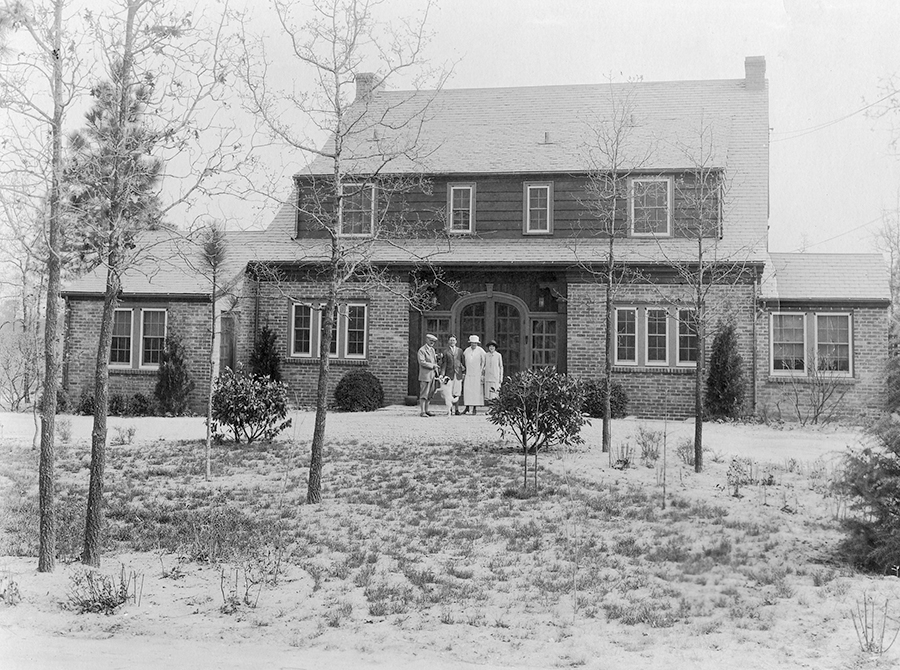
Dornoch Cottage is to golfers what Graceland is to silver-haired rock ’n’ rollers. What Monticello is to American presidency buffs. What Tara was to Scarlett. Donald Ross not only slept, ate and breathed here, but built his home overlooking the third hole of Pinehurst No. 2. Value it as did Ross: Of the 400, and then some, golf courses the master designed, he chose to live on Midland Road. 

This value has not diminished. In March, in response to the coronavirus pandemic, Pinehurst Resort auctioned off two nights at Dornoch plus three rounds of golf, with proceeds benefiting the Employee Relief Fund. The winning bid: $25,000.

When they get there, the winners should not expect a McMansion fitted out with gadgetry. Rather, a comfortable home, rich in memorabilia, with a romantic backstory:

Ross, whose trade was listed as carpenter/clubmaker, arrived in Boston from Dornoch, Scotland, in 1899, with $2 in his pocket. The 28-year-old left his fiancée, Janet, behind but soon returned to marry her. James Tufts brought the budding star to Pinehurst in 1901, as club manager/pro. The young couple and their daughter Lillian lived at Hawthorne Cottage until Janet died of breast cancer, in 1922.

The widower was lonely.

Documents from the Tufts Archives at Given Memorial Library indicate that, about 1923, wealthy widow Florence Blackinton purchased a lot on Midland Road with the intention of building a winter retreat. The Tufts family sent Ross to negotiate boundary issues. Nature took its course; a year after Janet’s death, Donald and Florence married.

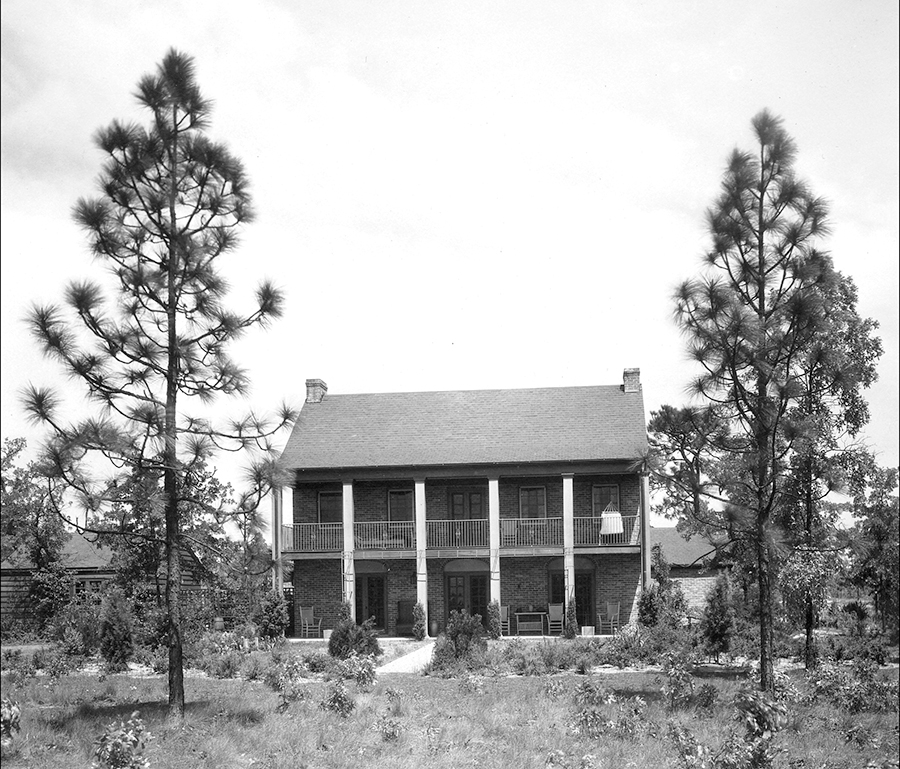
About that house Florence planned to build: She wanted an antebellum two-story colonnade spanning the width. Donald dreamed of a Scottish cottage done in stone and pinkish brick. Their compromise: Scottish front, plantation rear, main entrance on each side.

The compromise worked. Donald and Janet lived at Dornoch Cottage, named for his birthplace, until his death in 1948.

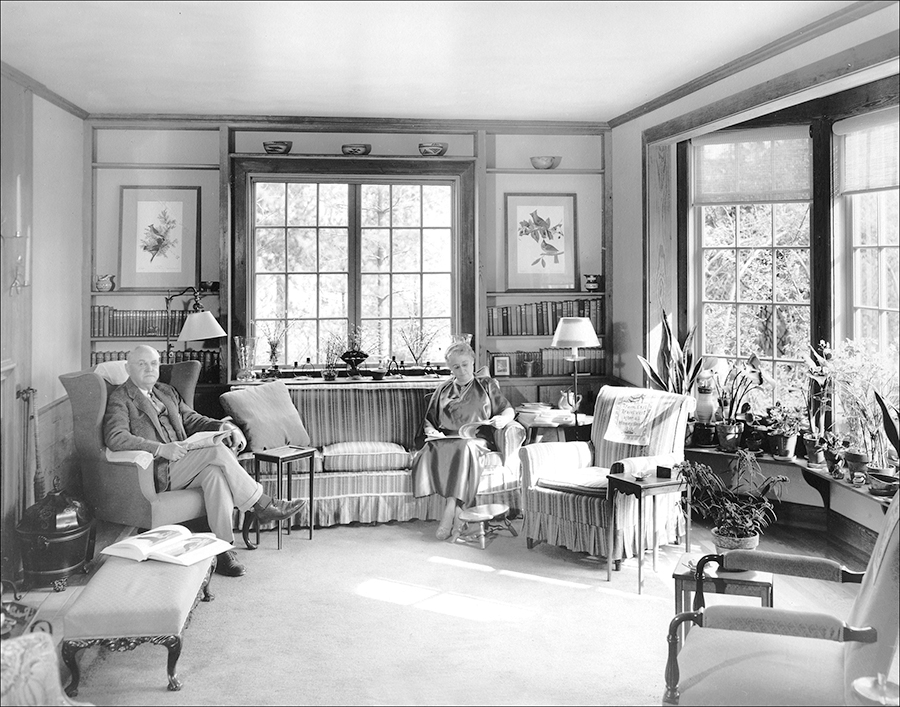
The house was purchased by Wayne and Jo Ashby, who entertained the Donald Ross Society there, and subsequently by Bob and Carol Hanson, whose livelihood and lives revolve around golf. Structural repairs were needed, desperately. Once they had been completed, the Hansons’ mission was to create a shrine to the Ross/Pinehurst legend, using Bob’s collections of golf art, antique clubs, photos and memorabilia. To that they added period furniture in the graceful Southern style. Pinehurst Resort purchased Dornoch in 2017 as a lodging option for special guests and began another round of renovations in January of 2018.

Decking it out suitably fell to Mark Clay, the Dallas interior designer in charge of renovating and furnishing Fownes Cottage, another historic residence renovated by the resort for conferences, VIPs and the personal use of resort owner Bob Dedman Jr. and his family. The result: comfortable, elegant, authentic yet less formal than Fownes; a place to invite friends for a drink, maybe a barbecue, while rehashing their birdies and bogeys on No. 2.

“Mr. Hanson took a lot of the memorabilia,” Clay recalls. “Mr. Dedman replaced some of it himself.” The rest was collected from Pinehurst shops and elsewhere. Clay worked with the furniture that remained, had some reupholstered, wallpapered the bedrooms and bathrooms, added draperies. The dining room table came up from Dallas, with chairs custom-made to complement it.

“This wasn’t going to be a private residence. I had to be practical about using what came with the house,” Clay says.

The floorplan remained the same, except for an upstairs “Nanny’s room,” where he put a soaking tub. But the bathrooms needed work and the kitchen got a new floor, a farmhouse sink, new countertops over existing pine cabinets. Clay used a grasscloth wall covering and a beadboard ceiling in the dining area.

Clay’s design signature, upholstered headboards, made the cut although he retained one classic four-poster bed with “R” embroidered on pillow shams.

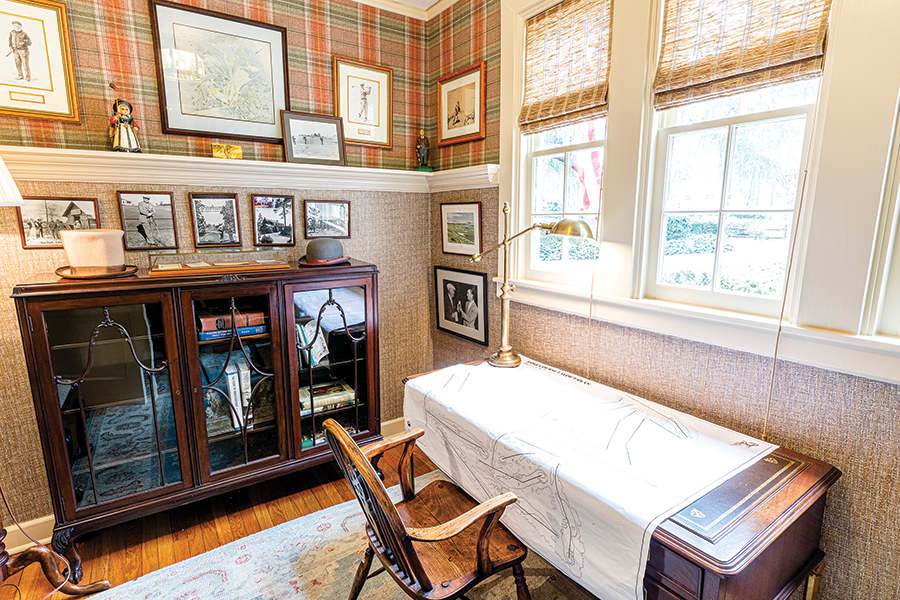
A small, outdated swimming pool added post-Ross was filled in. The paneled den remained tartan-clubby, filled with golf photos and souvenirs. Much was added to the landscaping.

The result: another piece of Pinehurst history brought forward to 21st century standards with Wi-Fi and AC, leaving aura intact.

Clay had to complete the renovation in 12 weeks because Gil Hanse, internationally lauded golf course architect, would occupy Dornoch for six months while he redesigned Pinehurst’s No. 4 course.

“There is no doubt in my mind that living in Dornoch Cottage was one of the most meaningful experiences ever extended to Tracey (his wife) and me during my career,” says Hanse. “To wake up every morning in Ross’ house, look out the window at arguably his greatest creation, and sit in his office and work on plans of our own in the same space as he visualized some of the greatest holes on the planet still gives me chills.

“It also crossed my mind that all the mundane things we take for granted — like making coffee, taking out the trash, reading a book were also done by him, here. We lived in his house, and while all the thoughts about great course ideas he created under this roof and how many amazing golf holes were dreamed up — it was the notion that we experienced his house just like he did.

“That might be the most meaningful part of it.”  PS

Sporting Life

All on the Line

A full day in a full life

By Tom Bryant

It had become a ritual with the old man. Every morning he would fire up the little gas stove in the Airstream, put the percolator on with enough coffee for four cups, two for now and two for later, which he would carry in his ancient bent thermos. Then he would warm four biscuits stuffed with country ham that he had cooked the evening before. The ham reminded him of home and the family farm. He missed the everyday rigors of farming but realized with the last doctor’s report that it was time to let that stage of life go. Two of the biscuits were for breakfast, and two were for lunch, when he would pull his skiff up on a mangrove key and wait for the tide to change.

His fishing gear was stowed under the awning of the compact camper he had bought years before at about the same time he had been able to purchase the lot on Halfway Creek. The small tidal creek, more a stream really, flowed out of the Everglades and was more brackish than fresh water. The evening before he had been able to net mullet for bait to use on the tidewater change in the bay.

His wife of 50 years, Hensilee, was away from the camp visiting one of the children in Fort Lauderdale, so he had all the doings to himself for a couple of weeks. A solitary man, he enjoyed the quiet of his little piece of property and never got tired of watching the sunsets across the Gulf. More times than not, he would be motoring back across the bay heading for home when the sun began its march toward evening. He would get there in the lowering light in time to clean the day’s catch, fix a bite of supper, and then relax in his favorite camp chair out on the dock that housed his archaic skiff.

He liked to say that he was a keeper of God’s nature and always gave more than he took. He actually grew up on a farm in the low country of South Carolina, a farm that had been in his family for generations. In the last year, he had passed the mantle and responsibility of the farm to his oldest son and now was at home on his creek in the closing stages of his life, doing what he loved most.

He paused briefly before walking down the short path to the dock where his little skiff rested, then went over his supplies for the day. Plenty of water in a two-quart canteen, never can have too much water on the bay. His daypack filled with lunch and other necessities that he had accumulated over the years, like his fillet knife and the first-aid kit he had built from scratch. His fishing rig consisting of a bait-casting rod and reel, a surf casting outfit he had converted to boat use, and a venerable fly rod that he loved to employ in the shallow salt water flats bordering the mangroves, just before the deeper water of the Gulf.

His skiff, he liked to say, was one of a kind, and it truly was. Built by a grizzled old Florida riverboat captain he had known for years, it was acquired after much negotiation. The captain’s health necessitated his move north to be close to family and was the only reason he’d agreed to sell.

It was a strange looking craft with a diesel motor amidships, almost like the ones on small John Deere tractors. It made a pockety-pockety noise recognized by anyone who had ever been around farm tractors.

The skiff was about 17 feet with a wide shallow V-beam that made it extremely seaworthy, yet with a very shallow draft. In front of the motor housing was a wooden half console, and at the bow was a covered enclosure for gear. A fish live well was located on the stern. All in all, an unusual boat. Slow, but as the old man often said, if he had to hurry, he wouldn’t go.

With the sure movements of many repetitions, he loaded all his gear, fired up the engine and slowly cruised down the creek toward the bay. He had one more superstition: He tapped his left shirt pocket for the reassuring, familiar feel of his bottle of nitroglycerin pills.

He’d had his first heart attack young, at 45. His second came 20 years later, in the same month as the first. It was January. He always said that it was the cold that precipitated the attacks; and after the prognosis of the doctors, he bought a winter place on the St. Johns River close to Astor, Florida. When that location wasn’t warm enough in the winter, he found and purchased the little piece of land on Halfway Creek.

His family doctor was brutally factual about his health. “You’ve had two heart attacks. The next one will take you away.” That’s when he prescribed nitroglycerin pills to help with the old man’s angina.

The ride out toward the bay was as restful and beautiful as usual; and in a short time, he was to the Ten Thousand Islands that bordered the Gulf. They weren’t really islands but mangroves that grew in the salt water with numerous twisted roots that would trap sand during tidal flows and create little islands, or keys, as the natives call them. He had worked with a local fisherman when he first began fishing the mangroves and learned the area as well as the river he used to fish back in South Carolina.

There was a miniature mangrove island that he named Fiddler Key because of the fiddler crab population. Every time he slid his skiff to the water’s edge, the beach looked as if it was moving, it was so packed with little crabs. The males’ greatly enlarged claws would be waving back and forth as they hustled on down the strand looking for places to hide. He would trap 15 or 20 to use as bait for what he called his favorite eating fish, the sheepshead.

Sheepshead love to hang around the mangroves because of their diet of crustaceans and barnacles that grow on the roots. The fish, which can grow up to 4 pounds, also have a great fondness for fiddler crabs, and the old man rarely missed catching four or five sheepshead around the islands.

In almost no time, he pulled five keepers into the boat and deposited them in the live well. He then fired up his skiff and headed out to the mangroves bordering the Gulf. It was almost time for lunch, so he baited his converted surf casting rig with a mullet and cast out where the deep water began. Then he tied up to a mangrove and ate lunch. It was also his tradition to take a little nap after lunch, so he put up his boat awning over the bow and nestled down on several boat cushions and dozed.

The drag on the reel awakened him and he sat up, grabbed his rod and leaned back to set the hook. Whatever was on his line was big, and the drag screamed as the fish took more line off the reel and headed for deep water. Nothing to do but cut the line or follow it in his boat.

He wanted to see this fish, so he placed the rod in the gunnel holder, untied the skiff, fired up the motor and chased the fish out in the Gulf.

The battle went on all afternoon. The fish would take out more line, and he would use the skiff by motoring toward the fish to help him recapture his lost effort.

As the sun was beginning to set, he finally decided to give up. The fish had him beat. Just as he was about to cut his line, he saw the giant fish roll to the top of the water only 40 yards away. He motored closer, muttering all the while, “I hope I haven’t killed him.”

It was a bluefin tuna about 5 feet long, probably weighing two or three hundred pounds. He got his pliers and cut the steel leader as close to the fish’s mouth as he could and watched as the enormous tuna rolled a time or two, one eye balefully looking at the old man, and then he gradually submerged and drifted out of sight.

He sat leaning against the port side of the boat and watched as the blazing sun slowly sank in the western Gulf. He shook a pill from the bottle he took from his shirt, hoping it would diminish the pain he was feeling across his chest. He figured he was probably 10 miles out and turned the little skiff toward the east and home. A full moon was rising across the bay as he entered through the mangroves. He slowed the kicker and released the sheepshead he had in the live well. It will be too late to clean them anyway, he reasoned. The pain in his chest would come and go. He felt as if his heart was in synch with his little diesel motor, pockety-pockety.

“What a wonderful day,” he thought. “If this is my last one, it’s been a blessing.” He took his last pill.

The little skiff glided steadily toward the brightness of the moonrise and home.  PS

Tom Bryant, a Southern Pines resident, is a lifelong outdoorsman and PineStraw’s Sporting Life columnist.

Bookshelf

May Books

FICTION

The Paris Hours, by Alex George

What would happen if instead of burning all of Marcel Proust’s notebooks, his maid kept the last remaining one? And what would happen if that last notebook made its way into Ernest Hemingway’s hands? The Paris Hours follows four characters, each on a quest to right a past wrong.

A Children’s Bible, by Lydia Millet

Pulitzer Prize finalist Lydia Millet’s sublime new novel — her first since the National Book Award long-listed Sweet Lamb of Heaven — follows a group of 12 eerily mature children on a forced vacation with their families at a sprawling lakeside mansion. Contemptuous of their parents, who pass their days in a stupor of liquor, drugs and sex, the children feel neglected and suffocated at the same time. When a destructive storm descends on the summer estate, the group’s ringleaders — including Eve, who narrates the story — decide to run away, leading the younger ones on a dangerous foray into the apocalyptic chaos outside.

All Adults Here, by Emma Straub

Straub writes with knife-edged humor, sliced and diced and added into a delectable stew of flawed characters and story. Astrid is a steely widow and mother of three adult children in the small town of Clapham. She witnesses a terrible accident involving a longtime acquaintance, and it turns out to be the cataclysm that unleashes her reflections on past mistakes and decisions kept bottled up for decades. Her intentions and attempts to right a series of wrongs spanning the years allows the reader to dive into the secrets kept not only by Astrid, but also by her family and those around them. This is a sly, wicked and wholly satisfying read.

Latitudes of Longing, by Shubhangi Swarup

This book is nothing short of amazing. The elemental forces of nature and how we understand and relate to those forces are at the core of the three stories of interconnected people in this book. Unapologetic and with a full portrayal of complex lives, this book is ultimately a love story to the best and worst versions of humanity and the planet. The young author is a storyteller of extraordinary talent and insight who was awarded one of the most prestigious prizes in India for this novel. Richly imaginative and wryly perceptive, Latitudes of Longing offers a soaring view of humanity: our beauty and ugliness, our capacity to harm and love each other, and our mysterious and sacred relationship with nature.

Hello, Summer, by Mary Kay Andrews

Conley Hawkins left her family’s small town newspaper, The Silver Bay Beacon, in the rearview mirror years ago. Now a star reporter for a big-city paper, Conley is exactly where she wants to be and is about to take a fancy new position in Washington, D.C. Or so she thinks. When the new job goes up in smoke, Conley finds herself right back where she started, working for her sister, who is trying to keep The Silver Bay Beacon afloat — and she doesn’t exactly have warm feelings for Conley. Soon she is given the unenviable task of overseeing the local gossip column, “Hello, Summer.” Conley witnesses an accident that ends in the death of a local congressman — a beloved war hero with a shady past. The more she digs into the story, the more dangerous it gets. As an old heartbreaker causes trouble and a new flame ignites, it soon looks like their sleepy beach town is the most scandalous hotspot of the summer.

Old Lovegood Girls, by Gail Godwin

From the best-selling, award-winning author of Flora and Evensong comes the story of two remarkable women and the complex friendship between them that spans decades. When the dean of Lovegood Junior College for Girls decides to pair Feron Hood with Merry Jellicoe as roommates in 1958, she has no way of knowing the far-reaching consequences of the match. Feron, who has narrowly escaped from a dark past, instantly takes to Merry and her composed personality. Underneath their fierce friendship is a stronger, stranger bond, one comprising secrets, rivalry and influence — with neither of them able to predict that Merry is about to lose everything she grew up taking for granted, and that their time together will be cut short. Ten years later, Feron and Merry haven’t spoken since college. Life has led them into vastly different worlds. And when each woman finds herself in need of the other’s essence, that spark — that remarkable affinity, unbroken by time — is reignited, and their lives begin to shift.

NONFICTION

On Lighthouses, by Jazmina Barrera, Christina MacSweeney

Obsession can be a form of mental collecting, involving an accumulation of images, experiences and stories, but it’s the stories that really bring the thing to life. On Lighthouses artfully examines lighthouses from the Spanish to the Oregon coasts and those in the works of Virginia Woolf, Edgar Allan Poe, Ingmar Bergman and many others. Barrera’s musings take the reader on a journey into her obsession, from hopeless isolation to a meaningful one, so comforting, yet so very ethereal and spectral. This is a book to be read, then read again and again.

Revolver: Sam Colt and the Six-Shooter that Changed America, by Jim Rasenberger

A riveting and revealing biography of Colt, a man who made significant contributions to our country during the 19th century, Revolver is also a lively and informative historical portrait of America during a time of extraordinary transformation. Colt seemingly lived five lives in his 47 years — he traveled, womanized, drank prodigiously, smuggled guns into Russia, bribed politicians, and supplied the Union Army with the guns they needed to win the Civil War. He lived during an age of promise and progress, but also of slavery, corruption and unbridled greed, and he not only helped to create this America, he embodied it. By the time he died in 1862 in Hartford, Connecticut, he was one of the most famous men in the nation, and one of the richest.

CHILDREN’S BOOKS

Hundred Feet Tall, by Benjamin Scheuer

With a little love and a little time and a little care, a little seed in a little jar can grow a hundred feet tall. Perfect for Earth Day or graduations or for simply a story of persistence and dedication, Hundred Feet Tall is sure to become a classic. (Ages 3-6.)

Green on Green, by Dianne White

This stunningly beautiful ode to the seasons practically begs to be read aloud in the shade of a longleaf pine. For story time, bedtime or anytime a new season comes around, Green on Green will delight young listeners and fulfill the desires of readers when new seasons begin to peek their heads out of the weather-worn earth. (Ages 3-6.)

Layla’s Luck, by Jo Rooks

Layla is sooo lucky. She wins the race wearing her lucky socks, aces the spelling test with her lucky pencil, and grows the tallest flowers with her lucky watering can. But on the day when it matters most, it seems Layla’s luck has just run out. It takes a friend to point out that it’s not luck that helped Layla find such success, but hard work and dedication, and this is just the thing she needs to push on toward her goal. Cute illustrations and a gentle message of stick-to-itiveness make this the perfect book to read together. (Ages 4-7.)

Malamander, by Thomas Taylor

Herbert Lemon works as the Lost-and-Founder at the Grand Nautilus Hotel, and among the lost umbrellas and trunks one day, Herbert finds himself face-to-face with a lost girl. This girl, Violet, leads Herbert on a wild journey through his unusual town, where the pair encounter a powerful old woman with spying capabilities, a top hat-wearing book-recommending monkey, a 12-year-old mystery, and a mysterious aquatic monster. A fun mystery with quirky humor, Malamander is perfect for that sophisticated young reader who appreciates a little dark humor. (Ages 9-12.)

Be You!, by Peter Reynolds

Brave, curious, kind, adventurous. Reynolds honors all the ways we celebrate the amazing young people in our lives in this charming new book destined to become a classic for new babies and graduation gift giving. (All ages.)  PS

Compiled by Kimberly Daniels Taws and Angie Tally

Out of the Blue

For Mother, with a Twist

Gratitude for the lessons learned

By Deborah Salomon

May is for mothers. The woman who wiped our tears and noses and bottoms, who taught us to drink from a cup, eat with a fork, share our toys, say please and thank you. For this she is rewarded with breakfast in bed, flowers, a long wait in a crowded restaurant and handmade cards she will treasure forever. 

My mother, who lived to 98, taught me by a different, rather contrary method which, although I did not follow with my own children, worked exceptionally well. For this I am grateful.

Examples:

Being there matters: My mother was a career woman, a high school math teacher. She was 36 when I was born. My father was 45. She returned to teaching when I was a few months old, and taught until I started first grade. Then she was home all day. My father’s job required a 90-minute commute, each way; hers, at least an hour. I hardly saw either of them, which allowed me the most wonderful, sweetest nanny in the world.

Annie was 18. My mother found her sweeping floors in a Greensboro beauty parlor, took her back to New York, where she was my companion/caregiver for five years. After leaving us Annie rose in the nanny ranks, according to her annual postcards. Before retirement she worked for the Rockefellers.

All I wanted was to stay home with the kids. Not much choice; I didn’t have a car until the youngest started pre-kindergarten.

Siblings aren’t important: My mother was eldest of three; my father youngest of seven. Who needs all that noise and bother? This only child responded by having three in 3 1/2 years. Glorious noise, memorable bother.

Shoes hurt: My mother had terrible feet, wore ugly orthopedic shoes. She assumed mine would be the same. They weren’t. Nevertheless, while the other little girls wore penny loafers, ballet flats, Keds and Mary Janes, I suffered in brown lace-ups. My three followed the crowd: saddles, sandals, boots. Better fallen arches than droopy psyches. 

Pets aren’t necessary: I adored animals. No siblings, how about a puppy? I begged. Finally, a sweet little cocker spaniel. It was winter. We lived in an apartment. My parents could not manage the walks. A month later, Skippy went to live in New Jersey. I was allowed to visit. Skippy had a grassy yard and three children for playmates. Lucky Skippy.   

We had a puppy before our first child was born, followed by other dogs and cats. Kids need animals. So did Mommy.

Birthday parties matter, too: All my grade-school friends had them, sometimes at home, sometimes the mom would herd a few giggling girls to a Walt Disney movie followed by ice cream and cake. Too much mess, my mother decided. Suppose one gets sick? Or runs into the street? Or spills all over her party dress?

I reacted by mounting birthday extravaganzas. Cleaned and decorated the garage, rented long, low tables, ordered party sandwiches, almost passed out blowing up balloons. What a mess! I treasure the Polaroids that, miraculously, haven’t faded. 

Trust begets trust: I was a good girl. Made good grades, had nice friends, obeyed the rules. Freshman year, a cool guy invited me to a statewide frat weekend in Charlotte. The event was approved by the Duke women’s dean, no small feat. Several girls shared a room at the hotel where the dance was being held. We drove there with the guys, unloaded our bags, checked in. Out of the corner of my eye I saw a familiar figure sitting in the lobby, reading a newspaper. I know you meant well, Mom, but really . . .

One of my daughters trained with the Canadian Junior Ski Team in Argentina when she was 14. The other worked in California, at 19. And my son backpacked through Germany, visiting car manufacturing shrines, when he was 17. I was scared to death but they were good kids so I never let on.

Food really matters: I learned to cook young because my mother’s food was bland and mushy. We never had fun stuff, even as a treat. No Kraft dinner, hot dogs, Kool-Aid, ice cream sandwiches, cupcakes. She made brownies once a year, for the bridge club. She never, not once, roasted a turkey for Thanksgiving. Too wasteful for only three people, she rationalized. Which is why I do turkey often, including summer. Nothing beats real turkey sandwiches. Stuffing knows no season.

I am extra-grateful for self-taught culinary skills that I turned into a career that took me interesting places to meet fascinating people. Cookies, I learned, open doors.

My mother believed the most important thing about getting married is the china, crystal and silver. I didn’t care, picked simple, classic designs. Nothing doing. The china and crystal had to be gold-rimmed, therefore not dishwasher-safe. The silver . . . ornate, difficult to polish. My mother envisioned elegant dinner parties. Instead, I dragged everything out once a year, at Passover, where attendees included young children fascinated by the easily tipped stemware.

After my mother’s death, in 2000, I called a fancy caterer, who arrived with a roll of hundred-dollar bills bigger than a softball and many empty boxes. Finally, these prized (by my mother) possessions would fulfill their destiny, albeit not at my table. I sang Mom’s praises all the way to the bank.

In retrospect, the most valuable lessons were problem-solving, self-sufficiency. My mother called me her “ways and means” child. Not very warm and fuzzy. Not something celebrated by Hallmark or FTD. Or even Butterball. But lots more practical.

For that, especially on Mother’s Day, thank you so much, Mom. PS

Deborah Salomon is a staff writer for PineStraw and The Pilot. She may be reached at debsalomon@nc.rr.com.

Food for Thought

Strawberry Fields Forever

Classic shortcake is nice. But it’s hard to beat this spirited twist on summer’s most luscious berry

By Jane Lear

Although it may sound strange, soaking, or macerating, strawberries in a mix of sugar, orange juice, and Madeira or sherry is far from a new idea. Macerated fresh fruit was a Victorian fad borrowed from the French, and in Miss Leslie’s New Cookery Book of 1857, by the popular American cookbook author Eliza Leslie, you will find “Strawberries in Wine.” There’s no citrus, but Miss Leslie does specify Madeira or sherry. The berries are “served at parties in small glass saucers,” she noted, “heaped on the top with whipped cream, or with white ice cream.”

My grandmother used glass saucers for serving as well — they hold the winey juices nicely — but her rationale behind macerated strawberries wasn’t a special occasion but a too-hot-to-bake day. By June, her house would be dim and shadowy, the tall windows shuttered to keep out the heat and bright shafts of sunlight.

Preparations for the evening meal — a pot of snap beans set to simmer, for instance — usually began in the cool of the morning, after the breakfast things were cleared away. A “strawberry bowl,” however, was left until the drowsy afternoon. I’d be pulled away from Nancy Drew to help wash a colander full of the ripe fruit (“always leave the caps on, dear, so they don’t get waterlogged”) and pat them dry with well-worn tea towels reserved for just that purpose. Trying to copy my grandmother’s neat flick of the wrist made quick work (or so I thought) of hulling.

You may wonder if a fortified wine such as Madeira or sherry — or port, if that’s your preference — will overpower strawberries, one of the softest, most perishable fruits, but I’m reminded of the “Nobody puts Baby in a corner” line from the movie Dirty Dancing. Although each wine adds its singular, supple balance of sweetness and acidity to the berries, the fruit not only holds its own but gains extra resonance. (The same is true of strawberries with balsamic vinegar, traditional in Modena, Italy, the home of aceto balsamico. For this, you need the best, oldest balsamic vinegar you can find; the kind that’s been reduced over time to a syrupy liquid.)

Strawberries need warm sunny days and cooler nights for peak flavor and fragrance. When shopping, look for even coloring (those with white shoulders haven’t had enough time to fully ripen) and a captivating aroma. Those that travel the least generally taste the best, so seek out local growers.

Whipped cream or vanilla ice cream à la Miss Leslie are perfectly fine accompaniments to macerated strawberries, but my grandmother’s favorite embellishment was actually an exercise in household economy: leftover (i.e., slightly stale) sponge cake or pound cake, cut into fingers or cubes and toasted. The end result was modest and restrained, yet completely refreshing, and afterward, everyone at the table stood up, ready for a game of cards or Parcheesi.

What I realize I’m ready for, though, is a set of Victorian cut-glass saucers. And maybe some Nancy Drew.

Strawberries with Madeira
and Orange

1 quart ripe strawberries

Sugar to taste

About 1/4 cup freshly squeezed
orange juice

About 1/4 cup medium-dry Madeira
or sherry

1. Quickly rinse the strawberries and pat them dry. Hull them with a paring knife and put the whole berries (halve them if large) in a serving bowl.

2. Generously sprinkle them with the sugar and gently stir in the orange juice and Madeira. Refrigerate, covered, until the berries release their juices and the flavors have a chance to play well together, about 2 hours. PS

Jane Lear, formerly of Gourmet magazine and Martha Stewart Living, is the editor of Feed Me, a quarterly magazine for Long Island food lovers.

Almanac

May is a series of miracles so intertwined that nothing feels separate from it.

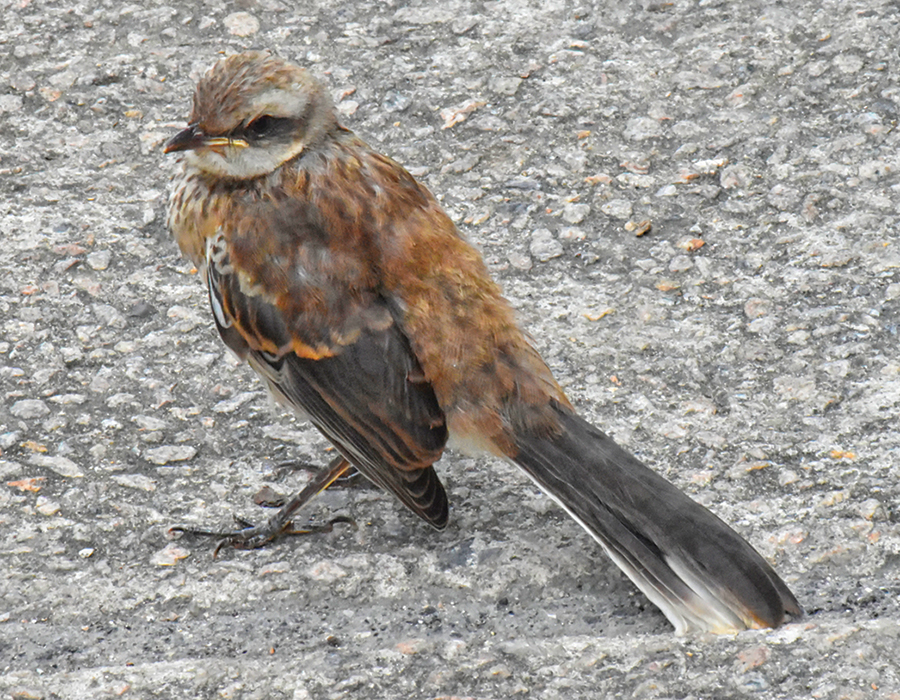
Take, for example, the mockingbird fledgling, who leaps from its nest 12 days after hatching.

Twelve days.

The descent is less than graceful. More like a stone than a feather. And when he lands, stunned, on the soft earth beneath the tree, each blade of grass performs its highest service. As if cradled in the hands of an invisible, benevolent force, the fledgling rests.

Tender new life abounds. White-tail fawns take their first wonky steps. Red fox kits explore a world outside their den. And like the mockingbird fledgling, now flapping its newfound wings and hopping in the grass, these precious babes are easy prey.

As baby bird performs his hop-flap-plop routine, mama and papa bird stay close, ever ready to defend him. That’s the thing about mockers. If ever you’ve seen one chase off a raven, jay or crow, then you’re familiar with the raspy battle cry of a tiny beast that knows no fear. 

Days have passed, and the fledgling’s wings are growing stronger. There’s no shortage of ants, grasshoppers and beetles for feeding, and under his parents’ watchful eyes, he’s gaining air with every jump.

Not far from the tree where the mocker babe hatched is a quiet road not far from your house.

This is where you enter the picture.

On a leisurely walk, the air sweet with magnolia blossoms and spring roses, you notice a stopped car, the driver kneeling in front of a small lump in the middle of the road.

“I can’t leave him here!” says the driver, a young mother who is visibly shaken by the sight of this tiny being — a mockingbird fledgling whose wiry feathers and wide yellow beak somehow make it look like a curmudgeonly old man.

He isn’t injured, you observe. Just spent from a recent flight lesson. Relieved, the driver snags a toddler shirt from the back of her car, and you use it to gently scoop him off the road.

When you set him down on the earth, the fledgling gives a brave little squawk, flaps his wings, then musters the strength for a few shaky steps before plopping down in the soft grass for more rest.

One day, you think, that mockingbird will take flight. And one day, sooner than you think, he will have one hundred songs to sing.

You hear a crow caw in the distance, and as mama bird watches from her nearby perch, you can’t help but smile at the miracle of it all.

But I must gather knots of flowers,

And buds and garlands gay,

For I’m to be Queen o’ the May, mother,

I’m to be Queen o’ the May.

—Alfred Lord Tennyson, “The May Queen”

The Mother’s Moon

The Full Mother’s Moon rises on Thursday, May 7 — three days before Mother’s Day. Also called the Milk Moon, Flower Moon and Corn Planting Moon, this month’s full moon is a brilliant reminder to celebrate all mothers — human and animal — for the glorious gift of life.

Speaking of gifts, here’s one for Mama: daylily bulbs (to bloom in June).

The Rose Garden

May is a jubilant explosion of fragrant blossoms.

Crabapple and dogwood. Violets and magnolia. Flame azalea and flowering quince.

And then there are roses.

If you’ve ever known a rose gardener, then you’ve seen the light in the eyes of a soul who has seen life after perceived death (dormancy).

I once toured the rose garden of a retired Episcopal minister who described the deep sadness of cutting his blossoms each winter, and the wonder of their return. I’ll never forget his tender nature or, for that matter, his favorite rose.

“Dolly Parton,” he told me, pointing to a fragrant red rose in the corner of his garden. “She’s wonderful. She just blooms and blooms.”

When we try to pick out anything by itself, we find it hitched to everything else in the Universe. — John Muir

Garden Spotlight

Let’s hear it for fennel, folks!

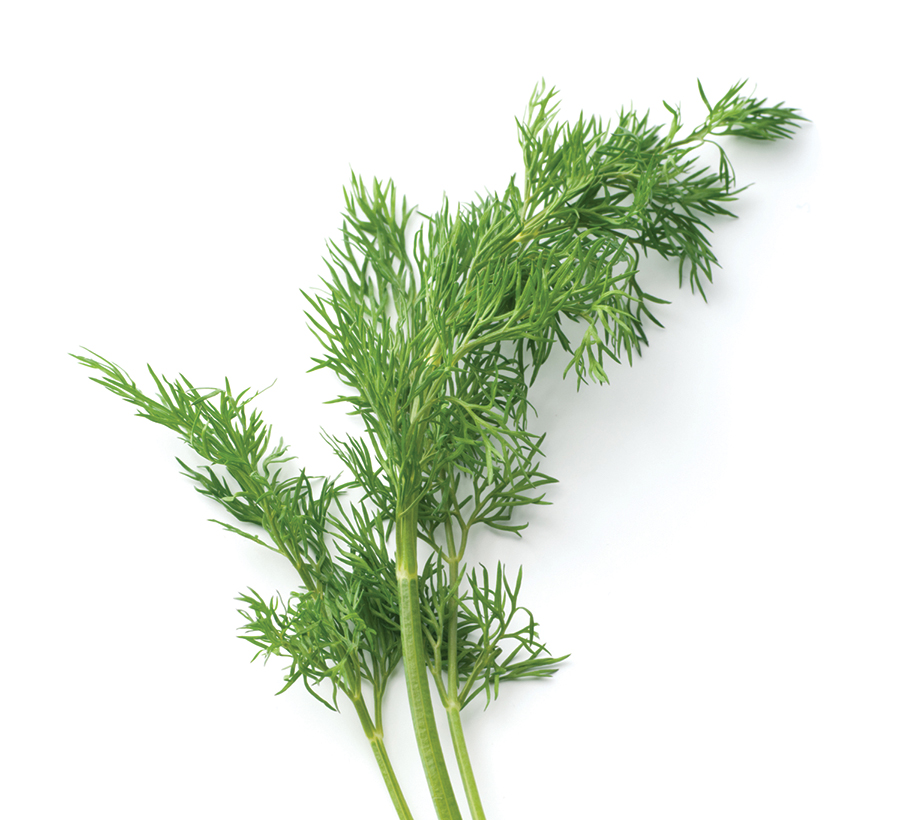
This perennial herb has long been cultivated for the digestive-aiding properties of its fruit (fennel seeds), but its bulb and leaves are likewise packed with nutrients.

Fennel is good medicine for the heart, skin and bones. It aids with inflammation and metabolism. And, lucky for (most of) us, it tastes like licorice.

There are dozens of ways to eat the bulb, but if you’re looking for fresh and easy, try pairing it with red plums (thinly sliced) for a slam-dunk salad topped with honey-ginger dressing. Enjoy!  PS

Out of the Blue

A Saddened Spring

“Where have all the flowers gone?”

By Deborah Salomon

April means spring and spring means happy times, right? Nature slips into renewal mode. Off go the sweatpants, on go the shorts. Kids start riding the bikes Santa brought. That was when winter was winter, spring was spring, summer was summer. Summer was hot but not as hot or as long. Droughts were as dry but didn’t last for years, creating enormous forest tinderboxes that burned animals and their habitats.

Warm spring rain moistened the earth instead of flooding neighborhoods.

The seasons didn’t get mixed up or blown around by hurricanes and tornadoes. This past January the temperature hit 70 for several days, summoning daffodils from my clay pots and buds from the tree branches.

I had hay fever in February.

Fifty-eight years have passed since Rachel Carson predicted, in Silent Spring, that if their use went unchecked, pesticides would kill the insects and birds that chirp to life this time of year. Her advocacy led to banning certain pesticides for agricultural purposes.

Now, even more dire consequences exist. I must change the channel when the polar bear appears, stranded on an ice chunk broken off by warming temperatures. I can’t stand to think what is happening, even though I won’t live to see the calamity. Or maybe I will, if the ostriches don’t pull their heads out of the sand soon.

April 22 means Earth Day, which has an especially poignant meaning, since it occurs four days before the anniversary of my daughter Wendy’s death in 1991. She was a militant Earth child, vegetarian, animal rescuer, protester and, as the simple stone marking her grave reads, “A friend to all living things.”

When I visit that grave in a small, verdant cemetery in Carrboro . . . a clearing in the woods, appropriately . . . I don’t leave flowers. Instead, I spread sunflower seeds for the birds and creatures, sometimes deer, who scatter when I drive up.

Nobody wants to take global warming seriously — too frightening, I guess, although Jeff Bezos just donated $10 billion to address climate change. The problem hit hard in July, during commemorations of the moon landing. Fifty years ago, from outer space the astronauts noticed how thin and vulnerable the atmosphere appeared — nothing more than a halo surrounding the only planet, of perhaps millions, that is known to support life. This halo alone separates humanity from killer forces. Unlike the daffodils and trees, it is not renewable. Gone is gone.

What a bummer, Deb. Everybody else is out celebrating spring, washing their cars, cleaning out their garages, planting their gardens, lighting barbecues and you’re hugging trees.

That’s what people called Wendy: tree hugger. Salad head. She played guitar in coffee houses, and sang Pete Seeger’s anti-war lyrics:

“Where have all the flowers gone, long time passing?

Where have all the flowers gone, long time ago?”

This is a different kind of protest against a different kind of war . . . a war against nature, an assault on the delicate layer meant to protect us from not-so-slow destruction.

A war against spring.

The “environment,” encompassing global warming, is already an election issue. “Clean it up,” one side chants. “Just a hoax,” the ostriches repeat.

A hoax? Tell that to the polar bear, forlornly hanging on to his hunk of melting ice.  PS

Deborah Salomon is a staff writer for PineStraw and The Pilot. She may be reached at debsalomon@nc.rr.com.

The Creators

Man of the Earth

According to acclaimed plantsman Tony Avent, the universe has plans for you — and your garden

By Wiley Cash     Photographs by Mallory Cash

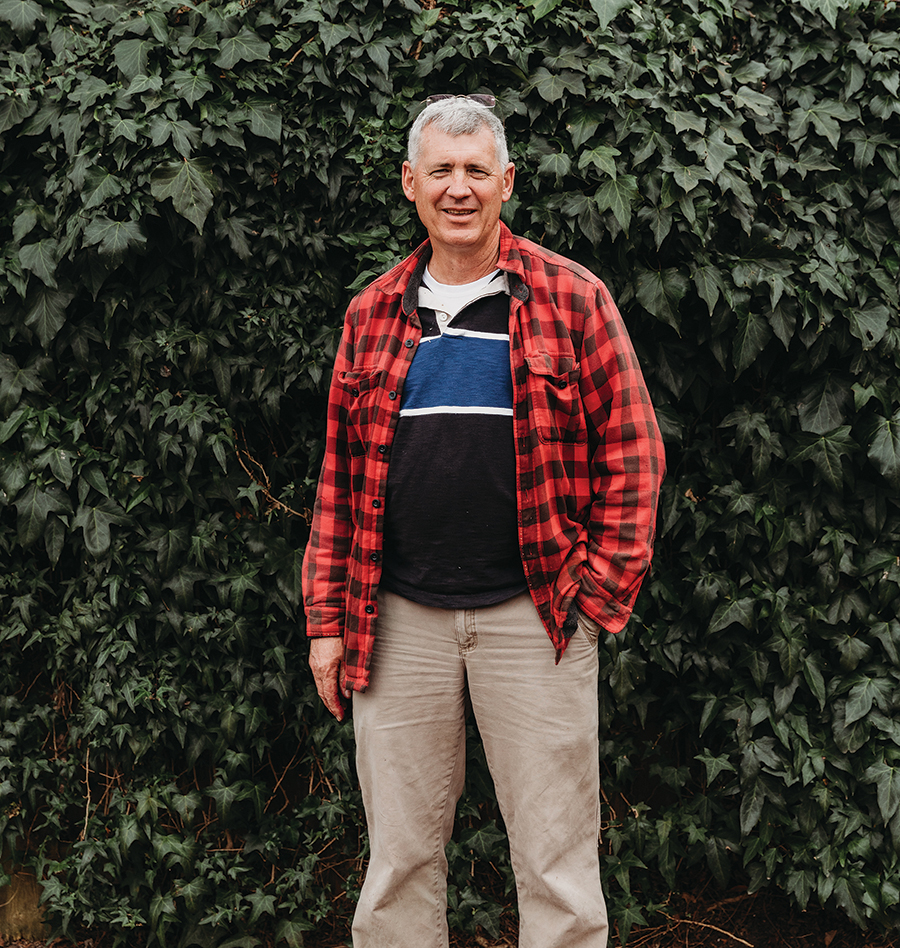
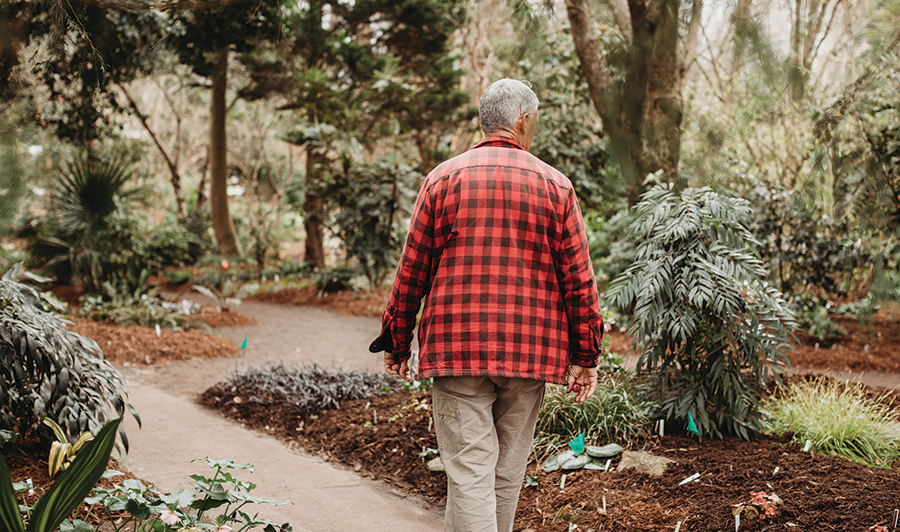
For someone who has spent much of his life hunched over the earth, his fingers threading through soil, rocks and roots, Triangle plantsman and nursery proprietor Tony Avent spends an awful lot of time talking about invisible energy and the unseen hand of the universe. Listen closely and you will hear him say things like: The universe has plans for you, and you can’t fight them; The plants tell me where they want to go; and The energy of the world speaks to us all.

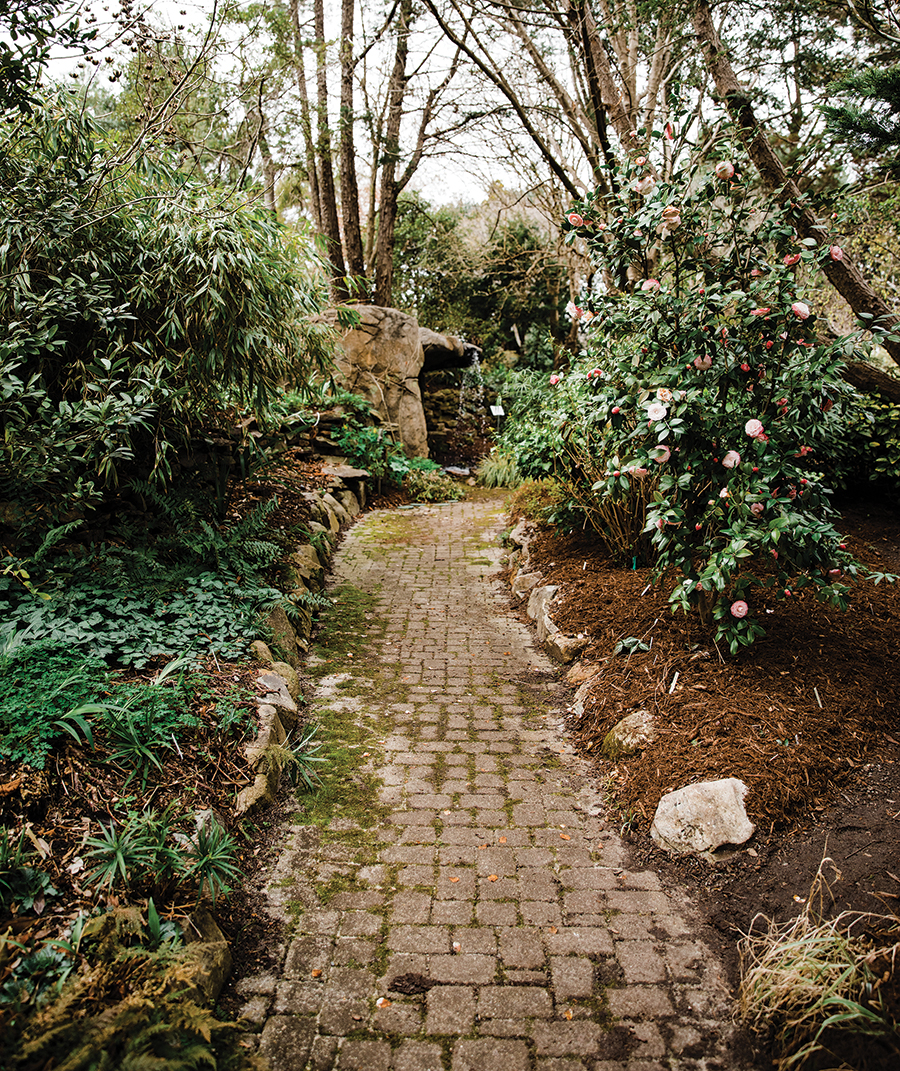
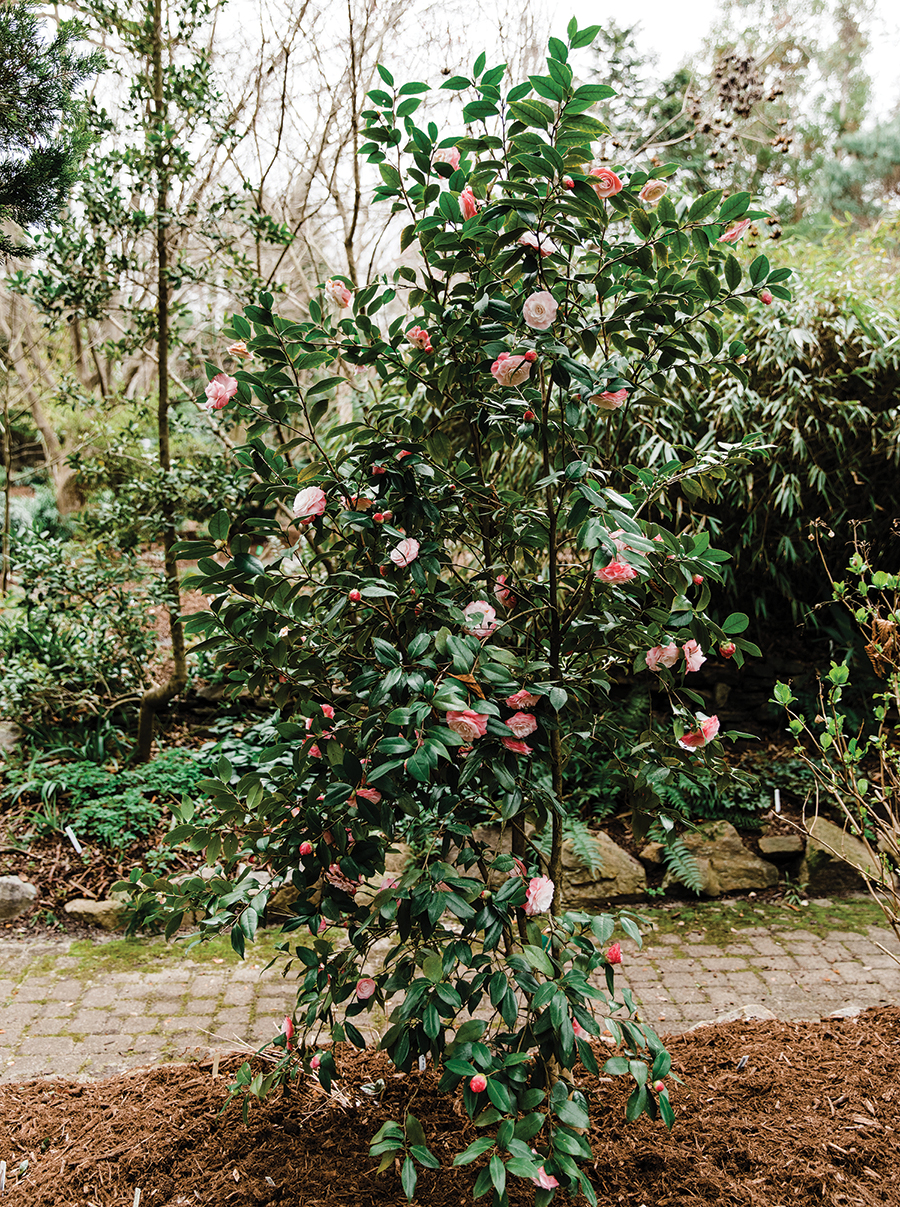
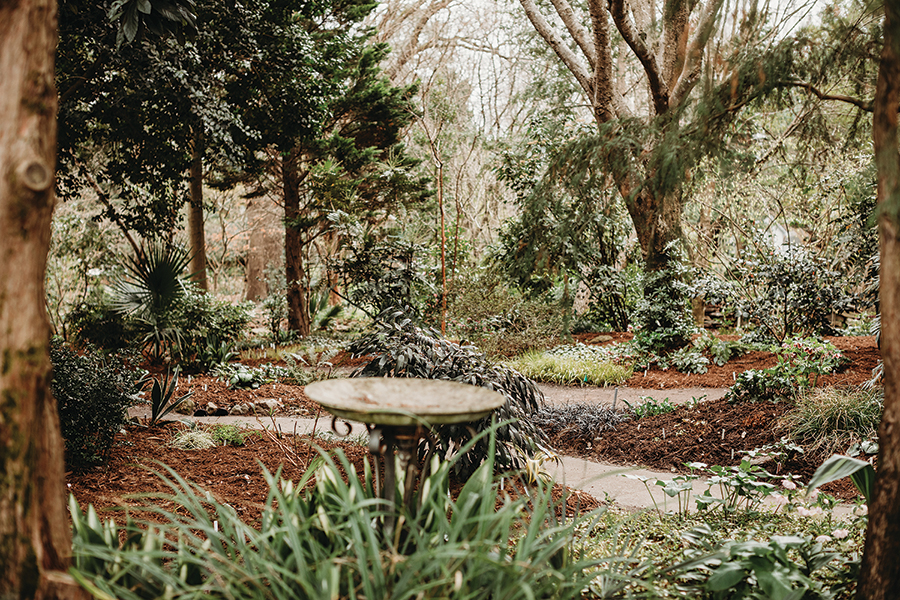
This kind of talk may sound hokey until you visit Avent’s Juniper Level Garden in Raleigh, a place so magical and mysterious that it is not hard to believe that a divine force once struck this ground and caused all manner of flora and fauna to spring forth. But, in reality, that is not what happened. The truth is less supernatural and much more natural. Avent’s 28-acre garden was once a sprawling tobacco field, and when he set out to tame this land 30 years ago he did so with nothing but a shovel and a suspicion that something otherworldly could happen here. He was right.

Avent’s Juniper Level Garden and the on-site Plant Delights Nursery, where the garden’s specimens are grown and propagated, have become the nation’s standard bearer for garden horticulture. Avent has forged a career as a well-known and charismatic spokesperson for a movement dedicated to growing and developing gardens instead of simply planting them. His formal career began after graduating from NC State University with a degree in horticultural science before working his way toward the position of landscape director at the North Carolina Fairgrounds. Soon, he found himself on plant expeditions across the United States and in countries like South Africa, Mexico, China, Croatia, and Thailand. Along the way, he has given nearly 1,000 lectures, published dozens and dozens of articles, been featured in national media, and appeared on television alongside Martha Stewart on channels like HGTV and NBC.

With all that travel and so much glitz and glamour, what has kept Avent’s hands dirtied by his native soil in Raleigh? Perhaps it is the fact that the region’s climate and geography are so amenable to his work.

“This garden can grow the best diversity of plants anywhere in the country outside the Pacific Northwest,” Avent says. He is standing on a pathway in the middle of the garden on an early afternoon in February. Spring may be a few weeks away, but the garden feels surprisingly dramatic and alive. “We designed the garden so that something is always blooming, always green, always living,” he says. “The garden is always in transition. It’s always changing.”

The we he mentions refers to himself and Michelle, his first wife and high school sweetheart, who passed away in 2012 after a long battle with cancer. The two of them had known one another since they were children, and their families had been in the area for centuries. As a matter of fact, one of Avent’s ancestors began operating the ferry that crossed the Cape Fear River in 1775, thus the name of Raleigh’s Avent Ferry Road. Avent and his late wife purchased the house that is now used for the garden’s offices in 1988, along with 2 acres of surrounding land. They had hoped for peace and tranquillity, but that was not quite what they found.

“When we first moved here, nobody in this part of the county knew what a muffler was,” Avent says. To counteract the noise from the road in front of their home, Avent spent his evenings after dinner digging out a place for a huge grotto with a waterfall, an area of the garden so elegant and alive with plant life that it appears to have been here forever. The sound of falling water does not just shut out the noise of traffic; it shuts out the noise of the world. Perhaps that makes it easier for Avent to listen to what the universe is telling him.

Michelle’s death had him reeling, but, according to Avent, “sometimes the universe has other plans.” His late wife had urged him to remarry after her passing, so nearly two years after her death, Avent found his way to online dating, where he eventually began chatting with a local woman. She turned out to be much more local than he could have ever imagined. He and his current wife, Anita, have known one another since they were in Sunday school as children. Her grandfather worked a farm only a few miles away from Avent’s garden enterprise. Even their parents had known each other for decades.

It is also the tutelage, tragic death, and legacy of Avent’s mentor J.C. Raulston that keep him tied to this place. Raulston was an acclaimed horticulturist and the first director of the North Carolina Arboreteum. Avent was one of Raulston’s students at NC State, and he studied Raulston and his work closely.

“Working with him was the first time I had somebody who thought like I did,” he says. Avent designed Juniper Level Gardens as an homage to Raulston’s arboretum, and the two gardens seem to be in conversation with one another. Although Raulston perished in an automobile accident in 1996, to Avent, he never seems out of reach. “I can feel his energy in his garden at the arboretum,” Avent says. “And I can feel it here. It made sense for me to stay here.”

The roots of this world traveler and plant adventurer run too deep to be moved, or transplanted.

None of this really seems to surprise Avent. He possessed a passion for plants from a very early age, and his life’s first major disappointment set him on a course that would find him nurturing a single plot of land into something steady and permanent.

Avent was fascinated with plants and greenhouses as a young child, and in his early teens, he begged his father to take him to visit what he believed was the premiere garden in the world: Wayside Gardens in Greenwood, South Carolina. He was certain of the garden’s beauty because he had been receiving their mail-order catalog and would spend hours studying it. But when he and his father arrived after their journey south, Avent found nothing but a brick warehouse to which plants were shipped and from where they would be shipped again once they were sold.

“I was so devastated,” he says, “and I remember thinking, When I grow up I will build a place that no one is ever disappointed in when they come visit.

With the recent announcement that Avent and his wife have gifted Juniper Level Gardens to NC State University, Avent has assured that not only will people never be disappointed in his garden, he has assured that they will be able to visit it in perpetuity, a plan that perhaps the universe saw coming. That is important to Avent because he wants the energy of this place to be felt by others.

“I get energy from everything out here,” he says. “I never wear gloves, and now it has been discovered that the electrical energy in the soil is touching you, you’re feeling it. This energy can’t be created, and it can’t be destroyed. It’s always going to be here.”

No matter where he goes, the universe has decided that Tony Avent will always be here too.  PS

Wiley Cash lives in Wilmington with his wife and their two daughters. His latest novel, The Last Ballad, is available wherever books are sold.