When the West Was Really Wild

Annie Oakley’s path to Pinehurst

By Michael Smith

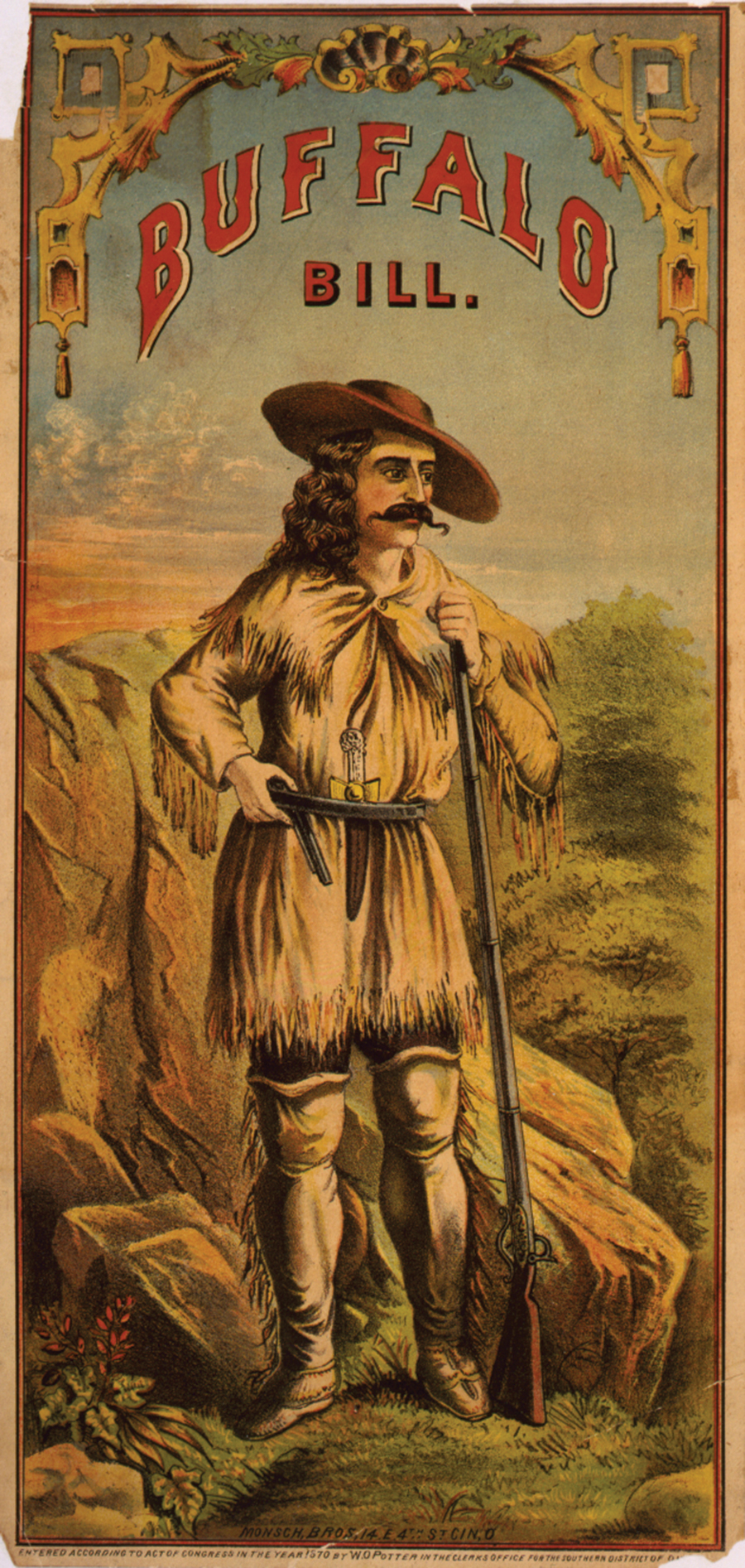
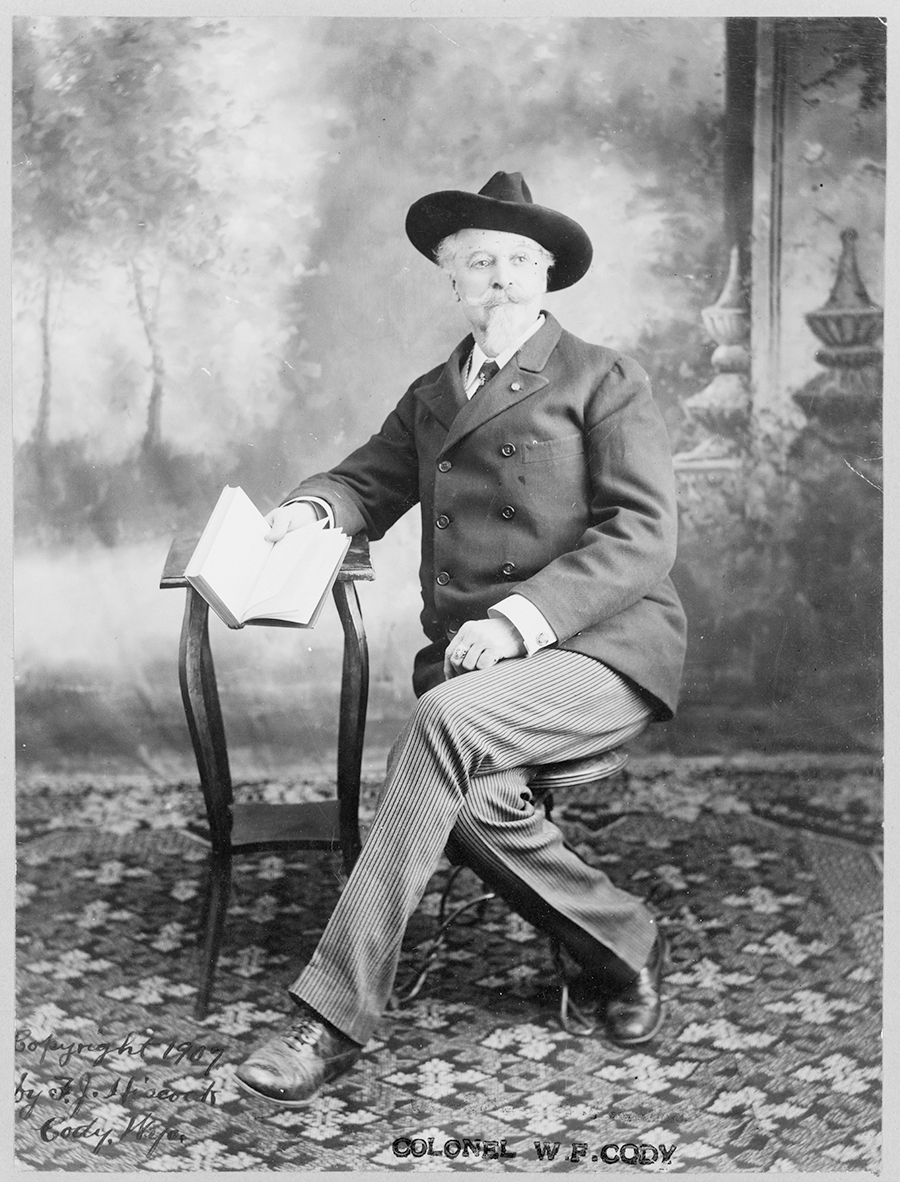
William Frederick Cody, aka “Buffalo Bill” Cody, rode for the Pony Express when he was only 14. We have his word on that. And that’s the trouble — we only have his word. There is no independent verification. But then it was not unusual for Wild West show characters to embellish their persona to embellish their income.

We are left with apocryphal accounts that weaved and embedded themselves as facts. Yet, Bill was pretty much a straight shooter. In a freelance gig following the Civil War, he shot 4,382 buffalo to feed cross-country railroad workers, thus the “Buffalo Bill” moniker.

During the Civil War, Cody had served the Union Army routing out Confederate guerrillas. (Jesse James did the same thing for the Confederate Army, but there’s no record of Bill and Jesse ever bumping heads.) Cody earned the recognition and respect of his officers, and that would serve him well after the war.

One of those officers was George Armstrong Custer, for whom Cody served for a brief period as a civilian scout. Another was General Phil Sheridan, under whom Cody served as chief scout and engaged in 16 battles against American Indians, distinguishing himself in such a manner that President Ulysses S. Grant awarded Cody the Medal of Honor. One year after Cody’s death, the Medal of Honor Review Board revised the guidelines for receiving the medal to require recipients to have been members of the military. So, among other recipients, Cody’s medal was rescinded, as he had been a civilian scout, working for the military. President Ronald Reagan rebalanced the scales when he restored Cody’s medal in 1989.

And so, after all the treaties were broken, Buffalo Bill Cody did his bit to help confine the Indians that hadn’t died of gunshot, disease or broken heart to “reservations.” Here is what Cody had to say: “Every Indian outbreak that I have ever known has resulted from broken promises and broken treaties by the government.”

After the West was no longer wild, Cody took what was the Wild West to the western world — virtually all of America and, on eight separate trips, all over Europe. He did that from 1883 until 1913 in a show he put together called, ta da, the Wild West Show.

According to Legendsplay, the show’s cast and staff totaled 500-plus, and, of course, all manner of animals, including hundreds of horses and 30 buffalo. Along with people and animals went grandstand seating, with canvas covering for 20,000 spectators. The show generated its own electricity and had its own fire department.

Cast, staff and animals had to be fed and provided places to sleep. Travel was by train, which in one year covered over 11,000 miles in 200 days, giving 341 performances in 132 cities (including Charlotte, North Carolina) across the United States. Daily expenses were about $4,000 ($91,000 and change in 2019 money). Cody insisted that all, including women and Indians, receive equal pay.


The logistics of keeping things together, planning for the next location, paying, feeding, etc., were mind-boggling. And while Buffalo Bill Cody was an excellent showman with a reputation that attracted folks like Annie Oakley, Lillian Smith, Sitting Bull and Calamity Jane, Cody was a dud at logistics. For that, he took a silent partner, named Nate Salsbury.

Salsbury was a recognized logistical genius at organizing large productions, and for as long as he lived, Cody prospered. But Salsbury’s death in 1902 marked the beginning of the road toward the show’s 1913 bankruptcy and Cody’s own death in 1917.

Salsbury maintained manuscripts on his relationship with Cody. They provide interesting insight into Cody’s character, at least according to Salsbury. In manuscripts housed in Yale University’s library, Salsbury characterized Cody as “a dishonest drunkard whose only loyalty was to his incompetent cronies.”

In Historynet.com we find Salsbury’s account of Cody’s conduct on a European trip where, returning from a visit to the home of a dignitary, Cody was so besotted, “he could hardly get into his carriage, with a lady who was manifestly not Mrs. Cody.” (After the Civil War Cody had married Louisa Frederici.)

Yet crowds couldn’t get enough of Cody. According to one newspaper, he had pitch black eyes, flowing hair, and an impressive mustache: “Everybody is of the opinion that he is altogether the handsomest man they have ever seen.”

There were few forms of entertainment in those days, and Cody’s Wild West Show strove to fill that gap. There were re-enactments of historical events, e.g., Custer’s Last Stand, rodeos, shooting competitions, bronco busting, horse racing, buffalo hunts and the like. In a word — huge!

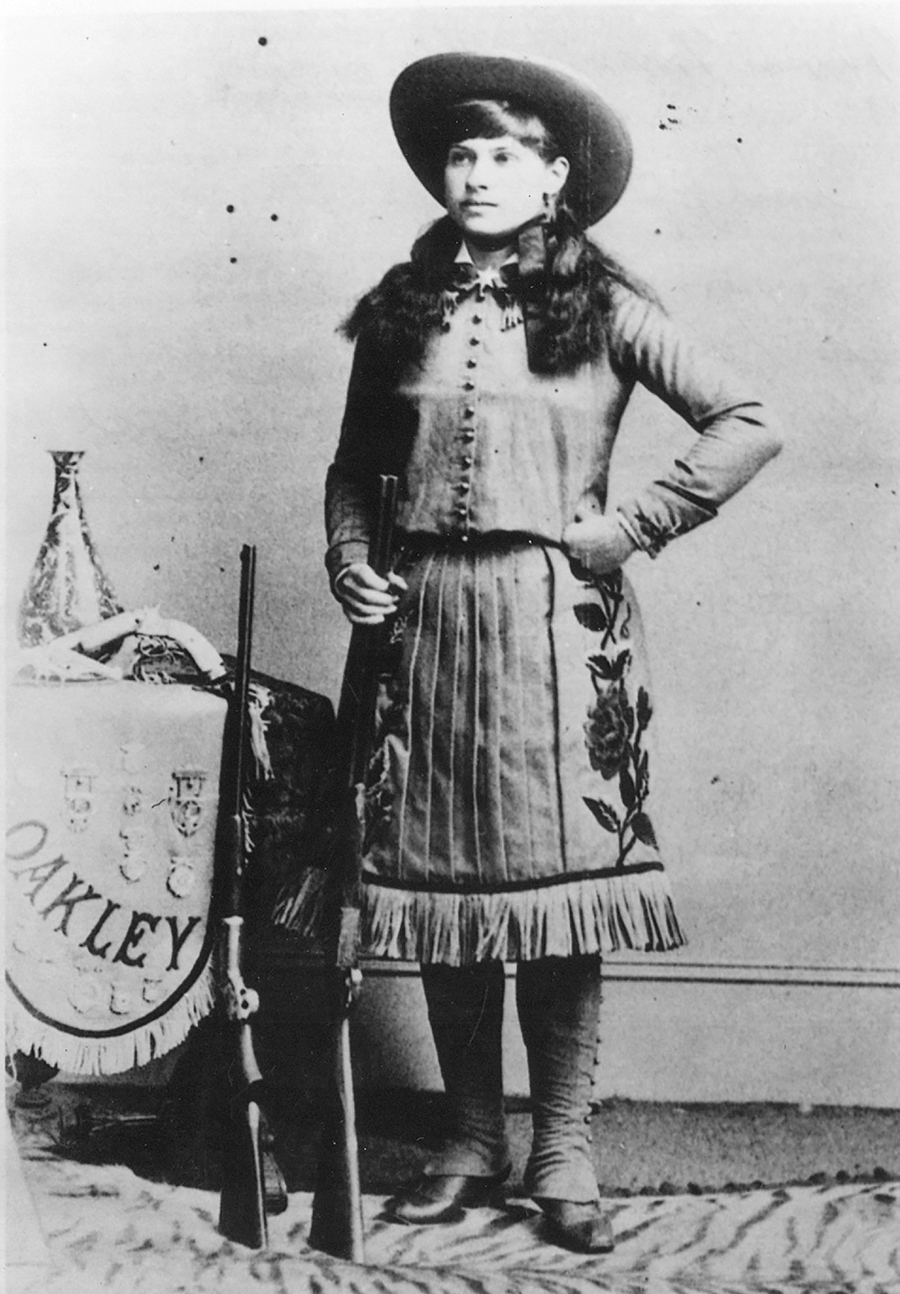
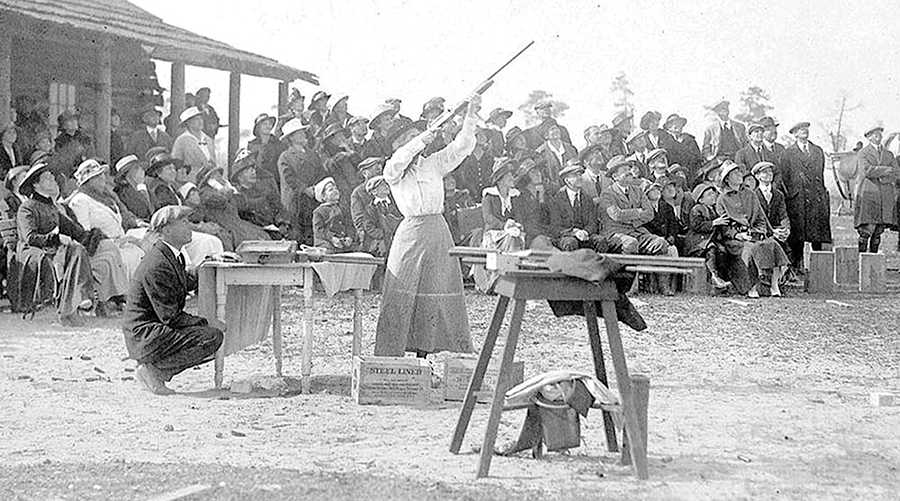
The biggest crowd-pleaser (and money-maker), though, was diminutive Phoebe Ann Moses, aka Annie Oakley, who probably took her stage name from the town of Oakley in Ohio, her home state. Five-foor-tall Annie and show-shooter husband Frank Butler joined the show two years after it began. Annie was such an instant sensation that Frank stopped performing and began serving as Annie’s manager.

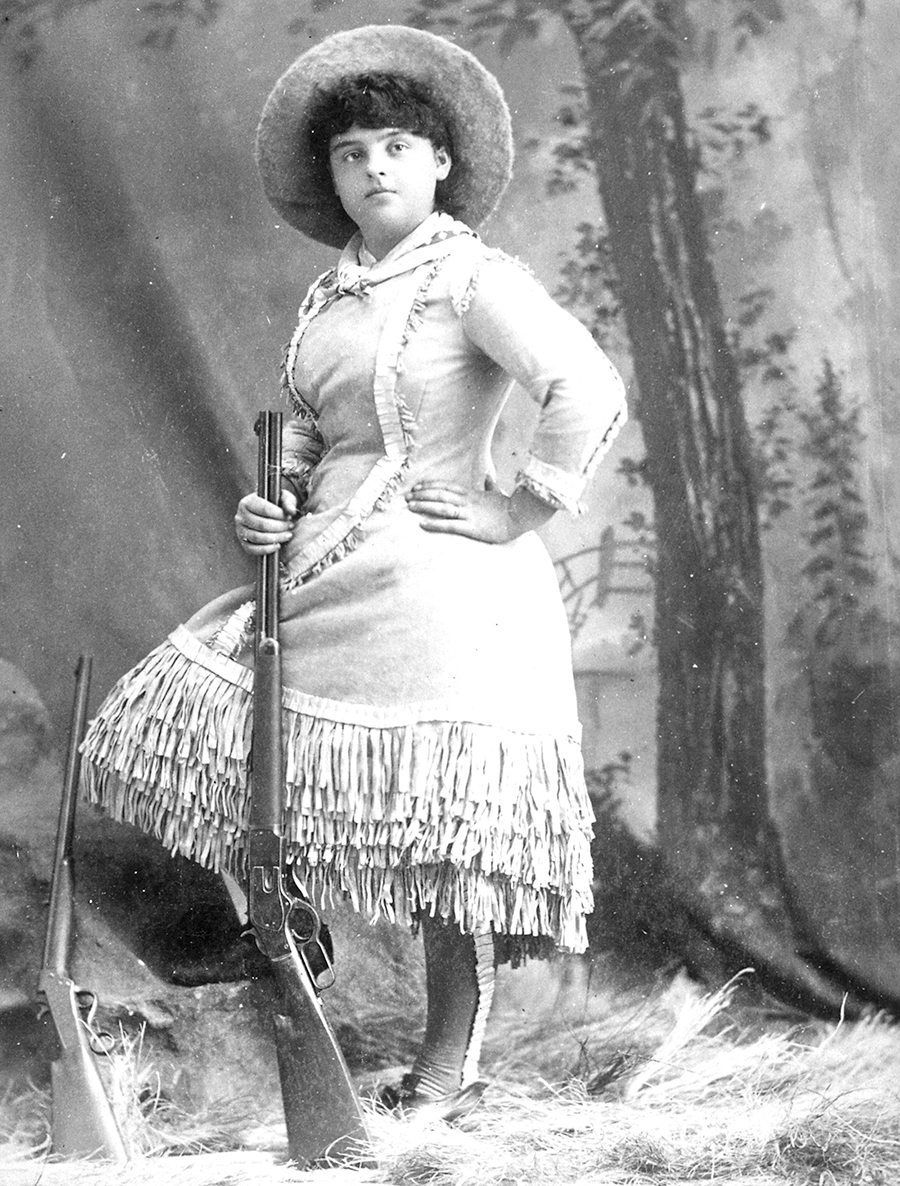
Shooting matches and events in those days were enormously popular, and that’s precisely where Annie shone the brightest. But then Lillian Smith came on the scene. Lillian, a California shooting star, was as brassy and devoid of formality as you’d expect a Californian to be. And not given to understatement, upon first arriving at the show, Lillian told the press to forget about the competition: “Annie is done for.”

That sort of trash talk failed to play well with Annie, creating bad blood from the get-go. Lillian did, in fact, challenge Annie’s shooting prowess. Yet the persona contrast was the thing. Annie was conservative, formal and married. Lillian was flashy, flirty, used coarse language, and worst of all, she was younger than Annie. Aware that the press gave younger shooting contestants better press, Annie, born in 1860, somehow became Annie born in 1866, tightening the age gap with Lillian.

One of the show’s European tours illustrates well the distinction between the two. When the show performed in England before Queen Victoria, Annie curtsied politely and addressed the queen properly. Lillian, on the other hand, made a half-curtsy and fell right in chatting with the queen as if they were old chums catching up on old times.

Annie found Lillian a tart. Fact is, Lillian did leave a bit of a trail. First, she secretly married Jim “Kidd” Willoughby, which abruptly ended when her dalliance with half-Caucasian, half-Indian Bill Cook came to light. Then came a new marriage partner, saloon owner Theodore Powell. Next up, lawman Frank Hafley. Lillian then unmarried Hafley and married Wayne Beasley. And finally — well, finally, as far as we know — she got rid of Wayne and married German-born Emil Lenders, who additionally had a wife and child back in Philadelphia.

On returning from the European tour where they met the queen, tension between Annie and Lillian had grown so that Annie and Frank quit the Wild West Show. Then, for whatever reason, Lillian quit, so Annie and Frank rejoined Cody.

Lillian set about transforming herself into an American Indian princess. Princess Wenona darkened her skin, wore only Indian clothes, and joined Pawnee Bill’s Wild West Show. Some accounts indicate that she actually came to honestly believe she was a true Indian princess.

While married to Emil Lenders, she moved to Bliss, Oklahoma. But Lenders soon left and moved to Ponca City, about 15 miles away. For Lillian, it marked the start of a downhill trip to oblivion.

Historynet.com says “Lillian continued to care for her dogs and chickens and became a familiar sight in Marland and Ponca City, shuffling along on foot or riding in an old buggy with some of her faithful hounds trailing behind.” Princess Wenona died dead broke in 1930. She had requested to be buried in her Indian clothes. The good people of Ponca City complied.

Shortly after a devastating head-on train wreck in October 1901 involving Cody’s Wild West Show, Annie retired from the troupe. She spent the next few years giving solo exhibitions, including one in Pinehurst in 1908. The Butlers began wintering at the Carolina Hotel in 1915, quickly becoming the toast of the village. “In the gun room or on the sunny terrace they talked about guns, golf and game birds with John Philip Sousa, John Bassett Moore, Walter Hines Page, John D. Rockefeller,” wrote Oakley biographer Walter Havinghurst.

In the autumn of 1922 the Butlers were involved in a car accident near Daytona, Florida. Annie’s hip was crushed, forcing her to wear a leg brace for the remainder of her life. She never returned to Pinehurst, moving instead to a niece’s farm in Greenville, Ohio. She passed away in 1926. Leonard Tufts saw her obituary and immediately wrote to Frank, “I have just learned from the morning paper of the death of Mrs. Butler in Greenville, Ohio, and I am sincerely sorry to learn of this sad event. Annie Oakley’s memory will always be a kindly one to us at Pinehurst, and we feel that we are better for having known her.” Frank died 17 days after Annie. They were buried side by side in Greenville.

As for Cody’s Wild West Show, silent movies and then “talkies” were all the rage, and somehow Indians and cowboys seemed more real on the screen than up close. Bill tried to hang on by adding this and that — particularly different types of horsemen: South American gauchos, Arabs, Mongols and Turks, etc. But it was no good. The West had become yesterday’s news and Bill did, too, passing away at age 70 at his sister May’s home in Denver, Colorado.   PS

Michael Smith lives in Talamore, Southern Pines, with his wife, Judee. They moved here in 2017 and wish they had moved here years earlier.

Starting Over

A new look for a couple . . . and a neighborhood

By Deborah Salomon   •   Photographs by Amy Freeman & John Koob Gessner

Old Town Pinehurst suggests cottages — likely sizable vacation homes — built in the early 1900s, first by James Tufts, then by wealthy Northeastern families eager to populate the newly chic golf resort. Those still standing have been restored and modernized to the nines. Most are furnished in antiques, Persian rugs, period pieces, family portraits, golf or equestrian art. Behind every armoire door and over every carved mantel hangs the latest in flat-screen technology.

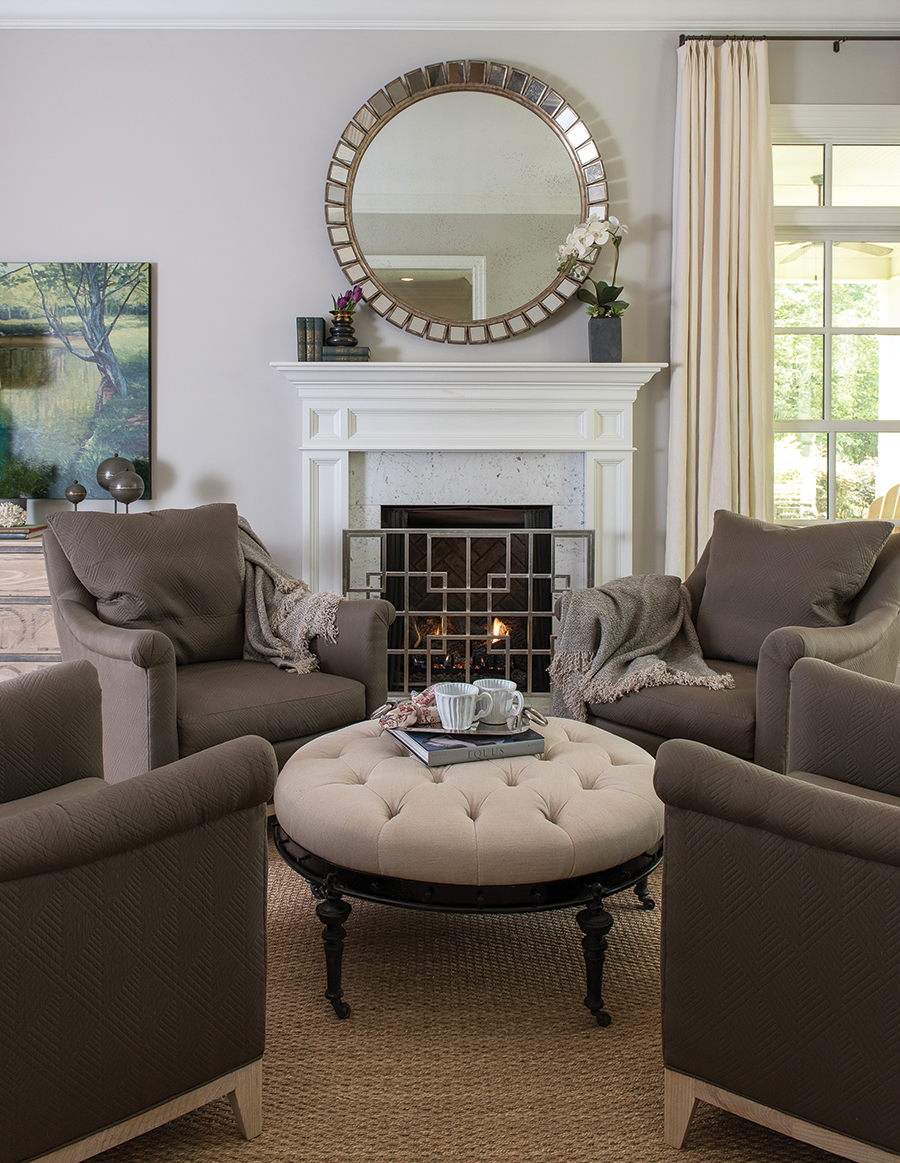
When the cottages ran out, people who desired strolling distance to the village began buying land and building. Some new construction followed classic styles. Other homes veered afar, like an asymmetrical front with interior half-story facilitating a balcony overlooking the family room; an intimate living room with four armchairs around a low table but not much else; and a breezeway into a mud wing with direct access to the rear deck and gardens so guests on their way to the (not yet built) pool or cookout would avoid traipsing through the house.

New ideas, indeed, just what Elizabeth “Cissy” Beckert and her husband, Bruce, wanted. So new that when they found this house built in 2007 they decided to purge their furniture circa big-dogs-sleeping-on-the-couch and start fresh.

“It’s something Cissy always wanted to do,” Bruce says.

What fun for a couple who had worked in the High Point furniture industry. They hired designer/friend Leslie Moore, whose motto is “perfectly imperfect,” and, after Market closed, walked through the showrooms selecting pieces that fleshed out their ideas. Many came from Hickory Chair, a century-old North Carolina furniture manufacturer that still crafts 90 percent of its products in-state.

The Beckerts’ purpose was born far, far away.

“Six years ago we took the family to Puako, Hawaii, and stayed in a VRBO on the Maui Channel,” Cissy begins. “We loved how the house allowed the outside to come in — every window framed a view. We returned to Pinehurst wanting to find a home with the same feel except instead of the ocean, the views would be magnificent magnolias, gardenias, hydrangeas, daylilies and Carolina jasmine.”

To illustrate, Cissy points to a tall, paned powder room window draped on the outside with jasmine vines resembling a drawn-back curtain.

The house they found had been designed sans cookie cutter. It required no structural changes. High ceilings throughout are delineated by simple, elegant crown moldings. The unusual floorplan (four bedrooms, six bathrooms and an attached garage tucked around back, accessed by an alley) suited their purposes: children grown and gone who visit occasionally. Now Cissy could select rugs and furniture to fit room dimensions.

Bruce reacted immediately. “As soon as I walked in the door I said, ‘I can live here.’”

The foyer opens into a longitudinal layout featuring a spacious open core encompassing kitchen, vaulted family room with skylights, and a dinette devoid of table and chairs.

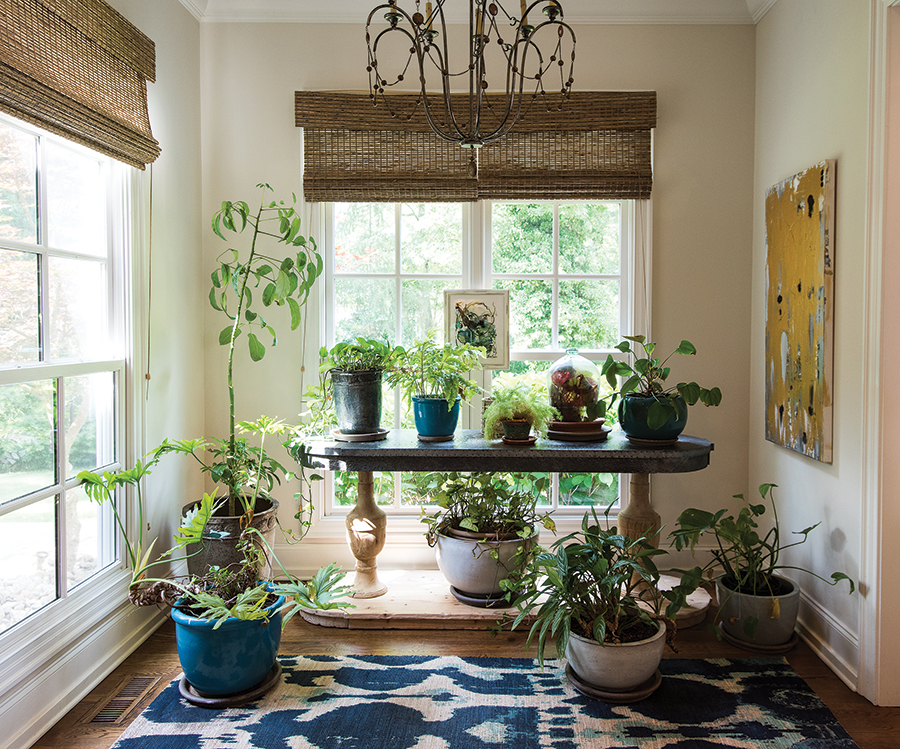
“We eat at the bar or (for events like Thanksgiving) in the dining room,” maybe outside under a vine-covered pergola, Bruce says. He repurposed the dinette as a plant gallery — tall ones, in attractive ceramic pots, with matching rug.

“We’re outdoors people,” Bruce continues. “I like plants — they scrub the air.”

But wait: Outdoors, especially Hawaiian, means sun-splashed color. Yet beyond the handsome arched front door the walls and many furnishings hum Zen gray.

“I shy away from bright colors that assault the eye,” Cissy explains. “Gray is peaceful.” Then, thinking deeper, “I was the middle child. Gray is between black and white.” She tempers the gray with several shades of blue, mostly in fabrics: “A blue sky mesmerizes me, especially the turquoise from New Mexico.”

About that tiny monochromatic living room: “We have our morning coffee there,” Cissy says. Or sit with a few friends, sipping wine by the fire. Contemporary architecture often shrinks this traditional gathering place, adding space elsewhere. The dining room is also smallish, intimate, and gray, which suits Cissy.

“When we close the curtains we’re enveloped. I’m a high energy person. This calms me down.”

However, tall ceilings suggest a spaciousness that allows large pieces, like the massive bed of dark woods in the master bedroom — the only piece retained from their previous home. Here, minimalism rules. No clutter, just a few pieces with clean lines to foil the decorative bed frame.

“Don’t be fooled; I like sturdy furniture,” Cissy says, pointing to a heavy rustic coffee table in the family living area.

Don’t be fooled by all the grays and neutrals, either, not even one upstairs bedroom with a beach sand-colored coverlet where lies Ted, their matching sandy-hued rescue kitty with a lion’s face. Also upstairs, besides guest bedrooms and many bathrooms, a huge “bonus” room over the garage, with café au lait walls and marshmallow-soft cocoa carpeting, which they use for watching movies.

For Cissy, this house became a place to express her newfound interest in art, particularly contemporary and abstract paintings done by Southern women. The gray walls come alive with Picasso-esque faces by Windy O’Connor of Charlotte; other artists represented live in Atlanta, Charleston and Athens. Trish Deerwester of Southern Pines created three abstracts in, no surprise, gray, blue and white, while Cissy commissioned Becky Clodfelter of Greensboro to create a large abstract for the foyer, which introduces the palette continued through the house.

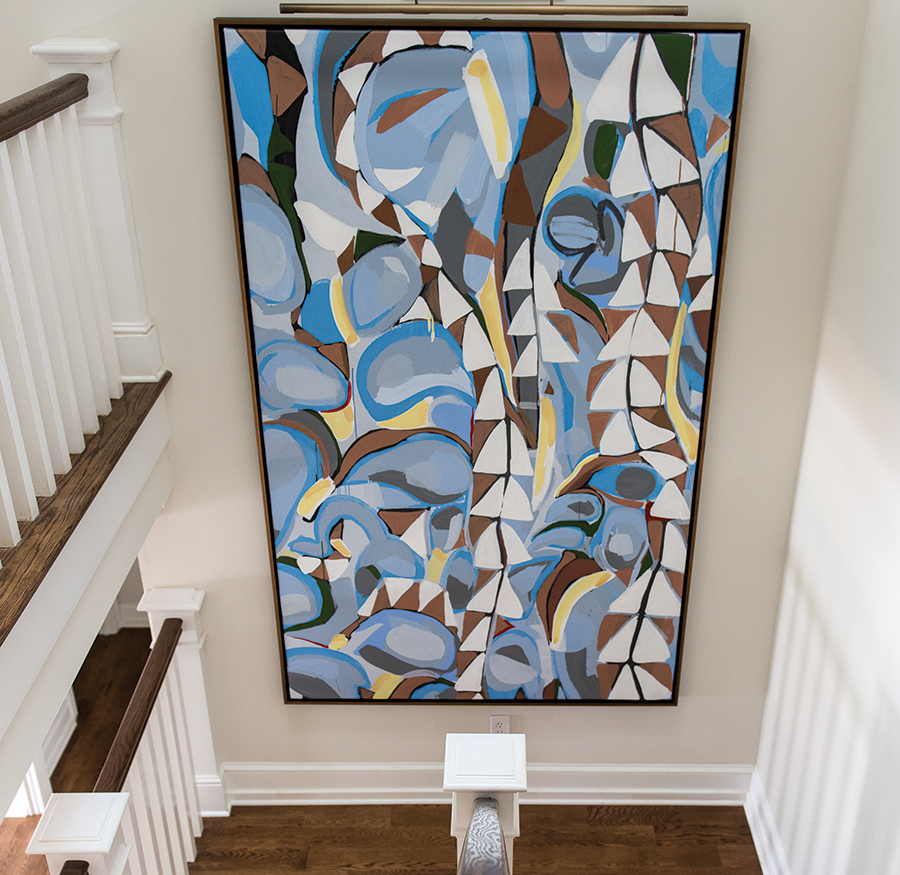
Over the clawfoot tub, a seated nude. Dominating the stairwell, a 10-foot geometric canvas found rolled up in the corner of a High Point showroom corner.

Yet Cissy’s favorite is a portrait of a cow. “They’re gentle, they give milk.”

Bruce leans another way. “I’m an Ansel Adams, Ben Ham (black and white photography) kind of guy,” as represented in the mix.

Taken together, Cissy dubs the look she and Moore created “polished casual,” to which Bruce adds “comfortable, not too pretentious.”

Landscaping is another story. “Some people have a boat. We have a garden,” Bruce says. From the looks of it, both boast green thumbs plus green fingers. A few magnolias and other trees came with the house. They have added a dense wall of greenery to screen the house from a moderately trafficked street. Cissy reels off the names with expert familiarity: tea olive bush, loropetalum, butterfly bush, viburnum, nandina, lavender, rosemary, aucuba and enormous blue hydrangeas framed by the windows.

Starting over, as the Beckerts have done, seems unusual except after fire or flood. Bruce reasons differently: “People have too much stuff. I don’t want my stuff to dictate my life.” This should be easier with new stuff that lacks an emotional attachment to heirlooms.

Cissy sums up their effort. “This house is who were are and what we love.”   PS

Almanac

Snapshots from July are salt-laced and dreamy.

Children skipping through sprinklers on the front lawn.

Baskets of ripe peaches, still warm from the sun.

Tree houses and tackle boxes.

Tangles of wild blackberry.

Brown paper bags filled with just-picked sweet corn.

Last summer, gathered in celebration of July 4, we made a game of shucking sweet corn on my grandmother’s front porch. Two points for each clean ear, a bonus per earworm, yet as husks and corn silk began to carpet the ground beneath us, joy and laughter were all that counted.

And now, memories.

Like Papa’s pickles, made with the cukes from his
own garden.

Speaking of Papa . . . something tells me he would have loved watching us turn a chore into a simple pleasure, perhaps the secret of any seasoned gardener.

The Art of Shade-Dwelling

In the sticky July heat our state is known for, not just the flowers are wilting.

Advice from a fern: seek shade and thrive.

Yes, you.

Bring a hammock, summer reading, refreshments, pen and journal.

Daydream beneath the lush canopy. Bathe in the filtered light. Indulge in the summery soundscape. Cloud gaze.

And if you’re looking for a spot by the water, follow the spiraling dragonfly. She will always lead you there.

The dandelions and buttercups gild all the lawn: the drowsy bee stumbles among the clover tops, and summer sweetens all to me. — James Russell Lowell

Fresh from the Garden

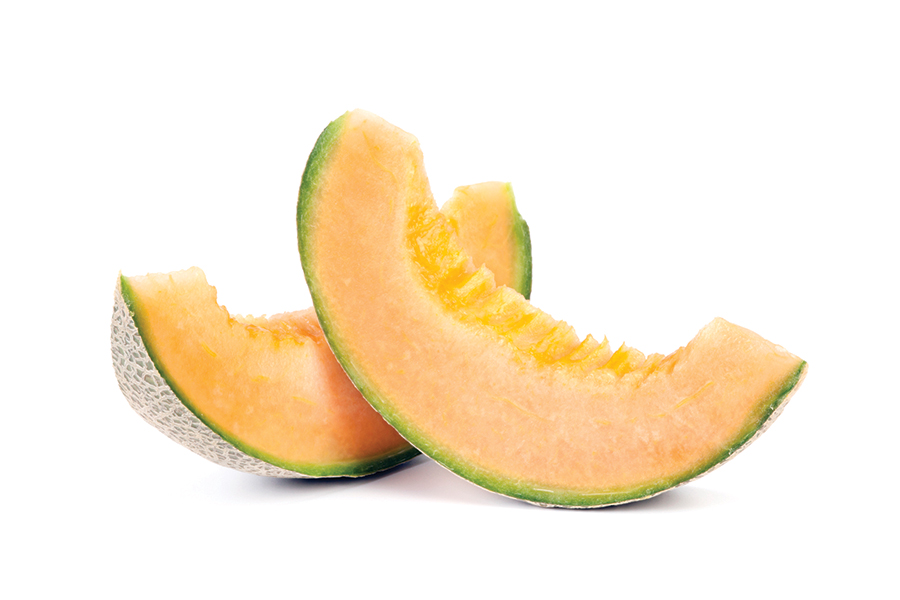
Eggplant, snap beans, green beans, summer squash. Plump tomatoes are spilling from the vine, but there are two words on my mind: melon season.

In one word: cantaloupe.

And while it’s fresh and abundant, consider some new ways to enjoy it.

Blend it with club soda and honey.

Salt and spice it with crushed peppercorn and sumac.

Toss it with arugula, fennel and oregano.

Make cool melon soup, or sweet-and-salty jam.

Nothing spells refreshing like chilled cubes of it after a hot day in the sun, but if you’re looking for savory, check out the below recipe from Epicurious.

Cantaloupe and Cucumber Salad

(Makes 4 servings)

Ingredients

1/2 cup olive oil

1/4 cup Champagne vinegar or white wine vinegar

1 teaspoon ground coriander

1 teaspoon kosher salt

1/4 teaspoon freshly ground black pepper

1/8 teaspoon ground cardamom

1/2 large cantaloupe, rind and seeds removed, flesh cut into 1-inch pieces

1 large English hothouse cucumber, sliced on a diagonal ½-inch thick

2 Fresno chiles, thinly sliced

1/2 cup unsalted, roasted pumpkin seeds (pepitas)

1/4 cup chopped cilantro

1/4 cup chopped mint

Sumac (for serving)

Ingredient Info

Sumac is a tart, citrusy spice generally sold in ground form. It can be found at Middle Eastern markets, specialty foods stores and online.

Preparation

Whisk oil, vinegar, coriander, salt, pepper and cardamom in a large bowl. Add cantaloupe, cucumber and chiles, and toss to coat in dressing. Let sit, uncovered, 15 minutes.

To serve, add pumpkin seeds, cilantro and mint to salad and toss gently to combine. Top with sumac.

Lazy Days of Summer

The full buck moon rises on Tuesday, July 16, which, according to The Old Farmer’s Almanac, is a good day for pruning, mowing and weeding. But if R&R is more your speed, below are a few obscure holidays you might add to the calendar.

July 10: Pick Blueberries Day

July 17: Peach Ice Cream Day

July 20: Ice Cream Soda Day

July 22: Hammock Day

Happy Independence Day, friends. Happy, happy hot July.  PS

Almanac

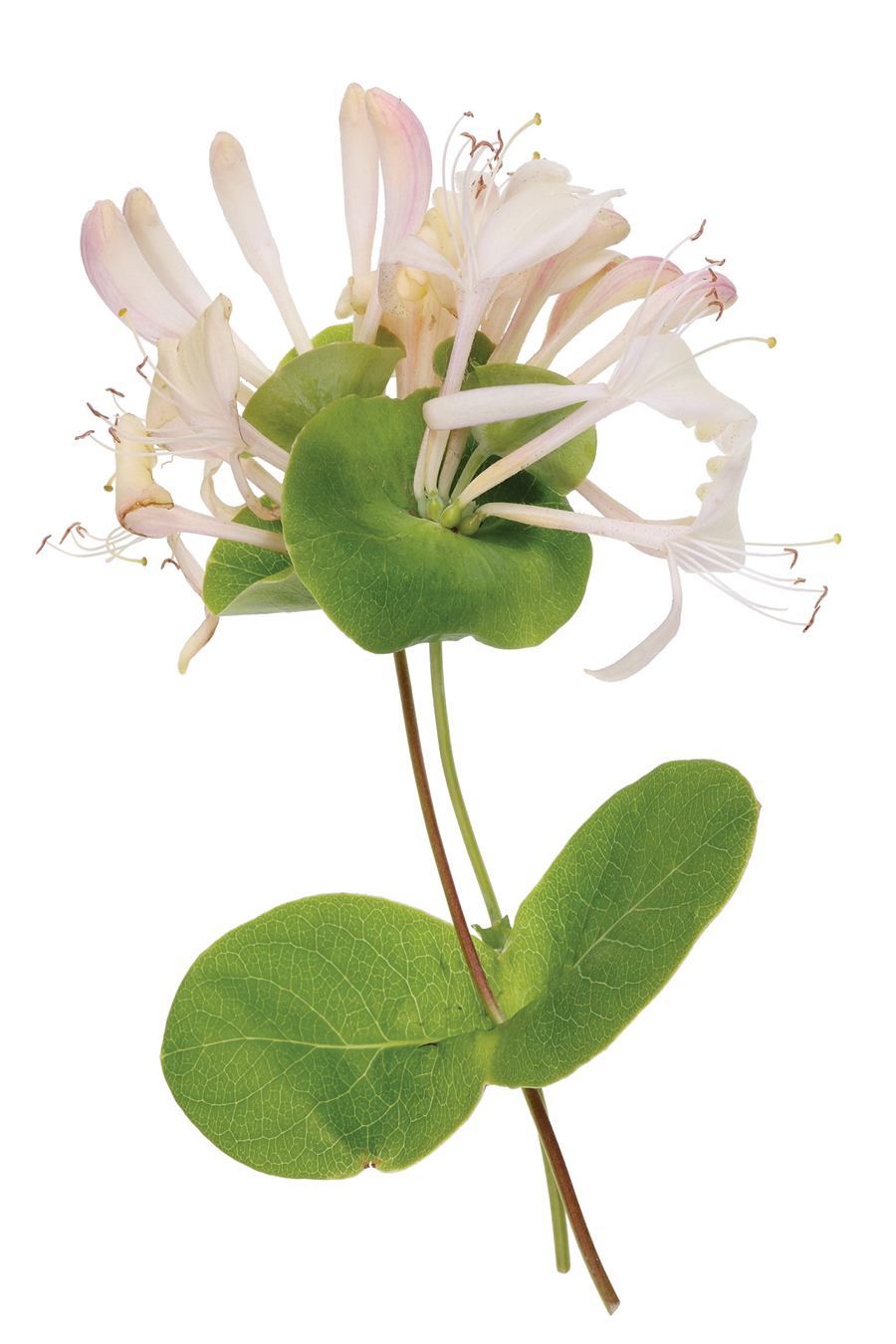
One whiff of wild honeysuckle sends me down the bumpy dirt road, down the gravel drive, down to the back paddock, where the bay pony greets me at the gate, alfalfa hay tangled in her thick black mane.

As a child, summer mornings at the farm were sacred to me.

At the earliest light, while the air was still cool, we watered flowerbeds and drinking troughs, then took off bareback down the lush woodland riding trail.

Past the quiet creek, where water moccasins sunned on fallen logs, past the neighboring farm, where an ancient donkey wheezed in exaltation, on past the patch of ripening blackberries, I return to the place I first experienced the taste of wild honeysuckle, a place I return each June, if only in my mind.

This year, summer solstice lands on Friday, June 21.

And yet the sweetness of the season arrives unexpectedly — in an instant, in one delicious whiff, inside a single drop of nectar.


Figs of Summer

June marks the arrival of the earliest blackberries and scuppernongs. Picking herbs at dawn for midday pesto. Fried squash blossoms and fresh sweet corn. The first ripe fig.

I’ll never forget the Devon Park rental with the young fig tree out back. “It’s never produced fruit,” the landlord had told me.

And yet, one June evening, after scrubbing and filling the concrete birdbath, there it was: a tiny green fruit.

I watched that perfect fig slowly ripen day after day, for weeks.

Just as a caterpillar emerges from cocoon-state completely transformed, one day my darling fig was purple.

Soon, it would be ready to harvest. One more day, I told myself.

But the next day, the birds had beaten me to it.

Take whatever wisdom you wish from this little memory. And as for you birds: I hope the fig was delicious.

No great thing is created suddenly, any more than a bunch of grapes or a fig. If you tell me that you desire a fig, I answer that there must be time. Let it first blossom, then bear fruit, then ripen.  — Epictetus

Hand-picked Sweetness

In addition to the uplifting aroma of its summer blossoms, the honeysuckle is a plant of many surprising health benefits. (Add honeysuckle oil to the bath, for example, to soothe arthritis or muscle pain.) But what could be sweeter than adding homemade honeysuckle syrup to your favorite summer refreshment (iced tea, lemonade, sorbet, fresh fruit, you-name-it)? The below recipe stores up to one month in the refrigerator. Do make sure to harvest blossoms that are free from pesticides. And, if you make enough syrup, share the sweetness with a friend.

Honeysuckle Blossom Syrup

Ingredients

1 cup sugar

1 cup water

50 honeysuckle blossoms

Instructions

In a small saucepan, combine sugar, water and honeysuckle blossoms.

Using medium to high heat, bring to a boil, stirring constantly.

Reduce heat and simmer for 3-4 minutes.

Remove from heat and allow to cool completely.

Strain into a jar; refrigerate.

It is the month of June, The month of leaves and roses, When pleasant sights salute the eyes and pleasant scents the noses. — Nathaniel Parker Willis

Let There Be Magic

The Full Strawberry Moon rises on Monday, June 17 — four days before the solstice. Also called the Honey Moon, the Mead Moon and the Full Rose Moon, allow the brilliance of this June wonder to illuminate all the magic and potential of this brand-new season. And if you happen upon ripe wild strawberries for the occasion, don’t forget the honeysuckle blossom syrup in the fridge.

Poem

Ode to My Backyard Garden

O mighty, O valiant

flowered phalanxes,

patrolling the patio perimeter!

Sharp-pointed hostas flank

two imposing hydrangeas

holding pride of place,

one uniformed in periwinkle,

the other, salmon pink,

their blooms thrusting

purposefully toward the sky.

Snowy-petaled Shasta daisies

with bright lemon centers —

the next line of defense —

gently wave in formation,

gathering intelligence,

heads pressing together

in silent exchanges.

Outermost are the sturdy sentinels,

daylilies hued in saffron and amber,

their ranks constantly replenished,

ever watchful for marauders,

especially Inscrutable Thomas,

the neighbors’ orange tabby,

a stealthy, persistent intruder.

O carry on, carry on,

my intrepid army

of blossoms!

— Martha Golensky

King of the Road

Leonard Tufts’ love affair with adventure motoring

By Bill Case     Photographs from the Tufts Archives

By 1911, Pinehurst, only 16 years in existence, had become one of the pre-eminent resort destinations in America. Northerners arriving by rail flocked to the Sandhills to experience the golf, equestrian activities, hunting and fine dining, offered by the resort. Bostonian and soda fountain magnate James W. Tufts founded the town and resort in 1895. But after his death in 1902, it was his son, Leonard, who masterminded changes in business practices that bolstered Pinehurst’s financial viability during the first decade of the 20th century.

James Tufts had never turned a profit in the seven years he served at the resort’s helm. Leonard flipped the bottom line when he started selling lots and existing cottages in Pinehurst to prominent Northerners. These “cottage colony” residents needed products and services of all kinds and, as the sole proprietor of a company town, the savvy Tufts was in a position to provide these various commodities at a fair profit to himself.

Leonard was never one to rest on his laurels, and was always on the lookout for potential storm clouds that, left unaddressed, could impact the resort’s future success. He viewed the emergence of the automobile as presenting just such a challenge. Though Tufts’ guests from the North were still content to visit the town by rail (the first guest to motor from New England to Pinehurst did so in 1909), he foresaw a not-too-distant time when they would be traveling to vacation destinations in their own autos. If Southern roads (and those around Pinehurst) remained in their poor condition, these patrons would likely choose to spend their holidays in more auto-friendly locations.

That very thing occurred at a hotel near Leonard Tufts’ summer home in Meredith, New Hampshire. An excellent roadway had been constructed straight from New York City to the doorstep of the Waukegan House — a distance of 400 miles. Auto enthusiasts from the city began making the drive to the Waukegan in droves, transforming a struggling hostelry into a blockbuster.

“Automobiles are going across the road continuously,” Leonard observed, “oftentimes one hundred or more arrive in a day.” This was precisely the kind of road accessibility Tufts craved for Pinehurst.

Many who shared Leonard’s concerns about roads chose to address the issue by berating state and local officials to fix things. That was not Leonard Tufts’ style. Instead, he immersed himself in local, regional and national road improvement activities and associations. In June 1909, he helped organize a conference of good road proponents in Columbia, South Carolina, attended by over 100 representatives from Virginia, North Carolina, South Carolina and Georgia. The purpose of the gathering was to discuss the establishment of a continuous highway from Washington, D.C., to Atlanta that would pass through Richmond, Raleigh and Columbia — all capitals of their respective states. The road was to be dubbed the “Capital Highway.” The representatives on hand in Columbia selected Leonard to head up the project.
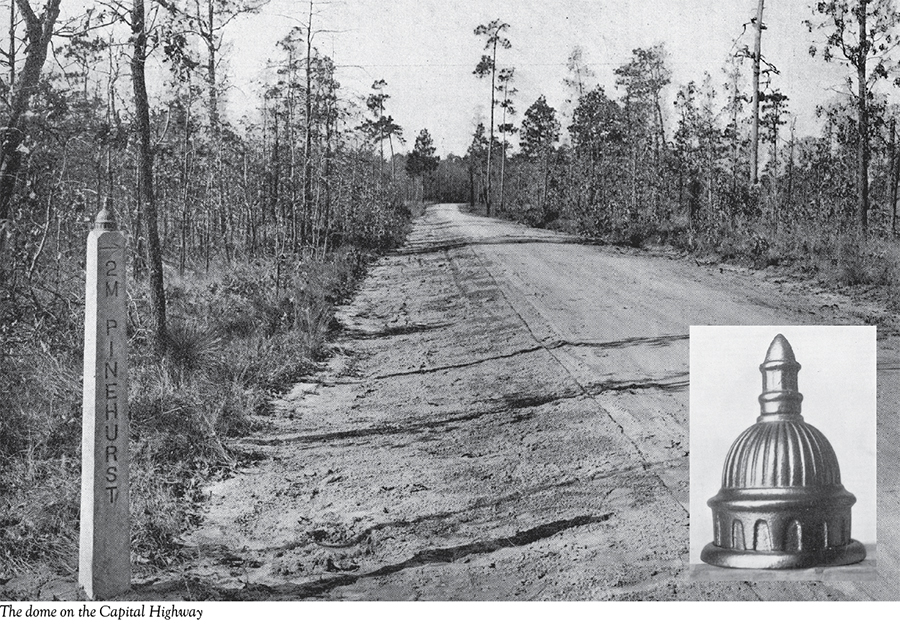
Tufts explored ways of promoting the new highway. One possibility involved an automobile reliability contest tour between New York and Atlanta sponsored by the New York Herald and Atlanta Journal newspapers. The papers announced they would be awarding a $1,000 prize to the county found to have the best roadway on the tour. Leonard concluded that competition for this prize would provide a powerful incentive for counties along the Capital Highway to improve their respective sections of the road. He urged the two newspapers to hold the southern portion of the tour on the Capital Highway instead of a more westerly path through the mountains proposed by a rival group. Leonard pointed out that the mostly sandy surfaces of the Capital Highway were superior to those of the red clay mountain roads, which often became impassable when wet. Unfortunately, the newspapers ignored his plea, opting to conduct the contest over the western route.

This setback did not deter Tufts’ relentless championing of the Capital Highway. He beseeched local officials along the route to provide funding for improvements, and Leonard subsidized many of them himself. Though the highway’s path through North Carolina largely followed what is now Route 1, Tufts made sure that the road veered through the middle of Pinehurst. To promote the highway’s branding and identification with state capitals, he caused Capitol dome likenesses to be placed atop highway mile markers. Guidebooks were made available to motorists that described every zig and zag of the highway in an easy-to-follow manner. Other materials provided info on the various resorts near the highway where weary travelers could bivouac.

Leonard also paid attention to the accessibility of roads near Pinehurst. Surmising that resort guests would eventually be taking day trips in their flivvers touring Moore County’s countryside, he laid out and improved a number of roads in the vicinity. He also involved himself in an ambitious mapping project of the county for the benefit of both guests and future development.

Accompanying him on these forays into the hinterlands was 49-year-old Warren H. Manning, the man whose creative tree and plant selections had transformed Pinehurst from a denuded pine barrens into a veritable “Garden of Eden.” While employed with the firm of Frederick Law Olmsted (the designer of New York’s Central Park), Manning arranged the plantings for the Chicago Columbian Exposition of 1893 and the Biltmore House in Asheville. He also assisted Olmsted in laying out Pinehurst’s unique serpentine roads. Manning ultimately left Olmsted’s firm to start his own landscape architecture business, taking the Pinehurst account with him. Soon, he established his own national reputation for designing naturalistic “wild gardens.”

Though his services were in increasingly high demand, Manning always found time to work on Pinehurst projects. He and Tufts had formed such a close bond that the architect frequently lodged at Leonard’s Mystic Cottage home when on assignment in the Sandhills.

The two friends made something of an odd couple, motoring through Moore County’s hills. The scholarly, 40-year-old Leonard, usually toting a book under his arm, calmly and deliberately eyed every feature when they disembarked to inspect the surrounding terrain. By contrast, the peripatetic, square-bearded Manning often appeared oblivious to anything except the task at hand. He speed-walked from point to point, recording notes and measurements, and generally leaving his younger cohort in the dust. According to Tufts, the architect was “the ‘walkingest’ man” he had ever encountered.

Tufts’ work on Moore County roads did not distract him from overseeing his pet project — the Capital Highway. Though it was now open to motorists, Leonard was concerned that parts of the highway were still not up to snuff. He also suspected local counties and other governmental entities along the route were not pulling their weight in maintaining their respective portions of the road. When the Pinehurst resort closed for the season in May 1911, Tufts decided to make his annual migration to Meredith, New Hampshire, by automobile so he could examine firsthand the northerly half of the highway running from Pinehurst to Richmond.
Three men joined Leonard on the 800-mile expedition: his frequent sidekick Manning, Dr. Myron Marr, and Charley Cotton. The 31-year-old Marr, a native of Dorchester, Massachusetts, had become quite a fixture in Pinehurst Country Club circles. Whether golfing with the Tin Whistles organization, competing in equestrian events, playing doubles tennis with his wife, or shooting trap, the doctor was very much in the club’s mix. He also enjoyed a pleasant gig as the “resident physician for Pinehurst,” with morning visiting hours (or by appointment) at his conveniently located office inside the Carolina Hotel. Like most denizens of Pinehurst’s Cottage Colony, the coming of May signaled the time for Dr. Marr to be heading to New England, so he was presumably pleased to be hitching a ride with Tufts.

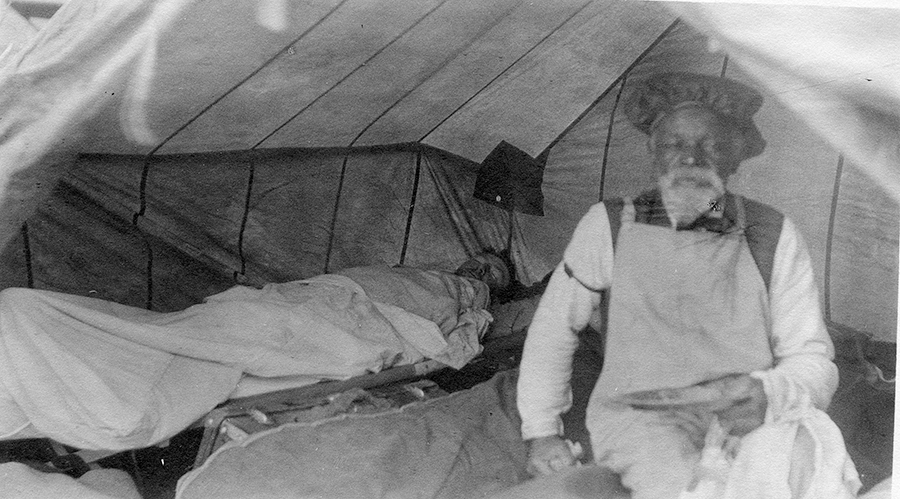
According to later reminiscences of Leonard’s son, Richard, Charley Cotton, the fourth member of the group, went along “to assist in making camp and with the preparation of meals.” Originally born into slavery, the 60ish, white-bearded Cotton had long worked for Pinehurst and the Tufts family. “Uncle Charley’s” whimsical observations and homespun horse sense charmed his fellow travelers, contributing much more to the journey than his labor.

Manning kept a journal, housed at the Tufts Archives, of their road trip and snapped a number of photographs as well. His first entry says, “I arrived at Pinehurst, 9 a.m., May 6, 1911, attended to plans and telegram, lunched with Mr. Tufts and Dr. Marr under Minnie’s ministrations, got into khaki and flannel shirt, helped pack auto (Leonard’s 4-cylinder Reo with steering wheel on the right side), then we started at 3 p.m.” After a brief stop in Southern Pines for additional supplies, the Reo headed north in “perfect” weather — at an excellent clip of 22 mph.

As might be expected, many of Manning’s journal entries pertained to plants, trees and gardens he observed along the way. As the quartet steamed up the Capital Highway, the landscape architect noted “the young oak leaves are a vivid yellow green, quite distinct from the gray and reddish greens of the northern oaks in the spring. At Manley was a brilliant blue and scarlet field of the common toadflax and the common sheep sorrel.”

It became something of a working holiday for Leonard Tufts, who diligently recorded his observations regarding the Capital Highway’s condition, and then submitted them for publication to local newspapers serving towns along the route. As the Reo neared Cameron that first afternoon, Leonard did not like what he saw. “From Pinehurst, the first seventeen miles of the road is good, the next four miles to Cameron the road is deteriorated as it has had little attention,” he wrote. “From Cameron to Lemon Springs, N.C., a distance of six miles, the sand is as deep as ever.” The excessive sand caused the Reo to be slowed to 5 mph. But when the road was in satisfactory repair, Leonard noted that too. “(F)rom Lemon Springs to Jonesboro, six miles, there has been some improvement. Jonesboro Township is to sell its road bonds this month, and then will put its part of this in first-class shape.”

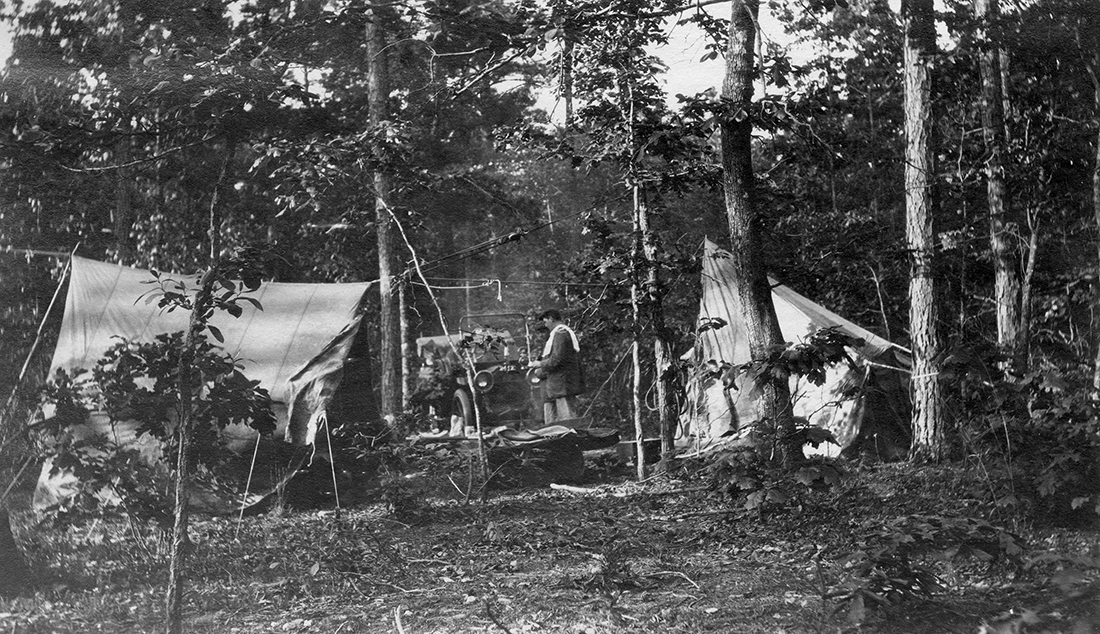
At 7 p.m., shortly after passing through Sanford, the four men pitched tents in an oak woods. Manning’s journal indicates that after setting up “4 cots, 4 sleeping bags, (and) the commissary boxes,” the four sat by the fire, ate supper, and went to bed. Toting along camping gear was pretty much a necessity for any long-haul motoring in 1911. With unforeseeable road conditions and the frequent breakdowns of the early vehicles, it was guesswork where one might wind up after a day’s driving. And because service stations and auto mechanics were few and far between, motorists like Tufts generally needed to be self-reliant in dealing with flat tires, engine troubles, and a wide array of other road mishaps. For early auto enthusiasts, the unpredictability of what might be encountered made for a challenging adventure.
The Reo certainly challenged Leonard. On the morning of May 7, he fiddled with the engine until 11 a.m. before it fired up. Once on the road, Manning noticed that Tufts was being especially considerate of carriage drivers and their teams of horses. The horses would sometimes rear when Leonard’s horseless carriage whizzed by. “Sorry to have given you all that trouble, sir,” Leonard would invariably say. According to Manning, his friend’s unfailing courtesy tended to “chase away frowns, and bring smiles and ‘thank-yous.’”

On that first full day of driving, Warren became aware of Charley Cotton’s unique brand of wisdom. Some of his maxims, though farcically illogical, made perfect sense. When a drowsy mule trudging by suddenly acted up, Cotton cautioned Manning that, “a mule . . . (may not) wake up until you get by him, but then, he wakes up powerful smart.” Tire troubles continued to dog the travelers that day, but they managed to reach Raleigh by late afternoon, where they gave the Reo “a feed and a drink in a garage.” The men set up camp outside the city on an abandoned road.

A “drizzly day and mud, mud, mud,” greeted the travelers the following morning (May 8), and progress was slow. Weary from the slog, they ended the day in Warrenton, North Carolina, only 55 miles from Raleigh. But spirits were high after Charley served up dinner of steak, strawberry preserves, bread, and a corn batter and flapjack combination.

The worst road conditions of the trip confronted the men on May 9, and Leonard informed newspaper readers all about it. “For the next eleven miles . . . through Macon and Vaughn to Littleton, the roads are bad and seem to me to be getting worse,” reported Tufts. “There was a man with a light car ahead of us, whose tracks we watched with a great deal of interest. We counted where he had gone into the ditch sixteen times, and then we quit. We were fortunate in going in only four times.”

The intrepid band negotiated the quagmire, and finally entered Virginia at 4:30 in the afternoon. Once having crossed the state line, Leonard found the highway much more to his liking. “When you come to Barley (Virginia) you strike the kind of roads you dream about, and your motor picks up its head, arches its neck and goes down the road like a two-year-old,” wrote the admiring Tufts. “It is sixteen miles of gliding. Three cheers for Greensville County, and their board, Messrs. Cato, Rainey, and Murfee.”

The men camped that evening between Emporia and Jarratt, Virginia, “near a railroad crossing in a tall pine grove,” close to “several Negro cabins.” According to Manning, a number of the African-Americans, “soon trooped over, headed by Mr. ‘Bologna Sausage’ (a moniker provided by Charley), who appeared again after supper, with his accordion to sing, play, and tell stories around the fire that lighted three white faces on one side, and five black faces on the other.” Leonard passed out cigars to all in attendance while Cotton “weaved in and out through the ranks and to the fire washing dishes.”

Manning reported that sleep came rapidly that night “in spite of the occasional trains . . . pig squeals, donkey brays, clank of a wall chain, and in the morning (May 10) a multitude of bird calls, Whip o’ will, chuck-will’s widow, chickadee, creepers, crowing roosters, and cackling hens.” Cotton’s tasty breakfast of steak and corn cake awaited Tufts, Manning and Marr. Once on the highway, Tufts piloted the Reo to Loco, Virginia, where he indulged in some road politicking with J.M. Tyus, whom Leonard praised as having “done more in the last two years with the limited money at hand than any man has done on the Capital Highway, in my opinion between Richmond and Augusta, Ga.” From there the foursome made good headway through Petersburg and Bensley, finally reaching Richmond, where “the auto went to garage for clean up, repairs, and food, and we to the Jefferson Hotel for the same.”

Having already decided not to follow the Capital Highway to its northern terminus at Washington, D.C., they took a westerly route up the Shenandoah Valley in the direction of Charlottesville. Of the 273 miles of the highway the men traveled from Pinehurst to Richmond, Leonard estimated that the road was poor for 73 of them. His newspaper article suggested the bad sections could “readily be put in good shape at an expense of not over $20,000,” provided “we all work together.”

The group was eager to move on from Richmond on the morning of May 11, but repairs to the Reo delayed their departure until 6 p.m. They were led out of town by “a pilot auto filled with Mr. Tufts’ auto club (AAA) friends, who went out a number of miles — miles of dust, too, for there were many machines on this part of the road.” Though it was the normal routine to set up camp before dark, this particular evening with its soft balmy air and full moon struck them as so “exquisitely delightful” that they continued motoring long into the night. Finally stopping at midnight, the men pitched their tents in oak woods “at the first railroad crossing beyond Louisa.”
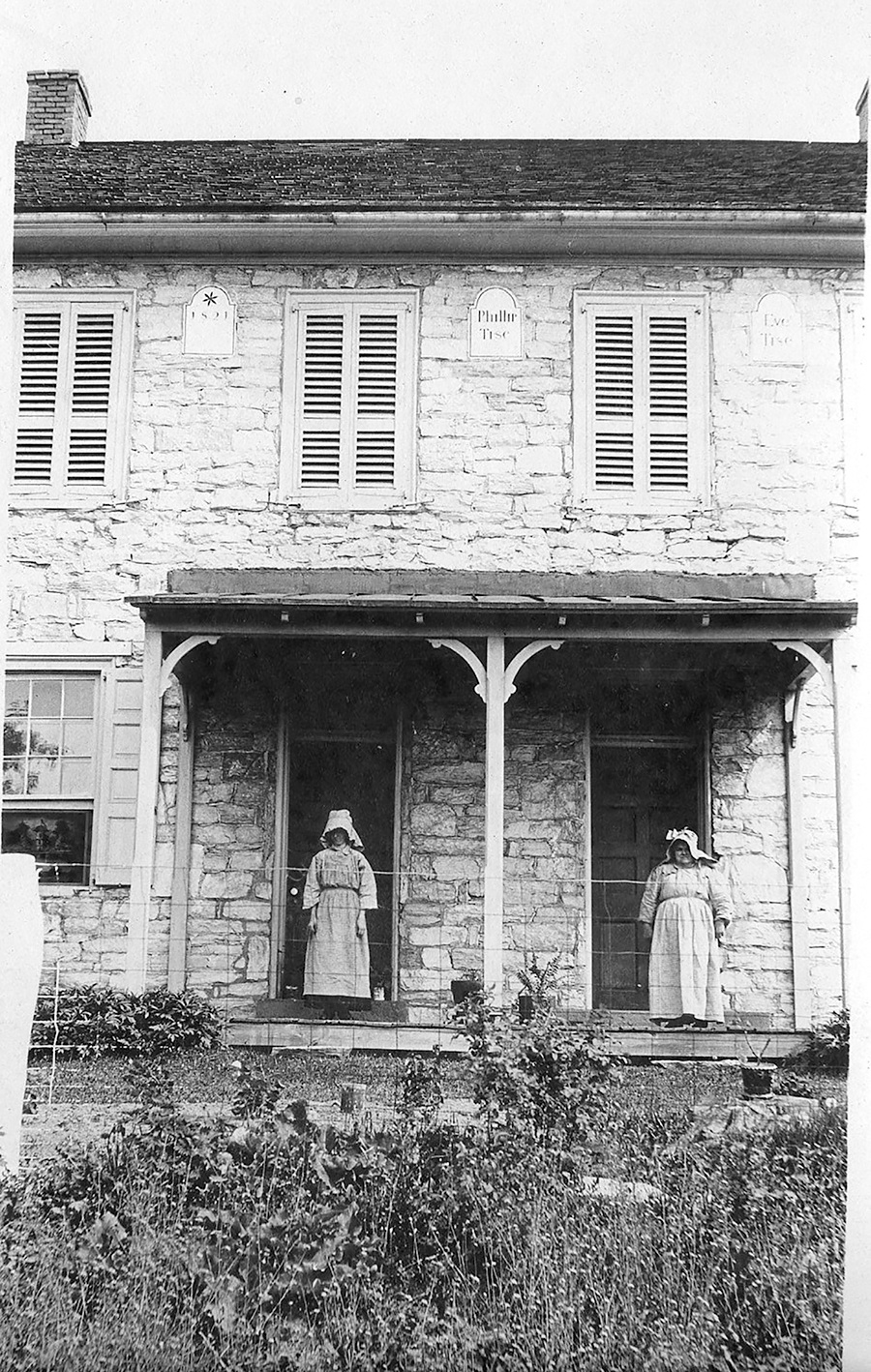
The following morning (May 12), they drove to Charlottesville, where they toured Monticello and the University of Virginia. Relishing the Jeffersonian history and architecture, they whiled away most of the day before cranking up the Reo, ultimately setting up camp just 23 miles farther up the road in Afton, Virginia.

On May 13, Leonard had the Reo cover more than 100 miles as it steamed through Staunton and then Winchester (“a busy little city, not yet much modernized”). Manning did not much care for the frequent turnpike gates along the way, “to each of which fifteen cents is handed out in an envelope as we slow up a little.”

May 14 found the men in Gettysburg, Pennsylvania, where they viewed the battlefield monuments. The quartet camped at a grove located in Pennsylvania Dutch country near Myerstown. A Dutch farmer “with fire in his eye” approached the Tufts party, irate that the men were on his land. But when the farmer saw the Reo (still a rare sight in that area), there was an immediate about-face in his attitude. “My that’s a big automobile,” he marveled. Tufts and his contingent were permitted to stay.

On May 15, the men entered New Jersey. Notwithstanding the fact that the Reo was registered in North Carolina, Tufts was nonetheless required to obtain a separate New Jersey registration. Manning observed that the roads in New Jersey were uniformly good, however, when the travelers approached the Hudson River, there was no bridge available, and the four men and the Reo were ferried across to Tarrytown, New York.

Having spent 10 days in his company, Manning had become greatly impressed with Cotton’s ever-positive attitude. He considered Charley’s unfailing smile, displayed even during hard going through the mud, as the foursome’s “most valuable asset.”

The travelers finally reached New England on May 16, and with good roads and weather, made good time. After two days of driving, the group set up their last campsite in Hillsboro, New Hampshire. Then, on the afternoon of May 18, 12 days after departing Pinehurst, Tufts chugged the Reo up the driveway of his Meredith home, overlooking the breathtaking Lake Winnipesaukee.

Manning was stunned by the vista, writing that, “at no point have we seen a view that will conjure up the extent, variety, and beauty of lake, valley, and mountains . . . that Mr. Tufts secures from his summer home.” After enjoying a sumptuous feast, their great excursion was at an end.

While the men undoubtedly savored their shared adventure, the motor trip had a practical benefit. Tufts successfully used it as a means to rally county officials to step up support for the Capital Highway. Within a few years, visitors from the North, regardless of their city of origin, were traveling over a well-maintained highway to Pinehurst.

What became of the four wanderers?
There’s precious little information regarding Charley Cotton, though we know from Richard Tufts’ writings that Charley enjoyed the high regard of the entire Tufts family. Dr. Marr’s medical career lasted another 47 years before he retired from the staff of the Moore County Hospital in 1958. He also came to public attention when he testified in 1935 at an inquest regarding the mysterious and controversial death of hotel heiress Elva Statler, who had been his patient. He died in 1972 at age 91.

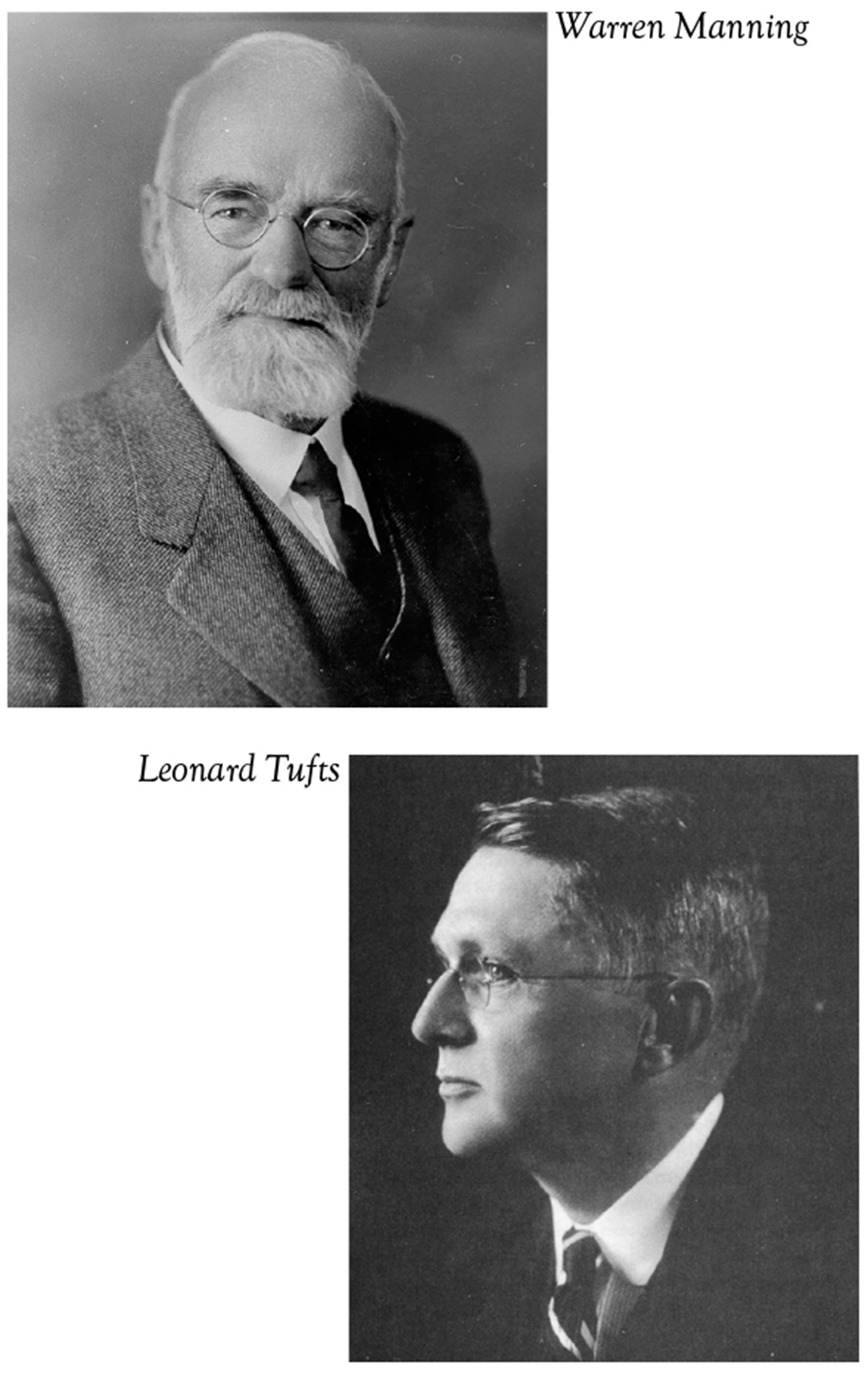
Manning achieved something akin to legendary status in landscape architecture, both in Pinehurst and nationally. He was integral to the formation of the American Society of Landscape Architects, and was a vigorous advocate for the National Parks System. He collaborated with Leonard Tufts for another two decades on projects, including the Knollwood development and the state fairgrounds. The two men also continued to work together on roads, though they were not always of the same mind as to how far into the future a road designer should plan.

Manning thought it best to engineer roads of sufficient width to accommodate many future generations of motorists. Tufts viewed the issue more conservatively. “I have been thinking about your wide road business,” Leonard wrote Manning in 1923. “We have 100,000,000 (population in the United States) now and an automobile to about every two families. While the present road system in Moore County is adequate for at least twenty times the traffic as far as the width of the road is concerned, I cannot conceive of a condition where there is more than one car to every family . . . and neither can I conceive of the population . . . doubling in less than twenty years. If my figures are right, this is planning for the next 80 years, and by that time we may have given up the automobile and gone to the air.”

Around 1929, Leonard, suffering from frequent bouts of ill health, began ceding control of Pinehurst’s affairs to son Richard. Leonard Tufts died in 1945. Though 36 years younger, Richard came to like and respect Warren Manning, and the two men partnered together on numerous projects. And, like his forebears James and Leonard, Richard had trouble keeping up with the still-spry Manning, who kept on speed-walking until shortly before his death in 1938. On one occasion when Richard was lagging behind, Manning turned to him and remarked, “Years ago I used to walk your grandfather off his feet, then I walked your father off his feet, and now I am walking too fast for you!”  PS

Pinehurst resident Bill Case is PineStraw’s history man. He can be reached at Bill.Case@thompsonhine.com. 

As Good As It Gets

A mystical, magical U.S. Open turns 20

By Bill Fields

The 1999 U.S. Open has stuck with me, the way it has anyone who ever daydreams about golf instead of more important things, because it was quite a week. The event was a long time coming to Pinehurst, so long that it felt as if it would never occur, that the roster of North and Souths, World Opens, Tour Championships and a lone PGA when FDR was in the White House would never get this kind of fancy company. 

“You just assumed it was something that would never happen,” says Curtis Strange, who before winning back-to-back U.S. Opens in the late ’80s won consecutive North and South Amateurs on No. 2 in the mid-’70s.

Then it did, concluding on an oddly cool and drizzly June afternoon as packed with drama as a longleaf pine with needles. Twenty years down the road, Pinehurst’s first Open remains one of the best.

Before it became Payne Stewart’s, the ’99 Open belonged, at least a little bit, to me, to all with close ties to America’s golf capital. As someone born and raised in the area, I’d like to think it still does.

I remember coming to town a month or so before the championship to report a story for Golf World magazine — whose home used to be in the Sandhills and was my professional home for many years — and feeling both anticipation and anxiety about the exposure my hometown was about to receive. Given that the community already was in a growth spurt, the attention from the U.S. Open was going to be an accelerant for that change.

When the USGA announced in 1993 that the Open would be played on No. 2 six years later, the late Brent Hackney wrote in The Pilot: “For Pinehurst, being chosen to host the Open is golf’s equivalent of being the site of football’s Super Bowl, baseball’s World Series or college basketball’s Final Four.”

My preview article reflected the reality of the village’s transition before a shot was struck in the 99th U.S. Open. Pat Corso, then president and COO of Pinehurst, Inc., who had been a key force in the resort’s return to glory under ClubCorp’s ownership, noted the construction of several dozen homes on Pinehurst No. 6.

“You can’t play a hole without hearing a hammer,” Corso told me. “But from where I sit, it’s not so bad. If it’s so bad, why are they all still coming? It’s a matter of perspective. But it’s not the way it was for the resort and it’s not the way it was for those who lived here (before). It’s different.”

As I grew up in Southern Pines during a time when everyone’s world was much smaller, Pinehurst could seem much farther away than 5 miles. In the 1960s and ’70s both places were more afternoon nap than loud party, a sophisticated “Mayberry” of natives and transplants, the latter decades away from moving here in droves.

Charles Price, one of best to ever write about golf, lived in Pinehurst in the middle of the 20th century, as a reporter for The Pinehurst Outlook and Golf World, and visited the village three decades hence before settling here later on. “There was and is something venerable about the place,” Price wrote in Golf magazine in the 1970s, “something almost holy about its atmosphere you can’t find in the newness of Palm Springs and the clutter of Palm Beach. While Pinehurst is nowhere near as graybeard as St. Andrews, it still has a church quiet you won’t find even there.”

When I was a small boy, Pinehurst was mostly a turn we didn’t take driving over to Jackson Springs on Sundays to visit my grandmother. My parents had gone to movies in the theater when they were courting. The Pinehurst golf courses might as well have been in outer space until I got I my first set of clubs in 1969, then they became an aspiration.

I saw them before I played them, walking No. 2 for the first time as a 14-year-old spectator during the two-week-long, 144-hole World Open in 1973, the first professional golf at Pinehurst since the final North and South Open in 1951. I would carry a scoring standard in subsequent tour events — the late Bruce Edwards wouldn’t give me a golf ball one year following 18 holes with Tom Watson, which I kidded Bruce about after becoming a golf writer — and a couple of times took up gallery stakes and rope with some fellow Pinecrest students on the Monday after for $20 and lunch. It was a wonder we didn’t get gored with the sharp end of one of those metal rods, but somehow we avoided injury.

Our high school golf team got to play the No. 1 course a lot, along with occasional rounds on No. 4 and No. 5, with our matches and a local junior tournament held on No. 1. I shot a 72 in one Monday match to lead the team to what was then a school-record total, but compared with the local kids who came along a generation and two later, who could really play, ours was weak sauce. 

Getting to play No. 2 was a very special occasion, which meant that my several appearances in the Donald Ross Memorial Junior, a Christmastime staple, were fraught with nervousness. I’ve blocked out what I shot, and hope there is no surviving archive of scores, but I am sure I never broke 90. Once, when I was 22 and well past the point of knowing I would not ever earn a living with a scorecard in my back pocket, I thought I was about to get some revenge on No. 2 for those desultory December days. I was 1 over through 16 holes in a round with three good players but finished with back-to-back double bogeys, the CliffsNotes of a career that never really was.

That was my Pinehurst golf background heading into the ’99 Open but far from all my history there. I was in the crowd when the World Golf Hall of Fame, adjacent to the eastern edge of No. 2, was dedicated in September 1974, with newly promoted President Gerald Ford part of the ceremony for the original 13 inductees.

Seven years later, immediately after graduating from Carolina, I worked at the WGHOF in a brief stint as a greenhorn public relations director. My duties included writing press releases, making appearances with television hosts Lee Kinard of WFMY and Jim Burns of WECT to promote the Hall of Fame Tournament, and putting out buckets under a perpetually leaky shrine-building roof.

We were doing the tournament, which almost didn’t happen because of a lack of funds, on the cheap, and if you watched a commercial for the event that had a close-up of driver meeting golf ball, that was me making contact with my persimmon MacGregor on the fifth hole. It was a good strike, but rest assured not like the prodigious pokes Davis Love III made going around No. 2 in winning the 1984 North and South Amateur, an awesome driving display of accurate power that stands out many years later.

In 1988, our rehearsal dinner was at the Pine Crest Inn, wedding ceremony at Community Presbyterian Church, reception at the Manor Inn. We spent our honeymoon night in the Carolina Hotel, the start of a decade-long marriage that ended in divorce about six months before the ’99 U.S. Open.

While some homeowners in the Sandhills were getting many thousands to rent their houses to visitors for the week of the Open, my mother got enough from Golf World to buy two new mattresses so photographers Steve Szurlej and Gary Newkirk could bunk upstairs with me in our house not far from downtown Southern Pines. (Most of the magazine staff stayed in a rental house in Pinehurst.) It really felt like old home week when I pulled my rented Chevy into the media lot, a.k.a. Pinecrest High School, where for junior and senior years I had parked my aging Ford.

Having covered the Tour Championship and U.S. Senior Open at No. 2, as well at the U.S. Women’s Open at Pine Needles, within the previous decade, I was no stranger to returning to my hometown on assignment. This time, though, given the gravitas of the event and my place in life — just turned 40 and newly divorced, writing for a publication I’d grown up reading and wanting to work for — it felt a bit like swinging a club with a weighted doughnut around its neck.

Photograph from the Tufts archives

Payne Stewart was just slightly older than me, 42, married and the father of two. He certainly had been a constant presence on the PGA Tour in my golf photography and writing career, known for his old-fashioned swing, the plus fours he wore on the course, liking a good time and, more than occasionally, not treating everyone with kindness. One contemporary of Payne’s told me he was the only fellow pro he ever wanted to punch — not once but twice — and for every memory of a fun-loving competitor is a recollection of when Stewart, a good harmonica player, was off-key, arrogant, churlish.

Stewart’s ability to get over the hump with his manners seems, by most accounts, to have lagged behind his transformation into a tournament winner, which came after lots of close calls that earned him an “Avis” nickname. Once that moniker was mostly history, Stewart still had more than twice as many career runner-up finishes as victories (11), a reality that might have been related to his attention deficit disorder, which was undiagnosed until 1995.

Dr. Richard Coop, a UNC-Chapel Hill education professor and a pioneering golf psychologist, worked with Stewart starting in 1988 and became a dear friend and confidante of his. I got to know Stewart a bit through Dr. Coop, with whom I collaborated on magazine columns and Mind Over Golf, his primer on how to become a better golfer through a sound mental approach. Stewart wrote the foreword for the book, published in 1993. The year after he began seeing Dr. Coop, Payne won his first major, the 1989 PGA Championship. He got some help that day at Kemper Lakes from a poor finish by Mike Reid, and Stewart’s behavior as Reid struggled home was indicative of his immaturity.

Stewart won the 1991 U.S. Open before winning the 1999 edition in Pinehurst, John Garrity in Sports Illustrated writing that while he was among more than a dozen golfers to win two U.S. Opens in a decade, he was the first to do it with two personalities. That was certainly a popular theme around the time that Stewart won in Pinehurst, his demeanor change credited to a newfound Christianity, old-school maturity and a talking-to from his mother, Bee. “I gave him an attitude adjustment,” she told Sports Illustrated. “He’s learned you can’t go around being rude to everyone.”

There was no doubt the fellow who put on a costume every time he teed it up was a real human being, complex to the core.

That made him no different, really, than the golfers with whom he would spar that fateful Sunday in Pinehurst: Phil Mickelson, Vijay Singh, Tiger Woods, David Duval.

Any doubts that No. 2 would stand up as host to its first professional major in 63 years were quelled that Thursday when, after an inch of rain Wednesday night, no one torched the place — a quartet of 3-under 67s including Mickelson and Duval leading with Stewart and Woods among those at 68. The ground got firmer and the flagsticks were tucked as the week went on, the ingredients mixing for a fantastic finish on a misty Sunday that could have been ordered by course designer Donald Ross, a native Scot.

Arguably the closely cut grass around the turtleback greens could have been slightly taller to encourage more chips and fewer putts from the fringes, but it still was the most distinctive U.S. Open setup in years, with everything from fairway woods to lob wedges utilized around the putting surfaces, the heart and soul of No. 2.

“It’s not the hardest course I’ve ever played,” said Tom Watson, who won the tour event at Pinehurst in 1978 and ’79, “but it may be the hardest to get the ball close to the hole on the green.”

Through 54 holes Stewart was the only player under par, at 209. In search of his first major and with his wife, Amy, expecting their first child that had him a beeper away from departing, Mickelson was one back with Tiger and Tim Herron at 211. Duval, Singh and Steve Stricker were three behind. The only logjam was on the leaderboard, as pre-Open fears of the village and surrounding towns being overwhelmed by traffic never materialized. Shop and restaurant owners, in fact, were disappointed that customers seemed to be scared away by the imagined congestion.

The golf did not disappoint, though, particularly as the fourth round simmered into a stew of stars. The often-seen attrition of leaders in an Open was replaced with clutch play. Stewart and Mickelson each closed with 70s, as did Woods, with Singh shooting 69. Only Duval sputtered to the clubhouse, with a 75. The final two hours were the very definition of golf drama, the protagonists and plot ranking up there with other great finales in the championship’s history, roars reverberating through the pines, Augusta-like, as if a dormant stage had reopened for the finest actors of the day to perform.

Mickelson and Stewart swapped the lead half a dozen times over the final nine. Woods was never far away either, and when he birdied the par-4 16th to pull even with Stewart one behind Mickelson, the game was truly on, the outcome in doubt. Stewart’s personality, while making it difficult to maintain his focus week in and week out for a whole season, also allowed him to exhibit keen concentration for short periods, particularly under difficult circumstances. (It is not unlike an average golfer being able to execute a fine recovery shot through a gap in the trees because a small, defined target narrows his focus.)

Stewart, wearing a waterproof jacket from which he had scissored off the sleeves himself so his classic swing wouldn’t be constrained, was never more focused than on the last three holes at Pinehurst on Sunday. He faced a double-breaking 25-footer for par that went uphill and then downhill on the 16th, and sank it as if it were for kicks on the putting clock on Tuesday morning. He converted a 3-footer for birdie on the par-3 17th after a gorgeous 6-iron, a birdie Mickelson hadn’t been able to match from inside 10 feet after a wonderful tee shot of his own.

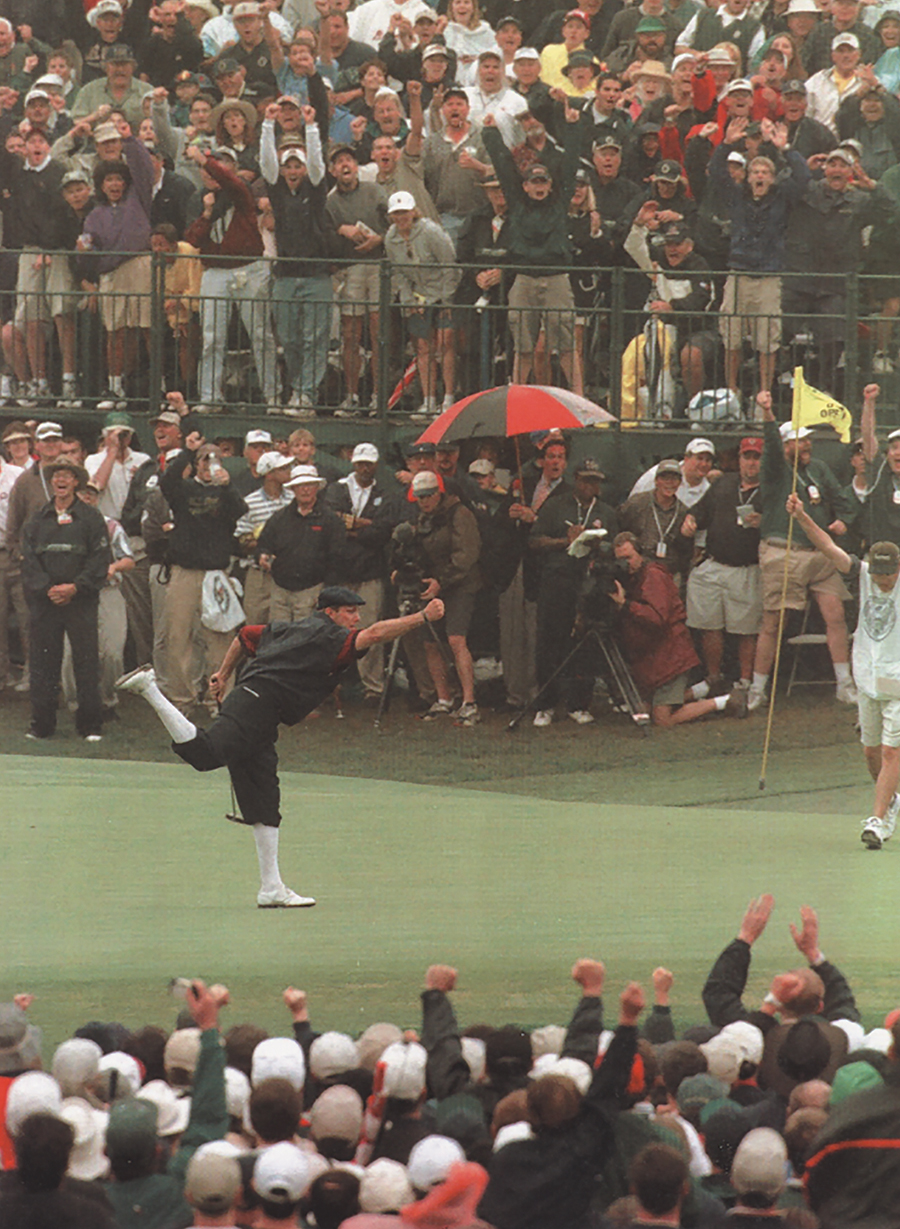
On No. 18, Stewart’s drive finished in a gnarly lie in the wet, right rough. In the distance the chimes from The Village Chapel made the air tingle. Forced to lay up, Stewart would have to pitch and putt for a winning par unless Mickelson was able to sink a sidewinding 30-footer for birdie. Phil couldn’t do it, leaving Payne 18 uphill feet to his second national championship. The stroke was pure and the roar was deafening after the ball dropped into the cup, Stewart’s fifth one-putt on the last six holes, dreamy putting on a magical day.

Arm up, leg out — a pose that became a memory and, too soon for the wrong reason, a statue.

Payne hugged his caddie, Mike Hicks, and consoled Phil Mickelson. When his press conference was over and all the pin flags were signed, Stewart got in a car, trophy at his feet, to ride to Hicks’ home in Mebane, where the hardware was their flute, champagne and white lightning flowing to toast an unforgettable day.

I retreated to my childhood house, to the desk where I used to do my homework to try to type the story. I could hear my mother and my sister downstairs, reliving their Sunday — they had attended, watching for a couple of hours in a grandstand, prior to watching the giddy finish on TV. Ten o’clock became 11 and 11 became midnight, and my laptop screen was still empty, the occasion seeming to put a tourniquet on the flow of my words. Over more than 20 years working for Golf World, I would pull dozens of all-nighters at a computer, the stories solid, sometimes even lyrical. I wrote clean copy and met deadlines. This Sunday night, though, when I most wanted to come through, while Payne Stewart was swilling bubbly in celebration, I fizzled at the keyboard.

Eventually, around a groggy sunrise, I filed my 2,000 words but they weren’t very good words. Someone at our Connecticut office had their way with them after flying back from North Carolina. I didn’t blame them for that, because the article needed more than a little TLC, but didn’t appreciate not getting a crack at making some improvements myself. My byline is on the story, but many of the sentences aren’t mine.

Monday evening, as I ate dinner with my former wife at The Squire’s Pub, homecoming week nearly over, I felt like a loser.

Time, and well-written stories, of course, changed my perception. I got to go to lots of U.S. Opens after that one, unlike Stewart, who died in an aviation tragedy about four months later. I was in baggage claim at LaGuardia Airport late on that October Monday afternoon returning from the Nike Tour Championship when the man who was driving me home said, “Awful about the golfer on the plane.” As my mind scanned for possible victims, someone nearby said, “It was the guy who wore the knickers.”

Twenty years later, I don’t think much about the bad story I filed but the good day the guy in the knickers had in the rain on No. 2. There have been other U.S. Opens at Pinehurst, with more to come, but the first will always stand out. Folks attempt Stewart’s putt and pose with a cast figure that commemorates the defining day of a life cut short. My childhood desk isn’t there for me anymore, but I can go home, where you still hear hammers, bells and, if you use your imagination, the cheers of a misty Sunday, long, loud and happy.  PS

Bill Fields has covered more than 100 major championships, including U.S. Opens at Pinehurst in 1999, 2005 and 2014.

Giving Voice

The art of speaking about the unspeakable

By Jim Moriarty  •  Photograph by Tim Sayer

Up a rutted, sandy road in a shaded horse country bungalow, Susan Southard, slight and silver-haired, is researching her next book. Her first, Nagasaki: Life After Nuclear War, is being released in Japan this summer, four years after its American publication. Comprised of stark, intimate portraits of five hibakusha — atomic bomb survivors — it took her 12 1/2 years to tell the stories of a world that changed in a second.

Southard’s first trip to Nagasaki was as a 16-year-old exchange student on a field trip from the girls’ school she was attending in Kamakura, locking arms with her classmates in front of photos and artifacts too terrible for anyone of any age to contemplate. Later, working in Washington, D.C., as an assistant to the executive director of a political and economic consulting firm, she locked emotional arms with Taniguchi Sumiteru, one of the survivors whose life she would later document. She pinch hit as his interpreter for two days and in their private moments, he allowed her to ask any question she wanted — and he answered.

“He was 16 at the time of the bombing,” she says, the same age Southard was when she first saw the effects of it. “By ’44 everyone 14 and older had to leave school and work for the war effort because they had no men left in the country. His job was to deliver mail.”

It was 1945, August 9, two minutes past 11 a.m. “He was delivering mail in the hills, and he was riding his bicycle, as everyone did. He was facing away from the bomb, and the blast came and the heat came, throwing him off his bicycle and onto the ground. His whole back was burned off. It’s unbelievable he stayed alive. He had no skin and seemingly no flesh. He didn’t get medical treatment until December. People were rubbing mechanical oil and newspaper ash on his back. That’s the only thing they had.”

Southard and Taniguchi met in 1986. “I didn’t start the book until 2003, but that was the real seed,” she says.

The book, which received the Dayton Literary Peace Prize in Nonfiction and the J. Anthony Lukas Book Prize co-sponsored by the Columbia School of Journalism and Harvard University’s Nieman Foundation for Journalism, led to a speaking engagement at the United Nations, addressing the delegates from the balcony at the request of the International Campaign to Abolish Nuclear Weapons (ICAN), the organization that was awarded the 2017 Nobel Peace Prize.

Last year, she spoke at a U.N. disarmament conference in Hiroshima and returned to Nagasaki, where she gave talks at two high schools. One of the teachers at the second school was the son of Yoshida Katsuji, another of the hibakusha in Southard’s book, whose face had been wretchedly disfigured by the blast. “Mr. Yoshida was such a dear, sweet, hilarious man. He was charming beyond measure,” says Southard. The school where his son taught English was built on the site of the school his father once attended. “It wasn’t until a week before I went there that I realized it was the exact same location. So, there I was, standing in a school that was built on the premises of the school that was destroyed during the bombing, where Mr. Yoshida had gone to school, telling Mr. Yoshida’s story.”

In the summer of 1990, four years after meeting Taniguchi, Southard and her ex-husband, Eric Black, moved from the humid heat of Washington to the dry heat of Phoenix. (Their grown daughter, Eva, lives in Las Vegas and works for Nevada Sen. Jacky Rosen.) Having discovered a social outreach theater company in D.C. suggested to her by the actor Stanley Anderson, Southard quickly founded Essential Theatre, an improvisational acting company working with marginalized communities. It has lasted 29 seasons.

“We use the foundational techniques of Playback Theatre, which was created some 40 or 45 years ago,” says Southard. “It’s an art form where people in the audience tell stories from their lives and we, the ensemble of actors and musicians, create works of art to honor their stories. It’s interactive; it’s improvised performance. When it’s done well, it’s so beautiful and so moving and so theatrical because everybody in the audience has just heard the story and they’re, like, ‘What are they going to do?’”

Lorenzo Aragon has been with the company almost from its inception. “We created a theater that was more about our audiences, and we loved that,” he says. “Our company has always had many colors, many genders, many orientations. Susan wanted the company to reflect what was in the audience.”

Southard doesn’t act anymore. Living 2,100 miles away makes it nearly impossible to nurture the familiarity necessary to be as skillful with the improvisational work as she was with Aragon. “Lorenzo and I have done thousands and thousands of performances together,” says Southard. “If you were telling a story and it’s just the two of us, we can read each other’s mind.”

As an actor, Aragon says Southard, “calls on her experience in life. She’s a stickler for clarity. And versatile. I’ve seen her be Dr. Martin Luther King and I’ve seen her be a baby that’s being born. In fact, I gave her birth one time.”

The theater has branched off into two parts with Southard maintaining her work with Phoenix’s Youth Development Institute, a treatment program for juveniles who have sexually abused somebody. “We have to create a community of trust first,” she says. “Many of them have experienced various levels of abuse and neglect themselves. They’ve been in jail already, and they’ve been adjudicated to this treatment program. So, they’re quite closed down.”

Aragon puts it another way. “When you deal with kids in the joint, you’ve got to be pretty real,” he says.

Progress can be slow. “We teach them basic theater techniques, how to step into a character, how to use imaginary objects as props, how to change your voice,” says Southard. “They have to learn to listen. We see these incremental changes, not in every boy, but most. And the therapists see it. We teach the older boys about metaphor. They think of one of their victims and one of the episodes of an offense, then they write the victim’s story from the victim’s point of view, in first person.” Using the professional actors and other boys from the theraputic group, they perform. “It’s very powerful for everyone in the room. When you’re listening to someone’s story and you’re stepping into their shoes, that is an act of empathy.”

It should come as no surprise that Southard has brought her community involvement skills with her. She will be holding a “Civic Saturday,” her second such event since moving to the Sandhills in 2016, on Saturday, June 15, from 10 a.m. to 11:30 a.m., at the Pinehurst Village Hall, at 395 Magnolia Road in Pinehurst. The theme is “Facing the Climate Crisis: Urgency, Action and Hope.”

The Civic Saturdays concept was gleaned from a Seattle program called Citizen University. “Their goal is to promote civic engagement around core values of liberty and ethical responsibility as citizens,” says Southard. The gathering is non-partisan. The stated goal is to “nurture and energize a spirit of shared purpose and effective citizenship around our nation’s creeds of liberty, equality and self-government.” The program will consist of a brief talk by Southard, some music, and readings from American civic literature that could range from excerpts of famous speeches to parts of the Constitution.

And that next book? It remains a secret. “I learned from Nagasaki you have to really choose topics that you’re willing to stay with for years and years and years,” she says.

It’s worth the wait to be the memory of a generation.  PS

Jim Moriarty is the senior editor of PineStraw and can be reached at jjmpinestraw@gmail.com.
Thistle Dhu Gets a Do-over

A Pinehurst palace celebrates its centennial in mod attire

By Deborah Salomon  •  Photographs by John Koob Gessner

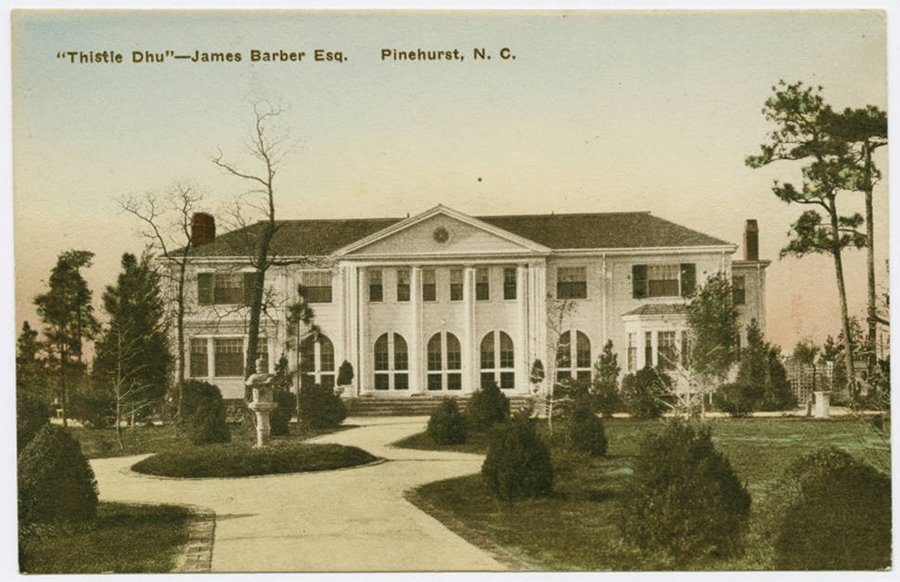
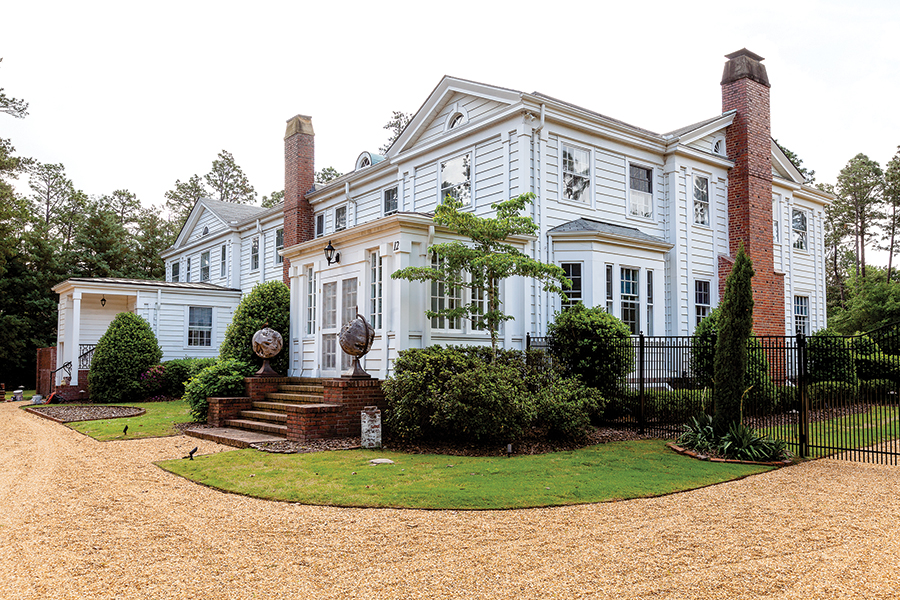
Attention all amateur and professional Pinehurst house historians. Forget everything you saw, read or heard about Thistle Dhu — the 13,000-square-foot Roaring 20s palace built by James Barber, the very same Midas who conceived and constructed, in his yard, America’s first miniature golf course. No kiddie putt-putt, this. Barber’s Lilliput stumped the deftest duffers.

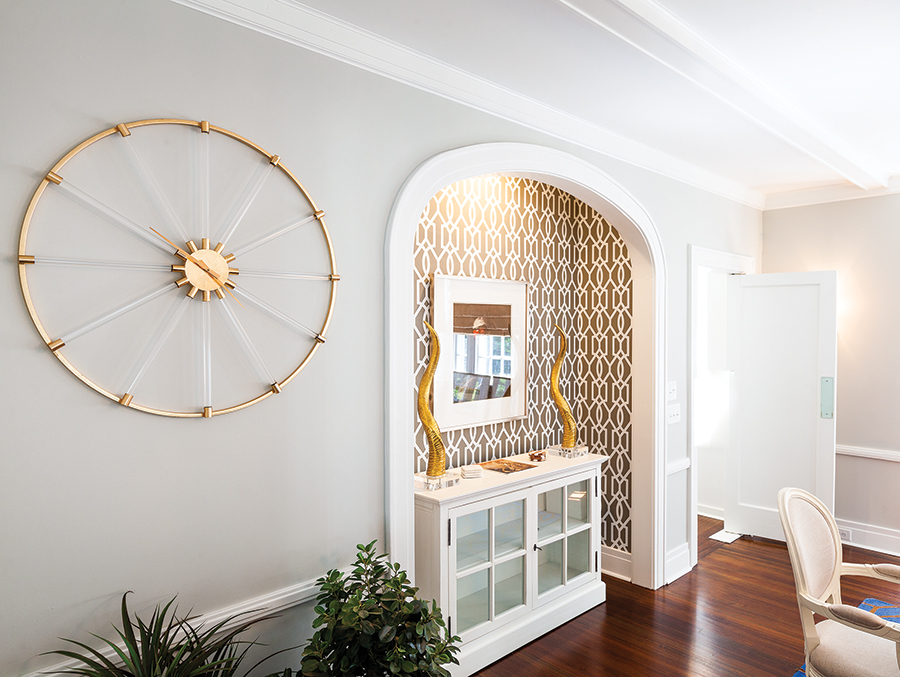
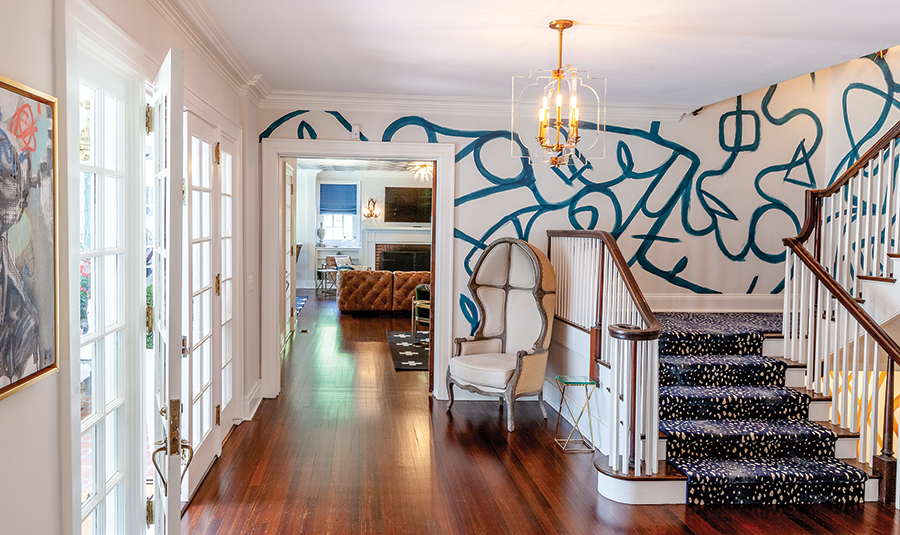
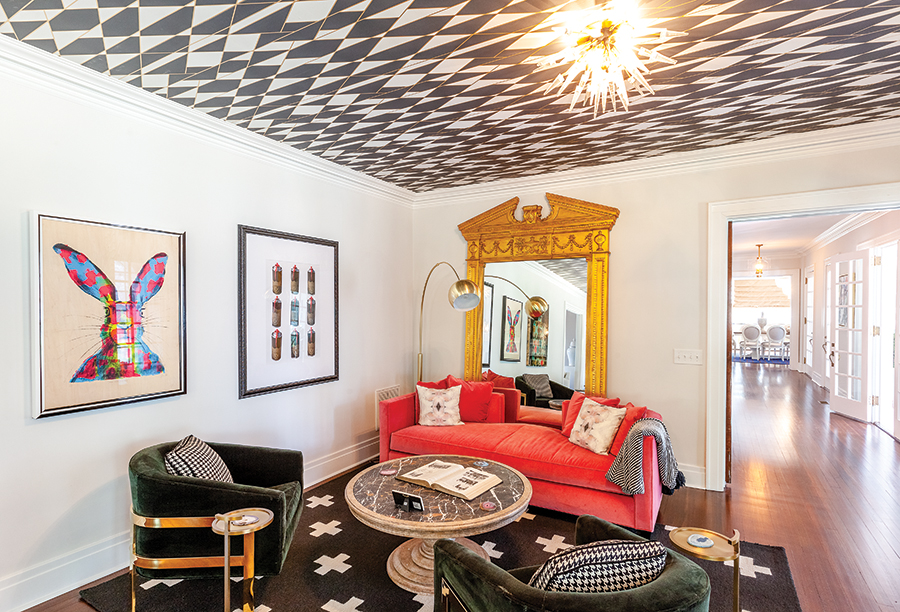
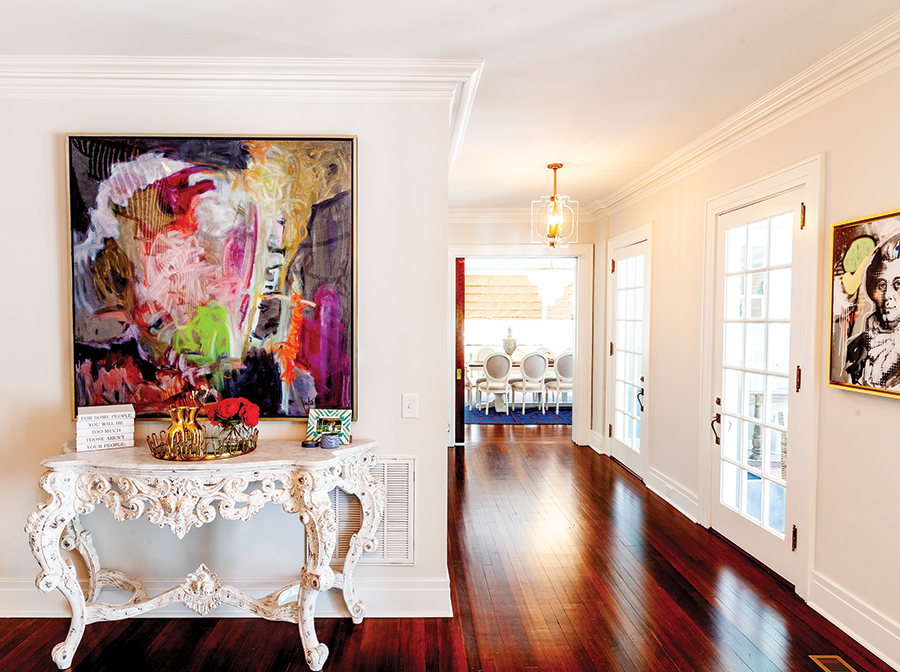
Forget stuffy furnishings, a predictable layout. Instead, whirl into a phantasmagoria of color, art, whimsy, shock. Think pink tufted velvet sofas. A pop-art portrait of Queen Elizabeth. A stairwell mural worthy of 8-year-old Picasso left home alone . . . with fingerpaints. Metallic gold dinette chairs. The mother of all leather massage recliners for après golf. A fitness room and sauna, speakeasy bar and movie theater.

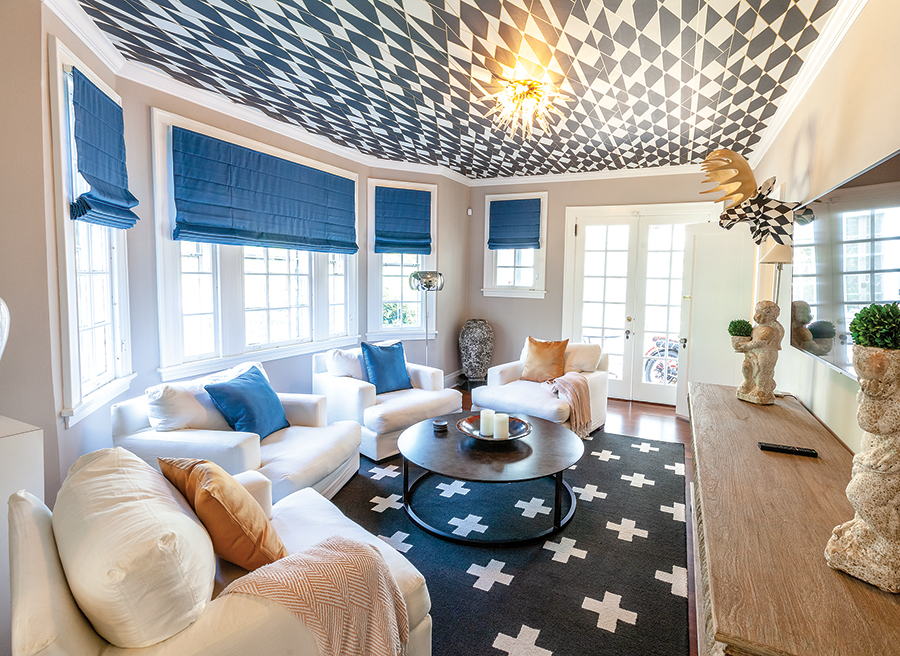
Look up: The living room (in four sections) ceiling is wallpapered in a dizzying metallic kaleidoscope pattern.

Look down: Floors throughout are original narrow heart pine strips stained mink brown.

At last! Those floors, moldings, window panes and upper kitchen cabinets provide a link to an era when wealthy industrialists and their socialite spouses spread money around Pinehurst, the newly chic winter destination.

Then imagine the Barbers’ reaction to such décor hedonism accomplished by young-and-restless owners Patricia and David Carlin, who commute — sometimes by chartered jet with three big dogs — from their primary residence in Park City, Utah.

Upfront, Patricia makes this statement:

“For 20 years nobody cared about this home. It was abandoned, an eyesore. The land was parceled out and the true entrance destroyed.” Then, she continues, she and David fell in love with golf, Pinehurst and the Barbers. They spent millions of dollars and thousands of hours resurrecting a notable historic property, creating an emotional tie to the house and its first family.

The backstory: London-born James Barber and his brother founded Barber Lines in 1886, relocated to America in 1912. By 1917 the company had grown into Barber Steamship Lines of New York, with trading routes worldwide, including Africa, Russia and Australia. Barber merchant ships played a major role in supplying troops during World War I. James Barber’s wealth allowed him to indulge in his passion, golf, at fashionable Pinehurst, where he moved in 1916 and eventually served as Tin Whistles president. Here, he built Cedarcrest, a mansion large and elaborate enough to please his wife and seven children . . . for a while, since in 1919 he built a yet more elaborate home first dubbed Mrs. Barber’s House and later Thistle Dhu, a riff on “this will do” which is what Barber said upon viewing either the house or his miniature golf course. The phrase stuck, given thistles are emblematic of Scotland and Scotland emblematic of golf.

The second house, of Federal Revival style, had Palladian archways framing the front entrance and cost, according to faded documents at Tufts Archives, a whopping $33,000 — about $2 million in today’s dollars.

By 1921, The Pilot called Barber “the biggest force in development of the Sandhills,” for developing Knollwood.

After Barber died at Thistle Dhu in 1928, the house was sold to a Wall Street wheeler-dealer-scoundrel named Michael Meehan, of Good Humor ice cream fame, who deeded the property to the Catholic Church. Nuns from the Daughters of Jesus order in Raleigh renamed it Maryhurst and operated the mansion as a retreat for women.

Imagine the nuns viewing its current flamboyance.

David and Patricia Carlin had never played golf until their honeymoon in 2013, at a Florida resort. After only a few rounds they were hooked — played every day for two weeks, then took road trips from their home in Palm Beach as far north as Hilton Head, where somebody suggested Pinehurst.

“Magical,” Patricia discovered.

Besides golfing through Scotland and Ireland, they continued to visit Pinehurst four times a year, renting houses and riding bikes around town looking for something permanent. Thistle Dhu, in shambles, captured their imagination.

“I figured somebody who knows how to build steamships would build a sturdy house,” Patricia reasoned.

They dug deep into its history, even locating and contacting Barber’s great-great-granddaughter. Finally, they bought it, as well as another house to live in during the renovation, which took almost two years. The floorplan would remain intact except for reducing the bedrooms from nine (or 10, depending on source) to six, thus enlarging the remaining ones. Servants’ quarters near the kitchen became a suite suitable for guests, or even the owners, since Patricia says they sleep all over the house. A corner second floor bedroom became the his/hers dressing room. Bathrooms number 10, meaning never having to travel far. The loos, one with a doggie tub, are notable for their wallpaper — from classic to geometric art deco, to floor-to-ceiling tiny golfers putting away. Linger awhile, and appreciate.

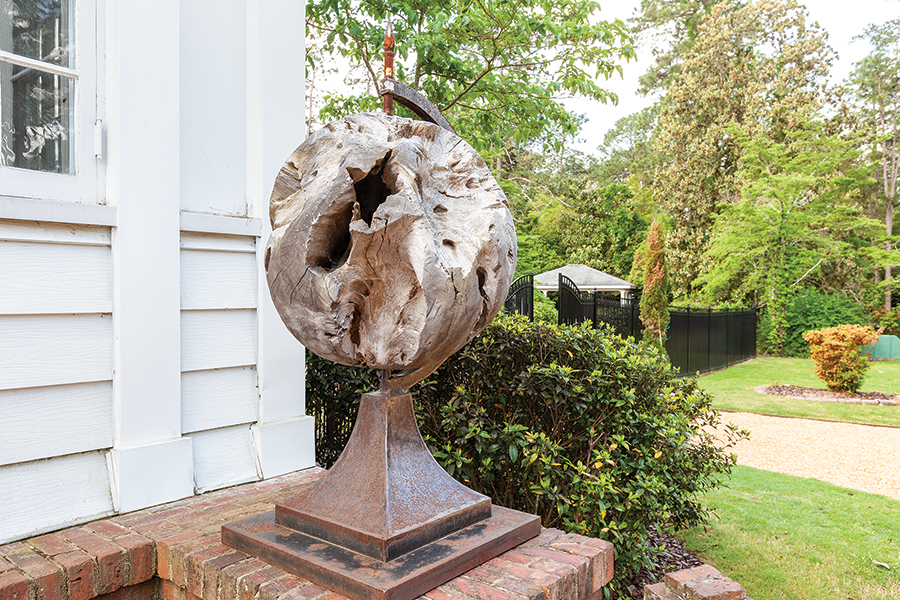
The Carlins’ décor speaks to their lifestyle: young, successful, confident, unencumbered (except for those three frequent-flyer dogs) and, for a project like this, all in. “We don’t plan anything,” David says. Patricia’s mantra is: See it; like it; buy it. Comfort is his. Every stick of furniture, every rug, towel and mug in the house is new. She breezes through a football-field sized furniture warehouse in an afternoon, leaving orders which when delivered fill many rooms. Then, she finishes online at Restoration Hardware. The effect is minimalist punctuated by surprise. That pink velvet on the tufted living room sofa reappears on the master bedroom headboard. Crystal chandeliers are surrounded by metal orbs. Whoever heard of a ping pong table surfaced in planks? Or an oil drum emblazoned with the Chanel logo? The dining room, with original corner cupboards, also houses shrubs trimmed to resemble scoops of ice cream atop 5-foot white “cones.” On the sun gallery stand two year-round Christmas trees. A set of Lucite chairs at the game table channel Frank Gehry — the metallic gold ones in the dinette, probably not. But the couches are definitely Cynthia Rowley.

“If we get bored, we can switch stuff around every year,” David says.

Some rooms have themes, notably the steamship bedchamber with marine blue nautical wallpaper and sailboat art, which makes David feel submerged.

The house had a full basement, unusual for the times except for those with coal furnaces. Here, the nuns built a confessional not far from the existing bar and now, fitness/entertainment equipment.

The intrinsic beauty lies in room size; space allows unusual pieces proper display.

Only the dining room delivers a poignant message. “We’ve never eaten in here,” Patricia says. No Thanksgiving or other dinner has been served on the massive table seating 12. After the housewarming, they hosted no big cocktail parties or cookouts, despite outdoor dining facilities. Because, in truth, although the Carlins feel part of new-generation Pinehurst, they don’t do much day-to-day living at Thistle Dhu. The kitchen — white and pristine as an operating room with a graveyard’s worth of marble — shows no trace of food preparation. The butler’s pantry stands idle.

Instead, rooms are peopled by art, some channeling Beatles-style album covers from the psychedelic ’60s: pop-art Queen Elizabeth competes with a Renaissance damsel wearing ski goggles and paintings suitable as backdrop for Stravinsky’s The Firebird ballet. Still, the piece de resistance has to be the wild brushstrokes in the foyer and up the stairs, inspired by something the Carlins learned from a Beverly Hills (not Versailles) designer.

“We just told the painter to do whatever you want,” David says. “My mother didn’t like it but Kelly Clarkson did.”

The overall effect is startling yet invigorating, representing how fresh, modern concepts transform historic spaces. The Carlins attacked the project of re-imaging a neglected landmark up for auction with verve and attitude. The result is not for everybody, although great-great-granddaughter Kate Barber approved.

A sign in the foyer warns: “For some people, you will be too much. Those aren’t your people.”

Their mission accomplished, David and Patricia may move on, perhaps new construction overlooking a Pinehurst course. Patricia misses her family, who now live in Arizona. Come winter, the avid skiers head back to Park City.

But for now at least, this’ll do.  PS

Too Much Stuff

Spring cleaning and decluttering in the Sandhills

By Jan Leitschuh

You never get enough ’cause there’s just too much stuff

— Too Much Stuff, by Delbert McClinton

In my Wisconsin childhood, the first soft days of spring led to a vigorous and enthusiastic assault on accumulated winter crud by the women on my block. After being cooped up for months with the kids, they felt the craving for space, serenity and order. Children were shooed outside — no playdates needed, just a sweatshirt and orders like “Go play with your little brother, and not in the road.” Boom: The closet cleaning, organizing and disposal of the long winter’s detritus commenced.

“I think the urge comes from prepping for spring, especially those gray, rainy weekends just before. It’s been a long winter, and we’re feeling stuck; we want to purge,” says Mandy Mosier of Clean Quarters by Mandy, an in-home decluttering service charging $40 per hour. “Or I could be cliché and say ‘new beginnings.’”

These days, busy moms work outside the home, and stuff accumulates despite the increasing involvement of the male of the species. But stuff has weight, and they want to lift that weight off their household. But we’re busy . . . and there’s that inertia thing . . . and, so much stuff.

It’ll wear you down, carrying around too much stuff

Today, decluttering the homes of the busy and overwhelmed is big business, the purview of coaches, specialists and TV series, such as organizational guru Marie Kondo’s best-selling books and recent hit Netflix program Tidying Up with Marie Kondo.

Another popular online resource is home organization website FlyLady.net. “Have you been living in CHAOS? FlyLady is here to help you get your home organized! She teaches you to eliminate your clutter and establish simple routines for getting your home clean!”

Woman hands tidying up kids clothes in basket. Vertical storage of clothing, tidying up, room cleaning concept.

FlyLady has you begin with a clean sink and expand from there, sending daily emails assigning small 15-minute tasks. FlyLady’s key values are self-love, patience and many small actions. It urges folks not to be perfectionists, noting that your home didn’t get cluttered overnight, so just drop the mental chatter, be patient with yourself and git ’er done. If your after photos look worse than others’ before photos, no self-flagellation. Note the change and keep moving forward.

All this outside support speaks to a deep longing in our busy souls for space, peace and household order.

So. What’s holding us back from serenity and home nirvana?

Too much stuff, there’s just too much stuff

“Our culture is to accumulate, gather things,” observes Mosier, wife of an active duty military man and veteran of 14 moves in the last 18 years. “Then we are working full time, so we don’t make time to throw things away after doing the cooking, laundry, shopping, dealing with the kids, trying to relax. There’s no time, it seems. It’s so much easier to shove something in a box in a corner or the attic.”

“Moving as often as I do, it is in the forefront of my mind, knowing I’ll have to pack things up again. So this has forced me into a constant state of purging. I’ve learned to live a minimalist lifestyle,” she adds.

Some spring-cleaners need a non-judgmental, outside eye to give them direction and help them stay focused. For others, simply watching a reality show about decluttering is the spark to clean things up and restore peace to the home. Local thrift stores report donations are up in the wake of the Kondo series. “Absolutely,” agrees Lucie Saylor, manager of the Emmanuel Episcopal Thrift Shop in Southern Pines. “I have been asking everyone who brings things in, ‘What’s going on here?’ I think a lot of it has to do with the weather. I’m sure the Coalition (Sandhills/Moore Coalition for Human Care), Friend to Friend, Whispering Pines (Thrift Shop), all of us are benefiting.”

Marie Kondo’s method is full-bore. It begins by connecting with the house, and then simply piling all the clothes on a bed and looking for items to discard, thanking them first for their role in your life. Discard what no longer “sparks joy.” This can be problematic — do athletic supporters or Spanx or underwire support bras “spark joy” in you? (No denying they can be useful in certain situations.) After the winnowing, Kondo shows clients how to roll clothes and stand them upright in drawers, so all can be seen at a glance. Then she moves on to books, papers, sentimental items and everything else — kitchen, garage and the rest.

You can pile it high . . . But you’ll never be satisfied

Perhaps the real secret to Kondo’s decluttering success isn’t the simple sparking of joy but the massive disruption caused by disgorging all that stuff from its static place at the bottom of the closet or back of the drawer. Once it’s out, it must be dealt with. Besides making a visual impact — “Oh my! I have so much stuff!” — the shelves are now clear to wipe down, the floors easily vacuumed. Who wants to put all that back anyway? Plus, you’ve now found that beloved concert tee you thought you’d lost, and who needs to buy toothpaste when two full tubes still in their boxes surface?

“I love Marie Kondo,” says Mosier, “and I did the ‘spark joy’ thing, but I think it can have some limitations. Say, when you’re sorting your sock drawer.”

Persistence is the key. “It looks worse before it gets better” is a Kondo mantra. “You have to grab the mood when it strikes,” says Mosier. And carry on.

The Kondo “mountain of stuff” method may not work for everyone. “A lot of our psychological block is that it’s already overwhelming, especially if you have children,” says Mosier. “I’ll break it down into categories for them. We’ll do all the dresses. Then all the T-shirts. When I leave, I might say, ‘Tonight I’ll have you do your sock and underwear drawer.’”
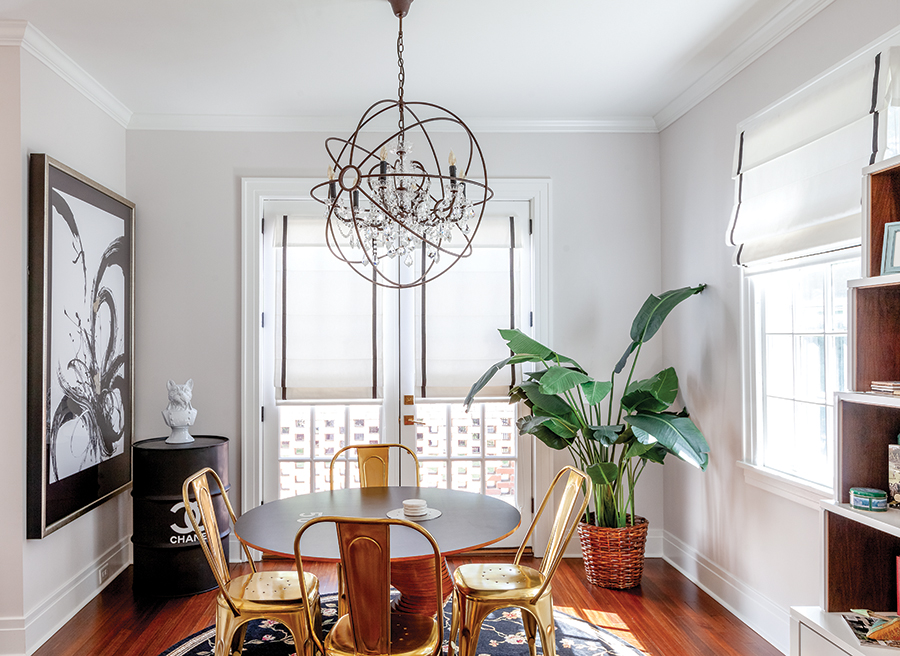
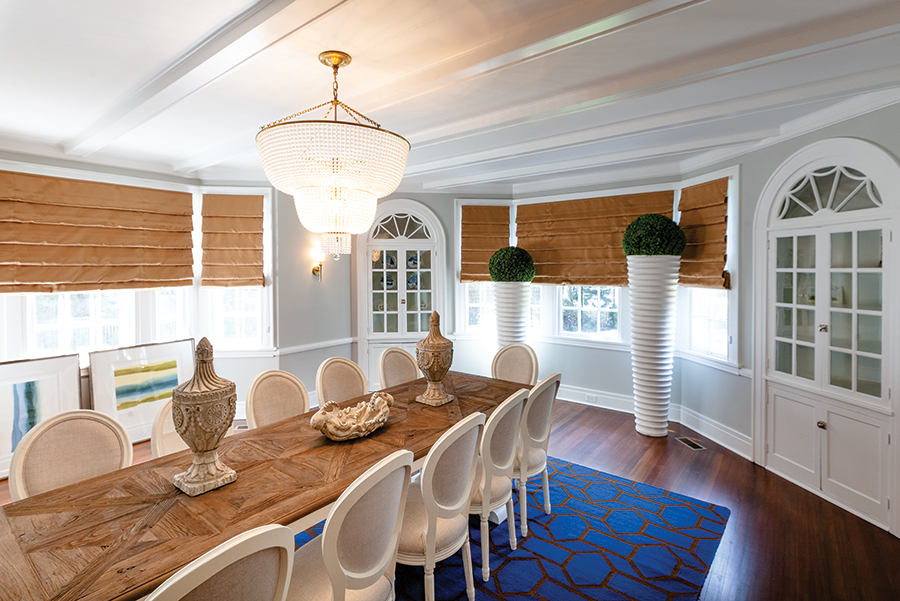
It’ll mess you up, fooling with too much stuff

While some sort by sparks of joy, others use the tried and true one-year rule.

Kelly Sanders of Kelly’s Tidying and Organization, who also helps others organize, clean and declutter at $35 per hour, agrees with Kondo that “I personally find it easier to make a complete mess first and bring everything out, then start sorting.”

Sanders, mother of two, is so disciplined and organized in her home life that she doesn’t have much in her closets to clean out. “I buy only the bed linen I need, then wash it and put it right back on the bed, so I keep the closet from overcrowding,” she says. “And as far as my own closet goes, most of my items are wash-and-wear quality in dresser drawers. So my closet is minimal.”

But she is firm about discarding, sparks or no sparks. “If I haven’t used it in a year, it needs to go.”

Well it’s way too much . . . You’re never gonna get enough

Mosier, as the wife of an active duty military man, is also tough on herself, but her approach to clients depends on their core values. “I don’t have a specific one-size-fits-all method because what motivates one person doesn’t motivate another. I try to connect to the main reason they contacted me in the first place.” She has new clients fill out a questionnaire detailing their goals, priorities and their “why.” It becomes her roadmap in dealing with specific client needs.

One of Kondo’s principles is item visibility, and Sanders agrees. For her own home, where she is the strictest, Sanders stays organized by “constantly checking on things and seeing how out of hand an area or closet has gotten. The old saying ‘out of sight, out of mind’ is so true. If you can’t see it . . . it’s likely to become hidden with clutter.”

Her home’s kitchen is an example. “I have open shelving storage so I see exactly where things go or need returning. Same goes for my closets. Everything is in sight. My son’s closet is by size and color so I know exactly what I’m looking for. I try to go crazy, clearing out seasonally.” As each one of the four seasons ends, she says, “I go through everything from that season as I’m putting it away in storage containers . . . clear ones with labels so I know what’s inside. I donate holiday decor items I’ll no longer use or sell my kids’ clothes that they’ve outgrown, to buy the new ones they need. I try to stay on top of clothes.”

Ah, baby clothes. “A major question I ask in a first meeting: ‘Are you planning to have more children?’” says Mosier. “Women who are done having children can get rid of all this baby stuff.”

It’ll hang you up, dealing with too much stuff

Sentimental attachment is one factor both Sandhills organizers find trips people up. People often identify strongly with items imbued with memories.

“Everyone is different,” says Sanders, “but basically I talk to them about being overwhelmed in stuff, and wanting to breathe. That it’s OK to let go of some things and only keep the most meaningful, something that meant something to you personally.”

Our attachments can have deep psychological roots. “I think the biggest thing behind clutter is being attached to items,” says Sanders. “There’s guilt of letting it go because maybe someone special gave it to you, and you don’t want to disappoint them. Or, you believe it has sentimental value?”

The “might-need-it-someday” mentality is also a clutter keeper. “I know several people who came up very poor and believed in keeping things until they broke or could pass them down,” says Sanders. “They now are able to buy things, but are mentally unable to let things go.”

“My kids might want this one day” is another hang-up, but many find their offspring are rarely interested in grandma’s china or the great-aunt’s crystal. Use or donate, the experts advise.

It’s a mental game. Mosier tries to connect with her clients’ “why.” “One lady is very attached to her things,” says Mosier. “She has dresses with tags still on them. Some are old and stained and torn but she was pregnant when she wore them. As a stay-at-home mom, she wears dresses maybe once a week to church. She went through them and had a hard time letting go. And the clutter in the house was damaging their marriage.”

Yeah, it’ll tear you down, fooling with all that stuff

Mosier’s tips for sorting clothing include asking: Is it classic or trendy? Does it still look new or fresh? Is it stained, damaged or torn? “Women are very appearance driven, and clothes are important to us, and we get attached to those things in a way I don’t think men do,” she says.

Harking back to her questionnaire of stated goals, Mosier was able to ask her client, “Is this dress that you have never worn more important than your marriage?” She may practice a little tough love. “Sometimes I have to take a gruff approach with people. ‘You’re going to go through these dresses again.’ And then I sit there as they try them on. An outsider’s eye has no sentiment. Often, I’ll be able to offer some clarity and say, ‘Honey, you’re a beautiful girl and that doesn’t flatter you,’ or, ‘That dress doesn’t do you any favors.’”

One client had trouble letting go of a large stainless steel silverware chest because it was a wedding gift, even though she had a set she preferred. The solution? Art. “We took one setting only — knife, fork and spoon — and had them framed in a shadow box with a meaningful saying about love and nourishment, and she liked that,” says Mosier. “There are companies that will take your baby clothes, or your college tees, and turn them into blankets.”

For bulky sentimental items, the organizers suggest up-cycling. Mosier turned her wedding dress into a baby quilt. “Now I have one baby blanket that my kids use, not 10, and it is meaningful.” Her husband’s old military uniforms were important to him, but taking up space, unused: “My mother-in-law took them and made two lap blankets for our two boys.”

You know you can hurt yourself, fooling with too much stuff

The massive disgorging of clothes frees up a lot of energy, say all the organizers. This is the payoff — space, peace, satisfaction, the big sigh of relief. “Start by focusing on the most cluttered rooms first,” advises Sanders. “After those are completed, the rest of the house will seem like a breeze and will be something you’ll want to do. Place seldom-used items in clear containers for easy storage and you’ll know how to locate them.”

Mosier finds “the master closet seems to be the number one priority, followed by the kitchen, followed by the kids’ playroom. Most of us find it easier to get rid of our kids’ stuff, than our own.”

Then there is the “where-to-discard-it” paralysis. A number of folks don’t want to consign the still-useful to landfills. “Some of it just has to go right in  the dumpster,” says Mosier. “Then I like to suggest the Sandhills Coalition or Friend-to-Friend for useable items. People like the idea of helping others. Since I mostly work with women, I use Friend to Friend, the battered women’s advocacy agency, to help women let go. I point out that if this dress can help one woman in need get out and get a job to support her children, that’s an easy sell.” Mosier also likes the website RealReal.com for recycling upscale items on consignment.

You know you can’t get a grip when you’re slippin’ in all that stuff

For Mosier and Sanders, decluttering is a year-round activity they enjoy. “But I see why people might feel overwhelmed,” says Mosier. “I am naturally prone to this because of the way my parents raised me, and our constant military moves. I became a stay-at-home mom when we decided to have children, and that allows me to have the time to do something I enjoy doing.”

She laughs: “If I was working full time, my house would probably be a mess!”  PS

Contact Sanders through email: Sanderskelly2820@yahoo.com or at 910-705-5016. Contact Mosier either on her “Clean Quarters by Mandy” Facebook page, or by email: cleanquartersbymandy@gmail.com.