Southwords

What’s in a Name?

Sometimes it’s everything

By Kate Smith

My first nickname was Catfish. Dad pronounced it at my birth because I arrived “slippery and wide-eyed as one.”

When I was old enough to comprehend the likeness between me and the bottom-feeder I was not amused, and tried renaming myself. Buck was my first choice, after the wolf pack leader of Jack London’s Call of the Wild. It’s how I signed my name on presents and on a stocking one Christmas. Typical Leo. When that didn’t stick, I tried imitating my best friend’s nickname, Bobcat Brandi, with the closest wild feline alliteration, Cougar Kate. I didn’t understand why the adults thought this was hilarious.

And that gallant trail name I imagined I’d be given when I hiked the Appalachian Trail? Last fall, during a short 20-mile stretch, I was declared Peein’-on-the-trail-Kate. In hindsight, Catfish wasn’t so bad. Good thing, too, because it’s what Dad still calls me.

Dad picked up catfishing in his 20s when he moved to North Carolina to work at Cameron Boys Camp. Still, 35 years later, on summer weekends, he leaves home in the late afternoon with a camp chair, pole and box of chicken guts to meet a friend with a boat, and fish all night. When I told my Georgia crew leader about this while we built a trail together in Alaska, his eyes got big: “Awe, man, your Dad goes noodlin’?”

While Dad uses bait on a line rather than bare hands and a forearm thickened by scars from catfish teeth, I still think it’s pretty cool. Catfishing means Dad is out on the moonlit water when the fish bite best. He’ll come home at 5 a.m. with 80 pounds of wild game and solicit us five kids, most of us out of the house, back to the family kitchen. Although growing up we bought most of our food from the grocery store and Dad worked a normal day job, it’s these times that define him most to me. Awake in the middle of the quiet night, providing.

I grew up thinking that good dads are always awake: chasing away nightmares, driving the family halfway across the country for Christmas at Pop’s house, watching the fire smolder out safely during camping trips, up every hour to check the temperature of meat in the smoker the night before summer barbecues. Even now, if I have car trouble when driving late at night, I call Dad, and he always answers.

I’ve inherited a lot of traits from Dad. I’ve got his eyes, his tawny skin tone, his all-or-nothing impulses. We both headbang to AC/DC and cry during praise and worship at church. And somewhere in there, I’ve got Dad’s love of the night. Something about the quiet and stillness prompts my deepest thinking, feeling, and creating. There’s a thrill and a sacredness about it, when no one else is awake except the 18-wheelers, people on their way to the airport, the crickets and cicadas and bullfrogs, and always, when I need him, my dad.

August is my birthday month. Mom buys a card with an inspiring quote, and Dad signs it. I guarantee he’ll address his note to Catfish. And when I call to say I’m coming over, he’ll ask me what I want for my birthday lunch. At dawn the next morning, he’ll pull in the driveway from a night on the lake, ready to celebrate with a cooler full. PS

Kate Smith is the herbalist and holistic health coach of Made Whole Herbs in Southern Pines.

Her favorite book is whatever she is reading, though it’s doubtful any would top The Lord of the Rings.

Out of the Blue

Windsor Knots

These are the ties that bind

By Deborah Salomon

Back in the day, ancients believed their leaders descended from the gods, therefore possessed “divine right” to rule. Those chosen few — observing the lifestyle royalty affords — furthered their cause by concocting stories that reinforced the myth.

And so it went. Wars were waged between competing “royals.” Contenders (who perpetrated a similar myth) beheaded each other with frightening regularity. Kings solidified their positions by marrying only royal maidens who, failing to produce male heirs, were booted to a chorus of “Hit the road, Jack(ie), and don’t come back no more, no more . . . ”

Revolutions happened, monarchies tumbled in favor of republics, democracies, socialist states, yet even when they possessed only ceremonial power, kings and queens, princes and princesses survived, mainly to christen ships, open orphanages, attend Ascot and feed our fantasies. Their subjects still bow and curtsy. A sign of respect, I’m told, sometimes good for a giggle: The queen is not allowed to vote or express partisan opinions. But she’s allowed a lady-in-waiting to carry her hankie and bouquets, as well as to clear the loo before a royal visit.

Have you guessed where I’m heading? Down the solid gold brick road to Buckingham Palace. Windsor Castle. Balmoral. Sandringham. Clarence House.

Shocking that 2020-21 was both the Year of the Pandemic where millions suffered and died and the Year of the British Royal Family, who provided audiences with a mud-wrestling extravaganza. No wonder Mr. Trump feels deserted. Royal tribulations regularly shove him off Page One. The BBC put out a casting call for courtiers. Any news will do, from the tragic death of a consort to the tragic death of a puppy. A misstep President Biden makes in Her Majesty’s presence becomes a headline so imagine the kerfuffle over her eldest grandson (Princess Anne’s offspring) getting divorced. New babies keep popping up, Prince Andrew’s scandals keep going down.

And that’s in addition to Harry and Meghan’s carefully scripted Oprah-fest.

Don’t get me wrong; I think Queen Elizabeth is a fine old lady who performs her duties with grace and distinction. After all, it’s a pretty good job which includes room(s) and (a groaning) board, transportation (gilt carriages, maroon Bentley limo, a stable of Range Rovers and Thoroughbreds, private train and aircraft) plus health insurance, paid vacation, a generous pension and, most important, uniforms.

Who cares, if you can’t order Chinese at 10 p.m.?

The thing I’m not buying is royal “blood,” the “lineage” that sets them apart.

Sadly, recent events have suggested those veins need transfusing.

I also notice a dereliction of duty on behalf of the royal-watching media, who used to remain tight-lipped regarding improprieties. Now, like hawks and fishwives, they screech the latest scandal from towers and turrets. Do we need to know that granddaughter Zara Tindall gave birth on the bathroom floor? Or that Kate Middleton’s brother is suffering from depression? Some mean-spirited cartoonist has even dredged up those old separated-at-birth head shots of Prince Charles and MAD Magazine’s Alfred E. Neuman. To balance the negative — and spur competition — tabloid hacks jumped on the bandwagon driven by Prince Edward’s wife, Sophie, newly identified as the queen’s BFF, confidante and spokescountess who, obviously, prefers her crumpets buttered on both sides.

So it shall continue, because Americans are hooked, mostly on the clothes, those incredible outfits with flying-saucer hats and deadly stilettos worn by young royals, not to mention Her Majesty’s neon ensembles. I am hooked because I’d rather read and write (shamefully three times in 12 months) about soap operas played out across the pond than the political tragi-comedies underway on home turf.

Still, enough is enough. Diana and Philip are dead. William’s bald head is old news. Jeffrey Epstein’s buddy Prince Andrew has been benched. Harry’s changing diapers, eating corn dogs and drinking Coors while Charles, wearing (shudder) tartan kilts, weeds his organic garden. But the queen, God bless her, still sips a gin and Dubonnet with a twist before lunch, wears Mad Hatters and runs on Energizers.

I’m thinking she just might outlast us all.  PS

Deborah Salomon is a writer for PineStraw and The Pilot. She may be reached at debsalomon@nc.rr.com.

Her favorite book is Sophies Choice by William Styron

Good Natured

Forgive and Forget

You’ll be healthier because of it

By Karen Frye

We have all experienced some form of emotional or physical pain in our lives caused by another. Some are easy to overcome, but there are times when the pain is deep and it doesn’t seem to go away, and we endure the torment for too long. In most situations, the person who caused our pain moves on, completely forgetting about what happened — or is even unaware of the pain they’ve caused. It is the victim of the experience who must do the work and let go of the past, move on and forgive.

This can be challenging if we don’t, with all our heart, forgive the person who hurt us. Holding on to unresolved feelings of anger or resentment will keep you in a mental prison of torment. This emotional state of mind can affect our physical health in dangerous ways. A mind that is in a constantly negative and unforgiving state is unhealthy, creating a more acidic body where disease can thrive. Changing your diet to include more fresh fruits and vegetables will help counter the acidic imbalance.

True forgiveness, however, is a journey that heals the body, mind and soul. Some pain can take years to forgive, but it is the first and most important step in freedom from a troubled mind. Forgiveness brings peace. All the hurt and bitterness will disappear. Forgiveness doesn’t mean your memory banks are wiped clean — you just no longer feel the pain. It frees the heart. 

When we forgive, we heal ourselves. The natural flow of love dissolves all the pain. The more you practice this, the easier it becomes. Learning how to forgive is the greatest form of unconditional love. It is the love you feel from your parents, the love you give to your children. It is the love we all yearn for, the love that allows us to be who we are.

Embrace the power to forgive easily. It is not worth another day of bitterness. Free yourself and enjoy life with a happy heart.  PS

Karen Frye is the owner and founder of Nature’s Own and teaches yoga at the Bikram Yoga Studio.

Her favorite book is The Game of Life for Women and How to Play It by Florence Scovel-Shinn

Hometown

Neighborhood Gold

Clearing the bar in the backyard

By Bill Fields

A few years ago, not long after I began freelancing as a booth researcher at golf tournaments broadcast by NBC Sports, someone pointed out a slim, silver-haired man walking into a trailer in the television compound. This particular camera operator, my colleague told me, had a distinct background. It was Ken Walsh, a former American Olympic swimmer who won three medals (two gold, one silver) in 1968 in Mexico City.

I hadn’t seen Walsh since I was 9 years old. Or at least I imagine I probably watched him on ABC during the ’68 Summer Games, because as a fourth-grader obsessed with sports, those Olympics were a very big deal when they flickered on our living room Zenith. (Portions of the Olympics were shown in color for the first time, but we still had a black-and-white set.)

Decades later, some of the competitors’ names from that year — the Summer Games were held in October — jump to mind more easily than those of childhood friends even though the television coverage of that period was a fraction of the airtime today.

There was Bob Beamon, shattering the world record in the men’s long jump with a leap of 29 feet, 2 1/4 inches that wasn’t bettered for 23 years and remains the Olympic mark. Bill Toomey won gold in the decathalon, Randy Matson the shot put and Al Oerter the discus throw (for the fourth straight Olympics). Kip Keino of Kenya ruled in the 1,500 meters and Bob Seagren in the pole vault. Dick Fosbury shook up things by winning the high jump with his novel backward style.

Walsh? As I discovered, he was on the winning 4×100 freestyle relay and 4×100 medley relay teams and finished second in the 100-meter freestyle behind Australian Mike Wenden and ahead of fellow American Mark Spitz, who would win seven gold medals four years later in Munich.

My neighborhood buddies and I ran our sprints up and down East New Jersey Avenue — there was little traffic, and it was slightly downhill to the chalk-drawn finish line heading toward May Street — but come Olympics time in ’68 we really were more interested in the field events.

Chuck, my best friend, and I constructed a high jump behind his house out of stray 2x4s for supports with an old broom handle resting on two nails as the bar to jump over. We improvised a landing pit out of dirt, pine straw and leaves. The long jump didn’t require as much preparation — just a couple of baseballs to mark the take-off spot and a yardstick to measure where our Converse tennis shoes made a mark in the sand. We made a few feeble attempts at the triple jump but couldn’t quite figure out when to hop and when to skip.

The real backyard drama came in an event the younger kids only watched.

One of Chuck’s older brothers, Ricky, was up for most anything. When he wasn’t roaring around on his minibike or tackling opposing players like Dick Butkus, he liked to pole vault — and not just in the Southern Pines school gym or at Memorial Field. Ricky pole-vaulted in his yard, using bamboo stalks he got from a nearby thicket and taped up for a better grip to go up and over. A pile of saw dust and a couple of cheap, inflated beach rafts cushioned the landing.

Ricky’s friends would join him, and so would one of the men who lived on our block, Mr. McNeill, a good athlete who had played on the town’s semi-pro baseball team. He probably was only in his late 30s, but that seemed ancient to a little kid. Clad in his work clothes on those late afternoon jumps, Mr. McNeill gave no quarter to the teenagers. The way those bamboo poles bent after being planted in the homemade box, it seemed like only a matter of time before the rescue squad would have to be summoned for broken bones, although bruises and sprains are the worst injuries I can recall.

I’m slated to go to my first Olympics this summer, the Tokyo 2020 Games that were delayed a year because of the COVID-19 pandemic. I’ll be working on the golf production, a long way from where the vaulters will be headed skyward on space-age poles and a long time from the fun and games of 1968.  PS

Southern Pines native Bill Fields, who writes about golf and other things, moved north in 1986 but hasn’t lost his accent.

His favorite book is North Toward Home by Willie Morris

Tea Leaf Astrologer

Leo (July 23 – August 22)

Have you ever met a Leo with a show dog? I doubt it. Because if there’s one thing this fire sign hates more than sharing the spotlight, it’s feeling inferior to another being in any way. Who has the silkiest locks, the smoothest gait, the most charming disposition? Of course you do, Leo. But this month — and yes, everyone knows it’s your birth month — don’t be surprised if you’re not getting the undying affection you so desperately crave. Do yourself a favor: relax. Your fans still adore you. Especially your rescue mutt.

Tea leaf “fortunes” for the rest of you:

Virgo (August 23 – September 22) Brush up on your social skills this month. Interrogation and flirtation are inherently different.

Libra (September 23 – October 22) Love is in the air. But you won’t catch it with a butterfly net. Read that again. 

Scorpio (October 23 – November 21) Spin and you’ll win. It’s really that simple.

Sagittarius (November 22 – December 21) Don’t throw the crazy out with the bath water. You know you’d be lost without it. 

Capricorn (December 22 – January 19) Two words: Muscle through.

Aquarius (January 20 – February 18) Let’s not beat around the bush. You know what to do. Swallow your pride and ask for help. 

Pisces (February 19 – March 20) Too much of a good thing isn’t the case this month. Just don’t forget to say thanks.

Aries (March 21 – April 19) You’ve just moved mountains. Don’t think people haven’t noticed. And don’t let that go to your head.

Taurus (April 20 – May 20) Plant the seed. Then leave it be. Seriously. Walk away.

Gemini (May 21 – June 20) Pack your bags, sweetheart. Go someplace you’ve never been. It’s time for a little perspective.

Cancer (June 21 – July 22) Don’t spend it all in one place. But if you do, remember that abundance is a mindset.

Zora Stellanova has been divining with tea leaves since Game of Thrones’ Starbucks cup mishap of 2019. While she’s not exactly a medium, she’s far from average. She lives in the N.C. foothills with her Sphynx cat, Lyla.

Birdwatch

A Majestic Wader

Wood storks become a more common sight

By Susan Campbell

Believe it or not, although fall is still a way off, the summer solstice has passed, and for some of our birds, the breeding season is over. Many have begun wandering ahead of their southward migration. At this time of year, we have a few species that actually move in a northerly direction during mid-summer. The wood stork, one of North Carolina’s newer breeders, is one of these.

Wood storks are large, white wading birds, a bit smaller than great blue herons. They have heavy bills that curve at the tip. In flight, they are very distinctive. Not only do they fly with their head and neck outstretched, but their tails and flight feathers flash black. They are frequently spotted soaring high in the sky on thermals, not unlike hawks and vultures.

These birds forage not only for small fish, crustaceans and a variety of invertebrates, but also reptiles and amphibians, as well as occasional nestlings of other species. Wood storks are visual hunters that search for movement in the shallows. They also may sweep and probe with their bills in murky areas until they feel prey, and then they will snap their mandibles shut and swallow the food item whole. It is not unusual for them to shuffle with their feet and flick their wings to disturb potential meals in muddy water.

Unlike their European kin, storks here nest in trees — not on chimneys. Also, as opposed to legend, these birds do not mate for life but pair up on the breeding grounds each season. They can live a long time, however: The oldest known (banded) bird from Georgia was over 20 years old when it was re-sighted in South Carolina.

Stork nests are bulky stick-built affairs located over water, often in cypress trees. However, any sturdy wetland tree species may be utilized. Both parents are involved in construction. Grassy material will line the nest that is, quite uniquely, adhered together with guano. It will take almost two months for the one to five young to reach fledging. Not only will wood storks nest alongside others of their kind but they tend to be found in colonies with heron, ibis and egret neighbors.

The wood stork is becoming a more common site in the Carolinas, breeding locally in freshwater or brackish, forested habitat. They prefer locations with an open canopy, since they require a good bit of space in order to negotiate a landing. There are now two large nesting colonies of storks on private property: one at Lays Lake (Columbus County) and Warwick Mill Bay (Robeson County). These lakes have been home to nesting storks for less than a decade. I would not be surprised if pairs are using a few other remote sites in the southeastern corner of the state. Stork numbers have been growing rapidly as the bay lake habitat seems excellent for raising chicks. Following fledging, however, family groups may move away from the nesting area to wet habitat where food is plentiful. In dry summers, that movement may be significant — and in any direction.

In our state, the largest concentrations of individuals show up annually at Twin Lakes in Sunset Beach (Brunswick County) by mid-summer. They can reliably be found in and around the eastern pond. The birds seem to like probing the flats on the back side of the pond, away from the golfers on Oyster Bay Golf Links. Also look for them loitering in the stout trees along the shoreline into early fall. But do not be surprised if you happen on one, or perhaps a small group, in any wet area from marshes to farm ponds or golf course water hazards in the Piedmont or Sandhills. Wood storks are unique and majestic waders that deserve a special look!  PS

Susan Campbell would love to receive your wildlife sightings and photos. She can be contacted by email at susan@ncaves.com.

Her favorite book is the one she’s reading right now, How Iceland Changed the World: The Big History of a Small Island, by Egill Bjarnason.

In the Spirit

Frozen

Break the ice this summer

By Tony Cross

If you’ve ever experienced a Carolina summer, you’ll know that the heat and humidity are enough to beat you down to the point you’ll ask a bartender for a Zima. Almost. Instead of having 10 drinks on a menu that each have a hundred steps before the bartender can put that lifesaving, cool drink in front of you, I learned to integrate punches and bottle cocktails that could be served as quickly as pouring a glass of wine. Another batched elixir that’s perfect for taking the sweat out of summer is a frozen cocktail.

I remember going to the bowling alley with my family in the early ’90s and seeing a daiquiri machine. Daiquiri-schmackeri. All I knew was that it looked like something for kids but that I wasn’t allowed to drink it. Once I was of age, I finally got to have a frozen cocktail of my own in New Orleans. I honestly can’t tell you if those slushy hurricanes were nice and balanced. I was in my early 20s. It was the Big Easy. I wasn’t very balanced myself. Trends come and go, but luckily for cocktails, we’re blessed with creative men and women behind the bar who can make what was once unpalatable, desirable. So, I headed out to a few bars and restaurants in the Triangle to learn their tricks for getting frozen cocktails just right.

The restaurant scene in downtown Durham has exploded in the past decade. A town that once took a backseat in the culinary department to neighboring Raleigh isn’t in the shadows anymore. Dashi, a Japanese ramen shop and izakaya (the word for a Japanese pub that’s located above the restaurant), has only had its doors open for a few years, but the combination of yummy and speed keep their guests coming back for more.

All of the cocktails at Dashi are made in the izakaya. “So, when the staff downstairs are really busy, they push these,” says bar manager Gabe Turner, pointing to his slushy machine. “They’re delicious, too, so it’s not like we’re sacrificing quality for efficiency.”

Purchasing a slushy machine was a no-brainer for Turner. “When we started fooling around with recipes, we stumbled into a pretty good template,” says Turner. “We don’t like to use too much sugar. Using an oleo-saccharum (oil-sugar) helps us keep a nice balance in our drinks.”

And you won’t find Gabe and Co. doing frozen margaritas. “The style we’re doing is a Japanese cocktail called chuhai, which traditionally is sh¯oōch¯uū (a fermented Japanese liquor made from sweet potato, barley, rice and other ingredients with a relatively low alcohol proof) and fresh juice. In Japan, they call them sours. The idea was, ‘Let’s do frozen chuhais.’ We used sh¯oōch¯uū, fresh juice, and then sake to round it out. To get the alcohol level up, we’ll add a little bit of vodka, but not enough to change the flavor profiles.”

One of Dashi’s current chuhai slushies combines the classic ingredients along with a spicy ginger syrup, orange oils and juice. How popular are the frozen chuhais? “I’ll make a whole batch of our slushy cocktails every week,” says Turner. Each batch serves around 50 8-ounce drinks. “We use the Bunn slushy machines and have a second machine in the back, so they don’t get too burned out. They’re being used 24/7.” If it’s not slushy season — a rarity at Dashi — two weeks is the longest they’ll keep a batch before letting the staff dip into the leftovers. “Rarely does it not sell out,” Turner says. Too bad for the staff. Dashi carries two different slushy cocktails at a time — a quick and cool option for a bar otherwise known for its myriad sake and sh¯oōch¯uū bottles.

What if your establishment (or you) doesn’t want to invest, or can’t find room, for a slushy machine? Get creative. A block away from Dashi, the chic cocktail lounge Alley Twenty-Six has its own twist on frozen drinks. Longtime bartender Rob Mariani, formerly of Alley Twenty-Six, says, “While a slushy machine is on the wish list, we don’t have one. That doesn’t mean we couldn’t make frozen drinks. By using crushed ice and giving it a good shake, you can get a drink that mimics a slushy and has a similar dilution rate. One would think that smaller ice melts faster than larger ice, which would be true if we were looking at two cubes melting on their own, but when you pack a glass full of crushed ice, there is lots of surface area, and the dilution rate is quite slow.”

Mariani has mastered the technique and suggests adding a bit more sugar to your specs. “The ideal ABV (for a frozen cocktail) is about 10 percent and the max is around 18 percent. Anything above that will not result in a frozen texture. Bitterness and sweetness are suppressed by cold temperatures, so more sugar is needed to achieve a balanced, frozen drink,” he says. “Up your sweet by 50 percent. For example, instead of using 1/2 ounce of simple, use 3/4 of an ounce.” There are many ways to master a frozen cocktail — having a machine constantly rotating the perfect, temperature-controlled slushy is one — but there are multiple ways to skin an ice cube, at home or away. Mariani shares one of the frozen cocktail recipes he uses for his weekly Cap’n Rob’s Waikiki Wednesday.

Frozen Rum and Tonic

1 1/2 ounces aged rum

3/4 ounce tonic syrup (Mariani uses his own Alley Twenty-Six Tonic.)

3/4 ounce pineapple juice

1/2 ounce fresh lime juice

4 dashes Angostura bitters

Combine all ingredients (sans the bitters) with crushed ice in a cocktail shaker. Shake like hell or until you can’t feel your hands. Pour into a Pilsner glass. Top with crushed ice and four dashes of Angostura bitters. Garnish with a large sprig of mint and dehydrated lime wheel.  PS

Tony Cross is a bartender (well, ex-bartender) who runs cocktail catering company Reverie Cocktails in Southern Pines.

His favorite book is No Death, No Fear by Thich Nhat Hanh.

The Creators of N.C.

Totally Blawesome

A flower farm where miracles bloom year-round

By Wiley Cash   •   Photographs By Mallory Cash

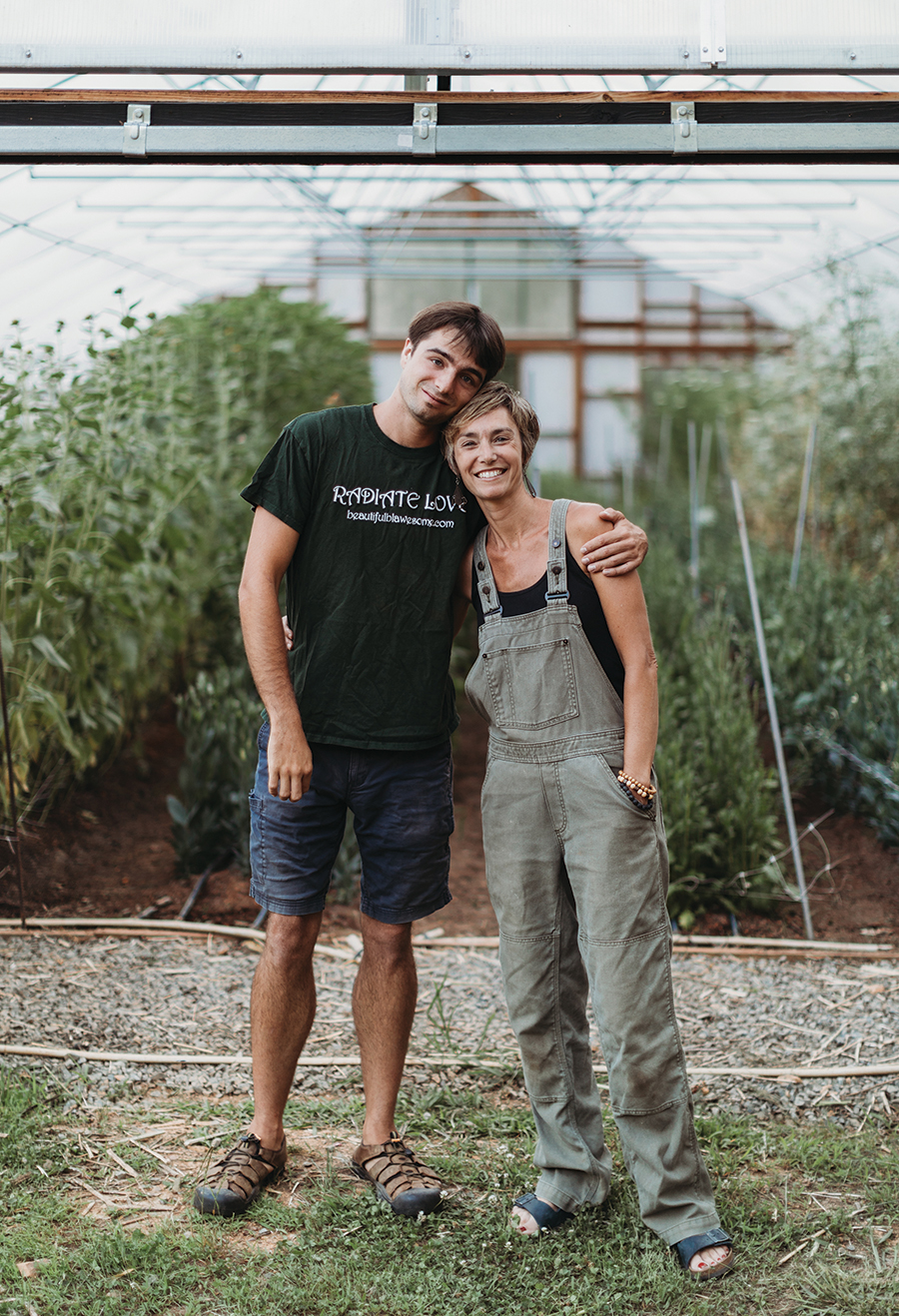
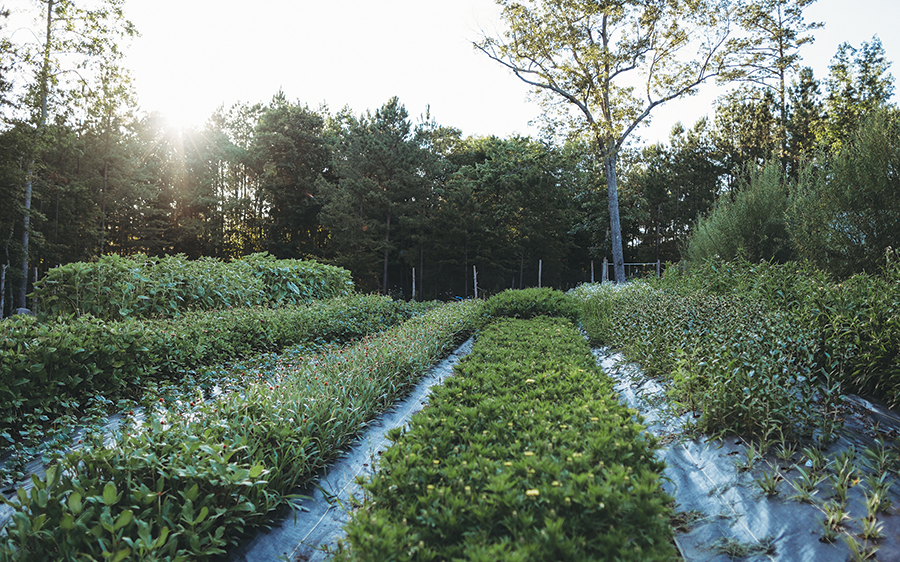
On a lush four acres of land nestled between Chapel Hill and the Haw River, 24-year-old Raimee Sorensen spends his days growing, harvesting, assembling and delivering stunning bouquets and custom flower arrangements. According to his mother, Rebecca, “He emanates joy.” The oldest of three siblings, Raimee works alongside Rebecca and a small, devoted team of farmers. It’s clear that everyone at Blawesome flower farm is dedicated to two things: delivering high-quality, organically grown flowers to the waiting hands of their customers and ensuring that everyone on the farm has the opportunity to live and work to their full potential, including Raimee, who has a diagnosis of autism and epilepsy.

“When given the opportunity to be amazing and successful,” says Rebecca, “folks with disabilities will rise to meet that challenge. If we are able to provide more opportunities for folks with disabilities to be successful, then I think we would see a moral shift in our communities.”

And farming is certainly challenging. “There are always opportunities to problem solve,” Rebecca says. “It’s very cerebral work.” In the morning, Raimee looks at his check list and gets to work, deciding how much preservative solution to add to which type of flower and what kind of tool is necessary to harvest each variety. “And when he takes his bouquets out into the world, he gets the confirmation of ‘You’re a wonderful farmer, and you grow amazing things,’” Rebecca adds. From season to season, Raimee’s knowledge and confidence have grown, and Rebecca has seen the skills he’s learned on the farm transfer to other areas of his life. For example, when they host tours and workshops on the farm, Raimee is able to share his knowledge about what’s going on in each production zone, and if someone asks a question, it’s Raimee, despite challenges with expressive and receptive language, who often chooses to answer it.

Before starting the farm, the Sorensens homeschooled Raimee for eight years, and during that time, they set up community internships where he could explore a number of opportunities while building varying sets of skills. He particularly excelled at a community farm where he volunteered for four years. He enjoyed being outdoors and working alongside others. Eventually, the Sorensens enrolled Raimee in a charter school specifically geared toward students with disabilities, but when the school abruptly shut down, they realized they needed to find an opportunity for him to achieve his greatest sense of independence. Better yet, they would create one.

Initially, the Sorensens’ decisions were practical. They had a 1/4-acre strip of land alongside their driveway, and based on how Raimee performed in his work at the community farm, they decided to cultivate the small area into a flower garden. After all, he was good at growing things, and he enjoyed connecting with the community. What better way to connect with others than by putting fresh flowers in their hands?

Raimee was not the only Sorensen with a background in farming and a love for flowers. Rebecca grew up in rural northeastern Pennsylvania with a father who was an avid gardener. In high school, she worked at and eventually managed a greenhouse, and later, on the other side of the country, she worked at an organic farm, growing peppers and houseplants in greenhouses in Oregon. She felt confident that she and Raimee could turn this small plot of land beside their house into a successful venture that would allow them to explore their interests and talents.

And then the four-acre lot next door went up for sale. Rebecca and Raimee’s vision for what they could do grew, and the family shifted again.

After purchasing the land, Rebecca applied for a micro-enterprise grant. The initial grant was for $5,000 but after completing the application, she learned that more money was available. She went back to the drawing board, carefully envisioning a project and wrote a proposal that eventually won a $50,000 state grant from the Division of Vocational Rehabilitation. The shift had happened. The Sorensens were now owners of land that would become a flower farm, and all they had to do was build it.

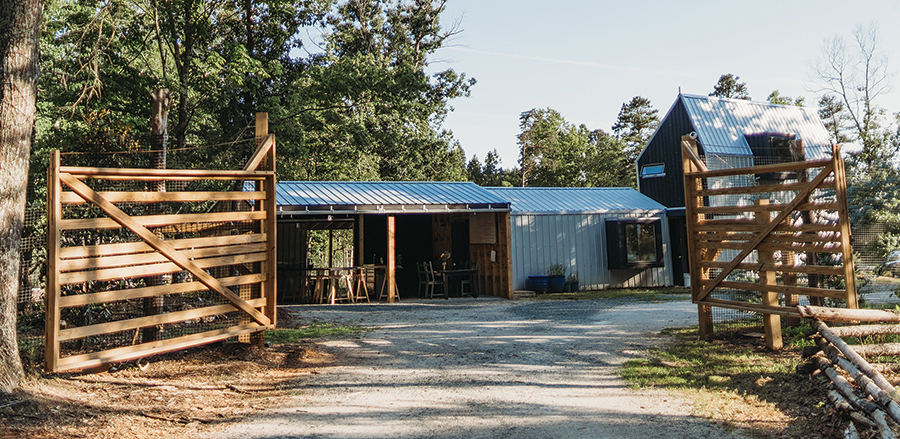
Working with a team of land specialists and local farmers, the Sorensens grew intimately familiar with their new land, working to create a plan that was realistic in terms of what they could grow and harvest with their small crew. At the same time, Rebecca, whose background is in social work, was traveling the state, leading workshops on affordable housing for adults with mental illnesses. She met an architect from Elon University whose son had a diagnosis, and he suggested that they work on a project together. He went on to design the barn on the Sorensens’ new property, and he brought out teams of university students to help construct it. He would later design the home where Raimee and a supported-living provider live.

Blawesome was born, and the flower farm that began on a small strip of land beside the family’s driveway grew into a working farm that provides fresh flowers for everything from weddings to businesses, plus events at UNC-Chapel Hill.

But no matter how much the Sorensens had been willing and able to shift over the years, COVID presented an incredible challenge. They lost national contracts with huge corporations. Weddings were cancelled, and the university moved nearly all of its business online. But people still wanted flowers, and Blawesome met that need. Individual orders soared, as did memberships in their CSA (Community Supported Agriculture), which provides seasonal flowers year-round to subscribers. “The community just came out and lifted us up in a way we could’ve never anticipated,” Rebecca says. “It was extraordinary.”

That says a lot coming from someone who has seen extraordinary things happen, both in her family and in her community. Raimee took medication for obsessive compulsive disorder for eight years, and then he was able to stop taking it one year after starting the farm. He has epilepsy, but according to Rebecca, he’s had only one seizure in the same time span. “You can pull Raimee’s Medicaid file for the past four years and see that he has not accessed any of the services he used to access since we started the farm, because he’s happier and healthier than he’s ever been,” she says. Both Raimee and the farm are thriving. “A lot of people in his situation don’t get told how special they are,” she adds.

But it is hard work, and the work never stops. “I don’t know if people understand how completely consuming farming is. It’s a lifestyle,” Rebecca says. “I like that for Raimee because it’s every part of his day. There’s not any time when he’s not thinking about it or planning for it or anticipating something, but it’s pretty miraculous to be part of something that is a living, breathing organism. I feel like I’m surrounded by miracles all the time.”  PS

Wiley Cash is the writer-in-residence at the University of North Carolina-Asheville. His new novel, When Ghosts Come Home, will be released this year.

His all-time favorite book? Song of Solomon by Toni Morrison.

Simple Life

Miss Mully’s Garden

It may be unfinished, but what in life is not?

By Jim Dodson

When COVID-19 shut down the world as we know it last year, I decided this was a sign from on high to finish building my backyard shade garden.

The cosmic joke, as any gardener worth his composted cow poop knows, is that, while no garden is ever really finished, it may well finish (off) the gardener.

That said, I set myself a goal to have the garden fully laid out and growing by the time the dog days of August rolled around. Beneath ancient white oaks, I began to see elegant stone pathways winding through beds of cool ferns, colorful hostas and other shade-loving trees and plants — the ideal place to sit and read a book when the oppressive heat of late summer lays upon us.

You might say I worked like a dog — and with a dog — from February to July, hoping to get the job done. After clearing out the last of the weeds and some forlorn, overgrown shrubs of the property’s former owner, I drew up plans and constantly revised them, laying out pathways and building beds for young plants.

Alas, August is here, and while I toiled and toiled away, my ambitious shade garden is yet unfinished.

Still, my old dog, Mulligan, never missed a day of work. She’s 16, and either deaf or simply uninterested in whatever her owner has to say. We’ve been together since I found her running wild and free in a park where I’d just given a talk at a festival, a joyous black pup with the happiest eyes I’d ever seen.

Workers in the park told me she was a stray that nobody could catch, had been around for weeks, either a runaway or a pup someone simply dumped. She was living off garbage and small critters she chased down in the woods. The girl was a hunter.

To this day, I’m not sure whether I found her or she found me. She raced past me as I was preparing to leave, heading back for the woods across a busy highway where I’d seen her cross into the park an hour before, somehow just missing the wheels of a truck.

I simply called out, “Hey, you! Black streak! Come here.” Something remarkable happened. The pup stopped, looked back, then ran straight into my arms. I named her Mulligan, a second-chance dog. Mully, for short.

We’ve been together ever since.

Any time I’m working in the garden, she’s there. Every trip to the plant nursery, the grocery store, or any errand around town, she’s along for the ride.  It’s been like this for a decade and a half. She’s my constant travel pal — my best friend and the best dog ever — always ready to hit the road.

Four years ago, Miss Mully was along for the ride when I started down the Great Wagon Road for a book about the Colonial Era “highway” that a couple hundred thousand Scots-Irish, English and German immigrants, including all three wings of my family, took to this part of the world during the 18th century.

As I laid out this long-planned journey in my mind, Mully and I would simply breeze down the mythic road together from Philadelphia to Georgia over the span of three or four weeks, meeting colorful characters, diving into frontier history and gathering untold tales from America’s original immigrant highway. The book would almost write itself. I’d finish it in no time flat.

Evidently, God and wives both laugh when foolish men make plans, to paraphrase an old Yiddish proverb. From the beginning, my wife, Wendy, thought it would take me five years to complete my mighty road book.

She was right. Ditto God.

Like my backyard shade garden, my mighty road tale is not yet finished. The sweeping scope of its history and people, not to mention the motherlode of remarkable folks Miss Mully and I encountered along the road, argued for a much deeper dive and more thorough approach to my subject. An unplanned bit of plumbing surgery and a worldwide pandemic that shut down the globe for more than a year hardly helped to shrink the time horizon.

But that’s life.

We all have unfinished business. We are all works in progress.

With a little luck and continued work, I hope to complete both my book and my backyard garden around the same time, maybe by Thanksgiving.

Somewhere in the back of my mind, I understand that the day is growing late for my old dog and her master.

She still walks a mile with us every morning, and her dark eyes still shine with the happiest light.

Every afternoon, she takes a slow walk around the garden as if inspecting my work or memorizing the plants. I often catch her just sitting alone in the middle of the garden, thinking God knows what.

For the moment, our journey together is unfinished. But someday I hope to sit in the middle of Miss Mully’s Garden, reading a book and thinking God knows what, too.

Something tells me that won’t be the end of the journey. Maybe just the beginning.  PS

His all-time favorite book: James Salter’s Light Years.   

Jim Dodson can be reached at jim@thepilot.com.

The Kitchen Garden

All Strung Out

Try a special brand of squash

By Jan Leitschuh

Check any that apply:

— Looking to eat better, fewer carbs and processed foods, and shed those COVID pounds?

— Searching for ways to work more vegetables into your diet?

— Need to avoid gluten due to sensitivities or auto-immune issues?

— Want a simple, low-fuss, low-muss meal?

Spaghetti squash, coming onto markets this month, is the gourd for you.

You’ve probably seen these largish, lemon-colored winter squashes in local markets. This plain, oblong vegetable contains a surprise inside — an extraordinary texture, long strands of squash that, when cooked, make a useful substitute for pasta noodles.

I have grown it in my Sandhills vegetable garden. Local markets will start to feature it toward the end of the month, and it is readily available in supermarkets. Spaghetti squash stores fairly well, about two, even three, months in a cool place.

Once cooked, the flesh of spaghetti squash can be forked into fine strands resembling angel hair pasta. Its mild flavor offers a clear stage for a variety of tastes and treatments such as pestos, red sauces and curries.

The simplest dinner treatment is to halve a 2-3 pound squash lengthwise, scoop out the seeds from each half, brush with a little oil, season with salt and pepper, and roast in a baking dish at 375 degrees for 30-45 minutes, or until the flesh is fork-tender. Cool slightly, enough to handle.

If you don’t like wrestling large squashes with sharp objects, you can also bake yours whole. If whole, slice off the stem end, then pierce the rind with a fork before placing in an ovenproof baking dish with a little water. Sealing the dish with foil helps speed things up a bit. The baking may take longer, up to an hour and a half for a larger squash. Remove when skin is softened. An oven mitt is helpful to steady the hot rind. Open carefully — the steam can scald — and scoop out the seeds.

The fastest method for a quick supper is to microwave the whole squash. Pierce the rind several times to avoid a buildup of steam. Place on a plate and microwave until tender, 20 minutes or so, until softened.

The easiest dinner prep? Place each squash half on a plate and fill with your favorite jarred marinara. A sprinkle of Parmesan on top and . . . Voila! A healthy, easy meal for two. The eater does the work of pulling free the squash strands.

For a less-slack treatment, tease out the strands by drawing a fork gently down the flesh lengthwise. Toss the strands with some iteration of garlic, red sauce, Italian spices, grated cheese, mushrooms, peppers, ground sausage, etc., before returning the mix to the baked squash rind.

The scooped flesh can be used in casseroles in place of thin wheat pasta. The “noodles” can be given an Asian, Indian or Southwestern twist with a change in seasonings and flavors. Low-carbers even make a ketogenic pizza crust using the strand, eggs and cheese.

For a fancier plating, some folks have been known to take the scooped strands and form “nests” in muffin tins, to be filled with your favorite stuffing. The nests can also star at breakfast, baked with eggs.

Or cut your squash into horizontal “rings” instead of in half lengthwise. This fun baked presentation shortens the cooking time and can then be stuffed with goodies.

Speaking of goodness, spaghetti squash is nutrient dense but low in calories. It can deliver vitamins A and C, folic acid, niacin, manganese, potassium and other nutrients. A whole cup of the squash is only 10 carbs, much lower than wheat pasta — 28 percent, in fact — and only 42 calories.

If you haven’t explored spaghetti squash yet, give this interesting vegetable a try.  PS

Jan Leitschuh is a local gardener, avid eater of fresh produce and co-founder of Sandhills Farm to Table.

Her favorite book is Jayber Crow, by Wendell Berry.