May Bookshelf

May Books

FICTION

Tears of the Trufflepig, by Fernando A. Flores

This debut novel weaves in ancient myth, foodie culture and a modern Hunter S. Thompson-like journalist on the hunt for truth. Narcotics are legal in South Texas but there’s a new contraband on the market: ancient Olmec artifacts, shrunken indigenous heads, and animal species brought back from extinction to clothe, feed, and generally amuse the very wealthy. Esteban Bellacosa has lived in the border town of MacArthur long enough to know to keep quiet and avoid the dangerous syndicates who make their money through trafficking. He soon finds himself in the middle of an increasingly perilous, surreal, psychedelic journey, where he encounters legends of the long-disappeared Aranaña Indian tribe and their object of worship: the mysterious Trufflepig, said to possess strange powers. Flores’s writing is already drawing comparisons as a wild Amor Towles. Tears of the Trufflepig could be the best book of 2019.

The Book Woman of Troublesome Creek, by Kim Michele Richardson

Thanks to FDR’s Kentucky Pack Horse Library Project, Troublesome Creek got its very own traveling librarian, Cussy Mary Carter, hired to distribute reading material by packhorse. Carter’s not just a book woman, she’s also the last of her kind, her skin a shade of blue unlike anyone else. Based on the combined histories of the Pack Horse Library Project and the families with blue skin, The Book Woman of Troublesome Creek is a novel of raw courage, fierce strength, and one woman’s determination to bring a little bit of hope to the dark hollers.

The Guest Book, by Sarah Blake

The best-selling author of The Postmistress examines not just a privileged American family, but a privileged America. Moving through three generations and back and forth in time, The Guest Book asks how we remember and what we choose to forget. It reveals the untold secrets we inherit and pass on, unknowingly echoing our parents and grandparents. Blake’s triumphant novel tells the story of a family and a country that buries its past in quiet, until the present calls forth a reckoning.

Mistress of the Ritz, by Melanie Benjamin

A captivating novel based on the extraordinary real-life American woman Blanche Auzello, who secretly worked for the French Resistance during World War II. Blanche and her husband, Claude, are the mistress and master of the Ritz, allowing the glamour and glitz to take their minds off their troubled marriage, and off the secrets that they keep from their guests — and each other. In June 1940, the German army swept into Paris, setting up headquarters at the Hôtel Ritz. Suddenly, with the likes of Hermann Goëring moving into suites once occupied by royalty, Blanche and Claude must navigate a terrifying new reality. In order to survive — and strike a blow against their Nazi “guests” — they spin a web of deceit that ensnares everything and everyone they cherish. Based on true events, Mistress of the Ritz is a taut tale of suspense wrapped up in a love story for the ages.

Prairie Fever, by Michael Parker

Parker eloquently captures the desolate beauty of the Oklahoma prairie in prose that is both searing and lyrical as he tells the story of two teenage sisters in the early 1900s. Lorena is sensible while Elise is always lost in flights of fancy. When a series of events leads them to realize they have feelings for the same man — their young schoolteacher — the two are driven apart by years and hundreds of miles. With poetic intensity and deadpan humor, Parker reminds us of how our choices are often driven by our passions.

The Seven or Eight Deaths of Stella Fortuna, by Juliet Grames

A breakthrough debut novel about an Italian immigrant family set across two continents and 100 years. Told in a series of near-death experiences and set in both Italy and the United States, this is a book rich with romance, murder, food, stories and ghosts. The prose is inviting and unexpected, the story immersive. With hints of magical realism, recalling the work of Isabel Allende, the underlying theme is ultimately about the changing role of women in a patriarchal culture over the last century.

NONFICTION

Rough Magic, by Lara Prior-Palmer

In 2013, the 19-year-old London native and future Stanford graduate competed in the world’s toughest horse race: the 1,000-kilometer Mongol Derby, a course in Mongolia that recreates the horse messenger system developed by Genghis Khan. Driven by a lifelong love of horses, restlessness, stubbornness, and the realization she had nothing to lose, Prior-Palmer raced for 10 days through extreme heat and terrifying storms, catching a few hours of sleep where she could in the homes of nomadic families. Battling bouts of illness and dehydration, exhaustion and bruising falls, she scrambled up mountains, forded rivers, crossed woodlands, wetlands, arid dunes and the open steppe to become the first woman to win the race and the youngest person ever to finish.

Truth Worth Telling, by Scott Pelley

One of the most experienced and award-winning correspondents in broadcast journalism, Pelley has been reporting stories for 60 Minutes since 2004. He served as anchor of the CBS Evening News from 2011 to 2017. Chatting face-to-face with world leaders and on the front lines of wars, Pelley has learned to identify the values that separate the people whose lives make a difference in the moments that count and the flaws that bring down even the most powerful. This book is about the humanity he sees in the most intense moments and serves as an inspiration for tackling the challenges in our own lives. Pelley will be at the Pinehurst Resort, 80 Carolina Vista Dr., in conversation with Kimberly Daniels Taws on June 6. Tickets are $35.

Spying on the South, by Tony Horwitz

The Pulitzer Prize-winning journalist follows in the footsteps of the young Frederick Law Olmsted who traveled the South in the 1850s as an undercover correspondent for the precursor of the New York Times. Using the pen name “Yeoman.” Olmsted journeyed by horseback, steamboat, and stagecoach, finding a land on the brink of civil war. His vivid dispatches about the lives of Southerners were revelatory and reshaped the man who would reshape the American landscape as the country’s first and foremost landscape architect. Horwitz rediscovers Yeoman Olmsted amidst the discord and polarization of our own time. Is America still one country? In search of answers, and his own adventures, he follows Olmsted’s tracks.

CHILDREN’S BOOKS

A Piglet Named Mercy, by Kate DiCamillo

Oh, my goodness! If Mercy Watson wasn’t already the cutest pig on the shelves, now readers get to meet her as a piglet — the fabulous toast-loving house pig, Mercy Watson. (Ages 3-5.)

Sweety, by Andrea Zuill

All the young readers, and the young at heart, who truly embrace their inner oddball will absolutely fall in love with Sweety, a naked mole rat who is lovingly referred to by even her adoring Grandmother as a “square peg.” Anyone who loves dancing, mushrooms, or rainy days will be delighted to have a little Sweety in their lives. (Ages 3-6.)

Underwear!, by Jenn Harney

Getting a bare bear into his underwear after bath time is impossible for a tired papa bear when underwear makes great hair; can turn a cub into a superbear; and is so much fun to hide under a chair! But beware of a big scare. This simple silly rhyming romp is sure to have young readers giggling out loud. (Ages 2-5.)

When Your Daddy’s a Soldier, by Gretchen McLellan

Deployments are difficult for everyone, especially the little ones. In this picture book, a young boy shares the pride, sorrow, joy and difficulties he, his mom and his sister experience while Dad is serving his country far away. With moving illustrations by Caldecott honoree E.B. Lewis, this powerful picture book serves as an homage to families who serve. (Ages 3-8.)

The Line Tender, by Kate Allen

When Lucy Everhart sets out with her best friend, Fred, to create a field guide for their town as a summer project, she has no idea of the path it will lead her down. Budding marine biologists, young artists and anyone who just loves a darn good story will not be able to put this one down. (Ages 10-14.)  PS

Compiled by Kimberly Daniels Taws and Angie Tally

Drinking with Writers

Blood Memory

Five friends and a meal to remember

By Wiley Cash     Photographs by Mallory Cash

In his first poetry collection, 1998’s Eureka Mill, Ron Rash writes about the connection he feels to his father, grandmother, and grandfather, especially their waking before dawn to work in textile mills. Rash refers to this connection, the connection to an ancestor’s experience without the experience itself, as “blood memory.”

I have always felt a kinship with Ron, and it is not just because our people come from the same places — the South Carolina Upstate and western North Carolina. I feel a deep bond with the experiences he writes about, the people he portrays, and the often disappearing landscapes he puts on the page. Is it blood that connects us? No, but when I read his work I feel like I understand Ron and the people he writes about as much as I understand my mother and father and the people who came before them.

This is what I was thinking about — this blood memory — when I left my adopted hometown of Wilmington and drove across the state, where the Appalachian Studies Association was hosting its annual conference on the campus of the University of North Carolina-Asheville. Normally, I am not someone who enjoys conferences: the academic talk, the nametag gazing, the feeling that everyone there is vying for the same thing, whether it is publication, notoriety, or the keys to both. But I felt at ease as the elevation increased and the air cooled because I knew I would be spending the weekend with writers and scholars who view the world in much the same way I do.

There were many people I was looking forward to seeing again or meeting the first time during our stay in Asheville, but I would be lying if I said I was not giddy at the thought of spending time with Lee Smith, someone I do not see as often as I would like and someone I will go to my grave believing is the most charming and warm-hearted person in all of American literature.

Along with novelist Silas House and his husband, writer Jason Howard, my wife Mallory and I had plans to have dinner with Lee in Asheville on Friday night before Saturday’s conference keynote event: a discussion between Lee and Ron Rash with me serving as the moderator.

I had met Silas House a few times over the years, but I really got to know him after we spent an evening in Swain County, North Carolina, last spring, facilitating creative writing workshops and readings with groups of high school students from western North Carolina and New York City who were participating in a literary exchange program. I had never met Jason before, but I knew his work, much of it focused on Kentucky’s rich music history and environmental issues like mountaintop removal. 

For dinner, the five of us met at Rhubarb in downtown Asheville. Asheville has become a culinary mecca over the past decade, and while you may hear a lot about restaurants like Cúrate and Cucina 24, Rhubarb serves consistently incredible food comprised of regional ingredients. John Fleer, a Winston-Salem native and Rhubarb’s owner and chef, is the former executive chef at Blackberry Farm, and he was named one of the “Rising Stars of the 21st Century” by the James Beard Foundation. After a meal at Rhubarb that might include crispy fried hominy dusted with chili and lime alongside wood-roasted sunburst trout you can see how Fleer is steering into the 21st century with the roots of his Southern history fully intact. Rhubarb is one of my and Mallory’s favorite restaurants in Asheville, and we were proud to share it with Lee, Silas and Jason.

Over dinner and drinks, I asked Silas how he had come to know Lee.

“Over 20 years ago I submitted a story to a workshop Lee was teaching at the Hindman Settlement School in Kentucky,” Silas said. “And a few weeks later I went to one of Lee’s book signings. I was so nervous to meet her because I loved her books, and I wanted to be in her workshop.”

Lee laughed and picked up the story.

“And when you came through the line and told me your name so I could sign your book, I said, ‘How funny. I just read a very good story by someone named Silas.’”

“And it changed my life,” Silas said. And his life is still changing. His most recent novel, Southernmost, received rave reviews and kept him on a book tour for most of the spring and summer.

Over the years, Jason came to love Lee just as much as Silas does.

“I was in Washington, D.C. a few years ago,” Jason said, “and suddenly I heard Lee’s voice on The Diane Rehm Show. I dropped what I was doing and drove right to the NPR station. The receptionist asked me what I needed, and I said, ‘I’m just waiting on Lee Smith to finish her interview.”

Lee burst out laughing.

“I came out of the studio, and there you were. It was like we planned it.”

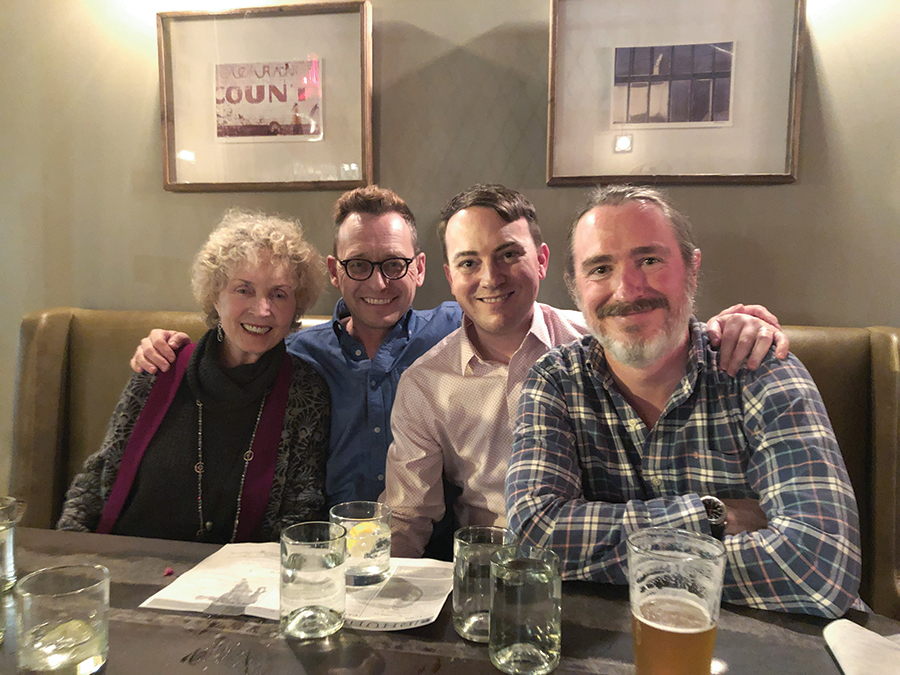
Before dinner, Mallory and I had discussed whether or not she should bring her camera gear, but we decided against it. We wanted to enjoy the evening talking to people we do not get to see that often. But Mallory did take one photo with her cell phone; in it, Lee, Silas, Jason and I are all squeezed onto one side of the table. If you did not know better, you might think we were family.

The next afternoon, during the conference keynote, Lee, Ron Rash, and I spent an hour or so onstage in a packed auditorium talking about Appalachian writers and literature and issues specific to the region.

“I think it’s important to be able to steer students toward writing that reveals something about themselves,” Lee said. “There’s value in seeing your life on the page.”

“Robert Morgan did that for me,” Ron said. “And so did Fred Chappell’s book I Am One of You Forever.”

After our discussion, we took questions from the audience. Someone stood in the dark theater and asked if any of us have ever felt slighted because of the place we call home or how we speak.

“For me personally, that’s why I don’t want to ever lose my accent,” Ron said, “Because that to me is a rejection of your heritage. The way I look at it is, OK, you can make fun of my accent, but we can out-write you, we can out-music you, and we can out-cook you.”

I agree with Ron. I am proud of the place and the people I am from, and I am proud to share stages and dinner tables with them. They feel like family. They feel like blood.  PS

Wiley Cash lives in Wilmington with his wife and their two daughters. His latest novel, The Last Ballad, is available wherever books are sold.

In the Spirit

The Key to the El Presidente

A delicious and historically important style of vermouth

By Tony Cross

Not long ago, I made time to drive to Durham to visit an old friend, Campbell Davis. I’ve known Cam for about six years; we did business together while he was representing the wine distribution company, Bordeaux Fine & Rare. At the time, I couldn’t get any quality white vermouth. BFR carried the Dolin catalog, which is represented by another distributor, Haus Alpenz. When I found out that BFR was representing Haus Alpenz, too, I was thrilled. It meant quick access to a variety of quality vermouths, liqueurs, and other mixers. In the time since Cam and I met, I got out from behind the bar and started up Reverie Cocktails and, as of this year, he opened LouElla Wine, Beer & Beverages in Durham. Within five minutes of Cam showing me around his newest venture, he handed me a bottle and said, “I bet you haven’t had this vermouth before.” Damn, Cam. He was right.

To be fair, Cam could’ve handed me any number of bottles that I hadn’t had before. Admittedly, the longer I’ve been grinding with Reverie, the more out of touch I’ve been with newer releases in the spirit and fortified wine category. It doesn’t really matter though; Cam’s quick description had me sold from the get-go. “This is Comoz Chambéry Blanc,” he said. “It’s the second Chambéry vermouth to ever hit the market. Dolin probably purchased the company just to soak up its only competition. It’s really good, but kind of different. A lot of wormwood comes through on this one.” Sold! After I returned home, I decided to read up on the Comoz Chambéry, and see what it was all about. I didn’t have to go far — Haus Alpenz’s online portfolio does an excellent job describing their products, along with its history, and cocktail recipes to boot.

Jean-Pierre Comoz established the House of Comoz in 1856 making it, according to the spreadsheet from Alpenz, “the second vermouthier of Chambéry.” Dolin Vermouth de Chambéry is the oldest, dating back to 1821; Comoz just happened to be previously employed there. Jean-Pierre and company started producing a pale vermouth when they launched. But soon after in 1881, under the leadership of Jean-Pierre’s son, Claudius, they began producing a blanc vermouth, which contained flavors from a selection of wines, plants and fruits. They were the first producers of this crystal clear, semi-sweet vermouth. Dolin followed suit years later with their version of a blanc-style vermouth, sweeter and paler in color. Comoz Chambéry Blanc’s claim to fame was when it made its way to Cuba as the key ingredient (besides rum, of course) in the El Presidente cocktail. More on that in a bit. Unfortunately for the House of Comoz, sales and production declined in the mid-to-late 20th century. In 1981, the house shut its doors. They continued production under contract, but never really seemed to get rolling. In the new millennium, they were non-existent. Enter Dolin. Today, through Dolin’s acquiring of Comoz and Haus Alpenz’s distribution, you can enjoy this Bianco-style white wine for under $20 a bottle.

On its own, the Comoz is just a tad sweet with notes of cherry and stone fruits; it has a nice body to it as well. In a cocktail, I’d recommend starting with what it’s best known for — the El Presidente. Cocktail nerd, Camper English, wrote that, “The drink is credited to German bartender Eddie Woelke, who was working in Havana, Cuba. He may or may not have invented it, but it is believed he refined it sometime between 1913 and 1921.” He also goes on to say that the drink was probably named for President General Mario García Menocal y Deop. It soon became a favorite of the following president, Gerardo Machado. The recipe calls for white rum, blanc vermouth, orange curaçao, and grenadine. I would usually do a 2:1 ratio of rum to vermouth, but with this one, equal parts really let this vermouth shine. As you’re probably well aware, our local ABC doesn’t have much variety in quality rums. Start with Bacardi or Havana Club, but when you get a chance, grab a rhum agricole or a bottle of Caña Brava for a better quality drink. For the curaçao, use Grand Marnier. I don’t think the grenadine is a deal breaker, but if you decide to use it, make your own. It’s garnished with orange oil, with or without the peel. Personally, I like dropping a Maraschino cherry in mine. I’m not a huge fan of cherries in my cocktails, but I think eating it after having that vermouth is simply delicious. Now that the weather is warmer, it’s hard to have just one of these. For me, it’s a fast sipper. Nice and light with a ton of depth. You can pick up a bottle of the Comoz at Nature’s Own, but please, the next time you’re in Durham, stop into LouElla’s and grab one of Cam’s many offerings.

El Presidente:

1 1/2 ounce white rum

1 1/2 ounce Comoz Vermouth de Chambéry

1 barspoon orange curaçao

1 barspoon grenadine

Combine all ingredients in a chilled mixing vessel. Add ice and stir until proper dilution is obtained. Strain into a chilled coupe glass. Take a swath of orange peel, expressing its oils over the drink. You may discard or drop the peel into the drink. If you’re feeling feisty, go ahead and add that cherry. PS

Tony Cross is a bartender who runs cocktail catering company Reverie Cocktails in Southern Pines.

The Pleasures of Life Dept.

Be Prepared

Malevolent Mercury will strike again

By Beth MacDonald

I never gave any credence to things like virtual chain letters, ghost stories, urban legends, or certain celestial events that are credited with affecting our wellbeing. The dire consequences if we should fail to pass them along, conjure them through a mirror, or change our travel plans never fazed me. All of that changed when Mercury went into retrograde last March.

When Mercury goes into retrograde it’s like a fortune cookie telling you to hide under your bed in the fetal position until that pesky planet goes back into prograde, whatever that is. But, make no mistake, Mercury was out to get us. The Old Farmer’s Almanac practically said so directly. Prograde may sound like a cherry flavored sports drink crammed full of electrolytes, but according to Google it’s a real live astrological term. And we were in desperate need of it.

After having a series of impossibly negative days during this mystical Mercury interlude — the kind that makes you want to eat a pint of ice cream and cry into a bag of Doritos — I called my friend Sara. Everything was wrong. Whah, whah, whah. Her reply, “Mercury’s in retrograde.” Oh, fine. Would I be protected from it if I passed that message through Facebook to 10 friends?

I had to go to a legitimate, reputable, scholarly source to research this phenomenon. I went back to Google. Of course, my studies at the University of Google taught me to go to the first link that popped up. The Old Farmer’s Almanac: the preeminent source on all things astronomy. Indeed, Mercury was in retrograde.

That meant I could blame everything on that fact and that fact alone. Potential disasters included, but were not limited to, electronics going on the fritz; travel plans being disrupted; a state of confusion (how this differs from my every day life I’m not sure); and a preoccupation with the past. I’d also be blaming any future weight gain on Mercury. It still sounded like nonsense. I wasn’t a true believer until the Ides of March confirmed the credibility of my Doctorate in Googling.

On a brisk morning, after my usual Friday Trash Dash/Cardio HIIT, I was energized and up for the day, ready to do some work. I needed a pen from my car. How all the pens in my home ended up in my locked car is not relevant to this story but if you were to imagine the magic brooms in The Sorcerer’s Apprentice that’s not far wrong. I unlocked the car from the kitchen, proceeded outside, only to find the car door was still locked. I must have hit the wrong button. It was early. I’m blind. I went back in, looked at the correct button, watched the car unlock, went back out to the car, and it was still locked. Dang. Back outside with the keys. This time, I got a pen. Mission accomplished. Call me Ethan Hunt.

I continued on with business as usual. An old friend from 20 years ago messaged me about some people we used to hang around with and how she ran into one of them. We reminisced for a little while over that. Ah, the good ‘ol days. Was I preoccupied with the past? I decided to switch gears and do some writing on the back porch. I left my phone inside.

The second I closed the door I heard the wireless lock click. My eyeballs bulged. I checked my pockets for my phone. The only way to lock the door from the outside was with my phone paired near the lock. I pressed my face to the glass door; my phone was nowhere to be seen. How could this be? Now the dogs were barking at me from inside, like a chorus of lunatics. Fantastic. Surely, Mercury was to blame for this howling opera, too.

Why does Mercury have to be so singularly unpleasant? Why can’t it make my hair soft, my hands surgically precise with eyeliner, or my bank account swell? It should have enough power to, at the very least, make my TV work for me and not against me — the volume is either too loud or too soft; I hit the wrong application button every time, and never know where to find which program on whatever media it’s streaming on. Mercury must have dug in for the long haul. Maybe Skynet could take over Alexa and play elevator music 24/7 or Siri could reply to a simple question with a stream of four-letter words or Google Maps could give me directions to places I don’t want to go, like Detroit. 

According to “The Never Wrong Old Farmer’s Almanac,” Mercury was in retrograde for almost the entire month of March. I believe it. Worse yet, it would be back in this bothersome position in July. So, in preparation, I’m cleaning out the dust balls, abandoned dog toys and unpaired socks from under my bed. I plan to be there with a bag of Doritos, writing chain letters on the 4th.  PS

Beth MacDonald is a Southern Pines suburban misadventurer who likes to make words up. She loves to travel with her family and read everything she can.

Almanac

By Ash Alder

The soft thud of a magnolia blossom crashing down upon the tender earth takes me back . . .

Rope hammock swing.

Soft light filtering through smooth green leaves.

Love notes tied with twine to sweeping branches.

We both knew it would not last. And yet we had our glorious season.

Life is like that. Fleeting as a fragrant white flower. And as May blossoms burst forth in jubilant splendor, we cherish the transient, intoxicating beauty of spring, and relearn the sacred dance of loving and letting go.

May is the beginning and the end.

On the bookshelf, Aldo Leopold’s A Sand County Almanac hasn’t been opened since the crash-landing of yet another bygone romance that died on Easter weekend, years ago now.

January, February, March, April.

Four cozy months of essays read aloud in bed, yet if we took any morsel of wisdom from Leopold’s poetic reflections of the natural world, it was this: Life is an endless dance of change.

This morning, I take the book to the front porch, turning to the dog-eared page of May — a fresh new chapter.

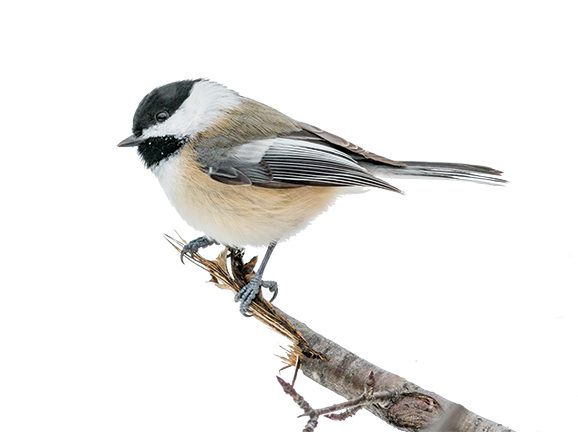
As a black-capped chickadee draws quick sips from the nearby birdbath, I read about the return of the upland plover, what Leopold refers to as the “final proof of spring” in rural Wisconsin.

Here, the final proof of spring is gone. We have landed on the fresh new chapter of May, a glorious season of its own.

Children are the anchors that hold a mother to life. — Sophocles

Cinco de Mayo

Mark your calendar. The Eta Aquarid Shower peaks just before dawn on Sunday, May 5. You could witness 10—40 meteors per hour. Not exactly the return of Halley’s comet, but it’s a chance to catch a glimpse of the famous comet’s debris. Find yourself a soft spot on the lawn. Breathe in the aroma of Southern magnolia. Enjoy the show.

The Mother’s Moon

The Full Flower Moon rises on Saturday, May 18. Also called Mother’s Moon, Milk Moon and Corn Planting Moon, this month’s moon illuminates red fox pups, fluffy cygnets, and wildflowers everywhere.

Speaking of lunar magic, The Old Farmer’s Almanac looks at the positions and phases of the moon to determine the “best days” for various activities. This month, the best days for planting aboveground crops are May 8 and 9 (plan now for July sweet corn on the grill). Plant belowground crops May 26.

Cut hay May 1–3.

Prune May 10–11 to encourage new growth.

Can, pickle, or make sauerkraut on May 26.


’Tis like the birthday of the world,

When earth was born in bloom;

The light is made of many dyes,

The air is all perfume;

There’s crimson buds, and white and blue,

The very rainbow showers

Have turned to blossoms where they fell,

And sown the earth with flowers.

      — Thomas Hood

Gifts for Mama

Mother’s Day falls on Sunday, May 12. I think of my fourth-grade teacher, who asked us to bring in one of our mother’s high heels. Yes, just one. We spray-painted it gold, lined the inside with floral foam, and proudly stuck a dozen plastic flowers inside. Happy Mother’s Day to all. May you walk in beauty.

Here are a few seeds of inspiration for the beloved mother figure in your life:

• Daylily bulbs

• Mexican tarragon for the herb garden

• Azaleas

• Ornamental pepper

• Wax begonia

• A new pair of shiny gold shoes

Southwords

Reprieve at the Ryder Cup

When a hug is worth a thousand words

By Jim Moriarty

When the United States
Senior Women’s Open begins at Pine Needles Lodge & Golf Club this month, I’m going to be pulling hard for Helen Alfredsson. The Swedish star has had a stellar LPGA career statistically similar to our local major champion, Donna Andrews. In fact, Alfredsson was the defending champion in the Nabisco Dinah Shore the year Andrews won it. Reporters aren’t supposed to have a rooting interest in such things, but I do. And there’s a reason why.

Eons ago I was taking Alfredsson’s portrait for Golf Digest. In those days Helen had a reputation for running hot on the golf course. She was also into yoga. The conceit of the photograph was simple enough. She was to pose seated on a box draped in black cloth against a black background. With the help of a couple of clear tubes, some talcum powder and a bit of forced air, Alfredsson would appear to be floating in air, sitting in the lotus position in peaceful meditation, with smoke coming out of her ears. What could go wrong?

Me.

What started innocently enough turned out to be, without exception, the worst day of my 35 years in golf.

In order to make the photo look just right, it was necessary to hide the plastic tubes behind Helen’s ears. For some reason, I lit on the notion of Silly Putty. (Moms and dads, don’t try this at home.) I tested it on myself. Put a wad behind each ear. Anchored the tubes. Squeezed the talcum powder. Voilá. It worked.

I rented a conference room. Got all set up. Helen arrived. She got in position. I secured the tubes behind her ears, hidden in her lovely, long, strawberry blonde hair. As it turned out, there was one little problem I hadn’t taken into account. The warmth of her skin and the heat of the modeling lights melted the Silly Putty. It oozed into that gorgeous hair. There was no getting it out. The picture was terrific. Helen, not so much. When it became apparent what I’d done, I turned as pale as skim milk. She left in tears.

We called the Silly Putty company and asked them what to do. Surely, rubbing alcohol or hydrogen peroxide, something, would get the damn stuff out. Nope, they said. The only thing you can do is cut it out. Oh, and they advised against doing it in the first place.

Now, you can’t write about golfers for 35 years without pissing off a few, but I’d never, ever, physically harmed one before. Awful doesn’t begin to describe how terrible I felt. The magazine sent her flowers. I sent her flowers. We offered to pay for a hairstylist. I wrote her a letter apologizing. No matter. Given what I’d so foolishly done, any gesture seemed woefully inadequate.

Well, months passed, maybe a year or two, before I saw Helen again. It was at the Ryder Cup at The Country Club.  I was in Boston taking pictures for Golf Digest. Unknown to me, Helen was also there doing color commentary — if memory serves — for Swedish radio. The media center was located in the curling rink. It was early in the week. I was coming out of the building and who should I see walking straight toward me but Helen Alfredsson.

I looked at her. She looked me. I didn’t know if she’d cuss me or walk right past me, but I knew I had to say something to her.

Before I could get a single word out of my mouth, Helen came straight up, threw her arms around me and gave me a big hug.

Since that moment, Helen Alfredsson has been my all-time favorite professional golfer. There isn’t even a close second.  PS

The Kitchen Garden

Strawberry Fields, Now

Savor the sweet Sandhills berries

By Jan Leitschuh

Peak strawberry time is now. You know you want some.

Though you’ll find local Sandhills strawberries at farm stands and markets in late April, this delectable expression of spring hits its flavorful red stride in early to mid-May, then tapers off quickly after Mother’s Day as the weather heats up.

So you’ll not want to procrastinate — though feel free to lollygag once you’re in your friendly neighborhood pick-your-own strawberry field, scooping up the juicy red berries.

Going out to the farm to pick your own berries is just one of those “must-have” experiences. Grab a bucket, your appetite and the nearest kid. This is the time to unplug and savor a sun-warmed, sweet berry, passing onto the next generation the pleasure of gathering wholesome food sprung from the earth — and helping a local farmer hang on to the family farm, in the process. Spring for a strawberry ice cream cone on the way out.

Yes, you see, we know you likely did not plant your Chandler, Camarosa or Sweet Charlie varieties last October, as your local Sandhills farmers did. You didn’t spend time and treasure enriching your soils. You didn’t need to hover over the weather reports and your strawberry beds all winter, covering and uncovering the young plants, trying to balance the frost protection versus the sunshine.

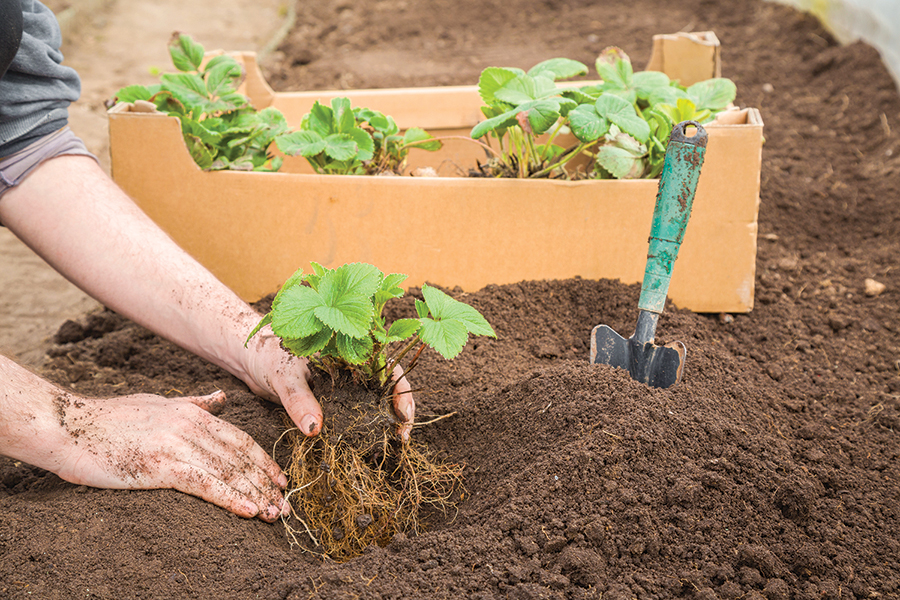
You could this year, though, if you wanted your own little strawberry bed in the backyard. You can get a flat of strawberry “plugs” next October and plant the crowns level with the surface of your rich soil, watering in well. If not trying to support a farm on the springtime harvest, you can skip the tedious covering and uncovering and let them ripen on nature’s schedule. Keep your little patch free of weeds, and “groom” off the old leaves during the first winter, pick off most of the flowers that first spring to give the plants a chance to settle in and grow strong. Some farmers swear an extra little hit of magnesium makes the crop sweeter.

Strawberries are one of the most expensive crops to plant commercially. “Out of pocket, before you pick your first strawberry, call it $11,000 an acre, with plants, labor, soil treatment, plastic and drip irrigation,” says Taylor Williams, Moore County’s agriculture extension agent at the North Carolina Cooperative Extension in Carthage.

N.C. Cooperative Extension has a list of local U-Pick strawberry growers. “We have seven in Moore and three in Richmond, three or four in Lee County,” says Williams, “one of which is certified organic, Olde Carthage Farm.” (Call the Extension at 910-947-3188 for more info on locations.)

Sandhills strawberries are true culinary lovelies. Unlike grocery store berries, ours are tender and fully sweet, bred to be picked at peak ripeness rather than harvested while still hard enough to ship across several time zones and two or three mountain ranges. Sandhills strawberries are juicy things, sweet because they have the time to further ripen into something worthy of your grandmother’s strawberry shortcake recipe.

“There’s a difference between one that is shipped across country firm and a little sour,” says Williams. “In the Sandhills, pick ‘em ripe, eat them within two or three days, then go back for more.”

Growing up in Wisconsin, we cooked up our sweet strawberries with tart, chopped stalks of spring rhubarb for a tasty compote or our very own “Beebopareebop Rhubarb Pie.” The perennial northern plant loves colder climates and marries well with strawberries, offsetting their sweet seedy pulp with a companionable tang. While I have grown rhubarb here in the Sandhills, it was on irrigation and in afternoon shade. These days, I just see it in the produce department of a number of grocery stores come May, same time as strawberries, and snag it quickly for a hit of nostalgia.

Bananas are another famous partner to strawberries. In season, use them together liberally on breakfast cereals or on morning smoothies as well as fruit salads and desserts.

And speaking of desserts and famous partnerships, whipped cream just has a creamy affinity for Sandhills strawberries. Slice a cake round carefully in half. Slather one layer with whipped cream and berries, top with the other half and add more whipped cream and berries. Or slice open your favorite biscuit for a shortcake. Even simpler: crumble a pound cake into a goblet, layering berries and whipped cream. Top with the perfect berry.

Strawberry pavlova has to be the ultimate elegant berry dessert. Whipped cream is nestled into a nest of crispy egg-white meringue, then the strawberries are ladled atop that. Add a dash of whipped cream to top it off, with a whole berry atop that. Yowza!

Some folks are allergic to strawberries — imagine that! I was one such child, and would break out in hives even as I stuffed myself. Thankfully, it was something I outgrew. Curiously, folks allergic to birch pollen, they say, are also likely to react to strawberries.

Berries are low-glycemic brain food. An excellent source of vitamins C, K, fiber, folic acid, manganese and potassium, they also contain significant amounts of phytonutrients and colorful flavonoids which make strawberries bright red. A springtime strawberry feaster may find that the fruit acids can be hard on your dental enamel, so be sure to brush after indulging and schedule your teeth cleaning after strawberry season when they might not be as sensitive.

Sandhills strawberries are tender, and turn to mush fast. Don’t let their plastic container sweat, if you can. Moisture is their downfall. I like to store berries, all berries actually, with a paper towel between each layer to get an extra day or two in the fridge. Strawberry secrets include not washing the tender berries until right before using because of this deterioration soon after rinsing. Wash and handle them with care.

Another flavor tip is to let them come to room temperature before serving — you get maximum flavor. Once picked, store in the fridge crisper and eat within a day or two. Strawberries do not ripen further so avoid those that are dull, or have green or yellow patches.

Assuming you went berry-happy at the U-Pick and returned home with more than your strawberry-cobbler-loving self could absorb in a few days — hey, no shame, everyone does — you can preserve the excess. Some people will put up quantities of jam. You can also freeze whole berries for later smoothies, cooked desserts or even later jam sessions — simply rinse, remove the green cap and freeze whole on a cookie sheet. After 24 hours, pack them in freezer bags and use within a few months to prevent freezer burn.

An elegant and clean dessert is a simple strawberry ice to celebrate the season. Grown-ups — just add a glass, a bit of rum and a little umbrella.

Strawberry Ice:

5 cups fresh or frozen unsweetened strawberries, thawed

2/3 cup sugar

2/3 cup water

1/4 cup lemon juice

Directions: Place the strawberries in a blender or food processor; cover and process until smooth. In a saucepan, bring sugar and water to a boil. Cook and stir until sugar is dissolved, about 5 minutes; cool slightly. Add to blender. Add lemon juice; cover and process until combined. Pour into a shallow freezer container; cover and freeze for 4-6 hours or until almost frozen. Just before serving, whip mixture in a blender or food processor. PS

Jan Leitschuh is a local gardener, avid eater of fresh produce and co-founder of the Sandhills Farm to Table Cooperative.

Wine Country

The Champagne Name

It’s not just any old bubbly

By Angela Sanchez

Champagne is classic, timeless, associated with elegance and class. It is a mark of distinction and celebration. The sound of the cork popping tells you something great has just happened. It gives you a feeling of fun and accomplishment at the end of something you have just achieved. The beautiful bubbles billowing up through the glass are a symbol of celebration the world over. There are countless bottles of sparkling wine made by various methods on store shelves and restaurant lists, but are they really Champagne? Of course not. Champagne is more than just a general term used to describe a wine with bubbles. Real Champagne can only come from one place in the world, made of certain types of grapes, with its production regulated by law. Champagne’s climate, topography and production — its terroir — are what make it unique from any other sparkling wine produced anywhere.

According to legend a monk named Dom Perignon accidentally discovered sparkling wine while making white wine in the Champagne region of France in the 1600s. While the story is a matter of folklore, his “method” is what we now consider méthode champenoise or the “traditional” method of making sparkling wine. Basically, a wine will undergo a second fermentation in the bottle, producing the bubbles we all love. All Champagne from the Champagne region of France is, and must, be made using this method. While other wines around the world are made similarly, it doesn’t make them Champagne. The method of production is the first key distinguishing real Champagne. The grape varietals and the growing region are the others.

There are seven allowed grape varieties in Champagne. The most well-known, and widely planted are chardonnay (adding acidity and structure), pinot noir (adding elegance, aromatic qualities and fruit), and pinot meunier (adding richness and darker fruit characteristics). The last four of the seven, pinot blanc, formenteau, petite arbanne, and petite meslier, while not as widely used — accounting for less than one percent of plantings — can add brightness, rustic qualities and additional structure and intensity. Most Champagne consists of the best-known varietals and most producers depend on them to develop a house style that will be the consistent base for their non-vintage wines. This way, you will always have a bottle of Veuve Clicquot or Tattinger non-vintage Champagne that is consistently the same year after year ensuring you get what you expect. Knowing what grapes will go into the wines is key for producers and knowing where they are grown is the root of the entire production.

The region of Champagne is located 93 miles northeast of Paris, an easy train ride away. It is 84,000 acres in total growing area and consists of four major growing regions, the Montagne de Reims, Vallée de la Marne, Côtes des Blanc and Côtes de Bar. The AOC (Appellation d’Origine Contrôlée) for Champagne was established in 1927, codifying its distinction and classification by law. Since producers must only use grapes grown in this region to produce Champagne, the vineyard land is highly sought after and among the highest priced in the world. The region consists of 320 villages or “crus,” averaging 18 acres each. The limestone and chalky soils allow for great drainage and, because they are porous, act as water reservoirs for the vines. The cool climate of the region is why chardonnay and pinot noir do so well there and produce wines that have longevity. Location, location, location! The climate and rugged terrain are unlike anywhere else in the world.

It is special, unique, original. It is Champagne. The header on the Comité Champagne website reads “Champagne only comes from Champagne, France.” In no way does that diminish the beautiful and special sparkling wines made elsewhere in the world, festive and delicious in their own right. They can be consumed and enjoyed — perhaps even more often because of their easy access, price point and style — but should be called by their own names or style. Enjoy bubbles anytime you can. They make a regular day special and a special occasion more memorable, just don’t call them Champagne if they’re not. If you have never experienced the uniqueness and quality of Champagne, find a bottle and enjoy it. Celebrate its one of a kind style, history and terroir. That’s the best way to understand what makes Champagne, Champagne.  PS

Angela Sanchez owns Southern Whey, a cheese-centric specialty food store in Southern Pines, with her husband, Chris Abbey. She was in the wine industry for 20 years and was lucky enough to travel the world drinking wine and eating cheese.

The Omnivorous Reader

On the Lighter Side

The study of humor can be serious business

By Stephen E. Smith

“Who was Alexander the Great’s father?” my 11th grade history teacher asked (this was back in the day when educators expected students to know a little something about world history). Before anyone could raise his or her hand, my friend Norman Alton, slumped in the desk beside me, blurted out his answer: “Philip’s Milk of Macedonia!”

Norman wasn’t the class clown. He didn’t make monkey faces or squawk like a jungle bird. He was the class wit, a usually subdued presence whose occasional response to teachers’ questions exhibited a startling degree of wordplay and a remarkable, if somewhat perverse, intellectual insight. Philip’s Milk of Macedonia: Everyone laughed, even the thickheaded ones. Even the teacher.

James Geary’s latest book, Wit’s End: What Wit Is, How It Works, and Why We Need It, explains how Norman’s agile, word-warping mind worked, analyzing the bits and pieces of intellect and psychology that conspire to make wit and its resultant humor a force in our lives. And Geary would seem to be the man for the job. He’s deputy curator of the Nieman Foundation for Journalism at Harvard and the author of I Is an Other: The Secret Life of Metaphor and How It Shapes the Way We See the World, the New York Times best-selling The World in a Phrase: A Brief History of the Aphorism and Geary’s Guide to the World’s Great Aphorists.

The book opens with a dissertation on the pun. Punning is typically regarded as the lowest form of humor (make a pun and you’ll elicit a chorus of groans), but it isn’t a simplistic exercise; it involves two incongruent concepts connected by sound and, if it’s a truly clever pun, it demonstrates a degree of insight that delights with its absurdity. “Puns straddle the happy fault where sound and sense collide,” writes Geary, “where surface similarities of spelling and pronunciation meet above conflicting seams of meaning.” Philip of Macedonia and Phillips’ Milk of Magnesia have nothing in common except, when spliced together, an unexpected degree of silliness and a certain similarity in sound and structure.

Apparently, Geary counted the puns in Shakespeare’s plays: “There are some 200 puns in Love’s Labour’s Lost, 175 in Romeo and Juliet, 150 in each of the Henry IV plays, and upward to 100 in Much Ado About Nothing and All’s Well That Ends Well.” And he offers fascinating facts aplenty: Lincoln was an avid punster. The notion that Adam and Eve chomped into an apple is a misinterpretation of the Vulgate where the adjective form of “evil” malus, is malum, which happens to be the word for apple, thus fixing the misidentification of the apple as the offending fruit. Geary also includes enough obscure puns to last a lifetime, e.g., English essayist Charles Lamb was introduced by a friend who asked him, “Promise, Lamb, not to be sheepish.” Lamb replied, “I wool.” Lamb went on to write an essay entitled: “That the Worst Puns are the Best.” And when Groucho walked into a restaurant where his ex-wife was dining, he proved Lamb right: “Marx spots the ex.”  All right, you can groan now.

Geary then delves into “witty banter,” couching his observations in an original faux 18th century play riddled with contemporary allusions. Using research paper format (who among us wants to read another research paper?), Geary explains how the brain reacts to wit and humor, and in a slightly more interesting chapter he explores the neurobiological mechanism of wit — the ability to hold in mind two differing ideas about the same thing at the same time — asserting that comedians who are bipolar have an advantage over their less afflicted peers. If you’re an old-timer, you’ll be reminded of Jonathan Winters, who gave us Maude Frickert and Elwood P. Suggins from Bellbrook, Ohio, a yokel who’d seen “some 76” flying saucers. But Geary focuses on a more derivative and annoying comedian, Robin Williams, as a prime example of a bipolar individual who could make instant disconnected connections. He also presents numerous examples of individuals who suffered bouts of unrestrained wit, such as the case of a 57-year-old man who began constantly joking, laughing, and singing. “After the patient’s death, his wife discovered scores of Groucho Marx glasses, spinning bow ties, hand buzzers, and squirting lapel flowers in their garage. An autopsy showed asymmetric frontotemporal atrophy and Pick’s disease.”

Neurological mechanisms notwithstanding, readers are likely to find their attention waning in chapters such as “Perfect Witty Expressions and How to Make Them” (can we be taught to be witty?), “Advanced Banter” and “An Ode to Wit,” which falls with a predictable thud. In an especially cringe-worthy chapter on “jive,” Geary explains “Dozens,” a form of interactive insult which is “a part of African-American tradition of competitive verbal invention” in which combatants face off before a crowd and “direct aspersions at their adversary’s shortcoming”: Your mother is so ugly that she has to . . . ” He also includes a lengthy out-of-date jive glossary — “Cat: A cool, witty person,” “Chippies: Young women,” “Eighty-eight (88): Piano,” “Knowledge box: Brain,” etc., — which is completely unnecessary.

Do we need to understand the mechanisms at work in the creation of humor? Probably not. But quick-witted people charm and amuse us; we appreciate them, crediting them, whether they deserve it or not, with a high degree of intelligence. Any understanding of how the witty mind works only deepened our appreciation of their talent. And there’s much that’s entertaining and informative in Wit’s End; unfortunately, Geary’s use of various literary conceits and his incessant cleverness wears thin and eventually begs the question: Is it possible to be too clever when investigating cleverness?

My old friend Norman Alton, who is by now on a first name basis with Phillips’ Milk of Magnesia, knew a good quip when he’d delivered one. He didn’t push it. As we all cackled, he remained silent and straight-faced, accepting our laughter as praise. PS

Stephen E. Smith is a retired professor and the author of seven books of poetry and prose. He’s the recipient of the Poetry Northwest Young Poet’s Prize, the Zoe Kincaid Brockman Prize for poetry and four North Carolina Press awards.

Hometown

A Sweet Ride

On the road to the big 6-0

By Bill Fields

During a hectic season of business travel — I’ve been to Florida so much I think convenience stores everywhere stock flip-flops — it hasn’t hit me yet but I’m sure it will.

My birthday will arrive and I’ll feel like one of those fast cars in a 1970s commercial — zero to 60 before you can believe it.

It shouldn’t feel like a surprise, because what they tell you is true: The older you get, the more the calendar seems like it’s on speed.

I remember the friends, balloons and food from 50. I can give you the birdies and bogeys from a round of golf on my 40th birthday. Even the festivities of number 18 are clear, despite a couple too many newly legal beverages.

Veteran tip: Do not accept the offer of late-night Champagne from a well-meaning classmate celebrating a milestone of her own with friends — who came into the world on a May day at St. Joseph’s while I was being born at Moore Memorial — after draining the beer taps in the 28387. Happy Birthday, Beth Huntley, wherever you are. I forgive you.

I also forgive author Fred Kaplan for omitting my birth in his book, 1959: The Year Everything Changed, published a decade ago. After all, there was a lot going on — the Space Race was on the first lap, and the Cold War was getting hot. Two months before I was born, Texas Instruments introduced the solid integrated circuit, the microchip. When I was four months old, International Business Machines unveiled the modern computer.

As Kaplan writes, lots of wheels in different parts of society began turning rapidly in 1959, setting the stage for dramatic shifts in the 1960s and beyond. My arrival was upheaval aplenty for my family, a big deal even though I weighed in at canned-ham size, a shade over 5 pounds, when Dr. Michael Pishko delivered me into a changing world. The attending nurse was Mrs. Luna Black, mother of sons Clyde and Marcus with whom I went through school.

Mom saved my hospital baby ID bracelet that kept me from going home to Robbins or Raeford. It looks like a crafts project created by a patient someone who likes tiny things, with itty-bitty blue beads and my last name in white beads, on a short string that will just circle my ring finger now.

My sisters were 12 1/2 and 14 1/2 years old at the time, with Johnny Mathis and Bobby Darin 45s to spin and wool skirts to sew. But from the moment my father came into the Southern Pines school cafeteria to give them the big news after my 10:42 a.m. birth on May 25, Sadie and Dianne loved me and cared for me, even when they would have rather been downtown with their pals having a fountain Coke at the drug store on Broad Street.

I might have gotten to 60 without the support of my family and friends, but it would have been a harder ride with less joy, a journey I don’t wish to contemplate. I’m lucky to have my mother still, even though seeing her diminished is hard. Yet I miss my dad, who didn’t quite make it to 60, and wonder what more years would have given him — and us.

Would he have ever talked about the war? What would he have thought about New York City? Would he have liked craft beer? Late in his life, when they were finally empty nesters, Mom told me, Dad talked of an RV in retirement, of seeing more of the country. When I’ve ventured to a new state — 48 now, lacking only North Dakota and Alaska — each trip has been at least a little bit for him, the man who finally got a son.

On this birthday, more than most, he will be a candle that can’t be blown out. PS

Southern Pines native Bill Fields, who writes about golf and other things, moved north in 1986 but hasn’t lost his accent.