Sporting Life

The Home Place

Taking the road to fond memories

By Tom Bryant

It was a perfect spring day. Most of the pine pollen was gone, and a late night rain shower had cleaned the air as fresh as only it can be in the early morning. I was on the way to the little farm I lease for bird shooting, but really more as a place in the woods where I could get away from everyday hustle and bustle. Turkey season had been in for a week, and I had yet to venture into the woods to see if this would be the year I would be successful in my quest of bagging that long bearded, elusive bird.

My route to the farm takes me through the little town of Pinebluff; and on a whim, I turned down the road where my old home place sits up on a little hill. I left the Sandhills right after high school when I went to college. Soon after that, my family moved to Florida where Dad took over management of a large ice plant. The only thing holding me to the village was the home place where I grew up, so I only visited the little town when passing through the area.

After my father passed away in the ‘70s, Mom sold the old house and I rarely visited. The small village held too many memories, and I was afraid that our home for many years wouldn’t look the same.

I was right. As I drove slowly down our street, I realized that only the bare bones of good memories were left. The old place seemed to be listing a little to starboard and badly needed a coat of paint. The yard was overgrown and a ragged pickup truck sat in the front, right next to the porch. I eased by with only a cursory glance then drove on down the road to Pinebluff Lake.

The lake still looked the same, although it has had quite a few improvements including a new pier jutting out over the spring-fed black water. I pulled up close to a picnic table, got out and walked down to the shore. A bright sun in a cloudless sky was high overhead, and the heat on my shoulders felt good. I went back to the table, sat down, looked up to the headwaters, and memories tumbled over in my mind like falling dominoes.

In the late ‘40s, ‘50s and ‘60s, Pinebluff was a great place for a youngster. With only about 300 residences, the little village could have been right out of a classic book like The Adventures of Tom Sawyer; and as a kid, I could have played the main character.

The small Village Grocery, where I had my first charge account, was only about two blocks from our house. I could buy a coke for a nickel.

The local phone company was headquartered at Mom and Pop Wallace’s house with the switchboard in their living room. Our phone was on a party line, and the number was 212. Mom Wallace knew the whereabouts of all the kids and many of the adults. If you wanted the latest scoop and you were on her good side, all you had to do was give her a call.

The police force consisted of the town constable, Mr. Deaton, and I have to admit he knew all the local kids and kept most of us under control. It wasn’t a hard job, though, and I honestly can’t remember any major law breaking in Pinebluff, or as far as that goes, in any of our surrounding towns. My parents very seldom locked the house, maybe when we went on vacation, and then only latching the screen door and turning the doorknob lock. Those were different days and a simpler time.

Aberdeen was three miles away; Southern Pines, six; and Pinehurst, about seven or eight. The major highways were two-lane connectors with very few homes or businesses interrupting the pine forests on either side. Pinehurst was another world, and not many young folks ventured past the city limits. The village actually closed in the summer. Many of the downtown stores put plywood shutters over the windows until they reopened in the early winter when folks from the frosty North would reappear just like migrating birds.

I had the opportunity to work for a brief time for Mr. Carl Moser, owner of The Pine Crest Inn. I was between colleges, having just graduated from Brevard Junior College and right before my adventure in the Marine Corps. This was a real experience for me and opened the door to a world I had no idea existed. It was during the middle of the Pinehurst season, and the hotel was maxed out with guests arriving and departing every day. I was hired as one of two desk clerks, and Moser also helped when the desk was really busy. Several

True South

Only in the South

When layaway simply won’t do

By Susan S. Kelly

Admit it: There are scenes and situations that could only happen in the South. I’m not talking about moonshine, magnolias, accents or tobacco. Collards, however, are involved.

Exhibit A:

One bitter-cold, sleeting January, my mother was hosting her luncheon bridge club gathering at her house (it’s worth noting, and also probably apropos to Only in the South, that my mother had lived in a different town for 18 years, and her bridge club had never replaced her; they’d used substitutes. For 18 years).

Never mind that these were the ’70s, they were still — again, Only in the South — the days of linen tablecloths, sterling silver, crystal goblets, and what I term girl food: lemon bars, asparagus spears, and a chicken casserole concocted with Campbell’s mushroom soup. Somewhere between the shuffling and the cleaning, the disposal backed up, the dishwasher broke down, and water from ice-damming in the gutters began running down the walls. The luncheon was not a success.

The minute the last guest left, my mother drove straight to Montaldo’s and bought herself a mink coat. (Also worth noting: All through my childhood, when I watched game shows on TV, and fur coats were the ultimate prize, my mother was very firm in her belief that no one under 50 should own a fur coat. She’d reached the required age, but only just.) However, she had to put the mink coat on layaway. That night, she told her mother, my grandmother, who lived in the ultra-sophisticated burg of Walnut Cove in Stokes County, what her day had been like.

The next morning, my grandmother drove straight to Montaldo’s, bought the mink coat herself, and delivered it to my mother. Not so much because she felt sorry for my mother — which she no doubt did — but because there was just no way that a daughter of hers was going to have anything on layaway at Montaldo’s.

Exhibit B:

A friend of my mother’s — we’ll call her Joan — was having a meeting at her house, necessitating finery, flowers, decorum, and girl food (see above). Minutes before the meeting, Joan smelled something awful. The maid had elected that particular morning to cook up a mess of collards (not girl food).

Joan panicked. “You can’t cook collards now, Myrna!” she scolded, revolted by the stench, and that a dozen grande dames were about to descend into her stinking living room. (Did I mention the meeting involved debutantes? Also Only in the South.) “You’ve got to get rid of those collards!” So, Myrna did what she was told. She took the big pot of greens off the stove and emptied the whole malodorous mess down the toilet. Which promptly stopped up and overflowed. And no embroidered hand towels in a powder room, or asparagus spears with hollandaise, can overcome a clogged commode, collards, and matrons clad in ultrasuede.

Exhibit C:

My friend Betty grew up with an irascible, alcoholic mother. A real character, who I loved, but was, nevertheless, a drunk. Years later, at a party, Betty was talking to a friend who was married to another adult child of an alcoholic, in a family that might have had even more dysfunction and irregularities than Betty’s. Still, the son — we’ll call him James — had survived and thrived. Thinking she was delivering a compliment, Betty said, “Look at James. He’s successful. Normal. Happy. With all that was going on in his house, how in the world did he turn out so well?”

The friend didn’t miss a beat. “Just like you did, Betty. Good help.”

Debutantes, collards, Montaldo’s, and good help. Only in the South.  PS

Susan S. Kelly is a blithe spirit, author of several novels, and a proud grandmother.

Golftown Journal

The Amateur Spirit

An enduring legacy of Pinehurst

By Lee Pace

An amateur is one who competes in a sport for the joy of playing, for the companionship it affords, for health-giving exercise, and for relaxation from more serious matters. As a part of this light-hearted approach to the game, he accepts cheerfully all adverse breaks, is considerate of his opponent, plays the game fairly and squarely in accordance with its rules, maintains self-control, and strives to do his best, not in order to win, but rather as a test of his own skill and ability. These are his only interests, and, in them, material considerations have no part. The returns which amateur sport will bring to those who play it in this spirit are greater than those any money can possibly buy.        Richard S. Tufts

Imagine a golf club every year having the very best players visit to compete for a title considered at the time among the elite competitions in the game. Imagine Walter Hagen and Horton Smith winning, envision the smile on Ben Hogan’s face when he finally, after years of incessant practice and yearning, wins his first professional event and the proverbial dam breaks on a Hall of Fame career. And listen for the words flowing from the mouths of the pro tour’s luminaries, of Tommy Armour saying, “The man who doesn’t feel emotionally stirred when he golfs at Pinehurst beneath those clear blue skies and with the pine fragrance in his nostrils is one who should be ruled out of golf for life.”

And then process it all with a decision that Richard Tufts made in 1951: No more professional golf. Our focus is the amateur game. Out goes the North and South Open with its half-century of history, in comes the North and South Senior Amateur for men and women.

“Amateur golf is in our DNA,” says Tom Pashley, president of Pinehurst Resort & Country Club. “Amateur golf is where the game began at Pinehurst, and it’s such a privilege to host a championship like the U.S. Amateur. We love having the U.S. Open every 10 years or so, but playing the game at the amateur level and having fun are at the core of everything we do.”

The occasion of the 2019 United States Amateur Golf Championship in August provides an opportunity to pause for a moment and consider the essential soul and character of golf, pay tribute to the values espoused by Tufts, the grandson of Pinehurst founder James W. Tufts, and remember that the pure golf experience is not from the professional tour but from the munis and clubs where the devotees go 36 holes with two-down presses and junk for a quarter and a cold beer.

“Those words from Mr. Tufts are near and dear to how the resort operates,” says Robbie Zalzneck, the USGA’s director of the U.S. Amateur Championship who’s headquartered in Pinehurst. “Some will say that most of the guys in the Amateur will go on to professional careers, but the fact is they haven’t yet and are looking forward to competing in a national championship at Pinehurst truly for the sheer opportunity to raise a trophy and see their name inscribed with so many great golfers. We’ll have 312 of the world’s best amateurs, and a huge portion of our field will look at playing in the Amateur as the biggest thing they’ve ever done in golf, and they’ll be proud of it.”

For half a century, Tufts stood guard over the game’s values as he espoused them in what he called the “Creed of the Amateur,” a passage delivered during a 1968 speech in which he accepted his induction into the North Carolina Sports Hall of Fame. The words have been inscribed in bronze and sit on a plaque beside the 18th green of Pinehurst No. 2 and statues of Tufts and golf architect Donald Ross.

“Richard Tufts did a great job of capturing what is so special about the game of golf,” says Robert Dedman Jr., whose family has owned the resort and club since 1984. “He really reflected the values that make golf so different and unique and why it resonates with so many people — having fun, overcoming adversity, the importance of courtesy, the integrity and self-control aspects of the game. They have been a part of our traditions at Pinehurst since 1901.”

Tufts served the amateur spirit in a variety of capacities — from shepherding the Carolinas Golf Association into one of the nation’s most vibrant regional golf associations to reigning as USGA president from 1956-57 to running Pinehurst from 1935-62 with an eye toward preserving the sanctity of the game. He didn’t like artificial measuring devices, golf carts and slow play. He rued the discontinuation of 36-hole Saturdays in concluding championship events, believing the double round was an excellent test of physical and mental endurance. And he reluctantly ended what in 1951 was essentially a “major” pro competition, the North and South Open, when the players hinted they needed a larger purse to continue coming to Pinehurst.

The “Creed” was his most lucid and direct assault on creeping commercialism in golf, but over the decades Tufts spoke and wrote with force and passion in trying to keep the amateur spirit intact.

In 1934 he encouraged golfers across the Carolinas to compete in the Carolinas Amateur at Linville Golf Club:

“There will be a reunion meeting with the emphasis placed on good times and good fellowship rather than good golf,” Tufts wrote in a letter of invitation. “If you can think of any argument for not being among those present, the entertainment committee is prepared to refute it.”

In 1960 he told the annual meeting of the Southern Golf Association at Myrtle Beach that the game is getting “soft.” He said the game was getting too expensive, that excessive demands were being put on green superintendents and that use of motorized carts by those who do not need them was “almost degenerate.”

“The game’s standards are being lowered and subtly, bit by bit, golf is losing its character,” Tufts said. “Those unable to meet the challenge of the game seem to find a vicarious pleasure in destroying it.”

In 1963, as captain of the United States Walker Cup team, Tufts told his players that their two goals were to retain the cup in the competition against Great Britain and Ireland and to cement friendly relations with “our friends” from across the water.

“Failure in the first undertaking is acceptable if we succeed in the second,” Tufts said at a team meeting in New York, prior to departure for Scotland. “But the trip will be a complete loss if we win the match but lose the good will of our friends. We can stand criticism of ourselves as golfers but not as sportsmen and gentlemen.”

In 1979 he wrote to an official of the company that bought the resort and club from his family nearly a decade earlier to decry the creeping commercialism in the game:

“Amateur golf can be a most valuable antidote to the high pressure, artificial life we lead today,” Tufts wrote. “But only if the game’s ancient traditions and standards are maintained and golf is enjoyed for itself in friendly competition amid such natural surroundings as we find on the old links courses of Scotland. Golf should be a medium for relaxation and not commercialization.”

Quite simply, he said in one speech, “Those days when we tried to build a center for true amateur golf here in Pinehurst will always be my happiest memories.”

Tufts welcomed good people into the game of golf, applauding the decision of Pete and Alice Dye to enter the golf architecture business back in the 1960s, when Dye was an Indiana insurance salesman.

“Mr. Tufts was the spirit of everything good in golf,” said Alice, who died at the age of 91 in February 2019. “He really was. He was the spirit of good sportsmanship. His portrait hung on the far wall in the clubhouse. Every time you walked in you stopped and looked at it. It was like a picture of Lincoln or something. You looked at it with a sense of awe.”  PS

Chapel Hill-based writer Lee Pace has written extensively about the Tufts family over three decades chronicling the history and evolution of golf at Pinehurst and across the Sandhills.

Simple Life

Dirty Hands, Happy Heart

And other gifts from the universe

By Jim Dodson

When all else fails, Mulligan the dog and I head for the garden.

Possibly because I hail from a family of Carolina farmers and rabbit tobacco preachers, digging in the dirt is not only second nature and something that draws me closer to my maker, but also serves as a cheap and effective therapy in a world that seems increasingly shaped by the insatiable gods of work and money.

For many Americans, work has become something of its own secular religion. According to Gallup, Americans average more hours of work per year than any of our fellow developed nations, yet 87 percent of U.S employees don’t feel fulfilled by how they earn their living. That’s a staggering problem that helps contribute to rising depression and addiction across all sectors of society.

In 1919, as Fast Company recently noted, 4 million Americans went on strike to demand fairer wages and a five-day work week — the beginning, historians point out, of the so-called American leisure class. As a result, weekends became enshrined in the culture. The bad news? We’re losing ground to our obsession to work longer and harder with diminishing returns, the average American working a full day longer than the 40-hour work week fought for by our early 20th century ancestors.

Maybe you’re one of the fortunate ones who loves what you do. I certainly am, having enjoyed a varied journalism career and book-writing life that has taken me to places I only dreamed about as a kid. Today, I own the privilege of serving as editor of four robust arts-and-culture magazines staffed by a talented crew of folks across this state. We’re a merry band of storytellers and artists who love what we do and never take that gift from the gods for granted. How we spend our time away from the job says a lot about us, a lesson some of us had to learn the hard way.

At age 30, in 1983, I was the senior writer for the largest news magazine in the South, the Sunday Magazine of the Atlanta Journal-Constitution, a magazine where Margaret Mitchell once worked and the South’s finest writers appeared. Over my seven years in Atlanta, covering everything from Klan rallies to presidential candidacies, I took only two or three full weeks of vacation. When I finally received the summons to Washington, D.C., for the interview I’d grown up hoping for, I felt utterly empty, burned-out, ready to find a new way of earning my daily crust.

The unexpected epiphany came following my big interview in Washington when I phoned my father from the outer office of Vice President George H. W. Bush. I’d been one of the first reporters to travel with Bush during the 1980 presidential campaign and gotten to know him fairly well — sharing a love of baseball, beer and New England.

My dad asked how the job interview went. I told him it seemed to go well,  save for one small problem: I wasn’t sure I wanted the job — or even to be a journalist any more.

“I have an idea,” he said calmly. “Why don’t you change your flight plans back to Atlanta and stop off in North Carolina?”


The next morning, he picked me up at Raleigh’s airport and drove us to Pinehurst.

My Haig Ultra golf clubs were in the back seat of his car. They hadn’t been touched by me in years. For at that point, almost incomprehensibly I hadn’t played a full round of golf — the game I loved best — more than once or twice while living in the hometown of Bobby Jones. Instead, I’d worked myself into an early grave — or so I feared.

After our round on famed No. 2 we sat together on the porch of the Donald Ross Grill and talked over beers about what I feared might be a premature midlife crisis, or worse.

He could have laughed at my youthful angst. But he didn’t. My old man was one great fellow, a former newsman and advertising executive with a poet’s heart. My nickname for him was Opti the Mystic.

After listening to me pour out my tale of existential career woe, he smiled and remarked, “I wouldn’t give up on journalism just yet, sport. You have a God-given talent for stringing together words and telling stories of the heart. I do, however, have a small suggestion for you. You may laugh.”

“Try me,” I said, desperate for any guidance from Opti.

“Perhaps you should try writing about things you love instead of things you don’t.”

I looked at him and laughed.

“What kinds of things?” I asked.

He shrugged and sipped his beer. He was 66 years old, the age I am today.

“Only you can answer that. Use your imagination. What do you love? You’ll find the best answer there. It may sound ridiculously corny to you, but try telling the universe what you love and you may be surprised at the results. The path is never straight. But trust your gut. One thing leads to another, including people.”

Humoring him, I admitted that I loved golf and being in nature but didn’t know a soul in either of those worlds and couldn’t imagine how I would find my way into them. Once a single-handicap golfer, as I’d proven that day at No. 2, I couldn’t even break a hundred on the golf course anymore. Having grown up hiking and camping in the mountains and forests of my home state, it had been years since I’d been deep in the woods. I’d even loved mowing neihborhood lawns and working in my mom’s garden, but hadn’t done that in almost a decade.

Still, something got into my head. Or maybe it was my gut. 

A short time later, I withdrew my name from consideration for jobs in Washington, quit my gig in Atlanta and took a 2-month writing sabbatical at the Virginia Center for Creative Arts at Sweet Briar College.

It was springtime in Virginia. I wrote for three or four hours every morning, working on a novel about a Georgia farm family for a legendary editor at Harper & Row.

In the afternoons, I took long walks through the pasturelands, fields and woods of beautiful Amherst County, Patrick Henry country.

One afternoon I helped an elderly couple down the road weed their garden and took home a stunning bunch of peonies that reminded me of my mom’s garden back home in Greensboro.

The novel was a dud. My heart was never in it. But the legendary editor, pointing out that books would come when the timing was right, insisted that I call Judson Hale at Yankee Magazine in New Hampshire. I followed up on his advice and soon found myself working as the first Southerner and senior writer in Yankee Magazine’s history. I got myself a pup from a Vermont Humane Society, lived in a cottage by the Green River and taught myself to fly-fish. My heartbeat slowed. I even rediscovered my lost passion for golf on an old course where Rudyard Kipling once chased the game.

A few years after that, a story I wrote about a forgotten hero of women’s golf even landed me a sweet job at Golf Magazine and a decade’s service as the golf editor for American Express, a job that took me around the world and inspired me to take my dad back to England and Scotland where he learned to play golf as a soldier during the war. He was dying of cancer. It was our final journey. The little book I wrote about, Final Rounds, became a bestseller that’s still in print.

Opti had been right about all of it — the power of doing what you love, listening to heart and gut while expressing your desires and gratitude to a generous universe. Whatever else may be true, I am proof that one good thing — and more important, one good person — can invariably lead to another.

Over the next two decades, I built a house on a forested hill on the coast of Maine, fathered two wonderful children and basically invested their college funds into a massive English garden in the woods. A dozen books followed, including Arnold Palmer’s memoirs.

That job brought me home again thanks to a chance to teach writing at Hollins University in Virginia and simultaneously help my partners create distinctive arts-and-culture magazines that people in this state seem almost as passionate about as we are.

Today, I consciously belong to an intentionally slower world, taking time to do the work I love but never failing to spend time in the garden with my dog, Mulligan. A golf round with my childhood pal never hurts, either.

Perhaps I’ve just come full circle. In any case, friends tell me I’m more productive than ever. If so, that’s probably because dirty hands make for a happy heart, as an aging gardener once said to me.

That aging gardener was my mom, who had a magical way with peonies and roses.

May was her favorite month, the month where spring gardens reach their glory.

Mulligan agrees with me that our roses and peonies have never looked better.  PS

Contact Editor Jim Dodson at jim@thepilot.com.

PinePitch

Festival D’Avion

Wing it all weekend at the Festival D’Avion at the Moore County Airport, 7425 Aviation Blvd., Carthage. The aircraft fly in all day on Friday, April 12, and depart between 4 and 6 p.m. on Saturday, April 13. There will be a concert Friday evening at 7:30 p.m. by On The Border: The Ultimate Eagles Tribute Band. For tickets and information go to www.ticketmesandhills.com.

Home and Garden Tour

The historic Fownes Cottage is one of six homes highlighting the 71st Annual Southern Pines Garden Club Tour of Homes on Saturday, April 13th from 10 a.m. to 4 p.m. In addition to the homes and gardens, there will be orchid and plant sales, art exhibits and more. Tickets are $20 in advance and $25 the day of the tour. Tickets can be purchased at the Campbell House, The Country Bookshop, the Women’s Exchange or online at southernpinesgardenclub.com.

Dig It

The Weymouth Center for Arts & Humanities will be offering some friendly prices on plants from the Weymouth estate and gardens on Saturday, April 6 from 9 a.m. to 1 p.m. Bring your own wagon, if you can, to haul away your treasures. Coffee and baked goods will be for sale. White elephant items and tools available, as well, at 555 E. Connecticut Ave., Southern Pines. For information call (910) 692-6261 or go to weymouthcenter.org.

Meet the Author

Scott Huler, the author of A Delicious Country: Rediscovering the Carolinas Along the Route of John Lawson’s 1700 Expedition will be at The Country Bookshop, 140 N.W. Broad St., Southern Pines, on April 10 at 5 p.m. For information go to www.thecountrybookshop.biz.

A Postcard from the Past

The Moore County Historical Association will exhibit “Turn of the Century Photography” featuring the men and women who saved early Moore County, reflected in fragile and rare post cards. The display will be at the Shaw House, 110 W. Morganton Road, Southern Pines from 1-4 p.m. on Saturday, April 27. For information call (910) 692-2051 or visit www.moorehistory.com.

Classic Concert Series

Listen to violinist Benjamin Beilman and pianist Andrew Tyson perform chamber music selections at the Sunrise Theater, 250 N.W. Broad St., Southern Pines, from 8 to 10 p.m. on Monday, April 8. Tickets are $30 for Arts Council members, $35 for non-members. For information call (910) 692-2787 or visit www.mooreart.org.

14th Annual Clenny Creek Day

Enjoy live music, food, raffles, vendors and two historic homes at Clenny Creek Day from 10 a.m. to 4 p.m. on Saturday, April 20, at Bryant House and McLendon Cabin, 3361 Mount Carmel Road, Carthage. There will be American Revolutionary War and Civil War re-enactors, an Easter egg hunt, face painting and more. For information call (910) 692-2051 or go to www.moorehistory.com.

Tracking the Tortoise

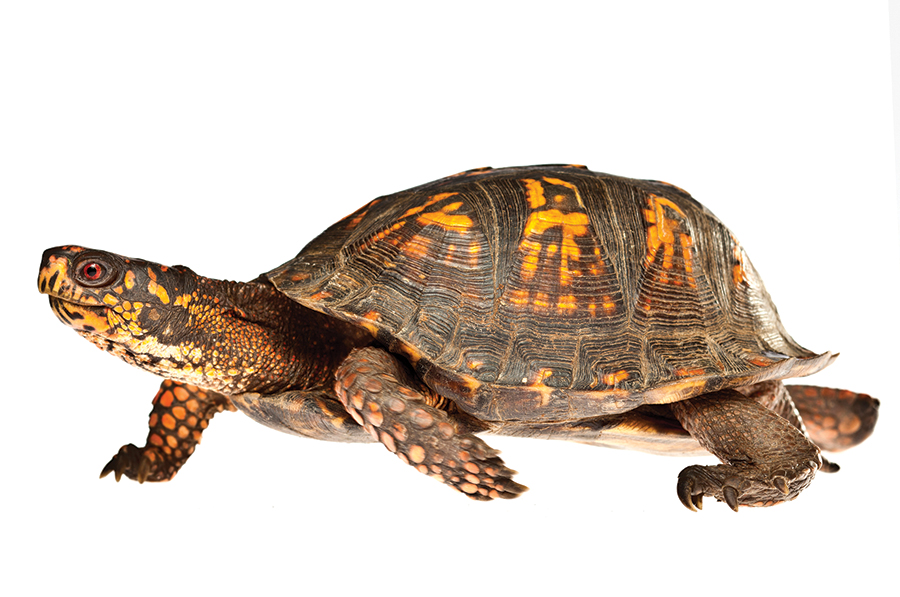
Join biology professor Dr. John Roe from the University of North Carolina-Pembroke to learn about box turtles and the radio transmitter methods used to track them. The program is free and open to the public at 3 p.m. on Sunday, April 28, at Weymouth Woods-Sandhills Nature Preserve, 1024 Fort Bragg Road, Southern Pines. For information call (910) 692-2167 or go to www.ncparks.gov.

One More Time, With Feeling

National Theatre Live offers this encore performance of Alan Bennett’s Allelujah! filmed live at London’s Bridge Theatre during its limited run. The story is set at The Beth, an old-fashioned cradle-to-grave hospital threatened with closure as part of an efficiency drive. A documentary crew, eager to capture its fight for survival, follows the daily struggle on the Dusty Springfield Geriatric Ward and the triumphs of the old people’s choir. Showing is at 10 a.m. on Thursday, April 25, at the Sunrise Theater, 244 N.W. Broad St., Southern Pines. For informational call (910) 692-3611 or go to www.sunrisetheater.com.

Spring for Angela

Cousin Amy and Whiskey Pines will perform a charity fundraising concert for Angela Gaskell — warm, curious, and passionate about animals and the environment — who’s also in need of a new kidney. The concert will be at the Shaw House on Sunday, April 28, from 2 to 5 p.m.


Simple Life

Life and Limb

My cabins in the sky

By Jim Dodson

One of my secret pleasures is a mind-candy house program on Animal Planet called Treehouse Masters, in which an infectiously enthusiastic house designer and self-described “tree whisperer” named Pete Nelson and his merry band of workers create mind-boggling treehouse retreats for clients. His stated mission is to help customers get back to nature and in touch with their inner kid.

It’s a pure fantasy show that combines three of my favorite things — houses, trees and memories of climbing them during my childhood. It was probably inevitable for a kid who grew up on a diet of adventure books, and camping and hiking forests all over the western portions of this state and neighboring Virginia, that I would eventually get around to building a treehouse, especially after I saw Disney’s 1960 version of Swiss Family Robinson. The shipwrecked but enterprising Robinson clan lashed together a furnished treehouse palace that featured running water from a turning wheel, thatch-roofed bedrooms, a full-service kitchen and salvaged ship’s wheel that raised the ladder each evening to protect against wild animals or unwelcome visitors. They lived with a pair of large friendly dogs and a parrot, and even had a piano that somehow survived the shipwreck.

In my opinion, those lucky Robinsons had the perfect life.

Of course, I was only 7, a kid who’d had a happy but fairly solitary life building forts in the woods and reading adventure books, the son of a Southern newspaperman who hauled his young family across the Deep South to his various posts before coming permanently home to Greensboro in 1959 — shortly before the shipwrecked Robinsons showed up in Cinemascope on the big screen.

My first treehouse was a distinctly modest platform affair — more lookout stand that actual shelter. Perched in a patch of hardwoods in a public park across the street from the apartment we rented while our first house was being built in a rural subdivision, it was probably illegal. But so were the Robinsons. You reached the platform by inching up a thick-knotted rope. The platform was probably only 10 feet off the ground but it felt amazingly close to heaven in the trees, the ideal place for me to sit and read and keep an eye out for wild animals or unwanted visitors.

At the rear of our new property, my father knocked together an impressive one-room treehouse he furnished with a second-hand dining room table, four mismatched chairs and an old rickety bookcase. I spent a year furnishing that rustic pied-à-terre in the sky with my favorite childhood books and “interesting” stuff I found all over creation until one regrettable summer afternoon I found three girls from the neighborhood having an unauthorized tea party with their dolls in my cherished aerie. Without thinking of the consequences, I fetched a garden hose to cool off the party and quickly felt the wrath of several outraged mothers, hastening the demise of my beloved place on high.

That’s why, when I stumbled across Treehouse Masters, my inner child was set loose from detention.

The New Age treehouses Pete Nelson and his crew create are elaborate affairs that make the industrious Robinsons look like rank beginners. They typically include all the creature comforts of the modern Earth-bound home and then some: fancy woodstoves and electric lights; flush toilets and outdoor showers; kitted-out gourmet kitchens and decks with breathtaking views from high in the trees, rivaling anything you would find in a swanky vacation home.

My favorite segment of the show, however, is when the host calls on fellow treehouse nuts who have created their own unique handcrafted cabins in the sky, retreats that display incredible craftsmanship, artistry and ecological harmony.

One I particularly enjoyed involved a bearded chap who built himself a gorgeous treehouse that was more like a storybook chapel over a stony brook in the Connecticut woods. It was essentially a meditation and reading room with large windows, a simple desk, woodstove, small functioning kitchen and a room where he could sit for hours watching nature through the seasons, forgetting the rest of the world.

His was a slightly more elaborate version of the treehouse I fully intended to someday create above a vernal pool in the forest behind the post-and-beam house I helped build with my own hands on a forested hill in Maine.

The spot — on a beautiful hillside deep among hemlock and birch and proximate to geologic kettles left by the receding ice age — overlooked a seasonal stream and vernal pool dominated by a large lichen-covered stone that I named my “Thinking Rock.” This is where the transcendental kid in me often escaped with my dogs to read, think, smoke a pipe and get right with God and nature.

The bittersweet irony is that the forested retreat I long had in mind never got off the ground, so to speak, because, in the blink of an eye, my own kids were grown and heading off to college, and I was feeling an unexpected gravitational pull of my old Carolina home.

Impossible as it once seemed, I said goodbye to the rugged timbered house and English garden-in-the-woods that I spent nearly two decades building and cultivating, a place where I fully expected to end my days and eventually become part of the landscape when who I am moved on, leaving only a trail of ashes behind.

But life, to paraphrase Emerson, is full of compensations. A few years back, my wife and I purchased a lovely old bungalow that once upon a time was my favorite house in the heavily forested neighborhood where I grew up — two doors away, in fact, from the house where my family lived for almost 40 years.

I joke that I’ve all but completed the Sacred Redneck Circle of Life.

A large part of the place’s allure, I must admit, was the two-car and workshop garage in back that featured a funky little second-floor apartment you reach by climbing a set of rickety wooden steps that take you to rooftop height amidst century-old white oak trees.

Because the house sits on perhaps the highest point in the entire neighborhood, the first time I climbed those steps and turned around to check out the view, my heart leapt like a kid up a tree.

From just under the white oak canopy that reminded me of the arched ceiling of a Medieval cathedral — providing wonderful cooling shade all summer — I could see the world with a bird’s-eye-view: vaulting trees and rooftops across the neighborhood, not to mention birds and squirrels galore, passing clouds, a huge patch of sky by day, a glorious quilt of stars by night.

Suddenly I had the treehouse I’d always dreamed of owning, this one equipped with electric power and heat, small kitchenette and bathroom with fully functioning toilet and shower. The cheap dark-wood paneling gives it a perfect rustic air and a couple of overhead fans keeps the place cool in summer. If it isn’t quite worthy of Treehouse Masters, it fits me like lichens on a thinking rock.

Just outside the door, I hung a large set of Canterbury chimes from a stout limb of the massive white oak at the foot of the steps. When the wind blows a certain way, I swear I hear the first five notes of “Amazing Grace.”

These days, if you visit my “treehouse,” you will find a pair of comfortable reading chairs (one of which my dog Mulligan occupies when she’s officially on duty), several bookcases filled with favorite books, a French baker’s table where I write, a wicker daybed where I sometimes seek horizontal inspiration on late afternoons, various vintage posters and prints I’ve collected from four decades of journalism and travel, a cabinet case filled with some of my own books and a few awards, a second cabinet that holds “Uncle Jimmy’s Genuine Real Stuff Museum,” framed photos of my children and a pair of large rare portraits of Walter Hagen and young Fidel Castro, themed lamps (a blue coat soldier, a Bengali elephant, a monkey climbing a palm tree), several busts (Ben Franklin, Alexander the Great, a Templar knight), three sets of old golf clubs, a full golf library, several checkered golf flags, and a large replica of the first American flag with thirteen stars in a circle of blue.

Nobody in their right mind would want all this stuff in their real house. But like the Swiss Family Robinson, this oddball collection from a long journey home has finally found the perfect place in my cabin in the sky. PS

Contact Editor Jim Dodson at jim@thepilot.com.

In the Spirit

Mean Muggin’

Crafting the perfect party vessel

By Tony Cross

A few months back, I was asked by an online publication that caters to bar managers and owners to write a column discussing Tiki cocktails. There’s no Tiki scene here in the Sandhills, so I had to reach out to a few people who know a lot more than I do on the matter. I was able to chat with the bar manager from one of my favorite bars in Asheville, MG Road, about their Tiki drinks and cocktail classes. Of course, having a great cocktail is key to running a successful program, whatever style you want to promote. But with Tiki drinks, you definitely need the proper aesthetic to create beautiful visuals for your guests before they take their first sip. One of the angles I wanted to attack was Tiki mugs and glassware. I follow a lot of bartenders on Instagram and knew immediately who I wanted to message in hopes of getting an interview.

Before you make your first Tiki drink, you’ll need to choose a glass, Tiki mug, or as Danny Gallardo refers to it, “a vessel.” Danny is the owner of Tiki Diablo, in Los Angeles. I became familiar with Danny’s work after following his Instagram page (tikidiablo) a few years ago. If you’re looking for the guy to create and craft a special vessel for you, look no further. We chatted on the phone for a while, and he quickly informed me that all things Tiki had been revived much longer ago than I thought. “It was very rare to see any place as cocktail-centric,” he said of L.A. in the late ’90s. “There’s a local bar in L.A. — and this is when Jeff Berry* was still living here — where he and a group of us would get together on Wednesday nights. They had been going there for five or six years and trying to reverse-engineer these drinks. I came from the art side of it. I was carving wood Tikis, big 8-foot, 9-foot statues, and was just starting to make mugs. I thought it was very interesting that they were taking notes and drinking these drinks while discussing this stuff. And I’m like, ‘What the hell are they doing? This is crazy, I’ve never seen this before.’ So, there were cocktail nerds way back when. The Tiki movement had already had its first exposure in ’02 and ‘03.”

Danny’s mugs took off locally and statewide, and he was able to create and ship wholesale to a chain of Home Depot stores. “I took advantage of the momentum I had where we released a lineup of Tiki goods through Home Depot. That kind of helped me out with name recognition outside of the Tiki-world bubble. We were all the way to Louisiana, and over 600 stores. I used that as a launching point for pushing my method.”

Today Tiki Diablo’s mugs are international. “We’re doing a lot of work with distilleries that are not U.S.-based; ones that are appreciating what we’re doing,” he says. “Those making finely handcrafted rums are saying to us, ‘Hey, you’re a good fit. You’re making handmade, small-batch mugs, that are brand specific.’ We design and make unique mugs for every single client. No client gets the same design; everything is from scratch.”

Danny is the sole designer and sculptor in his company. He does, however, have a crew that has been making ceramics since 1980. “I’m a firm believer in surrounding myself with people that are better than I am,” he says. He makes the mugs for Berry’s world-renowned Latitude 21 bar. “A lot of stuff that I make is brand-centric. What people decide to do with the mugs is up to them, which makes a lot of my stuff hard to get. This year we’re going to put an emphasis on buying mugs directly from our website (tikidiablo.com).” Contact them, and they will customize a mug specifically for your bar or restaurant. “Three Dots and a Dash just sold a whole array (of mugs) that I made for them. Don’t quote me on the price, but they were at least $125 a piece, and sold in a matter of days.”

What Danny does see as trending in the Tiki world is collecting these one-of-a-kind mugs. “I have noticed a trend in themed bars, not necessarily a Tiki bar, but you have to have mugs as a part of your business plan now. Nowhere else are you going to clear up to $80-$100 on one item on your menu. Pure profit. Undertow, in Phoenix, those guys know what they’re doing. They order back-to-back, they sell everything out, and as they’re making their final payment, they ask me, ‘OK, what’s next?’ It’s a huge component in sales and income for bars now, getting the mugs going, and moving on to the next ones.” Danny says most businesses do this by having mug release parties. “People are lining up in the morning to make sure that they get a mug,” he says.

And what does Mr. Tiki Diablo drink in his vessels? “I’m a classic Mai-Tai guy, I love a daiquiri too. Those are my go-tos. I don’t bartend at home because all of my friends are excellent bartenders. I don’t mess with what I don’t know. Let the experts do their thing. Let me stay out of the way.”

Even if you have exquisite glassware and mugs from Danny (he was gracious enough to send the mug pictured on the previous page), you’re still going to have to make sure that what’s inside counts. Remember: Don’t skimp on the essentials. Fresh juices, homemade syrups, and quality spirits. It doesn’t have to be expensive to be considered quality. Once you have your recipe down pat, you’ll have your friends and guests loving what they’re tasting with their eyes and palates.

(* “In the Spirit” featured Jeff “Beachbum” Berry in the October 2017 issue of PineStraw.)  PS

Tony Cross is a bartender who runs cocktail catering company Reverie Cocktails in Southern Pines.

April Bookshelf

April Books

FICTION

At Briarwood School for Girls, by Michael Knight

Lenore is a young student in the 1990s who finds herself pregnant as she navigates her junior year on the basketball team, in the school play, and talking through her problems with a ghost from decades past. But the very history that is revered in the region — the buildings, the grounds, the surrounding Virginia countryside — is threatened by the commercialized invasion of an imminent Disney theme park, much to the dismay of locals and students alike. Knight proves himself once again to be a spinner of a great story.

The Gulf, by Belle Boggs

The author of The Art of Waiting and Mattaponi Queen delivers a novel filled with satire, irony, warmth and wit. Two liberal atheists in need of work, along with a venture capitalist, decide to open a writing school for Christians in a decrepit motel on Florida’s Gulf Coast. Marianne is a floundering poet who finds herself in the position of administrator, getting the actual site ready and culling through the applicants, while waiting for her ex-fiancé, Eric, to return from Dubai and assist her. The result is a motley assortment of teachers and students. After a comical and rocky first few days, they manage to find common ground. It could have worked until a politician with an agenda becomes involved.

The Editor, by Steven Rowley

What if you are called by a major publishing company to meet with an editor to discuss your first novel? What if the editor who walks into the room is Jacqueline Kennedy Onassis? That’s the situation writer James Smale finds himself in. Jackie and James develop a strong working relationship as she expertly guides him through his novel while encouraging him to confront the truth about his own family. The Editor is satisfying, charming, witty, and an intuitive look at family, relationships and life — a stylish and unforgettable tribute to a stylish and unforgettable woman.

Stay Up with Hugo Best, by Erin Somers

Suave, debonair, womanizing late-night talk show host Hugo Best is ending his decades-long career with a fizzle. To 29-year-old June Bloom, writing assistant to the show, he is still an iconic figure. He unexpectedly invites her for a long weekend at his mansion — no strings attached — and she accepts. What follows are overwhelming, underwhelming, awkward comical scenarios between the characters that can make you laugh and cringe simultaneously.

The Girl He Used to Know, by Tracey Garvis Graves

The author of On the Island writes about Jonathan and Annika, who meet in the chess club at the University of Illinois and bring out the best in each other, finding the confidence and courage within themselves to plan a future together. What follows is a tumultuous yet tender love affair that withstands everything except the unforeseen tragedy that forces them apart, shattering their connection and leaving them to navigate their lives alone. A decade later, fate reunites them in Chicago. She’s living the life she wanted as a librarian. He’s a Wall Street whiz, recovering from a divorce and seeking a fresh start.

The Peacock Emporium, by Jojo Moyes

In the ’60s, Athene Forster was the most glamorous girl of her generation. Nicknamed the “Last Deb,” she was beautiful, spoiled and out of control. After she agrees to marry the gorgeous young heir Douglas Fairley-Hulme, rumors began to circulate about Athene’s affair with a young salesman. Thirty-five years later, Suzanna Peacock is struggling with her notorious mother’s legacy. The only place Suzanna finds comfort is in The Peacock Emporium, the beautiful coffee bar and shop she opens that soon enchants her little town. There she makes, perhaps, the first real friends of her life, including Alejandro, a male midwife, escaping his own ghosts.

NONFICTION

Save Me the Plums, by Ruth Reichl

The editor-in-chief of Gourmet and a New York Times best-selling author writes a memoir about her groundbreaking tenure at the top food magazine in the world, helping to create a culture of chef superstars. The story of a former Berkeley hippie who enters the corporate world, Reichl shares the insider look at running the storied magazine (and closing it).

The Second Mountain: A Quest for a Moral Life, by David Brooks

Brooks explores the four commitments that define a life of meaning and purpose: to a spouse and family; to a vocation; to a philosophy or faith; and to a community. Our personal fulfillment depends on how well we choose and execute these commitments. The New York Times columnist looks at a range of people who have lived joyous, committed lives, and who have embraced the necessity and beauty of dependence. He gathers their wisdom on how to choose a partner, how to pick a vocation, how to live out a philosophy, and how we can begin to integrate our commitments into one overriding purpose.

Maybe You Should Talk to Someone, by Lori Gottlieb

With startling wisdom and humor, therapist Lori Gottlieb invites us into her world as both clinician and patient, examining the truths and fictions we tell ourselves and others as we teeter on the tightrope between love and desire, meaning and mortality, guilt and redemption, terror and courage, hope and change. Maybe You Should Talk to Someone is revolutionary in its candor, offering a deeply personal yet universal tour of our hearts and minds and providing the rarest of gifts: a boldly revealing portrait of what it means to be human.

The Animal’s Companion, by Jacky Colliss Harvey

In The Animal’s Companion, the acclaimed author of Red: A History of the Redhead turns her keen eye for cultural investigation and her remarkable storytelling skills to a pet project: the history of animals as our companions in everyday life. It’s a history that dates as far back as 26,000 years ago to a cave in France where anthropologists discovered evidence of a boy and his dog taking a walk together. From that point forward, Colliss Harvey takes us on a sweeping journey through centuries and across continents to examine how our relationships with our pets have developed, yet stayed very much the same. Along the way she shares delightful stories of the most famous, endearing and sometimes eccentric pet owners throughout history.

CHILDREN’S BOOKS

Babymoon, by Hayley Barrett

The perfect gift for newly expectant parents. Unlike any other “new baby” book, this special little title focuses on those few, precious days parents have with their newborn as together they become a new family. (Age birth-1.)

The Little Guys, by Vera Brosgol

These little guys are just about the cutest things in all the forest, and when they band together, they can do just about anything, can take just about anything . . . can get all they need. But just how much is too much? And just where do the needs of the whole forest come in? These little guys will warm your heart as they open their hearts to the needs of others both big and little. (Ages 3-6.)

Where the Heart Is, by Jo Knowles

It’s the first day of summer and Rachel’s 13th birthday. With a summer job caring for the neighbor’s farm animals, her best friend, Micah, nearby and weeks of warm weather to look forward to, Rachel is living the dream. But when bad news threatens all she loves, Rachel must make some difficult decisions about who and what are important in her life. At once sweet, silly, sad and ultimately satisfying, Where the Heart Is is the perfect summer read. (Age 12-14.)

Ghost Boys, by Jewell Parker Rhodes

In the end, and in the beginning, all we really have are our stories. In Ghost Boys, Jerome’s story, Sarah’s story, Grandma’s and Kim’s and Emmett’s stories are all one: that only the living can make the world better. This story — their story — will haunt the reader long, long past the final page. Sure to be a winner this award season, Ghost Boys is an absolute must-read. (Ages 12-16.)

Lovely War, by Julie Berry

Clever, snarky, beautiful and completely impossible to put down, this sweeping epic love story absolutely has it all. Aphrodite, as narrator, shares a tale of absolute love and passion — a tale of four mortals from divergent backgrounds whose lives are forever connected through interactions during World War I. It’s a story that even has the gods of fire and war wiping an occasional tear from their eyes and softens the heart of the god of the underworld. (Ages 14 to adult.)  PS

Compiled by Kimberly Daniels Taws and Angie Tally

Drinking with Writers

With the Author Himself

An internal dialog

By Wiley Cash   •   Photograph by Mallory Cash

Wiley Cash and I have known one another for almost 42 years, but I do not see him very often. Work as writer-in-residence at the state university in Asheville has him driving back and forth across the state quite a bit, and if you are to believe his social media accounts, he is usually sprinting through one airport or another, behind on a writing deadline and struggling to find Wi-Fi to return students’ emails. That’s what he gets for giving up his smartphone.

Life has been pretty busy since Wiley’s first novel, A Land More Kind Than Home, was released in the spring of 2012. Since then he has published two more novels, taken a few teaching positions, and moved a couple times. He and his wife, Mallory, who is a photographer, are also the parents of two young daughters.

A few weeks ago I sent him a text. (He can still text with a flip phone. It just takes him longer.)

Me: let’s get a beer

Wiley: high cholesterol. Been jogging. Coffee?

Me: does beer give you high cholesterol?

Wiley: beer makes it harder to jog

Me: where should we meet for coffee? Prefer a place that also serves beer.

Wiley: our house Thursday morning

Mallory meets me at the door when I arrive at their home near Carolina Beach.

“His majesty is still in his robe,” she says.

“Late night?” I ask.

“No,” she says. “He just works from home. His robe is like his employee uniform.”

“You work from home too,” I say. “You’re not wearing your pajamas.”

“Maybe the robe life is the exclusive lifestyle of authors.”

I look up and see Wiley coming down the stairs in a bright red robe and gray bedroom slippers. We shake hands.

“It’s been a while,” Wiley says. “When did you get glasses?”

“Last year,” I say.

He strokes his white beard and tucks his (graying?!) hair behind his ear.

“We’re getting old,” he says. He smiles. “At least you are.”

“I guess that means we’re having coffee instead of beer.”

He smiles and leads me down the hallway, past the kitchen, and into a sitting room that has recently been converted into his daughters’ playroom. He offers me a seat in one of two tattered yellow armchairs.

“When we bought this house we thought it would be a great place to host parties,” he says. He smiles and looks around the room. “Turns out it’s been a great place to host children’s books and games and toys.”

While Wiley makes coffee in a French press, we discuss what has kept him busy since his most recent novel, The Last Ballad, was published in the fall of 2017. He tells me about the Open Canon Book Club, an online book club he founded to introduce readers to diverse books by diverse authors, and the Land More Kind Appalachian Artists’ Residency, a retreat he and Mallory and two friends founded in West Virginia. He is also teaching, a lot: Aside from his work as writer-in-residence at the University of North Carolina-Asheville, he also teaches in the Mountainview Low-Residency MFA Program. In his spare time he is trying to work on a new novel, one that is already behind deadline.

“How are you finding the time and space to write?” I ask.

He pours me a cup of black coffee, pours one for himself, and then sits back in his chair.

“It’s hard,” he said. “I’m really busy, but everything I do is about writing in one way or another. When I teach, I teach writing. When I give a talk at a library or university, I’m talking about writing. When I’m reading books for the book club or reading through applications for the artists’ residency, I’m thinking about the written word and how it works to achieve an author’s intentions. Literally everything I do pertains to writing. My life is one huge literary conversation that never stops.”

“It all sounds like a lot of work,” I say. “Are there many rewards?”

“Aside from my mom constantly asking if my editor’s mad at me because my novel is late? Sure. There are a lot of rewards,” he says. “I’m so lucky that my one-time hobby has become my full-time occupation, or occupations.” He looks over his shoulder at a wall of glassed-in bookshelves in the living room. “Speaking of rewards,” he says, “you want to see a really cool one?”

He gets up and walks into the other room. When he returns he is carrying a small statue on a pedestal. “Meet Sir Walter Raleigh,” he says. He slides one of his girl’s chairs away from a children’s table and sets the statue on the chair. He makes a show of polishing it. “I received this a few weeks ago from the North Carolina Historical Book Club. I love it.”

“You seem like a proud father,” I say. “Speaking of fatherhood, how has it changed your writing?”

“Being a parent has deepened the experience of storytelling in ways that have really surprised me,” he says. “Our oldest, who’s 4, is obsessed with narrative. I probably tell six or seven stories a day about saber tooth tigers and early people and ghosts and pirates. A few nights ago I heard her telling Mallory about how telling stories can cause them to feel true. That left a huge impression on me because that’s what I want to do as a writer. I want to tell my readers fictional stories that they believe nonetheless.

“And our 3-year-old is really interested in telling stories. A few days ago, she told Mallory a story that began It was the first day of school. His mother came to get him. He was not sad, but quiet. Are you kidding me? I don’t write opening lines that beautiful.”

“If your girls told a story about you, what would it be?” I ask. Wiley takes a sip of his coffee and looks toward the window.

“It was the first day of writing a new novel,” he says. “His mother had already called to check on his progress. He was not sad, but tired.”

“Pretty good lines,” I say.

“Thanks,” he says. “They’re yours if you write my biography.” PS

Wiley Cash lives in Wilmington with his wife and their two daughters. His latest novel, The Last Ballad, is available wherever books are sold.