The Coffin

THE COFFIN

The Coffin

Fiction by Ray Bradbury

Illustration by Mariano Santillan

THERE WAS ANY AMOUNT of banging and hammering for a number of days; deliveries of metal parts and oddments which Mr. Charles Braling took into his little workshop with a feverish anxiety. He was a dying man; a badly dying man and he seemed to be in a great hurry between racking coughs and spittlings, to piece together one last invention.

“What are you doing?” inquired his younger brother, Richard Braling. He had listened with increasing difficulty and much curiosity for a number of days to that banging and rattling about, and now stuck his head through the work-room door.

“Go far far away and let me alone,” said Charles Braling, who was seventy, trembly and wet-lipped most of the time. He trembled nails into place and trembled a hammer down with a weak blow upon a large timber and then struck a small metal ribbon down into an intricate machine, and, all in all, was having a carnival of labor.

Richard looked on, bitter-eyed, for a long moment. There was a hatred between them. It had gone on for some years and now was neither any better or any worse for the fact that Charlie was dying. Richard was delighted to know of the impending death, if he thought of it at all. But all this busy fervor of his old brother’s stimulated him.

“Pray tell,” he said, not moving from the door.

“If you must know,” snarled old Charles, fitting in an odd thingumabob on the box before him. “I’ll be dead in another week and I’m — I’m building my own coffin!”

“A coffin, my dear Charlie. That doesn’t look like a coffin. A coffin isn’t that complex. Come on now, what are you up to?”

“I tell you it’s a coffin! An odd coffin, yes, but nevertheless,” the old man shivered his fingers around in the large box, “nevertheless a coffin!”

“But it would be easier to buy one.”

“Not one like this! You couldn’t buy one like this any place, ever. Oh, it’ll be a real fine coffin, all right.”

“You’re obviously lying.” Richard moved forward. “Why, that coffin is a good twelve feet long. Six feet longer than normal size!”

“Oh, yes?” The old man laughed quietly.

“And that transparent top; who ever heard of a coffin lid you can see through? What good is a transparent lid to a corpse?”

“Oh, just never you mind at all,” sang the old man heartily. “La!” And he went humming and hammering about the shop.

“This coffin is terribly thick,” shouted the young brother over the din. “Why, it must be over five feet thick; how utterly unnecessary!”

“I only wish I might live to patent this amazing coffin,” said old Charlie. “It would be a god-send to all the poor peoples of the world. Think how it would eliminate the expenses of most funerals. Oh, but, of course, you don’t know how it would do that, do you? How silly of me. Well, I shan’t tell you. If this coffin could be mass-produced — expensive at first, naturally — but then when you finally got them made in vast quantities, gah, but the money people would save.”

“To hell with you!” And the younger brother stormed out of the shop.

It had been an unpleasant life. Young Richard had always been such a bounder he never had two coins to clink together at one time; all of his money had come from old brother Charlie, who had the indecency to remind him of it at times. Richard spent many hours with his hobbies; he dearly loved piling up bottles with French wine labels, in the garden. “I like the way they glint,” he often said, sitting and sipping, sipping and sitting. He was the only man in the county who could hold the longest grey ash on a fifty cent cigar for the longest recorded time. And he knew how to hold his hands so his diamonds jangled in the light. But he had not bought the wine, the diamonds, the cigars — no! They were all gifts. He was never allowed to buy anything himself. It was always brought to him and given to him. He had to ask for everything, even writing paper. He considered himself quite a martyr to have put up with taking things from that rickety old brother for so long a time. Everything Charlie ever laid his hand to turned to money; everything Richard had ever tried in the way of a leisurely career had failed.

And now, here was this old mole of a Charlie whacking out a new invention which would probably bring Charlie additional specie long after his bones were slotted in the earth!

Well, two weeks passed.

One morning the old brother toddled upstairs and stole the insides out of the electric phonograph. Another morning he raided the gardener’s greenhouse. Still another time he received a delivery from a medical company. It was all young Richard could do to sit and hold his long grey cigar ash steady while these murmuring excursions took place.

“I’m finished!” cried old Charlie on the fourteenth morning, and dropped dead.

Richard finished out his cigar, and, without showing his inner excitement, he laid down his cigar with its fine long whitish ash, two inches long, a real record, and arose.

He walked to the window and watched the sunlight playfully glittering among the fat beetle-like champagne bottles in the garden.

He looked toward the top of the stairs where old dear brother Charlie lay peacefully sprawled against the banister. Then he walked to the phone and perfunctorily dialed a number.

“Hello, Green Lawn Mortuary? This is the Braling residence. Will you send around a wicker, please? Yes. For Brother Charlie. Yes. Thank you. Thank you.”

As the mortuary people were taking brother Charles out in their wicker they received instructions. “Ordinary casket,” said young Richard. “No funeral service. Put him in a pine coffin. He would have preferred it that way — simple. Good bye.”

“Now!” said Richard, rubbing his hands together. “We shall see about this ‘coffin’ built by dear Charlie. I do not suppose he will realize he is not being buried in his ‘special’ box. Ah.”

He entered the downstairs shop.

The coffin sat before some wide-flung French windows, the lid shut complete and neat, all put together like the fine innards of a Swiss watch. It was vast, and it rested upon a long long table with rollers beneath for easy maneuvering.

The coffin interior, as he peered through the glass lid, was six feet long. There must be a good three feet of false body at both head and foot of the coffin, then. Three feet at each end which, covered by secret panels that he must find some way of opening, might very well reveal — exactly what?

Money, of course. It would be just like Charlie to suck his riches into his grave with himself, leaving Richard with not a cent to buy a bottle with. The old bastard!

He raised the glass lid and felt about, but found no hidden buttons. There was a small sign studiously inked on white paper, thumbtacked to the side of the satin lined box. It said:

THE BRALING ECONOMY CASKET. Copyright, April, 1946.

Simple to operate. Can be used again and again by morticians and families with an eye to the future.

Richard snorted thinly. Who did Charlie think he was fooling?

There was more writing:

DIRECTIONS: SIMPLY PLACE BODY IN COFFIN.

What a fool thing to say. Put body in coffin! Naturally! How else would one go about it? He peered intently and finished out the directions:

SIMPLY PLACE BODY IN COFFIN—AND MUSIC WILL START.

“It can’t be —” Richard gaped at the sign. “Don’t tell me all this work has been for a —” He went to the open door of the shop, walked out upon the tiled terrace and called to the gardener in his green-house. “Rogers!” The gardener stuck his head out. “What time is it?” asked Richard. “Twelve o’clock, sir,” replied Rogers.

“Well, at twelve fifteen, you come up here and check to see if everything is all right, Rogers,” said Richard.

“Yes, sir,” said the gardener. Richard turned and went back into the shop. “We’ll find out —” he said, quietly.

There would be no harm in lying in the box, testing it. He noticed small ventilating holes in the sides. Even if the lid were closed down there’d be air. And Rogers would be up in a moment or two. SIMPLY PLACE BODY IN COFFIN-AND MUSIC WILL START. Really, how naïve of old Charlie! Richard hoisted himself up.

He was like a man getting into a bath-tub. He felt naked and watched over. He put one shiny shoe into the coffin and crooked his knee and eased himself up and made some little remark to nobody in particular, then he put in his other knee and foot and crouched there, as if undecided about the temperature of the bath-water. Edging himself about, chuckling softly, he lay down, pretending to himself (for it was fun pretending) that he was dead, that people were dropping tears on him, that candles were fuming and illuminating and that the world was stopped in mid-stride because of his passing. He put on a long pale expression, shut his eyes, holding back the laughter in himself behind pressed, quivering lips. He folded his hands and decided they felt waxen and cold.

Whirr. Spung! Something whispered inside the box-wall. Spung!

The lid slammed down on him!

From outside, if one had just come into the room, one would have imagined a wild man was kicking, pounding, blathering, and shrieking inside a closet! There was a sound of a body dancing and cavorting. There was a thudding of flesh and fists. There was a squeaking and a kind of wind from a frightened man’s lungs. There was a rustling like paper and a shrilling as of many pipes simultaneously played. Then there was a real fine scream. Then — silence.

Richard Braling lay in the coffin and relaxed. He let loose all his muscles. He began to chuckle. The smell of the box was not unpleasant. Through the little perforations he drew more than enough air to live on, comfortably. He need only push gently up with his hands, with none of this kicking and screaming and the lid would open. One must be calm. He flexed his arms.

The lid was locked.

Well, still there was no danger. Rogers would be up in a minute or two. There was nothing to fear.

The music began to play.

It seemed to come from somewhere inside the head of the coffin. It was green music. Organ music, very slow and melancholy, typical of Gothic arches and long black tapers. It smelled of earth and whispers. It echoed high between stone walls. It was so sad that one almost cried listening to it. It was music of potted plants and crimson and blue stained glass windows. It was late sun at twilight and a cold wind blowing. It was a dawn with only fog and a far away fog-horn moaning.

“Charlie, Charlie, Charlie, you old fool you! So this is your odd coffin!” Tears of laughter welled into Richard’s eyes. Nothing more than a coffin which plays its own dirge. Oh, my sainted Grandma!”

He lay and listened critically, for it was beautiful music and there was nothing he could do until Rogers came up and let him out. His eyes roved aimlessly, his fingers tapped soft little rhythms on the satin cushions. He crossed his legs idly. Through the glass lid he saw sunlight shooting through the French windows, dust particles dancing on it. It was a lovely blue day.

The sermon began.

The organ music quieted and a gentle voice said:

“We are gathered together, those who loved and those who knew the deceased, to give him our homage and our due —”

“Charlie, bless you, that’s your voice!” Richard was delighted. “A mechanical funeral, by God. Organ music and lecture. And Charlie giving his own oration for himself!”

The soft voice said, “We who knew and loved him are grieved at the passing of —”

“What was that?” Richard raised himself, startled. He didn’t quite believe what he had heard. He repeated it to himself just the way he had heard it:

“We who knew and loved him are grieved at the passing of Richard Braling.”

That’s what the voice had said.

“Richard Braling,” said the man in the coffin. “Why, I’m Richard Braling.

A slip of the tongue, naturally. Merely a slip. Charlie had meant to say “Charles” Braling. Certainly. Yes. Of course. Yes. Certainly. Yes. Naturally. Yes.

“Richard was a fine man,” said the voice, talking on. “We shall see no finer in our time.”

“My name again!”

Richard began to move about uneasily in the coffin.

Why didn’t Rogers come?

It was hardly a mistake, using that name twice. Richard Braling. Richard Braling. We are gathered here. We shall miss — We are grieved. No finer man. No finer in our time. We are gathered here. The deceased. Richard Braling. Richard Braling.

Whirrrr. Spung!

Flowers! Six dozen bright blue, red, yellow, sun-brilliant flowers leaped up from behind the coffin on concealed springs!

The sweet odor of fresh cut flowers filled the coffin. The flowers swayed gently before his amazed vision, tapping silently on the glass lid. Others sprang up until the coffin was banked with petals and color and sweet odors. Gardenias and dahlias and daffodils, trembling and shining.

“Rogers!”

The sermon continued.

“Richard Braling, in his life, was a connoisseur of great and good things —” The music sighed, rose and fell, distantly.

“Richard Braling savored of life, as one savors of a rare wine, holding it upon the lips —”

A small panel in the side of the box flipped open. A swift bright metal arm snatched out. A needle stabbed Richard in the thorax, not very deeply. He screamed. The needle shot him full of a colored liquor before he could seize it. Then it popped back into a receptacle and the panel snapped shut.

“Rogers!”

A growing numbness. Suddenly he could not move his fingers or his arms or turn his head. His legs were cold and limp.

“Richard Braling loved beautiful things. Music. Flowers,” said the voice.

“Rogers!”

This time he did not scream it. He could only think it. His tongue was motionless in his anaesthetized mouth.

Another panel opened. Metal forceps issued forth on steel arms. His left wrist was pierced by a huge sucking needle.

His blood was being drained from his body.

He heard a little pump working somewhere.

“Richard Braling will be missed among us —”

The organ sobbed and murmured.

The flowers looked down upon him, nodding their bright-petalled heads.

Six candles, black and slender, rose up out of hidden receptacles, and stood behind the flowers, flickering and glowing.

Another pump started to work. While his blood drained out one side of his body, his right wrist was punctured, held, a needle shoved into it, and the second pump began to force formaldehyde into him.

Pump, pause, pump, pause, pump, pause, pump, pause.

The coffin moved.

A small motor popped and chugged. The room drifted by on either side of him. Little wheels revolved. No pallbearers were necessary. The flowers swayed as the casket moved gently out upon the terrace under a blue clear sky.

Pump, pause. Pump, pause.

“Richard Braling will be missed —”

Sweet soft music.

Pump, pause.

“Ah, sweet mystery of life, at last —” Singing.

“Braling, the gourmet —”

“Ah, at last I have the secret of it all —”

Staring, staring, his eyes egg-blind, at the little card out of the corners of his eyes: The Braling Economy Casket . . .

DIRECTIONS: SIMPLY PLACE BODY IN COFFIN—AND MUSIC WILL START.

A tree swung by overhead. The coffin rolled gently through the garden, behind some bushes, carrying the voice and the music with it.

“Now it is the time when we must consign this part of this man to the earth —”

Little shining spades leaped out of the sides of the casket.

They began to dig.

He saw the spades toss up dirt. The coffin settled. Bumped, settled, dug, bumped and settled, dug, bumped and settled again.

Pulse, pause, pulse, pause. Pump, pause, pulse, pump, pause.

“Ashes to ashes, dust to dust —”

The flowers shook and jolted. The box was deep. The music played.

The last thing Richard Braling saw was the spading arms of the Braling Economy Casket reaching up and pulling the hole in after it.

“Richard Braling, Richard Braling, Richard Braling, Richard Braling, Richard Braling . . . “

The record was stuck.

Nobody minded. Nobody was listening.

Dissecting a Cocktail

DISSECTING A COCKTAIL

The Cosmopolitan

Story and Photograph by Tony Cross

In the fall of 1988, bartender Toby Cecchini was working at The Odeon in New York City, chatting with his co-worker Melissa about her previous night out with friends. They were visiting from San Francisco and introduced her to a cocktail that was making its way across the gay bar scene.

“It’s called The Cosmopolitan,” she said. “Wanna see it?”

“Why not?” replied Cecchini.

She proceeded to make him a cocktail with vodka, Rose’s lime juice, Rose’s grenadine, and a twist of lemon. Oh, that’s cute, Cecchini recalls thinking.

“It was in one of those V-shaped martini stems (very of the times), and I thought that it was funny, because you don’t put cocktails in a martini glass, you only put a martini in a martini glass,” Cecchini said on the podcast Cocktail College. “I thought that was clever — and it was very cute — but it was disgusting. It was Rose’s, fake, cloying, lime cordial and Rose’s grenadine, which is even worse; just simple syrup artificially colored red . . . And I thought, I can make that better.”

So, he did. “Because we made our margaritas with Cointreau and fresh lime juice, I thought, oh, there’s the base, and Absolut had just come out with Absolut Citron — it was the first flavored vodka that we had ever seen, and it was absolutely mind-blowing.” For the red coloring, Cecchini decided to use cranberry juice, since he was used to making Cape Codders all day long. He made it for the servers at The Odeon, and it quickly became the staff drink.

Word of mouth had regulars at the bar asking for “Toby’s drink.” Soon random guests and celebrities began asking for his Cosmopolitan. “Madonna would come in for lunch several times a week and ask for the ‘pink drink,’” he says. And the rest is history: The Cosmopolitan became an instant hit in the bartending community and even had a resurgence a decade later when it was glorified in the Sex in the City series.

Here are Cecchini’s exact specs. Feel free to change the vodka if you’d like, or even the garnish (perhaps a twist of orange?), but do not change the orange liqueur or cranberry juice — Cointreau and Ocean Spray all the way. 

Specifications

1 1/2 ounces Absolut Citron

3/4 ounce Cointreau

3/4 ounce fresh lime juice

3/4 ounce Ocean Spray Cranberry Juice Cocktail

Garnish: lemon twist

Execution

Combine all liquid ingredients into a cocktail shaker and fill with ice. Shake hard until your mixing vessel starts to frost on the outside. Double strain into a chilled cocktail coupe. Garnish with lemon twist.

Poem October 2025

POEM

October 2025

Little Betsy

A ghost is no good to a child.

Maybe he crooks a finger, as if to beckon

the girl to play. Maybe he bounds spritely

down corridors, into kitchens.

But if she hands him a dolly or ball

and he reaches with his spectral hand,

he cannot clutch the gift, and if his failed grasp

surprises him, if the lack of resistance —

for everything real resists the touch —

unbalances him, his incorporeal fingers

might graze the child’s offering hand.

What would you call the gooseflesh

raised by the frolicsome dead?

There is no joy in it, only a deep well

of longing cold, the kind that claws

through every crack in the wall.

— Ross White

Tea Leaf Astrologer

TEA LEAF ASTROLOGER

Libra

(September 23-October 22)

True luxury comes in many forms: Egyptian cotton, Belgian linen, Mongolian cashmere and Ahimsa silk. But have you ever felt the plushness of making a decision sans agony, anxiety spirals or paralysis? The ethereal lightness of refusing to overthink? When Venus enters your sign on Oct. 13, be open to receiving a new kind of abundance — that of an unshakeable inner peace. Everyone wins, and you’ll get to dodge the rabbit hole.

Tea leaf “fortunes” for the rest of you:

Scorpio (October 23 – November 21)

Stop settling for crumbs.

Sagittarius (November 22 – December 21)

Just unsubscribe already.

Capricorn (December 22 – January 19)

Cozy up with the chaos, baby.

Aquarius (January 20 – February 18)

Hint: Add cardamom.

Pisces (February 19 – March 20)

The truth is always a mercy.

Aries (March 21 – April 19)

Mind your tongue.

Taurus (April 20 – May 20)

Address the energy leak.

Gemini (May 21 – June 20)

Resist the urge to ghost.

Cancer (June 21 – July 22)

It’s time to update your software.

Leo (July 23 – August 22)

Listen for the crows.

Virgo (August 23 – September 22)

Embrace your feral nature.

Southwords

SOUTHWORDS

The Cup Runneth Over

By Jim Moriarty

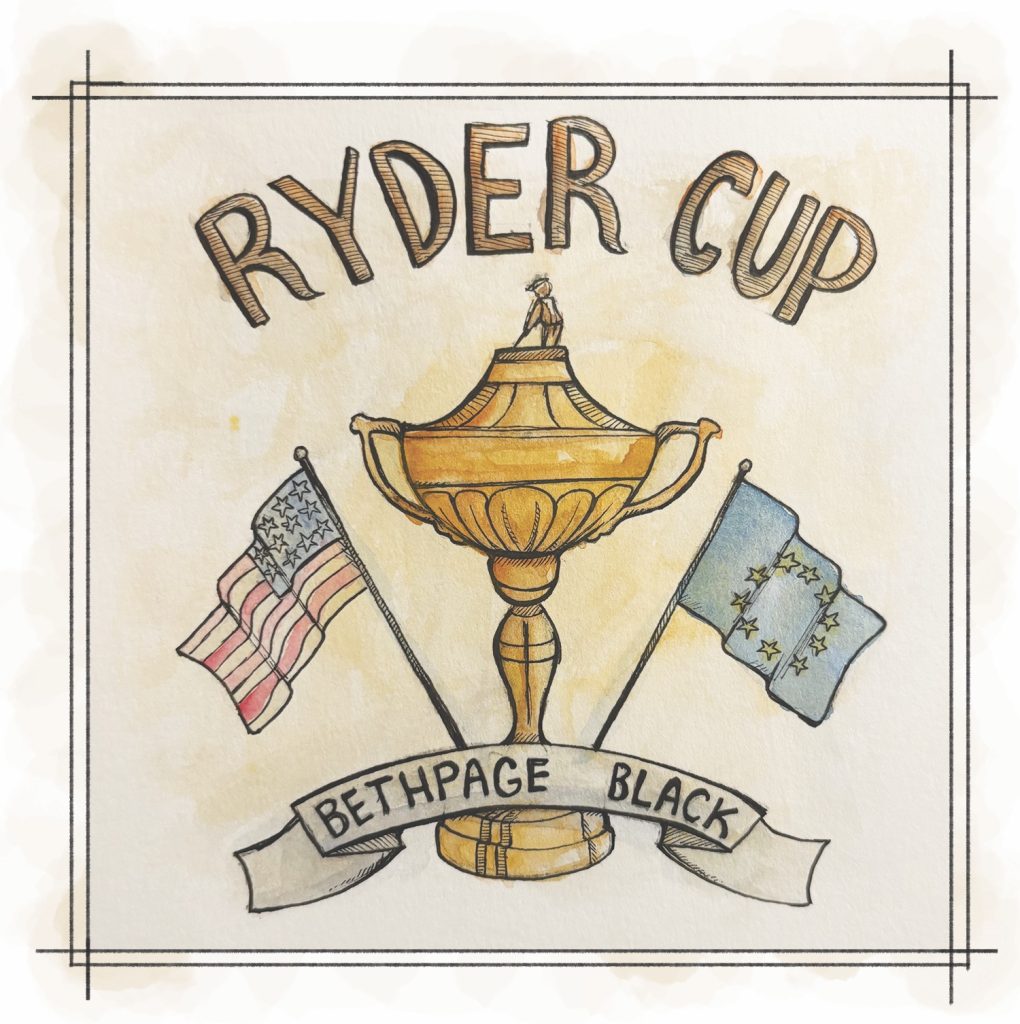
Fall is always football, but every other September, it’s the Ryder Cup, too.

My first Ryder Cup was 1983 at PGA National in Palm Beach Gardens. With a nod to the South Florida heat index, that one was played in mid-October, though since then, every Ryder Cup on this side of the pond has — at the very least — begun in September. The Ryder Cup wasn’t always the spectacle it is today and surely will be at Bethpage Black on New York’s Long Island, where the Americans will try to reclaim the trophy they lost two years ago in Italy.

When it was in Pinehurst in ’51, they paused the matches (in those days between the U.S. and Great Britain & Ireland) to go to the UNC-Tennessee football game in Chapel Hill. Sam Snead, a man often governed by pocketbook issues, took advantage of the day off to do a paid exhibition. At PGA National in ’83 there were probably more people scurrying off in their golf carts to play the other courses than there were watching the matches. Rory McIlroy once described the Ryder Cup as an “exhibition” until he played in one. “Hell of an exhibition, isn’t it?” his teammate Graeme McDowell asked McIlroy as the victorious Europeans sprayed each other with Champagne in 2010, as if Wales wasn’t already soggy enough.

Jack Nicklaus and Tony Jacklin were the captains in ’83. The U.S. had won 11 of the previous 12 Ryder Cups, the lone exception coming in 1969, when the teams tied with the U.S. retaining the cup. That was the year Nicklaus set the sportsmanship bar, conceding Jacklin’s putt on the 18th. The putt was long enough to engage the nerves but short enough that neither thought Jacklin would miss it. Nicklaus believed the tie was a fitting end. Why even take the chance? He picked up Jacklin’s coin.

At PGA National, the two sides went into the Sunday singles tied 8-8. The first match out that day was Seve Ballesteros, the Masters champion, against Fuzzy Zoeller, who had a green jacket of his own and a back brace to ease his pain. When the hobbled Zoeller won four straight holes from the 12th to the 15th, the match came to 18 all square. Both players drove into thick Florida rough. Zoeller’s second found the fairway. Ballesteros could barely advance his ball, hacking it forward 20 yards into a deep fairway bunker 250 yards from the green. Advantage America. Zoeller might squeeze a whole point from Europe’s most dominant figure. I was a few yards away when Seve pulled out his 3-wood. My first thought was that he was certifiably insane. No way was he clearing the lip with a 3-wood. Then he hit one of the greatest single golf shots ever struck in these biennial matches, a high cut to the front edge of the green. Zoeller hit a 2-iron to 10-feet. Fuzzy missed and Seve got up and down to give each team a half point. Nicklaus called Ballesteros’ 3-wood “the finest shot I’ve ever seen.”

The Americans defeated the Europeans 14 1/2 – 13 1/2 as lightning flashed on the horizon. One of Seve’s teammates on the ’83 side was Nick Faldo, who just happens to do one of the finest Seve impressions in the civilized world. The European locker room was a somber place after the narrow loss. They’d given it all and come up short. In bursts Seve. “We must celebrate!” Faldo says in his best Ballesteros lilt. “This is a victory for us!” Seve was right, of course.

The next year Europe broke the string of losses by winning at The Belfry. At the team celebration afterward, the wives began singing their own version of “America,” from West Side Story. “We’re going to win in America! We’re going to win in America!” And all the boys joined in. “That was a great moment,” says Sir Nick. And win they did, at Jack’s place in Ohio.

Since losing in Palm Beach, Europe has won 12, lost 6 and tied one, good enough that year to retain the cup. The U.S. will be favored at brutish Bethpage. The New York fans will be obnoxious; the traffic on the Long Island Expressway will be horrendous; but don’t underestimate the defenders. They still know how to sing.

Sandhills Photo Club

SANDHILLS PHOTO CLUB

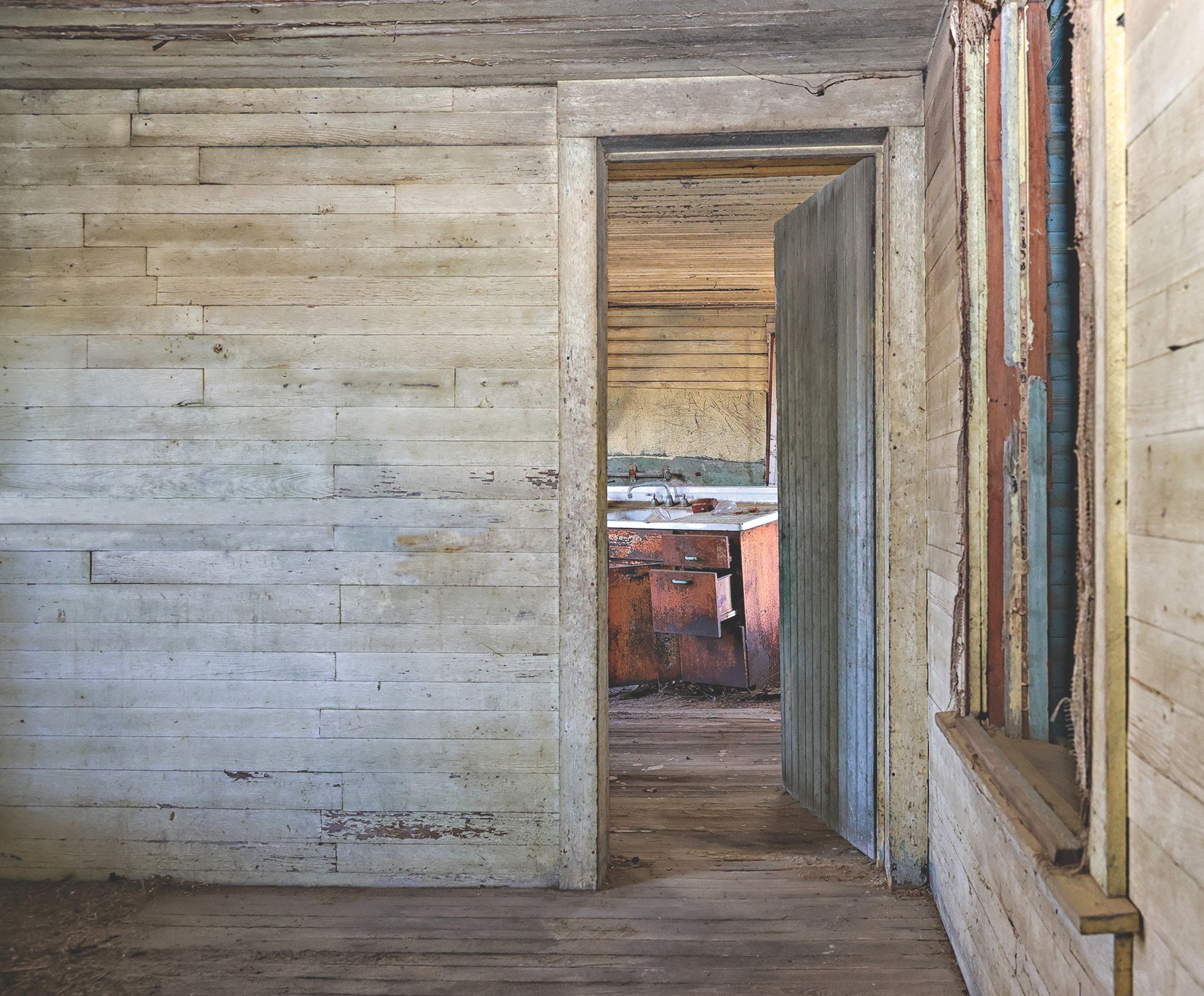
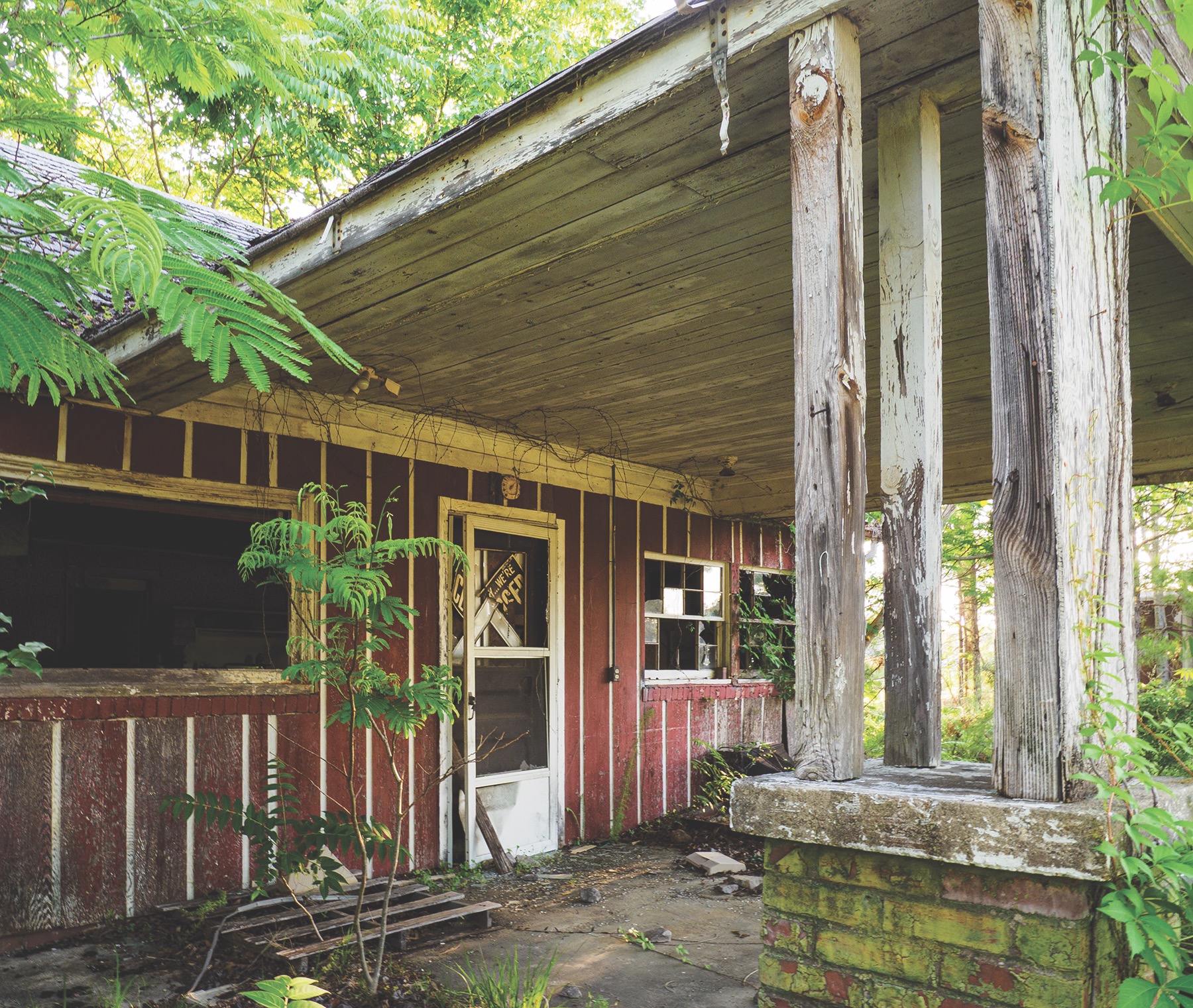
Old Barns & Buildings

The Sandhills Photography Club was started in 1983 to provide a means of improving members’ photographic skills and technical knowledge, for the exchange of information, and, by club activity, to develop membership potential and public interest in the art of photography. For meetings and information visit www.sandhillsphotoclub.org.

Tier 3 Winners

Tier 3, 1st Place: Left Behind by Donna Ford
Tier 3, 2nd Place: Urban Decay by Pat Anderson
Tier 3, 3rd Place: Fixer Upper by Dale Jennings

Tier 2 Winners

Tier 2, 1st Place: Looking Into the Past by Susan Bailey
Tier 2, 2nd Place: We're Closed by Jacques Wood
Tier 2, 3rd Place: Ruins of Knossos by Cathy Locklear

Tier 1 Winners

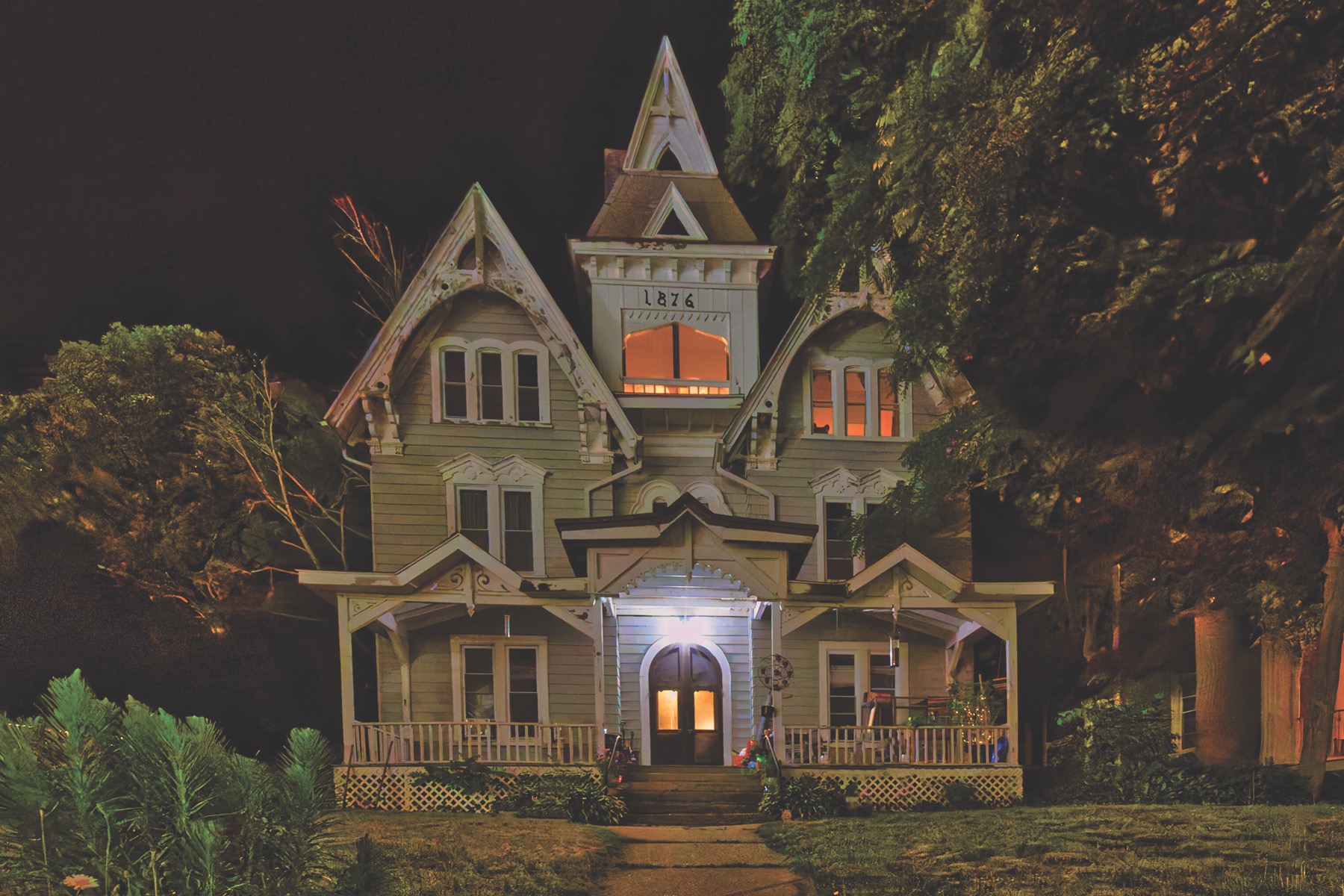
Tier 1, 1st Place: 1876 Victorian by Phillip Lewis
Tier 1, 2nd Place: Fill Er Up by Cindy Murphy
Tier 1, 3rd Place: Teton Treasure by Patti Cifelli
Tier 1, Honorable Mention: Death of Tobacco by Mary Bonsall

California Goes Carolina

CALIFORNIA GOES CAROLINA

California Goes Carolina

With charm, art and a dash of fun

By Deborah Salomon

Photographs by John Gessner

Some houses come with their own histories. Others conform to their residents’ tastes and lifestyles. A very few built by builders or interior designers for personal occupancy showcase materials and expertise. This one began with a sad event, then blossomed into a happy ending.

Randy Boyd, an interior designer based in California’s Laguna Beach and Palm Springs, had been friends with Joyce Reehling, a New York-based TV, film and stage actress, for more than 30 years. Joyce and her husband, Tony Elms, retired to Pinehurst in 2008, where their contributions to the arts community have been significant. When Tony died in 2024, Randy visited Pinehurst to support Joyce. He and partner Mark Stine, liked what they saw: a pretty little town filled with interesting people involved in worthwhile activities. Some but not all were retirees. They were looking to relocate and saw much to like beyond Pinehurst’s reputation for golf.

“We fell in love with the village, the charm, the people,” Randy says.

Finding the right living space was a major factor, given Randy’s profession, which he planned to continue pursuing. The shoemaker’s children, after all, mustn’t go barefoot. He and Mark shared similar tastes. Neither pined for historic Pinehurst properties, a good thing since most Old Town Taras and Georgians are spoken for. Better a bright, breezy Camelot that Randy could transform with ideas gained as an antique dealer, the kind who scours France and sends back shipping containers full of fascinating stuff.

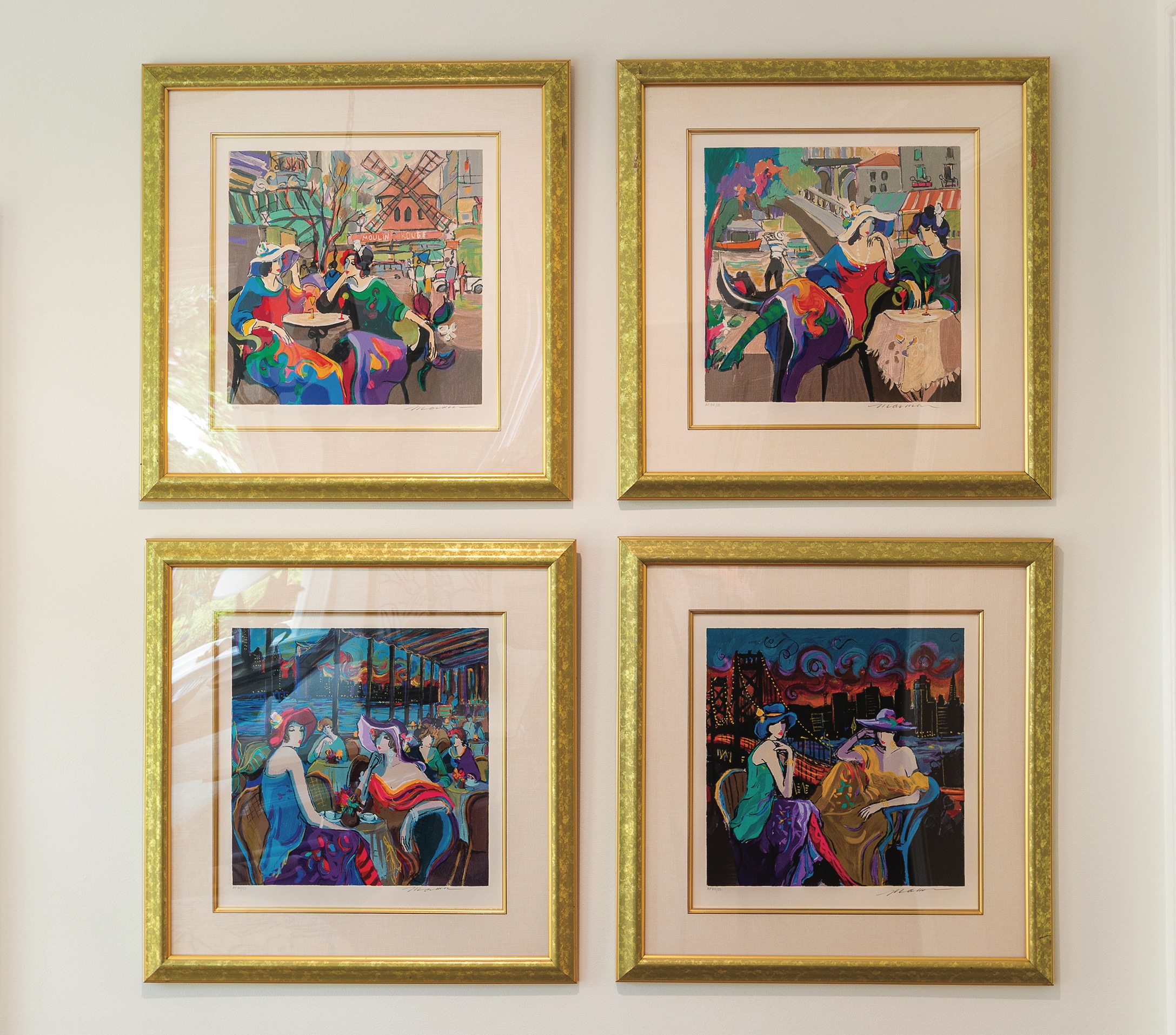
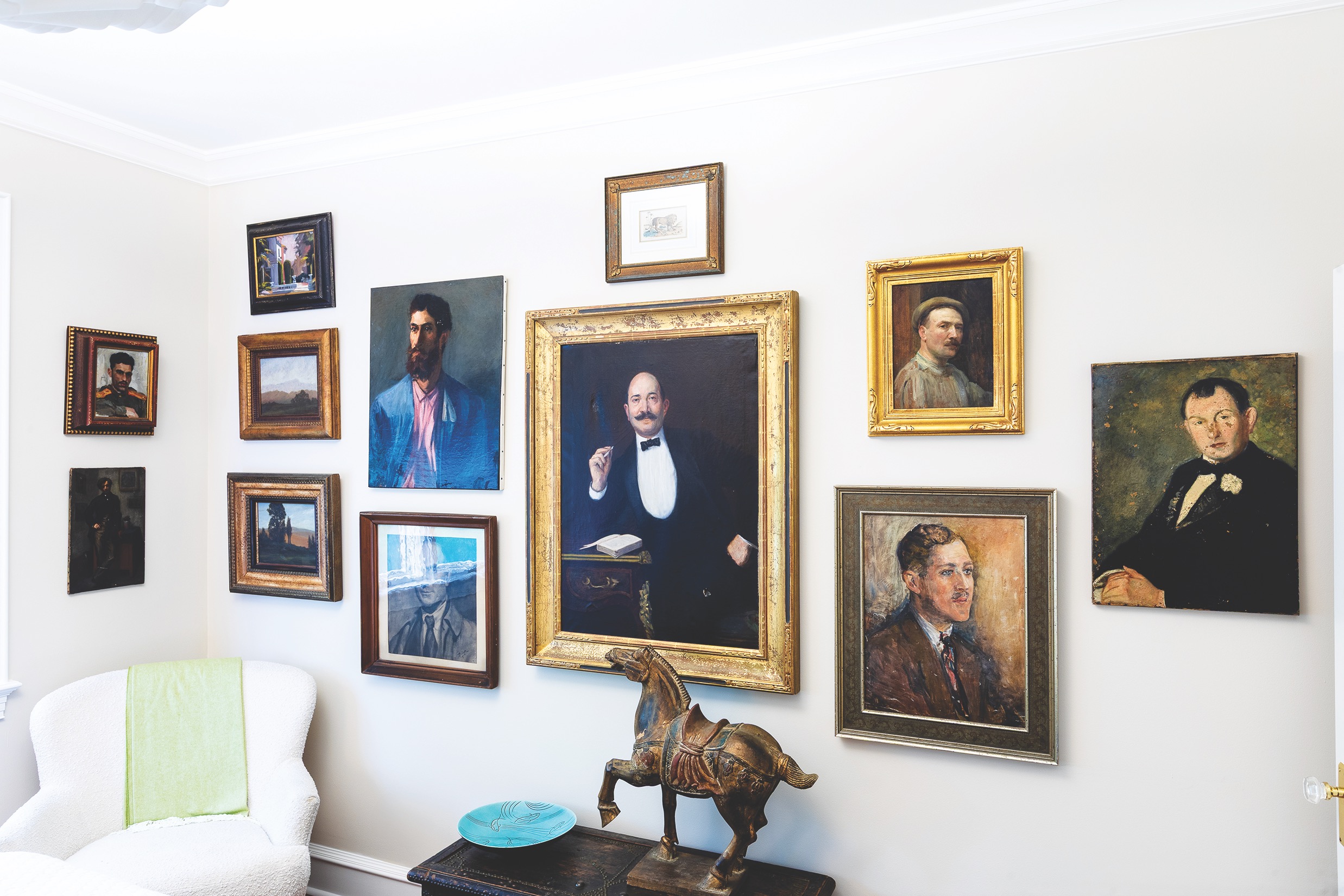
How about two handsome armoires, one shelved for shoes, a rustic pine grandmother clock and statuesque lamp bases? But all the right stuff is just the beginning. Randy nods “yes” when asked if hanging photos and paintings isn’t an art itself: height, layout, subjects, frames. He measures and draws, then mocks up on the floor. Originality counts, like a bedroom wall hung with portraits of men, likely 19th century, with facial hair and pensive expressions.
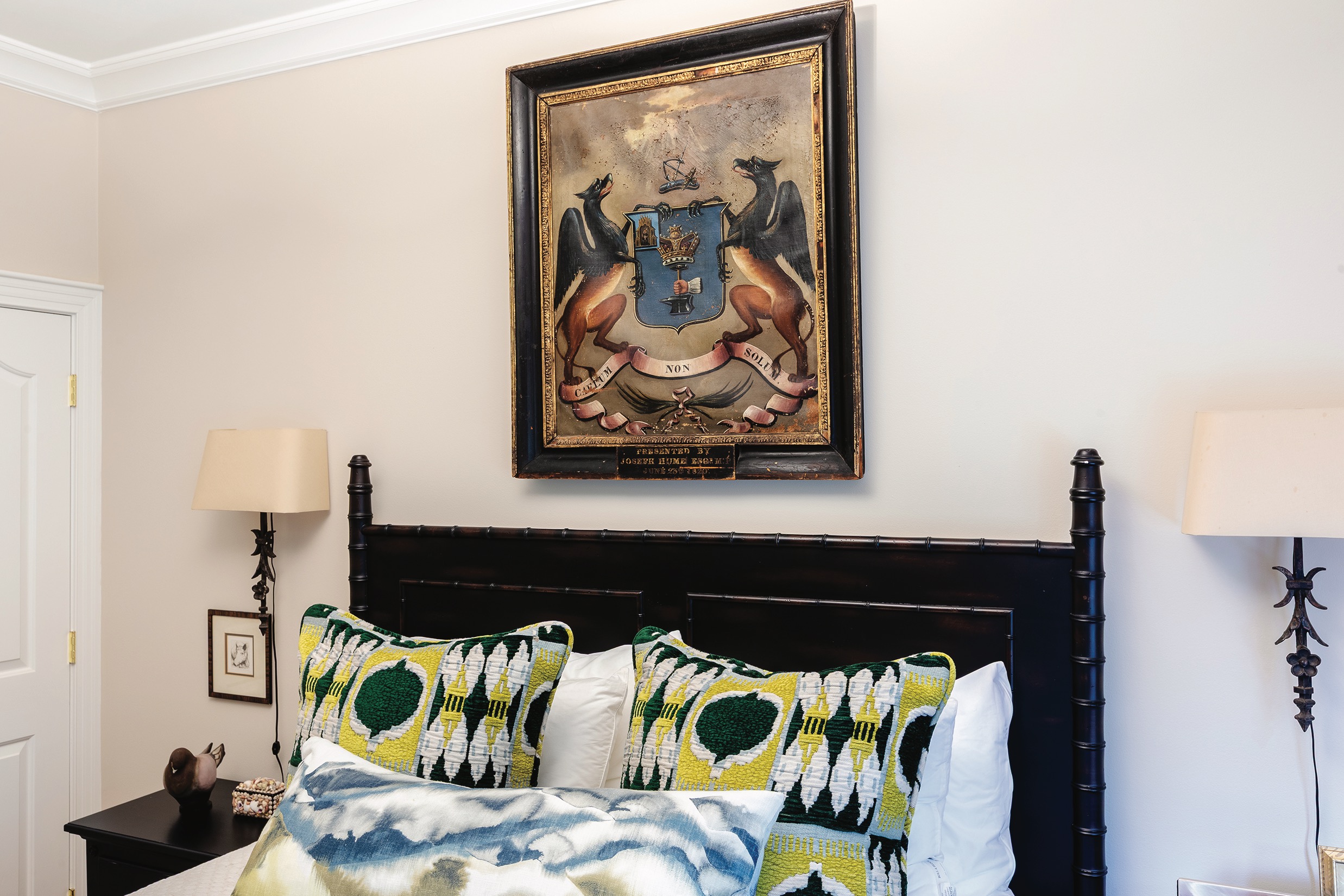
“The guy in the middle reminds me of Poirot,” Randy says. “He makes me smile.”

Another bedroom pays homage to Randy’s mother and grandmother, their nearly life-sized portraits dominating intersecting walls. Color, even white, adds excitement, like the filmy white “veils” hanging off tall bedposts; the overstuffed quilt where two big dogs sleep; blankets woven with multi-colored threads; a chair upholstered in lime green, others covered in line drawings of rabbits on a white background — all different, all unusual, related only by their unpredictability.

Both bathrooms required gutting. One returned papered in rich jewel-toned leaf shapes, the other in staccato black and white.

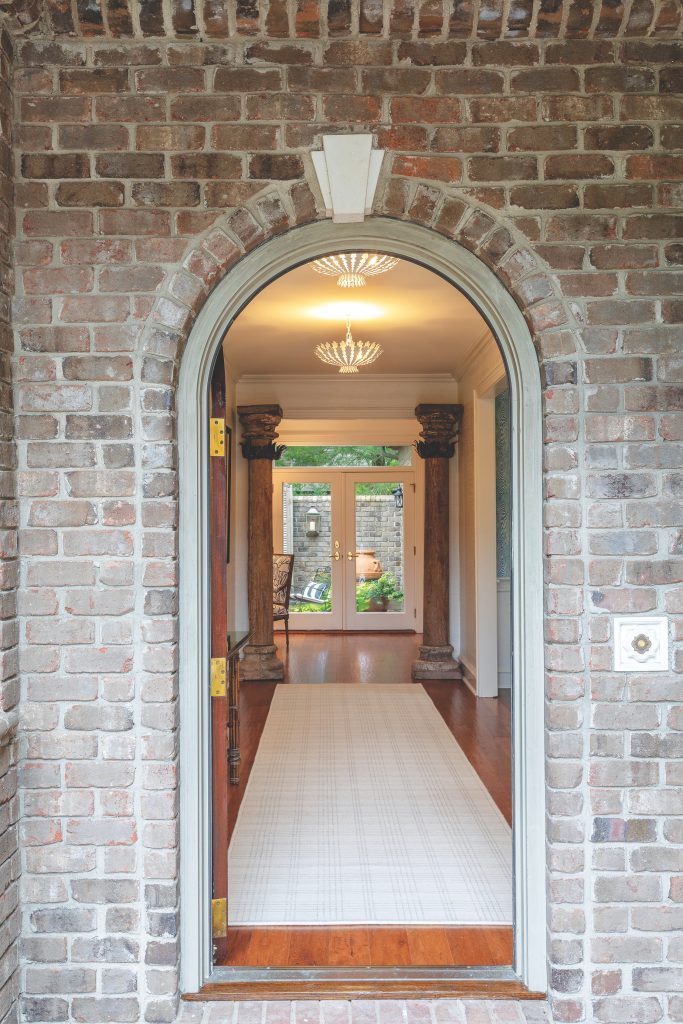
Variety, tempered by surprise, rules. Art, formal or not-so, needs an airy, well-lit display venue. At 2,300 square feet, this semi-detached brick unit with 13-foot salon ceilings, an eyebrow front door and British-themed neighborhood signage fit the couple’s furnishings. Mature trees, a reprieve from longleaf pines, manicured boxwoods and weathered brick exteriors give a settled appearance, while two walled terraces anchored by olive oil jug planters expand entertaining space.

Randy and Mark purchased the unit, hired a contractor, rented an air B&B for the duration and got to work. The project took less than a year. They, along with their two pups, moved in May, along with Randy’s business, Thurston Boyd Interior Design.

Each room showcases several pieces or a collection. In the living room, Lucite shelves hold bright Chinese roof tiles in the form of warriors protecting the property. In ancient times, quality of workmanship symbolized wealth and social status. Balancing their artistry, a contemporary sofa and simple painted wood coffee table face the proscenium opening into the dining room, where four paintings (by Mark’s niece) of flowers in vases suggest, in brilliance and style, Van Gogh sunflowers or a mixed bouquet by Cézanne. Hung against wallpaper that wriggles with life, they are anything but “still.” A massive, intricately carved desk, perhaps Asian, offsets the colors, as does a gathering of spider-webby landscape prints.

The kitchen, small but efficient, locates the gas range top on a center island. Almost bare countertops and blue-grayish cupboards impart Shaker plainness interrupted only by a collection of whimsical ceramic pitchers aligned on a pantry shelf. A sideboard with a built-in frontal wine rack resides here.

Opposite the kitchen is a dining area — a touch more formal than a breakfast nook — that opens out onto a patio, where a life-sized alligator, carved from wood, lurks among the planters. Throughout, carpet and tile were replaced by stained hardwood, knotty and laid randomly.

Nothing here blares California, but nothing screams Old Pinehurst, either — the house lacks a name or a resident ghost. It blends practicality with charm, fine art with a dash of fun, all the trademarks of “Pinehurst Now,” where wine-tastings, farmers markets, walking tours, pickleball and food festivals fill out calendars.

“People are so friendly,” Mark says. “It’s like we’ve lived here for years.”

Out of the Blue

OUT OF THE BLUE

Wrap and Roll

Judging a Hershey’s Kiss by its cover

By Deborah Salomon

These days, given world trade issues, where products originate has become a political issue. Halloween and Christmas won’t be the same if tariffs outprice merch made in China, where neither holiday is celebrated but manufacturing, even with shipping, costs less than producing the stuff Stateside.

Pondering that reminds me of how the Industrial Revolution brought about factories filled with machines that turned out never-dreamed-of products. Some resulted in humorous truisms like, “You can’t put the toothpaste back into the tube.”

How it got there in the first place? Some clever fellow designed and built an assembly line performing a series of functions that turned a flat piece of metal into a tube filled with paste.

These literal “machinations” made mass production possible . . . and a lotta engineers rich, since each product required the design and production of its own machine. Some machines became famous in their own right — like Hershey Kisses, wrapped on a conveyer belt the size of the Jersey Turnpike at the rate of 20,000 a minute at the Hershey, Pennsylvania, factory.

Ever wonder how Oreos are assembled? Are the round wafers identical, top and bottom? The Nabisco website isn’t exactly forthcoming, fearing patent infringement, I guess. At the rate of 400 billion a year in myriad varieties, their machines are calibrated for uniformity. The three-step process turns the chocolate or vanilla wafer on its back, releases the vanilla filling, adds the second wafer. No overhang tolerated. Temperature keeps the filling from oozing out . . . but how is that temp maintained in a factory?

Any malfunction in the process results in the loss of thousands of cookies, which must be converted into the crumbs populating ice cream, yogurt, pie crusts, maybe toothpaste.

I still haven’t figured out how frozen green peas get into plastic bags without spilling all over the factory floor. Another packaging puzzler: the sodden pad that comes between chicken parts and the polystyrene tray. Do we pay for this run-off weighing half a pound?

The most fascinating mechanical wonder is the machine that makes individually wrapped slices of orange processed “cheese.” Betcha never noticed that packages are labeled American “slices” or “singles,’’ not “cheese,” because their formula does not conform to government standards. Unfortunately, Americans value wrappings and convenience more than the flavor of natural cheddar, which melts nicely but develops mold if not properly wrapped and stored. Grilled cheese lovers are squeamish about trimming specks of mold — another quirk for the French to mock.

By the mid-20th century, packaging rendered a brand or product instantly recognizable. Oatmeal still comes in cardboard cylinders, maple syrup in glass jugs with handles, eggs in sectioned boxes. Mayonnaise jars are the same shape, but plastic. The glass originals still deliver soup to a sick friend. Better pasta sauces and a few fruits still come in canning jars with metal twist lids, priced accordingly. Occasionally I see a tall, tin saltines container. In the past, these monoliths enjoyed rebirth as crayon bins. Or Lego storage. The kids made little magnetic Scottie dogs creep up the sides.

Am I the last granny to remember Velveeta bricks in wooden “crates” with sliding tops? Or individual serving yogurts in half the flavors but with snap-on lids?

I still wonder why granulated sugar comes in paper bags, which absorb enough moisture to allow hardening into a brick.

As with mayo jars, I try to reuse containers with secure lids instead of buying new ones at the $1.25 store. For years, the best were 32-ounce Food Lion house brand semi-opaque sherbet containers with a tight lid, perfect for stacking homemade chocolate chip cookies for the flight north to my grandsons. Then FL changed the size and material.

Darn. Took me forever to find a replacement, this time at Lowes Foods: 54 ounce Kemps sherbet, with a secure lid and room for extra cookies.

But first somebody has to eat 54 ounces of sherbet.

Wild strawberry’s the best.

Focus on Food

FOCUS ON FOOD

Flavorful Fungi

To forage or not to forage

Story and Photograph by Rose Shewey

Many moons ago, my mom would — in my memory, at least — merrily skip along the wooded trails of my childhood, wicker basket in hand, humming a little tune while foraging for mushrooms in the later months of the year. We children usually followed along curiously while my dad trailed behind us, ever so doubtful about my mom’s undertaking. And I don’t blame him.


Hunting for wild mushrooms is serious business. Looking at guidebooks that list edible mushrooms together with their toxic doppelgänger, I find myself squinting at the images to spot the difference and still am uncertain. Sadly, I did not pick up on my mom’s traditional knowledge of identifying wild mushrooms. Much like my dad, I have internalized the old adage “when in doubt, throw it out.” Or rather, when in doubt, don’t even touch, let alone add, the ’shrooms to your basket.

Just because you don’t forage for mushrooms doesn’t mean you’re condemned to a life of grocery store portobellos, as tasty as they can be. Thanks to the ever growing number of independent mushroom farmers, we now have access to a wide variety of fungi — even in, and certainly outside, the produce aisles.

As a quasi-flexitarian — someone who eats meat only occasionally — I adore mushrooms as the quintessential meat substitute. With their meat-like texture and plenty of umami (savory flavor) mushrooms have always been, and always will be, my favorite ingredient in vegetarian dishes. 

Mushroom and Chestnut Stroganoff

(Serves 2)

Ingredients

3 tablespoons olive oil (divided)

6 ounces chestnuts, cooked and cut in half

16 ounces mushrooms, such as oyster, maitake, shiitake or cremini, sliced

1 medium onion, chopped

2-3 garlic cloves, minced

1/2 teaspoon smoked paprika

1/4 cup sherry

1 tablespoon flour, such as all-purpose or arrowroot

1 1/2 cups vegetable broth

3/4 teaspoon salt

1/2 teaspoon ground pepper

1 tablespoon whole-grain mustard

1/4 cup crème fraîche (optional)

8 ounces cooked pasta, such as egg noodles or rotini

Parsley or chives, chopped, for garnish

Instructions

Heat a large skillet over medium heat, add one tablespoon of olive oil and gently toast the chestnuts until they are fragrant and golden, about 4-5 minutes. Transfer chestnuts to a bowl and set aside. Without adding any more oil to the skillet, begin sautéing mushrooms. Do not crowd the pan and work in batches, if necessary. Cook mushrooms until they start releasing their juices. Allow juices to evaporate and continue to cook briefly while stirring until mushrooms turn golden brown. Transfer to a plate and set aside. Add two tablespoons olive oil to the skillet and sauté onions for 4-5 minutes; add garlic and smoked paprika. Continue to cook for another minute. Add sherry and allow to cook off. Stir in flour, add broth, salt, pepper and mustard, and continue to stir. Bring sauce to a simmer, then add chestnuts and mushrooms and cook until sauce is reduced by about half, approximately 8-10 minutes. Take off heat, stir in crème fraîche, if using, and serve with pasta. Garnish with parsley or chives.

Sporting Life

SPORTING LIFE

Beating the Heat

A conversation in the shade

By Tom Bryant

The sun seemed to be stuck, hanging right at the top of the tree line as if to say, “You think it’s hot now? Wait, there’s another three hours of daylight, and I’m gonna make it a smoker.”

Shadows had moved away from my shady spot at the edge of the pines, so I decided to truck it to the barn for some libation and conversation. I could see from a distance I was not alone in escaping the heat.

It was Labor Day and the opening of dove season. The usual group was invited for the festivities: a barbecue, good company and a dove shoot that opened the season for a bird hunter.

We seem to forget that early September in North Carolina sometimes rivals the middle of July in heat. But you get used to it. I remembered other dove shoot occasions when the heat was bearing down and the doves didn’t fly until that persistent sun settled a little lower behind the trees.

The boys from Slim’s put the hunt together. Boys meaning longtime customers who used Slim’s country store as a meeting spot to catch up with news from around the neighborhood.

We were hunting a field I was familiar with. Many years before, our Ducks Unlimited group had used the same acreage for our annual hunt after all the festivities celebrating DU the weekend before. The field remained basically the same, about a hundred acres of cut-over corn, maybe too big for our little group to cover, but most of us were there for the camaraderie, not necessarily to shoot doves, though we were convinced that doves were the best eating in the bird wild game repertoire.

I stopped by the truck on the way up to the barn, unloaded my shotgun, stuck it in the back and pulled out the old camp chair I keep in the rear cargo area with my cooler.

“Well, just ask Bryant,” Johnson said.

I picked out a shady spot under the tin overhang of the old tobacco barn, leaned back against the ancient log walls and said, “Ask Bryant what, old friend? You know I will reply even if I don’t know the answer. But with my plethora of knowledge, it’ll be good.”

The good old boys had a chuckle, and Johnson followed up with, “You were in the newspaper business forever, even owning one. How come they’re vanishing like ripe persimmons in the middle of possum country?”

If anything, Johnson had a way with words.

“It’s simple,” I replied. “Check out that smartphone you’ve got in your back pocket.”

“It’s in the truck. I don’t carry that fool thing with me everywhere I go.”

“Good for you, Johnson. But let’s see how many of us have that ‘fool thing’ on our person.”

Five out of the seven of us had phones. I was like Johnson. Mine was in the truck.

“Well, they’s good in emergencies, like if old Andy over there . . . ” and he pointed at Andy, who was dozing, his head lolling a bit. Andy perked up, saying, “What are y’all talking about?”

“Like I was saying,” Johnson replied. “If that old geezer over there went out to the far end of the dove field, tripped and shot himself in the foot, he could use his phone to call for help.”

“Speak for yourself,” Andy said, “And I ain’t a geezer. I’m just a little older than you, as I recall.”

“Technology,” I said, reaching in the cooler for a bottle of water. “That was the final nail in the old coffin. Your phones, your computers, and above all else, the internet ushered in the demise of newspapers as we once knew them. But . . . ” I paused for effect, “there was one other thing that shut the industry down, including the big boys. Newspapers you would have thought would be here forever. Gone. And the reason?” I stood up and grabbed a ham biscuit from the communal cooler that Johnson had put together the evening before.

“What?” Andy said. “What?”

“Money, greed and the unalterable knowledge that the business has been here forever and that’s where it will remain.”

Johnson said, “You’ve been in the newspaper business a long time. What’s your reasoning the industry failed so fast?”

“Hey, guys,” I said, “we here to shoot birds or talk about newspapers?”

“It’s still too hot. The birds aren’t gonna fly until almost sundown. Give us your opinion, Tom. I’ve been reading the N&O for nigh on 40 years, and now they don’t even publish it anymore.”

“OK, OK. Here’s what I think, the short version. I started in the business right out of the Marine Corps, just married and a student at Elon. I worked part time catching the press, then moved into the circulation department, then the advertising section as an ad executive. After a while they made me the advertising director. The years I spent doing those jobs convinced me that a medium-sized monopoly newspaper in a small metropolitan area almost has a license to print money. They were extremely successful.”

“If they were a money-making machine, why did they fall so fast?” Johnson asked.

“Just because they were so good at what they did. The big boys came in and bought them all, and then promptly killed the goose that was laying all those golden eggs. They called it economy of scale or something like that. They consolidated all the ancillary efforts to their home base, fired all the old-timers, the folks who had been working at the papers for a long time and had built up a good base of pay, and put the squeeze on expenses, so much so that to get a few more pencils or note paper, a multitude of requisitions had to be filled out in duplicate. They didn’t realize that their cost-cutting was cutting them right out of business.”

I got up, stretched and checked out the spot on the field where I would hunt. It was still a scorching afternoon although the sun was slowly dropping behind the pines. The boys were unusually quiet as I stood there looking to the tree line.

Even I was surprised that I was so depressingly down on the business I had dedicated my life to. But there was one redeeming piece of information I felt compelled to relay to the good old boys. I turned and stood there like a schoolmaster preaching to his wards.

“Boys, there is one great promising revelation I’m gonna tell you about. For the last 10 years of my career, as y’all well know, I worked for a group of people who were not afraid to spend a little money to revise the way we did business. It was led by a young fellow who worked hard and smart. He created a business plan that is now the envy of the industry. This gentleman saw exactly where newspapers were heading and decided to get off the train that was rapidly approaching the destroyed bridge. I can hear him right now saying, ‘If anyone in our community wants local news, they will come to us.’ Now, with the newspaper doing well, with four magazines in major markets and a statewide business magazine, he doesn’t rest on his laurels. He’s always planning.”

I folded up the old camp chair.

“OK, enough of the lecture. I see birds moving, and I’m gonna make for my corner. Y’all be careful, and Andy, make sure you take your phone in case you shoot yourself in the foot.”

The boys laughed and headed out in the field.