Art of the State

Sacred FIGURES

Cristina Córdova sculpts soulful, fantastic people from clay

By Liza Roberts
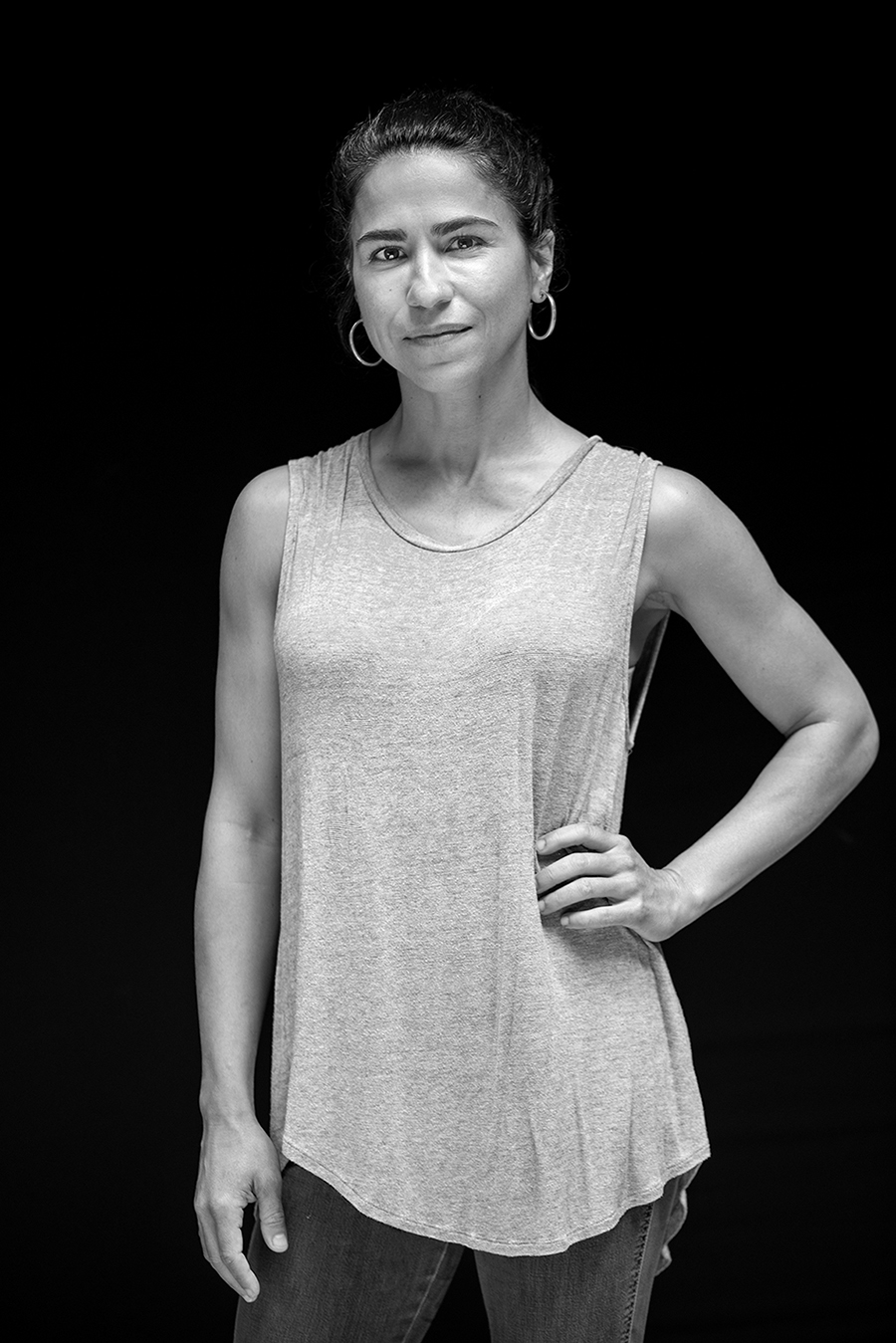
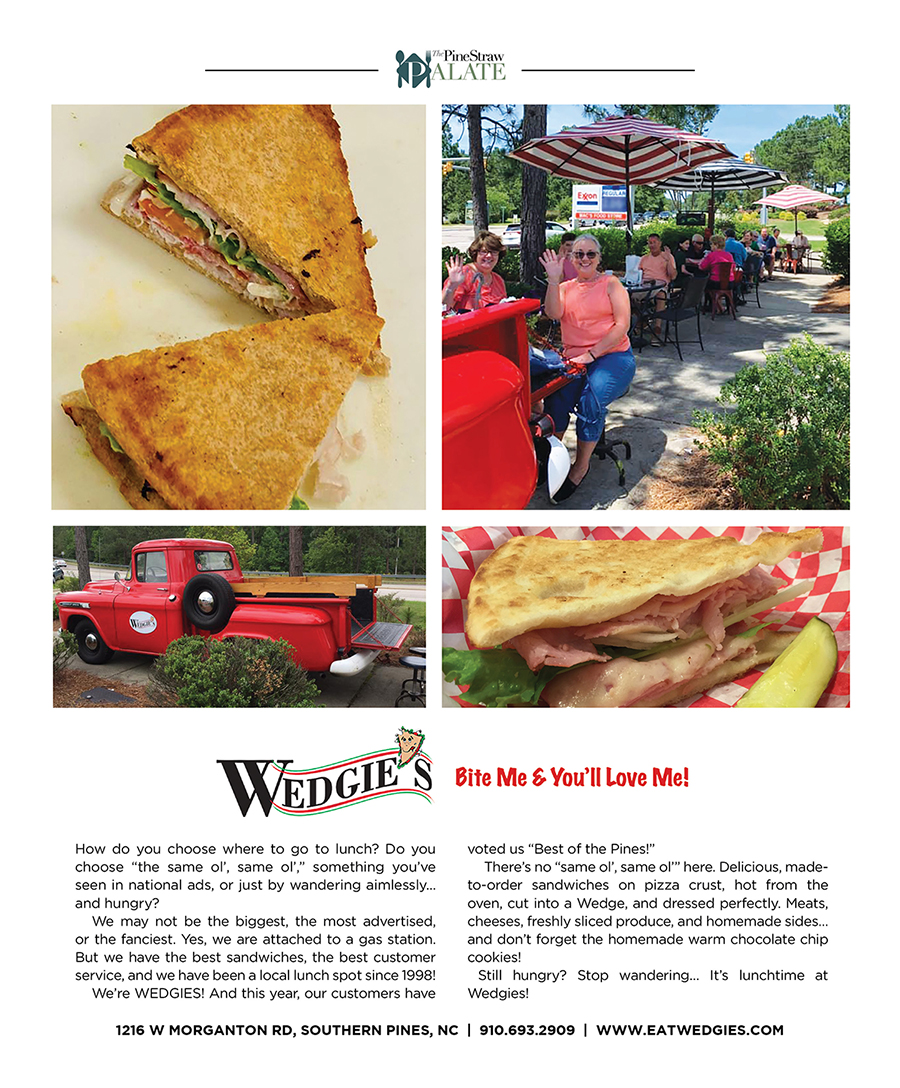
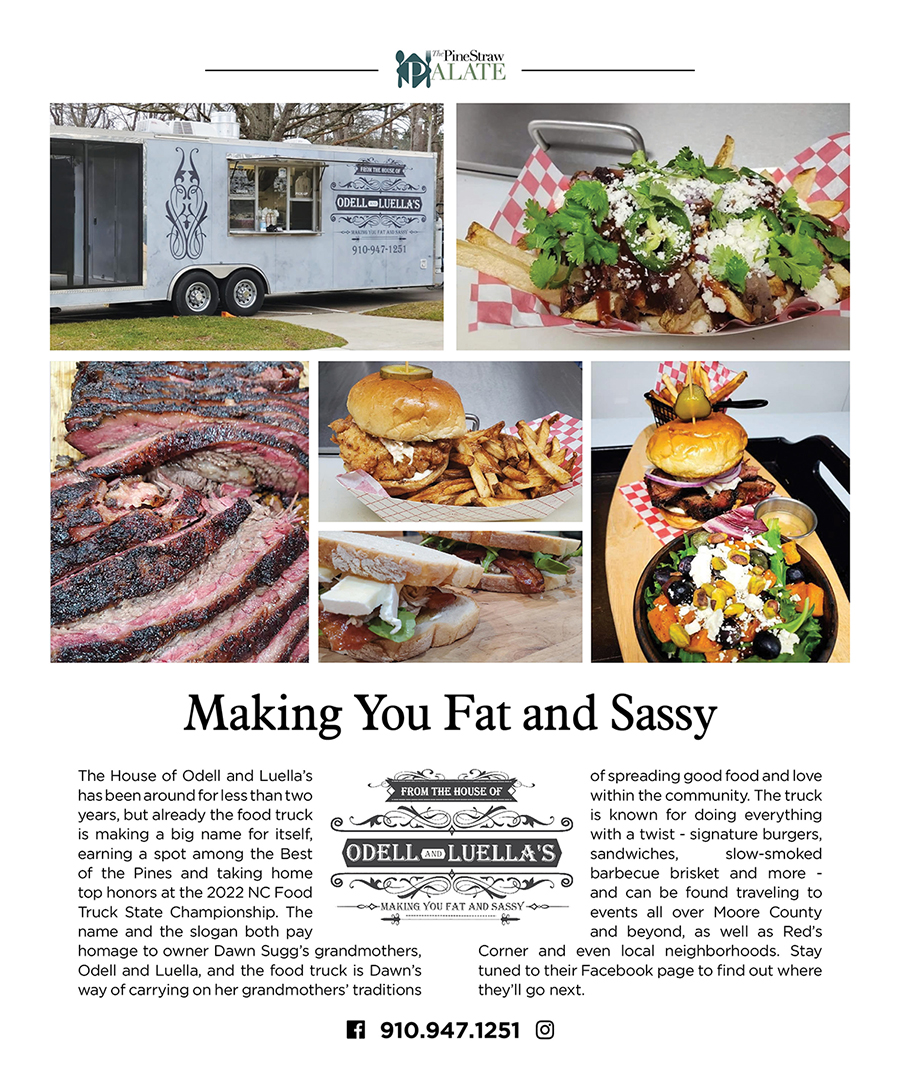
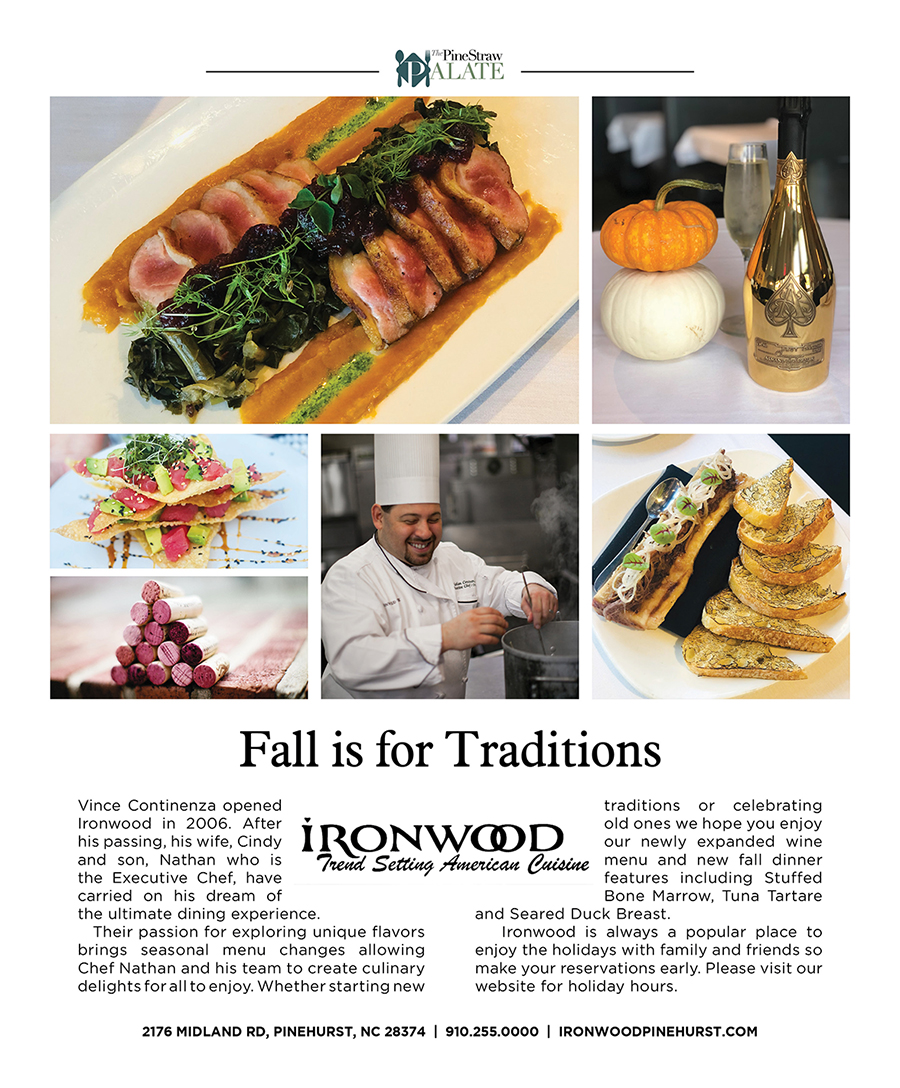
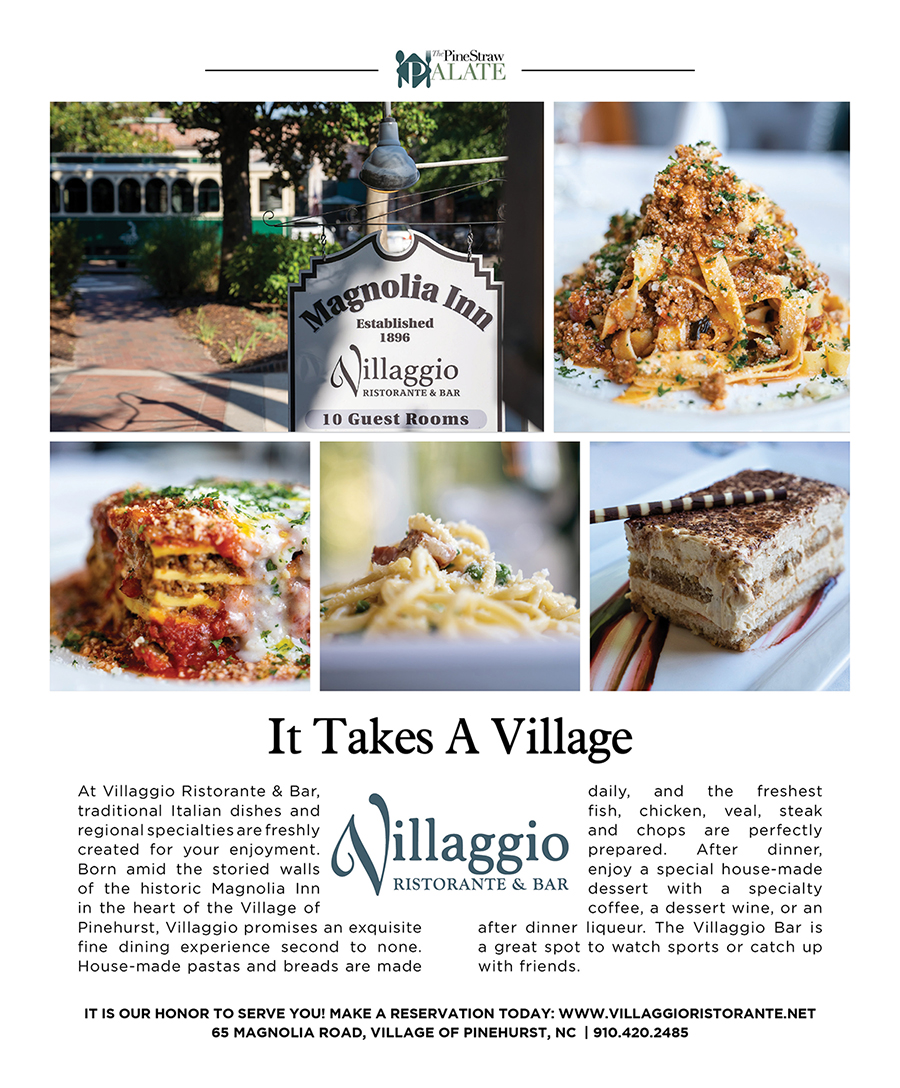
“I was always very creatively inclined, and very restless,” says sculptor Cristina Córdova, as she moves – glides, really, with ease and focus – around a massive head she’s shaping out of clay in her Penland studio.

She molds it with elegant hands, quickly, decisively, certain about what she wants this clay to be. Like the work that has made her name, it will become real, it will be soulful, thoughtful, disarming, alive. Its eyes will be hollow, but they will express sadness; its face will be impassive, but it will express stoicism.

Known for her remarkably lifelike figurative sculptures in clay, which typically range from diminutive to lifesize, Cordova grew up in Puerto Rico. She earned her undergraduate degree from the University of Puerto Rico and an MFA in Ceramics from the New York State College of Ceramics at Alfred University before moving to Penland in 2002 for a three-year residency, and subsequently making the campus her home. 

Córdova credits her mother with nurturing her creativity from an early age, steering her toward the career that has made her one of the most respected sculptors in North Carolina and a pillar of the Penland community since 2002. She credits a ceramics teacher with first showing her the potential of clay, the possibility that it could go beyond representation to “embody any idea.” At that point, she says, “the material revealed itself to me in this really exciting way. And I never looked back.”
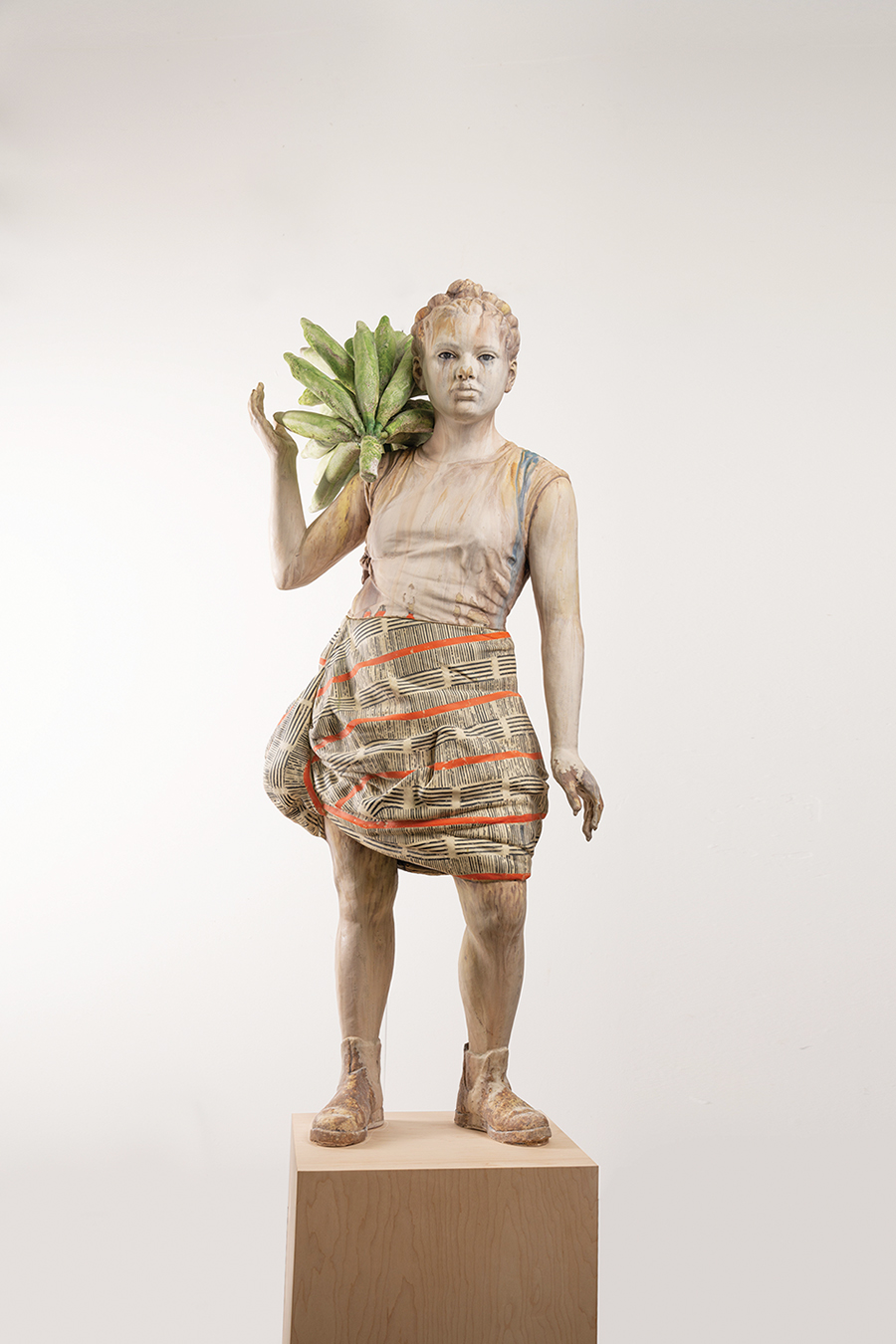
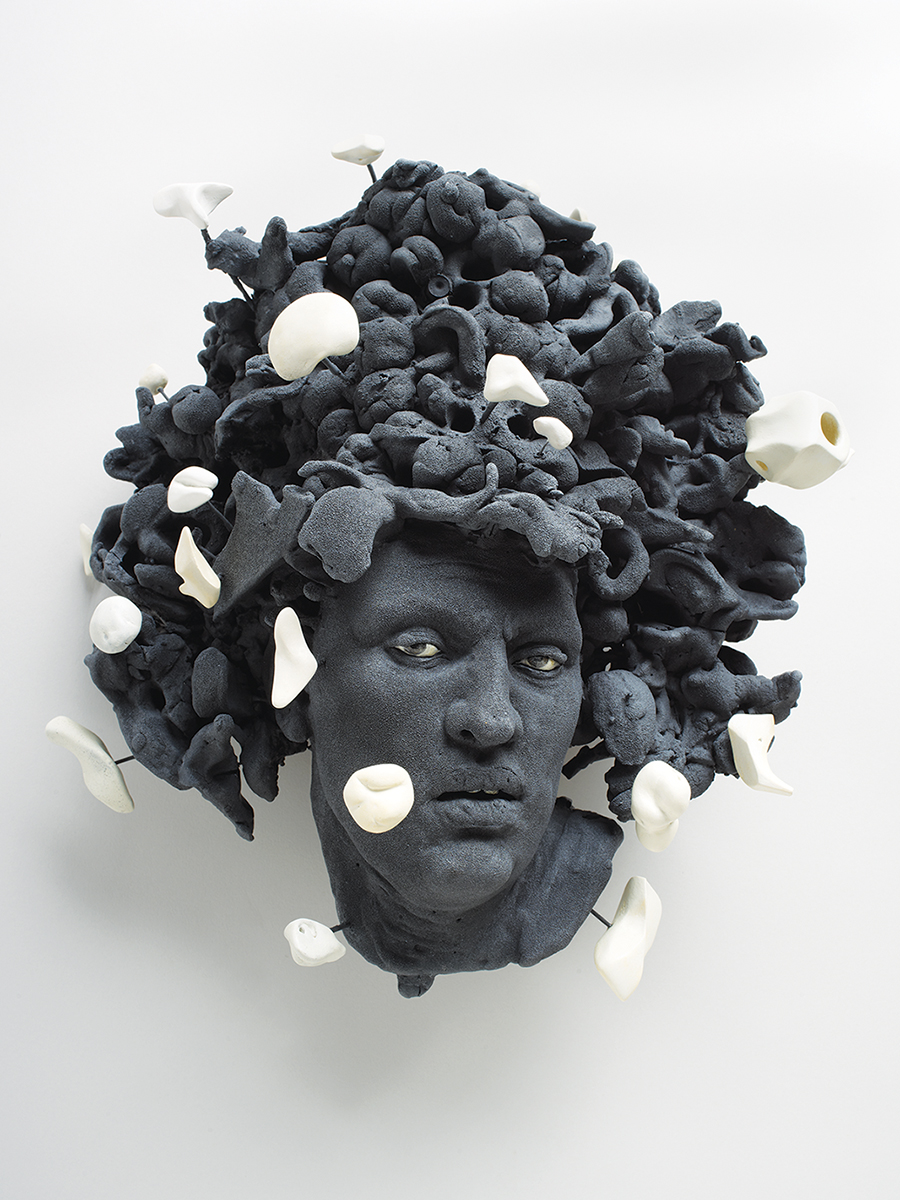
Left: Cosmología Isleña

Right: Vestigios.

Still, she took some time to settle on her subject. Gradually, “I started to become a little bit more excited, more empowered to start specifically to focus on the figure.” It was a focus borne in part by her heritage. Growing up Catholic in Puerto Rico, she says, in a house with literally hundreds of depictions of saints all around her, the idea of using a figurative work of art “as a way of harnessing your emotional energy and pulling it into something sacred” was a mechanism she’d internalized. Though her current work is not religious, Córdova finds that it’s understood “at a different level” in Puerto Rico, where “Catholicism is not a choice, it’s woven into the culture, so people come to the work with a shared insight.”

Her subject may come naturally, but that doesn’t make it easy. Depicting the figure in clay is a challenge. Early in her career, Córdova found herself stuck in between two worlds, the sculptural tradition of working in the round with a live model, and the more organic ceramic tradition. Eventually, she settled on a hybrid approach, one that includes not a live model but a series of blueprints that provide her with the measurements and dimensions she needs to create a sculpted three-dimensional figure.

The head before her on this particular day — not necessarily a man nor a woman, as is sometimes the case with her figures — is imagined instead of representational, and so its blueprints are designed merely to keep her to scale, leaving room for improvisation. In other instances, she uses a series of photographs to help her create more precise blueprints.

Córdova gestures to the head before her: “I’m called right now to do things that are big, almost monolithic. I think it has something to do with what we are experiencing [with the pandemic]. I’m not interested in intimate or narrative-oriented work. I’m interested in big statements.”
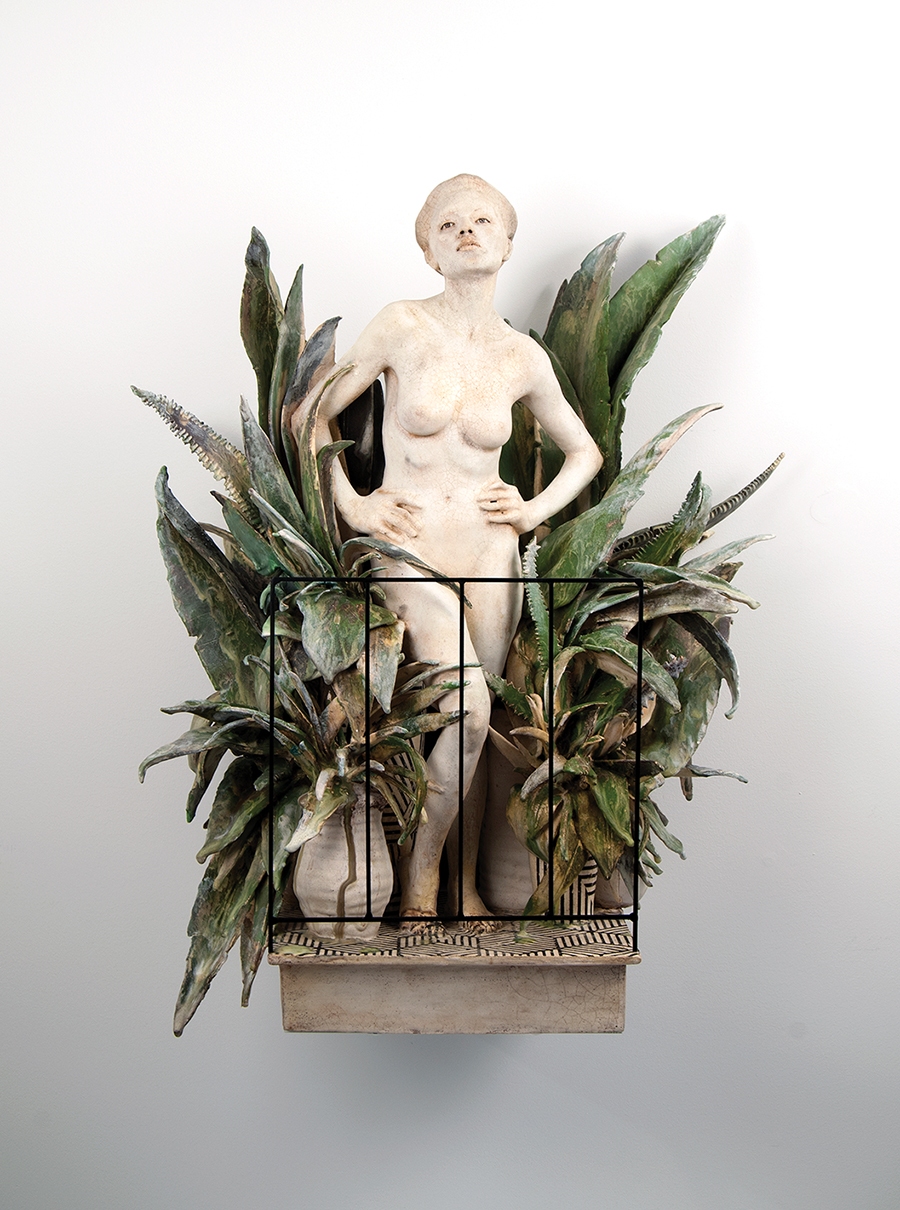
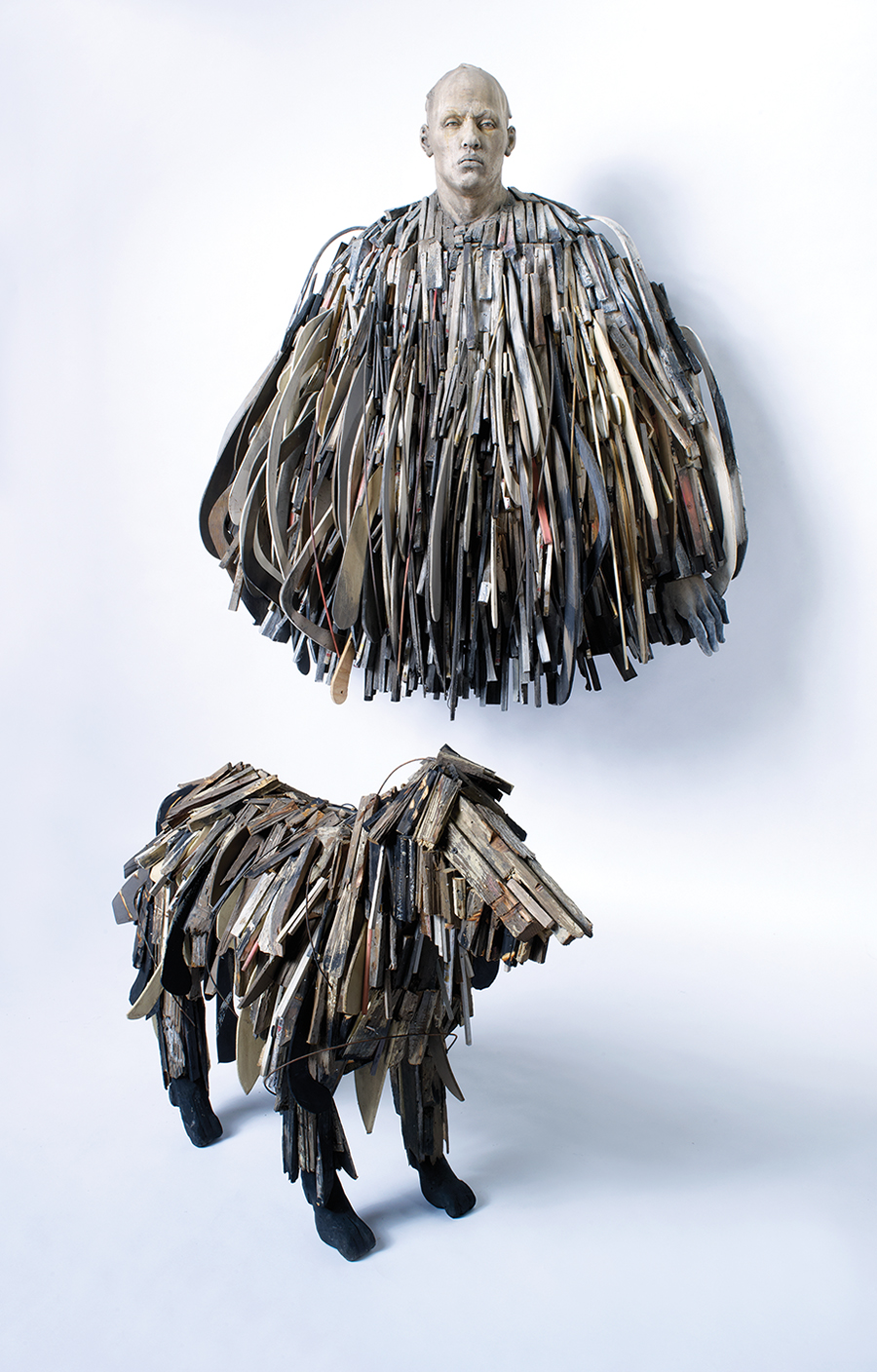
   

Left: El Rey. 

Right: Del balcón.

Big statements seem called for by the importance and enormity of our internal worlds in such a situation, she says. “The isolation, the uncertainty, the newness — to have to take all this in without being able to respond in our normal ways . . . recourse is very limited. So you’re holding this inside of you, and that’s all you can do, is hold it, and witness it, and be with it. We need a big container for that right now. So I’m making big containers.”

It’s not a simple process. Beginning with a large donut-shaped piece of clay that’s laced with sand and paper pulp for stability and structure, Córdova then patches in a perpendicular slab, and then another, and then adds rings of clay, providing “the basic topography.” From there, she more fully fleshes out and articulates the shape of the head and face.

Having worked “all over the place in terms of scale” over the course of her career, the process of working in such large dimensions now excites her: “This to me is a starting point. I really want to get bigger. I have no idea how I’m going to do that.”

Córdova’s award-winning work is in the permanent collections of the Renwick Gallery of the Smithsonian American Art Museum, the Museum of Contemporary Art of Puerto Rico and many others.  PS

This is an excerpt from the forthcoming book Art of the State: Celebrating the Art of North Carolina, to be published by UNC Press this fall.

Birdwatch

What a Hoot

Call of the barred owl

By Susan Campbell

Owls definitely fall into the “spooks” category for many people. But there is one species that tends to be more endearing than scary: the barred owl. Maybe you have heard the “Who cooks for you? Who cooks for you a-a-a-a-ll?”  echoing through bottomland forest. The song is most frequently heard in early spring when male barred owls are claiming territory and advertising for a mate. But they actually can be heard vocalizing any time of the year. These are large but well camouflaged birds. Only a little bit smaller than the great horned owl, barreds are often their close neighbors. Disputes over space and feeding areas are not uncommon. Vocal sparring early in the year can get quite heated; however, male barred owls can be heard now, calling or squawking not only at night but at dawn and dusk as well.

This owl gets its name from the distinct vertical brown streaks on its breast, belly and flanks. The bird’s spotted head and dorsal surface, in addition to the barring, make it very hard to spot during daylight hours when it is perched motionless close to the trunk of a large tree. Their liquid brown eyes make them very endearing to bird lovers far and wide.

Barred owls find a wide variety of prey in swamps and bottomland forests. They feed on not only mice, rats, rabbits, small and medium sized birds, but reptiles and amphibians as well. These owls will also wade into shallow streams and pools after crayfish and small fish. At dusk, barred owls take advantage of large flying insects such as moths and large beetles.

Barreds, in spite of their size, actually nest in cavities. They will use old woodpecker holes, rotted stump holes and even larger manmade nest boxes. Up to five young are raised by both parents for close to a full year. Adult barred owls are sedentary and probably mate for life. This likely explains why they tend to be so defensive of their territory. Not surprisingly, during the breeding season, the larger-bodied female barred owls are the most aggressive. Raccoons, opossums and hawks are common nest predators. But it is great horned owls that are the greatest predatory threat, so competition can be quite intense. 

These owls are not averse to roosting, or even nesting, close to human habitation. People who get close to a nest may be subjected to distraction displays. The female may call loudly, quiver her wings or even attack with her talons. So, should you ever discover a nest hole, it is best to give it a wide berth to avoid any unintended consequences. They are known to use the same cavity year after year if they are successful. A pair of barred owls was documented to use the same cavity in the middle of the campus of the University of North Carolina for six seasons.

Despite the fact that they are non-migratory, barreds have expanded their range. Over the last century, they have moved westward into the Pacific Northwest and into southwestern Canada. They are in the process of displacing other native owls of the region including their close cousin, the endangered spotted owl. Certainly the future of this endearing species seems quite secure in our area.  PS 

Susan Campbell would love to receive your wildlife sightings and photographs at susan@ncaves.com.

Hometown

My Flying Life

The good, the bad and the pressurized

By Bill Fields

About a decade ago, early on a Saturday morning, I was at New York’s LaGuardia Airport for a flight to RDU. The gate area was mostly empty except for a familiar face in a corner chair. Roy Williams, the UNC men’s basketball coach, had been in the Big Apple for the NBA draft. He was eating a candy bar when I introduced myself.

“You won’t remember this,” I said, truer words having never been spoken, “but you were sitting next to me on my first flight.”

In December 1979, Williams was a graduate assistant for the Tar Heels, among his duties driving copies of “The Dean Smith Show” to television stations around the state each weekend during basketball season. On this Monday, he was flying Piedmont Airlines from RDU to Tampa for Carolina-South Florida that evening at the Bayfront Arena in St. Petersburg. A 20-year-old junior journalism major, I was covering the game for The Daily Tar Heel.

Roy told me how to yawn to keep my ears from hurting on the climb and descent. When the flight attendant arrived with the beverage cart, I told her it was my first flight and was a bit disappointed I wasn’t given a pair of wings. 

Perhaps she knew it wasn’t really my first flight. That had been a 15-minute spin above Southern Pines in a single-engine plane two years earlier with an assistant pro I knew who had just gotten his pilot’s license. But the two-hour trip to Florida on a 737 made that brief sightseeing venture seem like a bucket of balls at Knollwood compared to 18 holes on Pinehurst No. 2.

Hearing a friend, now retired, tell me recently that he flew 6 million miles in his sales career got me thinking about how much I’ve flown over more than 40 years. Tallying up the totals in the loyalty programs of the two airlines I’ve flown the most comes to 790,135 miles. Counting the flights before I had frequent flier accounts and all the travel on other airlines that isn’t documented, I must be approaching 1.5 million miles up in the air.

My most memorable air travel (enjoyable division) wasn’t with any of the surviving legacy carriers or airlines such as TWA, Pan Am, Piedmont or Eastern that are no longer with us. Over four days in 1989, while profiling Arnold Palmer as he neared his 60th birthday, I had a seat on his Cessna Citation III, a $7 million business jet, while the golf legend traveled from a senior tournament to various course design projects.

Palmer, in the left seat beside co-pilot Lee Lauderback, flew N1AP into his hometown and to where he had long wintered — Latrobe, Pennsylvania, and Orlando, Florida — and then to Kansas City, St. Louis and Greenville, South Carolina. The biggest thrill was the next-to-last leg: Orlando to Moore County, where Palmer and longtime architecture partner Ed Seay were working on Pinehurst Plantation (now Mid South Club).

I was clearly well ahead of the aviation gods after that assignment, but they’ve gotten in their licks since. Just months after traveling with Palmer, I had a hellishly bouncy flight into Málaga, Spain, the last flight before the airport was shut down because of severe weather. Two decades later, flying on a Korean Air charter of senior tour pros from San Francisco to Incheon, about an hour from landing a pocket of clear air turbulence caused the plane to drop dramatically, banging up flight attendants and anyone who wasn’t belted in. The experience sure put into perspective all the windy, nervous approaches into water-guarded LaGuardia — aborted landings notwithstanding — that would follow.

One has no choice but to roll with the punches, especially in today’s chaotic world of airline staffing shortages, delays and cancellations. Edinburgh, Scotland, was a mess this summer as I attempted to begin a journey home, hundreds of travelers lined up outside on the sidewalk because of a technical snarl, missed connections on their minds. It was not, as I found out while getting a short sleep at a ring-road hotel in Amsterdam that evening, an unfounded worry.

But for almost every glitch, armrest hog or man wearing a tank top, there is a stunning sunset at 37,000 feet, or a gate agent more pleasant and patient than most would be. And I’ll always have memories of Air Arnie.  PS

Southern Pines native Bill Fields, who writes about golf and other things, moved north in 1986 but hasn’t lost his accent.

Focus on Food

Peter, Peter, Waffle Eater

Everything doesn’t need to be orange

Story and Photograph by Rose Shewey

My husband cheekily calls me “the adopted daughter of the South” for no other reason than my fascination with big, loud pickup trucks. I will admit that my favorite vehicle is our old, mud-splattered, lifted four-wheel drive truck with 35-inch tires and rumbling pipes you can hear miles down the road. (I may or may not have taken this truck, just for kicks, through the porte-cochère at the Carolina Hotel. I mean, Sunday afternoons tend to be a bit slow.)

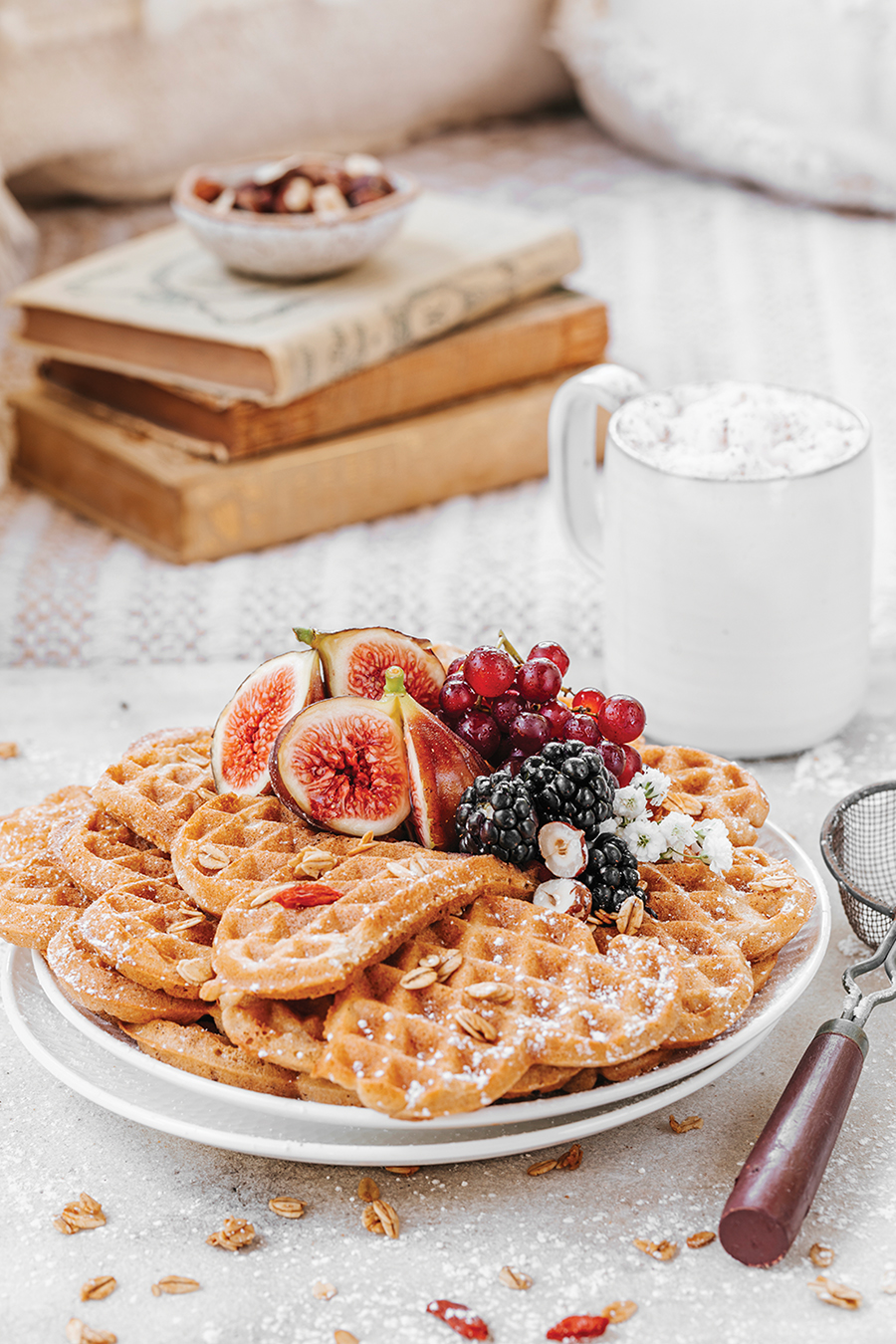
While I am a fan of robust vehicles, I typically prefer more delicate things in life. Take waffles, for instance. The ever-present Belgium waffle — the thick, fluffy, square (or round) waffle with deep, soggy pockets that hold ungodly amounts of maple syrup — is the waffle of choice for most. I, on the other hand, am a devotee of the thin and crisp Scandinavian waffle. The lacy, ornate, heart-shaped Nordic-style waffle with a light dusting of powdered sugar makes my heart sing.

The same way I adore delicate shapes, I have an appreciation for delicate flavors. So, despite it being October, the month of all things orange-tinted, pumpkins rank low on my harvest list. Yes, I love pumpkins as much as the next Boho-knit-cardigan-wearing, scented-candle-hoarding girl but excuse me while I mark this page safe from the annual pumpkin craze. Iconoclast? Not at all. Pumpkins are delightful in many ways, but when it comes to flavor, they aren’t much to write home about. What truly makes anything pumpkin-infused stand out is the supporting cast: a warm, comforting spice mix that is added to virtually all things pumpkin-related.

It’s hard to imagine October without stumbling over chubby gourds at every turn, but autumn has many beautiful heralds — juicy apples, chestnuts, mushrooms, pears or, for instance, hazelnuts. I learned quickly that Americans don’t share my enthusiasm for hazelnuts, a symbol of health and strength, and was recently told by a chef that it’s a Euro thing. Maybe, but I’m also here to tell you that you are missing out if you do not incorporate hazelnuts into your fall cuisine. Whether you enjoy them raw, roasted, covered in chocolate or ground up into flour, hazelnuts are exquisite and should not be missing from your autumn harvest spread.

Norwegian Hazelnut Cardamom Waffles   (Serves 2)

1/2 cup finely ground blanched hazelnuts

1/2 cup all-purpose flour

1/4 teaspoon salt

1 teaspoon baking powder

1/4 teaspoon ground cardamom (or 1 teaspoon cinnamon)

2 eggs

1/2 cup milk (or any non-dairy milk)

3 tablespoons maple syrup

3 tablespoons coconut oil, melted

Preheat your waffle iron. Combine all dry ingredients in a bowl and mix well. In a separate bowl, whisk eggs and add remaining ingredients. Add the dry ingredients to the egg mix and stir to combine. Pour batter into the preheated waffle iron and cook until golden brown and steam is no longer rising. Serve with toppings of your choice — berries, figs, chopped nuts, yogurt or simply dust with powdered sugar.   PS

German native Rose Shewey is a food stylist and food photographer. To see more of her work visit her website, suessholz.com.

In the Spirit

Batch-a-Zombie

Cocktail prep for Halloween

By Tony Cross

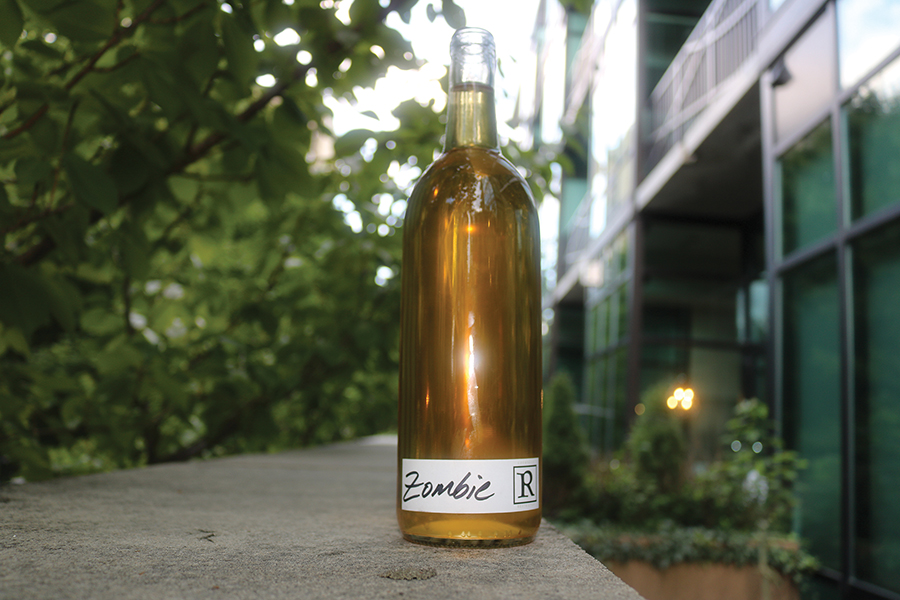
Rum is the nectar of the gods, right, so what makes more sense in October than having a little fun with a Zombie? Without further ado, let me present the batched, milk-punch-clarified Zombie cocktail that you can bottle and drink whenever you want. Talk about the living dead.

I follow a few fine bartenders on Instagram and one, whose handle is thirstywhale, put up a quick little TikTok about scaling up the Zombie, and then clarifying the whole thing. As soon as the video ended, I was on it.

First, let’s address the whole milk thing. Adding milk to drinks is nothing new. In fact, milk was added to punch before people were shaking up cocktails. As Dave Arnold explains, “Milk punches are known for their soft, round flavors. That softness isn’t caused just by the presence of milk but by the removal of phenolic compounds from the spirit via the casein-rich curds.” In English, clarifying a batched drink with milk makes the drink soft and smooth, without tampering with the ABV. Batching cocktails ahead of time is plenty of work, but just imagine pulling a bottle of clarified Zombies from your cabinet on Halloween night and pouring it over ice for the parents while their ghosts and goblins dig into the candy bowl. Look at you, all cool and stuff.

Clarified Zombie (batched)

3 cups Jamaican rum

3 cups Gold Puerto Rican rum

2 cups 151 demerara rum

1 cup Falernum

1 1/2  cups lime juice

2/3 cups grapefruit juice

1/3 cup cinnamon syrup

2 3/4 ounces grenadine

3/4 ounce absinthe

1/2 ounce Angostura Bitters

3 cups whole milk

This recipe yields roughly four 750ml bottles of cocktails. You can definitely cut this in half, or by three-quarters, but . . . if you’re going to buy the bottles of spirits for this recipe, you might as well go all out. In fact, any extra would make a great gift for a birthday or the holidays. Once completed, this cocktail will hold for many, many years.

Here are the liquors I used:

Jamaican: Appleton Estate 8 Year

Puerto Rican: Bacardi Gold

151: Lemon Hart & Son Rhum

You don’t have to use these, but make sure the rums come from the respective origins. You can order these online and have them shipped to you in a week. I highly, highly recommend this option. You’ll need to get the Falernum there anyway, and there’s no substitute for that. What is Falernum, you ask? It’s like a syrup/liqueur that is flavored with lime, almond and clove. It’s an essential in many Tiki drinks.

Notes on Execution

Juice: please squeeze it yourself. Do not, I repeat, do not buy these in a bottle. Also, make sure that the juice is squeezed just prior to batching. Strain it, too, will ya?

Cinnamon syrup: take 10 grams of cinnamon sticks and blend them for 10 seconds. In a small pot, make a 2:1 simple syrup with 1 cup of white sugar to 1/2 cup water. Stir over medium heat until sugar is dissolved. Place the syrup in the blender with cinnamon, and blend one last time for another 10 seconds. Let the syrup cool in a container, and then strain out the solids. Refrigerate until you’re ready to use.

Grenadine: there are two options. You can buy this, but not at the grocery store. Contrary to belief, grenadine is not made from cherries, it’s made from pomegranate juice. Small Hand Foods makes a great one, if you’re looking online. You can also make this at home. Just take equal parts POM pomegranate juice with demerara sugar and stir it in a pot over medium heat until dissolved. Presto!

Absinthe: I have a nice bottle here at the house, but if you don’t, almost every ABC in North Carolina has one. If you’d rather order online, may I suggest the Vieux Pontarlier Absinthe Superieure?

Showtime: In a large Cambro, start with your smallest ingredients first — Angostura Bitters, absinthe, all the way up to 3 cups of rum. Give it a quick stir. Add the 3 cups of milk last. You’re halfway there. Cover your container and walk away. Let it sit for 2-4 hours. When the time has passed, take a medium to large strainer, and line the inside of it with paper towels (one ply thick). Make sure that you slowly pour the cocktail into your strainer. It will take a little while to filter through, so you’ll have to pour and wait, repeating the process. If you pour too quickly, the curdled cocktail will rip through your paper towel. When all is filtered, filter again. This time, take a coffee filter to catch every last bit of curd. Once this is done, just bottle and keep in a cool, dark place. This cocktail will hold forever in the bottle. Pour 2-3 ounces over ice. Garnish with grated, fresh nutmeg. And be careful — these drinks are potent. More than a couple, and you’ll be walking like a . . . well, you know.   PS

Tony Cross is a bartender (well, ex-bartender) who runs cocktail catering company Reverie Cocktails in Southern Pines.

Poem

Stairs at Weymouth

In that haunted writer’s retreat

in Southern Pines

a spiral staircase descended

from the ceiling.

No, it wasn’t a dream.

I opened my eyes 

and the corded spiral

appeared. I waited

for a ghost to show,

or a voice to whisper.

Dark hours I stared,

until early light spilled

into the room, erased 

the vision.

Today I wonder 

if I had it all wrong;

maybe those stairs

were waiting for me

to climb up.

— Maureen Sherbondy

(From Eulogy for an Imperfect Man)

Here’s to the Next Hundred Years

From suffragettes to leading ladies, more than just a book club

By Jenna Biter          

Photographs by Tim Sayer

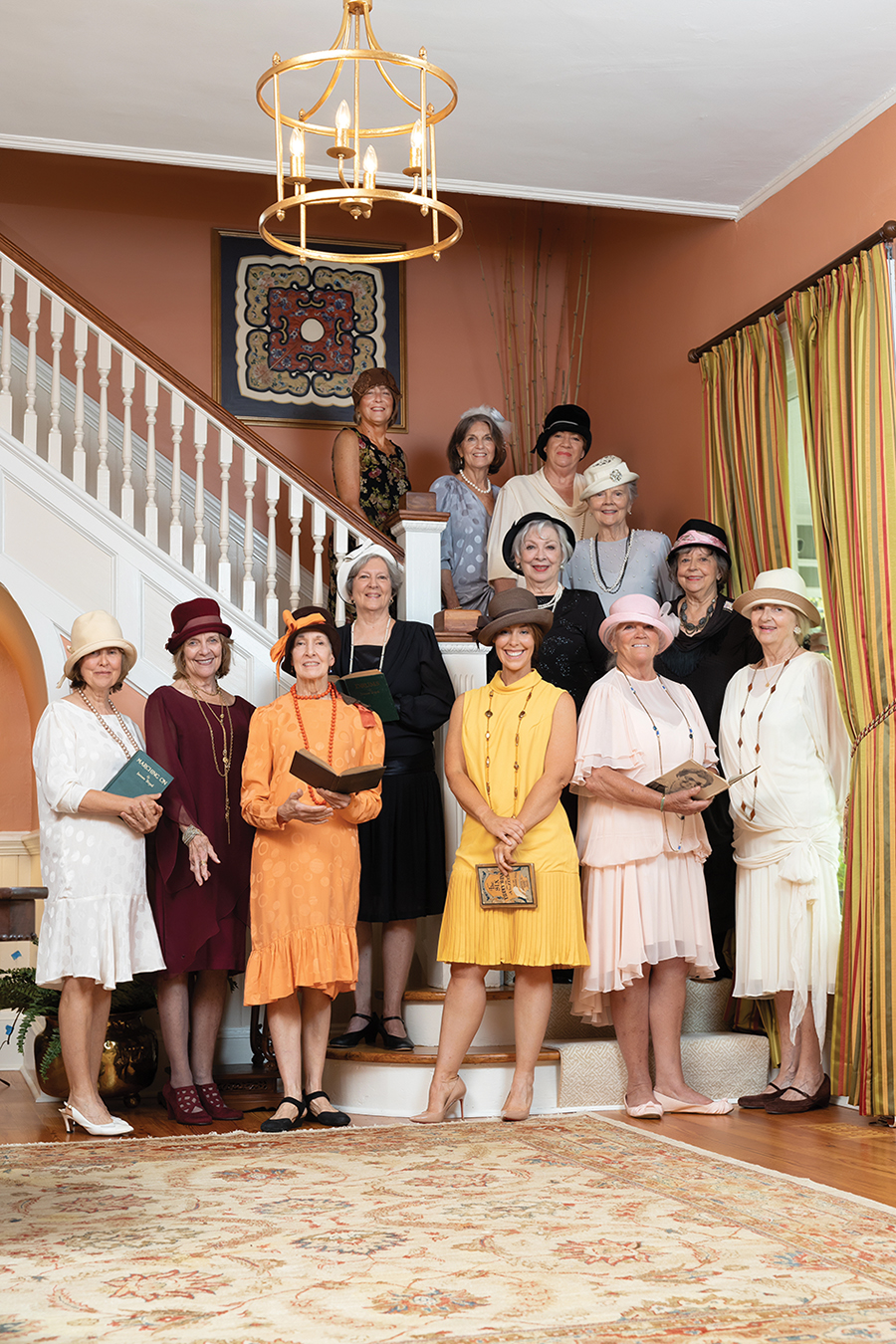
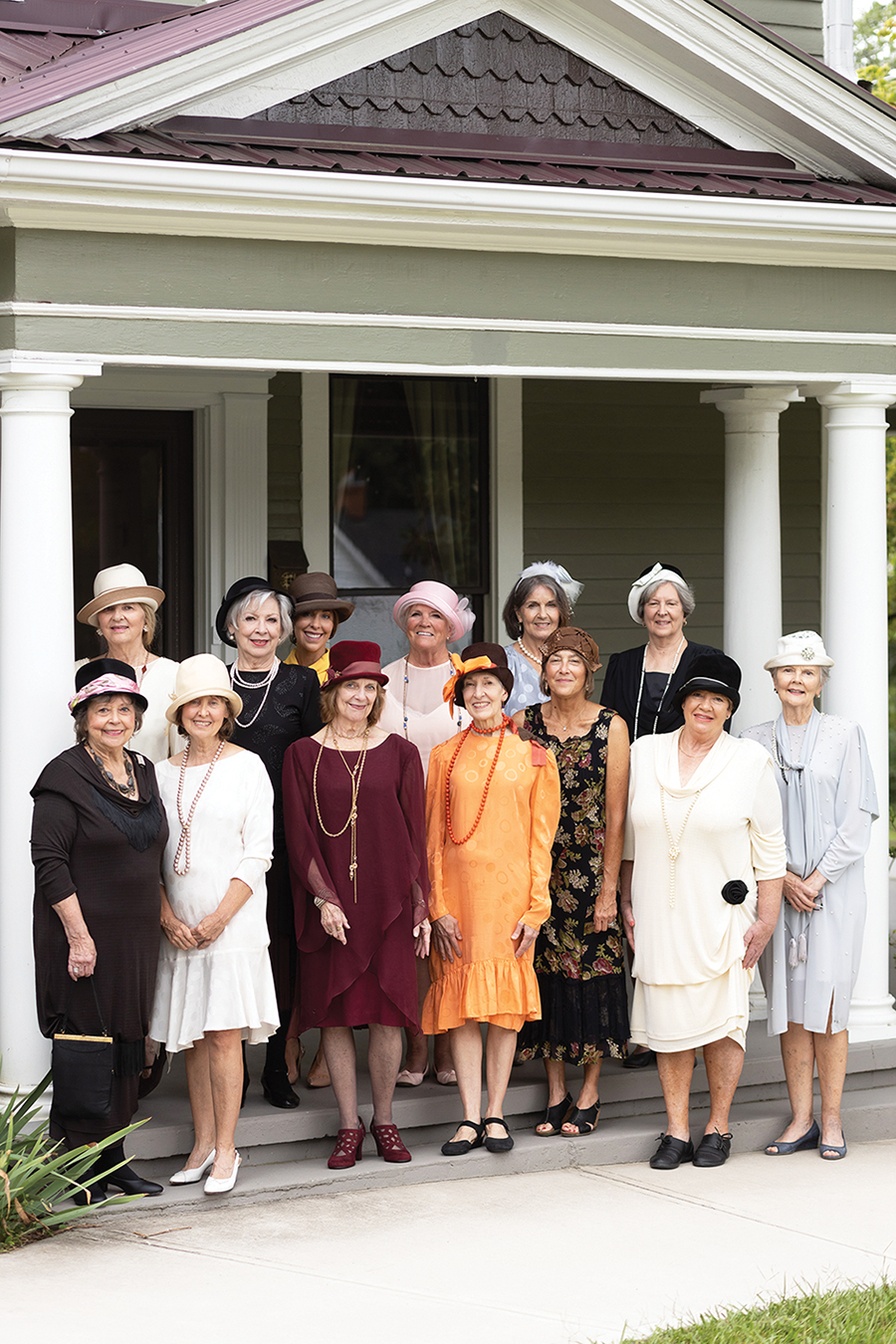
Aberdeen’s daughters filter into the restaurant’s back room, chittering amicably among themselves. If the town was a medieval state, these would be the ladies of the court. “Oh, how have you been?” passes between childhood friends, and swift introductions welcome new faces. With the arrival of each member, conversation swells, and the history of Aberdeen becomes flesh. The guests call out connections across a makeshift banquet table like they’re tossing a ball of yarn back and forth, from woman to woman, until the process knits fiber into fabric.

Betsy Mofield, decorated in red-rimmed glasses almost as sharp as her wit, was Aberdeen’s mayor for 14 years, and Laura Farrell’s husband, Robbie, is currently in office. Someone’s mother was everyone’s favorite English teacher, but she was also Aberdeen High School’s only English teacher. “Your grandfather was my dentist for over 40 years,” another adds in a side conversation. Even the women who say, “I don’t know why I have been invited to this book club,” always lingering on the “I” with their lilting Southern drawls, have lived in town for 40-plus years and married men who grew from Moore County soil.


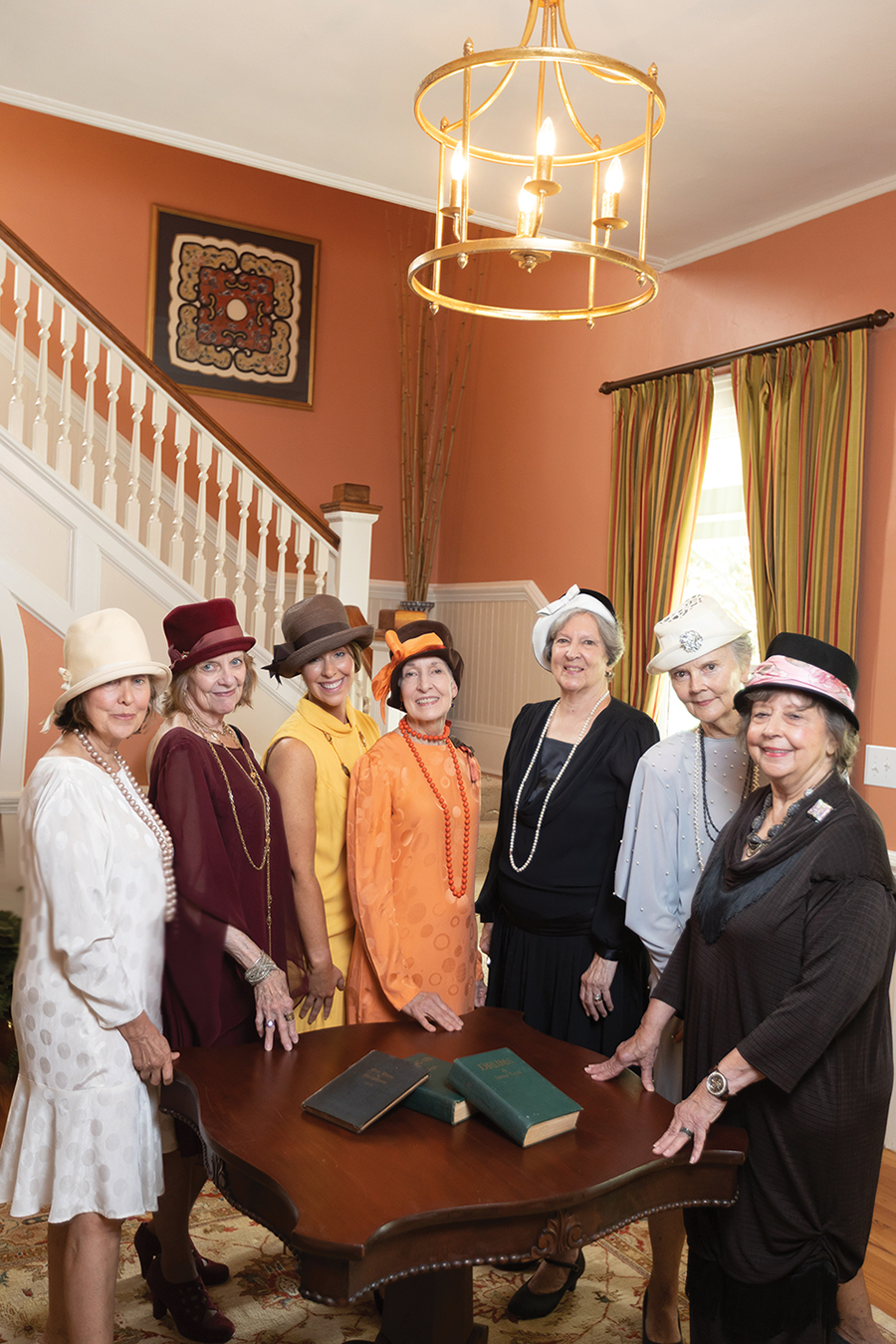
The organization is the Walter Hines Page Book Club. Lynn Page Anderson, an impressive, soft-spoken woman, currently serves as the president. It’s “the oldest active book club in North Carolina and perhaps the oldest in the country,” she says. It derives its name from Walter Hines Page, a distinguished Sandhills citizen who is buried in Old Bethesda Cemetery off Old Bethesda Road. He served as U.S. Ambassador to Great Britain during World War I. In 1935, over a decade after the club’s founding, the members voted to rename their Thursday Afternoon Book Club after the late local giant.

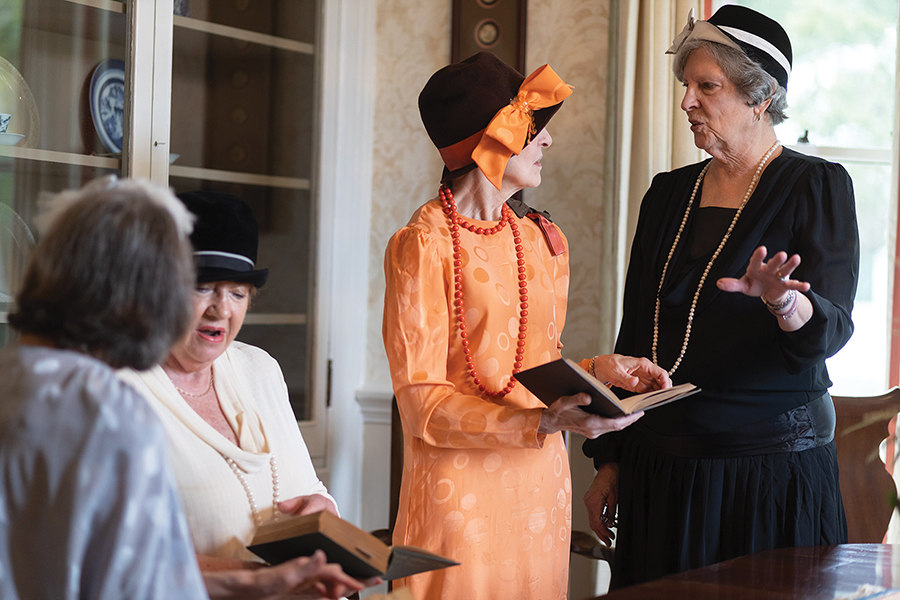
Anderson lifts her fork and pings a water goblet to quiet the room, but the chatter persists. She makes a face, somehow politely. A louder voice intervenes, and the meeting begins. New member introductions roll into lunch, and dessert rolls into a review of the last meeting’s minutes, then the current meeting’s agenda. Eager hands and voices raise to second motions approving donations and the formation of committees.

“We’re very democratic,” Anderson says. “Something comes up, and we vote on everything.”

Democracy is the gilded baton they pass gingerly from predecessor to successor; no woman wants to drop it on the handoff. Anderson ponders the women who founded the club in 1921, a year after they got the vote. “I wonder how many of them were suffragettes, or how many of them understood that women can have a more important life than being relegated to cooking and cleaning? At the time, the population of Aberdeen was about 852 people, and here were these 22 women. That’s a big chunk of the population, and they decided they wanted to share experiences and culture with their friends.”

Membership has expanded to 24, but advancing culture and community remains their North Star. Monthly meetings feature speakers from local nonprofits like the Prancing Horse Center for Therapeutic Horsemanship, and Camp Dogwood for the Blind and Visually Impaired, or sometimes local artists and authors. After the program, they vote on whether to donate to the cause, and they always vote “yes.”


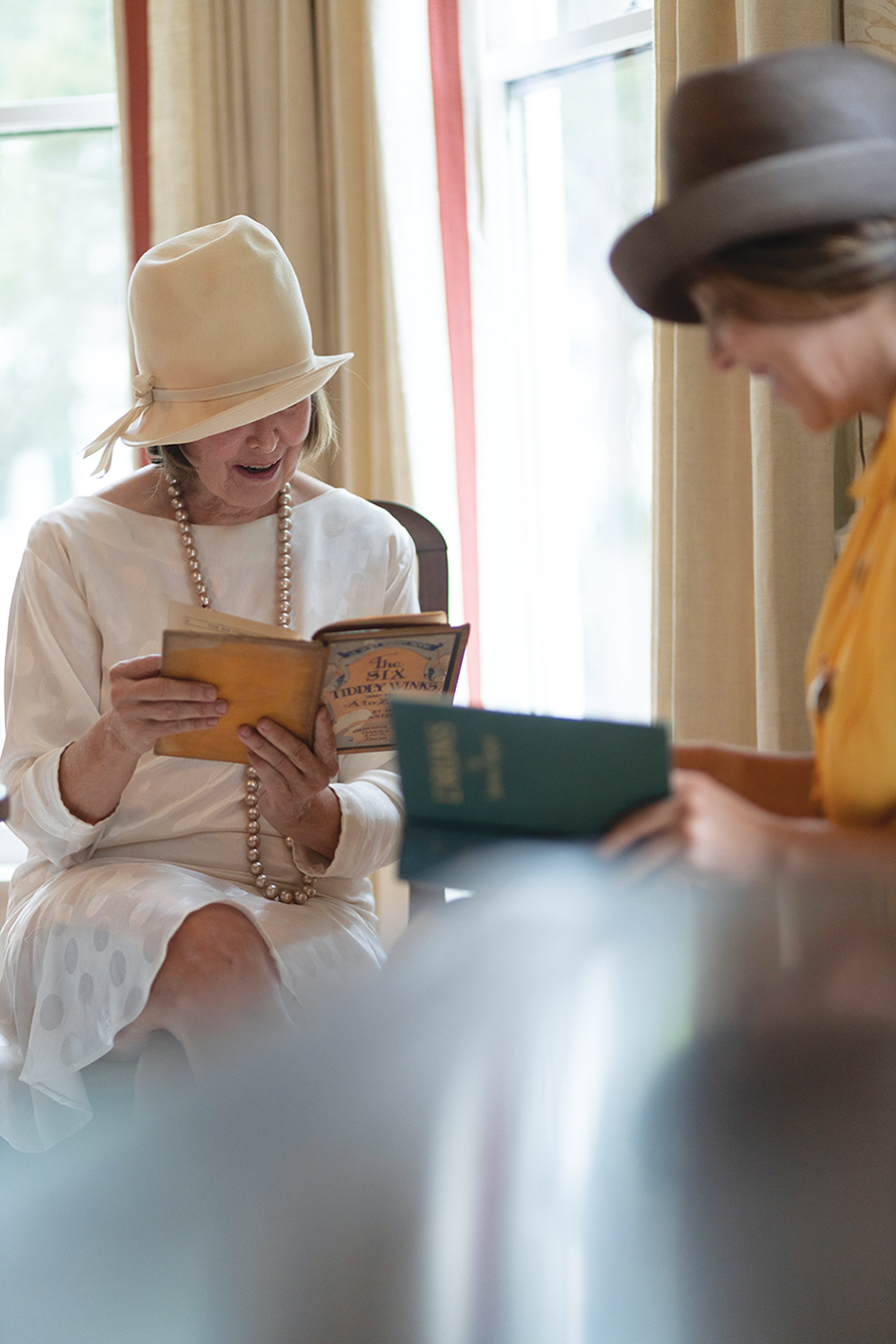
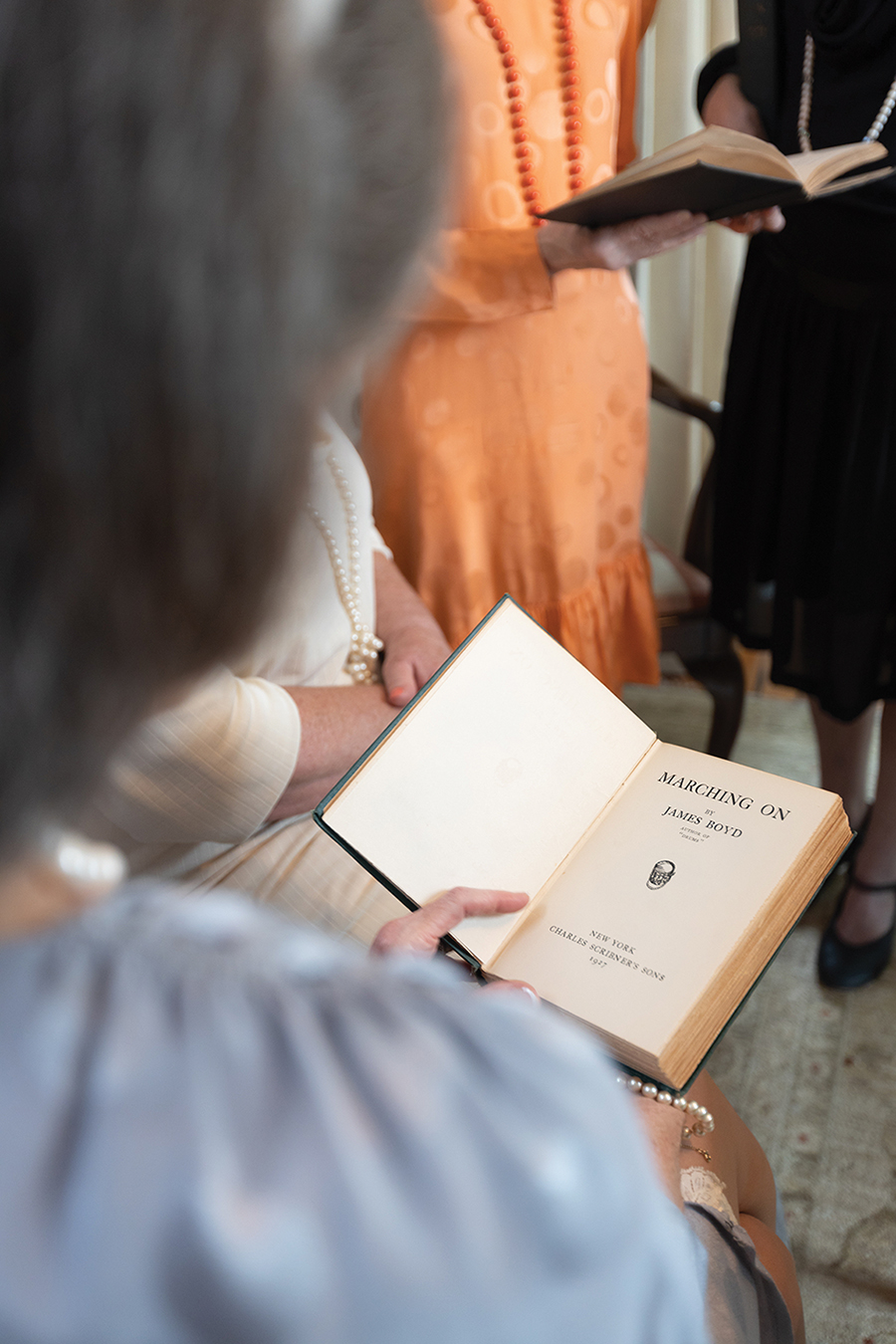
Hardbacks lying on the white tablecloths are the only clue this group convenes under the guise of a book club. Each member buys one copy of a current book, and they circulate from woman to woman per a list inserted into the copies like library borrowing cards. They read the books consecutively, not synchronously, and they don’t have to read the books at all. “You get a chance to read the books, and you can talk about them . . . if you want.” Anderson says. After two years, the books have rotated through all 24 members, and each woman gets hers back. They select new titles, and the process repeats.

Anderson drives the meeting forward — the annual “white elephant” and, at last, the centennial celebration. Instantaneously a committee forms to handle the catering and venue. Over a century after their first meeting on October 21, 1921, in an Aberdeen living room, the book club still meets on the second Thursday of the month, but third-party luncheons have replaced home gatherings.

The Walter Hines Page Book Club celebrated its 100th anniversary last October, but the pandemic relegated the celebration to modesty. They’re planning a bigger bash for this year: “How’s Saturday, October 22? One hundred one years and a day since the founding,” Anderson asks. Eager hands and voices raise to second the motion.  PS

Jenna Biter is a writer, entrepreneur and military wife in the Sandhills. She can be reached at jennabiter@protonmail.com.

Southwords

The Haunted Fireplace

“Do you like scary movies?”

By Emilee Phillips

I was never much into ghost stories as a little girl, but that didn’t make me immune to the heebie-jeebies when something didn’t feel quite right.

The house where I grew up was built in 1875. It’s a rambling white farmhouse in the middle of nowhere. Most of the time our home felt warm and cozy, especially when the whole family was together. It was during thunderstorms, or when I was alone, that I got scared.

The old house is the polar opposite of a modern, open floor plan. It has rooms of all different shapes and sizes, each with an atmosphere entirely its own. Every addition to the house brought with it idiosyncratic wall and floor configurations. Our house was imposing and roomy and, to a little kid like me, it felt like a mansion — not of the fancy or fairytale kind, but the big, mysterious kind.

Sometimes, it even seemed alive. 

The majority of the house was built with rough cut lumber. There are four fireplaces, two of them in working condition. The wooden mantels are all strictly utilitarian, devoid of ornate carvings or decoration. But the one in the green room is different. Very different.

I should mention that the house was often cold in the winter. We had a pair of furnaces, but their fuel efficiency may not have been up to 21st century standards. They often burned through all of the propane before the delivery truck could make it back for a refill. Or sometimes they were simply unable to ward off the chill of a high-ceilinged house. So, on the coldest nights, my family gathered in the green room around its oversized fireplace.

My brother and I used to wrestle on the worn brown carpet, rolling in front of the fire that always gave off more fumes than it seemed it should. I suppose I didn’t pay it any mind those first few years until one day I looked up at that ancient fireplace and watched the mantel ooze. My eyes got as big as saucers. It was as though I was watching a horror movie and I couldn’t look away.

The walls were bleeding.

Suddenly, every creak I heard in that old house came alive. I could imagine whispers coming from the flames. Every speck of blue dancing in the fire became a spirit showing itself to me just to see if I was paying attention.

When the fireplace was on I would tiptoe in and out of the room, keeping a wary eye on the hearth. If I was quiet, I thought, I would be safe.

It was creepy and sinister and a bit terrifying. And despite countless reassurances from my parents that a menacing otherworldly being had not inhabited that gaping hole in the wall, I wasn’t convinced.

Even now, when the fireplace in the green room is lit, amber fluid seeps from the mantel and oozes over the layers and layers of paint applied to disguise where all the previous drips have been scraped off. And, now that I’m older, I understand it’s not unheard of for old homes built of heart pine to drip resin for years, the heat triggering the flow.

Perhaps the old house isn’t haunted after all — except for the footsteps my father sometimes hears clomping up the steep wooden staircase at night. The steps, oddly enough, are carpeted.  PS

Emilee Phillips is PineStraw’s director of social media and digital content.

Simple Life

My Poetic Summer Vacation

Like dessert, the sweetest endings are meant to be shared

By Jim Dodson

Whenever our friend Joe comes to supper, he helps himself to a slice of my wife’s carrot cake before we all sit down to the meal. His philosophy, simple and sweet, is “Life’s short. Better eat dessert first.”

Sometimes, though, the best things come later in life.

More than a year ago, mired in a world shut down by COVID, I proposed to my wife that we take our far-flung American clan to Scotland to celebrate her birthday and the playing of the 150th British Open Championship. It would be our first family summer vacation in more than half a dozen years.

As is always the case in revolutions and family vacations, success lies in careful planning. With grown children and two sets of parents converging from compass points as disparate as Los Angeles, Chicago, New Jersey and North Carolina, it took no small amount of coordination to finalize a game plan.

Fortunately, I am married to a woman who could organize a convention of drunken anarchists. With her usual efficiency, Dame Wendy promptly arranged flights, secured tournament tickets, parking passes and rental cars, and booked a dwelling in the East Lothian village of North Berwick, a place I’ve returned to many times since the early 1980s.

Though I’d been to St. Andrews many times in my long golf-writing career, the chance to attend the oldest golf championship in the birthplace of the game was something I’d dreamed of doing since I was knee-high to a ball washer.

So was another bucket list item for the eternal English Lit major in me.

Long a student of English romantic poetry, especially that of William Wordsworth, I’d always hoped to someday find my way to Tintern Abbey in Wales, the ancient ruin on the River Wye that inspired England’s greatest Romantic poet to write one of his most beloved poems of the same name.

It was my clever wife who suggested a way to check two boxes with one trip. By flying to London a few days before the clan assembled in Scotland, we could take our own sweet time motoring through the countryside to Scotland, taking in the abbey and maybe even the Lake District, where the poet once resided.

England’s Romantic Age of poetry was, in large part, a reaction to the 19th Century’s bleak industrialization that robbed mankind of its intimate connection to nature. The world is too much with us; late and soon, warned old Bill Wordsworth. Getting and spending, we lay waste our powers; Little we see in Nature that is ours; We have given our hearts away, a sordid boon!

Unfortunately, in the hours before we set off, the world still seemed very much with us.

News reports of transportation strikes and acute shortages of workers described travelers stranded at airports and train stations amid thousands of pieces of lost or unclaimed luggage.  Queues were said to be hours long at London Heathrow, the epicenter of traveler chaos. To add to the fun, Boris Johnson’s abrupt fall from grace had unleashed the usual jamboree of warring cabinet ministers eager to take possession of 10 Downing Street. Meanwhile, weather forecasters were warning of the deadliest heat wave to hit Britain since Medieval times.

Remarkably — I’m not sure how — we managed to escape the madness, with luggage, golf clubs and most of our dignity still intact, speeding on to the gorgeous Welsh countryside in a zippy eco-rental car.

Few of the world’s iconic landmarks have made my proverbial jaw drop as did the first sight of ancient Tintern Abbey (circa 1131) as we rounded a high meadow curve above the winding River Wye. There it rose in the vale below, startlingly large and bigger than life. Scarce wonder Old Bill was inspired by his first sight of this setting: O sylvan Wye! thou wanderer thro’ the woods / How often has my spirit turned to thee!

Two hours of exploring the quiet abbey ruins followed by a plowman’s lunch of crusty bread, local cheese and good Welsh ale, sent us up the River Wye Valley hungering for more. Over the next three days, in fact, we wound our way to the Lake District along rural backroads and narrow hedgerow lanes, pausing only to hike through spectacular forests and explore ancient market towns, including Ludlow, where my other favorite English poet, Alfred Edward Housman, set his famous paeon to over-indulgence: Terence, this is stupid stuff: You eat your victuals fast enough; There can’t be much amiss, ’tis clear, To see the rate you drink your beer.

To our good fortune, Ludlow’s famous summer food festival was just getting underway, so we briefly joined the fête, discovering what Housman meant when he added: And malt does more than Milton can / To justify God’s way to man.

By the time we reached our cottage in Scotland, I almost felt like a man who’d managed to shed the stresses and cares of modern life, just in time to celebrate an ancient game’s birthplace and The Open’s historic sesquicentennial.

By design, we’d arranged tickets for the first and final day of the competition, allowing time for me to introduce my future son-in-law and his golf-mad papa to a trio of the most celebrated links courses in Scotland. As usual, the stout North Sea winds took a heavy toll on our scores, but we loved every minute of the challenge. Like Joe with his carrot cake, it was the perfect appetizer for the main course to come across the Firth of Forth at St. Andrews.

The hottest and driest summer in memory left the Grand Old Lady (as St. Andrews’ Old Course is fondly called) at her most exposed in many a year. But to the record crowd of 290,000 on hand to shout and serenade their favorite players, that mattered little.

The theme of this year’s historic Open — displayed on everything from grandstands to golf caps — was “Everything Has Led To This,” a fitting coda for one who finally made a journey he’d dreamed about since boyhood.

The finish was predictably rowdy and wonderful. In the end, the veteran favorite faded with dignity, allowing for a young and promising upstart to have his name carved on the coveted Claret Jug, joining 149 previous Champion Golfer(s) of the Year.

My favorite moment, however, came when I walked my daughter and her intended through the iconic Royal & Ancient clubhouse, home to the keepers of the game, where I’ve had the good fortune to be a member for many years. Old friends and fellow members made them feel most welcome.

“Dad,” she said, clearly moved by the history and pageantry around us, “thank you for bringing us here. I never imagined anything so beautiful.”

It was one of those moments that felt, in retrospect, a bit like a homecoming and a farewell. Whichever it was, I shall never forget it.

Her words even called to mind my favorite lines from Old Bill’s Tintern Abbey, the perfect coda to a poetic summer journey:

To them I may have owed another gift,

Of aspect more sublime; that blessed mood,

In which the burthen of the mystery,

In which the heavy and the weary weight

Of all this unintelligible world,

Is lightened: — that serene and blessed mood,

In which the affections gently lead us on  PS

Jim Dodson can be reached at jwdauthor@gmail.com.