Secrets of the Deep

A pair of colorful and passionate marine archaeologists bring the Civil War to the surface

By Jim Moriarty

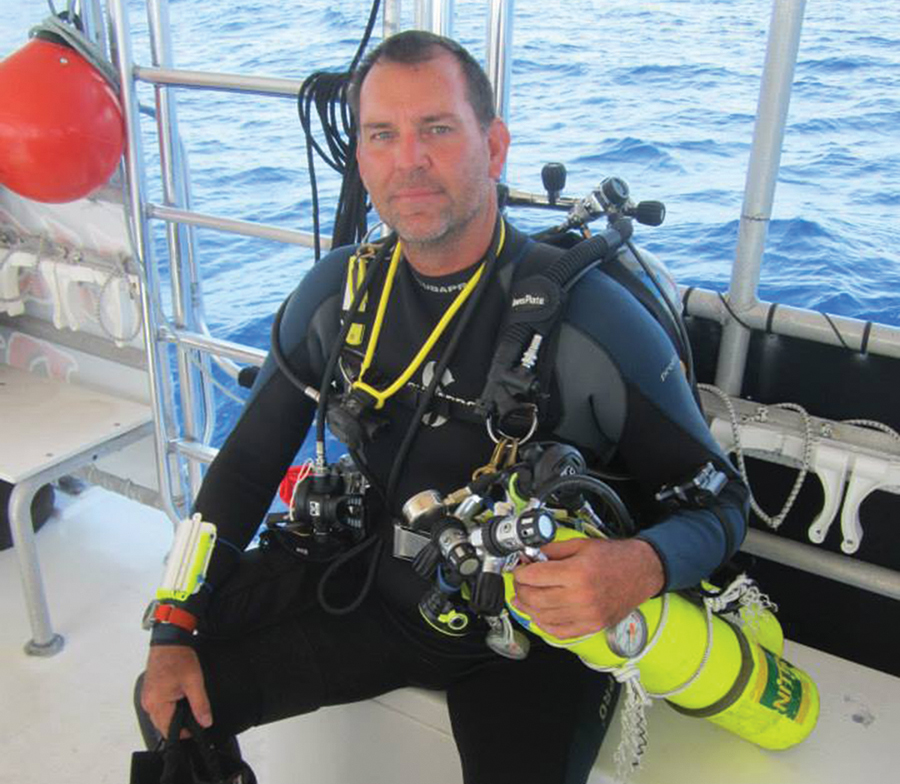
Imagine Indiana Jones in a wetsuit and a mask instead of a leather jacket and a fedora. Forgo the melting faces of Nazis and the Thugee priest with that whole snatch-your-heart-out-of-your chest thing. Make it something more along the lines of a couple of guys with ribcages expanded from a lifetime of breathing underwater, advanced degrees on the walls and cabinet drawers stuffed full of charts and maps — guys who live and breathe a passion for finding and preserving the bits and pieces of our collective barnacle-covered heritage, even if they do get their air out of a tank. The deputy state archaeologist-underwater, John W. “Billy Ray” Morris III, and his archaeological dive supervisor, Greg Stratton, spend most of their workday researching databases at computers in a World War II-era cinderblock building tucked so far back in the live oaks near the entrance to Fort Fisher there’s a sign on the door that says:

Keep this Door Closed!

Snakes and other critters

are

Coming into the Building

So, at least they’ve got the reptiles covered, Indiana Jones-wise.

Morris is North Carolina’s fourth head of underwater archaeology. He met the first one, Gordon Watts, when he was 15 years old. “I was putting my wetsuit on to go surfing right behind that window right there,” says Morris, pointing out the back window of his office. “Gordon came wandering out and said, ‘What are you doin’?’ and I said, ‘I’m going surfin’ dude. What are you doing?’ and he said he was the underwater archaeologist for the state of North Carolina. I said nobody’s got that job.” 

Now, Morris does and it’s as good a fit as a dive skin. You might as well say he began prepping for it before he was in grade school. His uncle David Midgely was an underwater demolition team diver in the Navy who took his young nephew under his wing, holding him below the surface with one arm and sharing his breathing regulator with him with the other from the time Morris was 5 years old. After getting a degree at UNCW and a master’s in marine archaeology from East Carolina University, Morris built a globetrotting career out of combing through other people’s wreckage. Bermuda. France. Jamaica. Trinidad. Tobago. Ecuador. El Salvador. California. Canada. Labrador. Mexico. Nevis. St. Eustatius. The Bahamas. Spain. And, most especially, Florida, where he created the Lighthouse Archaeological Maritime Program. “If I’ve missed any, they’ll come back to me,” he says.

“I spent 15 years every summer working for the Naval History and Heritage Command on the CSS Alabama off the coast of Cherbourg in France,” says Morris. “Then I spent five years hanging out in Bermuda working on a Spanish messenger vessel called a patache. We recovered that entire vessel, which is kind of a rarity.” Fresh from graduate school, Morris worked on one of Lord Cornwallis’ scuttled ships in Yorktown. “We did a bunch of crap with BBC and National Geographic for that one,” he says. “But, the project that will always stick with me is the Alabama. To get to dive on that wreck was really special, plus we got to live in France three months out of the year. I had absolutely no complaints about hanging out on the French coast every summer.”
ps-archaeology1-11-16

The Alabama, commanded by the legendary commercial raider Raphael Semmes, was sunk by the USS Kearsarge in a celebrated naval battle in 1864. Éduard Manet recreated the engagement in a painting that hangs in the Philadelphia Museum of Art. “It was 220 feet deep,” says Morris of the Alabama wreck. “We did the work with the French Navy because it’s inside a French exclusion zone for a nuclear submarine base. Gordon Watts was the project director. Because of the depth we had to wear two tanks on our backs, two tanks under our arms and another one on our stomachs. You only had an hour and 15 minutes that you could work on the site before the current got so bad it would blow you to England.”

Just a routine day at the office, except maybe for that time Morris’ regulator blew at 200 feet. He and Watts buddy-breathed their way to safety. “I don’t think Gordon’s heartbeat even went up,” says Morris. “When we got back to the boat I suggested it was time for a few adult beverages.”

It was, after all, France. “We would stagger three dive teams five minutes apart. First group would start something, second group would do most of the work, third group would clean up. We managed to intersperse it with cheese and red wine. I was not one of the divers that drank a glass of red wine and then dive, but the French Navy guys, they’d polish off a couple of glasses while they were suiting up. I’m like, how can you do that? They’d say, we’ve done it from birth. Those guys were really, really good.”

The wreck in Bermuda was a small messenger vessel that went down in 1582. “I made a series of research models that are on exhibit in the National Museum of Bermuda,” says Morris. “When conservation is completed we’ll put the ship back together as a focal point for the museum’s display. They took one of the site drawings I made and used it for the back of the $50 bill in Bermuda, which was really cool. I called my parents and told them. When it came out they gave me bill 00001 and I insured it and mailed it to my mom. She gets it and she’s like, ‘Your picture’s not on it, Bill.’ ‘That’s the Queen,’ I said, ‘I drew the picture on the back, Mom. They like me there but not that much.’”

If Morris is built like a linebacker, the position he played at Wilmington’s John T. Hoggard High School, Stratton looks like he could play tight end for his beloved University of Texas Longhorns. Born and raised in Beaumont, Stratton was living in Austin before moving to North Carolina. “I came to this later in life,” he says of his archaeological career. “I was a home builder and I was in the military for eight years before that. I waited until both my children graduated high school. I decided to go back to school for what Dad wanted to do. Loved history. Loved archaeology. Started looking around for a degree that has it and I ended up at East Carolina.” And, ultimately, in an office that’s hardly more than a few football fields away from the largest collection of Civil War shipwrecks in the United States.

The Cape Fear Civil War Shipwreck Discontiguous District is listed on the National Register of Historic Places. Wilmington’s two channel passages (there’s only one now) at the mouth of the Cape Fear River, separated by the navigational obstacle of Frying Pan Shoals, was the lone holdout in the South’s desperate attempt to thwart the Union’s naval blockade. The wrecks of the ships designed specifically to slip through the blockade, along with a few unlucky Union blockaders, remain in the shallow waters so near to shore it seems as though you could wade out and touch them.

Blockade running was a dangerous, and lucrative, business. “Fifty percent of a blockade runner’s cargo had to be military in nature. That was Confederate law,” says Morris. “It took the boat owners and the captains about 30 seconds to realize this was the most lucrative trade on the face of the planet. You can look in the records of the Wilmington Journal or Charleston or Mobile. If you wanted the latest Paris fashion or good Scotch whisky, they brought that in and that was personal profit. There were captains that made so many successful runs they were wealthy men the rest of their lives. So, you got the best engineers, the best captains, the best sailors on those boats.”
ps-archaeology2-11-16

The blockade runners were unarmed, fast and camouflaged. “These were the cigarette boats of their day, 221 feet long, super advanced,” says Morris. They had iron hulls, coal-fired steam engines and state-of-the-art paddlewheels. Nothing the Union had could catch them. “They went out to island entrepôts in Bermuda or Nassau or Havana, loaded up and sprinted in. They were painted a really, really pale gray. The masts and the funnels would either fold down or telescope down. The upper decks would be painted white. There are records of some of them being painted a dark red with gray camouflage patterns. I was sitting in a bar down on the waterfront in Colombia and I saw a cigarette boat that was painted red with dark gray stripes on it and I thought about the blockade runners because I didn’t think that cigarette boat was painted that way for show. I didn’t have the audacity to walk up and ask them if I could take a picture.”

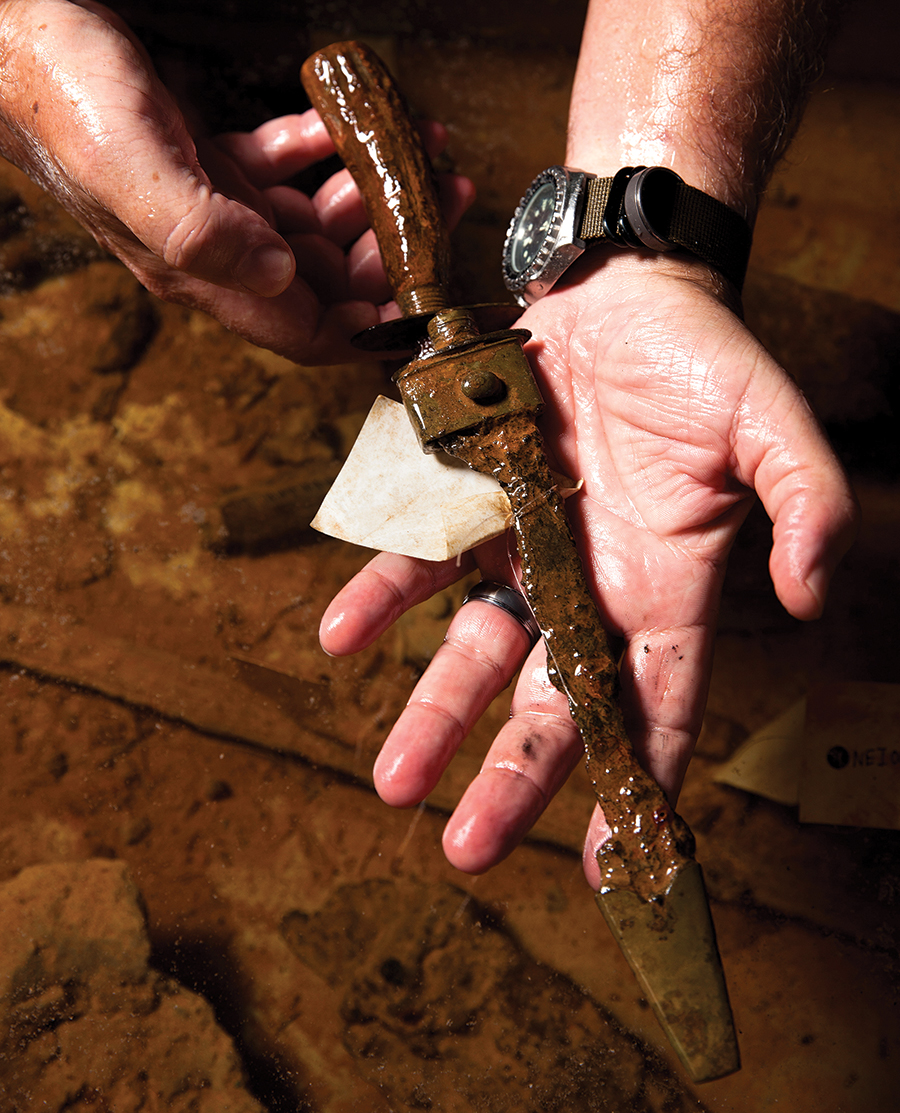
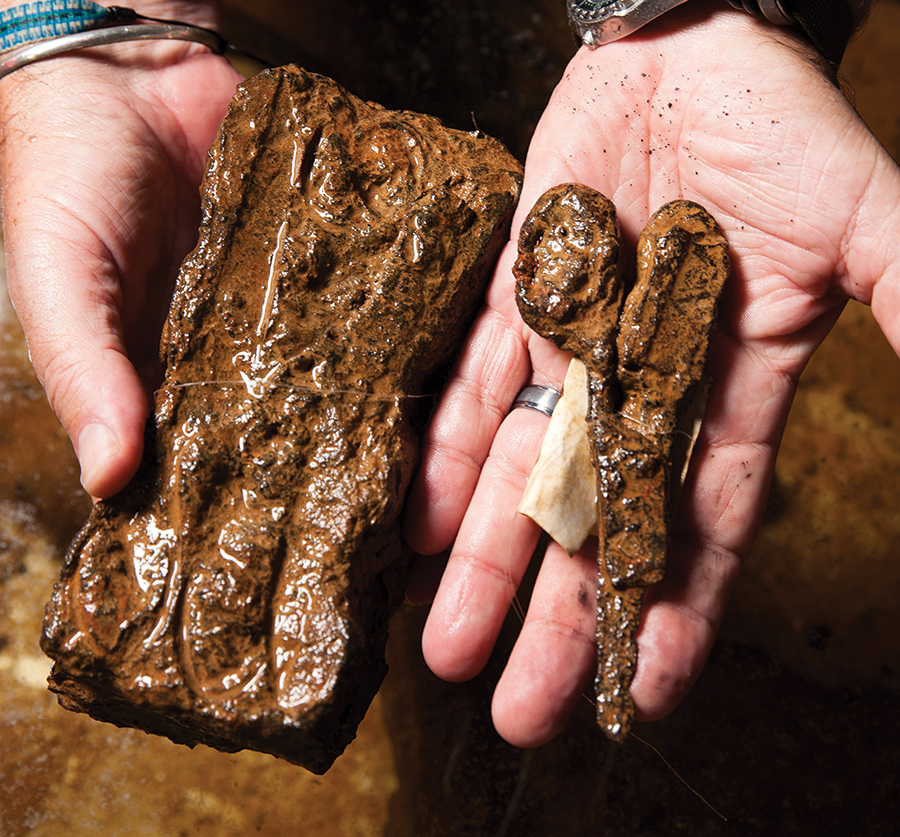
So thoroughly researched are the Civil War wrecks that of the 27 blockade runners and seven Union blockaders from Lockwood’s Folly to Bogue Inlet, there are only seven Morris figures he couldn’t go out to in their 23-foot Parker with the 250 horse four-stroke engine and lay his hands on — and that doesn’t include a pair of ironclads and a couple of post-war vessels. The laying on of hands is pretty much how Stratton came upon their last discovery, or more properly rediscovery, the Agnes E. Frye, a blockade runner built in Scotland and named after the wife of its commander, Naval Lt. Joseph Frye. Since the wrecks can be either buried under the sand or resurrected by any passing tropical storm, relocating the Frye was an archaeologist’s treasure trove. So poor was the visibility, Stratton found the Frye, whose holds may yet contain undisturbed cargo from the ship’s fourth attempt at evading Union pursuit in 1864, by “starfishing” on the bottom. “We found her with a side scan sonar,” he says. “I was the first one to drop in. The first thing I found was a piece of the hull. It took all the skin off my knuckles.”

While the current cause célèbre of North Carolina shipwrecks is Blackbeard’s Queen Anne’s Revenge, site work there has slowed while preservation catches up. “For every dollar you spend in the field,” says Morris, “the rule of thumb is that you’ll spend 40 in the lab. Half of the Queen Anne’s Revenge is up, the other half is still down there. It’s going to be decades before all that stuff is conserved. The lab is really focusing on catching up on a lot of the material because that’s an extremely significant wreck.” In addition to Morris and Stratton, the Fort Fisher office has two other archaeologists, Chris Southerly and Nathan Henry, who work on conservation and environmental review projects.

The hiatus from the leftovers of North Carolina’s most famous pirate has allowed Morris and Stratton to focus their attention on the blockade runners, including the goal of creating a kind of Civil War dive park, or at least the beginnings of one, on the blockade runner Condor. “I’m a real big believer in creating a sense of stewardship through education,” says Morris. “Those wrecks don’t belong to me. They belong to every single person that lives in North Carolina. It’s our shared heritage. I want to encourage you to go out and dive on it. I want you to be as moved and as impressed as I am. I want people to go look at these, but I want them to do it responsibly.”

Condor is a more desirable choice than, say, the Agnes Frye for several reasons. “The wrecks north and east of the river mouth, I’ve seen 15-16 feet of visibility,” says Morris, far better than the murkiness of the water where Frye ran aground. Condor, which went down on its maiden voyage, is also in better shape. “The engines are still in place. The paddlewheels. The rudder is still hung. Condor is not only well-preserved, but she’s got this staggeringly cool story,” says Morris. The ship was carrying more than just war materiel. Its human cargo was the spy Rose O’Neal Greenhow, the Black Rose of the Confederacy. After passing military secrets that aided the South in the first Battle of Bull Run, Greenhow was kept under house arrest in Washington, D.C., then released and ultimately dispatched to Europe by Jefferson Davis on a diplomatic and fundraising mission. Returning on the Condor, Greenhow knew if she was captured, she’d be executed and, when the ship ran aground, she tried to escape in a rowboat. It capsized and she drowned, weighed down by the gold sovereigns sewn into her petticoats.
ps-archaeology3-11-16

“I’m really looking forward to doing this,” says Morris of the dive park. “The wreck is, I think, one of the coolest out there. It will happen. I’ve just got to go through the hoops of getting the Coast Guard’s permission and getting the money to buy the buoys. I’m hoping to have the whole thing done by next summer. I’m figuring with the dive slates and everything, it’s going to cost $10,000 or less.” Funding gratefully accepted.

In the meantime, Morris and Stratton are hooking up with their counterparts from NOAA, the National Oceanic and Atmospheric Administration, to do the site map on another blockade runner, Virginius, also captained by Joseph Frye but not, technically speaking, a Civil War wreck. Built in the same Scottish shipyard and roughly at the same time as the Anges E. Frye, Virginius never made it into the American Civil War. “She was actually running guns for another war down in Cuba eight years later,” says Morris. “Virginius gets captured off Jamaica by a Spanish gunboat and they take her back to Cuba. They execute Frye and most of his crew.” The British then intervene and eventually a U.S. vessel goes to Cuba and brings Virginius back under tow. They sail into bad weather and Virginius goes down eight miles from the Agnes E. Frye. “I don’t know what the odds are to have two blockade runners both built on the Clyde River, both commanded by the same guy, sink within eight miles of each other after running blockades in two separate conflicts,” says Morris.

Virginius is 10 miles out in 40 feet of water. Another dive park? “That wouldn’t be my call,” says Morris. “It’s outside of state waters.”

But he can dream. PS

A Southern Commandment

There will be cornbread!

By Jan Leitschuh

Even in these low-carb times, there is cornbread.

It’s not going anywhere.

Moist, lightly golden, aromatic, steam-emitting and firm-yet-crumbly, iconic Southern cornbread is simply a tradition not to be trifled with. This is November, the season of the harvest and Thanksgiving. And there will be cornbread, Paleo diet be damned.

Cornbread has been called the “cornerstone” of Southern cuisine. While we associate cornbread with the tables of the South, the story goes deeper than that. Corn, or maize, is a New World grain, evolved from centuries of careful selection and breeding by indigenous populations of this weedy grass.

Though now it is grown across the world, and bred in laboratories, corn was unknown to Europeans before Columbus. Early settlers naturally tried to grow their familiar wheat in the steamy South. They wanted bread.

But wheat bread did not do as well in Southern fields, while corn did, growing all the way down into Mexico and beyond, where it was domesticated over 10,000 years ago. Several small cobs of several inches developed from a grass that originally produced only one tiny cob an inch long. Now it grows long and prolific, and is the most widely grown grain in the Americas and the most widely grown grain in the world by weight. Over 85 percent of U.S. corn is now genetically modified, under patent, including sweet corn.

Early settlers in the Southeast imitated their native neighbors, learning to process and cook maize from the Cherokee, Creek, Chickasaw and Choctaw. They ground the corn to make a meal, sometimes treating it with alkaline substances to increase nutrition and digestibility. Before long, settlers were adapting recipes to the prolific crop to make the breads and bakery. High in energy, corn became a meal staple. From Colonial days until the present, cornbread has been eaten on Southern tables.

Cornbread rose in popularity during the Civil War. Baking soda became available and was used for leavening. Cornbread was cheap, and it was filling. Meal could be shaped into loaves to bake and rise, or simply fried in some bacon drippings in a cast iron skillet. This latter technique was easy enough for anyone to cook up a mess of fritters, johnnycakes, corn pone and hoecakes that stuck to the ribs and let a body do a hard day’s work.

In fact, with a little water, salt and fat, you could cook a small dense cake right in the field, on a garden hoe blade held over a small fire. As families grew wealthier, the basic recipes expanded to include eggs, buttermilk, flour, yeast and sugar.

Cornbread is considered a quickbread, that is, a bakery leavened with baking powder rather than yeast. Corn lacks the tough gluten proteins that trap gases given off by yeast. Instead, Southern cornbread relies on the protein from eggs to give it structure.

If you grew up in the North, or Midwest as I did, cornbread meant something a little different. Sugar was used, along with a portion of wheat flour, to produce a lighter, more cakey type cornbread. We buttered it lavishly, and drizzled it with honey.

In the South, less sugar is used, and little to no wheat flour. Southern cornbread today can be as simple as corn flour, a little salt, baking powder, milk or buttermilk (clabber) and eggs. Molasses is the traditional drizzle. Leftover cornbread will not go to waste either, sometimes crumbled and served with milk like cold cereal.

The cornbread-like hush puppy is another prized Southern treat, the buttermilk batter being deep-fried, often with the addition of onion powder and seasonings. Served with fish or seafood, you’ll find it on menus up and down the mid-Atlantic coast.

It’s a versatile grain, corn. With different treatments, it’s the basis for cornmeal pudding, masa harina (cornmeal treated with an alkaline lime water) for tamales and tortillas, polenta, posole, hominy, grits, corn muffins, even popcorn, corn flakes and corn dogs. Corn oil and cornstarch, corn syrup and grain alcohol (think moonshine and bourbon whiskey) are further iterations that might show up in our kitchen cabinets.

So now that you’re drooling — you know you are — and have determined to revisit this Southern favorite this November, let us combine the best of the old and the new, the North, the South and the West.

With luck, you are an industrious locavore, and last June and July you bought scads of local, non-GMO sweet corn fresh picked from area markets. You ate sweet corn on the cob, roasted, boiled or steamed, till it came out of your ears, and then sliced the milky, yellow kernels from the remaining cobs and froze batches for chillier times such as these.

That means, clever you, that there is home-frozen sweet corn at your disposal. And if you are going to expend the calories on this starchy, cool weather treat, it’s going to have to be good. That means you are going to add some thawed and drained sweet corn to your cornbread, to help give it tooth and natural sweetness.

If you were unfortunate enough to miss the summer sweet corn train, you could use canned, I guess. Add a small can of drained sweet corn kernels to the mix and fantasize.

There are many variations in cornbread recipes, including those which add cheese, or jalapeños, or pork rinds, onions, even bacon. Native Americans added seeds, or nuts and berries. You do just as your little taste buds dictate.

Mark Twain may be right. This scion of the Midwest may not know how to make a proper Southern cornbread, though we sure do grow a whole heap of corn out there. It’s possible we picked up a tip or two.

The recipe below is a winner, though, and can even be made gluten-free for those holiday visitors who may be avoiding wheat. It has a mild, natural sweetness. If you enjoy an even sweeter cornbread, increase sugar by 1/4 cup.

Stick to the Paleo diet if you must; starchy corn is high in calories. But consider a wee hiatus to whip up a batch of golden-crusted cornbread to have with a winter’s chili, then go for a run. Or permit the odd indulgence at Thanksgiving to celebrate, with gratitude, the season of harvest and abundance.

Buttermilk Cornbread

Ingredients

1/2 cup melted butter

2 eggs

1 cup finely milled yellow cornmeal

1 cup flour (or all-purpose gluten-free baking mix with xanthan gum)

1/4 cup sugar

1/2 teaspoon baking soda

1/2 teaspoon salt

1 cup buttermilk

Kernels from one or two cobs sweet corn, thawed drained.

Instructions

Preheat oven to 375F.

Whisk together melted butter and eggs. Add remaining ingredients except fresh corn. Whisk until just combined and few lumps remain (do not over-mix). Stir in fresh corn kernels.

Pour into a greased 8-inch baking dish. Bake for about 30 minutes, until lightly browned on top and a toothpick inserted into the center comes out clean.  PS

Jan Leitschuh is a local gardener, avid eater of fresh produce and co-founder of the Sandhills Farm to Table Cooperative.

Sam’s Club

At the height of the Jim Crow era, little Jackson Hamlet’s Ambassadors Club hosted R&B and rock ’n roll’s greatest stars

By Bill Case

Maybe there had been some trouble with the law back in Georgia. Maybe there’d been a fight and someone died. Could be that’s why he hightailed it out of the state and made his way to the Sandhills in the 1920s. And maybe that explains why the strapping 6-foot-5, 250-pound John Nelson began using another name — Sam Arnette. One thing was certain: If he was a fugitive, Moore County was the ideal place to live on the lam, since law enforcement was only a sometime thing. Whatever the murky circumstances of Arnette’s past, he made his presence felt in the African-American enclave of Jackson Hamlet, sandwiched between Aberdeen and Pinehurst.

When Sam arrived on the scene, the community’s several hundred residents provided a significant portion of the workforce serving Pinehurst’s renowned resort. Maids, caddies, cooks, gardeners and waiters all called Jackson Hamlet home. The paychecks may not have stretched very far, but they were going to be spent somewhere. If a person of brown or black skin color fancied a bite to eat in a restaurant, however, that was a problem. In North Carolina’s mid-20th century segregated society, blacks were not welcome in any bar, restaurant, or other public accommodation where whites were present.

Black businessmen filled the void. Tiny pocket stores providing groceries and other necessities popped up in Jackson Hamlet. In the late 1930s, Sam Arnette embarked on his own entrepreneurial voyage, opening a combination filling station and restaurant on the Aberdeen-Pinehurst Road, now N.C. 5. Sam’s Cafe became a favorite meeting spot for folks swapping gossip and family news while dining on fried chicken and pork sandwiches cooked by Myrtle Houston, who would become Arnette’s second wife.

On Sept. 25, 1944 an earth-shattering explosion rocked Arnette’s business, breaking store windows and the glass in the gas pumps. Remnants of military blasting materials were found in the debris, and Sam suspected white officers from nearby Camp Mackall who had been refused service at Sam’s Cafe were responsible. Given what the higher-ups deemed to be inconclusive circumstantial evidence, the officers were never prosecuted.

After the war, Arnette’s cafe faced a different danger — competition. Just yards away, the House of Blue Lights opened, sporting a jukebox. For a nickel, recordings from a new wave of swinging black musicians like Billie Holliday, Louis Jordan and Joe Turner spun on the turntable. Couples strutted their stuff on the joint’s compact dance floor. Deep in the piney woods, accessed by a rutted sand path barely wide enough for one car to pass, James “Babe” Gaines operated yet another sweet juke joint he called Cabin in the Pines, and Jake Lawhorn’s Paradise Grill opened too.

Recognizing that the war’s end would cause business to boom at the resort, Arnette made a savvy investment that set him apart from his business competitors in the community. He reasoned new service jobs would mean new workers who would require new housing. When the opportunity arose to purchase a 25-acre grape vineyard across the Norfolk and Southern Railroad tracks on the eastern side of the highway from Sam’s Cafe, Arnette jumped on it. For an investment of $74 an acre, he became the land baron of Jackson Hamlet. New homes sprouted up where, even today, Arnette Street crosses the tracks into the “Arnette Subdivision.”

Sam kept two acres adjacent to the Norfolk and Southern tracks for something else he had in mind. Noting the popularity of the juke joints, he reckoned live music would have surefire appeal. Top black musicians were already performing in a network of bars, clubs and restaurants throughout the South, collectively known as the “Chitlin’Circuit.” Sam figured his land would be an ideal location to build a nightclub that could become a regular stop on the circuit. There were several African-American neighborhoods in the county to draw from, and if the area’s young ladies came, then the black soldiers from nearby Camp Mackall would likely break down the doors to join them.

Arnette’s dream nightclub, the Ambassadors Club, caught the eye of all who happened by. The building’s very design announced that this was a place where music was played and heard. Viewed from the road, the structure’s peculiar curvature at its south end gave the impression of a gigantic alabaster double bass lying strings-up on the ground.

Precise details of the club’s history are scarce. In the 1940s and ’50s the local white-run newspapers tended to ignore the goings on in areas where blacks lived, be it Jackson Hamlet, Taylortown or West Southern Pines. Fortunately, there are still some folks around old enough to remember Sam Arnette and his club.

Ida Mae Murchison, a 96-year-old resident of the Pine Lake facility in Carthage, is beset with the typical infirmities expected for a nonagenarian. But Mae’s mind remains sharp and when she talks about Sam Arnette and the club, her face lights up like a schoolgirl’s. Murchison broke the color line at the Carolina Hotel by becoming its first African-American chambermaid in the mid-1940s, but her moonlight job was as Sam’s ticket seller at the Ambassadors Club. She remembers collecting $2 a head, though the amount varied depending on the reputation of the performer. As many as 250 patrons would pay their way inside, a fire code being a quaint concept. Admission was good for a night of entertainment and dancing along with sandwiches prepared by Myrtle Houston in the club’s modest kitchen. Beer and wine could be purchased at the bar, tended by Mae’s husband, Brice. Long-time civic activist Carol Henry remembers that when a big show was held at the Ambassadors Club, “you couldn’t get in.” Cars filled the parking lot and spilled up one end of the road and down the other. Though the raised stage was large enough to accommodate the big bands of the ’40s, after the war, the combos tended to have three to five members, a trend that would have been welcomed by Sam Arnette and other club operators on the Chitlin’ Circuit. As Billboard Magazine reported, “the nut (i.e., guarantee) for a small unit is much lower than for a 20 piece band.”

ps-sams-club1-11-16

According to Murchison, the dance floor was where the action was. There weren’t many wallflowers at the Ambassadors Club. Dressed to the nines — men in coats and ties, women dolled up in their best dresses — couples reveled in the acrobatic maneuvers characteristic of the popular swing dances. The better men dancers would lay down spectacular tap routines. A fringe benefit of Mae’s job was that Sam permitted her to dance the night away gratis once she’d collected the evening’s take. And make no mistake; Mae considered this a major perk. Husband Brice, was stuck behind the bar, so she danced with friends. She chuckled recalling her prolonged and energetic night of dancing with a local doctor who was so exhausted at the end of the evening he was forced to postpone a scheduled tonsillectomy the following day.

Asked whether stronger alcoholic spirits than beer and wine were illegally sold at the club, even at 96 Mae could not quite bring herself to confirm any bootleg activity went on. “I heard tell something about that,” she said demurely. Her 72-year-old son, Butch Murchison, was too young during the club’s heyday to be an eyewitness, but he doubts Sam or his father made liquor available on the premises, although he said both knew where it could be had on short notice. Virtually every restaurant and hotel selling beer or wine in Moore County had a way to find the hard stuff for thirsty customers. “Nobody felt there was anything wrong with selling liquor,” Butch recalls of the prevailing sentiment. On the rare occasion when a raid was planned by the authorities, it was not unheard of for some friendly public employee to provide advance notice of the impending bust.

Anytime young men (particularly soldiers on leave) are mixed together with women and alcohol, there is some risk of a disturbance, but the Ambassadors Club had surprisingly few. If an incident did occur, Sam was armed with a pistol. Though he never actually fired it, if the circumstances demanded he was known to occasionally employ it as a blunt instrument. Myrtle Houston packed heat too. According to another long-time Jackson Hamlet resident, Lillian M. Barner, who remembers Sam’s wife well, “You didn’t mess with Myrtle.”

Advertising acts for the Ambassadors Club was a two-man job. Arnette had taken a liking to Butch, not even a teenager yet, and the pair would drive Sam’s shiny ’53 Buick to African-American neighborhoods to tack up posters heralding the coming attractions. The tight-knit communities took it from there, spreading the news by word of mouth. Arnette made a lasting impression on his young sidekick. “Sam was totally no nonsense when it came to his business. No fooling around. When the radio was on, he always turned it to the news. He wanted to know what was going on in the world. Later, when I became involved with my own businesses, I was influenced by his example,” said Butch.

Securing the services of out-of-town African-American performers involved more than simply paying their performance fees. None of the hotels allowed blacks, so local Jackson Hamlet residents often housed the artists during their gigs. Sam’s house, across the road from the Ambassadors Club, provided extra beds for band members to crash. The Murchisons were among the families that guested musicians, and wide-eyed young Butch relished listening to tales of their adventures on the road.

Before the Chitlin’ Circuit came along, it was difficult for black artists and bands to find places to perform, particularly in the South. Duke Ellington, Louis Armstrong and Cab Calloway were exceptions whose music found favor with white audiences in the 1930s and ’40s. But performers of “race music” (mainly blues and R&B) were mostly shut out from touring until black promoters and club owners in the South created enough of a network that artists could hop from town to town playing in a series of grueling one-night stands.

The business model followed by the artists comprising the mid-century Chitlin’ Circuit matches the one still motivating the music industry today. Live shows were designed to increase the demand for the performer’s recordings; the hoped-for jump in record sales would presumably cause a corresponding boost in attendance at future shows. If fortunate, a black singer might sell enough records to land a spot on Billboard Magazine’s R&B chart. But since black artists of the late ’40s and early ’50s couldn’t expect to attract large numbers of whites to their music, their prospects for major commercial success were limited. Young talents like Ruth Brown, Ray Charles, Fats Domino and James Brown barnstormed the South, playing black nightclubs and roadhouses, hoping to net a couple of hundred dollars from each gig, or at least enough to move on to the next town on the circuit. All of them performed in Jackson Hamlet at the Ambassadors Club, and all are enshrined in the Rock and Roll Hall of Fame.

The vivacious Ruth Brown became a mainstay on the circuit. When Atlantic Records released her song “Teardrops from My Eyes” in 1950, it quickly ascended to No. 1 on Billboard’s R&B chart. It was not long before “Miss Rhythm” was the acknowledged queen of R&B. Music critics said that in the South, Ruth Brown was “better known than Coca-Cola.” When she recorded Bobby Darin’s composition “This Little Girl’s Gone Rockin’” in 1958, the song crossed over and climbed high on the pop charts.

ps-sams-club2-11-16

Florida native Ray Charles hit the circuit in the early ’50s. His piano and vocal style blended gospel, jump blues, jazz, country and boogie-woogie in a new, irresistible sound. His 1954 R&B hit for the Atlantic label, “I Got a Woman,” brought Charles to the pinnacle of that genre. “What’d I Say,” released in 1959, established the man known as “The Genius” as a pop sensation as well. Charles is well-remembered for a stand he took in the battle for civil rights. In March 1961, he balked at playing a date in Augusta, Georgia, when he learned that blacks and whites were going to be separately seated. Mae Murchison’s most vivid recollection of Charles’ appearance at the Ambassadors Club occurred in the parking lot when she witnessed an angry Ray cussing a blue streak after running his hand over a fresh dent in his sedan.

Born and raised in New Orleans, piano man Antoine “Fats” Domino first came into the public eye in 1949 with his R&B record “The Fat Man.” Later efforts like “Ain’t That a Shame” (1955) and “Blueberry Hill” (1956) became massive cross-over pop hits after more mainstream artists’ (Elvis Presley and Pat Boone) renditions of R&B music paved the way for white acceptance of Fats, Ray, Little Richard and other stalwarts of the Chitlin’Circuit. Suddenly they were being hailed as pioneers of a new form of music — rock ’n’ roll. Fats later remarked, “Everybody started calling my music rock ’n’ roll. But it wasn’t anything but the same rhythm and blues I’d been playing down in New Orleans.”

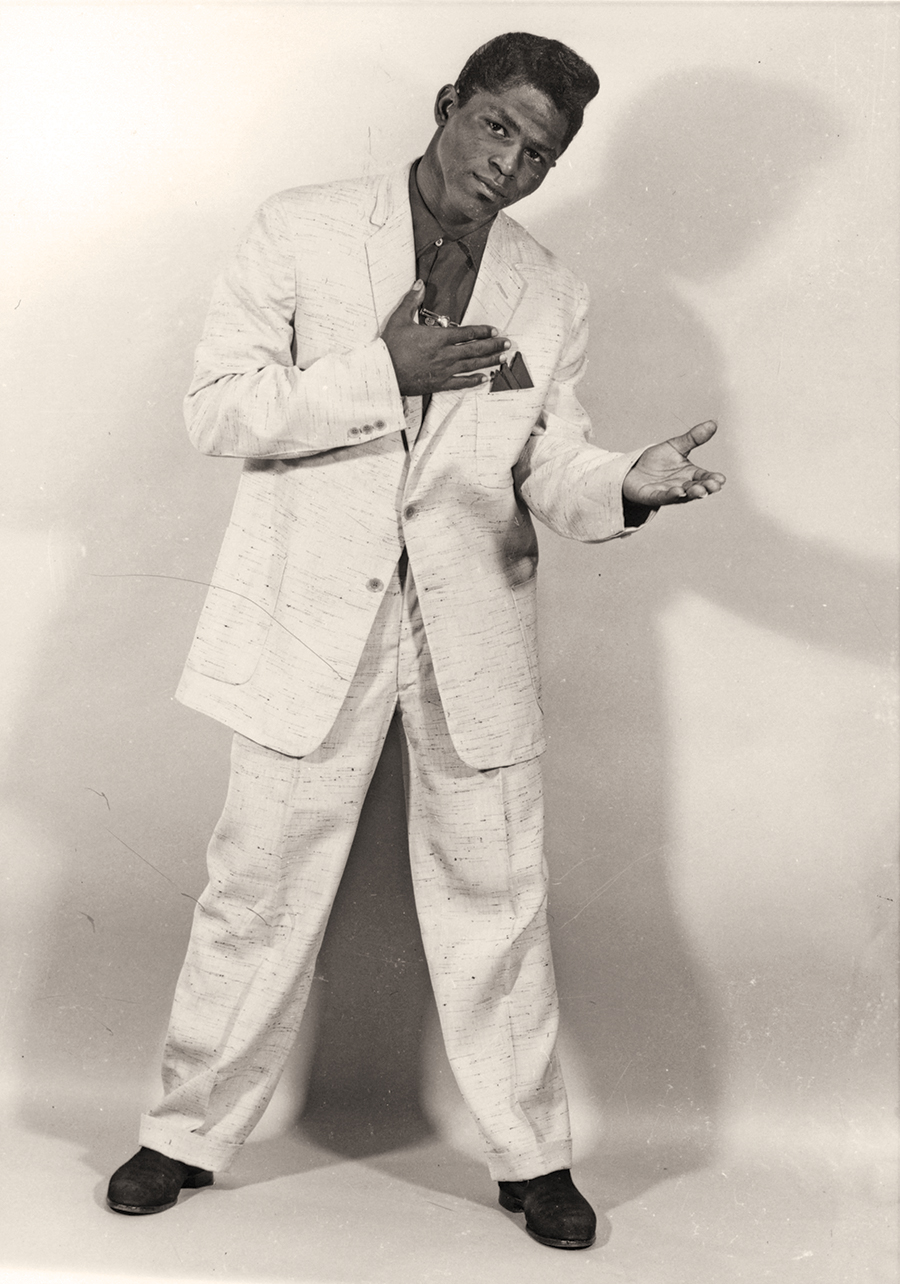
While the gigs of these greats at the Ambassadors Club were memorable, it was the electrifying performance of young James Brown and his Famous Flames that most vividly sticks in Mae Murchison’s mind. A chill went up her spine when she saw “The Hardest Working Man in Show Business” on his knees shaking off his cape and pleading for the love and attention of all the young women in the house as he belted out “Please, Please, Please” to thunderous applause. Though performers often venture into the crowd to sing, the irrepressible Brown took things one step further, leading the Flames outside the club to the railroad tracks, the audience in tow, to listen in rapture as Brown’s high-powered voice echoed through the pines of Jackson Hamlet. Given that three other joints were located just a stone’s throw away from the club, the band’s foray onto the tracks gave a number of folks the unexpected privilege of watching the unbridled James Brown in action. Talk about advertising!

Just at the time many of the club’s performers were breaking through to a wider audience, Sam Arnette died, on Nov. 28, 1954, at the age of 59. It was not long before it closed down for good. Its demise didn’t mark the end of great music in the building, however. After the club property was sold to the Jones Temple Church of God in 1962, the church conducted rousing revivals featuring performances of gospel stars like the Dixie Hummingbirds and Shirley Caesar.

After several decades, the church abandoned the property and the building was razed. A passerby today won’t find any vestige of the old club or any remembrances of the many greats who preformed there: Cab Calloway, Louis Jordan, Ruth Brown, Ray Charles, Fats Domino or James Brown. Most of the buildings that housed the other joints are long gone, too. The lone exception is Sam’s gas station and cafe on Rt. 5 at the west end of Jackson Hamlet — the one that nearly blew up in 1944. A curtain store occupies the space.

Butch Murchison believes that the heyday of Sam Arnette’s Ambassadors Club was, “the happiest time for people who weren’t happy otherwise.” All that remains is the sound of a voice high up in the pines.  PS

Pinehurst resident Bill Case is PineStraw’s history man. He can be reached at Bill.Case@thompsonhine.com.

Almanac

It was Autumn, and incessant

Piped the quails from shocks and sheaves

And, like living coals, the apples

Burned among the withering leaves.

–Henry Wadsworth Longfellow

Sprout Clout

November is crisp air and burn piles, corn crows and starlings, stone soup and Aunt Viola’s pumpkin bars. 

Many consider this eleventh month to be an auspicious time for manifestation. But first we must clear out the old. As we rake the fallen leaves that blanket the lawn, something deep within us stirs, and an ordinary chore becomes a sacred ritual. This is no longer about yard work. We look up from tidy leaf piles to naked branches, a gentle reminder that we, too, must let go. And so we stand in reverent silence, eyes closed as autumn sunlight paints us golden. In this moment, even if we feel sadness or grief, we give thanks for nature’s wisdom and the promise of spring. Wind chimes sing out from a neighbor’s porch, and we exhale a silent prayer. 

This month in the garden, plant cool-weather annuals such as petunias and snapdragons, and color your Thanksgiving feast delicious with cold-weather crops such as beets, carrots and Brussels sprouts. Arguably the country’s most hated vegetable (if overcooked, these edible buds turn pungent), one cup of Brussels sprouts is said to contain four times more vitamin C than an orange. Our friends across the pond sure go bonkers over them. In 2008, Linus Urbanec of Sweden wolfed down a whopping thirty-one in one minute, a Guinness World Record. Not to be outdone, in 2014, 49-year-old Stuart Kettell pushed a Brussels sprout to the top of Mount Snowdon — the highest summit in Wales — using only his nose. Although this peculiar mission was designed to raise funds for Macmillan Cancer Support, it also raises a valid question: What else might this cruciferous veggie inspire? Perhaps a nice cherry or Dijon glaze? Better yet, bust out the panko and try your hand at Buffalo Brussels. Thanksgiving football will never be the same.

No spring nor summer beauty hath such grace

As I have seen in one autumnal face.

—John Donne

To Your Health

Chrysanthemums are the birth flower of November. Sometimes called mums or chrysanths, this perennial grows best in full sunshine and fertile, sandy soil. Because the earliest mums all had golden petals, many view this fall bloomer as a symbol of joy and optimism. First cultivated in China, these daisylike flowers so entranced the Japanese that they adopted one as the crest and seal of the Emperor. In fact, Japan continues to honor the flower each year with the Festival of Happiness. Legend has it that placing a chrysanthemum petal at the bottom of a wine glass promises a long, healthy life. 

Arboreal Wisdom

The ancient Celts looked to the trees for knowledge and wisdom. According to Celtic tree astrology, those born from October 28 – November 24 associate with the reed, a sweet-smelling, canelike grass the ancients used to thatch roofs, press into floors, and craft into arrows, whistles and flutes. Think Pan’s pipe. Reed people are the secret keepers of the zodiac. They can see beyond illusion and have a strong sense of truth and honor.
But anyone can look to this sacred and useful plant for its virtuous qualities.
When the wind blows through a field of them, it is said you can hear their otherworldly song. But you must be willing to receive their message. Reed people are most compatible with other reed, ash (February 19–March 17) or oak (June 10–July 7) signs. In the Ogham, a sacred Druidic alphabet, the symbol of the reed spells upset or surprise.  
PS

Hillbilly Blues

Poor, white and not quite forgotten

By Stephen E. Smith

The presidential election is either over or is about to be, and, barring an unforeseen catastrophe, we ought to be breathing a collective sigh of relief. But in our hearts we know the truth: It ain’t over yet. The media, including the publishing industry, aren’t about to let us rest. We’ll no doubt be obliged to examine in excruciating detail the cause-and-effect relationships that inflicted this grievous wound on our national psyche.

Publishers, of course, get us coming and going. White Trash; The Making of Donald Trump; Hillary’s America; The Year of Voting Dangerously, etc. — Amazon lists at least 17 books that address the pre-election mêlée, enough reading to keep us bleary-eyed and brain-bruised until the next election cycle, and well beyond.

Of these many offerings, Hillbilly Elegy: A Memoir of a Family and Culture in Crisis, by J. D. Vance, has been the chief beneficiary of our need to grasp the incomprehensible. Published in late June, this Horatio Alger memoir shot to the top of The New York Times and Amazon.com best-sellers lists and stayed there. This was due in large part to promotion by the author and Amazon that fostered the belief that Hillbilly Elegy offers a profound insight into the rise of Donald Trump as a presidential candidate.

A quick read of Amazon’s “Editorial Reviews” is explanation enough: “What explains the appeal of Donald Trump? . . . J.D. Vance nails it” (Globe and Mail); “You cannot understand what’s happening now without first reading J.D. Vance . . . .” (The American Conservative), and so forth. Only The New York Times acknowledged a mild albeit flawed apprehension of fact: “Mr. Vance has inadvertently provided a civilized reference guide for an uncivilized election . . . ,” “inadvertently” being the operative word.

In February, Vance wrote an op-ed for USA Today headlined: “Trump Speaks for Those Bush Betrayed”: “. . . .what unites Trump’s voters,” Vance wrote, “is a sense of alienation from America’s wealthy and powerful.” In a print interview with Rod Dreher, senior editor at The American Conservative, Vance stated, “The simple answer is that these people — my people — are really struggling, and there hasn’t been a single political candidate who speaks to those struggles in a long time. Donald Trump at least tries.” Vance’s appearances on ABC, CNN and NPR only reinforced this perception, and by the time he arrived on the set of “Morning Joe,” Vance’s criticism was even more focused, asserting that Donald Trump is “just another opioid” to many Americans struggling with loss of jobs, broken families and drug addiction.

All of which begs the question: Does Hillbilly Elegy explain the rise of Donald Trump?

It doesn’t. No amount of tortured exegesis can conclude with a calculated degree of certainty that the anecdotal examples offered in Hillbilly Elegy lead to a statistical generalization regarding the wide-ranging support garnered by the Trump candidacy. Despite the claims of critics and the author, the book does not present, directly or indirectly, a viable explanation for the recent national unpleasantness — and the hype surrounding the publication of Hillbilly Elegy amounts to little more than a subtle form of literary bait and switch.

Misrepresentations aside, it’s safe to say that Vance has written an insightful and readable memoir that details the estrangement of a segment of America’s displaced white underclass. His personal story, which comprises most of the text, is straightforward: Poor boy from a broken, drug-befuddled family wants to make good and does. The sociological narrative is also immediately explicable: As “hillbillies” migrated from Kentucky and other Southern mountain states, they clustered in desultory communities around the factories that offered them work. But this relocation came at a price. The traditional culture that once rendered support and stability from birth to death was sacrificed to economic prosperity. When the high-paying jobs disappeared, neighborhoods of poor people were left behind, lacking the social networks that sustained them in their mountain communities.

To his credit, Vance’s message is one of personal responsibility. He has no patience with convenient excuses or the tendency to shift blame to the media, politicians, or the middle and upper classes. Succinctly stated, his advice is to pull up your pants, turn your hat around and make something of your life.

Hillbilly Elegy possesses the same appeal that propelled Rick Bragg’s 1999 All Over but the Shoutin’ onto the best-sellers list — it’s thoughtful, compelling in its grim detail, and ultimately faith-affirming. No red-blooded American can abandon the belief that any lucky, talented, hardworking schmo can become a success, but the wise reader will understand that Vance’s story is not an allegory for life; it’s merely the recounting of a series of random events arranged in such a way as to suggest meaning.

Readers should also bear in mind that better sociological studies have come and gone without notice. One is reminded of Linda Flowers’ 1990 Throwed Away, which detailed the economic exploitation of eastern North Carolina sharecroppers and tenant farmers.

As for articulating the emotional toll taken on those Kentucky mountain people who migrated north, poet Jim Wayne Miller summed up their sense of loss in five lines from his 1980 collection The Mountains Have Come Closer. The final stanza of the poem “Abandoned” reads:

Or else his life became the house

seen once in a coalcamp in Tennessee:

the second story blown off in a storm

so stairs led up into the air

and stopped.  PS

Stephen E. Smith is a retired professor and the author of seven books of poetry and prose. He’s the recipient of the Poetry Northwest Young Poet’s Prize, the Zoe Kincaid Brockman Prize for poetry, and four North Carolina Press awards.

Ration the Passion

For Scorpios, it don’t mean a thing if it ain’t got that sting

By Astrid Stellanova

Scorpios are famously passionate, ambitious, intense and jealous. They will ask but they sure won’t tell. What they should know is that their best day is Tuesday, and to mirror their passion, they should don their best color — red. What you should know is this: They don’t always lay their cards flat out on the table, but they really don’t like it when the tables are turned. Cross a Scorpio and you will unleash the scorpion’s sting. And this: A Scorpio will never forget and may never forgive either.

Scorpios like to use their looks as a means of self-expression and will almost always make a big impression wherever they go and whatever they choose to do. They are as colorful as they are unique, too. Prince Charles is a Scorpio. So is Whoopi Goldberg. Ponder that, Star Children. Ad Astra — Astrid

Scorpio (October 23–November 21)

Friends are tempted to give you novelties on your birthday — things like pillows embroidered with “Drama Queen” or “If You Can’t Say Anything Good about Others, Sit by Me.” Much like the Dowager at Downton Abbey you can dish it out. You have a secret love of bling. Sugar, you also don’t like to admit your tastes are much more Vegas Strip than Park Avenue. This birthday, let go of any desire to be something or someone else and love your own fine self. You are an original, enigmatic and audacious in your ways — traits your friends rely on, Honey. When you blow out the candles on your cake — and there will be a blowout with cake — make a big wish. This just might be your year to win the whole dang shebang!

Sagittarius (November 22–December 21)

The fact is, Honey, you have become the Ernest T. Bass of relationships. You get mad at your beloved and your idea of resolution is to throw rocks at the window and howl like a hound dog during a King Moon. Time to start being the grown-up when it comes to love matters, my wild little Love Muffin. There is nothing or no one you cannot have once you stop trying to muscle your way to a solution.

Capricorn (December 22–January 19)

When everyone else was sitting down, you were just outstanding. Take a star turn and then take a seat. Sweet Thing, a strange turn of coincidence is about to make you glad you had such a fine sense of timing. It is more than going to compensate for a rough patch you have just undergone. It’s (nearly) all over but the shouting, as Rick Bragg likes to say.

Aquarius (January 20–February 18)

Does Fifty Shades of Purple sound like the title of your memoir?  Well, you got all shook up over a loved one, and it sent your blood pressure through the roof. Lordamercy, nobody’s worth all that purple passion you’ve been spending. Spend some time in a meditation class instead, and promise yourself you are going to let that crazy-maker go. Then get a hobby for goodness sake — just not in surveillance or private-eye work. 

Pisces (February 19–March 20)

A life-changing experience has caused you to do some recent soul-searching. Now you are looking deep, trying to find a bigger purpose. You have extra special energy this month, Sugar Pie, and it is going to make you a magnet for special and inspiring experiences. If you have a metal detector, haul it out of the closet, as you are about to find something you believed lost for good.

Aries (March 21–April 19)

You spent your fall second-guessing everything you did and everything your closest friends did. Now, Honey, is a time to downshift and just bury some nuts for the winter ahead. Look on down the road and stop majoring in the minor stuff when you need

to look at the major stuff. When you take stock, you have to admit you have been busy overdoing everything you ever thought worth doing at all — except for the nut thing.

Taurus (April 20–May 20)

Learn something new. Take a friend for coffee. Befriend a stranger. But don’t drink and dial this month, because you are prone to talk too much and listen too little and then pray for rain when all your friendships dry up. The fine print bears reading, Sugar, before you sign that contract, too. Meantime, kiss a baby and indulge your love of sweet tea and a side of lemon pie. But don’t text or dial.

Gemini (May 21–June 20)

As much as you want to step into a situation and take control, try and hold your impulsive self back just a teensy bit. There has been mounting evidence that your involvement is not helpful. Meantime, you have got a big old mess to clean up on Aisle Nine. The mess is one you made; so don’t blame the first one you find to hang it on, Sweet Thing.

Cancer (June 21–July 22)

You are the Richard Petty of speedy karma, repeating a cycle over and over and over again on the roadway of life. Put a cop on anyone’s tail for 500 miles and they’ll get a ticket, too. Want to retire that title? This month gives you a long overdue chance to reevaluate things, Honey, and you are going to find the support you crave to break out. 

Leo (July 23–August 22)

When you step back and look in the mirror, as you secretly like to do, what do you see? Is it the same person everyone around you sees? Your secretive life is at the root of some pain you hold onto and carry around like a precious bag of gold. Trust someone and unburden yourself, Sugar. Self-truth won’t hurt one bit.

Virgo (August 23–September 22)

There’s a new sheriff in town you ain’t so sure you like. Get deputized, Sweet Pants, because you are going to have to deal with them no matter what. Meantime, you calculate your losses and pocket your winnings. You still are going to come out ahead, Darling. But pay attention to a lonely neighbor whose luck ain’t so great right now.

Libra (September 23–October 22)

There’s too many hands around the pottery wheel and it has you all befuddled. In a nice way, tell them to mind their own business, and don’t apologize. Meanwhile, you are the UP in somebody’s 7UP and don’t even know it. Sugar, you have more sex appeal than ought to be allowed throughout this whole dang star cycle.  PS

For years, Astrid Stellanova owned and operated Curl Up and Dye Beauty Salon in the boondocks of North Carolina until arthritic fingers and her popular astrological readings provoked a new career path.

A Better Idea

Coffee on the porch turns into long gowns and tuxedos

By Tom Bryant

“Bryant?”

“Yeah?”

“I’ve got a great idea.”

“Coleman, every time you get a great idea, I either get in a lot o’ trouble or it costs me a lot o’ money.”

We were kicked back on the porch at the Wildlife Club after a great morning jump-shooting ducks on the Haw River. It was a classic kind of hunt. Everything came together at just the right time. The water on the river was at a good level, with the current flowing fast enough to keep us on our toes but still a leisurely speed enabling us to enjoy our surroundings. And what surroundings they were. Hickory trees were decked out in all their yellow glory backed up by golden-leafed oaks.  Bright green-colored cedars added a perfect backdrop, providing a classic early morning fall picture, something that you only see if you’re lucky, or sometimes in sporting magazines.

It’s a classic way to duck hunt, jump-shooting from a canoe. We put the boat in at the mill dam in Saxapahaw, and using an electric kicker, motored upstream to the confluence of the river and a little creek at Swepsonville. We then floated slowly downstream, hunting as we drifted along.

Wood ducks like to swim close to the shore dabbling for fallen acorns or berries that grow near the bank. They silently float under overhanging alders and when disturbed will burst from their feeding space like a covey of quail. The sport, in hunting out of a tipsy canoe, is not to flip over when the duck zips out from under the alders. It’s almost like shooting from a skateboard. One wrong turn and a hunter can hit the drink. Poor form, especially when the temperature is hovering around 40 degrees and the truck is a couple of miles away.

Usually when I’m jump-shooting, I’m all by my lonesome. I’ll only get in a canoe with another hunter if his experience in paddling a boat and his competence with a shotgun is as good or better than mine. You don’t get second chances with a shotgun or a fast flowing river. With Dick Coleman, I had the best of both worlds, a superb canoer and a magnificent gun handler. I’ve marveled more than once at some impossible shots he made in the field. I definitely wouldn’t tell him that, though. We’ve been friendly competitors since our early days, when we became close friends.

With two hunters jump-shooting from a canoe, there are a couple of very important rules — number one, and the most critical, only one shooter at a time. Number two, silence is more than golden, it can be the difference in a successful duck hunt or just a float down the river.

On this trip, Coleman was to be the first shooter. We cut a few branches from a cedar tree and rigged them to overhang the bow of the boat. My canoe was camouflaged anyway, but the cedar would provide a little more cover. We wanted to look like a tree floating downstream.

On the first flush, Dick got his limit of two wood ducks, a hen and a drake. He made a great double, getting both ducks as they were crossing left to right. They actually jumped from the left bank and crossed right in front of the canoe. That’s the fun in jump-shooting; a gunner never knows where they’ll come from.  We rapidly picked up the floating ducks and made it to the bank to change over, Dick now in the stern and me in the bow.

I got my limit with a couple of singles, two wood duck drakes, the last one right at the take-out where we had left the Bronco.

It was too early in the season to try again for mallards; and since we had our limit of wood ducks, we picked up and decided to head to the Wildlife Club and a pot of good coffee.

Dick Coleman, gone too soon, was an amazing individual. I met him early in my settled-down life. I was just out of the service, back in college and married to a beautiful, smart young brunette. I had a part-time job at the local newspaper, and Coleman was busy managing one of his family’s men’s specialty stores. We were friends right off the bat, especially when we found out about our service in the Marines. Dick was at Parris Island about three months after I left the basic training camp, and he coincidently was in the First Battalion and had the same drill instructors. We could really commiserate with one another, and we became fast friends.

Dick got up from his chair to get another cup of coffee. “You want to hear my great idea or what?”

“I hope it’s not like the last great idea that almost got us killed on the same river we got those ducks this morning.”

“Nope, this one’s more sedate, and that river trip last spring was as much your doing as mine.” The trip he was talking about was one we made after careful planning: float the Haw to the Cape Fear River, then to Wilmington and the Atlantic Ocean. A great plan, but with one problem: When we put the canoes in at Saxapahaw the Haw River was at flood stage, and quickly chewed us up and spit us out. On that adventure we learned a valuable lesson about white-water paddling and surviving an angry river.

“Christmas is just a few weeks away. What if we get Vernon and Lasly and the girls, and have a fantastic Christmas game dinner. We’ve got plenty of game. I know you’ve got lots of doves and ducks in your freezer; so have I. Vernon’s got a few pheasants. I think Lasly has some venison somebody gave him, and we could get together the fixin’s with no problem. It would be simple.”

“And where do you plan on having this little cookout? That close to Christmas, I know the ladies would pitch a fit if we suggested having it at one of our houses.”

“No, man. Right here. We’ll have the feast right here at the Wildlife Club.”

“Dick, this place is just a little better than a warehouse. I mean, look at it. It’s all right for a bunch of guys, but to bring Lida and Linda and Vicky and Libby? Man, they would have us scrubbing this place before they’d set foot in it.”

“You’re the writer. Where’s your imagination? We’ll make it a black-tie affair. You know, not a whole lot o’ light, we’ll use candles, white tablecloths, a blazing fire in the fireplace. We’ll decorate, we’ll have a Christmas tree, we can cut one of those cedars up by the skeet range, and holly, there’s plenty of that next to the pond, full of berries. We’ll send fancy invitations to the girls and make it a real dress-up shindig.”

Believe it or not, it all came together the Saturday before Christmas. The ladies came dressed to the nines in long gowns that would be more suitable at the country club than out in the woods at a sportsmen’s simple clubhouse, and the guys cleaned up a lot, sporting tuxedos. It was quite an affair, and turned into the first annual game dinner that I would continue for the next 35 years. It was one of Coleman’s better ideas.  PS

Tom Bryant, a Southern Pines resident,p is a lifelong outdoorsman and PineStraw’s Sporting Life columnist.

They Dined on Mince

One cook’s recreation of mincemeat pie — without a runcible spoon

By Diane Compton

It wasn’t long after I married that my mother joyously gave up her job as executive producer of Thanksgiving. My husband promptly dismissed the old standbys: green bean casserole, sweet potato casserole, Jell-O salad, mashed potatoes and cranberry sauce “fresh” from the can. Having more faith in my culinary skills than actual evidence, he tagged and circled all sorts of derivative recipes from popular cooking magazines and I, eager to please, attempted them all. The family endured many years of this with great kindness and “compliments” such as, ”I’ve never tasted anything like this before!” But a generous pour of good wine and lively conversation overcame any mistakes and thus the day was declared a success.

The arrival of children and the gift of my grandmother’s cookbook, Pure Cook Book, published by the Women’s Progressive Farm Association of Missouri, heralded a return to the classics of the holiday. A virtual time machine, this worn, torn and faded tome took me into her Depression-era farm kitchen. Page stains and handwritten notes marked favorite recipes, among them mince pie. Why not start a new tradition connecting the generations and add this to the holiday table? My suggestion elicited all kinds of family reactions. From the daughters: “Ewww! Sounds gross!” From the husband:  “Hmmmm, I ate it, once.”  From my parents: “What’s wrong with pecan pie?”

Convinced that anything made from scratch would be far, far superior to packaged stuff, I began a search for the perfect mincemeat recipe. The family promised to try it with all the enthusiasm usually reserved for boiled cabbage.

Pies are the dessert of choice for the creative cook. Imagine, between two layers of pastry an infinite universe of fillings with few rules and, given enough sugar and butter, almost always delicious. Grandmother’s cookbook featured eleven recipes for mincemeat. Where to start? Traditional mincemeat really does contain meat. The first recorded recipes go back to the eleventh century where meat and dried fruits were combined with newly available spices — cloves, nutmeg and cinnamon — then soused with lots of brandy. Over the years mincemeat became sweeter as fruit became the predominate ingredient. All the recipes in grandmother’s cookbook still included meat but not a drop of brandy. Oh, yeah, 1930, the Prohibition era. Today, commercially available mincemeat is heavy on fruit, sugar and spice with nary a whisper of meat or brandy. No wonder this wimpy stuff has been relegated to the bottom shelf of the baking aisle. My challenge: to make authentic mincemeat appealing to modern tastes.

This recipe restores both brandy and meat; specifically beef suet to the ingredient list. Suet is a specialty fat found near the kidneys. With a higher melting point than butter, suet adds deeper and more nuanced flavor to mincemeat, maintaining the connection to its carnivorous history.

Another reason to try mincemeat pie? The filling can be made in advance and so can the crust. If you make your own pastry, line the pie dish with rolled dough, wrap and freeze the dish, and it’s ready to go at a moment’s notice. Mincemeat pie needs a top crust. Roll the dough into a circle on plastic wrap, cover with another layer of plastic and roll the circle into a tube before freezing.

Making the mincemeat filling is a great family activity, with lots of chopping and kid-friendly
ingredients. Also, unlike the sugar bomb known as pecan pie, mincemeat is not cloyingly sweet. Start with a 4- or 5-quart heavy saucepan or Dutch oven on the stove and add the following:

3 pounds of apples, peeled, cored and diced. Use a variety of Golden Delicious, Granny Smith, Jonagold or McIntosh.

2 1/2 cups of dried fruit. Try a combination of raisins, golden raisins, currants and maybe some diced dried cherries for fun.

1/4 cup of chopped candied peel (orange or citron)

2 tablespoons minced crystallized ginger (optional, but lovely)

1/4 pound minced suet. Can’t find suet? Beefaphobic? Substitute butter and you’ve made what Grandmother called “mock mince.”

2/3 cup packed brown sugar

1/4 cup molasses

Zest and juice from an orange and a lemon

Pinch of salt

2 cups apple cider

And now, the spices. Mincemeat uses a small amount of several expensive spices, many that you bought before your first iPhone. Don’t do it! Just 2 to 3 teaspoons of fresh pumpkin pie spice is an economical alternative to separate jars of cinnamon, nutmeg, allspice, mace and cloves.

Remember we’re making pies here so don’t get too caught up in the exact ingredients, add more or less of things as you like. Grandmother used what was available. Got a bit of ground venison in the freezer? Be truly authentic and add some to the pot! Don’t tell the kids.

Bring everything to a boil, reduce heat and simmer on low for 2  hours, stirring occasionally. When the mixture begins to thicken, stir more frequently. Add 1/4 cup of brandy and stir often for 15 minutes until thick and jammy. Cool and refrigerate. Filling can be prepared a week in advance.

On pie day, add the filling to your prepared pie dish. Unroll the top crust and place over the filling. Decoratively flute the edges and don’t forget to cut a few vent holes in the top. For a glossy golden crust, brush the dough with a little beaten egg and sprinkle some coarse sugar on top. Bake in a preheated 400°oven for 20 minutes then reduce oven temperature to 325° for another 30 to 40 minutes. Cool completely. Can be made a day ahead.

Mincemeat filling also makes a great cookie that can be baked ahead of the holiday and frozen till needed. Spread a little caramel frosting on top and make it special.

That first year I took great pains to make the pie’s edges and top beautifully decorative because its true, we “eat with the eye” first. Everyone bravely tried a slice because after all, it was pie!  My daughter confirmed, “This is lovely, it just needs a better name.” Forget it, Darling. This traditional holiday pie is a living link to generations of family celebrations.

I treasure my Grandmother’s cookbook and touch the handwritten notes, imagining her as a new bride learning to cook and care for her own family. It was both cookbook and household guide, full of practical medical advice and handy hints, some guaranteed to horrify (remedies made of kerosene, turpentine and gasoline figure prominently). Unfortunately the back cover along with the last chapter “How to Cook Husbands” is missing. I wonder: Did my grandfather have a hand in that?  PS

Diane Compton is tech class instructor and in-home specialist for Williams-Sonoma at Friendly Center.

The King of Everyman

By Jim Dodson

November’s arrival never fails to put me in a grateful mood, even before the far-flung clan assembles around a Thanksgiving table worthy of a king.

Speaking of kings, in the spirit of giving thanks for the people who have touched our lives, past and present, here’s a grateful little ditty I wrote in the hours after my boyhood sports hero — and quite possibly yours, given his strong connections to this state — passed away.

Around five o’clock on a Sunday afternoon, Sept. 25, my wife, Wendy, and I were watching a late afternoon football game when I suddenly felt overcome by a chill and went upstairs to lie down for an hour before friends arrived for supper.

I’m rarely sick and assumed this peculiar spell was simply brought on by fatigue from working since four in the morning on a golf book I’ve been writing for almost two years, a personal tale called the Range Bucket List.

The first chapter and the last are about my friend, collaborator and boyhood hero Arnold Palmer.

The prologue explains that he was the first name on what I called my Things to Do in Golf List around 1966 after falling hard for my father’s game and reading somewhere that Arnold Palmer started out in golf by keeping a similar list of things he intended to do. Many decades later, while interviewing him early one morning in his workshop in Latrobe, I confirmed this fact with the King of Golf.

The final chapter details an emotional visit I made to see Arnold at home in Latrobe in late summer, about a month before his 87th birthday. I knew he wasn’t doing particularly well. When I walked into his pretty, rustic house sitting on quiet Legends Drive in the unincorporated Village of Youngstown on the outskirts of Latrobe, I found the King of Golf watching an episode of “Gunsmoke,” the No. 1 American TV show about the time Arnold Palmer ruled the world of golf.

He greeted me warmly without getting up. A walker was standing nearby. His wife Kit brought me a cold drink. He turned down the sound and we had a nice time catching up, almost but not quite like many we’ve enjoyed over the past two decades. Arnold’s once seemingly invincible blacksmith body had finally given out, yet his mind and spirit were strong. He insisted on joining Doc Giffin, his longtime assistant, Kit and me for an early supper that evening across the vale at Latrobe Country Club.

The trip was like a homecoming for me — and something I feared would be a farewell.

For two full years, from early 1997 to late 1999, I had the privilege of serving as Arnold Palmer’s collaborator on his autobiography, A Golfer’s Life. I was deeply honored to have been chosen by Arnold and wife Winnie for the project, and touched that he insisted that my name share the cover and title page of the work. I always called the book his book. He always called the book our book.

Not long after we began working on it — both being unusually early risers who often chatted in his home workshop before official business hours — Winnie was diagnosed with a form of ovarian cancer. Arnie, which is what he insisted I call him though I never could quite make myself do so, withdrew from his busy public life so we could get the book completed and published before time took its toll, narrowing the horizon of what was supposed to be a three year project to just under two.

We brought the book out in time to celebrate Arnold’s 70th birthday in September 1999 and the opening of a beautiful, restored red barn that Winnie had always loved just off the 14th fairway at the same club where Arnold grew up under the firm watch of his demanding papa, Deacon Palmer, whom Arnold simply called “Pap.”

Rather than a conventional autobiography of facts and figures and tournament highlights, my objective with Arnold’s book was to create an unusually warm and intimate reminiscence or memoir that read as if Arnold and his fans were simply sharing a drink after a day of golf, and he was quietly relating the 15 or so key moments of his life, revealing how these moments shaped the most influential golfer in history and arguably America’s greatest sportsman.

Both Winnie’s barn and Arnold’s book were a hit. The book was on the bestseller list for almost half a year. The handsome red barn stands in quiet tribute to them both. Winnie passed away less than two months after that special evening Arnold turned 70.

After lying down and lightly dozing for an hour, I heard our guests arriving and got up to go downstairs. The cold and queasiness had passed and I felt much better —  only to find my wife waiting at the bottom of the steps holding out my mobile phone with a very sad look on her face.

A nice person named Molly from NBC News in New York was on the other end, wanting to know if I could confirm a report that Arnold Palmer had passed away.

We spoke for an hour as my incoming call alert continued to light up from news organizations around the world. By midnight I’d spoken with reporters from all the major networks, several cable news organizations, CNN International, a pair of wire services, the Canadian Broadcasting System and Australia’s leading sports call-in show — all of it testament to the drawing power of Arnold Daniel Palmer.

The conversations about his incomparable life and times and seismic impact on popular culture and the world of sports went well into the early morning hours.

Was the chill and queasiness a coincidence, or something more sympathetic in nature?

That’s impossible to say. This much is certainly true: As Winnie commented early in our collaboration, Arnold and I enjoyed unusually strong chemistry and an uncommon connection that is instinctively felt and shared by his millions of adoring fans — and was still apparent in late summer when I visited with him at home.

The morning after our dinner at the club, I also visited with Doc Giffin and Arnold’s amazing staff at Arnold Palmer Enterprises and even saw his younger brother Jerry when he popped in to say hello.

Finally the boss showed up for work around 10 o’clock, trailed by a couple of cheerful young therapists from the local hospital who were planning to do a stretching and exercise session at the Palmers’ home gym aimed at restoring Arnold’s ability to swing a golf club again.

As he signed books and the usual stack of photos and personal artifacts from fans that are always waiting for his immaculate signature every morning of his life, we chatted about various family matters and other things large and small. With Doc and his therapists we even watched a recently colorized CD release of the historic 1960 Masters, where Arnold closed from two shots back to claim his second green jacket, setting off a national frenzy in the process.

At one point as we watched him teeing off on the 72nd hole of the tournament, needing a clutch birdie to secure the win, Arnold declared excitedly — “There, girls! There’s my golf swing!”

The therapy girls were standing directly behind the King of Golf. They were beaming, part of a new generation that never had the pleasure of experiencing the game’s most compelling star in his prime.

Arnold’s eyes were alive with pure joy. There were tears pooling in them.

And even bigger tears pooling in mine.

Doc Giffin, a legend in his own right, just smiled from a few feet away.

A little while later, I did something I’d meant to do for many years.

I handed him my first hardbound copy of A Golfer’s Life and asked him to autograph it.

He accepted the book but gave me what I fondly call The Look — a cross between the scowl of a disapproving schoolmaster and a slightly constipated eagle, one way he loves to needle his friends.

I watched as he took his own sweet time writing something on the title page.

He handed me back the book and said, “Don’t open this until you’re safely home.”

Facing a 9-hour drive home to North Carolina, I somehow managed to wait until I reached my driveway just as the summer day was expiring, at which point I opened the book. He could have written it to 100 million people around the world, all of whom share the same kind of connection with the King of Everyman.

“Dear Jim,” he simply wrote. “Thanks for all your wonderful works. You are the greatest friend I could have — Arnold”

That’s when my waterworks really let loose.

Over the days and week to come, we’ll all be reminded of Arnold Palmer’s extraordinary impact on golf and American life in general, and the mammoth-hearted legacy he leaves behind, especially here in Pinehurst, where his father brought him as a teen to experience the “higher game,” Wilmington, where he won his seventh PGA Tournament, and Greensboro, where he had so many friends but always came up just short of winning the Greater Greensboro Open.   

Still, Arnold’s 62 PGA Tour wins, 90 tournament victories worldwide and seven major championships only partially defined the life of a man from the rural heartland of western Pennsylvania who almost single-handedly pioneered the concept of modern sports marketing, created a business model that turned into an empire stretching from golf tees to sweet tea, and grew to be golf’s most visible and charismatic force, its greatest philanthropist and most beloved ambassador.

During his half-century reign, and largely because of him, in my view and that of many fellow historians, golf enjoyed the largest and longest sustained period of growth in history, a remarkable period that included the formal creation of no less than six professional tours, witnessed television’s incomparable impact, saw the rebirth of the Ryder Cup and revival of European golf, the rise of international stars, and nothing less than a scientific revolution in the realms of instruction, equipment technology and golf course design — all of which Arnold played some kind of role.

How much of this cultural Renaissance was due to this kind, genuine, fun-loving and passionately competitive family man who grew up showing off for the ladies of Latrobe Country Club and earning nickels from them by knocking their tee shots safely over a creek on his papa’s golf course?

Impossible to fully quantify, I suppose. Though I would be inclined to say just about everything.

Golf is the most personal game of all, a solitary walk through the beautiful vagaries of nature. And Arnold Palmer was the most personal superstar in the history of any sport, a true blue son of small town America, the kid next door who grew up to become a living legend, a homegrown monarch for the Everyman in each of us, a King with a common touch.

His charm and hearty laugh and extraordinary undying love of the ancient game he was meant by Providence to elevate like nobody before him will surely live on as long as people young and old tee up the ball and give chase to the game.

His beautiful memorial service at Saint Vincent’s Basilica in Latrobe on Oct. 2 brought out the golf world in force along with hundreds of ordinary folks — the foot soldiers of Arnie’s fabled Army — who in some cases drove all night just to stand and pay homage to their hero on a gorgeous Indian summer afternoon, holding signs that read “Long Live the King of Golf” and “Thank You, Arnie!”

Outside, immediately following the service, as a Scottish bagpiper played “Amazing Grace,” Arnold’s longtime co-pilot Pete Luster made a pair of low passes over the spires of the Basilica in Arnold’s beloved Citation 10 with its signature N1AP registration number, turning sharply toward heaven and flying almost straight up until the airplane was a mere glint in the blue autumn sky.

The woman standing beside me in the silent crowd actually took my arm to steady herself and burst out crying. I hugged her and she kissed me on the cheek like we were old friends saying goodbye.

I’d never seen her in my life but we were friends, as everyone is in Arnie’s Army.  PS

Contact editor Jim Dodson at jim@thepilot.com.

The Now House

What’s old is new for a first time homeowning couple in Southern Pines

By Deborah Salomon     Photographs by John Gessner

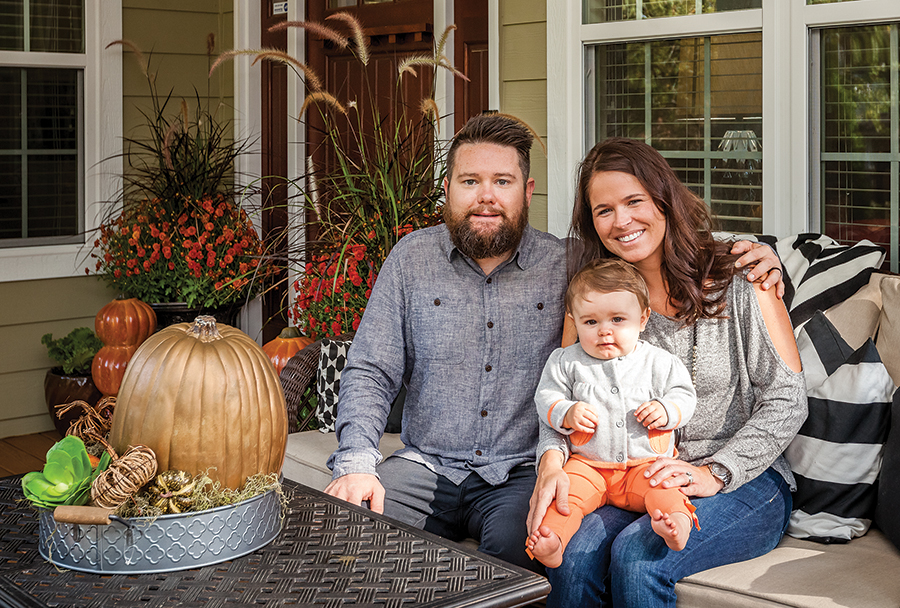
Savvy millennials Ashley and Casey Holderfield built a house to fit, exactly, their lifestyle and demographics. They wanted . . .

A cottage like those built in the mid-1900s near downtown Southern Pines.

A pocket neighborhood popular with other young couples who grew up here, left, and are returning to raise families.

Space skewed per their needs: a huge front porch furnished for entertaining; open interior with large kitchen but small living room and dining nook because “we eat and hang out” at the bar-island, Ashley says.

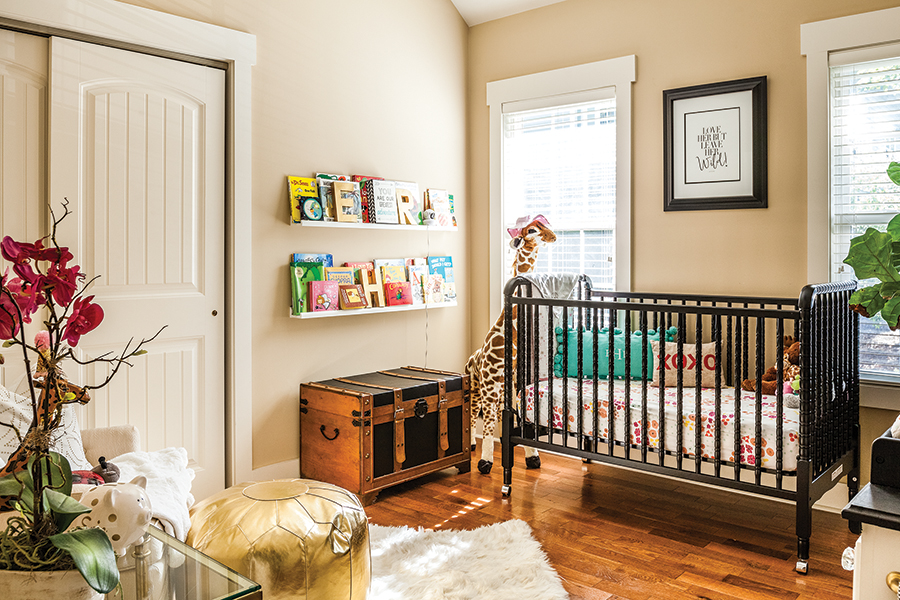
A shotgun layout with bedrooms off a long unobstructed hall, perfect for 10-month-old Evie’s crawling expeditions.

ps-house3-11-16

Two smaller porches, one for grilling, the other a balcony off the master bedroom.

A vaulted beadboard ceiling with skylights and many windows to stream natural light.

A detached garage, primarily for storage.

Wall space for Ashley’s nascent art collection (including a contemporary splatter painting by the two), furniture in dark woods reminiscent of the Craftsman era interspersed with family heirlooms, like a grandmother’s dining room table, and repurposed finds.

Yes, that bar cart displaying Casey’s bourbon trove was a baby’s changing table, now with tile shelves and brushed metal towel racks. Ashley confidently placed a giant upholstered chair across a tiny corner. Built-in bookshelves keep small objects out of Evie’s reach.

“We use every inch,” Casey says.

Beadboard-paneled doors echo the informality.

ps-house2-11-16

Yet despite a modest 1,600 square feet, the living space and porches have accommodated 30 guests who flow from area to area.

This arrangement bespeaks a professional touch. Ashley studied interior design and architectural planning at Appalachian State University. This is the first home they have owned, therefore her first opportunity to make a statement implemented by a builder-friend who, Casey says, held their hands through the process.

Casey and Ashley have been together since high school, he at Union Pines, she at Pinecrest. They lived in a similar pocket neighborhood in the Myers Park district of Charlotte before deciding in 2010 to repatriate. “My dad grew up in Raleigh so I was familiar with the older bungalow style,” Casey says. Ashley agreed on the motif, which includes tapered porch columns set on brick bases popular in pre-World War II Southern architecture.

Given their definite ideas, new construction seemed more practical than search-and-remodel. But finding an oversized lot choked in bamboo was beyond luck. The couple had made an offer on another piece when Casey’s father discovered this one — and snapped it up.

Ashley and Casey moved in with the senior Holderfields during the six months construction.

ps-house1-11-16

“We oversaw every little detail — I was familiar with suppliers,” Ashley says.       

From the street, a deep setback, mature bamboo and wax myrtles give the house a settled appearance. Pale green siding blends into the foliage. Instead of a walkway, stepping stones through the grass lead to the wide porch, where bold black and white striped fabrics keep the wicker contemporary. Ashley is big on holidays. Fall is their favorite season. Ceramic pumpkins decorate the porch and interior before Halloween, remain in place through Thanksgiving, then lights and multiple trees announce Christmas.

The cottage theme may channel 1930s exteriors, but homes of that era hid cramped kitchens out back. The Holderfields sited their food preparation space a few feet from a front door surrounded by dark-wood panels and moldings. Again, the glass-paned white cabinets suggest informality. The sink, part of the granite island/breakfast bar, faces the living room and mantelpiece-mounted TV. “I like to participate in what’s going on,” Ashley says. However, Casey is the primary cook, while Ashley does the holiday baking.

“Sometimes we open a bottle of wine and cook together,” Casey says. Thanksgiving means a vegetarian brunch followed, later, by roast Tofurkey.

In the master bedroom with a tray ceiling and corner windows (wooden blinds another retro touch), Ashley has, once again, fitted a massive upholstered bed frame into an average-sized room. The guest bedroom has an unusual iron bed, also a family piece. Ashley’s palette throughout derives from nature — deep brown, soft green and, in the master bathroom, oceanic turquoise. “We love the outdoors,” she says, proven by taking a six-month furlough from their jobs to hike the Appalachian Trail in a time frame encompassing the 2014 U.S. Open Championship. Rent from the house supported their adventure.

ps-house4-11-16

That was before Evie, the princess-resident of the third bedroom. Casey objected to pink, purple, frou-frous, but Ashley found white, sand and teal rather boyish. So, she added a shaggy fur rug and, of all things, a metallic gold fabric ottoman which has become the baby’s favorite, along with a sound machine that lulls her to sleep with a whooshing mimicking the womb environment. Jungle animal prints and a near life-sized baby giraffe complete the assortment.

This nouveau cottage representing trendy urban redevelopment lives well, Casey affirms. Before Evie, they walked downtown to restaurants, bars and First Friday. Now, they and other young parents push strollers to parks, play dates and the farmers market. Later on, the kids will attend public rather than private school, Casey hopes.

“We did a pretty good job for the first time,” he concludes. But, Ashley concedes, now is fast turning into tomorrow.

“It’s almost too small already.”  PS