Almanac May 2025

ALMANAC

Almanac May

By Ashley Walshe

Come with me into the woods where spring is advancing, as it does, no matter what, not being singular or particular, but one of the forever gifts, and certainly visible.

Mary Oliver, from “Bazougey” (Dog Songs, 2013)

May is the dreamer and the dream, the artist and the muse, a wish both made and granted.

Daisies are sweet, she must think to herself, giggling as she scatters them across green spaces and rolling meadows, weaving them among butterfly weed and purple coneflower; gently tucking them alongside bluebells and Indian blanket.

A dusting of iris for the pine forest. Jack-in-the-pulpit for the wet and shady woodlands. And for the garden? Peonies, poppies, sweet peas, gardenias and roses.

“Come to me,” says flower to bee.

“Only you,” bee purrs to blossom after fragrant blossom.

And so it goes with milkweed and monarch, yarrow and ladybug, foxglove and hummingbird.

“I’ve been aching for you,” murmurs snake to sun-warmed stone.

“Ditto,” stone whispers back.

Listen to the queenking of treefrog, the whistling of robin, the moonlit chanting of whippoorwill. All of life is a call and response, even if we can’t perceive it.

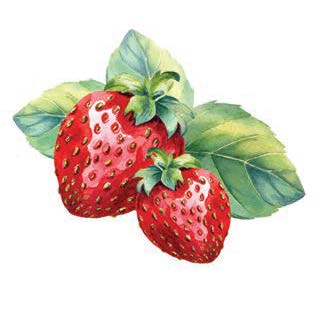
Magnolia flowers titter at the touch of beetle feet. Phlox swoons at the kiss of eastern swallowtail. Cottontail quivers at the nip of wild strawberry.

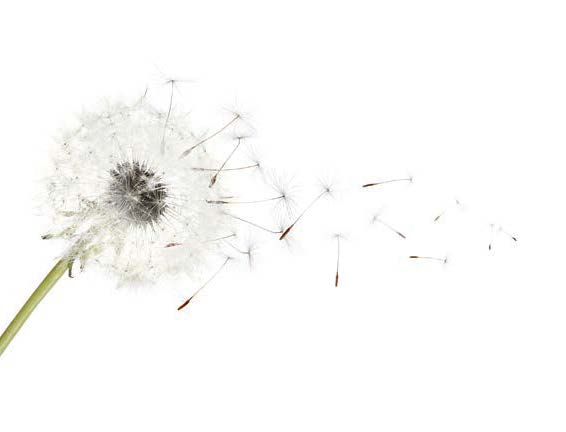
New leaves reach for the generous sun. Earthworms pray for rain. Dandelions wish for children.

“Pick me,” a puffball whispers on a gentle breeze. A little boy answers, lifts the downy orb to the light, closes his eyes, and sends one hundred wishes soaring — ninety-nine of them dreams for the gift of an endless spring.

Legendary Sweetness

The Cherokee legend of the first strawberries tells of a quarrel between the earliest man and woman, and the sun’s role in their reconciliation.

“I shall live with you no more,” says the woman, storming away in anger. Seeing that the man is sorry for his harsh words, the sun intervenes. Casting his golden rays upon the earth, he sends plump raspberries, glistening blueberries, then luscious blackberries. The woman blasts past all of them. Finally, when sun-warmed strawberries appear gleaming at her feet, she stops in her tracks. One bite and the sweetness washes over her. Filled with the joy she shared with her husband before their fight, she gathers the strawberries to share with him.

“To this day,” writes Joseph Bruchac in The First Strawberries, a retelling of the Cherokee story, “when Cherokee people eat strawberries, they are reminded to always be kind to each other; to remember that friendship and respect are as sweet as the taste of ripe red berries.” 

Want to pick your own strawberries this month? Find PYO farms across the state at pickyourown.org.

Mama Loves You

Mother’s Day is observed on Sunday, May 11. As you celebrate all the mamas you hold dear — mother comes in many forms — don’t forget the one who holds us all. We love you, Mother Earth. Thank you for all that you give. May we learn to honor you through our choices, our actions and our grateful hearts.

Golftown Journal

GOLFTOWN JOURNAL

Talk the Talk

And put on the headphones

By Lee Pace

By April 2020, Matt Ginella had spent seven years on a dream assignment collecting and producing golf travel content for the Golf Channel. But that spring the world ground to a halt in the wake of the COVID-19 outbreak. Ginella, for years a print journalist before moving to television, was at his heart a storyteller, and found himself with oodles of time and a vault of interesting tales gathered from pursuing the sport around the globe.

Prior to the pandemic, he’d been reluctant to jump on the podcast bandwagon. Here a podcast, there a podcast, everywhere a podcast — one of these newfangled instruments to deliver what was essentially a radio show. But a new venture he conceived with fellow journalist Alan Shipnuck called The Fire Pit Collective was the perfect venue for Ginella to begin generating hour-long conversations with the fascinating people he’d met in the game. The Fire Pit Podcast was born.

“One might say I had an epiphany,” Ginella says. “The world was grounded. We were quarantined. Yet people were still interested in a quality narrative. It was the perfect launchpad, an outlet for my passion for telling stories.

“Over the years, I’d had access to incredibly interesting and inspiring people. We always left some of the best stuff on the cutting room floor. We turned that upside down, put those out in podcast form. We are hyperfocused on the best story, the type of story told in a fire pit atmosphere after a full day of golf. Pour a drink and sit by the fire. We’re letting people stretch, letting them go and giving them time to tell their best stories.”

The result five years later is a library of nearly 200 podcasts encompassing personalities, travel, equipment, the greats of the game and major championships.

One of the most entertaining shows was a two-parter from August 2022, about the “Manning Brothers Buddies Trip,” when Eli, Peyton and Cooper Manning travel to Scotland with buddies like Eric Church, Jim Nantz and Taylor Zarzour, navigating — in intricate color and hilarious detail — the golf courses, bars and cemetery walls next to the Old Course. It took 14 interviews and eight hours of tape to get the story pat.

“For this old soul, to have buddies on the ultimate buddy trip allows you to experience it vicariously, by connecting me via Facetime worlds apart, to have me there live and in person, is a very nice gift,” Nantz says. “A gift of friendship. Golf does that to you.”

Indeed, it does. Golf has always been revered for its rich literary heritage, and now the spoken word through the podcast has a significant place at the table.

The podcast format has been around for about 20 years, the “pod” coming from the Apple iPod that was introduced in the early 2000s. Podcasts are best described as on-demand radio — audio content like you would find on the radio but available in episodes that listeners can stream from the internet anytime, anywhere, on venues like Apple Podcasts or Spotify. In time, video was introduced, and now podcasts are streamed on YouTube and other social media. There are some 600 golf podcasts on Spotify.

January marked the third year of the Pinehurst area Convention and Visitors Bureau “Paradise in the Pines” podcast. The podcasts are hosted by CEO Phil Werz, run about 30 minutes in length, and are posted (in general) every other Tuesday. The theme of the podcast is to share conversations with the people who make the Sandhills the “Home of American Golf,” with guests having a direct tie to the Sandhills whether it be for golf, business or other interests. Guests have included Mike Hicks, the caddie for the late Payne Stewart; Angela Moser, the lead designer on Tom Doak’s staff for Pinehurst No. 10; and Jamie Ledford, president of Pinehurst-based Golf Pride Grips.

“Social media content is one of the most important things we do as a destination marketing organization,” Werz says. “The podcast was simply another way to produce content via a popular mechanism.”

Chris Finn launched a golf fitness and rehabilitation practice named Par 4 Success in Durham in 2013, and the company has grown substantially over a dozen years into ever-bigger headquarters facilities in the Research Triangle Park. He launched a podcast in July 2023 called “The Golf Fitness Bomb Squad,” installed production capabilities in a new company headquarters, and now consistently produces an average of two podcasts a week. One of them features a guest — someone from the golf equipment, instruction, fitness or other disciplines — and the second is a shorter subject addressing topics like off-season conditioning, injury rehab or improving mobility.

“No one in the fitness or rehab space was doing anything research- and science-based,” Finn says. “We talk to top instructors, equipment guys, fitness experts and bring it back to golf fitness. We’ve had PGA Tour and LPGA pros, and long-drive champions. Fitness is the underlying thread. We take a casual approach to introducing people to the fitness world in an unintimidating way. We meet them where they’re at instead of talking over their heads.” 

The “No Laying Up Podcast” will hit its 1,000th episode in 2025 in more than a decade of production. What started as a group text among college friends in 2014 has grown into one of the most popular podcasts in the game as it strives to provide fresh, funny and informative conversation on all things golf. In early February, the No Laying Up gang was at the AT&T Pebble Beach Pro-Am — won by Rory McIlroy — just weeks after doing a deep dive on “The Lost Decade of Rory in the Majors.” It generates significant content on the pro tours but also ventures into topics such as gaining clubhead speed with Dr. Sasho McKenzie, co-founder of The Stack System. And they have had good access to top-level guests like Tommy Fleetwood, Jim Furyk and Mike Whan.

In 2015 Andy Johnson, frustrated by traditional golf media, set out to generate his own newsletter. He found an audience, and in time it evolved into The Fried Egg website, which has a decided bent toward golf architecture. Often on “The Fried Egg Podcast,” he and co-host Garrett Morrison delve into intricate detail on the design, personality and playability of the world’s top courses. You’ll learn of courses you’ve never heard of but want to immediately put on a buddies trip list.

The Golfer’s Journal was launched in 2018 as a hefty print book being released quarterly. Its motto is “Golf in its purest form,” and the magazine and accompanying podcast are not interested in the newest driver or golf ball design or swing technique. They find the most interesting people, venues and stories to write and talk about. Author Tom Coyne hosts many of the podcasts along with editor Travis Hill. Wide-ranging subjects have included a multi-podcast history of the Masters and Augusta National; interviewing Bill Coore about his golf design travels and a personal trip to Antarctica; and how Padraig Harrington is one of the most interesting people in golf. 

There are podcasts for all interests and tastes — humor, travel, the mental game, swing technique and history. Like courses in the Sandhills, there are plenty of options for golf junkies to get their fix.

Poem May 2025

POEM

Erosion Control

We were losing the ridgeline to the dusk
when you asked, “What if I had stayed?”

Ten years is nothing
to a mountain —

unless you clear-cut
and gut it
for someone else
to move in.

I’ve done that too many times —
made my heart a gorge with a river
everyone floats through.


I looked at you
and said, “It wouldn’t have mattered.”

And you stared at me
with eyes
that looked so tired
of trying
to rebuild a rockslide.

  Clint Bowman

Tea Leaf Astrologer

TEA LEAF ASTROLOGER

Taurus

(April 20 - May 20)

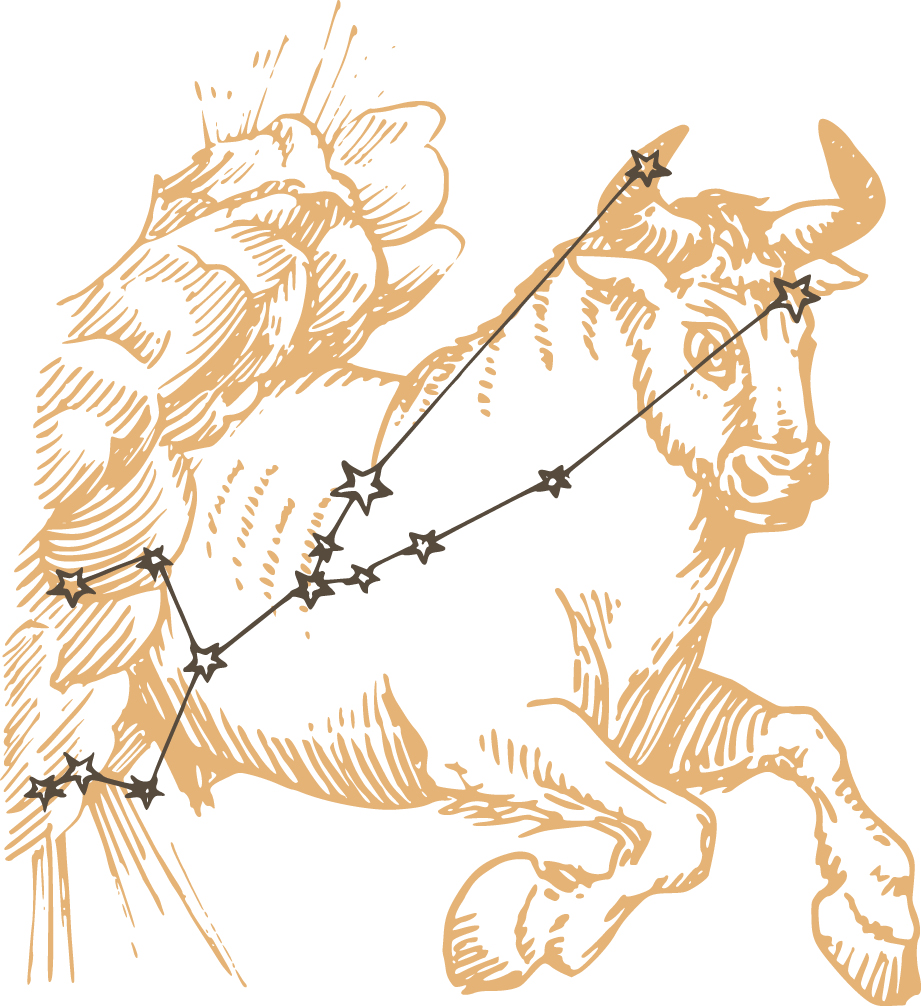
Whoever said that small minds discuss people surely wasn’t calling out a Taurus. When Mercury enters your sign on May 10, however, remember that the tea won’t spill itself.
On May 12, the full moon in Scorpio will illuminate an opportunity for you to get crystal clear on what really matters. Lastly, if things are feeling a bit awkward in the romance department, you can expect that to continue until Venus glides back into your sign on June 6. In other words, hang tight.

Tea leaf “fortunes” for the rest of you:

Gemini (May 21 – June 20)

Follow the care instructions.

Cancer (June 21 – July 22)

Stir until fragrant.

Leo (July 23 – August 22)

Don’t be afraid of your own roar.

Virgo (August 23 – September 22)

Polish the mirror.

Libra (September 23 – October 22)

Dare you to take a “Me Day.”

Scorpio (October 23 – November 21)

Start writing things down.

Sagittarius (November 22 – December 21)

Cancel your ego trip.

Capricorn (December 22 – January 19)

Relax your neck and jaw.

Aquarius (January 20 – February 18)

Hint: Slow and steady.

Pisces (February 19 – March 20)

Try using a different soap.

Aries (March 21 – April 19) 

You might want to pack a snack.

Out of the Blue

OUT OF THE BLUE

Strangers on a Plane

To talk or not to talk, that is the question

By Deborah Salomon

From what I’ve noticed, the only remaining conundrum pertaining to air travel is whether a passenger should strike up a conversation with his or her seatmate. If yes, then when? And how? Are there age guidelines? What are the clues that the passenger wedged next to you will be receptive? Notice any body language? I’m assuming the punk rocker with tattoos and wild hair would leave a sweet old lady alone, but who knows? Odd couples happen.

I fly to see my grandsons in Canada three or four times a year. Because I’m old and have a bum knee I get to board first, then watch passengers head down the aisle. Will I get Sumo with T-shirt exposing bellybutton? Mother and fussy baby? Techie toting cellphone, tablet, Kindle, earbuds? Business guy pining for first class? Whatever — I nod, smile, then assume nap mode.

Last trip I encountered someone and something bordering surreal.

I had the window seat — hardly glanced at the woman who stopped to check her boarding pass. I smiled and fished out her safety belt buckle, which had fallen between the seats. I’m not sure how she started the conversation . . . probably, “Are you going home to Montreal?”

“No,” I explained, then shared the reason as I turned to look at her face, full-on. The woman, whose name I learned was Suzanne, was about 60 and uncommonly beautiful, the result of the very best skin, hair, nutrition, exercise and dental care. She lived in Philadelphia, was divorced, a retired RN with two grown daughters.

She asked what I (as a newspaper reporter) call smart questions. Decades ago, this woman would be labeled “well-bred.” Certainly “highly educated.’’

When the beverage cart stopped at our row, Suzanne asked for club soda, which the flight attendant didn’t have.

I asked the purpose of her trip, which proved to be an unusual relationship with a French engineer who worked in northern Quebec. They see each other for a month or two, several times a year, his place or hers.

Interesting. I saw how this arrangement could work for a mature couple, played by Cary Grant and Deborah Kerr. For a title I purloined Alfred Hitchcock’s Strangers on a Train, from the 1950s, when plot and character development mattered.

We spoke of family, travel, technology, aging, health, climate and, of course, politics. Suzanne (not her real name) brought up the subject, gingerly. I broke a self-imposed ban and took the bait.

I told her, a perfect stranger, about losing two children to bipolar disorder, something I rarely discuss. Of course I bragged about my grandsons. I don’t remember if she has any.

The flight from Philly to Montreal lasted an hour-and-a-half. We talked the whole way, connected on many points. I gave her my business card, said she was welcome to email. She offered no identification, not even her surname, which I hardly noticed at the time.

When I got home a friend chided me for revealing personal information to a perfect stranger. “Just wait,” my friend said. “And watch your financial statements. This sounds like a shakedown.”

I was appalled. Has the world become so cynical that random chit-chat becomes suspect? Must we apply “see something, say something” indiscriminately?

Sadly, yes, because these days trust has become a luxury if not a danger. These days children are gunned down at school and pedestrians run over on the sidewalk. And stealing an identity (which I’ve experienced) isn’t much harder than stealing an apple off a pushcart.

I’m beginning to sound like a Twilight Zone episode. However, if my cynical friend is right about the shakedown, then stop the world, I’m outta here.

Dissecting a Cocktail

DISSECTING A COCKTAIL

White Wine Sangria

Story and Photograph by Tony Cross

Spring is peaking, and patio drinking is a must. Myriad cocktails fit the criteria and, for me, they’ve got to be light and refreshing. There should be a handful of options in your arsenal: mojitos, gin and tonics, spritzes and so on. So, choose your own adventure.

A cocktail I recently rediscovered is the white wine sangria. This is a simple, classic recipe from Canon owner and bartender Jamie Boudreau. I’ve never been keen on traditional sangrias — I like my red wine without any fuss — but a white wine sangria makes perfect sense. I love French 75s and other Champagne cocktails, so adding clear spirits to a dry or crisp white wine (dry white wine on its own in the spring is lovely, too) only seems right. Boudreau’s recipe calls for a citrus-forward gin in Martin Miller, but you may sub in Tanqueray 10, Sutler’s Spirit Co. or your personal favorite. He uses elderflower liqueur from St. Germain, which adds a touch of sweetness and all the lovely floral notes of St. Germain.

The recipe below is for a small pitcher or carafe for sharing. Make sure to add the St. Germain after the sparkling wine and gin; the liqueur is rich and heavy, so it will slowly sink to the bottom. Take advantage of your local farmers markets for seasonal fruit — whatever is available works, whether its blackberries, strawberries or raspberries. Any brightly colored fruit will make the aesthetic of this cocktail pop.

Specifications

12 ounces dry sparkling white wine

2 ounces St. Germain Elderflower Liqueur

1 ounce Martin Miller Gin

Lemon and lime wheels

Seasonal fruit


Execution

In a small pitcher, add ice, sparkling wine, St. Germain, gin and and fruit. Lightly stir and top off with more sparkling wine. Serve in wine or Collins glass with ice and more fruit.

Omnivorous Reader

OMNIVOROUS READER

Duck and Cover

How to keep your personal information safe

By Stephen E. Smith

When my mother was a teenager, she was the only all-night operator in a town of about 2,000 souls. The hours were long, so she eavesdropped on private conversations. When she got home, she shared the latest gossip with my grandmother, and within a few hours, everyone in town knew everyone else’s business.

In theory, it still works that way, except, of course, that our personal data is managed by computers — our iPhones, laptops, tablets and the clandestine eavesdropping monsters that lurk in the mystical ether — which speed up and amplify the collection process while disseminating our confidential information globally. The result, however, is the same: There are no secrets, finally or ever.

This is why Lawrence Cappello’s On Privacy: Twenty Lessons to Live By is a timely little book (151 pages) that’s surely worth the few minutes it takes to read it. It won’t be the most exciting book you’ve read, but it might be one of the most important.

Cappello is a professor of U.S. legal and constitutional history at the University of Alabama. He’s the author of None of Your Damn Business: Privacy in the United States from the Gilded Age to the Digital Age, and he’s a certified information privacy professional. He’s on top of this data collection stuff, and his advice might help you sleep a little more soundly.

We’re hammered daily by claims that the equity in our homes is being stolen, our bank accounts plundered, our reputations besmirched, and our children driven to suicide. And then there are the endless scams that pop up on our screens (I consider everything a scam until it proves itself otherwise, and then I know for sure it is a scam). And now the government — who should be protecting us — has gotten into the info-distribution game via the unsupervised plundering of heretofore confidential databases.

On Privacy is written for those who are fearful about the disclosure of their personal data but who are reluctant to toss out their electronic devices. Cappello cuts through the noise and confusion and enumerates in short, sensible steps the necessary safeguards we need to adopt to be secure in the digital age. He offers practical insights into why privacy matters, how it shapes free societies, and how it rules our lives in an increasingly interconnected electronic world.

What Cappello doesn’t do is bombard his readers with terrifying stories about unfortunate fellow citizens who’ve suffered life-altering internet crimes. Horrifying examples only encourage despair. Instead, Cappello begins by addressing the requisite rationalization, “The Nothing-to-Hide Trap,” in which we maintain that if we are full-time do-gooders, we have nothing to fear from those who’d access our personal data. “Our personal information exists in snippets,” he writes. “When taken out of context, the private details of our lives . . . too often paint a picture of us that is skewed and not entirely true,” and thus we are often misrepresented. Since first impressions matter, we should focus on what computers collect and, more importantly, the distribution of our personal data.

Cappello breaks down the threats to our privacy into easy-to-read chapters that present the problems and suggest solutions. After a brief discussion of “Privacy Is Essential to Mental Health,” he appends suggestions on “How to Talk About Privacy’s Mental Health Benefits,” followed by “How to Protect Your Mental Health Through Privacy.” It’s all very straightforward.

He claims, for example, that we have the right to be forgiven our youthful transgressions. We make mistakes. “Unfortunately, the mistakes we make in life will remain instantly accessible,” he writes, “to any stranger inclined to take thirty seconds for a quick online search.”

Moreover, we are constantly under surveillance; our movements are tracked by our phones, computers and cameras on the street. If that’s not intrusive enough, outside sources can read your private electronic communications. He offers a solution: Secure your email with PGP encryption, a popular tool that scrambles your writing so that only the intended recipient can read it. The same is true for texts; encrypted text messaging apps are readily available and require only a quick download to your phone. These email and text apps also have an automatic delete option. And he recommends you buy a Faraday bag, a small pouch that blocks all signals; otherwise, you can be tracked by your phone even if you turn off your GPS.

Not only are we surveilled by private entities, but the government has, for many years, been poking into our business. Surveillance is the enemy of free expression: It discourages people from participating in political movements by instilling the fear they’ll be arrested for speaking out against the powerful, which inhibits the right of free assemblage as guaranteed by the First Amendment. Cappello reminds us that the “belief that the surveillance powers of the state must be constantly kept in check is a cornerstone of what it means to live in a free country.”

Most of Cappello’s recommendations are simple and easily implemented: “When in doubt, log out,” delete apps you aren’t using and any accounts associated with them, tape off the camera on your computer, clear your browser history, get rid of caches and cookies, turn off and lock your computer when not in use, and purchase your own Virtual Private Networks (VPNs), which makes it difficult to track your online activity. And those are just a few of the suggestions that might save you money and safeguard your reputation. 

Of course, the obvious way to protect your future information — there’s little you can do about the past — is to disappear or “go dark,” as folks are wont to say. This would necessitate the destruction of all your electronics — computers, streaming devices, tablets, phones, smartwatches, etc., and all storage systems — thumbnail drives, hard drives, data stored in the cloud (the global network of remote servers that functions as a single ecosystem), old floppy disks, credit cards, etc. Everything. All of it. Then disappear. Forever.

Hometown

HOMETOWN

Aced Out

The elusive hole-in-one

By Bill Fields

Given that I played my first shots on patchy grass in our yard to empty soup cans sunken in the ground, I’ve gone on to have a full golf life. I’ve played thousands of rounds, chronicled hundreds of tournaments with a keyboard or a camera, and been privileged to spend time with dozens of golfers who shaped the sport.

But there is a gap in my golf history. I haven’t made a hole-in-one.

Of course, more talented folks play longer than I have without making an ace. The odds are against anyone: 12,500 to 1 for an average golfer, and even 2,500 to 1 for a tour pro. Those kinds of chances remind me of the “Greyhound Derby” contest at the Colonial grocery store when I was kid. Every Saturday night that we watched the races on television, our dog looked like a lock for the $1,000 winner’s prize . . . until fading like a cur in the homestretch.

An ace has been the mechanical rabbit that I can’t catch.

About the same time the dogs were disappointing us, I was becoming obsessed with the Guinness World Records book that I received one Christmas. It was chock-full of the biggest or tallest you name it. As a budding golfer, I was fascinated by the entry for longest hole-in-one: 444 yards by Robert Mitera, Oct. 7, 1965, on the 10th hole of the appropriately named Miracle Hill Golf Course in Omaha, Nebraska.

I’ve seen holes-in-one in the flesh. Two flew straight in, another rolled in like a Ben Crenshaw putt, and a fourth took a fluky hard-right bounce off a greenside mound. A scorecard, as the saying goes, doesn’t have pictures. That said, a good friend of mine is loath to claim one of his 1s, a skulled short iron that was an ugly shot by any measure until the ball skittered into the cup.

No doubt the most memorable that I’ve witnessed occurred nearly 40 years ago at a par-3 course in New Jersey. I was playing with my pal Michael Dann, with whom I’d enjoyed many games when we lived in the Sandhills. He usually beat me in those days, and I was motivated to change that when we convened at the short course on a busy Saturday afternoon. The first tee was bustling, and we had a de facto gallery when it was our turn on the 80-yard opener. I went first, snuggling a wedge only a foot from the flagstick, and crowed about it to Michael. It was going to be my day.

Then he flew his shot into the cup.

I came close as a teenager. I one-hopped an 8-iron off the pin on the first hole at Knollwood. I hit a 4-wood to 6 inches on the formidable 13th at Mid Pines Inn & Golf Club. Although I’ve had a couple of hole-outs from the fairway from a hundred yards or so, since giving Michael something to shoot at that day in New Jersey, the closest I’ve come on a par-3 tee shot is about a yardstick away.

Perhaps I’m thinking about aces because there have been some notable ones made starting last summer.

I was working on the TV production of the 2024 U.S. Senior Open when Frank Bensel Jr. made a hole-in-one on the par-3 fourth hole at Newport (R.I.) Country Club with a 6-iron. Newport is the rare layout with back-to-back par-3s. Bensel used the same club to ace the fifth hole. It was only the second time in 1,001 USGA championships that someone made two aces in a round. The only other case of consecutive holes-in-one is thought to be by John Hudson in a 1971 tournament on the British PGA circuit.

Last fall, Bryson DeChambeau went viral by trying to make an ace hitting a wedge over his house. On his 16th day of attempts, the U.S. Open champion at Pinehurst succeeded. This February at the South African Open, Dale Whitnell became the second man to make a pair of holes-in-one in one round on the DP World Tour. Three golfers have achieved the 67 million-to-1 feat on the PGA Tour, most recently Brian Harman in 2015.

I am not greedy. One would be plenty. I checked in with my friend Mike Fields of Southern Pines, a golfer good enough in his mid-60s to have shot his age twice within a week. He didn’t make his first of three aces until he was 57. I shall keep swinging.

Guitar Hero

GUITAR HERO

Guitar Hero

Chasing the quintessential American instrument

By Stephen E. Smith

Photographs by John Gessner

You can go almost anywhere, and there’ll be a (insert your favorite personal expletive here) with a guitar,” a curmudgeonly crony once told me.

I suspect he was talking about me. I’ve been toting around an acoustic guitar — in my car mostly — since I squandered $20 on a 6-string that beckoned to me from a pawnshop window when I was 14. The Kingston Trio strummed guitars, the girls swooned, and I had to have that Kay archtop with the bowed neck. No other instrument would do. (When was the last time you heard a testosterone-besotted teenager quip, “I just happen to have my tuba with me”?) At 17, I could flat pick the intro to The Animals’ “House of the Rising Sun” and bang out the first few chords of The Troggs’ “Wild Thing.” What more did I need to know?

If Americans have a national instrument, it’s the guitar, be it electric or acoustic or a combination of the two. According to Statista Research Department, 3.3 million guitars were sold last year in the United States. Any way you figure it, that’s a lot of exotic tonewood, bone, plastic, steel, glue, tortoiseshell and abalone. And that doesn’t account for the necessary accouterments — picks, strings, amps, mics, pedals, wires of every possible description, cases, straps, capos, gig bags, tuners, etc. Guitars constitute an in-your-face, above-ground market that flourishes on the internet via eBay and Reverb and lives in every city and settlement with a population of more than one. It’s a miracle that every kid in America isn’t busking on the curb.

In your lifetime, you’ll probably buy a guitar, or you know someone who will. With millions of options available, making an intelligent choice can be time-consuming and expensive — and ultimately disappointing. If you buy the wrong instrument — one that’s difficult to play and sounds crappy — the novice picker may become disillusioned and never fully realize the fulfillment music can bring into his or her life.

The guitar market is inundated with defective, cheap, and poorly constructed used instruments that are available for a pittance, while at the other extreme, you can make the investment of a lifetime if you stumble upon a one-of-a-kind gem. Kurt Cobain’s Martin 1959 D-18E acoustic recently sold for $6 million, and Bob Dylan’s 1964 Fender Stratocaster — the one that antagonized the crowd at the 1965 Newport Folk Festival — is a steal at a million bucks. Mark Twain’s 1835 2 1/2-17 Martin, which cost $10 new, is valued at over $15 million.

Used, worn-out instruments flood online auctions. Many of these are catalog guitars sold from 1920 through the mid-’60s. They have the virtue of being American-made, but they were ordered through Sears (Supertone/Silvertone), Montgomery Ward (Airline), or a myriad of more obscure distributors, and were often delivered in unplayable condition with a string height and tension that would suck blood straight out of your fingertips. Even if you lucked into a medium-grade and high-end used guitar, the truth is simple: Guitars wear out. The necks warp, the soundboards crack, the tuners fall apart, and the bridges pull up. They can be repaired, but the services of a capable luthier don’t come cheap, and you can spend more money restoring an old guitar than you will pay for a new, more playable model.

So where do you start the quest for that 6-string soulmate? If possible, borrow a guitar. Get a feel for the instrument. Learn a couple of chords. Sing a simple song. If you decide to purchase an instrument, don’t go online and click on the first thing that strikes your fancy. There’s no telling what will arrive in the mail. How a guitar looks on a computer screen and how it sounds and feels when you’re caressing the strings are very different things.

Or you might begin by watching Daniel Putkowski’s 2023 documentary Heirloom: Guitar, snippets of which were filmed in Southern Pines and feature Greensboro luthier Bob Rigaud. The doc is a simple primer for the unschooled. Putkowski begins with an ingenious admission: “I’ve been trying for 20 years to figure out what makes the guitar so popular in American music and across the world.”

Rigaud, who has crafted boutique instruments for Graham Nash, John Hiatt and David Crosby, believes the guitar is spiritual: “The guitar is probably the easiest instrument to play — of course it’s one of the hardest to master. . . It’s spiritual, and it speaks to people in their own lives — love, loss, all subjects.” The professionally produced documentary traces the acoustic guitar’s evolution from a parlor instrument into the most popular music-maker in the world. Segments are supplemented by clips of Bryan Sutton, David Grier, Florence Dore and others explicating their love of the instrument and include step-by-step visuals of a luthier building a custom boutique guitar from scratch. Heirloom: Guitar is available on YouTube and is a good introduction for anyone who is considering a purchase.

We’re fortunate to live at a propitious moment in the evolution of the guitar. CNC (computer numerical control) machines improved construction and playability, and if the guitar is made by a reputable American company — Martin, Gibson, Collings, Taylor, etc. — it’s likely to be a superior instrument. And there are hundreds of American luthiers — too many to mention here — who build custom guitars of the highest quality, although these models are likely to be pricy.

Among imported guitars (“offshore” is the popular euphemism) constructed in China, Indonesia, Japan, etc., deals are to be had. American players generally look down on these foreign models, but the Chinese have been producing acceptable instruments for the last 30 years, and Japan’s Takamine, Alvarez and Yamaha are welcome on any stage or in any song circle. After all, musicians in the Orient were playing stringed instruments long before the Vikings set foot in Vinland. It’s all right to be a guitar snob, but it’s unnecessary — and unbecoming.

Online guitar retailers abound. Musicians Friend, Cream City Music, Sweetwater, Chicago Music Exchange and other music companies will allow you to purchase an instrument and return it in new condition for a full refund if you don’t like what you hear. But the best and easiest place to start your search is your local music store. (There are chain guitar stores you can frequent if you can endure the bone-jarring racket of 10 customers playing White Stripes’ “The Hardest Button to Button” with their amps maxed out.) But a quiet, comfortable atmosphere where you can handle the instrument and hear what’s played beneath your hands is the way to go. A guitar must feel right as well as sound right.

Southern Pines has had its share of cliquish musical haunts. The Pinedene Jazz Center, which was featured on WRAL’s Tarheel Traveler many years ago, comes immediately to mind. The hole-in-the-wall establishment on U.S. 1 South flourished as a gas station selling Black Diamond Strings until it morphed into a music store that eventually succumbed to changing times and a shift in ownership.

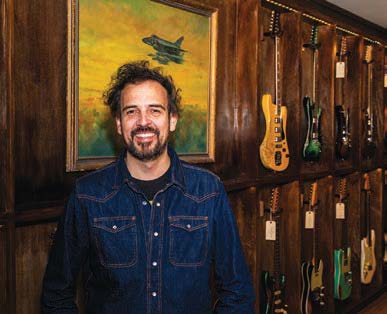
The more substantial Casino Guitars (www.casinoguitars.com), which now anchors, along with The Country Bookshop and The Ice Cream Parlor, downtown Southern Pines, carries an impressive array of guitars, many of them high-end instruments that proprietor Baxter Clement ships worldwide. Casino has grown into one of the premier guitar stores in the Southeast. The service is excellent; the crew is knowledgeable. Clement, a music graduate from Vanderbilt University, thoroughly knows his stuff, and he truly loves guitars. He has a solid business plan. He knows that customers in the market for a guitar need to feel and hear the instrument. They need to hold it in their hands and sense that sudden bond: Ah, yes, this is the one!

“When a customer comes in the front door, we try to make them feel at ease,” Clement says. “They can take their time and browse and find an instrument they feel a connection to. Our job is to help the customer find a guitar that speaks to them.”

As for the price range of his stock, he’s philosophical. “Every guitar gets you to the same place, like a car moving from A to B,” he says. “A quality guitar will just get you there faster. And, too, customers should keep in mind that many of the cheaper guitars are produced by workers who aren’t paid a fair wage. In some cases, they’re built by prison labor who work in unsafe conditions without masks or eye protection.”

How much should you pay for a new or used guitar? Is there a decisive difference between a high-end and a cheapo-cheapo model? Nothing is absolute. If you do your research, listen to a trusted expert and, as Aristotle reminds us, trust your eyes and ears — “The Eyes are the organs of temptation, and the Ears are the organs of instruction” — you have a very good chance of purchasing a quality, playable instrument that will bring you years of satisfaction.

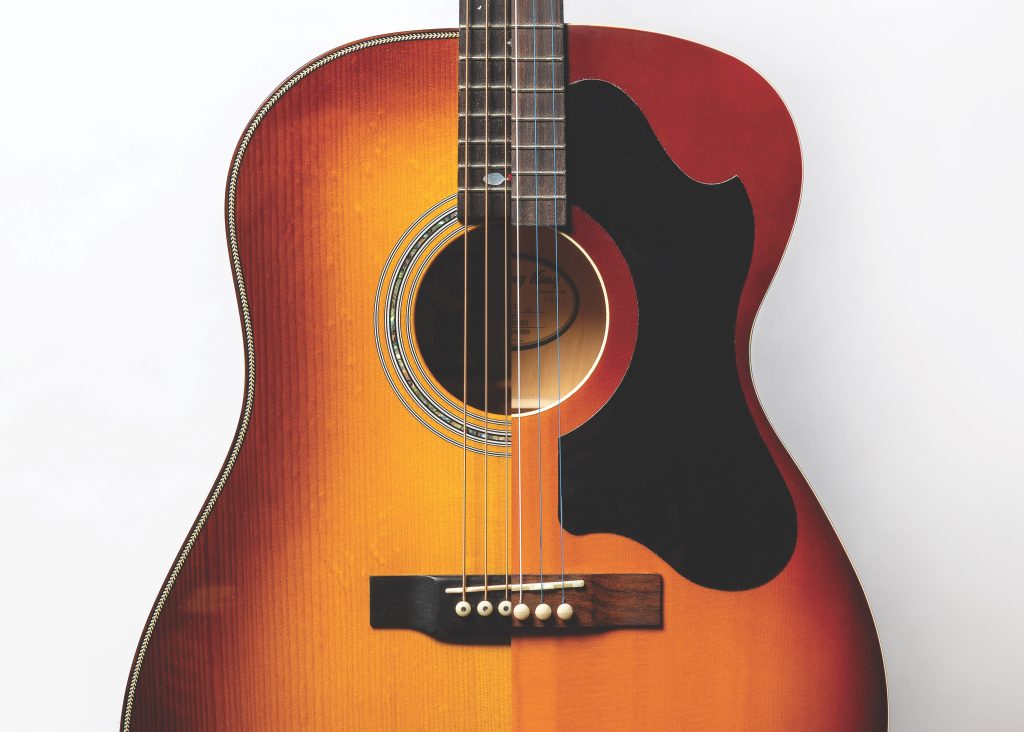
To determine how low-end guitars have improved in recent years, I ordered the cheapest playable new guitar I could find online. Recording King is a brand name conjured up by Gibson during the Great Depression. The guitars produced under the label were more lightly constructed and cost less than the typical Gibson. The Recording King moniker was eventually sold to a Chinese outfit that produces models at varying prices and quality. For $100, I purchased a Recording King from the “Dirty-30s” series, which boasts surprisingly impressive specs — a spruce top, nickel tuning machines, Whitewood (whatever that is) back and sides, mahogany neck, bone saddle and nut — all good stuff.

I toted the Recording King and my 2012 Signature John Sebastian Martin D Slope Shoulder, which boasts the specs of the very best of American guitars (there’s one for sale online for $15,500), to a gathering of the Weymouth Song Circle, which meets on the last Tuesday of every month, to allow the experts to weigh value and quality. And they did.

The Recording King sounds, well, good enough. It is surprisingly playable out of the box. It’s bright and responsive and holds its own with other guitars when fingerpicked or strummed. Except for minor finishing details (the fret ends are like septic spikes), the Recording King would have held its own in the 1950s and ’60s folk era.

But when we played the Martin DSS, trained ears held sway. The Martin was by far the more desirable guitar. Everyone wanted to pick a few tunes on the DSS while the Recording King sat slumped, neglected, in the corner. It’s a viable guitar, fun to play when accompanying others, but the superior Martin demanded the attention of experienced pickers. Which begs the question: Is one Martin guitar worth 155 Recording Kings? Whatever the answer, this much is certain: The serious player should experience long-term satisfaction with his or her purchase. You don’t want to outgrow your new guitar in the first month of ownership or be discouraged by its inadequacies.

Everyone should have a little music in his or her life, if only to escape the electronic morass we’re forced to inhabit. When you hold an acoustic guitar in your hands, it’s just you and the instrument. For better or worse, it reflects what you feel and believe — and who you are. It also connects with others, and there’s a strong sense of community among guitar players, whatever their skill level. And Lord knows, genuine connection is what we need more than ever.

Even casual music lovers appreciate the sense of camaraderie that guitars convey. I recall a summer afternoon 40 years ago when I was driving into Austin, Texas, to visit my singer-songwriter brother. I had my radio tuned to a local station that was broadcasting live coverage of a gathering of 500 guitarists on the grounds of the State Capitol. At precisely high noon, they all played “Wild Thing” — raucous head-pounding A, D, E, D, A, D, E chords blasting through the transistors in perfect generational unison.

Oh, how I longed to be among them!