
All the Right Moves

ALL THE RIGHT MOVES

All the Right Moves

When downsizing is the perfect choice

By Deborah Salomon  
Photographs by John Gessner

Residential downsizing for senior couples can be a challenge. Cherished possessions may be dispersed, gardens and neighbors left behind. Creating a rewarding life with curated furnishings, new fabrics and colors requires time, expertise, motivation and energy. That calls for a Cynthia Birdsall. “I ran the renewal. I was the architect, general contractor, interior designer,” says Cynthia of the Birdsalls’ move from Dunross, a 9,000 square foot, six bedroom, 10 bathroom, three-story castle with workshops and outbuildings built for Donald Ross in Knollwood, into a 4,500 square foot single-story two-bedroom 1970s “ranch” in an over-55 development. Finding that size house on one floor took two years.

The Birdsalls maintain an active social life. “We weren’t ready for assisted living. We still wanted a neighborhood,’’ says Cynthia. She hired the painter, the cabinetmakers and electrician. “The guys trusted me.” Bruce Birdsall’s health and mobility was an impetus for change. Cynthia’s renovation not only included friendly doorsills but space suitable for resident caregivers, if needed in the future for either of them. During the transition the couple moved into an apartment for two years. Furnishings that could not be used were stored.
Two bathrooms were gutted. “We had to take out a wall to build a shower in one,” Cynthia says. While designing space for their new lifestyle, Cynthia did not ignore their enthusiasms. “I’m all about wine,” she says. Several temperature-regulated “wine rooms” store and display her collection. Bruce has a coffee station, stockpiles single malt Scotch and keeps a stable of vintage cars and motorbikes. The couple entertains, thus the bar with refrigeration, icemaker and tools to suit a professional bartender. Against an exterior wall they added an adorable, enclosed garden with a wrought iron gate and a variety of surfaces including grass, concrete, pebbles and water where two elderly miniature French bulldogs hang out, weather permitting.

Frequent guests may remember leather-upholstered chairs and a stretch sofa that survived the move from Dunross. Cynthia is a seventh-generation Texan comfortable with fur, skins and leather, which appear throughout. In contrast, over the simple, 12-seat dining room table — made from a single mesquite tree — hangs an ornate, sparkling chandelier. More Paris than Dallas. She doesn’t assign a period or style to her furnishings. “It’s just what I’ve collected over many years because I love it.”

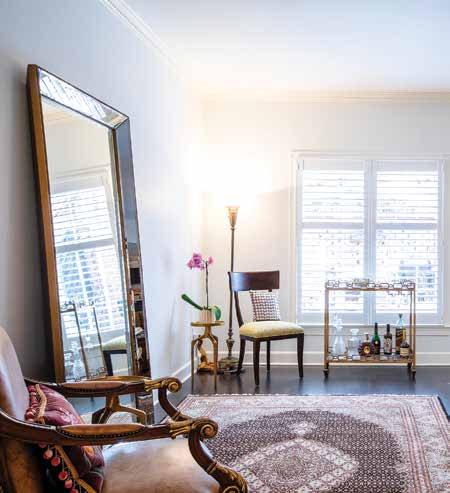
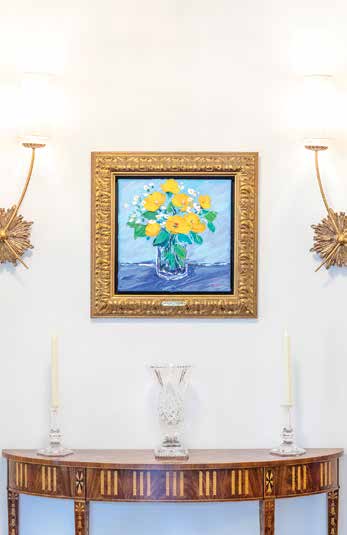
Cynthia chose an interesting black-coffee hue for the engineered flooring, an ideal background for light-colored area rugs. The sparsely furnished two-part living room and oversized Carolina room illustrate a concept originating in the foyer: space as a décor element. The foyer contains only a table. But what a table it is.

“We wanted our guests to have room to move around,’’ Cynthia explains.

Walls are a soft vanilla throughout. Woodwork, including crown moldings, is finished in light-reflecting semi-gloss. Paintings hang singly rather than in groups, creating drama. Windows are shaded by white venetian blinds, never drapes.

This absence of “stuff” conveys calm, something uber-active Cynthia seeks and appreciates.

Exceptions exist, particularly in the kitchen, where Cynthia had some wall cabinets removed to create a pantry and transformed the island base into shelves for her cookbook collection. A quartz countertop splattered in bright blue adds pop. Meal prep becomes happy time.

“When we cook for the family (with children and grandchildren) we cook as a group, and dance around,” she says.

Perhaps the most interesting space is the master suite with seating area, an impressive 18-foot-by-28 foot corner room furnished in custom-made pieces designed by Cynthia. Their shapes suggest frill-free Scandinavian modes popular in the early 1950s. In contrast, the showstopper is a cabinet from Bruce’s family that contains Cynthia’s perfume bottle collection.

The AARP reports that downsizing can have both positive and negative effects on seniors. A survey found that 75 percent of Americans ages 50 and over have a strong preference for staying in their longtime family home. The Birdsalls have had other homes and lived at Dunross only a few years, lessening the emotional attachment to any one place. Their upscale downsize happened under favorable conditions with enviable results: familiar neighborhood, same friends, comfortable furnishings, safe environment. They even have worked out sleeping arrangements for visiting children and grandchildren since the house has only two bedrooms — option one: rent the Pinehurst church that is now a residence.

Downsizing wears many faces, from worry to acceptance and relief. This face, thank goodness, is smiling. “This was the right decision for us,” Cynthia says. 

Tea Leaf Astrologer

TEA LEAF ASTROLOGER

Capricorn

(December 22 – January 19)

Having been in “go” mode since birth, you may not understand the degree to which your natural drive and goal-crushing prowess triggers those around you. This isn’t to say you should play small (you’re incapable) or slow down (hoofers gonna hoof it). Rather, when the shade-throwers cast their slights and snubs, try not to adopt their perceived failures as your own. This month, with Saturn in Pisces amplifying your softer side, embrace it. 

Tea leaf “fortunes” for the rest of you:

Aquarius (January 20 – February 18)

Now, think bigger. 

Pisces (February 19 – March 20)

Cancel the membership. 

Aries (March 21 – April 19) 

Consider a new deodorant.

Taurus (April 20 – May 20)

Your cuticles require some attention. 

Gemini (May 21 – June 20)

Try subbing sugar for dates. 

Cancer (June 21 – July 22)

Baby steps, darling. 

Leo (July 23 – August 22)

Make time for a morning stretch. 

Virgo (August 23 – September 22)  

Keep the receipt. 

Libra (September 23 – October 22)

Two words: wardrobe overhaul.

Scorpio (October 23 – November 21)

Ever heard of a dry brush? 

Sagittarius (November 22 – December 21)

Dance like nobody’s gawking.

Dissecting a Cocktail

DISSECTING A COCKTAIL

100 Year Old Cigar

Story and Photograph by Tony Cross

Let’s start 2026 off with a bang, or the strike of a match, if you will. The 100 Year Old Cigar was created by Maks Pazuniak at the bar Jupiter Disco in Bushwick, New York. Carey Jones includes it in her book Brooklyn Bartender: A Modern Guide to Cocktails and Spirits published in 2016.

One of the qualities of Pazuniak’s creations is how well he blends myriad spirits that might intimidate others. He showcased those skills in Beta Cocktails (the book he cowrote with Kirk Estopinal) and again with his 100 Year Old Cigar cocktail. The backbone of this drink is an aged rum — I use Ron del Barrilito’s 3 Star — that has more body and depth than the typical light rum. The modifiers are Laphroaig 10 Year Scotch, Cynar and Benedictine. On paper, this cocktail looks intense — indeed, these flavors are juxtaposed: Laphroaig is very peaty, Cynar is savory and bitter, and the French liqueur, Benedictine, is sweet with notes of baking spices and honey. Throwing them together with an aged rum lets the ingredients shine while the rum still holds its own without overpowering the modifiers. After stirring this and pouring it into a coupe, give a few spritzes of absinthe over the cocktail. The result is richly boozy, with layers of flavor that echo the notes of a fine cigar. It makes a great nightcap or perhaps a celebratory toast for surviving another year. 

Specifications

1 3/4 ounces aged rum

1/2 ounce Benedictine

1/2 ounce Cynar

1/4 ounce Laphroaig 10 Year

Absinthe

Execution

Combine all ingredients, sans absinthe, in a chilled mixing vessel. Add ice and stir until cocktail is ice-cold and properly diluted. Strain into a chilled cocktail coupe. Using an atomizer, spritz absinthe over the cocktail a few times. 

Poem January 2026

POEM

The Other Side of the Mirror

“Let’s pretend the glass has got all soft like gauze . . .
And certainly the glass was beginning to melt away,
just like a bright silvery mist.”

    — Lewis Caroll, Through the Looking Glass


There’s always a reason I’d rather stay home,

as I brush my hair, gaze into my reflection, sit

before the dresser where I combed my curls

as a girl, forever getting ready for the life

that hadn’t arrived yet. Mirrors remained

unfazed, as I exchanged one image for another,

changed my hairstyles and hats, traced fingers

along a scar, abandoned myself for imperfections.

I have come close to escaping into another world,

always about to leave or about to live, my eyes

child-like, clear as glass, considering what time

it must be . . . to keep from disappearing

into my own unbreakable stare.

— Linda Annas Ferguson

Hometown

HOMETOWN

Grit and Grace

Remembering a boyhood hero

By Bill Fields

This college basketball season is hitting me in a different way, and I can’t blame it on the transfer portal or other tradition-wrecking aspects of the current era, as dispiriting as they might be.

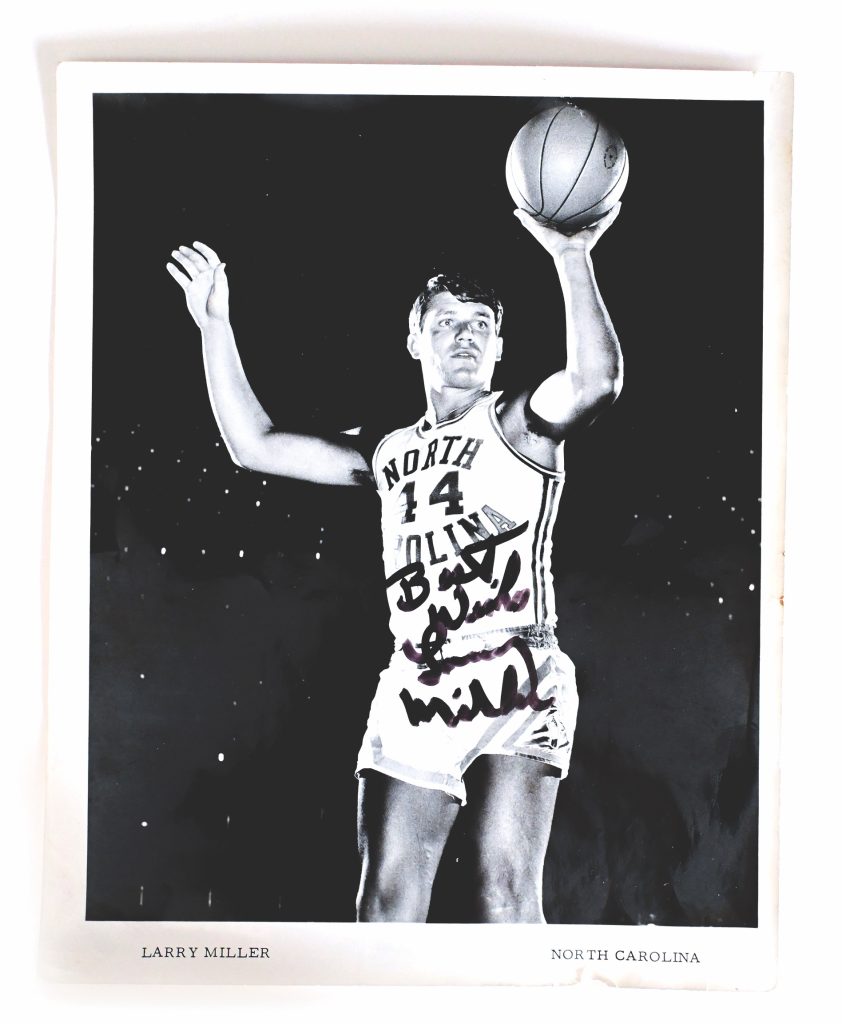
Larry Miller died last May, at 79, and it felt as if an important piece of my childhood went with the legendary Tar Heel, who starred for coach Dean Smith in the 1960s and led Carolina to two straight Final Fours.

I read something not long ago that one’s deepest bonds with sports are rooted in associations which date to elementary and middle school days. Sports certainly have never been a bigger passion for me than they were when I was that age and beginning to play as well as becoming a devoted fan.
About the time I was just starting to digest the daily sports section, three players in three sports were drawing my fullest attention: Willie Mays, Sonny Jurgensen and Miller. As much as I loved the star centerfielder who could do it all for the San Francisco Giants and the pure-passing quarterback of the Washington Redskins, Miller captivated me most of all.

Playing on the other side of the country, Mays was mostly a name in a box score. If the rooftop antenna was doing its job, Jurgensen regularly showed up on our television on Sunday afternoons in the fall. But during the three seasons he was on the UNC basketball team — freshmen weren’t allowed to compete on varsity teams until the early 1970s — Miller was a more frequent presence in my sports universe. I read about him in the paper, watched him on TV, and listened to his exploits on radio.

Miller filled gyms across Pennsylvania’s Lehigh Valley as a prep star. His hometown, Catasauqua, was one of the first far-flung locales to stick in my mind. Convincing Miller to come to Chapel Hill after he graduated from high school in 1964 was vital to Smith, whose early years at the helm were rocky. More than a hundred colleges had offered scholarships to the 6-foot-4 forward, whose jumping ability allowed him to play bigger.

To the coeds who flooded the UNC Sports Information office with fan mail for their handsome favorite, Miller was a matinee idol. For a young boy who couldn’t get enough basketball and loved the Tar Heels, Miller suited up on the Carmichael Auditorium hardwood at the perfect time to fuel my hoops obsession. I would root hard for other Carolina stars, from Charlie Scott to George Karl to Phil Ford, but Miller stood alone as my first basketball crush.

The Tar Heels didn’t have their names on the back of their jerseys in those days, but there was no mistaking No. 44 in light blue and white. Miller was an effective blend of grit and grace on the court, an excellent outside shooter who also had a crafty way of driving to the basket and scoring on scoop-style layups after faking out the opposition with his creative moves. Being a righty, I couldn’t emulate Miller’s left-handed shots, but I otherwise tried to be him around our rickety backyard goal or in Saturday morning youth-league games in the Southern Pines gym. There were thousands of other kids in their Converses or Keds around North Carolina just like me.

As a junior, Miller made 13 of 14 shots in a win over Duke in the final of the 1967 ACC Tournament, and the Tar Heels became the first Smith-coached team to reach the Final Four, losing to Dayton in the semifinals. ACC Player of the Year in 1967 and ’68, Miller was a consensus first-team All-American in 1968, when Carolina repeated as conference champs and again advanced to the Final Four, losing badly in the championship game to Lew Alcindor-led UCLA.

The Tar Heels’ 23-point loss to the Bruins didn’t dampen my enthusiasm for wanting to see Miller in person later that spring at an exhibition game of barnstorming college seniors at the Pinehurst gym. Not only did my dad take me to the game, but at halftime he also bought me an autographed 8-by-10 glossy of Miller at the souvenir stand. I’ve held on to that $3.00 picture all this time, and when I heard Miller had died, I retrieved it from a box and looked at it for a good long while, remembering.

Birdwatch

BIRDWATCH

Cold Customers

Return of the dark-eyed juncos

By Susan Campbell

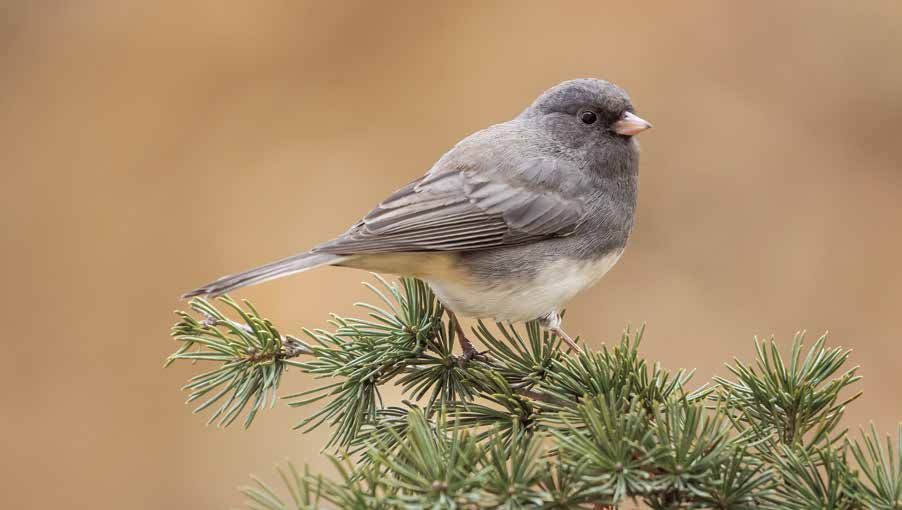
“The snowbirds are back!” No, not the thin-blooded retirees: They won’t be back until spring. These are the little black-and-white sparrowlike birds that appear under feeders when the mercury dips here in central North Carolina. They can be found in flocks, several dozen strong in some places. And, in spite of what you might think, they are far from dependent on bird seed in winter.

Dark-eyed juncos are a diverse and widely distributed species. Six populations are recognized across the U.S., Canada and Mexico. Slight but noticeable variations in appearance constitute the difference in these populations. Some have white wing bars while others sport a reddish back and the birds in the high elevations of the Rockies are recognized by extensive pinkish feathering on their flanks. Our eastern birds are known as “slate-colored juncos” for their dark brown to gray feathering. They are accustomed to cold temperatures whether in summer or winter. As with most migrant songbirds, their migratory behavior is based on food availability, not weather. Flocks will fly southward, stopping where they find abundant grasses and forbs. They will continue on once the food plants have been stripped of seed.

Dark-eyed juncos can be found throughout North America at different times of the year. During the breeding season, juncos are seen at high elevation across the boreal forests nesting in thick evergreens. Our familiar slate-colored variety breeds as close as the high elevations of the Appalachians. You can find them easily around Blowing Rock and Boone year-round. These nonmigrants actually have shorter wingspans as a result of their sedentary existence. Watch for male juncos advertising their territories up high in fir or spruce trees. They will utter sharp chirps and may string together a series of rapid call notes that sound like the noise emitted by a “phaser” of Star Trek fame.

In winter, flocks congregate in open and brushy habitats. Juncos are distinguished from other sparrows by their clean markings: dark heads with small, pale, conical bills, pale bellies and white outer tail feathers. Females have a browner wash and less of a demarcation between belly and breast than males. They hop around and feed on small seeds close to ground level. Some individuals can be quite tame once they become familiar with a specific place and particular people. Juncos do communicate frequently, using sharp trills to keep the flock together. They will not hesitate to dive for deep cover when alarmed.

So, the next time you come upon a flock along the roadside or notice juncos under your feeder, take a close look. These little birds will be with us only a few months, until day length begins to increase and they head back to the boreal forests from whence they came.

Almanac January 2026

ALMANAC

January

By Ashley Walshe

January is an ancient remembering; a rush of cold; the crunch, crunch, quiet of naked woods.

This new day, sunlight caressing the frigid earth, inspiration knocks with the clarity of woodpecker drumming against towering pine. Bundled in layers, you lace up your boots, leash up the dog, make for the leaf-littered trail in the open, unobtrusive forest.

Crisp air fills your lungs with a sense of wildness, each breath sharpening your instincts, expanding your horizon, deepening your kinship with the natural world. As dead leaves rustle beneath feet and paws, the wisdom of animal awakens within you. This isn’t just a walk in the wild. It’s a homecoming.

Despite the bleakness of this winter landscape, the sting of the cold, you feel a surge of bold and blissful aliveness. At once, emptiness becomes threshold of infinite possibility. At once, the unseen sings out.

Opossum tracks spell midnight wanderings. A circling hawk graces a vibrant blue sky. Dog presses warm snout to damp earth and listens.

You listen, too, noting the rhythm of your breath, the cadence of your footsteps, the distant crack of hoof upon fallen branch.

Beyond a young beech tree, its pale leaves suspended like a murmuration of ghosts, half a dozen white-tailed deer stand invisible against the sepia backdrop. But here’s the thing: A veil has been lifted; your vision, clarified. You can sense the wild stirrings of these hollow woods. Your breath in the cold is living proof.

Keeping it Real(istic)

The New Year has a way of making us believe that anything is possible — and why not? But we do love to set lofty (read delusional) goals for ourselves, don’t we?

Who thought this was a good idea?

The ancient Babylonians were perhaps the first. Some 4,000 years ago, during their 12-day Akitu festival, “promises to the gods” were made to earn their favor or repay debts. The ancient Romans adopted this ritual to honor Janus (god of beginnings, transitions and time), while early Christians reflected on past transgressions and resolved to “be better” at the start of the bright, new year.

“New Year’s resolutions” entered modern vernacular by the 19th century, becoming a largely secular practice. This year, should you make a promise to yourself, earn your own good favor by breaking large goals into smaller steps. And, whatever your commitment, do it from a place of genuine desire — not just because you think you should.

New Year, New Earth

Suppose we resolved to live in greater harmony with the Earth this new year. Small changes can make a big impact. Below are a few suggestions to deepen your relationship with the natural world and, perhaps, reduce your carbon footprint. Feel free to make your own vow, of course. This is strictly between you and Mama E.

  • Wake up to watch the sunrise
  • Support your local farmers market
  • BYO reusable shopping bags
  • Choose native plants and pollinators for the garden 
  • Ditch bottled water (and single-use plastics) 
  • Visit your local nature preserves 
  • Spend more time barefoot on the earth  
  • Pause to watch more
    sunsets 

The Winter Blues

THE WINTER BLUES

The Winter Blues

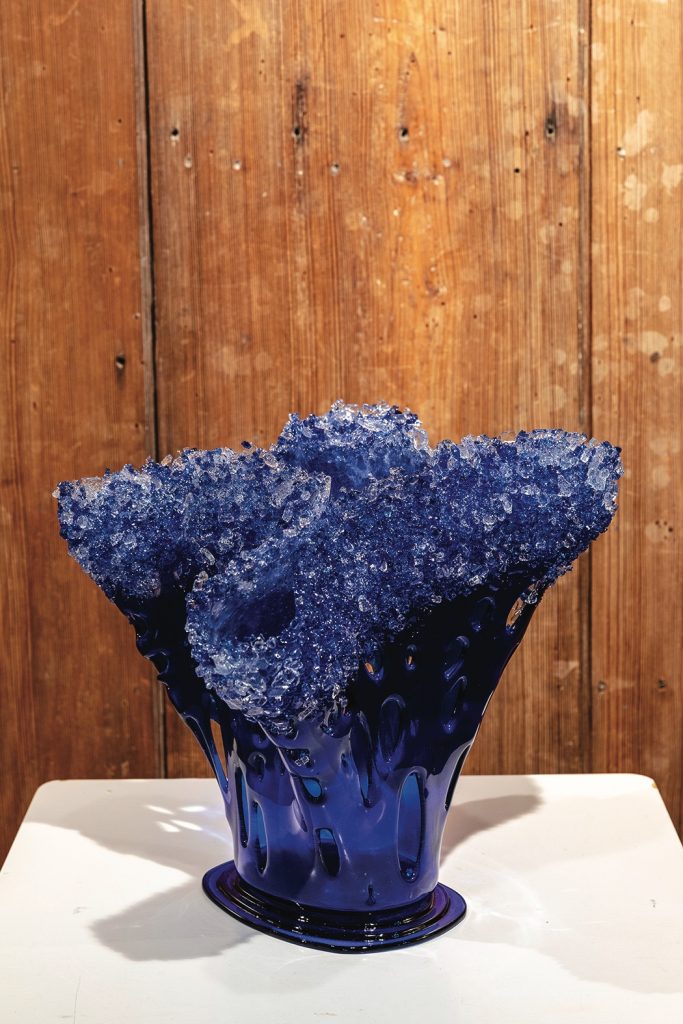
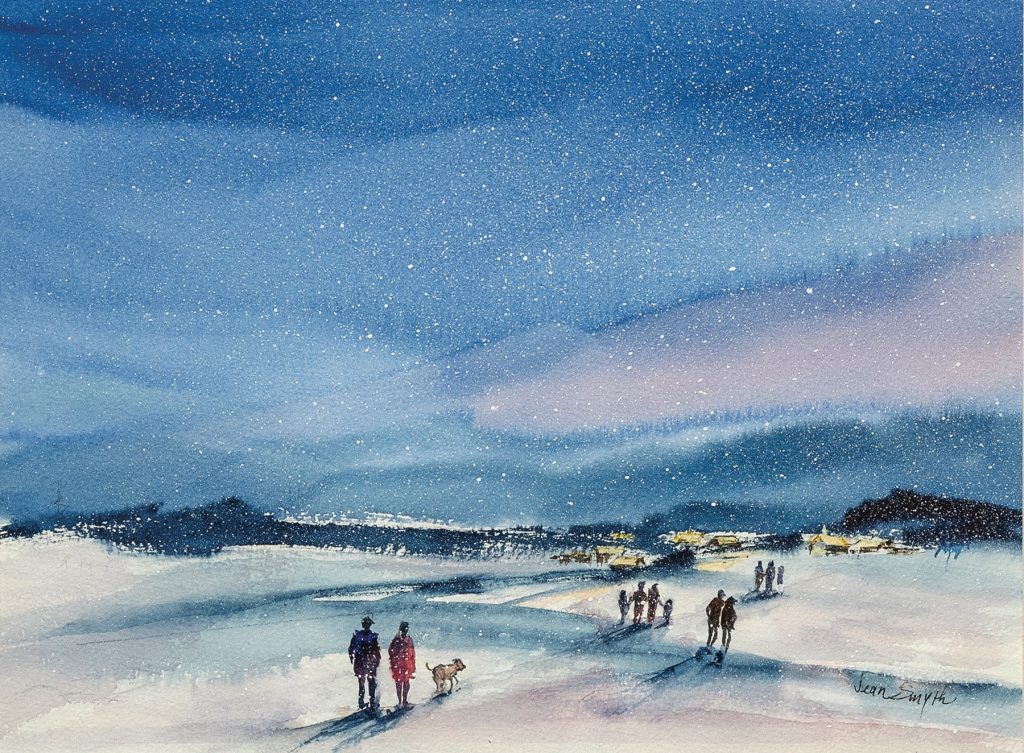
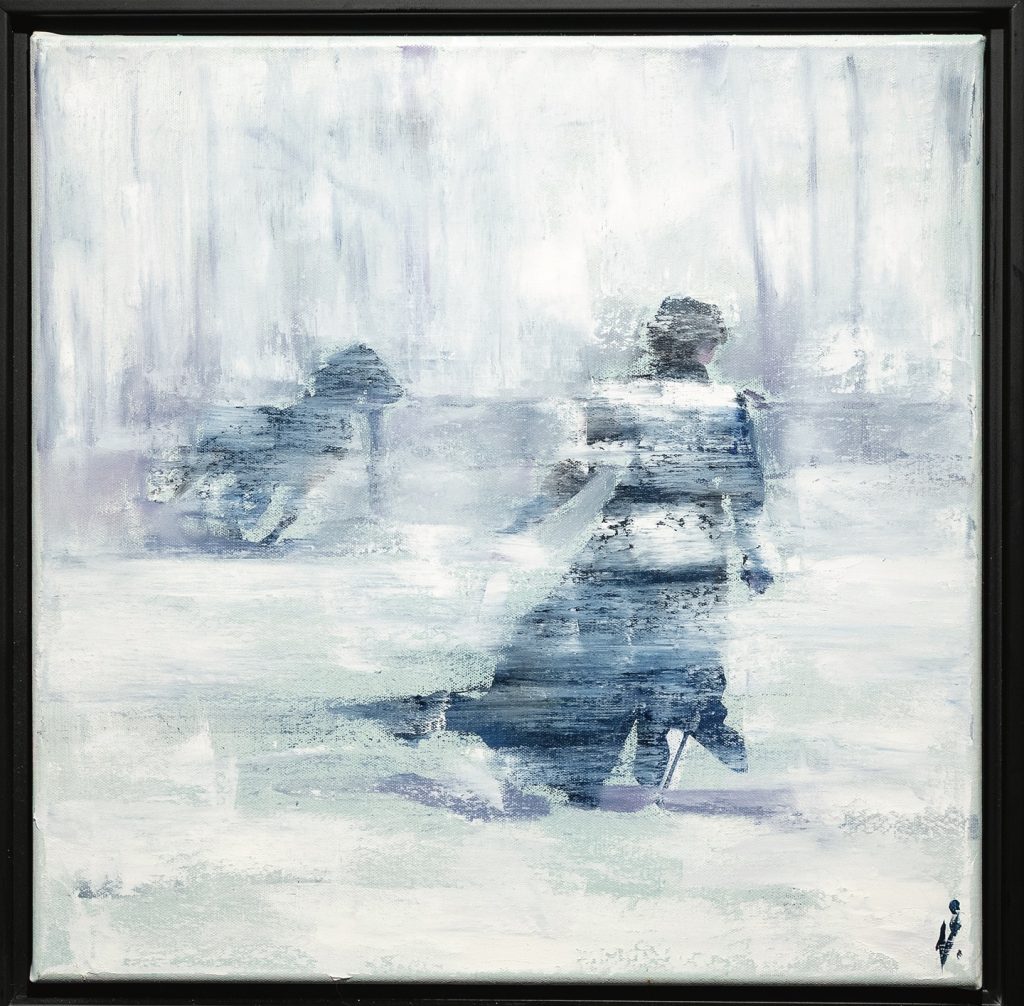
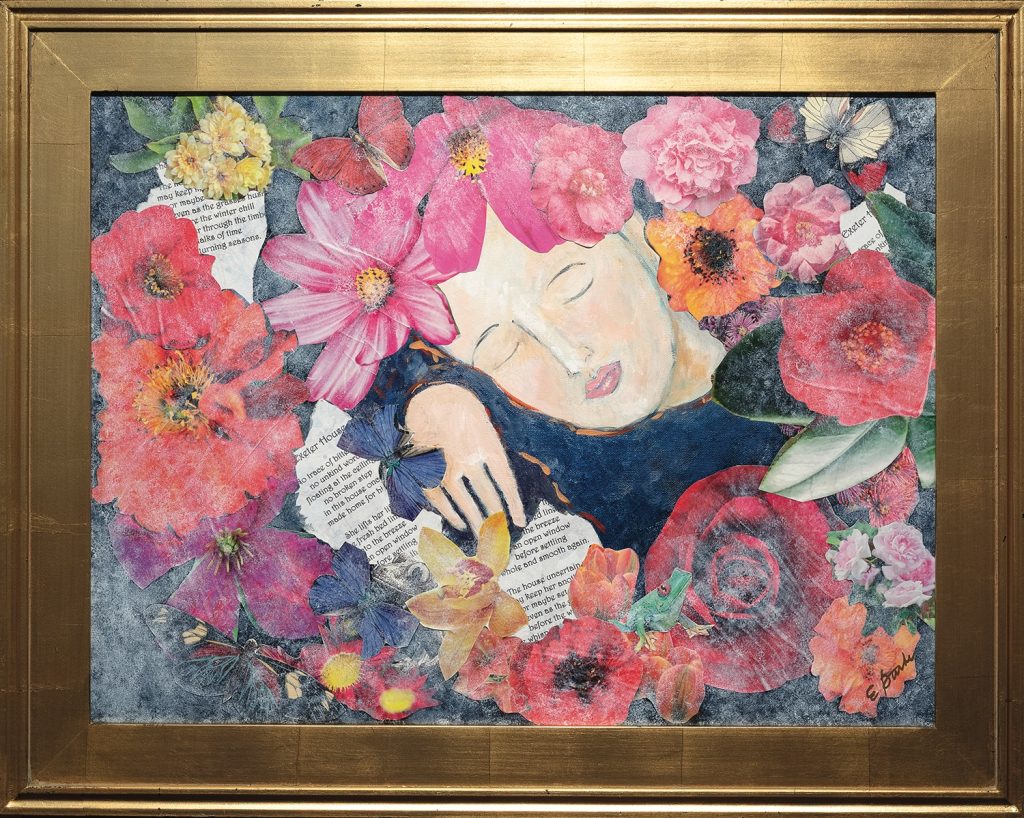
There’s no better time to have the blues than in winter, and the Arts Council of Moore County seconds that emotion with its exhibit “The Winter Blues.” The artworks in the juried show can be viewed at the Campbell House Galleries, 482 E. Connecticut Ave. in Southern Pines, beginning the 9th of January. In total 122 pieces were submitted by 74 artists in media ranging from paintings and glass to ceramics and fiber, and of that number, 95 works by 64 artists were accepted for the show. The art was judged by the ACMC Visual Arts Committee comprised of Kate Curtin, Katherine MacRae, Stuart Fulghum, Paula Montgomery and Nanette Zeller. The pieces will remain on display at the Campbell House until February 11.

We Could Dream This Night Away, Caitlin Gironda
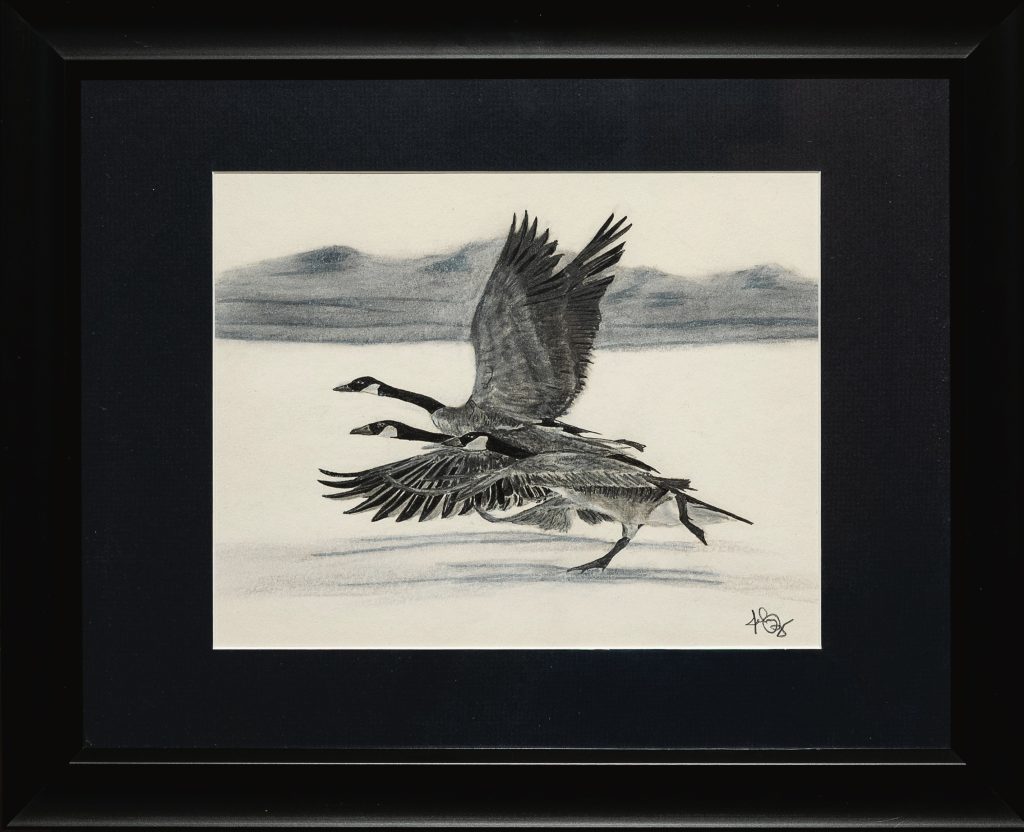
Winter Branches, Leslie Bailey
Deep Blue Ice, Janet Borchardt
Silver Sky, Pat McBride
Northern Lights Totem, Laura Harris
Frosty Night, Jean Smyth
Out of the Blue, Nancy Crossett
The Horse Trainer, Vanessa Grebe
Snow Gums Ablaze, Samantha Stouffer
Icy Blues, Pam Griner
My Winter Dreams Were of The Summer Garden, Ellen Burke
Winter Birch, Jill Hunt
Winding Down, Alicia Crownover
Slovakia in Winter, Mariangela Rinaldi
Winter Calm, Bobbie Britt
Left Bank of Creek Feeding into the Potomac, Susan Beveridge
Waiting, Jordan Baker
Breakfast on Snow, Beth Roy
Winter Birches, Jude Winkley
Taking Flight, John Regan
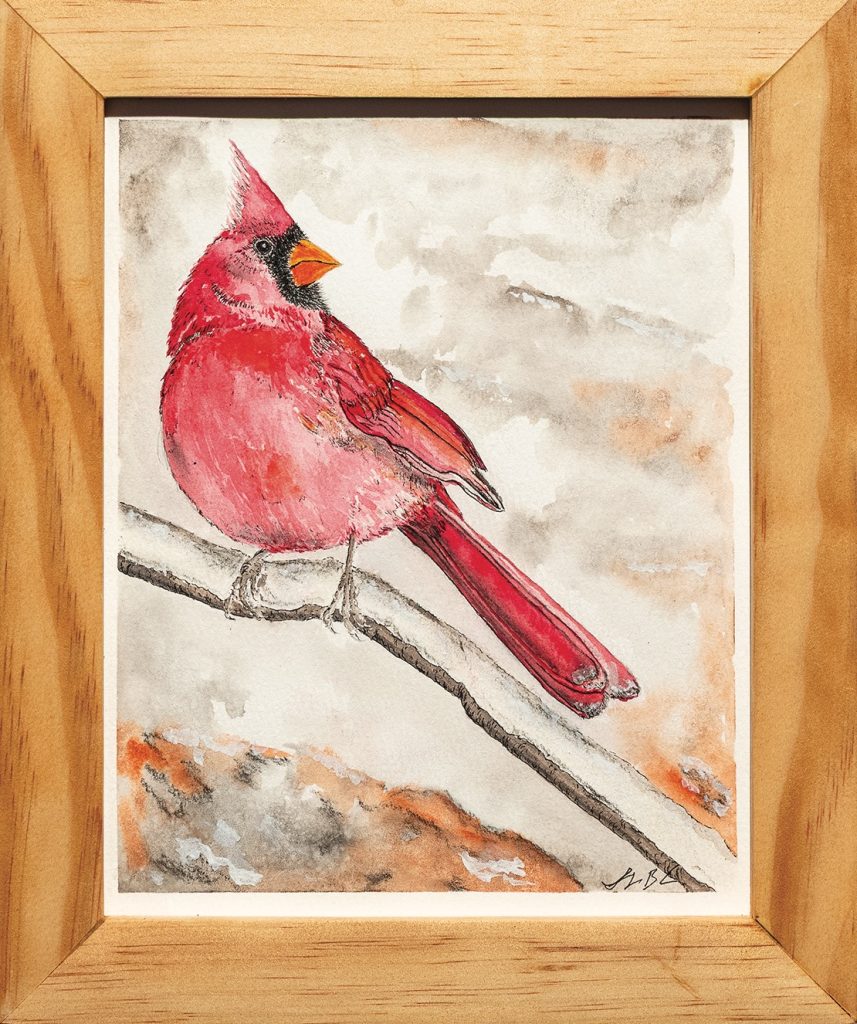
Winter Cardinal, Shawn Bourdon
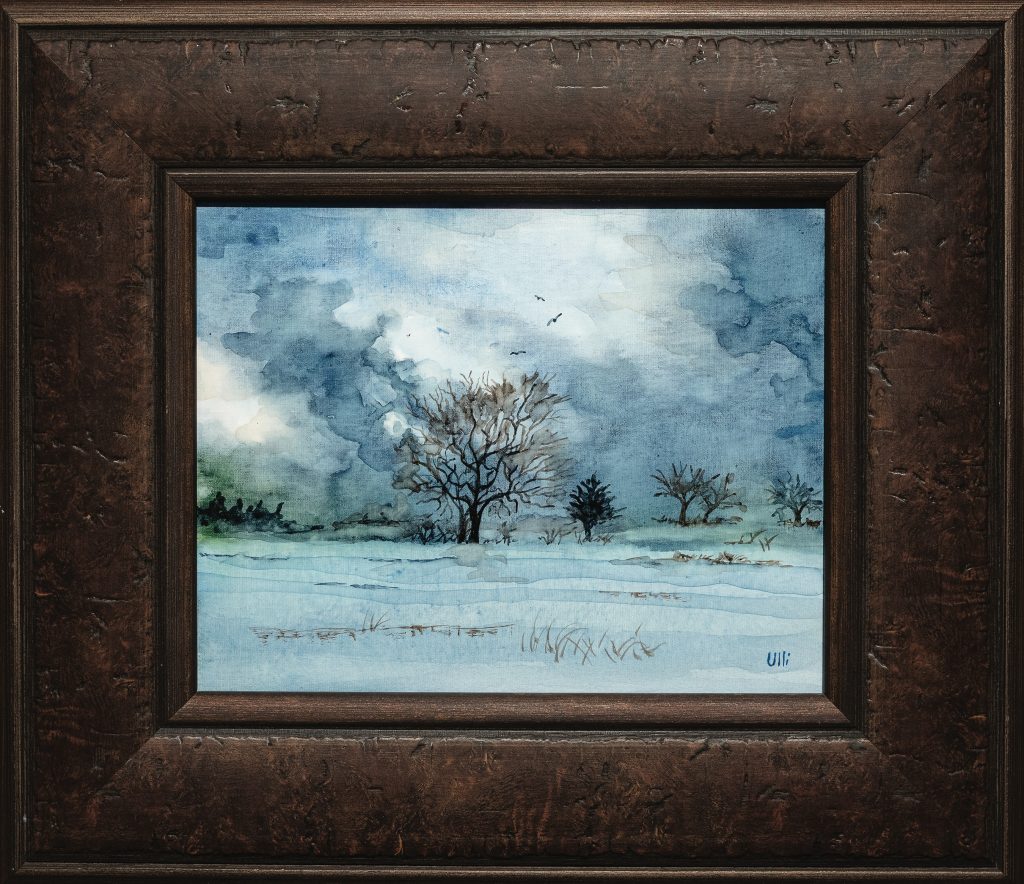
Stormy Weather, Ulli Misegades
Winter Dragon Fly, Dian Moore
Dashing Through the Snow, Susan DeYoung

Out of the Blue

OUT OF THE BLUE

Ode to Snoball

A kitty worth the scratch

By Deborah Salomon

I am a lifelong animal lover/rescuer/advocate. I don’t just donate. I adopt. Since the 1970s I have opened my door and heart to one, two or more hungry, cold, injured, pregnant kitties at a time. Three years ago, when my precious black satin Lucky and fussbudget Missy passed on, I decided it was time to retire. Then, on a frigid January night, a pure white apparition with blue eyes and pink mouth appeared at my door. Her family had moved on, left her behind, I later learned. I opened the door. She crept inside. End — no, beginning — of story.

I named her, obviously, Snoball.

I allow myself just one kitty column a year, in January. The subject is usually behavior. Because cats could not be more fascinating, even when destroying furniture.

Snoball, a princess of incredible beauty, is also a chatterbox: She talks. With inflections that, I imagine, express her opinions on many things, from a big black beetle scurrying across the floor to my reluctance to let her climb into the fridge crisper. Snoball likes lettuce. Even better, she likes chewing the plastic around the lettuce. Maybe cats know their people are polluting the world with plastic. They’re just trying to help.

Other times her chatter sounds like two grannies outbragging each other re: grandkids’ achievements. Snoball plays the lawyer card, which always wins.

I know from experience that two cats are easier, although more expensive, to live with than one. They keep each other busy. Ever noticed how noses twitch silently as they watch stupid commercials on TV? If it’s a “fixed” male-female duo the gal usually calls the shots. Sometimes she develops a fetish. I once had a kitty named Sophie who had a corn fetish. She would attack the grocery bags I brought in, looking for an ear of corn. Woe was me if the supermarket failed in December. I would put the ear on the floor where Sophie covered it, like nesting with kittens. She lost interest when the husks dried up.

Cats are tricky eaters — a problem since their food is so varied and expensive. Instead of canned I usually buy boneless chicken on sale, boil, chop fine and freeze with broth in batches, which I thaw and mix with high-quality kibble. Snoball greets this yummy meal with mixed reactions, which include sniffing, walking away, waiting to see if anything better’s forthcoming before returning to lick-’n’-pick.

But if a meal is late, she lets me know with a dirty look and snide remark. I guess she forgot about being outside, cold and hungry.

Despite a reputation for aloofness, kitties do know how to initiate and return love. Snoball’s signal is the long-handled brush. Brushing puts her in a trance. So does stretching out across my lap for the rubdown, which releases a cloud of white fur requiring a special rake to pry it off the carpet.

When not napping on my sofa or upholstered chairs, Snoball, an inside only kitty, follows the sun around five window perches. Two overlook bird feeders. She chatters the squirrels away, much preferring bird antics, which she follows like a tennis match.

Only once did she attempt an escape . . . in the pouring rain. Lesson learned.

Still unlearned . . . to keep those wicked claws furled. My hands and arms are black and blue with bruises, just from play, of course. But when Snoball wants to play, “no” is not an answer. Her favorite nip is a bare ankle. I bought an expensive hopping toy for distraction. She bestowed a deprecating look and swatted my knee.

But knowing she’ll be at the door when I arrive home, and at my feet when I climb under the covers, is worth a few drops of blood.

Because she’s my Snoball . . . and I love her. 

Sporting Life

SPORTING LIFE

Restoring the Soul

Pausing for a solitary side trip

By Tom Bryant

It’s ironic that three days before Thanksgiving in 2024, a time of celebration and great revelry, I was told that I almost died.

It all started in July of that year. Now I’m pretty much a healthy, in-good-shape guy. Always have been from early childhood to what is often laughingly referred to in today’s society as geezerhood. Played sports in high school and college, joined the Marines in a fit of finding myself. I found myself alright. The Marine Corps taught me in a short time to look after my body. I’ve fished and hunted and camped from Florida to Alaska always in good condition and good humor. I take a multivitamin and a 10-milligram Simvastatin daily, and that’s the extent of my pills.

So what happened? Coming home from the beach one Sunday morning, I noticed a recurring sharp pain in my lower abdomen. It went away and I thought no more about it. I had my annual physical coming up in a week or so, and I figured I’d tell the doctor about it then.

After several tests, my local physician referred me to the urology department at First Health. The results from an exploratory surgical operation weren’t that good. Linda, my bride, was there with me in the recovery room and she told me tearfully that I had cancer.

There. Those three magic words that will turn anyone’s world upside down. “You Have Cancer.”

I remember I was kind of dopey recovering from the anesthesia, and the first thing that entered my mind was, “This is gonna play hell with early fall fishing.”

Later, as the reality of the situation began to sink in, I was upset that not only was I in for a bad time, but Linda was going to have to suffer with me. I remembered some of the stages that a new cancer patient goes through: fear, anxiety, sadness, anger. Sure, I had some of those feelings but I made up my mind that just like many other adventures in my life, I was gonna consider this another hazardous occurrence, a learning experience, and play it to the hilt.

The folks at First Health referred me to the specialists at Duke, and I was off and running. Linda and I made appointments to meet with the recommended oncologist and surgeon bright and early on a Tuesday morning in August. I remember the day because we cancelled a beach trip scheduled for that week.

The people at Duke have a cancer center bigger than any health facility I’ve ever been in. The entire building, all five floors, is dedicated to cancer patients, and from the valet folks who park your car to the individuals in charge of information who point you in the right direction, we never felt out of place.

We met with the oncologist first, and she laid out a program of chemotherapy, about two months’ worth, that would take place before the surgery. We then met with the surgeon who explained the procedure and what I could expect during the recovery period. When I asked what would happen if I decided to let nature take its course, he simply replied, “You’ll have about nine months.”

We made arrangements and appointments, going along with all the recommendations from the experts, collected our car from valet parking and headed home.

“We’ve got a couple weeks before the chemo stuff starts. What say we go to the beach?” I asked Linda as I dodged in and out of the breakneck drivers who seem to hang around the high-speed highways.
“I vote for that,” she replied. I could tell that our recent experience with the doctors was a lot for her to take in. Me too.

The beach was wonderful. I didn’t even carry fishing equipment, and we left the little Airstream at home. All we did was hang out, reminisce about old times, and enjoy good seafood. We stayed at one of our favorite hotels right on the beach. We talked and talked and talked. Always in the back of our minds was the upcoming ordeal and the best way to handle it.

My brother had passed away two years before from lung cancer, so we were not entering our upcoming travail totally unprepared. We knew what could happen.

Our son, Tommy, was constantly in touch, not wanting to be too far from all the decisions. By now, the word was out about my health situation and the phone started ringing off the hook — not my phone, mostly Linda’s. Family and friends wanted to know what they could do to help. I was amazed at all the good wishes that came in from friends everywhere.
In September our ordeal began. Although I didn’t have a lot of side effects, chemotherapy exhausted me. I didn’t lose all my hair but I did lose a lot of weight. The folks at Duke were amazing. Never have I met such caring people.

I had to bail from chemo right before the last infusion. It seems that the chemicals in the stuff not only kill cancer but can also destroy hearing. The oncologist said enough’s enough. The surgery was in about two weeks.

The next day I decided to ride out to the old tobacco farm that my good friend Joe Rosy owns. He lets me have access to the farm to bird hunt. The part of the land I use is about 150 acres located close to Drowning Creek. It’s where I go to restore my soul and remember what living is all about.

Usually I’ll park the Cruiser and walk, but with my energy at ebb I rolled down the windows and, at crawl speed, drove around the familiar property. There was the cut in the pines that led to where a used up sawmill once stood. Mackie, my little yellow lab jumped a pair of quail every time we went to the spot. I never did shoot — just seeing them fly was enough.

On the corner of the pine stand that Joe uses to harvest pine straw was a tall longleaf that I would sit under, waiting for the evening flight of dove. I drove on around the harvested soybeans and took the minuscule path that serves as a road between the two barns. At the end of the road, surrounded by pines, is a small field of maybe 10 acres. I got my first turkey there, hunkered down at the tree line. He was a big one, 21 pounds.

I pulled the truck up under a big white oak, took a water bottle from the cooler. I always carry a portable folding chair in the back of the Cruiser, and I decided to sit for a spell. Several years ago, I sat in this same spot on the day I carried Mackie to the vet to have her put down. She was past help, in her old age, hips gone and suffering. The vet said it was time. My dogs have always been family and that special, sad time was locked in my memory. On that day there had been a big red-tailed hawk circling the woods down close to the pond and, as I sat there kicked back, sipping water, I saw a red-tail flying in exactly the same location. Wonder if that’s the same bird, I thought. Naw, too long ago. Could be an offspring though.

In a little while, watching and taking in the peacefulness of the little farm, I became worried that Linda might be concerned, and I decided to head on back home. The big cancer operation was scheduled and our hands would be full.

As I eased out to the main road and got out to close the gate, I could still see the hawk. He was wheeling about, out over the fields now, climbing higher and higher. I watched until he was almost out of sight, then I got in the Cruiser and headed down the road toward home.