Tea Leaf Astrologer

TEA LEAF ASTROLOGER

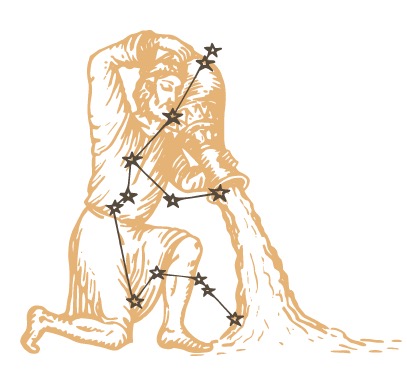
Aquarius

January 20 – February 18

Buckle up, space cadet. The new moon eclipse on February 17 is going to be what the normies call “a moment” — especially for you. Yes, you’re different. We know, we know. But when you’re done trying on hats for the thrill of it, a seismic shift will occur in the quirky little core of your being. Reinvention is no longer performative. It’s the only path forward. Believe it or not, the world is ready for the weirdest version of you. Are you ready?

Tea leaf “fortunes” for the rest of you:

Pisces (February 19 – March 20)

Wear the lacy blue ones.

Aries (March 21 – April 19) 

A little dab will do.

Taurus (April 20 – May 20)

Milk and honey, darling.

Gemini (May 21 – June 20)

Don’t forget the reservations.

Cancer (June 21 – July 22)

Three words: breakfast in bed.

Leo (July 23 – August 22)

You can buy yourself flowers.

Virgo (August 23 – September 22)  

Order the fancy entrée.

Libra (September 23 – October 22)

Just tell them how you feel already.

Scorpio (October 23 – November 21)

Edible is the operative word.

Sagittarius (November 22 – December 21)

Try flirting with a deeper perspective.

Capricorn (December 22 – January 19)

Hint: polka dots.

Golftown Journal

GOLFTOWN JOURNAL

The Scottish Invasion

Planting the roots of golf

By Lee Pace

Golf clubs across America in the early 1900s were frequently governed by fair-complected men who rolled their Rs, said aye and nae and wee, and spoke fondly of The Macallan and a dish from their homeland made of sheep’s innards.

Here in the Sandhills, the memory of Donald Ross, a native of Dornoch on the northeast coast of Scotland, is revered.

Hope Valley Country Club in Durham is 100 years old and has had a member of the Crichton family from Monifieth on its golf shop payroll every single day of its existence. That’s right — some 36,500 days (plus leap years) of paying Marshall and his offspring David and Maggie.

Other early Scotsmen who moved to America to carve a career in the golf business and landed in the Carolinas were Ralph Miner of New Bern Country Club, David Ferguson at Greenville (S.C.) Country Club, and Frank Clark of Asheville Country Club and later Biltmore Forest Country Club.

“You had to listen carefully,” Greenville golfer Heyward Sullivan said of Ferguson. “He talked through a thick burr. He used to say, ‘Laddie, the short game will help your long game, nay the long game will never help the short game.’ He wanted you to practice chipping and putting.” 

Hope Valley member Joe Robb once said of Marshall Crichton, the club’s first pro when it opened with a Ross-designed course in 1926: “A Scotsman replete with a brogue, bandy legs, a caustic tongue and a terrific sense of humor. Marshall’s brogue was so thick that his cuss words often sounded like music.”

One of the most fascinating stories of Scotsmen coming to America was that of the Findlay brothers — Alex and Fred. There were eight boys in the Findlay family of Montrose, and all of them learned to play golf. Alex was the oldest and in 1886 became the first golfer to ever post a 72 in competition. The next winter he left Scotland for America at the behest of fellow Montrose resident Edward Millar, who had established Merchiston Ranch near Fullerton in Nebraska in February 1887.

The so-called “Apple Tree Gang” at St. Andrew’s Golf Club in Yonkers, New York, is roundly credited with playing the first game of golf in America in February 1888. In truth, Alex Findlay had laid out a six-hole course at Merchiston Ranch by April 1887, played it with clubs he brought from Scotland, and sought to spread the virtues of golf in the Wild, Wild West. Some said as the game grew in popularity that he was the “Father of American Golf.”

“The people round about used to come and laugh at us for running after a white ball,” Findlay said in a 1926 interview with the London Evening Standard. “But at length I asked them to have a game and soon afterwards they were all keen to play. Before very long a golf club had been formed and the first steps to making America a golfing country had been taken.”

Meanwhile, Fred moved to Australia in 1909 with his wife in search of a warmer climate for their son, Freddie, who suffered from tuberculosis. Fred soon found work as head pro and course superintendent at Metropolitan Golf Club and stayed there for 14 years. Unfortunately, his son died at a young age despite the advantages of the warmer climate. Findlay’s daughter met a young man from Richmond, Virginia, who had served in the Navy during World War I and traveled to Australia as a merchant seaman.

Ruth Findlay married Raymond “Ben” Loving in 1924. They moved to Richmond and Fred followed them. Findlay knew Australian golfers Joe Kirkwood and Victor East, who had ventured to the States to play golf and give exhibitions, and both spoke highly of the New World and the opportunity for an accomplished golfer. His brother Alex cabled him from America, “Come at once.” 

“I came to Richmond to visit my daughter,” Fred said. “They were talking about building a course there. I loved the game, and I was interested in anything that would make an honest dollar.”

Findlay quickly established himself as a talented golf architect in the mid-Atlantic region. Though his career would not prove as prolific as that of Ross, who is credited with some 385 course designs in the eastern United States, he was “the man” in the state of Virginia, designing some 40 courses.

One of his early works that remains today is the James River Course at the Country Club of Virginia, in Richmond. He took 14 holes from a plan drawn by William Flynn and added four more, and supervised the construction of the course that opened in 1928. The collaboration certainly worked out well, as the James River course was the venue for the 1955 and 1975 U.S. Amateur Championships.

His most revered and solo design opened one year later — Farmington Country Club in Charlottesville. Findlay made his first visit to the site just west of the campus of the University of Virginia in September 1927, and the course opened two years later.

Findlay was given a special piece of ground when a group of Charlottesville business leaders decreed the town should have a sports and social club. The site had been under the purview of 13 owners over nearly two centuries, dating to 1744, when King George II of England conveyed 4,753 acres to Michael Holland of Hanover County. A manor house built in 1785 and expanded in 1803 under plans drawn by President Thomas Jefferson would be refurbished and expanded to serve as the clubhouse.

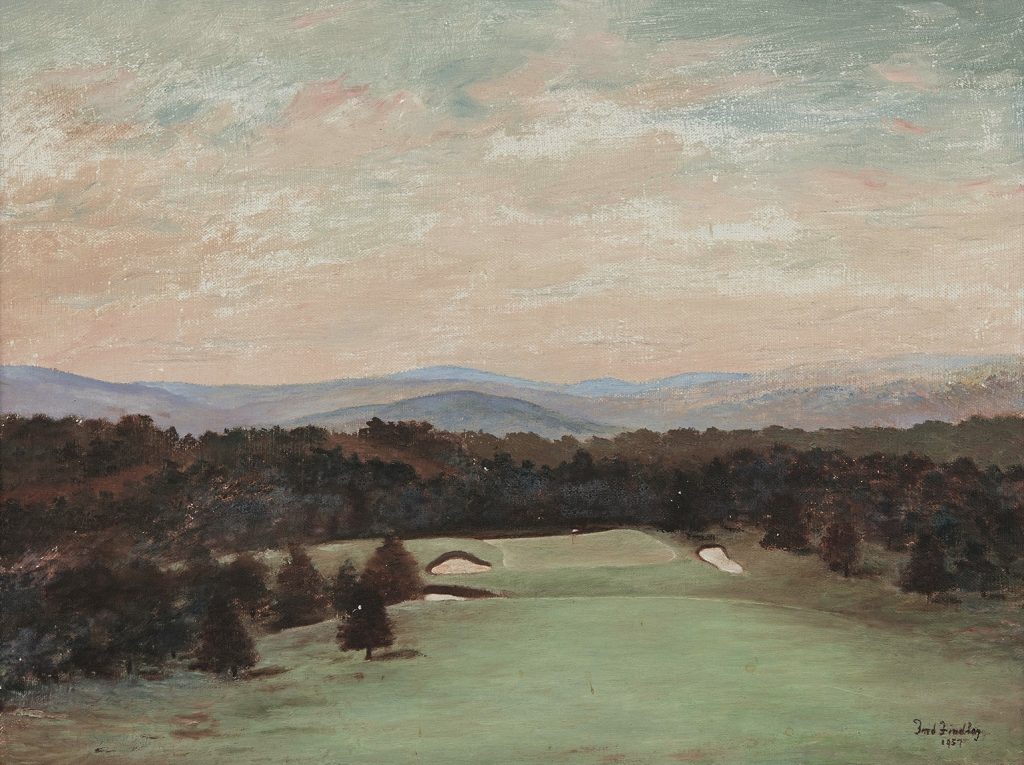
Findlay surveyed the misty mountain range to the north and west that would one day become the Shenandoah National Park. He traversed the slopes and hollows and in his mind pictured the flight of a golf ball cracked from his wooden-shafted mashie, soaring through the crystalline air and across a winding brook. He scanned the hillsides and factored the flow of fairways amid the Scotch broom running rampant.

“I just walk around and commune with nature in her visible forms,” Findlay said of his process. “And then, as if by inspiration alone, it comes to me suddenly, and I see the finished course far more plainly and vividly than if it were charted on cold blueprint paper. It has a character. And then I set out to make it what I have dreamed of — to materialize my vision. Nature herself gives me most of my ideas.”

Loving helped his father-in-law build the course and stayed on for half a century as the club’s general manager. After years living in Richmond, Fred moved back to Charlottesville and spent his later years playing golf, fishing, hunting and painting.

Newspaperman Ross Valentine wrote of Findlay at age 90 in October 1961: “To see Fred Findlay, clear-eyed, lean-muscled and fit as a fiddle on the eve of his 90th birthday, with whipcord and steel wrists hit a golf ball straight down the middle, was inspiring.”

Findlay immersed himself in the idyllic settings of Farmington and the surrounding countryside, capturing many in paintings that hang in the clubhouse today. The Findlay Room is decorated with three scenes from the 1950s and early ’60s — one of the third hole of the golf course and two with pastures, distant mountains and the lakes where he frequently cast a fishing line.

Findlay died on March 9, 1966, at age 94, in a Charlottesville nursing home, where he had recently moved following a period of declining health.

“Aye, Laddie,” the old Scotsman said, “if I had my life to live again, I wouldna’ change one day. The world owes me na’thing. My life has been coupled with nature, and I am sure there is nothing that keeps one closer to God.”

History in the Backyard

HISTORY IN THE BACKYARD

History in the Backyard

Leaving a legacy on Pinehurst No. 2

By Jenna Biter 
Photographs by John Gessner

A couple of years back, Quinn Breuer accompanied her son, Quinton, to a U.S. Kids Golf tournament in Pinehurst. One visit was all it took. “It’s the pine trees. The environment. The people. The village,” Breuer says. She asked her husband, Todd, “Can we retire here?”

Quinn has been a stay-at-home mom, but now her babies are heading out the door. Todd hasn’t retired yet — home base is in Peoria, Arizona — but the Breuers are already preparing for their golden years in the village. The empty nesters purchased a modified Cape Cod a month before the 2024 U.S. Open on Pinehurst’s No. 2 course. “Good timing, you know?” says Quinn. Their backyard abuts the third hole.

The 5,240-square-foot, five-bedroom, pass-it-down-to-the-kids legacy house lounges on a half-acre plot that sidles up to No. 2’s wiregrass. “It’s location. It’s history. It’s unique,” she says.

The house on Midland Road was built in 2005. “It’s only two doors down from the Donald Ross house,” she says, referring to Dornoch Cottage, the home that was built by and belonged to the Scottish golf architect and mastermind of No. 2.  “When you walk into the backyard, it’s the flowers and the golf course and the pine trees. We don’t have trees in Arizona. We have desert.”

The couple initially purchased land on Linden Road and were finalizing plans for new construction. Todd surveyed the property on a visit. He longed for a better view, preferably a golf course. Father and son both enjoy the game. Quinton is 19 years old and plays on the golf team at South Mountain Community College, in Arizona.

The Breuers wanted something different than the lot they had. They lined up a Hail Mary and asked their Realtor to notify them if any houses on No. 2 came onto the market.
“A week and a half later, we got the call,” Quinn says, still in disbelief. “About a month later, we owned the house.”

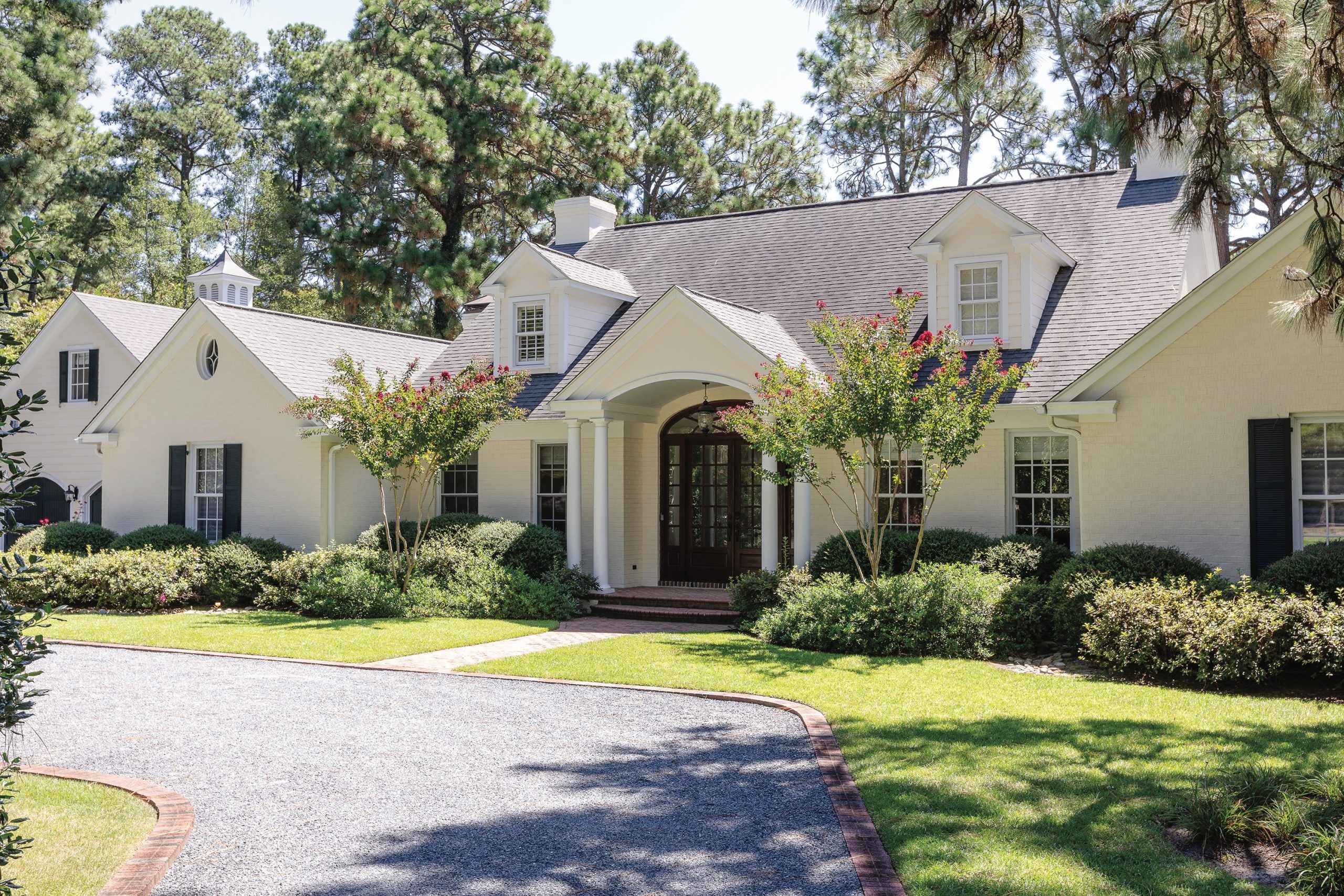
The exterior is classic Pinehurst. The Breuers liked the village vibe and kept it that way. Its painted brick is a warm Southern cream; crape myrtles flank the front portico; and a wing sweeps out to each side. The left side extends further than the right, ending in a cupola-topped, two-car garage that connects to the house via breezeway.

Interior remodeling began right away. “We wanted it to be warm and traditional and modern at the same time,” says Breuer. Constrained by only a short list of musts and must-nots (a sectional in the family room, substantial bookcases in the study, no window treatments obstructing the golf course view), interior designer Angela Budd of Angela Douglas Interiors had enough creative wiggle room to run.

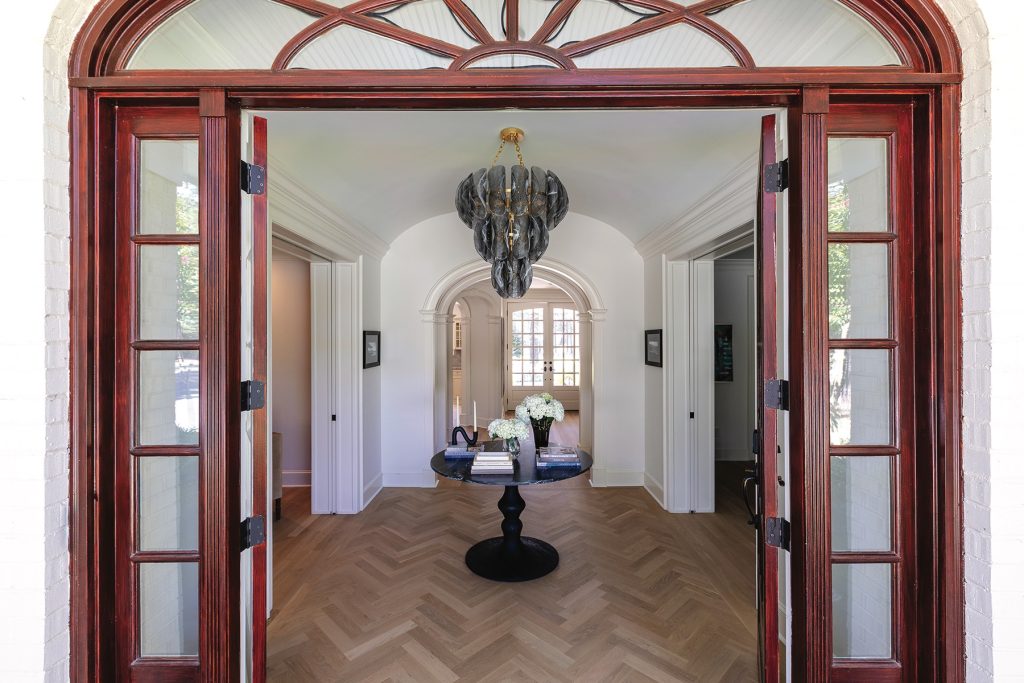
Quinn didn’t love the cherrywood floors — “too red,” she says — but they could be replaced more easily than a place on No. 2 could be found. The old floors came out and new ones went in. Just inside the front door, the white oak planks piece together in a herringbone pattern. A blown-glass chandelier counterbalances the floor and draws the eye upward. Attention fixes straight ahead on a black entry table that pops against the clean, white walls.

Like a roundabout, the table’s circular top whirls guests around the foyer, spinning them off into the rest of the home. To the left is Todd’s study. A drip painting print in the style of Jackson Pollock hangs on a wall. Pop art lips rendered by the Breuers’ daughter decorate another. Kiana, now 20, made the artwork for her dad when she was a kid. “I always think the best homes are personal,” says Budd. “They feel collected.”

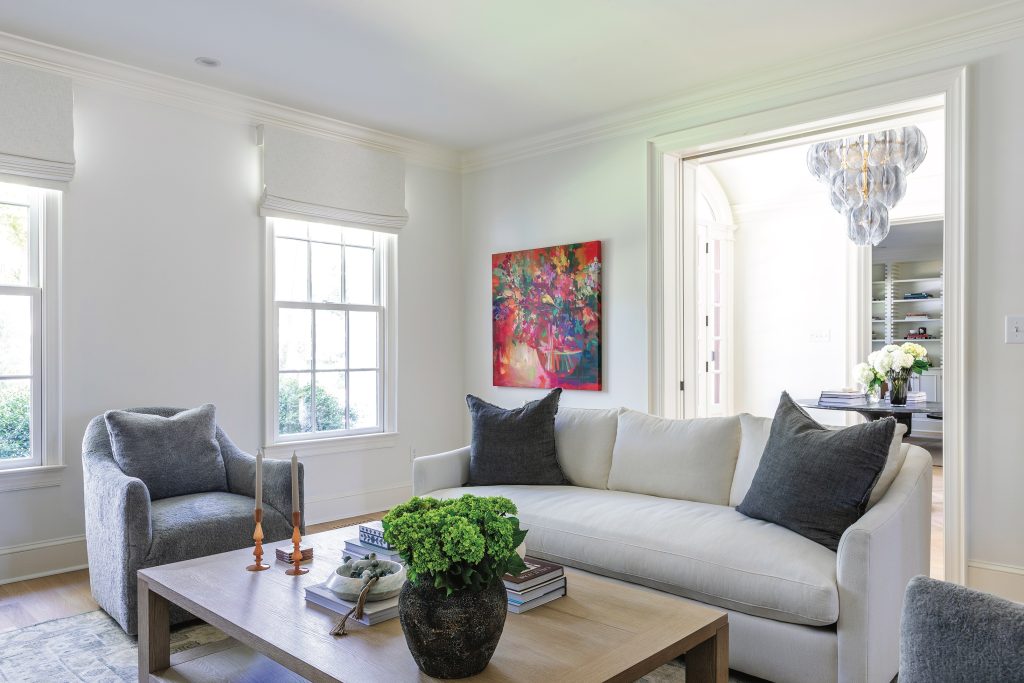
Opposite the study is the formal living room. A marble surround frames the gas fireplace, and shearling swivel chairs sit in conversation with a white couch. One room removed, closer to the back of the house, guests can find the dining room drenched in a dramatic blue called Gray’s Harbor. “It’s not all blue, and I don’t do navy because it feels too nautical,” Budd says, “but this color is a nice blend between moody and elevated.” A pair of panel-ready, Sub-Zero refrigerators keep the Breuers’ wine. A bar between them doubles as a buffet for dinners when the kids are home.

“It’s a family space,” says Quinn.

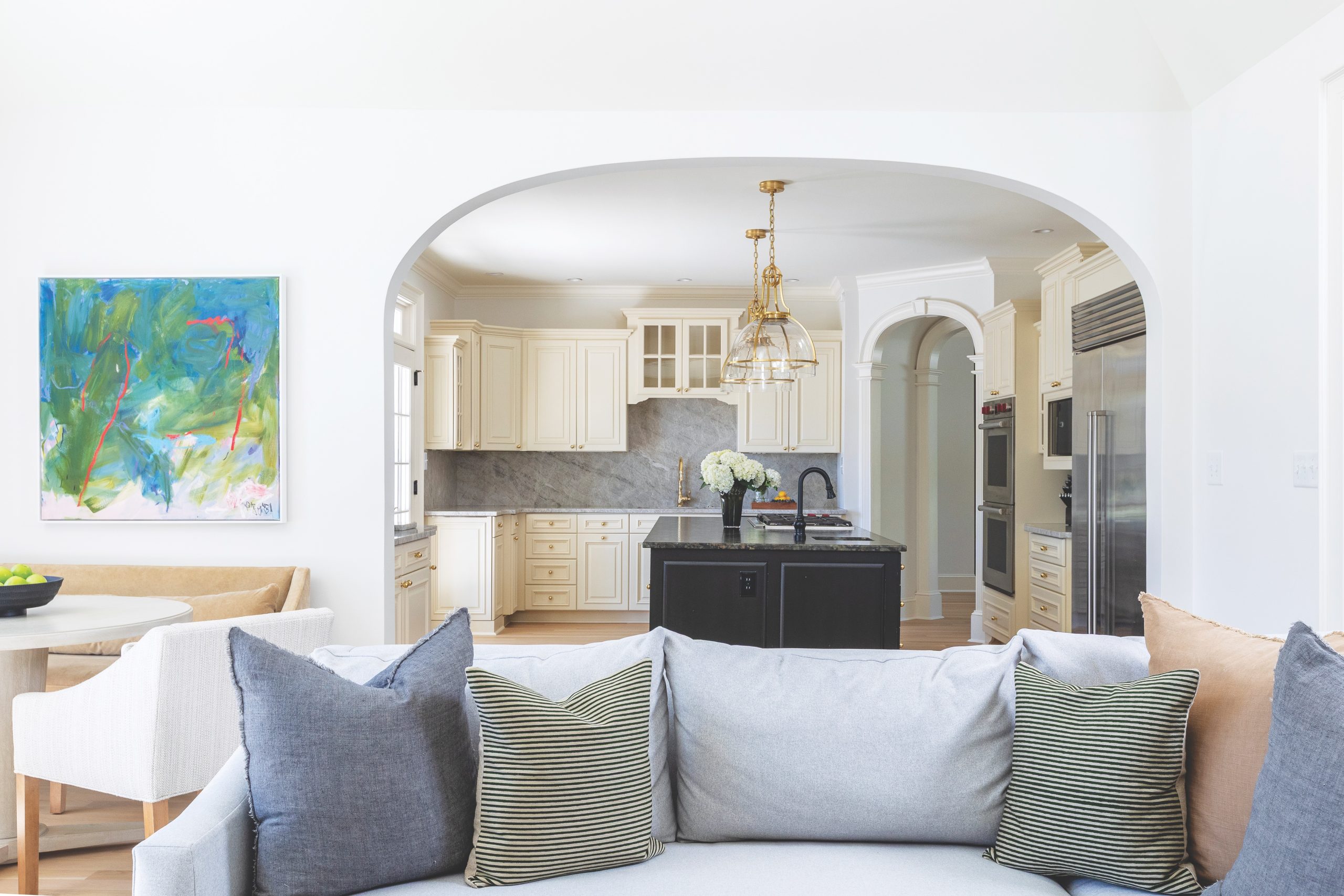
The kitchen, across the hallway, underwent a light refresh. In the family room, Budd added a corner banquette for chatting, sipping and informal eating. The L-shaped sectional occupies the rest of the room.

“The house is just very . . . to me, it’s so warm, and it fits with their personality,” says Budd.

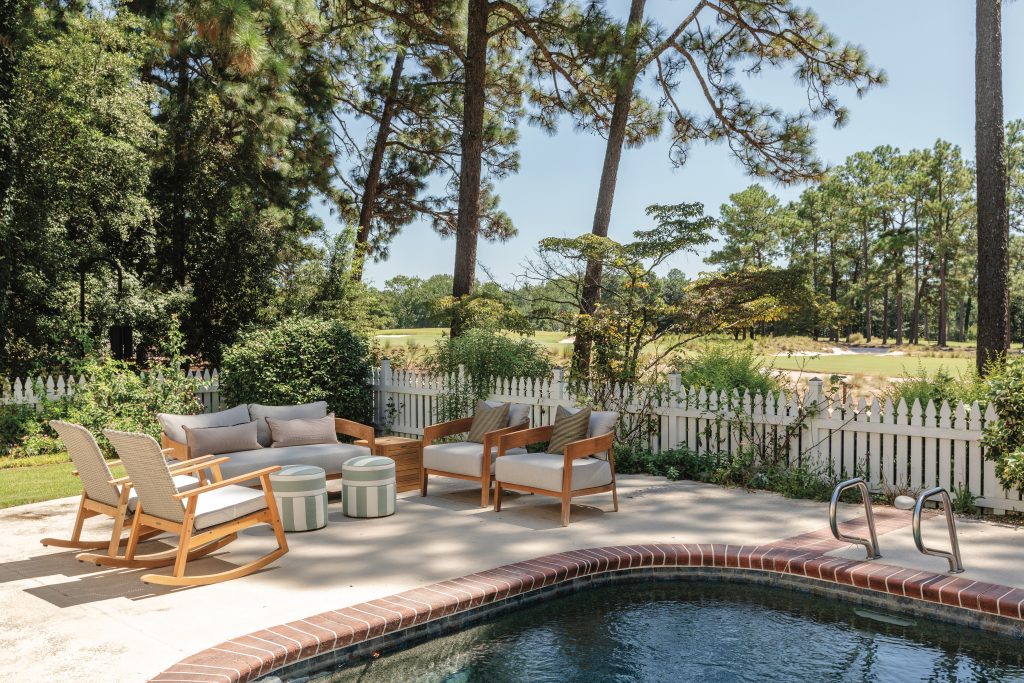
The master is on the first floor. It’s beige and green, clean-lined but cozy. The kids each have an ensuite on the second floor. French doors open onto a shared balcony that overlooks the brick-edged pool and outdoor seating, lush flowers trailing over the white picket fence, and the pinch-me-I’m-dreaming view of the fairway beyond.

“We want to hand it down to the kids, and the kids to their kids,” Breuer says. “We still can’t believe we own the house.”

Home Away From Home

HOME AWAY FROM HOME

Home Away From Home

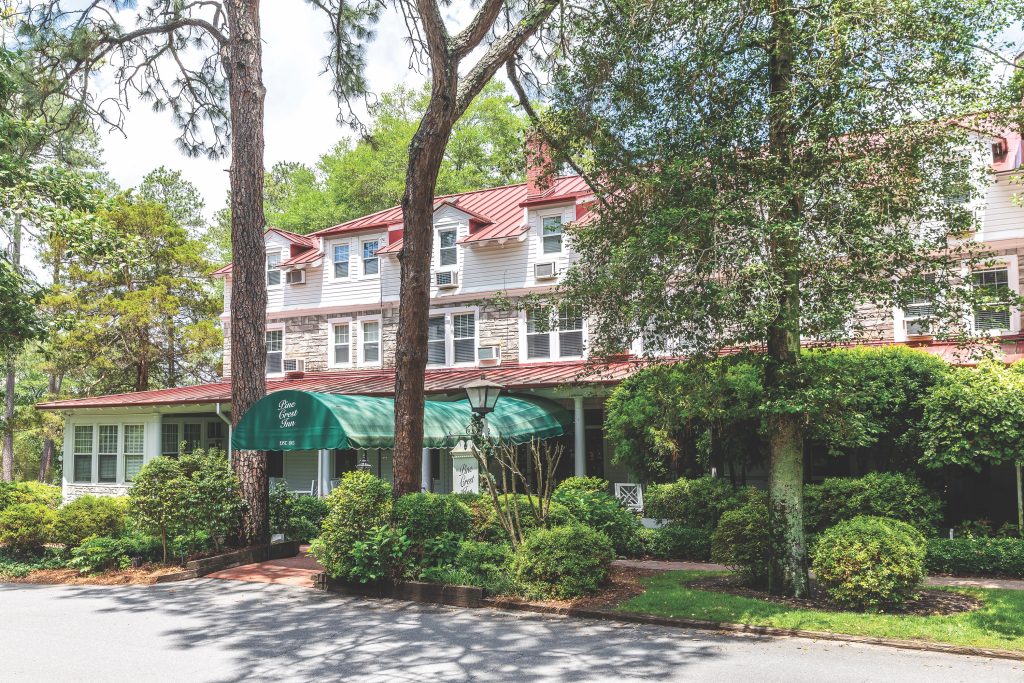
The legend and allure of the Pine Crest

By Bill Case

It’s March 1961. You’re 45 and a lifelong resident of Erie, Pennsylvania, where you’re slogan the respected managing editor of the local newspaper, the Erie Daily Times. You’ve worked at the paper for 20 years and been its editor for five. You have an excellent relationship with the paper’s owner. The job is yours as long as you want it. And you love it.

Your wife, Betty, comes from a prominent Erie family. Her father, Charles A. Dailey Sr., owned and operated Dailey’s Chevrolet from 1925 until his death in 1958, when Betty’s brother, Charles “Chuck” Dailey Jr., took over. The Dailey family has been among Erie’s foremost philanthropists. And your kids  — Bobby, age 9, and Peter, age 5 — are happy in Erie.

Bob and Betty Barrett seemed the unlikeliest of couples to pull up stakes and seek a new life. While Bob was making a good living at the hometown paper, he wanted to own his own business. He discussed the possibility of partnering with Betty’s father in a second auto dealership in Erie, but that trial balloon blew away with Charles Sr.’s death. His passing did, however, result in a significant bequest to daughter Betty. With this nest egg and additional assistance from Betty’s mother, Elizabeth Dailey, the Barretts began looking for investment opportunities. But where?

“My dad had contracted pneumonia and worried he might not live long if he stayed where he was,” says Bobby Barrett, now 74. “He thought he stood a better chance of a long life if the family moved south. The Barretts and Daileys made regular golf trips to the Sandhills after my dad started playing in his mid-’30s. He fell in love with Pinehurst.”

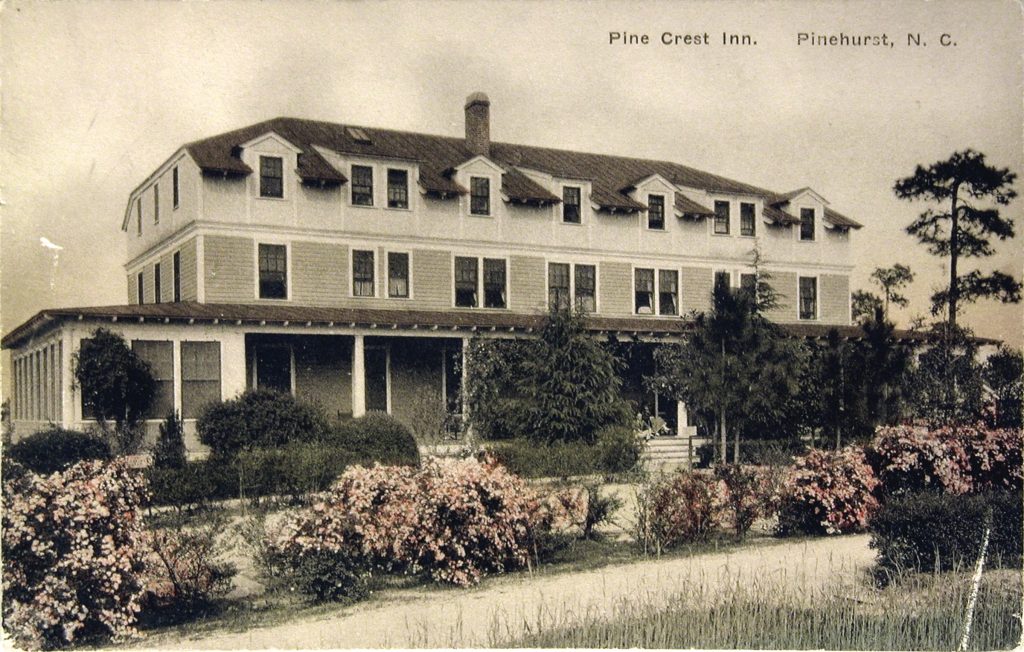
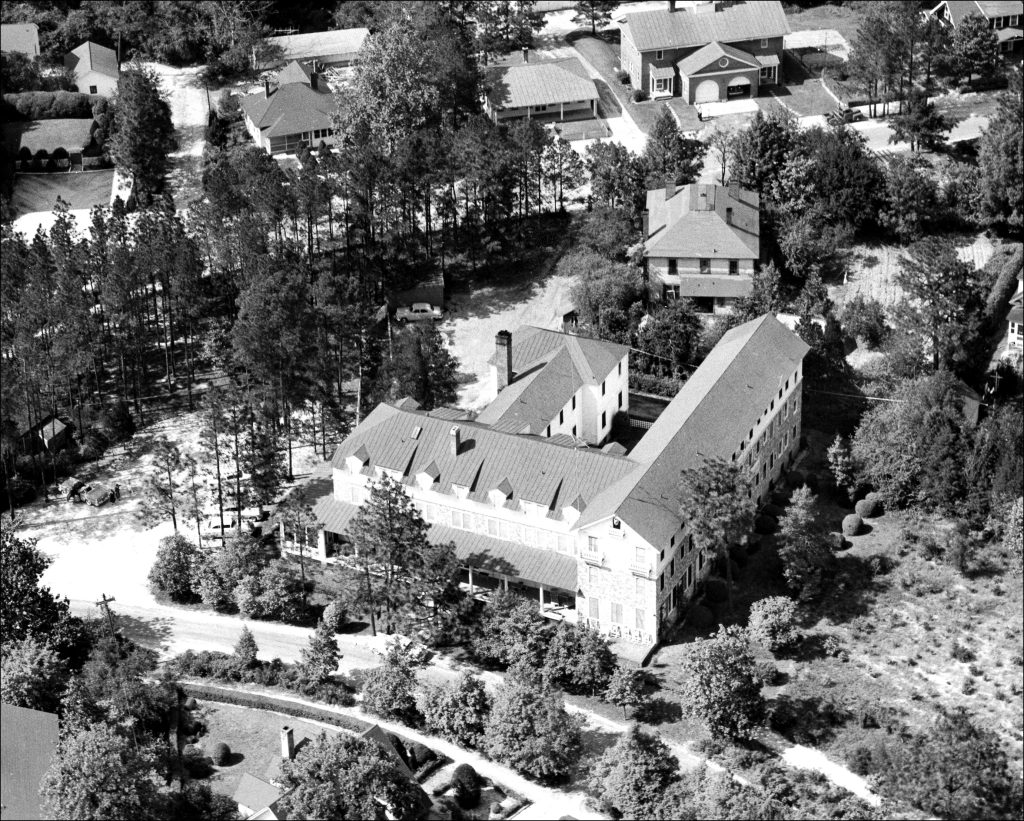
While walking down Dogwood Road during a March ’61 vacation, Bob happened to encounter Carl Moser, then owner of the Pine Crest, sweeping the inn’s front steps. The men struck up a conversation in which Moser indicated he would consider selling if the price was right. Bob and Betty began mulling over the idea of making an offer. While the Pine Crest was no luxury hotel, the Barretts knew that many golfers weren’t interested in cushy surroundings. The inn’s 44 modestly sized rooms provided a homey, affordable alternative to the upscale lodgings at the Carolina Hotel and Holly Inn. And it was a going concern. The Pine Crest boasted a solid base of recurring guests, migrating golfers who returned like swallows year after year. Some had been doing it for as long as the inn had been in existence, 48 years.

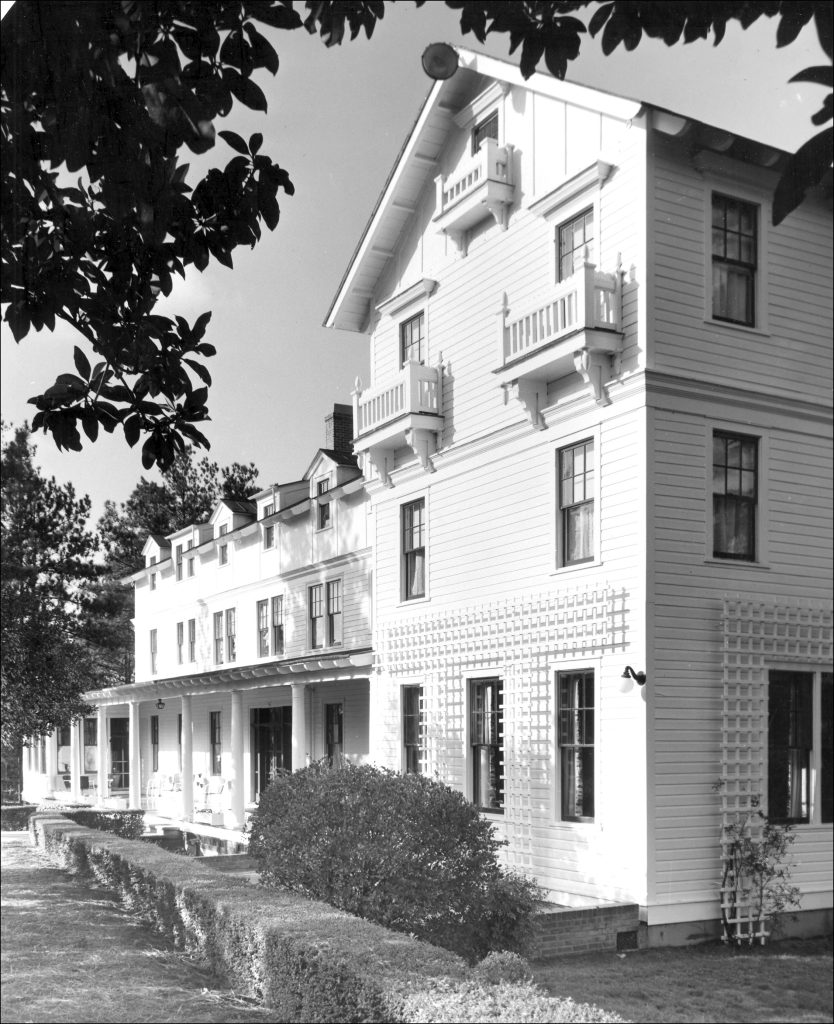
Built in 1913, the hotel was the creation of enterprising innkeeper Emma Bliss. A New Hampshire native, Bliss had spent the previous nine years (1903 to 1912 ) managing The Lexington Hotel — where The Manor is today — which primarily served as a boarding house for resort employees. Leonard Tufts, who controlled most business activity in Pinehurst, hired Bliss after being impressed with her surehanded management of a Bethlehem, New Hampshire, inn.

Bliss shuttled back and forth with the seasons between managing The Lexington and her inn in Bethlehem. Possessing an entrepreneurial spirit of her own, she aspired to own a hotel herself, not just manage one. In January 1913, Tufts sold Bliss property on Dogwood Road, adjacent to the Lexington. By year end, she had erected and opened the Pine Crest Inn.

The Pinehurst Outlook hailed the inn’s arrival as a “delightful addition to the list of hotels; its comfort is suggested by the charm of its exterior . . . Modern in every particular, it provides several suites with private bath; radiant with fresh air; sunshine, good cheer, and ‘hominess’.”

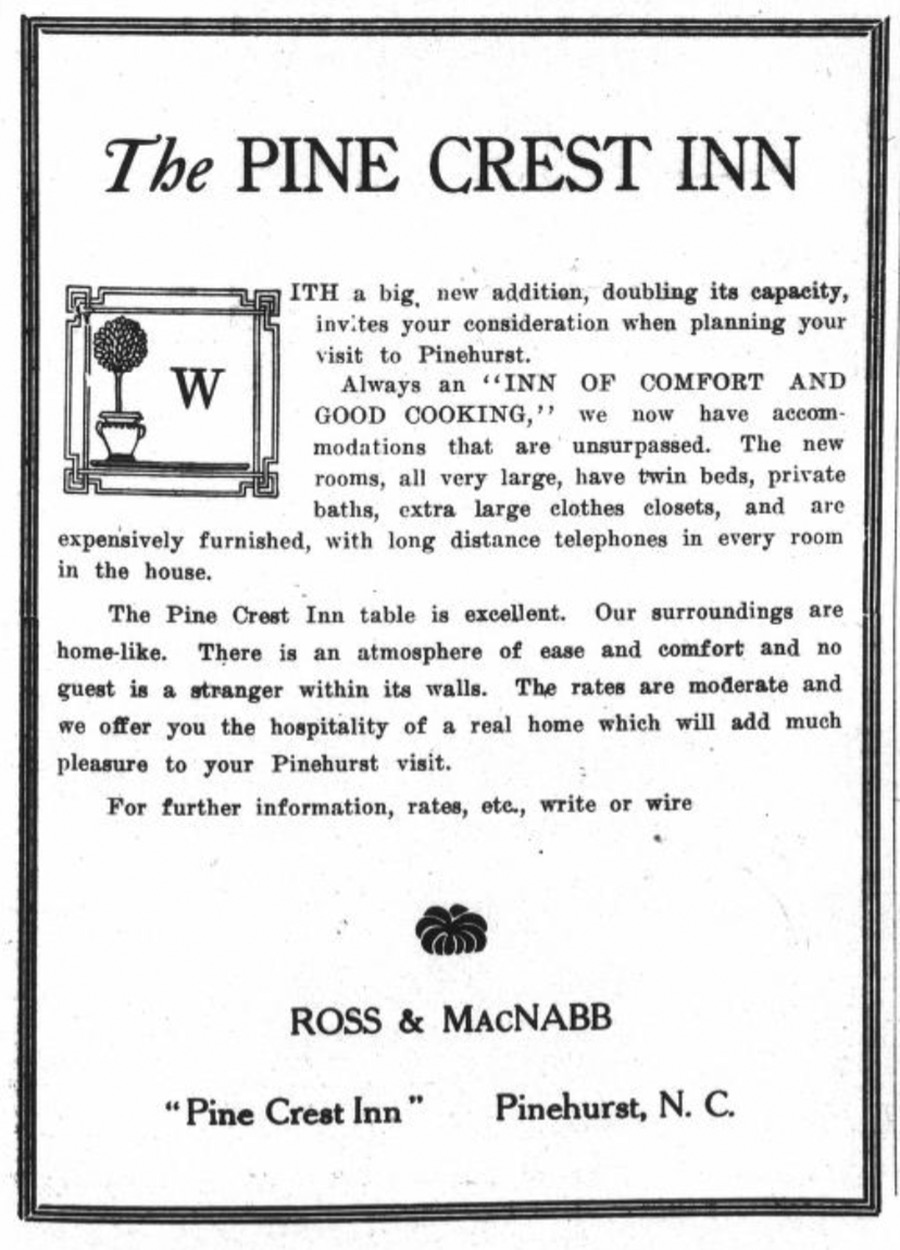
Bliss operated the Pine Crest for seven years before selling it in April 1920 to Donald Ross and his fellow Scot expatriate W. James MacNab for $52,500. Ross, Pinehurst’s patron saint, was hitting his stride in the golf course architecture business and supplied the money for the purchase. MacNab managed the inn.

Instead of simply returning to run The Lexington, Bliss bought that property and tore down the old hotel. In its footprint, she erected a new lodging house — The Manor, a far more upscale house than its predecessor. Neither Tufts nor Ross seemed to begrudge Emma’s maneuvering, and Bliss owned and operated The Manor until her death in 1936.

To keep pace, Ross financed several improvements at the Pine Crest. He summarized them in correspondence with a prospective buyer in 1939: “Ever since I purchased the property, I have put back every cent earned and also some additional cash in the furnishing and maintenance of it. . . . Among the improvements I made are a telephone in every room and a Grinnell fireproofing system.” Ross dropped an additional $35,000 adding the inn’s east wing.

The Ross era at the inn began winding down after MacNab died in 1942. Aging himself, Ross chose to sell the inn in 1944 to the Arthur L. Roberts Hotel Company for $65,000. The company operated hotels in Florida, Minnesota and Indiana. The company’s founder, Arthur L. Roberts, arranged for title to the Pine Crest’s property to be placed in his individual name.

In September 1950, Carl Moser came to Pinehurst to manage the Pine Crest. Moser had extensive experience in hotel management and customer service. In 1941, the native New Yorker managed the Officers Club at Fort Bragg while serving in the Army Reserve. He had subsequent stints managing hotels in Greensboro (the Sedgefield Inn), Charlotte (Selwyn Hotel) and Stamford, Connecticut.

Along with his wife, Jean, the Mosers chose to live in the Pine Crest, occupying rooms 6, 8 and 10 on the first floor. Daughter Carlean joined her parents in these cozy quarters following her birth in May 1953. Arthur L. Roberts passed away in October 1952, and the trustees of his eponymously named company began liquidating its portfolio of hotels. In June 1953, Carl and Jean Moser entered into a land contract with Roberts Hotels to buy the Pine Crest Inn for $65,000 — $12,000 down and the balance paid over time.

By virtue of the deed records, Roberts’ heirs thought they owned the property, not the company. If they were right, neither Roberts Hotels nor the Mosers had any cognizable interest in the property. To resolve the issue, litigation was instituted in Moore County in September 1953. After hearing evidence, a local jury determined that (1) Roberts was acting in his capacity “as president and agent” of Roberts Hotel in effecting the 1944 purchase from Ross and MacNab; (2) it was Roberts Hotels, not Arthur Roberts individually, that paid the $65,000 purchase price; and (3) Roberts Hotels was not “under any duty to provide for the said Arthur L. Roberts in purchasing said property.”

Roberts Hotels was declared the inn’s rightful owner. Carl and Jean Moser breathed a sigh of relief; they had been dealing with the right party after all. And if in the future they wanted to sell the inn, they could do so.

Eight years later, the Mosers were ready to entertain offers, but according to daughter Carlean, her parents did not initially consider the Barretts serious prospects. After the sidewalk chat between Bob and Carl, there was no immediate follow-up. Not long afterward, however, representatives of the Barretts — probably Betty and her brother Chuck, who had experience in evaluating businesses — came to inspect the premises. Negotiations heated up, and in May 1961, the Barretts agreed to buy the Pine Crest for $125,000.

Since the Dailey side of the family was providing the capital, it was determined Betty would hold title to the property.

Unlike Carl and Jean, the Barretts chose not to reside in the Pine Crest. They bought Chatham Cottage (now Barrett Cottage) across Dogwood Road and made it the family’s home. Over the summer, Bob moved his wife and children to Pinehurst, took a crash course in hotel management, and announced a fall reopening date of October 12, 1961.

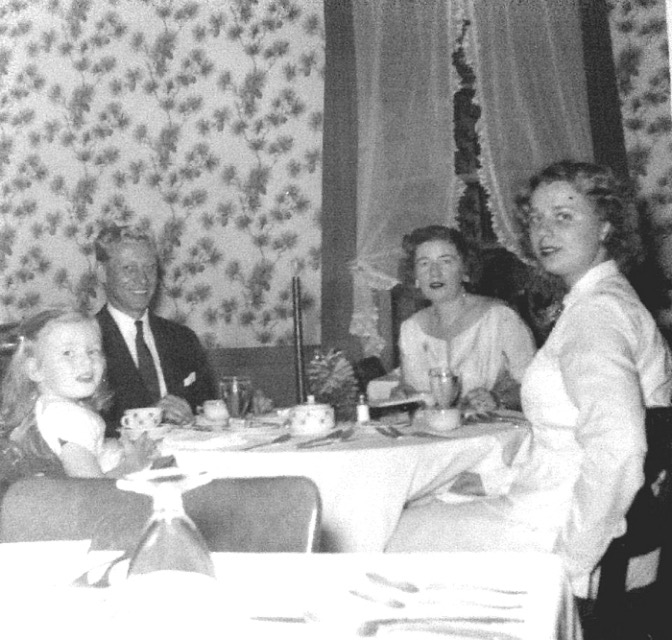
Eight-year-old Carlean Moser was heartsick to be departing the inn. “My dad broached the subject by asking whether I thought it would be fun for us to live in our own house,” recalls Moser, now 74 and living in Washington, Georgia. “I said it wouldn’t be fun if it meant I had to make my own bed or couldn’t order off a menu like I could always do at the inn.”

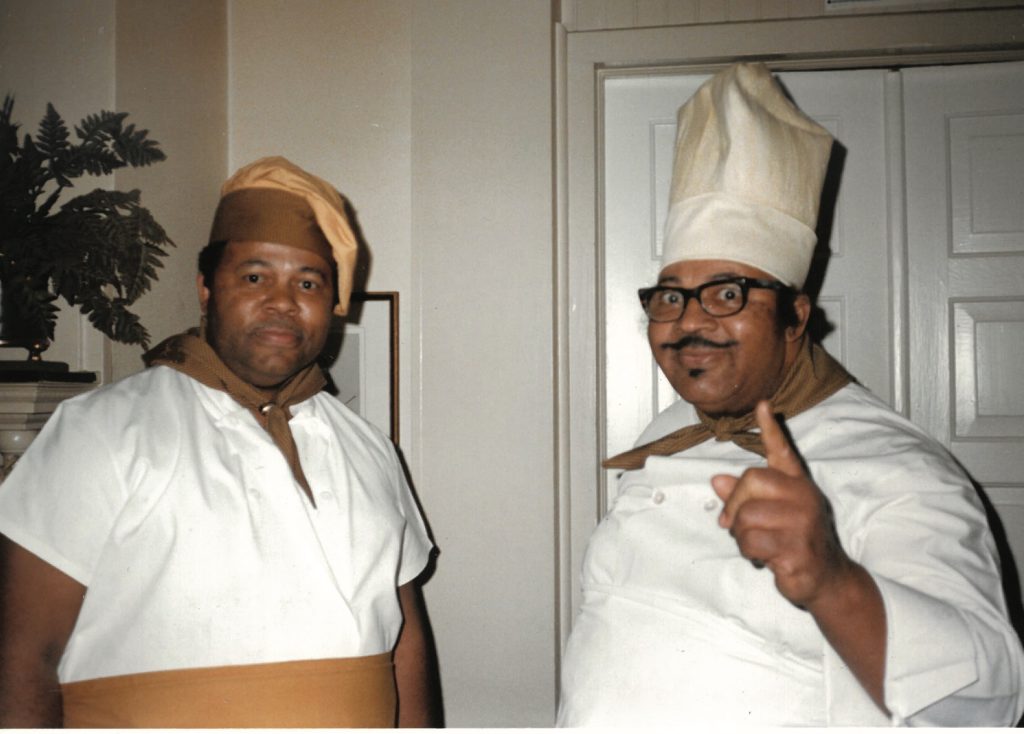
To Carlean the Pine Crest’s employees were like family. Some doubled as playmates. Carl Jackson, the inn’s head chef since the Donald Ross days, was a special favorite. The burly African American would spot Carlean entering the kitchen and commence beating the pots and pans hanging over the counter. The cacophonous clanging delighted the little girl. “I nicknamed Carl “Boom-Boom,” says Moser. “He was kind and fun.”

She played with guests too. At age 6, she sat on the lap of 19-year-old lodger Jack Nicklaus, in town for the 1959 North and South Amateur (which he won). ”We sat in the lobby watching the Mickey Mouse Club on television, and I wore my mouse ears,” says Moser. “Jack was very shy then. As long as I was on his lap, no one was going to bother him.” (Nicklaus bunked in room 205 in ’59; 26 years later, son Jack Jr. also roomed in 205 while winning his own North and South title).

The inevitable pitfalls of Barrett’s unlikely career switch presented the sort of scenario reminiscent of the 1980s comedy Newhart, the long-running television show about a New York City-based author of travel books, played by Bob Newhart, who abandons his former life to operate a 200 year-old Vermont inn.

In contrast to Newhart’s neighbors — Larry, Darryl and his other brother Darryl — a coterie of dedicated employees kept Barrett on track. Foremost was Jackson, who proved to be the ultimate lifer, remaining the inn’s chef until 1997, a full 61 years of employment. Starting in 1936 as “the pot washer” in the kitchen, Jackson began preparing meals about five years later.

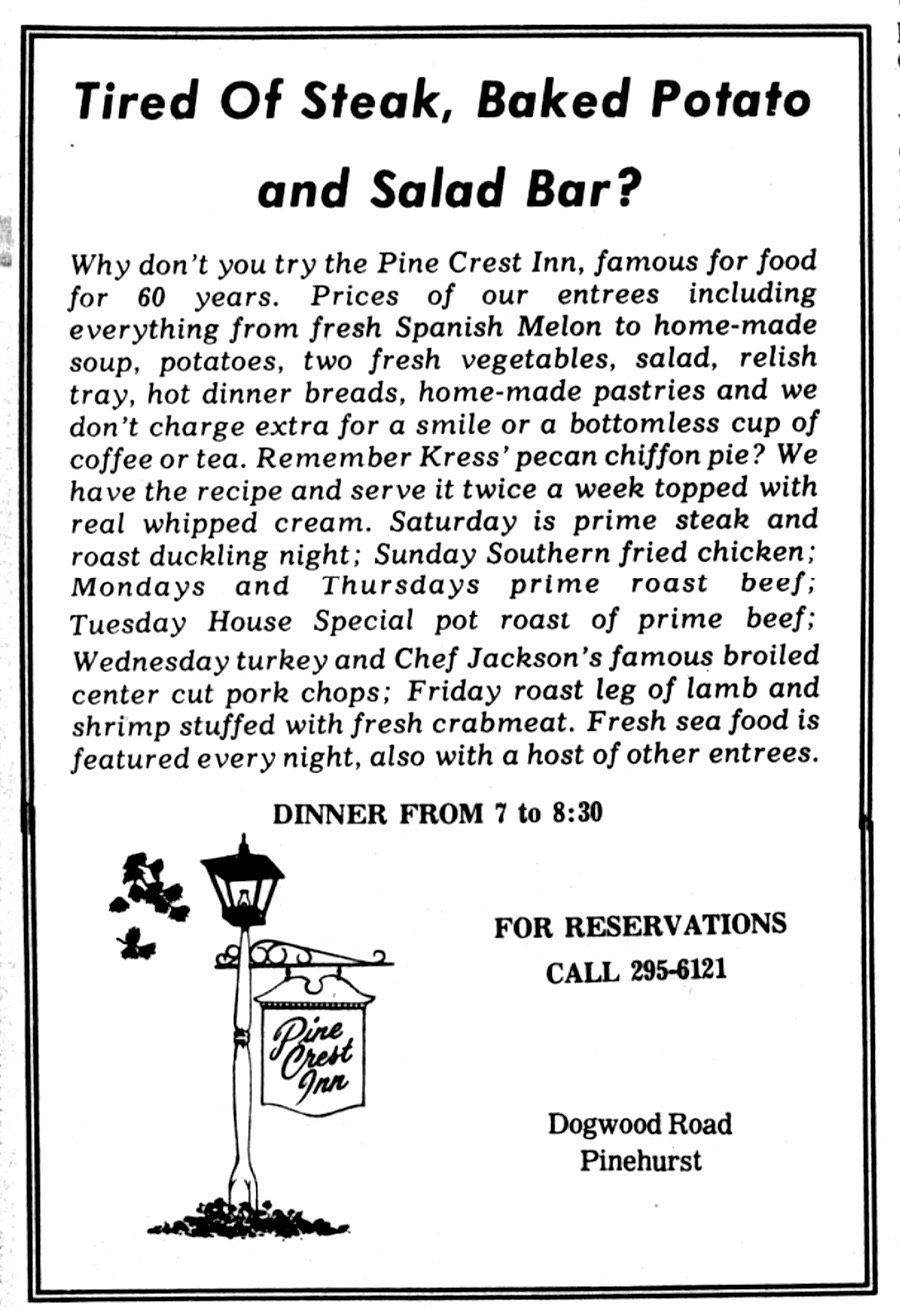
“I started cooking under a German lady, “he told a Pilot interviewer in 1986. “She became ill and left it in my hands.” Jackson mastered a variety of Southern-style recipes. His pièce de résistance was “Chef Jackson’s Famous Pork Chop,” 22 ounces of meat “so tender you can cut through it with a fork,” effused writer John March in his 100th anniversary piece “Legends of the Pine Crest.” The famous dish is still on the menu.

Barrett insisted the kitchen serve the best cuts of prime meat. Specially ordered steaks came from Gertman’s in Boston. Freshly squeezed orange juice graced breakfast tables. Assisting Jackson in the kitchen was his apprentice and nephew, Peter Jackson. Peter had been employed at the inn for three years when the Barretts arrived and worked in tandem with his uncle for nearly 40 years. Carl Jackson’s cousins Elizabeth “Tiz” Russell and Josephine “Peanut” Russell Swinnie were sisters and permanent fixtures on the housekeeping staff. Tiz also babysat for youngsters Bobby and Peter.

Then there was Peggy Thompson, who supervised the dining room for decades, charming the guests and making a point to know them on a first-name basis. She recruited Marie Hartsell, who labored at the inn for 33 years, first on the wait staff, then as kitchen supervisor. Though Hartsell did not fancy herself a cook, she assisted in the kitchen baking pies. Her tasty banana cream became a Payne Stewart favorite.

And Betty Barrett was a worker bee too. She assumed the duties of an assistant manager, working behind the counter, preparing menus and ordering supplies. Even Betty’s mother, Mrs. Dailey, a frequent presence in Pinehurst, pitched in, assisting with the inn’s bookkeeping.

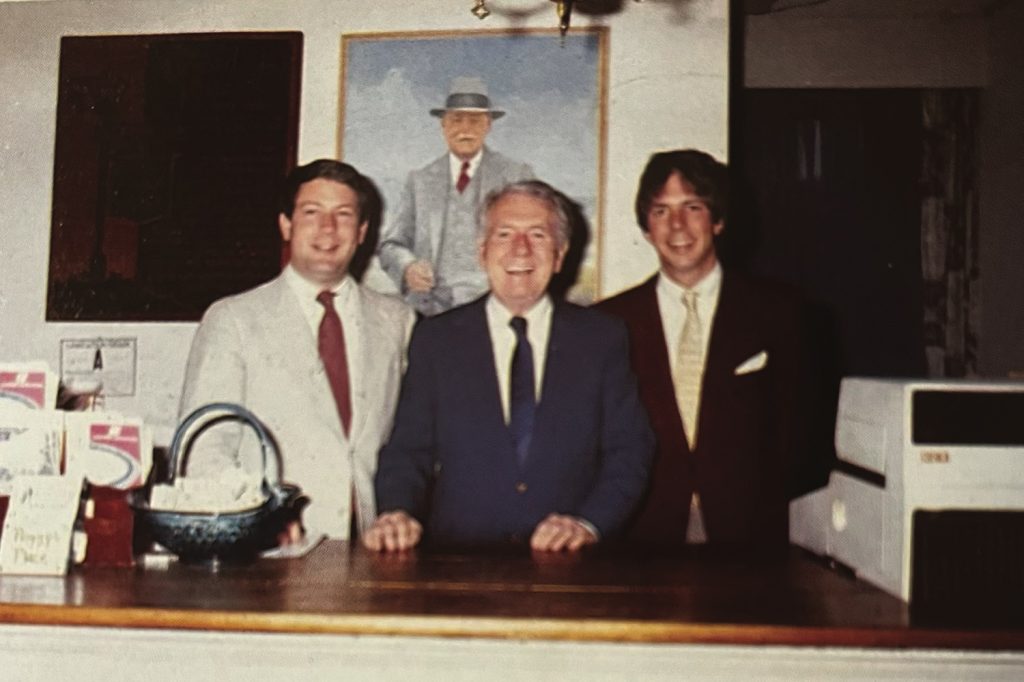
Though it took time for Bob Barrett to find his innkeeping sea legs, his personality proved perfectly suited for his position. A natural schmoozer, Barrett easily befriended guests. A major factor was his resourcefulness in arranging golf itineraries, an aspect of the job he enjoyed. During the ’60s, independent hotels like the Pine Crest had little difficulty getting starting times at the Pinehurst resort, Mid Pines and Pine Needles — a lifeblood for the inn.

Barrett also expanded the Pine Crest’s footprint. When the old telephone exchange building next to the inn was offered for sale, he outbid The Manor to get it. The revamped “Telephone Cottage” would become a favorite lodging choice for pros like Roger Maltbie and Ben Crenshaw.

Things ran relatively smoothly for the Barretts throughout the 1960s, but that changed when the Tufts family sold Pinehurst in 1970 to Malcolm McLean. His Diamondhead Corporation promptly converted vast wooded acreage into housing subdivisions, tacking on Pinehurst Country Club memberships to lot purchases. With the ranks of new club members swelling, securing tee times by the independent hotels became a nightmare. Under the new regime, outside starting times could, at best, only be reserved three days in advance.

Barrett did find a lifeline at the resort who assisted him in coping with the new order. Young Drew Gross, the first assistant to the resort’s director of golf, greased the skids for Barrett, keeping him abreast of last-minute openings on the resort’s tee sheet. The two men formed a bond that would have lasting impact.

Despite Gross’ assistance, the early 1970s were a bleak time for the Barretts. Bobby recalls his dad becoming so frustrated with the starting time debacle he considered suing Diamondhead for ruining his business. Instead, Bob and Betty decided to get out altogether. In 1974, they sold the Pine Crest to Richmond businessman Nat Armistead. The Barretts agreed to take periodic payments from the buyer and to continue managing the inn for an interim period.

The Barretts were in the midst of planning their future when tragedy struck in 1975. Betty Barrett, just 53, died suddenly at home. The family was devastated. To make matters worse, Armistead defaulted and Barrett (now in joint ownership of the inn with sons Bobby and Peter) remained saddled with a teetering business.

Barrett rededicated himself to improving the Pine Crest’s facilities. He installed air conditioning in 1977, allowing the inn to stay open during the summer. He reduced the number of rooms in the hotel to 35, increasing the size of several, and added rooms by moving out of Barrett Cottage and converting it into an eight-room headquarters for larger golf groups. When Diamondhead exited the scene, obtaining tee times at the resort eased up and new courses, like the Carolina Golf Club and The Pit, were open for play.

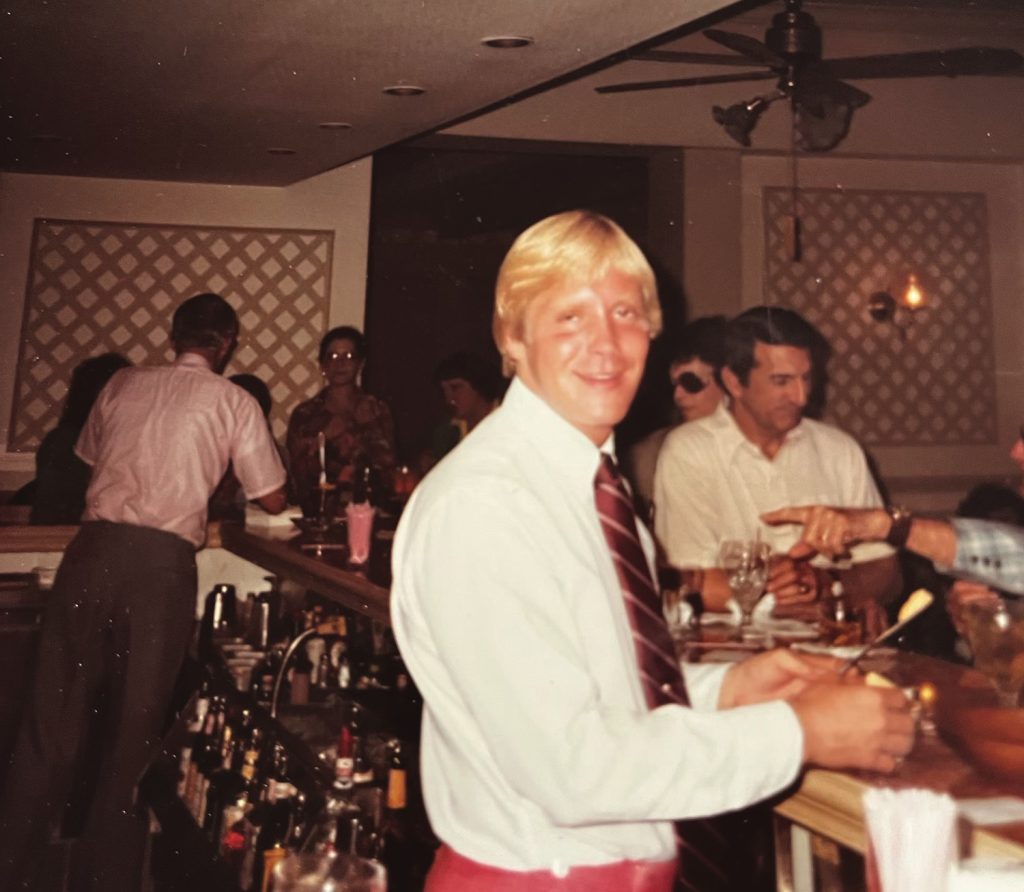
A 1978 change in state liquor law provided a major boost to the Pine Crest’s bottom line. North Carolina had historically been a “brown bag” state; customers brought their own booze to restaurants, and the bartender would mix their drinks. But with passage of the new law, inns and hotels could sell liquor themselves. Originally situated in the Crystal Room at the western end of the inn, the bar was ultimately moved to its current location, just off the lobby. Bill Jones, the flamboyant personality who tended the bar, began attracting regulars to the watering hole known as “Mr. B.’s.”

While Jones’ long blond hair gave him the outward appearance of a California surfer dude, he was actually a high-voltage comedian, flashing his rapid-fire albeit caustic humor. John Marsh wrote that Jones’ “rapier-like wit reminded many of comedian Don Rickles, and it was generally conceded that you weren’t really accepted within the Pinehurst community until you had been insulted by Bill Jones.”

Adding to the atmosphere at Mr. B’s were regular appearances of renowned golf writers Bob Drum, Dick Taylor and Charles Price, all bon vivants. They formed the bar’s notorious “Press Row.” A Pittsburgh Press alum, Drum was Arnold Palmer’s muse and later a feature presence on CBS golf telecasts. Taylor was the longtime editor in chief of Golf World, and Price was the author of several noteworthy books (A Golf Story: Bobby Jones, Augusta National, and the Masters Tournament and Golfer at Large), and at one time or another wrote for every golf publication worth the ink. Bob Barrett often permitted these luminaries, as well as other notable golf figures, to imbibe on the house, or at least at a steep discount. And they made the most of it. 

Just about everyone in Drum’s family worked at the Pine Crest in some capacity. Son Kevin served as busboy or, as he puts it, “the relish tray girl.” Bob Drum himself served as a celebrity bartender from time to time, standing in for Jones. On one such occasion, a customer ordered a “George Dickel.” Drum, a man of substantial girth, broke a sweat rummaging through the bar in feverish efforts to locate the whiskey. Once he was ready to pour, the guest said, “Oh, and mix Coke with it.” The thought of despoiling fine Tennessee whiskey so offended Drum he suggested the man take his business elsewhere.

Barrett considered his generosity toward Press Row money well spent. He’d been in the newspaper trade himself, and the writers did provide the Pine Crest some favorable publicity. Mr. B.’s soon began appearing near the top of ubiquitous listings for “the best 19th holes in golf.”

Jones fit right in, moonlighting a golf column for The Pilot. Despite his bluster, he was a revered part of the scene, and it was a shock when Jones passed away in 1995 at age 40.

Bobby Barrett’s wife, Andy Hofmann, who has worked in reservations for 45 years, got teary-eyed recalling Jones’ passing. “Bill said he wasn’t feeling well at work on November 13th,” she says, “went home, and by the 15th he was in the hospital. He died December 5th.”

Jones’ successor behind the bar, Carl Wood (now the owner of Neville’s in Southern Pines), was at first unaware of the local luminary discount. He recalls two-time U.S. Amateur champion Harvie Ward sitting down at the bar with a friend and ordering a Bombay. “That will be $6, sir,” said Wood. A clearly mystified Harvie turned to his companion and observed, “I think he’s serious!”

The return of PGA Tour events to Pinehurst, beginning in 1973, brought increasing numbers of golf greats into the village. Arnold Palmer, Jack Nicklaus, Payne Stewart, Bill Rogers, Ben Crenshaw and Tom Kite are just a few of the champions who stayed, ate or drank at the Pine Crest. And their appearances led to memorable anecdotes.

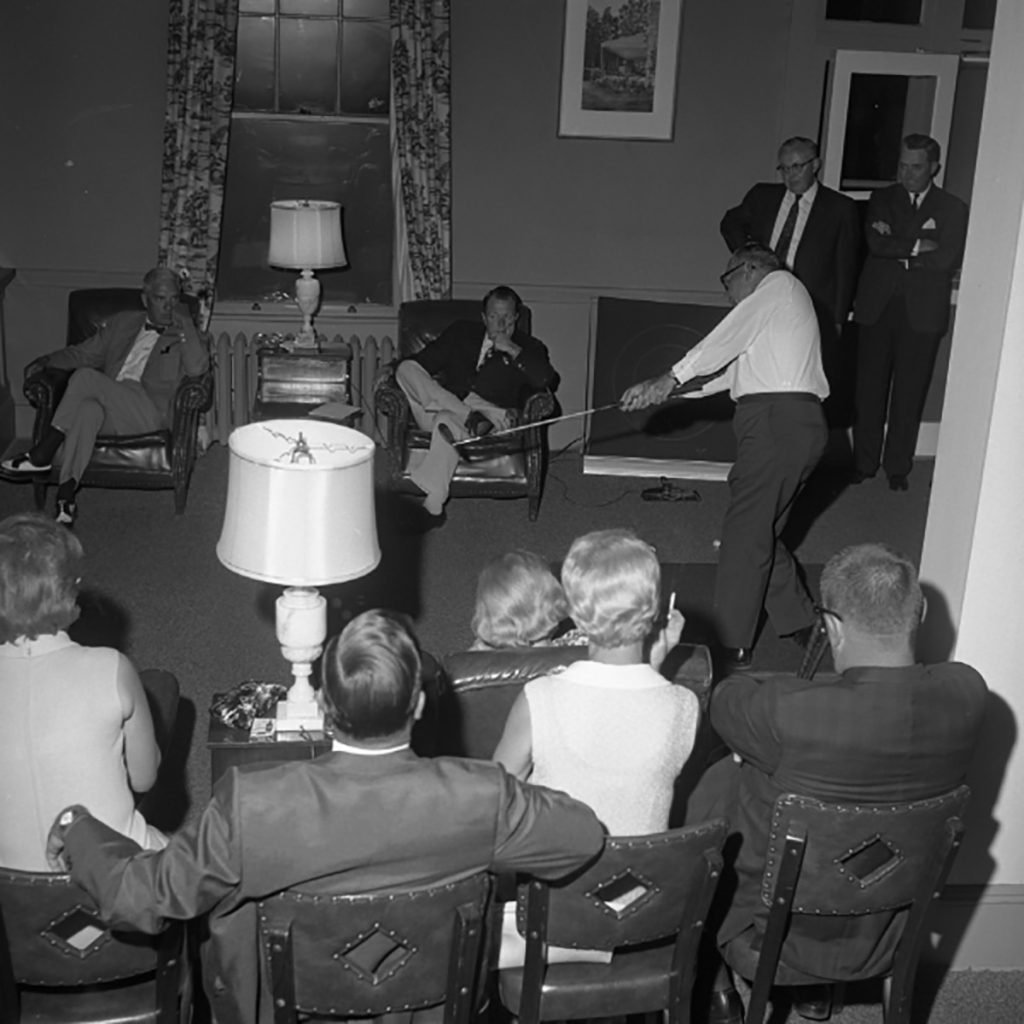
Barrett made friends with the great, the not-so-great and the run-of-the-mill alike. Probably his best buddy in PGA circles was Pinehurst pro Lionel Callaway. Whenever there was a March snowstorm, Bob would call on Lionel to give golf lessons in the lobby, a tradition begun by Donald Ross, who likewise provided instructional tips to snowbound guests when he owned the inn.

Callaway’s greatest contribution to the Pine Crest is the celebrated chipping board. No golfer’s Pinehurst pilgrimage is complete without trying to knock a ball into the hole in the wooden board covering the old fireplace. Ben Crenshaw has the record for consecutive chips holed  — 28. Not everyone is as accurate. The fireplace mantel has more dents than a car in a demolition derby. The glass protecting the painting of Donald Ross above the fireplace was smashed so often, it was ultimately bulletproofed.

Both of Barrett’s sons became skilled golfers. Bobby Barrett made the final field of the 1969 U.S. Amateur, competed at medal play that year at Oakmont Country Club, America’s most demanding championship test. Not to be outdone by his elder sibling, Peter Barrett would subsequently make a strong run at winning the Carolinas Open. He did win the 1974 Pinehurst Country Club championship, his 283 total edging Pinehurst mogul-to-be Marty McKenzie by one shot.

Both boys were advancing in their professional lives as well, though on different tracks. Bobby obtained professional degrees at Duke and UNC. He became a CPA catering to individuals and small businesses (including the Pine Crest). His office is located on Community Road just behind the inn. Bobby also obtained a law license but never practiced. “I never lost a case,” he deadpans.

Groomed by Bob to one day succeed him as the inn’s general manager, Peter attended hotel management school. Given his own golf chops, he related well to the younger pros, like Payne Stewart, who became a friend. It was he who created a slogan touting the inn’s no frills persona:  “A third-rate hotel for first rate people.” It supplemented the inn’s other tagline, employed since the Emma Bliss era: “An Inn Like a Home!” The youngest Barrett also sold real estate.

In the course of Bob Barrett’s first 37 years of the inn’s ownership, a slew of PGA Tour events were contested at Pinehurst, but no professional major championships. So it was a thrill for the 84-year-old when the USGA brought the 1999 U.S. Open to Pinehurst. And not surprisingly, both the Pine Crest and a longtime employee became involved in the lore surrounding Payne Stewart’s epic victory. Payne ate dinner at the Pine Crest after an early round of the championship and affixed a hyper-enlarged signature on the wall of the ground floor men’s room. The passage of time has rendered the script undecipherable, but his outsized signature is replicated in the lobby.

Margaret Swindell, a mainstay behind the desk for decades (you’re a newbie until you’ve been employed at the Pine Crest for at least a decade), had a memorable encounter with Stewart prior to his final round. Swindell was working at her then-primary job with Pinehurst Country Club at the Learning Center when Payne approached her counter and requested a pair of scissors. He did not like the feel of his rain jacket and wanted the sleeves trimmed away.

Swindell and a co-worker held the jacket taut while Stewart snipped. She placed the detached sleeves in a drawer, thinking nothing more about the remnants until Stewart won the championship, and a ruckus was made afterward concerning his sleeveless rain jacket. Today, the sleeves and scissors are displayed at the World Golf Hall of Fame in an exhibit titled “Style and Substance: The Life and Legacy of Payne Stewart.”

Bob Barrett’s hope that moving South would lead to a long life came to pass. He died at age 89, two months after the 2005 U.S. Open at Pinehurst. John Dempsey, the longtime president of Sandhills Community College, gave the eulogy.

“Bob lit up every room he ever entered,” said Dempsey. “He was truly the community’s innkeeper.” Dempsey, who first met Barrett while guesting at the Pine Crest many decades ago, credits Bob for persuading him to apply for the position of SCC’s president, a job he would hold for 34 years.

Though already performing the bulk of managerial duties, Peter Barrett formally became the Pine Crest’s general manager following his father’s death. But additional leadership was required, and it came from Bob’s old friend.

Drew Gross was hired in 2011 as the Pine Crest’s resident manager. Gross had been involved in a diverse array of activities since his Diamondhead days: caddying on tour, event planning, cultivating relationships with airlines for National Car Rental, and operating a company that provided retired baseball players moneymaking opportunities. It was Gross who arranged for retired greats like Sparky Lyle, Lew Burdette, Tommy Davis and Warren Spahn to bivouac at the Pine Crest during the old ballplayers’ 1992 Pinehurst golf get-together.

Recognizing the inn’s history constitutes a major part of its appeal, Gross organized a gala centennial celebration of its founding on Nov. 1, 2013. Bagpipers played, dignitaries spoke, Hoagy Carmichael’s son, Randy, performed “Stardust,” and a bronze bust of Donald Ross was unveiled.

Free drinks at Mr. B’s are a thing of the past. Head bartender Annie Ulrich makes sure of that. The Long Island native came to the Pine Crest as a fill-in barkeep during the 2014 Open. Ulrich, whose husband, Gus, is a two-time North Carolina Open champion, loves her job. “Making one person happy is great,” she says. “But at any one time, I can make 20 people happy.” The narrow passage between the piano and the bar is now called “Annie Avenue.” Even as Mr. B’s flourishes, courses like Pine Needles, Mid Pines, Southern Pines, Talamore, Mid South, Tobacco Road, etc., continue to work with the inn booking tee times.

It is true that the Pine Crest celebrates its history — the three barstools at Mr. B’s bearing brass plaques dedicated to the long departed trio of Drum, Price and Taylor; the two Donald Ross sculptures and the painting of  Ross over the fireplace; the many images of long-gone golf heroes; and the tiny monument to the succession of orange cats, Marmalade or Marmaduke depending on the feline’s gender, that patrolled the porch — but this is no museum. Stop by on a weekend night when music is playing, folks are dancing and guests are chipping, all in the snug, yet somehow uncrowded, lobby. It’s vibrant, intimate and fun.

There’s no place quite like it.

PinePitch February 2026

PINEPITCH

February 2026

Sunrise Sounds

The beat goes on for the entire month of February at the Sunrise Theater, 250 N.W. Broad St., Southern Pines:

• G. Love & Special Sauce, a hip hop and blues band, takes the stage on Friday, Feb. 6, from 8 to 11 p.m. Reserved seating is $39.50. VIP add-ons like drinks, a pre-show dinner and souvenir poster crank up the cost. Tickets and info at
www.sunrisetheater.com.

• On Valentine’s Day (come on, all y’all know the date) Ashes & Arrows will perform from 7 to 10 p.m. The combo Asheville, N.C./New Zealand group, earned standing ovations from Howie Mandel, Heidi Klum, Sofia Vergara and Simon Cowell on America’s Got Talent. General admission is $30 and premium seating is $49. Tickets and info at www.sunrisetheater.com.

• The Arts Council of Moore County’s classic concert series presents WindSync on Monday, Feb. 16, from 7:30 to 9 p.m. The wind quintet featuring Garrett Hudson (flute), Noah Kay (oboe), Graeme Steele Johnson (clarinet), Kara LaMoure (bassoon) and Anni Hochhalter (horn) frequently breaks the fourth wall between musicians and audience performing pieces ranging from revitalized standards, folk, songbook to freshly written works. Tickets are $37.45. For more info go to www.mooreart.org/CCS.

• The Rodney Marsalis Philadelphia Big Brass celebrates Mardi Gras at the Sunrise on Wednesday, Feb. 18, from 7 to 9 p.m.  The RMPBB had its beginnings on the streets of New Orleans. The group created its concert format, breaking the usual barriers between audience and performers at the advice of family patriarch Ellis Marsalis. Tickets start at $39 with the VIP package tipping the scales at $108. Tickets and info at www.sunrisetheater.com.

Not a Clue

From game board to the stage, Clue, The Musical opens at the Encore Center, 160 E. New Hampshire Ave., Southern Pines, on Friday, Feb. 13, at 7 p.m. Now a fun-filled musical, Clue brings the world’s best-known suspects to life and invites the audience to help solve the mystery of who killed Mr. Boddy, in what room, and with what weapon. There are additional performances on Feb. 14, 20 and 21. Tickets are $21 and $29, plus fees. For more information go to www.encorecenter.net.

Opening Night

The opening reception for Liz Apodaca’s exhibition “Carousel of Color” is Friday, Feb. 6, from 5 to 7 p.m. at the Artists League of the Sandhills, 129 Exchange St., Aberdeen. Apodaca began painting as a 6-year-old in El Paso, Texas, mentored by her grandfather. The exhibit will hang through Feb. 26. For additional information go to www.artistleague.org.

It's Been a Struggle

Acclaimed historian Jon Meacham will be in town to discuss his new book, American Struggle: Democracy, Dissent, and the Pursuit of a More Perfect Union, at the Moore Montessori Community School Auditorium, 255 S. May Street, Southern Pines, on Friday, Feb. 20, at 6 p.m. In this rich and diverse collection Meacham covers a wide spectrum of U.S. history, from 1619 to the 21st century, with primary source documents that take us back to critical moments when Americans fought over the meaning and the direction of the national experiment. For tickets and information go to www.ticketmesandhills.com.

All That Jazz

The Sandhills Community College Jazz Band celebrates “Takin’ a Chance on Love!” at 6:30 p.m. on Monday, Feb. 9. The swing and jazz favorites from the 1920s to the 1980s will fill BPAC’s Owens Auditorium, 3395 Airport Road, Pinehurst. For more information and tickets go to www.ticketmesandhills.com.

Didn't We Almost Have It All?

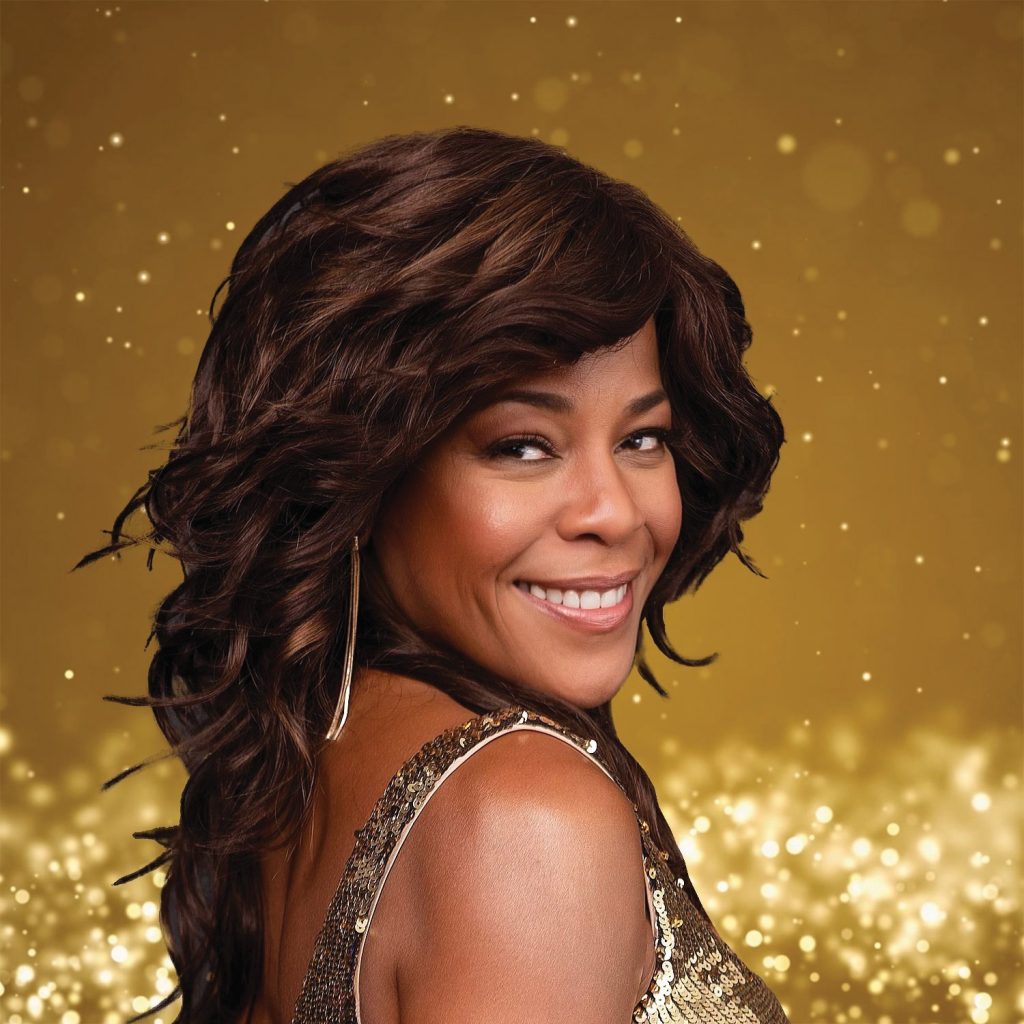
BPAC continues is tribute series with Nicole Henry singing Whitney Houston hits at Owens Auditorium, 3395 Airport Road, Pinehurst, on Friday, Feb. 20, at 7 p.m. One of the jazz world’s most acclaimed vocalists, Henry brings the legendary music of Houston to life with her dynamic vocal prowess, impeccable phrasing and soul-stirring emotional resonance. A winner of the Soul Train Award for Best Traditional Jazz Performance, her album The Very Thought of You climbed to No. 7 on Billboard’s Jazz Chart. For tickets and information go to www.ticketmesandhills.com.

Awakened With a Kiss

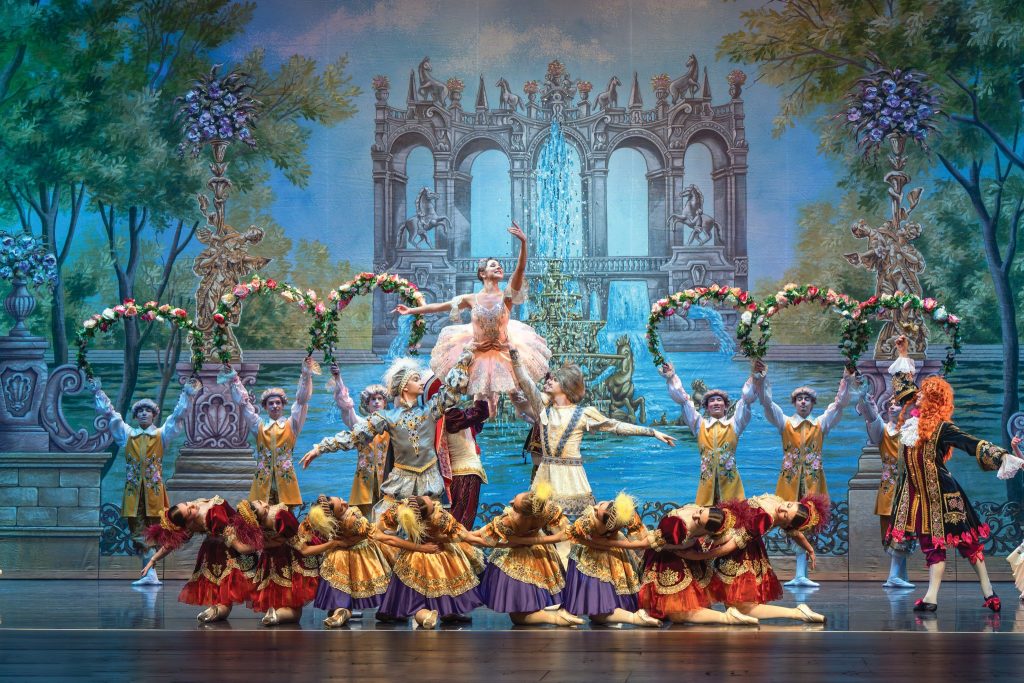
An international cast of world-renowned ballet artists from 15 countries brings Pyotr Ilyich Tchaikovsky’s unforgettable music, choreography by Marius Petipa and the magic of Princess Aurora together in The Sleeping Beauty. Follow the princess from her christening to her century-long slumber and her awakening by a true lover’s kiss on Monday, Feb. 23, at 7 p.m. in BPAC’s Owens Auditorium, 3395 Airport Road, Pinehurst. For more information and tickets go to www.ticketmesandhills.com.

Masterworks

The Carolina Philharmonic under the direction of Maestro David Michael Wolff will present an evening of classical masterworks at BPAC’s Owens Auditorium, 3395 Airport Road, Pinehurst, on Saturday, Feb. 28, at 7:30 p.m. For additional information and tickets call (910) 687-0287 or go to www.carolinaphil.org.

At the Horse Park

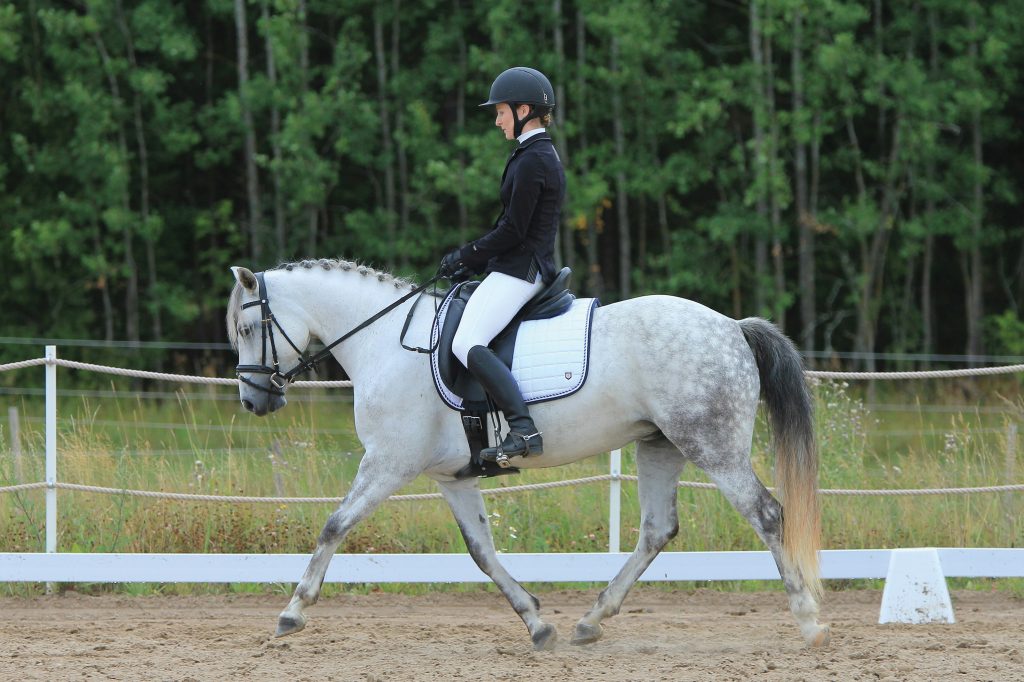
It may be cold outside, but it’s heating up at the Carolina Horse Park, 2814 Montrose Road, Raeford. On Saturday, Feb. 14, there is the Pipe Opener II combined training with dressage and show jumping. On Saturday, Feb. 21, and Sunday, Feb. 22, there will be mounted games, and the Sedgefield Hunter/Jumper show is Friday, Feb. 27. It continues through March 1. Food trucks abound. For more information go to www.carolinahorsepark.com.

Dissecting a Cocktail

DISSECTING A COCKTAIL

Naked & Famous

Story and Photograph by Tony Cross

In 2014, famed New York City bar Death & Co. released its first cocktail book, Modern Classic Cocktails. It was the book that bartenders had to have and one of the best cocktail books ever printed.

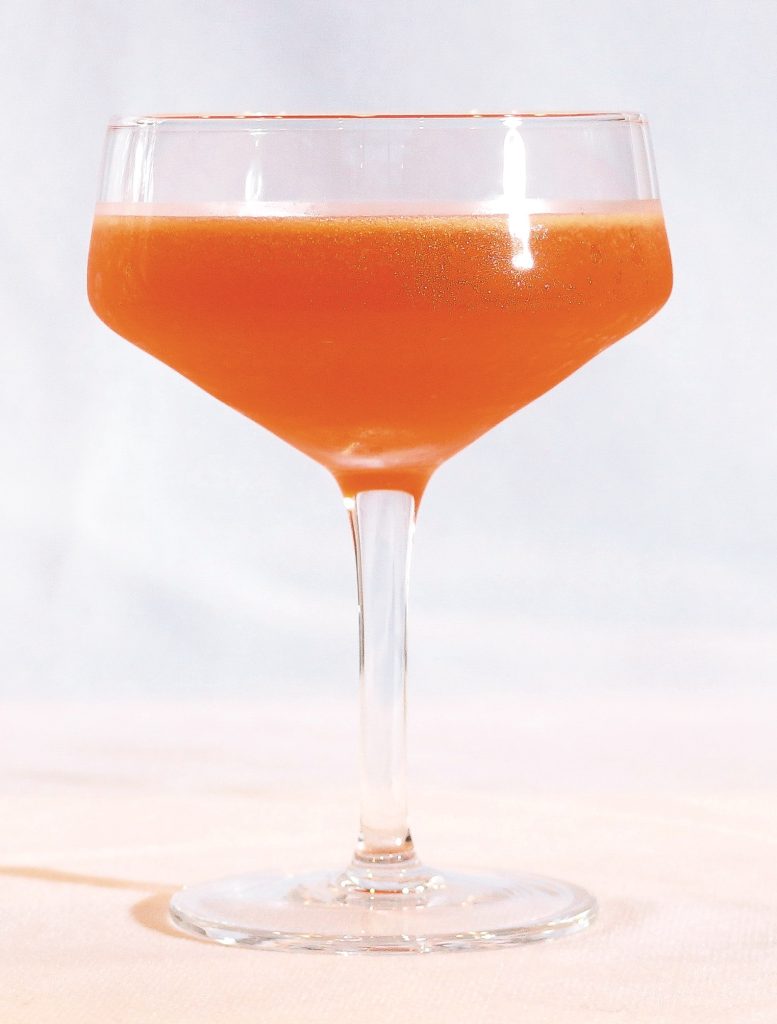
One of the cocktails inside, the Naked & Famous, was created by bartender Joaquín Simo in 2011. The drink immediately caught my eye. The Naked and Famous is an Indie rock duo from New Zealand that had a hit song at the time of the drink’s creation, and I appreciated the fact that I wasn’t the only bartender in the world who tended to name drinks after bands and songs. The specs were interesting, too, with equal parts mezcal, Aperol, Yellow Chartreuse liqueur and lime juice. Why did this seem familiar? According to Simo, “This cocktail is the bastard child born out of an illicit Oaxacan love affair between the classic Last Word (a gin-based cocktail) and the Paper Plane, a drink Sam Ross created at the West Village bar Little Branch.”

I once read somewhere that Simo chose Aperol and Yellow Chartreuse instead of Campari and Green Chartreuse because he wanted lower ABV liqueurs to avoid overpowering the mezcal. The cocktail became an instant classic, and I put it on my outside patio bar menu, where it sold like crazy. These days if anyone hears the words “Naked and Famous,” it’s the drink — and not the band — that comes to mind. 

Specifications

3/4 ounce Del Maguey Chichicapa mezcal

3/4 ounce Yellow Chartreuse

3/4 ounce Aperol

3/4 ounce fresh lime juice

Execution

Shake all ingredients with ice, then strain into a chilled cocktail coupe. No garnish.

Focus on Food

FOCUS ON FOOD

A Proper Mess

A different take on strawberries and cream

Story and Photograph by Rose Shewey

To be perfectly blunt, England hasn’t exactly been at the forefront of culinary excellence. May I be forgiven by those who cherish its cuisine. Perhaps it’s simply that English chefs need assistance choosing more appetizing names. Who wants to dig into a serving of spotted dick? Or take a hearty bite of rumbledethumps or bubble and squeak?

Eton mess, by comparison, is a relatively tame designation — while still managing to be properly unflattering — for a classic, delicious dessert made of berries, whipped cream and meringue. It may be messy, but it’s ingenious in its simplicity with a pleasing balance of flavors and textures. For all the mockery the English endure for their lack of appetizing food — which isn’t completely justified — they sure got this one right.

It is a safe assumption that the boys at Eton College, a prestigious boarding school in England and namesake for this tasty treat, did not suffer many hardships back in the day — and likely still don’t. While the genesis of “Eton mess” is hotly debated, no one seems to argue that it was, in fact, first served to the students in Berkshire about a century ago, thus painting a picture of a pretty sweet school life.

The least plausible but most popular account of the dessert’s origin is the story of pavlovas being served at an annual cricket match in the 1930s between Eton and the boys from Harrow School when a clumsy, or hungry, Labrador knocked over the desserts and smashed them to the ground. Undeterred, the Eton boys dug into the tasty “mess.” Whether Eton mess was a happy accident or a calculated move, we’re loving it all the same.

Eton Mess with Raspberry Coulis

(Serves 4)

5 ounces fresh or frozen raspberries

1 teaspoon freshly squeezed lemon juice

1 pound fresh strawberries

1 tablespoon sweetener, such as granulated sugar or honey, divided

4 ounces heavy cream

1 teaspoon rosewater (optional)

4 ounces Greek yogurt

5 ounces meringues, store bought or homemade

Make the Coulis

If using frozen raspberries, allow to thaw for about 20 minutes at room temperature. Add raspberries to a tall bowl together with the lemon juice, and puree, using an immersion blender. To get an extra fine sauce, strain through a sieve, transfer to an airtight container and refrigerate.

Make the Eton Mess

Quarter strawberries and add to a large bowl together with 1/2 tablespoon of sweetener. Mash up about half the berries with a fork and set aside. Combine cream with 1/2 tablespoon sugar and rosewater (if using), and whip until firm enough to form soft peaks, then fold in the yogurt. Add cream-yogurt mixture to the fruit and fold it in. Crumble meringue over top and drizzle with raspberry coulis. Serve right away.

Simple Life

SIMPLE LIFE

The Man in the Mirror

And the power of a slow and careful shave

By Jim Dodson

A couple months ago, somewhat out of the blue, I had a small awakening.

I decided to shave the way my father did on every morning of his life — a slow and careful ritual performed at the bathroom sink, facing himself in the mirror.

Sounds a bit silly, I know. But rather than shave quickly in the shower with a disposable razor as I’d done since college, purely in the interest of saving time and getting on to work, life and whatever else the day held, it occurred to me that my dad might have been on to something important.

As a little kid in the late 1950s, you see, I sometimes sat on the closed toilet seat chatting with him as he performed his morning shaving routine. I have no memory of things we talked about, but do remember how he sometimes hummed (badly, I must note — the result of a natural tin ear) and once recited a ditty I recall to this day.

“Between the cradle and the grave, Jimmy, lies but a haircut and a shave.”

For years, I thought this bit of mortal whimsy was original with him, an adman with a poet’s heart, only to learn that it was really something he picked up from an old Burgess Meredith film.

No matter. His shaving routine utterly enthralled me. He began by filling the sink with steaming hot water and washing his face, holding a hot cloth against his skin. Next, he would pat his face dry with a towel and apply shaving cream in a slow, circular motion with a soft-bristled brush from a mug of soap he’d worked into a lather. I can still hear the faint swipe of his razor as it did its job.

As he aged, he abandoned the brush and mug in favor of an aerosol can of shaving cream, simply for convenience. But he never gave up his old-style “safety” razor that he used till the end of his days.

Watching him shave almost felt like observing a holy act. And maybe to him, it was.

During our final trip to England and Scotland in 1995, we had nine wonderful days of golf and intimate conversations. My dad’s cancer had returned, and he didn’t have long to live, but to look at him go at that moment you never would have guessed it.

During one of our last evenings in St Andrews, I remarked how curious it was that he still used his old-fashioned “safety” razor.

He smiled and explained, “With this kind of razor you must take your time. I always found shaving a good moment to look at the old fellow in the mirror and ask myself, so who are you? And what small thing can you do today for someone in this big and troubled world?”

I wasn’t the least bit surprised to hear him say this. My nickname for my dad — as I’ve mentioned before — was “Opti the Mystic,” owing to his knack for doing small acts of kindness for strangers. With several mates from the Sunday School class he moderated for a couple decades, for example, he helped establish a feeding ministry that is going strong to this day. 

Another time, as I recounted in my book Final Rounds, he picked me up from guitar practice with a depressed and drunken Santa in his car. He’d found the poor man wandering around his office’s empty parking lot, threatening to shoot himself during the holidays. We took him to a local diner and fed him a good meal so he could sober up a bit. Then, we drove him home to his tiny house on the east side of town. As he got out of our car, Opti discreetly slipped him a $50 bill and suggested that he buy his wife something nice for Christmas. The man thanked my dad, looked at me and growled, “You’re [effing] lucky, kid, to have an old man like this, a real Southern gentleman. Merry Christmas.” 

I was indeed. But frankly, it wasn’t always easy having a dad who cheerfully spoke to everyone he met and never seemed to lose his cool in any situation. Another time, I came home from college to find that my mom had impulsively given 10 grand out of their savings to a “needy young woman” at the Colonial grocery store. I was incredulous and wondered why she did this, pointing out that the woman was probably just a con artist.

“Because your father would have done the same thing,” she calmly answered.

“True,” Opti chipped with a wry smile. “Just not that much.”

As we sipped an expensive brandy Winston Churchill had reportedly preferred during the war on that distant night in Scotland, I reminded him of the famous Colonial store giveaway and the good laugh we shared over it for years. 

The story brought home to me how much I was going to miss this very good man. He then told me something that raised a big lump to my throat.

“When your granddad was dying, he asked me to give him a proper shave so he would look presentable when he met his maker.”

My late grandfather — whose name, Walter, I share — was a simple working man of the outdoors who probably only darkened the doorway of a church a few times in his life. Yet he wanted to meet his maker clean-shaven. 

“So, I gave him a nice, slow shave. He even asked for a bit of spice aftershave. It made him happy. He died peacefully a day or so later.”

We sipped our brandy in silence. “Maybe someday,” Opti remarked, almost as a second thought, “you can do the same for me.”

By this point, I could barely speak. I simply nodded.

Five months later, on a sleety March night, I did just that.

Which may explain why, as I approach the age Opti was when we made our journey together, the idea of carefully shaving in front of the bathroom mirror suddenly seemed like a good thing to do in these days of such social turmoil and chaos.

And so, for my birthday this month, I gave myself a new chrome Harry’s razor and took up the slow shaving ritual I’ve known about since I was knee-high to a bathroom sink.

Most mornings, I now find myself facing the man in the mirror, asking what small thing can I do today to makes someone’s life a little better?

It’s only a start. I’m nowhere near Opti’s level of grace yet. But I find myself frequently smiling in the grocery store and offering kind words to complete strangers. I’m even driving with greater courtesy in traffic.

Someday, hopefully many years from now, I may need to ask my son or daughter to give me a slow, final shave before I meet my maker.

Or maybe I’ll ask my brand-new granddaughter to handle the job when she’s grown up a bit. 

Whoever it is, the man in the mirror will be deeply, and forever, grateful. 

Almanac February 2026

ALMANAC

February 2026

By Ashley Walshe

February leans in close, icy breath tingling the nape of your neck, and asks you to pick a door.

“A what?” you blurt, turning toward the raspy voice. No one. But that’s when you see it. A door straight out of a fantasy novel.

Approaching slowly, you take in the intricate details and lifelike carvings: apple blossoms and honeybees; pregnant doe and spring ephemerals; fiddleheads and fox kits.
Wood as frozen as the earth below, your fingers ache as they trace the grooves and ridges, then fumble across a secret panel. Beneath it? A round peep window with an unobstructed view to spring.

Bone-cold and weary, you press your face against the cold glass and glimpse a drift of wild violets, trees gleaming with sunlit leaves, a bouquet of ruby-throated hummingbirds.

“Yes, please,” you nearly sing, reaching for the frigid brass knob. Your heart sinks when you find that it’s locked.

Rapping the knocker for what feels like ages, desire becomes agony.

You wait, desperate for the door to open — desperate to bypass the bitter cold and step into the warm embrace of spring.

That’s when you remember the voice.

Pick a door.

Of course, there’s another. You spin on your heel and set out to find it.

As you walk, you notice how the frost resembles glittering stardust; the moon, a silver smile in the crystalline sky. How naked trees stand in praise and wonder of what pulses, unseen.

This is the doorway, you realize, feeling your breath deepen, your heart open, your jaw and belly soften.

There is peace here, at this threshold of endings and beginnings, where life moves slowly, where early crocuses burst through the wintry soil. Peace and wonder. But only if you choose it.

Early Signs of Spring

Love and birdsong are in the air. On mild days, mourning cloaks trail yellow-bellied sapsuckers, sipping maple, birch and apple sap from tidy rows of wells.

No vintage perfume smells as delicate and sweet as the trailing arbutus blooming in our sandy woodlands. And — oh, dear — a striped skunk rejects an unwanted suitor.

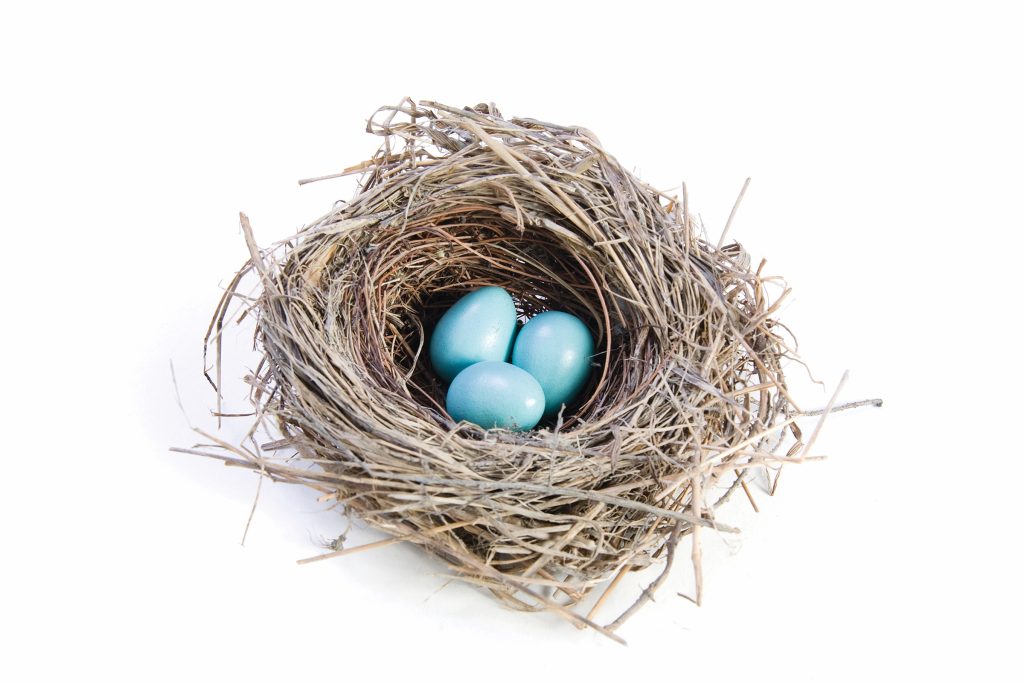
Soon, toads will begin calling. Gray squirrels will bear their spring litters. Bluebirds will craft their cup-shaped nests.

Spring makes her slow and subtle entrance, even when we can’t yet see it. 

Year of the Horse

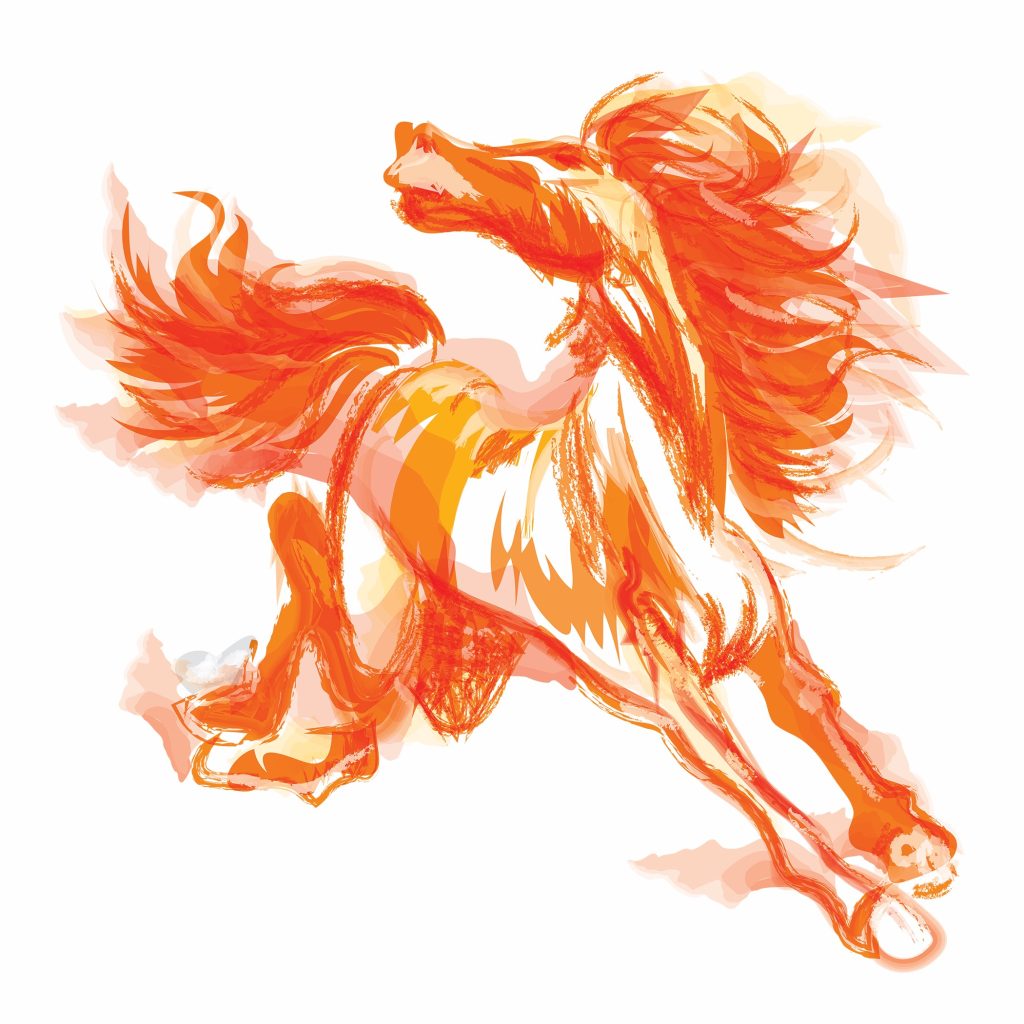
The Year of the Fire Horse (aka, the Red Horse Year) begins on Tuesday, Feb. 17. According to the Chinese Zodiac, 2026 will be a spirited year of passion, dynamism and boundless freedom.

In other words: It won’t be a year for the sidelines.

Souls born this year are said to be bold, adventurous leaders, quick-witted and headstrong, magnetic and rebellious. Parents of Fire Horse children: Let it be known that they can’t be tamed. 

Hometown

HOMETOWN

The Way We Were

Let your fingers do the walking

By Bill Fields

While cleaning out my childhood home almost a decade ago, I held on to some random items, one of them having been tucked in a cabinet below the wall-mounted phone in the hallway, an instrument through which good and bad news, salty gossip, and the time and temperature had been received for decades. In the final days of 692-8677, the long cord hanging toward the floor looked like it always did, a tangled mess that made privacy or pacing difficult.

I salvaged an old phone book that had been published in November 1975, its white and yellow pages good for the following year. “A Century of Telephone Progress” was heralded on the cover, along with renderings of antique and current phones — a state-of-the-art pushbutton model! — and the bearded visage of Alexander Graham Bell, who received a patent for the telephone on March 7, 1876.

Perusing the thin 6-by-9-inch volume of residences and businesses compiled by the United Telephone Company of The Carolinas five decades after it landed in our mailbox is nothing short of time travel to the way we were, before the Southern Pines area had grown and phones had shrunk.

Some of the “instructions” in the directory’s early pages are so rudimentary they are a reminder that, 50 years ago, a land line was considered a modern marvel.

“One way to avoid wrong numbers is to keep the area code and number before you as you dial.”

“When you make a call, give your party time to answer — about 10 rings — before you hang up. This could save you having to make a second call later.”

“You can save money by dialing all your calls direct without involving an operator.”

Making an out-of-state call? There was a 35 percent discount on weekday evenings and 60 percent off on Saturday and Sunday. Trying to describe a “collect” call to someone who came of age during the cellphone era is like explaining when gas was 49 cents a gallon or that airplanes had smoking sections.

By the time this directory came out my father was a policeman, and we had elected to have an unlisted number, not that teenagers joyriding through the Town & Country Shopping Center parking lot to whom he gave a warning would have done us any harm. My Grandmother Daisy, born 16 years after Bell’s invention, and Uncle Bob, both Jackson Springs residents, are listed.

So many familiar names were in the phone book: neighbors and friends, teachers and pastors, doctors and dentists. If you needed to reach the editor of The Pilot after business hours, Ragan Sam was on page 87; the owner of radio station WEEB, Younts J S, could be found on page 112.

There were lots of Blues and Browns, Davises and Fryes, Jacksons and Joneses, McKenzies and McNeills, Smiths and Thomases. Perhaps more Williamses than any other name, among them John W, otherwise “Coach” to so many for so long.

When you “let your fingers do the walking in the yellow pages” there was plenty to see.

Remember “Service Stations” where you’d get your windshield cleaned and oil checked while filling up? Dezalia Phillips 66, Poe’s Texaco, Red’s Exxon, Styers Gulf were among the dozens of such establishments listed in the yellow pages.

Restaurants? There was The Capri and The Chicken Hut, Dante’s and Duffy’s, Lob-Steer Inn and Park-N-Eat, Cecil’s Steak House and The Sandwich Shop, Mr. Flynn’s and Tastee Freez. None of those exist today, but Bob’s Pizza (“Call for Quicker Service”) does.

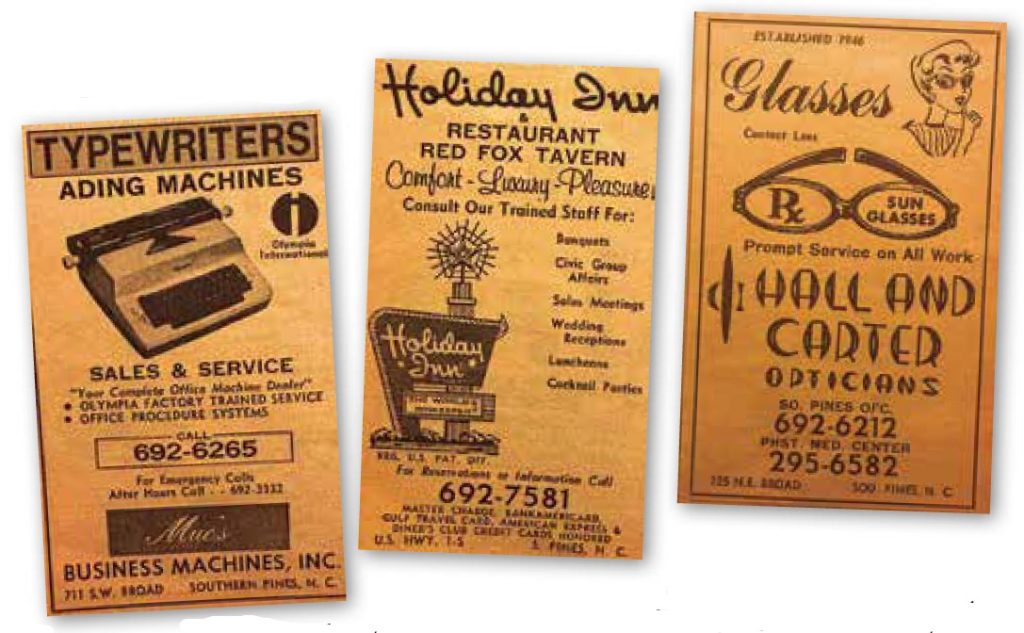
St. Joseph of the Pines was still a hospital. Mac’s Business Machines could set you up with a typewriter. You could get lodging at the Belvedere Hotel or Fairway Motel, groceries at A & P, Big Star, Piggly Wiggly or Winn-Dixie (“The Beef People”). The Glitter Box is no more, but Honeycutt Jewelers still sparkles.

Among the clip art (dogs, golfers and termites) and bold fonts, one of the categories caught my eye: “Ice.” Half a dozen places were listed, including Brooks Min-It Market and Ice Masters Service of Carthage, which boasted “clean, hard ice cubes” and “ice never touched by human hands.”

Now, we hold computers in our palms and text with our thumbs. That’s “person-to-person” these days.