Subterranean Homesick Blues

Discovering the basement treasures of Southern Pines

By Bill Case     Photographs by John Gessner

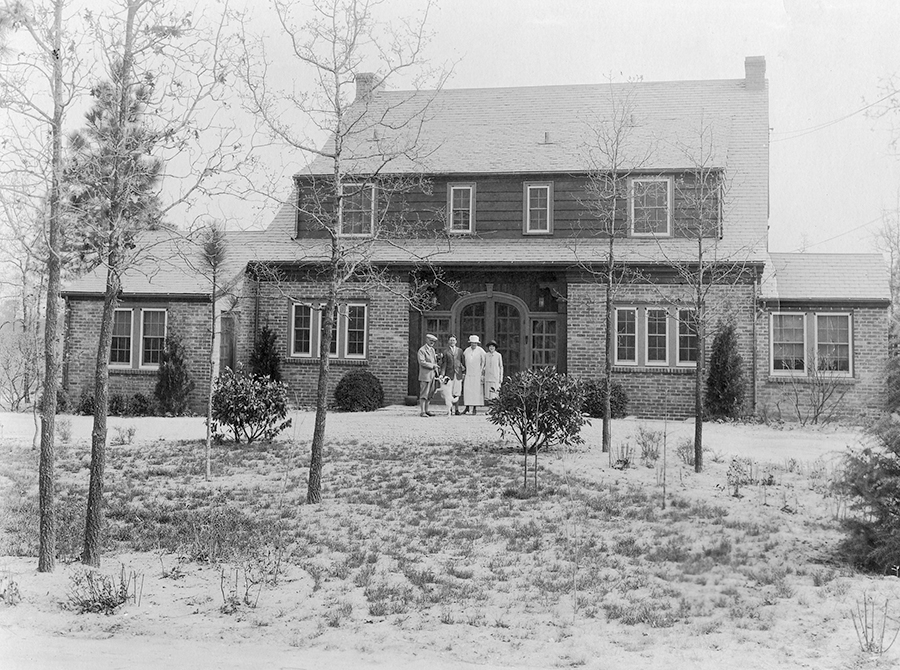
Around 1952, my mom found a tiny, tarnished silver coin in a dark, recessed area of our home’s basement floor. The ancient “half-dime” bore the date 1846.

It was hard to fathom how the 106-year-old piece had made it to our basement. Perhaps the coin dropped out of a worker’s pocket when the basement foundation was poured — a remote possibility, since few coins of that vintage would have been in circulation when our Hudson, Ohio, house was constructed in the 1920s. The half-dime puzzle was one our family never solved.

My mother gave me the mysterious half-dime after I began collecting coins as a pre-teen in 1960 but, over time, my interest in numismatics fell away, and I lost track of the coin. Perhaps it has been rediscovered by another mother in some other dark basement, launching a whole new family puzzle.

Thoughts of the half-dime returned when a Southern Pines restaurant server told me about her own belowground discovery at the Belvedere Hotel. She said the basement of the structure contained an iron-barred cell rumored to have once been a town jail facility. What other treasures might lurk in underground Southern Pines? Catacombs? The Phantom of the Opera’s dungeon? Or maybe just Al Capone’s vault?

With thoughts of Geraldo Rivera dancing in my head, I started my prospecting by following up on the server’s jail cell tip. According to a spokesman for the police department, there was no record of any jail having ever been located at the Belvedere Hotel. Undeterred, and with time on my hands until the afternoon four-ball, I contacted Melissa McPeake, a member of the family that owns the Belvedere building and several other area hotels. When asked about the supposed jail, Melissa responded, “Well, I’ve never heard that before. But there is an iron-bar door that provides an entry point to a room in the basement, and we’ve always wondered about it. Maybe it was a jail door. You’re welcome to check it out.” Ah-ha.

When Melissa and I descended the very steep basement steps (approximately the width of an iPhone 6), we came upon an iron-barred arched door in a remote area of the basement. The door looked like something out of an English castle dungeon in the Middle Ages. The only thing missing was Errol Flynn. But the absence of any actual jail cells cast considerable doubt on whether the forbidding door had ever served a role in incarcerating prisoners. It seemed unlikely that the space had ever been a black site interrogation room used by Andy Taylor and Barney Fife. Perhaps the iron bars guarded the hotel’s wine cellar, or served as a barrier protecting mail for the U.S. post office that had occupied a portion of the building long ago. But, no jail.

Tips regarding the whereabouts of buried treasure often lead to less than satisfying ends. But once on the hunt, you gotta keep looking. Nothing ventured, nothing gained. I was contemplating my next move when I spotted two men doing rehab work on the roof overhang of the old Carolina Theatre (most recently an antique store). I shouted up to inquire whether there was anything of note left in the venerable theatre’s basement. One of the workers, Bob Greenleaf, shook his head, but offered a helpful observation. “I’ve been in just about every basement in the downtown,” he said. “Right across the street in the Citizens Bank and Trust building, there’s a vault in the basement that wasn’t removed when they closed the bank.” Agile for a person with so much basement spelunking experience, Bob hopped off the roof to point the way.

In short order, I was across the tracks and inside the Pinehurst Resort store, appropriately called “The Vault.” On the first floor of the store is a 22-inch-thick concrete walled vaulted area that has been incorporated into the store’s sales area. But I was more interested in the basement. As Carl Reiner says in Ocean’s Eleven, “The house safe is for brandy and grandmother’s pearls.”

Store sales clerk Heather Shaffer confided that employees consider the belowground vault to be spooky. Ah-ha. “I’ll go down there and the vault door is closed,” she said. “Next time, it’s open even though no one has been downstairs since me.” Heather permitted me to take a look-see. This time, the formidable vault door was open. It appeared that the room it guarded could have been used to store safe deposit boxes. It seems these mammoth doors rarely get removed from a structure even after a change of occupants renders them superfluous. Such indestructible behemoths may outlast everything else in our civilization, like multi-ton cockroaches or Woody Allen’s Volkswagen in Sleeper. Or Woody Allen.

Undaunted, my next stop was The Country Bookshop, housed in the McBrayer Building. The store’s manager, Kimberly Daniels Taws, was unable to access the building’s basement, but she put me in touch with the man who could, Hans Antonsson, the building’s owner. Hans advised that there was an old treasure stored in the basement: a discarded cash register of indeterminate age left over from bygone days when the building housed either Pope’s department store, or, prior to the 1960s, Lee’s.

Iron bars, a bank vault and a cash register are all well and good, but I was hoping to discover treasures of a more unique nature. It was rumored that the basement wall of the Denker Dry Goods dress shop at 150 N.W. Broad contained a mural painted by Glen Rounds, the Southern Pines artist of national renown. The prospect of finding a “forgotten” work by the legendary Rounds was exhilarating.

Born in 1906 inside a sod house in the Badlands of South Dakota, Glen Rounds grew up on Western ranches. As an adult, he took various turns as a mule skinner, cowpoke and carnival medicine man. He developed a talent for drawing minimalist sketches of animals and depictions of humorous experiences from his cowboy life. Combining his artistic skill with innate storytelling ability, Rounds became a pre-eminent writer and illustrator of award-winning children’s books — 103 in all over a six-decade career. Recurring figures in his comical yarns included Paul Bunyan; Whitey, the pint-sized cowboy; Mr. Yowder, the sign painter; Beaver; and the “Blind Colt.”
After his military hitch was over in 1937, Rounds moved to Southern Pines and resided there until his death at age 96 in 2002. The town’s most illustrious man of the arts also ranked as one of its greatest characters. On his daily Broad Street treks, the peripatetic raconteur would buttonhole unsuspecting pedestrians and regale them with mesmerizing, albeit long-winded, fables. The bearded Rounds also delighted in sharing bits of his prolific artwork with friends and strangers, a trait described by writer Stephen E. Smith as follows: “Without warning . . . minimalist sketches of high-stepping hounds, plump wayward women, and skinny wranglers would appear in mailboxes or stuffed in door jambs. Many of them were signed: ‘The Little Fiery Gizzard Creek Land, Cattle & Hymn Book Co.’”

It was with high anticipation that I introduced myself to Denker’s owner, Kara Denker Hodges. I was gratified that Kara was able to corroborate the fact that the store’s basement wall did, indeed, contain a mural painting believed to be the work of Glen Rounds. “One problem,” she noted, “is that we have no electricity running in that area of the basement. It’s completely dark, so you’ll need a flashlight to see it.” After haplessly fiddling with the flashlight feature on my iPhone, the more tech-savvy Hodges took pity on me and activated her own.

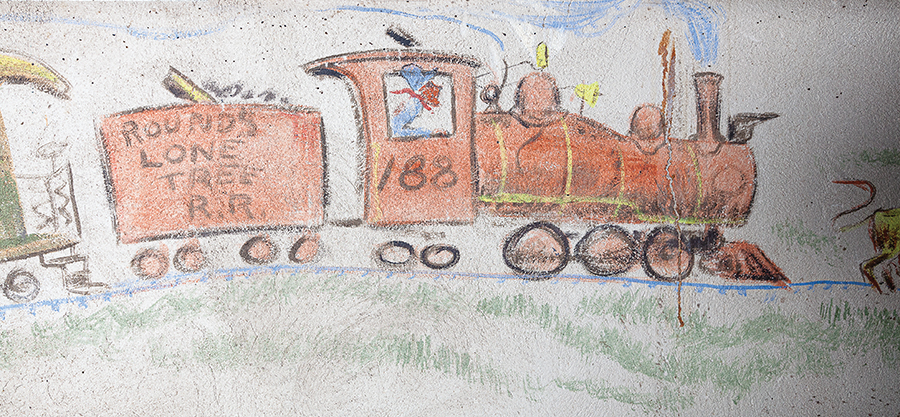
Picking our way through cave-like darkness, Kara’s flashlight revealed a 25-foot-long mural of a train with its chugging locomotive and boxcars displayed in bright primary colors. The quirky, madcap choo-choo seemed the perfect artwork for a toy store. The mural certainly had the look of an illustration by “the last of the great ‘ring-tailed roarers’” but I had to be sure. Even archaeologists uncovering ancient hieroglyphics in the great pyramids of Egypt performed outside research. I needed to do the same.

Extensive review of The Pilot’s archives from 70 years ago, together with interviews of individuals who could recall that time, helped me piece together the train mural’s story. The structure housing Denker’s was once called the Hayes Building. Prior to June 1948, Claud L. Hayes and his wife, Deila, operated side-by-side retail establishments there. Deila, like Kara Hodges now, ran a dress shop while Claud was the proprietor of the Hayes Book Store. Indiana native Claud had sold books in the community since his arrival in 1895. The establishment was typically laden to the rafters with magazines, books and newspapers. The Pilot described the store as being filled with “cheerful clutter.”

It was just the sort of place that appealed to Rounds, who, comfortably ensconced in the shop’s friendly confines, dispensed to all comers his “special brand of philosophical banter defying classification.” The newspaper advised its readers, “You haven’t started the day off right until you’ve exchanged greetings with Glen at Hayes over the morning papers.”

Claud Hayes died in 1948, and Col. Wallace Simpson acquired the bookstore from Hayes’ estate in June of that year. Simpson envisioned a new concept for the basement section of the store, focusing on children’s books and toys. The colonel set about making the necessary renovations. A November 12, 1948 article in The Pilot revealed that an artistic work, painted by the store’s most omnipresent visitor, would be transforming the children’s section into something special.

“A privileged few who have seen the mural painted by Glen Rounds in Hayes’ new basement say that it is his masterpiece,” effused the newspaper. “Even if he had never written all those books and illustrated them . . . they say this one great work alone would make him immortal.”


While Rounds’ fanciful choo-choo hardly ranks with DaVinci’s The Last Supper, it stands as a fine example of his work and apparently jump-started a fervent desire on his part to paint far larger murals, including a dream of adorning an 800-foot space with, The Pilot suggested, “a serpent left over from his carnival posting days.”

Discovery of Rounds’ train painting spurred me to look for more hidden artwork. After getting wind of my search, local Realtor Chris Smithson put me on a promising path. He had heard that the unfrequented basement area under the west side of Ashten’s restaurant also contained unusual decorative work on its walls. Owner Ashley Van Camp confirmed the report.

“Oh, it’s unusual, all right. It’s of a foxhunt scene, and it’s unlike anything you’ve ever laid eyes on,” she said.

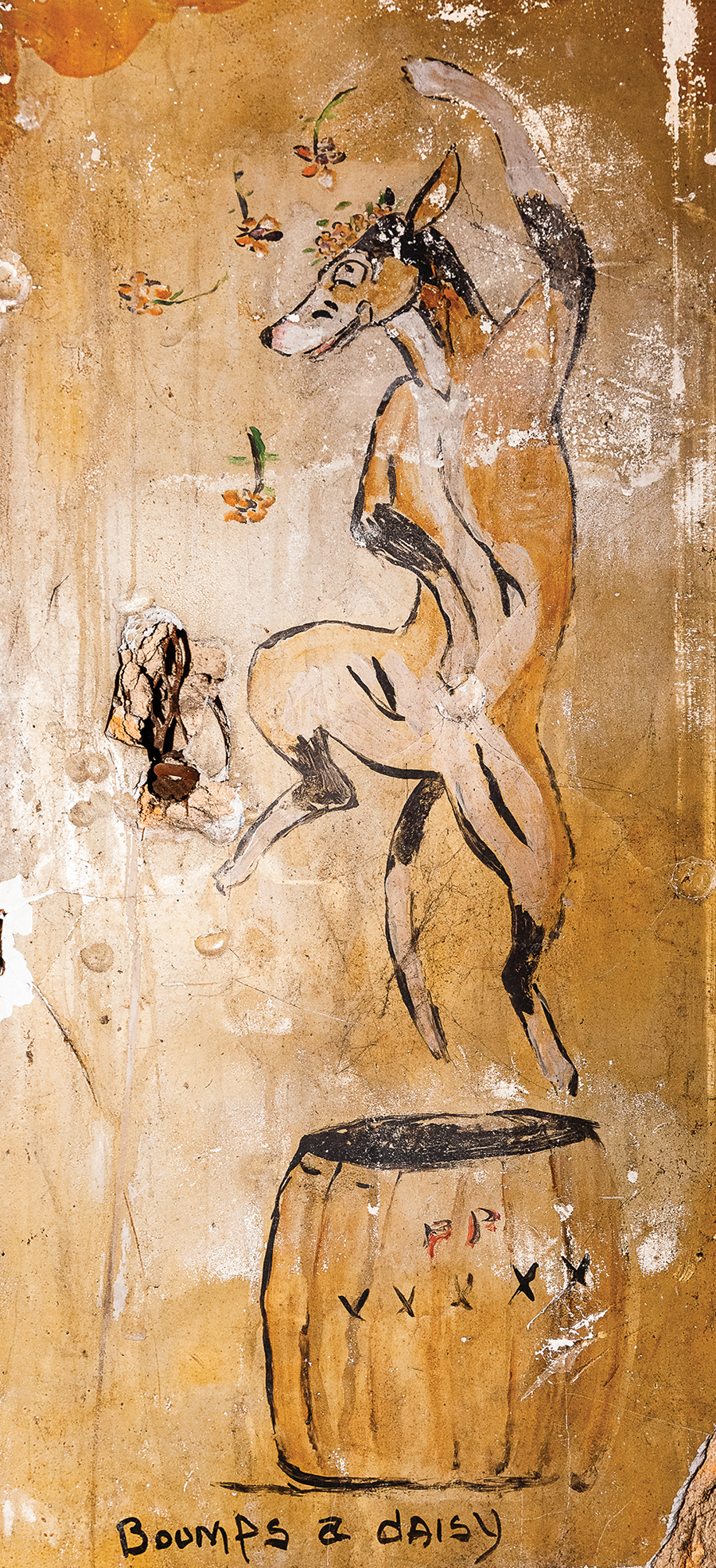
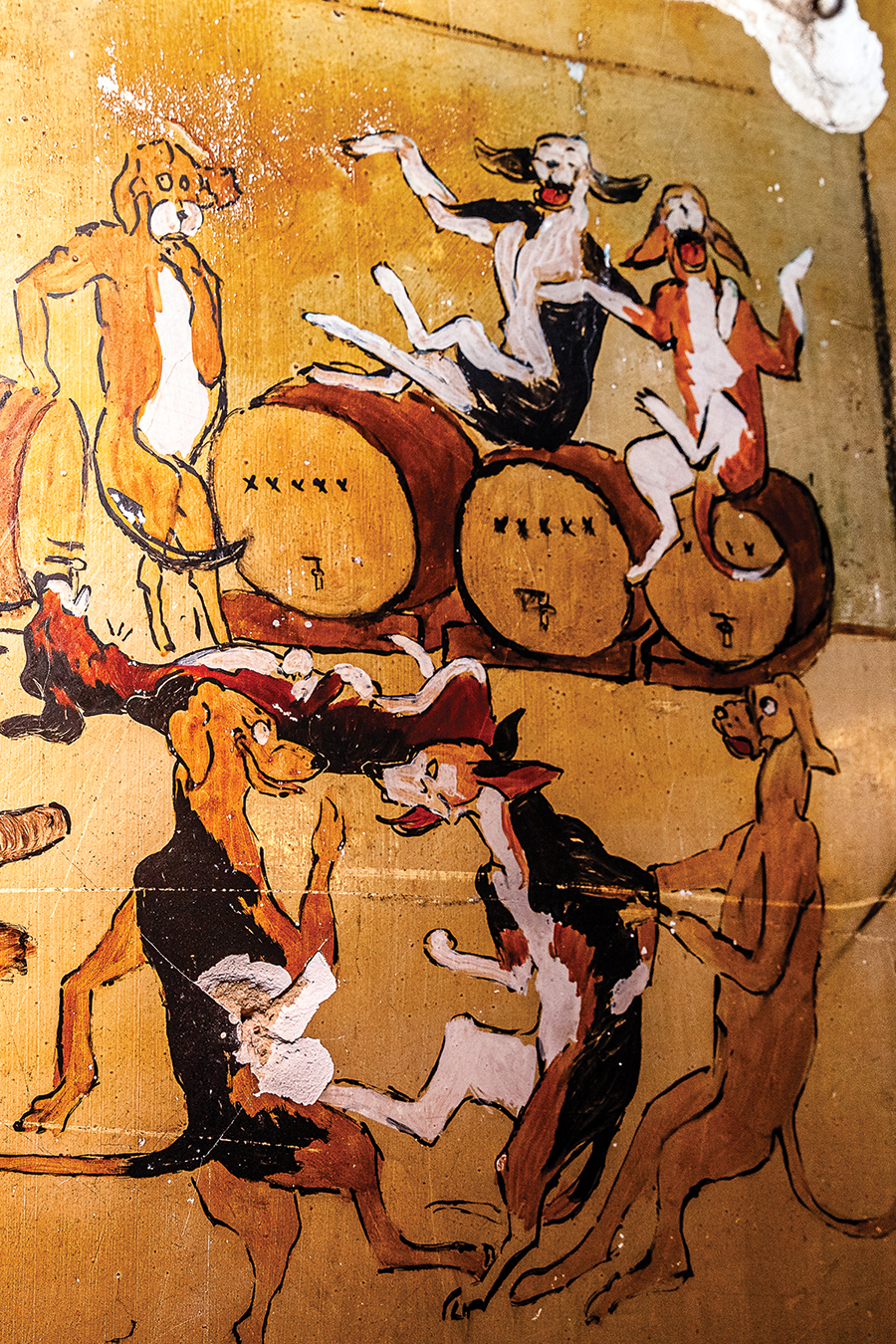
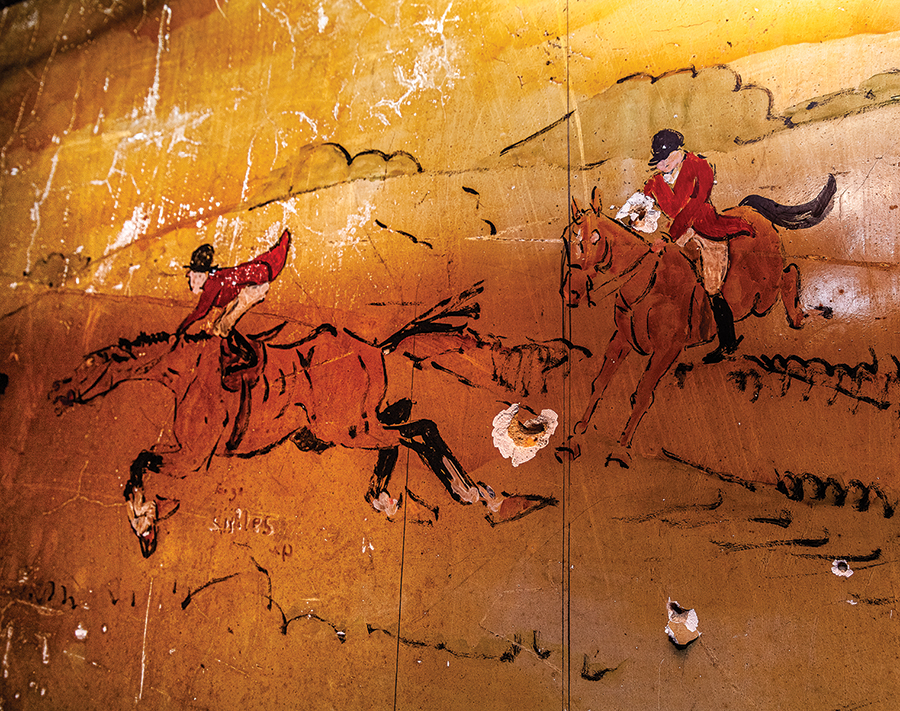
I joined Ashley and her husband, Charlie Coulter, behind Ashten’s and we negotiated the exceedingly narrow steps to the basement of the 118-year-old structure. Did all the early builders of Southern Pines have Lilliputian-sized feet? The area at the bottom of the stairs is not much more than 100 square feet but, just as Van Camp advertised, the mural displayed over three of its walls was anything but ordinary. In this depiction of a “running of the hounds,” the would-be quarry turns the tables on his pursuers. A grinning Mr. Fox, certain he faces no danger, speeds away atop a tricycle. Behind him, horses and riders topple like tenpins. An actual hole in the wall draws the attention of several hounds as a potential escape hatch for the fox. The overall effect is hilarious. The piece, terrifically illustrated in brown, black, and red tones, is an impressive and painstaking work of art.

I asked Ashley the standard reporter questions: “Who did it? When did the artist do it? Why was it done?” She pointed to a signature on one wall of the mural with the name “Mayo,” dated 1940. The name rang no bell with any of us. As to the circumstances that led to the painting, Ashley said that the basement is thought to have housed a small speakeasy during Prohibition, making the hounds of ’40 something of an homage to the dry days.

Ashley had long contemplated rehabilitating this forgotten area and incorporating it into the restaurant. The idea of installing a small, intimate bar and reprising the basement’s speakeasy legacy appealed to the owner. The work would require the eradication of a nest of dangling wires, restoration of faded portions of the mural, and the removal of three panels separating various portions of the paintings. The project was something of a pipe dream until COVID-19 hit and the resulting statewide restrictions changed everything for restaurant owners and their employees. Ashten’s chef, Matt Hannon, suddenly had time on his hands. Van Camp asked him to get started on the rehab.

Suspecting that additional “Mayo” artwork might be hidden beneath the panels, Ashley had video equipment poised to record the unveiling. Voila! More comical illustrations appeared, all in excellent condition — inebriated hounds careening down a staircase; happy canines dancing and hoisting their glasses in toasts; and a hound prancing atop a whiskey keg with the words “Boomps a daisy” inscribed below. Mayo’s zany mural will eventually be on display for Ashten’s diners, perhaps in the “Boomps a daisy” room.

All that remained was to chase down and confirm the identity of the artist. Through her equestrian connections, Ashley learned that one Newton Mayo painted a portrait of the late Pappy Moss, benefactor of the Walthour-Moss Foundation and former master of the Moore County Hounds. Today, that painting hangs at the Full Cry horse farm of Mike and Irene Russell. According to a 2003 obituary in Virginia’s Richmond Times-Dispatch, Newton T. Mayo, who passed away at the age of 92, was “a retired horseman who earned a national reputation for his pastel portraits of Thoroughbreds and canines.” He raced Thoroughbreds up and down the East Coast and visited the Sandhills on several occasions. In its March 8, 1940 edition, The Pilot reported that Mrs. Newton T. Mayo won the fifth race of a steeplechase — approximately 1 mile on the flat — aboard Ever Ready.

While the middle of Mayo’s working life was devoted to training and racing horses, he was known for his artwork both as a young man (he would have been 29 when he painted the murals in Ashten’s basement) and when he returned to it in his later years. His commissions included equine paintings for President Ronald Reagan and a portrait of Barbara Bush’s springer spaniel. Displaying something of the same playful nature as his Ashten’s paintings, Mayo is quoted as saying that he preferred drawing pictures of animals “because they are less critical and ask for no flattery at all.”

And so, one thing leads to another. A half-dime to a haunted vault to Glen Rounds’ immortal choo-choo to a speakeasy fox and over-served hounds. Treasure, it seems, is in the flashlight of the beholder.  PS

Pinehurst resident Bill Case is PineStraw’s history man. He can be reached at Bill.Case@thompsonhine.com.

Do Your Homework

Going nowhere and getting it done

By Deborah Salomon   •   Photographs by John Gessner

Call it quarantine, call it shelter in place, even house arrest. Call it going stir-crazy, looking at the same four walls, weeks on end.

Wait a minute — those walls need painting. Those floors could use a once-over. And how about creating something wild in the kitchen?

See how these residents turned home confinement into home improvement.

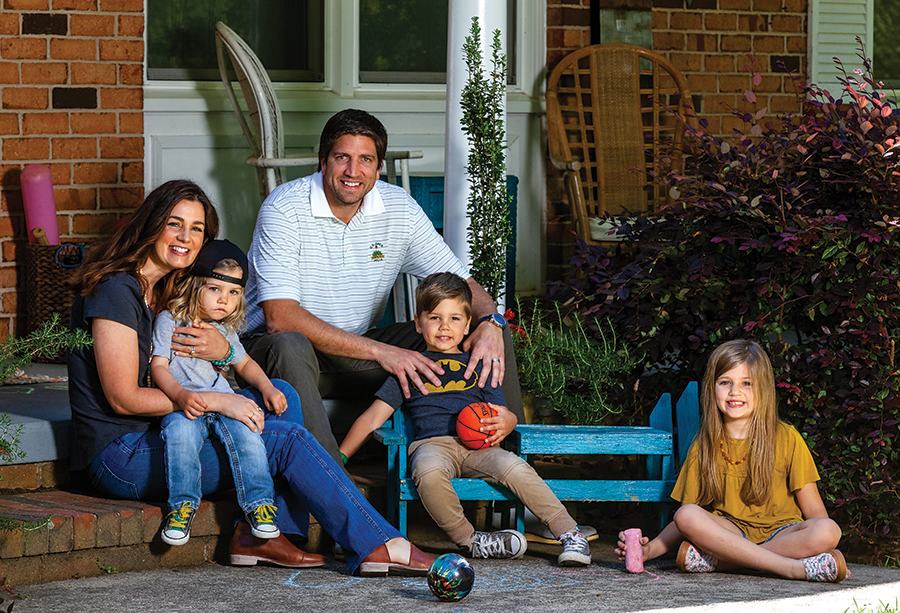
Erik, Harper & Jaime Hoffman

Jaime Hoffman

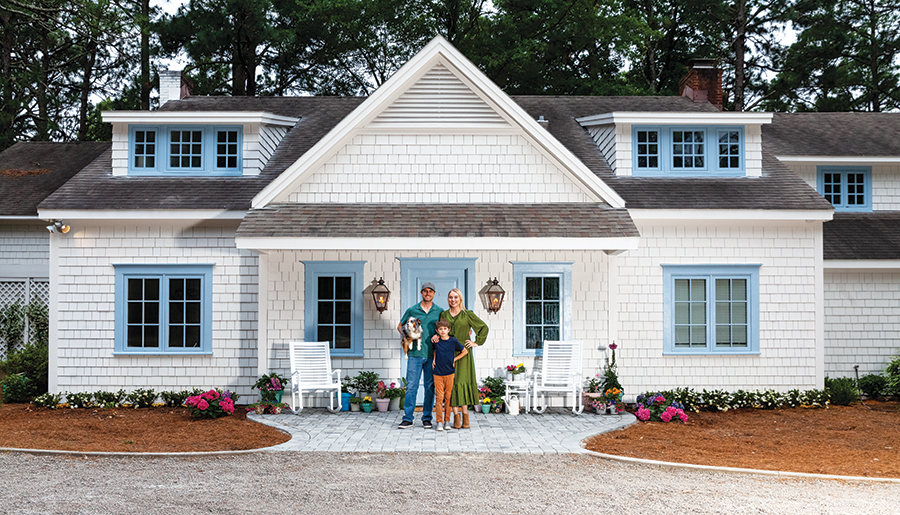
If beauty is only skin deep, the house Jaime and Erik Hoffman purchased in Weymouth desperately needed a dermatologist. Could anything be uglier than cedar shakes painted dark brown, with yellow trim? “Dingy and dated” was Jaime’s assessment. They decided on a radical transformation to white, with blue trim on the paned and bowed windows. Problem was, quotes came in upward of $11,000.

Let’s give it a try, they decided, although neither had ever painted exteriors. This might be just the thing to while away the quarantine, especially since the weather was sunny and warm.
First came two coats of primer, then two coats of paint applied to the rough shakes with a sprayer — another new experience. 
But that many window panes and frames would drive even Pete the Painter to drink. With the help of Google and YouTube, Jaime learned that windows could be covered with Frog tape. Even so, she had to open the upstairs windows from the inside and stick her head out to reach the trim.

The job took a week, with Jaime and Erik surviving as friends. Only casualty, their dog, who sat in the paint, necessitating a butt shave.

“Now, our house is bright and happy, like a (Nantucket) cottage,” Jaime beams.

Bright, happy and the talk of the neighborhood. “The best part was that neighbors stopped by and we talked from afar. That way, we got to meet people.”


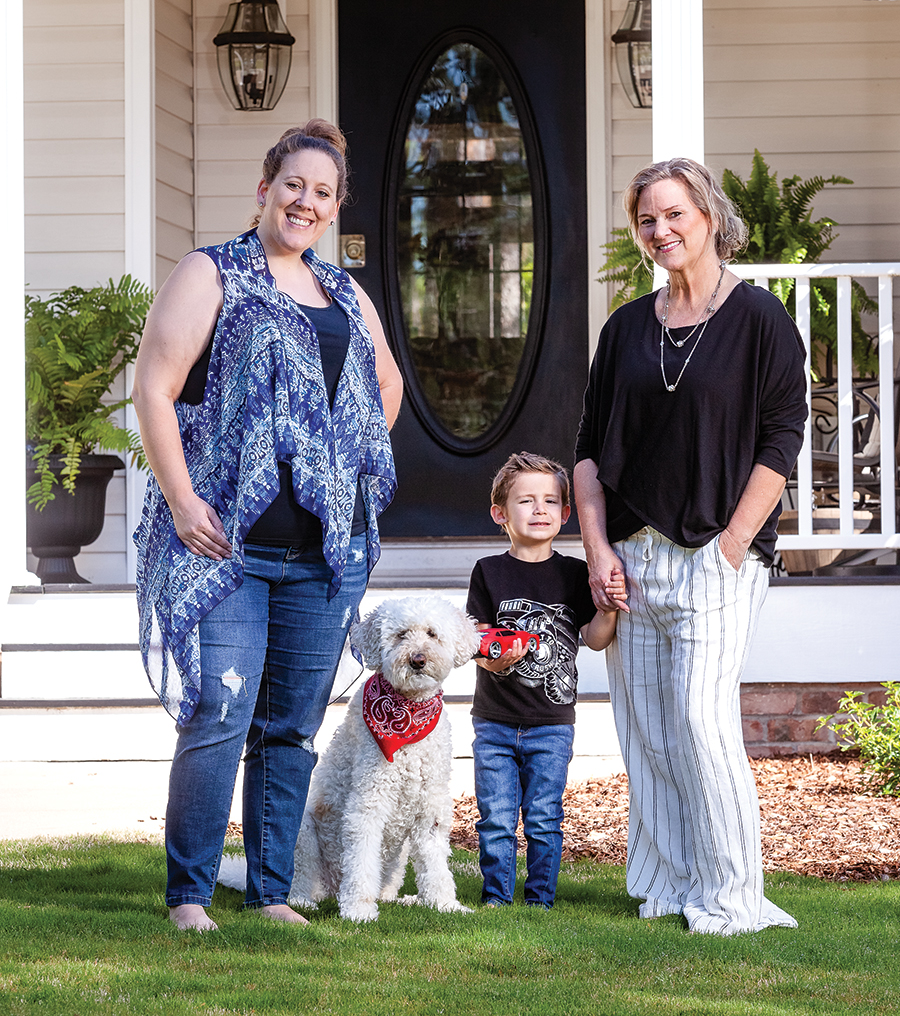
Heather Boksa, Ryder Boksa & Susan Clark

Susan Clark

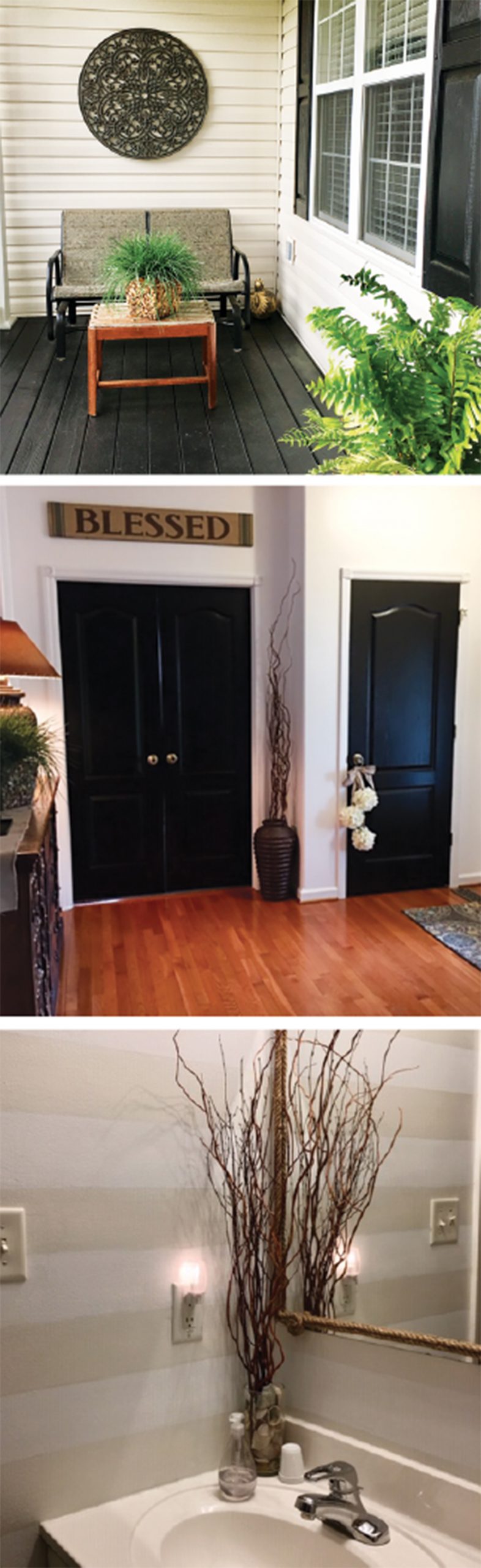
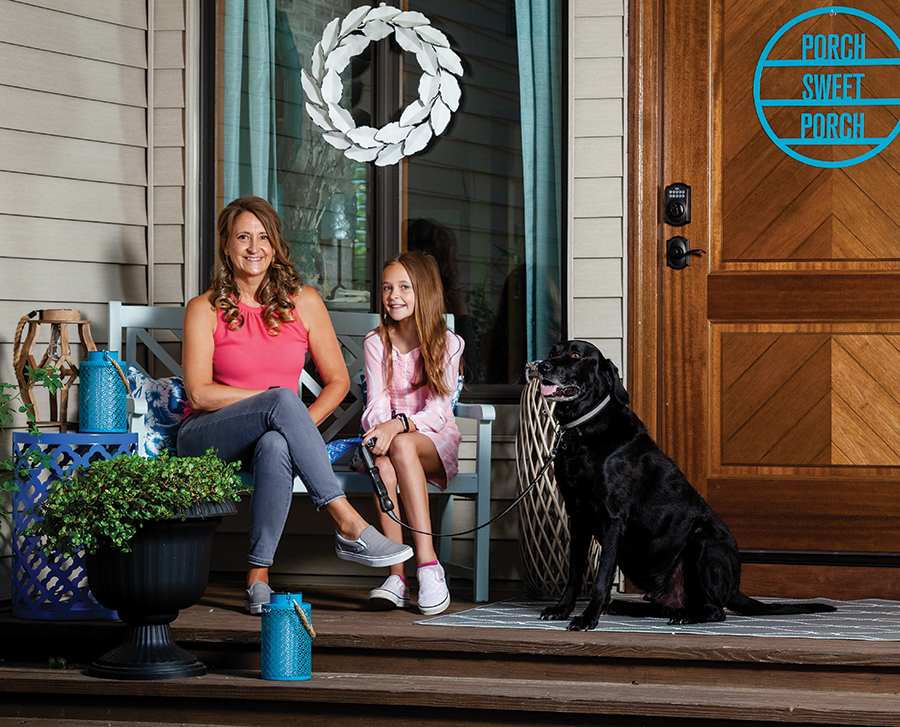
Recognizing and implementing trends were part of Susan Clark’s job, when she staged houses in Arizona. Makes sense she would apply this to her own home, recently purchased near Lake Pinehurst, with multiple paneled doors, all white. “Boring . . . ” Clark tried painting them grey. Not quite. “Black seemed like a trend,” part of the popular nouvelle farmhouse style. So she painted the (previously green) front door and all interior doors black. Green floorboards on the porch — equally passé — now sleek black, too.

“Everything in the house is in transition,” Clark admits, which is therapy for quarantined DIYers. Otherwise, Clark would be helping out at the uber-trendy Pine Scones Café in Southern Pines.

Clark didn’t stop at the doors. “I love the beach. We hope to retire there.” Until the time comes, this granny thirsting for salt water created a coastal bathroom more complicated than hanging a starfish over the shower. She liked a shiplap effect: boards, either left natural or painted white, mounted horizontally on the wall. Why go to the trouble and expense when she could draw horizontal lines with a Sharpie? Turned out the marker was less than permanent. Dampness made the lines run like weepy mascara. A contractor-grade marker wasn’t much better. She achieved an acceptable result by painting over the lines with two shades of white, which resemble horizontal boards. Add some industrial shelving, touches of ocean blue, rope glued around a mirror and she can practically hear the gulls strafing the trash can.

Outside, Clark and her grandson planted veggies and watermelon in raised beds.

“These projects made the quarantine more bearable,” she concludes.


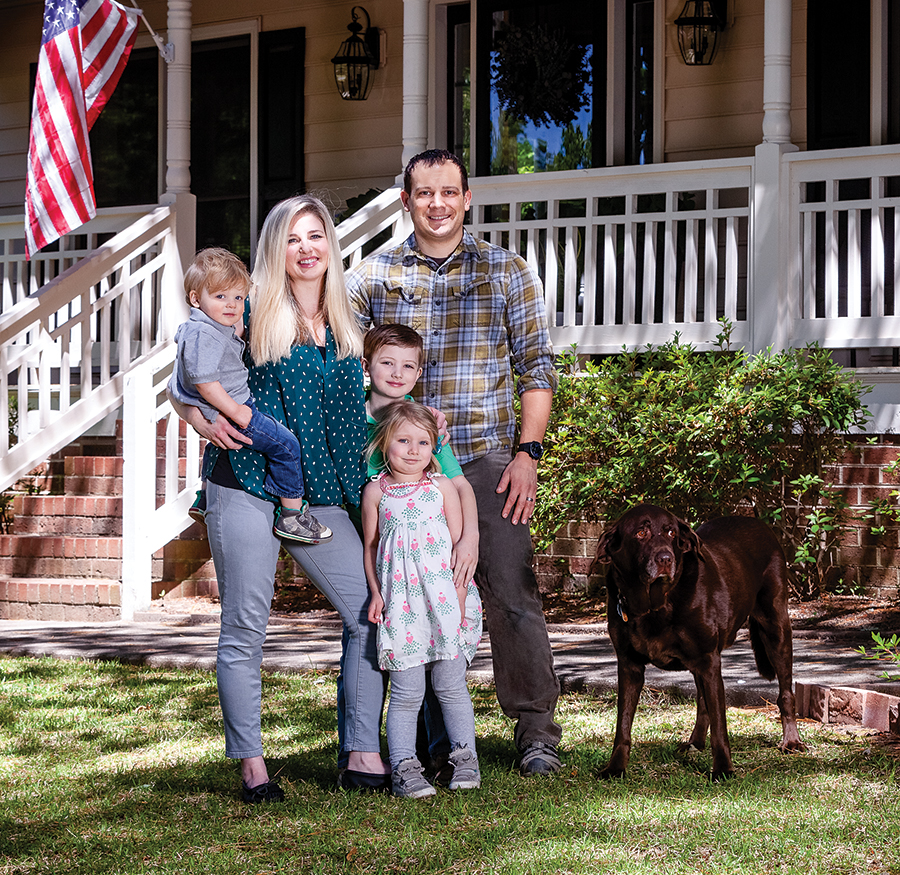
Luke, Monica, Tucker, Blair & Andrew Ruszkiewicz

Monica Ruszkiewicz

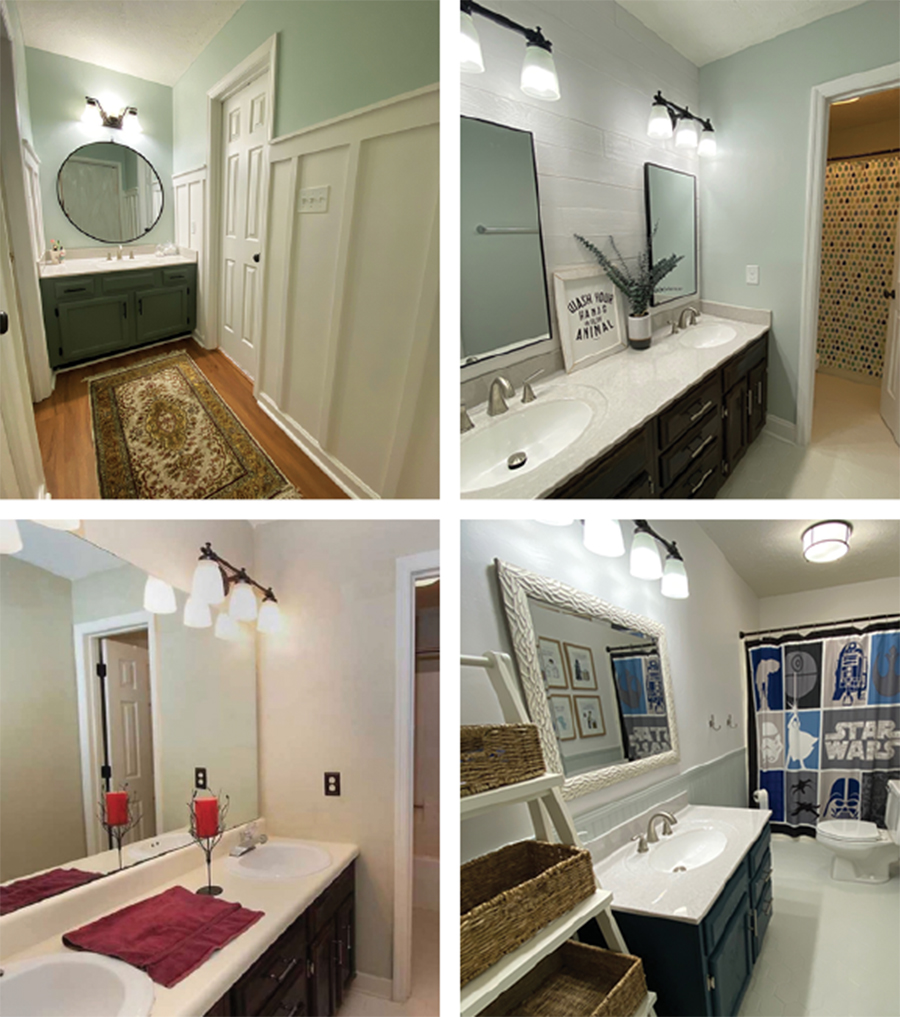
True, Monica Ruszkiewicz and her husband applied only cosmetic upgrades — no plumbing tasks — to the bathrooms. But their house in the Center South neighborhood of Southern Pines has four. They have three young children, which meant trading off a toddler for a paint brush. Since Ruszkiewicz was working from home as well as homeschooling, most upgrading was done evenings and weekends.

Identifying skills was important, early on. “He’s good with the muscle, I do the finishing work,” Ruszkiewicz says. Not that either has much experience. “We’d never done more than paint walls and install faucets.”

Their three full baths and one powder room needed tougher love. This included spray-painting and relocating light fixtures, sanding/refinishing existing vanities, replacing countertops and covering tile and grout with a magical Rust-Oleum “paint” that seals and freshens. Also creating board-and-batten, shiplap, chair rail, beadboard effects on some walls, papering others — no mean feat for beginners.

They decided to use the same palette in all four bathrooms, for continuity. Makes buying towels easier, too.

The project took about eight weeks to complete. Even before the stay-home order, this military couple had declared 2020 the Year of the Bathrooms. Now, with nowhere to go, “We hunkered down and got it done,” Ruszkiewicz says.

Lesson learned: “People are more skilled than they think. Just roll up your sleeves and get started.”


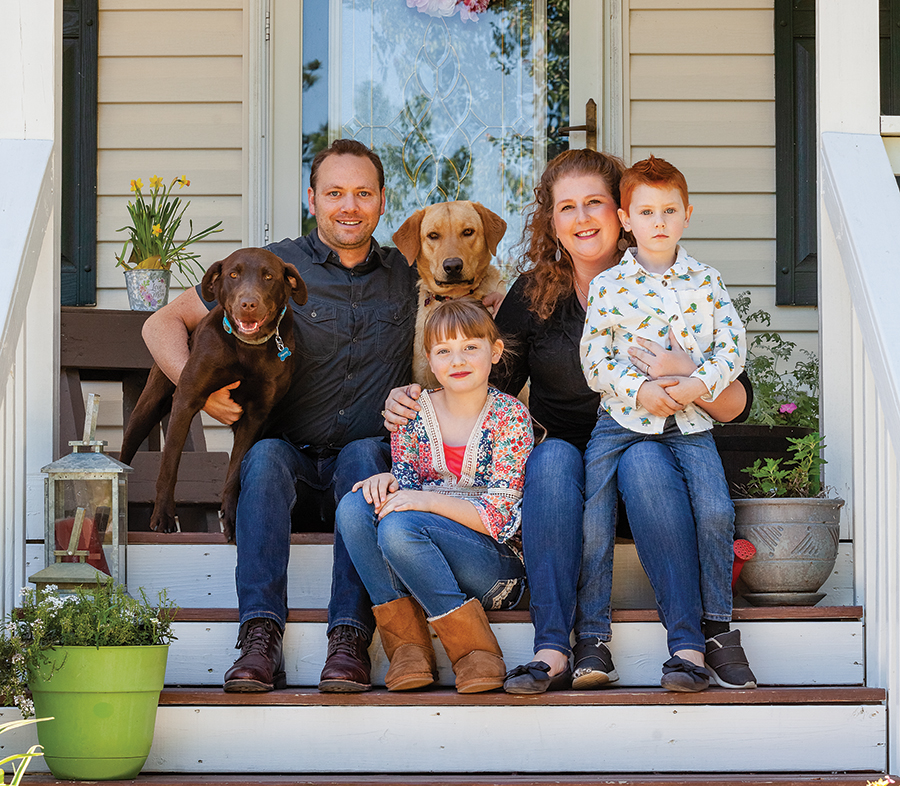
J.C., Scarlett, Joanna & Nate Wells

Joanna Wells

Call her Jo the Ripper.

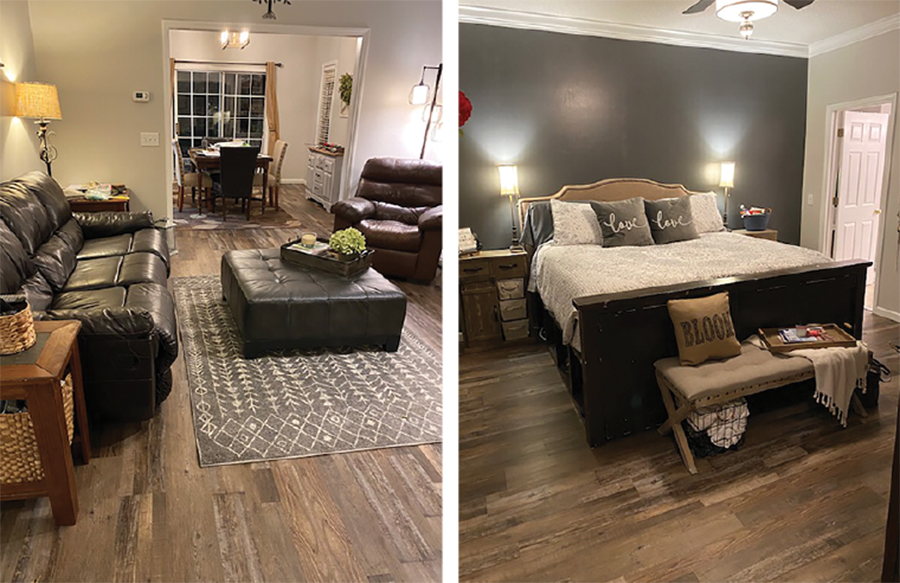
The Whispering Pines house this military family found — with a big fenced yard for their two breeder Labs, another dog and two children — was OK except for grungy carpet on some floors, engineered hardwood on others. When they found out their stay would be several years they decided to replace the lot.

Joanna Wells opted to rip out the old. Some had been glued down so securely that removal left gaping holes in the subfloor. These had to be patched and sanded.

Ghastly, back-breaking work.

“You owe me big-time,” she told her husband.

They took on the kitchen, dining room, living room and master bedroom while the Labs watched, puzzled, from the deck — for good reason. Penny is expecting puppies soon.

Hardwood was too expensive, so they chose vinyl lock-in plank in a walnut brown — a stunning backdrop to their leather upholstery and patterned rug.

“It really looks cool in here now.”

Wells, who teaches at Sandhills Classical Christian School, was on furlough, since “you can’t do pre-school (from home).” Otherwise, the job might still be waiting.

Encouraged by the results, the couple plans to add a shower to the guest bathroom this summer. Before that, Penny and the pups need a whelping box.


Denise Baker

Denise Baker

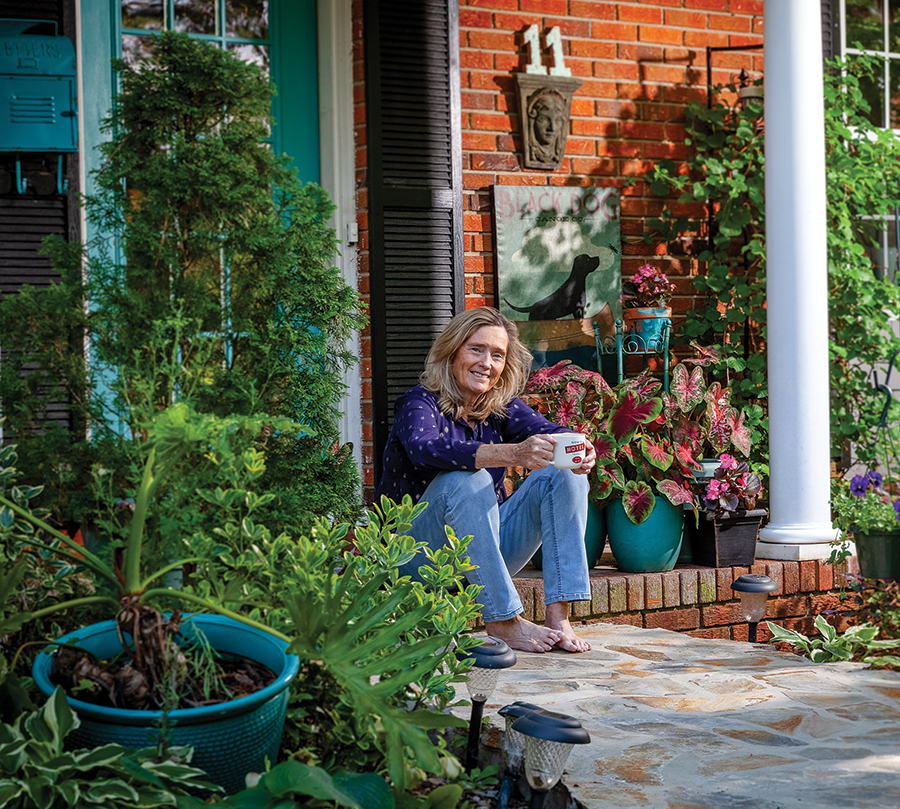
Everything Denise Baker touches turns to art. For years, she taught and inspired students at Sandhills Community College. Now retired — but not “retiring” — she viewed the spectacular weather during the quarantine as a reprieve from Mother Nature.

“In 42 years I’ve never seen such a beautiful spring,” she says.

So, while others were “going bonkers,” Baker, with helpers, got to work on her ranch house/studio in Whispering Pines, since “all this craziness kept me from focusing on art.”

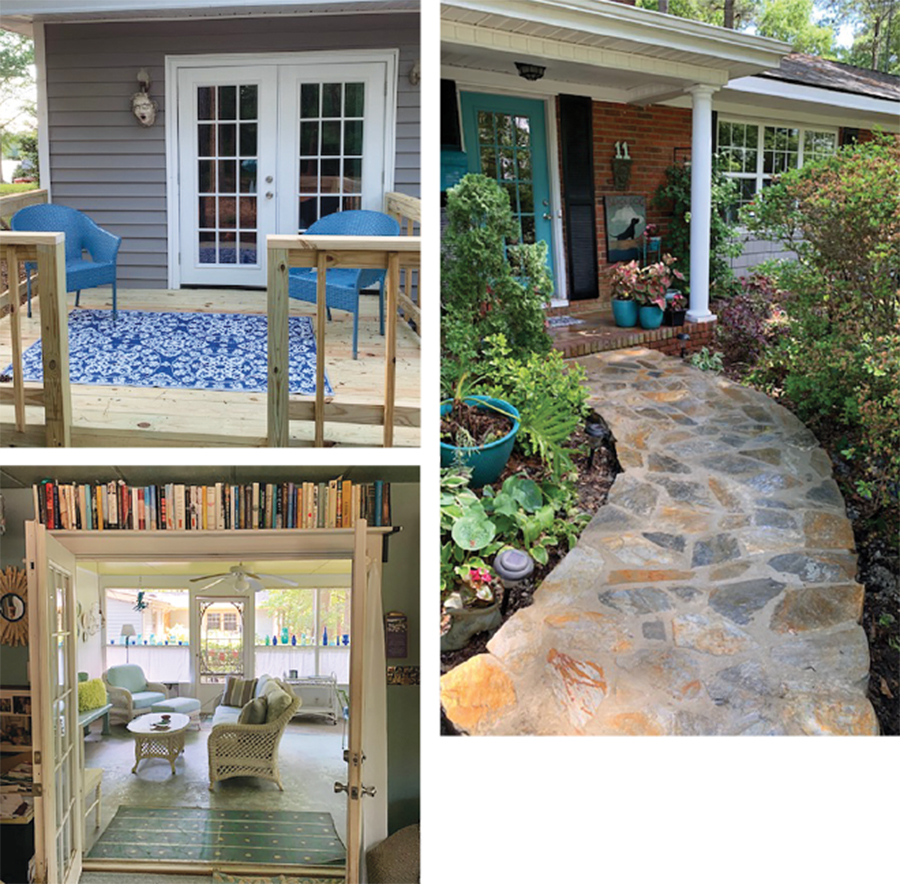
First, she replaced an ugly, cracked cement walkway with a stone mosaic of her design, more in keeping with the gracious front porch. Then, she added a simple deck accessed by French doors onto the side, where she placed deep royal blue all-weather wicker chairs and patterned rug. Baker had a bookshelf installed over interior French doors leading to a screened porch, and also recovered the cushions. Other door-topping shelves hold pottery.

All this, plus some clean-outs, in just a month. “My goal for the rest of the quarantine is to get the backyard in shape,” Baker says. That will happen after a short reprieve on Pawley’s Island, the perfect antidote to cabin fever, even when the cabin is as creative as Baker’s.


Lindsey, Oakes, Bill, Bode & Sloane Lindquist

Lindsey Lindquist

That noise you hear is Picasso applauding from his grave.

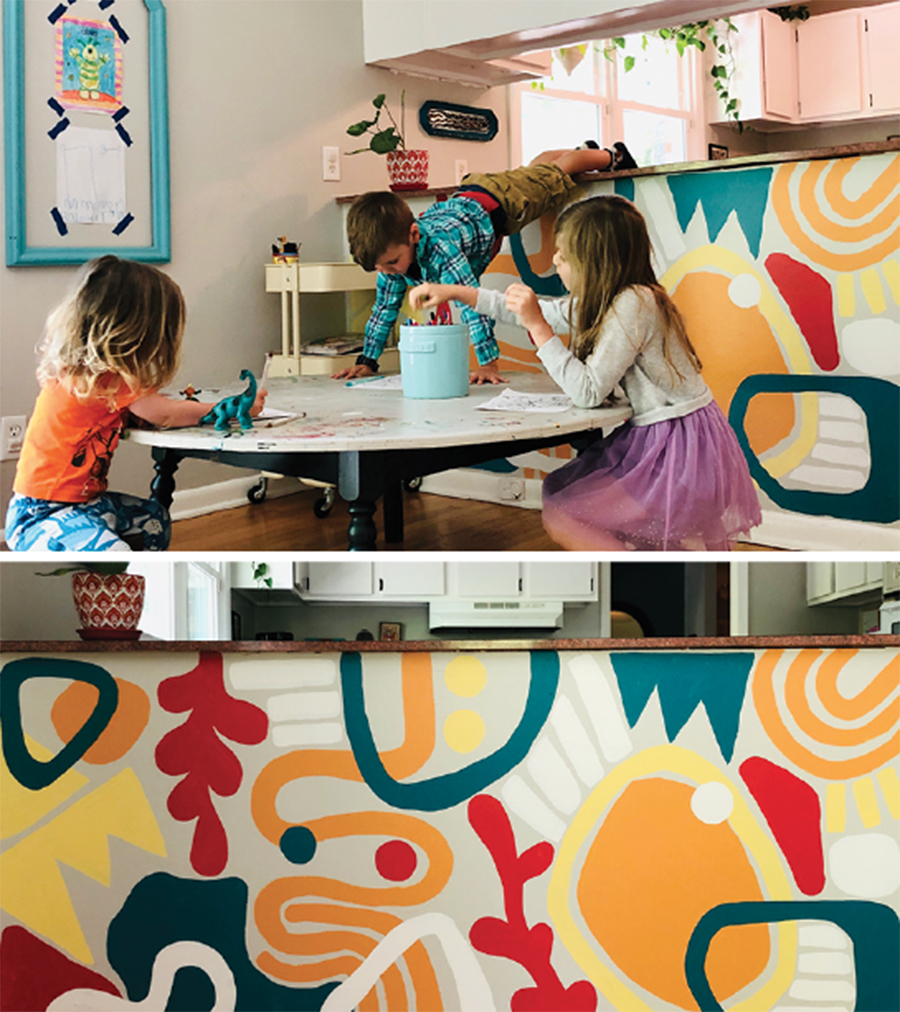
Lindsey Lindquist is an abstract artist with three kids under 6 and assorted livestock in their Weymouth/Southern Pines backyard. Children that age put sticky hands everywhere, including walls. Instead of following them around with a bottle of Fantastik, Lindquist decided to paint a mural on the half wall between the kitchen and the little ones’ craft corner.

The mural not only disguises fingerprints but showcases Mommy’s business — the most recent installation being the children’s glassed-off playroom at remodeled Pinehurst Toyota.

Lindquist calls creating the mural a “stress reliever” during the long days when, if not homebound, the kids would attend Moore Montessori Community School. Otherwise, call it bloomin’ gorgeous, if abstract is your cuppa green tea. Amazingly, she completed the mural in one afternoon, using paint left over from other projects. The kids “helped” paint reachable parts.

“I wanted to make a happy, creative spot,” she says. Also provided, a low craft table found at Habitat.

Lindquist, a Pinecrest graduate, studied painting at Arizona State University. Her ambition: illustrate children’s books. Elsewhere in the house she has channeled Fauvist Henri Matisse. “My husband is super-tolerant of how the house is decorated,” Lindquist admits.

Could Jackson Pollock be a mere splatter away?


Trish & Reece Baldwin

Trish Baldwin

Hey, it worked for Tom Sawyer.

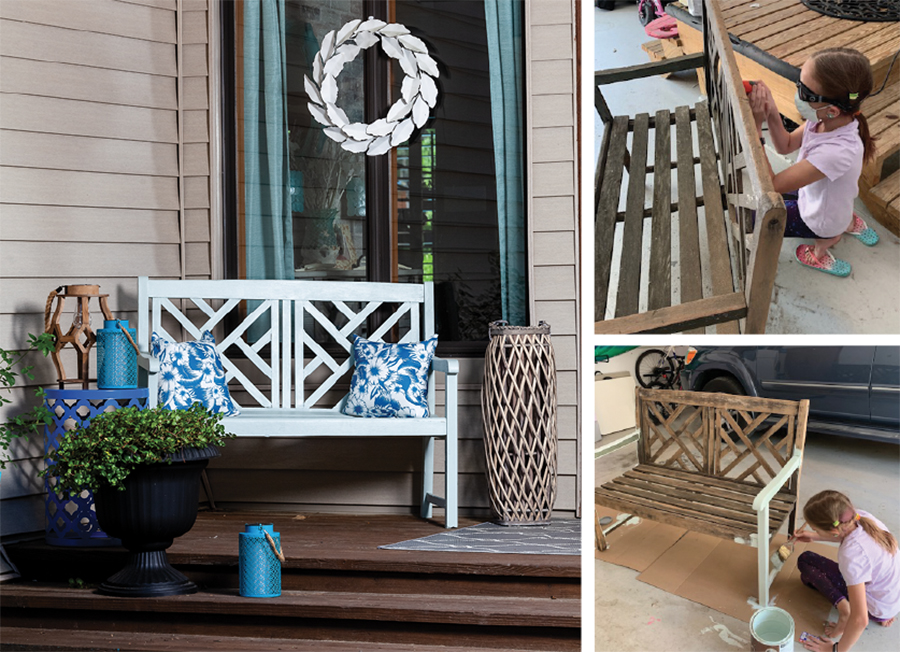
“When we moved in there was a garden bench that had been left rotting under a tree,” Trish Baldwin says of their Pinehurst home.

To save or not to save? Baldwin was busy with more important tasks. “Besides, I don’t like sanding.” Her 11-year-old daughter, Reece, seemed interested once the novelty of no school wore off.

“I showed her how to use the sander,” Mom says. Then they rustled up some blue paint to match the front door.

Painting slats is a tedious job — but the pre-teen has a variety of skills. She already sews, cooks from online recipes (cinnamon buns for Mother’s Day) and put together a craft table from hundreds of (Reese’s) pieces.

After sanding, the bench required two coats of paint. A sprayer would have been easier but Trish insisted on using materials at hand.

The result? Something the uppity Plow & Hearth catalog would unload for $300. Plus shipping. Some assembly required.


Kelly Carty & Mark Saurer

Kelly Carty

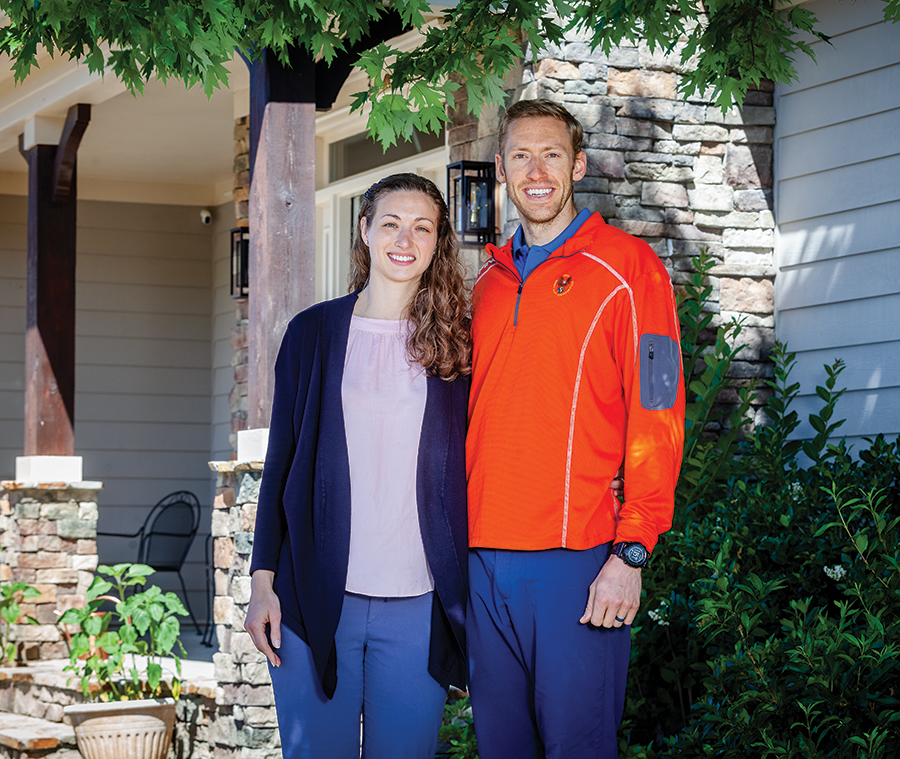
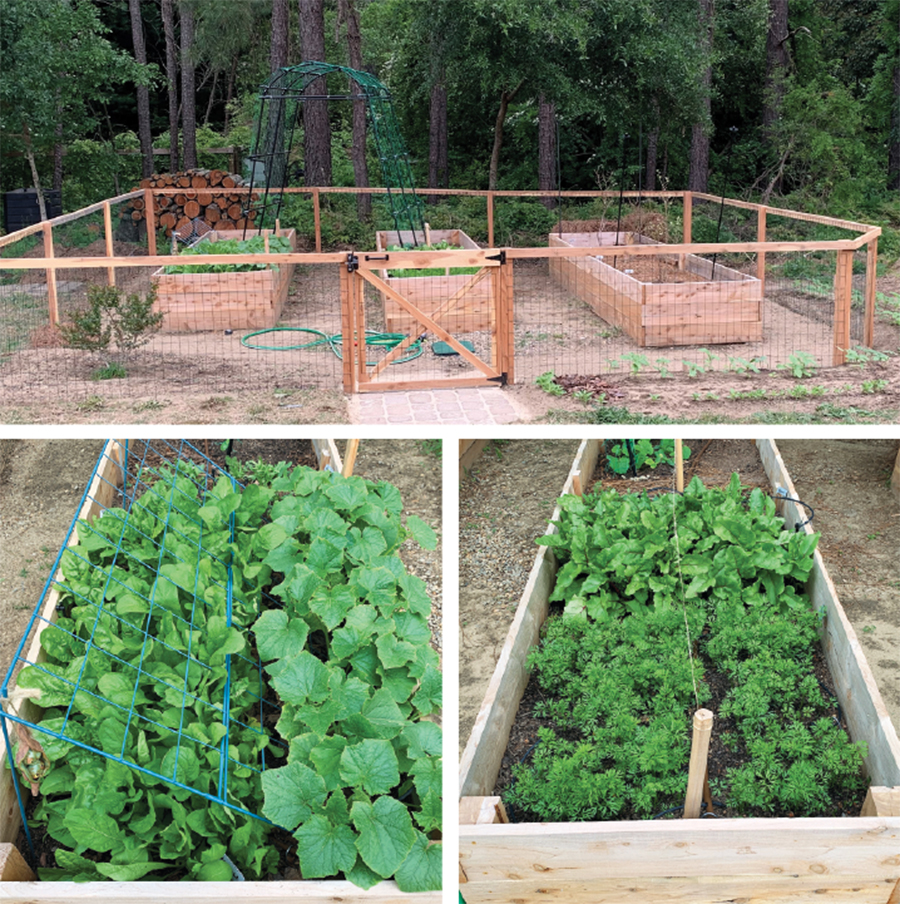
These raised beds are raising eyebrows. Surely, with wood-framed wire fence and gate they are the pride of a master landscaper.

Not exactly. Kelly Carty and her husband, Mark Saurer, are both civil engineers and, more importantly, enthusiastic researchers and planners. For their first home, in Whispering Pines, everything had to be spot-on.

“We found the best materials, how to position beds for the right amount of sunlight,” Carty says. “I’m the planner, he’s the executor.” His execution took only three days, in March.

Carty grew up on a farm, later traveled with the military, putting that all behind her for a recent degree in public policy from Duke.

No technical detail was overlooked. They concocted a proper soil mixture before burying the first seed, which was nourished by homemade compost. When the seedlings appeared, they were covered by a special fabric.

Their first harvest — arugula, Swiss chard, parsley, dill, cukes — is in and will be followed by summer and fall plantings.

“We selected this project because we love to cook, we love fresh vegetables, and nothing beats harvesting them from your own backyard,” she says.

The deer may be stumped but a few aggressive rabbits agree.  PS

Poem

Where I’m From

I am from a two stop-light town; from sweet tea and Crisco shortening

I am from a house with one bathroom and six inhabitants; rocking chairs by dawn and cozy fire

pits by dusk

I am from muscadine grape vines, big oaks, and dandelions

I am from Purvis and Chriscoe, Jenny and Jerry; blonde hair and blue eyes, hard work and family

time

From don’t speak if you have nothing nice to say to no blood or no bones — dry it up, from corn

doodles and goo-goo bars

I’m a river girl of Scottish descent, vacationing on the ocean’s shores, from callused hands in a

textile mill and World War II

I am from places one only longs to raise their children, from a small town with a big impact, and

a calling to somewhere far away with hopes the feeling of this place will always follow

— Mallie Clara Purvis

Moore County Writers’ Competition First Place Poetry Grades 9-12

The Legend of Eddie Pearce

How the “Next Nicklaus” found new life on the rocky road to the Sandhills

By Bill Fields

As things go in dating, once things have gotten serious, you meet the parents.

The first time Linette Smith visited the Florida home of Doris and Wes Pearce, she was struck by the contents of one particular room with a bunch of trophies. Linette knew her boyfriend, Eddie, as a car dealer at Larry Rigby Chevrolet in Abilene, Texas, who had sold her a new 1986 Camaro Berlinetta.

“Were you good at something?” Linette asked Eddie upon seeing the shelves full of silver curated by Eddie’s mother.

“Oh, yeah,” Doris interjected, “he was a golfer.”

In fact, Doris’ younger son was a very, very good golfer who before he had a driver’s license was being viewed as someone who not only could win on the PGA Tour but dominate it, a generational star in the making. Eddie played liked a man when he was a boy.

Gary Koch, a six-time tour winner and longtime television broadcaster, recalls a 1969 high school match in which he and Pearce, his fellow King High School star in Temple Terrace, Florida, were grouped with the No. 1 and 2 golfers of another team. It was a water-guarded par-5 that called for a drive, layup and third shot onto the green. But not if you had Pearce’s talent and strength.

“The three of us had layed up, and Eddie takes out his 1-iron, which he was so good with, and powers it up in the air, over a lake and onto the green,” Koch says. “I glanced over at the other two guys and they’re shaking their heads like, ‘Are you kidding?’ I would still put Eddie among the top 10 ball-strikers I’ve ever seen — and that’s when he was 18 or 19 years old.”

Pearce is 68 now, nearly a half-century removed from winning the 1971 North and South Amateur at Pinehurst No. 2, another rung on his ladder to the greatness so many predicted.

He has been back in the Sandhills since late 2018 as general manager of Southern Pines Nissan Kia, where many customers know his name if not all the stories. “I make sure I meet as many people as I can when they come in because I know 95 percent of them play golf,” Pearce says. “They don’t know if I play or not. So, I’ll sit down with them and introduce myself to them and they say, ‘Oh, I remember you.’ It’s amazing how many people do remember me.”

Pearce has been a success in the car business for almost 40 years, closing sales instead of closing out tournaments, which never became a habit once he turned pro and grew too familiar with closing time.

“It was probably 8-to-5 that I was going to make it to 35,” Pearce says. “Now I’m 68. Man, it’s been unbelievable. What a ride.”

He played 195 PGA Tour events, most from 1974 through 1981, although he made an improbable return for an additional season in 1993. The player who turned heads as an amateur never won on the biggest stage, earning four runner-up finishes among just a dozen top-10s.

Pearce’s golf journey began in the Tampa area when he was just a toddler. Babe Zaharias, who owned Forest Hills Country Club with her husband, George, put a club in Eddie’s hands when he was 3. “It’s all I did,” he says. “It’s all I wanted to do.”

He was carrying a money clip and wearing alligator-skin golf shoes by the time he was 16, a success in money games with the grown-ups in Tampa and in formal competition with his peers. He won the 1968 U.S. Junior Amateur at The Country Club in Brookline, Massachusetts — dispatching a handful of golfers who would become Tour standouts. “I knew I would win when I stepped on the first tee,” Pearce told his hometown newspaper that week. “I was brimming with confidence.”

Prior to claiming that national crown, Pearce was a dominant force for years at the Press Thornton Future Masters, a premier junior tournament in Dothan, Alabama, winning seven consecutive age-group titles between 1963-1969.

If Wes was in Eddie’s gallery, as he usually was, there was always a first-tee ritual. “I’d say to Dad, empty your pockets, because he always carried about three dollars worth of change in his pockets and he would jingle it,” Pearce says. “I’d put it in my golf bag and give it back to him after the round.”

Longtime Southern Pines resident Mike Fields, who played a lot of junior golf, was a regular at the Future Masters. “When I was 7, 8 and 9 years old, I remember watching Eddie play at Dothan Country Club,” says Fields, 60. “He had flowing blond hair and what I thought was a tour-pro swing. He was a legend in Dothan, always the talk of the tournament. All the kids talked about how far he hit the ball and that the ball sounded different coming off his clubs. I remember he was also very friendly to the younger kids who idolized him.”

Pearce’s contemporary, Ben Crenshaw, a member of the World Golf Hall of Fame, told GolfChannel.com in 2013, “I don’t think I’ve ever seen anyone with as much talent as him. Eddie had such a gorgeous, powerful swing. He could just hit the most beautiful shots you’ve ever seen.”

In his formative years, many of those shots were hit with plenty of cold, hard cash on the line. As a teenager, Pearce fell into a group of gambling golfers at Bardmoor Country Club in Largo, Fla. “There were money games with guys he perhaps shouldn’t be playing with,” says Koch. “But Eddie was always comfortable in those situations, almost weirdly so. He wasn’t too worried because he knew he was better from the standpoint of physical talent. Those guys would bet on anything — it was an interesting cast of characters.”

One of the regulars was Martin “The Fat Man” Stanovich. Once, after a week of thousand-dollar Nassaus, Pearce had won nearly $25,000 from Stanovich. Not long after that, Pearce was in a practice bunker working on his superb sand game. He had been warned to leave good enough alone when it came to further bets with Stanovich, but didn’t listen.

“Marty was watching me hit those sand shots,” Pearce recalls, “and he said, ‘Damn, you’re pretty good.’ I said, ‘Yeah, I am.’ He said, ‘Well, you want to hit some shots, $100 for closest to the hole?’”

The wagers grew. After 90 minutes, Pearce had lost $20,000 to The Fat Man. “I walk up to the clubhouse and I’m in a daze,” Pearce says. “Lloyd (Ferrentino, who ran the course) said, ‘He got you, didn’t he?’ Marty was a magician out of the sand. That was a hard, hard lesson. I know I had to play a lot of golf to get that money back.”

In the spring of 1969, Pearce, Koch and their King High teammates won the Florida state championship with a four-man, 36-hole total of 579. It remained a Sunshine State record for 30 years. Pearce was heavily recruited and went to golf powerhouse Wake Forest, where he stayed for two years before deciding to turn professional.

Sports Illustrated had referred to Pearce as the “Next Nicklaus.” With a powerful lower body and effective leg action, Pearce resembled the Golden Bear. “It was the time of the 1-iron and Eddie could really hit the long irons,” Koch says. “He had a bit of an upright swing, and he had big legs and could create speed and get the ball quickly into the air.”

Eddie’s personality was more King than Bear, outgoing like Arnold Palmer, the man who had convinced him to go to Wake Forest. Pearce never met a stranger, and his outgoing nature made late nights happen all too easily. Pearce was runner-up in his fourth tournament of 1974, the Hawaiian Open, but was never really able to build on that early promise. He safely kept his exempt status as a rookie, finishing 44th on the money list, but only improved to 39th in 1975.

Detailed statistics for that era aren’t available like they are now, but Pearce’s putting, particularly once he became a pro, didn’t match his long-game skills. “Back in high school we used to joke that if I could ever hit it like he did and he could putt like me, nobody would ever beat either of us,” says Koch, who was known as an excellent putter.

Pearce loved life on the road — too much — and didn’t have the self-discipline to practice more and party less. “A lot of guys talked to him,” says Roger Maltbie, a friend of Pearce’s in their tour days in the 1970s, “but Eddie was going to do what Eddie was going to do.”

An instinctive, natural golfer from childhood, as his career stalled in the late-1970s and early 1980s, Pearce got bogged down with mechanics. “I had always had a good swing and played by feel,” he says. “I never thought about my swing until the last few years on tour. And then I thought about it all the time when I was over the ball. The more I thought about it, the worse I got.”

In 1981, when he was only 29 years old, Pearce finished 210th on the money list after being 225th the previous year, failing to earn as much in a season as he had in a week of money games as a teenager. He had neither a winning lifestyle nor golf game. “By that point he was struggling personally and professionally,” Koch says. “Some of us were worried about him. Was he going to be able to get his life squared away? What was he going to do?”

Tired, frustrated and unhappy, Pearce packed it in after that lousy 1981 season, unsure what his future would hold. “When I quit playing, I gave everything away that had to do with golf,” he says. The inventory of discarded equipment included two George Low Sportsman model putters Nicklaus had given him, clubs that a decade later were selling for thousands to collectors.

Pearce had an endorsement deal, doing commercials, for Don Reid Ford in Orlando, and was good friends with Reid and his business partner, Cesar Prado. (Prado is godfather to Eddie Pearce Jr.) They turned out to be the gateway to his second career. “I asked Cesar, ‘What’s the deal with this car-selling thing?’” Pearce says. “Cesar told me I probably would be real good at it because of how I was with people, the way I took care of sponsors and guys playing in pro-ams.”

Prado was right. He got Pearce a job at a dealership in Lakeland, Florida, that needed to improve its numbers. “That’s where he got his start, turning that store around,” says Prado, now retired in Texas. “Eddie is very personable, very likable and he had a knack for it. I’m just glad I was able to help a little bit and get him on a track where he could be successful.”

Over the next couple of decades, Pearce would put in three-month stints at dealerships across the country, becoming a specialist at organizing their operation and improving sales. “We’d take the store over, do all the training and all the advertising,” Pearce says. “If we turned it around, we’d come back and give them tune ups.”

Pearce was a sales manager at a Chevy dealer in Abilene, Texas, in August 1986 when Linette Smith came in to buy a Camaro. “His closer was having a little bit of a difficult time with me,” Linette says. “So Eddie decided to come in and close the deal.”

Linette got her Camaro and, in time, a boyfriend. “We were really, really good friends for about 3 1/2 months — we didn’t really date, we just hung out,” Linette says. “And then we went down for a weekend in Mexico and the rest is history.”

Pearce still enjoyed the bar scene, but that wasn’t Linette’s. “After I came into the picture, he settled down,” she says. Pearce curtailed his drinking, imbibing only occasionally these days. The couple got married in 1990. “Third time’s the charm for both of us,” Pearce says. “She’s put up with me for 30 years, and it’s been an amazing trip, a lot of fun.”

Linette played an encouraging role in Pearce’s return to competition in the early 1990s. Inspired by watching Hale Irwin win the 1990 U.S. Open at age 45, Pearce set about getting fit, losing more than 50 pounds. He failed at Qualifying School in late 1991, but a year later, at The Woodlands outside Houston, 40 years old and wielding a long putter, he got his card. The bittersweet part was that his father had died of lung cancer nine months earlier.

He savored practice rounds with buddies he hadn’t played with in a long time. But Dewars was now just the name of his dog, not his drink of choice. Though Pearce applied himself in ways that he hadn’t the first go-round on tour, he couldn’t find the magic that had made him a can’t-miss kid.

He missed 19 cuts in 27 tournaments in 1993, shooting just six rounds in the 60s and failing to record a top-25 finish. He was unsuccessful at Q-School following the ’93 season and, a decade later, in trying to earn his way onto the senior tour.

“I’m very proud of Eddie and the way he dug into trying to make a comeback,” Linette says. “It wasn’t for lack of trying that he didn’t do better when he got back out there. But perhaps Eddie wasn’t mentally prepared for all of it.”

Her husband was content to return to the car business, where he enjoys mentoring employees in whom he sees potential. One such young man worked in the detail department at Pearce’s previous dealership in Henderson but was interested in sales. He has moved up through the ranks and is now general manager of a dealership in Lee County.

“When you get somebody like that and they do well, it’s like it’s your kid,” says Pearce, a father of two. “If I can latch onto a couple more folks like that before my career is over, I’ll be happy. It makes me feel good to do that, because this business is a great business, it really is.”

Pearce has played little golf in recent years, although he and Linette watch a lot of tournaments on television. “Eddie might reflect on a certain course that he played in the 1970s,” says Linette, “but we just enjoy the game. We enjoy watching the young players come up.”

It’s a different game than it was 50 years ago, but some golfers stand out as they always have, if not as much as Eddie Pearce did before he didn’t.  PS

Reviving a Soulful Sound

A scruffy old guitar finds its voice again

By Stephen E. Smith   •   Photographs by John Koob Gessner

Ill bet

you’re nagged by a furtive longing to possess something that’s impractical. Maybe it’s Aunt Amelia’s Tiffany brooch or Granddad Ralph’s ’49 Mercury sedan. In my case, it’s always been a Stahl Style 6 guitar made by the Larson brothers of Chicago. Whatever the object, we know this: If we search long enough and can shell out the cash, we’re likely to get what we want. This is America; we invented conspicuous consumption.

Inspired by what comedian Martin Mull dubbed “The Great Folk Music Scare,” I bought my first guitar, a digit-mangling Kay archtop, in August 1961, from a pawn shop on West Street in Annapolis, Maryland. I was a rising eighth-grader and paid $15 I’d received for my birthday. Every Saturday that fall, I toted my caseless Kay to St. John’s College campus, where I sat under the last surviving Liberty Tree (on the very spot where patriots plotted the Revolution) and strummed “Goodnight, Irene” ad nauseam with five or six honest-to-God beatniks. On one of those cool autumn afternoons, a Maynard G. Krebs character handed me his guitar and said, “Here, give this a try.”

I strummed a G chord, one of the three I’d mastered. “Wow!” I said.

The proud owner beamed. “Plays like silk and chimes, like a chorus of seraphim,” he said.

“What kind of guitar is this?” I asked.

“It’s a Stahl 6,” he replied.

When I got home, I had to look up “seraphim” in the dictionary, but I knew in my bones what a Stahl guitar was.

For most of the 60-plus years that have slipped by since that autumn afternoon, I never happened upon a Stahl Style 6 I could afford. If I were a more accomplished player, I might have been willing to shell out $7,000 to $14,000 for a pristine original-condition Stahl, but alas . . . 

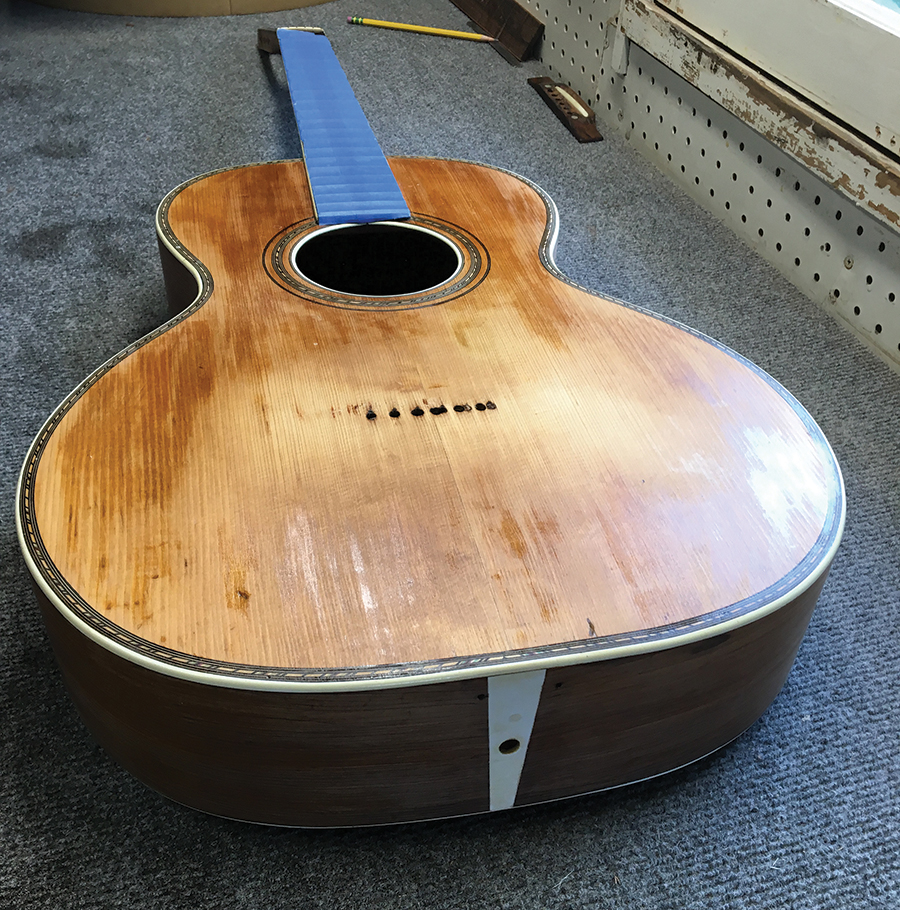
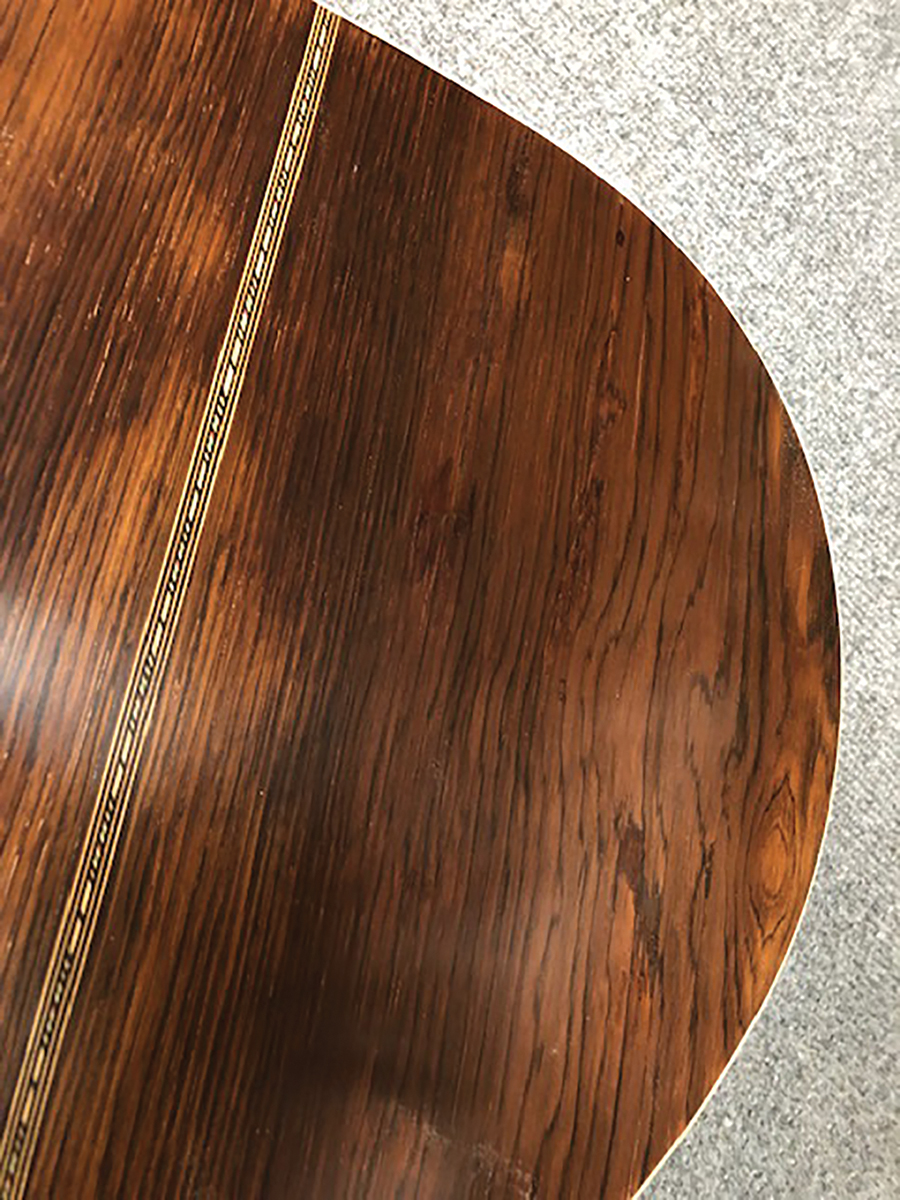
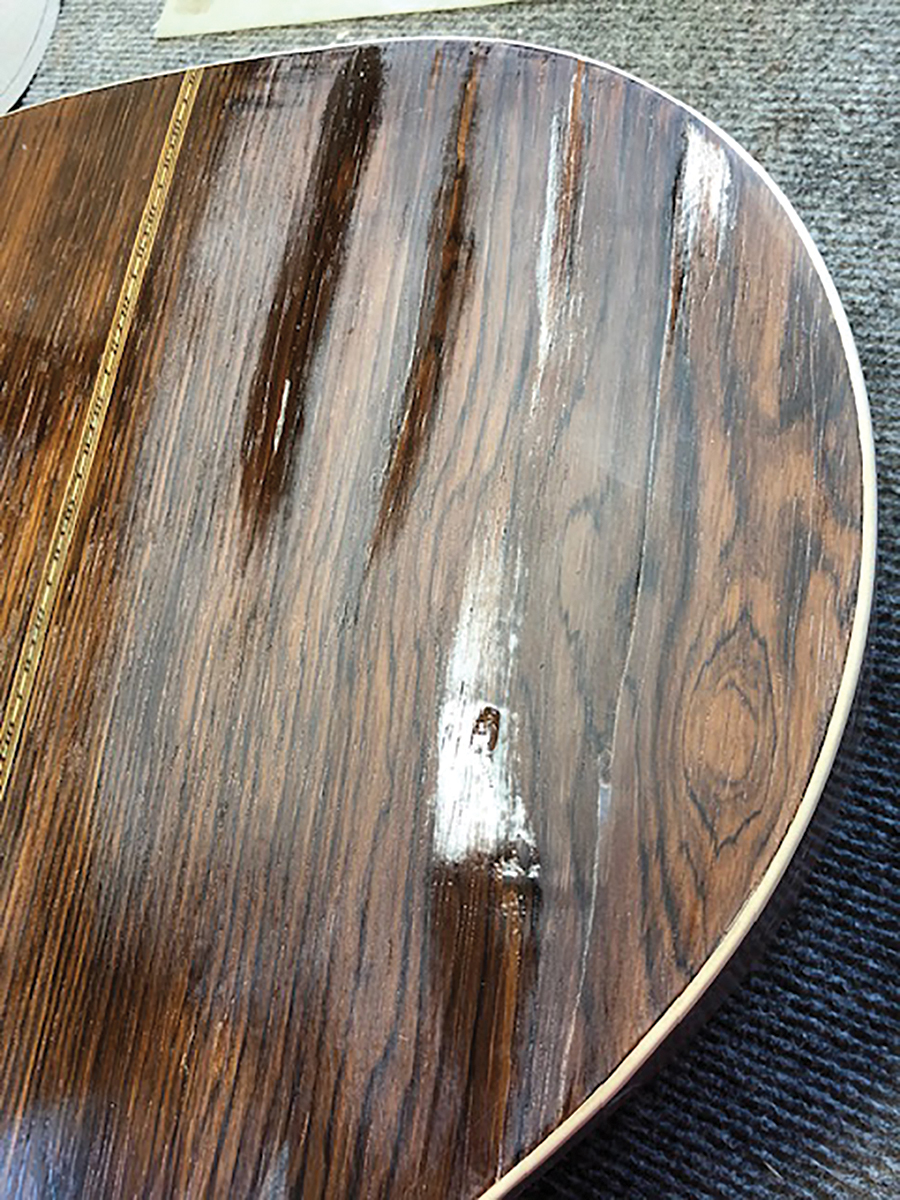
And then, eight months ago, a Stahl Style 6 materialized on my computer screen — and it was for sale at a reasonable price! The rub: It was in sad — very sad — condition. The seller listed it as “Non Functioning,” noting that the Stahl was a “Luthier Project” afflicted with a “Non Original Bridge, Non Original Tuners, No Pins, Back Cracks with washboarding” — and an all-too-ominous caution that the guitar would need “some finish work.” But the center strip was clearly branded “WM. G. STAHL/MAKER/MILWAUKEE” (a lie, since the guitar was made in Chicago by the Larson brothers) and 95 percent of the instrument was there.

I asked the seller a few pointed questions, made a reasonable offer, and PayPaled him the money. Four days later the UPS man delivered a big box that I ripped into with, I admit, adolescent gusto.

At this point in the typical restoration epic, buyer’s remorse sets in. What have I gotten myself into? the new owner asks. But I wasn’t in the least bothered by the Stahl’s condition — not at first. The seller had been reasonably honest — everything he said was wrong was wrong — but with each careful inspection I noticed flaws he’d failed to mention. The fingerboard extension was bent — not broken, thank goodness, but obviously sigogglin — the bridge (which anchors the strings to the body) wasn’t a correct Larson brothers’ flattened pyramid type and it was glued in the wrong location, the peghead overlay was damaged, the frets needed attention, binding was missing at the bottom of the fingerboard, the 3-on-plate Kluson knockoff tuners were flat-out annoying — and worst of all, some idiot with a paint roller had applied two gallons of runny gloppy gooey polyurethane or other superfluous substance to the guitar’s body, the front, back and sides. And that didn’t include earlier overspray of shellac, lacquer and varnish that had melted into the polyurethane — a deal-breaker for any vintage guitar collector, since original finishes are necessary to produce the instrument’s authentic sound.


Collectors argue endlessly about original finishes vs. restored. You’ve probably seen those Picker guys on the History Channel who love “rusty gold” and “the look” or the erudite appraiser on Antiques Roadshow who says, “In original condition this Philadelphia dressing table would be worth half a million dollars but since you refinished it, it’s worth seventy-five bucks. Maybe.” And that’s how it is with vintage guitars. But I’m not a vintage guitar collector. I simply wanted to play the guitar, and to do that I needed to have the polyurethane removed.

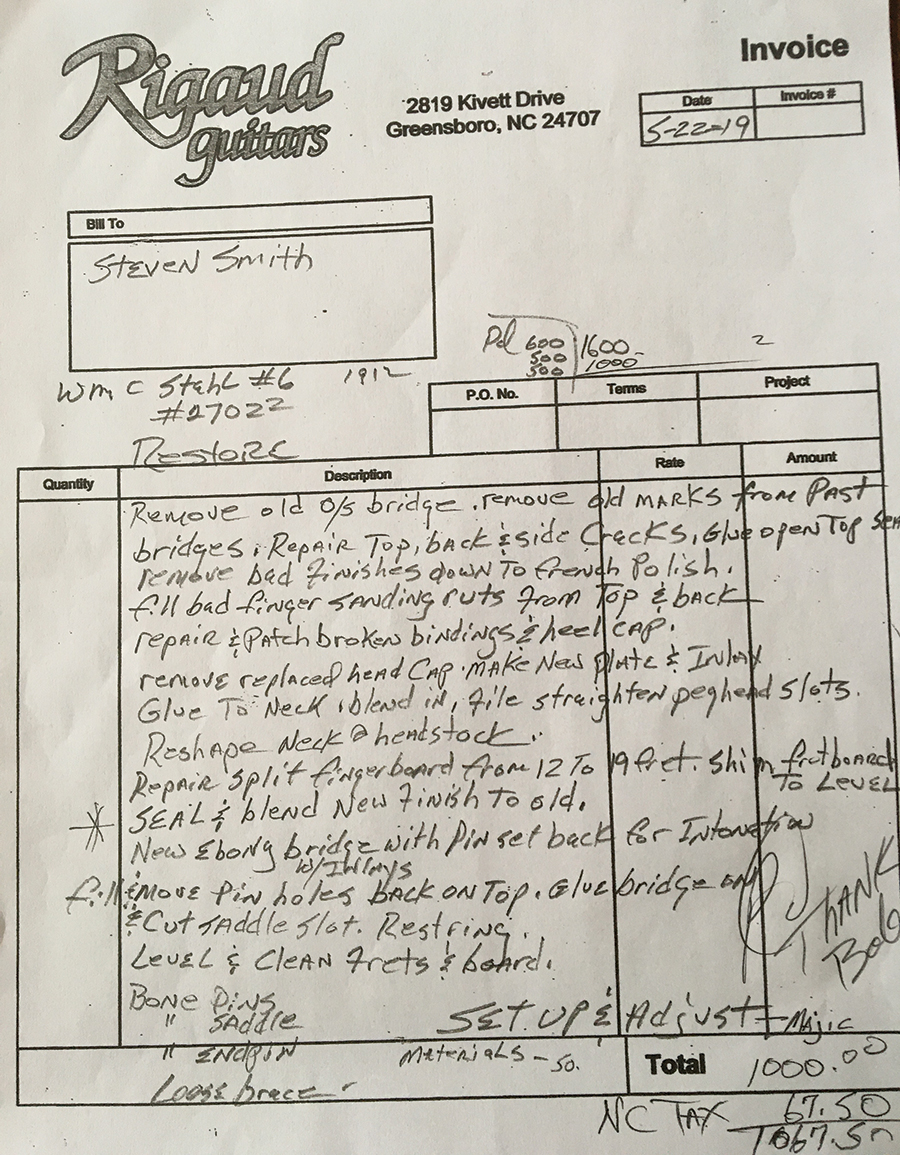
Poly finishes dampen sound and I had a lot of it on the Stahl, which meant that the guitar had reached a point in its checkered life where it was up or out. I might have relisted it on an auction site and gotten my money back, but I was determined not to sell or trash my latest acquisition. I was in possession of a rare Larson brothers Stahl Style 6 serial number 27022 (a numeral not based on production numbers), which meant the instrument was 100 years old! Who knows where it had been and the stories it could tell? Guitars, like their owners, have their own DNA and quirky personalities.

How valuable are Larson instruments? Consider this: A 1937 Larson-built Euphonon dreadnought recently listed on the Reverb for $64,500. Ouch! (If you’re interested in Larson instruments, I suggest you read The Larson Brothers’ Creations, by Robert Carl Hartman, or John Thomas’ excellent article in issue #15 of Fretboard Journal.)

What I needed was someone — the right someone — to save my Stahl Style 6. I’d heard that it’s possible, under unique circumstances, to remove a secondary finish while preserving the original surface. I got on the phone and chatted with luthiers in Wilmington, the Raleigh-Durham area, Charlotte and the Triad, and settled on Bob Rigaud (pronounced “rego”) in Greensboro.

Bob is a world-class builder, a luthier whose guitars are comparable to those of the Larsons. Seven years ago, he built for me a New Moon koa tenor ukulele, a high-quality, handmade instrument that sings with a surprisingly mellow, resonant voice, and he’s supplied instruments for many A-list performers, most recently Graham Nash, who travels with his Rigaud parlor guitar and uses it to compose new music.

More importantly, Bob has a reputation as a superlative repairman. A few years ago, “Steady-Rollin” Bob Margolin, Muddy Waters’ longtime sideman, stopped in Bob’s shop to have an old Gibson L-00 repaired. I was curious about Margolin’s experience with Bob, so I emailed him. He replied: “Bob fixed my mid-’30s Gibson L-00. He checked it out and knew exactly what to do. He told me the guitar would come back better than I could imagine and it did. Big admiration for Bob.” Margolin was so impressed with the sound of his Gibson, he went directly to a studio and recorded the CD This Guitar and Tonight, a ragged, in-your-face acoustic outing in which the old L-00 vibrates like the blues bucket it is.

Bob had also repaired two of my guitars, one a Larson-built student-grade Maurer that required delicate finish work, which he accomplished flawlessly. He also sealed multiple cracks, back and front, and made them disappear. Better yet, he left most of the original French polish intact.

So in late May I drove to Greensboro and handed my Stahl to Bob. He was busily at work on three new guitars — always his first passion — but his face brightened as his eyes ran over the damage wrought on my Larson by time and abuse.

“I can fix this,” Bob said. “I can make it sing again.”

Bob Rigaud is possessed of a gregariousness purely borne of enthusiasm. His life is guitars, and he delights in every aspect of building and repairing instruments and hearing them sing. We sat in his modest workshop and talked for two hours. His hands fluttered like birdwings as he pointed out myriad flaws I’d failed to notice and explained in detail how he’d approach correcting each imperfection.

“Can you fix the finish problems and make the washboarding and back cracks disappear?” I asked.

He was uncharacteristically succinct. “I can,” he said, smiling.

The Stahl was in his hands.

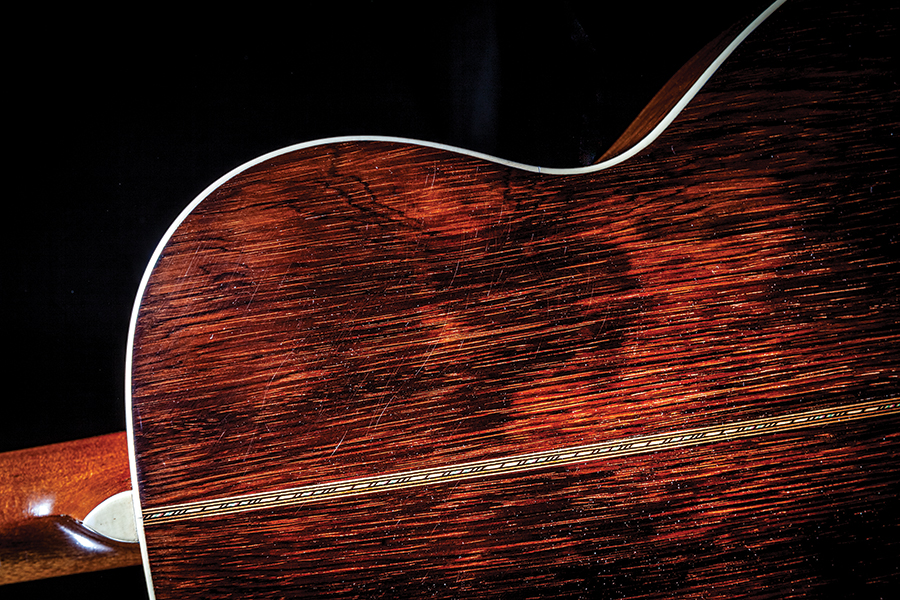
Brimming with faith and high hopes, I drove back to Southern Pines and waited. And waited. June came and went. On the last Saturday in July, I traveled from High Point to Bob’s workshop to check out the progress he’d made on my guitar. The old Stahl was laid out like a cadaver on his workbench, the fingerboard taped off. And miracle of miracles, most of the poly finish had been removed and much of the original French polish seemed to be intact. The washboarding was gone without a trace, as were the many back cracks and a small hole I’d somehow overlooked. The once-mangled Brazilian rosewood back had been restored to its original glory.

“How did you repair the back so perfectly?” I asked.

“I flattened the wood and sealed the cracks with an epoxy I tinted with rosewood sawdust.”

But there was still much work to complete, including the peghead overlay, the replacement bridge, and the angle problems with the fingerboard extension. I left satisfied but anxious to have the Stahl back home.

August, September, October and November passed, and I was content to have Bob work at his own speed. But in early December, my friend Craig Fuller of Pure Prairie League and Little Feat fame drove me to Bob’s workshop. Bob, always the perfect host, showed us the guitars he was building, and Craig and I examined the Stahl in detail. It was close to being complete: a new, handcrafted bridge with inlays was temporarily applied, a beautiful peghead overlay was in place, and new Stewmac Golden Age reproduction tuners were installed, but the frets still needed work and touch-up finishing was left to accomplish. I’d hoped that Craig, who’s played more guitars better than I ever will, might try out the completed Stahl and give me his opinion, but Bob was still struggling to correct the intonation, the key to ensuring that a guitar sounds as good as it possibly can.

“I’ve never repaired a Larson guitar that had the correct intonation,” Bob observed.

On January 22, 2020 my phone rang; the Stahl was ready for me to take possession. “I’m proud of it,” Bob said.

I stepped into his workshop at 9:30 the following morning. And there it was, my 1920 Larson brothers Stahl Style 6 guitar resurrected. I picked it up, strummed a fat G chord and felt an instant synaptic connection: I remembered the sweet sound — the sustain, the purity of voice — that had amazed me all those years before. It played like silk and chimed like a chorus of seraphim. It had the mojo and “the look.” Bob smiled but said nothing. He didn’t need to. He absolutely understood how I felt. He was feeling it too.

“I loved working on this guitar,” Bob said. “When I was regluing the internal braces — which, by the way, are all maple, not spruce — I could see evidence of August Larson’s work, and I felt like I was having a conversation with him all these years later. A hundred years from now maybe some other luthier working on this guitar will be having a conversation with me.”

“You don’t have to reveal any trade secrets,” I said, “but how did you save so much of the original finish?”

“Sense of smell,” Bob explained. “As I take down the finishes, I can smell them and after all these years of working on guitars, I can pretty much tell you what the finish is and when it was applied. When I got to the French polish, it gave off a very distinct smell. That’s when I stopped.”

Great luthiers are the real guitar heroes.

I play the Stahl every day now. It’s my musical soul mate. I know I’ll never be a great musician. And that’s fine. The process of learning guitar continues to unfold for me. I like it that way.

Was resurrecting the Stahl worth the time, money and effort? Was it merely an attempt to recapture my youth? What I can tell you is that my Larson guitar testifies that a tradition honored 100 years ago is adhered to still with patience and pride. I’ll be passing the Stahl along someday, and isn’t the past always present in the hope we have in the future?

My Stahl Style 6 sits in my guitar room next to a Liberty Tree guitar made from the wood of the tulip poplar I sat under on St. John’s campus all those years ago. Hurricane Floyd roared through Annapolis in 1999 and fatally damaged the 400-year-old tree. Taylor guitars purchased the wood and built 400 fancy instruments. It’s strikes me as wholly appropriate that my Stahl and the Liberty Tree sit side by side.

After all, something so complete has a beauty all its own.  PS

Donald’s Digs

The Ross Cottage gets a mulligan

By Deborah Salomon     Photographs by John Koob Gessner

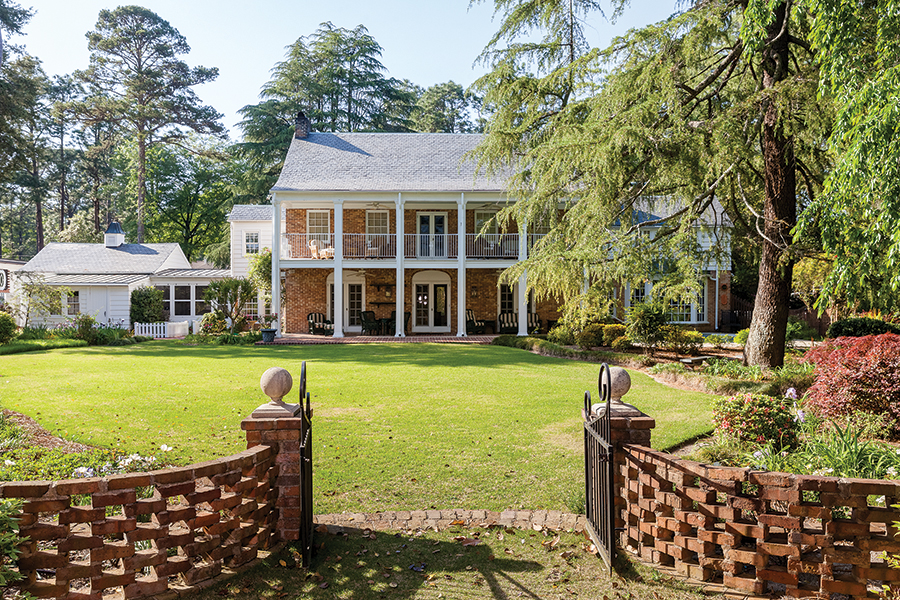
Dornoch Cottage is to golfers what Graceland is to silver-haired rock ’n’ rollers. What Monticello is to American presidency buffs. What Tara was to Scarlett. Donald Ross not only slept, ate and breathed here, but built his home overlooking the third hole of Pinehurst No. 2. Value it as did Ross: Of the 400, and then some, golf courses the master designed, he chose to live on Midland Road. 

This value has not diminished. In March, in response to the coronavirus pandemic, Pinehurst Resort auctioned off two nights at Dornoch plus three rounds of golf, with proceeds benefiting the Employee Relief Fund. The winning bid: $25,000.

When they get there, the winners should not expect a McMansion fitted out with gadgetry. Rather, a comfortable home, rich in memorabilia, with a romantic backstory:

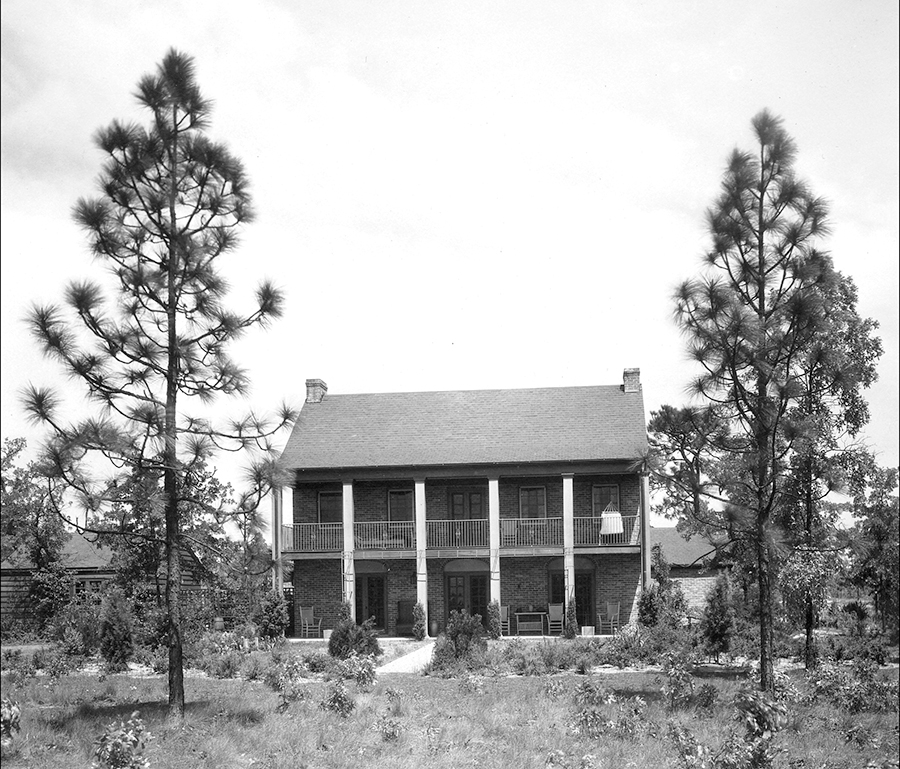
Ross, whose trade was listed as carpenter/clubmaker, arrived in Boston from Dornoch, Scotland, in 1899, with $2 in his pocket. The 28-year-old left his fiancée, Janet, behind but soon returned to marry her. James Tufts brought the budding star to Pinehurst in 1901, as club manager/pro. The young couple and their daughter Lillian lived at Hawthorne Cottage until Janet died of breast cancer, in 1922.

The widower was lonely.

Documents from the Tufts Archives at Given Memorial Library indicate that, about 1923, wealthy widow Florence Blackinton purchased a lot on Midland Road with the intention of building a winter retreat. The Tufts family sent Ross to negotiate boundary issues. Nature took its course; a year after Janet’s death, Donald and Florence married.

About that house Florence planned to build: She wanted an antebellum two-story colonnade spanning the width. Donald dreamed of a Scottish cottage done in stone and pinkish brick. Their compromise: Scottish front, plantation rear, main entrance on each side.

The compromise worked. Donald and Janet lived at Dornoch Cottage, named for his birthplace, until his death in 1948.

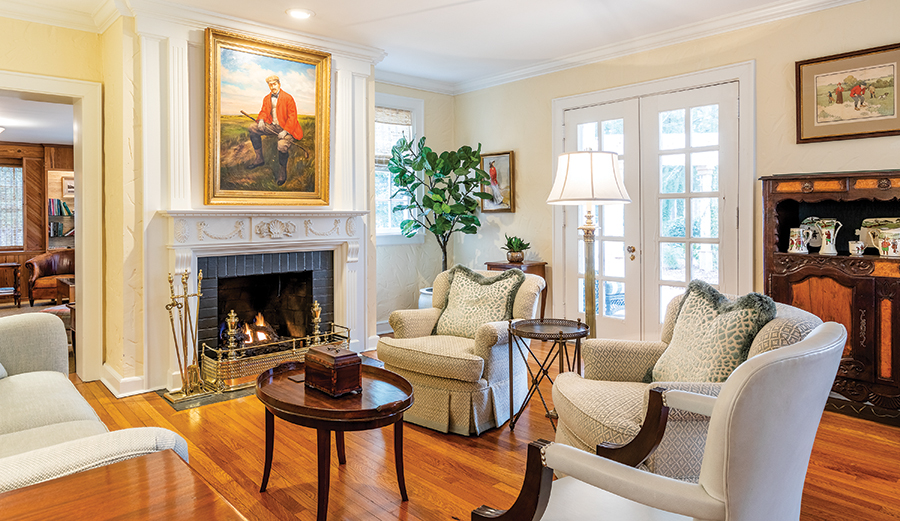
The house was purchased by Wayne and Jo Ashby, who entertained the Donald Ross Society there, and subsequently by Bob and Carol Hanson, whose livelihood and lives revolve around golf. Structural repairs were needed, desperately. Once they had been completed, the Hansons’ mission was to create a shrine to the Ross/Pinehurst legend, using Bob’s collections of golf art, antique clubs, photos and memorabilia. To that they added period furniture in the graceful Southern style. Pinehurst Resort purchased Dornoch in 2017 as a lodging option for special guests and began another round of renovations in January of 2018.

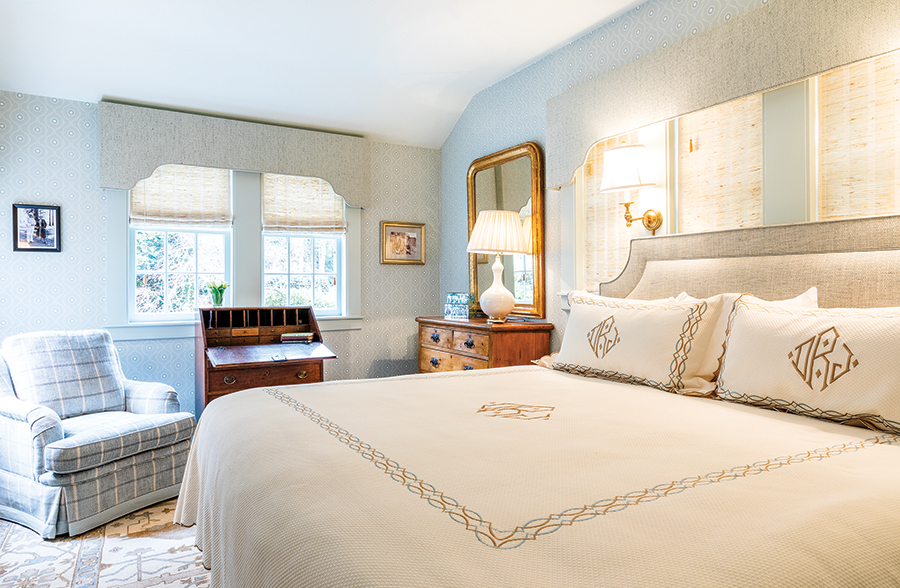
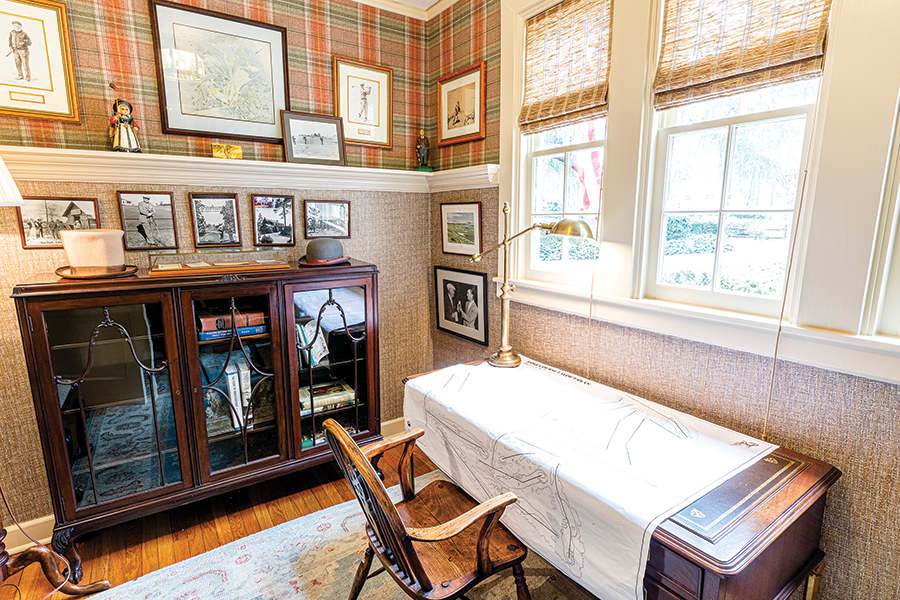
Decking it out suitably fell to Mark Clay, the Dallas interior designer in charge of renovating and furnishing Fownes Cottage, another historic residence renovated by the resort for conferences, VIPs and the personal use of resort owner Bob Dedman Jr. and his family. The result: comfortable, elegant, authentic yet less formal than Fownes; a place to invite friends for a drink, maybe a barbecue, while rehashing their birdies and bogeys on No. 2.

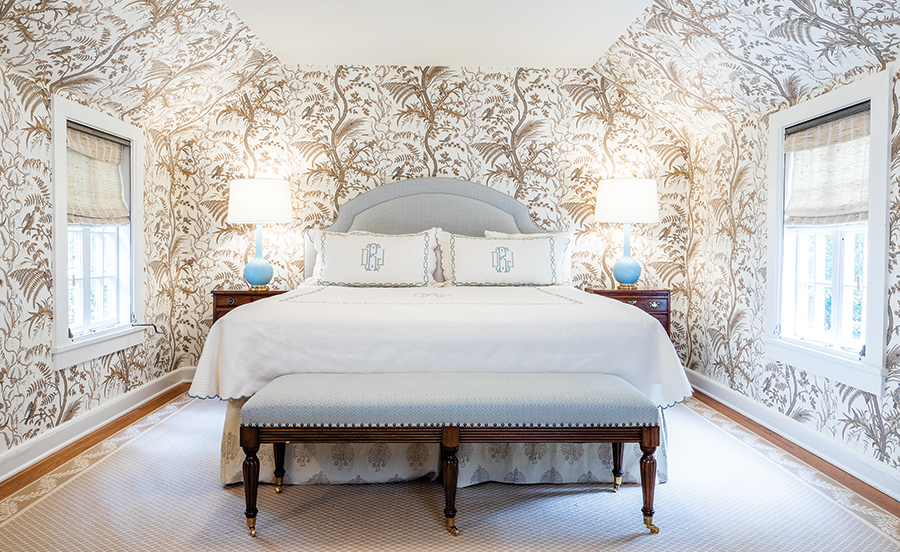
“Mr. Hanson took a lot of the memorabilia,” Clay recalls. “Mr. Dedman replaced some of it himself.” The rest was collected from Pinehurst shops and elsewhere. Clay worked with the furniture that remained, had some reupholstered, wallpapered the bedrooms and bathrooms, added draperies. The dining room table came up from Dallas, with chairs custom-made to complement it.

“This wasn’t going to be a private residence. I had to be practical about using what came with the house,” Clay says.

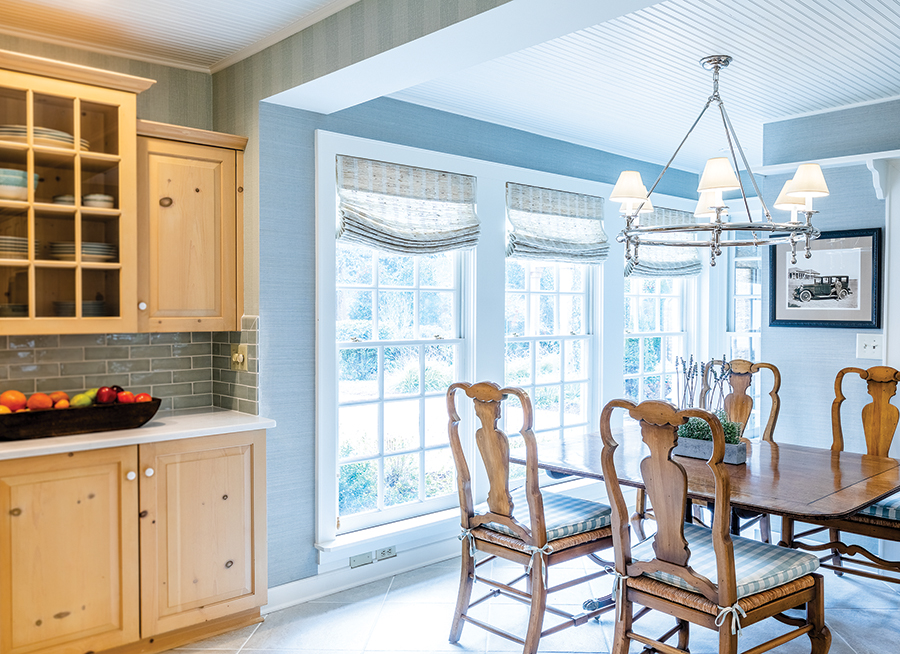
The floorplan remained the same, except for an upstairs “Nanny’s room,” where he put a soaking tub. But the bathrooms needed work and the kitchen got a new floor, a farmhouse sink, new countertops over existing pine cabinets. Clay used a grasscloth wall covering and a beadboard ceiling in the dining area.

Clay’s design signature, upholstered headboards, made the cut although he retained one classic four-poster bed with “R” embroidered on pillow shams.

A small, outdated swimming pool added post-Ross was filled in. The paneled den remained tartan-clubby, filled with golf photos and souvenirs. Much was added to the landscaping.

The result: another piece of Pinehurst history brought forward to 21st century standards with Wi-Fi and AC, leaving aura intact.

Clay had to complete the renovation in 12 weeks because Gil Hanse, internationally lauded golf course architect, would occupy Dornoch for six months while he redesigned Pinehurst’s No. 4 course.

“There is no doubt in my mind that living in Dornoch Cottage was one of the most meaningful experiences ever extended to Tracey (his wife) and me during my career,” says Hanse. “To wake up every morning in Ross’ house, look out the window at arguably his greatest creation, and sit in his office and work on plans of our own in the same space as he visualized some of the greatest holes on the planet still gives me chills.

“It also crossed my mind that all the mundane things we take for granted — like making coffee, taking out the trash, reading a book were also done by him, here. We lived in his house, and while all the thoughts about great course ideas he created under this roof and how many amazing golf holes were dreamed up — it was the notion that we experienced his house just like he did.

“That might be the most meaningful part of it.”  PS

Almanac

May is a series of miracles so intertwined that nothing feels separate from it.

Take, for example, the mockingbird fledgling, who leaps from its nest 12 days after hatching.

Twelve days.

The descent is less than graceful. More like a stone than a feather. And when he lands, stunned, on the soft earth beneath the tree, each blade of grass performs its highest service. As if cradled in the hands of an invisible, benevolent force, the fledgling rests.

Tender new life abounds. White-tail fawns take their first wonky steps. Red fox kits explore a world outside their den. And like the mockingbird fledgling, now flapping its newfound wings and hopping in the grass, these precious babes are easy prey.

As baby bird performs his hop-flap-plop routine, mama and papa bird stay close, ever ready to defend him. That’s the thing about mockers. If ever you’ve seen one chase off a raven, jay or crow, then you’re familiar with the raspy battle cry of a tiny beast that knows no fear. 

Days have passed, and the fledgling’s wings are growing stronger. There’s no shortage of ants, grasshoppers and beetles for feeding, and under his parents’ watchful eyes, he’s gaining air with every jump.

Not far from the tree where the mocker babe hatched is a quiet road not far from your house.

This is where you enter the picture.

On a leisurely walk, the air sweet with magnolia blossoms and spring roses, you notice a stopped car, the driver kneeling in front of a small lump in the middle of the road.

“I can’t leave him here!” says the driver, a young mother who is visibly shaken by the sight of this tiny being — a mockingbird fledgling whose wiry feathers and wide yellow beak somehow make it look like a curmudgeonly old man.

He isn’t injured, you observe. Just spent from a recent flight lesson. Relieved, the driver snags a toddler shirt from the back of her car, and you use it to gently scoop him off the road.

When you set him down on the earth, the fledgling gives a brave little squawk, flaps his wings, then musters the strength for a few shaky steps before plopping down in the soft grass for more rest.

One day, you think, that mockingbird will take flight. And one day, sooner than you think, he will have one hundred songs to sing.

You hear a crow caw in the distance, and as mama bird watches from her nearby perch, you can’t help but smile at the miracle of it all.

But I must gather knots of flowers,

And buds and garlands gay,

For I’m to be Queen o’ the May, mother,

I’m to be Queen o’ the May.

—Alfred Lord Tennyson, “The May Queen”

The Mother’s Moon

The Full Mother’s Moon rises on Thursday, May 7 — three days before Mother’s Day. Also called the Milk Moon, Flower Moon and Corn Planting Moon, this month’s full moon is a brilliant reminder to celebrate all mothers — human and animal — for the glorious gift of life.

Speaking of gifts, here’s one for Mama: daylily bulbs (to bloom in June).

The Rose Garden

May is a jubilant explosion of fragrant blossoms.

Crabapple and dogwood. Violets and magnolia. Flame azalea and flowering quince.

And then there are roses.

If you’ve ever known a rose gardener, then you’ve seen the light in the eyes of a soul who has seen life after perceived death (dormancy).

I once toured the rose garden of a retired Episcopal minister who described the deep sadness of cutting his blossoms each winter, and the wonder of their return. I’ll never forget his tender nature or, for that matter, his favorite rose.

“Dolly Parton,” he told me, pointing to a fragrant red rose in the corner of his garden. “She’s wonderful. She just blooms and blooms.”

When we try to pick out anything by itself, we find it hitched to everything else in the Universe. — John Muir

Garden Spotlight

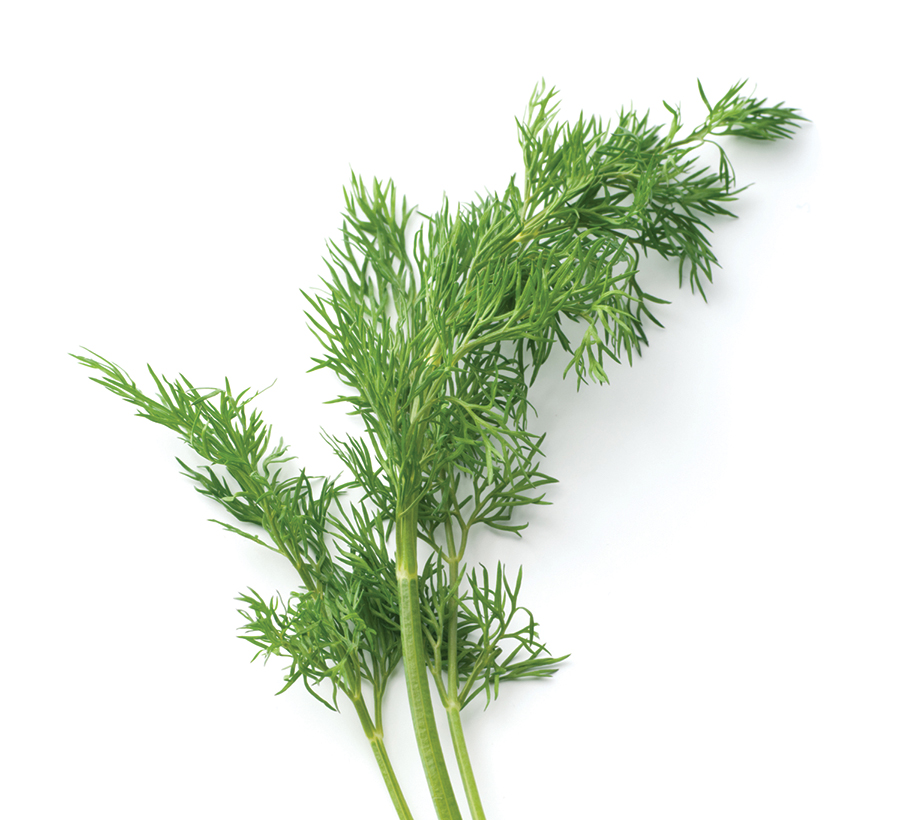
Let’s hear it for fennel, folks!

This perennial herb has long been cultivated for the digestive-aiding properties of its fruit (fennel seeds), but its bulb and leaves are likewise packed with nutrients.

Fennel is good medicine for the heart, skin and bones. It aids with inflammation and metabolism. And, lucky for (most of) us, it tastes like licorice.

There are dozens of ways to eat the bulb, but if you’re looking for fresh and easy, try pairing it with red plums (thinly sliced) for a slam-dunk salad topped with honey-ginger dressing. Enjoy!  PS

Poem

From Our House Behind the Churchyard, After a Storm

An hour after the storm, tree

limbs still sway, their green-leafed

twigs moving like the limbs

of swimmers in a sapphire sea.

Thunder booms in the distance

but they go on waving,

as if the lightning and the rain

are dear friends, departing. Beams

of brilliant light make gold

the ground and polish the branches

as puddles glitter beneath blades

of grass, silently sipping.

And high above the skittering

clouds, a red-tailed hawk circles

the churchyard, its wings

cupping the sodden, cerulean air

like a parishioner reaching

for a communal cup of wine.

— Terri Kirby Erickson

The Shimmering Art of Louis C. Tiffany

Classic lamps on display at Reynolda House

By Jim Moriarty

Due to health precautions related to COVID-19, the Reynolda House Museum of American Art closed temporarily in March and the opening of “Tiffany Glass: Painting with Color and Light” was delayed. For information regarding the reopening of the museum and its exhibits please visit www.reynoldahouse.org.

While on one hand it could seem as though Louis Comfort Tiffany was born with a silver glasscutter in his mouth, the son of the founder of Tiffany and Company created, over his lifetime, an entire genre of decorative art so ubiquitous, so singularly chic and stylistically distinctive that his name alone has come to represent the thing itself. It is the de rigueur description of any leaded glass shade. Say “Tiffany lamp” and you need say no more. All the rage one day, passé the next, fashion may be fickle, but the art endures.

The intimate gallery space at the Reynolda House Museum of American Art in Winston-Salem will house an exhibit of Tiffany’s finest work on loan from the Neustadt Collection at the Queens Museum in New York. The traveling exhibition was to open in late March and continue through June 21 before it was overtaken by events.

“The decorative arts are accessible to everybody,” says Phil Archer, Reynolda’s director of Program and Interpretation. “To have a gallery with the light actually shining through the works of art will be new for us and make it a very magical space. It just fits at Reynolda because of the natural setting of the gardens. We wanted the exhibition in the spring for that reason. Come and see all the flowers, then come inside and see all the flowers.”

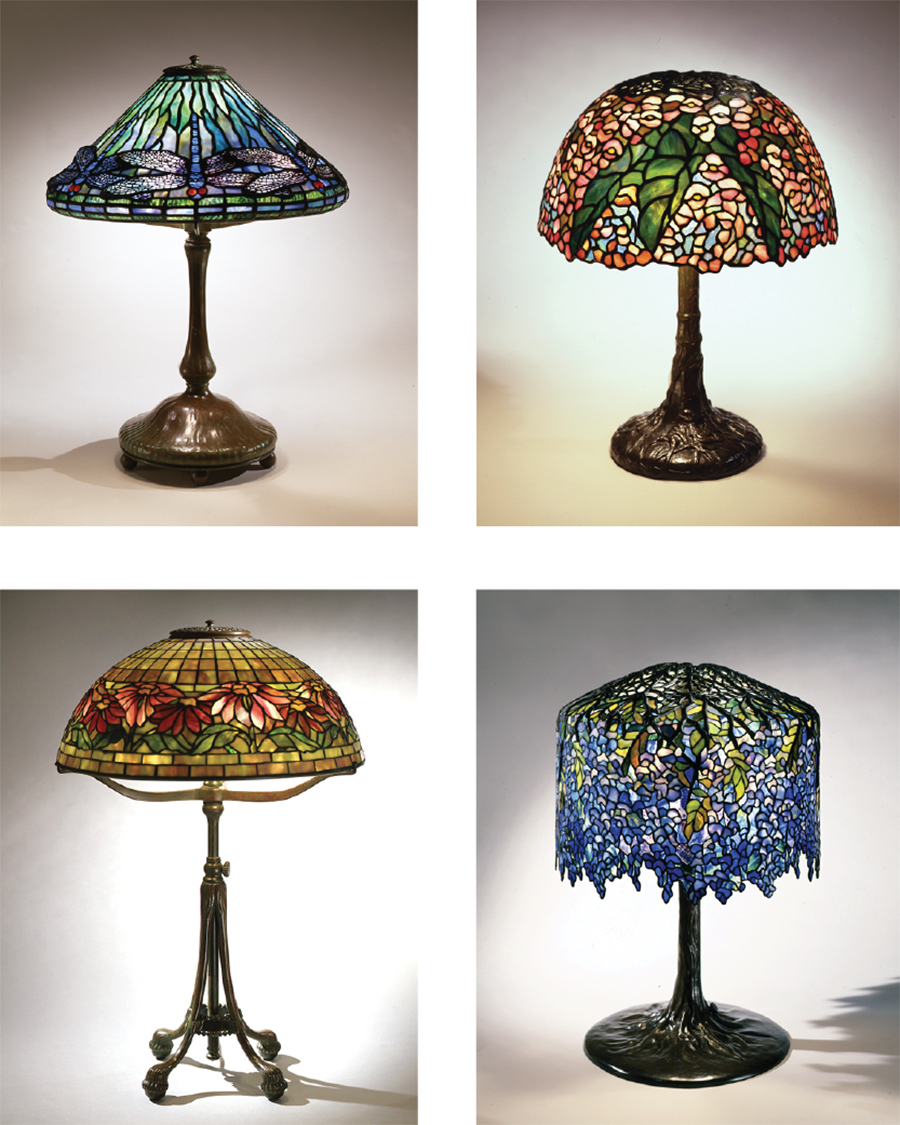
The show, when it’s able to open, will be comprised of 20 of the most celebrated examples of Tiffany’s lamps and, interestingly, three forgeries that serve to demonstrate the difference between faux Tiffany and authentic works. There will be a display demonstrating the steps in the creation of the lampshades and biographical information on the key personnel at Tiffany Studios — chemist Arthur J. Nash and designers Clara Driscoll, Agnes Northrop and Frederick Wilson — who all made meaningful contributions to the artistry of the lamps.

Also part of the exhibit are five Tiffany windows and, separate from the exhibit, a display of Tiffany vases purchased by Katharine Reynolds on view in the Reynolda House itself.

The role of Driscoll, née Clara Wolcott, who was in charge of the “Tiffany Girls” in the glass cutting department and is responsible for the design of two of Tiffany’s most remarkable lamps, Wisteria and Dragonfly, only came to light in the first decade of the 21st century when Martin Eidelberg, an art history professor from Rutgers University, discovered her letters archived at Kent State University.

“She was an Ohioan, so her papers ended up at Kent State,” says Archer of the letters Driscoll sent home from New York. “The family evidently had almost a chain letter system where Mom would send a letter to Clara, she would send it to her sister who would send it to the brother and they would all add to it. It was better than group texting.”

While Tiffany may not have been solely responsible for every design, “The concepts were Tiffany’s,” says Archer. “The aesthetic was Tiffany’s. The kind of color palette and the combination of colors and details and opacities were Tiffany’s. It’s almost like Mozart writing a piece and then conducting the orchestra. He’s not playing any of the instruments. Everybody else is making the music but the original concept is his. They bring a lot of creativity to how they play it — though that may not be an exact metaphor because some of the concepts, like the Wisteria lamp, were Driscoll’s.”

Born in 1848, the slight, delicate son of Charles Louis Tiffany could have slid seamlessly into the family business. “He had every opportunity to take over from his father and be the lead jeweler and luxury goods maker in New York,” says Archer. “The primrose path was laid out for him.”

When the younger Tiffany was enrolled at Eagleswood Military Academy in New Jersey, he met and studied under the painter George Inness. The effects would be profound. By the age of 19, he had become a founding member of the American Society of Painters in Water Colors and had begun to exhibit his work at the National Academy of Design. He traveled to Europe and North Africa and would be particularly influenced by what, at the time, was called the “Orientalist” style.

“When I first had a chance to travel in the East and to paint where the people and the buildings are clad in beautiful hues, the pre-eminence of color in the world was brought forcibly to my attention,” Tiffany said later. One of his better-known paintings, Snake Charmer at Tangier, Africa, expressed Tiffany’s interest in the play of light and color. It was exhibited at Snedecor’s Gallery in New York in 1872 and later at the 1876 Centennial Exhibition in Philadelphia. It remained in Tiffany’s personal collection until 1921, when he donated it to the Metropolitan Museum of Art.

While still painting, Tiffany drifted into design and decorating. At the same time, he had become enthralled by the possibilities of glass as an art form.

“Tiffany hated modern glass because it was too clean,” says Archer. “He wanted glass like archeologists were digging up in Syria and Lebanon. It was like opals. It had color and shimmer. He hired chemists to really develop all of these different colors and ranges. The beauty that he found in that glass and trying to replicate it becomes the story.”

Tiffany didn’t paint on glass — “staining” it only rarely, usually in faces — he painted with glass. The use of metallic oxides allowed for the development of the range of colors that distinguish his work.

“Standing by the glass workers, he had them fold the glass on itself and pinch in places to achieve the effect of magnolia blooms in a window of his library at the Tiffany Mansion,” writes Julia Tiffany Hoffman, a great-granddaughter. “A pulled rod of glass was slightly melted and scrolled on the glass to effect vines, stems and spiderwebs. Louis used just the right color combination of paper-thin glass bits to achieve a painterly quality . . . Molten glass was pressed thin and then stretched to effect the impression of light shining on snow. When working on a window, he would have his glass house make sheets of glass that had several colors running through them, then find the perfect area and orientation to express the petal of a tulip or the leaf.”

In addition to the inspired glassmaking, the creation of Tiffany’s lamps was aided by the innovative use of copper foil. “Instead of having heavy lead connectors,” says Archer, “they were able to use much, much finer connectors. There’s a lot of artistry in the creation of the glass, and there’s artistry in the cutting and piecing it together.”

Tiffany was also receiving commissions decorating American palaces for Gilded Age royalty like Cornelius Vanderbilt, and Henry and Louisine Havemeyer. He decorated Mark Twain’s house in Connecticut and the interior of the old Lyceum Theatre on Park Avenue South in New York. He collaborated with the famous — and infamous — architect Stanford White on a house for the Tiffany family. He did the Ponce de Léon Hotel in St. Augustine, Florida, and Chester A. Arthur’s White House.

“Tiffany would design from soup spoon to chandelier,” says Archer. “He was creating almost complete works of art in these houses. But upper middle-class people could afford the lamps. They ended up propelling Tiffany Studios financially. In his lectures, Tiffany almost never referred to his lamps. He would talk about these huge projects and the large windows. The lamps were sort of the bread and butter.”

Tiffany believed nature should be the primary source of design. “Every really great structure is simple in its lines — as in Nature — every great scheme of decoration thrusts no one note upon the eye,” he wrote. Having outlived two wives and three of his eight children, in his final years Tiffany’s ultimate project was his estate on Oyster Bay on Long Island — Laurelton Hall, 84 rooms on 600 acres. He designed every nook, cranny and garden.

Punctuality and orderliness were valued traits. He owned seven white linen suits, one for each day of the week. A tennis player and avid photographer who never saw a speed limit he wanted to obey, the giant of Art Nouveau attempted to stick his finger in the dike of modernism with the establishment of the Tiffany Foundation, devoted to helping aspiring artists.

“Paintings should not hurt the eyes,” he cautioned them. By the time Tiffany died in 1933, much of his wealth had evaporated in the crash of 1929 and the ensuing Great Depression. Laurelton was sold in 1945, and the land subdivided.

In 1957, the largely abandoned great house, containing some of Tiffany’s finest windows, burned to the ground. It took two days to melt the art of a lifetime.  PS

Almanac

By Ash Alder

April doesn’t make a grand announcement.

She’s subtle. Sort of hums to let you know she’s close. Flutters in the periphery. And when she lands — like the ruby-throated hummingbird at the garden feeder — the world sings out.

April is a month of sweet transition. Purple martins replace purple finches. Yellow jessamine twists, climbs, dances across the landscape. Silver maple is flowering, and on the ground beneath it, you find the first of hundreds of brilliant green samaras (seed pods) that will spiral to the earth in the coming weeks. You pick up the fruit, spin it between your thumb and forefinger, hold it in your palm as if you are holding the wings of some tiny, mythical creature.

A ragtag choir of a dozen songbirds blurts out their threats and primal longings, and just beyond the flowering maple, a skinny tabby all but grins while brushing past the garden path.

The mornings are knit scarf- and corduroy-cool, but in the afternoon, your feet are bare, and you are sunning in a patch of tender young grass.

April is the last frost, dahlias in the garden, spring rain and fresh asparagus.

And as the first seeds of summer crops are sown (green beans, melons, cukes and squashes) you realize this: April is your answered prayer. Here and now. Late winter’s wish, come true.

In the spring, at the end of the day, you should smell like dirt. — Margaret Atwood, Unearthing Suite, 1983

Rain and Glory

Cows lie down this month same as any. But if you’re curious to know when the April showers are coming, observe a pine cone (they close when rain is on its way).

Of course, you don’t have to wait until May for the flower show. This month, fragrant jessamine and blooming azalea would be enough to satisfy any flower-loving gardener. But look and see hummingbird candy everywhere: coral honeysuckle, iris, buckeye, wild columbine.

Now is time to plant dahlias, petunias, angelonia, heliotrope, lantanas and begonias. And in late April, color your midsummer garden electric with glory lily tubers. This tropical vine grows fast, climbing upward of 7 feet with its curling, grasping tendrils. Its flaming red and brilliant yellow flowers make it an absolute showstopper, and with its long, bright green stamen dangling beneath its down-facing petals, this deer-resistant “Flame of the Woods” resembles, to this nature-lover, some kind of exotic jellyfish.

Oh, lovely April: Bring on the rain, bring on the glory. 

Hug a Tree

April is a month of celebration. Easter Sunday, of course, on April 12. Earth Day on Wednesday, April 22. And on Friday, April 24, Arbor Day.

According to the Arbor Day Foundation, “One large tree can provide a day’s supply of oxygen for up to four people.”

Let that land for just a moment. Breathe it in, if you will. And if you’re interested in learning about the foundation’s bold “Time for Trees” initiative and how you can get involved, visit www.arborday.org.

April is a promise that May is bound to keep. — Hal Borland 

April Sky Watch

According to Space.com, two of the 10 “Must-See Skywatching Events to look for in 2020” occur this month.

First: the “Glory Nights” of Venus. April 2 and 3, Venus will appear high in the sky and as close to the Pleiades star cluster as it can get, lighting up the blue-white stars in such a way you’re sure to go all dreamy. Venus hasn’t been this close to the Pleiades since April 2012, and it won’t again for another eight years. Catch it if you can.

Next, on April 7, get ready for the supermoon — the biggest full moon of the year and, because of its closeness to Earth, “a dramatically large range of high and low ocean tides.”

Warm Your Bones

Spring is here, yes. But if you can’t seem to shake the final chill of winter, here’s one for you: golden milk. Warm and delicious and, according to Ayurvedic medicine, a powerful healing tonic for inflammation and digestive issues, this holistic, dairy-free beverage gets its golden color from its star ingredient: turmeric.

There are dozens of recipes available online. Most call for coconut or almond milk. Here’s one borrowed from WellnessMama.com that serves four. Golden milk in five glorious minutes. But if you’re worried about the possibility of staining your blender and/or countertops, this may be risky business.

Ingredients

2 cups milk of choice, such as almond pecan, coconut or dairy

1 teaspoon turmeric

1/2 teaspoon cinnamon

Pinch of ground pepper

Tiny piece of fresh peeled ginger root or 1/4 teaspoon ginger powder

Pinch of cayenne pepper (optional)

1 teaspoon raw honey or maple syrup or to taste (optional)

Instructions

Blend all ingredients, except cayenne pepper and honey, in a high-speed blender until smooth.

Pour mixture into small saucepan and heat for 3-5 minutes over medium heat until hot, but not boiling.

Add cayenne pepper and honey, if desired; stir to combine. Drink immediately.