Focus on Food

FOCUS ON FOOD

Thanksgiving to Scale

Cornish game hens for two

Story and Photograph by Rose Shewey

Far be it for me to suggest you have anything but turkey for Thanksgiving. Tradition is tradition. But for practical purposes, those big ol’ birds may not be the perfect solution for every household across the land — especially those who celebrate in a more intimate setting or by their lonesome.

Take my family, for instance: There’s Mom, Dad, and a 7-year-old picky eater. If just the three of us opted to celebrate at home, even the smallest gobbler would produce days’ and days’ worth of leftovers. And, quite frankly, we don’t love turkey enough to have it for breakfast, lunch and dinner for an entire week.

Case in point: In 2024 my mom came to visit from Germany, where this very American holiday isn’t celebrated. To give her the complete experience of a traditional Thanksgiving dinner, we bagged the smallest turkey we could find and roasted it in the oven, along with all the usual fixings. The meal was spectacular but in the days that followed, we grew increasingly tired of coming up with ideas on how to use up the leftovers.

Passing on turkey does not mean you have to be content with ordinary, everyday fare on the last Thursday in November. Quite the opposite. While turkey is special, so are Cornish game hens — for the novelty of having a whole miniature bird on your plate, if nothing else. One bird makes about one portion of meat. Cornish game hens are extraordinarily tender and, contrary to their name, not “gamey” at all.

I’m in good company on Thanksgiving since my husband is as pragmatic about large stuffed birds as I am — as long as the substitute isn’t nut loaf.

Autumn Spiced Cornish Game Hens with Roasted Pears

Ingredients

2 Cornish game hens, fully thawed

2-3 tablespoons olive oil

2 pears

Maple syrup, for drizzling

Balsamic vinegar, for drizzling

(For autumn spice rub)

2 tablespoons smoked paprika

1 tablespoon onion granules

1/2 tablespoon garlic granules

1/2 tablespoon ground coriander

1 teaspoons sea salt

1 teaspoon ground cinnamon

1/4 teaspoon ground nutmeg

Directions

Begin by making the spice rub. Combine all the spices in a small bowl and mix with a fork. Set the Cornish game hens in a roasting pan and remove giblets, if your birds have any inside. Brush a little olive oil on the hens, then massage the spice rub into the skin and all over the birds. Tuck the wings and tie the drums together using butcher’s twine. Bake in the oven on a lower rack at 425F for 50-60 minutes, or until the thickest part of the breast reads 165F. Cooking time will vary depending on the size of your hens. Wash, dry and halve the pears, scoop out cores and drizzle pears with a little maple syrup and balsamic vinegar. Arrange them next to the hens in the roasting pan for the final 20 minutes of cooking. Serve roasted Cornish game hens and pears with roasted potatoes and/or vegetable or any of your favorite side dishes. 

Sporting Life

SPORTING LIFE

Moonstruck

Kicking back at Mattamuskeet

By Tom Bryant

It was as if the good Lord heard we were going to get together for a weekend and decided to make it easy on a pair of outdoor geezers who sometimes, at the ripe old age they’re enduring, bite off a little more than they can chew. It was a duck hunting trip for early migrating teal that drew old friends together for the first time in a while.

We booked a hunt at our favorite waterfowl hunting spot, Mattamuskeet, where when the weather is right and the fall flight is at its peak, the blue wing teal will knock your hat off if you aren’t careful and are leaning just right.

We go back a ways, Bubba and me. We started hunting — duck hunting, that is — when we were still frisky and would climb over any obstacle rather than walk around it just to prove something. Neither of us can remember what we were trying to prove, and besides, who would even care? Experience and age educate, but sometimes they’re harsh teachers.

As usual, I got to the lodge first. Just as I was finishing up hauling groceries to the kitchen, my cellphone began its annoying chirping. It took me a bit to find it, as I had stored the blame thing in a bag between the crunchy bread and tonic water.

“Hey Bubba, where are you?”

“I’m just leaving Little Washington. Should be there a little past dark, if I can keep this thing on the road. I’ve got good news and bad news. Whatcha wanna hear first?”

“Give me whatever first. Most of the time your good news is bad news anyway.”

“I threw my back out this morning hauling a blasted flooded canoe out of the pond. I had to take three or four Advil just so I could drive. There ain’t no way I’m gonna be able to hunt tomorrow. You need to call Willard and tell him. You can hunt. There’s nothing wrong with your back.”

Willard and his father had long been guides on the Pamlico, and we’ve been hunting and fishing with him for years.

“No, man. I’m not gonna hunt without you. Who would listen to my wonderful stories?”

“Yeah, I know. Last time Willard threatened to leave us in the blind after hearing your stories for the 97th time.”

“I’ll call him. You need to come on. I picked up some Rose Bay oysters. I’m gonna start steaming them as soon as I take care of Willard.”

“Hey, now, don’t you eat all of ’em. I’ll be there as soon as I can.”

Willard was his usual gracious self and said that he would just move our deposit to a later date in the season and not charge us extra. He wanted to go fishing anyway. The blues were running, and if there’s anything Willard likes better than duck hunting, it’s fishing.

We were supposed to have a full moon that evening. “Not good for duck hunting,” Willard would say. “The ducks will move and feed with the light of the moon. You might as well stay home.”

I finished unloading all the groceries and decided to fire up the grill to be ready when Bubba arrived. There’s a swing on the deck under the living area. That’s where the grill is located so everything’s handy. I turned on my battery-powered lantern, lit a couple of candles and put them on the table beside the grill. Then I got the oysters ready to steam when Bubba arrived.

The moon was just beginning to rise from the Pamlico. As usual, it was a spectacular sight. I turned off the lantern, blew out the candles and kicked back in the swing. I’ve never seen two moon rises exactly the same. Each one seems to have its own character. For whatever reason, the most memorable I’ve had the great good fortune to witness have occurred over water.

There was an evening nightfall show I witnessed on Hyco Lake after a day duck hunting. Paddle, my little yellow Lab, and I were in my minuscule duck skiff skimming across the lake at full throttle. We were in a hurry, hoping to get back to the landing before black dark. As I skittered out of the small opening where we had been hunting and turned west, I was staring right into a dazzling sunset. But even more breathtaking was a sensational full moon rising in the east right behind us. Paddle and I were caught between sunset and moonrise, a sight I’ve only witnessed once and may never see again.

I’ve noticed in all my travels across this great country of ours that the moon seems to be different in certain regions. On our first big camping trip, we pulled our compact 19-foot Airstream from Southern Pines to Fairbanks, Alaska. We were gone a little over two months and drove 11,000 miles taking in the scenery, and sunrises and moonrises, along the way. Since we were in Alaska during June and July, when it hardly even gets dark, the moon we saw was just a sliver of a waning moon a time or two, and that was it.

Just the opposite in Montana. They call it the Big Sky Country for a reason. Camped at a little parking lot of a campground right outside Shelby, preparing to enter Canada the next morning, we witnessed a brilliant golden, luminescent moonrise over the horizon. It was so big and seemed so close to the ground, it was as if it we could touch it. I had the strangest feeling that I was witnessing one of God’s great undertakings that was put there just for Linda and me.

I could see the headlights of Bubba’s truck as he wheeled in off the main road and headed down the long drive to the cabin. When he pulled up right behind the lodge, I walked out to help him unload. He was slow getting out of his truck.

“Hey Bubba, how you moving?”

“Slow, son. Mighty slow. My back is giving me a fit. But I plan on fixing it with a good slug of Scotch and some of those oysters you’ve got laid out on that table. Some moon, huh?”

“Yep, a real harvest moon. Come on, I’ll help you unload and we’ll have some libation.”

In no time, we stowed all of Bubba’s gear in the second bedroom, fixed ourselves drinks, and steamed a bunch of oysters, saving some for the second night. Bubba had brought along a couple of deer tenderloin steaks but, full of oysters, we were in no hurry to cook.

We relaxed on the deck under the cabin, Bubba in the swing and me kicked back in a cushioned Adirondack chair. As usual, when we get together, stories and remember-whens dominate the conversation. This night was no different.

“That mule deer hunt we had in Utah featured a moon about like this one, don’t you think?” Bubba pointed up to our bright rising moon that was well into the sky.

“You know, Tom,” he continued softly as if the bright moon discouraged loud noises, “sort of like when we’re duck hunting — you and I have really had some adventures.”

I paused in answering, looking up at the moon.

“Yeah Bubba, that’s the truth, for sure, and I hope we have a few more ahead of us.”

He laughed and said, “Let’s start by grilling those steaks.”

Birdwatch

BIRDWATCH

The Powerful Fox Sparrow

Large, handsome and hard to spot

Sparrows are a common sight throughout central North Carolina in winter. Historically, eight different species could be found in a day across the Sandhills and Piedmont. The gregarious, prolific and very adaptable house sparrow was added to the mix in the 1800s by early settlers who yearned for a familiar bird from the Western Hemisphere — as well as a means to control insect pests associated with human habitation.

At this time of year, the largest and most handsome of the sparrows is inarguably the fox sparrow. It’s also one of the hardest species to find. Perhaps because of its size and brighter coloration, it is frequently hidden in the vegetation. The fox sparrow is typically over 8 inches in length and very stocky, with bold rufous streaking on its underparts. From the head down the back to the tip of the tail it is a “foxier” reddish in color. Several races of the fox sparrow exist in the U.S. and Canada, with those found farther west being browner all over.

The fox sparrows that we see in winter breed from northern Ontario east to Newfoundland and south into parts of Nova Scotia. They move south in fall and start to appear in North Carolina in October. They seem to flock loosely with other sparrows and finches during the colder months. They prefer habitat that is immediately adjacent to water. Although they eat mainly insects during the summer, in winter seeds and berries tend to make up much of their diet.

More often than not, fox sparrows can be found in expanses of bottomland forest, kicking vegetation and debris for food, though there are lucky backyard birdwatchers who regularly observe them taking advantage of millet and other small seeds under their feeders. During very cold and wet weather, they may move farther into drier areas in search of a meal. I don’t usually see them where I live unless it snows — our predominantly grassy yard is too open to appeal to them. However, we have wet woods with dense tangles of evergreen vegetation not too far away.

Because of their size, fox sparrows are quite strong and capable of uncovering food that is buried deep in the forest floor. They will actually use both feet together to scratch and dig beyond the reach of other small birds. If you are out in wet habitat — or if you check under your feeders after a mid-winter snowfall — you may be treated to a glimpse of one of these handsome and powerful birds.

Sandhills Photo Club

SANDHILLS PHOTO CLUB

M is for . . .

The Sandhills Photography Club was started in 1983 to provide a means of improving members’ photographic skills and technical knowledge, for the exchange of information, and, by club activity, to develop membership potential and public interest in the art of photography. For meetings and information visit www.sandhillsphotoclub.org.

Tier 3 Winners

Tier 3, 1st Place: Mucho Motivacion by Pat Anderson

Tier 3, 2nd Place:

Marriott Marquis by Donna Ford

Tier 3, 3rd Place:

M is for Murder by Dave Powers

Tier 2 Winners

Tier 2, 1st Place:

The Mane Event by Pam Jensen

Tier 2, 2nd Place:

Multnomah Falls by Donna Sassano

Tier 2, 3rd Place:

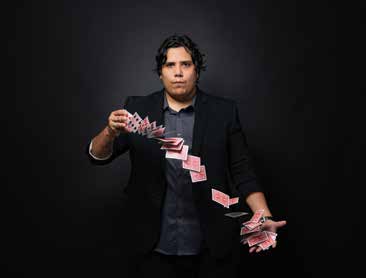
M is for Magic Wand by Joshua Simpson

Tier 1 Winners

Tier 1, 1st Place: Maniac on a Motorcycle by Jameson Everett

Tier 1, 2nd Place:
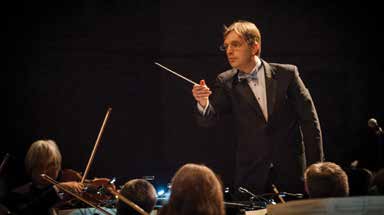
The Measure of our Hands in E Minor by Hilary Koch

Tier 1, 3rd Place:

Mailboxes by Donna Arnold

Tier 1, Honorable Mention:

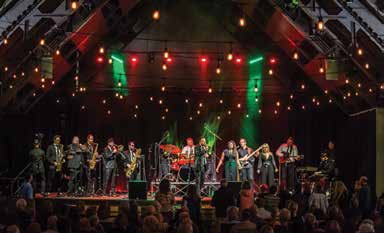
Mom Making Music by Mary Bonsall

Bookshelf

BOOKSHELF

October Books

FICTION

Heart the Lover, by Lily King

Jordan’s greatest love story is the one she lived, the one that never followed the simple rules. In the fall of her senior year of college, she meets two star students, Sam and Yash, from her 17th Century Lit class. The boys invite her into their intoxicating world of academic fervor, rapid-fire banter and raucous card games. They nickname her Jordan, and she quickly discovers the pleasures of friendship, love and her own intellectual ambition. But youthful passion is unpredictable, and soon she finds herself at the center of a charged and intricate triangle. As graduation comes and goes, choices made will alter these three lives forever.

Decades later, the vulnerable days of Jordan’s youth seem comfortably behind her. When a surprise visit and unexpected news bring the past crashing into the present, she returns to a world she left behind, and must confront the decisions and deceptions of her youth.

The White Octopus Hotel, by Alexandra Bell

London, 2015: When reclusive art appraiser Eve Shaw shakes the hand of a silver-haired gentleman in her office, the warmth of his palm sends a spark through her. His name is Max Everly — curiously, the same name as Eve’s favorite composer, born 116 years prior. And she has the sudden feeling that she’s held his hand before . . . but where, and when?

The White Octopus Hotel, 1935: In this belle époque building high in the snowy mountains, Eve and a young Max wander the winding halls, lost in time. Each of them has been through the trenches — Eve through a family accident and Max on the battlefields of the Great War — but for an impossible moment, love and healing are just a room away . . . if only they have the courage to step through the door.

NONFICTION

To Rescue the American Spirit: Teddy Roosevelt and the Birth of a Superpower, by Bret Baier

An iconoclast shaped by fervent ideals, Theodore Roosevelt’s early life seems ripped from the pages of an adventure novel. Abandoning his place in New York aristocracy, he was drawn to the thrill of the West, becoming an honorary cowboy who won the respect of the rough men of the plains, adopting their code of authenticity and courage. As a New York State legislator, he fought corruption and patronage. As New York City police commissioner, he walked the beat at night to hold his men accountable; and as New York governor, he butted heads with the old guard to bring fresh air to a state mired in political corruption. He was a passionate naturalist, conservationist and hunter who collected hundreds of specimens of birds and animals throughout his life.

A soldier and the commander who led a regiment of “Rough Riders” during the Spanish-American War, Roosevelt’s show of leadership and bravery put him on the national map. As president, he brought energy, laughter and bold ideas to the White House, pursuing a vigorous agenda that established America as a leader on the world stage. Baier, Fox News Channel’s chief political anchor, reveals the storied life of a leader whose passion, daring and prowess left an indelible mark on the fabric of our country.

The Uncool: A Memoir, by Cameron Crowe

This long-awaited memoir by one of America’s iconic journalists and filmmakers is a joyful dispatch from a lost world, a chronicle of the real-life events that became Almost Famous, and a coming-of-age journey filled with music legends as you’ve never seen them before. Born in 1957 to parents who strictly banned the genre from their house, he dove headfirst into the world of music. By the time he graduated high school at 15, Crowe was contributing to Rolling Stone. His parents became believers, uneasily allowing him to interview and tour with legends like Led Zeppelin, Lynyrd Skynyrd, Bob Dylan, Crosby, Stills, Nash and Young, and Fleetwood Mac. The Uncool offers a front-row ticket to the 1970s, a golden era for music and art when rock was young. Crowe spends his teens politely turning down the drugs and turning on his tape recorder. He talks his journalism teacher into giving him class credit for his road trip covering Led Zeppelin’s 1975 tour. He embeds with David Bowie as the sequestered genius transforms himself into a new persona: the Thin White Duke. Youth and humility are Crowe’s ticket into the Eagles’ dressing room in 1972, where Glenn Frey vows to keep the band together forever; to his first major interview with Kris Kristofferson; to earning the trust of icons like Gregg Allman and Joni Mitchell. It’s a magical odyssey, the journey of a teenage writer waved through the door to find his fellow dreamers, music geeks and lifelong community. The path leads him to writing and directing some of the most beloved films of the past 40 years, from Fast Times at Ridgemont High and Say Anything . . . to Jerry Maguire and Almost Famous. His movies often resonate with the music of the artists he first met as a journalist, including Tom Petty and the Heartbreakers, The Who and Pearl Jam.

The Uncool is also a surprisingly intimate family drama. For the first time, Crowe opens up about his formative years in Palm Springs and pays tribute to his father, a decorated Army officer who taught him the irreplaceable value of the human voice, and offers a full portrait of his mother, whose singular spirit helped shape him into an unconventional visionary.

CHILDREN'S BOOKS

Squirrels Scamper, by Mélina Mangal

Two young children — cousins Kamali and Josiah — notice the squirrels moving fast outside their window and venture to the backyard to watch them. They practice using their sense of balance to gain confidence while they climb, jump and move like the squirrels do. Taking in a beautiful fall day, they help rake the yard before jumping in their pile of leaves, noticing how their own work and play are parallel to a squirrel’s day. Squirrels Scamper is part of the Outside Our Window Board Book series, encouraging children — especially those in urban environments — to explore, protect and delight in nature.

The Five Wolves, by Peter McCarty

Across oceans, through fields and down tunnels, five daring wolves traverse the planet in search of wonders to draw and paint. All the while, a disembodied narrator spins the tale of their absurdist adventure and asks big questions. What is art? And who does it belong to? Part epic picture book, part graphic novel, The Five Wolves defies genres. With intricate ink work and meticulous hand-lettering, McCarty has crafted an exquisitely illustrated epic poem and a testament to the power of art and artists.

Dragonborn, by Struan Murray

There is a secret world of dragons that lurks at the edges of our own. But dragons also live among us. These Slumberers have been human for so long they have forgotten their true selves — until something awakens the dragon within. Twelve-year-old Alex Evans is about to wake up. Ever since her father’s death, Alex’s overprotective mother has smothered her with unbreakable rules and unspoken fears. Feeling trapped, Alex’s frustration has become too big to hide away. Burning inside, she erupts into a fierce, fiery roar. A new school and a new life await her on the legendary island of Skralla, one of the last surviving dragon havens. There, she will train alongside other young dragons who are wild, untamed and — unlike Alex — skilled at transforming and embracing their dragons within. As dark factions begin to rise, Alex finds herself in a race to unlock her long-dormant power before Drak Midna, the greatest dragon of all, rises to wage war against the human world.

Simple Life

SIMPLE LIFE

The Comforts of October

Cooler days, evening fires and scary-good cookies

By Jim Dodson

My late mother liked to tell how, once upon a time, I loved to stand at the fence of the community-owned pasture behind our house in North Dallas feeding prairie grass to a donkey named Oscar.

I was barely walking and talking.

“You weren’t much of a talker, but seemed to have a lot to say to Oscar, far more than to anyone else,” she would add with a laugh. “We always wondered what you two were talking about.” 

Oscar’s kind, old face, in fact, is my first memory. Though I have no idea what “we” were talking about, I do have a pretty good hunch.

My mom also liked to tell me stories about growing up in the deep snows of Western Maryland, which sounded like something from a Hans Brinker tale, fueling my hope to someday see the real stuff. Quite possibly, I was asking Oscar if it ever snowed in Texas. 

I finally got my wish when we visited my mom’s wintery German clan for Christmas, days after a major snowstorm. It was love at first snowball fight with my crazy Kessell cousins. We spent that week sledding down Braddock Mountain and building an igloo in my Aunt Fanny’s backyard in LaVale. I hardly came indoors. I was in snowy heaven.

My mom took notice. “You’re such a kid of winter,” she told me. “Maybe someday you will live in snow country.”

Her lips to God’s ears.

Twenty years later, I moved to a forested hill on the coast of Maine where the snows were deep and winters long. My idea of the perfect winter day was a long walk with the dogs through the forest after a big snowstorm, followed by supper near the fire and silly bedtime tales I made up about our woodland neighbors as I tucked my young ones into bed. On many arctic nights, I lugged a 50-pound bag of sorghum to a spot at the edge of the woods where a family of white-tailed deer and other residents of the forest gathered to feed. Tramping back to the house through knee-deep snow, I often paused to look up at the dazzling winter stars that never failed to make me glad I was alive.

Perhaps this explains why I love winter as much as my wife does summer.

The good news is that we find our meteorological balance come October, a month that provides the last vestiges of summer’s warmth even as it announces the coming of winter with shorter days and sharply cooler afternoons. We share the pleasure of October’s many comforts.

As Wendy can confirm, her baking business ramps up dramatically in October as customers at the weekend farmers market clamor for her ginger scones, carrot cake and popular seasonal pies — pumpkin, pecan and especially roasted apple crumb — which typically sell out long before the market closes at noon. October marks the beginning of her busiest and happiest baking season.

Meanwhile, back home in the garden, I will be joyfully cutting down the last of the wilted hydrangeas, cleaning out overgrown perennial beds, spreading mulch on young plants and already planning next summer’s garden adventures — that is, when I’m not raking up piles of falling leaves, a timeless task I generally find rather pleasing until the noise of industrial-strength leaf blowers fire up around the neighborhood.

Their infernal racket can shatter the peace of an October morn and make this aging English major resort to bad poetry, with apologies to Robert Frost:

I shall be telling this with a sigh

two roads diverged in a yellow wood

and I one weary gardener stood

and took the path less traveled by

with rake in hand and shake of fist

oh, how these blowers leave me pissed! 

With the air conditioning shut off and the furnace yet to fire up, on the other hand, October brings with it the best time of the year to fling open bedroom windows and sleep like footsore pilgrims at journey’s end. At least our three dogs seem to think so. Our pricey, new, king-sized marital bed begins to feel like a crowded elevator on chilly October nights.

Among October’s other comforts are clearer skies, golden afternoon light and the first log fire of the season, celebrated by a wee dram with friends and thoughtful conversation that drifts well into the night until the host falls asleep in his favorite chair. That would be me.

Everything from my mood to my golf game, in fact, improves with the arrival of October. And even though my interest in all sports seems to dim a little bit more with each passing year (and the worrying growth of online betting), the World Series and college football can still revive my waning boyhood attention on a brisk October weekend.

Halloween, of course, is the grand finale of October’s comforts. What’s scary is how much money Americans shell out annually on costumes, candy and creepy, inflated yard decorations (something like $11.6 billion last year, according to LendingTree), which suggests to me that being happily frightened by the sight of lighted ghouls on the lawn and kids who come in search of candy dressed as the walking dead is simply a welcome break from the daily horrors of cable news.

Our Halloween routine is one I cherish. Wendy’s elaborately decorated Halloween cookies disappear as fast as she can make them (I’m partially to blame, but who can resist biting the head off a screeching black cat or a delicious, bloody eyeball?) and I take special pleasure in carving a pair of large jack-o’-lanterns, one smiling, the other scowling, which I light at dusk on Halloween. Years ago, I used to camp on the front steps dressed as a friendly vampire until I realized how scary I looked, with or without the makeup.

Now, the dogs and I simply enjoy handing out candy to the parade of pint-sized pirates and princesses and other creatively costumed kids who turn up on our doorstep.

The best thing about October’s final night is that it ushers in November, a month of remembrance that invariably makes me think of my late mother’s stories of snow and a gentle donkey named Oscar.

Last year, my lovely mother-in-law passed away on All Souls Day, the morning after Halloween. Miss Jan was a beloved art teacher of preschool kids, whose creativity and sparkling Irish laugh brought joy and inspiration to untold numbers of children.

And me.

What a gift she left to the world.

Pleasures of Life

PLEASURES OF LIFE

Fair Enough

Americana in the autumn

By Peter Doubleday

Ever dine in a Waffle House at 3 a.m.? Well, welcome to the fair.

In 50 years of announcing horse shows, I’ve attended over 30 state and county fairs, from Texas to New York, Florida to Colorado, and each and every one of them is a true slice of Americana — hold the grits.

Growing up in Syracuse, New York, my father hosted an early morning (around milkin’ time) agricultural radio show for WSRY — 570 on the dial — and served as a board member and horse show announcer at the Great New York State Fair.  He was at the radio station by 4:30 in the morning, on air from 5 to 7, then off to the fairgrounds until well into the night talking to throngs of spectators and producing the horse show.

When I was 6, I couldn’t wait to watch the train pull in from Buffalo (its county fair was the week before) like a rolling midway. Most of the rides arrived by truck, but the vast number of tents, generators, animals and all the carnies I could count traveled by train. The vagabond equipment came from James E. Strate Shows in Florida. I thought it was so cool that I created my own Strate Show train and vehicles on my HO scale train set in the basement of my house.

In those days fairs had agriculture, history and competition components, but the midway was always the centerpiece. Forget OSHA; how dizzy could you make yourself on the spinning and rattling Tilt-A-Whirl, and how many times in a row did you dare ride it? The view from the very top of the double Ferris wheel was impressive enough that it yielded my first kiss at the ripe old age of 11.

Every game on the midway had its own barker and its own tricks. Why couldn’t anyone make a basket? Was the ball too big or the hoop too small? One year the guy overseeing the ring toss felt so sorry for me he gave me a stuffed animal out of pity. At the Erie County Fair in Hamburg, New York, there was a giant tent with rows of stools and small boxes arranged like a bingo card. The speaker would call out “number one,” and people hoping to win a set of kitchen china would throw tiny red rubber balls that had as much chance of staying in box number one as a bowling ball has of floating. I couldn’t wait to see the bearded lady, the snake boy of Borneo and the alligator man. And I thought it was all real.

Features at fairs ranged from old-time stock car racing to its ultimate icon, the Demolition Derby. At a county fair in western New York the 3,000-seat grandstand was sold out, with people watching their neighbors destroy cars for nothing more than bragging rights at the local garage the next morning. The last time I watched a derby there were 75 cars and a completely superfluous announcer, since you couldn’t hear a word he said once the crunching began. The fire department got a major workout.

Every fair has a smell and aroma all its own, a combination of hundreds of different forms of food, fried in unimaginable combinations. Some of the most bizarre treats I’ve seen included a burger cooked inside a doughnut. If I could have figured out the overhead and net from selling fully loaded baked potatoes I could’ve been a millionaire.

Dairy and beef cattle, goats, sheep and pigs were judged, and the horse shows at the fair featured every imaginable breed. Every fair, it seemed, had its own “world’s largest pumpkin.” And how, exactly, does one judge a hay contest?

One of my fondest memories of the New York State Fair was the day my name was announced over the entire fairgrounds to report to the State Police exhibit in Hall A. I was 7 years old and my name had been drawn to win a German shepherd puppy. I named him Trooper. It had a better ring than Bumper Cars.

Out of the Blue

OUT OF THE BLUE

Sound It Out

A serious case of onomatopoeia

By Deborah Salomon

Lately, when trying not to think about the mess this world is in, my mind wanders to the etymology, history, development, significance of words, especially when uttered by powerful people. Words are free. Anybody can invent a word. Maybe it will enter the lexicon, maybe not. I attempt a colorful vocabulary as a writer and, before that, a student. Nothing a professor likes better than a term paper livened with 50-cent words. Spelled and used correctly, of course.

My favorite words showcase onomatopoeia . . . quite a whopper itself, meaning imitating the sound it defines. The usual illustration is Edgar Allen Poe’s “The Bells,” where sing-song repetition (and alter-whoppers like “tintinnabulation”) suggest Quasimodo pulling the ropes at Notre Dame. The cathedral, not the university. Strange how Americans pronounce those two words differently when referring to the dames residing in Paris and South Bend.

Next conundrum: Which came first, the sound or the word? My mind began spilling out more candidates than M&Ms on an assembly line — a gross exaggeration called hyperbole. Yeah, there’s right much hyperbole floating around these days.

Consider “whistle.” In order to articulate the word, one must purse the lips — as though to whistle. How about “gallop’’ which, when rhythmically repeated mimics the clip-clop of a horse’s hooves. “Soar,” dragged out a bit, allows the kite, then the voice, to rise before leveling off.

“Peck” is as staccato as a hen wandering the barnyard. “Pitter-patter” has no meaning, except how a toddler sounds running across a bare floor in his or her first real shoes. Sadly, it faces obsolescence since most contemporary kiddie footwear belongs to the rubber-soled variety, formerly sneakers until diversified to fit a variety of sports, yet stubbornly called “running” shoes.

Maybe I’m putting the cart before the clip-clop. Not if you agree that “thunder” owns an unspoken rumble that influences enunciation. Same with “scream,” commonly accompanied by a facial contortion, à la Janet Leigh in a Bates Motel shower.

Occasionally, a trope inspires physical rendering, the best being “describe a spiral staircase without using your hands.”

I even dredged up a few words that connect only to their sound, without a clear meaning, like the ocean that “laps” the shore. Lap? Maybe a kitten lapping milk from a saucer —more peaceful than a runner going once around the track in rubber-soled footwear.

Some words, of themselves, trigger action. Say “blink” without blinking.

Once upon a time, meaning what follows may be apocryphal, schools divided their curriculum into headings. My favorite was Language Arts, which likens the study of English to painting sunflowers, a lily pond, maybe a girl with a pearl earring. Right on, especially when active verbs move the brushstroke along. “Mona Lisa smiles . . . ” captures the action better than “Mona Lisa is smiling,” which she isn’t, according to cognoscenti, who mention bad teeth. “Noah fears the water” hits harder than the passive “Noah is afraid of the water.”

Good thing he got over that.

But my best word is “exacerbates,” which shivers like sharp edges clashing.

Conclusion: Words began as a collection of rumbles, splashes, whispers, clicks, chimes, growls, grunts and rustles. Written or spoken, words have become the palette, the gradations, the pictograms, an evolving commodity and, thank goodness, the only thing for which I’m rarely at a loss.

Focus on Food

FOCUS ON FOOD

A Pearfect Composition

Poire belle Hélène, compote-style

Story and Photograph by Rose Shewey

Say what you will about King Louis XIV of France — often characterized by his foes as a pompous, philandering tyrant — but he got at least one thing right: The “Sun King” declared the pear to be a royal fruit. Among his more celebrated traits was his passion for fine art and culinary excellence, and with that, the French king recognized the gastronomic value of the often underrated pear.

In the royal kitchen garden at Versailles, the Potager du Roi, Louis XIV planted over 140 different varieties of pear trees! That’s roughly 130 more than the U.S. knows today. There are only 10 key varieties grown commercially across the United States. Europe fares a tad better in this regard: While supermarket pear varieties are also limited, hundreds of heirloom pear types are conserved and fostered by private growers and boutique tree nurseries.

The story of the rise of the pear to Olympic heights continued in France — where else? When composer Jacques Offenbach premiered his hugely successful operetta La belle Hélène in 1864 in Paris, no other than Georges Auguste Escoffier, the “king of chefs and chef of kings,” took it upon himself to create a dish in celebration of the beautiful Helen, the namesake of a dessert that should be known around the globe.

The genius of the recipe for “Poire belle Hélène” lies in its simplicity: poached pears, vanilla ice cream, chocolate. Variations are numerous, and I’m adding my own, slightly simplified version. Instead of a poached whole (or half) pear, I make pear compote, which only takes minutes on the stove and boasts flavor through and through. Vanilla ice cream is hard to top, but a vanilla creme made of yogurt and heavy cream is a stellar, slightly more versatile substitute. Don’t omit any chocolate on my behalf — but cacao nibs are a lovely addition that adds some crunch, in more ways than one.

Pear Compote with Vanilla Crème

(Serves 2)

Vanilla Crème

1 vanilla bean

200 grams heavy whipping cream

1-2 tablespoons sugar

200 grams Greek yogurt

Cut vanilla bean lengthwise and scrape out seeds into a tall bowl, or the bowl of your stand mixer. Add heavy whipping cream and sugar and whip, using a hand mixer or stand mixer, until cream is semi-whipped. Start adding spoonfuls of yogurt while continuing to whip until you have a thick cream, then refrigerate.

Pear Compote

3-4 pears (about 400 grams), such as Bartlett or Red Anjou or any other variety of your choice

3 tablespoons butter

2-3 tablespoons muscovado sugar (or other dark, rich sugar)

Pinch of salt

Wash and peel pears, then cut them lengthwise into thin slices or dice, as desired. Melt butter in a heavy bottomed pan on medium/low heat and gently toss pears, until they are lightly sautéed, about 3-4 minutes. Add muscovado sugar and simmer on low heat until liquids turn syrupy and pears are softened. Add a pinch of salt and serve warm with vanilla creme.

Hometown

HOMETOWN

Keep on Truckin’

New life for old wheels

By Bill Fields

My mother drove until she was in her early 90s, an age-defying feat that made me happy until it made me scared.

I witnessed things on successive visits that caused concern. After Mom dropped me off early one morning at the Southern Pines train station to catch Amtrak’s Silver Star to New York, from the platform I noticed she lingered a long time in the parking space before leaving.

When I was in town the next time, she took more than an hour to return with a bag of groceries from Bo’s (the former A&P and now an arcade), arriving as I was calling the store to see if someone had any knowledge of her whereabouts. Mom claimed nothing was out of the ordinary, but it seemed likely she had gotten lost making the 1 1/2-mile trip home from Bo’s, a route she knew like the back of her hand.

Not too long after that incident, one of my sisters drew the unpleasant task of telling Mom it wasn’t safe for her to be behind the wheel anymore — even on the very short in-town trips that had become the extent of her driving — and that we were taking away the car keys for her safety and that of others. As our mother stewed about the blow to her independence, we children deliberated about where to hide the keys.

In 1982, two years after becoming a widow, Mom had upgraded from an aging Mustang to a gray Honda Civic, her first new car since our family splurged on a 1969 Ford Fairlane from Jackson Motors. She drove that Civic for a decade and a half, trading it in not long before her 75th birthday to purchase a new 1997 Honda Civic.

Mom’s second Civic, “cyclone blue metallic” in color, provided reliable transportation around Moore County and on occasional trips to visit my sister Sadie in High Point, which she was comfortable making until age 87. Once my mother stopped highway driving, I would take the Honda for an engine-exercising spin when I was home, driving north on U.S. 1, getting it up to 65 or 70 miles per hour before turning around in Dunrovin and heading back south.

More than once when taking Mom’s car to get the oil changed, I had someone ask if I was interested in selling it, so clean was the body and so low was the mileage.

I’m so glad I never entertained those offers. In 2018, a year after my mother went to live in an assisted-living facility, my nephew John and his son, Tristen, picked up the Civic, which had only 35,000 miles on the odometer. Tristen has driven “Old Blue,” as his dad calls the car, since getting his driver’s license in 2019.

Tristen is a muscular, 22-year-old college student who was an all-conference defensive lineman in high school, but he fits in the small sedan — and it has been a great fit for him. 

“I’m very blessed that my car is still working perfectly fine and giving me the transportation I need,” said Tristen, who has doubled the mileage on his great-grandmother’s former vehicle since it became his. “The only things I’ve done is gotten new tires, a new radiator and new fuel injectors. My dad talks about getting me a bigger car, but honestly I don’t need it. I enjoy my car, and I’d rather keep driving it until I can’t.”

Only 5 percent of the cars on the road today were manufactured in the late 1990s. The oldest car among Tristen’s friends is a 2012 model. He just drove the 28-year-old car on its longest journey, 400 miles to Pennsylvania and back, to attend a friend’s wedding.

“Just a couple of tanks of gas and no problems whatsoever,” Tristen reported. “I don’t have plans for another trip like that anytime soon, but if I need to, I’ll have even more faith that it’ll make it.”

I have friends with Hondas that have more than 250,000 miles. Mom’s former car might be in the family for a while, and that is fine with its second owner. “I think,” Tristen said, “I will always be an old-car guy.”