Almanac April 2025

ALMANAC APRIL 2025

Almanac

By Ashley Walshe

April is a drift of dandelions, cheerful and bright.

Can you hear them giggling? Listen. It helps if you slip off your shoes.

Somehow, bare feet in the cool grass, you can access new frequencies: the whir of tiny wings, the swelling of tender buds, the rhythmic flow of nectar.

Wiggle your toes. Breathe into your belly. Surrender to the urge to lie down.

Yes, that’s better. Draped across the softening earth, the sun on your skin is medicinal. You close your eyes, brush fingertips across feathery blossoms, let your inner child run wild.

Perceive the world through the eyes of a dandelion. Anticipate the tickle of bee feet, the tender kiss of mourning cloak, the ecstasy of thunder and rain.

Are you giggling yet?

Listen.

The song of spring rises in all directions.

In the distance, a chorus of peepers rouses the burgeoning woods. Wet and trembling, a swallowtail clings to its chrysalis, pumping crumpled wings at the speed of grace. A bluebird whistles tu-a-wee

Open your eyes. Turn your gaze toward the flowering dogwood, the mighty tulip, the small, ambrosial apple tree. Everywhere you look, spring spills forth.

The dandelions are chattering now. Turn a cartwheel, one squeals. Dance for rain, blurts another. Pick me, whispers a third. 

Smiling, you reach for a fat, yellow blossom, pluck the stem, tuck the flower behind your ear. Eyes closed once more, you drift into blissful reverie. Among this sea of sprightly yellow orbs, you drink in the playful hum of this budding season, let the song revive your every cell.

Floriography

The Victorians used tussie-mussies (nosegays) to express their true feelings. Apple blossoms and dogwood were code for I like you. Purple violets murmured true love. Tulips? Well, that would depend on the color, of course.

While the language of flowers has withered in these less-than-modest times, we can’t help but ascribe meaning. Surely, every gifted flower says, I’m thinking of you. But what is it that you hear in the presence of flame azalea, redbud, cherry blossom? What do you glean from the iris and bluebell?

The Great Egg Hunt

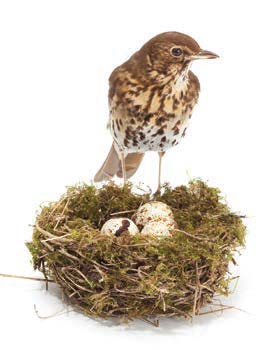
There, nestled in the branches of dogwood, sugar maple, hawthorn and pine; in gutters, rain boots and dense shrubs; within the cavities of dead and living trees: eggs, eggs, beautiful eggs. Creamy white ones, speckled brown (chickadee, cardinal and nuthatch). Bright and muted blue ones (robin and bluebird). Pale green with rust-colored blotches (mockingbird). And guess who’s out searching for them? Opossums, snakes, skunks, racoons, crows and jays.

Spring is as harsh as it is lovely. And, yet, this circle of life is indeed what makes each spark of creation all the more precious.

A Touch of Zen

A TOUCH OF ZEN

A Touch of Zen

Mid-century elegance for two

By Deborah Salomon 

Photographs by John Gessner

Architectural styles can take a while to develop a following. Like bouillabaisse and paella, their ingredients are myriad, complex. They can age like fine wine.

Apply these guidelines to mid-century modern, made popular by a coterie of forward-thinking architects — some associated with N.C. State, others espousing Japanese concepts — who left their mark on central and eastern North Carolina beginning roughly in the 1950s.

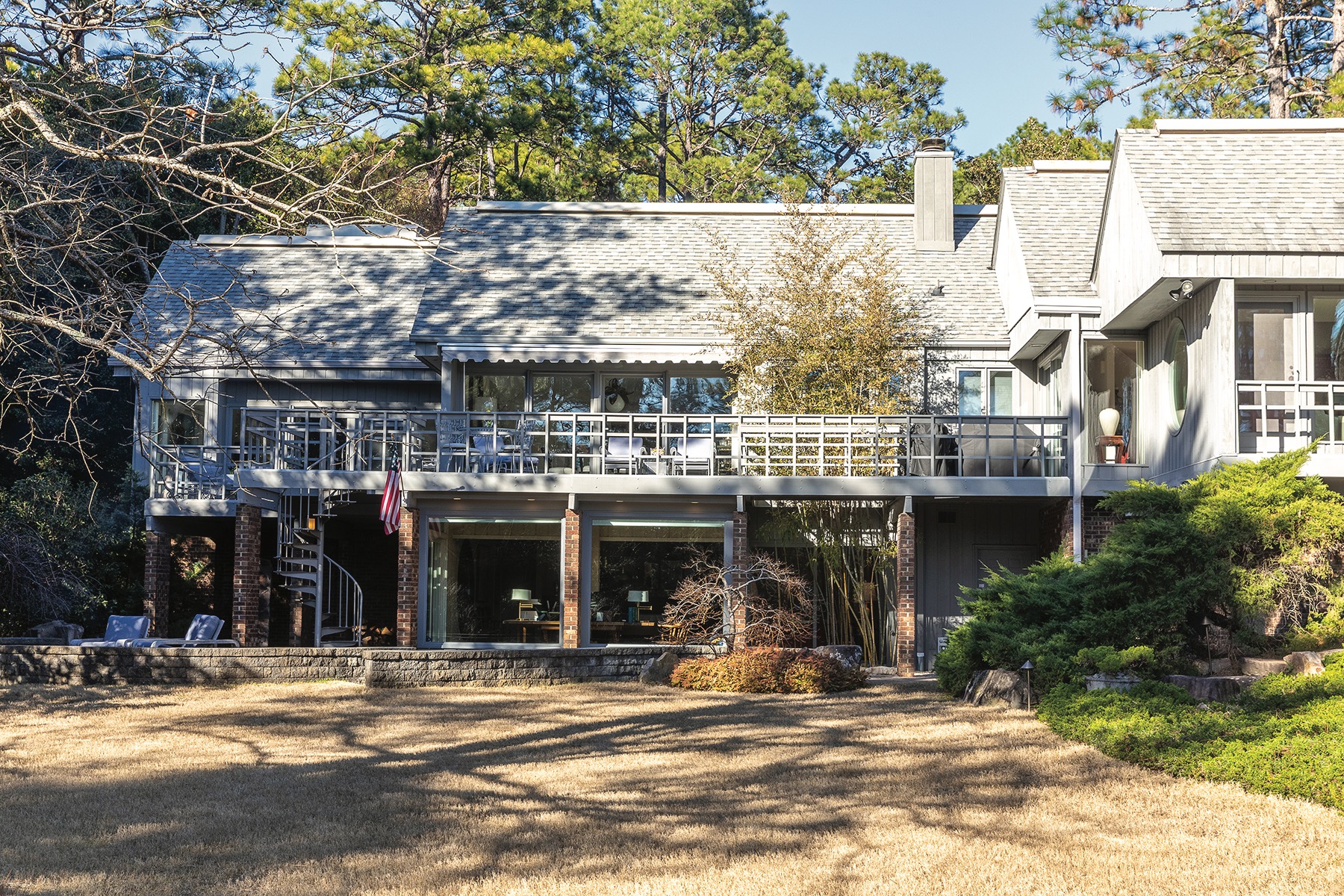
Then, for a stunning rendering, stroll through the mid-century modernesque home of Richard and Molly Rohde on the Southern Pines Garden Club’s Home & Garden Tour on Saturday, April 5. Notice the ways, some subtle, that the Rohde residence differs from neighbors at the Country Club of North Carolina — a pebbled area at the entrance; jumbo glass wall inserts; five strategically placed mini-gardens, one walled and sunken; and a wraparound Juliet balcony. All are born of Richard’s landscape design prowess, as is the giant golf ball atop a stump pedestal at the front walkway that was carved from a tree that grew on that very spot.

The house was built in 1980. The Rohdes have lived there for 10 years. “We are a blended family,” Molly explains, totaling seven children and 13 grandchildren. They keep a townhouse in Raleigh and a house at Topsail Beach, where the gang gathers May to October. Molly calls it their “happy place.”

Richard grew up in a stucco in Miami before moving to Winston-Salem; Molly in an interesting mountaintop residence in New York State. While living in Raleigh Richard enjoyed golf excursions to Pinehurst enough to suggest a grown-up retreat that he could combine with his office.

“The architecture, the sightings, the dogwood and azaleas in bloom — we decided on the spot and made an offer,” they recall. Another appeal: The house was designed by Hayes-Howell and Associates, the pre-eminent modernist architects of the era, who left significant marks on Moore County.

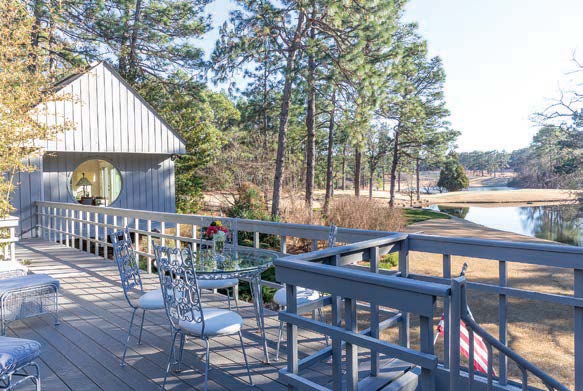
Richard planned whatever adjustments and additions that were required. The walk-out basement “playroom” with “wet bar” (in previous parlance) became his office. His desk was formerly a trestle table. He added a terrace with a firepit and an extended Juliet balcony ending in a metal circular staircase. Beyond, artistically arranged boulders define gardens where a sea of daffodils bloomed in late February.

The diversity of landscaping makes the pie-shaped 1-acre lot sloping toward the lake appear larger. Although the house layout is longitudinal with two wings — totaling 3,250 square feet — nothing suggests a single-story 1950s ranch. Enter the front door, step into a foyer flooded with light, and gasp at the dining room, directly opposite, with line-of-sight to the lake. Black and soft milky white dominate here. The black lacquer sideboard, which came with the house, is covered in Asian motif carvings. The table with a thick plate glass top, also a holdover, picks up sunbeams. Petals on a low-hanging light fixture suggest a lotus flower. Framed architectural renderings of the house, a testament to its provenance, hang on a side wall. Wallpaper adds texture in neutral, solid colors, no patterns.

Off to the right is the living room with an 18-foot ceiling, white carpet, white upholstery, a high triangular window, and a plate glass coffee table. In a corner surrounded by windows and glass doors stands a round glass-topped table where Molly and Richard take meals. Near the fireplace hangs an exquisitely embroidered framed kimono, once part of Molly’s wardrobe.

So far, elegant, very adult, perfect for entertaining.

The kitchen rates a giggle from Molly. Judged against today’s extravaganzas, it is modest yet stylish with black and white floor and tile backsplash, simple cupboards and pulls designed by the original architects, perfectly adequate for preparing meals for two, Molly notes.

The bedroom wing stretches off the foyer, the length of its hallway emphasized by a seemingly endless row of Chinese screen panels. Where they end the master suite opens into a large sitting room, doubling as Molly’s office, with built-in bookcases, TV, sofa and door onto the balcony. The highlight in her bathroom is a sunken Jacuzzi whirlpool tub in a deep red enamel, inspiring Molly to paint a fanciful hall tree for hanging towels. Richard’s bathroom: sedate black tiles.

Molly continued the Asian theme in jewel-toned fabrics and figurine lamp bases, some from her daughter’s boutique, Union Camp Collective, in Raleigh. She also framed a child’s kimono, worn by her daughter.

Molly and Richard, both longtime collectors, have curated and combined their possessions in the master suite and two guest bedrooms, one with a second set of built-ins filled with books. The result: a blended family, combined furnishings, historic Carolina architecture, a whiff of the exotic, and a home office overlooking the golf course. Richard recalls his first impression of life at CCNC: “I came through the gates and thought, whew, this is relaxing, another world.”

Lucky Richard. Fortunate Molly. In semi-retirement they found Zen.

Golftown Journal

GOLFTOWN JOURNAL

Calling Cards

The business of keeping score

By Lee Pace

The world’s oldest golf scorecard dates to December 1820 and the golf links at Musselburgh, Scotland. A member named James Cundell used the card to record 84 shots over 10 holes in a club match and noted in the margin, “Dreadful storm of wind and rain — atmosphere quite yellow — just like the lurid regions of Pandemonium.” The card sold in 2019 at a collector’s auction for the U.S. dollar equivalent of some $6,300.

Over two centuries, literally millions of scorecards have been churned out for golf courses worldwide. Some are simple one color on card stock. Some have a second color. Others have full-color photos, advertising or foil stamping. A nice touch for walking golfers is having a handy little pencil slip.

Odds are if you’ve stashed some scorecards away in your golf memorabilia bin, you’ll find a card with the tiny imprint in one corner of Golf Associates, Asheville, N.C. Quietly and with little fanfare, a small company in the mountains of North Carolina has carved a niche as one of the most pre-eminent manufacturers of scorecards in the nation. It has been in business for 55 years.

“It was early 1989; I had just taken the job at Duke and was at the PGA Show,” says Ed Ibarguen, the director of golf at the Duke University Golf Club. “I was wandering around the show and saw this company from North Carolina. They made scorecards. The guy stood up, shook my hand and said he was a huge Duke fan and would love our business. His name was Sherwood Pinkston. We developed a long-standing friendship. Sherwood’s gone now, but we’re 36 years into working with the same company.”

Pinkston grew up in Asheville and developed his business IQ by selling drinks at Asheville Tourists baseball games and hustling empty bottles for a penny each. He served in the South Pacific in World War II, then came home, started a family and ran assorted businesses — a diner in West Asheville and a dry-cleaning business, to name just two.

“He was the consummate entrepreneur,” says Jerry Davis, who worked for Pinkston from 1996 through Pinkston’s death in 2014. “He was not going to work for anybody. He was an avid golfer and a heckuva competitor. He was an ace at the pool table. He had big hands, but they were soft hands. He could make that cue ball go anywhere he wanted. He was a good golfer and an excellent putter, particularly on fast greens. You always wanted Sherwood as your partner.”

Pinkston played golf regularly at Beaver Lake Golf Course north of the city and Black Mountain Golf Course to the east. One day in 1968, he was paired with a man from California who said he’d just gone out of business trying to sell scorecards with advertising on them. That sounded like a good idea, so Pinkston approached the pro at Black Mountain and said he’d produce a scorecard for free if he could sell advertising.

The acorn was hatched.

He founded Golf Associates in 1970 and at first used the printing press at Hickory Printing Group, an hour east of Asheville. Pinkston called on golf courses from Mississippi to Miami, often sleeping in his car and eating a lot of saltines and Vienna sausage along the way. He got good results from a mail solicitation campaign, with one of his first orders coming from L.B. Floyd, the pro at Stryker Golf Course at Fort Bragg in Fayetteville and father of future Golf Hall of Famer Raymond.

“We offered a superior product, and if they would take advertising, it didn’t cost them anything,” Pinkston said.

One niche for the business was daily fee and public access courses that would allow Pinkston to sell advertising. That approach didn’t appeal to the private clubs, so Pinkston developed formats and ideas for scorecards that clubs would purchase.

“The Duke scorecards had had ads on them, and I wanted to get away from that,” Ibarguen remembers. “Sherwood had the idea of putting the logo in a foil stamp. He said he’d do it for no upcharge. He produced a beautiful card, one that I’d bet was as nice as you would find at the time for a public access course.”

Pinkston grew the business, added staff and eventually purchased a printing press (upgraded several times over the years). He expanded to add rack cards and post cards. His wife, Faye, took over running the business after her husband’s passing, and in 2020 she sold it to Gary Mannies, who had been in the yardage book publication business and had developed a friendship with Sherwood at trade shows over the years.

Today the company does work in its backyard, with cards at Biltmore Forest and Asheville Municipal; across the state at Quail Hollow in Charlotte, and Forest Creek, Dormie Club and Tobacco Road in the Sandhills; and to nationally recognized clubs like Whistling Straits, Fishers Island Club, Streamsong, Valhalla and Congressional.

“Sherwood is from ‘The Greatest Generation,’” says Davis, who knew Pinkston from playing golf around Asheville when he was looking for a career change in the mid-1990s after decades in the insurance industry. “He came back from the war determined to be a success. He just happened to find golf scorecards. Back then, most scorecards were bland and utilitarian. He introduced four-color. He started printing cards with UV coating on one side. That was a big innovation. It made the club logo stand out and pop off the card. That was a game-changer for us. For higher-end clubs, he started using linen and gold foil.”

Today, company sales representatives pay calls on courses across the nation and set up shop at trade shows like the PGA Show in Orlando every January, and the Carolinas PGA Show in Greensboro in February.

“I love the game, I love the people I work with, and it’s a creative business,” says Brayden Pitcairn, who’s been with Golf Associates for three years, as he looks over a display table of the company’s scorecards at the Greensboro show. “We want to produce something the golf staff is proud to hand to members and guests.”

Davis stands nearby, shaking hands with show attendees and reminiscing about the success of a company lasting well over half a century. His favorite story is having traveled with Pinkston to a trade show in St. Louis, driving back to Asheville and stopping at a motel in Nashville at 2 a.m. Davis went to park the car and bring the luggage in while Pinkston went into the office to register.

“I came into the office and Sherwood was trying to talk the guy at the desk into a deal for rack cards,” Davis says. “Now, the guy at the desk at 2 a.m. is not the decision maker. But that didn’t put Sherwood off.”

Entrepreneurs and golf. Some stumble, but the good stories are worth a round of applause.

Pleasures of Life

PLEASURES OF LIFE

Ueck and Me

There are no bad days at the ballpark

By Ron Johnson 

It was a particularly hot midsummer morning in New Orleans. It was 1964, JFK had been assassinated the previous fall, and I was an 11-year-old knucklehead with a Butch Wax crew cut and a $9.95 Spalding catcher’s mitt from Atlantic Thrift Center. We were spending our second summer in a 900-square-foot brick house about 3 miles east of the city limits, with only a noisy attic fan to protect us from the hot, sticky air.

It was my third year as an enthusiastic collector of Topps baseball cards. I had begun stockpiling them for a required merit project as a Cub Scout from Pack 222, Den 9. It seemed a lot more exciting than stamp collecting. The photos on the cards would come to life on Saturday afternoons in front of our monochrome Western Auto TV. And I had become addicted to the hard slabs of bubble gum, a bonus for me and for my young dentist, Dr. Murret, who looked a little like Vincent Price, and was Lee Harvey Oswald’s first cousin. But that’s a story for another day.

I had some great cards. Pretty much all of them, in fact, from Stan Musial to Mickey Mantle, to my favorite player, Tim McCarver, the 23-year-old catcher for the St. Louis Cardinals. He was a Southern boy from Memphis and was sure to be an all-star for years to come. He might have even been Irish. I could relate to him.

In the ’60s, before cable TV, our roof antenna could pull in a game on Saturdays at 1 p.m. on our minuscule screen. Mostly it was the St. Louis Cardinals playing the Cubs, Reds, Giants, Dodgers or Braves. The games were called by the often brash Dizzy Dean, a former Cardinal pitcher himself, and Pee Wee Reese, the Dodger great, who would provide color — as if Dizzy needed the help. Less frequently, it would be the Yankee “Game of the Week,” which I didn’t mind because I could see the best the American League had to offer, names like Mantle, Roger Maris, Harmon Killebrew and Carl Yastrzemski.

In the years before the hapless Houston Colt .45s (now the Astros) were established and before the Braves moved from Milwaukee to Atlanta, the Cardinals were the closest team to New Orleans. In fact, in those days, they had the largest geographical fan base in the U.S., stretching from Tennessee to Colorado. And they were huge in New Orleans. At night, I could hear Harry Caray call the Cardinal games on KMOX, the 50,000-watt clear channel giant, all the way from St. Louis to the transistor radio in my bedroom. Even after the Colt .45s joined the National League, watching them play baseball was painful. I once saw a Houston pitcher lose both games of a double-header. I saw another throw a no-hitter, and lose.

In the ’60s, St. Louis was an industrial juggernaut with factories up and down Manchester Road, their smell drifting for miles. It was a family-oriented, blue-collar city. The Gateway Arch was under construction. But most of all, St. Louis was the best baseball town in America on the hot summer day my mom and I boarded the “Southern Belle” at Union Station for our annual trip to visit my Aunt Winnie there. My dad would join us when he could, carrying a promise to take me to a Cardinals game at the old Sportsman’s Park, just renamed Busch Stadium.

Stan Musial had retired the previous year but they still had some elite all-stars on the team, including the hard-boiled Bob Gibson; steady Kenny Boyer; Bill White, who eventually became president of the National League; Curt Flood, the centerfielder who changed baseball forever by legally challenging baseball’s reserve clause; and Lou Brock, the prolific base stealer acquired from the Chicago Cubs in one of the most one-sided trades in baseball history.

I always slept in the basement at Aunt Winnie’s house, adjacent to the coal chute, often waking up with residual black dust on my cheeks. No matter. It was the day of the game. After a breakfast of Sugar Pops my dad and I walked down the steep hill to Manchester Road, toward the Mississippi River, and climbed up on the city bus, heading toward our connection and eventual destination at Grand Boulevard and Dodier Street. By the time we got near Busch Stadium, it was getting warm, scorching in fact, on its way to the high 90s. My dad bought me a wool St. Louis Cardinals cap from a street vendor, several sizes too large, in bright red with the iconic redbird logo. A heavy pair of Sears binoculars — which I still have — hung uncomfortably on my neck.

We picked up a scorecard listing the starting lineups. All the usual names were penciled in, except for the one I wanted to see more than any other, Tim McCarver. In his place was a reserve catcher named Bob Uecker. Could it be true? Is it possible that I had come all the way from New Orleans to see my hero, and he wouldn’t be in the lineup? Had he been traded? Had he been injured? I thought it was a fluke. I was confident the, manager Johnny Keane, would change his mind and McCarver would somehow be perched behind the plate that day.

The first thing I saw as we walked up the ramp and through the opening to our seats was the famous home run porch in right field — a trademark of Sportsman’s Park. Our seats were good. My dad made sure of it. He always saw to it that things were near perfect for me. We were on the third base side, about halfway up and partially under the high overhang. The old stadium was intimate and cozy. It felt like we could reach out and touch the players. Comfortably in our seats, we were ready to watch our Cardinals pummel the San Francisco Giants.

Looking down on the field, I saw a big guy in a loose cotton button-down shirt, interviewing Willie Mays. It was Dizzy Dean. Pee Wee Reese was standing nearby, chatting it up with some players around the batting cage. Soon the lineups were exchanged by managers Alvin Dark, a multi-sport athlete with Louisiana ties, and Keane, who would resign at the end of the season to take the same job with the Yankees.

Not known to me at the time, Harold Peter Henry “Pee Wee” Reese was more than just an eight-time all-star shortstop. He was one of the first white players to embrace Jackie Robinson when he arrived in New York. And he stood proudly at the side of Robinson when the boos rang down from racists, at home and on the road. They remained friends until Robinson’s death in 1972.

As the Cardinals took the field, my heart sank. As expected, McCarver’s number 15 wasn’t behind the plate. Instead it was the number 9 of Bob Uecker. All I knew about Uecker  was what I had read on the back of a baseball card. And it wasn’t much.

As the Giants trotted out their own all-star lineup of Mays, Willie McCovey, Duke Snyder and Orlando Cepeda, it was quickly obvious that this was not going to be a good day for the Cardinals, who went on to lose the game 14-3. There was plenty of action, though. Mays, earning a whopping $85,000 in his prime, uncharacteristically dropped a fly ball. Curt Flood slammed hard into the center field fence pursuing a sure double, which he caught, before being knocked out cold. Harvey Kuehn had five hits for the Giants while, totally in character, Uecker was 0-4. Counting Dean and Reese, there were no less than a dozen eventual hall-of-famers on the field that day. It would have been a lifetime of first-game bragging rights for any pre-teen baseball fan, even if his team had been mercilessly embarrassed.

And it would not be the last time I crossed paths with Bob Uecker.

As a young stringer for the New Orleans Times-Picayune, I ran into him at a few events in New Orleans, once at the famous and exclusive Sugar Bowl seafood party, another time at Commander’s Palace, and much later at spring training in Florida. He was always cordial, calling me “Spike.” I am not sure if he recognized me or simply called every young male sportswriter by the same nickname. I even told him the story about his Cards getting crushed 14-3 in St. Louis, which he remembered vividly. And later, when I lived in Dallas, I saw him occasionally at Arlington Stadium when the Brewers were in town to play the Rangers and he was broadcasting. Chance meetings all.

After abandoning my “career” in journalism, I got into the construction equipment business and eventually relocated to the Milwaukee area. On the way from my office in Menomonee Falls to our home near Okauchee Lake in Nashotah, I would sometimes drive by Uecker’s home off Pilgrim Road and wave to him when I saw him in his yard. He would always wave back though I’m certain he had no idea it was “Spike” behind the wheel.

And, of course, I would listen to Bob and his broadcast partner, Pat Hughes, whenever the Brewers were playing on those beautiful summer nights in the Lake Country of southern Wisconsin. Bob was the best ever at making a bad game good.

Known for his appearances on The Tonight Show, his role as Harry Doyle in the movie Major League, and his hall of fame broadcasting career, Ueck was also a skilled salmon fisherman with a nice rig on Lake Michigan. In those days, the lake’s eastern shore was a world class salmon fishery. I spent many days casting for kings and cohos on those nausea-inducing swells.

Like calling a bad baseball game, when the fish were nowhere to be found, you could hear Uecker on the ship-to-shore radio cracking jokes and telling stories with his dry Midwestern wit. I guess the Coast Guard was also amused because they never put a stop to his entertaining diversions. Everyone loved Ueck.

I ran into him at the marina a few times, never troubling him with lengthy conversation, but always happy to have seen him. Bob enjoyed home-smoked salmon for breakfast and would frequently offer a sample to anyone who was around at 5 a.m. A day on the lake was better when it started with Ueck.

I saw him several times at Kuhtz General Store and Tavern, right across Okauchee Lake from my home, near the shoreline where Norwegian Ole Evinrude invented the first practical outboard motor in 1907. Like the great Marquette University basketball coach, Al McGuire, he loved the chili at Kuhtz. So did I. But I never saw him drink anything harder than Diet Coke while entertaining anyone within earshot.

His accomplishments and successes in sports entertainment are too numerous to mention. But what greater aspiration can any human being have than spending their life making people laugh, sometimes on the field, as a player who once led the league in passed balls and errors while catching only 59 games? And what greater distinction can one have than being loved by most everyone who knows you? His self-deprecating manner was legendary. He never promoted himself, he promoted laughter. He seemed uncomfortable in a serious world.

While I thought Ueck belonged to me, and to the people of the Milwaukee area, where he was born, played and broadcasted baseball, fished, and lived and, last January, died, he actually belonged to all of America. For more than 50 years, I have welcomed in each baseball season, thinking of freshly cut grass, the smell of leather, and my connection with Ueck. But it will be quite different this April.

Ueck was part of my life. We certainly were not friends. I am not sure we needed to be. I just knew him a little. And that was enough.

Out of the Blue

OUT OF THE BLUE

Pet Peeves

There’s always something cringeworthy

By Deborah Salomon

Back in the day when columnists led off with “Back in the day . . . ” or “Webster’s Dictionary defines . . . ” people had “pet peeves,” with peeve defined by Webster as an annoyance or irritation. No explanation on how pet — a warm, fuzzy adjective — got hooked up.

Call them what you will, I’m sure peeves surfaced in the Bible, certainly Shakespeare. By any other name the irritations haven’t gone out of date. Perhaps owning them outright lessens the sting.

Mine include:

Prime-time TV ads for generic versions of remedies that treat sexual dysfunction, both male and female. Ditto “all-body” deodorants hawked on prime time cable. Imagine the questions posed by 8-year-olds.

People who give away puppies in the Walmart parking lot enrage me. Some pups go to good homes, I assume. But for others I fear the worst.

Silly yogurt. Like confetti and birthday cake flavors. The silliest is Oui brand, 5 ounces in a tiny glass cup that, unlike jam and mayo jars, has no reusable lid. My favorite yogurt is lowfat Greek vanilla, with a drizzle of real maple syrup.

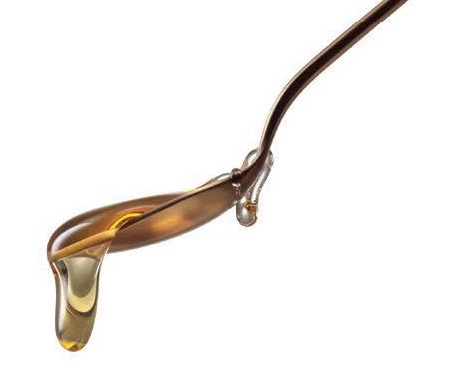
“Pancake” syrup . . . yuck. Living and working in Vermont for 21 years taught me that real maple syrup — still gathered and boiled down the old-fashioned way by winter-idled farmers — is true nectar of the gods, priced accordingly but worth the splurge. Mix with mustard and use sparingly on broiled salmon and roasted chicken, plain on cooked carrots, oatmeal. Dilute with cider vinegar for salad greens. March was syrup month long before it was basketball madness.

Talking to a machine. Bank, power and cable companies leave me foaming at the mouth. I finally cracked the code: Say “representative” over and over until you get one, who is usually polite and helpful from six time zones away.

TV anchor-and-weather women wearing cocktail or mini-dresses and strappy sandals at 7 a.m. Cleavage and knees don’t go with bacon and eggs.

Event ticket prices. Moore County boasts an inordinately large roster of lectures, plays, concerts and other entertainments both low- and highbrow. But with ticket prices starting at about $25, how can a couple have a reasonable dinner out and attend for less than $100? Student prices are some help but the upshot keeps Gen Now shackled to streaming. I spent college summers working in New York City. We starving students spread sleeping bags outside Broadway theaters at midnight, to cop SROs available at dawn for $5. What fun! But not new. At Shakespeare’s Globe Theater, common folk stood in the “pit” just below the stage for a penny. This practice inspired the Bard to include characters and situations familiar to mosh-pitters.

Remember Johnny Depp as Edward Scissorhands? Current version: Cecelia cellphone hand. She walks through life, cellphone Krazy Glued to her palm, as though awaiting a call from the ghost of Elvis.

Too many burger joints. I’ve heard tell there’s a spot on U.S. 15-501 that is equidistant from six, maybe seven burger emporia. Enough already!

Climate change deniers. If they have a better answer to the hurricanes, blizzards, floods, tornadoes, heat and cold waves I haven’t heard it. Abandon Mother Earth? For Mars?

Southerners running around on the coldest day sans coats. “I’ll only be out for a minute,” they protest. Get a grip — and a puffy jacket or double-breasted tweed. The trick to staying warm is to not get cold in the first place.

Supermarkets that don’t offer rain checks. “Loss leaders” aim to get shoppers through the door. But unless rain checks are offered for specials not in stock I feel cheated.

Politicians who spit out rambling non-answers to pointed questions. “Yes” and “no” aren’t in their vocabularies. I say, throw ’em into the mosh pit!

Omnivorous Reader

OMNIVOROUS READER

Mountain Thriller

Murder in the Grove Park Inn

By Anne Blythe

If you’re someone who likes to armchair travel through the pages of a good book, Terry Roberts, a native of the North Carolina mountains, has a thriller of a journey for you.

In The Devil Hath a Pleasing Shape, Roberts transports his readers to the luxurious Grove Park Inn, a stately and historic resort in Asheville that serves as the dark yet alluring backdrop for a murder mystery that exposes the tiers of a justice system that doesn’t always treat the wealthy and the poor equally.

The book starts with a bang when a nameless man standing near a tousled bed pulls out a pearl-handled derringer, shoots a naked college girl and leaves her on the thick, soft carpet to die in a pool of her own blood.

We quickly meet Stephen Baird Robbins in his home in Hot Springs, 30 miles downriver from Asheville. He’s a twice-married, once-divorced and once-widowed man who has stood trial twice for murder and been acquitted both times.

It’s October 1924, and Robbins, a retired investigator with a reputation for solving seemingly unsolvable crimes, is living a somewhat relaxed existence in a rental home with Luke, his 3-year-old son whose mother died in childbirth. Life had dealt them some wounds and bruises, but Robbins and his two neighbors were optimistic that together, they could raise Luke to adulthood.

When Robbins received a letter on fancy stationery from Benjamin Loftis, owner of the Grove Park Inn, trying to stir him out of his secluded piece of the world, he balled it up and threw it in the fireplace. Loftis persevered, first with a telegram telling Robbins his “presence is required due to a matter of some urgency,” and then with a personal follow-up in a chauffeur-driven trip to Hot Springs.

Loftis, a “newspaperman, chemist, pharmaceutical manufacturer, self-styled architect and — this is important —hotel man,” gave his pitch to Robbins. The hotel’s renown was in jeopardy after a college girl was found dead in one of the plush rooms.

“So in sum, you have a murder on your hands, and not just any murder, but the worst kind — a supposedly innocent young woman,” Robbins responds to Loftin. “The publicity is killing you. Two weeks have gone by and the sheriff hasn’t been able to nail anybody for it and you are getting desperate.” Robbins, a character who has appeared in two previous books by Roberts, let the hotel owner know from the start that he might not like the results.

“I want the murderer caught and punished, so that the inn’s reputation will remain unsullied,” Loftin responds.

Thus begins a tale that takes Robbins, who describes himself as “hill born and runaway” with “rarely two bills in my wallet to rub together,” to a resort where a man of his socioeconomic background is rarely a favored guest. Given wide access to the large granite stone inn described as “the finest pile of rocks ever built,” in October, “when fall began to wrap its cold hands around the mountains,” Robbins checks into the third floor hotel room next door to the murder scene.

The cast of characters includes an array of hotel workers and well-heeled guests such as judges, politicians and other townspeople who want to mingle and be seen among the wealthy travelers seeking retreat.

The hotel workers, its dining room servers, front desk managers and dutiful housekeepers are an interesting lot. The hotel itself, with all its corridors, luxurious amenities and nooks and crannies, becomes its own character.

Then there are the “girls” — the young women brought in to “keep the party lively” for events that might draw mostly men and a few bored wives. Robbins, a tenacious investigator with a knack for building rapport with the working people, has no qualms about standing up to the powerful. He is determined to find out who killed Rosalind Caldwell, or “Rosie,” as the locals called the young woman found dead in the hotel.

“Perhaps only Stephen Robbins could do what must be done here,” Roberts writes in his acknowledgements thanking the character for yet another appearance in one of his books. “After all, this is a book about prostitution and politics — a timely topic — and it required a hard hand and true voice to find justice.”

The Devil Hath a Pleasing Shape is about social status, privilege, racial injustices a wrongful arrest and a forthright observation that things are not always as they seem, even if that’s what the wider community wants you to believe. In fast-moving, descriptive prose, Roberts takes readers on a pursuit filled with danger and love that reveals the deaths of two other young women found lifeless in circumstances eerily similar to Rosie’s.

These were not the sort of women whose deaths would typically draw big headlines in Prohibition Era Asheville, Robbins notes. Their bodies were not discovered in a fancy hotel, nor did they come from the well-to-do neighborhoods of the town’s rich and famous.

Even if there are enough clues to figure out the likely killer long before the story ends, Roberts is adept at pulling his readers through to the conclusion to find out whether or not there will be justice for these victims. It’s an entertaining pursuit, a journey to another place and another time well worth taking.

Southwords

SOUTHWORDS

Live in the Meow

Curiosity didn’t kill this cat

By Emilee Phillips

Cats having nine lives is a cliché. Orange cats being a menace is another. But my childhood cat, Simba, fits the bill for both.

He was trouble from Day One. We found him abandoned under an azalea bush and roaring his little kitten head off. I had never heard such a small animal make so much noise. After capturing the terrified little guy, I discovered he also had six toes, like the Hemingway cats. Trouble.

Simba has always preferred the jungle — er, pine trees — to the cushy indoors. He roamed and picked fights, holding his own in the wild kingdom (our neighborhood). The cat was a scrapper through and through but always came when his name was called. He had a soft spot for family. Or so we thought.

When we moved to horse country Simba went along for the ride. It’s not uncommon for animals to run off after a move. They may get confused and try to find their way back to their former abode. 

Shortly after we relocated, Simba disappeared. I imagined him weaving in and out of briars, riling up goats, scurrying around towering horses like a night bandit. I hollered for him daily, nightly. Not a meow was heard in response. The family searched for him but the new house was out where coyotes regularly lurked. We feared the worst.

After a couple of months, we accepted that our family cat was gone. We honored him with a framed picture that read “Forever in Our Hearts,” with the years of his life inscribed on the back.

But we were wrong. He hadn’t used up all those lives just yet.

My mother and I were shopping in Raleigh one day the next summer when she got a call. “Hi there. I’m a security guard at Penick Village. I, um, think I have your cat.”

We exchanged looks of confusion. “Is it black?” asked my mother, thinking perhaps our second cat, Zelda, had decided to visit some distant, unknown aging relative. 

“No, ma’am, it’s orange.”

“Orange!” we exclaimed in unison.

“Yes, ma’am, I’ve seen him out here every night for the last few months. I figured it was a stray. He finally let me get close enough to grab him and he had a collar. Thought I would try calling.” 

We zoomed back. It was dark by the time we got there, and the cat was nowhere to be seen. I stalked the retirement community for the next three days. 

I asked anyone I saw outside on the street, “Have you seen an orange cat?” To my amazement, nearly all of them said, “Yes.” Great, I thought, my cat has been family shopping. No doubt capitalizing on extra rations from multiple residents. I handed out my phone number like I was passing out Junior Mints. 

On the third day, I got a call. A sighting!

I rushed to Penick Village and jumped out of the car. “Simbaaaa!” I yelled. Next thing I knew I hear a “bwrrr” and out popped my cat from the bushes. I half expected it to be some lookalike, some faux Simba, but it was my very own six-toed little feline. He rolled on his back and purred, seemingly indifferent to the fact that he had been missing for 10 months.

I coaxed him with treats and, after a moment of deliberation, he sauntered over with an accusatory look as if to say, “Yo, where you been?” Once in the car, he jumped into my lap as though this was just another chapter in his great escape.

A wave of emotions rushed over me: happiness, bewilderment . . . and annoyance that my cat decided he wanted to experience an easier pace of living. Well, I was taking him out of early retirement.

The reasons for Simba’s disappearance remain a mystery, having chosen assisted living even over our previous residence. Once I got him home, he didn’t bother with the cat bed we’d set up for the return of the prodigal tabby. Instead, he flopped down on the windowsill, resuming his rightful place with a lazy stretch.

We knew at that moment he wasn’t just returning from his brief sabbatical. He was back, all the way back, ready to once again rule over his empire of pillows and food bowls, with no intention of going missing again, except perhaps to a particularly sunny patch of grass somewhere nearby.

As for us, we crossed out the dates on the back of Simba’s frame and updated the picture — mug shots, front and side.

Simple Life

SIMPLE LIFE

A Spring Awakening

And a journey from darkness to light

By Jim Dodson

I celebrate April’s return every year because it’s the month that a divine awakening changed my life.

It was 1980. I was the senior writer of Atlanta Weekly, the Sunday magazine of the Journal-Constitution, the oldest newspaper magazine in the nation. It was probably the best writing gig in the South. Over the previous three years, I’d covered everything from presidential politics to murders in the “City Too Busy to Hate,” as Atlanta liked to promote itself in those days.

One minute I was interviewing a grand dragon of the Ku Klux Klan in Alabama, the next riding along with the Repo King of Atlanta as he repossessed cars in the city’s most dangerous federal housing project, a shotgun on the seat of his truck. I’d also written several pieces about young women from the South who were drawn to Atlanta’s bright lights only to wind up murdered or missing.

Looking back, though I didn’t realize it then, I was in search of an answer to a question that had no answer.

Three years before I snagged that job, Kristin, my girlfriend back home in North Carolina, was murdered in a botched holdup by three teenage boys at a Hickory steakhouse where she worked as the weekend hostess. I’d left Kristin on a beautiful October Sunday after making plans to get married and move with her to England, where she had a job as an understudy awaiting her in London’s West End.

The low point of my Atlanta odyssey came on a hot July night in 1979. I was working on a cover story about Bob Stivers, the city’s famous medical examiner, whose forensic sleuthing reportedly inspired the popular TV show Quincy. The week before that Saturday night, I’d watched half a dozen autopsies at the ME’s elbow, equally mesmerized and horrified. When Stivers invited me to ride along with the squad that picked up murder victims, I jumped at the chance. Saturday nights were particularly busy in the city that had recently been declared America’s “Murder Capital.”

My new fiancée, Hank Phillippi, was the nighttime weekend anchor at WSB-TV. We shared an old, brick house near the east-side entrance to Piedmont Park. Our weekend routine was to have a glass of wine and watch Saturday Night Live when Hank got home from the studio before midnight.  

On that fateful night, waiting for a call from Bob Stivers’ death crew, as I was standing in the darkness of our backyard, waiting for my dog, Magee, to do her business, I saw a car pull up beside our neighbor’s house. We were friendly with the Emory med students who lived there.

As I watched, a man emerged from the backseat of the car and calmly walked to our neighbor’s backdoor and knocked. A med student still in scrubs opened the door. There was a brief exchange of words, followed by two gunshots. The medical student collapsed on the ground. The assailant bolted for the running car, which sped away.

By the time I reached his side, a young woman from the house was screaming hysterically. I asked her to fetch me a couple towels and call 911.

Fortunately, at that moment, Hank arrived home. She took charge and phoned the police as I cradled the wounded man in my lap, attempting to keep him conscious. He died 15 minutes before cops arrived. “We get drug hits like this every weekend,” the cop said.

I chose not to follow the victim’s body down to the city morgue.

The next morning, though, as I was walking Magee, I heard a chapel bell in the distance softly chiming “Blessed Be the Tie That Binds,” one of my favorite hymns since childhood. Tears filled my eyes.

As Hank slept in, I fetched a cup of coffee, sat on our front steps taking stock of my life, and suddenly realized what was missing. I hadn’t been to church in five years.

I got dressed and went to services at the historic All Saints’ Episcopal Church downtown, famous for feeding the homeless and never locking its front doors. The rector, a wonderful man named Harry Pritchett, gave a powerful sermon about how God finds us in the darkness when we least expect it. It felt like he — or maybe God himself — was speaking directly to me.

Not only did I begin attending All Saints’ regularly, but also made a decision in favor of writing stories that enriched life rather than revealed its dark side. I even set my mind on attending seminary, until a wise old Bishop from Alabama named Bill Stough, the editor of the Bishop’s Fund for World Relief, convinced me to follow a “ministry closer to your heart,” as he put it. “You are a born writer,” he said. “You can serve the Lord better by writing about life than becoming a parish priest.”

Not long after that harrowing summer night, Hank and I called off our engagement, but have remained dear friends for more than 45 years.

As for me, that following April while working on a sample story about youth baseball tryouts, I ventured over to a rundown ball field in my midtown neighborhood, where a desperate league director convinced me to take on the coach-less Orioles. They were a wild bunch, many of whom lived in Federal housing. This was during the peak days of the “Missing and Murdered” crisis affecting Atlanta’s Black teens. I made a deal with my team’s families to drive them home after all games and practices.

I also made a deal with my rambunctious “Birds”: If they played hard and behaved like gentlemen, I would buy them all milkshakes after winning games.

They took the offer to heart. We won the Midtown League Championship in a romp that season, which convinced me to stick around Atlanta for one more year. We went undefeated for a second time. It only cost me 200–300 milkshakes.

I never wrote another crime story again.

Crazy as it sounds, almost a year to the day later, I woke on an April night to find Kristin standing beside my bed. She looked radiant. I thought I must be dreaming, but she was so lifelike, especially when she smiled and spoke. “Pook,” she said, using her pet name for me, “it’s time for you to leave here and go north. That’s where you’ll find what you are looking for. I’ll always love you.”

Days later, I resigned from the magazine, turned down what might have been a dream job in Washington, and headed for a trout stream in Vermont.

God, Kristin and my baseball team found me in the darkness when I least expected it.

It’s been a wonderful life ever since.

Tea Leaf Astrologer

TEA LEAF ASTROLOGER

Aries

(March 21 – April 19)

Just as genius requires a touch of madness, passion requires a touch of grace. When Mercury enters your sign on April 16, don’t be surprised to find yourself in an argument sparked by your own bluntness. On that note, this month is a good time to deepen your meditation practice. Don’t have one? Try listening to the sound of water, taking a cold shower, or candle-gazing.
At month’s end, Venus in Aries amplifies your natural urge to take initiative in pursuits of the heart. Remember,
sometimes the poison becomes the medicine.

Tea leaf “fortunes” for the rest of you:

Taurus (April 20 – May 20)

Two words: mud mask.

Gemini (May 21 – June 20)

Decline the deviled eggs.

Cancer (June 21 – July 22)

Let your eyes do the talking.

Leo (July 23 – August 22)

Sign up for the workshop.

Virgo (August 23 – September 22)

Relax the muscles in your face.

Libra (September 23 – October 22)

It’s time for a fresh perspective.

Scorpio (October 23 – November 21)

Eat your spinach.

Sagittarius (November 22 – December 21)

Go fly a kite.

Capricorn (December 22 – January 19)

Keep your bag packed.

Aquarius (January 20 – February 18)

Plant your feet directly on the earth.

Pisces (February 19 – March 20)

Splurge for the one you really want.

Hometown

HOMETOWN

Cleats and Reels

A boy’s spring outfit

By Bill Fields

I was a boy of two minds when the temperatures warmed up and the days got longer.

Spring brought baseball, of course, as it did for many kids of my generation. I’d read reports in the newspaper about the Citrus and Cactus leagues. Promos for the game of the week would show up on television. My friends and I would ready our arms in the backyard. Would this be the year I learned how to throw a curveball? Growing feet meant a new pair of cleats, which without question would allow me to run the bases faster and cover more ground as an infielder. The hopes of an aspiring ballplayer at the dawn of a new season are many. 

But as things began to bloom outside our house in Southern Pines — white dogwood at the top of the driveway, azaleas of several colors on either side of the front door — my mind also was on fishing.

No doubt my father took me with him to an area pond when I was too young to remember it. Even if an outing ended with a bare stringer, he went home happy, the weight of everyday life seeming to have lessened a bit with every cast — the cigarettes and beers probably played a part too.

In my earliest, vague recollections of fishing, I am holding a bamboo pole and doing my best to follow Dad’s instructions to pay attention to the movement of the cork signifying a snacking sunfish below the surface. (Despite the fact that most of our “corks” were white and red plastic spheres, we never called them anything else.)

With rare exceptions, our fishing dreams were much bigger than our catches. Curt Gowdy, the marlin-catching host of The American Sportsman on ABC, had nothing to fear. We never needed to look and see if there was a taxidermist listed in the Moore County phone book.

Once, casting a purple worm off a dock at Badin Lake, Dad caught a largemouth weighing 3 or 4 pounds. The size of his smile as he posed for a picture looked as if he’d landed a lunker. That same trip I hooked a large carp, but it wriggled away before I could lift it out of the water and document the catch.

Our best haul came late one afternoon at a private farm pond in Eagle Springs on the property of one of Dad’s schoolmates. Going for bream, earthworms were the customary bait. Occasionally, Dad would splurge for a couple dozen crickets. But for this trip, we were armed with a special bait, a jar of catalpa worms.

They were velvety, brightly colored creatures that appeared every couple of years on a tree in our yard. Once harvested, we’d store them, much to Mom’s displeasure, in the produce drawer of the refrigerator. Threaded on our No. 8 hooks in Eagle Springs, the catalpa worms worked like magic. We caught dozens of bream bigger than one of Dad’s large hands on an angling day like no other.

Fishing was mostly about the preparation and the quest. Dad had an old aluminum tackle box that opened to reveal two rows of slots to hold hooks and lures. I pored over its contents between fishing outings, envisioning a healthy bass being attracted to one of the topwater plugs. I graduated from a bamboo pole to a hand-me-down rod and reel from my father.

It was a big occasion when I had saved enough of my allowance money to walk into Tate’s Hardware and buy a Zebco Model 33 spincast reel. Buying a Zebco 33 was a rite of passage, like getting your first pocketknife.

The Zebco 33 was a revolutionary design when R.D. Hull invented it in the 1950s, when it sold for a whopping price of $19.50. With the monofilament line enclosed in a metal cover and featuring a push-button action, the design was backlash proof and easy to cast.

Appropriately equipped, I at least looked the part. A Zebco 33 did everything but make a fish bite what was at end of your line.