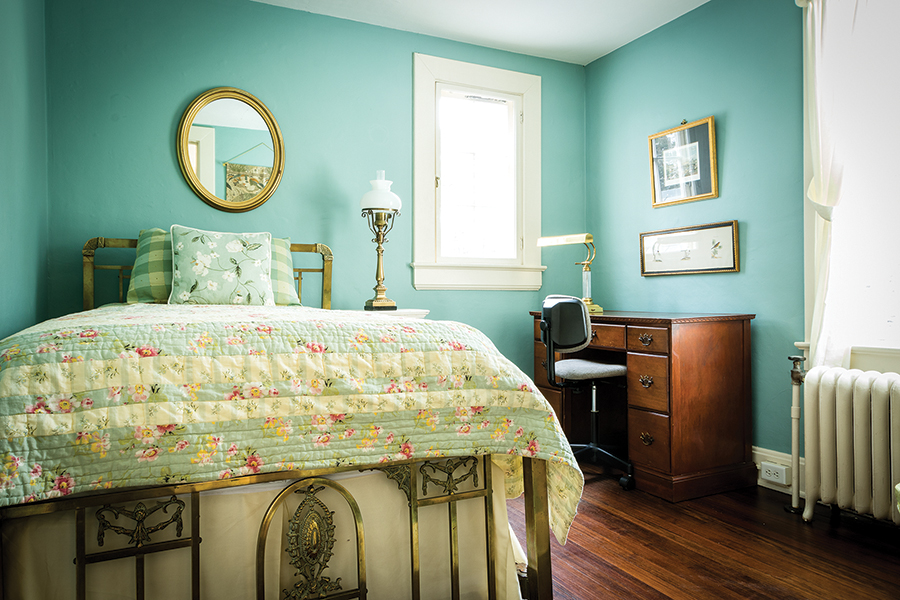
A Tradition of Culture

The many lives of Campbell House

By Ray Owen

Surviving through myriad incarnations, Southern Pines’ Campbell House is one of the region’s most significant landmarks, owing its existence to the Boyd family. Once part of their Weymouth estate, for more than 100 years it has been a center of culture, informing, influencing and enhancing civic life.

It is an outstanding example of a Country Place-era estate created over time by a remarkable series of individuals who began settling in the region around the turn of the 20th century. The fledgling Sandhills resorts were rising from the dusty remains of a former turpentine and lumber industry outpost. The backdrop for this transformation was the greater social movement of the day, a reaction to the cultural upheavals brought about by industrialization and urbanization. The Sandhills fit perfectly within the country life paradigm, appealing to America’s growing fascination with vernacular culture and native folk.

The lives of Campbell House comprise four significant periods: first the home of James Maclin Brodnax, then expanded into the original James Boyd House with additions from local Colonial houses; next moved and enlarged at its present location by Jackson Boyd; later the home of General Motors heir Maj. William Durant Campbell; and now a municipal property, home to Southern Pines Recreation & Parks Department and the Arts Council of Moore County.

The first period opens with James Boyd’s 1904 purchase of a sizable portion of land on the eastern ridge above downtown Southern Pines. Within months, the matter of building a residence was altered by the death of his kinsman, James Brodnax, who had built a two-story Colonial Revival-style home for himself on the property. James Boyd, grandfather of writer James Boyd and his brother Jackson, enlarged the Brodnax House into an imposing mansion, incorporating building elements dating from the late 18th and early 19th centuries. The Brodnax-Boyd House was located 100 feet in front of present-day Weymouth Center.
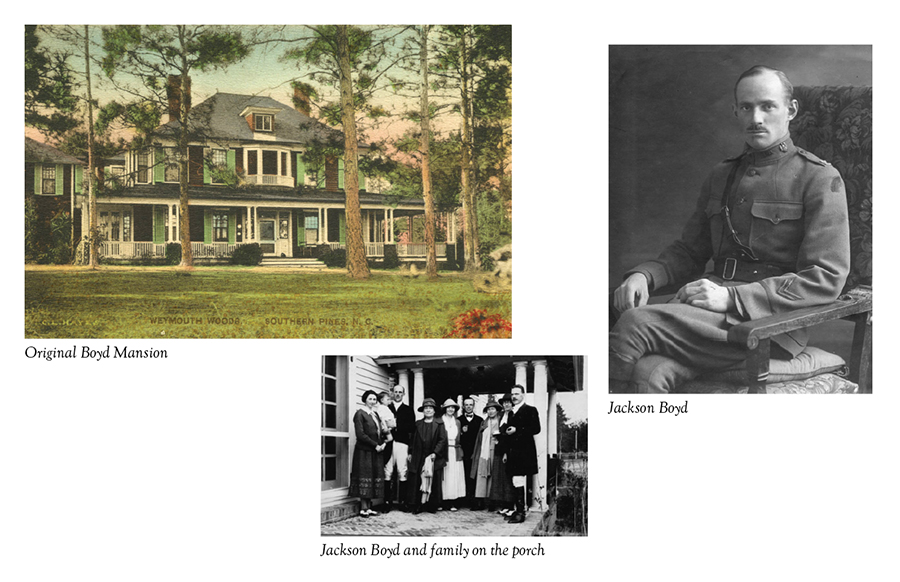
In 1921, the Brodnax-Boyd House was separated into two blocks and both moved by mule teams across Connecticut Avenue, where they became the core of two new residences. One part was refitted as a residence for Jackson Boyd (Jack) and his family, and it remained their home, following major rebuilding in 1936 after a fire. Another part of the Brodnax-Boyd House is now the dwelling standing at 435 E. New Hampshire Ave.

Jack and his brother, writer James Boyd, founded the Moore County Hounds in the winter of 1914. They saw this aristocratic sport in democratic terms and felt that it should belong to the town. Proper dress or not, anyone who wished to hunt was invited to come along, so huntsmen in formal attire rode with farmers on horses more accustomed to plowing than jumping fences.

As a captain in the Marines, Jack was in charge of canine training at Camp Lejeune. Being from blueblood hunt country, he was a trainer, breeder, master of 70 foxhounds. Jack taught his war dogs to march in cadence, heel on regular intervals, and perform ordered drills. More training prepared them for track and attack missions and watch duty. His division’s canine records included letters of commendation, citations and a discharge certificate. In many instances, a formal photograph of the dog was included upon promotion of the dog to sergeant.

Jack’s eldest son, John Boyd, was killed in action at Guadalcanal, and the local VFW post is named for him. Those who knew Jack Boyd say that his son’s death was a severe blow and he left  Southern Pines shortly after the war.

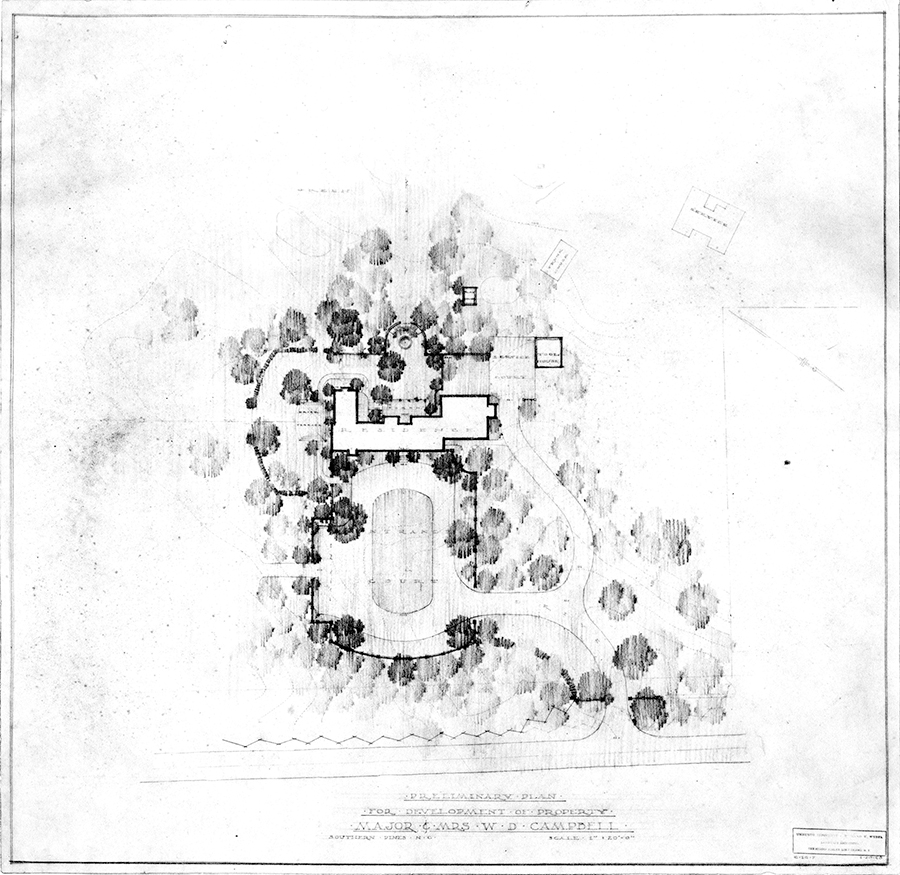
In 1946, Major W.D. Campbell purchased the Jackson Boyd House and he made extensive changes, facing the unpretentious frame structure with ballast-brick from Charleston, South Carolina. The same brick was used in the formal landscaping and walled garden at the rear of the house. In 1966 the Campbell family gave their property to the town, asking that it be used for the cultural and social enrichment of the community.

Evidence of history can be found throughout the building, with a striking contrast between the formal entrance and the informality of the large pine-clad room on the east wing. This room, known today as the Brown Gallery, encompasses the most visible remains of Brodnax-Boyd House with its circa 1820s mantel and beaded hand-planed paneling.
In Jackson Boyd’s time the main staircase rose at the back of the foyer, but the Campbells reconfigured it to rise at the front, opening up the back wall with glass doors. The foyer and former dining room, now the White Gallery, remain unchanged from the late 1940s with marble-chip terrazzo flooring, marble staircase and decorative wrought-iron railing. A medallion graces the entry hall floor. Inscribed in Greek, it depicts an African antelope bagged by Maj. Campbell for the Museum of Natural History in New York.

The Campbells and their daughter, Margot, were active in many civic and community affairs. Mrs. Campbell was one of the founders of the Southern Pines Garden Club. Maj. Campbell’s interests included the Red Cross, Boy Scouts and model trains and he built the Train House to house his collection. An Eagle Scout in his boyhood, Campbell became a leader in the national and international movement, an activity that eventually called the family away from their home in the pines. Born in Flint, Michigan, Maj. Campbell was the grandson of William Crapo Durant, the co-founder of General Motors and Chevrolet, and the founder of Frigidaire. Campbell graduated from Princeton University in 1929 and initially pursued a career in banking. During World War II, he was a battery commander and retired from Fort Bragg in 1946 as a major. He became involved in Scouting as an adult at the suggestion of its British founder, Robert Baden-Powell. His travels convinced him that Scouting could do much for young people and he took a special interest in furthering the organization in developing countries with programs tailored to local needs. That philosophy and his personal commitment saw a doubling of the Scouts’ membership in the 1970s and 1980s, chiefly in the Third World. A philanthropist, Maj. Campbell was also on the executive committee of the Mystic Seaport Museum and a director of the National Audubon Society.

When the Campbells gifted the property to the town, a board of directors was appointed, bylaws were established, an on-site director was hired, and a vigorous program developed to put the property to use. The Southern Pines Information Center was installed in the main house, and the Stoneybrook Racing Association moved into its west wing office.
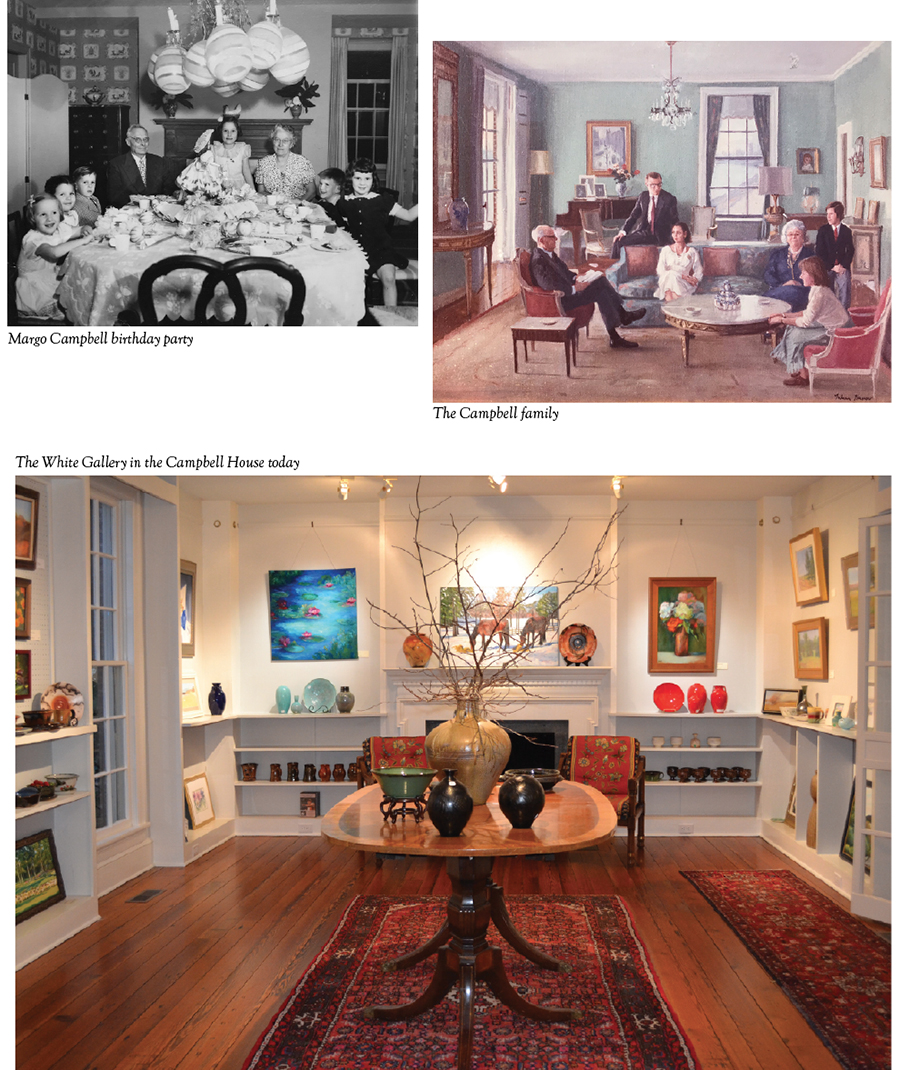
The Boy Scouts were among the early organizations at Campbell House, along with offices for the Humane Society of Moore County and Moore County Historical Association. In the late 1960s, a small golf museum was set up in the former dining room, and this collection was later turned over to the World Golf Hall of Fame.

In 1972, Southern Pines established a year-round recreation and parks department centered on the property. This program is now the biggest user of the site with its offices on the second floor of the main house. The first floor is the headquarters of the Arts Council of Moore County, where they maintain two galleries that display the work of different artists every month and a sales gallery that showcases the work of regional artists.

Thousands of visitors have enjoyed Campbell House, hundreds of volunteers have given time and energy to the fulfillment of its purpose, and a small, dedicated group has taken personal responsibility for its success.

Moss gathers on the ancient lawn as azaleas bloom late against fading bricks. Across the lot, live oaks keep the view — if they could speak, what stories would they tell, wide spreading boughs, nothing missed in their branches. Some say the house is haunted and at twilight the apparition of a woman drifts across the stairs, a lingering reminder of lives that have come before.  PS

Ray Owen is a local historian, who works for the Arts Council of Moore County.

Rosé and Chèvre All Day

The perfect pairing for spring

By Angela Sanchez

Spring is upon us. The colors are changing and the earth is waking up. The air is warmer and the days are longer. We want to enjoy nature and embrace the change of season. No matter if you are an old friend of rosé or meeting one of my favorite wines for the first time, it’s the perfect choice to embrace this time of year, representing something new, approachable, fresh, clean and light.

Rosé (France), rosato (Italy), rosado (Spain) — depending on what part of the world you are in — has been produced for centuries. It can be from a single varietal, like grenache or pinot noir, or a blend of two or more like cabernet and tempranillo. It ranges in color from a nearly clear pale pink to something darker, almost a fluorescent orange. In style, it can range from bone-dry, crisp and clean with a hint of minerality, to medium sweet or even sweet. The color will be lighter or darker depending on the amount of time — from just a few hours to no longer than a day — that the skins come into contact with the fresh pressed juice, a process known as maceration. Sometimes a less common method called saignée is used when lighter colored juice is removed from a red wine in the early stages of production and made into rosé. There is also a blending method where red and white wines are combined to make rosé, but it’s common only in the making of rosé Champagne or sparkling wine. A key component of rosé production is the lack of aging. It is made to be consumed young and fresh, perfect for spring when the new vintages start to arrive.

The history of rosé is long and varied. Until modern-day winemaking techniques were widely practiced, most of the world’s red wines were rosé in color rather than the ruby red we know today. One of the world’s most famous rosé producing regions, Provence, in the south of France, has been producing rosé for centuries. In the late 19th and throughout the 20th century Provence’s rosé production increased along with tourism and the culinary renown of the region. Today, the classic Provençal style of rosé is becoming more and more popular throughout the winemaking world. Extremely food-friendly, it’s dry, pale and almost skeletal in structure, with notes of dried apricots and brier fruit — strawberry and tart raspberry — with hints of thyme on the finish. Highly versatile, it’s perfect for a brunch of quiche and pastry; for snacks of cheese, olives and charcuterie; or with a dinner of spring greens salad with pea shoots, sweet peas, chèvre and mountain trout or young lamb roasted over a fire with new potatoes in bright green olive oil. This drier, cleaner, lighter-in-color style is currently the trend for rosé and it can vary widely in the varietal makeup of the wine. A decade ago a winemaker from a famous southern Rhône wine-producing family told me rosé should only be made from grenache grapes, or at least grenache should be the dominate grape in a blend. In the south of France, grenache yields those beautiful brier fruit, black cherry, dried herbs and spice notes and makes a great varietal for blending (especially with heavier varietals like syrah — also grown widely in the south of France), adding generosity and lightness to the wine. In Spain, tempranillo makes a slightly heavier style rosé on its own or when it’s blended with grenache. It’s dry and crisp with notes of orange and lime peel and different fruit markers like mandarin orange, kiwi and watermelon along with the familiar strawberry. In California the colors still vary from lighter to darker and varietals can range from grenache to pinot noir to cabernet sauvignon. Pinot noir-based rosés offer tart cherry and peach while a blend based on grenache will have a bit more acidity and notes of grapefruit and melon. Chile and Argentina are producing rosés from pinot gris to malbec. Varying widely in color and style, they range from light and crisp with a note of capsaicin to rich and dense with darker fruit notes like plum.

Of course rosé is great on its own but how much better and more fun is it to have with cheese? This time of year goat cheese, or chèvre, is at its best when sourced from small farms that let their herds graze on new tender grasses and leaves growing naturally. Spring means baby goats and baby goats mean milk. Mothers are birthing and feeding as well as providing for the farm to make cheese. The combination of a fresh spring diet and an abundance of milk makes for chèvre that has a tart, slightly herbaceous flavor with a light and creamy consistency. Rosé and chèvre are welcoming and made to enjoy while young and fresh. So grab a bottle of rosé, a bit of chèvre and find a blooming dogwood to sit under to enjoy the tastes of spring.   PS

Angela Sanchez owns Southern Whey, a cheese-centric specialty food store in Southern Pines, with her husband Chris Abbey. She was in the wine industry for 20 years and was lucky enough to travel the world drinking wine and eating cheese.

Nurturing Jefferson’s Garden

Peter Hatch’s journey from Moore County to Monticello

By Jim Moriarty

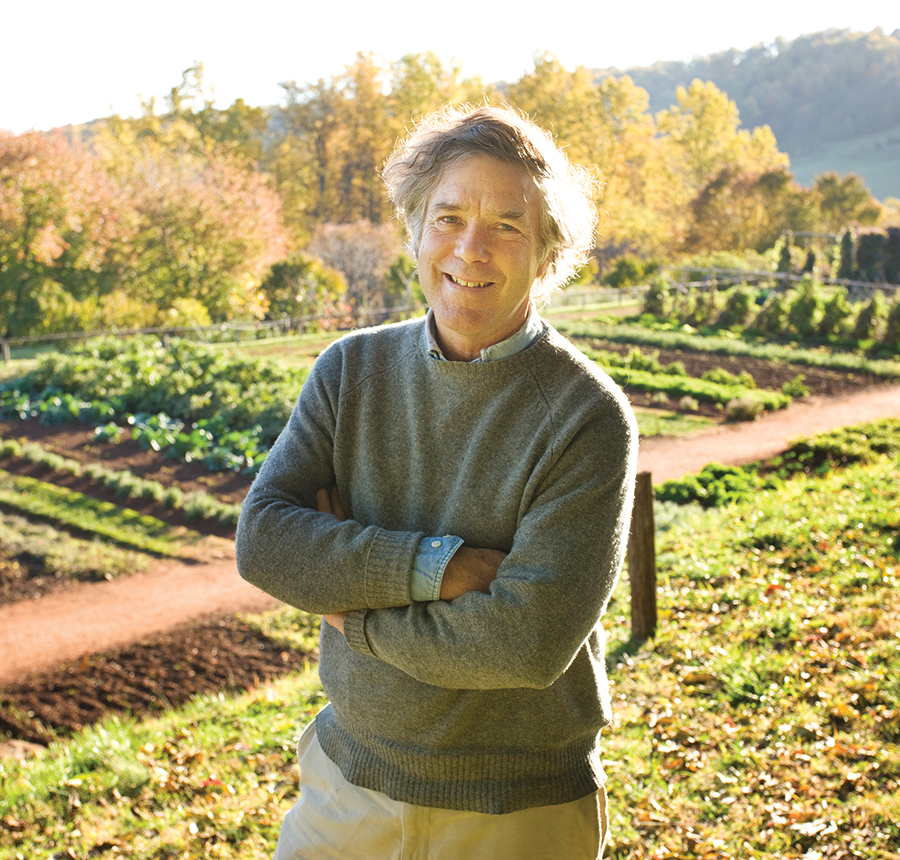
Equipped with a pair of hands weather-beaten as a potato farmer and adorned with a shock of gray hair as wild as a patch of weeping love grass, Peter Hatch spent 35 years faithfully tending the garden of a man who died 140 years before he was even born. The man was Thomas Jefferson. The garden was at Monticello. And Hatch’s path to Virginia went straight through Sandhills Community College.

Hatch had a self-described “privileged upbringing” in Birmingham, Michigan, a chichi suburb of Detroit. His father, Clarance, was an ad guy, a madman, a hotshot executive at the firm Campbell Ewald who had scaled the Mount Everest of advertising accounts, General Motors, in the days when what was good for General Motors really was good for America. Peter, the offspring of his father’s second marriage, was a six-year veteran of the exclusive Cranbrook Schools. At the age of 14, he took the only golf lesson of his life at exclusive Oakland Hills Country Club from the legendary Michigan professional Al Watrous, a PGA Tour player of the ’20s and ’30s who lost the 1926 Open Championship at Royal Lytham and St. Annes to Bobby Jones on the last two holes.

Flowering dogwoods and pink azaleas led Hatch to Chapel Hill and the University of North Carolina. “How I ended up at Chapel Hill was serendipitous,” he says. “It was a pretty place in the springtime.” Packing the rigorous training of Cranbrook in his duffel, Hatch found a niche at UNC. “I kind of flourished because I had a lot of skills but I didn’t have any ideas. Then I suddenly got ideas when I went to college.”

He graduated in 1971 with a degree in English, a penchant for crafting poetry with a short shelf life, and a yellow Volkswagen beetle, the import he was given as a graduation present by his mother, Janet, the second of the three wives of the consummate Detroit pitchman. The first stop was Glacier National Park in Montana, where he spent nine months painting cabins, selling sporting goods and pumping gas. Then, echoing the advice of Horace Greeley, it was off to Santa Barbara, California, to find his college sweetheart, Jane West. “I drank tawny port in the afternoon and wrote bad poetry and just kind of sat around,” says Hatch. He read the voices of the day. Robert Bly. James Wright. Galway Kinnell. James Dickey. Kenneth Rexroth. John Berryman. Before long, West sent him back east.

“My girlfriend dumped me for the fourth time, so I rode around the country to try to find a job as an English teacher,” says Hatch. He landed an interview at another private prep school, Lawrence Academy, outside Boston, that needed someone to teach English and coach hockey, a reasonable fit for the former center of the Cranbrook hockey team. On the way, he stopped in Michigan, where his mother insisted he get a haircut. “She made me go to her Lebanese hairdresser to shave off my beard and give me a haircut,” he says. Depending on your generational frame of reference, the resulting bowl cut looked like Prince Valiant, Jimmy Connors, Moe or Lloyd Christmas.

While he was waiting to learn whether or not he was destined to be the new coach of the LA Spartans, Hatch stayed with friends in East Falmouth on Cape Cod, not far from Hatchville, where his ancestors disembarked sometime in the 1620s. Destiny had its own plan. “One of them started talking about the joys of organic gardening,” he says. “When I didn’t get the job as an English teacher, I decided to go back to Chapel Hill.” He earned a few dollars delivering the News and Observer and planted a garden. Enter Sandhills Community College.

During his senior year at Chapel Hill, Hatch had been a student teacher at Pinecrest High School, where he was assigned to Rick Lewis’ senior world literature class. They would both wind up at SCC, Lewis as the eventual head of the English department and Hatch as a 1974 graduate of the landscape gardening program that celebrates its 50th anniversary this year. “It seemed like the kind of thing that would be useful to me, not really knowing the difference between a peony and a pine tree,” says Hatch. “Growing up I never did any labor. I never worked. I didn’t know how to do things. You learned a lot of nuts and bolts skills. It was a really valuable thing for me. I look back on it fondly.”

At the time the program was led by Fred Huette and Bill Hunt. “It was based on the Wisley school of horticulture in England,” says Hatch. “It had these two great kind of founding fathers.” Hatch describes Huette as “an old-timey English gardener” and Hunt as “the dandy, in his suit and bow tie, he seemed like he just walked out of the lecture hall at Oxford University.” Hatch lived in what he describes as “a little bit of a hovel” in horse country off May Street in Southern Pines on $100 a month. His car broke down and he couldn’t afford to fix it. “Peter would always wear these worn-out tennis shoes, holes everywhere, including the soles,” says Lewis. “I have a picture of the two of us standing at the rear of my Volkswagen bus.”

Hatch became exhibit A for continuing education. “Something we’re sort of proud of here at Sandhills,” says SCC President Dr. John Dempsey, “is that we have as many university graduates who transferred to us as we have our graduates who transferred to university. That’s because, believe it or not, some university graduates — who may be English majors — find that they cannot make a decent living, so they come back here to learn a trade. And that’s exactly what Peter did.”

It was a trade that transported him back in time.

For three-and-a-half years following his graduation from Sandhills, Hatch worked in Winston-Salem at Old Salem recreating the authentic landscape. “I was their first horticulturalist involved in restoring these 18th century Moravian gardens. There was a woman there who was in charge of the landscape restoration committee — Flora Ann Bynum. It took her five minutes to say her name: FloraAnnLeeBynum. She was this indomitable figure, a great fighter for historically accurate gardens. She corresponded with some of the great botanical scholars in the world. It was a controversial and radical idea to begin thinking of landscape as another reflection of the character of the times, in the same way that the architecture of the buildings or the artifacts found in the culture of the society were. It was an unusual idea for people. They hadn’t been exposed to the idea that these people had utilitarian orchards and gardens and that their yards didn’t have grass in them — they were swept yards — and they had woodpiles and weeds and bee skips. It was a fun thing to get involved with and what made Salem particularly unique was they had wonderful documentary records of what the gardens were like. These Germans kept really good records. They hired me in part, I think, because I was an English major, which was amazing. They looked at it as a job involving historical research and interpretation. It was a terrific first job.”

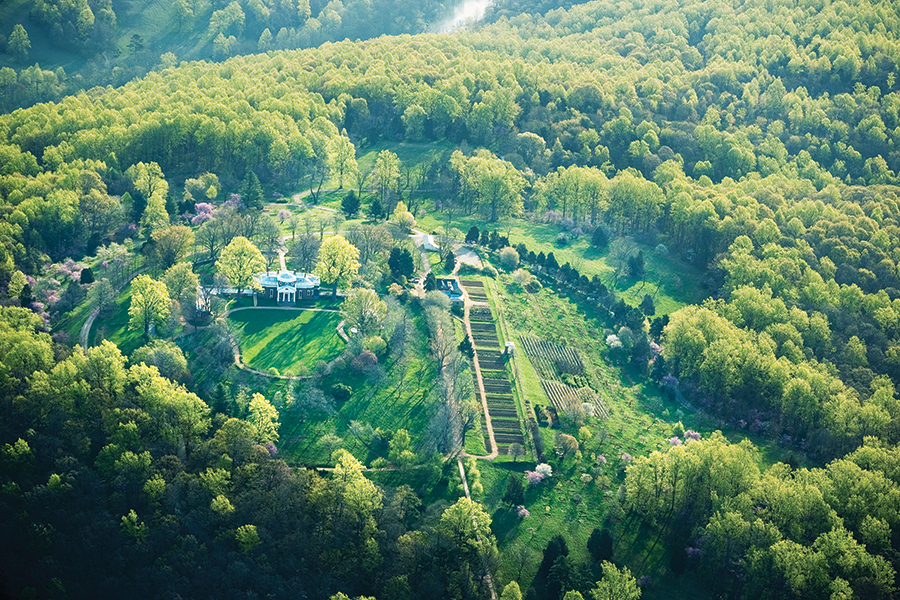
Jefferson’s Monticello was about to embark on a similar journey, and Hatch had a unique set of credentials for the trip. The first project would be the recreation of Jefferson’s grove. In consultation with Monticello’s architectural historian, William L. Beiswanger, a Connecticut landscape architect, Rudy J. Favretti, put together the plan to revive the 18-acre grove. “I was hired specifically to finish that and also with the assumption that the next big project was to be restoring Jefferson’s vegetable garden and orchard,” says Hatch.

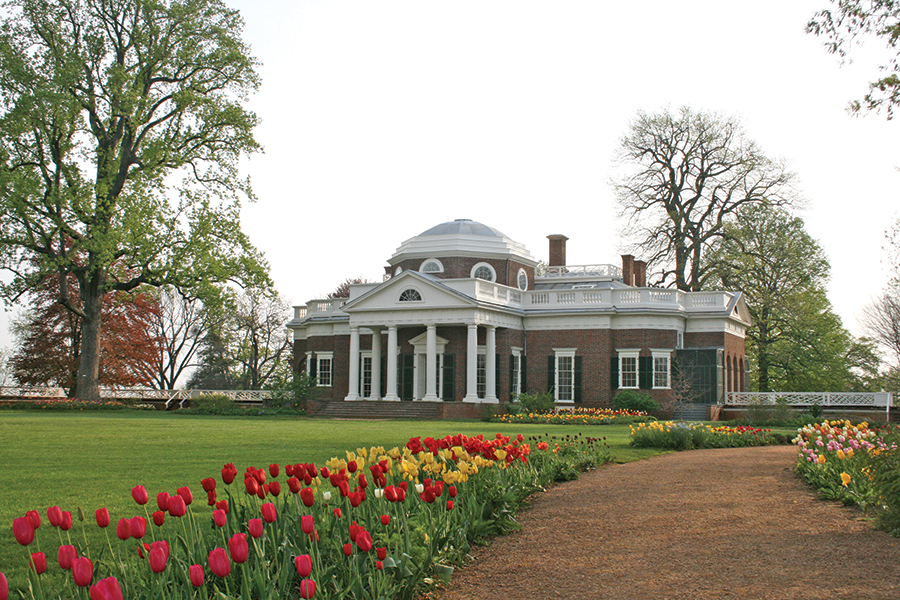
The Monticello that Hatch first encountered was different than the one he left behind in 2012. “It was a tourist shrine. Slavery was never mentioned. The interpretation was very kind of 1950s,” he says. “I got to see Monticello evolve over the time I was there from sort of a mom-and-pop operation to a sophisticated and professional educational and preservation organization. There was a real tradition of scholarship that emerged and became more and more intense. Scholarship drove the mission. That was an inspiring thing that sent me on my way.”

Over his 35 years as director of gardens and grounds at Monticello, Hatch was responsible for maintaining the Thomas Jefferson Foundation’s 2,400 acres; was the project manager for the Thomas Jefferson Parkway; wrote four books, the most recent being A Rich Spot of Earth” — Thomas Jefferson’s Revolutionary Garden at Monticello; supervised a large crew of groundsmen, more than a few of whom, hailing from Virginia’s hills and hollows, were a bit rough around the edges; and lectured in 38 states on Jefferson and the history of garden plants. “Writing books about Thomas Jefferson was easy compared to the challenges of keeping alive noble 200-year-old trees, preventing the deer from eating my cabbages, and sustaining irrigation water for the gardens through a long, hot Virginia summer,” says Hatch.

There is a rich nuance in viewing one of the faces on Mount Rushmore through the prism of his passion for gardening. “I described the vegetable garden as sort of an Ellis Island of new and unusual plants that came from the four corners of the globe,” says Hatch. “Jefferson documented planting some 170 varieties of fruit, 330 varieties of vegetables and some 140 species of shade and ornamental trees, and on and on. He had this really expansive passion for plants.

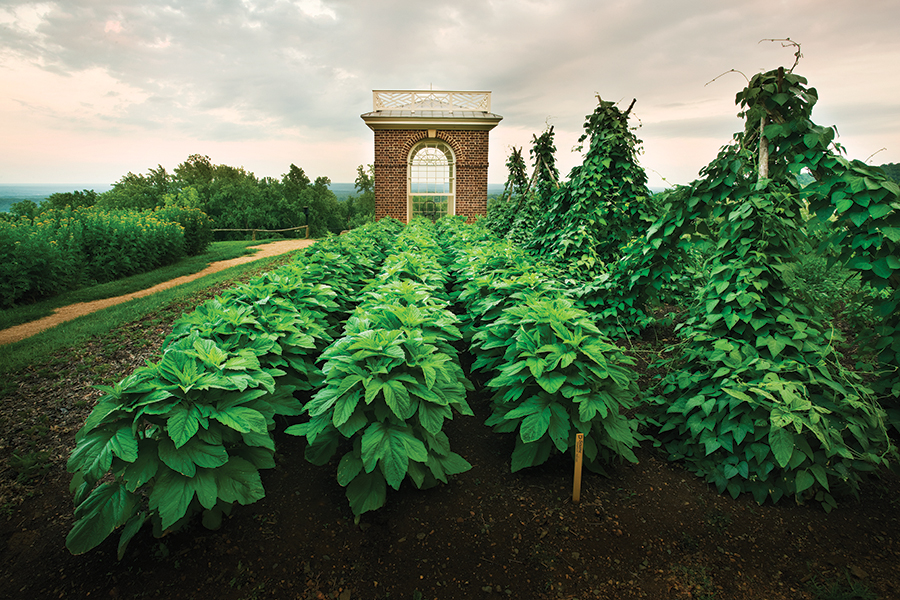
“There was a bunch of stuff we had trouble growing. The Arikara bean. It came from the Arikara tribe in the northern Dakotas. Meriwether Lewis spent the winter of 1803 in North Dakota near what is now Bismarck. They were all starving. They survived by trading trinkets for Indian corn. These northern Indian tribes had this really sophisticated agriculture and horticulture in that they developed a lot of bean, corn, squash, tobacco varieties to adapt to this harsh Northern Plains climate, where it’s incredibly dry and hot in the summer but incredibly cold in the winter. Jefferson was trying out a lot of these agricultural corn and bean varieties sent back by Lewis. We often had a plot exhibiting Lewis and Clark plants.”

Failure wasn’t frowned upon, it was part of the package. “There was this great clash of history versus horticulture in the sense that people expect a tidy, manicured place, but it really wasn’t like that,” says Hatch. “Jefferson planted a lot of things that died. The fact that he was doing all this stuff meant that a lot of things didn’t work. I loved that contradiction. I loved that ambiguity about my job. It would probably drive most people crazy. Jefferson had fun gardening. He had these wonderful enthusiasms for cultivated plants. ‘The failure of one thing is repaired by the success of another.’ Jefferson’s quote is not just a statement about gardening, it’s a life lesson.”

Jefferson’s gardening lessons travel as comfortably through time as his words. “There are a lot of different kinds of gardens at Monticello. There’s the grove, which is really an interesting idea — that America’s ideal garden is carved out of the forest, clearing and thinning trees, opening up undergrowth and planting hardy perennial flowers in ground cover,” says Hatch. “In Southern Pines they have those great longleaf pine forests that are kind of a natural grove. There are a lot of Jefferson conceits that people can use when they make their own garden. Try new things. Do successive plantings, growing things through the wintertime, which you can do in Southern Pines really easily. Grow some of Jefferson’s favorites. He had some greatest hits of fruits, flowers, vegetables, trees and shrubs. In the vegetable garden there were things like tennis ball lettuce or tree onions or pineapple melons — you can get the seeds from Monticello. You can purchase plants at Monticello that are offshoots of original trees or things that Jefferson particularly cherished, a real tangible link to the past.”

Hatch’s days are no longer filled with supervising The Dukes of Bacon Hollow or chasing down Chinaberry trees to replace the ones killed off by a winter freeze. He lives 20 miles west of Monticello, where his wife, Lucile, still works, on a gravel road that winds through an apple orchard. Their two daughters, Rosemary and Olivia, one a hydrologist, the other a neurologist, are grown and gone. Hatch has a small garden, a creek in the backyard and a wood-burning stove. He plays the occasional game of golf, carrying his clubs at courses as distinct from Oakland Hills as a Queen Anne’s lace is from a Lady Slipper orchid. He tends to a hiking trail in the Shenandoah National Park for the fun of it. “In my new life I’ve been more of a botanist,” he says. “I go out into the mountains, spend a lot of time searching for rare colonies of plants growing outside the normal range.”

A job he seems to have come to naturally. PS

Jim Moriarty is senior editor of PineStraw and can be reached at jjmpinestraw@gmail.com.

The Long and Winding Bagel Trail

A talisman with veggie cream cheese

By Deborah Salomon

Ancestry.com purports to trace your genealogical map and provide signposts. Recently, while spreading the cream cheese, I realized that my signposts are bagels. In fact, were I Little Red Riding Hood, chewy bagel crumbs would mark my trail.

Bagels? C’mon.

There has never been a bagel like New York bagels of the 1940s. They arrived before dawn at little neighborhood deli-groceries, called commissaries, in huge brown paper flour bags. Such a commissary was tucked into the basement of the apartment building where I lived, accessed by a dark, spooky hallway. How proud I was, at age 8, when my parents trusted me to fetch the Sunday papers and bagels, which cost a nickel apiece. Back then, all bagels were plain with a hard glossy shell (dusty with flour from the bag) and chewy interior . . . fantastic, unmatched.

We moved to Asheville — land of the biscuit-eaters — when I was 10. Nobody knew what a bagel was. Lender’s poor excuse had not penetrated the South. I was devastated.

Lots of New York guys showed up at Duke. Parents of the one I picked lived in a fancy Manhattan neighborhood where lo — the corner apartment building had a semi-basement commissary. At dawn, a truck dropped off that heavy paper sack full of still-warm bagels, a quarter each, five for a dollar. Heaven. I was waiting, with the dog that was my excuse for rising early. I married the New York guy.

His employment took us to Montreal, now celebrated as home of the world’s best bagels, of a slightly different ilk: hand-rolled, softer crust, ultra-chewy, baked throughout the day the European way, in wood-fired brick ovens. These irregularly shaped bagels coated in sesame or poppy seeds were truly outstanding. The closest bakery was half a mile away from our apartment. Every morning, I pushed the stroller there, bought one for my teething toddler, one for me. “Bagel” was one of her first words, as she pounded the front door, demanding the walk. Rainy days were hell.

Meanwhile, New York bagels were also going to hell. They became softer, sweeter, sold by franchise bakeries with cute names — Bagel Broker, Bagel Nosh, Yagel Bagel. Add-ins like raisins and blueberries appeared. Green bagels for St. Patrick’s Day, heart-shaped for Valentine’s, pumpkin bagels for Thanksgiving. Heresy! Blasphemy!

Then I moved 90 miles south of the Montreal bagel shrines, to Vermont . . . and guess what? A local attorney of European lineage named Nordahl Brue founded Bruegger’s, which produced a creditable version of the real thing. Bruegger’s turned on-site bakeries into sandwich shops that spread down the Eastern Seaboard, including, coincidentally, walking distance from my apartment in Asheville, where I returned in 2007. By then, hummus, sprouts and asiago were the complements of choice.

Along the way, I researched bagel history. They originated as stirrup-shaped rolls Polish bakers made to shower King Sobieski returning victorious from battle. Eventually, the stirrup was closed into a circle. Jewish bakers brought them to New York’s Lower East Side, where they flourished and moved uptown. In brown paper flour sacks. Incredibly, I discovered a personal connection when my niece married Polish artist Jean Sobieski, a descendant of that same king.

Now, bagels cost almost a dollar apiece. Supermarkets and a few bakeries produce a sweet, mushy imitation in more flavors than Oreos. The only quasi-authentic ones I’ve found are baked at Lidl, the German supermarket chain in Sanford. I read that some fancy food emporium in the Big Apple has resurrected the “original” New York bagel but I doubt it, if they aren’t dropped off in a brown paper flour sack before dawn.

However, I refused to abandon this talisman. Every few months I visit my grandsons, in Montreal, where I buy three dozen bagels (seniors get a baker’s dozen) from a neighborhood bakery with a wood-fired brick oven. After they cool, I pack the 39 gems in bags, freeze and fly them back to North Carolina. One U.S. Customs inspector at the airport smiles when he sees “the bagel lady” approach his checkpoint. I thaw two dozen, warm them a bit, spread with homemade veggie cream cheese and bring to The Pilot/PineStraw office so biscuit-eaters can experience the real thing.

The remaining 15 I hoard, in memory of those long happy walks as a young mother, pushing the stroller through snowy streets, for the ultimate reward. Because, as it happens, this story isn’t about bagels. This story is about a life.  PS

Deborah Salomon is a staff writer for PineStraw and The Pilot. She may be reached at debsalomon@nc.rr.com.

Our Blooming Mascot

An ode to azaleas

By Barbara J. Sullivan

Quick! Word association game. What comes to mind when you see the word “azalea”? Garden parties? Festival queens with long white gloves and tiaras? Augusta National Golf Club? The Cretaceous-Paleogene extinction event? Possibly not, but more about that later.

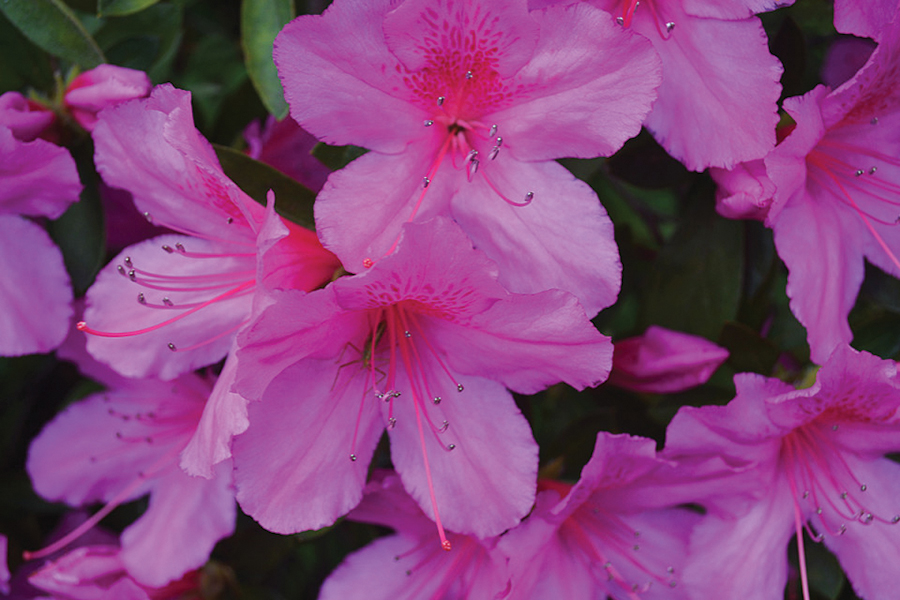
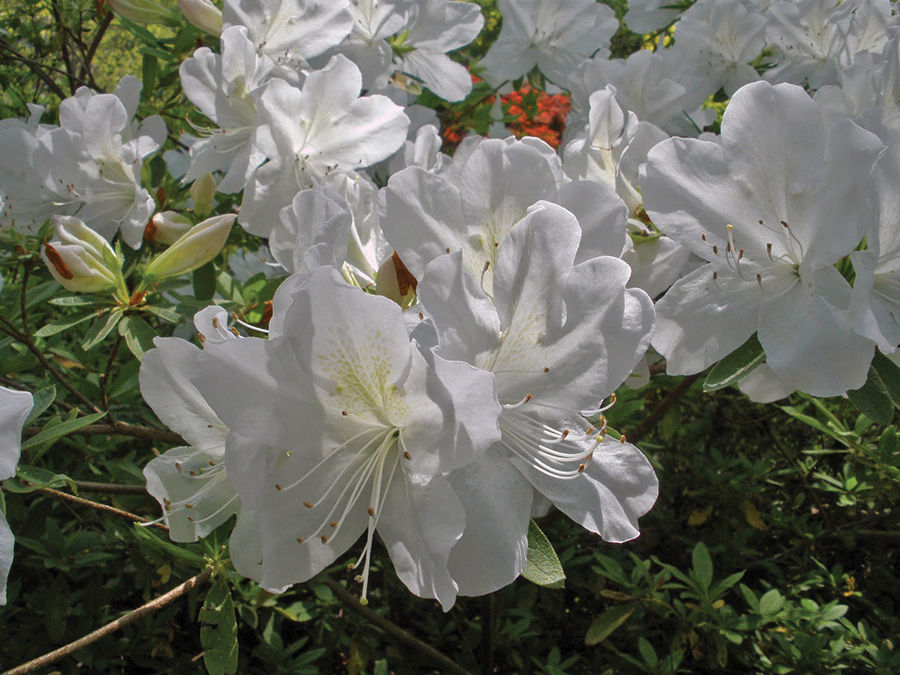
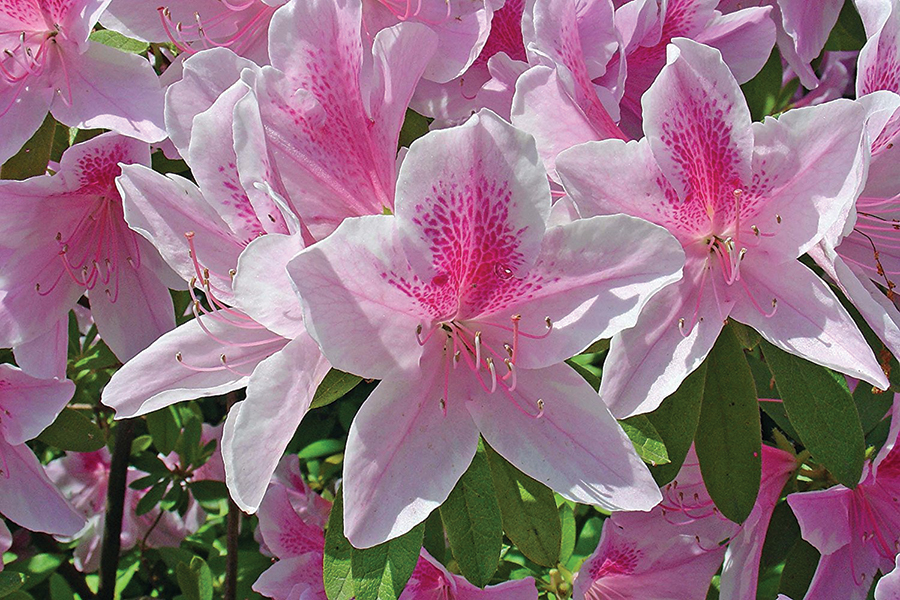
Azalea shrubs, for the most part, are evergreen, reasonably fast growing, sturdy and undemanding. What’s not to love? They can be counted on to bloom reliably year after year, providing floral skirts and crinolines for the clouds of flowering cherries and dogwoods — a tableau that never fails to dazzle for a few short weeks every spring. Azaleas are a mascot any town can count on. By and large boasting a good life expectancy, they’re going to stay where you put them like lamp posts and park benches. The open azalea blossom, with its hallmark five stamens flaring out, suggests nothing so much as fertility, new life, the future about to unfold. Not a bad subliminal message for any place that wants to appear vibrant and forward looking. For many good reasons, over a dozen towns all across the United States — from Hamilton, New Jersey to Brookings, Oregon — have hit upon the idea of luring people with azalea-themed enticements, and it works.

One of the advantages of living in the South is the broad spectrum of azaleas that are able to thrive. In the coastal regions, the size and lushness of the big, blousy indica hybrid generally makes an intense impact on garden visitors. If there’s one azalea that most people are familiar with, it would be the indica ‘Formosa’, an uber-dramatic magenta giant that tends to dominate wherever it’s planted. The other two classic indicas for the Southeast are the snowy white ‘Mrs. G.G. Gerbing’ and the unbeatable shell pink ‘George L. Taber’ with delicately variegated petals and a sprinkling of freckles hiding in the hollow of each blossom’s center. The indicas thrive in hot, humid summers, performing best in slightly acidic soil with moderate moisture. They will grow and bloom in full sun as well as full shade, a feat not many plants can claim — although the perfect spot would be dappled sunlight. In areas like the Sandhills, kurumes are a better bet. Some of the favorites tend to be ‘Coral Bells’ with their soft, pink color; the fiery ‘Hershey’s Orange’; and the pure white ‘Snow’. Encore Azaleas®, which bloom in the spring and repeat again in fall, and come in all colors from red through pink, coral, orange and red, also do well.

For reasons of stamen count and somewhat obscure botanical taxonomy, azaleas were stripped of their classification as a stand-alone genus back in the 1700s and have had to live as two sub-genera of Rhododendron ever since. To a non-botanist this may seem arbitrary and capricious because rhododendrons — those mountain-loving evergreens with broad leaves and showy clusters of lavender, pink or white blossoms — seem pretty easy to distinguish from their azalea cousins. But they both have a remarkable history in common — which takes us to the Cretaceous-Paleogene extinction event which scientists say happened some 66 million years ago and wiped out much of the planet’s flora and fauna including, of course, the dinosaurs.

A couple of million years prior to that event, before the last ankylosaurus exhaled its final breath and at a time when Africa was drifting ever so slowly away from South America, the first green shoot of the family Ericaceae pushed its way up through the Earth’s surface and began the job of photosynthesizing and reproducing. And then, when just about everything else on Earth departed the planet for good, members of the Ericaceae family hung in there. As the planet once again became hospitable to a large variety of plants, the family grew and evolved, eventually branching out into over 100 genera. These now include modern-day heaths and heathers, blueberries, cranberries, mountain laurel, rhododendrons and azaleas (acid-loving lime-haters all). In particular, azaleas are part of a unique group of plants that use fungi called mycorrhizae, which colonize their roots and help them bring in water and nutrients in harsh and inhospitable conditions where other plants might not survive.

But how did we end up, 68 million years later, with these spectacular survivors in our backyards? The ancestors of most of our kurume, indica and other azalea hybrids originated in Japan, China or the Caucasus region, where they grew in the wild and were cultivated by gardeners for centuries before Europeans became aware of their existence. By the late 1600s, emissaries from the European continent had begun traipsing around Asia, sending home azalea specimens and seeds — and feeding the insatiable appetites of plant collectors in places like England, France and Holland. The love affair had begun, and by the 18th century it had grown into a serious trading enterprise.

Meanwhile, the American colonies were playing a major role in this transmigration of the Ericaceae family. From the Appalachians to the Southern swamps, amateur botanists like John Bartram and his sons were traveling by horseback and canoe, collecting native plant samples for their eager colleagues across the ocean. Prized among these were more than 25 species of native azaleas like the famous, fragrant, white “swamp honeysuckle” azalea (Rhododendron viscosum) and the “pinxter flower” azalea (R. periclymenoides), which were among the very first azaleas ever grown in England and became the basis for many popular hybrids.

And crisscrossing the Atlantic in the other direction, the first non-native azaleas (offspring of the original travelers from Asia) had already landed in Mobile, Alabama, by the mid-1700s and were brought to gardens in Charleston and New Orleans in the following decades. From Virginia down to Florida and all along the Gulf Coast, as it became apparent that these flowering beauties were perfectly suited to the local climates and conditions, azaleas became the backbone of the Southern garden, even venturing inland. It’s no surprise, however, that the favorites to this day remain the splashy, shameless indicas, which more than any other plant give us that hit of beauty, sensuality, abandon and luxury we welcome as we greet the rebirth of spring in our gardens.  PS

Barbara Sullivan is the author of Garden Perennials for the Coastal South and a frequent lecturer on gardening topics

Poem

Camellia      

for Brenda Porterfield, on her 75th birthday

Each year

you surprise me

like the first taste

of joy

after long sorrow

has tamped down

even longing

into gray wood,

and I have

forgotten all the

colors but brown,

and all the sounds

but that of

dry leaves underfoot.

I look out

a frosted windowpane

and you appear again,

bold pink, standing out

like a girl overdressed

for a party,

perfection unfurled

and symmetric as

a baker’s cake-flower,

your center a sunrise.

You speak of more

that waits

in stillness, in want

of light and time

to wake it

into beaty,

buds of potential

turned to glory —

abundance that

defies freezing nights,

resilient, determined

to bloom.

— Laura Lomax

Breaking Bad

It’s Aries’ time to shine . . . and go their own way

By Astrid Stellanova

Star Children, don’t expect a description of the first sign in the horoscope. Aries folks kick over the traces, when anyone dares apply adjectives to them. Lady Gaga. Leonardo da Vinci. Maya Angelou. All Aries, and all tending to have the kind of force field that others notice. Aries don’t take kindly to boredom, following the pack or tradition. They do take kindly to impulse, hacking a trail straight into the thicket and breaking norms right over your head if they have to, all in the name of the Aries fierce individuality. Diamonds, daisies and sweet peas are hallmarks of Aries, which sounds nice, right? Well, diamonds are the hardest substance on Earth — from the Greek word for “unbreakable” — just right for this fire sign. Ad Astra — Astrid

Aries (March 21–April 19)

Nobody would believe it, Ram. But your birthday most always knocks you sideways. What’s in a little ole number, Sugar? You can’t accept your age because you: Don’t feel it, look it and sure don’t act it. However, here you are — and that birth certificate don’t lie. As an actual fact, embracing that scary new number is the first step towards discovering that it may be your luckiest one. Honey, do remember that you are the lucky one until your number is, well, up? (And when did you ever care what somebody else thought, anyhoo?)

Taurus (April 20–May 20)

You, being an unusually mellow and chill Taurus this month, have everybody thrown for a little ole loop. Your newfound self-restraint is about as unexpected as a fainting goat at the petting zoo. Call it age. Call it wisdom. Call it about time. Your friends and family are cheering you on and loving it.

Gemini (May 21–June 20)

The heart wants what it wants. And then, well, snap, it doesn’t. You set out to get what you thought you wanted, made sure you got it, then threw it out the window of a moving car. Now you are going back and forth down that lonesome road hoping to find it and retrieve it. Sugar, it is too late for that, but you’re not too old to learn from it.

Cancer (June 21–July 22)

You remind me of that tea towel that reads: “Loose women tightened up here.” You’ve found a whole new sense of humor, new ways to enjoy yourself and break free, and the road to more discovery is straight ahead. Don’t listen to your critics. If they insist you get tight, do it with a cocktail.

Leo (July 23–August 22)

Some people are like poison ivy, flourishing on shade. That’s the problem with one of your closest confidants. Resist the urge to overshare. As irresistible as the gossip is, it is also toxic and some of that poison will spill onto you if you don’t watch it.

Virgo (August 23–September 22)

Trying to be all things to all people is like trying to teach sex education and driver’s education in the same car! That’s a lot like what you’ve been doing lately — straddling two very different goals and managing neither one. What is your true intention? What do you really want, Honey?

Libra (September 23–October 22)

A recent family fracas left you smarting from a little rope-a-dope. Shake it off, Sugar. Then get yourself a new attitude and close your lips. There is nothing you can say that will make things resolve, and it is not your destiny to leave every family feud with rope burns. It will play out and you can make an exit.

Scorpio (October 23–November 21)

You’re a secret intellectual. You like crossword puzzles and mind games. So, what are you doing joining a book club that only reads beer labels? Why are you hiding yourself when you are smarter than you want to admit? Fess up and step up.

Sagittarius (November 22–December 21)

You didn’t just shoot yourself in the foot. You speared yourself. Lucky for you, this is not a fatal wound. In the future, you will laugh about the way you bumbled your way into a storm of epic proportions, but Honey, right now what you need most is a bandage.

Capricorn (December 22–January 19)

If the good guys really did wear white hats and sit tall in the saddle, life would be easier on all of us. But life ain’t a Western. And, frankly, you have a little secret of your own. If you could unburden yourself and make amends, you might stop picking fights with the bad guys.

Aquarius (January 20–February 18)

Three times. That’s how often an opportunity is going to knock. After that, it may be a dry spell. Opening the door won’t be all that scary, Honey Bun. But letting a good opportunity walk away might be a thing to regret.

Pisces (February 19–March 20)

In the shoulda-coulda-woulda competition, you took first prize. Now try walking the path moving forward, instead of walking it backward. If we got it right the first time, we would all graduate from the big school of life. But nobody does. Second-guessing is not a goal to pursue.  PS

For years, Astrid Stellanova owned and operated Curl Up and Dye Beauty Salon in the boondocks of North Carolina until arthritic fingers and her popular astrological readings provoked a new career path.

Dog-yeared

Why the dogwood flower is the herald of the true new year

By Serena Kenyon Brown

From the Middle Ages until 1752, the English legal year began on Lady Day, that is, the Feast of the Annunciation, which falls — by no coincidence, I’m sure — on the 25th of March, just after the vernal equinox.

Many other creeds and cultures date their years from around this point in the calendar, and as the equinox goes by and we arrive at April, and spring, that seems eminently sensible.

When I was a city dweller I never used to give much thought to the way we see in the New Year during Christmas, bleary-eyed and liverish, awaiting the bills, just as winter’s really starting to sink in its teeth. The only indicators of seasonal change were the London plane trees outside the office window. In the summer they gave the glorious impression that one was working in a treehouse. During the winter they seemed to disappear completely into the permagloom.

I would put my unease around the 1st of January down to overdoing it on the 31st of December, and trudge over Waterloo Bridge into the new year with the rest of the flock.

But outside the urban microclimate it doesn’t make sense, that the year be new when the trees are black skeletons, the hedgerows bare and the fields set thick with frost. It sets us off on the wrong foot, I know now.

The bright red and gold of the Sandhills years brought with them something of a revelation.

In England, spring is all as advertised by the great poets: racing lambs and a host of golden daffodils. Yes, the weather can be a tad cruel — it might warm up in June — but the days are lengthening and the shadows shrinking rapidly.

Here in the Sandhills the dwarf irises are poking up through the pine straw. The evenings are sweet with the scent of pine, the longleaf cones swelling to a fecund purple before they explode the golden pollen that will engulf us all this month. Turtles emerge to sun themselves on beaver-fallen logs. Snakes are slow and hungry, chock-full of hibernated poison. The frogs are warming up for their summer chorus.

Best of all, the dogwoods are blossoming. What could make one feel more optimistic than those delicate constellations dotted through the budding woods?

I had been in the Sandhills about six months, long enough to learn a few of the trails and tracks of the Walthour-Moss Foundation, when I went for a ride, just Castalon and the woods and me. Cas was a dignified warmblood of advancing years and bright bay coat, and, unusual in a herd animal, a preference for human company over equine. He was just the consort for such a venture.

It was early April. There was a dreamlike, slow-motion quality to the day. There was a musk of deer catching in the breeze. A woodpecker hammered from time to time. The sand was deep in the firebreak and Cas and I moved at a leisurely pace, reins long, bay ears flopping. We saw no other horses or riders, though a fox squirrel kept us company for a few hundred yards and there was a flash of sapphire as a bluebird dived into a nesting box.

We thudded softly over a wooden bridge and followed the course of a creek that ran clear over its smooth sand bed. We nudged into Cas’ rocking-horse canter, but within a few strides we pulled up. I was spellbound.

This was my first sight of the wild flowering dogwoods. We stood at the entrance to a dappled world of spring green and broderie anglaise. It was as though we had happened upon the Lady Chapel within the longleaf pines’ cathedral.

We walked very slowly along the creek. I drank in every moment. It was spring distilled.

Though I rode on many more trails, through many more springs, I never returned to that place. I didn’t want to add another layer to the gossamer of memory. I fell in love with the dogwoods that day, and looked for them eagerly in every wood thereafter. When we moved to the little house on May Street I was glad to find that two old dogwoods graced the front lawn. Through the seasons we lived there, those trees came to represent hope and beauty and the careful balance of nature.

Hope, beauty, balance. We need that at a beginning. The new year starts when the first dogwood of the season flowers.  PS

Serena Brown is chilling the champagne for Dogmanay, which she celebrates annually on the night before the first dogwood blooms.

Well-Spoken

At the English-Speaking Union, learning is a lifelong mission

By Joyce Reehling

Sometimes I am lucky enough to stumble into a very good thing. Upon leaving Connecticut we knew that one of the things we would miss most would be the exceptional speakers we went to hear at Fairfield University Open Visions Forum.

The proximity to New York and even Washington, D.C., plus very healthy funding by donors and businesses brought truly great personalities from every possible walk of life. Nothing quite like it was here, or so I thought.

Then I saw that one of my favorite people, Thomas Jefferson, would be speaking in Pinehurst (in the guise of Bill Barker from Colonial Williamsburg), and off I went to get tickets-except that he was coming to the English-Speaking Union, members only. Who the heck were they?

I first feared that it would be folks who thought only English should be spoken in our country, but that is not the case. Nor is it a “dining club for the elite,” as some have said, even though they dine together.

No, E-SU has a history, and a deep and abiding set of principles and purposes.

Sir Evelyn Wrench founded this international education charity in 1918 with the aim of bringing together people from different cultures and languages to find a way to build skills, confidence and communication. The intention was to use a common language, English, to further knowledge, understanding and peace and to provide these skills in a non-political and non-sectarian way.

In 1957, Her Majesty Queen Elizabeth II became the royal patron and E-SU received a royal charter. Princess Ann took over from Prince Phillip and serves as the present patron.

All very nice as far as that goes for those of us in “the Colonies,” but the real job of our E-SU here in the States and around the world is to foster the learning of English as a tool for those who come from elsewhere, as well as our own students.

I came for the speakers and have stayed for the real work of E-SU, helping middle school teachers and students thrive in debate training throughout their school years as E-SU has fostered — along with their schools — strong teams in several schools across Moore County. They enter our annual competition and may go on to further debates nationally.

We also sponsor and present the annual Shakespeare competition, where high school students study Shakespeare and perform a sonnet and a monologue from his plays.

These skills give young students insight, skill and the ability to study, listen well and present themselves in a public format. No matter what technology does for us, everyone needs to garner these skills, find like-minded folks and continue our learning path all through our lives.

At its headquarters in New York City, English in Action puts people together who can assist new learners in both language and cultural understanding, helping them find the assets they need to turn their lives into productive and exciting ones here while learning to speak English. Whether by choice or fleeing war, whether young or old, these people need help learning English and American culture. E-SU in NYC does that because we believe that common language is essential.

Learning skills to become an American with English are not vastly different from the skills children need to leave home and find their way in the world. Language, listening, communicating clearly and being able to define what you believe and who you are are the things I think E-SU does for new arrivals and for our kids right here at home.

The Luard Morse Scholarships help students from Historically Black Colleges and Universities study at a British university for a semester. The Walter Hines Page Scholarship offers British and Argentine teachers a chance to explore and exchange educational ideas in America.

E-SU also offers extra training in the UK for an array of courses to help bolster teachers and their constant need to be refreshed and reinvigorated for the task of teaching.

As to the “dinner club” thing, yes, it is true that we gather for dinner or lunch, but the real purpose is for us to learn from a series of speakers we bring to Pinehurst or have on our own front door step. In the past, we have hosted some gifted writers like Lynne Olson, who wrote the New York Times best-seller Citizens of London, and Craig Johnson, who writes the wonderful Longmire series of stories of law in the wilds of present day Wyoming.

We gather for international speakers as well, like Dieter Dettke, an expert on European security and Euro-Russian relations; Hodding Carter, journalist and a former spokesman for the U.S. State Department during our hostage crisis in the 1970s; and Capt. Carl Newman (now retired), National Oceanic and Atmospheric Administration Deputy Director for Aircraft Operations, who did 14 years of hurricane hunter flights in one of the world’s premiere research aircraft. These are a sampling, a very few, of the men and women who come to help us be lifelong learners.

A charity that focuses on making learning a keystone of life, keeping English as a gateway to knowledge and communication without destroying other languages or cultures, and above all supporting our teachers and students, that is what the English-Speaking Union turns out to be.

And now, many months of the year Darling Husband and I hear fine speakers while we support our devotion to learning. The funds raised by our Sandhills branch plant deep roots right here and in the world.  PS

Learn more about E-SU and its programs for students and teachers by emailing sandhills@esuusa.org. 

Joyce Reehling is a frequent contributor and good friend of PineStraw.

A Legacy of Imagination

Why Weymouth’s creative soul endures

By Stephen E. Smith    Photographs by John Gessner     Illustrations by Harry Blair

If words well chosen are music to the soul, the Weymouth Center for the Arts and Humanities has been the South’s premier concert hall for almost a century.

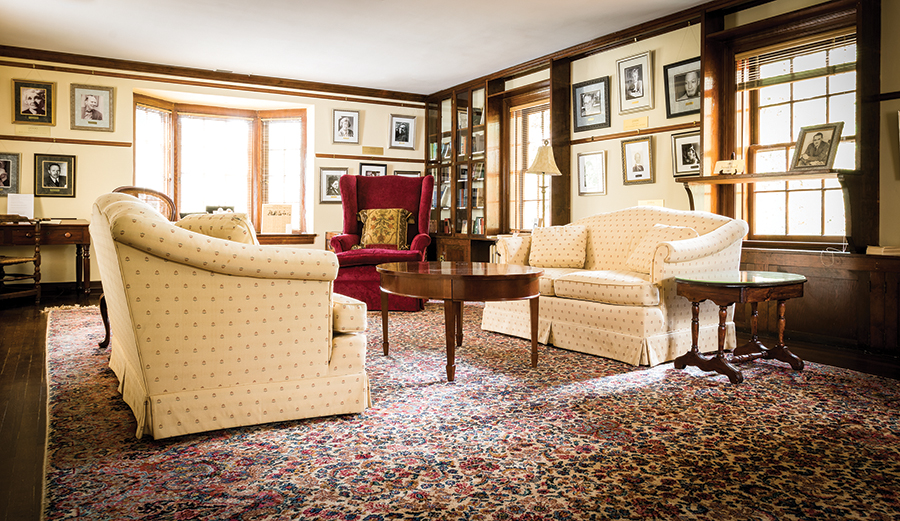
James Boyd, who built the house on Weymouth Heights in rambling increments early in the 20th century, wrote his four novels, a book of short stories, his many poems and his voluminous correspondence there, and many of the great American writers of the last century visited the Boyds, talking writing in the great room and library and whiling away the evenings over drinks and witty banter.

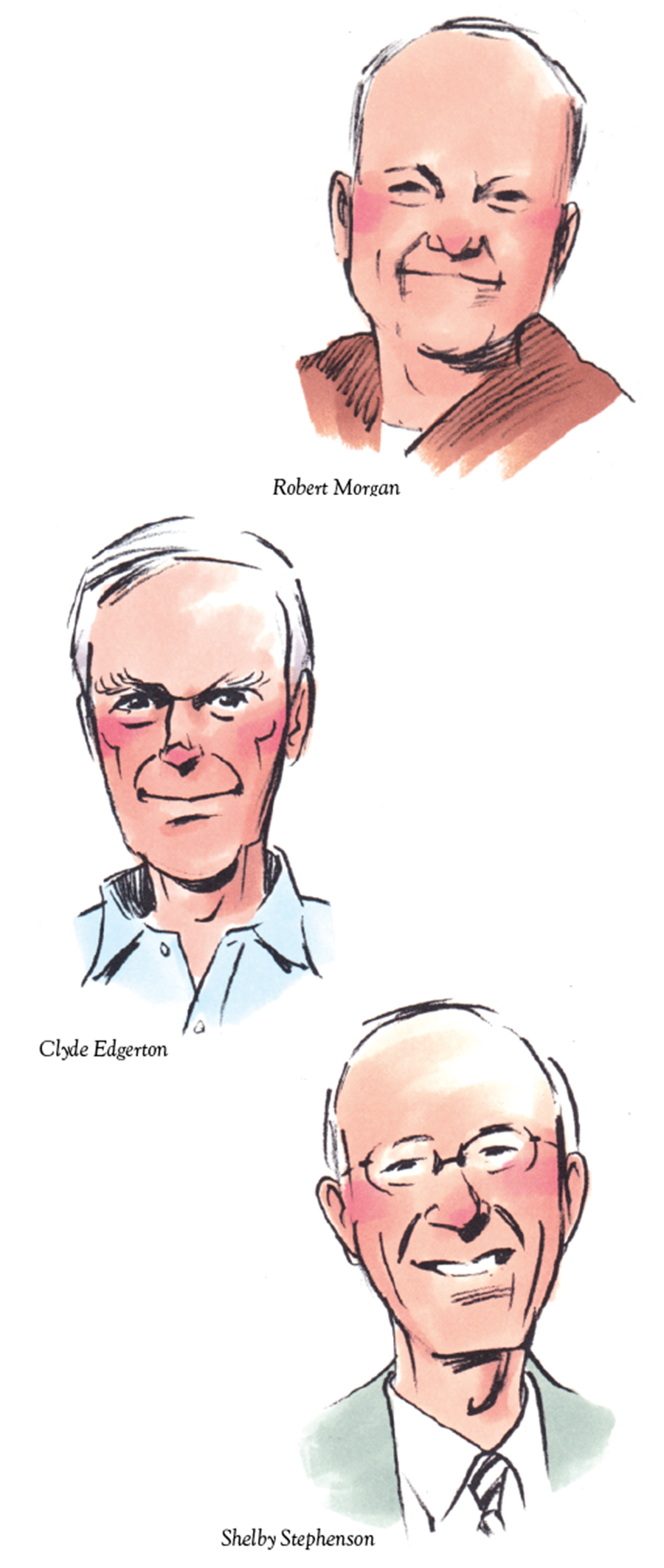
For the last 40 years, Weymouth has served as a retreat for North Carolina writers who have created literary works of enduring value: Clyde Edgerton, Betty Adcock, Guy Owen, Robert Morgan, Margaret Maron, Fred Chappell, Shelby Stephenson, Wiley Cash — the list of established writers who’ve enjoyed residencies at Weymouth numbers in the hundreds.

Writers residencies and art colonies abound — Poets & Writers lists more than 300 worldwide — but few such entities boast the literary heritage of the Weymouth Center. Author/editor Jonathan Daniels claimed that the Southern Literary Renaissance began in the living room at the Boyd house, but Weymouth doesn’t need hyperbole to bolster its literary credentials. There’s no doubt F. Scott Fitzgerald held forth on the theory of the novel when he visited with the Boyds for three days in June of 1935, and Thomas Wolfe climbed through an unlocked window into the great room on a January morning in 1937, settling in for a four-day respite. Sherwood Anderson was a frequent guest who lingered for weeks, and Maxwell Perkins, the Scribner’s editor whose clients monopolized the 20th century literary canon, enjoyed visits at the Boyd house. Pulitzer Prize-winning playwright Paul Green was James Boyd’s best friend.

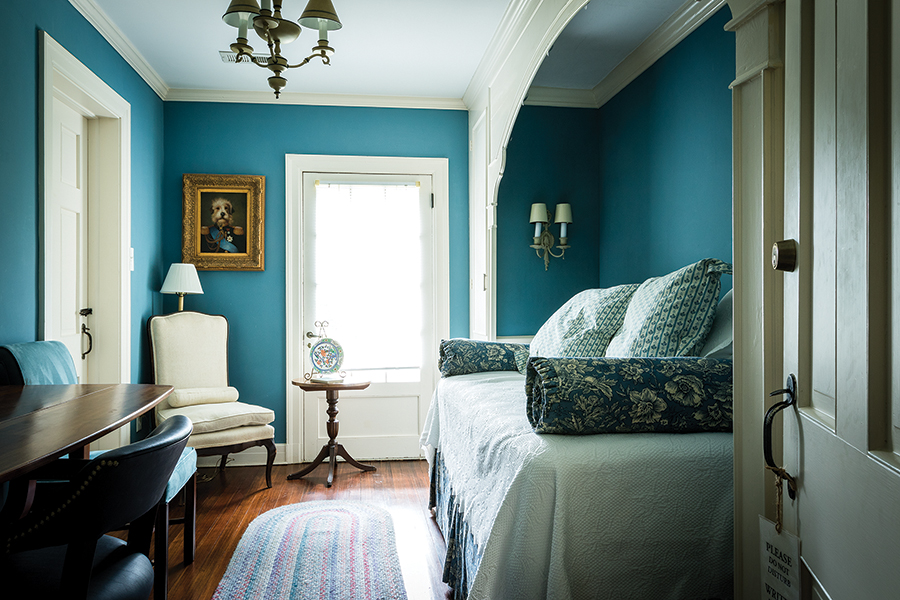
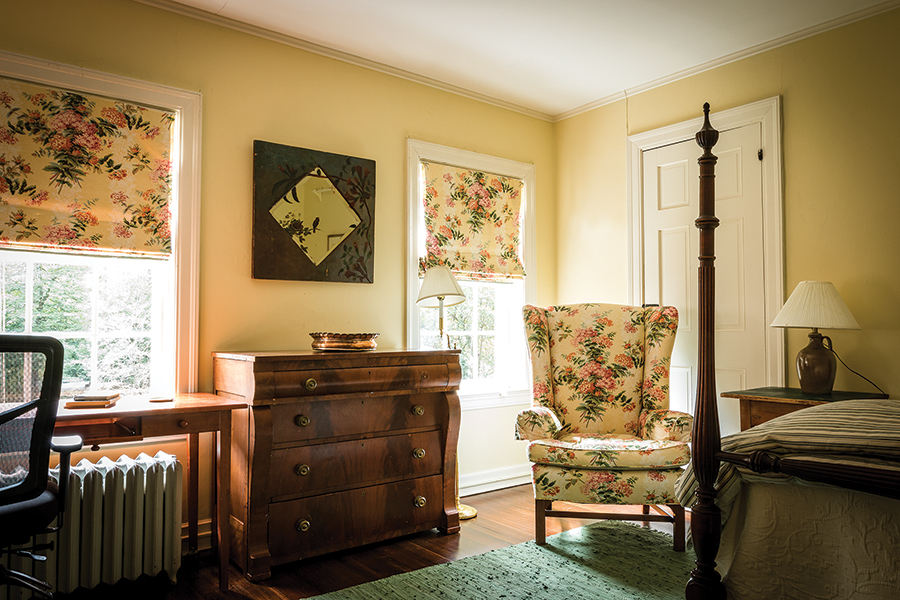
Surely Weymouth’s literary mojo works its magic on contemporary writers in search of inspiration, but the old house’s ambience is also a contributing factor: Slanting afternoon light decants through ancient wavy green glass windows, inspiring moments of pure vision, the jumbled ups and downs and switchbacks of the meandering hallway in the writers’ quarters are likely to encourage inventiveness and awaken the imagination, and each bedroom, uniquely its own universe and named for a writer who visited during the last century, conjures up words ensconced indelibly on the American psyche.

When the house is closed to the public, visiting writers are free to wander rooms, including the North Carolina Literary Hall of Fame, where voices eloquently resonate. For those romantic nature poets yearning for the natural world, Weymouth’s meticulously maintained grounds with their longleaf pines and springtime weeping cherries are inviting enough, and less than a mile east is the boundary of Weymouth Woods Sandhills Nature Preserve, donated to the state by the Boyds, with its towering pines, wildflowers, wire grass and rare species, including the red-cockaded woodpecker, pine barrens tree frog, bog spicebush, and fox squirrel. 

Best-selling author Wiley Cash, who’s stayed at Weymouth three times in recent years, communed with the ghosts: “I wrote and revised a chapter of my recent novel, The Last Ballad, at Weymouth in the fall of 2015. I was in the Maxwell Perkins room, and I joked with the other residents that Perkins was known for cutting thousands of words from Thomas Wolfe’s Look Homeward, Angel, and I was hoping his spirit in the room would help me add thousands of words to the book I was working on. He granted my wish.”

Margaret Maron, the author of 30 books, has been a regular writer in residence, accompanied by a group of fellow mystery writers: “We call ourselves the Weymouth 7,” says Maron, “because it was at Weymouth that we held our first writer’s retreat — Mary Kay Andrews, Brynn Bonner,  Diane Chamberlain, Katy Munger, Sarah Shaber, Alexandra Sokoloff, and me. For one heady week, we met every morning to bounce ideas off each other, then retired to our separate solitary spots and wrote until it was time to gather for supper. We’ve scattered now, but those first annual visits helped produce at least 20 books and we shall always be grateful that Weymouth welcomed us so graciously. (Although we could have done without the ghost!).”

The Visiting Writers Program has come a long way in the last four decades since the Friends of Weymouth acquired the Boyd house from Sandhills Community College, and Sam Ragan, Buffie Ives (Adlai Stevenson’s sister), Guy Owen, Paul Green and other luminaries conceived of Weymouth as a writers’ retreat. At an organizational meeting in the dining room, Guy Owen, author of The Ballad of the Flim-Flam Man, joked, “We can put the pornographic writers in the attic of the barn,” to which Ms. Ives, always proper and outspoken, immediately objected: “There will be no pornographic writers at Weymouth!” No one attempts to influence what is written at Weymouth, and it’s unlikely that any of the writers in residence have sidestepped, in the service of middle-class good taste, the truth as they find it. Thus the program has attracted a wide variety of authors from Tom Wolfe (The Electric Kool-Aid Acid Test and I Am Charlotte Simmons) to Oprah’s Book Club author Robert Morgan (Gap Creek and Boone).

Katrina Denza, who directs the Visiting Writers program, admits that it’s a balancing act. “We try to have double the number of new writers so that every level is represented. And we’re always working to improve the program by having the writers give readings open to the public. Recently, Pat Riviere-Seel read from her memoir-in-progress at Belle Meade and Sharon Swanson showed a film she made about Elizabeth Spencer at Penick. Writers and poets have also volunteered for Weymouth’s Write-On Camp in the summer, and they’ve acted as judges for our Moore County Writers’ Competition as well as serve on the Cos Barnes Fiction Fellowship Committee.”

During a November residency, Clyde Edgerton, who wrote the conclusion to Where Trouble Sleeps at Weymouth in the late ’90s, was back at work on a new novel. He brought his banjo along and on the last Tuesday of the month, sat in with the Weymouth Song Circle, entertaining everyone with his original songs and stories.

Residencies are open to North Carolina natives, current residents, or to those with significant ties to the state. Each applicant must submit a list of publications — poems, short stories, screenplays, novels, articles or works of nonfiction — and a plan to work on a specific project during the stay. A minimum residency of one week is required.

Weymouth provides a room with a desk, bed, reading chair, blankets and pillow — nothing luxurious but more than adequate for the writer who seeks solitude. Linens, toiletries and traveling expenses are the participant’s responsibility. Wi-Fi access is limited to the North Carolina Literary Hall of Fame study. The writers’ area of the house has a full kitchen, three baths, a sitting room, covered veranda, and four bedrooms.

“We have a wish list of improvements for the program,” says Denza. “We are constantly looking to upgrade the writers’ experience at Weymouth. We’d like to provide meals for the writers. Unfortunately, we don’t yet have the resources to do that, but there are excellent restaurants a few blocks away on Broad Street.”

The writers who stay at Weymouth aren’t there for the cuisine. They believe in words the way a scientist believes in carbon — absolutely. Words permeate the ancient plaster walls, and each new writer in residence applies a fresh layer of literary history.

“There is something extra that lives in one who stays at Weymouth,” writes former Poet Laureate Shelby Stephenson, “the combo of magic and desire in being a writer in residence. I feel nostalgia for the Anderson room as I write those sentences. The joy and glow of wonder in those stories. And in that room I stayed in.”

Shortly after Fitzgerald’s 1935 visit with the Boyds, he wrote of happening upon his younger and more optimistic self: “I was with him again — for an instant I had the good fortune to share his dreams . . . And there are still times when I creep up on him . . . on a spring night in Carolina when it is so quiet that you can hear a dog barking in the next county.”

He may have been recalling his time at the Boyd house, where 80 years on writers continue to find inspiration in the fragile stillness of a Southern night. PS

Stephen E. Smith is a retired professor and the author of seven books of poetry and prose. He’s the recipient of the Poetry Northwest Young Poet’s Prize, the Zoe Kincaid Brockman Prize for poetry and four North Carolina Press awards.