
PinePitch

Live After 5

Live After 5 returns to Tufts Memorial Park Friday, April 13, with music, dancing, food, beer, wine and fun activities for the kids. The event is free, and you are invited to bring picnic baskets if you want but, please, no outside alcoholic beverages. Beer, wine and other beverages will be available at the park for purchase, in addition to food from Jason’s Mini Donuts and What’s Fore Lunch food trucks. The band will be Night Years. Don’t forget your lawn chairs, blankets and dancing shoes. The fun begins at 5:30 p.m., and continues until 9 p.m. Tufts Memorial Park is located at 1 Village Green Road W., in Pinehurst. For more information, call (910) 295-1900.
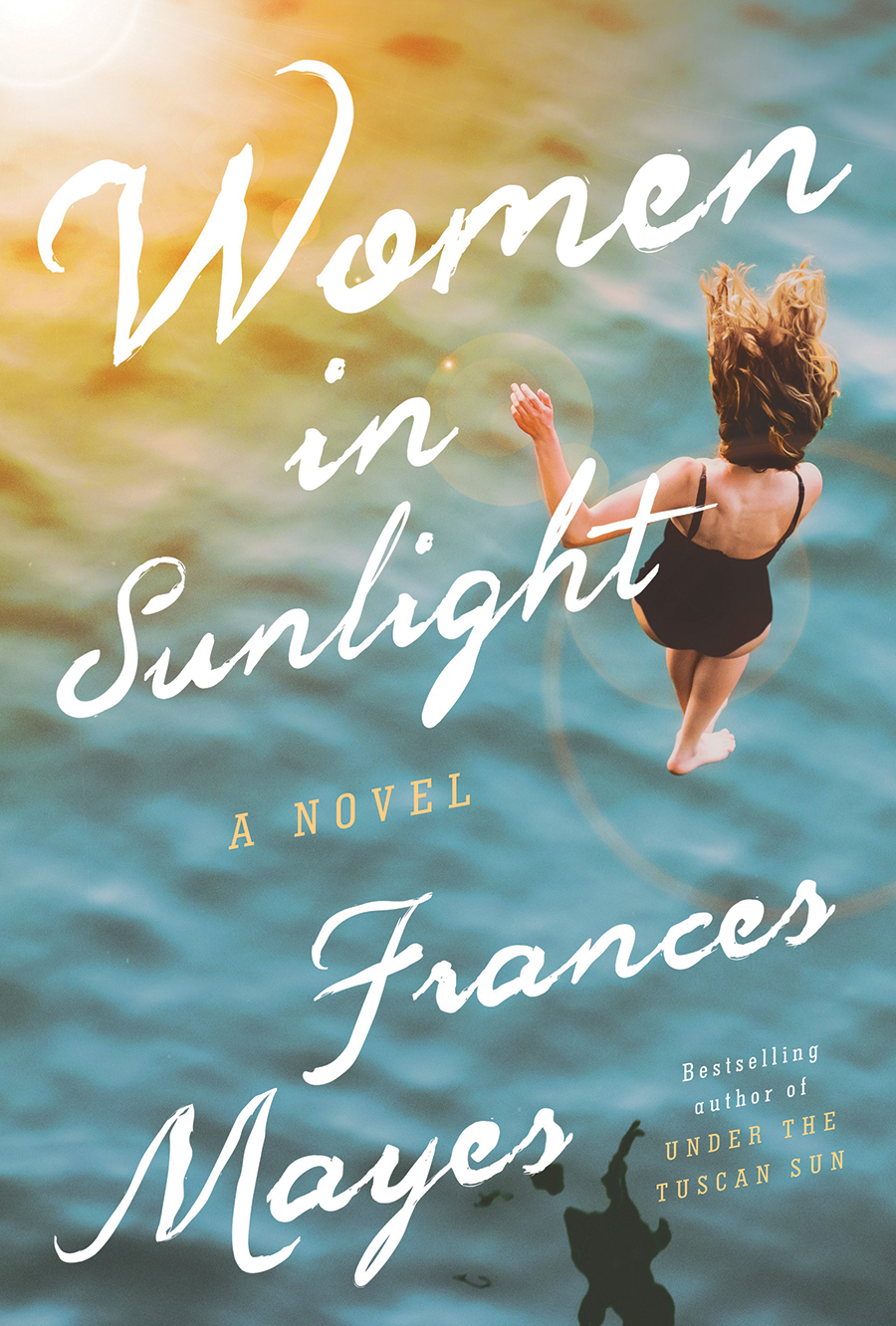
Meet the Author

In Frances Mayes’ new book, Women in Sunlight, three middle-aged, American women, Camille, Julia, and Susan, meet at an orientation for an active lifestyle community and decide to lease a villa in Italy. When they make friends with their American neighbor, Kit, the women begin to see new potential for themselves, rediscovering their sense of adventure over the course of a year in the land of la dolce vita. Mayes will be at The Country Bookshop on Thursday, April 12, at 5:30 p.m. to discuss the book, answer questions, and sign copies. Stop by, meet and get inspired by “the Bard of Tuscany,” author of Under the Tuscan Sun and much more. The Country Bookshop is located at 140 N.W. Broad St., in Southern Pines. Call (910) 692-3211 for more information.
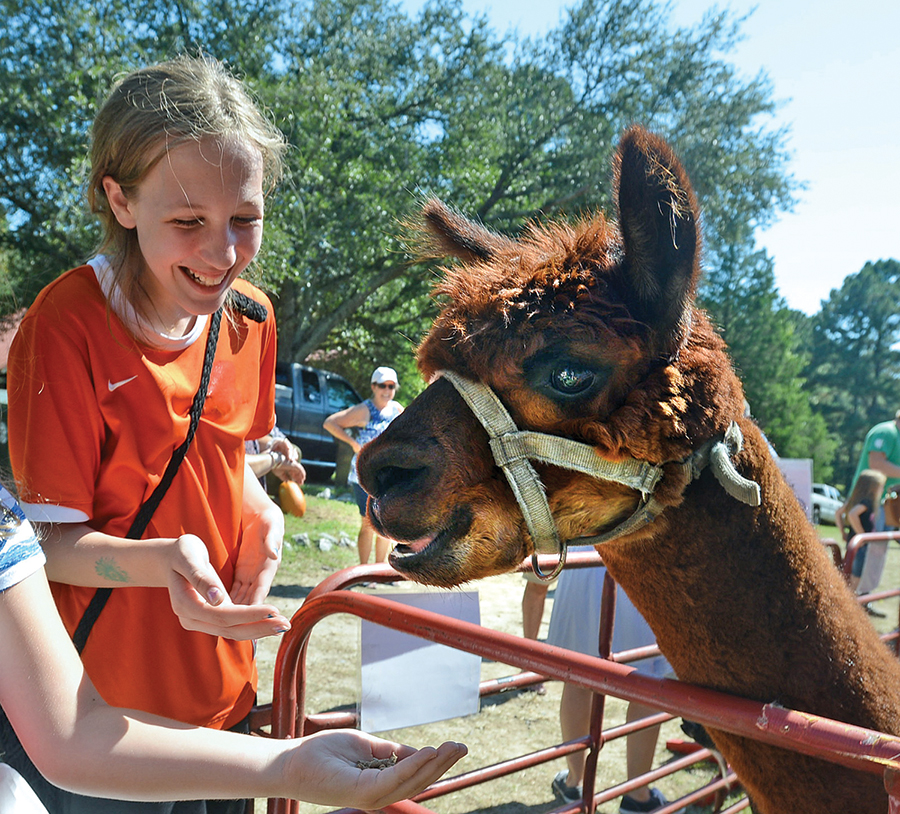
Blues & Brews: A Festival at the Farm

Malcolm Blue Farm is a living history farm dating back to the early 19th century when the Sandhills area was known as the Pine Barrens. A visit to the farmstead and museum will give you a rare glimpse into the life of early settlers and on Saturday, April 21, from 11 a.m. to 6 p.m., you’ll get to enjoy a day of bluegrass performances by Tommy Edwards Bluegrass Experience, Unspoken Tradition, Time Sawyer, and Songs From The Road Band. You can stroll around the beautiful grounds, shaded by 100-year-old Darlington oaks as you enjoy the music and festival. Beer, cider and food will be available for purchase. Admission is $5. The Malcolm Blue Farm is located at 1177 Bethesda Road, Aberdeen. For more information, call (910) 944-7275.
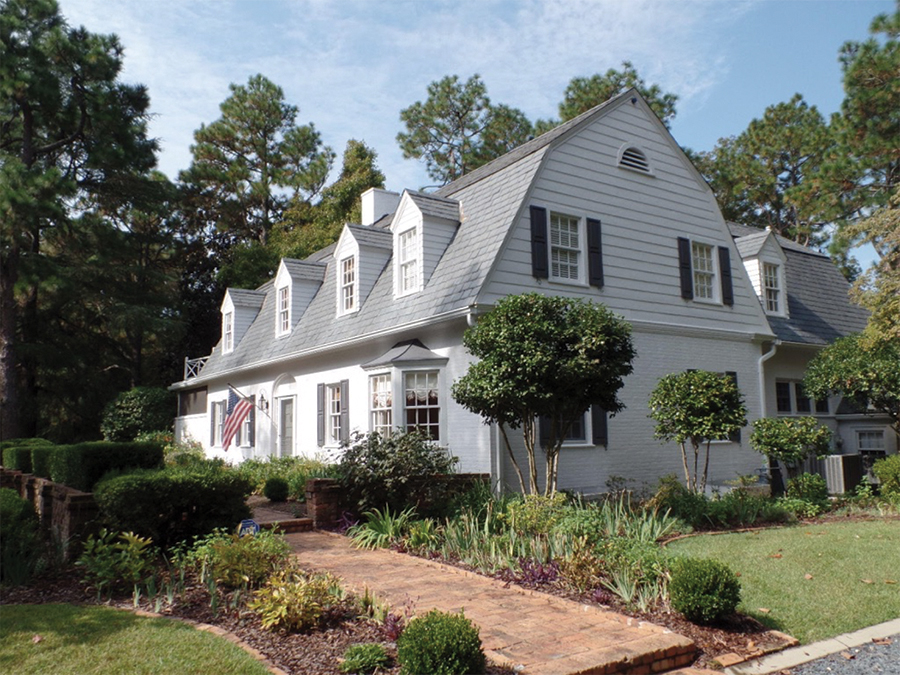
Annual Home & Garden Tour

The Southern Pines Garden Club celebrates its 70th anniversary by inviting you into six gracious homes, enhanced by inspiring floral arrangements, and lovely gardens. The tour, on Saturday, April 14, from 10 a.m. to 4 p.m., includes “Loblolly” (the Lancaster Home), designed for Helen Boyd Dull, a Garden Club founder; the Saulnier Home, designed by Alfred B. Yeomans, a nationally renowned landscape architect who helped shape the Weymouth neighborhood in the late 1800s; and Liscombe Lodge in Pinehurst, once the home of Gen. George Marshall. Tickets are available at The Country Bookshop, The Sandhills Woman’s Exchange or www.southernpinesgardenclub.com, and are $20 in advance or $25 the day of, and include an orchid sale, a Pinehurst Resort greenhouse tour and restaurant discounts. All proceeds go toward community beautification and horticultural education projects. The tour begins at the Campbell House, 482 E. Connecticut Ave., Southern Pines. For more information, call (910) 690-1440.

The Miracle Worker

As a baby, Helen Keller was stricken with an illness that left her blind and deaf. As a young child, she was nearly feral. Yet she grew up to graduate cum laude from Radcliffe College and become an influential social and political activist and inspirational role model. The story of that transformation, made possible by her teacher, Annie Sullivan, is told in William Gibson’s play The Miracle Worker.

Judson Theatre Company brings The Miracle Worker to the stage at Owens Auditorium from Thursday through Sunday, April 12 to 15. The production stars John James, from TV’s Dynasty series, and New York actors Lea DiMarchi as Annie Sullivan and Allison Podlogar as Helen Keller. Owens Auditorium is located on the Sandhills Community College campus, at 3395 Airport Road, Pinehurst. Tickets are $38 in advance and $43 at the door. Student, military and SCC discounts are available at the door. For show times and tickets, visit www.judsontheatre.com.

Southern Pines Springfest

On Saturday, April 28, more than 160 vendors from North Carolina and beyond will entice you with their beautiful paintings, jewelry, metal art, photography, woodwork, designs from nature, and more. For your entertainment, there will be games, rides, food and live music. Activities for kids abound on the Kid’s Block; and the Youth Bike Races for children 10 and under will have kids competing on their bikes, tricycles and Big Wheels. Sponsored by the Southern Pines Business Association and the Town of Southern Pines, the day of spring festivities happens from 10 a.m. to 4 p.m. along both sides of Broad Street in historic downtown Southern Pines. For more information, call (910) 315-6508. And don’t forget Springfest at Shaw House, from 11 a.m. to 4 p.m. on the corner of Morganton and Broad St., where tours and activities will be free for the day.

The Carolina Cabaret

Enjoy the Carolina Philharmonic’s “Broadway Cabaret” starring Jeff Kready, a suave song and dance man who appeared in A Gentlemen’s Guide to Love and Murder and Billy Elliott the Musical and Megan McGinnis, who debuted on Broadway in The Diary of Anne Frank and played Beth in the musical Little Women. With David Michael Wolff hosting from the keyboard, Jeff and Megan will take you on a journey through some of your favorite melodies, interlaced with riveting backstories. You can catch this intimate performance at either 3 p.m. or 7:30 p.m. on Saturday, April 21, at Owens Auditorium, Sandhills Community College, 3395 Airport Road, Pinehurst. Tickets range from $30 to $60, with discounts for students and active military. For more information, call  (910) 687-0287 or visit www.carolinaphil.org.

A Spirited Evening of Music

On Wednesday, April 4, the Southern Pines Sister Cities, under the musical direction of Baxter Clement, will present a community concert with local and Irish teen musicians. As part of the Sister Cities International Music Exchange Program, students from the Southern Pines area traveled to Ireland to study Irish music and perform, and the music students from Newry, Mourne and Down District of Northern Ireland are coming here to do the same. Come to the Sunrise Theater, enjoy the music and offer some warm Southern hospitality to these young visitors. The performance is free and starts at 7 p.m. The Sunrise Theater is located at 250 N.W. Broad St., Southern Pines. Call (910) 315-4323 for more information.

Greenus Envious

Tips from the tried and failed

By Susan S. Kelly

So it’s finally a warm weekend in spring, and you long to have something to pick, prune, pluck or even deadhead in your yard, garden, or the scorched-earth, weed-whacked plot that passes for it.  But you’re too busy or lazy to learn Latin names, and it’s embarrassing to go to the garden center and say, “I want those, you know, pink flowers that are tall,” or “ . . . that tree that looks pretty in the spring.”

Herewith, therefore, your tried-and-true primer, from someone whose personal dirt’s worth is incalculable due to all the tried-and-failed specimens I purchased, trucked in, planted, tended, and either rejoiced or mourned over. Or, alternatively, ripped out, chopped down, and consigned to the mulch pile. Because, in my yard, like professors seeking tenure, you either produce or perish.

Magnolia — Best climbing tree ever. But as a flower, forget it. The blooms are never low enough to cut, and besides, they only last a day. Leave it alone and just sniff the blooms big as plates. Come fall, your children can play army with the seedpods.

Gardenia — Only reliable if you live east of Raleigh. As for picked longevity, ditto the one-day warning above. Touch the vanilla petals and your invisible skin oils will brown them not invisibly. Heavenly aroma, though I rejected them in my wedding bouquet because the overpowering sweetness tends to provoke a gag reflex.  Still, nice in a teacup or that silver scallop shell your grandmother used as an ashtray.

Camellia —  Cannot be picked or arranged satisfactorily. For viewing only. Bonus: unlike azaleas, stay glossy green all year.

Orange daylilies — My neighbor calls them “privy lilies,” presumably because folks once planted them to beautify the outhouse. But they beat the heck out of the stubby gold hybrids planted in interstate medians. Go for it.

Queen Anne’s lace — Field and roadside freebies, but bring them inside and they proceed to shed fine white dust all over everything.

Marigolds — Often dumped upon as plebeian blooms, but for this commoner, nothing smells as good as one of their stems, broken.

Cleome — Pink, pretty, proliferous, and self-seeding. What else could you ask for in an airy weed that loves neglect, red clay, and 1,000-degree days? In late summer, take the seeds to the office, to a friend, or, for that matter, to another place in the yard. Strew with abandon.

Black-eyed Susans — As the Chatham Blanket tagline once boasted, they cover a multitude of sins. Require little effort and even less skill to stuff in a glass, metal or pottery container. Do not disparage that which can withstand full sun when you can’t. You call them invasive, I call them indispensable.

Knockout roses —  The Johnny-come-lately “it” flowering shrub. Utterly unpickable, but compensates for this shortcoming in sheer size and volume.

Peonies — The ultimate bloomer. Often disqualified for, as the farmers like to say, seasonality, but worth the wait, the space and the ants. Go ahead, gird your loins, and bring yourself to cut and enjoy them before a 20-minute thunderstorm causes irreparable loss and gnashing of teeth.

Hydrangeas — Bingo! Once upon a time, my mother referred to hydrangeas as “trash shrubs.” I love this. Or rather, I love reminding her of this now that no one can live without them.

Ivy — Just, no. You’ll be sorry. Plus, snakes like it. Use pachysandra instead.

There you have it. No more feeling humiliated by Biltmore with its perfect planters and borders and gardens featuring every floral texture and contrast and interest which nevertheless are superior to previously-envied Disney World’s planters and borders and gardens. Because Biltmore’s flowers actually grow, rather than simply get replaced by Snow White’s 426 dwarves every night.

Or, how not to waste your time or money on What Won’t Work Because We’re Not England.  PS

Susan Kelly is a blithe spirit, author of several novels, and proud new grandmother.

Bone Broth

Hot, healthful and nutritious

By Karen Frye

There is a strong resurgence of foods that were consumed many years ago by our ancestors. Our grandmothers made use of every part of the chicken, cow or pig in their recipes. They grew the vegetables, had fruit growing seasonally, and picked wild berries. They milked their own cows, and made their own butter. They were extremely resourceful, and creative, and worked tirelessly with love to prepare meals for the family.

Making soup is one of the best ways to utilize ingredients to make a delicious, healthful meal. Nourishing broths go back to the Stone Age. Soup is a true universal food, and the variations are endless and easy to prepare. Bone broth is one of the oldest and has resurfaced as a food highly beneficial to our health. It contains valuable amino acids, collagen, gelatin and minerals. Many of the nutrients in bone broth are not found in other foods.

Protein in the broth helps build muscles, strong bones and new cells in the body. It is one of the very best sources of natural collagen, which helps support healthy cartilage and connective tissue. Collagen helps form elastin within the skin to maintain youthful appearance, slowing the formation of wrinkles and other signs of aging.

Gelatin heals the gut and increases the growth of beneficial bacteria. The amino acid glutamine is a wonderful healer for the intestines and many digestive issues. It also aids in detoxification while helping the liver function better as it removes toxins. Bone broth is highly beneficial in boosting the immune system and increasing metabolism. In fact, if consumed on a regular basis, it can help all systems and functions throughout the body.

Bone broth can be made at home using grass-fed chicken or beef bones, organic carrots, celery, onions and leeks. Adding some seaweed boosts the trace minerals in the broth. Chef Sueson Vess is our local expert in preparing healthy foods. She regularly teaches classes on broth making and gluten-free foods. Check out her website, specialeats.com. She will walk you through the steps of making a delicious bone broth.

You can drink the bone broth as a hot beverage, and you can use it as a base for other soups. You can also find bone broth powders to add to smoothies. Increasingly, research bolsters the case for its amazing health benefits. It’s a tasty and delicious health food that could improve the quality of your life, too.  PS

Karen Frye is the owner and founder of Natures Own and teaches yoga at the Bikram Yoga Studio.

Mysteries of the Swamp

A supernatural risk for John Hart

By D.G. Martin

John Hart, who grew up in Salisbury, is the author of five New York Times best-sellers, The King of Lies (2006), Down River (2007), The Last Child (2009), Iron House (2011) and Redemption Road (2016).

Both The King of Lies and Down River won Edgar Awards, making Hart the only author to win this prestigious award for consecutive novels. He has a bag full of other honors, including the Barry Award, the Southern Independent Bookseller’s Award for Fiction, the Ian Fleming Steel Dagger Award, the Southern Book Prize, and the North Carolina Award for Literature.

Hart declares his favorite of all these successes is the The Last Child. So it should come as no surprise that his latest, The Hush, is a sequel to that book.

Readers of The Last Child met Johnny Merriman as a 13-year-old, followed his search for his missing sister and his traumatic childhood, and came to know his troubled friend Jack. In The Hush, as Hart explained to me recently, Johnny “is living alone in the wilds of this swampy area called the Hush, which is an abbreviation for Hush Arbor, an area of 6,000 acres of rough, mostly swampland. Johnny is the owner. It is the remnant of a 40,000-acre tract that his family owned in the 1800s.

“He is withdrawn from society and lives in the swamp, by himself. His only connection to humanity really is his buddy Jack, from The Last Child. Jack is now a young attorney in town in his first week in practice when the book opens. It’s what he’s always wanted to do, to take control of his tumultuous life and get that kind of logic and reason, wrap his hands around that and live by those standards.

“But it becomes very difficult for him because the more time he spends with Johnny in the Hush, the more he begins to fear that things are not as they should be. There are mysterious things afoot in the swamp, terrifying things, dangerous things that Johnny is unwilling to talk about.

“Jack pushes, Johnny is recalcitrant, so part of the tension in the story is what grows between these two best friends as Johnny clearly is guarding some sort of secret that terrifies his best friend, and he flat out refuses to discuss it. That’s a big part of the book, what’s going on in the Hush.”

Hart introduces existence of the supernatural powers in the Hush gently. After a terrible fall from a rocky cliff on the property, Johnny is cut, bruised and bloody. Back in town for a quick visit, Johnny allows his stepfather, Clyde, to bind up these serious wounds, and then hurries to leave and go back to the Hush.

Clyde says, “You want to go, I know. I can see that, too. It’s always Hush Arbor, always the land. Just tell me one thing before you leave. Help me understand. Why do you love it so much?”

Hart writes, “He meant the silence and the swamp, the lonely hills and endless trees. On the surface it was a simple question, but Johnny’s past had branded him in a way few could ignore: the things he’d believed and leaned upon, the way he’d searched so long for his sister. If Johnny spoke now, of magic, they’d think him confused or insane or trapped, somehow, in the delusions of a difficult past. Without living it, no one could grasp the truth of Hush Arbor. Johnny wouldn’t want them to if they could.”

But some part of that magic is revealed to Jack when he visits Johnny in the Hush a few days later. Although Clyde had described Johnny’s horrible wounds, they were not apparent to Jack. Johnny “was shirtless and still and flawless. There wasn’t a mark on him.”

The reader who might have expected the usual John Hart thriller is on alert. Magic and the supernatural are going to play a big role in this saga.

Unraveling and understanding the source and the reasons for this magical power on the land provide the spine on which Hart builds this book.

But as the book begins, Johnny faces another serious challenge, a non-magical one. His title to his land is being challenged by a member of an African-American family who lived on the land for many years and whose claim is based on a deed from 1853. Johnny’s legal claim is sound, but he used all his money to pay prior legal fees. Now, although he owns thousands of acres of land, cash-wise he is broke. So he wants his friend, the brand-new attorney Jack, to represent him.

He tries to persuade Jack to fight his legal battles. But Jack’s law firm forbids him from taking on Johnny as a client. Instead, the firm hopes to represent a wealthy out-of-town money manager and hunter who wants to force Johnny to sell his land, or failing that, find another way to acquire it. Why? The hunting in and near the Hush is dangerous, exciting, and promises the possibility of extraordinary game. When that man is mysteriously killed while hunting in the Hush, Johnny becomes a prime murder suspect. Meanwhile, some members of the African-American family that lived on the land show magical powers, especially while they are in the Hush. Traumatic events in 1853 involving Johnny’s slave-owning ancestors and those of the African-American enslaved family still cause trouble on the land.

Hart’s imaginative resolution of these troubles brings the book to a powerful and violent conclusion.

But there is a risk here for Hart. His prior books have, with only one minor exception, held to the standard rules for thriller writers. Those rules call for the mysteries to be solved without the aid of magic or the supernatural.

Hart is betting that the richness of his characters, his compelling storytelling, and the story’s supernatural landscape will hold his thriller fans despite breaking his old rules. Taking this risk, he hopes, will expand his appeal and share his storytelling talent with an even wider audience.

Taking risks, even those with high stakes, is not a new activity for Hart.

In fact, he seems to thrive on risk. For instance, he gave up his job as a stockbroker about 15 years ago to complete his first novel. That risk-taking paid off when The King of Lies became a best-seller in 2006.

Then Hart, after a string of three more successful books, risked upsetting his working routine by moving with his wife and two young children from Greensboro to Charlottesville, Virginia. Although the move disrupted his writing program for several years, it finally led to Redemption Road, which became a critical and commercial success. His completion of  The Hush shows that Hart is fully back on his game.

Now, will the risk of making the supernatural an integral part of his work pay off for him?

Nothing is for sure.

However, the complex and rich stories in The Hush and the book’s supernatural but satisfying conclusion suggest that he is again on the right track. PS

D.G. Martin hosts North Carolina Bookwatch, which airs Sundays at noon and Thursdays at 5 p.m. on UNC-TV.

The Raynor Touch

Remembering Donald Ross’ greatest rival

By Lee Pace

Golfers in these parts speak of Donald Ross as if he’s a next-door neighbor or first cousin. And why not? Just a few generations ago, he was building seven golf courses in Moore County, running the Pine Crest Inn and hopping the nearest train to head south to Palm Beach or north to Rochester to lay out another showpiece. In North Carolina alone, you can’t sling a 7-iron without landing on a Ross design.

That said and his immense talents acknowledged, how fun might it have been for the golf world if Ross, who designed an estimated 385 courses over nearly half a century, had had to compete mano a mano with another architect with a similar background in agronomy and construction?

Someone like Seth Raynor, for example?

In 1923, officers at the Country Club of Charleston were moving their course from a site north of the city to a new location on James Island, just across the Ashley River from the Battery. They retained Olmsted Brothers landscape designers, the second-generation offshoot from the esteemed Frederick Law Olmsted, to develop a master plan, and one letter from Olmsted staff to club leadership read as follows:

“Suggestions.  (1) Golf Architect: Ross best known so his name probably has best advertising value. Raynor or some other good architect (Strong) probably easier to get when you want him and fees perhaps a little less.”

Raynor got the job there and another concurrent assignment at a new course being planned a dozen miles inland, Yeamans Hall Club. He designed both concurrently, and the Country Club course opened in May 1925 and Yeamans Hall in November.

Ross was prolific designing courses in the mid-to-late 1920s during stout economic times. But so was Raynor. His schedule in early 1926 was reflective of his popularity and the innate desire of any industrious businessman to take on as much work as reasonable.

Raynor’s first trip in early 1926 took him from his home on Long Island west to California by train. From there he took a boat to and from the island of Hawaii, then journeyed back across the nation by train to Florida. Under construction amid the palm trees of Oahu was Waialae Country Club, and within the dense forests of the California coast was the Dunes Course at Monterey Peninsula Country Club. There was a new venture at Monterey to plan for as well — an elite club to be known as Cypress Point. Raynor had been approached for the job through his Eastern connections with Marion Hollins, the 1921 U.S. Women’s Amateur champion who was tapped by Cypress  Point founder Samuel Morse to help plan and develop the club. In Florida, Raynor had already designed and built nine holes at the Everglades Club for Paris Singer, the heir to the sewing machine fortune, and his visit in early 1926 would be to fine-tune a new 18-hole layout for Singer to be known as North Palm Beach Country Club (it now exists as a Jack Nicklaus-signature course with no remnants of Raynor’s work).

The intense physical toll manifested itself on the train trip east when Raynor developed fever, coughing and chills — he had contracted pneumonia. He checked into the Helen Wilkes Resident Hotel in Palm Beach and died on Jan. 22, 1926. He was 51 years old.

“It was too much travel, too much work, too little relaxation,” one of his relatives later lamented.

One obituary notice in his hometown paper in Suffolk County, N.Y., was brief but lauded Raynor for his place in golf. “Mr. Raynor was internationally known for his genius in laying out golf courses and overcoming engineering obstacles in his work.”

And this from a tribute in the Metropolitan Golfer written by Gould Martin:

“It is the irony of life that every once in a while one who has risen to the very top of his chosen profession passes away from this existence with almost no contemporary notice. Seth J. Raynor was not only at the top of his profession but he was an artist, indeed a genius as well.”

And to think: Raynor developed these skills and nuances in a sport he didn’t play as a child and never even remotely mastered as an adult. He claimed that if he played too much golf, his courses would become too easy. He felt the ideal links should not come down to the playing level of a poor golfer.

Raynor actually worked less than two full decades in golf course design and construction, roughly half that time as an associate of Charles Blair Macdonald and the rest under his own shingle. He’s credited with nearly 50 designs by Ron Whitten and Geoffrey Cornish in their book The Golf Course, and four of his courses are listed in the Golf Digest Top 100 rankings for 2017-18 — Fishers Island, Camargo, Shore Acres and Yeamans Hall, as is one he was intimately involved in building for Macdonald, National Golf Links, and another he remodeled years later, Chicago Golf Club.

Macdonald in 1906 decried the lack of sophisticated golf venues in the States, saying, “As yet we have no first-class golf course comparable with the classic golf courses in Great Britain and Ireland.” He proposed to solve the problem himself by buying land on the eastern extreme of Long Island and building a links-style course that would become the National Golf Links of America. Macdonald knew golf and he knew great holes. But he didn’t know construction, drainage, agronomy or greenkeeping.

“It was imperative I secure an associate, one well-educated with wide engineering capabilities, including surveying, companionable, with a fine sense of humor, but above all, earnest and ideally honorable. Such a man I found in Seth J. Raynor,” Macdonald said of retaining Raynor in 1907 to survey the site for his new course.

Raynor was born in Manorville, N.Y., and studied engineering at Princeton. He worked for himself as a land surveyor and landscaper in Southampton when Macdonald brought him into the National project — first to survey the land and then with an invitation to supervise construction once Macdonald learned of Raynor’s skills and meticulous work ethic.

“He scarcely knew a golf ball from a tennis ball when we first met,” Macdonald said, “and although he never became much of an expert in playing golf, the facility with which he absorbed the feeling which animates old and enthusiastic golfers to the manner born was truly amazing, eventually qualifying him to discriminate between a really fine hole and an indifferent one.”

Macdonald’s goal with the National was to help expose Americans to a quality golf experience like they would find overseas, and one of his ideas was to take the concepts for the well-known holes in Britain and adapt and tweak them for particular sites in the States. They became known as “template holes,” and Raynor would carry on the philosophy when he hung his own shingle in 1915 after Macdonald retired. Among them were the Short, Eden, Redan, Bottle, Sahara, Cape, Alps and many others.

Architect Tom Doak in his foreword to George Bahto’s book The Evangelist of Golf, the Story of Charles Blair McDonald, observed that “playing a course by Raynor or Macdonald is like visiting an old best friend — the familiarity returns almost instantly, even if you have never seen it before!”

Doak wondered if he was a hypocrite for finding it distasteful when modern architects repeat their own work while acknowledging a fondness when Macdonald and Raynor did the same thing. But he noted a distinct difference.

“Macdonald and Raynor were paying homage to a classic form, and at the same time, trying to devise improvements to it based on the local situation,” Doak wrote.

Raynor met with fortuitous timing in spreading his design wings after leaving Macdonald, as the United States was reaping the financial rewards of the Industrial Revolution and enjoying the heady economic times of the Roaring ’20s. Golf was growing in popularity, and Ross was handling a myriad of jobs, including the Pine Needles and Mid Pines projects in Southern Pines. There was plenty of work to go around.

Imagine what Seth Raynor might have accomplished had he not died so young.

“Sad to say he died ere his prime,” Macdonald wrote. “Raynor was a great loss to the community, but a still greater loss to me. I admired him from every point of view.”  PS

Chapel Hill-based writer Lee Pace is currently working on a history book for the Country Club of Charleston, set to be released prior to the club hosting the 2019 U.S. Women’s Open.

Fine Feathers

The unmistakable yellow-rumped warbler arrives with spring

By Susan Campbell

The days are getting longer, the temperatures are rising and the birds are definitely paying attention! More specifically, their hormones are reacting to increased daylight and the males are beginning to advertise their wares in preparation for the breeding season. Even some of our lingering winter visitors are becoming more noticeable as they sport brighter colors and begin to sing. The yellow-rumped warbler happens to be a shining example.

Yellow-rumpeds are a bird of the pine forests in summertime, but in winter they can be found all along the East Coast and throughout the Southern U.S. From mid-November until late April, they are quite common everywhere in North Carolina. As spring approaches, the birds acquire distinctive bright black and white plumage with splashes of yellow. The rump is indeed brightly colored as are the “shoulders” and the crown. These little birds, that previously may have gone undetected in your neighborhood, will turn into flashy little songsters with a beautiful warble that is now hard to ignore.

Yellow-rumped warblers, who are mainly insectivorous during the summer months, find plenty of small insects here in the central part of the state even in the colder months. Yellow-rumpeds will grab flies and midges in mid-air, beetles and spiders in thick vegetation. But they are also known for their adaptability when it comes to feeding. In addition to a variety of invertebrates that may be active in wet habitat, berries are a staple of the birds’ diet. In fact, their digestive system is such that they can consume wax myrtle and bayberry fruits. This is why you may hear these little birds referred to as “myrtle” warblers. Such adaptable foraging behavior allows these birds to winter considerably farther north than other warbler species in the United States. Furthermore, they will also visit feeding stations where suet or dried fruit or jelly are offered. And if they happen upon a hummingbird or oriole feeder, they’ll even drink sugar water.

If you visit the coast in the winter, you will likely come across huge flocks of these little birds. Their incessant “check” calls and flitting from branch to branch will give them away. As seasoned birdwatchers know, other unexpected species like blue-headed and white-eyed vireos and warblers such as black-and-white or palm may be occasionally mixed in these congregations. Careful sorting of these energetic small songbirds can be rewarding! Although it may take scrutinizing dozens and dozens of yellow-rumpeds before something different comes into view, it can be worth the effort. Regardless, enjoy these colorful little critters — soon they’ll take wing and head to the North.  PS

Susan would love to receive your wildlife sightings and photos at susan@ncaves.com.

Return to Slim’s

Where old tales warm beside the stove

By Tom Bryant

A frosty, late season cold front pushed us out of the rockers and off the side porch of Slim’s old country store and inside to the pot-bellied stove. “Hey, Leroy, put some more coal in this thing,” Bubba said, pointing to the stove. “The folks at the Weather Channel might say that spring is on the way, but they ain’t been sitting out there in the cold.”

A group of us, mostly old-timers, were visiting our ancient rendezvous spot to catch up with one another and remember the good old days. Bubba put the reunion together and was holding forth with stories about those days long gone when we were all a lot younger and a lot more, as Bubba put it, “interesting.” He owned the store named simply Slim’s Place after Slim, the former owner, passed away and the country store sat forlorn and sad on the side of the road. Bubba said he bought the place to give ne’r-do-wells and reprobates a place to go. He hired Leroy, Slim’s cousin, to manage the business, and he showed up whenever he happened to be in the area.

Bubba and I go way back. In our younger years, we had adventures all over the country. From hunting mule deer in the Wasatch Mountains of Utah to goose hunting on the Eastern Shore of Maryland to duck hunting at Lake Mattamuskeet here in North Carolina. Our adventures were only curbed by time and homestead responsibilities. As Bubba likes to say, “Bryant, you ought to write a book.” And I did.

The old stove began to glow red with the addition of more coal, and the group pushed chairs away in unison and got comfortable.

“Coot, do you remember that time on the Falls of the Neuse when we were duck hunting the West Bank of the lake before they filled it?” Bubba had bestowed the nickname Coot on me years before and, like a bad habit, it hung on.

“We hunted that lake a bunch before they closed the dam. Which time are you thinking?”

“The time Paddle was swimming for all she was worth after a wounded duck you shot, and you were running along the bank, trying to get an angle for the coup de grâce and you stepped off in that hidden creek and floated your hat.” The group broke out in laughter.

“Yeah, I do recall that day. And to add insult to injury, the game wardens, who just happened to be hiding behind some brush out in the middle of the lake, motored up laughing, wanting to know if I was all right.”

“Well, you were fine, and you did finally shoot that duck, or Paddle would have chased it to the coast.”

“I had to empty the water out of my gun before I could shoot, and it was a lucky shot. That mallard was almost out of range.” The gang broke out in chuckles again.”

“That was some dog,” H.B. Johnson added. H.B. was a quiet type, not open to much conversation, but he always seemed to be there taking it all in. “Somebody once said, maybe Bubba, there was a time or two when you had a couple of beers after a dove shoot that Paddle would drive you home in that old Bronco of yours.”

“She was smart, H.B.,” I replied above the laughter. “But I wouldn’t let her drive. She didn’t have her license, and I didn’t want to get in trouble with the law.”

The conversation moved on to more famous stories from the past, some true, but most embellished with just a breath of what actually happened.

Shadows were lengthening across the gravel parking lot of the old place, and all too soon, the reunion of the old group broke up as, one by one, folks said their goodbyes and headed home. I was the last to leave, along with Bubba.

“Coot,” he said as we were standing on the porch, “we’ve got to get together more often. Now that you’re famous with that book coming out and all, I hardly get to see you.”

“You know that’s not right,” I replied. “You’re always off in some exotic port fishing, like down in Costa Rica, or hunting sharp tails out in Montana. Bubba, you’re hardly ever home.” He laughed, and we shook hands promising to get together again before long.

On the drive home, I thought about the old guys and their dogs and our many experiences together, good friends all, including the furry ones.

The Paddle stories brought back a memory of the day she came to live with us. Jim and I picked her up at the Raleigh Airport. She had come from a kennel in Pennsylvania and was only 9 weeks old. On the way home, she rode in my lap, yawning and dozing while Jim drove, and as we pulled into the city limits, Jim said, “We need to take her by Coleman’s so Dicky can see her.”

Dick Coleman was a good friend who died too soon. His name and stories of his adventures came up several times during our gatherings at Slim’s. In our early years, he owned a men’s specialty store that was famous across that part of the state.

When we barged in with Paddle, all work stopped. Several customers were in the process of buying, and most of them came over to look at the new puppy with Coleman leading the group. We put her down on the floor and she started darting from customer to customer.

“OK, Bryant,” Dick said. “Let’s see if this little thing knows how to retrieve. He went in the back of the store and came out with a small canvas dummy used to train young retrievers.

“I used this when I was working Honcho. See if she knows what it’s all about.” Dick’s black Lab, Honcho, was famous in our group as a dog just right for Coleman — wild and headstrong, but a great friend and hunter. The dog fit.

Dick handed me the dummy and I knelt down, holding Paddle in my arms. Everyone got behind me to be out of the way.

“Here you go, girl.” I showed her the dummy, and she was instantly alert. When I tossed it 10 or 15 feet down the aisle, she leaped from my arms, tore across the room, and did a flip as she dove on it and grabbed it in her little mouth. She paused, looked back, then regally trotted back to me. The audience, Dick’s customers, laughed and applauded.

Coleman exclaimed, “Tom, this dog was born to do this!”

As usual, when it pertained to working dogs and most anything involving hunting and fishing, he was exactly right.  PS

Tom Bryant, a Southern Pines resident, is a lifelong outdoorsman and PineStraw’s Sporting Life columnist.

Birthday Battles

Hiding behind a piece of cake

By Renee Phile

Most of my life I have struggled with social events, but birthday parties are the worst. I admire people who can go to them, smile politely and enjoy themselves, which must include just about everyone. But me? My heart falls when one of my boys brings home a birthday party invitation accompanied with eager pleas of, “Can we go?” Sometimes, I’d try to hide it in the junk mail pile and hope they would forget about it.  No chance. I got the occasional reprieve if I could claim a work conflict but, most of the time, there was no excuse other than anxious-mom-who-thinks-talking-to-new-people-is-the-scariest-thing-ever.  So I went. Most of the time I’d try to hide in a corner, a bathroom or even my car, usually behind a piece of cake. Anytime someone talked to me, my sorry attempts at conversation would be something along the lines of, “I like bread. Bread is good.”

It was the best I could do.

I’ve been working on this, and have gotten better, although most birthday parties are still handled strategically with a plan and an escape route.

A few summers ago I was at a birthday party that I couldn’t avoid. Kevin had gotten the invitation three weeks prior and marked the birthday party on his calendar with a drawing of a big blue cake. Every day, usually multiple times a day, he would remind me of this event and that we should start preparing. If anyone mentioned doing anything else anytime near the party, Kevin would immediately shoot down the idea. “We can’t because we have a birthday party that day,” he’d say. I tried to keep my feelings on the back burner since 1) I was getting better; 2) Kevin was obsessed; 3) the whole family was invited; and 4) the party was within walking distance. The perfect storm.

So, that particular morning around 8 a.m. Kevin started reminding us about the 1 o’clock party. The reminding continued like a cuckoo clock. The presents were wrapped. The card was signed. We were ready. It was 1:04 p.m. We were still at the house. Kevin said with a bit of hysteria, “I feel like you all are acting like the party hasn’t already started!”  

So much for fashionably late.

We walked there. Water games, a bouncy house, a Slip ‘N Slide. Kids with drippy green and blue popsicles were scattered around the yard.  I told myself I did not have to stay, but I chose to. A few minutes in, I thought to myself, “This party will go down in the books as the first one I didn’t have to hide somewhere.”

The birthday fun was exploding through the yard.  Older brother David was standing beside me, and a dad and his kid arrived.  The kid, who I will call Jake, was a friend of Kevin’s at school. So, Jake and his dad walked up to David and me. Jake’s dad introduced himself as Jake’s dad and stuck out his hand. I froze. A few seconds passed and I finally said, “I’m Kevin’s dad.” He looked at me, but just nodded. “Nice to meet you,” he said. 

When Jake’s dad walked away, I realized what I had said. I turned to David. “Did I just introduce myself as Kevin’s dad?”

David laughed and said no, that he is pretty sure I hadn’t, because that would be funny and he would have remembered that, but he admitted he wasn’t really paying attention.

“Are you sure?”

“Yeah, about 75 percent sure.”

Great. I had a 1-in-4 chance of being a moron.

Maybe Jake’s dad didn’t notice. Of course, he did. He looked at you weird. David said you didn’t say “dad.” No, he said he wasn’t sure. You’re an idiot. You can’t even survive a child’s birthday party. Most people aren’t like this.

The birthday revelry continued. I watched the kids play, and ate some cake with fondant icing that tasted like plastic. I rebounded enough to have a semi-normal conversation with someone  that wasn’t about liking bread.

To make matters worse, David was invited to a birthday party that evening. Two birthday parties in one day. At the time David was 12, so my attendance was not required. Fine with me. As I was driving him to his friend’s house, he said, “Mom?” 

“Yep?”

“The more I think about it, the more I think you did say ‘dad.’ In fact, I know you did, but I said you didn’t because I didn’t want you to worry about it.”

Mom got a present that day, too. PS

Renee Phile loves being a mom, even if it doesn’t show at certain moments.

“Ask Garden Guru”

Advice stinks — but only when unsolicited

By Jim Dodson

Spring is here. Garden Guru will now take your important gardening questions.

Dear Garden Guru,

I’m new to gardening this year and eager to learn all I can in a hurry. What would you suggest as a starting point? A bit worryingly, I hear hobby gardening can be kind of expensive. Is that true?

Signed,

A Frugal Beginner from Biscoe

Dear Frugal,

Like keeping a mistress or owning a vintage British sports car, gardening is not for the faint of heart or weak of wallet. The proper handcrafted English tools, the glamorous plant seminars, the costly trips abroad simply to study the Great Gardens of the World — well, it all adds up so quickly. Pretty soon you’ll be dropping the mortgage money on rare fruit trees at the garden center, hopelessly addicted to spring catalogs (a somewhat philistine friend refers to these as “porn for gardeners”) or blowing through the kids’ college fund to turn your backyard into a Southern Gardens of Versailles. GG suggests you start small to determine if your interest is genuine or just a passing fancy, maybe with an inoffensive African violet in your kitchen window?

Dear Garden Guru,

A few years ago, following a dream golf vacation to New Zealand, my hubby Ralph and I met an intriguing couple, who shared their love of golf and gardening. Ralph fell hard for the concept of “natural gardening” they practiced and, in a nutshell, has taken it up with gusto. The guiding tenet of the NG movement, as I understand it, is for proponents to become “one with nature.” In his effort to get “closer to the source,” as Ralph puts it, he has quit playing golf with his buddies, refers to himself as “The Green Man,” and has taken to gardening fully in the nude save for a ratty old golf cap he wears on rainy days. We’re both grandparents in our mid 60s and happen to reside in a classy, gated golf community where everyone is beginning to avoid us at parties. This is so embarrassing. My golf handicap is in tatters. Any suggestions?

Signed,

Worried (and still fully clothed) Wilma in Wilmington

Dear Worried Wilma,

Ralph’s unnatural attraction to the natural world simply reflects the addictive dangers of gardening. Clearly he’s gone “native” on you. Have you considered divorcing him and marrying one of his golf buddies? It could make dinner at the club so much nicer.

Dear Garden Guru,

My wife Brenda is an award-winning flower gardener. I’m a serious vegetable grower who has won numerous ribbons at our county fair. Every March we have the same argument over space allocation in the raised beds of our rather smallish condominium terrace. Her zinnias are always encroaching on my heirloom snap beans, and don’t get me started on the times she’s heartlessly flattened my tender artisan squash plants trying to prune her Sugar Moon hybrid teas. A reproachful war of silence has developed between us. We rarely speak between my first decent tomato crop and her final lace cap hydrangea bloom in late summer. Is this any way to grow a garden or keep a marriage?

A Brooding Veggie Dude in Durham

Dear Veggie Dude,

Botanically speaking, you’re a classic mixed marriage, a tale as old as Adam and Eve and their famous domestic squabble over the proper use of fig leaves. (Are they good in a stew or simply wearable?) Have you pondered getting a larger terrace or, even better, finding separate garden plots in adjoining counties? You might try moseying down to Pittsboro to find a patch where your Tuscan zucchini can roam free and easy. The happiest gardening couples, Garden Guru finds, are those who insist on separate bathrooms and growing spaces where cosmos and cucumbers never meet.

Dear Garden Guru,

I recently accompanied my son’s fourth grade class on a field trip to the White House and was pleased to see gorgeous camellias blooming in the East Room — until, to my horror, I discovered they were completely FAKE! A week or so later, I attended my great aunt Sissy’s funeral in Burgaw only to discover that the lovely spray of Easter lilies adorning her coffin were — you guessed it — FAKE! Honestly, how do you feel about FAKE flowers at important public events? I feel like our president and the dearly departed deserve SO much better than FAKE flowers!!! Don’t you agree?

Signed,

Still Fuming in Fountain

Dear Fuming,

Sadly, we live in an age where many things are FAKE — news from the internet, bridges to nowhere and half the hairpieces in Congress. For all I know yours could be a FAKE letter, too. But assuming it isn’t, Dear Lady, one suspects neither your grade-schooler nor your expired great auntie gives a FAKE fig about the flowers in the East Room or silk lilies on her goodbye box. By the way, gardening is all about “faking” out Mother Nature — bending her wilder inclinations to your domestic desires. As a rule, a little fakery never hurts unless elected to Congress or performing a Super Bowl halftime show.

Dear Garden Guru,

Why do I keep managing to kill every fragile Bonsai plant I ever buy? I water them religiously every morning. Any interesting thoughts?

Signed,

Herbicidal in Ahoskie

Dear Herbicidal,

GG has lots of interesting thoughts. But none he would care to share with you. Two possibilities occur, however. A) Always read up on proper maintenance, for every Bonsai plant has unique characteristics and needs, and/or B) You’re indeed an herbicidal maniac who has no business gardening.

Dear Garden Guru,

Remember the lady who found the face of Jesus in a taco and so went on TV? Well, my husband Bobby Ray has an incredible gardening talent. He grows fruit and leafy greens that look amazingly like all kinds of famous Americans! I can show you a Vidalia onion, for instance, that looks uncannily like the late Yul Brynner, and a head of curly endive that could be little Shirley Temple’s twin sister! (See enclosed Polaroids.) My question is, given America’s dual love of gardening and celebrities, do you think there might be a profitable business in growing celebrity look-alike fruit and veggies? I phoned up America’s Got Talent but they thought I might be some garden-variety crackpot. Whom should I contact next?

Signed, Betty from Browns Summit

P.S. Bobby Ray won’t reveal his growing secret but I think it may have something to do with the load of rhino poo he obtained from the state zoo last year. Also, I am not a crackpot!

Dear Betty,

Gardening is full of great surprises. A few years back, I grew a dozen Yukon Gold potatoes that looked uncannily like the Founding Fathers. They were a big hit at our cookout on Independence Day. The truth is, celebrity fruit and vegetables are far more commonplace than you might think. Just the other day at Harris Teeter I saw a head of organic cauliflower that was a dead ringer for Justin Timberlake. That being said, there’s also rumor that HGTV plans to replace decamped rehab goddess Joanna Gaines with a new show on — wait for it — celebrity fruits and veggies! So they may have some interest in Bobby Ray’s talents. Failing that, the Garden Guru thinks a much surer bet is his secret rhino poo. Any chance I can get a load of that for my spring garden?  PS

Contact Editor Jim Dodson at jim@thepilot.com.

Bunny Hop

The day chocolate rings hollow

By Bill Fields

Growing up in North Carolina at a time when holidays weren’t hyped in stores nearly as much — certainly not as soon — as they are these days, there still were a few things to count on as Easter approached.

There would be a trip to the barber, even if a forensic expert might be required to discern the difference between a crew cut before and after. You were expected to look sharp.

And looking sharp didn’t mean just how you were groomed but how you would be dressed on this particular Sunday in spring. This could mean a shopping trip to Belk or Collins in Aberdeen or the Style-Mart on the corner of Broad and Pennsylvania.

It never ceased to amaze my mother how the same boy who would play for hours without a pause and be mad when it was supper time would complain about being tired, or having sore feet, within minutes of setting foot in a clothing store and before a single pair of pants, seersucker suit, clip-on bow tie or shoes other than sneakers had been considered for purchase. My unease on these excursions didn’t make logical sense, because they didn’t last too long. But all I knew was that I would rather be back at home doing something — anything, even listening to one of my older sisters’ Johnny Mathis 45s — than loitering in Boys’ Clothes.

The Saturday before Easter, there would be the hard-boiling and dyeing of the eggs. This ritual fascinated, in part because I’d seen the women in our house change the color of garments with Rit in a bathroom sink more than a few times. They were smart and didn’t let me assist with the sweaters because they were trying to get more use out of them, not have them come to an unfortunate end thanks to a careless child. I was happily encouraged to help out with the eggs, probably for two reasons: Seeing a chicken’s work go from white to a pastel shade wasn’t very exciting, and eggs were only about 60 cents a dozen.

On Easter, before church and a delicious lunch of baked ham with the appropriate side dishes — a meal whose predictable ingredients year after year made it that much better — the Easter bunny would make a delivery, the basket lined with fake grass a color green not found in nature. There would be jelly beans, of course, but the main event was a hollow milk chocolate rabbit enclosed in a box with clear plastic sides.

I loved chocolate, but it would have been a blessing for humanity if these candy mammals had come in a box that couldn’t be opened. There are only a couple of tastes from childhood that still make me frown. A stuffed pepper is one. As for those rabbits, their taste was like that of the material on which they sat — not of the natural world. They had a sickly, chemical-like flavor, making a Hershey bar seem like a treat for royalty. And once part of a chocolate rabbit had been consumed, what was left wouldn’t get any better. Unlike sweets that were good and within reach, the rabbit would linger until being thrown away only to reappear a year later. I always thought they would taste better next time, but they never did.

The Easter egg hunt, usually occurring after our big meal, was a distraction from rabbit redux. Since we hid real eggs, though, and not plastic ones filled with trinkets that have become so popular, this practice had its drawbacks too. If a couple of eggs were hidden too well, the smell would let you know a few days later.

There was a point where I got too old for a traditional Easter basket, but there was a transition period. I had taken up golf by then, and Mom gave me a sleeve of balls from the dime store. They had the compression of a marshmallow and would cut if you looked at them wrong, but that was just fine because they had replaced the hollow rabbits. If I had sampled them, they might have tasted better too. PS

Southern Pines native Bill Fields, who writes about golf and other things, moved north in 1986 but hasn’t lost his accent.