The Omnivorous Reader

Facing Fate

When the law of averages strikes

By Stephen E. Smith

Your risk for developing pancreatic cancer is about 1 in 65. The odds of your dying in a car crash are 1 in 100. If you’re about to undergo a hospital procedure, you have a 3 percent chance of experiencing a mishap. But, then, if you consider all the odds for all the possibilities, your chances of avoiding every disease, every mishap, is zilch. This law of averages spares no one.

Judy Goldman’s first memoir, Losing My Sister, a finalist for Southern Independent Booksellers Alliance for Memoir of the Year, worked, in part, from the above premise, and her latest memoir, Together: A Memoir of a Marriage and a Medical Mishap, is also the product of grim statistics, detailing a medical accident and the accompanying physical and emotional consequences that tested a marriage.

Life-altering calamities can begin with the best of intentions. Goldman’s husband, Henry, happened upon a newspaper ad for an outpatient procedure that would alleviate the persistent back pain he’d suffered for years. It all sounded reassuringly straightforward: a simple injection or two and an immediate resumption of a normal life. The doctor would use a fluoroscope to guide his injection of steroids and an anesthetic into the epidural space between the spine and the spinal cord. But when Henry was wheeled out from the procedure, his expression was “flat and abstracted.” He was paralyzed from the waist down. 

The doctor assured Goldman that Henry’s reaction to the procedure was normal: “Your husband is going to be all right. It’ll just be a matter of time,” he said, reassuringly. But he was mistaken, and the consequences of the botched treatment unleashed in Goldman a desperate avalanche of emotions — depression, guilt, hopelessness, anger, fear, despair. Adding to her anguish, there was no explanation for Henry’s sudden physical disability. With the exception of the doctor who had administered the treatment — and he was not forthcoming — a faceless medical community offered few plausible answers. After the struggle and joy of four decades of marriage, after raising children and pursuing successful careers, after leading a responsible life together, the Goldmans had suffered a mind-numbing and perhaps irreversible catastrophe that would test their relationship to its core — a predicament in which Goldman had to assume the role of patient advocate in the complex medical morass America has created for itself.

Interspersed with the chapters detailing Goldman’s struggles with her husband’s sudden disability, she weaves the story of her early life, her marriage to Henry, their years together, all of which lend perspective and poignancy to their predicament. When she’d said yes to Henry’s marriage proposal, Goldman had already mapped out the path their lives would follow. “I was not only in love with him, I was in love with the idea of a husband and wife moving through life together, youth falling away, both growing slightly stooped, hard of hearing, Henry carrying my purse for me the way old men do, our soft, imperfect last years together.”

A second misadventure produced a catharsis. Two years after Henry’s debilitating procedure, Goldman was confronted by a ski-masked man pointing a pistol at her abdomen. She made a quick getaway. Henry, who was recovering from a shoulder operation precipitated by his back injury, was sitting beside her in the car’s passenger seat. “All of a sudden, I get it. Because somebody threatened me with a gun, I can finally cry — really cry — over what threatened Henry in that outpatient clinic two years ago. As though the holdup and the epidural are one thing. One single reminder that we’re all in danger every second. The world is waiting to trip us up.” 

And there you have it: The world is waiting to trip us up. All that’s left is the long way back and the truths that such struggles reveal about relationships and the limits of human determination. 

After intense rehab, Henry recovers much of his ability to walk, albeit with a cane and the constant attention of his faithful advocate. But Goldman was left to ponder an inescapable list of “if-onlys” — if only her husband hadn’t seen the ad in the newspaper; if only they’d tried other remedies; if only he’d decided to live with the pain; if only she’d waited with him before he received the epidural; if only she hadn’t made things worse by over-reacting. Mostly she had to question the very beliefs that formed the foundation of their marriage — the possibility of losing Henry and the notions she had early on about how they would grow old together. She became irritable, naggy and intensely introspective: “Maybe I’m really angry with Henry for threatening to fail physically. For even obliquely threatening to die. As though he has to earn my forgiveness for what happened to him. As though his medical condition is a betrayal.” Finally it all comes down to forgiveness — forgiving her husband, forgiving herself, forgiving the doctor responsible for administering the crippling epidural. Forgiving the world for tripping her up. 

What we have in Together is a blueprint for coping with “mishaps.” Goldman skillfully articulates the communality of human experience, and she’s startlingly frank when relating the difficulties a patient advocate encounters. Finally, Together is about being married, about becoming a part of another person and building on the long-term relationship we enter into when we take our marriage vows. If Goldman doesn’t offer easy answers to the vexing questions of life, she does outline a process by which we can puzzle our way into the moment and make the best of what fate offers us: “We must scrap the illusion that marrying that one perfect person will end our suffering, bring endless bliss, fix everything.” What could be more honest than that?  PS

Stephen E. Smith is a retired professor and the author of seven books of poetry and prose. He’s the recipient of the Poetry Northwest Young Poet’s Prize, the Zoe Kincaid Brockman Prize for poetry and four North Carolina Press awards.

PinePitch

In Search of the Mighty Salamander

The Weymouth Woods-Sandhills Nature Preserve will seek out the salamanders of the Sandhills on Sunday, Jan. 6, at 3 p.m. Free and open to land dwellers and amphibians alike. The nature preserve is located at 1024 Fort Bragg Road, Southern Pines. For information, call (910) 692-2167 or visit www.ncparks.gov.

The Great Dismal Swamp

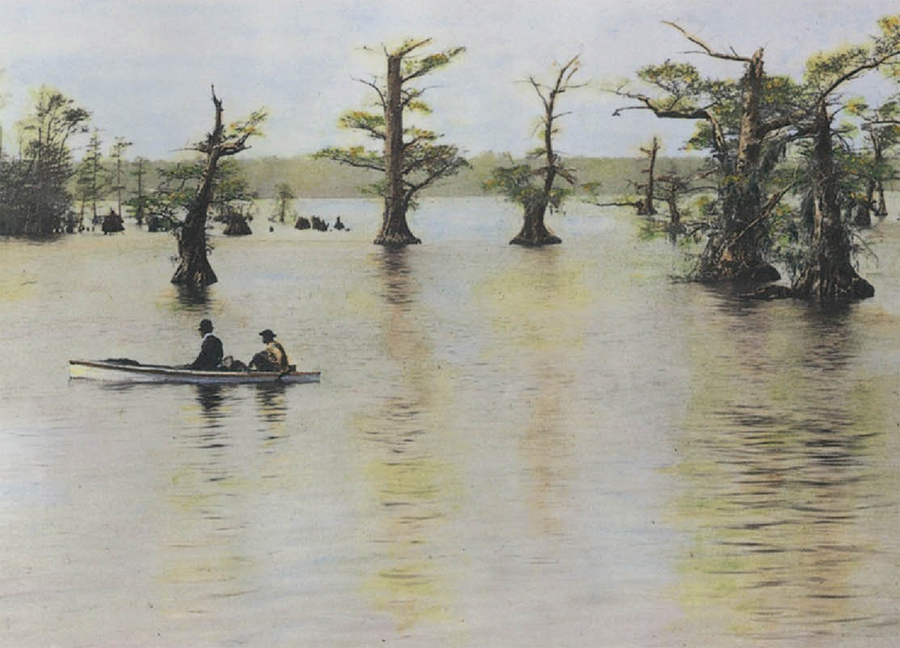
Learn about the incredible history of the Great Dismal Swamp — a refuge for escaping slaves; a source of timber and water; and the impetus for novels by Harriet Beecher Stowe and Henry Wadsworth Longfellow — in a three-part series of presentations at the Weymouth Center for Arts & Humanities beginning Jan. 20 at 2:00 p.m. The first speaker, park superintendent Adam Carver, has managed the swamp for the past four years. Subsequent speakers will be Bland Simpson, author and University of North Carolina professor, on Feb. 10, and Eric Sheppard, genealogy researcher and descendant of slave Moses Grandy, on March 17. Cost is $10 per person for each presentation. For reservations, call (910) 692-6262.

A Peek Behind the Curtain

Go behind the scenes of North Carolina’s most famous outdoor drama with Dwayne Walls, the author of Backstage at The Lost Colony, to get a view the audience never sees — the toil, the mishaps and the moments of grace. Walls will be at The Country Bookshop, 140 N.W. Broad St., in Southern Pines on Wednesday, Jan. 9, at 5 p.m. For information, go to www.thecountrybookshop.biz.

Rodgers and Hammerstein

The Sandhills Repertory Theatre will present “A Grand Night for Singing” with a Broadway cast that includes Amanda Lea LaVergne, Autumn Hurlbert, Stefanie Brown, Zachary Prince and Devin Ilaw, with a local orchestra directed by Michael Pizzi, at the Hannah Center Theatre, The O’Neal School, 3300 Airport Road, Southern Pines. Showtimes are 7:30 p.m. on Friday, Jan. 18, and Saturday, Jan. 19, and at 2:30 p.m. on Sunday, Jan. 20. For tickets and information, go to www.sandhillsrep.org.

Bolshoi Ballet in Cinema

A story of love, death and vengeful judgment set in India, La Bayadère is one of the great works in classical ballet. Part of the Bolshoi Ballet’s HD Live Series, it begins at 12:55 p.m. on Sunday, Jan. 20, at the Sunrise Theater, 244 N.W. Broad St., Southern Pines. For information, call (910) 692-3611 or visit www.sunrisetheater.com.

Gathering at Given

Dressed in period attire, retired Col. Trent Carter will go back in time to visit America’s Colonial past and the Revolutionary War at 3:30 p.m. on Thursday, Jan. 10, at the Given Memorial Library and Tufts Archives, 150 Cherokee Road, Pinehurst. The program will also be held that evening at 7 p.m. at the Given Book Shop, 95 Cherokee Road, Pinehurst. For information, go to www.giventufts.org.

King Memorial March

All members of the community are invited to march on Monday, Jan. 21, during the annual Martin Luther King Jr. Memorial March honoring the life and legacy of the civil rights icon. Sign up at the Southern Pines Library and meet at Downtown Park, 145 S.E. Broad St., Southern Pines, at 10:30 a.m. For information, call (910) 692-8235 or go to www.sppl.net.

Carolina Philharmonic

Maestro David Michael Wolff performs a piano recital exploring the Paris of Chopin, Liszt, Baudelaire, Debussy and Monet on Saturday, Jan. 12, from 7:30 to 9:30 p.m., at the Lee Auditorium at Pinecrest High School, 250 Voit Gilmore Lane, Southern Pines. For information, call (910) 687-0287 or go to www.carolinaphil.org.

The Rooster’s Wife

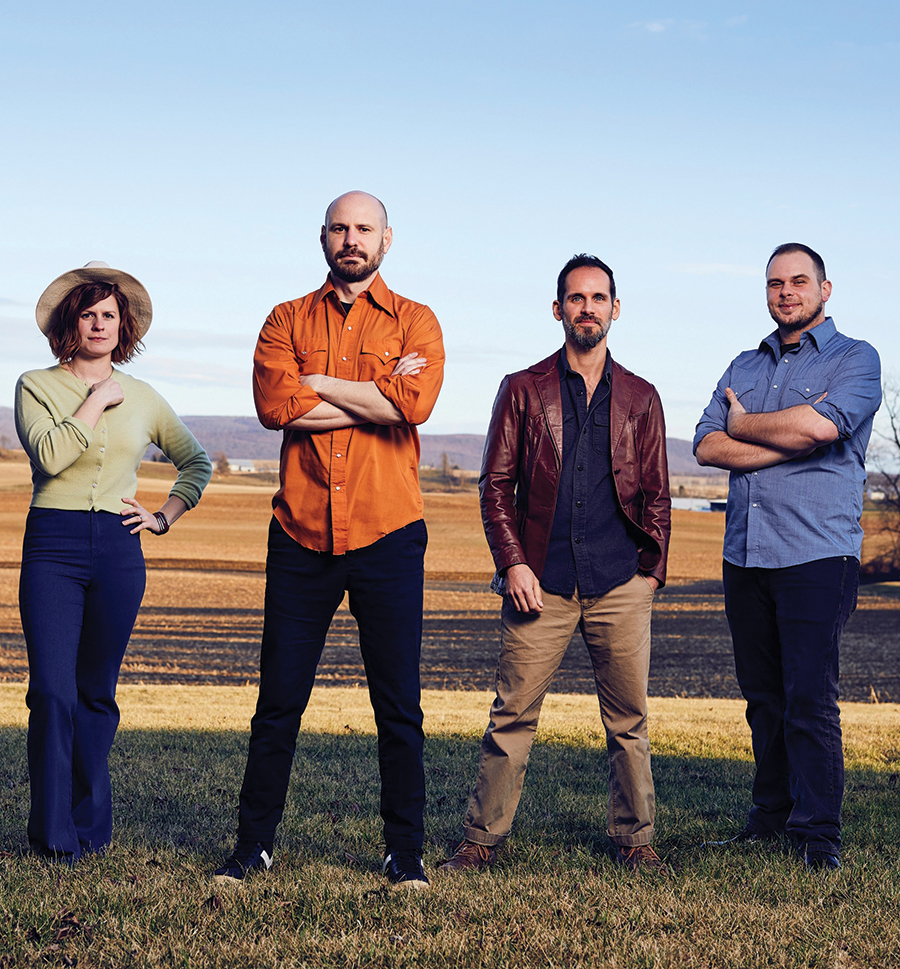
Friday, Jan. 4: Danny Burns. Cost $15.

Sunday, Jan. 6: The Gibson Brothers at 12:46 p.m. and 6:46 p.m. Cost $35; brunch $8. 

Friday, Jan. 11: John Cowan with Darin and Brooke Aldridge. Cost $35.

Sunday, Jan. 13: Tellico and John Doyle. Cost $20.

Thursday, Jan. 17: Open mic with the Parsons.

Friday, Jan. 18: Taarka. Cost: $10. 

Sunday, Jan. 20: Ben and Joe. Cost: $15.

Sunday, Jan. 27: The Stable Shakers. Cost: 10$

Unless otherwise noted, doors open at 6 p.m. and music begins at 6:46 at the Poplar Knight Spot, 114 Knight St., Aberdeen. Prices above are for members. Annual memberships are $5 and available online or at the door. For more information, call (910) 944-7502 or visit www.theroosterswife.org or ticketmesandhills.com.

Good Natured

Be Awe-Inspired

It’s good for your mind and body

By Karen Frye

Do we take seriously the power the mind has on our health? 

The way we see the world can be of great benefit and, maybe with a little effort and daily practice, this year can be a shift in your health in a most beautiful way. This unique way of thinking is a quality we are all born with, but the challenges of life can diminish the gift. Children are quick to laugh and find amazement in the most ordinary things. We all possess this condition of wonder and awe and it doesn’t have to fade with age. Researchers at the University of California-Berkeley conducted a study with a group of freshmen in the field of positive psychology that provided valuable insights on how strongly our emotions influence our overall health. With positive feelings we actually increase the power of our immune system, and reduce inflammation in the body. 

Studies in the positive psychology of emotions and physical health are often combined with the common thread of the negative effects emotions such as anger, fear, sadness and so on can have on us. At UC-Berkeley, the participants with feelings of happiness, contentment and awe with life had stronger immune systems and lower inflammation markers. The strongest of these were the feelings of awe  — information that we can use in our lives daily to improve our health. It’s as important as taking your vitamins, eating a healthy, balanced diet, and getting regular exercise. 

Feelings of awe can happen when you see a sweet baby, a beautiful flower, a stunning sunset, any of the miracles of nature. There are so many things all around us that can produce “awe” if we allow ourselves to experience the beautiful things life provides. Perhaps you are one of those people who feel great amounts of awe, but never thought about the physiological benefits your body is receiving. Or, if you need a little help in creating more of these powerful emotions, this is the perfect time of the year to practice. Awe is linked to a feeling of social connectedness. So, the first step is to get out and become more engaged with others. Make an effort to plan things with friends on a regular basis.

Encourage positive relationships. We are never too old to learn how to be a better listener, friend, parent and so on. Join a church or a club of interest. Volunteer your time and energy toward something you feel passionate about. The opportunities to find healthy, positive places to socialize are all around us. 

The benefits are waiting to happen for you. Find the things that create a feeling of awe daily. It’s very easy. Just look around you and see the incredible beauty in nature, or your children, and especially your grandchildren. Whatever it is that can give you an awe-inspired new year.  PS

Karen Frye is the owner and founder of Nature’s Own and teaches yoga at the Bikram Yoga Studio. 

Food for Thought

Winter Salads

Eat well — and wild

By Jane Lear

Salad in the cold months can be tricky. The mild, tender lettuces available at any supermarket are all well and good, but most other salad staples — tomatoes are an obvious example — are disappointing out of season.

More important, though, a typical garden-variety salad doesn’t suit the heartier, richer food we crave at this time of year. Serving a plate of nicely dressed hothouse lettuces after braised short ribs or cassoulet, for instance, can seem tacked on and curiously unsatisfying. Dinner guests tend to pick at it and wonder what’s for dessert rather than appreciate the punctuation in the meal, so to speak, and feel revitalized. 

For the sort of bracing counterpoint I’m talking about, look to bolder greens such as endive, watercress, arugula, the pale inner leaves of escarole, or springy, spiky frisée. Slivers of sweet, earthy celery root, tangy green apple or aromatic fennel will help matters along. 

One of my favorite winter salads always puts me in mind of the Mediterranean — in particular, Provence and Sicily. The recipe stars fresh fennel and any members of the mandarin citrus family, which includes satsumas, tangerines and clementines. The large, relatively new hybrid marketed as “Sumo” (easily recognized by its prominent topknot) has a superb balance of sweetness and acidity, and the fruit segments, which can be neatly slipped out of their ultra-thin membranes, keep their shape on the plate.

Dandelion greens — which have become more readily available — have a clean, sharp flavor that also reminds me of the Mediterranean. That’s where their use in the kitchen was developed, and you can trace the word “dandelion” from the Latin down through the French dent-de-lion, or “lion’s tooth.” This is no big surprise, given the jagged shape of the leaves, but personally I have a fondness for the common French name, pissenlit, which reflects their purported diuretic properties. 

Wild dandelion greens have intense flavor, but these days, I prefer them cultivated unless I know that the grass they’ve been plucked from is pesticide-free. Wild or cultivated, they have a great affinity for a hot skillet dressing. It won’t necessarily wilt the greens, but it mellows them and softens their rawness. Toasted nuts give the vinaigrette a suave sweetness.

The evolution of salad from a side dish or separate course into the main focus of a meal has come into its own, and this makes scratching together a nourishing, delicious weeknight supper — one of life’s greatest challenges — just a bit simpler. Two staples that I swear by are lentils and sausage, especially the smoked Polish variety called kielbasa.

Lentils are a great gateway legume. Unlike most dried beans, there’s no need to soak them beforehand, they cook quickly, and slide from homey to haute with aplomb. I suppose you could say they’ve been around the block and know a thing or two: After all, they were there in the beginning — er, Beginning — as the pottage for which Esau gave up his birthright in Genesis 25:34.

Although I’ve never met a lentil I didn’t like, I’m a sucker for the pretty green French ones called lentilles du Puy. Yep, I know they’re more expensive than other lentils varieties, but they’re worth it. Their characteristic flavor — peppery and minerally yet delicate — comes from the good volcanic soil and dry, sunny climate in which they’re grown. And because they contain less starch than other varieties, they exhibit a lovely firm-tender texture when cooked. In fact, if your opinion of lentils was formed by one too many mushy stews at indifferent vegetarian restaurants, then these will be a revelation.

French green lentils are delicious in soup, of course, or scooped into the hollow of a baked winter squash, or tossed with small pasta shells and crumbles of fresh goat cheese. What I do most often, though, is serve them in a bistro-style warm salad with kielbasa. Add some crusty bread, good butter, and a glass or two of red, and life will feel very civilized.

All three of the salads described above are incredibly versatile. As you’ll see in the recipes — think of them more as guidelines — one ingredient can often be switched for another, and as you go along, don’t be afraid to improvise, based on the contents of your refrigerator. Odds are, it will taste wonderful.

Mandarin-Fennel Salad

Serves 4

Add some cress or arugula sprigs if you like; substitute green olives for the black. Ruby-red pomegranate seeds would add sparkle and texture, and parsley leaves, an herbal punch.

1 large fennel bulb, trimmed of its feathery stalk and some fronds reserved

3 mandarins, peeled

1/4 cup brine-cured black olives

Your favorite best-quality extra-virgin
olive oil

Fresh lemon juice

Coarse flaky salt (Maldon adds a wonderful crunch) and freshly ground black pepper

Cut the fennel bulb in half lengthwise and discard the tough outer layer or two to expose the cream-colored heart. Then cut the bulb into very thin slices with a handheld slicer or a very sharp knife. Put them in a salad bowl.

Remove the weblike pith from the peeled mandarins (children love doing this and are very good at it). Separate the segments and, depending on the thickness and tightness of the membranes that enclose each one, remove those or not; it’s entirely up to you. Cut the fruit in half crosswise and add it, along with the olives, to the fennel.

Drizzle the salad with olive oil and lemon juice to taste and gently combine. Scatter with salt and a few chopped fennel fronds. Season with a few grinds of pepper.

Dandelion Salad with Toasted Pine
Nut Vinaigrette

Serves 6

I’ve called for sherry vinegar below, but balsamic or red wine vinegar would be fine. If you don’t have pine nuts, use pecans, hazelnuts or homemade croutons. Dried cranberries or cherries would be a nice embellishment, too.

6 handfuls tender dandelion greens, washed, spun dry, and tough stems removed

3 tablespoons extra-virgin olive oil

2 garlic cloves, finely chopped

3 tablespoons pine nuts 

1 tablespoon sherry vinegar, or to taste

Coarse salt and freshly ground pepper

Shaved or very coarsely grated Parmigiano-Reggiano

Tear the greens into generous bite-size pieces and mound them in a large heatproof bowl.

Heat the oil in a small skillet over moderate heat until hot. Add the garlic and pine nuts, cook, stirring them often, until the garlic is golden. Stir in the vinegar, then pour over the greens. Season with salt and pepper and toss to coat. Add the Parm and toss once more. Serve right away.

Warm Lentil Salad with Kielbasa 

Serves 4

This salad, a staff favorite at Gourmet, varies according to my time and inclination. It’s perfectly delicious with nothing more than onion and garlic, or carrot and garlic. As for the kielbasa, feel free to substitute another smoked sausage, country ham, pancetta or lardons — thick-cut strips of bacon sliced into matchsticks and cooked until crisp. Serve it on a bed of watercress or tender leaves of a Boston or Bibb lettuce. If desired, gild the lily by topping each serving with a fried egg.

2 cups French green lentils (lentilles du Puy), picked over and rinsed

6 cups water

1 bay leaf

A couple of sprigs of fresh thyme or, if you can find it, winter savory

Coarse salt and freshly ground pepper

1/2 cup plus 2 tablespoons extra-virgin olive oil, divided

1 cup finely chopped onion

1 cup diced carrot

1 cup diced celery, plus chopped celery leaves for garnish

1 tablespoon finely chopped garlic

1/4 cup redwine or sherry vinegar

1 tablespoon Dijon mustard

1 smoked kielbasa sausage, cut crosswise into 1/4-inch slices

Bring the lentils, water, bay leaf and thyme sprigs to a boil in a 3-quart pot. Reduce the heat and simmer the lentils, covered, until they are almost tender, about 15 minutes. Add 1/2 teaspoon salt and keep simmering until tender but still firm, about another 5 minutes.

Meanwhile, heat 2 tablespoons oil in a large skillet over medium-low heat. Add the onion, carrot, celery and garlic and cook, stirring every so often, until the vegetables are just softened and smell delicious, 8 to 10 minutes.

While the lentils and aromatics are both working, make the vinaigrette: Whisk together the vinegar and mustard in a small bowl and then whisk in the remaining 1/2 cup oil. Season to taste with salt and pepper.

Drain the lentils in a colander, discarding the herbs. Return the lentils to the pot and stir in the vegetables and vinaigrette. Cook over low heat a few minutes until hot, remove from the heat and cover to keep warm. Wipe out the skillet and brown the kielbasa on both sides. Stir into the lentils and garnish with celery leaves.  PS

Jane Lear was the senior articles editor at Gourmet and features director at Martha Stewart Living.

Drinking with Writers

Pulling the Thread

In Asheville, learning the untold story with Denise Kiernan

By Wiley Cash   •   Photographs by Mallory Cash

My friendships with writers are unlike other friendships I have. Most solid, enduring relationships take years to build. This is true of my longest friendships, but it is not true of my friendships with writers; these relationships are intense and honest from the moment of inception. I have often wondered what sets writer friendships apart, and I have decided that it is a combination of our solitary work and our inclination toward inquiry. People who spend so much time alone have a lot to share when they get together. All of this is true of my friendship with New York Times best-selling author Denise Kiernan. 

I first met Denise in Asheville, North Carolina, at a literary festival in the summer of 2014. Her book The Girls of Atomic City: The Untold Story of the Women Who Helped Win WWII had been released the previous year, and at the literary festival in Asheville she was easily the best known writer in the lineup. You could not mention her name without someone exclaiming, “Oh, she was on The Daily Show with Jon Stewart!” Denise’s fame and success appeared instantaneous, but like nearly every other writer I have befriended over the years, her journey has been long, circuitous and interesting.

On a chilly day in early December, Denise and I sat down at Little Jumbo, a cocktail bar on Lexington Avenue in Asheville’s Five Points district. The bar is housed in a building that has served a number of purposes since its construction in the 1920s: general store, office space and delivery service, among them. Regardless of what has come before Little Jumbo, co-owners Chall Gray and Jay Sanders have managed to marry the feel of the Prohibition speakeasy to a flair for Gilded Age indulgence. The ceiling is composed of original tin tiles, which reflect the soft light of sconces and chandeliers. The glass-paned front door is set between two huge display windows that house wood-topped tables and leather-wrapped benches. Past the imposing bar, where dozens of bottles hover above dark-stained wood countertops, elegantly appointed sitting areas featuring period appropriate armchairs and sofas await patrons. Little Jumbo has a sophisticated, mysterious feel that is also welcoming and warm. 

Chall Gray was behind the bar during our visit, and after Denise and I ordered and received our drinks — an old-fashioned martini for her and a whiskey for me — we found seats by one of the display windows. 

“Something just dawned on me,” I said. “I know you as the friend who published The Girls of Atomic City and The Last Castle (the story of the Biltmore House), but I don’t know much about your life and work before those books.”

Denise looked out the window as if she were opening and closing the drawers and cabinets of her memory while searching for a way to respond. The weather had turned dreary. It was raining. Cars rolled by, and people on foot passed our window with their collars upturned. Denise smiled and looked back at me, whatever she had been looking for apparently found.

“That’s a long story,” she said. “But it all started with me playing the flute right down the road in Brevard. I was a rising high school junior, and I was at a summer camp at the Brevard Music Center. Someone there suggested I attend the North Carolina School for the Arts. I did, and it changed my life.”

From there, a story I had never heard and never could have imagined unfolded over the course of the afternoon. After high school, Denise moved to New York City to pursue a pre-med degree from NYU. While there she fell in love with the city, especially its arts scene. 

“All of my friends were artists,” she said, “but something was telling me to pursue a practical career. I had decided to apply to medical school, but I wanted to spend the summer in Europe before studying for the MCAT (Medical College Admissions Test).” That summer in Europe extended to more than a year abroad. 

“When I came back to the States I wasn’t interested in medical school anymore,” she said. “I was interested in environmental education, so I enrolled in graduate school at the University of Washington.” It was there that a flier for the university’s student newspaper caught her eye. “I had no journalism experience,” she said, “but I had always written, and I wanted to do something with my writing. That was enough for the editor to give me a chance.”

After graduate school, her love for journalism won out over her love for environmental education. “I pursued an internship with The Village Voice,” she said. “And I mean I really pursued it. I called and learned there were no internships available, so I traveled across the country and showed up at The Village Voice’s New York office and asked them in person.” What happened next changed her life.  

“I worked under a legendary investigative reporter named Wayne Barrett,” she said, her eyes growing misty. “He passed away a few years ago. He was one of the last great investigative journalists. He didn’t care who you were; if there was a story to be uncovered, he was coming after you.”

Denise, a doggedly determined young person with a nose for news, had met her match: a similarly dogged, seasoned journalist who, like her, did not take well to being told no. Over the next several years as an intern and then as a freelance reporter who regularly published investigative stories in The New York Times, The Village Voice and Ms. Magazine, Denise found herself covering the 1995 United Nations Women’s Conference in Beijing, shooting pool with The Cure, writing about the Beastie Boys, and organizing her own crew as a field producer covering European soccer for ESPN. 

“All of those experiences taught me how to chase down leads, to pull at the thread of a story, to organize and focus my work.” 

These skills clearly served her well in writing her two best-known books, the aforementioned The Girls of Atomic City and The Last Castle, both of which dig into the backstories of American history that most of us never learn. Girls explains the largely unknown role of the women in Oak Ridge, Tennessee, who helped develop the atomic bomb. Castle plumbs the lives of George and Edith Vanderbilt in the years before and after they built America’s largest private home.

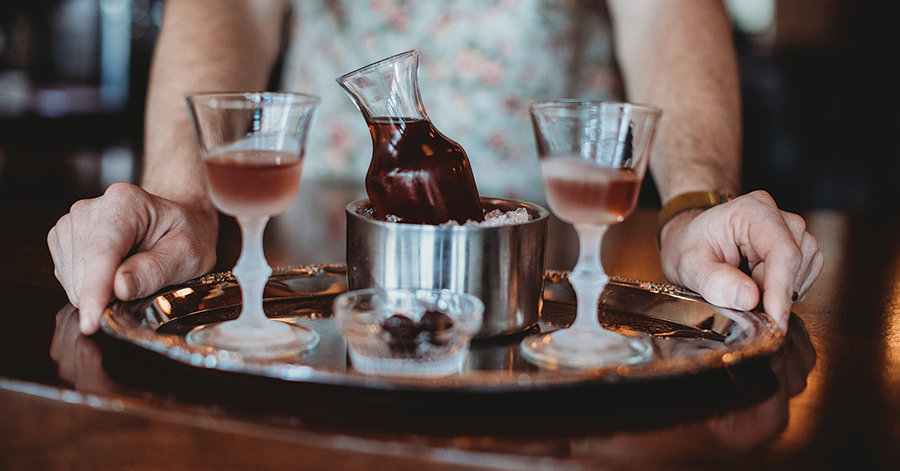
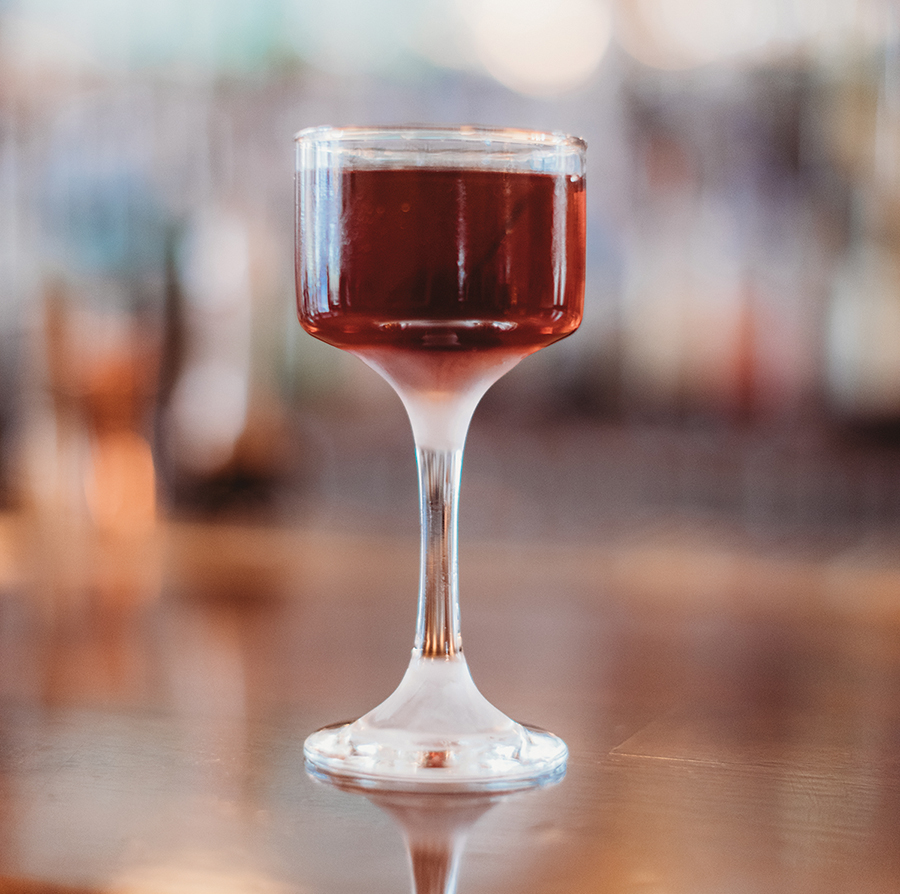
During our conversation, Chall had left the bar and delivered a setup known as the Jumbo Service. Ours was a special chilled Manhattan accompanied by elegant stemware and a side of maraschino cherries, all literally served on a silver platter. Denise and I poured another round of drinks and toasted to stories, both the stories we have written and the stories that have made us writers. PS

Wiley Cash lives in Wilmington with his wife and their two daughters. His latest novel, The Last Ballad, is available wherever books are sold.

Little Big Man

Little Big Man

How mighty mite Alfred Moore became our county’s namesake

By Bill Case

By 1781, the Revolutionary War had raged in America for five years. North Carolina had mostly escaped armed conflict since the spring of 1776 when early Patriot successes caused Loyalist militia to disperse and British soldiers to vacate the Cape Fear area. Wilmington was a hotbed of independence, controlled by Patriots devoted to their cause. But in the first month of 1781, British general Lord Charles Cornwallis, seeking to restore hegemony in North Carolina, ordered a contingent of 300 redcoats commanded by Maj. James H. Craig to sail from Charleston to Wilmington and occupy the city.

Immediately after stepping onshore at the city’s wharf on January 28, 1781, the ruthless Craig ordered Wilmington citizens to declare their allegiance to King George III or face the plundering of their possessions and a possible death sentence. As historian James Sprunt put it, Craig mercilessly employed “fire and sword” in his dealings with leading Patriots, burning their homes and jailing the most prominent while imploring Loyalist sympathizers to join militia units and assist in his scorched earth campaign to destroy “every Whig (Patriot) plantation.” Many Cape Fear Tories who supported English rule but had been laying low since 1776 became emboldened to take up arms against their fellow citizens.

This turn of events alarmed 25-year-old Alfred Moore, who lived with wife Susannah at “Buchoi,” their rice plantation 7 miles from Wilmington. He reckoned himself a target for Major Craig’s wrath since several Moore family members, including Alfred himself, had played key roles in the Patriot victories of 1776. Now, after a five-year hiatus, they again confronted the prospect of fighting forces antagonistic to independence.

Indeed, Alfred’s family had been a dominating presence in the Carolinas almost since colonization began. In the late 1600s, his great-grandfather of Irish ancestry, James Moore, acquired by dint of marriage vast amounts of land in the Carolinas. From 1700 to 1703, James served in Charles Town (today’s Charleston) as royal governor of Carolina — the colony would not be split into two until 1712. One of James’ six sons, James Jr., a noted Indian fighter, would later serve briefly as provisional governor of South Carolina. With further land acquisitions by James Sr.’s sons, the combined Moore families amassed ownership of 83,000 acres by 1731. One of those sons, Maurice, chose to settle not far from Wilmington, founding the now defunct town of Brunswick on the Cape Fear River. Maurice’s son, Maurice Jr. (Alfred’s father), would become a well-known attorney, and one of three royal judges in North Carolina.

In 1766, Maurice Jr. authored an inflammatory pamphlet denouncing the hated Stamp Act, imposed by the British Parliament on the colonies. His provocative writing so angered the royal governor that Maurice Jr. was briefly stripped of his judgeship. Despite his disapproval of English policy, Maurice Jr. tended to vacillate on the issue of whether the colonies should make a total break from the mother country. His son Alfred held no such reservations. After the opening shots of the Revolutionary War were fired on the outskirts of Boston, at Lexington and Concord in April 1775, Alfred, recently admitted to the bar, postponed his legal career and joined the newly formed Continental Army.

Boston was where Alfred had been sent for schooling after his mother died when he was 9 years old. While there, he rubbed elbows with soldiers from the British garrison, impressing the commander sufficiently that he saw fit to offer the by then 13-year-old an ensign’s commission. Moore was now eager to fight the foe that had attempted to recruit him as a boy.

Moore was appointed a captain in the North Carolina First Regiment, led by his uncle Colonel James Moore — a canny leader the nephew held in high esteem. The regiment became a true family affair when Alfred’s brother Maurice III and brother-in-law Francis Nash signed up, too. The regiment’s most memorable encounter came the following February against 1,600 Tory militia, mainly Scottish Highlander immigrants. The militia was on the march from Cross Creek (subsequently Fayetteville) to Wilmington, intending to link up with Sir Henry Clinton’s redcoat army en route from the north. The Tories never reached Wilmington. Led by Colonel Moore, the Tories were routed at the Battle of Moore’s Creek Bridge. Those not killed or wounded scattered into the woods. Captain Alfred Moore and his regiment distinguished themselves by cutting off the Tories’ retreat and rounding them up. The Patriots’ smashing victory meant that North Carolina would be effectively rid of active Loyalist militia for the time being.

The two most important men in Alfred’s life, his father, Maurice Jr., and uncle James (who had been promoted to brigadier general by General George Washington), died in the same house on the same day — January 15, 1777 — victims of a plague. Compounding the family tragedies were the deaths in battle of Maurice III and Nash. The resulting turbulence in family affairs necessitated Alfred’s attention at home, so he resigned his commission and stayed behind in North Carolina after Washington ordered the First Regiment to New Jersey in March 1777. Moore remained involved in the independence cause as the leader of his local militia. With hostilities ebbing for the moment in the Carolinas, he was able to devote time to his legal career and resume his role as the master of Buchoi.

So, when Major Craig stormed into Wilmington four years later, issuing an ultimatum that those of Patriotic leanings must pledge unswerving loyalty to King George — or else — Alfred Moore faced a dilemma. If he swore, he would betray his cause. If he refused he faced the loss of all material possessions, a life on the run and perhaps his own death. Some Patriot supporters submitted to Craig’s demands, but Moore would not bend. Instead, he and his band of militiamen became guerrillas, making themselves a “thorn in the side” of the British. The exasperated Craig softened his stance a bit, indicating that if Moore would simply agree to take no further part in the war, he and his property would be left undisturbed, but Alfred rejected this entreaty. In retaliation, Craig dispatched a raiding party to Buchoi. The plantation’s buildings and crops were burned, Moore’s livestock removed, his family’s personal possessions plundered, and his slaves freed.

Meanwhile, British Gen. Lord Cornwallis had been active in the interior of the Carolinas fighting engagements against Gen. Nathaniel Greene’s army, including the Battle of Guilford Courthouse near Greensboro, on March 15, 1781. Though the British were deemed the victors of that encounter, Cornwallis’ provisions and troops were greatly depleted. When he and his soldiers marched southeast to Wilmington for resupplies, Moore’s militiamen made life miserable for them. Disappointed with the lack of his campaign’s progress in the Carolinas, Cornwallis moved north into Virginia, where his troops were trapped at Yorktown, ultimately surrendering to Washington on October 19, 1781. The despised Craig would hang on in Wilmington until November 18, when he, his remaining troops and any Loyalists who wanted to accompany them evacuated the city. The war was over.

Moore’s defiance of the British left him “ruined in fortune and estate,” wrote one observer, “his family almost destitute of food and clothing.” On the plus side, he still possessed his law license, and the admiration of his fellow citizens. That would prove to be enough to begin a career that would carry him all the way to the United States Supreme Court.

In January 1782, while traveling in the company of Judge John Williams and fellow attorney William Davie, on a stopover in Hillsborough, the three men learned that seven Loyalist militiamen were languishing in custody at the local jail awaiting trial for treason and other grave misdeeds during the war. Annoyed that the trials of the seven defendants had yet to occur, authorities in Hillsborough implored Judge Williams to hold an immediate special session to try the captives. Williams was agreeable, but Attorney General James Iredell, who normally would bear responsibility for prosecuting, was elsewhere. Williams persuaded the 26-year-old Moore to stand in for Iredell. Davie agreed to undertake the Loyalists’ defense. According to Robert Mason’s biography of Alfred Moore, Namesake, Davie pithily summarized the trials this way: “Moore prosecuted all, I defended all and Williams convicted all.”

While previously recognized as a patriot and war hero, Alfred’s successes in Hillsborough brought recognition as a highly capable lawyer. The combination of his military accomplishments and legal victories provided an ideal stepping-stone for a political career and Moore took advantage. After his bravura legal triumphs, he became a Federalist Party state senator in North Carolina’s General Assembly. In 1783, when Iredell resigned as attorney general, Moore expressed interest in the post, and the General Assembly unhesitatingly confirmed him.

During his eight-year tenure in that position, Moore’s friend, Davie, often served as opposing counsel. Their legal tussles provided entertaining theater for the onlookers who regularly packed courtrooms to observe the talented lawyers engage in forceful forensic battles. Their oral argument styles differed — Davie adopted a lofty, florid, flowing style, while Moore spoke with “plainness and precision.” Moore was described in an 1899 speech by Junius Davis as having “a dark singularly penetrating eye, a clear sonorous voice . . . a keen sense of humor, a brilliant wit, a biting tongue [and] a masterful logic [that] made him an adversary at the bar to be feared.” Moore and Davie along with James Iredell (who would in 1790 join the United States Supreme Court) constituted a brilliant legal triumvirate, unquestionably the giants of the early North Carolina bar.
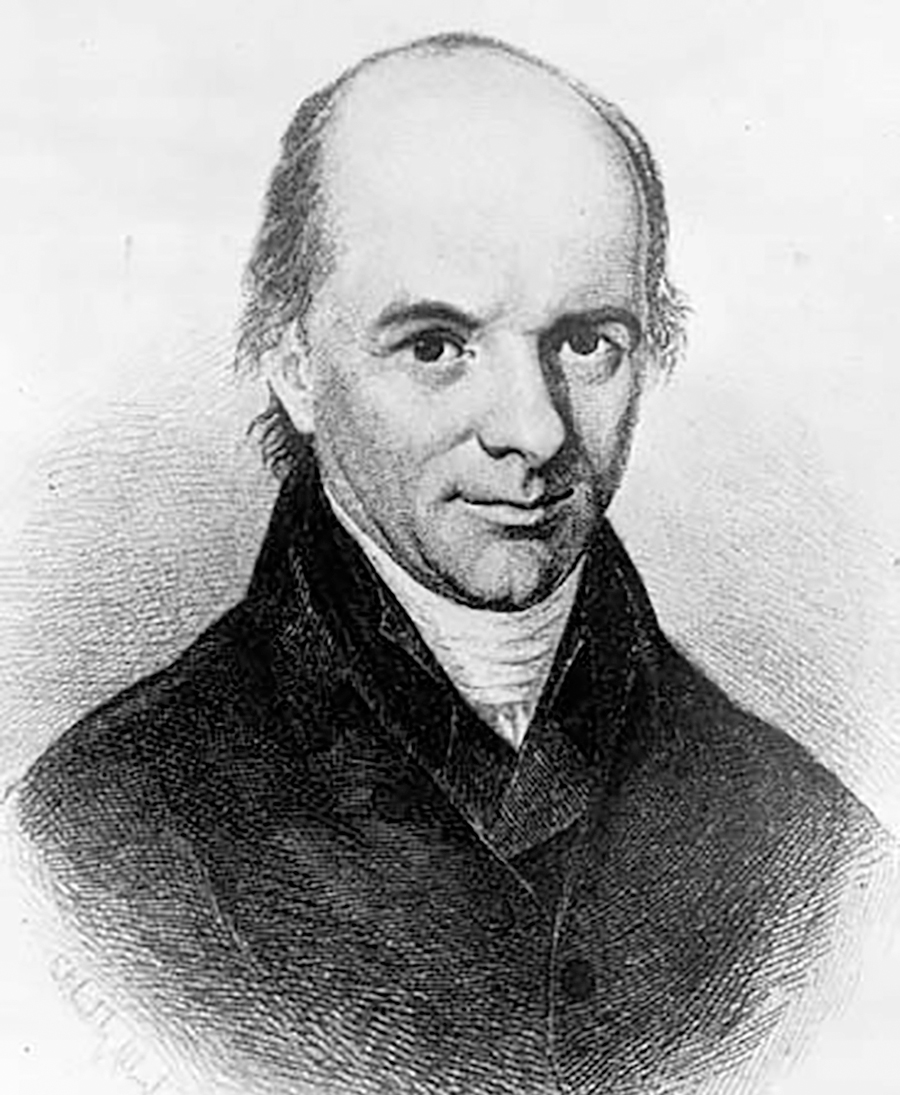
It should be noted that the term “giant” cannot be applied in any literal sense to Alfred Moore. He was a man of the slightest stature. Accounts vary as to whether he stood 4-feet-5-inches or 5-feet-4-inches. Perhaps a dyslexic historian mistakenly transposed the 5 and 4 somewhere along the way. But the late William Rehnquist, former chief justice of the Supreme Court of the United States and a fastidious researcher, says in his book, The Supreme Court, that Moore “apparently looked much like a child, being only four and a half feet tall, and weighing between eighty and ninety pounds.”

Though he endured suffering inflicted by Tories during the war, Moore declined to pursue a path of vengeance against them in post-war prosecutions. In an article written for the North Carolina History Project, Willis P. Whichard says that Moore “was realistic about the prospect of jury nullification in these largely political prosecutions; he accordingly often pursued lesser charges and by doing so achieved a higher conviction rate than Iredell’s.”

In the aftermath of the war, many Tories fled North Carolina. Their land was seized by the government and sold to bidders at “confiscation sales.” To aid these purchasers, the General Assembly passed a law in 1785 denying courts the authority to hear cases involving challenges to titles granted by the sales. Nonetheless, Mrs. Elizabeth Bayard, a British subject and the daughter of a deceased Tory whose property had been confiscated and sold over her objection, filed suit claiming that the seizure and sale were unlawful and that, by virtue of inheritance from her father, she should be acknowledged the rightful owner of the property. Mrs. Bayard further asserted that the aforementioned 1785 law was in conflict with her rights under the North Carolina Constitution, which guaranteed to her the right of trial by jury in matters pertaining to the recovery of property. Essentially, Mrs. Bayard was requesting that the court declare the 1785 legislation unconstitutional — something that had never happened before in America. Alfred Moore represented North Carolina. His friendly rivals William Davie and James Iredell appeared on behalf of Mrs. Bayard in the case styled Bayard v. Singleton. Ultimately, the judges hearing the case agreed with Mrs. Bayard that she was entitled to a jury trial, declaring the 1785 legislation “unconstitutional and void.” Though she won this battle, Mrs. Bayard lost the war. At the trial, the jury found against her claim because, as a British subject and enemy alien, Mrs. Bayard possessed no rights to hold property in the state. Thus, Moore’s advocacy upheld the legality of the confiscation sales. Of more lasting import was the fact that the Bayard case represented the first time an American court declared a legislative act unconstitutional due to its conflict with a written constitution.

It was during Moore’s time as attorney general that the General Assembly named a county in his honor. Realizing in April 1784 that the western part of Cumberland County was too remote from that county’s political hub — present day Fayetteville — the General Assembly carved out that portion for a separate governmental entity, naming it Moore County just prior to Alfred’s 29th birthday. It is unknown whether he ever actually set foot there. Other counties were likewise named for his legal cohorts, Davie and Iredell.

Both Moore and Davie urged the General Assembly to give birth to a public university in North Carolina. After an unsuccessful legislative attempt to do so in 1784, the two lawyers continued the drumbeat for founding one. Finally, in 1789, the University of North Carolina was chartered with Moore and Davie named to its first board of trustees. According to Mason’s namesake, Moore “helped to select the university’s site at New Hope Chapel, seat of an Anglican parish, which became Chapel Hill. Also, he was on the committee that chose a seal, and one of the three trustees who drafted a regulation disallowing the sale of intoxicants within two miles of the campus.” In addition, Moore was a benefactor to the school, gifting it $200 along with two globes to be employed as teaching aids.
The middle 1780s were a time of passionate dispute over how much power the states should delegate to the new federal government. Federalists like Moore fervently believed his state should ratify a new constitution that would greatly enhance the weak powers provided to the United States government by the Articles of Confederation. But many North Carolinians, mindful of their former colony’s oppression by King George III and Parliament, feared the concept of a remote centralized government controlling their lives. Following an initial rejection, North Carolina approved a revised constitution after it was amended to include a Bill of Rights, and Moore’s unstinting support of the ratification effort contributed to its ultimate success.

Miffed that the General Assembly had created a new office of solicitor general that essentially duplicated the powers and duties of the attorney general, Moore resigned from the latter post in January 1791. By this time, Moore’s Buchoi rice plantation was thriving once more. A man of his time, he acquired more slaves. He also purchased 1,200 acres in Hillsborough, residing in a second home there called “Moorefields,” which stands today. Alfred and his family relished summer interludes at Moorefields, invigorated by the area’s cooler air, a particularly welcome relief to wife Susannah, an asthma sufferer.

Moore couldn’t resist governmental service for long. By 1792, he was seated again in the General Assembly. Later, he would accept President (and fellow Federalist) John Adams’ nomination to serve as one of the United States commissioners entrusted “to conclude a treaty with the Cherokee Nation of Indians.” But Moore yearned for a more prestigious position and set his sights on becoming a United States senator. In the early days of statehood, North Carolina’s General Assembly selected the senators. Alfred twice stood for election by the Assembly. In 1794, he was edged by a one-vote margin favoring Jeffersonian candidate Timothy Bloodworth. His 1798 run for the Senate sputtered after his friendly rival, Davie, withdrew his support of Moore’s candidacy as part of a strategy to secure his own election as governor.

Moore’s wounds were salved by his appointment to a state court judgeship. The appointment made possible his following in the judicial footsteps of his father, Maurice Jr. There is a split of opinion regarding Alfred’s performance during his short-lived tenure as a state court judge. Historian Samuel A.C. Ashe faulted him for habitually disregarding precedents, but North Carolina Supreme Court Chief Justice John Louis Taylor praised Moore’s service, saying that “the acuteness of his intellect and his experience in business enabled him to decide very complicated cases with great promptitude and general satisfaction.”

When the 48-year-old Iredell, who was among President Washington’s first appointees to the United States Supreme Court, died suddenly in Edenton on October 20, 1799, it was anticipated that the resulting vacancy would be filled by a lawyer from the Carolinas, given that Supreme Court justices of the era doubled as circuit riders, presiding over federal criminal trials and lower court appeals emanating from their particular geographic area. Iredell’s circuit responsibilities had required backbreaking horseback rides to distant towns in the Carolinas and Georgia as well as the nation’s capital — exhausting rigors that contributed to his early demise.

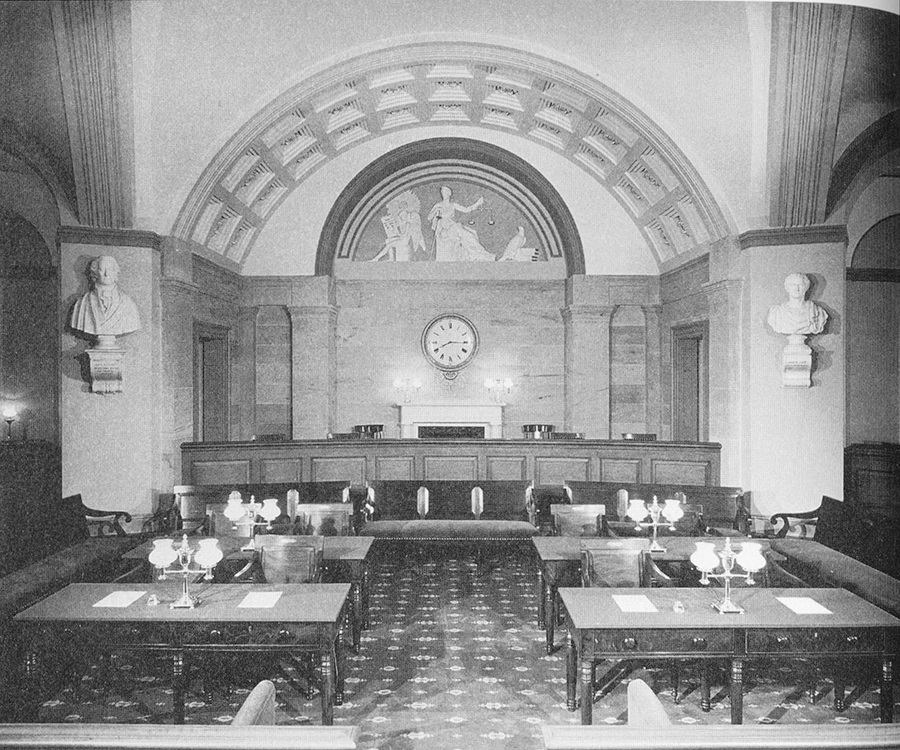
Given his steadfast support of the Federalist Party and his negotiation of a treaty with the Cherokees, Moore stood in good graces with John Adams. Still, it seemed improbable that the president would consider him to fill the high court vacancy. Moore had been a judge less than two years, and there were many able Federalist jurists in the Carolinas who possessed experience far exceeding his own. According to Whichard, Moore and Davie were the only candidates seriously considered by Adams. The president, while undoubtedly appreciating both men’s loyalty to the Federalist Party and status as war heroes, had recently appointed Davie as special envoy to France. Moore emerged as the choice to join what was then a six-member Supreme Court and became just the 12th justice to be confirmed by the Senate on April 21, 1800. To Moore’s relief, the Federalists passed legislation that eliminated the justices’ circuit-riding duties shortly after he joined the court.

After Moore’s ascension to the high court, John Marshall became its chief justice. Marshall, still considered the greatest and most influential justice in the long history of the court, dominated it, overshadowing Moore and the other justices. He assigned to himself most of the court’s written opinions, which were relatively few because, according to Rehnquist’s book, “the principal source of its appeals — the lower federal courts — had not been in existence long enough to decide any cases that could be appealed to the Supreme Court.”

All of this explains why Moore authored only a single written opinion during his time on the court. In that case, Bas v. Tingy, a privately owned American ship, the “Eliza,” had been captured by the French (who were then engaging in hostile activities toward America), and then subsequently recaptured by an armed American ship. The amount to be paid by the owner to the salvager increased exponentially if the recapture was of a ship that had been seized by an “enemy.” Because no formal state of war existed between the United States and France, the owner maintained that he was not required to pay the higher fee to the Eliza’s salvager. Justice Moore disagreed with this contention, finding that the owner needed to pay the higher salvage fee because a state of “limited, partial war” existed between the United States and France.

Perhaps the most important case in Supreme Court history was decided during Moore’s tenure. In Marbury v. Madison, Justice Marshall, speaking for the court, held that the Supreme Court possessed authority to void an Act of Congress because of unconstitutionality. This momentous decision marked the second time any American court had claimed authority to void legislation for that reason. The first was the Bayard decision in which Moore had played a starring litigation role. Ironically, Moore was the lone justice not to participate in Marbury v. Madison. It is unknown why.


It appears Moore did not particularly enjoy his time on the United States Supreme Court, serving less than four years. Events occurring in 1802 had much to do with his dissatisfaction. First, the United States Treasurer failed to pay his modest salary in a timely manner. Second, the Jeffersonians who had come to power in both Congress and the presidency enacted legislation reviving the grueling circuit riding by the justices. Moore was appalled. “Can it be believed,” he would write a friend, “I can ride 2,840 miles a year with any regularity to attend to business on the seat of justice — the number of cases to be determined is by no means so disturbing as getting to them?” Moore told his friend that for the short term he would endure the hardships, not wanting an “uncharitable conclusion” to be drawn from an abrupt departure. But after what he considered a suitable wait, he announced his departure and left the court on January 26, 1804. He and his friend Iredell remain the only North Carolinians to have served as justices on the Supreme Court of the United States.

The circuit riding had already taken its toll on Moore’s frail body. He retired to the Bladen County plantation of his daughter, Anne, and her husband, Hugh Waddell, where Moore’s health continued to decline. He died at age 55 in his daughter’s home on October 15, 1810. His public service legacy was carried on by son Alfred, who was a member of the General Assembly and served as mayor of Wilmington.

It is noteworthy that Moore directly followed Iredell into the two most important positions of his illustrious life: as North Carolina’s attorney general and as a Supreme Court justice. It was said about them in one testimonial that “[a]t the bar they ever disdained the small arts of the pettifogger, and upon the bench blindfolded, they ever held the scales of justice with an even hand, treating with equal impartiality the rich and the poor, the guilty and the innocent.” Though slight of build, for a man who may never have walked in the county named for him, Moore left a large footprint.  PS

Pinehurst resident Bill Case is PineStraw’s history man. He can be reached at Bill.Case@thompsonhine.com.

Golftown Journal

Miller Time

Pinehurst played a starring role

By Lee Pace

Johnny Miller is perhaps best remembered around Pinehurst for his stirring playoff victory over Jack Nicklaus and Frank Beard for the 1974 World Open title. That was the year the blond bombshell from Northern California scorched the PGA Tour with wins in three straight tournaments to open the season, took first in five others and banked $353,021. He drove the ball long and straight, smothered flagsticks with his irons and seemed to have magnets drawing his putts to the cup.

He’s also known in this golf-happy burg for his insight, candor and color he delivered for some three decades as a golf analyst for NBC. Now 71, Miller announced in October that he’d retire from broadcasting in early 2019 to spend more time with his family, which includes 24 grandchildren. Golfers coming in from their rounds at 4:30 on Sunday afternoon will see and hear Paul Azinger on NBC’s broadcasts instead.

“I’ve had two lives,” Miller said in breaking the news. “The golfing part . . . the younger generation sort of heard about me, but maybe didn’t realize I wasn’t too bad at times. Then the announcing part. But I’ve been on the road for 50 years.”

Still quite significant but virtually forgotten is that Pinehurst, in a sense, gave the world of golf the second coming of Johnny Miller. Four nostalgic days in the Colgate/Hall of Fame Classic in 1979 helped Miller shake a three-year slump and bounced him into a stretch in the early 1980s when he won five tournaments and finished among the Top 30 money earners four times. Miller didn’t win (Tom Watson beat him in a playoff), but he left town a champion in his own mind.

“That tournament single-handedly got me out of my slump,” Miller reflected years later. “It was like signaling to the rest of the PGA Tour that Johnny Miller could play golf again. It was a weight off my shoulders. Pinehurst’s been very good to me. I haven’t played it that many times, but it’s the kind of course I wish we played every week on the tour if I was still active.”

Miller was the incumbent U.S. Open champion with his mind-boggling 63 at Oakmont when the PGA Tour came to Pinehurst in November 1973 after a 22-year hiatus. Richard Tufts of the founding family discontinued the North and South Open in 1951 after financial squabbles with the tour pros, and Bill Maurer, the president of the new owners in the early 1970s, the Diamondhead Corporation, made it a priority to bring pro golf back to Pinehurst and its esteemed No. 2 course. He did so in the form of the 144-hole World Open, played over two weeks in November 1973 on the No. 2 and 4 courses. The purse was an unprecedented total of half a million dollars, with $100,000 to the winner (collected by Miller Barber). Miller entered the event but withdrew at the last minute because of an illness.

The following year, the format was trimmed back to 72 holes and was moved up to late September to coincide with the grand opening of the World Golf Hall of Fame, which sat for nearly two decades on ground to the east of the fourth green and fifth tee of the No. 2 course.

“The World Open in ’74 was the biggest money tournament of the year,” Miller said. “First prize was $60,000, which was unheard of at the time. Obviously, it was a big tournament and had a tremendous field. It was like a Players Championship of today.”

Miller shot a 63 in the second round, missing the course record 62s fired by Watson and Gibby Gilbert the year before. The round featured five birdies on the first six holes (including a 60-footer on the fifth hole).

“It was like one of those old Johnny Miller blitzes,” he said. “I dominated the course and scored a fairly easy 63, if there is such a thing.”

Miller and Nicklaus were tied at 209 after three rounds, with Charles Coody and Bruce Devlin two back and Bob Murphy and Beard trailing by three. The 27-year-old Miller, winner of $256,383 that year, reveled in the challenge of going head-to-head against the 34-year-old Nicklaus, who had earnings of $208,307 and a Tournament Players Championship that year.

“I wouldn’t be surprised if both of us shot in the 60s head-to-head,” Miller said after round three. “I’ve held him at bay recently and I’ve had a lot of success against Jack, but I don’t talk much about it. I know he’s a better player than I am, but I’m not afraid of him. He’s going to try to beat my brains out, but he’s got to respect me because I’ve had such great success against him.”

It turned out that Miller and Nicklaus each shot one-over 72s, allowing Murphy and Beard to force a four-way playoff with 69s and 281 totals, three-under for 72 holes (only eight players beat par for the tournament).

The playoff started on 15, where TV cameras were set up. Beard scored a routine par on the par-3, leaving a birdie putt dead short that could have ended it there. Miller and Nicklaus got up-and-down from the fringe, and Murphy was eliminated after his tee ball found a greenside bunker.

Miller won the tournament with a two-putt birdie on 16 after Beard three-putted and Nicklaus missed a 12-footer for birdie. Miller hit a 3-wood to eight feet — “The best shot under pressure I’ve ever hit,” he said — and went from thinking he had to make an eagle to simply needing to two-putt.

“To beat Jack Nicklaus in a playoff sort of capped off the year for me,” he said. “I enjoyed playing No. 2. It was perfect for my game. It gave you enough room off the tee, you had extremely difficult approach shots, and if you hit it real bad off the tee, you had broom grass, sand and trees. To me that course is the perfect course for my game. It’s the perfect test of golf because it’s got difficult putting, it accepts the approach shot fairly, and it penalizes the poor shot.”

A different Johnny Miller came to Pinehurst in 1979. He had been the talk of the tour in the early 1970s for his good play but now had become the talk of the tour for his bad play. He slid to 48th on the money list in 1977 and 111th in 1978, with only $17,400 in winnings. Miller hadn’t won a tournament since early 1976.

“What’s wrong with Johnny Miller?” the world wanted to know.

Miller responded that there wasn’t anything wrong that a bunch of birdies and a little confidence couldn’t solve.

“Before Pinehurst I played in the Lancôme in Paris and won against a good field, and that signaled that maybe I was ready to play well again on the U.S. tour. I came home a week or two later and continued my good play,” he said.

Miller opened with a 69 and then equaled his 1974 heroics with another 63. “It was amazing. It was like it was ’73 or ’74 all over again.” he said. Watson moved into contention after three rounds, shooting a 65 to stand at 203, one behind Miller. The leaders talked about the confidence Miller was gaining on the eve of the final round.

“Confidence isn’t something you get from reading a book,” Miller said. “You can’t have confidence if you’ve just hit four bad shots in a row. It comes from hitting a lot of good shots. Confidence is Seve Ballesteros hitting all those shots from the trees and making pars because he knows he’s going to. That’s the way Arnold Palmer used to be.

“The difference between 63 and 73 is so little it’s scary. It may be the distance between the ears.”

Miller hit a 3-iron on the 17th hole to one foot away and went one ahead of Watson, but a hooked tee shot on 18 led to a bogey and a playoff after a closing round of 70 and a 272 total. Watson won on the second playoff hole after Miller’s approach went over the green.

But Johnny Miller was back. Pinehurst has always been special to him for those weeks in 1974 and 1979.

“I almost can’t tell you how good the golf course is,” he said. “It might not be the hardest golf course in the world, but for pleasure, for going out and having a pleasurable time with a smile on your face, it can’t be beat. It’s hard to get mad when you play Pinehurst.

“The town reeks of golf, it has a definite golf spirit, very similar to a Pine Valley or Augusta National or Cypress Point. It’s very blessed with that golfing spirit.”  PS

Chapel Hill-based writer Lee Pace has written about hundreds of memorable rounds of golf in Pinehurst over some three decades.

Wine Country

Holiday Pairs

The best of the best at Christmas

By Angela Sanchez

The Christmas season is a cornucopia of traditions, great and small, and food and wine are among them. Children learn to leave cookies out for Santa as soon as they can walk. Revelers have been buying, making and drinking eggnog for hundreds of years. For my family, it’s wine and cheese on Christmas Eve.

When pairing wine with cheese or a dish, I find it is much easier to pick the food first. A cheese tray is one of the easiest and best ways to start a meal. Building a tray is an activity you can share with others — one person slicing cheese while someone else cuts salami or drains a container of olives or pickles — all the while enjoying one another’s company. In our family I choose the cheeses, meats and other accompaniments. My mom picks her favorite platter and together we slice the cheese and meats. My brother and nephew decide which jams or chutneys work best with the cheeses and which mustards bring out the flavor of the meats. One of our favorite soft choices is Lenora, a bloomy rind, soft Spanish goat cheese. For a classic cheddar I like Beecher’s Flagship Cheddar from Seattle. Both of these pair well with a nice fig spread. Our blue cheese this year is the “king of blues,” Stilton. Only six producers are allowed to produce Stilton in England, a traditional style of blue. A local friend of ours makes Miss Kelly’s Jelly Christmas Jam. It’s bright with a little acidity and allspice notes and goes well with the rich, robust punch of Stilton. For something special add Red Lion, a young English cheddar that has whole-grain horseradish mustard and Welsh brown ale added. Bold and full of flavor, it pairs well with all types of charcuterie, from speck (smoked prosciutto) to salami Milano with white wine and black pepper.

Now that we know the cheeses, the wines are much easier, and will accompany the meal itself. Because it is Christmas, I lean toward the best of the best. This year for white wine, we will be drinking Southern Right Sauvignon Blanc from Walker Bay in South Africa. It’s clean and crisp with tropical notes and a flinty finish and is great with soft cheese, hard cheese and seafood appetizers. My rosé preference is Italy’s Dama Rosé of Montepulciano, a deep pink rosé with a rich berry and cherry palate — perfect for all cheeses, balancing the spicy bite of Red Lion and the richness of cream-based dishes like casseroles and au gratins. For red, my choice is a bold cabernet from Angulo Innocenti, a rustic, Old World-style cab, from La Consulta, Mendoza, Argentina. The high elevation and cool nights of the Andes Mountains growing region produce a beautifully balanced cabernet with ripe briar fruit, tobacco and leather notes. It’s a natural to pair with prime rib. For our sparkling wine, we’ll be drinking Champagne. It is Christmas after all. Taittinger Brût La Française from Reims Champagne, France, is a classic, traditional negotiant style Champagne that is 40 percent chardonnay, 35 percent pinot noir and 25 percent pinot meunier. Elegant, round and with a structured backbone, it can carry all cheese pairings and is perfect with chocolate desserts and cream pies.

There is always time to try something new, but at Christmas keep it traditional. The time with friends and family is the best tradition of all.  PS

Angela Sanchez owns Southern Whey, a cheese-centric specialty food store in Southern Pines, with her husband, Chris Abbey. She was in the wine industry for 20 years and was lucky enough to travel the world drinking wine and eating cheese.

Out of the Blue

Look Both Ways

Janus sees two sides to every story

By Deborah Salomon

As the year winds down and Christmas draws nigh, I think of Janus, the Roman god of transitions for whom January was named, the god pictured with two faces — one looking forward, the other, back. This timing works for me since I was born soon after New Year’s Day, that year being 1939. So many years, so many experiences. Some make me feel old, others, like a feisty youngster.

Old: Seeing a close-up of Robert Redford — McDreamy before Patrick Dempsey was even born. Now his face — untouched by plastic surgery — is craggier than the Utah topography where he hides out. There it is, promoting a new movie called, no less, The Old Man & the Gun.

Young: Remembering how he looked at the Vermont grocery store when visiting his daughter and grandchildren — tousled, cute, short.

Old: Resorting to jeans with a stretchy waistband.

Young: Doing something about it, then burning the stretchy jeans on a funeral pyre.

Old: Preferring my desktop PC to any of the newfangled laptops. 

Young: Knowing my treasured photos are safe in a box, not on a cellphone memory chip.

Old: Remembering that I was the first, after his parents, to hold my 10-minute-old grandson. In May, he graduates from law school.

Young: Knowing he thinks I’m still tolerably cool.

Old: Associating (w)rappers with what encloses a candy bar.

Young: Knowing, deep down, that Paul Simon, Billy Joel and Elton John are better than any of them.

Old: Preferring to receive bills printed on paper, by mail.

Young: Paying them electronically. This way, I always have financial records at hand, filed in — horrors! — a brown accordion folder.

Old: Having lived through at least three cycles of bell-bottoms. Pants can only be cut so many ways, extremes being stovepipe and palazzo.

Young: Wise enough to shelve a few pairs until fashionable once again. Leggings can’t last forever, as evidenced by Melania Trump, whose designer palazzos currently flap in the breeze.

Old enough: To miss every answer in certain Jeopardy! categories. I don’t even understand the clues.

Young enough: To know every answer the young ’uns miss. And then some.

Old enough: Remembering when elected officials were respected for their service and behavior.

Young enough: To express outrage when they disappoint. Me too, baby.

Old enough: To like my coffee plain and black.

Young enough: To laugh at a $4 cup of froth.

Old enough: To like plain, unsweetened tea.

Young enough: What is chai, anyway?

Old: Remembering when Life and Look were much-anticipated weekly magazines and fifth-graders cut up National Geographic for projects.

Young enough: To follow blogs.

Old enough: To miss power steering.

Young enough: To mistrust self-driving cars.

Old enough: To have stayed in locally owned motels, cabins and “tourist homes.”

Young enough: To appreciate Airbnbs.

Old enough: To yen for Howard Johnson’s 28 flavors.

Young enough: To understand Ben & Jerry’s message-laden flavors. But really, guys: “Bernie’s Yearning?”

Old enough: To remember when Miss America was a big deal, and the biggest deal was the (one-piece) swimsuit competition.

Young enough: To appreciate why emphasis has shifted, along with ratings.

Old enough: To remember, shudder, when old ladies wore old-lady shoes.

Young enough: These boots are made for walkin’.

Old enough: To remember when family doctors made house calls.

Young enough: House calls? They don’t even go to the hospital anymore. Smart. Might catch a nasty virus.

Old enough: To remember life as perfectly acceptable before McDonald’s, Costco, Amazon and Hulu.

Young enough: To binge-shop at Whole Foods.

Enough enoughs. C’mon, Janus. Let’s go have a beer. No, not a Rheingold. One of those local crafty brews with names like “Sweet Baby Jesus Chocolate Peanut Butter Porter.”  PS

Deborah Salomon is a staff writer for PineStraw and The Pilot. She may be reached at debsalomon@nc.rr.com.

Poem

Christmas Poem

I cannot write a Christmas

poem for you,

not with all those slick verses

oozing through the mail,

the schmaltzy music whining

on the radio.

But what I can do

is tell you of a December

afternoon in 1957

when I sat in Miss Cohee’s

fourth grade class

listening to the radiators clank

and staring at my scarred desktop

and how Eddie Morgan,

hunched in the seat beside me,

looked up suddenly and whispered,

“It’s snowing!”

I looked up too,

along with the rest of the class,

out the tall warped windows,

across the empty playground,

to Idlewild Avenue,

and saw that it was true:

the first gray-white dust just drifting

the blue cedars.

If you are an old believer,

even on this bluest of December days,

I would give you that pale afternoon,

the chalkdust scuffle of shoes

on the worn floor,

those children’s faces

eager as light.

— Stephen E. Smith

(From A Short Report on the Fire at Woolworths.)