Mom Inc.

That Old Feeling

Maybe there’ll be something today

By Renee Whitmore

It’s a cold afternoon in January in North Carolina. The wind whips against my face and turns my nose pink as I walk a quarter-mile down the gravel driveway to the mailbox.

For a moment an old anticipation fills me, then goes away just as fast. There won’t be anything fun waiting for me. There never is.

I peer into the black metal box lined with rust and am greeted by a Piggly Wiggly advertisement cradling my water bill. I grab them, firmly shut the mailbox lid, and walk back up the gravel drive, careful not to step in puddles that may or may not turn to ice after the sun goes down.

I chuckle. I still feel excited every single time I check the mail even though for the past 20 years, I have received no letters. Maybe a card or short note here or there, but none of those handwritten letters that stretch out for page after page after page.

I started getting them when I was around 8 years old. I religiously read a magazine named Clubhouse filled with stories, games, even artwork. I read it cover to cover, and then cover to cover again. Even so, I almost missed it. On the very last page of the magazine, there was an ad for “free pen pals.” All you did was send your name and address to Clubhouse, and they would send you a pen pal in return! Giddy with a joy I could hardly contain, I cut out the ad, filled in my name and address, and stuck it in a stamped and carefully addressed envelope. Into the mailbox it went, red flag waving brightly to alert the postal worker there would be important outgoing mail that day.

I waited. I checked the mailbox multiple times a day. Maybe my reply would come special delivery. A week stretched into two and then inched into three, and then . . .

There it was. Clubhouse responded after three weeks and two days. Just for me. The name and address of my new pen pal.

Mary from Washington State. She was 8, too.

She had dark brown hair, five brothers, and liked to play soccer.

We wrote letters back and forth for several years. We wrote about all the things that 8-year-olds used to talk about: playing outside, riding bikes, annoying brothers, pizza, that kind of stuff.

Pretty soon I had another pen pal. Carrie from Canada.

Carrie liked cats, parties, and she always wrote about her boyfriend, Derek, which at that point, I thought was just yuck.

Pretty soon I gained more pen pals. One from Florida. One from California. One from Indiana. A few from Texas. One from Austria.

All through my childhood and well into my teenage years, I spent my afternoons and evenings writing letters to people all over the world. On an average day, I might get five or 10 letters in the mail. I would read and reread my letters, spread them out across my bed, and start writing back to whoever was on top. It was the most exciting part of my day. Nothing made me happier than pouring my heart into writing to someone I had never even met. At least not in person. 

My family and friends bought me stationery, envelopes and stamps for Christmas. The rest of the year I used my own money for the essentials. At 14 I started working for a catering company just to support my pen-paling habit.

Eventually, my pen pals started to dwindle, and I started letting too much time pass before I wrote back to them. After a while, the letters built up into a pile waiting for a response. Life evolved into other interests, and my pen pals just kind of . . . faded into the background.

Now, at 36, I have no pen pals. In fact, I wonder if anyone writes and receives letters in the mail anymore. I Googled pen pals, and the first hit is a “social networking app that allows you to send messages and easily make friends all over the world.” Cool, I guess, but it doesn’t seem quite the same. Not page after page after page. Not piles of paper spread out on your bed.

Still, Monday through Saturday — except holidays, of course — around 3 p.m., my heart beats a little faster when I see the mail truck rattling down my road. A familiar hope returns.

I reach into my mailbox and pull out a Pinehurst Toyota advertisement. Oh, and there’s another bill in there. Looks like Spectrum.

The most pen pals I had at one given time was 80. Not even I get that many bills.   PS

When Renee isn’t teaching English or being a professional taxi driver for her two boys, she is working on her first book.

The Son Also Rises

A steady hand guides the Pinehurst Resort

By Bill Fields    Photographs by John Koob Gessner

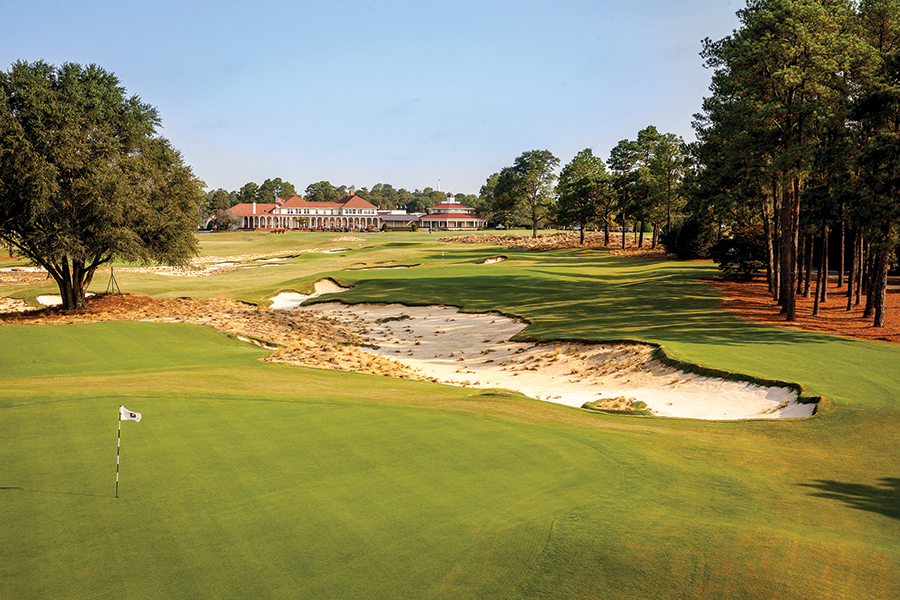
On a sunny, warm day in late September, the golf courses at Pinehurst Resort and Country Club were full and the streets in the village bustled. Coming up on 125 years since James Walker Tufts founded Pinehurst as a retreat for the sick, his creation — long since having evolved into a haven for recreation instead of recuperation — seldom had seemed as robust.

“There’s always opportunities to do better, but things are good right now,” Bob Dedman Jr. says, responding that afternoon to a visitor’s observation about the vitality. “God willing and the creek don’t rise — no more hurricanes, like 2018 — this should be our best year in the history of the property. Hopefully, that bodes well for the future as well.”

Far beyond the bottom line, the past and the future often meld into discussions of the present for Dedman, who as owner of the historic property has been unafraid to take bold steps on the tightrope between yesterday and tomorrow.

“It’s like the history of the resort has now come full circle,” says Audrey Moriarty, executive director of the Tufts Archives and Given Memorial Library. “It was started by one man who had a vision. And now we’re back essentially to one man who has a vision and who can see something that isn’t there. There is a strong parallel.”

Over the last decade, under the leadership of Dedman and his management team — including President Tom Pashley — a destination that dawned in the 19th century has confidently polished its status in the 21st.

Pinehurst’s No. 2 Course was dramatically restored to its Donald Ross-era glory by Bill Coore and Ben Crenshaw; Gil Hanse renovated the No. 4 Course, crafting a stellar design on some of the best golf land in the Sandhills; near the clubhouse Hanse also created The Cradle, a nine-hole par 3 layout that can be played with a couple of clubs, and Thistle Dhu, a putting course, both with an emphasis on fun.

An abandoned steam plant was transformed into the popular Pinehurst Brewing Co.; The Deuce became a perfect après-golf grill overlooking the 18th green of No. 2; the members’ clubhouse and Carolina Hotel dining room were renovated; new swimming, fitness and beach facilities were constructed for members; and, more recently, the Manor Inn was refurbished, a wholesale spiffing-up that echoes what was done to a dilapidated Holly Inn years ago.

“We’ve always gone back and tried to be more authentic and restore the character of Pinehurst,” says Dedman, general partner of Putterboy, Ltd. “But at the same time, contemporize and make it so the legacy will last — allow it to be more relevant for the next hundred years. Part of it is looking back, but part of it is about always looking forward.”

Pinehurst has been part of the Dedman family business since 1984, when ClubCorp, founded by Robert H. Dedman Sr., purchased the property from a consortium of banks, adding to its large stable of golf courses and city clubs. The Tufts family had sold in 1970 to Diamondhead Corporation, whose focus was on selling lots and condominiums, many of the latter built only a mild slice off the fairways of the No. 3 and No. 5 courses. The jewel, No. 2, had returned to hosting tour golf, but much of its architectural essence was lost. By the time Diamondhead (then called Purcell) turned Pinehurst over to the banks in 1982, there was a lot of debt and no less consternation about what had changed in the decade-plus of corporate ownership.

Dedman Sr., whose vast wealth couldn’t have been more different from his dirt-poor roots in rural Arkansas, had built his empire buying distressed clubs and turning them around. At Pinehurst, he saw huge opportunity in the formidable challenge.

“The first time I stood in front of the clubhouse and looked out on all those ribbons of fairway, I got tears in my eyes,” he told Sports Illustrated in 1999. “I had always venerated Pinehurst for its place in the history of golf, and when I finally saw it I knew instantly that we would take this fallen angel and make it not as good as it was, but better than it had ever been.”

The elder Dedman was a striver for the ages, leaving a house without electricity or indoor plumbing to reside with an aunt in Dallas in order to seek an education and a different way of life. Bob Sr. got multiple degrees, became an attorney and later a wildly successful businessman. He was a billionaire who gave away millions, far exceeding his childhood plan to be worth $50 million by age 50 and give away $1 million annually to good causes. (Southern Methodist University, where the law school is named for the Dedman family and Bob Jr. is chairman of the university’s board of trustees, has received more than $80 million in donations from the family.)

Bob Sr. commanded a room, a talker who could quote the classic poets and more earthy philosophers with equal ease. “He has more sayings than anybody I’ve ever met,” Lamar Hunt, who founded the American Football League and owned the Kansas City Chiefs, told The New York Times in 1986. “He’s the only person who, while playing tennis, will get your ears tired before your legs.”

Despite his success, Dedman never lost his feel for the everyman. As Bob Jr. noted in a tribute following his father’s death, at age 76, in 2002, “He inherently knew the wisdom of the Italian proverb, ‘At the end of the game, they put the king and the pawn back in the same box,’” Bob Jr. wrote in the SMU Law Review.

Bob Jr. was born in 1957, the same year his father got into the golf club business by starting Brookhaven Country Club in Dallas. Although it was a single facility, his optimism showed in the name for his new company: Country Clubs, Inc.

“I am incredibly fortunate,” Bob Jr. says. “There are two things they say parents give kids — one is roots and the other is wings. And that’s really about the values. Neither my father nor my mother, Nancy, were perfect, but they gave us opportunities, an education and values that were a foundation for the future. They encouraged us to be involved with our communities and have a positive impact on a lot of people.”

The younger Dedman acknowledges that his dad “was bigger than life,” an extrovert whose achievements were all the more striking given the hardscrabble circumstances of his early years. Bob Jr. — who returned to ClubCorp in 1987 as chief financial officer after three years in investment banking, was named president and chief operating officer in 1989, chief executive officer in 1998 and chairman of the board in 2002 — isn’t as voluble.

“He’s kind of a quiet man but confident,” Moriarty says. “He says what he means and gets what he wants, but not in a pushy way. I personally find him to be very kind.”

Hanse discovered the same thing when he and his design partner, Jim Wagner, took on the tasks of creating The Cradle and Thistle Dhu, then rebuilding the No. 4 course. “Bob has been extremely gracious to my wife, Tracey, and me and our whole team,” says Hanse. “He uses the phrase, ‘We’re happy to have you be part of the Pinehurst family now,’ and as someone who loves the history of the game and appreciates the role Pinehurst has had in the history of golf in the United States, that means so much to me.”

In 2006, ClubCorp sold its large portfolio of golf properties but kept the one that had come to mean so much to the Dedman family. From that point, Bob Jr. has led one project after another at Pinehurst to try to ensure its popularity and relevance — to make a revered place even better.

“It’s that balance we try to strike, between the old and the new,” Dedman says. “We’ve got to get that balance right. We’re always mindful of that.”

If his father’s era at Pinehurst had been about fixing what neglect and misguided management had caused following the sale by the Tufts family, under Dedman Jr., the resort has innovated beyond a solid status quo.

“I think the village can learn from them,” says Kevin Drum, a council member since 2017 who established the Drum & Quill Public House in 2014. “They’re thinking long-term, re-investing. You make your future, you just don’t let it happen — you don’t wait for your future to occur. His dad was an empire builder, but what Jr. has done to build on the Pinehurst legacy, which is pretty spectacular, might be harder.”

With the 2014 U.S. Open on the near horizon following successful Opens in 1999 and 2005, and the Great Recession having hammered Pinehurst’s revenue stream, Dedman nonetheless decided to set in motion a dramatic change to the No. 2 course.

“Restoring No. 2 frankly took a lot of fortitude,” Dedman says of Coore and Crenshaw’s 2010 wholesale transformation. “I’m sure Bill and Ben were nervous, as we were. You try not to make too many bet-the-farm decisions. It would have been an embarrassment, clearly, if it hadn’t worked out well. But we needed to get back to the design intent of Ross.”

Hanse says, “Gutsy is the perfect word. To 95 percent of people in the golf world, it was not broken. But the reality was it had strayed so far from Ross’ vision and gone in a completely different direction. None of this (Pinehurst’s subsequent golf development) happens without Bob’s decision to restore No. 2. That got the ball rolling.”

As with the work of Coore and Crenshaw, Dedman gave Hanse the freedom to create once a goal was established. “Every architect would love to have an owner like that,” Hanse says, “to allow us to focus on the details of accomplishing the big-picture goals. Some people get more in the weeds and the details and others are less involved. I think Bob struck a very happy medium about that. He was knowledgeable about what was going on — and interested and invested in it — but he wasn’t, for lack of a better phrase, meddlesome. We fully expect a client is going to poke and prod and ask constructive questions, and we better have the answers. Bob was able to do that in such a gracious, gentlemanly way.”

Although he isn’t a carbon copy of his father, Dedman’s management style does take cues from him. “One of the lessons I learned from my father is the more our people do and the less I do the better off we all do,” he says. “You’ve got to give people the vision, of what you’re trying to accomplish, but then let them figure out how to execute it best.”

Dedman’s decision to turn the former steam plant into a brewery arguably was as bold as going ahead with the facelift of No. 2 course. “They thought I’d lost my mind,” he recalls of when he first broached the idea with his staff. “It had been decommissioned years prior and was kind of our white-elephant burial ground — just for storage, literally falling down and overgrown with vegetation. I just thought it was an incredible opportunity to take an unused asset and turn it around and make it something viable for the community.”

The Pinehurst Brewing Co. celebrated its first anniversary in the fall, golfers and non-golfers alike drawn in droves to the beer and food served in the stunning revival of a building that had been left to die.

“I’ve always said Pinehurst (resort) is the anchor in my mall, and I couldn’t be here if they weren’t here,” says Tom Stewart, who opened Old Sport & Gallery, a golf art and memorabilia shop in the village in 1997. “I don’t think the resort has been this busy since before 9/11. And that translates to my business too. It’s always been a company town. It’s diversified a bit, but it’s still a golf town.”

Although Dedman, a father of two daughters, still lives in Dallas with his wife, Rachael, he comes to Pinehurst monthly, staying in Fownes Cottage. “I’d like to think we have a good relationship with the village and that it’s getting better,” he says. “We each have our proper roles, but we like to partner with the village. We’re here for the long haul, and so are they. Hopefully, it’s a synergistic and symbiotic relationship. It needs to be a win-win for both of us.”

Dedman might not be in the village as often as his father was, but is active and visible in the Sandhills on his visits.

“He’s smart as can be, and he listens to people,” Stewart says. “He’s going to make it a better community by being involved.”

Pinehurst is a much larger community than it was when ClubCorp purchased the resort in 1984, the village population roughly tripling, to more than 15,000 in that span. “I think we need to have responsible growth,” Dedman says. “You don’t ever want to see this place get too big. It does need to grow and change and be consistent with the expectations of the times and its citizens and meet their needs. But hopefully not denigrate the special character of this place.”

As for golf — what has underpinned Pinehurst as much as longleaf pines and fresh air — Hanse believes the smart innovation led by Dedman is key.

“I think they have to continue pushing that very fine line between respect for the tradition of Pinehurst and the interjection of sort of modern thoughts and approaches to what makes golf fun and interesting,” Hanse says. “I think so far, they’ve struck the perfect balance. I hope they continue to do that and expect that they will.”

What might Pinehurst look like 35 years from now?

“Hopefully, it is golf heaven on earth,” Dedman says. “I hope we’re able to embellish the character of it even more so than we have. There is something special about this place — part golf, of course, but it goes beyond that. It’s the village and quality of people in this community. It’s our employees and our members. Our family’s been fortunate to be involved with ownership. But it’s definitely not a possession. It’s more than that.”  PS

Pleasures of Life Dept.

White-Knuckle Fists

And how to pry an idea out of them

By Jenna Biter

More often than not, I’m wrong — not about any one thing or even a short list of several things. No, not me. I cut a wide swath. I sprinkle conjecture willy-nilly as if it was fairy dust, speaking too soon and judging too quickly. I find myself nursing a bout of foot in mouth so often I should be vaccinated for it. Luckily, erosion of excessive pride is a by-product of my blunders, so I’ve learned to take jokes at my expense gracefully (ish) and to hold my opinions loosely.

Growing up in rural Pennsylvania with a mile-long driveway seemed dull to a 13-year-old with the dream of becoming a fashion designer in a big city, and, to my 20-year-old self, my Perry County upbringing was merely fodder for comedic storytelling. Tales of my Amish neighbors or the eccentric neighborhood survivalist, Emerson, who had constructed a bomb shelter beneath his garage, were megahits with my city-dwelling college mates. “I’ll never marry a man from home,” says I, after breaking up with my high school sweetheart. Wrong. I’m newly married to a man I met in seventh grade. We settled here in the Sandhills, bought our first housea modified Cape Cod with navy shutters and a fenced-in backyardand I began prying some of my dumbest preconceived notions out of my white-knuckle fists.

I used to avoid Lowe’s. It wasn’t the garish inflatable holiday decorations that offended me but the garage-style concrete floors. The scuff, scuff, scuffing of my shoes against that cold, hard floor pooled in my head like an invasive earworm. Wriggling into five layers of snowsuit in the backseat of a Suburban was more fun. Then, my husband, Drew, and I became homeowners, and now we worship at the altar of Lowe’s. Somehow my newfound interest in orbital sanders, wainscoting and dovetail joints drowned out the sound of shoes on a floor. My re-evaluations didn’t stop at home improvement.

“But, I want to sit beside you,” I whined into Drew’s ear. “I know, I know,” he cooed as he squeezed my hand and pulled me to our two-person table at our favorite breakfast spot. He slid into his seat, and I plopped into the chair across from him with a huff. It was 10 a.m. on a Saturday. The restaurant was slammed. We crossed our fingers for a booth, so we could cozy in beside each other, hold hands and pull up a Monday or Tuesday puzzle in The New York Times crossword app. Finger crossing has a fairly low success rate when the line snakes out the door and halfway to Savannah. Begrudgingly, we accepted the wooden two-top. Drew concentrated on the menu, even though he orders the same thing every time; I’ll cough out my latte the day he orders differently, and I’m not one to waste a coffee. I glared at him from across the table. Then it struck me. You hypocrite, I chuckled to myself. How long ago was it when I rolled my eyes and held back laughter at the Romeo and Juliet feeding each other French fries while snuggled up side-by-side at Applebee’s? “Weirdos,” I muttered back then.

Now, I’m the weirdo. But I’m OK with that. The list of things I once avoided or mocked now sports a new title: Things I Do or Will Do. I married a man from my hometown, shop at Lowe’s, sit beside rather than across at restaurants, and use an electric toothbrush daily, even though its wet grossness still makes me cringe. I live with a big, hairy dog that drops poufs of fur like tumbleweeds on Route 66 and own utility pants from REI Co-op. On the flip side, my husband now likes mushrooms and red onions and wears clothes that aren’t only for utility.

I’m not saying all of my opinions have or will reverse themselvesI’m still too stubborn for that. And, who knows, some may even withstand research and reanalysis. Hell, there’s an off chance I could be right. You know what they say, even a broken clock is right twice a day, and I think my odds are better than that. Hope springs eternal.  PS

Jenna Biter is a fashion designer, entrepreneur and military wife in the Sandhills. She can be reached at jenna.l.knouse@gmail.com.

The Best of the Beasts

A Sandhills Hall of Fame for extraordinary animals

By Bill Case

In 1953, Newport Dream swept honors as the country’s best 2-year-old trotter, winning 11 of 12 races. Following this remarkable campaign, the colt wintered at the Pinehurst Race Track, which, according to the horse’s owner, Octave Blake, provided “the greatest climate in the world to train a horse.” As Newport Dream rested and the ’54 racing season approached, Blake and trainer-driver Del Cameron eagerly looked forward to the prospect of their horse winning one, or all, of harness racing’s vaunted Triple Crown events for 3-year-olds.

But in mid-March, Cameron noticed that the bay was demonstrating acute soreness in his left foreleg. Swollen knees on the trotter’s forelegs were also evident. An alarmed Del consulted Sandhills area veterinarians, but none were able to determine the underlying cause of the horse’s lameness. One vet tried to pinpoint the location of the ailment by blocking a nerve. That treatment backfired, resulting in an infection. “We just couldn’t figure out what was wrong with him,” recalled Cameron. “We had him in bubble baths, diathermy machines, and we tried just about everything.”

In April, the horse was transported to Blake’s Newport Stock Farm in Vermont. But as spring rolled into summer, Newport Dream’s lameness continued. Blake and Cameron feared their champion would not recover in time to compete in the Triple Crown’s first leg, the Hambletonian Stakes, run in August at Goshen, New York. “He was too sore to race, and I couldn’t train him,” reflected Cameron. In late July, Dream’s condition finally improved enough for Octave and Del to enter the colt in the Hambletonian Prep. He ran surprisingly well, finishing second in both heats, and appeared none the worse for wear. Encouraged, the hopeful owner and trainer trailered Dream to Goshen for the main event.

To the astonishment of most, Newport Dream won the Hambletonian’s first heat going away. However, Cameron observed that the horse appeared a bit sore upon stepping onto the track for the decisive second heat. Nonetheless, he managed to maneuver the gritty Dream to a narrow lead at the top of the stretch. As trailing mounts challenged in the final hundred feet, Cameron “reached up and tapped the colt once, and he responded enough to win.”

Horse racing aficionados hailed Newport Dream’s plucky comeback. So did Cameron. “He has a heart as big as that bucket of oats,” gushed the renowned trainer-driver following his sensational ride.

If a Hall of Fame existed for exceptional Sandhills beasts, Newport Dream would get in on the first ballot. And if such a Valhalla existed, he’d have plenty of company. Winning races is one qualification, but others have excelled in their own domains. The Pine Crest Inn’s orange tabby cat, Marmaduke, was such a fixture in his habitat that his exploits (or perhaps lack thereof) were recognized far beyond the county’s territorial limits.

Rescued from the Haven-Friends for Life no-kill shelter in Raeford, Marmaduke came to the Pine Crest a decade ago. Two female orange tabbies of long service, both named Marmalade, successively preceded him as the inn’s resident cat. Marmalades II and I are remembered today with bricks inscribed with their names located at the foot of the Pine Crest’s front door entrance.
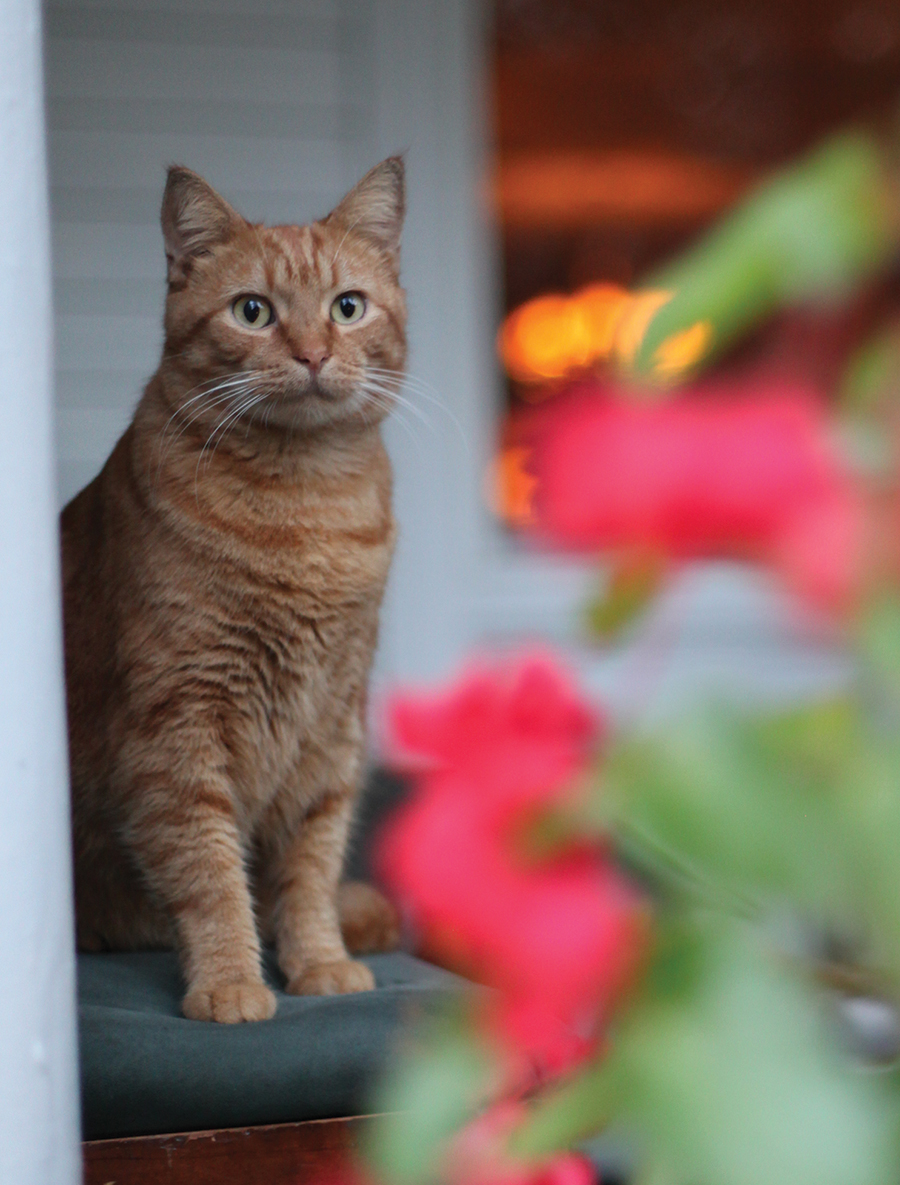
Marmaduke was unfriendly and reclusive when he first arrived in 2009. “We advised guests not to try petting him,” recalls Andy Hofmann, a member of the Barrett family that has owned the Pine Crest for decades. But over time, the tabby adapted to his role as the Pine Crest’s unofficial ambassador, warming up to patrons and employees alike. “Now, when our regulars arrive for cocktails around 4:30 p.m.,” says Hofmann, “he jumps on their laps.”

Marmaduke’s long tenure has not been without incident. A few years ago, he turned up missing and was feared fur-napped. To the relief of everyone, Marmaduke was returned the following day by a sheepish (and apparently desperately nearsighted) woman who had mistaken the miffed tabby for her own lost kitty.

Today when guests step onto the Pine Crest porch, they often check Marmaduke’s shelter for a bit of reassurance that the venerable and exceedingly well-fed feline still prowls the premises. Like the Putter Boy statue, Marmaduke and the orange tabbies that preceded him — and those who, in the inexorable march of time, are likely to follow — are permanent and beloved Pinehurst sentinels.

There is another Hall-worthy four-legged tourist attraction currently gracing the streets (as opposed to the track) of Pinehurst. Shiloh, standing 16 hands and weighing in at 1,400 pounds, is the friendly, carrot-chomping horse that for 12 years has pulled carriage loads of enthralled visitors through the village’s historic district. Driver Frank Riggs, who operates Carriage Tours of Pinehurst Village Inc., swears the 18-year-old is the ideal carriage horse. “Traffic doesn’t bother Shiloh,” says Riggs. “About the only thing that can startle her are skateboarders whizzing by from behind if she doesn’t hear them coming.”

Riggs obtained Shiloh from Holmes County, Ohio, where she previously pulled an Amish farmer’s buggy. She is the offspring of a Percheron, a large draft horse breed, and a Morgan, a smaller pleasure horse. According to Riggs, that type of crossbreeding is common practice for the Amish.
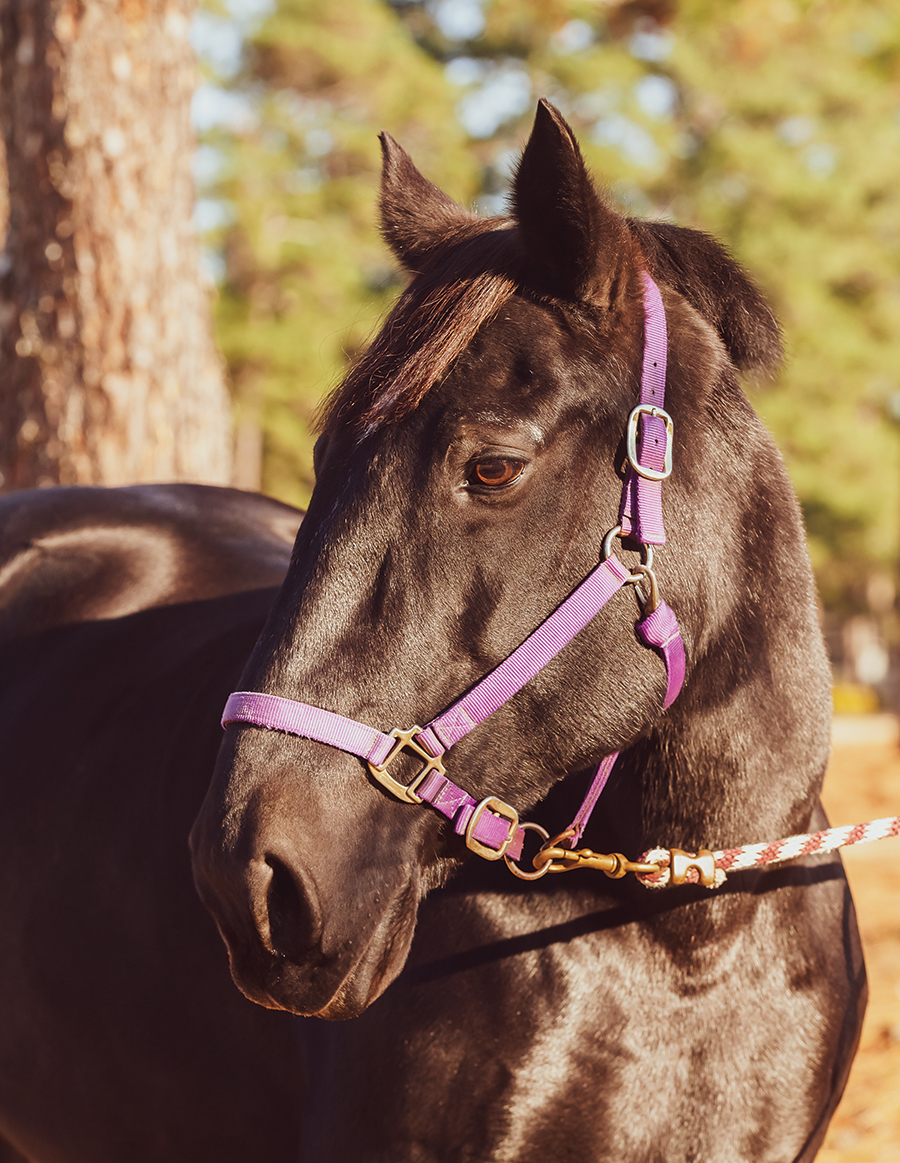
In 40 years of commercial carriage driving, Riggs has worked with a number of animals in harness. While Shiloh rates as his top horse, he also has fond memories of Moonshine, a mule he drove a few years back. “Moonshine wasn’t at all stubborn. He had lots of personality,” recalls Riggs. “When we’d pass The Village Chapel as church was letting out, he thought everybody was rushing out to see him.”

Shiloh and Moonshine aren’t the only working stiffs to have generated profits for their owners. Farm animals have been a staple of the Sandhills’ economy since the area’s settlement a century ago, but the unprecedented milk production of an Ayrshire cow known as Tootsie Mitchell created a truly exceptional income stream, as it were, for one Moore County farmer.

Tootsie’s owner was Leonard Tufts, the Pinehurst kingpin who essentially operated the village and resort as his own private enterprise. Though the innumerable details of managing Pinehurst required his constant attention, Tufts always found time to devote to his favorite pastime — Ayrshire cattle. Some people collect stamps, others collect cows. As president and director of the Ayrshire Breeders’ Association, he immersed himself in the study of cattle breeding genetics. The crowning achievement of Tufts’ applied research was Tootsie, born in 1909. In her 12th year of milking, she produced a prodigious volume of 14,729 pounds of milk and 596.62 pounds of butterfat, much of which was consumed by Carolina Hotel guests. Moreover, Tootsie produced six female calves whose output approached their mother’s remarkable production.
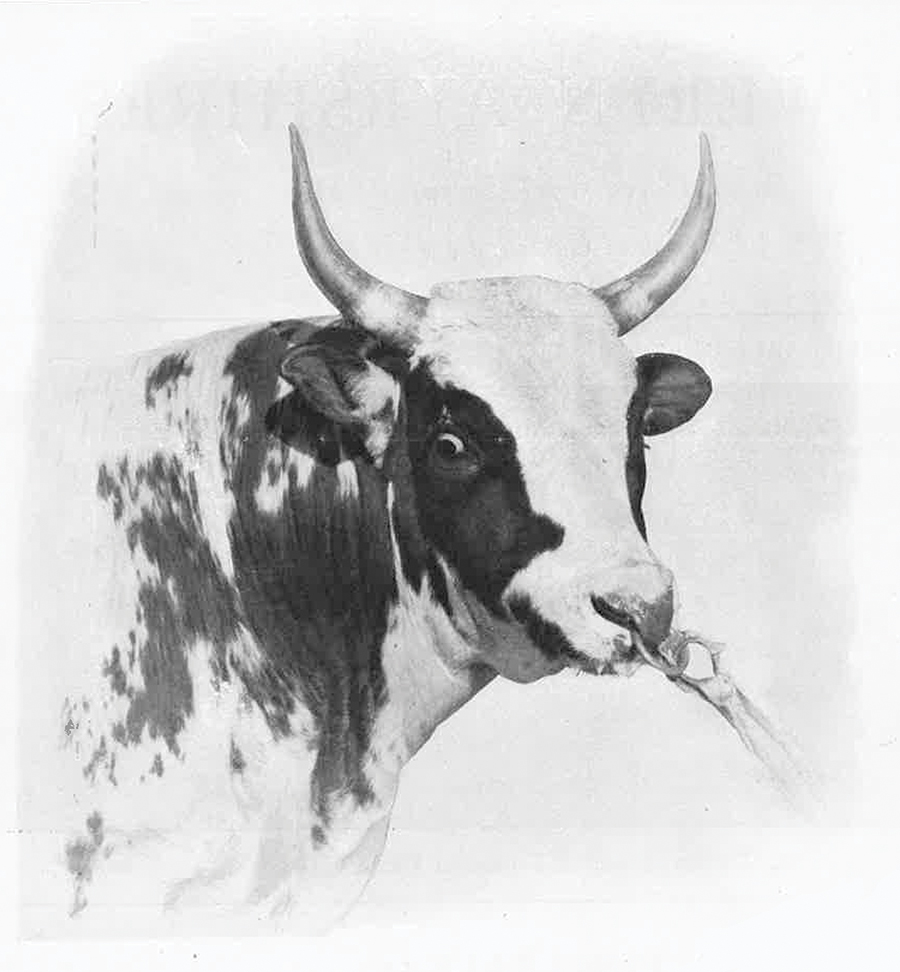
At a 1922 bankers’ conference held at The Carolina, Tufts touted Tootsie’s unparalleled liquefied achievements. Present on the hotel’s grounds was the great cow herself along with a huge can 6 feet in diameter and 17 feet tall, the volume of which matched Tootsie’s total milk production the previous year. An article in the Pinehurst Outlook predicted, “What this remarkable cow has accomplished will be talked about in every county in the state when the bankers go home.”

Animals have caused a commotion in Pinehurst since the earliest days when the depredations of razorback hogs necessitated the erection of a wire fence around the periphery of the nascent town. Then, in 1905, after concluding that showcasing wild animals would provide a novel attraction for resort guests’ children, Leonard Tufts erected a small zoo on land across Palmetto Road from the present Village Chapel. Squirrels, owls, raccoons, opossums, Chinese pheasants, Belgian hares, peacocks and deer were exhibited in confined spaces in the “Deer Park.” The zoo would remain on those grounds until 1949. The final animal to exit was the ancient buck Bluebeard — a resident of Deer Park for so long no one could remember his arrival. Bluebeard surely belongs in the Hall based on his longevity, his association with the long-gone zoo, and the fact that he could well be the only individual deer not associated with Bambi that has a name.

There is another animal that enjoyed a brief sojourn at the Pinehurst Zoo who deserves at least a bronze plaque in the Hall’s hall. During World War II, a black bear cub in Moore County became a national sensation. Gifted by Canadian paratroopers to their brethren in the U.S. Army, Joey found his way to Camp Mackall in 1943 as the beloved mascot of the 501st Parachute Infantry Regiment. The nearly-tame (hey, what could go wrong?) 200-pound bear reveled in his role, playfully wrestling with the paratroopers. Like many in the regiment, he developed a taste for beer. Aside from imbibing, Joey’s favorite activity involved protracted bathing. The Pinehurst Outlook reported that Joey relished sitting in a tub under the shower. He would object “to having his baths interrupted and growled when soldiers removed him from his ablution.”

In the fall of 1943, Joey’s regiment shipped out from Camp Mackall, forcing Joey to take a little personal time. The AWOL bear emerged from winter hibernation beneath the barracks the following March, and the newly encamped 515th regiment adopted him. His reappearance captured nationwide media attention.

Then, in July 1944, orders came directing the 515th to depart for Europe. Though Joey seemed temperamentally suited to invade France, the regiment was not permitted to bring him along and no one remaining at Camp Mackall cared to assume his custody. On the eve of their farewell, several soldiers from the 515th gathered at a Southern Pines nightspot to ponder the seemingly unsolvable dilemma of finding Joey a new home. According to longtime area resident Tony McKenzie, the soldiers, perhaps by force of numbers, persuaded several Pinehurst boys on the premises, including 17-year-old Peter Tufts (Richard’s son) and McKenzie’s brother Jack, to take Joey off their hands. Alcohol may have been involved in the transaction. Tony McKenzie recalls that the resourceful young Tufts “worked late into the night making sure the bear was safe and secure,” at the zoo at Deer Park. The nationally known “paratrooper bear” had the additional benefit of boosting zoo attendance, bringing in more visitors than ever before.

Peter Tufts and his cohorts accompanied Joey on daily unleashed romps through the park. But after a number of Pinehurst mothers complained that an untethered bear posed an unacceptable risk to the safety of neighborhood children, Joey was banished from the zoo and taken to a farm in Eastwood, where he lived until he journeyed to that big hot tub in the sky.
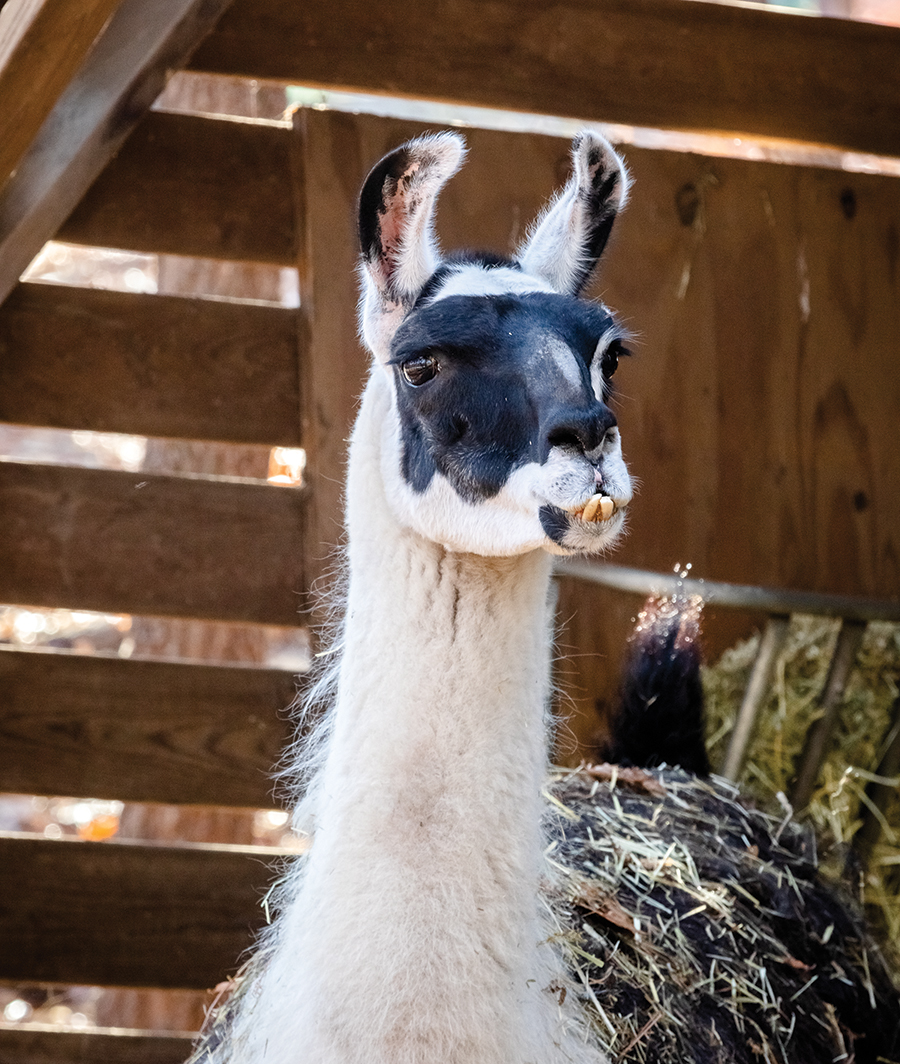
While Joey experienced his 15 minutes of fame, Talamore Golf Resort’s llama caddies seem to have had more legs. They’ve been making news in the golf world since the course’s opening in 1991. After learning that donkeys had been successfully employed as caddies in South America, Talamore’s owner decided to try another pack animal — the llama — in the same capacity. Stunningly, or maybe not, no golf course had used llama caddies before, and Talamore’s promotional literature hyped that novelty in its marketing. Two llamas acquired from Vermont, Billy and Dollie Llama, were trained to carry double bags over the hilly Rees Jones-designed layout. Accompanied by their handler, the llamas effortlessly, and mostly quietly, marched up Talamore’s fairways, their camel-like hooves doing no damage to the turf. Though aloof and silent when asked to read putts, Billy and Dollie never squawked about low tips, satisfying the time-honored three cardinal rules of caddying: “show up, keep up, and shut up.” Billy and Dollie Llama, golf pioneers, have rama llama ding-donged their way into the Hall of Fame.

Through no fault of their own, the llama caddies proved a double-edged sword for Talamore. With fascinated golfers frequently stopping to photograph the animals, play slowed considerably. As a result, Talamore stopped using llama caddies a decade ago but, should there ever be a sudden llama emergency, the resort still houses two of them in a pen adjacent to the 14th hole. The long-necked animals continue to be prominently displayed on the logo of Talamore hats, shirts and other paraphernalia. The resort’s “Llama Pen Bar & Grill” serves hungry and thirsty golfers at the clubhouse.

The current general manager of Mid-South Club-Talamore Golf Resort, Matt Hausser, says management is weighing a possible return of the woolly caddies. In any event, they continue to be a source of wonderment. Hausser recalls the time a few years ago when “one of our workers came up to me and asked, ‘Just how many llamas is it we have right now?’ I answered, ‘Three.’ He responded, ‘Well, believe it or not, there’s four in the pen.’ Unbeknown to us, a female llama had delivered a baby.”

In addition to Newport Dream and Shiloh, many area horses have distinguished themselves in jumping, cross-country, dressage and three-day event competitions. John Zopatti, who rides and trains horses at Gavilan Farm in Hoffman, is internationally recognized as a top dressage competitor, trainer, and coach. A United States Dressage Federation gold medalist and winner of many championships, Zopatti has ridden and trained a number of outstanding horses. He reserves a soft spot for a talented Andalusian gelding that was falling far short of his potential before Zopatti agreed to train him in February, 2015. At that time, Uwannabee WH (nicknamed “Slim”) was a nervous and tense animal — unfortunate qualities for a horse competing in the meticulously precise discipline of dressage. Zopatti brought Slim to Hoffman for the summer, and under his tutelage, the horse’s temperament dramatically improved.

“Slim began taking good, confident rides in training and then reproducing them at the shows,” says Zopatti. With Zopatti aboard, the half-Arabian soon began regularly winning dressage competitions, ultimately taking home two national titles at shows held in Raleigh in 2015.
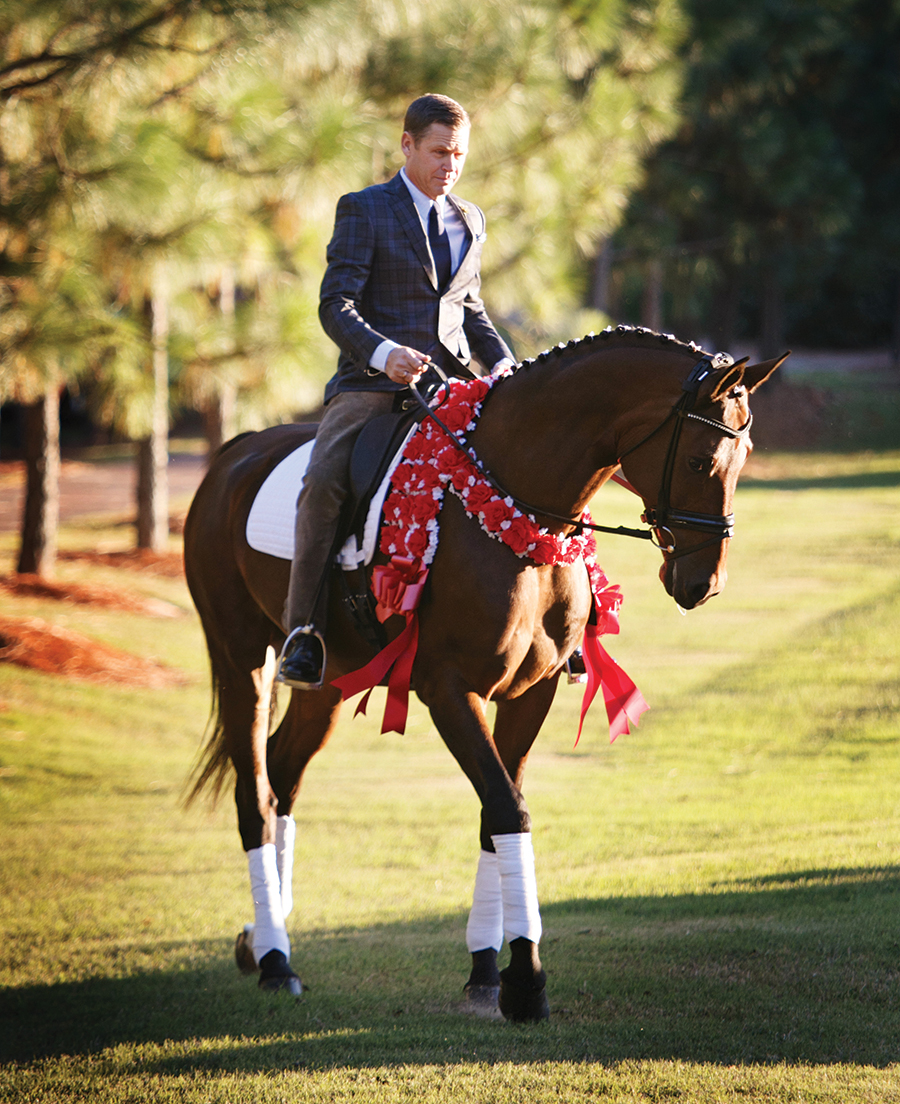
Gavilan Farm’s owner, Will Faudree, is himself an internationally acclaimed four-star event rider. Antigua (nicknamed “Brad”) is the Australian Thoroughbred gelding Faudree rode to the Team Gold in event riding at the Pan American Games. He acknowledges that riding Brad helped “kick-start my competitive career” and marvels that in eight years of competition, “at the highest levels of the sport — including events at Rolex, Badminton, and Burghley — Brad never had a cross-country jump penalty. Now that’s one in a million!” At the venerable age of 30, Brad is enjoying his leisurely retirement at Gavilan Farm.

Foxhunting is another Sandhills activity where a good mount is a must. Brothers Jack and James Boyd founded the Southern Pines-based Moore County Hounds (MCH) in 1914, and locals have been riding to the hounds over the vast acreage of the Walthour-Moss Foundation and the Sandhills Game Lands ever since. Boasting over 20 years of experience, Lincoln Sadler, huntsman of MCH, has ridden and observed his fair share of foxhunting horses. A retired state wildlife biologist, Sadler nominated the spirited and athletic Thoroughbred he personally rode from 2011 to 2018, Rusty Trawler. Possessing the ability to effortlessly clear the highest obstacles Rusty “could jump and hang in the air like Michael Jordan,” says Sadler.

When it came to the organization’s famed pack of Penn-Marydel hounds (a strain emanating from Pennsylvania, Maryland and Delaware’s foxhunting areas), Sadler steadfastly refused to select an MVP, since the hounds are bred and trained not to stand out individually but to blend in. The Shangri-Las’ 1960s hit aside, there is no leader of the pack. “For instance,” points out Sadler, “you don’t want a hound that either outruns or does not keep up with the others.” If necessary, MCH may send a recalcitrant hound to another foxhunting pack where the animal is more likely to fit — Cool Hand Luke for hounds. The huntsman considers what he calls “biddability” (obedience) the most critical attribute for a foxhound. Greeting a stranger with a cacophony of yelps, a single command from Sadler can, like a choir director, silence the deafening chorus in a heartbeat. Just as the Rock ‘n Roll Hall of Fame routinely chooses supergroups in addition to individual artists, so too should the Sandhills — the Moore County Hounds are in!

Dorothy Starling, the historian for Weymouth Center for the Arts and Humanities, did happen to mention that MCH’s co-founder and first master of the hunt actually expressed his choice of a favorite in writing. James Boyd, a noted author of historical novels and poetry, penned an ode in remembrance of his departed foxhound Sorrowful and delivered it to family members gathered at Weymouth on Christmas night, 1938.

Sorrowful was a ponderous dog indeed,

But nevertheless, she was the best of her breed.

The thing we realized the most was,

That whether in Heaven or whether in Hell,

There never was or will be

A dog that could hunt so well.

With apologies to the great Sorrowful and all the assembled hounds, the all-time top canine performer was the astounding Dave, a black, tan and white English setter owned by the sharpshooting husband and wife duo of Frank Butler and Annie Oakley. In 1915, Leonard Tufts hired the 55-year-old Oakley along with Butler to work at the Pinehurst Gun Club, where they taught resort guests the fundamentals of skeet and trapshooting. Female guests in particular flocked to the club seeking Oakley’s instruction. In 1916 alone, over 1,800 women visited the range. The couple would remain Pinehurst mainstays until 1922 and so would Dave, a dog with unforgettably soulful eyes that Butler had adopted in Maryland.

Oakley and Butler took part in numerous shooting exhibitions, wowing all onlookers with their rapid-fire trick shooting. A dazzling performer her entire life, Oakley was still able to smash 100 consecutive trapshooting targets at age 62. Though one suspects there would be an outcry of condemnation today, she began using Dave — a hunting dog unaffected by the sound of gunfire — in her exhibitions. Soon, she was shooting apples off the pooch’s unwavering head. If it makes card-carrying members of the ASPCA feel any better, it should be noted that Oakley used Butler’s noggin for the same purpose.

The Pinehurst Outlook’s account of a February 1917 exhibition at the Gun Club expressed amazement at what was actually a routine Oakley performance. Before a crowd of 800, she “started on coins flipped into the air — she broke marbles on the fly, shot the cigarette out of Butler’s hand, and a hole through the apple on Dave’s head.” In fact, Dave may have been a bit of a ham. Following the shot, he “threw what was left of the apple into the air, caught it in his mouth and danced about in ecstasy to exhibit the puncture.”

While Annie Oakley never grazed a hair on the obedient setter’s coat, Dave still met with a violent end, hit by a car in Leesburg, Florida, in February 1923. A heartbroken Butler dealt with the loss by authoring a book about his beloved dog, titled, The Life of Dave as Told by Himself.
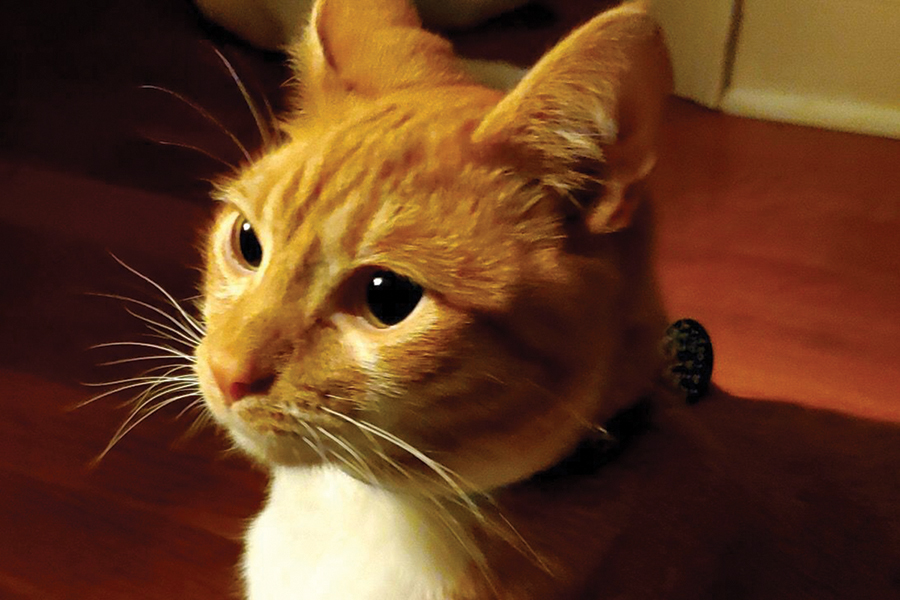
Shakespeare wrote, “Some are born great, some achieve greatness, and some have greatness thrust upon them.” An orange Carthage cat that won a national competition this summer surely falls into the final category. The feline, Jean-Clawed Van Damme, loosely named after the kickboxing actor, was the winner of Nationwide Insurance Company’s “Wackiest Pet Names” contest. Nationwide picked the winner from its database of 780,000 insured pets. In tribute to his overnight celebrity, Jean-Clawed is the final, and admittedly wackiest, Hall of Fame selection.

So, there you have it: five horses, a pair of llamas, two cats, a mule, a cow, a deer, a bear, two dogs and the Moore County Hounds — the inaugural class of the Sandhills Animals Hall of Fame. Of course, there are undoubtedly other worthy candidates. Who, by way of example, could ever forget Pee-wee, Pinehurst’s trained quail? Relax, Pee-wee, don’t get your head plume in a twist. There’s always next year.  PS

Pinehurst resident Bill Case is PineStraw’s history man. He can be reached at Bill.Case@thompsonhine.com.

A Leap of Faith

Or, how to buy a white elephant, inside unseen

By Deborah Salomon     Photographs by John Koob Gessner

It takes a village to support a castle. But castles are so . . . yesteryear. Most have become tourist attractions or TV locations. Duncraig Manor and Gardens isn’t exactly Downton Abbey, although rather grand for Southern Pines village, circa 1920s, when moneyed Northerners flocked to outdo each other residentially in the newly chic winter enclave.

A pair of these, Quaker Oats heiress Mrs. J.H. Andrews and her daughter Helen Lohman, hired Alfred Yeomans, the nephew of James Boyd, who was to architectural/landscape design what Chanel and Patou were to couture. This would be a huge jewel in Yeomans’ crown.

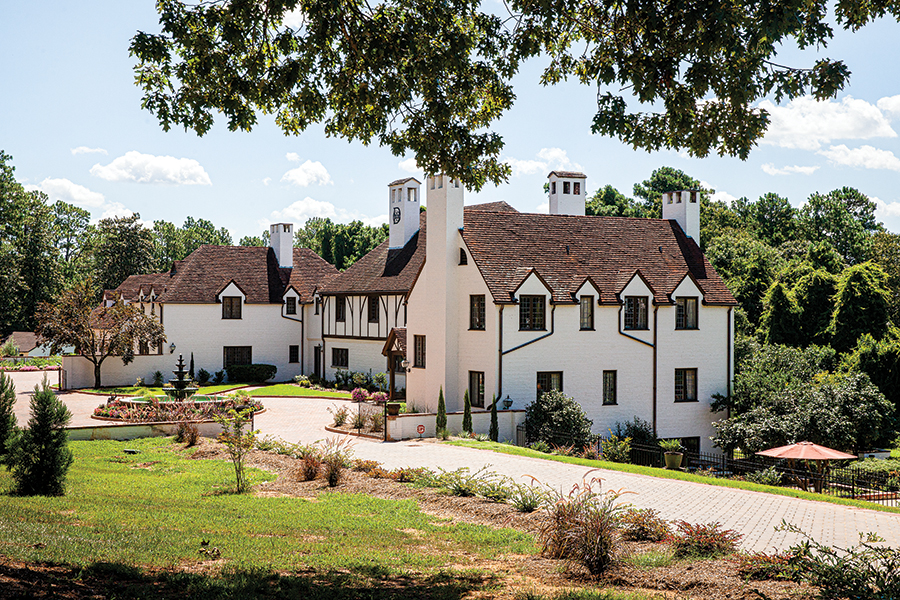
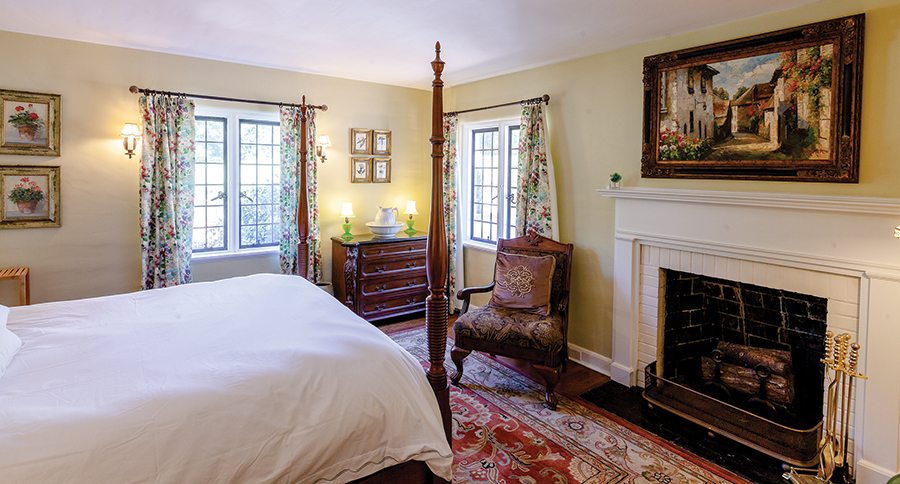
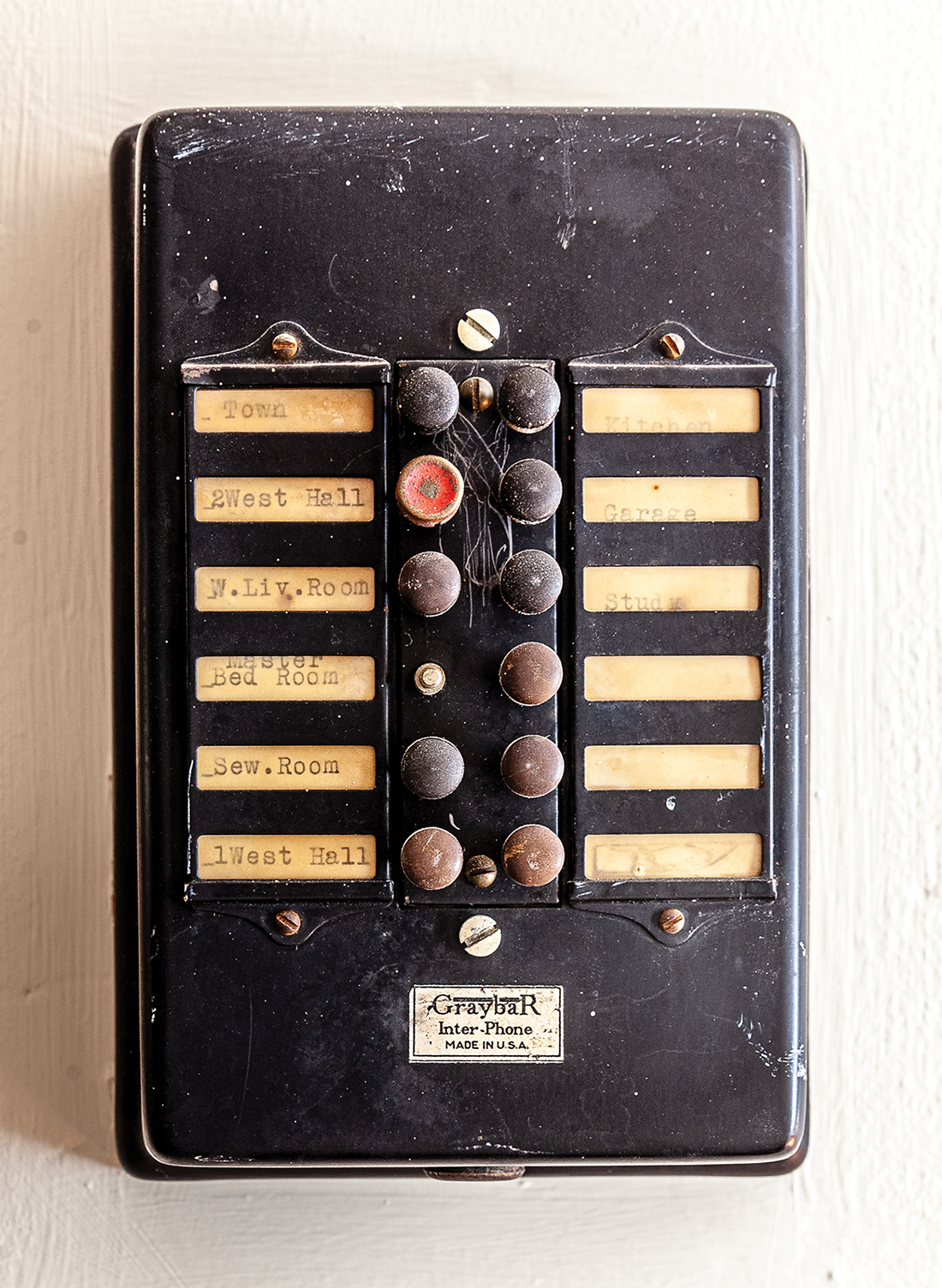
Except the homestead differed from the Georgian, Federalist, Victorian, New England saltbox, Arts and Crafts and other architectural styles dominating Weymouth. Later named Duncraig by subsequent owner Dr. George Matheson, who had ties to the Scottish Duncraig Castle built in 1866, this was more lodge than castle, executed with a whiff of Tudor, suitable for a newly minted English lord with eight children wanting sprawling summer digs in hunt country. Duncraig has nine bedrooms, 10 bathrooms, a servants’ wing, a quasi-commercial kitchen, finished basement, spa, a garden tea house, groundskeeper’s apartment over the garage, even a nook in the dining room equipped for serving a buffet.

Total: 12,680 square feet . . . and counting.

At completion in 1930, it’s safe to assume Duncraig made a big splash on the bend of Connecticut Avenue.

These days, only a business could justify such space.

The first business was a group home for emotionally disturbed children, operated by Constance Baker. That use did not please neighbors; the home closed in the 1990s. The property, a maintenance money pit, deteriorated as it passed hands.

Caroline and Donald Naysmith are in the business of restoring threadbare mansions as B&B/event venues. Their previous projects — now on the Register of Historic Places — took them to Colorado, Missouri, New York state and Charlotte. Their children operate several.

The Naysmiths have seven children and 30 grandchildren (including three great-grandchildren), so Duncraig works well on holidays.

But nobody calls it rustic or even family style. Beginning with an Italianate fountain installed by a son-in-law in the walled courtyard, continuing with heavy formal furnishings upholstered in dark brocades on the main floor with lighter, brighter hues upstairs, this B&B suits ghosts seeking retro opulence. Ghosts who expect a lily pond, swimming pool, kennels for the hounds, and formal gardens spreading over nearly 5 acres.

On first approach, Duncraig appears the stretch limo of Southern Pines showplaces, somewhat reminiscent of Loblolly, also faintly Tudor with stucco exterior designed for a Boyd relative by Amar Embury II in 1918.

Might Mrs. Andrews and her daughter have been in competitive mode a decade later?

The Naysmiths discovered Duncraig while in town for a musical event; Donald sings gospel and classical. For Caroline, it was love at first sight. She had Don stop the car so she could ring the doorbell, see what was what.

She never got inside. Her reaction, nevertheless: “This house needed me.”

They purchased the property in 2017.

“We are people of faith,” Don said. “We made it a matter of prayer.” Also a matter of money, since the 18-month restoration cost in the low seven figures.

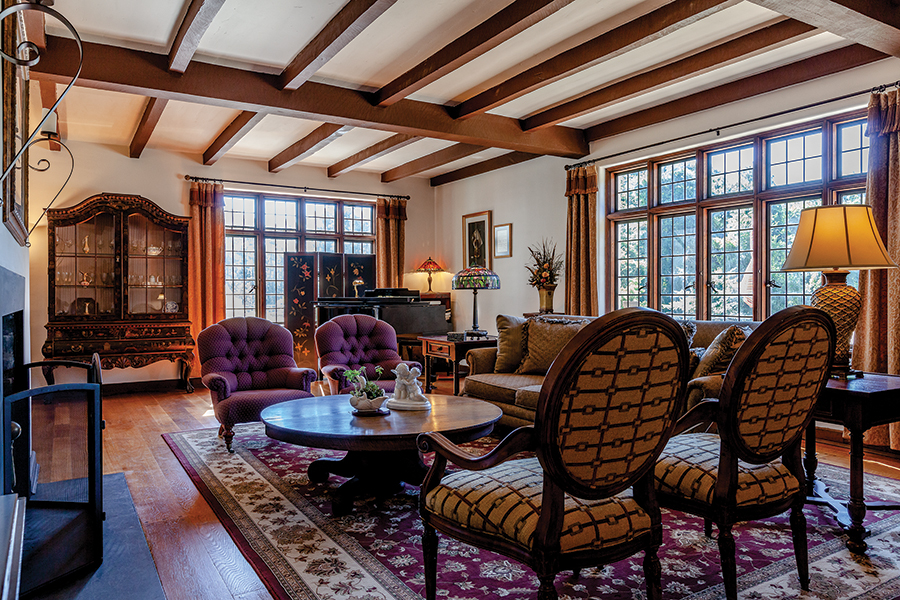
Where to start a tour? The sunken “salon,” aptly named since a room comfortably housing a baby grand piano and an even longer harpsichord exceeds either living room or parlor. Its walls, like those throughout the house, are textured plaster with unusual rounded corners. Some were wallpapered in brocade which, when removed, revealed mold. The gleaming pegged floors are mostly stained. Dark, heavy beams bisect the ceiling. Here, around a massive coffee table, guests gather evenings for wine and hors d’oeuvres before heading out to dinner.

The Naysmiths found furnishings and paintings hither and yon, mostly from dealers in North and South Carolina. For these forays, they attach a trailer to the car and bring it back loaded. No auctions, which are too time-consuming, Caroline says. “We love period antiques of the ’20s and ’30s, when the house was built.” In the salon, this includes throne-sized armchairs in royal purple, an inlaid Asian highboy, both authentic and reproduction Tiffany lamps. Caroline made the drapes covering paned casement windows here and throughout “while I was waiting for the rest to be done.”

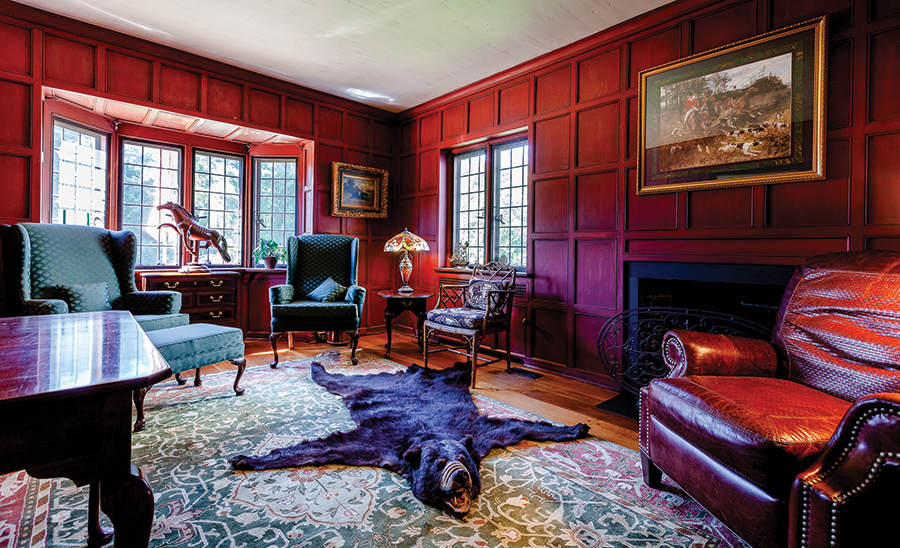
Adjoining the salon, a game room/library with burgundy walls offers not only chess and books, but a snarling bear rug.

Watch where you step.

Don relates the story of the dining room table, which looks folksy considering the ornate chairs. He found a fallen cherry tree in the Adirondacks, had the trunk milled into 10-foot lengths and kiln dried with the planks joined into an 11-foot table top set on carved pedestals.

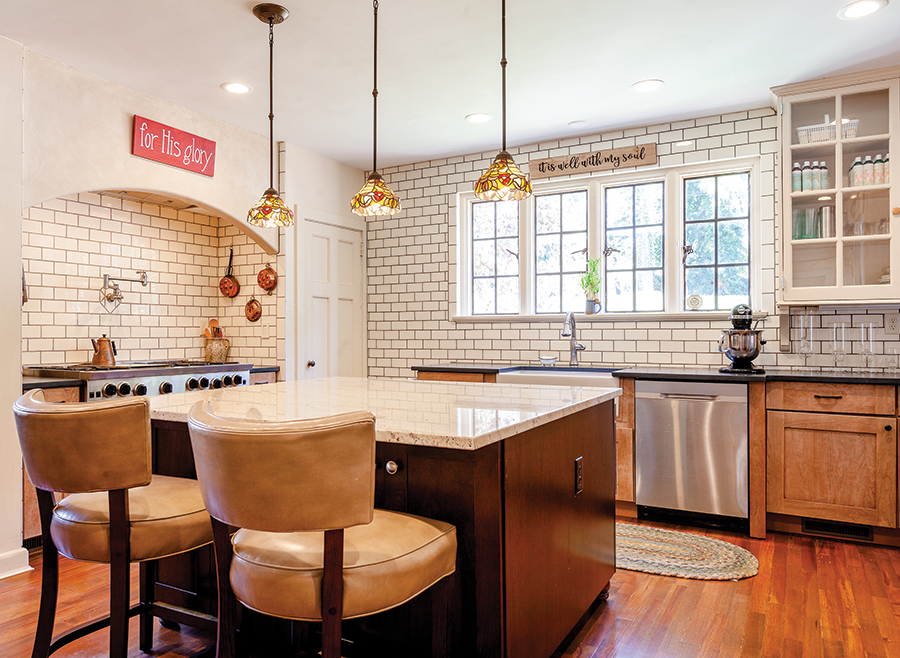
A small (but obligatory for the era) butler’s pantry leads into a mammoth kitchen more utilitarian than magazine, with ceramic tile backsplashes, a square island and a Blue Star gas range tucked into a niche — perfect equipment for a wedding caterer but a bit much for the Naysmiths, who as concierges are required by law to live on the premises.

Main floor rooms are joined by hallways; in one hangs a collection of cow bells. Other collections include Royal Doulton historic character mugs and antique chamber pots.

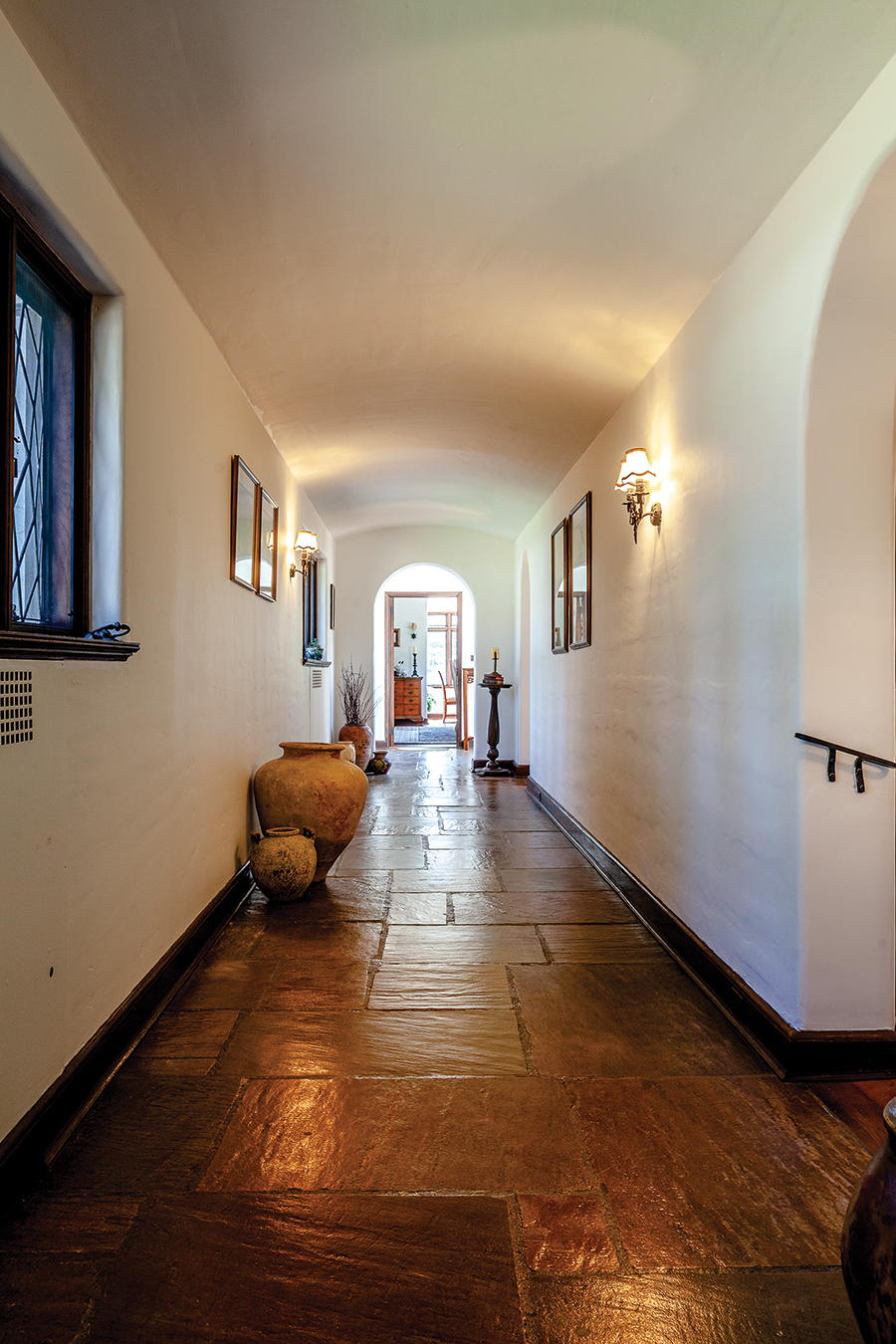
The front hallway running the length of the house must be longer than a bowling lane.

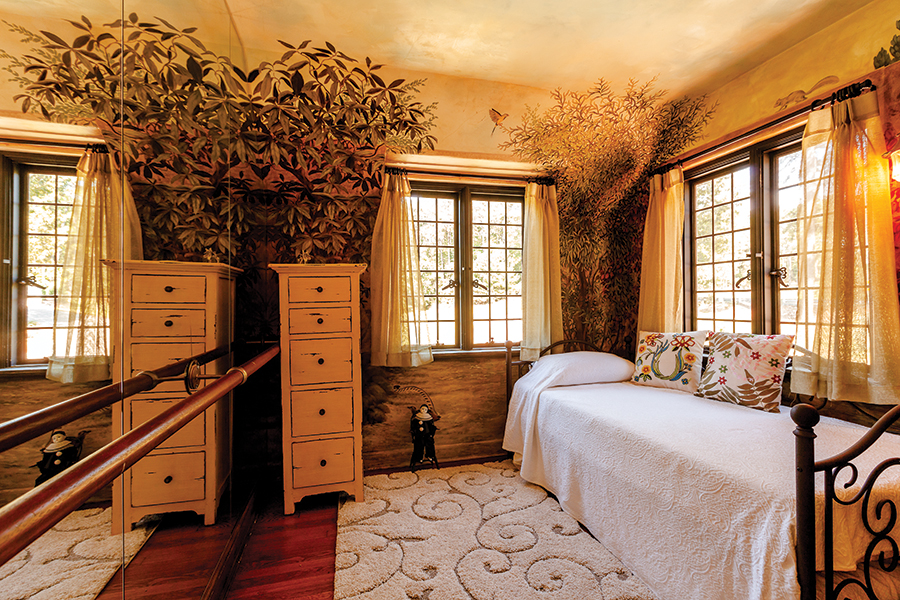
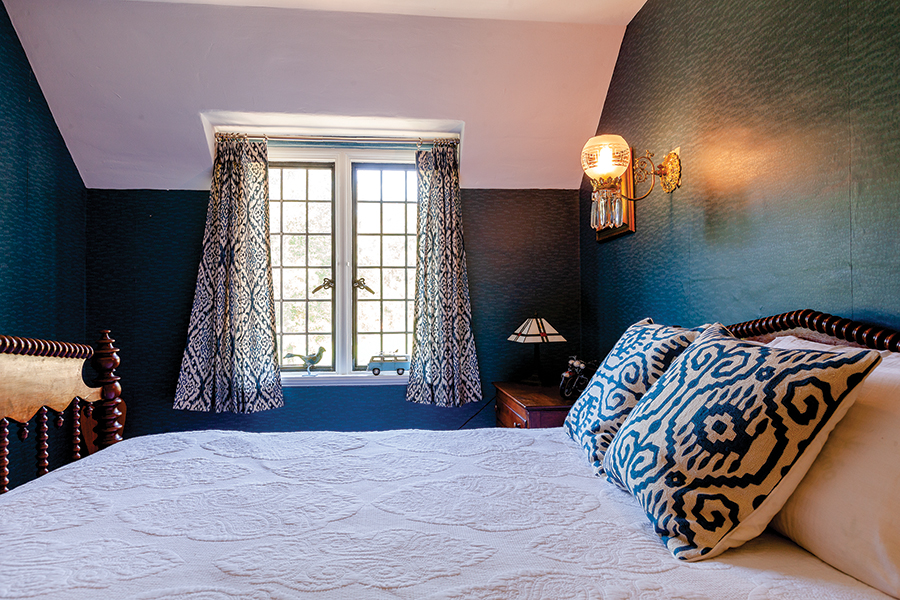
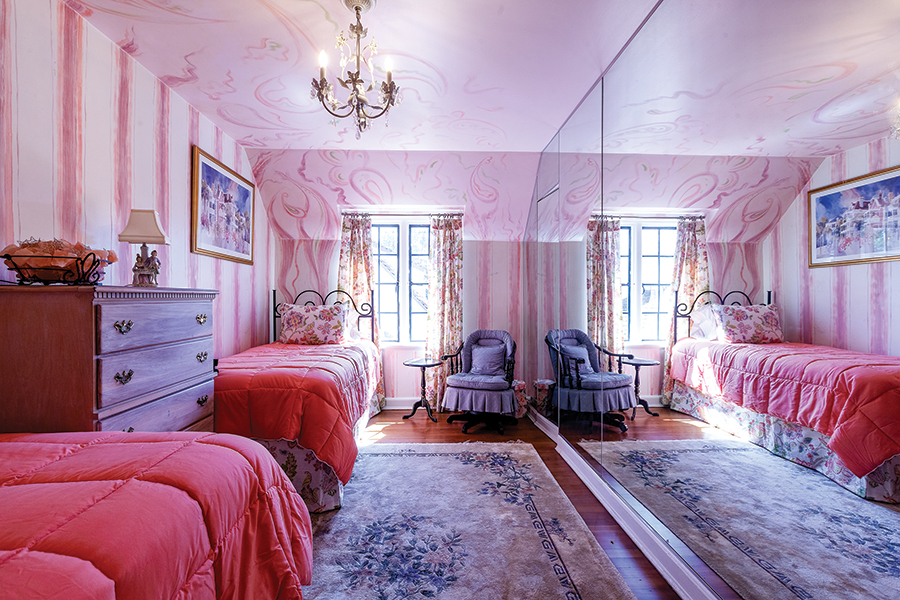
Each of the guest rooms is named and furnished after places the Naysmiths have visited, including Nagamo, Vienna, Jamaica, Charleston, Budapest. Perhaps the most charming are smaller bedchambers in the servants’ wing, each with a tiny vanity sink.

Bathrooms have been modernized only when necessary, otherwise leaving tiles and fixtures intact, adding to the authenticity. Some have extra-long soaking tubs.

The terraces and gardens, beginning with the front courtyard and, in the rear, stretching on all sides as far as the eye can see, only enhance the estate atmosphere.

However, from a business angle this home-away-from-home for guests trading up isn’t quite what the Naysmiths planned. The B&B and Airbnb worked out, but town regulations limit them to serving only breakfast, not luncheon meetings or dinners. Duncraig is allowed to host only 20 events per year.

Now that the restoration is complete, guests are treated to a glimpse of life between the Gilded Age of the late 1800s and the Great Depression beginning in 1929 — a time when the wealthy and arts-minded mingled over golf in Pinehurst and horses in Southern Pines. A time when, historians suggest, fine tradesmen were lured to North Carolina to build Biltmore House in Asheville, and stayed on to adorn mansions throughout the state.

However, according to Donald Naysmith’s beliefs, things are just things and a house, even Duncraig Manor, is a temporary dwelling:

“It’s what is beyond that matters,” he states with conviction. “We have no permanent home down here. That is our guiding principle.”  PS

Out of the Blue

Shopping Gets the Boot

One size definitely doesn’t fit all

By Deborah Salomon

I needed some new footwear for a trip to Montreal, to visit my grandsons. I can’t say a “new pair of shoes” because shoes, as long we knew them, have disappeared from the racks. Now, a woman must choose from toe sandals, wedgies, clogs, athletic shoes, shooties, booties and boots.

Shooties, in case you’ve gone barefoot for the past couple of years, are mostly shoes, almost boots. Booties are definitely boots, but short. Very short.

I decided on booties of a material and color that would be OK with jeans, khakis and, if necessary, stretchy black yoga pants.

So I went online.

Zappos was my first stop, where I discovered that leather — even shortened, on sale with free shipping and returns — costs way too much. By then, a cookie was in the wind, drowning my browser in every color, material, size and permutation. I saw snakeskin booties, embroidered denim booties, patent “leather” booties, open-toe booties, studded booties in colors from Oreo brown to Wizard of Dorothy red.

In hopes of escaping the deluge I found something that looked reasonable on Amazon and ordered them, not knowing I would receive minute-by-minute email notifications of their progress.

I felt like Mission Control tracking Apollo 11 to the moon.

While waiting, I shopped Belk. Even if it had been the right day and I presented the right coupon and the booties brand hadn’t been excluded, the price was impossible.

My Amazon booties arrived on time. They were awful, pure plastic, stiff as a board. I will never again order footwear online, which is what I said last time.

Back online, I pulled up my order to investigate returns. Miracle of miracles, all I had to do was print out a label and take the box to Kohl’s, where it was packed and shipped back free. In addition, the lady who accepted the return handed me a Kohl’s  25 percent off coupon.

Smart move. Kohl’s (and other retailers) provides this service to get people into the store, since the coupon wasn’t good for online orders.

Fair enough. I’ll look at their booties.

I found a reasonable little number in taupe suede — taupe being the color of granny’s support stockings and suede, a less-plastic version of manmade. They were on sale, like everything else at Kohl’s. But alas, no taupe in my size. Only green and black.

Who wears green booties? I tried them on for size. Definitely Peter Pan.

Not to worry. The saleslady directed me to a kiosk where, 10 prompts later (with her assistance), my booties were ordered and would be delivered free. However, if I chose to order them in the comfort of my home, delivery charges apply.

The booties arrived as promised. Ten minutes after the handover, I received an email saying they had been delivered.

Honestly, I don’t know whether to laugh or cry. Instead, I remember how new shoes used to be such an event. The “fitter,” usually a man wearing shirt and tie but no jacket, measured feet on an instrument resembling a wide slide rule. Then he brought out several sizes, perhaps a similar style to keep the sale alive in case the first choice disappointed. Then he pushed shoe polish, or a suede brush, or extra shoelaces.

“Perhaps madam would be interested in a matching handbag?”

Why am I telling you this? Nobody cares about my footwear.

Because ’tis the holiday shopping season, hardly recognizable. I remember movies like The Godfather with scenes of shoppers strolling down Fifth Avenue, laden with packages. I don’t miss standing in line at the post office. I appreciate saving money, time and energy. But something is missing: the thrill of the chase, of finding and touching the cashmere sweater in your mate’s favorite color. Of appreciating the sparkle in a teddy bear’s eye. Of collapsing at a lunch counter for an egg salad sandwich and fountain Coke. This was part of the holiday experience, now devolved into camping out at the store with obscenely huge TVs and coveted video game loss leaders. Besides, you never actually see the gift ordered online and sent directly to a sister, a grandparent. Will it be nice, or awful, like the cheapo booties I returned?

I know, I know. Who has the patience? And where are the one-stop department stores that gift-wrapped free . . . and delivered?

To be fair, the internet stocks every color in every size. Cyber Monday has turned into an orgy of running the list, getting it over in a sitting or two. Gift cards remove the human element completely.

But something is lost in transit, some connection between giver and recipient, a gift itself.

Thankfully, our little towns have lovely options — maybe not in every size and color, but selected, in person, by the giver — no bar code, no back order, no 28-digit tracking number.

No time? That’s what I can’t figure out. With so many time-saving devices at our fingertips . . . why not?  PS

Deborah Salomon is a staff writer for PineStraw and The Pilot. She may be reached at debsalomon@nc.rr.com.

Wine Country

Lambrusco Redux

Drink, eat and be merry

By Angela Sanchez

The wine Lambrusco might send shivers of dislike down the spine, recalling memories of the super-sweet, cheap styles produced in the 1970s and ’80s. Times have changed. These days, Lambrusco producers are making wines that are worthy of sommelier recommendations the country over. Several styles and affordable price ranges make this dark red and slightly effervescent wine the perfect choice for any holiday feast.

In the ’70s and ’80s, Lambrusco was one of the largest U.S. imports of wine in general, and Italian wine in particular. Super-sweet and cheap, it appealed to the American palate at the time — think Cherry Coke and Cheerwine, except with alcohol — and it was widely received as part of the country’s growing interest in wine. I remember my dad drinking it out of a magnum, 1.5 liters, and loving it as much as his Diet Coke. Right wine at the right time. Today our taste is evolving toward drier wines and, lucky for lambrusco, so is its production.

Lambrusco is both the name of the Italian wine and the grapes that go into it. There are 60 different varieties of the grape, but six are key to today’s production style: grasparossa, maestri, marani, montericco, salamino and sorbara. All of the varietals are high-yielding and vigorous, which was good for production in the ’80s, but today’s vintners have begun to control yields to produce higher quality grapes making higher quality wines. They are all slightly different in character but share the same characteristics of bright acidity and rich, berry fruit.

There are three distinct styles to help you decide what to buy to match your taste or your feast. Alcohol content for lambrusco ranges from around 8 percent to about 11.5 percent. The 8 percent will be on the sweeter side, while 11.5 will be drier. On the label, look for the word “secco” for a dry wine, “dolce” for a sweet wine and “amabile” for semi-dry. The majority of these wines will have a beautiful dark, ruby red color and a slight effervescence, but lower than a traditional sparkling wine like Champagne or prosecco.

Lambrusco is perfect for the holidays for several reasons. First, it’s versatile. With styles ranging from dry to sweet it can be used as an appetizer, throughout the meal, and at the end. The wine is produced in the Emilia Romagna region of Italy, known for its amazing cheese, Parmigiano Reggiano, charcuterie, Prosciutto di Parma, and balsamic vinegar from Modena. The rule I go by for perfect pairings is: If it grows together it goes together. For an easy, impressive holiday appetizer, start off with a beautiful cheese and charcuterie platter with cheese and olives, drizzled with balsamic vinegar. You can serve either a dry, semi-dry or sweet lambrusco with the appetizer. Add a hearty salami with fennel to the tray to balance out the flavors.

Second, lambrusco goes with turkey, spiral ham or game dishes. Dry or sweeter styles will work. Juicy — key word — juicy turkey and yummy glazed ham will sing with lambruscco. Try a Cheerwine or cherry cola glaze on the ham paired with a drier style of the wine and you’ll have your guests in awe. For dessert, a sweeter style of lambrusco with a chocolate Black Forest cake is my go-to this season.

Lastly we need a fun, festive wine this season. Lambrusco is a dark, rich red color, cherry and raspberry fruit driven, with a nice hint of bubbles. Sounds super festive to me. Try Medici Dolce for the taste of cherries jubilee in a glass, and Medici Solo for the greatest salami and parmigiana pairing any of your foodie friends have had lately. Whatever you choose, drink, eat and be merry.  PS

Angela Sanchez owns Southern Whey, a cheese-centric specialty food store in Southern Pines, with her husband, Chris Abbey. She was in the wine industry for 20 years and lucky enough to travel the world drinking wine and eating cheese.

Hometown

Treasures Under the Tree

The beginning of a beautiful friendship

By Bill Fields

There was an episode of The Waltons titled “The Best Christmas” in which mother Olivia is determined to have the merriest of holidays even without sipping a drop of the Baldwin sisters’ white lightning. She wanted her large brood all together for perhaps the last time, but her plans went awry because of a snowstorm, downed tree, car-in-a-pond and other misfortunes.

That show aired in 1976, but my best Christmas — still Santa-believing division — occurred seven years earlier.

As the turbulent 1960s came to a close, for me, a sports-loving 10-year-old, a door opened to what became my favorite sport and, to a larger degree, my life.

Up to that point I had batted around golf balls with a Kroydon putter and a Wilson 5-iron I talked my parents into buying on separate visits to the Sky City High Point. Those implements, though, didn’t make me a golfer like the ones I saw playing around town and on television or read about in the paper. In my mind, I needed a set of clubs for that to be so.

For my parents, those were tiring months leading up to Christmas 1969, because I brought up my desire for a set of golf clubs many times. A Mom and Dad with more Scrooge in them might have denied me, but they weren’t built that way.

Presents from Santa Claus weren’t wrapped in the Fields household, so when I came into the living room on Christmas morning and glimpsed something long and red on the floor with shiny things sticking out the top, I squealed with joy.

It was a Spalding “Tournament” starter set including a rectangular vinyl bag. The driver and 3-wood were made of “Persimmonite,” the Naugahyde of wooden clubs, and guarded by black covers. The irons were Nos. 3, 5, 7 and 9. There was a blade putter, which upon use and research I would discover was a cross between a club you’d find on a miniature-golf counter and Spalding’s venerable “Cash-In” model.

The clubs had Palmer’s signature on them — Johnny, not Arnold. I didn’t know who Johnny Palmer was, but his handwriting was neat, and since his name adorned a set that sold for about half of my dad’s weekly pay, he must be somebody special.

The grips were tacky rubber and the whole kit oozed opportunity. I removed each club out of the bag, took a grip — all fingers on the handle, having not discovered the overlapping style — and waggled above the carpet. Mom had a wide cautionary streak, but on this happy occasion I don’t think she warned me once about breaking a vase or marring the ceiling.

Frank Beard was the leading money winner on tour that year, but I don’t think his season was better than mine, thanks to the acquisition of my Spaldings.

Later on, I learned that John Cornelius Palmer Jr. was a fellow North Carolinian, born in 1918 in tiny Eldorado, the same birthplace as my grandfather Henderson. Johnny grew up in Badin and was one of the finest golfers to come out of the Old North State, winning seven times on the PGA Tour between 1946 and 1954. Twenty years before I found his name under our tree, Palmer finished second in the PGA Championship, tied for fourth at the Masters, and also was in the top-10 at the U.S. Open.

I used the Johnny Palmers for a couple of years, as my love for the game deepened, until graduating to a full set of used MacGregors purchased from Frank, a retiree I played with at Knollwood Fairways. The starter set was passed along to my father and subsequently to my brother-in-law Bob, an infrequent golfer.

The Spalding driver has been in my possession throughout adulthood. Only recently has the gang been back together, sans 3-wood, my sister digging the four irons out of a basement where her late husband had stored them, and shipping them from Oklahoma. I reclaimed the putter and bag when we cleaned out Mom’s house. I waggle them occasionally, the grips having slickened and hardened over time. The bag also holds my MacGregor woods, clubheads made of the real thing.

This fall I bought my first fresh sticks in about a decade. I was reminded there is nothing like a glossy new golf club, empty of errors and full of hope. But there is nothing like an old one either, especially when the nicks and scuffs are yours on a starter set that fulfilled its mission.  PS

Southern Pines native Bill Fields, who writes about golf and other things, moved north in 1986 but hasn’t lost his accent.

The Kitchen Garden

Brussels Sprouts

A superstar in the vegetable world

By Jan Leitschuh

They are a seasonal Christmas holiday staple, Brussels sprouts.

You’ll find them in markets now, fresh or frozen. And despite the fact the marble-sized veggie is “trending,” you either love ’em, or you hate ’em.

If you love ’em, ’nuff said. We shall rhapsodize later.

If you dislike them, there may be a good reason — but all is not lost. You may have gotten old, over-large or overcooked sprouts. It might simply be a matter of positive exposure.

This mini-cabbages-on-a-stalk vegetable was first mentioned in the 16th century. Seems they are native to — surprise! — chilly Belgium, especially the region near the country’s capital, Brussels. World War I spread their use across Europe. Now Brussels sprouts are cultivated in Europe and the United States, where almost all commercial Brussels sprouts are grown in California. 

According to a recent NPR report, their production has quadrupled in the last decade, and the 2,500 acres devoted to the sprouts in the past has expanded to five times that. 

Were Brussels sprouts forced upon you as a child? Overcooked, the sprouts can have a stronger smell, which could lead to aversion. And apparently, as babies, the only tastes we humans favor are mother’s milk and sweet things. Our tastes only evolve over time and exposure, say scientists.

And, by adulthood, many of us just haven’t cultivated a taste for bitter foods, according to nutrition experts, who bemoan that fact — because bitter foods, like Brussels sprouts, stimulate digestion and are some of the healthiest eats on the planet. (Many bitter foods may also be poisonous and bad for us, so perhaps this innate caution has been a good thing over the course of human history.) Newer varieties, says NPR, have less bitterness than in prior decades. 

Brussels sprouts belong to the same family as such uber-healthy, cancer-fighting veggies as broccoli, radishes, kale, bok choy, cabbage, arugula and cauliflower — all slightly bitter veggies due to their health-containing compounds. 

Health experts recommend enjoying at least 3/4 of a cup of some kind, or combo, of cruciferous veggies daily, or five cups a week.

Would knowing that Brussels sprouts have an extremely high nutritional value — indeed, they are an absolute superstar among cruciferous family superstars — change the willingness to try them again? After all, say geneticists, food is information. Food, they say, switches our genes on and off, for good or ill. And crucifers are big switchers toward the “good” side of the health scale.

This famous food family contains glucosinolates, important phytonutrients that have a variety of cancer-protective substances. All cruciferous vegetables contain glucosinolates and have great health benefits for this reason. 

Recent research has brought Brussels sprouts forward into the health spotlight. For total glucosinolate content, Brussels sprouts are now known to top the list of commonly eaten cruciferous vegetables. Their total glucosinolate content is greater than the amount found in mustard greens, turnip greens, cabbage, kale, cauliflower, or broccoli. A cup of Brussels sprouts offers over 243 percent of the day’s vitamin K requirements, and 129 percent of vitamin C, plus almost a quarter of our folate.

Nearly 100 studies in PubMed (the health research database at the National Library of Medicine in Washington, D.C.) focus on Brussels sprouts. Over half of those studies involve the health benefits of this cruciferous vegetable in relationship to cancer. And besides helping our bodies detox unhelpful substances, Brussels sprouts offer powerful antioxidant and anti-inflammatory benefits. Thus, they also help protect our hearts and blood vessels.

Food as medicine — the “hold your nose and eat it anyway” argument. Weak, right?

Now, rhapsody. Those that love ’em, anticipate the “fresh” season with pleasure. These tiny cabbages-on-a-stalk are mighty cute, besides being good for you. How you prepare them can make or break your dish, so go for delicious. 

The first tip is to use sprouts of similar size for even cooking. Smaller sprouts tend to be sweeter. Then, don’t overcook them. Overcooked sprouts will release that strong sulfur smell some find unpleasant. Their color should remain an intense green; olive-drab sprouts have been overcooked.

Roasting on a sheet pan is simple and can bring out the sweetness of sprouts. Rinse the sprouts, and if you want, carve an “X” on the base to help cook faster and more evenly — or cut each sprout into halves or quarters.

To roast, toss with olive oil and salt, spread out in a single layer and then pop in a 450-degree oven. How long to roast for? You should be able to pierce them with a fork, so no more than 20 to 25 minutes at this temp. The roasting helps caramelize the exterior, adding sweetness, while the insides remain tender. Dress with you favorite concoction: balsamic vinegar, a honey-mustard dressing, a chili-lime or lemon-herb sauce.

You can also pan-sear Brussels sprouts in oil or butter on the stovetop. This method gives an even and crisp outer coating if the halved sprouts are cooked cut-side down until browned.

Steam them for 5 to 7 minutes, and they can help lower cholesterol by binding together with bile acids in your gut. But don’t overcook, and dress with something tasty and perhaps slightly sweet to overcome the bitter factor, since you won’t be caramelizing with a steaming process.

If you want to freeze fresh Brussels sprouts, steam them first for between 3 to 5 minutes. They will keep in the freezer for up to one year.

Add in various favorites to make a creative dish of your choosing. One friend adds olives and artichoke hearts, dresses the concoction and sprinkles with sesame seeds.

Another friend uses Brussels sprouts as the base of her signature dish. She halves and blanches the sprouts first for about 6 minutes, for best texture. A natural cook, she then dries the blanched sprouts and sautés them and some onion in some bacon drippings, adding some garlic, red pepper flakes and cayenne for savory heat near the end. Then she tosses in some golden raisins, pistachios, crumbled bacon and thinly sliced apple at the end. To dress, she stirs in a little honey, Dijon mustard and shredded Parmesan cheese into the pan. 

“It’s even good cold,” she promises. She thinks dried cranberries might be a nice substitute for the golden raisins, and notes both the fruit and the honey counter any bitterness.

What about the kitchen garden? I have failed twice at growing Brussels sprouts here. The heat, bugs and long growing season did the plants in. They require about four long months to form the marble- to golf ball-sized sprouts, and meanwhile, the aphids and other bugs have a field day. Heat is not their friend. So I am happy to buy them grown in cooler, more sprout-friendly regions. 

And how fortuitous that these little cabbage “Christmas trees” are so readily available fresh this time of year. Or, frozen, if you prefer the convenience.

Here is the simplest possible recipe — if sprouts are new in your kitchen, start here, and build up your signature dish according to your tastes.

Simple Roasted Brussels Sprouts

1 1/2 pounds Brussels sprouts 

3 tablespoons good olive oil 

3/4 teaspoon salt

1/2 teaspoon freshly ground black pepper

Preheat oven to 400 degrees. Cut off the brown ends of the Brussels sprouts and pull off any yellow outer leaves. Mix them in a bowl with the olive oil, salt and pepper. Spread them on a sheet pan and roast for 35 to 40 minutes, until crisp on the outside and tender on the inside. Shake the pan from time to time to brown the sprouts evenly. Sprinkle with more salt.  PS

Jan Leitschuh is a local gardener, avid eater of fresh produce and co-founder of the Sandhills Farm to Table cooperative.