Bookshelf

BOOKSHELF

August Books

By Kimberly Daniels Taws

FICTION

Flickerstate, by F.A. Davidson

In this debut YA fantasy written by a young North Carolinian, Norah Sullivan has just discovered she’s a navigator: a person who can manipulate probability. The same day Norah’s navigation manifests, she and her father are swarmed by flickerbeasts. When a flickerbeast bites you, your risk of death skyrockets. And pretty soon, her father gets sick. Desperate to find a cure, Norah applies to the Academy of Navigation, where there are rumors of restricted information on beast bites hidden in research archives. Once on campus, Norah learns that only senior research assistants are allowed in the archives — and you can only become one by winning a team trial designed to push your navigation abilities to the brink. She’ll need to rely on her roommates, as well as her peer mentor, the handsome Vik Souza, to win the competition. But trouble arises at every turn. There are tensions in the group, romantic complications, and unexplained student disappearances. As Norah gets deeper into the competition, she realizes not everything is as it seems, and the stakes are much higher than she ever could have imagined.

Fallen for France, by Elizabeth Letts

Beddou is 6 years old when he is sent off to apprentice far from his High Atlas village in Morocco. His mother gives him six amber beads to help him find his way home. That same month, a magnificent filly is born in Fes, in the splendor of the sultan’s palace. For a brief, golden time, the mare belongs to the boy. But Beddou’s heart is broken when a soldier steals his horse and disappears into France just as the Great War roars to a start. Finding her seems impossible, but he vows to try. Estelle, a young woman in France, finds a distressed Arabian mare wandering alone in the meadow behind her house. She is determined to look after this radiant creature just as tenderly as she cares for her vulnerable younger brother. But soon her world is torn apart, and she loses both the horse and her brother. She will spend the rest of the war searching for both. Thomas is an Englishman hardened by his experience as a wartime veterinarian in France. He finds the mare and promises to protect her — and the woman who once loved her — but he doubts his own ability to keep anyone safe. As the pathways of the unforgettable mare and the boy’s desperate search intertwine, the separate strands of these strangers’ journeys converge, propelling them to make momentous choices that will change the course of their lives.

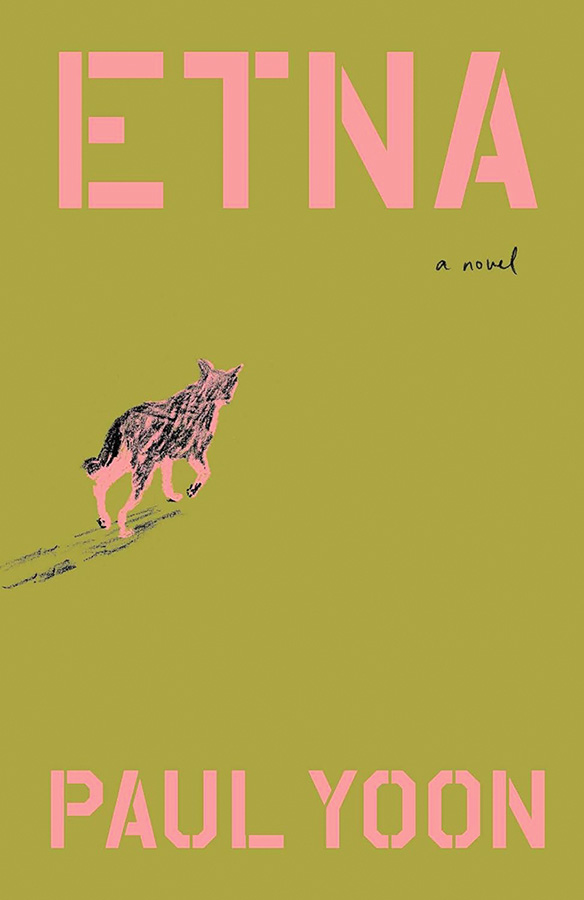
Etna, by Paul Yoon

After surviving years of a devastating war, ex-military dog Etna decides one night to leave the men he has fought alongside for years and return home — to the place where he was taken from when he was young. Thus begins an exhilarating odyssey told through the eyes of a dog as he traverses ruined landscapes and fights to survive in a world that, even in peacetime, proves to be just as precarious. Along the way, he encounters other animals and humans who are attempting to figure out how to start again. What makes a life when there is no home to go back to? How do we begin to trust each other again after such profound loss? This is a story about the power of an idea, about never giving up, and ultimately about finding hope in the most dire of times.


NONFICTION


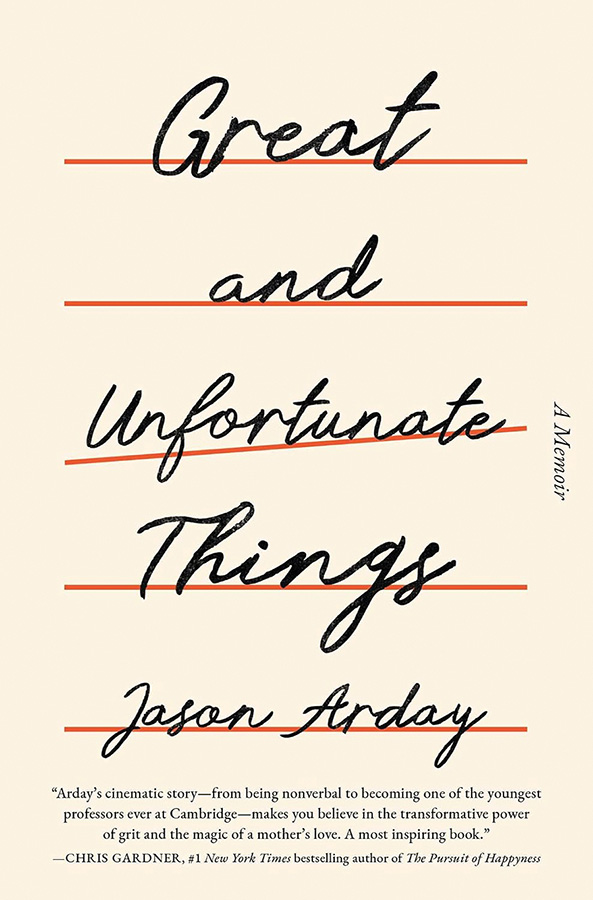
Great and Unfortunate Things, by Jason Arday

Jason Arday was born the second youngest of three boys and grew up in a colorful and lively section of South London. At 3 years old, he was diagnosed with autism and development delays. Experts told his parents that he would never be able to speak, write or live independently. An institution would best serve his needs, it was suggested. His parents would have none of it. Instead, thinking outside the box and drawing on her faith, his extraordinary mother, Giff, embraced his neurodivergence and fiercely dedicated herself to helping her son realize a potential few others believed was possible. Giff drew on proverbs from her West African culture, popular music by the likes of Enya, and comedic television shows and movies to help Jason make sense of the world. In Great and Unfortunate Things, we see how Arday went from being nonverbal until he was 11 and illiterate until 18 to becoming a professor at Cambridge. Without romanticizing the struggle, it’s a story of a son’s determination against insurmountable odds and how his family and a band of ordinary people with extraordinary compassion joined forces to encourage Jason to believe in himself and maximize his capabilities.

CHILDREN’S BOOKS
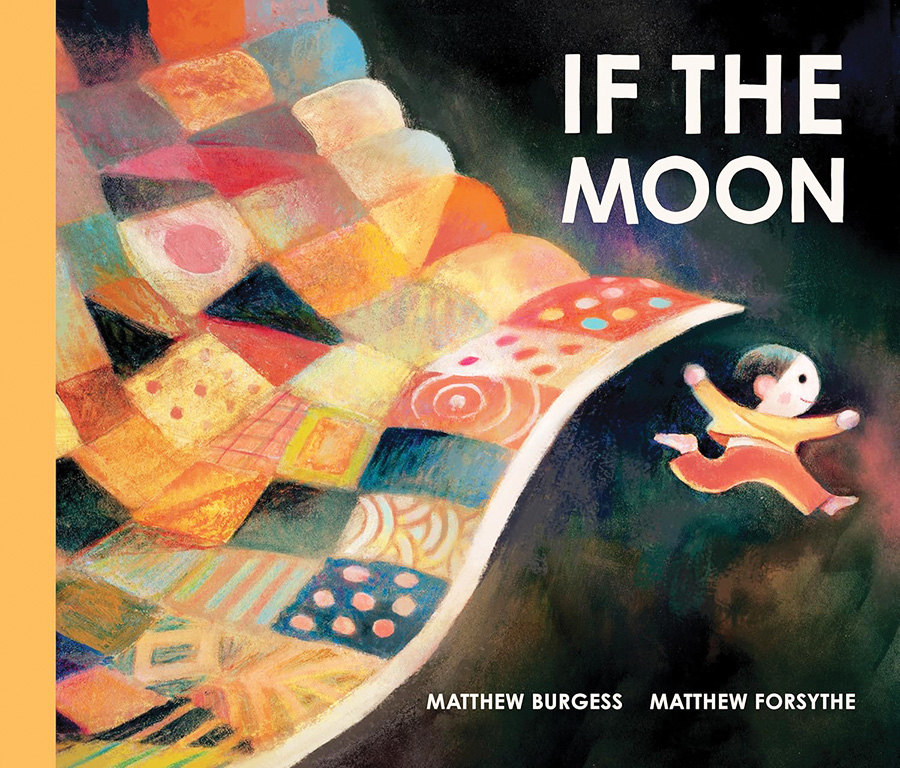
If The Moon, by Matthew Burgess, Illustrated by Matthew Forsythe

The perfect lyrical bedtime book, If the Moon is a visual poem that soothes and smooths the transition from waking to sleeping. If the Earth and if the moon, if the whistling of a tune. If you drift, if you dream, into space, into streams . . . Softly step on tender feet, come and lift the latch of sleep. (Ages 3-7.)
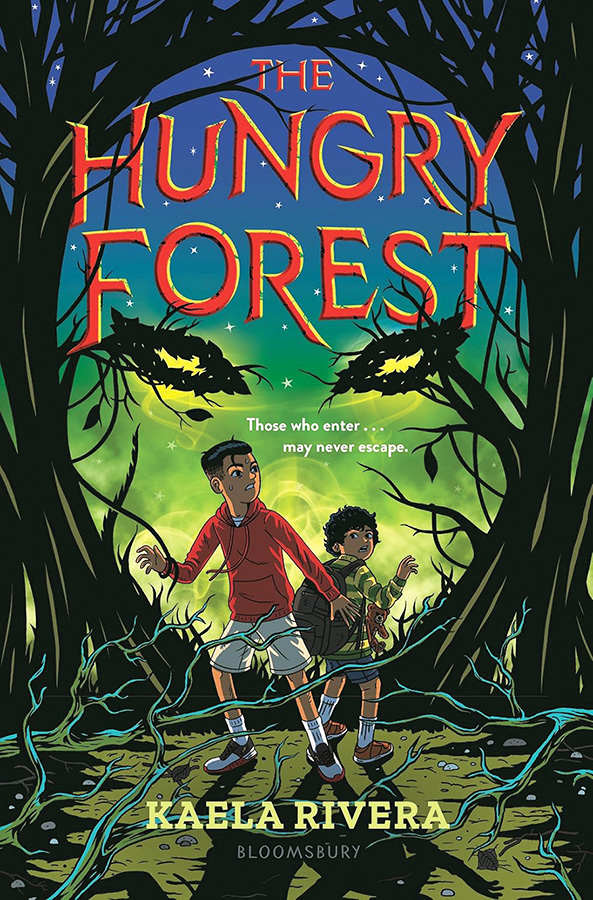
The Hungry Forest, by Kaela Rivera

Ryan’s dad had a lot of rules: Never let others see you cry; never let other people hear you speaking Spanish; work extra hard; make sure you always succeed. But the most important of all: Never go into the forest. Too many kids have disappeared there. Since Dad’s death, Ryan’s been following those rules to be the kind of man his father would be proud of. But his anger has been getting stronger lately, and he finds himself fighting with his little brother, Teddy, who constantly embarrasses Ryan. When Teddy hears their father calling them from the forest, he ventures inside. Ryan follows to save his brother and finds that the place is as cursed as the legends say. And if he can’t find his brother and escape the forest before sunrise, they’ll be trapped there forever. (Ages 9-14.)

The Magic Library of Waterfall Way,
by Julie Abe

The Alterran Empire hasn’t had an Unremarkable born in centuries . . . until Lyra Hunt. All Lyra wants is a guild to call home — preferably one with a library full of storybooks — but because of her cursed fate, nearly everyone has rejected her. Then Lyra stumbles upon the secretive Guild of Scholars in the cozy little village of Waterfall Way. With their tight-knit community and magical Library, this might finally be the perfect place for her. To be accepted, though, she must recover the Scholars’ crystal, the source of their magic that was lost in a terrifying fire. With the help of a mischievous new furry friend, Lyra must brave the Library’s cursed halls. Lyra may have an Extremely Unremarkable past, but she’ll do whatever it takes to find a guild — and a home — where she belongs. (Ages 8-11.)
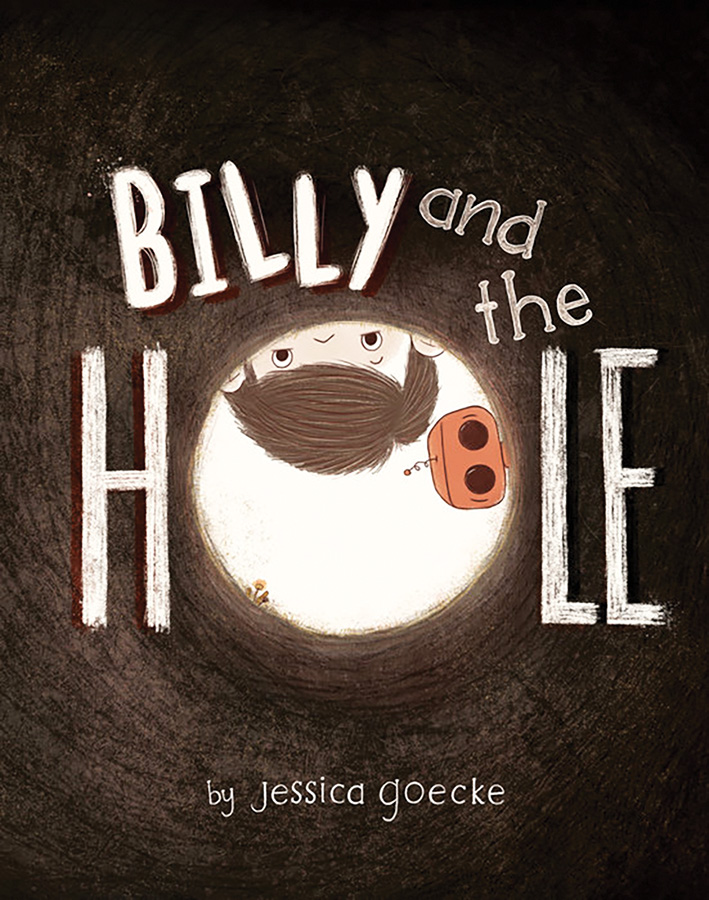
Billy and the Hole, by Jessica Goecke

One day, Billy found a hole. It wasn’t there yesterday. But there it was, right in his favorite spot, under his favorite tree. This hole in the ground is no ordinary hole in the ground. It speaks to Billy with a voice that’s cold and hard, like ancient stone. At first, the hole in the ground is polite and kind, and tells Billy how clever he is. And, well, Billy just can’t resist his new odd friend and its nice words. But when the hole’s requests grow more extreme, and Billy can’t always meet them — Billy will have to take matters into his own hands before his new friend takes matters into its. (Ages 4-8.)

Out of the Blue

OUT OF THE BLUE

School Bell

From uniforms to hall passes

By Deborah Salomon

Back to school: three little words, tons of emotion. The event remains fresh and sharp — but not always idyllic — eight decades later.

I started kindergarten in a Manhattan family neighborhood, at a progressive all-girls school with small classes and an interesting curriculum. The poems we memorized were in French. To this day I remember one about “la maison de Madame Souris” being “tres jolie.”

Madam Souris was a mouse.

We learned addition and subtraction with big, natural wood building blocks.

Cartoon characters did not invade our learning space.

We visited museums en masse, dressed in navy blue jumper uniforms with plain white blouses and, ugh, brown lace-ups.

This school believed in streaming quick learners into a higher grade. I was a quick-learn reader, so at the end of second grade I got skipped to fourth. Nobody noticed that I struggled with multiplication “tables.” Administration thought that since my mother had been a high school math teacher with an M.A. from Columbia University her daughter wouldn’t stumble on 12 x 9. So they gave her a pile of flash cards to wear out during summer vacation.

Another weak point: telling time, since at home we had the first electric digital clock, with numbers that clicked into place.

That mid-1940s summer was spent in back-to-school dread. Even now, in a digital world, I wear only a clock-face watch lest I forget.

That resolved, I loved fourth grade and especially fifth grade where my teacher, Miss Parrot, lived up to her name by wearing jungle prints in neon colors.

We moved to Asheville at the beginning of sixth grade. I was enrolled in public school, about 30 students per class, including boys, with their “best” teacher — a lovely, kind, welcoming woman who spoke more Tennessee than French. I couldn’t understand a word she said.

Dungarees were for weekends only. Here, the “uniform” was a plaid cotton dress and saddle shoes from Sears. My mother had other ideas. So did the teaching staff. “Move her up to seventh grade,’’ they recommended.

Seventh grade was in another building, where students changed classes every hour. Remember, I was already a year younger than my classmates. Junior high is no place for a terrified 11-year-old whose knowledge of the South came from reading Gone with the Wind.

Thank goodness I wasn’t forced.

So I spent sixth grade — still shaky on multiplying 12s — learning about schoolgirl cliques formed in utero. Back-to-school meant so much more than blue cloth-covered ring binders and No. 2 lead pencils. The squeals of best-friend reunions, for the most part, left me out.

Eventually I achieved “in” but that’s another story. I’m still shaky on multiples of 12. No problem since every electronic device includes a calculator.

Free public education is a many-splendored thing. Pre-Google students learned how to research a subject, sometimes for a “project,” which sent us running to encyclopedias and old Life magazines. Artificial intelligence was as foreign a concept as walking on the moon.

True, a few hallmarks of back-to-school haven’t changed: Some kids will sport braces, others will have grown tall. There will always be the right shoes or sweater, but by 11th grade that nerdy little Yankee who knows a smattering of French will succeed — or get even — by making cheerleader.

Newspaper photographers regularly cover back-to-school, looking for an apprehensive first-grader who clings to Mommy — or Daddy —  which makes the nostalgic me want to whisper in his/her ear, “Don’t worry, sweetie. Just hang in there. Life’s not all multiplication tables.” 

Out of the Blue

OUT OF THE BLUE

The Survivor

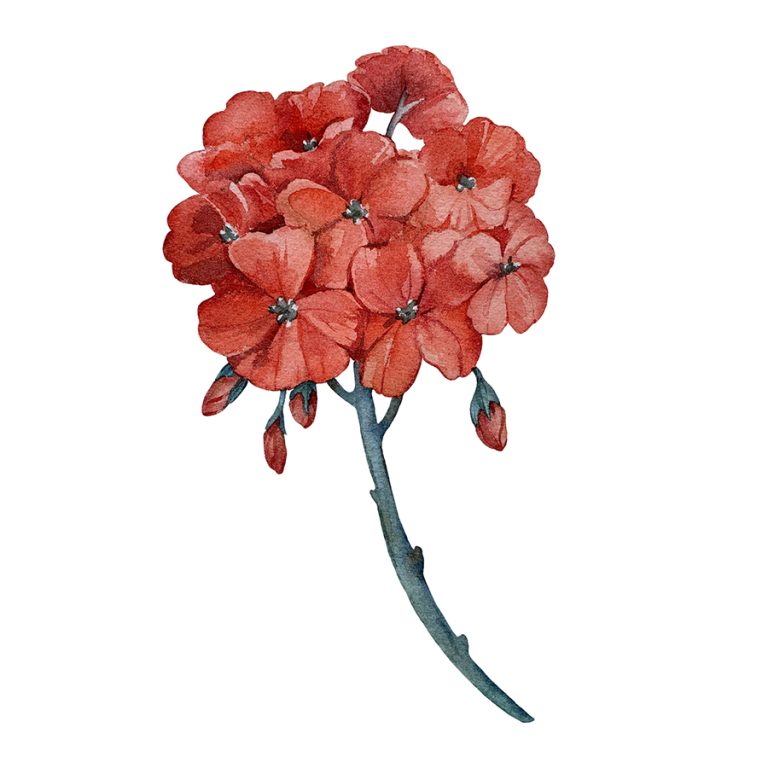
A little geranium that could

By Deborah Salomon

Of all the things I wanted in vain, the most poignant is a garden. Not that I had gardening parents or the proper geography. My first 11 years were spent in a New York City apartment. However, the seed was planted, so to speak, during summers spent with my grandparents in Greensboro, where Granddaddy had a huge plot. Early mornings and late afternoons (after returning from hours of laying bricks in the scorching sun), he grew vegetables for the family table. I trailed along behind . . . “helping.”

Ah, the tomatoes, their shiny skin bursting with juice. The okra, beans, “English” peas. The heavenly corn. The “greens.”

Nanny’s zinnias, equally amazing.

I marveled that every one started as a tiny seed. How did that happen, deep beneath the sodden earth?

My adult years were spent in less garden-worthy climates, part of a family committed to sports, not prized roses. Besides, I had hayfever, made worse by sticking my face into a flower bed. I didn’t derive pleasure from fighting bugs or pulling weeds. They always win.

Still, every spring I would buy a big geranium, which I “planted” in a clay pot and set on the front steps. Driving directions always ended with, “Ours is the house with the red-pink-violet-white geranium on the steps.”

Never orange. Orange-ish geraniums lack elegance.

We moved several times as the children grew up, then left. The late ’80s found me in a little house in Vermont built against a steep hill, which meant an aboveground walk-out basement, with windows and wide sills, finished off as a guest bedroom. At the end of October I brought the geranium in, cut down the stem, put the pot on the sill, closed the curtains and forgot about it.

The basement bedroom got little use that winter. By May it needed a good cleaning. I pulled up the shade . . . and gasped. Out of the shriveled stalk grew a tiny green shoot with one mini-leaf. The soil was dry, hard after no water for six cold, dark months. Only now the sun streaming through the window promised warmth, longer and better days. This tiny kernel of life had received the message and responded.

I recall shedding a tear, then consulting a garden-club friend for instructions on how to proceed: Don’t flood it, she said. Just a spoonful of warm water near the stem, every day — and don’t move it. Nature has found a way.

I was touched and, once again, saddened that I hadn’t made growing part of my life, not because I wanted a house full of fresh flowers, or white eggplant for supper. Rather, to see what a tiny seed can do to survive.

Up North, folks plant or put out flowers around Memorial Day. My geranium, relocated to the front steps, was coming along but nothing like the MiracleGro specimens from the nursery.

A neighbor asked why I hadn’t replaced the scrawny survivor.

No, no, I responded, anthropomorphically. I like this one’s spirit.

I have told the geranium story before, when times were tough. This past winter brought some health challenges that linger. Adjusting isn’t easy. Then, seemingly out of nowhere the spunky little geranium came to mind, symbolizing the garden I never had but also suggesting resilience. 

I haven’t had a front stoop geranium for a while. The clay pot kept getting knocked over by a Southern Pines raccoon. Geraniums are expensive. Ditto clay pots. But, given the mess the world is in, maybe I should head over to the farmers market for a little encouragement.

Dissecting a Cocktail

DISSECTING A COCKTAIL

Paloma

By Tony Cross

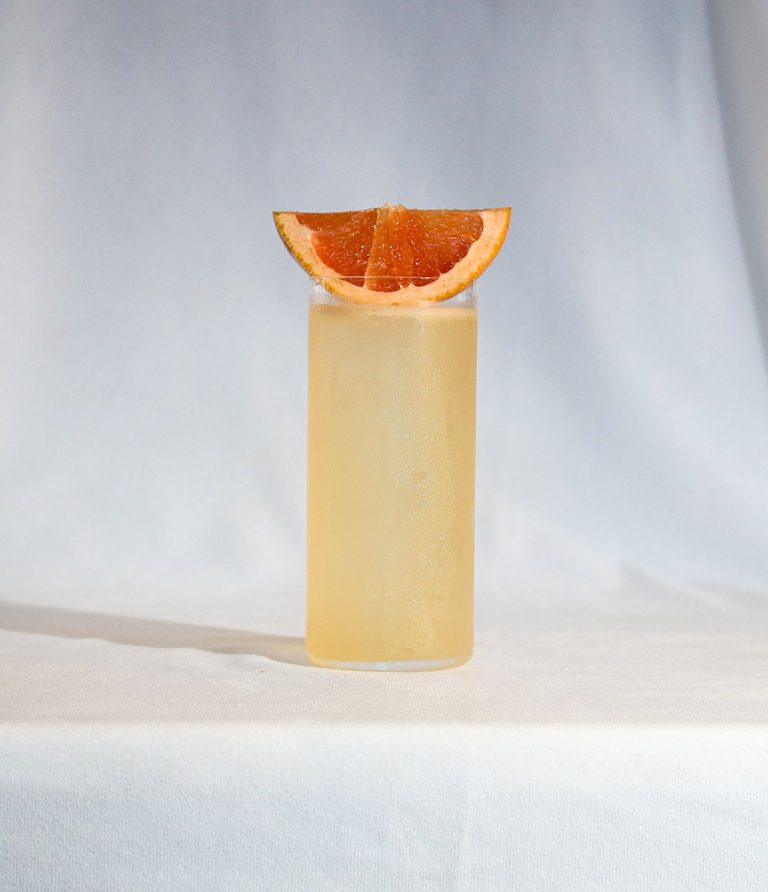
When it comes to tequila cocktails, there are none that come close in popularity to the margarita. Though not nearly as popular, the cocktail that is next in line is the paloma. A very simple drink to make, the paloma is light, refreshing, and perfect for hot weather sipping.

Spanish for “the dove,” the paloma was supposedly created by bartender Don Javier Delgado Corona (more names than ingredients in the drink) in Tequila, Jalisco — though I’ve read that Corona has denied that claim. The easiest, and most probable, story is that the drink was created when the grapefruit soda, Squirt, was popularized in Mexico in the 1950s. Tequila over ice, topped with the sweet carbonated beverage seems like a no-brainer.

That’s one way to make a paloma, but there are others. Regardless of the version you choose, you’ll want to be sure to use a blanco tequila — it has all of the flavor you’ll want that hasn’t been adulterated with notes of vanilla or cinnamon. And by all means, save the aged agave for imbibing neat or in stirred cocktails. The paloma also requires fresh grapefruit, lime, a sweetener and sparkling water.

If there is a cocktail that has anything carbonated in it, I want the whole thing carbonated. Mixing a carbonated liquid and a still liquid quickly flattens whatever bubbles existed in the first place. For me, it’s all or nothing. To achieve this, I clarify the grapefruit and lime juices using a centrifuge, then add the juices to a stainless steel keg with sugar, water and tequila. I carbonate everything in the keg for 24 hours and then pour on draught.

There is, of course, the question of salt. Yes, you can add it to the rim of your glass à la a margarita, but I would suggest adding it to the cocktail itself. The addition amplifies the citrus flavors. Making a 4:1 (water: salt) saline solution is the easiest way for me to stay consistent (I use 80 grams of water to 20 grams of Celtic salt). Try a paloma with Squirt and then try making it from scratch with the recipe on the right, and decide which one you prefer. I guarantee either one will help beat the summer heat.

Specifications

2 ounces blanco tequila

1½ ounces grapefruit juice

½ ounce fresh lime juice

½ ounce simple syrup

5 drops saline solution

1½ ounces sparkling water


Execution

Add all ingredients (sans sparkling water) into a cocktail shaker and add ice. Shake hard and strain into a Collins glass over ice. Top with sparkling water. Stir briefly. Garnish with grapefruit or lime wedge, grapefruit peel or nothing at all.