Out of the Blue

OUT OF THE BLUE

Beach Days

Turning down the volume

By Deborah Salomon

About this time of year I long for the beach. Not the honky-tonk kind, its teeming boardwalks lined with high-rise hotels. When my children were small, we caravanned with three other families to Cape Cod for two weeks, sometimes longer. We rented simple cottages several miles from a quiet crescent beach in Dennis, on the bay side of the Cape. A few houses sat high on the bluff near a tiny snack stand. Nothing commercial within sight — not even the parking lot, where you needed a sticker issued by the town.

Just fine white sand, calm water.

I rose at dawn to pack the cooler with lunch, sometimes creative given seafood possibilities and leftovers from the nightly charcoal grill.

Does anything taste better than a wedge of drippy-ripe watermelon by the sea? Or a soggy sandwich filled with garden-ripe tomatoes?

But mostly I loved settling in a low folding chair while water lapped my feet as the tide crept in.

Heaven.

My parents weren’t big on vacations. We spent most summers at my grandparents’ house, in Greensboro. Fear of polio prevented excursions. I remember one jaunt to Jones Beach, a long subway ride from Manhattan, where we lived. I made up for it as an adult, when my husband and I found off-season package deals to St. Thomas, Jamaica, Barbados, Puerto Rico, Antigua — homes to blinding white sand and impossibly turquoise water.

For me, staring out across the sea has a hypnotic effect. The diorama of that Cape Cod cove was enough to wash away — or at least put on hold — fatigue, problems. The children needed nothing more than pails, shovels and beach balls to keep them occupied, while the daddies played touch football and the mommies traded ideas for communal suppers.

Despite ideas, supper was almost always burgers, drumsticks, a big bowl of salad, fruit and Popsicles. One rainy evening I made a splash with spaghetti, a welcome change. S’mores hadn’t been invented but toasted marshmallows worked, as did frozen chocolate-dipped bananas.

By sunset the little ones had faded into bed and the grown-ups opened a bottle of wine.

This was the early ’70s. TVs were black and white. Central AC? Mobile phones? Please, except in James Bond flicks.

I miss the simplicity of those days, on that beach. I miss the soft, steady breeze and warm, rarely hot sun that produced a glorious tan to set off pastel dresses. The beach owned an elemental feel, rightly so, since this cove had probably existed for eons.

When the children were older we spent time at another beach, in Maine, where the expanse of sand was packed hard as concrete and the water, even in August, was cold enough to anesthetize toes. Here, not many people braved the waves. Walking or riding bikes was the primary exercise. Lobster at Barnacle Billy’s, an annual treat. A few locally-owned motels faced the beach, no neon, nothing glamorous. Their decks — perfect for watching the sunrise with coffee and fresh doughnuts from a nearby take-out.

Ahhh . . .

These beach experiences differ from crowded, scorching Southern seashores. They satisfy a need: to turn down the volume, create distance from worrisome headlines.

They allow for naps under the umbrella, for staring at the horizon, for burying toes in the sand and enjoying the sun. For fried clams at a roadside stand. For feeding the gulls, whose raucous rhetoric reminds me of political conventions.

My daughter Wendy felt the same. While at Duke, she and friends would run away to the Outer Banks or Ocracoke. They camped out around a bonfire, probably illegal, but nobody bothered them in November.

Yes, the seashore conveys something basic, timeless, affirming, poetic.

I want to go back.

The Naturalist

THE NATURALIST

Beautifully Common

Being exceptionally ordinary

Story and Photographs by Todd Pusser

When I was 11 years old, my parents gave me a book titled The World’s Whales. Published by the Smithsonian Institution, it was the first coffee table book to illustrate all the world’s cetaceans (whales, dolphins and porpoises) in a single volume. The spectacular photos and life-like paintings nestled within the high-gloss pages instantly captured my imagination. Throughout my high school and college years, I frequently thumbed through its pages, dreaming of one day becoming a marine biologist and making a list of all the whales and dolphins I most wanted to see in the wild.

Like many nature-obsessed kids who grew up reading about dinosaurs or watching Jacques Cousteau, I was fascinated by the strangest, most colorful, most dangerous, and the largest members of the animal kingdom. My list of whales and dolphins that I most wanted to see reflected those superlatives. The immense blue whale, the largest animal ever to inhabit Earth, was near the top of the list. The oddly shaped sperm whale, of Moby Dick fame, with its box-shaped head housing the largest brain in the animal kingdom, was on there, too. As was the aptly named hourglass dolphin of sub-Antarctic waters. The Southern right whale dolphin, a striking black and white animal that completely lacks a dorsal fin, so unlike any other oceanic dolphin, also caught my attention. But the absolute pinnacle of my list was the killer whale, a supremely intelligent apex predator that eats everything from seals to great white sharks.

Fast forward 40 years, and that book still occupies prime real estate in my library. Recently, I pulled it down and flipped through its pages, reflecting on nearly three decades of work on the ocean. In that time, I have been fortunate enough to check off each and every whale and dolphin from my list. It has been a remarkable run that has produced many amazing memories.

I found those blue whales off the coast of California, rolling on their sides and throwing open their cavernous mouths as they swallowed thousands of gallons of water and krill with a single gulp. Due south of Louisiana, in a deep-sea trench known as the Mississippi Canyon, I saw my first sperm whales. Off the rugged coast of Kaikoura, New Zealand, I observed a huge group of 500 Southern right whale dolphins, leaping from tall ocean swells within sight of snow-capped mountains. In Antarctica, I watched enthralled as hourglass dolphins played at the bow of our research vessel. And as for killer whales, I have seen them in oceans around the world, including spotting a small group off my home state of North Carolina in 2014.

Looking back through the book, I paused at the account about common dolphins. For the life of me, I can’t understand why those dolphins failed to capture my childhood imagination. Common dolphins feature prominently in Greek and Roman societies, even appearing on their coins. Aristotle and Pliny the Elder were enthralled by common dolphins and wrote about them frequently in ancient texts. The common dolphin was, in fact, the first species of dolphin to be scientifically described. I think that my youthful lack of enthusiasm for the species stemmed from their name, common dolphin. It wasn’t superlative enough, not like the killer whale.

So many of us tend to ignore the common. It’s human nature to place value on the biggest, strongest, prettiest, weirdest, and especially, the rarest. As a budding naturalist, I ignored the animals and plants that I routinely saw day after day. But as is so often the case, time and experience have a way of changing one’s perspective. As I have aged, I have learned to appreciate the everyday nature that surrounds me, especially the common things, like the grey squirrel in the front yard or the bluebird perched on the powerline.

Common dolphins are aptly named. Scientists estimate their global population to be over 6 million, making them the most abundant dolphin swimming in the world’s oceans. Recently, off the coast of California, I encountered a group of common dolphins that stretched as far as the eye could see. The sea frothed white as thousands of dolphins leapt from the water all at once. It was a truly breathtaking experience. Marveling at the bright yellow hourglass-shaped patterns on their sides, I realized how wrong I was to overlook these animals in my youth. They are uncommonly beautiful.

Omnivorous Reader

OMNIVOROUS READER

The Untethering of Time

Finding the truths in historical fiction

By Anne Blythe

These days, as social media platforms and conflicting political rhetoric abound, it can be difficult to discern fact from fiction. It’s tempting to reflect on the past to try to understand what might be prologue.

Sometimes, though, the history that has been fed to us over time turns out to be pure fiction — or at least some version of it. Other times fiction is better able to get to the nitty-gritty truth. Historical fiction with its modern lens on days gone by can release the anchors of time and enhance a reader’s experience and understanding of the past in ways that non-fiction does not always accomplish.

Three North Carolina writers from this genre, to name a few, have taken a stab at blurring the lines between the invented and the real with new historical fiction that spans many decades, and in one case centuries.

Charlotte-based author Joy Callaway transports readers of her seventh book, The Star of Camp Greene: A Novel of WWI, far beyond the Queen City’s modern financial district and tree-lined neighborhoods back to 1918, when the U.S. Army had a training facility about a mile west of what is now Uptown.

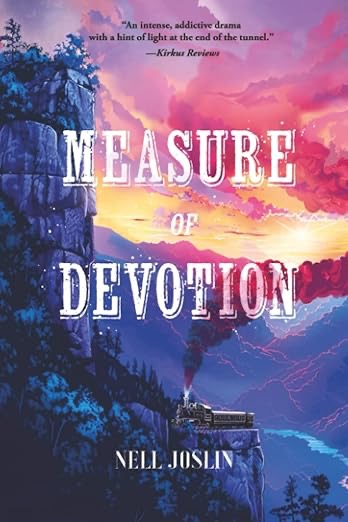
Nell Joslin, a Raleigh lawyer turned writer, takes readers of her debut novel, Measure of Devotion, back to the Civil War era as she chronicles a mother’s harrowing journey from South Carolina, where she was a Union supporter, to the battleground regions of southeastern Tennessee to tend to her critically wounded son, who enlisted with Confederate troops in defiance of his parents’ wishes.

And Reidsville-based Valerie Nieman, a former newspaper reporter and editor turned prolific author, takes readers on a journey to ancient Scotland in Upon the Corner of the Moon in her imagined version of Macbeth’s childhood before he became King of Alba in 1040.

Though the books are very different, each was born from digging through historical documents, archives and histories of the time, as well as a bit of on-the-ground research.

Callaway’s main character, Calla Connelly, is based on the real-life vaudeville star Elsie Janis, a so-called “doughgirl” who sang, spun stories and cartwheeled across the stage for American troops on the Western Front. The Star of Camp Greene opens with Calla toughing her way through a performance in the makeshift Liberty Theatre tent at the North Carolina training camp. The soldiers gathered were all smiles until a pall was cast over her act by the news of deaths in the Flanders battlefields near Brussels.

Despite the push of men moving to the back of the tent to absorb the unwelcome announcement, Calla thought it was important to continue the entertainment, providing a crucial diversion during somber times. But her head hurt. Sweat soaked through her costume as heat flushed through her body before an icy cold set in. The Spanish flu was circulating around the world, claiming more lives than the overseas conflict for which Camp Greene was training soldiers.

Calla was bent on impressing the men enough that word would spread to Gen. John J. Pershing. In her mind, he would make the final decision whether or not she could join the team of performers who traveled overseas to entertain the troops — and thus honor the memory of the fiancé she had lost to the war there. But she couldn’t stop the spinning as she tried desperately to belt out lines from George M. Cohan’s “Over There.”

Stricken with the deadly influenza, Calla ends up in the hospital. While recuperating, she overhears a piece of classified military intelligence resulting in her confinement at the Charlotte camp, where she’s assigned a chaperone until further notice. While prevented from traveling to the front, it opens her to the possibility of new love and gives Callaway an opportunity to explore themes of patriotism and injustice.

Measure of Devotion also tells the story of a war era through a strong, compelling female character. Through vivid and immersive writing, Joslin uses the 36-year-old Susannah Shelburne to bring life to the story of mothers nursing wounded sons near Civil War battlefields.

Susannah, who grew up in Madison County, North Carolina, and her husband, Jacob, live in South Carolina, where they are opposed to slavery in the very land that is fighting to preserve it. Jacob’s family had owned slaves, but the thought of another person being nothing more than property appalled him. After inheriting Hawk, Jacob granted him his freedom and paid him to work for him. They also employed Letty, a character whose homespun wisdom, optimism and love adds a welcome layer to a tender and complicated story.

The Shelburnes’ son, Francis, joined the 6th South Carolina Volunteers in the early years of the war, and on Oct. 29, 1863, his parents receive a telegram letting them know that their son had been severely wounded by shrapnel near his hip joint. Susannah leaves her ailing husband and travels by rail to Lookout Mountain, Tennessee, with hopes of sparing Francis’ leg from amputation while nursing the 21-year-old back to health. He’s in a fevered state when she arrives.

Joslin adroitly and compassionately explores heady themes that divided the country more than 150 years ago, and the hardships and ravages of a nation at war with itself.

Nieman’s Upon the Corner of the Moon is book one of two that explores some of those same issues in 11th-century medieval Scotland. Rather than relying on William Shakespeare’s depiction of Macbeth, Nieman alternates her deeply researched tale of the budding powers of the Macbethian royal court through three voices — Macbeth, Gruach, who becomes his queen, and Lapwing, a fictional poet.

Separately, Macbeth and Gruach are spirited away from their parents to be fostered into adulthood during an era of constant warfare and the unending struggle for power. Nieman ladles up a dense, deeply reported version of these two well-known characters before they meet. We see Macbeth as an adolescent warrior in the making, and Gruach being groomed in Christian and pagan ways to be given away in marriage. Ultimately, what unfolds is a tale of legacy, power and fate.

These three books of historical fiction bring factual bits of the past to the present, leaving much to ponder about their truth.

One For All – By All

ONE FOR ALL - BY ALL

One For All - By All

The complicated birth of the Moore County Hospital

By Bill Case     Photographs from the Tufts Archives

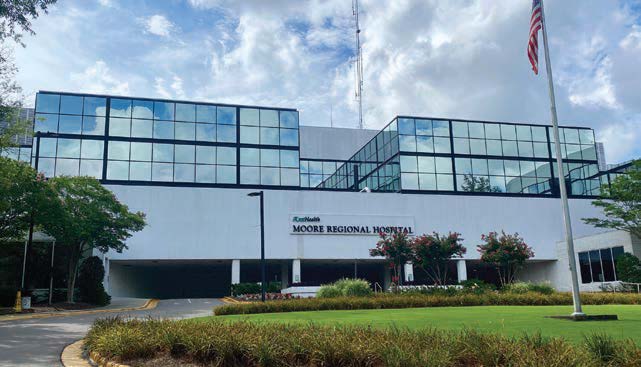
Last year, U.S. News and World Report ranked Pinehurst’s FirstHealth of the Carolinas Moore Regional Hospital sixth best in North Carolina. Money magazine placed it 65th in the country. With 402 beds, it serves as a primary care referring facility for the surrounding 15-county area. It employs more than 3,000 people, by far the most of any private Moore County employer. The spacious cancer clinic, opened in 2023, is the latest jewel in the crown.

Exactly a century ago, the residents of Moore County weren’t so lucky. In May 1925, the county’s lone acute care facility, James McConnell Hospital (named for Carthage’s heroic World War I flier) was teetering on its last legs. Located in rural Eureka, 4 miles from Carthage, the facility offered four private rooms and two wards, totaling 20 beds. During the influenza epidemic of 1918, McConnell treated 35 additional patients by putting beds on the porch.

Lacking an endowment, McConnell struggled to stay afloat, financially and literally. The wells serving the hospital totally dried up in periods of drought. Nurses and other employees hauled buckets of water from a spring half a mile away. As the Sandhill Citizen put it, McConnell was constantly “working against the task of too little money for too big a job.” The hospital closed its doors on June 1, 1925.

Following the shutdown, the nearest hospitals to Moore County were now located in Fayetteville and Hamlet. Southern Pines’ celebrated author James Boyd believed the status quo was unacceptable. “If a man gets seriously sick in this section of North Carolina, what can he do?” Boyd wrote in The Pilot newspaper. “That means a trip to Raleigh, or Charlotte, or Hamlet, or Fayetteville . . . if it is a case of accident, or other emergency, the two or three hours necessary to make the trip may cost the patient his life.”

Community-minded members of the Kiwanis Club of Aberdeen (later Kiwanis Club of the Sandhills) began considering the feasibility of building a modern hospital located close to Moore County’s population centers — Aberdeen, Southern Pines and Pinehurst. A Kiwanis committee met several times in late 1925 and early 1926 to discuss the parameters for a new hospital. At a February 3, 1926, Kiwanis meeting in Pinebluff, club president Talbot Johnson announced that there was a “chance to get a half-million-dollar hospital for the neighborhood of the most modern type.” He also announced that a newcomer to the campaign, Simeon B. Chapin, “and others of the moving spirits will be on hand to discuss this situation.” Johnson urged his fellow Kiwanians to pack the house for their meeting.

Proponents floated the concept of building a 70-bed hospital costing $500,000 plus an additional $250,000 endowment. Other public forums were scheduled in Aberdeen and Pinehurst. An overflow crowd at Pinehurst’s Carolina Theatre turned the presentation into a pep rally for the hospital, giving the project an enthusiastic (and nearly unanimous) thumbs up. “The pledge of support expressed by the audience would seem to indicate the county can be counted on for the maximum amount of support,” The Pilot reported.

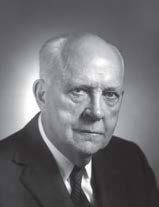
However, it is one thing for citizens to stand up in a meeting and collectively voice their “huzzahs” and quite another to reach into their pockets to support it. It became clear that fundraising for a hospital would likely flounder unless people of substantial wealth stepped up. Six such men (two of whom were Kiwanians) banded together for the purpose of making the hospital a reality. The men who referred to themselves as the Hospital Committee were Leonard Tufts, whose family owned almost everything in Pinehurst; Jackson Boyd, a Pennsylvania coal magnate and, with brother James, co-master of the Moore County Hounds; Eldridge R. Johnson, founder of the Victor Talking Machine Company, which revolutionized the phonograph industry; Henry A. Page, Jr., president of two North Carolina railroads and owner of a chain of Ford auto agencies; John D. Chapman, a Wall Street broker and member of the New York Stock Exchange; and Simeon B. Chapin, owner of S.B. Chapin and Co., a stock and grain brokerage firm with offices in Chicago and New York City. After making Pinehurst his winter retreat circa 1910, he built several houses and acquired thousands of acres of Sandhills real estate. His Chapin Orchards made him the area’s foremost peach farmer.

But Chapin’s most profitable venture came in 1912 when, in partnership with the Burroughs family, he acquired 64,000 acres of South Carolina pine forested real estate, together with 9 miles of ostensibly “worthless” beachfront. Chapin and Burroughs developed the property into an unparalleled resort community — Myrtle Beach.

Chapin and the other members of the Hospital Committee, recognizing they were not qualified to evaluate the scope and size of the proposed hospital, retained the New York firm of Wright and O’Hanlon that specialized in such matters. In 1927, that firm’s lead partner, Henry C. Wright, conducted a survey of the area and concluded it was feasible to build a 35-bed hospital at a cost ranging from $80,000 to $140,000. The Hospital Committee’s members were ready to pool their money to fund the bulk of that price tag, but they considered it important to have citizens from the county at large also contribute.

Soon, a source of charitable funding emerged. It was learned that North Carolinian tobacco heir-investor-philanthropist James B. Duke had established the Duke Endowment, a trust fund totaling $400 million in assets. Among its missions was support for rural hospitals in North and South Carolina.

In March of 1927 committee members greeted Dr. Watson S. Rankin, the director of the Duke Endowment’s Hospital and Orphans section. Rankin advised those assembled that once the hospital was built, the Duke Endowment would be willing to contribute $1 per day per bed toward the care of patients unable to pay their bills. This was significant, because Moore County had its share of impoverished individuals, including many in its Black population (who were to be treated in a segregated wing).

While wrestling with financing, the committee also dealt with the thorny issue of the hospital’s location. Since Pinehurst was in the central section of Moore County, several properties on the outskirts of the village were considered. The members were unable to reach a consensus regarding the best site, so it was decided to have the consultant, Wright, make the choice. He picked property near the intersection of N.C. 211 and Page Road — the southern reaches of the current campus — citing as tiebreakers the fact that it was well situated to catch breezes (a must pre-air-conditioning), and that a sewer line was already in place. That site, like virtually all the land in and around Pinehurst, was controlled by the Tufts family. Leonard Tufts deeded the land over without compensation. 

The task of raising money beyond its own membership continued to frustrate the Hospital Committee throughout the summer and fall of 1927. This included the securing of charitable funding. A Nov. 16, 1927, newspaper article in the Greensboro News caught Leonard Tufts’ attention, eventually breaking the logjam. The story indicated that the Duke Endowment was planning to build six or seven hospitals a year in North and South Carolina.

The following day, Leonard Tufts wrote Rankin, expressing his “hope one of these will be located in this section.” Rankin promptly responded: “I am glad to convey to you the encouraging information that we will probably be able to help you materially in the building and equipment of your new hospital.” He promised to send Tufts an application and did so on Dec. 27.

When the Duke Endowment’s trustees reviewed the information set forth in the application regarding contributed pledges, they were dismayed. Outside of “a few wealthy people from Pinehurst and Southern Pines,” there were few pledges. The Duke Endowment was disinclined to contribute anything unless the “people of Moore County” proved their interest with cash contributions in the amount of $25,000.

Why were people reluctant? “It has so happened that during the period when funds were being solicited, the farmers and businessmen in rural communities throughout the country were undergoing business readjustment through a period of deflation, which has made it very hard for them to get hold of any spare cash,” The Pilot reported.

But resistance went beyond that. Some scoffed that “a hospital is the last thing the county needs.” Decades later, Leonard’s son, Richard Tufts, wrote “Today it is difficult to believe that the establishment of our hospital was not a popular decision with all the people of this county. Many thought of a hospital as a place where you went to die and not to get well.”

Some local residents were peeved that wealthy winter residents from the North were running the show. “They have the money; they can afford it; let them pay for it,” was the sentiment. Naysayers also voiced the view that the hospital was being built to benefit Pinehurst resort guests, not permanent residents.

Based on the committee’s assurance that it would raise the requested $25,000, the Duke Endowment trustees conditionally approved a $25,000 grant on March 27, 1928. Rankin hinted more money might be forthcoming once the committee raised $25,000 from small, local donors.

The hospital committee shifted into overdrive, pushing for donations in Aberdeen, Southern Pines, Vass, West End, Lakeview, Pinebluff and Jackson Springs. In a meeting on April 24, 1928, the committee advised that “sufficient funds are definitely in sight for the construction of an A-1 hospital.” In sight perhaps, but not yet in the bank.

At the meeting, it was determined that building of the hospital would move forward even though the conditions of the Duke Endowment’s grant had yet to be satisfied. The prospect that the endowment could still pull the plug on its sizable contribution was deemed a risk worth running.

Contracts for the hospital’s design and construction would be required, so the committee formed a corporation to execute them. The board included representatives from throughout the county, including the mayors of Carthage, Southern Pines and Aberdeen. Simeon Chapin was named board president. The board immediately created a building committee composed of Leonard Tufts, Aberdeen’s Robert Page, Pete Pender, West End engineer George Maurice, Aberdeen Mayor G.C. Seymour and James Boyd. Cincinnati architect Samuel Hannaford was hired to design the building.

Meanwhile, contributions trickled in, but far too slowly. Hopeful that favorable press might sway hesitant donors, Leonard Tufts wrote The Pilot’s Bion Butler on May 5, 1928, seeking the paper’s assistance in clearing up “misconceptions” about the hospital. Butler printed Tufts’ correspondence verbatim on the front page. Tufts maintained the wealthy winter residents who were contributing the bulk of the money were doing so “not for selfish reasons, but giving of their riches to aid the health conditions in this county.”

The Pilot offered words of editorial support. “Men who do as much as the visiting strangers must not be looked on as the open pocket for everything that is wanted here, for it would soon destroy their regard for the community that would permit such mendacity, and it would also ruin the community’s regard for itself.”

Though not having obtained the necessary subscriptions from “outside Pinehurst” as required by the Duke Endowment, the Moore County Hospital Association boldly plunged into deeper waters on Nov. 13, 1928, hiring Sanford contractor Jewell-Riddle Company to construct the hospital. The company estimated the cost to build at $167,000. Groundbreaking took place that same month.

Meanwhile, hospital boosters resorted to new measures to eliminate the fundraising gap. On Sunday, Nov. 24, 1928, pitches for subscriptions were made at the services of every Moore County church. The new owner of The Pilot, Nelson Hyde, implored readers to contribute, “in any sums, big or little as it is desired.” In his Nov. 30 editorial, Hyde offered a rallying cry for this effort. “One for all — by all.” Subscription forms were printed in the paper.

The fundraising campaign was still short of its goal when the cornerstone for the building was laid on March 19, 1929. Conditional funding from the Duke Endowment remained up in the air. Chapin briefly addressed those assembled at the cornerstone ceremony: “This hospital is built by all the people of Moore County to serve all the people of Moore County, and is here and now dedicated to the county and its citizens for ever and ever.“ He closed with, “We wish it Godspeed on its errand of mercy into the future.”

To those still skeptical regarding the county’s need for a hospital, events the following day in Southern Pines served as a grim wake-up call. The town’s police chief, Joseph Kelly, was ambushed and shot four times while searching an automobile. The motorist who fired the gun was wanted by law enforcement for an assortment of holdups and burglaries.

The chief was in a bad way but managed to stagger to his patrol car and drive to the residence of Dr. W.C. Mudgett before collapsing to the ground. Mudgett summoned an ambulance, which transported the gravely wounded chief to Highsmith Hospital, in Fayetteville. He died the following morning. It cannot be said with any certainty that Chief Kelly would have survived had the hospital been nearby, but that thought undoubtedly crossed peoples’ minds.

Perhaps the murder loosened strings on some pocketbooks. Or maybe the eye-catching sight of the new three-story brick and columned hospital did. In any event, it was announced in the Sept. 20, 1929 Pilot that “the necessary donations to make available the conditional subscription of $50,000 by the Duke Endowment have all been paid in.” Construction was finished two months later. The final cost of the building plus needed equipment turned out higher than projected. The Duke Endowment upped its building contribution to $75,000.

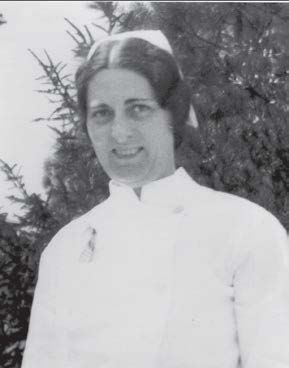
Moore County Hospital’s 33 beds and two operating rooms opened to patients on Nov. 25, 1929. Chapin continued in his role as board president. Dr. Clement R. Monroe became the institution’s first doctor and administrator. The omnipresent Dr. Mudgett was named chief of surgery. Ellen Bruton supervised the nurses. To the surprise of the staff, the hospital was filled to capacity almost from the start.

While all the members of the Hospital Committee deserved credit for their steadfastness, Simeon Chapin came to be regarded as its guiding spirit. In 1930, the Sandhills Kiwanis Club awarded Simeon the Builder’s Cup. The Pilot noted that “Mr. Chapin’s faith and optimism through the long campaign for funds, plus his untiring efforts in soliciting contributions, and in overseeing the proper expenditure thereof, which has given to this section of the state one of the finest institutions to be found anywhere in the United States.”

However, the struggles continued. With the onset of the Great Depression, nearly two-thirds of the patients during the hospital’s first year could not afford to pay for treatment. In his role as administrator, Dr. Monroe scrambled to keep the operation above water, describing himself as the “all around water boy.”

Alarmed by the shortfalls, several organizations pitched in to assist. The women who comprised the Moore County Hospital Auxiliary contributed money, towels, curtains and bedclothes. The 400 members of the Birthday Club made it their practice to donate funds, canned goods and linens on their respective birthdays. An old fashioned “pounding” was held in the early years, in which local farmers donated vegetables, fruits, jellies and jams. The hospital even purchased a cow to supplement its dairy requirements.

Despite the hardships, Moore County Hospital prospered and grew, and soon needed to expand. By 1939, housing for nurses and a new wing featuring 26 additional beds had been added to the campus. The hospital’s endowment and footprint would eventually grow far beyond the dreams of the founders.

James Boyd passed away in 1944. Four of the remaining stalwarts responsible for the birth of Moore County Hospital died in 1945: Leonard Tufts, Eldridge Johnson, Pete Pender and the hospital’s honorary president, Chapin. On the day of his passing, the latter visited the hospital to make a donation for the purpose of ensuring the presence of Bibles in every room.

It was the sort of thing Chapin had been doing his whole life. He liberally supported churches of all types, including Pinehurst’s Village Chapel, serving on that church’s building committee during its erection in 1924 and ’25. In Chapin’s 1929 hospital dedication speech, he opened with this anecdote: “About five years ago, when the new church was being built in Pinehurst, a certain person who had had sickness in the family said to me, ‘We need a new hospital more than we need a new church.’ My answer was, ‘We need both.’”

He got both.

Tea Leaf Astrologer

TEA LEAF ASTROLOGER

Leo

(July 23-August 22)

Outfit, moisturizer or relationship: If it doesn’t shimmer, glitter or downright sparkle, let it go. And while you’re at it, release the urge to draft another birthday reminder text. Don’t you deserve to be celebrated? Of course! But here’s the thing: Nobody can shower you with royalty-level opulence better than you can. When Venus enters your sign on Aug. 25, put on your flashiest threads, crank up some Bruno Mars and treat yourself
to some over-the-top ME time.

Tea leaf “fortunes” for the rest of you:

Virgo (August 23 – September 22)

A certain houseplant requires your attention.

Libra (September 23 – October 22)

Explore a new color palette.

Scorpio (October 23 – November 21)

You’re going to want some reinforcement.

Sagittarius (November 22 – December 21)

Something smells like trouble.

Capricorn (December 22 – January 19)

Trust your instincts.

Aquarius (January 20 – February 18)

Drink more water.

Pisces (February 19 – March 20)

Best to cut the rope.

Aries (March 21 – April 19)

It’s time to delete the app.

Taurus (April 20 – May 20)

You gotta know when to fold ’em.

Gemini (May 21 – June 20)

Butter the popcorn, sweetheart.

Cancer (June 21 – July 22)

Dare you to go all out.

Art of the State

ART OF THE STATE

Warp & Weft

The color-jangled painting of Barbara Campbell Thomas

By Liza Roberts

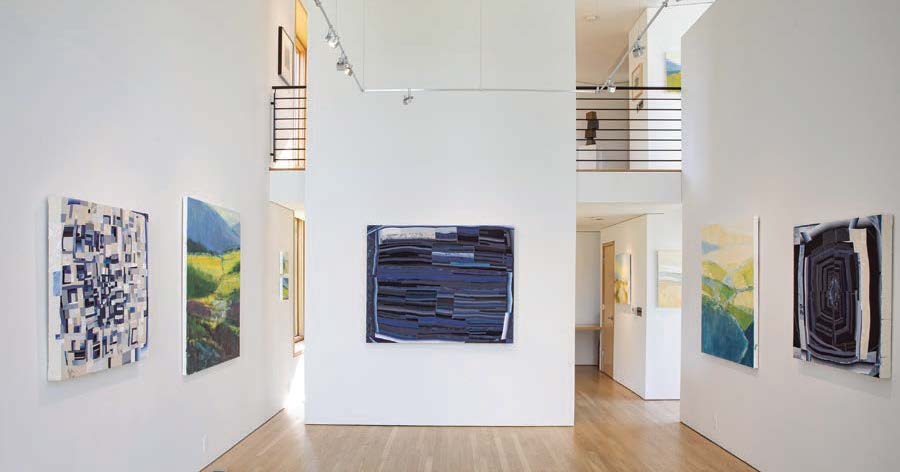
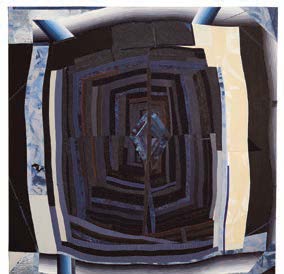
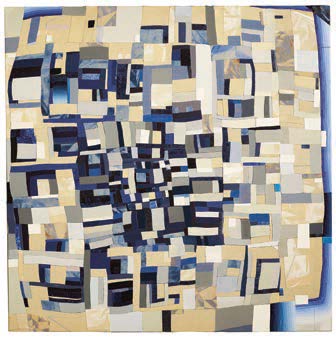
The paintings of Barbara Campbell Thomas are often warped, subtly but unmistakably. Their geometry, the linear shapes and pieces and colors that comprise them, have a slightly distorted quality. Rectangles implied, but some appear to have had a bounce or inhaled a lungful of air. Others seem to have been shaken up or spun around. That’s partly due to the kinetic energy they capture, which seems to indicate recent — even ongoing — movement.

It’s also because they are surprising. Campbell Thomas calls these works paintings, but a careful look makes it clear they are made mostly of pieced fabric. They’re quiltlike, hand-sewn, dimensional. Stretched in unexpected ways. And then painted.

“The pulling and the tension is still an important part of it,” she says. “It’s become even more magical. I spend all of this time in this initial phase, and I kind of have an idea of what it’s going to look like when I finish. Then I put it up, and it’s interesting to see what has been pulled and how the image has come to life in a different way.”

Campbell Thomas is the director of the School of Art at the University of North Carolina Greensboro and has taught there for more than two decades. Her resume is filled with solo and group exhibitions at museums and galleries around the country. Last year alone, her work was shown in solo and two-person exhibitions in Chicago, Illinois; Milwaukee, Wisconsin; Charlottesville, Virginia; and Columbus, Ohio. She has been awarded a number of prestigious residencies including at the Virginia Center for Creative Arts, and has been a recipient of a North Carolina Arts Council fellowship.

When she takes on a new body of work (like the 10 paintings she’s currently preparing for a November exhibition at Charlotte’s Hidell Brooks Gallery), she approaches it with the businesslike, step-by-step planning of a senior academic administrator — but she executes that work with daring and intuition. Campbell Thomas has learned to navigate this duality effectively with time, even as her art has become increasingly complex and her process more fully immersive.

“The piecing and sewing portion has become more complicated and elaborate, involving a lot more small pieces of fabric,” she says. “I’m understanding that layer of the process in a deeper way, so I’m spending more time in that part of the process.”

The stretching of the pieced fabric, which creates its cantilevered quality, comes next.

Once this “ground” of her paintings is set, Campbell Thomas hangs them all around her in her studio. In that way, her physical space can better reflect her “headspace,” she says, “and then the imagery: I understand better what it wants to be.” She can visualize how paint and collage will eventually come together upon these sewn surfaces: “The visual movement of the pieces feels like the big strokes,” she says, “and the collage will be how I refine them, add nuances or cover things that need to be pushed back down. The paintings become more refined. I begin to understand how to contend with the edges.”

Inside and Out

The studio where she does this work, next to her house in rural Climax, North Carolina, is about 14 miles south of Greensboro. It is a color-jangled, layered collage of a space, overflowing with textiles, history, tradition, mysticism, books, paints and threads and fabrics of every imaginable color, pattern, size and shape.

What’s outside — the fields and trees and open expanse of nature — is just as important. “I live out in the country and walking has been very important to me for my whole life. Walking on country roads, being in a beautiful landscape, has always been a touchstone,” she says.

Lately, Campbell Thomas has been trying to create “landscapes” of a different sort. “What would it be to create landscapes that are suggestive of our interior landscape? How do we create spaciousness for ourselves internally? I’ve been thinking about inhabiting a body, and what it means to inhibit a body that feels somehow spacious internally.”

The fractalized nature of her paintings, and the way they often begin in the center and move out to the edges, is her way of representing that phenomenon: “That’s me grappling with that question: how do we inhibit interior spaciousness?’

Fabric as Paint

Navigating dichotomies fuels other types of her work, too. The line where quilting ends and painting begins is one more puzzle to ponder, as is the difference between a painting (or, her version of a painting) and a quilt (a distinct form of art which she also makes).

It’s something she’s often asked about, and something she thinks about a lot. But even as piecing and sewing has become a more comprehensive part of her painting process, she has no doubt that what she makes are paintings. “My orientation as an artist is born in paint, absolutely, and the framework I still operate within has matured and evolved from an understanding of paint as a material,” she says. “That continues to inform everything.”

That dialogue began many years ago with her mother. She’s the one who taught her daughter how to quilt. But it extends through her family tree, to her grandmother and great-grandmothers, makers and stitchers and quilters all. Campbell Thomas has their names listed on her studio wall as inspiration and as a reminder of her heritage. The art journals she carefully keeps are bound with cloth covers made by her mother, who sends her a regular supply.

In these journals, she examines her process and her purpose. Abstraction, she says, allows her to say things she can’t with more literal or figurative types of work. “I’m really fascinated with my sense that there is more to the world than what we can see, and of course that starts to tap into realms of the spirit,” she says. “On the one hand, I’m engaging in this intensely material endeavor, through paint; through fabric. But there’s also this way that this engagement, which is now well over 20 years for me, is a way into spirit.”

Focus on Food

FOCUS ON FOOD

Percolate This!

Latte macchiato-style ice pops

Story and Photograph by Rose Shewey

If it takes more than a splash of milk and a spoonful of sugar to enjoy your coffee, I’m afraid you may be among those who like coffee-flavored drinks rather than actual coffee. A little bit of cream and sweetener in your brew is what I call an embellishment. Adding a quart of frothy milk, whipped cream and flavored syrups to your beverage conjures up images of county fair treats but has nothing to do with the ancient art of enjoying a good roast. If you can’t relish the dark, bold taste of an espresso or a simple pour-over brew au naturel, you may not be loving coffee as much as you might think.

Why does it matter? Once I started to cut down on the milk in my coffee, I began noticing how downright terrible a lot of coffees taste. One can hide the stalest, most acidic-tasting beans underneath cascades of cream, sugar and flavored additives that completely conceal the fact you were served an inferior roast. I suspect that many a coffee drinker would quit their habit if they knew how bitter and sour their drink truly tastes underneath fluffy add-ons.

So, many years back, I started taking my coffee black, with the occasional “dry” cappuccino (more foam, less milk) thrown into the mix, and it completely changed the way I approach coffee. For one, I no longer frivolously drink coffee wherever it’s served. I’m not afraid to ask for the origin and roasting style of the beans. If I don’t care for the answer, I pass on coffee in favor of tea or, simply, water.

As particular as I may be with how I drink my coffee, I love tinkering about with coffee-flavored desserts where any amount of milk, cream, yogurt or mascarpone can make its way into the mix. Since we avoid turning on the oven in the heat of the summer, I am resorting to ice pops. In memory of my first ever coffee drink, I like making latte macchiato-style pops. When the “latte” is served the traditional way — in glass tumblers — you are rewarded with beautiful layers of milk and coffee, creating a stunning ombre effect.

Latte macchiato — most definitely a gateway drink into a lifelong coffee habit — is not just visually pleasing as a coffee drink, it makes for some extraordinary ice pops, both in how it tastes and looks.

Latte Macchiato Ice Pops

(Serves 6)

10 ounces coffee, such as espresso or filter coffee, freshly brewed and chilled

12 ounces plain yogurt (see notes)

Sweetener, such as honey, maple syrup or granulated sugar, to taste

1 teaspoon vanilla extract

Add sweetener to your coffee — start with a tablespoon and work your way up to a sweetness level of your liking. Note that once frozen, it will taste less sweet so consider adding a little extra sugar. Sweeten the yogurt in the same manner and stir in vanilla extract. To achieve a layered look, add about 1 1/2 tablespoons of yogurt to the base of your ice mold and freeze for 30 minutes. Add more yogurt to each mold until they’re a little more than half full, then slowly pour in the coffee. Inserting sticks will give it a nice stir but for more visual drama, do a figure 8 with your stick in each mold before affixing them properly. Freeze for about 3 hours before serving. (Notes: Using whole milk or plant milk instead of yogurt will result in a less pronounced layered effect but will also taste delicious.)

Hometown

HOMETOWN

Sweet, Sweet Summer

The days of sand and frozen dessert

By Bill Fields

When categorizing good times growing up by the calendar, I settle on summer as the best season.

Sure, the other parts of the year had some positives. In winter, there were the occasional opposite delights of enough snow to cancel school, along with days mild enough to play outside without a jacket. Fall meant the county fair and football, Halloween and Thanksgiving. Even a sports-obsessed child with his head buried in box scores couldn’t fail to notice the splendor of the Sandhills in springtime, when the azaleas and dogwoods show off, relegating pine green to backup-singer status for just a bit.

For me, though, summer wins.

The longer days were a gift that seemed a thank-you from the universe for December’s dwindling daylight, when even a go-getting kid could get the blues from early sunsets that sent everyone inside. In summer, there was time to play, to read, to loll. I didn’t mind that it was rerun season on television, because I was on a porch with a transistor radio, fiddling the dial like a safecracker, trying my darndest to hear what they were saying in Nashville or New York or some other city I’d seen in the encyclopedia.

I remember a lightness in my parents, even when the air was heavy. There was one notable exception for Dad, in the years when he was a police officer in Aberdeen. The Fourth of July festivities at Aberdeen Lake meant that he had to direct traffic on U.S. 1, an assignment that caused him to loathe fireworks as much as did the county’s canines. Once he was home and out of uniform, his first beer went down quickly.

Summer meant a well-earned vacation, usually at the beach, where, for a week, my parents’ worries of mortgage payments and utility bills receded like an outgoing tide. Dad fished, but it didn’t matter too much whether a baited hook on the bottom ever attracted a spot, croaker or whiting; the pleasure was that he didn’t have to be elsewhere doing anything. My mother read magazines or closed her eyes under dime-store sunglasses and napped in the sun.

On these annual getaways, they didn’t have to check their wristwatches. Time was told by Krispy Kreme in the morning, corn dogs on the strand come noon, flounder at Hoskins Restaurant at night.

At home, Dad loved to cook out anytime, but the charcoal grill saw more action during the hot months: hamburgers, hot dogs, barbecued chicken, steak if it was on special. My father loved these evenings, even if, half the time, he was commanded to trudge back to the grill to give my mother’s entrée more time above the glowing briquets to suit her well-done preference after she had scrutinized the plated beef under the kitchen’s fluorescent fixture.

We ate plenty of vegetables year-round, but the can opener largely rested in summer. Sourced from our small garden, the overflow bounty from friends’ larger plots, or purchased from the back of someone’s pickup at an intersection, fresh produce highlighted our menus for a couple of months. I loved corn on the cob and fried okra in equal measure, but each pleasure came up short to tomato sandwiches, garnished with salt and pepper and a little mayonnaise, the red fruit ripe enough to require multiple napkins.

For a few years, before it broke, we had an ice cream maker that Dad occasionally used during peach season, but the path to a perfect homemade frozen dessert proved elusive. We were mostly a bargain carton of Neapolitan clan — the remnants of the strawberry third always the last to be consumed — but during a hot spell I had limited success slipping a package of Popsicles or Fudgsicles into our grocery cart.

We cooled off on steamy evenings with watermelon eaten in the backyard — but not too close to bedtime, per Mom’s marching orders — followed by a game of horseshoes at dusk. Ringers were rare but lightning bugs weren’t, their presence a sign that another long, lovely summer day was drawing to a close.

Simple Life

SIMPLE LIFE

The Light in August

Catch it before it fades

By Jim Dodson

Most mornings before I begin writing (often in the dark before sunrise), I light a candle  that sits on my desk.

Somehow, this small daily act of creating a wee flame gives me a sense of setting the day in motion and being “away” from the madding world before it wakes. I sometimes feel like a monk scribbling in a cave.

It could also be a divine hangover from early years spent serving as an acolyte at church, where I relished lighting the tapers amid the mingling scents of candle wax, furniture polish and old hymnals, a smell that I associated with people of faith in a world that forever hovered above the abyss.

According to one credible source, the word “light” is used more than 500 times in the Bible, throughout both Old and New Testaments. On day one of creation, according to Genesis, God “let there be light” and followed up His artistry on day four by introducing darkness, giving  light even greater meaning. The Book of Isaiah talks about a savior being a “light unto the gentiles to bring salvation to the ends of the world.” Throughout the New Testament, Jesus is called the “Light of the world.”

But spiritual light is not exclusive to Christianity. In the Torah, light is the first thing God creates, meant to symbolize knowledge, enlightenment and God’s presence in the world. Surah 24 of the Quran, meanwhile, a lyrical stanza known as the “Verse of Light,” declares that God is the light of the heavens and the Earth, revealed like a glass lamp shining in the darkness, “illuminating the moon and stars.”

Religious symbolism aside, light is something most of us probably take for granted until we are stopped in our tracks, captivated by the stunning light show of a magnificent sunrise or sunset, a brief and ephemeral painting that vanishes before our eyes.

Sunlight makes sight possible, produces an endless supply of solar energy and can even kill a range of bacteria, including those that cause tetanus, anthrax and tuberculosis. A study from 2018 indicated rooms where sunlight enters throughout the day are significantly freer of germs than rooms kept in darkness.

The intense midday light of summer, on the other hand, is something I’ve never quite come to terms with. Many decades ago, during my first trip to Europe, I was fascinated (and quite pleased, to be honest) to discover that, in most Mediterranean countries, the blazing noonday sun brings life to a near standstill. Shops close and folks retreat to cooler quarters in order to rest, nap or pause for a midday meal of cheese and chilled fruit. I remember stepping into a zinc bar in Seville around noon and finding half the city’s cab drivers hunkered along the bar. The other half, I was informed, were catching z’s in their cabs in shaded alleyways. The city was at a complete, sun-mused halt.

The Spanish ritual of afternoon siesta seems entirely sensible to me (a confirmed post-lunch nap-taker) and is proof of Noel Coward’s timely admonition that “only mad dogs and Englishmen go out in the midday sun.” Spend a late summer week along the Costa del Sol and you can’t avoid running into partying Brits on holiday, most as red as boiled lobsters from too much sun. 

In his raw and gothic 1932 novel, Light in August, a study of lost souls and violent individuals in a Depression-era Southern town, William Faulkner employs the imagery of light to illuminate marginalized people struggling to find both meaning and acceptance in the rigid fundamentalism of the Jim Crow South.

For years, critics have debated the title of the book, with most assuming it is a direct reference to a house fire at the story’s center.

The author begged to differ, however, finally clearing up the mystery: “In August in Mississippi,” he wrote, “there’s a few days somewhere about the middle of the month when suddenly there’s a foretaste of fall, it’s cool, there’s a lambence, a soft, a luminous quality to the light, as though it came not from just today but from back in the old classic times. It might have fauns and satyrs and the gods and — from Greece, from Olympus in it somewhere. It lasts just for a day or two, then it’s gone . . . the title reminded me of that time, of a luminosity older than our Christian civilization.”

I read Light in August in college and, frankly, didn’t much care for it, probably because, when it comes to Southern “lit” (a word that means illumination of a different sort), I’m far more attuned to the works of Reynolds Price and Walker Percy than those of the Sage of Yoknapatawpha County. By contrast, a wonderful book of recent vintage, Anthony Doerr’s All the Light We Cannot See, tells the moving story of a blind, French girl and young, German soldier whose starstruck paths cross in the brutality of World War II’s final days, a poignant tale shot through with images of metaphorical light in a world consumed by darkness.

But I think I understand what Faulkner was getting at. Somewhere about middle-way through August, as the long, hot hours of summer begin to slowly wane, sunlight takes a gentler slant on the landscape and thins out a bit, presaging summer’s end.

I witnessed this phenomenon powerfully during the two decades we lived on a forested coastal hill in Maine, where summers are generally brief and cool affairs, but also prone to punishing mid-season droughts. Many was the July day that I stood watering my parched garden, shaking my cosmic gardener’s fist at the stingy gods of the heavens, having given up simple prayers for rain.

On the plus side, almost overnight come mid-August, the temperatures turned noticeably cooler, often preceding a rainstorm that broke the drought.   

When summer invariably turns off the spigot here in our neck of the Carolina woods, sometime around late June or early July, I still perform a mental tribal rain dance, hoping to conjure afternoon thunderstorms that boil up out of nowhere and dump enough rain to leave the ground briefly refreshed.

I’ve been fascinated by summer thunderstorms since I was a kid living in several small towns during my dad’s newspaper odyssey through the deep South. Under a dome of intense summer heat and sunlight, where “men’s collars wilted before nine in the morning” and “ladies bathed before noon,” to borrow Harper Lee’s famous description of mythical Maycomb, I learned to keep a sharp eye and ear out for darkening skies and the rumble of distant thunder.
I still gravitate to the porch whenever a thunderstorm looms, marveling at the power of nature to remind us of man’s puny place on this great, big, blue planet.

Such storms often leave glorious rainbows in their wake, supposedly a sign (as I long-ago learned in summer Bible School) of God’s promise to never again destroy the world with floods.

Science, meanwhile, explains that rainbows are produced when sunlight strikes raindrops at a precise angle, refracting a spectrum of primary colors.

Whichever reasoning you prefer, rainbows are pretty darn magical.

As the thinning light of August and the candle flame on my desk serve to remind me, the passing days of summer and its rainbows are ephemeral gifts that should awaken us to beauty and gratitude before they disappear.