Southwords

SOUTHWORDS

Ah, the PGA

A good time was had by all

By Jim Moriarty

I’ve had a fondness in my heart for the PGA Championship since 1979 when I wrote what we used to call the “gamer” for Golf World magazine, the little engine that could, founded by Bob Harlow in Pinehurst in 1947. Often regarded as the least of golf’s four majors, it was my first time writing about any of them, and I remain deeply and profoundly in like with it. What I produced doesn’t belong in the journalism hall of fame but there is enough persiflage in it to suggest the troublesome wiseass I would become. Besides, anything that can be won five times each by Walter Hagen and Jack Nicklaus is good by me. The 107th running of the club pros (the PGA of America is, after all, their organization) will be conducted this month on the magnificent Quail Hollow Club in Charlotte, which makes me wish it was 1979 all over again.

That championship was played at Oakland Hills Country Club in suburban Detroit, not far from the Red Fox, an upscale restaurant on Telegraph Road where, four years earlier, Jimmy Hoffa was supposed to meet with a couple of Tonys and was never seen again. If memory serves — and these days it rarely does — the media was lodged in a Holiday Inn also not far from the Red Fox. The hotel was in the midst of renovations, which meant the rooms were cheap. The lone non-negotiable requirement of any media hotel was (and I’m guessing still is) that the bar be functional and the hours generous. In this regard it was tiptop. In others, not so much.

One day when I returned from the course, tired and sweaty, I pushed the button to get on the elevator and was greeted by half a dozen enthusiastic policemen with sidearms, bulletproof vests and a battering ram. They were headed for the same floor my room was on to make a drug bust. One of them politely offered to squeeze me in but I told them, “Naw, you all go on, I’ll catch the next one” — a minor subterfuge that, of course, required a timely visit to the hotel bar.

That year a journeyman pro named Rex Caldwell, nicknamed Sexy Rexy, held the 54-hole lead by two shots over Ben Crenshaw, four clear of David Graham, Jerry Pate and Tom Watson. Tall and thin, Caldwell was flashy in his flared trousers and made good copy. A bit too good. He was quoted guaranteeing a victory. “You can make book on it,” he supposedly said. What Rex actually said was, “Hell, I’ll be nervous. You can make book on that.”

After dinner on Saturday night, when I got back to the hotel I ducked into the bar. There was Rex in a corner booth with a woman under each arm. For all I knew they were his cousins but I, for one, wasn’t going to make book on Caldwell winning the PGA.

David Graham, the Australian, wound up beating Ben Crenshaw, the crowd darling, in sudden death but only after David choked away a two-shot lead with a double bogey on the 18th. Graham has never claimed it was anything other than the pressure of the moment. What was remarkable is that he was able to walk off that last green — “I felt like I was 6 inches tall,” he said — and gather himself enough to win a playoff. He had to make a 25-foot putt on the first extra hole and a 10-footer on the second, just to stay alive.

Graham came up hard. He quit school at 13 and left home at 16. He has described his father as “a nasty guy” and, as far as I know, from the day he left they never spoke to each other again. David had an edge to him but if you were his friend, he was the kindest, most loyal man you could ever know.

Dick Taylor, the editor of Golf World who sent me to cover the ’79 PGA, considered David a dear friend. Two years after Oakland Hills, Graham won the U.S. Open at Merion Golf Club producing what I still consider the finest exhibition of ball-striking ever in the last round of our Open. He hit 17 greens. The one he missed was on the collar of No. 17. An inveterate club tinkerer and designer — Graham fashioned the irons Crenshaw used at Oakland Hills — on the Monday after Merion, Taylor called Graham’s home to congratulate his friend privately, not in the public of a media mash up. David’s wife, Maureen, answered the phone. Dick said, “For God’s sake, tell him to leave those clubs alone.”

Maureen relayed the message. From his shop, Graham yelled back, “Tell him I’m regripping them right now!”

Bookshelf

BOOKSHELF

May Books

Fiction

The Emperor of Gladness, by Ocean Vuong

One late summer evening in the post-industrial town of East Gladness, Connecticut, 19-year-old Hai stands on the edge of a bridge in the pelting rain, ready to jump, when he hears someone shout across the river. The voice belongs to Grazina, an elderly widow succumbing to dementia, who convinces him to take another path. Bereft and out of options, he quickly becomes her caretaker. Over the course of the year, the unlikely pair develops a life-altering bond, one built on empathy, spiritual reckoning and heartbreak. The Emperor of Gladness shows the profound ways in which love, labor and loneliness form the bedrock of American life.

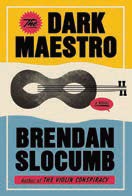
The Dark Maestro, by Brendan Slocumb

Curtis Wilson is a cello prodigy, growing up in the southeast D.C. projects with a drug dealer for a father. Through determination and talent — and the loving support of his father’s girlfriend, Larissa — Curtis claws his way out of his challenging circumstances and rises to unimagined heights in the classical music world. Then, suddenly, his life disintegrates. His father, Zippy, turns state’s evidence, implicating his old bosses. Now the family — Curtis included — must enter the witness protection program if they want to survive. Curtis is forced to give up the very thing he loves the most: sharing his extraordinary music with the world. When Zippy’s bosses prove too elusive for law enforcement, Curtis, Zippy and Larissa realize that their only chance of survival is to take on the criminals themselves.

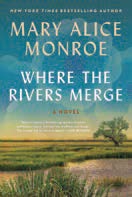
Where the Rivers Merge, by Mary Alice Monroe

It’s 1908 and the Low Country of South Carolina is on the cusp of change. Mayfield, the grand estate held for generations by the Rivers family, is the treasured home of young Eliza. A free spirit, she refuses to be confined by societal norms and spends her days exploring the vast property, observing wildlife and riding horses. But the Great War, coastal storms and family turmoil bring unexpected challenges, putting Eliza on a collision course with the patriarchal traditions of a bygone era. Fast-forward to 1988. Eliza, now 88, is the scion of the Rivers/DeLancey family. She’s fought a lifetime to save her beloved Mayfield and is too independent and committed to quietly retire and leave the fate of the estate to her greedy son. She must make decisions that will assure the future of the land and her family — or watch them both be split apart. Where the Rivers Merge is a dramatic and sweeping multigenerational family story of unyielding love, lessons learned, profound sacrifices, and the indomitable spirit of a woman determined to protect her family legacy and the land she loves.

Nonfiction

Mark Twain, by Ron Chernow

Before he was Mark Twain, he was Samuel Langhorne Clemens. Born in 1835, the man who would become America’s first great literary celebrity spent his childhood dreaming of piloting steamboats on the Mississippi. But when the Civil War interrupted his career on the river, the young Clemens went west to the Nevada Territory and accepted a job at a local newspaper, writing dispatches that attracted attention for their brashness and humor. It wasn’t long before the former steamboat pilot from Missouri was recognized across the country for his literary brilliance, writing under a pen name that he would immortalize. After establishing himself as a journalist, satirist and lecturer, he eventually settled in Hartford, Connecticut, with his wife and three daughters, where he went on to write The Adventures of Tom Sawyer and Adventures of Huckleberry Finn. He threw himself into the hurly-burly of American culture and emerged as the nation’s most notable political pundit. At the same time, his business ventures eventually bankrupted him. Twain suffered the death of his wife and two daughters, and the last stage of his life was marked by heartache, political crusades, and eccentric behavior that sometimes obscured darker forces at play. Drawing on Twain’s bountiful archives, including thousands of letters and hundreds of unpublished manuscripts, Chernow captures the man whose writing continues to be read, debated and quoted.

Children's Books

Mugs and Kisses: World’s Best Mom, by Teresa Bonaddio

There are so many reasons to love our moms! Moms are magicians, our strongest supporters, our biggest fans. Moms deserve to be honored. This adorable mug-shaped board book is perfect for Mother’s Day, birthdays or any day you want to celebrate the amazing moms that make our lives great. Pair with mom’s favorite tea or coffee for the perfect gift. (All ages.)

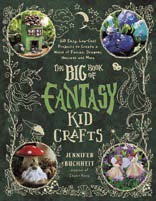
The Big Book of Fantasy Kid Crafts, by Jennifer Buchheit

Fairy house bird feeders, suncatcher dragon wings, egg carton gnomes, firefly lanterns and more. With fabulous photos and step-by-step instructions, craft-crazy fantasy adventurers (and their grownups) will enjoy many afternoons of fun with this unique how-to book. (Ages 4-12.)

K Is in Trouble Again, by Gary Clement

Darkly comic K is back for more (slightly tragic) adventures, perfect for that tween graphic novel reader who appreciates a little gallows humor and has outgrown “Big Nate” and “Dog Man.” (Ages 10-13.)

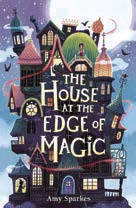
The House at the Edge of Magic,
by Amy Sparkes

Sometimes heroes come in the most unlikely form. Nine is a pickpocket without an altruistic bone in her body. When she lifts a tiny house from a lady’s purse and knocks on the door, it morphs into a giant higgledy-piggledy house complete with a troll housekeeper named Eric, a mad alchemist who is really a spoon, and a hopscotch-loving wizard all living under a terrible curse. Will Nine choose to become a hero and help? (Ages 9-12.)

Almanac May 2025

ALMANAC

Almanac May

By Ashley Walshe

Come with me into the woods where spring is advancing, as it does, no matter what, not being singular or particular, but one of the forever gifts, and certainly visible.

Mary Oliver, from “Bazougey” (Dog Songs, 2013)

May is the dreamer and the dream, the artist and the muse, a wish both made and granted.

Daisies are sweet, she must think to herself, giggling as she scatters them across green spaces and rolling meadows, weaving them among butterfly weed and purple coneflower; gently tucking them alongside bluebells and Indian blanket.

A dusting of iris for the pine forest. Jack-in-the-pulpit for the wet and shady woodlands. And for the garden? Peonies, poppies, sweet peas, gardenias and roses.

“Come to me,” says flower to bee.

“Only you,” bee purrs to blossom after fragrant blossom.

And so it goes with milkweed and monarch, yarrow and ladybug, foxglove and hummingbird.

“I’ve been aching for you,” murmurs snake to sun-warmed stone.

“Ditto,” stone whispers back.

Listen to the queenking of treefrog, the whistling of robin, the moonlit chanting of whippoorwill. All of life is a call and response, even if we can’t perceive it.

Magnolia flowers titter at the touch of beetle feet. Phlox swoons at the kiss of eastern swallowtail. Cottontail quivers at the nip of wild strawberry.

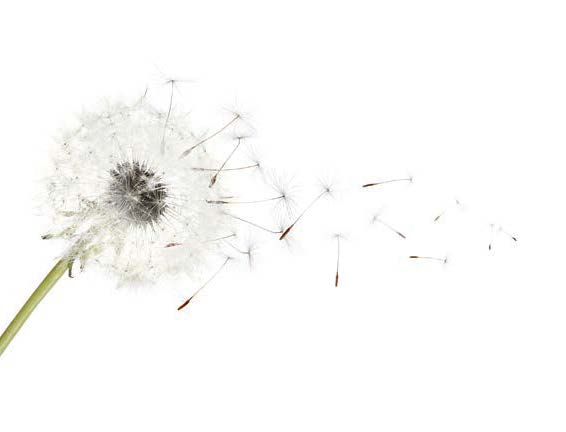
New leaves reach for the generous sun. Earthworms pray for rain. Dandelions wish for children.

“Pick me,” a puffball whispers on a gentle breeze. A little boy answers, lifts the downy orb to the light, closes his eyes, and sends one hundred wishes soaring — ninety-nine of them dreams for the gift of an endless spring.

Legendary Sweetness

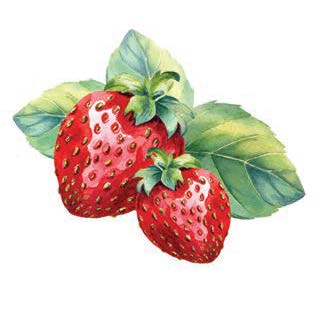
The Cherokee legend of the first strawberries tells of a quarrel between the earliest man and woman, and the sun’s role in their reconciliation.

“I shall live with you no more,” says the woman, storming away in anger. Seeing that the man is sorry for his harsh words, the sun intervenes. Casting his golden rays upon the earth, he sends plump raspberries, glistening blueberries, then luscious blackberries. The woman blasts past all of them. Finally, when sun-warmed strawberries appear gleaming at her feet, she stops in her tracks. One bite and the sweetness washes over her. Filled with the joy she shared with her husband before their fight, she gathers the strawberries to share with him.

“To this day,” writes Joseph Bruchac in The First Strawberries, a retelling of the Cherokee story, “when Cherokee people eat strawberries, they are reminded to always be kind to each other; to remember that friendship and respect are as sweet as the taste of ripe red berries.” 

Want to pick your own strawberries this month? Find PYO farms across the state at pickyourown.org.

Mama Loves You

Mother’s Day is observed on Sunday, May 11. As you celebrate all the mamas you hold dear — mother comes in many forms — don’t forget the one who holds us all. We love you, Mother Earth. Thank you for all that you give. May we learn to honor you through our choices, our actions and our grateful hearts.

Golftown Journal

GOLFTOWN JOURNAL

Talk the Talk

And put on the headphones

By Lee Pace

By April 2020, Matt Ginella had spent seven years on a dream assignment collecting and producing golf travel content for the Golf Channel. But that spring the world ground to a halt in the wake of the COVID-19 outbreak. Ginella, for years a print journalist before moving to television, was at his heart a storyteller, and found himself with oodles of time and a vault of interesting tales gathered from pursuing the sport around the globe.

Prior to the pandemic, he’d been reluctant to jump on the podcast bandwagon. Here a podcast, there a podcast, everywhere a podcast — one of these newfangled instruments to deliver what was essentially a radio show. But a new venture he conceived with fellow journalist Alan Shipnuck called The Fire Pit Collective was the perfect venue for Ginella to begin generating hour-long conversations with the fascinating people he’d met in the game. The Fire Pit Podcast was born.

“One might say I had an epiphany,” Ginella says. “The world was grounded. We were quarantined. Yet people were still interested in a quality narrative. It was the perfect launchpad, an outlet for my passion for telling stories.

“Over the years, I’d had access to incredibly interesting and inspiring people. We always left some of the best stuff on the cutting room floor. We turned that upside down, put those out in podcast form. We are hyperfocused on the best story, the type of story told in a fire pit atmosphere after a full day of golf. Pour a drink and sit by the fire. We’re letting people stretch, letting them go and giving them time to tell their best stories.”

The result five years later is a library of nearly 200 podcasts encompassing personalities, travel, equipment, the greats of the game and major championships.

One of the most entertaining shows was a two-parter from August 2022, about the “Manning Brothers Buddies Trip,” when Eli, Peyton and Cooper Manning travel to Scotland with buddies like Eric Church, Jim Nantz and Taylor Zarzour, navigating — in intricate color and hilarious detail — the golf courses, bars and cemetery walls next to the Old Course. It took 14 interviews and eight hours of tape to get the story pat.

“For this old soul, to have buddies on the ultimate buddy trip allows you to experience it vicariously, by connecting me via Facetime worlds apart, to have me there live and in person, is a very nice gift,” Nantz says. “A gift of friendship. Golf does that to you.”

Indeed, it does. Golf has always been revered for its rich literary heritage, and now the spoken word through the podcast has a significant place at the table.

The podcast format has been around for about 20 years, the “pod” coming from the Apple iPod that was introduced in the early 2000s. Podcasts are best described as on-demand radio — audio content like you would find on the radio but available in episodes that listeners can stream from the internet anytime, anywhere, on venues like Apple Podcasts or Spotify. In time, video was introduced, and now podcasts are streamed on YouTube and other social media. There are some 600 golf podcasts on Spotify.

January marked the third year of the Pinehurst area Convention and Visitors Bureau “Paradise in the Pines” podcast. The podcasts are hosted by CEO Phil Werz, run about 30 minutes in length, and are posted (in general) every other Tuesday. The theme of the podcast is to share conversations with the people who make the Sandhills the “Home of American Golf,” with guests having a direct tie to the Sandhills whether it be for golf, business or other interests. Guests have included Mike Hicks, the caddie for the late Payne Stewart; Angela Moser, the lead designer on Tom Doak’s staff for Pinehurst No. 10; and Jamie Ledford, president of Pinehurst-based Golf Pride Grips.

“Social media content is one of the most important things we do as a destination marketing organization,” Werz says. “The podcast was simply another way to produce content via a popular mechanism.”

Chris Finn launched a golf fitness and rehabilitation practice named Par 4 Success in Durham in 2013, and the company has grown substantially over a dozen years into ever-bigger headquarters facilities in the Research Triangle Park. He launched a podcast in July 2023 called “The Golf Fitness Bomb Squad,” installed production capabilities in a new company headquarters, and now consistently produces an average of two podcasts a week. One of them features a guest — someone from the golf equipment, instruction, fitness or other disciplines — and the second is a shorter subject addressing topics like off-season conditioning, injury rehab or improving mobility.

“No one in the fitness or rehab space was doing anything research- and science-based,” Finn says. “We talk to top instructors, equipment guys, fitness experts and bring it back to golf fitness. We’ve had PGA Tour and LPGA pros, and long-drive champions. Fitness is the underlying thread. We take a casual approach to introducing people to the fitness world in an unintimidating way. We meet them where they’re at instead of talking over their heads.” 

The “No Laying Up Podcast” will hit its 1,000th episode in 2025 in more than a decade of production. What started as a group text among college friends in 2014 has grown into one of the most popular podcasts in the game as it strives to provide fresh, funny and informative conversation on all things golf. In early February, the No Laying Up gang was at the AT&T Pebble Beach Pro-Am — won by Rory McIlroy — just weeks after doing a deep dive on “The Lost Decade of Rory in the Majors.” It generates significant content on the pro tours but also ventures into topics such as gaining clubhead speed with Dr. Sasho McKenzie, co-founder of The Stack System. And they have had good access to top-level guests like Tommy Fleetwood, Jim Furyk and Mike Whan.

In 2015 Andy Johnson, frustrated by traditional golf media, set out to generate his own newsletter. He found an audience, and in time it evolved into The Fried Egg website, which has a decided bent toward golf architecture. Often on “The Fried Egg Podcast,” he and co-host Garrett Morrison delve into intricate detail on the design, personality and playability of the world’s top courses. You’ll learn of courses you’ve never heard of but want to immediately put on a buddies trip list.

The Golfer’s Journal was launched in 2018 as a hefty print book being released quarterly. Its motto is “Golf in its purest form,” and the magazine and accompanying podcast are not interested in the newest driver or golf ball design or swing technique. They find the most interesting people, venues and stories to write and talk about. Author Tom Coyne hosts many of the podcasts along with editor Travis Hill. Wide-ranging subjects have included a multi-podcast history of the Masters and Augusta National; interviewing Bill Coore about his golf design travels and a personal trip to Antarctica; and how Padraig Harrington is one of the most interesting people in golf. 

There are podcasts for all interests and tastes — humor, travel, the mental game, swing technique and history. Like courses in the Sandhills, there are plenty of options for golf junkies to get their fix.

Poem May 2025

POEM

Erosion Control

We were losing the ridgeline to the dusk
when you asked, “What if I had stayed?”

Ten years is nothing
to a mountain —

unless you clear-cut
and gut it
for someone else
to move in.

I’ve done that too many times —
made my heart a gorge with a river
everyone floats through.


I looked at you
and said, “It wouldn’t have mattered.”

And you stared at me
with eyes
that looked so tired
of trying
to rebuild a rockslide.

  Clint Bowman

Tea Leaf Astrologer

TEA LEAF ASTROLOGER

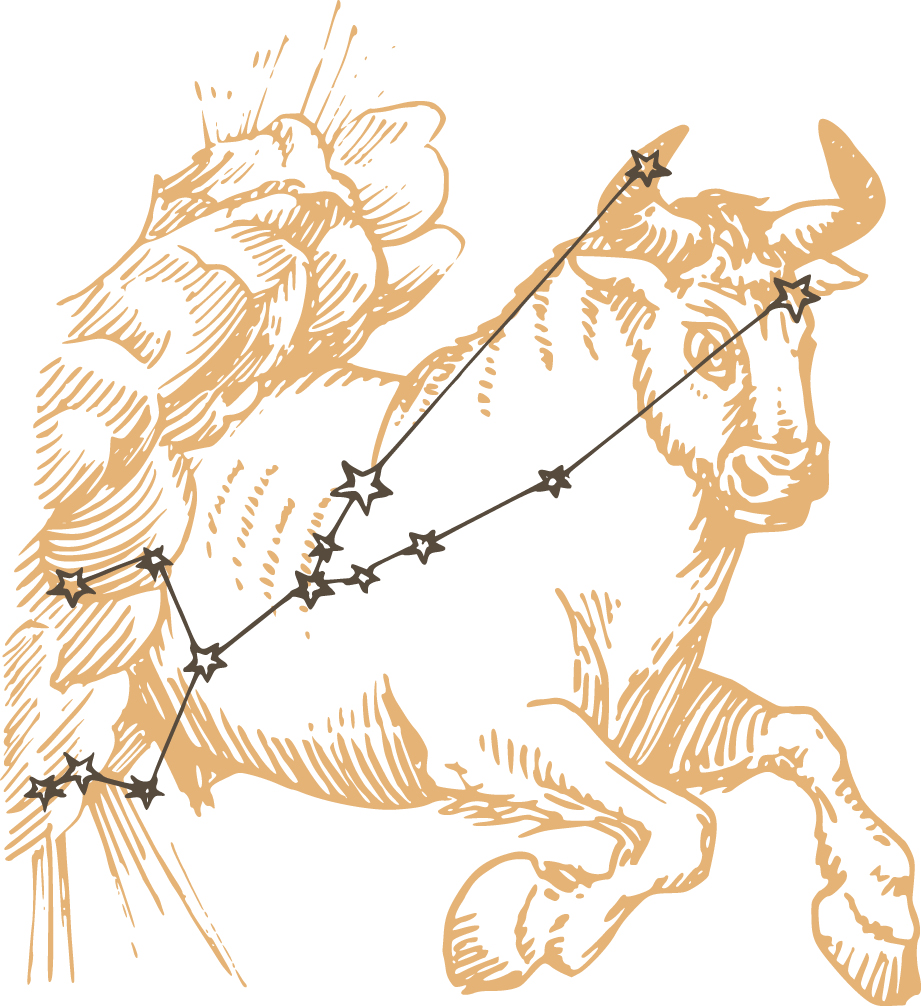
Taurus

(April 20 - May 20)

Whoever said that small minds discuss people surely wasn’t calling out a Taurus. When Mercury enters your sign on May 10, however, remember that the tea won’t spill itself.
On May 12, the full moon in Scorpio will illuminate an opportunity for you to get crystal clear on what really matters. Lastly, if things are feeling a bit awkward in the romance department, you can expect that to continue until Venus glides back into your sign on June 6. In other words, hang tight.

Tea leaf “fortunes” for the rest of you:

Gemini (May 21 – June 20)

Follow the care instructions.

Cancer (June 21 – July 22)

Stir until fragrant.

Leo (July 23 – August 22)

Don’t be afraid of your own roar.

Virgo (August 23 – September 22)

Polish the mirror.

Libra (September 23 – October 22)

Dare you to take a “Me Day.”

Scorpio (October 23 – November 21)

Start writing things down.

Sagittarius (November 22 – December 21)

Cancel your ego trip.

Capricorn (December 22 – January 19)

Relax your neck and jaw.

Aquarius (January 20 – February 18)

Hint: Slow and steady.

Pisces (February 19 – March 20)

Try using a different soap.

Aries (March 21 – April 19) 

You might want to pack a snack.

Out of the Blue

OUT OF THE BLUE

Strangers on a Plane

To talk or not to talk, that is the question

By Deborah Salomon

From what I’ve noticed, the only remaining conundrum pertaining to air travel is whether a passenger should strike up a conversation with his or her seatmate. If yes, then when? And how? Are there age guidelines? What are the clues that the passenger wedged next to you will be receptive? Notice any body language? I’m assuming the punk rocker with tattoos and wild hair would leave a sweet old lady alone, but who knows? Odd couples happen.

I fly to see my grandsons in Canada three or four times a year. Because I’m old and have a bum knee I get to board first, then watch passengers head down the aisle. Will I get Sumo with T-shirt exposing bellybutton? Mother and fussy baby? Techie toting cellphone, tablet, Kindle, earbuds? Business guy pining for first class? Whatever — I nod, smile, then assume nap mode.

Last trip I encountered someone and something bordering surreal.

I had the window seat — hardly glanced at the woman who stopped to check her boarding pass. I smiled and fished out her safety belt buckle, which had fallen between the seats. I’m not sure how she started the conversation . . . probably, “Are you going home to Montreal?”

“No,” I explained, then shared the reason as I turned to look at her face, full-on. The woman, whose name I learned was Suzanne, was about 60 and uncommonly beautiful, the result of the very best skin, hair, nutrition, exercise and dental care. She lived in Philadelphia, was divorced, a retired RN with two grown daughters.

She asked what I (as a newspaper reporter) call smart questions. Decades ago, this woman would be labeled “well-bred.” Certainly “highly educated.’’

When the beverage cart stopped at our row, Suzanne asked for club soda, which the flight attendant didn’t have.

I asked the purpose of her trip, which proved to be an unusual relationship with a French engineer who worked in northern Quebec. They see each other for a month or two, several times a year, his place or hers.

Interesting. I saw how this arrangement could work for a mature couple, played by Cary Grant and Deborah Kerr. For a title I purloined Alfred Hitchcock’s Strangers on a Train, from the 1950s, when plot and character development mattered.

We spoke of family, travel, technology, aging, health, climate and, of course, politics. Suzanne (not her real name) brought up the subject, gingerly. I broke a self-imposed ban and took the bait.

I told her, a perfect stranger, about losing two children to bipolar disorder, something I rarely discuss. Of course I bragged about my grandsons. I don’t remember if she has any.

The flight from Philly to Montreal lasted an hour-and-a-half. We talked the whole way, connected on many points. I gave her my business card, said she was welcome to email. She offered no identification, not even her surname, which I hardly noticed at the time.

When I got home a friend chided me for revealing personal information to a perfect stranger. “Just wait,” my friend said. “And watch your financial statements. This sounds like a shakedown.”

I was appalled. Has the world become so cynical that random chit-chat becomes suspect? Must we apply “see something, say something” indiscriminately?

Sadly, yes, because these days trust has become a luxury if not a danger. These days children are gunned down at school and pedestrians run over on the sidewalk. And stealing an identity (which I’ve experienced) isn’t much harder than stealing an apple off a pushcart.

I’m beginning to sound like a Twilight Zone episode. However, if my cynical friend is right about the shakedown, then stop the world, I’m outta here.

Dissecting a Cocktail

DISSECTING A COCKTAIL

White Wine Sangria

Story and Photograph by Tony Cross

Spring is peaking, and patio drinking is a must. Myriad cocktails fit the criteria and, for me, they’ve got to be light and refreshing. There should be a handful of options in your arsenal: mojitos, gin and tonics, spritzes and so on. So, choose your own adventure.

A cocktail I recently rediscovered is the white wine sangria. This is a simple, classic recipe from Canon owner and bartender Jamie Boudreau. I’ve never been keen on traditional sangrias — I like my red wine without any fuss — but a white wine sangria makes perfect sense. I love French 75s and other Champagne cocktails, so adding clear spirits to a dry or crisp white wine (dry white wine on its own in the spring is lovely, too) only seems right. Boudreau’s recipe calls for a citrus-forward gin in Martin Miller, but you may sub in Tanqueray 10, Sutler’s Spirit Co. or your personal favorite. He uses elderflower liqueur from St. Germain, which adds a touch of sweetness and all the lovely floral notes of St. Germain.

The recipe below is for a small pitcher or carafe for sharing. Make sure to add the St. Germain after the sparkling wine and gin; the liqueur is rich and heavy, so it will slowly sink to the bottom. Take advantage of your local farmers markets for seasonal fruit — whatever is available works, whether its blackberries, strawberries or raspberries. Any brightly colored fruit will make the aesthetic of this cocktail pop.

Specifications

12 ounces dry sparkling white wine

2 ounces St. Germain Elderflower Liqueur

1 ounce Martin Miller Gin

Lemon and lime wheels

Seasonal fruit


Execution

In a small pitcher, add ice, sparkling wine, St. Germain, gin and and fruit. Lightly stir and top off with more sparkling wine. Serve in wine or Collins glass with ice and more fruit.

Omnivorous Reader

OMNIVOROUS READER

Duck and Cover

How to keep your personal information safe

By Stephen E. Smith

When my mother was a teenager, she was the only all-night operator in a town of about 2,000 souls. The hours were long, so she eavesdropped on private conversations. When she got home, she shared the latest gossip with my grandmother, and within a few hours, everyone in town knew everyone else’s business.

In theory, it still works that way, except, of course, that our personal data is managed by computers — our iPhones, laptops, tablets and the clandestine eavesdropping monsters that lurk in the mystical ether — which speed up and amplify the collection process while disseminating our confidential information globally. The result, however, is the same: There are no secrets, finally or ever.

This is why Lawrence Cappello’s On Privacy: Twenty Lessons to Live By is a timely little book (151 pages) that’s surely worth the few minutes it takes to read it. It won’t be the most exciting book you’ve read, but it might be one of the most important.

Cappello is a professor of U.S. legal and constitutional history at the University of Alabama. He’s the author of None of Your Damn Business: Privacy in the United States from the Gilded Age to the Digital Age, and he’s a certified information privacy professional. He’s on top of this data collection stuff, and his advice might help you sleep a little more soundly.

We’re hammered daily by claims that the equity in our homes is being stolen, our bank accounts plundered, our reputations besmirched, and our children driven to suicide. And then there are the endless scams that pop up on our screens (I consider everything a scam until it proves itself otherwise, and then I know for sure it is a scam). And now the government — who should be protecting us — has gotten into the info-distribution game via the unsupervised plundering of heretofore confidential databases.

On Privacy is written for those who are fearful about the disclosure of their personal data but who are reluctant to toss out their electronic devices. Cappello cuts through the noise and confusion and enumerates in short, sensible steps the necessary safeguards we need to adopt to be secure in the digital age. He offers practical insights into why privacy matters, how it shapes free societies, and how it rules our lives in an increasingly interconnected electronic world.

What Cappello doesn’t do is bombard his readers with terrifying stories about unfortunate fellow citizens who’ve suffered life-altering internet crimes. Horrifying examples only encourage despair. Instead, Cappello begins by addressing the requisite rationalization, “The Nothing-to-Hide Trap,” in which we maintain that if we are full-time do-gooders, we have nothing to fear from those who’d access our personal data. “Our personal information exists in snippets,” he writes. “When taken out of context, the private details of our lives . . . too often paint a picture of us that is skewed and not entirely true,” and thus we are often misrepresented. Since first impressions matter, we should focus on what computers collect and, more importantly, the distribution of our personal data.

Cappello breaks down the threats to our privacy into easy-to-read chapters that present the problems and suggest solutions. After a brief discussion of “Privacy Is Essential to Mental Health,” he appends suggestions on “How to Talk About Privacy’s Mental Health Benefits,” followed by “How to Protect Your Mental Health Through Privacy.” It’s all very straightforward.

He claims, for example, that we have the right to be forgiven our youthful transgressions. We make mistakes. “Unfortunately, the mistakes we make in life will remain instantly accessible,” he writes, “to any stranger inclined to take thirty seconds for a quick online search.”

Moreover, we are constantly under surveillance; our movements are tracked by our phones, computers and cameras on the street. If that’s not intrusive enough, outside sources can read your private electronic communications. He offers a solution: Secure your email with PGP encryption, a popular tool that scrambles your writing so that only the intended recipient can read it. The same is true for texts; encrypted text messaging apps are readily available and require only a quick download to your phone. These email and text apps also have an automatic delete option. And he recommends you buy a Faraday bag, a small pouch that blocks all signals; otherwise, you can be tracked by your phone even if you turn off your GPS.

Not only are we surveilled by private entities, but the government has, for many years, been poking into our business. Surveillance is the enemy of free expression: It discourages people from participating in political movements by instilling the fear they’ll be arrested for speaking out against the powerful, which inhibits the right of free assemblage as guaranteed by the First Amendment. Cappello reminds us that the “belief that the surveillance powers of the state must be constantly kept in check is a cornerstone of what it means to live in a free country.”

Most of Cappello’s recommendations are simple and easily implemented: “When in doubt, log out,” delete apps you aren’t using and any accounts associated with them, tape off the camera on your computer, clear your browser history, get rid of caches and cookies, turn off and lock your computer when not in use, and purchase your own Virtual Private Networks (VPNs), which makes it difficult to track your online activity. And those are just a few of the suggestions that might save you money and safeguard your reputation. 

Of course, the obvious way to protect your future information — there’s little you can do about the past — is to disappear or “go dark,” as folks are wont to say. This would necessitate the destruction of all your electronics — computers, streaming devices, tablets, phones, smartwatches, etc., and all storage systems — thumbnail drives, hard drives, data stored in the cloud (the global network of remote servers that functions as a single ecosystem), old floppy disks, credit cards, etc. Everything. All of it. Then disappear. Forever.