Out of the Blue

Swinging on the Vine

Did I hear what I think I heard? Probably not.

By Deborah Salomon

Before email, before text and Facebook, before Twitter, before even Instagram there was the grapevine. Who could forget the late, great Marvin Gaye belting out, in 1968, “I heard it through the grapevine . . . ?” The term became synonymous with salacious news.

Lately, my antennae twitched over the following entries, all in good fun, of course:

Putin: OK, OK. So I bit off more than I can chew. I’ll take a week at the Black Sea billion-ruble dacha with one of my children’s mothers.

Rudy Giuliani: Those dopes say my rants prove that I’m senile. Hogwash! Look (drip-drip), my hair isn’t even gray.

Coach K: One-and-done? How about 1,202 (wins) and done. And look, my hair isn’t even gray.

Mayim Bialeck: “Sure, I’m a TV spokesgal for Neuriva (brain supplement). If I didn’t take it, I’d be hosting The Price Is Right instead of Jeopardy!

Ivanka Trump: “Of course we need 10 bathrooms in our new Florida estate. We have five people in this family.” 

President Joe Biden: “Jill, honey, . . . where did I leave my walker?”

First Lady Jill Biden: “Who said blondes have more fun?” Probably L’Oréal heiress Francoise Bettencourt Meyers, the richest woman in the world.

Downton Abbey: A New Era: Lights! Camera! Costumes!

Secretary of State Antony Blinken: “Where are Winken and Nod when you really need them?”

Prince Harry: “Of course she married me for my personality. And look, my hair isn’t even . . . there.”

Prince William, channeling Richard III: “Hair plugs, hair plugs! My kingdom for some hair plugs.”

Crown Prince Charles: “Who needs hair? I’m the heir.”

Vice President Kamala Harris: “Today is Tuesday, which means the baby blue pantsuit. Wednesday is maroon, with matching stilettos.” Good choice, ma’am. Harder to put foot in mouth while wearing stilettos.

Martha Stewart: “Inflation? What inflation? Let ’em eat cheesecake!”

Elon Musk at the karaoke bar, channeling Sinatra; “Fly me to the moon . . . ”

Melinda Gates, on ex-hubby Bill: “He’s just a big ol’ Microsoftie.”

Donald Trump, on Jan. 6: “No big deal. Just celebrating Elvis’ birthday two days early.”

Melania Trump, channeling Greta Garbo: “I vant to be left alone.”

Barron Trump: Denies relationship to Larry Bird. Yet, at 6’7” the resemblance is unmistakable. Except The Birdman smiles.

Patriotism: July 4th, dude. Gotta do something patriotic. Like pay a hundred bucks to see Hamilton or wear some stars-and-stripes flip-flops which now, like everything else, cost $1.25 at the Dollar Tree.

Truth or rumor? Fact or fiction? Stick with Marvin Gaye: “I heard it through the grapevine . . . ” PS 

Deborah Salomon is a writer for PineStraw and The Pilot. She may be reached at debsalomon@nc.rr.com.

Golftown Journal

The Pinehurst Look

The natural treasure of the Sandhills

By Lee Pace

Three years into the Robert Dedman and ClubCorp era of Pinehurst Resort and Country Club in 1987, green fees to play Pinehurst No. 2 were $24 with a $15 surcharge for hotel guests. That year Don Padgett Sr. joined the staff as director of golf, and the former PGA of America president and long-time golf industry insider immediately moved to double the base fee to $48.

“It was not as if we were trying to make more money,” remembers Pat Corso, the resort CEO from 1987-2004 who hired Padgett. “Don said if our value is that low, people will perceive us to be that low. We had to do better than that.”

Today most rounds of golf on No. 2 are factored into a golfer’s membership at the private country club or a visitor’s hotel package, but the rack rate is upward of $500 in high season.

Talk about inflation — not only in dollars but prestige.

The 2022 U.S. Women’s Open was held recently at Pine Needles Lodge and Golf Club, unofficially launching the next high-water mark in the Sandhills’ visibility in the national golf scene.

The day following the Women’s Open, the USGA broke ground for its $25 million Golf House Pinehurst, the equipment-testing facility, innovation hub, museum/visitor center and offices on ground adjacent to the Pinehurst member and resort clubhouses.

Later this month, the USGA launches the inaugural U.S. Adaptive Open, to be held at Pinehurst No. 6 and contested by players with physical, visual and intellectual impairments.

And in two years, the U.S. Open returns to No. 2 for its fourth rendition and the first of five Opens it has secured within the framework of having been designated in 2021 as an “anchor site” for the American national championship (the others coming in 2029, 2035, 2041 and 2047).

“It’s more than just a championship for us here in the Sandhills,” says John Bodenhamer, the USGA’s director of championships. “The players can speak to it. They love a golf course like Pine Needles. Great golf courses produce great champions. How do you argue what’s come about here?”

Michelle Wie West, who won the 2014 Women’s Open on No. 2, and Lydia Ko, who finished sixth at Pine Needles, were among the players who soaked up the Sandhills vibe.

“There’s so much history around this place,” Wie West said of a morning stroll through the village of Pinehurst. “Just to be walking here and playing, it’s a huge honor.”

“This is a huge golfing community,” added Ko. “It’s actually nice to go to places where people love it, people are excited about women’s golf being here, people are excited about golf in general.” 

The 2014 USGA doubleheader on No. 2 with the men’s and women’s national championships just after the Coore and Crenshaw 2010-11 course restoration combined with the recent event on a Pine Needles course similarly renovated by Kyle Franz have cemented what has evolved into “The Pinehurst Look” — a distinctive array of sandscapes, wispy grasses, jagged edges and towering pines that reflect the native environment.

That’s as it should be and is a style to be embraced by the Sandhills golf community. Televisions at various corporate entertainment venues at Pine Needles through the weekend showed simultaneous coverage of the golf at Pine Needles and from the Memorial Tournament at Muirfield Village on the PGA Tour.

Visuals from the Memorial screamed of green, green and more green in an organized and seamless fashion. Golfers missing fairways and greens bent over and peered into the lush rough to figure out how much of their ball was accessible.

In contrast, the views from Pine Needles reflected haphazard displays of Mother Nature doing her Sandhills thing — random and arbitrary plant growth, and fairway edges and tinges of brown in the bouncy fairways. Franz in his restoration of the 1928 Donald Ross design over 2017-20 removed 11 acres of Bermuda rough, leaving wayward shots finding an infinite array of lies and challenges amid the wiregrass and volunteer vegetation.

“This look brings out the architectural features that Donald Ross envisioned before irrigation and takes much less water to maintain,” says Jim Hyler, the 2010-11 USGA president and a part-time resident of Pinehurst. “It emphasizes the ground game, which places a different set of demands on the player than a green, lush course.”

Elsewhere around the Pine Needles campus, the USGA erected large banners heralding future Women’s Open venues. Each golf course reflected its essential nature and calling card — the ocean at Pebble Beach, the fescue roughs and treeless landscape of Erin Hills, the eucalyptus trees and kikuyu rough of Riviera, the notorious bunkers of Oakmont.

There was a time when Sandhills golf courses had lost their way, when the 2005 Open was played at No. 2 and the 2007 Women’s Open at Pine Needles and the visuals were dominated by narrow, bowling-alley fairways, layers of different mowing heights for roughs, and a misguided effort to look like Augusta National North.

“You could have been anywhere in the southeast United States where there is Bermuda grass and pine trees,” says Ran Morrissett, a Southern Pines resident and curator of the Golf Club Atlas website. “Pinehurst No. 2 no longer reflected that it was in the Sandhills of North Carolina. The golden age fairways typically were 42 to 47 yards wide. At one point before the Coore and Crenshaw restoration, I paced off the first fairway at 24 yards and at one point on the seventh fairway — I think the crook of the dogleg — it might have been 12 yards wide.

“That’s not how Donald Ross defended par. He defended it at the greens. But what happened was some guy plays it for the first time and you ask, ‘What did you think of 13?’ and he says, ‘Well, which hole was that?’ The holes were no longer distinctive.”

Minjee Lee, who won the Women’s Open with a four-shot margin and a 13-under-par total, certainly understood the distinctiveness of these Ross-designed courses through her final round. On the sixth hole, she missed the fairway left and had to thwack her ball through a tuft of wiregrass. On seven, she was wayward right, her ball sitting clean on the hardpan sand, but at address her clubshaft was swallowed by a willowy wiregrass plant. And on the par-5 10th, her second shot missed the green left and came to rest within a nesty enclave of dead grass.

So what if the scores were relatively low and Lee won with a 271 total, the lowest in the history of the Women’s Open? You had good weather and little wind. 

“All great architecture is prone to players playing really well on it,” Franz said. “The conditions are right, and that’s the greatness of Ross’s style.”

Low scores and the pure Sandhills look beat higher scores artificially promulgated by fertilizer and irrigation. The template has been properly reinstituted, these Donald Ross treasures coming full circle to when the young man from Dornoch embraced the similarity of the Pinehurst ground to that of his homeland in Scotland. 

It’s a look of its own and one that prompted USGA President Mike Whan to remark in lengthening shadows of the 18th green Sunday evening at Pine Needles, “You feel like you’re at the home of golf in America.”

Treasure that and lock it down. PS

Lee Pace has written about the Pinehurst-area golf scene for more than 30 years, including authoring Sandhills Classics — The Stories of Mid Pines & Pine Needles. Write him at leepace7@gmail.com and follow him @LeePaceTweet.

Sporting Life

Truckload of Memories

And there are someadventures left

By Tom Bryant
It was about 8:30 and I planned to call it an early evening since I was to be up and at ’em at sunrise the next morning to do a little pond fishing, my favorite kind. Linda, my bride, was in the den watching Jeopardy!, her favorite game show.
“I’m sacking out, Babe. Up early in the morning. You want me in the guest room, or do you want to watch the sun come up with me?”
“Guest room. You can tell me all about the sunrise. I hear your phone.”
My phone was in the kitchen, ringing its persistent nagging call. I checked the number and saw the caller was our son, Tommy. “Hey, Tom Bryant. Whatcha doing?”
“I’m up on Three Top, just coming down off the ridge. I had to detour from the trail a little. Saw a bear cub about 50 yards away and sure didn’t want to get in between the cub and its ma.”
Tom had just bought several acres on Three Top Mountain close to Jefferson and was planning a little hunt cabin because the property borders the game lands.
“That’s smart thinking, buddy roe. There’s nothing worse than an angry mama bear. It’s pretty late, almost dark here. I hope you’re about off the trail.”
“Plenty of light here, and I’ll be back to the truck in a few minutes. Andy called and wants to talk to you about buying the Bronco.”
Andy is a good friend of Tom’s. They both went to Lees-McCrae College in Banner Elk and stayed in touch after graduation. Andy and his wife live in New Hampshire, but he travels to Pawleys Island in South Carolina often to visit his family.
“He wants to buy the Bronco?”
“Yes, sir. He remembers the truck from the time I had it up here at school. He fell in love with it back then.”
“Tom, the old Bronco has been sitting in the garage for years. You know that. I only crank it up every now and then, back it out and let it run a bit and then put it back in the garage.”
“He says he really wants it. He’s becoming something of a car collector. Or wants to be.”
“I’ll be happy to talk to him,” I replied, “but I don’t think I want to sell it right now. I understand those old Broncos are commanding quite a dollar figure.”
“OK. I’ll tell him. Be looking for his call.”
We talked a little longer about his doings in the mountains, and I said good night and gave the phone to his mom. She loves to talk to Tommy. He’s approaching 50, but like moms everywhere, she figures her kid never gets too old to receive a few instructions.
As I was trying to go to sleep, I thought back to the history I had with the old truck. Some of my friends often said jokingly, “If that Bronco could talk, Bryant would be in all kinds of trouble.”
We traveled to a lot of places, most of the time with a canoe on top. Trips to the Okefenokee, duck hunting at Mattamuskeet, and many, many trips to our own secret duck hole.
In good times and bad, it seems that the Bronco was there. There is a photo somewhere with Tommy and my first Lab puppy, Paddle, sitting on the tailgate. Both the boy and the dog are smiling.
The old vehicle has been kinda put on the back burner, resting in our garage like I told Tommy, only getting fired up every now and then.
I bought the truck when it was brand new, smelling like all kinds of adventures. A friend and I had just started a weekly newspaper back in the days when newspapers were proudly appreciated. I spent many days and hours in the truck hauling newspapers from the press to the office and to racks around the county. I learned to live out of it, for work as well as play.
One time I did a little inventory of the items I had accumulated in the Bronco over a period of time. It started with my gunning bag, in itself quite a useful tool. It has lugged shotgun shells in a variety of gauges and sizes for hunting ducks, doves and small game, a few rifle cartridges and several rounds of ammo for handguns. It has held cans of sardines, beanie-weenies and candy bars. In it I’ve found long-lost pocketknives, and one time a Leatherman tool that I swore I lost in the marshes of Bodie Island. The gunning bag made by Barbour is very versatile. It has served many times as my carry-on bag aboard flights to New York City, emptied of hunting paraphernalia, everything except a sack of beef jerky. I like to take a little of home with me when I travel.
I also keep training tools for my Lab in the classic truck like retrievable training dummies, an extra dog collar and a few dog biscuits in a sack. I got tired of her eating my jerky.
There was a towing strap, three spark plugs, 50 feet of camouflage duck rope. Two rolls of toilet paper, two hats, a pair of gloves and an old, worn down to the good, camouflage duck coat. There also was a pair of ragged L.L. Bean boots that fit me just right, a canteen, which I think was a carryover from Pinebluff Scout Troop 206, and an old Army mess kit with a bent but still serviceable Sterno stove. (I don’t think they make Sterno anymore.) I usually had a spinning outfit with a few lures hidden in a back corner of the truck, and a small hand-painted camouflage cooler with a couple of warm beers rolling around in the bottom.
What happened to all that magnificent stuff, as much a part of the truck as its four-wheel drive? It has gone away, disappeared like some of my youth. But the basics are still here. My gunning bag rests close, ready to go whenever I am. The other stuff is around somewhere just waiting to be found, like my old Leatherman tool.
The morning after I talked to Tommy and before I headed to the pond to do some fishing, I backed the Bronco out of the garage and just sat in it, listening to the soft burble of the engine. All the smells were there, and it wasn’t hard for me to conjure up the days when it was loaded to the gunnels with all kinds of necessary gear, ready to go.
You know, I thought as I drove the Bronco back in the garage, it wouldn’t take much to get her ready for the woods again. But I remembered my mama and one of her favorite sayings, especially as she neared what she called her golden years. “There’s a season for all things, son. You’ll realize it as you age a little.”
Mom was right. A lot of things I used to do and take for granted come a little harder today, but I think the vintage Bronco and I just might have a couple of seasons left. PS
Tom Bryant, a Southern Pines resident, is a lifelong outdoorsman and PineStraw’s Sporting Life columnist.

PinePitch

Fireworks and Fun

Check out the rockets’ red glare at the Pinehurst Harness Track from 6 – 10 p.m. on Sunday, July 3. Fireworks will begin around 9:15 p.m., with plenty to keep you busy until then, from a kids zone with inflatables; a variety of food vendors; and Liquid Pleasure, the great dance and show band that has appeared with stars like Paula Abdul and Aretha Franklin. 200 Beulah Hill Road S., Pinehurst. Info: www.vopnc.org.


Up Close with Roy Firestone

Laughs guaranteed at this one-night-only show featuring Roy Firestone, the seven-time Emmy Award-winning host of ESPN’s legendary Up Close Primetime. You may also remember Firestone from his appearance in the film Jerry Maguire, where he played himself in an unforgettable scene, but did you know he was also a critically acclaimed humorist, musician and impressionist? Firestone has performed in more than 2,000 venues spanning two decades. You can catch him at the Owens Auditorium from 7:30 – 9:30 p.m. on Saturday, July 16, 3395 Airport Road, Pinehurst. Info and tickets: www.ticketmesandhills.com.


Everyone Is a Reader

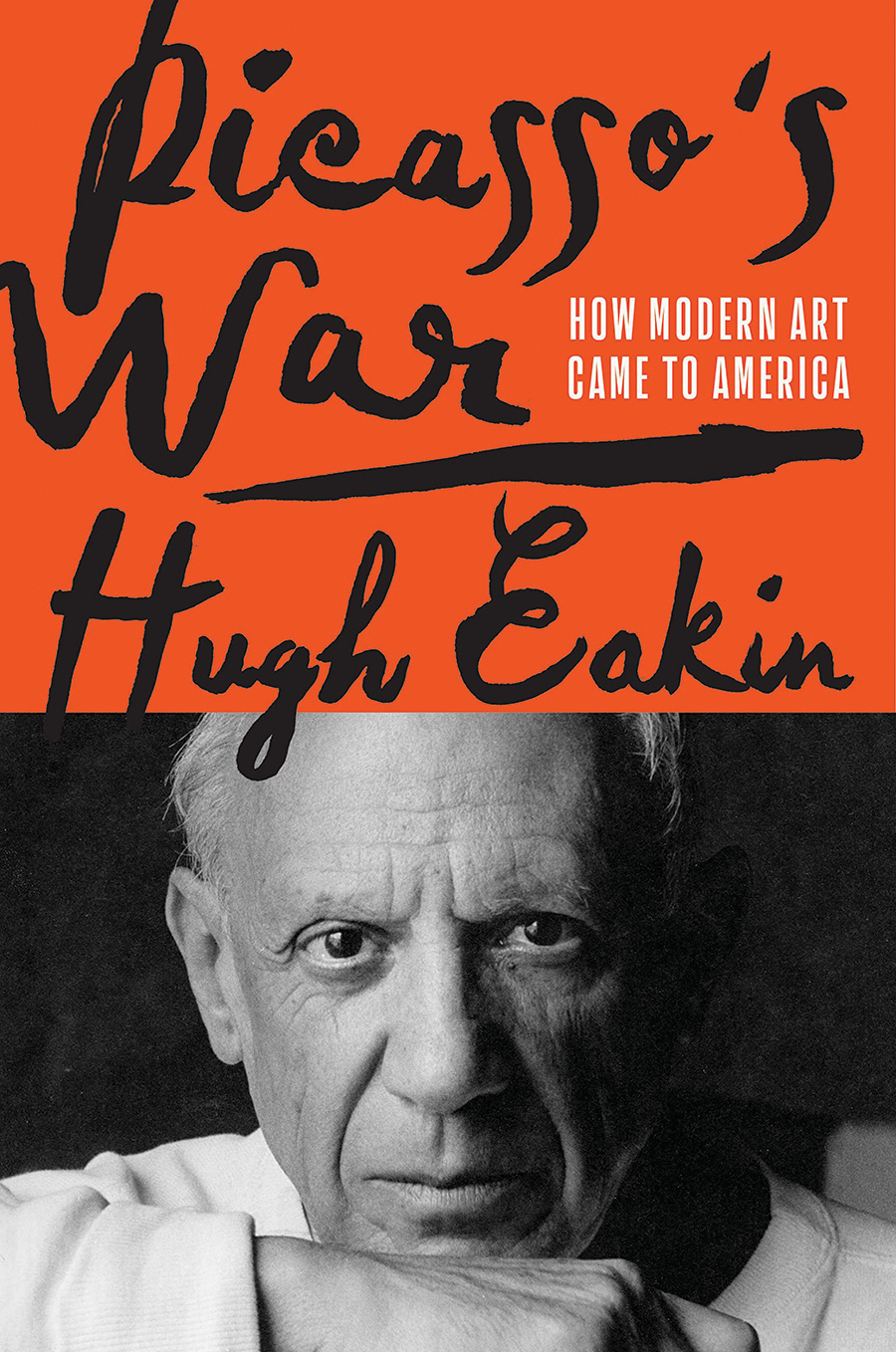
If you’re on the hunt for a summer read join The Country Bookshop’s Kimberly Daniels Taws for three author events in July. Hugh Eakin will be chatting virtually with Taws about his book Picasso’s War on Wednesday, July 13, from 1 – 2 p.m. On Friday, July 15, author Rick Ridgeway will be at The Pilot, 145 W. Pennsylvania Ave., Southern Pines, from 6 – 7 p.m. to talk about his outdoor explorations in Life Lived Wild: Adventures at the End of the Map. To wrap up the month, join author-illustrator Matt Myers on Tuesday, July 26, at 4 p.m. to celebrate the release of his new book, The World’s Longest Licorice Rope. His wife, Maya, will discuss two of her books, Not Little and Little Kids First Big Book of Baby Animals at The Country Bookshop, 140 N.W. Broad St., Southern Pines. Info and tickets for all events: www.ticketmesandhills.com.


Far Out Artwork

If you miss the psychedelic ’70s, then climb into your VW bus and drive to Seagrove for a special trip down memory lane. Carolina Bronze East, a studio and gallery space in the Historic Lucks Cannery in Seagrove, is owned by two ’76 East Carolina University grads, still making art, defying the odds. Their new display, “The ’70s Show,” showcases the talent that walked through the art school during that decade. Be quick about it, though, because the show closes July 7 at the Historic Lucks Cannery Artwalk, 365 Fernandez Loop, Suite 205, Seagrove, N.C. For more information call (336) 873-8291.


Summer on the Stage

Switch up your poolside routine and check out the inaugural Summer Theatre Festival, brought to you by the Judson Theatre Company. Beat the heat in the intimate, air-conditioned Bradshaw Performing Arts Center’s McPherson Theatre as three exciting 21st century shows receive their Sandhills area premieres. Running from July 22 – 31 is the two-man musical spoof of aspiring playwrights seeking Broadway contracts, Gutenberg! The Musical! Then catch Buyer & Cellar August 5-14 for a comedic fantasia about a struggling actor working in the basement mall of Barbra Streisand’s Malibu home. Wrap up the summer Aug. 19-28 with tick, tick . . . BOOM, a three-person musical by the author of Rent about an aspiring composer worried he made the wrong career choice. BPAC is at 3395 Airport Road, Pinehurst. For tickets visit judsontheatre.com. See you at intermission.


Christmas in July

If you’d rather deck the halls than sweat on the deck, you’ll want to join in the Yuletide festivities at Given Memorial Library on Saturday, July 23. Santa Max will be flying in on a summertime sleigh to celebrate Christmas in July. There will be a photo opportunity with Santa, a craft and a goodie bag to take home. Reservation required. There are two time slots to choose from, 9:45 – 11 a.m. and 11 a.m. – 12:15 p.m., 150 Cherokee Road, Pinehurst. Info: (910) 295-3642.


Patriotism on Parade

Nothing says Independence Day like a parade, and the village of Pinehurst is ready to celebrate, decked out in red, white and blue! Move your feet to snag a seat before the official parade begins at 10 a.m., Monday, July 4, at Tufts Memorial Park, 1 Village Green Road, Pinehurst. Info: www.vopnc.org.


Hot Town, Summer in the City

It’s the deals that are burning up the sidewalks in Southern Pines on July 16 from 10 a.m. to 5 p.m. Tables will be set up both inside and outside of the downtown stores so you don’t have sweat to get the biggest discount. The event is hosted by the Southern Pines Business Association.

Omnivorous Reader

Dame Agatha’s Mystery

A novel look at Christie’s 11-day disappearance

By Anne Blythe

Dame Agatha Christie, the famed author who wrote 66 detective novels in her 85 years, left the conclusion of one very public mystery untold.

While some details are known about what happened in December 1926 when the prolific writer famously went missing for 11 days, much remains unknown. That has led to an array of books and films in which writers attempt to piece together clues, fill in gaps and offer theories about Christie’s perplexing disappearance.

Nina de Gramont, a creative writing professor at the University of North Carolina Wilmington, has put forward an intriguing and inventive account in her latest novel, The Christie Affair. She tells her story from the perspective of the mistress who, history tells us, broke up the marriage of Christie and her first husband, Archie.

Here’s what we know from newspaper accounts.

The search for Christie included hundreds of police officers, planes, amateur sleuths on bicycles and in cars, musings from fellow mystery writers Sir Arthur Conan Doyle and Dorothy Sayers, and even a séance at the site where her green Morris Cowley was found deserted in a ditch in the English countryside.

Many theories were posed about what happened to the “lady novelist,” as some journalists described Christie. Was her body at the bottom of the Silent Pool, the lake in Surrey, England, near the abandoned car? Could the mystery writer, not so well-known at the time, be pulling a publicity stunt?

The hunt ended some 200 miles north of Sunningdale, where the author lived with her husband Archie and their daughter, when it was revealed that Christie had checked into the Swan Hydropathic Hotel in Harrogate using the name Theresa Neele. It was not known at the time by the public, but Neele was the last name of Archie’s mistress, the woman he planned to leave his wife for.

Christie’s only public explanation of her whereabouts came in a February 1928 interview with the Daily Mail, in which she described being in a state of depression after her mother’s death in 1926 and suffering from “private troubles,” which she said she preferred not to get into with the reporter. The Daily Mail reported that Christie contemplated death by suicide several times before driving her car into the remote ditch, hitting something, being flung against the steering wheel and bumping her head. It has long been questioned whether Christie truly had amnesia as the family reported after a public outcry about the extensive search and cost of it when it was revealed the author had been staying in the hotel under an assumed name.

“Up to this moment, I was Mrs. Christie,” she told the Daily Mail.

In her book, Gramont names her narrator Nan O’Dea, a departure from Nancy Neele, the real-life other woman. Without giving short shrift to details of the headline-grabbing disappearance available in newspaper archives around the world, de Gramont devises a double-pronged plot. She alternates between Nan’s account of the days and crucial moments before Christie went missing and a backstory filled with sadness and grief that drives the fictional narrator.

We’re transported from London to Ireland and the worlds of the haves and have-nots amid World War I. We move back and forth between Nan’s early days and her first powerful love in Ireland to Christie’s unraveling marriage and the 11 days that inspired the novel. Slowly, we find out why Nan sets her sights on Archie and aggressively works to woo him away from Agatha to achieve a greater love that becomes clearer as the suspense unravels.

Like the “Queen of Crime,” Gramont has a knack for mystery. She lures her readers in with her first sentence: “A long time ago in another country, I almost killed a woman.”

The North Carolina author also has a gift for leaving subtle signs of what lies ahead, putting pointers in plain sight in the style of Christie.

“Anyone who says I have no regrets is either a psychopath or a liar,” Nan, the narrator, says in the opening chapter when asked by her sister whether she regrets what she did. “I am neither of those things, simply adept at keeping secrets. In this way, the first Mrs. Christie and the second are very much alike. We both know you can’t tell your own story without exposing someone else’s. Her whole life, Agatha refused to answer any questions about the eleven days she was missing, and it wasn’t only because she needed to protect herself. I would have refused to answer, too, if anyone had thought to ask.”

Right at the start, we find out what will become clear in the end — Nan ends up with Archie and Agatha does not.

What we get from de Gramont’s evocative and layered scenes between the beginning and end are often twists, steamy romance, deadpan humor, an unexpected body (as necessary in any Christie mystery) and adventures to old-fashioned villages with a cast of mostly affable, but complicated characters.

“As readers our minds reach toward longed for conclusions,” de Gramont writes as Nan brings her own narrative to a close with an ending that’s not all rosy.

Her storyline for Agatha, though, concludes with a happier image.

“A mystery should end with a killer revealed, and so it has,” de Gramont writes toward the end of her book. “A quest should end with a treasure restored. And so it has. A tragic love story should end with its lovers dead or departed. But a romance. That should end with lovers reunited. Beyond the confines of these pages, life will go tumbling forward. But this is my story. I can make anything happen, unbeholden to a future that now has become the past. I can leave you with a single image, and we pretend it lasts forever. So for this part of the story, let’s stop here.”

The author’s masterful storytelling leaves you longing for more. PS

Anne Blythe has been a reporter in North Carolina for more than three decades. She has covered city halls, higher education, the courts, crime, hurricanes, ice storms, droughts, floods, college sports, health care and many wonderful characters who make this state such an interesting place.

Golftown Journal

Full Circle — Almost

Sometimes dreams have to wait

By Lee Pace

What a story it would have been — Rachel Kuehn, gestating in the womb of her mother, Brenda, as Brenda played the first two rounds of the 2001 U.S. Women’s Open at Pine Needles, growing up to become a crack golfer and qualifying herself for the 2022 return engagement of the Open at the same venue.

“I joked many times over the years to Rachel that she’s already ‘played’ in a U.S. Open,” Brenda says. “Maybe one day she’ll play in one on her own.”

Brenda and Rachel enjoyed one Sandhills golf déjà vu moment in 2020 when Rachel won the Women’s North & South Amateur at Pinehurst No. 2, a quarter-century after Brenda finished runner-up.

“I joke with my mom because she had a great finish years ago and has been holding that over my head,” Rachel said after the win. “I’m glad I could top her a little bit, but to add my name to the list of winners here is an unbelievable feeling.”

Sadly, adding to the legacy was not meant to be — at least not yet, and at least not this year at Pine Needles.

Playing in sectional qualifying at Shannopin Country Club in Pittsburgh on May 3-4, Rachel shot rounds of 74-70 for a 144 total and was tabbed second alternate for the 2022 championship, set June 2-5 at Pine Needles. A double bogey on the 13th hole in the first round and six putts that “were hard lip-outs,” in Brenda’s words, were her downfall. Though it’s not impossible, the odds of a second alternate slipping into the field are long.

Still, it’s a remarkable and evolving story of the Kuehn family of Asheville, a prominent and popular family at Biltmore Forest Country Club — dad Eric, a radiation oncologist; mom Brenda, a former Wake Forest University golfer and accomplished mid-amateur golfer; son Corrie, a former varsity golfer at Rhodes College in Memphis; Rachel, who’s just finished her junior year at Wake Forest; and son Taylor, a rising senior at Christ School in Asheville who’s committed to play golf at Samford University. 

“We’re a competitive family,” Brenda says. “Corrie was maybe 2, 3 years old and he was shooting baskets on a little goal in our living room. If he made it, I went, ‘Yay!’ If he missed it, I went, ‘Boooo.’ One day a friend was over with her little boy. She was horrified. She said, ‘You’re booing your child?’ I said, ‘Of course, it was a bad shot. How else are you going to differentiate good and bad?’”

Adds Rachel, “There’s a hole in the wall next to our ping-pong table. All I’ll say is, I didn’t put it there.”

Brenda Kuehn developed her love of sports and competition playing golf and tennis in her native Santo Domingo in the Dominican Republic. She particularly loved golf as her father, Jack, was a Dominican Sports Hall of Fame member and an avid golfer.

“My most precious memories with my dad were walking nine holes of golf at 5 o’clock, walking and talking, the talking more important than the golf,” she says. “I cherish those moments and the lessons I took from them.”

Brenda wanted to attend college in the United States, but the Northeast was too cold and Florida felt too much like her homeland. So she targeted the Carolinas and the smaller, private universities, and investigated Duke and Wake Forest. She fell in love with Wake Forest immediately, entered in 1983 and, as a senior in 1986, won two individual titles, was medalist in the ACC Women’s Golf Championship, and made first-team All-America. She had no grand designs on playing professional golf, but Wake Forest men’s team members and friends like Billy Andrade, Len Mattice and Jerry Haas encouraged her to give it a shot.

“I came close — I made it twice to final round of Q-school,” Brenda says. “I played the Futures Tour for two years, but I didn’t enjoy it. Playing for money changed it for me. There wasn’t the kind of camaraderie I’d known and enjoyed. Travel was hard. I was lugging one suitcase and a golf bag around and staying in stinky motels. It wasn’t the life for me.”

She then married college sweetheart Eric, and after he finished med school in 1995, they settled in Asheville. Brenda regained her amateur status and had a whirlwind decade playing amateur golf, with nine U.S. Women’s Open appearances and two Curtis Cup berths in 1996 and ’98. Corrie was 4 years old and Brenda was eight months pregnant with Rachel when the Women’s Open was held at Pine Needles May 31-June 3, 2001.

She played 36 holes with sore feet and hips, and at least twice she hit a drive and doubled over in pain from a contraction. Her hip action was limited by the size of the child she was carrying, “so it was pretty much an arms-only swing,” she says. No wonder she posted rounds of 79 and 84 to miss the cut. But the pregnant lady was great media fodder. Brenda was featured on ABC World News Tonight with Peter Jennings and interviewed by Katie Couric on The Today Show. She occasionally runs across photos from those two rounds, with Eric caddying.

“Why I wore horizontal stripes when I was so pregnant, I have no idea,” she says today. “I was wearing Eric’s size-XX shirts. I looked like a balloon. I look back and say, ‘Oh my God.’ I was so big. I cringed later when I saw a picture of me using my stomach as a table to write my score on the scorecard.”

But she had fun with it all and brought a jovial sense of humor to post-round interview sessions.

“I’m trying to save as many clips as I can to put in the baby book,” she said. “It will be a great thing for the baby to see what happened when it was moving around in here.”

Rachel was born one week after Karrie Webb was crowned Open champion and is certainly putting her own scrapbook together through her high school career and three years at Wake Forest. Biltmore Forest CC head pro Jon Rector cites times he’s started a round of golf with Rachel on the practice green and, four hours later when he’s coming up 18, she’s still there.

“She is the most intense, disciplined golfer I have ever seen,” Rector says. “She’s a sweet spirit liked by everyone. But she’s a fierce competitor and is out to shred you on the golf course.”

Just as Brenda treasured her twilights playing golf with her father, the Kuehns played together on the 1922 Donald Ross-designed course at Biltmore Forest. 

“I remember our family playing as a fivesome,” Rachel says. “I remember the Monday shootouts, walking nine holes late in the day. It was such a special place to grow up and have your first memories of golf.”

Brenda won the 1998 and 2001 Carolinas Women’s Amateur, and Rachel added her name to the trophy in 2017. Rachel won the first college tournament she participated in (the ANNIKA Intercollegiate) and, as a junior in 2021-22, she scorched the UNC Finley Golf Course with a women’s course-record 63 in winning the individual title of the Ruth’s Chris Tar Heel Invitational.

The highlight so far was last summer’s trip to Wales to participate in the Curtis Cup. Rachel was certainly well-versed in the event’s prestige. Brenda secured the clinching point in the 1998 matches at The Minikahda Club in Minnesota.

“It was the 17th hole and I had a left-to-right 4-footer,” Brenda says. “I didn’t want to hit it, but I knew I didn’t want to play the 18th hole. I’ve shared my entire Curtis Cup experience with her since she was young. Rachel definitely ‘got it’ when she was named to the team. You have arrived in golf if you make the Curtis Cup.”

Rachel lost her match in opening-day foursomes with partner Emilia Migliaccio. But then that pair won on Friday and Rachel partnered with Jen Castle to win a Friday four-ball match. Rachel won 2-up in her singles match against Louise Duncan, and her point proved the clincher in the Americans collecting a 12 1/2 – 7 1/2 victory.

“The Curtis Cup was everything I was told it would be and more,” Rachel says. “It was weird traveling with COVID. Our team was kind of in its own bubble over there. But to represent the United States, I can’t think of any greater honor.”

While Rachel might not be playing in her second Open at Pine Needles this time, there will certainly be more opportunities — for the Kuehns and the Women’s Open. PS

Lee Pace has written about golf in the Sandhills since the late 1980s and has covered three U.S. Women’s Opens at Pine Needles—1996, 2001 and 2007.

Hometown

Golf’s Front Porch

The little magazine that could

By Bill Fields


Seventy-five years ago this month, Pinehurst resident Robert Harlow gave golf something, a present that provided pleasure for decades. His creation was Golf World, a weekly publication that would become an important square in the quilt of the game.

Remembering Golf World is personal for me because the magazine was my professional home for nearly a quarter-century.

I wasn’t around for the debut edition — June 18, 1947, which covered Lew Worsham’s U.S. Open victory over Sam Snead — but in two stints I worked in various capacities on more than 800 Golf World issues and was a senior editor when subscribers received their last print copy eight years ago. Current PineStraw editor Jim Moriarty, who like me had a long history with Golf World, wrote the final cover story on Rory McIlroy winning the Open Championship at Royal Liverpool (where, coincidentally, Fred Daly took the Claret Jug during Golf World’s first year).

A couple of days after we put that print edition to bed on a Monday night, positions were eliminated and so was a meaningful chapter of golf history. Those of us who worked there lamented the loss. So did thousands of Golf World readers, many of them avid players or part of the industry, for whom the publication was a pillar in their golf lives.

Harlow called his creation a newspaper when it launched, but soon enough it was seen as a magazine. By any name the publication was golf’s front porch and party line, where people found out what was going on in the game they loved. E. Harvie Ward Jr. of Tarboro was a subscriber. So was a young bank teller and budding golfer in New Zealand, Bob Charles, who discovered the world he one day would join despite the news being weeks late when he received his copy.

You could find Pete Dye in the results of elite amateur events and in tiny advertisements for his services as a golf architect. Philadelphia restaurateur Helen Sigel plugged her establishment and clubmaker Bert Dargie his 7-woods in the one-inch ads. Golf World also got local businesses to advertise, with The Dunes Club promoting “floor shows, excellent cuisine and dancing.” (It couldn’t come out and say it was a little Las Vegas in the longleaf.)

Golf World started small — Harlow, instrumental in the nascent days of the professional circuit in the United States, and his wife, Lillian, formed the early core — and never got very large. Over its first four decades, when it was located in Pinehurst and later Southern Pines, a skeleton staff put out the stories and the scores with help from a network of correspondents around the globe, scribes who made less for their contributions than the pros who tied for 37th in the tournaments they were covering.

Reporters doubled as photographers, and a few of us got competent with a camera. But our skills weren’t always evident, sabotaged as they were by limitations in color separations and printing that could make images appear as murky as Drowning Creek.

Before Golf World got big-time owners — The New York Times Company and later Condé Nast — it didn’t do much live photography. This meant that when someone won in Dallas in the spring, the shot of the victor on the cover was most likely taken a couple of months earlier on a tee with good light and a clean background in Los Angeles. The use of stock pictures was largely harmless, with one notable exception. When T.C. Chen won at Riviera Country Club in 1987, the photograph used on Golf World’s cover was of his older brother, T.M., taken the previous year at the Masters’ par-3 contest.

Given that I took that Kodachrome of T.M. Chen — correctly identified on the slide mount, by the way — I thought of the publishing blunder when the curtain was closed on Golf World in 2014. It made me laugh when I felt like crying. I also considered how much the magazine got right over nearly seven decades and how many readers renewed their subscriptions year after year, grateful that Bob Harlow’s idea was in the mail, with news of the game, of their game. PS

Southern Pines native Bill Fields, who writes about golf and other things, moved north in 1986 but hasn’t lost his accent.

Out of the Blue

You Can’t Eat Just One

Never underestimate the power of cookies

By Deborah Salomon

Today I will explore a subject rarely attempted by essayists, columnists, commentators. They are too busy solving (or fomenting) world problems to bother with cookies.

Pity. We’d be better off if Freud had spent more time on cookies, less on phantasmagorical dreams.

My only memory of kindergarten is the tiny choco-chip cookies shaped by a cookie press, served at snacktime with a paper cup of milk. They weren’t even good but they were cookies, and I loved them.

Obviously, I suffered a cookie-deprived childhood. My mother (high school math teacher) never baked a cookie in her life. The only ones she bought were mushy with dried fruit. How I loved playing at my BFF’s house. Not only was her mother a retired Broadway chorus girl, she kept a stash of store-boughts (fancy, gooey, buttery, frosted) in the pantry. And you needn’t finish your spinach to get one.

No surprise, then, that I learned early on to bake cookies — just chocolate chip and oatmeal — usually on Friday when my kids’ pals hung around for handouts. Holidays meant shaped butter cookies: turkeys for Thanksgiving, hearts for Valentine’s Day. In the mid-’90s I arrived in Switzerland to write about the former Vermont governor, Madeleine Kunin, then U.S. Ambassador, carrying a tin box of state-shaped cookies frosted green. Even her Swiss pastry chef was impressed.

By then I realized that cookies are an acceptable carryover from childhood. Zabaglione and tiramisu for dessert, cookies at bedtime. Where a Supreme Court justice wouldn’t be caught dead drinking espresso from a sippy cup, nibbling a cookie is OK. In fact, this penchant affirms the jurist’s status as a smart cookie.

Long live Cookie Monster! Don’t get me started on the misnomer.

I know one man and three women who have been called Cookie for so long nobody remembers their real names. I also befriended a cat named Oreo (black on top, white tummy) and a figgy-hued poodle called Newton.

Another crumb on the cookie path: It was once my honor to attend a weekend house party hosted by a New York Times food writer/cookbook author. Everybody brought something for a potluck beyond lucky. I brought chocolate chip cookies which, although made from my usual recipe, spread out flat rather than rising. Even worse, they were chewy, not crisp.

The foodie’s husband went gaga over my disaster. She was miffed. The culprit, I assumed, was old baking soda. Imagine my horror when she swallowed her pride and requested my “secret.”

People wax emotional, even irrational over their choices. Duels have been fought over Whippets vs. Mallomars. A gentleman I know well, who grew up in the Northeast, insists Hydrox are far superior to Oreos, even before this bestseller went wack-o with seasonally flavored/colored fillings.

To me, Hydrox still sounds like a controlled substance.

Would it impress you to know that Lorna Doone shortbreads were named for the heroine of an inconsequential British romance novel published in 1869, in which Lorna is shot at her wedding . . . but survives?

It bothers me that spicy Biscoff monopolize in-flight airline refreshments. I don’t care if they are vegan and made in Belgium. They leave fingers greasy.

I save mine for the squirrels.

It also riles me that faced with worldwide cookie popularity (fortune cookies, Italian wedding cookies) the Brits insist on dipping “biscuits” in their tea, while calling real biscuits “scones.”

Alas, commercial cookies have deteriorated, except maybe Pepperidge Farm. Smaller packages, questionable quality, higher prices. I miss real vanilla in vanilla wafers. Most chocolate is diluted or outright fake.

Therefore, over the years I have committed several simple, foolproof cookie recipes to memory. The latest — a super-easy but divine almond mini-chocolate chip biscotti.

Because you never know when an ambassador or Supreme Court justice might ring the doorbell on a Friday afternoon.  PS

Deborah Salomon is a writer for PineStraw and The Pilot. She may be reached at debsalomon@nc.rr.com.

Southwords

The Evening Merriment

Getting a kick out of summertime

By Eileen Phelps

The deserted street was silent, punctuated only by the hum of mosquitoes searching for a tasty arm to nibble. Not a soul was visible, not even a hungry squirrel hunting for buried nuts. Dinnertime. All the children had been summoned to their family meals. Their absence created a vacuum of silence. Temporary. Fleeting. The calm before the storm.

In an instant, a cacophony of voices ignited the street. As if at once children burst from their homes, anxious to get on with the evening’s passion — the nightly neighborhood kickball game. Oh, I know it doesn’t sound like much, but it was the highlight of our summer evenings. From late spring when the days grew longer until early fall when school signified the return to schedules and early bedtimes, the kids loved their daily dose of excitement.

The bases weren’t fancy. The mailbox post was transformed into home plate. Rocks, frisbees, and an occasional log served as stepping stones to scoring runs. There wasn’t time for arguments or rock, paper, scissors; everyone wanted to play every minute they could squeeze in before dark. Disputes were settled with a nod in order to keep the game going. Cooperation was the unwritten rule as the competition, no matter how frenzied, required no adult intervention. No one was left out of the festivities. If you didn’t kick well, maybe you were a speedy runner or a superb pitcher. Everyone was good at something. Age wasn’t an issue. Holding hands with older players, little tykes were escorted to shortened bases where they enthusiastically cheered for themselves, as the older kids laughed at their silliness and applauded their successes. The commotion of joyful voices, mixed with shouted directions to teammates and scurrying children, led to sheer exhaustion by dusk.

As quickly as it began, it stopped. Adult voices beckoned the players home to the comfort of their beds as darkness blanketed the concrete field. The shadows disappeared into the night. The street returned to its hushed self, awaiting the next day’s contest. Only the drone of mosquito wings pierced the silence. PS

Eileen Phelps is a retired Pinehurst Elementary teacher who loves reading, writing and spending time with her 10 grandchildren.

Bookshelf

June Books

FICTION

It All Comes Down to This, by Therese Anne Fowler

The Geller sisters — Beck, Claire and Sophie — are a trio of strong-minded women whose pragmatic, widowed mother, Marti, will die soon and take her secrets with her. Marti has ensured that her modest estate is easy for her family to deal with once she’s gone — including a provision that the family’s summer cottage on Mount Desert Island, Maine, must be sold. Beck, the eldest, is a freelance journalist whose marriage looks more like a sibling bond than a passionate partnership. The Maine cottage has been essential to her secret wish to write a novel. Despite her accomplishments as a pediatric cardiologist, Claire, the middle daughter, has always felt like the Geller misfit. Her secret, unrequited love for the wrong man, is slowly destroying her. Youngest daughter Sophie appears to live an Instagram-ready life, filled with glamorous work and travel. In reality, her existence is a cash-strapped house of cards that may crash at any moment. Enter C.J. Reynolds, an enigmatic Southerner and ex-con with his own hidden past who complicates the situation. All is not what it seems, and everything is about to change.


Jackie & Me, by Louis Bayard

In the spring of 1951, débutante Jacqueline Bouvier, working for the Washington Times-Herald, meets Jack Kennedy, a charming congressman from a notorious and powerful family, at a party in Washington, D.C. Young, rebellious, eager to break free from her mother, Jackie is drawn to the elusive young politician. Jack, busy with House duties during the week and Senate campaigning on the weekend (as well as his other now-well-known extracurricular activities) convinces his best friend and fixer, Lem Billings, to court Jackie on his behalf. Only gradually does Jackie begin to realize that she is being groomed to be the perfect political wife. Sharply written by the bestselling author of Courting Mr. Lincoln, this historical novel draws a picture of Jackie as never before seen, in a story about love, sacrifice, friendship and betrayal.


Woman of Light, by Kali Fajardo-Anstine

Luz “Little Light” Lopez, a tea leaf reader and laundress, is left to fend for herself after her older brother, Diego, a snake charmer and factory worker, is run out of town by a violent mob. As Luz navigates 1930s Denver on her own, she begins to have visions that transport her to her Indigenous homeland in the nearby Lost Territory. In the end, it is up to Luz to save her family stories from disappearing into oblivion. Woman of Light is a transfixing novel about survival, family secrets and love, filled with an unforgettable cast of characters.


Horse, by Geraldine Brooks

The Pulitzer Prize-winning Brooks braids a story that sweeps from antebellum racetracks to the vibrant post-World War II art scene in Manhattan, all the way to the Smithsonian’s high-tech osteology labs. Kentucky, 1850 — A bright bay foal, Lexington, and his enslaved groom forge a bond of understanding that will carry the horse to record-setting victories across the South. An itinerant young artist who makes his name from paintings of the horse takes up arms for the Union and reconnects with the stallion and his groom on a dangerous night far from the glamour of any racetrack. New York City, 1954 — Martha Jackson, a gallery owner celebrated for taking risks on edgy contemporary painters, becomes obsessed with a 19th century equestrian oil painting of mysterious provenance. Washington, D.C., 2019 — As a Smithsonian scientist studies the stallion’s bones for clues to his power and endurance, an art historian seeks the lost history of the Black trainers and grooms often depicted with the horse. Leaning heavily on Lexington’s remarkable true story, both on the track and during the Civil War, Brooks highlights the unsung contribution of the Black horsemen on whose expertise vast fortunes relied.


CHILDREN’S BOOKS

Bearnard Writes a Book, by Deborah Underwood

Bearnard the bear wants Gertie the goose to have her very own book. Their adventure in writing comes complete with dragons, volcanoes and rampaging monsters. This adorable adventure story even has a literary surprise ending. (Ages 4-7.)


Pineapple Princess, by Sabina Hahn

Any old princess can have a sparkly, bedazzled crown but it takes a warrior queen to fully embrace a more . . . natural option. Move over Fancy Nancy, there’s a new girl in town, and she’s, well, a little bit sticky. (Ages 3-7).


Gardens Are For Growing, by Chelsea Tornetto

There’s a special bond between daddies and daughters, and this adorable picture book celebrates that together time through the seasons in a family’s garden. Perfect for Earth Day, Father’s Day or graduations. Fans of Love You Forever will declare this a must have. (Ages 3-6).


The Curious Book of Lists, by Tracy Turner

What’s the world’s slimiest creature? Which are the deadliest snakes? How many countries exist with no coastline? Find out all this and more in The Curious Book of Lists. This would be a fun one to keep on the dinner table. (Ages 8-12).   PS

Compiled by Kimberly Daniels Taws and Angie Tally.