January Bookshelf 2019

FICTION

No Exit, by Taylor Adams

After reading this you might think twice before turning in to a rest stop ever again. No Exit is a heart-stopping, adrenaline rush of a thriller that builds momentum right to the end. Five strangers are stranded at a Colorado rest stop at night during a snowstorm. A young college student, Darby, discovers a little girl being held captive in the back of a van by another motorist. What unfolds is Darby’s desperate attempt to formulate a plan to rescue the child, all while trying to determine the captor’s identity in a race against time and the elements. 

The Only Woman in the Room, by Marie Benedict

The author of The Other Einstein and Carnegie’s Maid has created yet another fantastic historical novel of a strong woman. Hedy Lamarr was a Hollywood screen idol known for her beauty, but there was more to her than just her looks. Desperate to escape the rise of Nazi control, she fled to America and became a film star intent on helping the American cause in the war. Her efforts resulted in a groundbreaking invention that revolutionized modern communication. Book clubs will love this book.

The Current, by Tim Johnston

If you read literary suspense, this is your book. If you are looking for a book you can’t put down, this is your book. If you need a story that will follow you for days, this is your book. New wounds open old wounds in this superb tale of unresolved loss and crime. Two 19-year-old college girls are frantically driving away from a terrifying encounter on a dark, icy Iowa road when their car plunges into a river. One young woman is found downriver, drowned, while the other is rescued at the scene. Determined to find answers, the surviving young woman soon realizes that she’s connected to an earlier unsolved case by more than just the river, and the deeper she dives into her own investigation, the closer she comes to dangerous truths, and to the violence that simmers just below the surface of her hometown. Johnston instills grief and grace, twists and escalating tension, and the tenacity of those left behind in this deftly written novel.

Half of What You Hear, by Kristyn Kusek Lewis

After losing her White House job under a cloud of scandal, Bess Warner arrives with her husband, Cole, and their kids to take over Cole’s family innkeeping business in Greyhill, Virginia, his hometown. But Bess quickly discovers that fitting in is easier said than done in this refuge of old money, old mansions, and old-fashioned ideas about who belongs and who doesn’t. When the opportunity to write an article for the Washington Post’s lifestyle supplement falls into Bess’ lap, she thinks it might be her opportunity to find her footing, even if the subject of the piece is Greyhill’s most notorious resident, Susannah “Cricket” Lane. As Bess discovers unsettling truths about Susannah, Greyhill, and the secrets of prior generations, she begins to learn how difficult it is to start over in a town that runs on talk, where sometimes, the best way to find yourself is to uncover what everyone around you is hiding.

NONFICTION

The Enchanted Hour: The Miraculous Power of Reading Aloud in the Age of Distraction, by Meghan Cox Gurdon 

Grounded in the latest neuroscience and behavioral research, and drawing widely from literature, The Enchanted Hour explains the dazzling cognitive and social-emotional benefits that await children, whatever their class, nationality or family background. It’s not just about bedtime stories for little kids: Reading aloud consoles, uplifts and invigorates at every age, deepening the intellectual lives and emotional well-being of teenagers and adults, too. Gurdon argues that this ancient practice is a fast-working antidote to the fractured attention spans, atomized families and unfulfilling ephemera of the tech era, helping to replenish what our devices are leaching away. Bringing together the latest scientific research, practical tips and reading recommendations, The Enchanted Hour will both charm and galvanize, inspiring readers to share this life-altering tradition with the people they love most.

Elephant in the Room, by Tommy Tomlinson

Nearing the age of 50 and weighing in at 460 pounds, Tomlinson, a columnist for the Charlotte Observer for 23 years, explores what it’s like to live as a fat man after deciding to change his life. Intimate, honest and searingly insightful, The Elephant in the Room is a chronicle for the millions of Americans taking the first steps toward health, and trying to understand how, as a nation, we got to this point. From buying a Fitbit and setting an exercise goal to contemplating the Heart Attack Grill, America’s “capital of food porn,” and modifying his own diet, Tomlinson brings us along on an unforgettable journey of self-discovery that is a candid and sometimes brutal look at the everyday experience of being constantly aware of your size.

One Breath at a Time: A Skeptic’s Guide to Christian Meditation, by J. Dana Trent

This book answers the questions: How does meditation fit into Christianity, and how does it differ from prayer? In secular mainstream America, meditation has become as ubiquitous as yoga. (Americans spend an estimated $2.5 billion annually on yoga instruction.) Trent reframes meditation for those who doubt its validity as a Christian spiritual practice. Using Scripture, theology and examples from the early Church, the book challenges Christians’ prayer habits that leave little room for enough silence to experience and listen for God. It provides a practical, 40-day guide to beginning and sustaining a Christian meditation practice in an often chaotic world.

CHILDREN’S BOOKS

Lola Dutch: When I Grow Up, by Kenneth and Sarah Jane Wright

Always bursting with energy and grand ideas, Lola Dutch has an unexpected emergency. She does not know what she wants to be when she grows up. After consulting a book (of course!), Lola decides she is destined to command the stage or become an astronaut, or a gardener or possibly even an inventor. There are just so many options and this is a wonderful problem, because Lola is excited to learn about every one of her possibilities. (Ages 3-6.)

Chicken Talk, by Patricia MacLachlan

The term “Chicken Scratch” gets a whole new meaning in this delightful barnyard tale from award winning author/illustrator team Patricia MacLachlan and Jarrett J. Krosoczka. (Ages 3-6.)

Dog Man: Brawl of the Wild, by Dav Pilkey

Dog Man is absolutely the hottest thing in books and he’s back for his sixth adventure. The crime biting canine, part dog-part man, will have young readers howling with laughter as he gets out of a “Ruff” situation and has to prove he is innocent of a crime for which he is sent to the dog pound! (Ages 8-10.)

Slayer, by Kiersten White

People are divided into two groups: the slayers, who hunt and kill demons, have amazing powers and are fierce in battle; and the watchers, who supervise and advise slayers. Nina and her twin sister, Artemis, are part of the watcher society. Both of their parents were watchers and they grew up around watchers. Nina is a medic, healing and helping, and not a full-fledged watcher. Artemis trains in combat and is competent and levelheaded. One day, Nina shows an amazing new skill and her world is turned upside down. She must make sense of her new powers and decide how to make choices on a path she has not chosen. (Age 14 and up.) — Review by Annabelle Black, age 15.  PS

Compiled by Kimberly Daniels Taws and Angie Tally.

2018 Book Club Top Reads

Before We Were Yours, by Lisa Wingate

A Gentleman in Moscow, by Amor Towles

Educated, by Tara Westover

News of the World, by Paulette Giles

Hillbilly Elegy, by J.D. Vance

Small Great Things, by Jodi Picoult

The Girl Who Wrote in Silk, by Kelli Estes

The Last Castle, by Denise Kiernan

The Rent Collector, by Camron Wright

Lilac Girls, by Martha Hall Kelly

Little Fires Everywhere, by Celeste Ng

America’s First Daughter, by Stephanie Dray

Papadaddy’s Mindfield

Give Me That Old-Time Music

The comfort of familiar hymns

By Clyde Edgerton

After New Year’s Eve is a good time to think over the past year — or maybe the past 75, especially if something pops up that gives birth to memories that emerge from behind stacks of present-day urgencies and conflicts. 

I’ve recently been looking through the hymn book I grew up with in a Southern Baptist church — the Broadman Hymnal: a staple for many denominations back in the day. My looking through this book gave fresh birth to old memories. 

Most people, as children, sang songs. For me, it was religious songs. And many children, because they sing songs written by adults, mess up the meanings of words. 

In Sunday School at my church long ago, we children sang “Jesus Wants Me for a Sunbeam.” I always heard and thus sang “Jesus wants me for a sunbean.” In my mind’s eye, a sunbean was shaped like a butter bean (translation: lima bean) and had a silvery, bright sheen. I wasn’t sure why Jesus wanted me to be one. Who was Jesus anyway? I’d not quite figured that out by age 4.

In my church, after Sunday School on a Sunday morning, we kids went into the big people’s church and sat still or squirmed for an hour or so — usually with parents, a parent, or someone else’s parents — while things happened around us, and in the choir, and up in the pulpit. We didn’t get the big picture until about the age 12, when we finally clearly understood the nature of the universe and our place in it. 

Early on, well before the age of 12, all the hymns seemed benevolent and kind and good, in spite of my recognizing in those songs images of war — as well as of peace — of fear and hope, of the wild and the tame, the obedient and disobedient. But because of my place in my community and church, because of my beliefs, I felt very safe, unthreatened. 

Approaching the teenage years, sitting or standing in the big church, we still didn’t always comprehend clearly. There’s that famous example: the hymn “Gladly the Cross I’d Bear.” As: “Gladly, the Cross-Eyed Bear.” 

A song like “Standing on the Promises” was hard for me to grasp. I was unable to sustain a meaning for a participial phrase, “standing on,” along with the abstract noun “promises,” in the same sentence. I visualized “promises” as bridge trusses made of human arms. People in a far-off country stood on them. Therefore, the meaning of the song, though I’d sing the printed words, was mangled. 

“When the Roll is Called Up Yonder” brought visions of a bread roll with ears and legs — ambling doglike across a green meadow, having been called: “Come, Fluffy. Come, girl.” I was there watching because the hymn said, “When the roll is called up yonder I’ll be there.”

Then, yo, and verily, verily, we became teenagers. 

Teenage friends were allowed to sit together, sometimes all the way back on the back row. We’d play “Between the Sheets.” Teenager A would open the hymnbook to a random page and whisper the hymn title to Teenager B. B would say: “Between the Sheets.” 

I’m sitting here with the Broadman Hymnal now, as I write. I’m about to open to some random pages. 

“Dare to Be Brave, Dare to Be True” . . . “Onward, Christian Soldiers” . . . “Blow Ye the Trumpet, Blow” . . . “I Surrender All” . . . You get the idea (and probably did before the examples). 

Now, as an adult, I enjoy singing the old hymns in church. I haven’t yet been able to enjoy contemporary religious music. I like what I heard as a child. Probably not so much because I did or didn’t understand meanings, but because back then I felt at peace. I felt very safe; meanings about life and the universe were absolutely true. Though my outlook has changed, it’s comforting to sing the old hymns, to reconnect with those feelings of security and peace.  PS

Clyde Edgerton is the author of 10 novels, a memoir and most recently, Papadaddy’s Book for New Fathers. He is the Thomas S. Keenan III Distinguished Professor of Creative Writing at UNCW. 

The Kitchen Garden

Black Drink

Carolina Tea — the only caffeine native to the U.S.

By Jan Leitschuh

What better way to take the winter chill off than a nice cup of tea, and a dollop of history? Say, an energizing “black drink” from the Outer Banks — sourced from a common shrub you might even have in your own backyard.

Mmmmm, pour us a drink, Luv.

And if you knew that this shrub’s Latin name was Ilex vomitoria — yes, you read that right, vomitoria — and that a tea from its leaves was used as a purge and emetic by Native American tribes . . . well, would you still be savoring that cuppa?

No worries, duckie. It’s simply bad press for an otherwise lovely dish of tea.

The yaupon holly, or Ilex vomitoria, is common throughout the Carolinas and has a solid and ancient history as a tea source fully grounded in the New World. A wild, perennial evergreen shrub, yaupon holly (pronounced YO-pon) is the only plant native to North America known to contain caffeine. The dried and roasted leaves of the yaupon are the source of North America’s only homegrown caffeinated beverage — yaupon tea. Historians tell us that yaupon leaves were used for centuries as a ceremonial tea by many native North American tribes. 

Later, European settlers tumbled to the benefits of the energizing beverage they called “black drink.” Yaupon tea was quite well known and widely enjoyed during the Colonial period. Take that, British East India Company and your Asian tea; into Boston Harbor with ye!

The tough little yaupon holly ranges across the Southeastern United States, from Virginia to Florida and west to Texas, but is numerous in the Carolinas. 

The Native Americans used it in purification rituals involving purging (thus, its Latin vomitoria). Lovely, right? But the Latin name is actually a misnomer, because yaupon is not an emetic, just guilty by ceremonial association. According to Charles Hudson, in his introduction to the book Black Drink: A Native American Tea, the scientific name derives from yaupon’s association with those purification ceremonies that entailed ritualistic vomiting, usually after adding seawater or other nausea-producing substances to the drink. But the tea of yaupon itself, as typically consumed, does not cause vomiting.

“Yaupon tea’s market was done great damage in the late 1700s by William Aiton, a Scottish botanist I believe was secretly in the employ of Ceylon tea merchants,” says Florida writer Francis E. “Jack” Putz. “In recognition of the use of an especially strong brew of yaupon in an Amerindian ritual that included ceremonial vomiting, Aiton named the plant Ilex vomitoria. Clearly this fascination says more about the early chroniclers of American life than about the qualities of the beverage.”

Wryly, Putz continues: “Researchers have revealed no emetic compounds in yaupon tea; it simply does not induce vomiting. That said, there were indeed special occasions when Timucuan and later Seminole warriors stood around vomiting after drinking large quantities of yaupon, but that was only after fasting for days and then singing, dancing, and generally carrying on all night; Kool-Aid would have had the same effect.”

Yaupon tea was actually a desirable prehistoric commodity, being exchanged at least as far west as Illinois. According to one source, over 1,000 years ago Native American traders dried, packed and shipped the leaves all the way to Cahokia, the ancient mound city near the confluence of the Missouri and Mississippi rivers by modern day St. Louis.

“It strengthens and nourishes the body, and yet does not fly to the head,” marveled French artist and North Florida explorer Jacques le Moyne de Morgues in 1564, after the native Timucua tribe offered the Frenchmen shells of the “black drink.” Thus was European teatime born in the New World. A Spanish priest in Florida reported in 1615, “There is no Spaniard or Indian who does not drink it in the morning or evening.” In 1791, famed Philadelphia botanist William Bartram noted in his writings that the Cherokee of Western North Carolina had obtained yaupon and it was under active pruning and cultivation. The Cherokee, he said, called yaupon “the beloved tree.”

Early settlers later enjoyed the black drink so much they traded it as a commodity to other countries. Not only was yaupon tea consumed regularly, especially throughout the Southeast, it was exported by ship to Europe, to be marketed as cassina in England and Appalachina in France. It was also traded from the Colonies under the moniker “Carolina Tea.” Apothecary shops dispensed it as a treatment for smallpox and kidney stones. English settlers of Carolina were said to drink the “Indian Tea” daily.

Later, during the Civil War, N.C. barrier islanders supplied the caffeinated leaves to cities blocked from importing tea and coffee. During the Great Depression and World War II, U.S. consumption once again spiked as tea and coffee became difficult to obtain. Folks needed their morning buzz! The drinking of yaupon tea persisted on the Outer Banks until the ’70s, and then lingered in island cafes. Ocracoke Island was the last known location to have served yaupon tea until recently.

While it once competed with Asian tea for a global market share, the antioxidant-rich yaupon tea dropped off the map for a while. The classic Chinese tea Camellia sinensis, was too entrenched, and some speculate that yaupon tea was later associated with the rural Southern poor at a time when coffee’s popularity was rising. Yet recent taste tests conducted at the University of Florida revealed an overwhelming preference for yaupon over its commercially available South American sister species, “yerba mate” — making it perfect for elevenses.

“Unfortunately,” writes Putz, “yaupon’s commercial potential was destroyed simply by the revelation of its scientific name.”

While many people today are still unaware of yaupon tea, it is experiencing a comeback, riding on the back of the farm-to-table movement for local foods, nostalgia and increased knowledge of its various medicinal benefits.

There is no need to import our teas from exotic continents, say fans of the yaupon.

“Our native yaupon is a delicious and healthy tea,” says Jan Mann Jackson of Jackson Farms. With her husband, Tom, the pair began cultivating the native tea on their 200-year-old traditional family farm on the other side of Fayetteville, in northern Sampson County. Although the Jacksons were among the first few farmers certified as “organic” many years ago, in recent years they discontinued the cost and paperwork of certification. “Although we have not changed our way of growing food,” says Jackson.

They acquired some yaupon holly from a yard in Morehead City to see if they could grow it on the farm for their use. “It grew well here,” says Jackson. They roasted the young leaves in the spring for themselves. Roasting makes the caffeine more soluble. Coffee beans are roasted for the same reason. The Jacksons found the tea quite delicious — no vomiting.

After perfecting their roasting methods, Jackson Farms began selling the tea leaves to restaurants and specialty shops about 10 years ago. Recently, they created a website — JacksonFarm.com — to sell their historic tea to the public. 

Their beautifully packaged processed tea retails for $10 per ounce, “which will make a lot of tea,” says Jackson. “We also stock it with other teas in our farm’s guesthouse.”

A strong Carolina connection to yaupon tea exists, as the beverage was enjoyed here through Colonial times and persisted quite a while on the relatively isolated (and yaupon-filled) Outer Banks. “I first drank yaupon tea in a restaurant on Ocracoke Island in about 1957,” says Jackson. “Then I ran into a mention of it in John Lawson’s A New Voyage to Carolina. It interested me, and I eventually ran into the book Black Drink, by Charles M. Hudson, and learned a good deal more.”

Yaupon tea is an infusion tea made from steeping the dried and roasted yaupon leaves. Yaupon’s caffeine content is said to be more than black tea but less than coffee, and is closely related to yerba mate tea, which shares some of the same active ingredients and nutrients. Some say yaupon has a similar flavor profile to green tea; others say it tastes more like a black tea. The smell is earthy, and the health benefits numerous.

Yaupon is anti-inflammatory, helping reduce the pain of arthritis and other inflammatory conditions, improves dental health and digestive issues, and has shown promise as a preventive of colon cancer. Yaupon, a diuretic like coffee and tea, is rich in the desirable antioxidants known as polyphenols, comparable to other so-called “superfoods” like red wine, dark chocolate, broccoli, blueberries and green tea. These polyphenols stimulate the immune system. Theobromine, also found in yaupon, has been shown to lower blood pressure. 

Aficionados say yaupon yields a jitter-free, energizing brew. Caffeine levels in yaupon vary, but are roughly comparable to green or black tea, so excess consumption would certainly lead to the jitters, just as it would with coffee. Depending on the strength brewed, the flavor can be anything from light, caramelly and buttery to intensely rich, complex, nutty and smoky, say fans. Yaupon is virtually free of tannins, so you can steep longer to bring out more flavor without risking the bitterness of regular tea. Perhaps the long steeping explains the name “black drink,” because a shorter steep yields a grassy, lighter tea.

In strong brews the slight bitterness of theobromine, coveted by lovers of dark chocolate, can be tasted. Theobromine (from Greek “food of the gods”) is the pleasure molecule of chocolate — the buzzy one that increases feelings of well-being, contentment and focus (and is also toxic to dogs).

The “black drink” can be enjoyed hot or iced, whatever your pleasure. By all means, support our local farmers and give this native tea a try, or ask for it at your local farm-to-table restaurant. And if you like it, you can try to make some at home, and beat January back with a steaming North American cuppa and a buttered scone. No need to raise your pinkie whilst sipping either, ducks.

“Backyard” Yaupon Tea

Know your plants, first of all. Be sure you know your yaupon. Collect fresh leaves, the newer growth if possible. Some say the females (the ones that produce the berries) make the best tea, but science has been unable to determine any chemical difference. Heat them (roast) in the oven at 300 degrees until they start to brown, about 7 or 8 minutes. Others simply blanch the leaves black in a skillet. Remove and add a tablespoon of crumbled leaves to your pot, and pour over two or three cups of hot (just-boiled) water. Steep for a few minutes, depending on strength preferred. Sweeten to taste.  PS

Jan Leitschuh is a local gardener, avid eater of fresh produce and co-founder of the Sandhills Farm to Table Cooperative.

Hometown

Pa and the Fish

Reaching back to the 19th century

By Bill Fields

I love to ask people what year my maternal grandfather was born. It is a straightforward question, but no one has ever come within 25 years of a correct answer.

People often say 1900, 1910 or 1920. I’ve gotten responses ranging from 1890 to 1930, the latter making me think the respondent is worse than I am at math. As a clue, I’ll tell them when I came into the world. That doesn’t help either. 

No one has come close to pegging his birth year, 1861. 

B.L. Henderson was born a couple of weeks before the Civil War began that spring. He lived nearly half of his life in the 19th century, when gold was being mined in his native Montgomery County.

To be fair, I used to get his history wrong too — but in a different way. “Pa,” as his children and grandchildren called him, was said to have been born March 28, 1860. His simple gravestone in Jackson Springs, where he lived the last third of his life, says so. So does his obituary from the summer of 1954, five years before my birth.

But my grandfather and his twin sister aren’t listed in the 1860 U.S. Census conducted in the summer of that year. They show up in later surveys done every decade with ages indicating they were born in 1861. 

People have a hard time believing it. I did as well, even though I knew B.L. was in his 40s and my grandmother, Daisy, was in her teens when they married in 1908, and that he was 62 when my mother was born. 

A man born when my grandfather was had a life expectancy of about 40 years, but if someone could avoid the diseases that took people young, you could live a long life like he did. He was lucky. 

Growing up, I knew him as the man with the big fish. There was an 8×10 picture on my mother’s wall of a white-haired gentleman holding a largemouth bass, pipe in his mouth and cane pole over his shoulder. One of Mom’s memories is going fishing with him and being nervous when he stood up in the rowboat, but there was never a man overboard. 

When I got older, I was less fascinated by the lunker bass he had caught than the hair — white yet plentiful — he still had as an old man given what they say about heredity and hair loss. As I near my grandfather’s age at the time my Mom was born, so far, so good. 

The photo of Pa as an elderly fisherman is one of the few fragments of information I know about him. He worked on his family’s farm and later owned a sawmill, which would have made him a “catch” for Ma-Ma. He eventually owned a filling station down the hill from his home. (I don’t know for sure, but suspect he also might have spent some time at the Henderson gold mine in his home community of Eldorado.)

I have a couple of his possessions: a railroad pocket watch I’d bet he was carrying when he proudly posed with that bass; a token for one dollar in merchandise from his business in Ellerbe (though the town name is missing an “l” on the half-dollar sized coin); a tin shaving cup with a dirigible painted on the side. 

The items are as close to him as I will get. My older sisters were alive for Pa’s last years but have scant memories. Dianne recalls being in his home after his death, Pa’s body in the parlor for viewing as was still custom in those days. 

“Touch his forehead so you won’t have dreams about him,” an adult advised her.

She didn’t touch him, and I don’t dream about him. Yet I think about him often. And the older I get, I can see a bit of myself in the fisherman with a pipe.  PS

Southern Pines native Bill Fields, who writes about golf and other things, moved north in 1986 but hasn’t lost his accent.

The Omnivorous Reader

Facing Fate

When the law of averages strikes

By Stephen E. Smith

Your risk for developing pancreatic cancer is about 1 in 65. The odds of your dying in a car crash are 1 in 100. If you’re about to undergo a hospital procedure, you have a 3 percent chance of experiencing a mishap. But, then, if you consider all the odds for all the possibilities, your chances of avoiding every disease, every mishap, is zilch. This law of averages spares no one.

Judy Goldman’s first memoir, Losing My Sister, a finalist for Southern Independent Booksellers Alliance for Memoir of the Year, worked, in part, from the above premise, and her latest memoir, Together: A Memoir of a Marriage and a Medical Mishap, is also the product of grim statistics, detailing a medical accident and the accompanying physical and emotional consequences that tested a marriage.

Life-altering calamities can begin with the best of intentions. Goldman’s husband, Henry, happened upon a newspaper ad for an outpatient procedure that would alleviate the persistent back pain he’d suffered for years. It all sounded reassuringly straightforward: a simple injection or two and an immediate resumption of a normal life. The doctor would use a fluoroscope to guide his injection of steroids and an anesthetic into the epidural space between the spine and the spinal cord. But when Henry was wheeled out from the procedure, his expression was “flat and abstracted.” He was paralyzed from the waist down. 

The doctor assured Goldman that Henry’s reaction to the procedure was normal: “Your husband is going to be all right. It’ll just be a matter of time,” he said, reassuringly. But he was mistaken, and the consequences of the botched treatment unleashed in Goldman a desperate avalanche of emotions — depression, guilt, hopelessness, anger, fear, despair. Adding to her anguish, there was no explanation for Henry’s sudden physical disability. With the exception of the doctor who had administered the treatment — and he was not forthcoming — a faceless medical community offered few plausible answers. After the struggle and joy of four decades of marriage, after raising children and pursuing successful careers, after leading a responsible life together, the Goldmans had suffered a mind-numbing and perhaps irreversible catastrophe that would test their relationship to its core — a predicament in which Goldman had to assume the role of patient advocate in the complex medical morass America has created for itself.

Interspersed with the chapters detailing Goldman’s struggles with her husband’s sudden disability, she weaves the story of her early life, her marriage to Henry, their years together, all of which lend perspective and poignancy to their predicament. When she’d said yes to Henry’s marriage proposal, Goldman had already mapped out the path their lives would follow. “I was not only in love with him, I was in love with the idea of a husband and wife moving through life together, youth falling away, both growing slightly stooped, hard of hearing, Henry carrying my purse for me the way old men do, our soft, imperfect last years together.”

A second misadventure produced a catharsis. Two years after Henry’s debilitating procedure, Goldman was confronted by a ski-masked man pointing a pistol at her abdomen. She made a quick getaway. Henry, who was recovering from a shoulder operation precipitated by his back injury, was sitting beside her in the car’s passenger seat. “All of a sudden, I get it. Because somebody threatened me with a gun, I can finally cry — really cry — over what threatened Henry in that outpatient clinic two years ago. As though the holdup and the epidural are one thing. One single reminder that we’re all in danger every second. The world is waiting to trip us up.” 

And there you have it: The world is waiting to trip us up. All that’s left is the long way back and the truths that such struggles reveal about relationships and the limits of human determination. 

After intense rehab, Henry recovers much of his ability to walk, albeit with a cane and the constant attention of his faithful advocate. But Goldman was left to ponder an inescapable list of “if-onlys” — if only her husband hadn’t seen the ad in the newspaper; if only they’d tried other remedies; if only he’d decided to live with the pain; if only she’d waited with him before he received the epidural; if only she hadn’t made things worse by over-reacting. Mostly she had to question the very beliefs that formed the foundation of their marriage — the possibility of losing Henry and the notions she had early on about how they would grow old together. She became irritable, naggy and intensely introspective: “Maybe I’m really angry with Henry for threatening to fail physically. For even obliquely threatening to die. As though he has to earn my forgiveness for what happened to him. As though his medical condition is a betrayal.” Finally it all comes down to forgiveness — forgiving her husband, forgiving herself, forgiving the doctor responsible for administering the crippling epidural. Forgiving the world for tripping her up. 

What we have in Together is a blueprint for coping with “mishaps.” Goldman skillfully articulates the communality of human experience, and she’s startlingly frank when relating the difficulties a patient advocate encounters. Finally, Together is about being married, about becoming a part of another person and building on the long-term relationship we enter into when we take our marriage vows. If Goldman doesn’t offer easy answers to the vexing questions of life, she does outline a process by which we can puzzle our way into the moment and make the best of what fate offers us: “We must scrap the illusion that marrying that one perfect person will end our suffering, bring endless bliss, fix everything.” What could be more honest than that?  PS

Stephen E. Smith is a retired professor and the author of seven books of poetry and prose. He’s the recipient of the Poetry Northwest Young Poet’s Prize, the Zoe Kincaid Brockman Prize for poetry and four North Carolina Press awards.

PinePitch

In Search of the Mighty Salamander

The Weymouth Woods-Sandhills Nature Preserve will seek out the salamanders of the Sandhills on Sunday, Jan. 6, at 3 p.m. Free and open to land dwellers and amphibians alike. The nature preserve is located at 1024 Fort Bragg Road, Southern Pines. For information, call (910) 692-2167 or visit www.ncparks.gov.

The Great Dismal Swamp

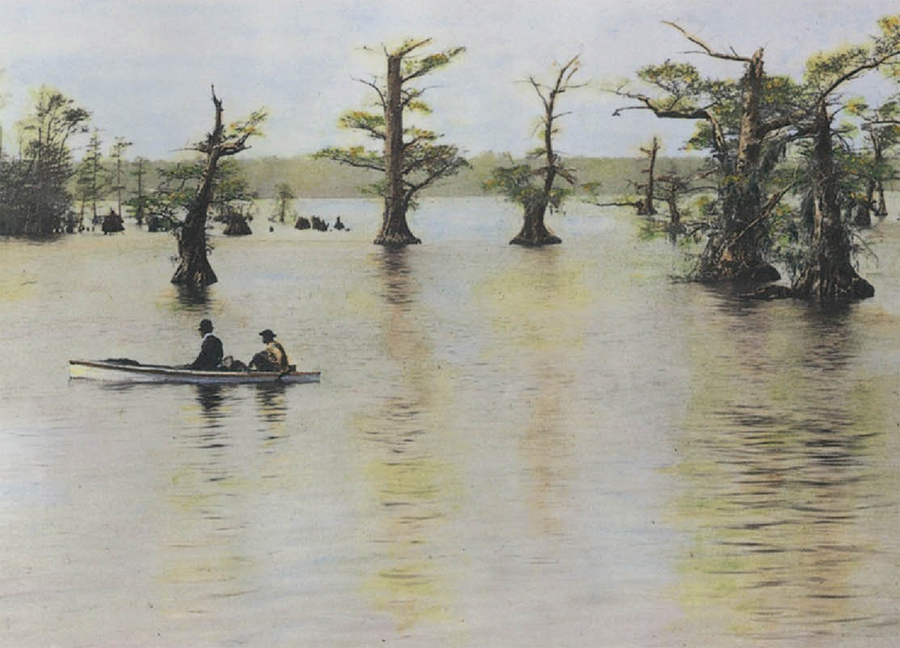
Learn about the incredible history of the Great Dismal Swamp — a refuge for escaping slaves; a source of timber and water; and the impetus for novels by Harriet Beecher Stowe and Henry Wadsworth Longfellow — in a three-part series of presentations at the Weymouth Center for Arts & Humanities beginning Jan. 20 at 2:00 p.m. The first speaker, park superintendent Adam Carver, has managed the swamp for the past four years. Subsequent speakers will be Bland Simpson, author and University of North Carolina professor, on Feb. 10, and Eric Sheppard, genealogy researcher and descendant of slave Moses Grandy, on March 17. Cost is $10 per person for each presentation. For reservations, call (910) 692-6262.

A Peek Behind the Curtain

Go behind the scenes of North Carolina’s most famous outdoor drama with Dwayne Walls, the author of Backstage at The Lost Colony, to get a view the audience never sees — the toil, the mishaps and the moments of grace. Walls will be at The Country Bookshop, 140 N.W. Broad St., in Southern Pines on Wednesday, Jan. 9, at 5 p.m. For information, go to www.thecountrybookshop.biz.

Rodgers and Hammerstein

The Sandhills Repertory Theatre will present “A Grand Night for Singing” with a Broadway cast that includes Amanda Lea LaVergne, Autumn Hurlbert, Stefanie Brown, Zachary Prince and Devin Ilaw, with a local orchestra directed by Michael Pizzi, at the Hannah Center Theatre, The O’Neal School, 3300 Airport Road, Southern Pines. Showtimes are 7:30 p.m. on Friday, Jan. 18, and Saturday, Jan. 19, and at 2:30 p.m. on Sunday, Jan. 20. For tickets and information, go to www.sandhillsrep.org.

Bolshoi Ballet in Cinema

A story of love, death and vengeful judgment set in India, La Bayadère is one of the great works in classical ballet. Part of the Bolshoi Ballet’s HD Live Series, it begins at 12:55 p.m. on Sunday, Jan. 20, at the Sunrise Theater, 244 N.W. Broad St., Southern Pines. For information, call (910) 692-3611 or visit www.sunrisetheater.com.

Gathering at Given

Dressed in period attire, retired Col. Trent Carter will go back in time to visit America’s Colonial past and the Revolutionary War at 3:30 p.m. on Thursday, Jan. 10, at the Given Memorial Library and Tufts Archives, 150 Cherokee Road, Pinehurst. The program will also be held that evening at 7 p.m. at the Given Book Shop, 95 Cherokee Road, Pinehurst. For information, go to www.giventufts.org.

King Memorial March

All members of the community are invited to march on Monday, Jan. 21, during the annual Martin Luther King Jr. Memorial March honoring the life and legacy of the civil rights icon. Sign up at the Southern Pines Library and meet at Downtown Park, 145 S.E. Broad St., Southern Pines, at 10:30 a.m. For information, call (910) 692-8235 or go to www.sppl.net.

Carolina Philharmonic

Maestro David Michael Wolff performs a piano recital exploring the Paris of Chopin, Liszt, Baudelaire, Debussy and Monet on Saturday, Jan. 12, from 7:30 to 9:30 p.m., at the Lee Auditorium at Pinecrest High School, 250 Voit Gilmore Lane, Southern Pines. For information, call (910) 687-0287 or go to www.carolinaphil.org.

The Rooster’s Wife

Friday, Jan. 4: Danny Burns. Cost $15.

Sunday, Jan. 6: The Gibson Brothers at 12:46 p.m. and 6:46 p.m. Cost $35; brunch $8. 

Friday, Jan. 11: John Cowan with Darin and Brooke Aldridge. Cost $35.

Sunday, Jan. 13: Tellico and John Doyle. Cost $20.

Thursday, Jan. 17: Open mic with the Parsons.

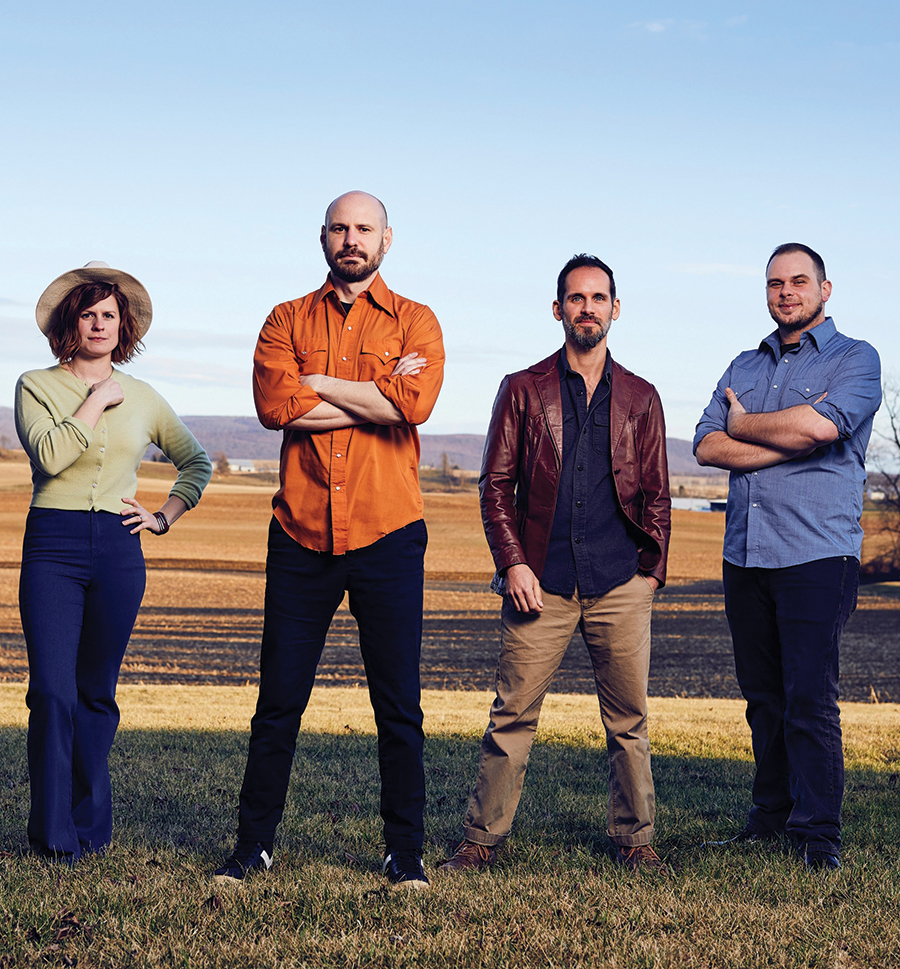
Friday, Jan. 18: Taarka. Cost: $10. 

Sunday, Jan. 20: Ben and Joe. Cost: $15.

Sunday, Jan. 27: The Stable Shakers. Cost: 10$

Unless otherwise noted, doors open at 6 p.m. and music begins at 6:46 at the Poplar Knight Spot, 114 Knight St., Aberdeen. Prices above are for members. Annual memberships are $5 and available online or at the door. For more information, call (910) 944-7502 or visit www.theroosterswife.org or ticketmesandhills.com.

Good Natured

Be Awe-Inspired

It’s good for your mind and body

By Karen Frye

Do we take seriously the power the mind has on our health? 

The way we see the world can be of great benefit and, maybe with a little effort and daily practice, this year can be a shift in your health in a most beautiful way. This unique way of thinking is a quality we are all born with, but the challenges of life can diminish the gift. Children are quick to laugh and find amazement in the most ordinary things. We all possess this condition of wonder and awe and it doesn’t have to fade with age. Researchers at the University of California-Berkeley conducted a study with a group of freshmen in the field of positive psychology that provided valuable insights on how strongly our emotions influence our overall health. With positive feelings we actually increase the power of our immune system, and reduce inflammation in the body. 

Studies in the positive psychology of emotions and physical health are often combined with the common thread of the negative effects emotions such as anger, fear, sadness and so on can have on us. At UC-Berkeley, the participants with feelings of happiness, contentment and awe with life had stronger immune systems and lower inflammation markers. The strongest of these were the feelings of awe  — information that we can use in our lives daily to improve our health. It’s as important as taking your vitamins, eating a healthy, balanced diet, and getting regular exercise. 

Feelings of awe can happen when you see a sweet baby, a beautiful flower, a stunning sunset, any of the miracles of nature. There are so many things all around us that can produce “awe” if we allow ourselves to experience the beautiful things life provides. Perhaps you are one of those people who feel great amounts of awe, but never thought about the physiological benefits your body is receiving. Or, if you need a little help in creating more of these powerful emotions, this is the perfect time of the year to practice. Awe is linked to a feeling of social connectedness. So, the first step is to get out and become more engaged with others. Make an effort to plan things with friends on a regular basis.

Encourage positive relationships. We are never too old to learn how to be a better listener, friend, parent and so on. Join a church or a club of interest. Volunteer your time and energy toward something you feel passionate about. The opportunities to find healthy, positive places to socialize are all around us. 

The benefits are waiting to happen for you. Find the things that create a feeling of awe daily. It’s very easy. Just look around you and see the incredible beauty in nature, or your children, and especially your grandchildren. Whatever it is that can give you an awe-inspired new year.  PS

Karen Frye is the owner and founder of Nature’s Own and teaches yoga at the Bikram Yoga Studio. 

Food for Thought

Winter Salads

Eat well — and wild

By Jane Lear

Salad in the cold months can be tricky. The mild, tender lettuces available at any supermarket are all well and good, but most other salad staples — tomatoes are an obvious example — are disappointing out of season.

More important, though, a typical garden-variety salad doesn’t suit the heartier, richer food we crave at this time of year. Serving a plate of nicely dressed hothouse lettuces after braised short ribs or cassoulet, for instance, can seem tacked on and curiously unsatisfying. Dinner guests tend to pick at it and wonder what’s for dessert rather than appreciate the punctuation in the meal, so to speak, and feel revitalized. 

For the sort of bracing counterpoint I’m talking about, look to bolder greens such as endive, watercress, arugula, the pale inner leaves of escarole, or springy, spiky frisée. Slivers of sweet, earthy celery root, tangy green apple or aromatic fennel will help matters along. 

One of my favorite winter salads always puts me in mind of the Mediterranean — in particular, Provence and Sicily. The recipe stars fresh fennel and any members of the mandarin citrus family, which includes satsumas, tangerines and clementines. The large, relatively new hybrid marketed as “Sumo” (easily recognized by its prominent topknot) has a superb balance of sweetness and acidity, and the fruit segments, which can be neatly slipped out of their ultra-thin membranes, keep their shape on the plate.

Dandelion greens — which have become more readily available — have a clean, sharp flavor that also reminds me of the Mediterranean. That’s where their use in the kitchen was developed, and you can trace the word “dandelion” from the Latin down through the French dent-de-lion, or “lion’s tooth.” This is no big surprise, given the jagged shape of the leaves, but personally I have a fondness for the common French name, pissenlit, which reflects their purported diuretic properties. 

Wild dandelion greens have intense flavor, but these days, I prefer them cultivated unless I know that the grass they’ve been plucked from is pesticide-free. Wild or cultivated, they have a great affinity for a hot skillet dressing. It won’t necessarily wilt the greens, but it mellows them and softens their rawness. Toasted nuts give the vinaigrette a suave sweetness.

The evolution of salad from a side dish or separate course into the main focus of a meal has come into its own, and this makes scratching together a nourishing, delicious weeknight supper — one of life’s greatest challenges — just a bit simpler. Two staples that I swear by are lentils and sausage, especially the smoked Polish variety called kielbasa.

Lentils are a great gateway legume. Unlike most dried beans, there’s no need to soak them beforehand, they cook quickly, and slide from homey to haute with aplomb. I suppose you could say they’ve been around the block and know a thing or two: After all, they were there in the beginning — er, Beginning — as the pottage for which Esau gave up his birthright in Genesis 25:34.

Although I’ve never met a lentil I didn’t like, I’m a sucker for the pretty green French ones called lentilles du Puy. Yep, I know they’re more expensive than other lentils varieties, but they’re worth it. Their characteristic flavor — peppery and minerally yet delicate — comes from the good volcanic soil and dry, sunny climate in which they’re grown. And because they contain less starch than other varieties, they exhibit a lovely firm-tender texture when cooked. In fact, if your opinion of lentils was formed by one too many mushy stews at indifferent vegetarian restaurants, then these will be a revelation.

French green lentils are delicious in soup, of course, or scooped into the hollow of a baked winter squash, or tossed with small pasta shells and crumbles of fresh goat cheese. What I do most often, though, is serve them in a bistro-style warm salad with kielbasa. Add some crusty bread, good butter, and a glass or two of red, and life will feel very civilized.

All three of the salads described above are incredibly versatile. As you’ll see in the recipes — think of them more as guidelines — one ingredient can often be switched for another, and as you go along, don’t be afraid to improvise, based on the contents of your refrigerator. Odds are, it will taste wonderful.

Mandarin-Fennel Salad

Serves 4

Add some cress or arugula sprigs if you like; substitute green olives for the black. Ruby-red pomegranate seeds would add sparkle and texture, and parsley leaves, an herbal punch.

1 large fennel bulb, trimmed of its feathery stalk and some fronds reserved

3 mandarins, peeled

1/4 cup brine-cured black olives

Your favorite best-quality extra-virgin
olive oil

Fresh lemon juice

Coarse flaky salt (Maldon adds a wonderful crunch) and freshly ground black pepper

Cut the fennel bulb in half lengthwise and discard the tough outer layer or two to expose the cream-colored heart. Then cut the bulb into very thin slices with a handheld slicer or a very sharp knife. Put them in a salad bowl.

Remove the weblike pith from the peeled mandarins (children love doing this and are very good at it). Separate the segments and, depending on the thickness and tightness of the membranes that enclose each one, remove those or not; it’s entirely up to you. Cut the fruit in half crosswise and add it, along with the olives, to the fennel.

Drizzle the salad with olive oil and lemon juice to taste and gently combine. Scatter with salt and a few chopped fennel fronds. Season with a few grinds of pepper.

Dandelion Salad with Toasted Pine
Nut Vinaigrette

Serves 6

I’ve called for sherry vinegar below, but balsamic or red wine vinegar would be fine. If you don’t have pine nuts, use pecans, hazelnuts or homemade croutons. Dried cranberries or cherries would be a nice embellishment, too.

6 handfuls tender dandelion greens, washed, spun dry, and tough stems removed

3 tablespoons extra-virgin olive oil

2 garlic cloves, finely chopped

3 tablespoons pine nuts 

1 tablespoon sherry vinegar, or to taste

Coarse salt and freshly ground pepper

Shaved or very coarsely grated Parmigiano-Reggiano

Tear the greens into generous bite-size pieces and mound them in a large heatproof bowl.

Heat the oil in a small skillet over moderate heat until hot. Add the garlic and pine nuts, cook, stirring them often, until the garlic is golden. Stir in the vinegar, then pour over the greens. Season with salt and pepper and toss to coat. Add the Parm and toss once more. Serve right away.

Warm Lentil Salad with Kielbasa 

Serves 4

This salad, a staff favorite at Gourmet, varies according to my time and inclination. It’s perfectly delicious with nothing more than onion and garlic, or carrot and garlic. As for the kielbasa, feel free to substitute another smoked sausage, country ham, pancetta or lardons — thick-cut strips of bacon sliced into matchsticks and cooked until crisp. Serve it on a bed of watercress or tender leaves of a Boston or Bibb lettuce. If desired, gild the lily by topping each serving with a fried egg.

2 cups French green lentils (lentilles du Puy), picked over and rinsed

6 cups water

1 bay leaf

A couple of sprigs of fresh thyme or, if you can find it, winter savory

Coarse salt and freshly ground pepper

1/2 cup plus 2 tablespoons extra-virgin olive oil, divided

1 cup finely chopped onion

1 cup diced carrot

1 cup diced celery, plus chopped celery leaves for garnish

1 tablespoon finely chopped garlic

1/4 cup redwine or sherry vinegar

1 tablespoon Dijon mustard

1 smoked kielbasa sausage, cut crosswise into 1/4-inch slices

Bring the lentils, water, bay leaf and thyme sprigs to a boil in a 3-quart pot. Reduce the heat and simmer the lentils, covered, until they are almost tender, about 15 minutes. Add 1/2 teaspoon salt and keep simmering until tender but still firm, about another 5 minutes.

Meanwhile, heat 2 tablespoons oil in a large skillet over medium-low heat. Add the onion, carrot, celery and garlic and cook, stirring every so often, until the vegetables are just softened and smell delicious, 8 to 10 minutes.

While the lentils and aromatics are both working, make the vinaigrette: Whisk together the vinegar and mustard in a small bowl and then whisk in the remaining 1/2 cup oil. Season to taste with salt and pepper.

Drain the lentils in a colander, discarding the herbs. Return the lentils to the pot and stir in the vegetables and vinaigrette. Cook over low heat a few minutes until hot, remove from the heat and cover to keep warm. Wipe out the skillet and brown the kielbasa on both sides. Stir into the lentils and garnish with celery leaves.  PS

Jane Lear was the senior articles editor at Gourmet and features director at Martha Stewart Living.

Drinking with Writers

Pulling the Thread

In Asheville, learning the untold story with Denise Kiernan

By Wiley Cash   •   Photographs by Mallory Cash

My friendships with writers are unlike other friendships I have. Most solid, enduring relationships take years to build. This is true of my longest friendships, but it is not true of my friendships with writers; these relationships are intense and honest from the moment of inception. I have often wondered what sets writer friendships apart, and I have decided that it is a combination of our solitary work and our inclination toward inquiry. People who spend so much time alone have a lot to share when they get together. All of this is true of my friendship with New York Times best-selling author Denise Kiernan. 

I first met Denise in Asheville, North Carolina, at a literary festival in the summer of 2014. Her book The Girls of Atomic City: The Untold Story of the Women Who Helped Win WWII had been released the previous year, and at the literary festival in Asheville she was easily the best known writer in the lineup. You could not mention her name without someone exclaiming, “Oh, she was on The Daily Show with Jon Stewart!” Denise’s fame and success appeared instantaneous, but like nearly every other writer I have befriended over the years, her journey has been long, circuitous and interesting.

On a chilly day in early December, Denise and I sat down at Little Jumbo, a cocktail bar on Lexington Avenue in Asheville’s Five Points district. The bar is housed in a building that has served a number of purposes since its construction in the 1920s: general store, office space and delivery service, among them. Regardless of what has come before Little Jumbo, co-owners Chall Gray and Jay Sanders have managed to marry the feel of the Prohibition speakeasy to a flair for Gilded Age indulgence. The ceiling is composed of original tin tiles, which reflect the soft light of sconces and chandeliers. The glass-paned front door is set between two huge display windows that house wood-topped tables and leather-wrapped benches. Past the imposing bar, where dozens of bottles hover above dark-stained wood countertops, elegantly appointed sitting areas featuring period appropriate armchairs and sofas await patrons. Little Jumbo has a sophisticated, mysterious feel that is also welcoming and warm. 

Chall Gray was behind the bar during our visit, and after Denise and I ordered and received our drinks — an old-fashioned martini for her and a whiskey for me — we found seats by one of the display windows. 

“Something just dawned on me,” I said. “I know you as the friend who published The Girls of Atomic City and The Last Castle (the story of the Biltmore House), but I don’t know much about your life and work before those books.”

Denise looked out the window as if she were opening and closing the drawers and cabinets of her memory while searching for a way to respond. The weather had turned dreary. It was raining. Cars rolled by, and people on foot passed our window with their collars upturned. Denise smiled and looked back at me, whatever she had been looking for apparently found.

“That’s a long story,” she said. “But it all started with me playing the flute right down the road in Brevard. I was a rising high school junior, and I was at a summer camp at the Brevard Music Center. Someone there suggested I attend the North Carolina School for the Arts. I did, and it changed my life.”

From there, a story I had never heard and never could have imagined unfolded over the course of the afternoon. After high school, Denise moved to New York City to pursue a pre-med degree from NYU. While there she fell in love with the city, especially its arts scene. 

“All of my friends were artists,” she said, “but something was telling me to pursue a practical career. I had decided to apply to medical school, but I wanted to spend the summer in Europe before studying for the MCAT (Medical College Admissions Test).” That summer in Europe extended to more than a year abroad. 

“When I came back to the States I wasn’t interested in medical school anymore,” she said. “I was interested in environmental education, so I enrolled in graduate school at the University of Washington.” It was there that a flier for the university’s student newspaper caught her eye. “I had no journalism experience,” she said, “but I had always written, and I wanted to do something with my writing. That was enough for the editor to give me a chance.”

After graduate school, her love for journalism won out over her love for environmental education. “I pursued an internship with The Village Voice,” she said. “And I mean I really pursued it. I called and learned there were no internships available, so I traveled across the country and showed up at The Village Voice’s New York office and asked them in person.” What happened next changed her life.  

“I worked under a legendary investigative reporter named Wayne Barrett,” she said, her eyes growing misty. “He passed away a few years ago. He was one of the last great investigative journalists. He didn’t care who you were; if there was a story to be uncovered, he was coming after you.”

Denise, a doggedly determined young person with a nose for news, had met her match: a similarly dogged, seasoned journalist who, like her, did not take well to being told no. Over the next several years as an intern and then as a freelance reporter who regularly published investigative stories in The New York Times, The Village Voice and Ms. Magazine, Denise found herself covering the 1995 United Nations Women’s Conference in Beijing, shooting pool with The Cure, writing about the Beastie Boys, and organizing her own crew as a field producer covering European soccer for ESPN. 

“All of those experiences taught me how to chase down leads, to pull at the thread of a story, to organize and focus my work.” 

These skills clearly served her well in writing her two best-known books, the aforementioned The Girls of Atomic City and The Last Castle, both of which dig into the backstories of American history that most of us never learn. Girls explains the largely unknown role of the women in Oak Ridge, Tennessee, who helped develop the atomic bomb. Castle plumbs the lives of George and Edith Vanderbilt in the years before and after they built America’s largest private home.

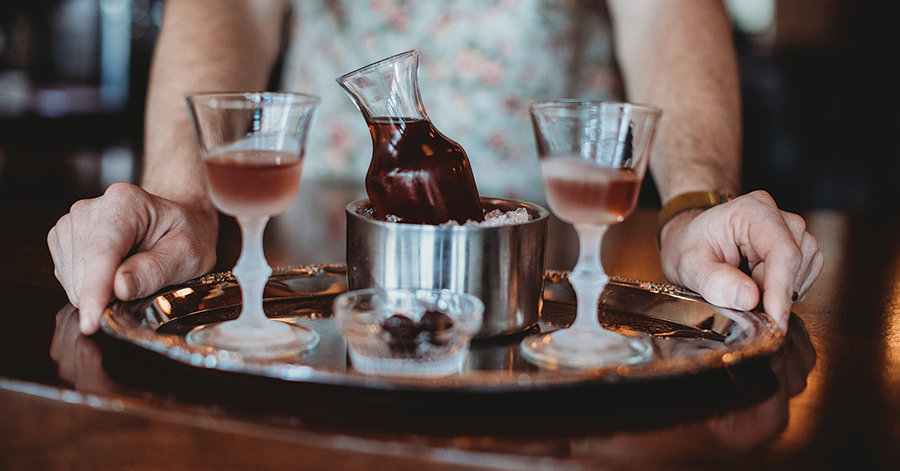
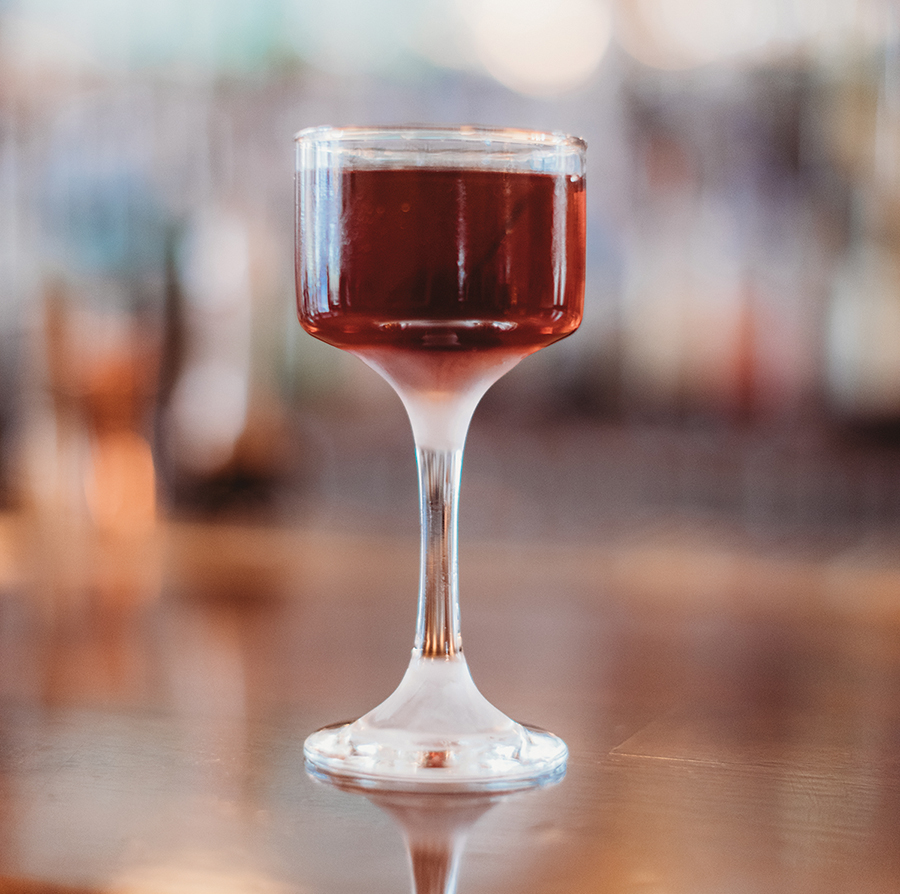
During our conversation, Chall had left the bar and delivered a setup known as the Jumbo Service. Ours was a special chilled Manhattan accompanied by elegant stemware and a side of maraschino cherries, all literally served on a silver platter. Denise and I poured another round of drinks and toasted to stories, both the stories we have written and the stories that have made us writers. PS

Wiley Cash lives in Wilmington with his wife and their two daughters. His latest novel, The Last Ballad, is available wherever books are sold.

Golftown Journal

Miller Time

Pinehurst played a starring role

By Lee Pace

Johnny Miller is perhaps best remembered around Pinehurst for his stirring playoff victory over Jack Nicklaus and Frank Beard for the 1974 World Open title. That was the year the blond bombshell from Northern California scorched the PGA Tour with wins in three straight tournaments to open the season, took first in five others and banked $353,021. He drove the ball long and straight, smothered flagsticks with his irons and seemed to have magnets drawing his putts to the cup.

He’s also known in this golf-happy burg for his insight, candor and color he delivered for some three decades as a golf analyst for NBC. Now 71, Miller announced in October that he’d retire from broadcasting in early 2019 to spend more time with his family, which includes 24 grandchildren. Golfers coming in from their rounds at 4:30 on Sunday afternoon will see and hear Paul Azinger on NBC’s broadcasts instead.

“I’ve had two lives,” Miller said in breaking the news. “The golfing part . . . the younger generation sort of heard about me, but maybe didn’t realize I wasn’t too bad at times. Then the announcing part. But I’ve been on the road for 50 years.”

Still quite significant but virtually forgotten is that Pinehurst, in a sense, gave the world of golf the second coming of Johnny Miller. Four nostalgic days in the Colgate/Hall of Fame Classic in 1979 helped Miller shake a three-year slump and bounced him into a stretch in the early 1980s when he won five tournaments and finished among the Top 30 money earners four times. Miller didn’t win (Tom Watson beat him in a playoff), but he left town a champion in his own mind.

“That tournament single-handedly got me out of my slump,” Miller reflected years later. “It was like signaling to the rest of the PGA Tour that Johnny Miller could play golf again. It was a weight off my shoulders. Pinehurst’s been very good to me. I haven’t played it that many times, but it’s the kind of course I wish we played every week on the tour if I was still active.”

Miller was the incumbent U.S. Open champion with his mind-boggling 63 at Oakmont when the PGA Tour came to Pinehurst in November 1973 after a 22-year hiatus. Richard Tufts of the founding family discontinued the North and South Open in 1951 after financial squabbles with the tour pros, and Bill Maurer, the president of the new owners in the early 1970s, the Diamondhead Corporation, made it a priority to bring pro golf back to Pinehurst and its esteemed No. 2 course. He did so in the form of the 144-hole World Open, played over two weeks in November 1973 on the No. 2 and 4 courses. The purse was an unprecedented total of half a million dollars, with $100,000 to the winner (collected by Miller Barber). Miller entered the event but withdrew at the last minute because of an illness.

The following year, the format was trimmed back to 72 holes and was moved up to late September to coincide with the grand opening of the World Golf Hall of Fame, which sat for nearly two decades on ground to the east of the fourth green and fifth tee of the No. 2 course.

“The World Open in ’74 was the biggest money tournament of the year,” Miller said. “First prize was $60,000, which was unheard of at the time. Obviously, it was a big tournament and had a tremendous field. It was like a Players Championship of today.”

Miller shot a 63 in the second round, missing the course record 62s fired by Watson and Gibby Gilbert the year before. The round featured five birdies on the first six holes (including a 60-footer on the fifth hole).

“It was like one of those old Johnny Miller blitzes,” he said. “I dominated the course and scored a fairly easy 63, if there is such a thing.”

Miller and Nicklaus were tied at 209 after three rounds, with Charles Coody and Bruce Devlin two back and Bob Murphy and Beard trailing by three. The 27-year-old Miller, winner of $256,383 that year, reveled in the challenge of going head-to-head against the 34-year-old Nicklaus, who had earnings of $208,307 and a Tournament Players Championship that year.

“I wouldn’t be surprised if both of us shot in the 60s head-to-head,” Miller said after round three. “I’ve held him at bay recently and I’ve had a lot of success against Jack, but I don’t talk much about it. I know he’s a better player than I am, but I’m not afraid of him. He’s going to try to beat my brains out, but he’s got to respect me because I’ve had such great success against him.”

It turned out that Miller and Nicklaus each shot one-over 72s, allowing Murphy and Beard to force a four-way playoff with 69s and 281 totals, three-under for 72 holes (only eight players beat par for the tournament).

The playoff started on 15, where TV cameras were set up. Beard scored a routine par on the par-3, leaving a birdie putt dead short that could have ended it there. Miller and Nicklaus got up-and-down from the fringe, and Murphy was eliminated after his tee ball found a greenside bunker.

Miller won the tournament with a two-putt birdie on 16 after Beard three-putted and Nicklaus missed a 12-footer for birdie. Miller hit a 3-wood to eight feet — “The best shot under pressure I’ve ever hit,” he said — and went from thinking he had to make an eagle to simply needing to two-putt.

“To beat Jack Nicklaus in a playoff sort of capped off the year for me,” he said. “I enjoyed playing No. 2. It was perfect for my game. It gave you enough room off the tee, you had extremely difficult approach shots, and if you hit it real bad off the tee, you had broom grass, sand and trees. To me that course is the perfect course for my game. It’s the perfect test of golf because it’s got difficult putting, it accepts the approach shot fairly, and it penalizes the poor shot.”

A different Johnny Miller came to Pinehurst in 1979. He had been the talk of the tour in the early 1970s for his good play but now had become the talk of the tour for his bad play. He slid to 48th on the money list in 1977 and 111th in 1978, with only $17,400 in winnings. Miller hadn’t won a tournament since early 1976.

“What’s wrong with Johnny Miller?” the world wanted to know.

Miller responded that there wasn’t anything wrong that a bunch of birdies and a little confidence couldn’t solve.

“Before Pinehurst I played in the Lancôme in Paris and won against a good field, and that signaled that maybe I was ready to play well again on the U.S. tour. I came home a week or two later and continued my good play,” he said.

Miller opened with a 69 and then equaled his 1974 heroics with another 63. “It was amazing. It was like it was ’73 or ’74 all over again.” he said. Watson moved into contention after three rounds, shooting a 65 to stand at 203, one behind Miller. The leaders talked about the confidence Miller was gaining on the eve of the final round.

“Confidence isn’t something you get from reading a book,” Miller said. “You can’t have confidence if you’ve just hit four bad shots in a row. It comes from hitting a lot of good shots. Confidence is Seve Ballesteros hitting all those shots from the trees and making pars because he knows he’s going to. That’s the way Arnold Palmer used to be.

“The difference between 63 and 73 is so little it’s scary. It may be the distance between the ears.”

Miller hit a 3-iron on the 17th hole to one foot away and went one ahead of Watson, but a hooked tee shot on 18 led to a bogey and a playoff after a closing round of 70 and a 272 total. Watson won on the second playoff hole after Miller’s approach went over the green.

But Johnny Miller was back. Pinehurst has always been special to him for those weeks in 1974 and 1979.

“I almost can’t tell you how good the golf course is,” he said. “It might not be the hardest golf course in the world, but for pleasure, for going out and having a pleasurable time with a smile on your face, it can’t be beat. It’s hard to get mad when you play Pinehurst.

“The town reeks of golf, it has a definite golf spirit, very similar to a Pine Valley or Augusta National or Cypress Point. It’s very blessed with that golfing spirit.”  PS

Chapel Hill-based writer Lee Pace has written about hundreds of memorable rounds of golf in Pinehurst over some three decades.