Simple Life

SIMPLE LIFE

Letter to a June Bug

From a Homegrown Ogden Nash

By Jim Dodson

My daughter, Maggie, was born in 1989.

That year became known as the “Year of Revolutions,” a turning point in world affairs that witnessed the opening of the Berlin Wall, a Velvet Revolution in Czechoslovakia, and the end of communism in Europe’s eastern bloc. It also saw the end of Apartheid in South Africa, the birth of the World Wide Web and the first commercial internet providers — social revolutions of a different kind. 

Mugs, as I called my beautiful baby girl from day one, was born in the aftermath of a huge snowstorm in Maine. We took her home to our cottage on Bailey Island on day two, after her paternal grandparents arrived from North Carolina. 

One of my fondest memories is of sliding on my rump down the deep, snowy hill behind our cottage,  my bundled-up baby clutched to my chest. When I looked at my daughter’s tiny face, I swear she was almost smiling. 

Upon returning home to Carolina, my dad, a veteran newspaperman with a poet’s heart, jotted me a note of gratitude with a bit of whimsical verse attached. He fancied himself, I think, a homegrown Ogden Nash. 

Sadly, I can only remember the opening lines of the ditty because I kept it in my office desk forever until it apparently migrated into attic boxes stuffed with half a century of manuscripts, letters and correspondence. Someday, I hope to unearth it. In the meantime, here’s the only bit that I can recall, advice from a happy grandpa: 

There’s nothing in this whole wide world / As precious as a baby girl / who someday soon will surely be / A child as happy as can be / Your job, my son, is take her hand . . . at which point my memory fails.

When Maggie and husband Nate visited us in the autumn of ’24, she graciously offered to plow through my mountains of archives and work papers, giving me hope that she might find my dad’s wise, little verse. 

Instead, she found a pile of letters from my early career that included an unopened one from legendary New Yorker magazine editor William Shawn. He complimented me for an investigative piece on a forgotten African American community I’d written for the Sunday magazine of The Atlanta Journal-Constitution, where I was a staff writer. He’d read it while waiting for a plane home to New York from Major League Baseball’s spring training in Florida. He also wondered if I had interest in writing for his magazine.

I laughed at this discovery because my career ambition in those early days was to someday write my way to The New Yorker.

My daughter was incredulous. “Dad,” she playfully chided, “how could you have not opened this letter?”  

Sheepishly, I explained that I had a habit in those days (and even today) of setting aside important letters to read and properly answer later. “I probably just put it in my cluttered desk and forgot about it,” I theorized. “Crazy, I know.” 

But if a dream job at The New Yorker was never to be, I added, perhaps my mistake was a perfect, unanswered prayer. 

For, if I’d achieved my ambition to work for The New Yorker, I probably never would have burned out covering crime, politics and racial justice in the so-called New South and fled to a winding trout stream in Vermont, where I soon became the first senior writer of Yankee Magazine, married her mom, built a gorgeous house on a forested hill in Maine, and became the father of two beautiful babies. Moreover, I never would have also found my way home to North Carolina, where I wrote a dozen books and helped start several popular arts-and-culture magazines across my home state that are thriving today. 

Last May, we were thrilled to learn that Maggie was pregnant with our first grandchild, a baby girl due on Christmas Eve.  

June Sinclair Prescott arrived early, born seven days before Christmas Eve, weighing in at a healthy 9.9 pounds. I immediately nicknamed her “June Bug,” because they are said to bring good luck and my spring garden is always full of them.

Maggie’s mom and my first wife, Alison, flew to Los Angeles first to be with mother and baby as they got better acquainted.

The plan called for “Nana and PopPop,” aka Wendy and Jim, to follow in early January. Unfortunately, a powerful ice storm struck the day before our flight was to depart. A flow of adorable photos and videos of “June Bug” had to suffice. In half of them, she appeared to be smiling and even belly laughing. Like her mama at the same age.

Two weeks later, we tried again. This time on the eve of departure, it snowed 13 inches and thousands of flights up and down the East Coast got cancelled. Including ours. 

The day after the big snowstorm — shades of Maggie’s own birthday in 1989 — the sun popped out and I stepped outside to fill the bird feeders and think about my spring garden. An old idea suddenly came to me.  

Pushing the snow off my favorite wooden chair, I sat down and jotted a letter in light verse to my new grandchild like the homegrown Ogden Nash who preceded me. I also asked my good friend, artist Harry Blair, to illustrate it.  

Dear June Bug,

Someday while you are still a tyke, 

I’ll take you on a wondrous hike

To see the world from on a hill

And all the places that will fill

Your life ahead with joyful things —

Like winter snows and golden springs.

For nature is the ideal guide

To leafy paths that cannot hide

The glory of a world that’s wide —

With loving souls so full of grace

Who’ll help you find your perfect place

To live the life your heart desires —

With faith — and strength — that never tires.

                   With my love forever, 

                    PopPop 

Our third effort to reach Los Angles proved a charm. 

We took the illustrated verse, lots of cute, new baby clothes and a lovely Swedish bear to finally meet our beautiful new grandchild. All we did for five days was rock, hike, hold, cuddle, feed and play with the June Bug and her mama.

Like her mother, baby June was born at a moment of revolutionary change and turmoil across the planet. But I have a feeling that our laughing June Bug will bring good luck and happiness to anyone she meets on her life’s journey, just as her mother has.

Hometown

HOMETOWN

Home, Sweet (Not) Home

But it’ll do after a long day

By Bill Fields

Near the end of a recent stretch of hectic business travel that included four canceled flights in a week, I arrived in Houston late on a Wednesday evening. After having to employ debating-level skills to convince a skeptical rental car agent that “Bill” was in fact a common nickname for “William,” I secured a vehicle and drove to my hotel, arriving past midnight.

Entering my room, I deadbolted the door and took a deep breath.

In the calm of my temporary quarters on the 12th floor 1,600 miles from home, the frustrations of the not-so-friendly skies eased. The spacious room was quiet and cool, with crisp, fresh sheets on a king bed. The flat screen television was large, the desk ample. Unpacking enough to settle in for the night, it struck me that as wearying as life can become when the travel gods are angry, a room on the road is one of my happy places.

Certainly, I don’t qualify as an ultimate road warrior, the kind of person who leaves on Monday and returns on Friday, week after week for most of the calendar. There were years, though, when I was away covering golf upwards of 25 weeks. My travel has been about half that annually in the last decade but with periods of concentrated trips. During those busy times, a comfortable room is a sanctuary for sleep, work or watching a favorite movie that just happens to be on TV.

I’ve had a fascination with motels and hotels since early childhood when my visiting grown-up cousins lodged at the Charlton Motel on U.S. 1, long since replaced by a convenience store. Whether jumping on the bed or into the pool, which was tucked amid tall pines behind the building, the novelty of the experience made it seem as if I were much farther away from home than a couple of miles.

My family didn’t travel often, but most summers we ventured to the beach. If not accommodated in a cottage, we stayed in one of the oceanfront motels. The Buccaneer on Ocean Drive comes to mind: room key attached to a plastic fob; water glasses wrapped in paper; a window-unit air conditioner to soothe skin after hours on the strand; sand on the carpet; an ice machine nearby.

We ventured to Atlanta once to visit Six Flags Over Georgia and stayed in a suburban Holiday Inn near an Interstate exit. I pored over the room service menu before pestering my parents to let me order a hamburger and a Coke. Getting a delivered meal was almost as cool as riding the log flume at the amusement park.

The thousands of nights on the road since those first trips have been spent in all kinds of places, from a plush Ritz Carlton on the Gulf of Mexico — turndown service! — to a grim budget chain on a trucking route in Kansas, where I was stuck in a “smoking” room so stale it was the only time I expensed Lysol spray. There were mouse sightings too, but I fared better that week than a cadre of tour caddies who booked a motel so sketchy they purchased sleeping bags to put atop the bedding.

On a few of my first trips to the Masters, during the 1980s, I was lodged in a motel distinguished by its unusual color scheme. The “Purple Palace,” as we called it, was $29.99 a night 51 weeks a year, a rate that soared to five times that much the second week of April.

Although a chocolate on your pillow is a nice touch, when you travel a lot the basics are what matters: walls thick enough to neutralize noisy neighbors; a bed that neither swallows you up nor makes it seem as if you’re lying on plywood; a shower with plenty of pressure and hot water whose sliding door doesn’t have a mind of its own.

I can take or leave fluffy towels, but I appreciate a sink at the right height. The only time I hurt myself in a hotel room was in Binghamton, New York. Leaning way over to shave one morning, I tweaked my back and ended up on the floor in pain, causing me to look scruffy and smell of Bengay the rest of my stay.

Mostly, you want your room to be your room. Checking into a Denver hotel one night a couple of years ago, I encountered a clerk with problems greater than nickname awareness. Upon reaching my assigned room, when the key card turned the light green and I pushed the door open, it slammed loudly into the security lock. Hearing someone rustling inside, I didn’t stick around for a conversation.

Southwords

SOUTHWORDS

And They’re Off!

My day at the Kentucky Derby

By Tom Allen

March owns the Madness. April, the Masters. But the first Saturday in May belongs to the Kentucky Derby, and during my seminary years in Louisville, Kentucky, one magnificent Saturday found me in the high-dollar seats watching the “The Most Exciting Two Minutes in Sports.”

Every January the word went out that Churchill Downs, the iconic home of the Derby, was accepting usher applications. My part-time job as a hospital lab tech usually found me volunteering to work Derby Day, but I wanted to close out my senior year in Louisville experiencing Kentucky’s most beloved tradition.

In the spring of 1989, graduation loomed. Finding a job consumed much of my time. The Derby was just the break I needed. On application day, a couple of buddies and I got to Churchill Downs early and waited in brutal western Kentucky wind and cold to snag an usher badge as coveted as the blanket of roses that adorned the winning horse. And snag that badge, I did.

Among the long list of usher rules was no drinking, no smoking, and no betting. I guess the stereotype of a Baptist seminary student made us trustworthy employees. Most worked the corporate box crowd — seats passed down through generations to family and business owners. A few unlucky chaps were assigned to the track’s infield, a grassy area with few seats and an atmosphere that, rumor had it, rivaled New Orleans during Mardi Gras with hookups, breakups, fights, and the occasional wedding.

Usher training focused on hospitality, first aid and learning the layout of the Downs, as well as how to deal with attendees who sipped one too many mint juleps. Walkie-talkies were handed out if security was needed.

May 6, 1989, dawned cloudy, cool and wet. A muddy race is the last thing Derby-goers hope for, but by late afternoon, the track was drying out. Derby Day is packed with 14 races, on the Downs’ turf as well as dirt tracks, culminating in the 1 1/4 mile race for elite 3-year-old Thoroughbreds.

The corporate crowd I was assigned to was chatty and kept me busy answering questions, making bets, grabbing drinks. They soon found out I was a minister in training. I met their jokes and gentle ribbing with a smile and a few quick comebacks. Tipping swelled. True to the occasion, everyone was decked out in Derby attire — floral print dresses, pastel blazers and bowties, and those over-the-top hats. That day I learned what a fascinator was, having years before heard the word during televised royal weddings.

Just before the big race, one of my spectators, mellow from a few Kentucky bourbons, handed me a $100 bill and asked me to fetch him a mint julep. When I returned, he told me to keep the change, along with a request to “say a little prayer” for his chosen horse, Sunday Silence. Earlier in the week I had given a work associate two bucks to put down a bet on a horse for me, based solely on a name I liked — Sunday Silence.

I watch the Derby on TV every year, but there’s nothing that compares to being there, hearing the trumpeter sounding the call to post, then watching those grand steeds and their petite jockeys parading to the starting gate to “My Old Kentucky Home.” Electrified magnets hold the doors shut until a starter pushes a button, breaks the current, and the horses throttle off to the cheers of 150,000 spectators.

The Derby takes roughly two minutes, 120 seconds. When riders make the turn in front of the Downs’ iconic twin spires, the crowd’s roar intensifies. Win, place or show, hearts race. Sunday Silence, with jockey Pat Valenzuela up, was the unlikely winner that day, beating the favorite, Easy Goer, by 2 1/2 lengths. My big tipper was ecstatic, handed me a 20, and thanked me for whatever divine assistance he imagined I invoked. I smiled knowing my $2 bet had snagged me another 20. Coupled with a nice paycheck and tips, it was a very fruitful first Saturday in May.

One month later, I graduated. Two years later I married a Georgia girl I met in Louisville. We moved to Raleigh for my first call, then seven years later, to Southern Pines, a haven for equestrians, and us.

For 23 years on my ride to work, passing horse farms that rival anything in the Bluegrass State, I couldn’t help but smile whenever I saw a horse and rider on Youngs Road.

Omnivorous Reader

OMNIVOROUS READER

Doubling Down

Finding the familiar in the extraordinary

By Jim Moriarty

“If you don’t tell their story, who will?”

This was the question posed to Christina Baker Kline by Lesley Looper, a cousin and Duke University librarian, about the lives of the renowned “Siamese twins” Chang and Eng Bunker and their wives, Sarah and Adelaide Yates — Kline’s distant relatives.

The short answer is that a lot of people have. The famous brothers, conjoined at the chest, who came to America in 1829 and eventually settled in North Carolina, have been satirized in poetry, made cameo appearances in works by Herman Melville and Mark Twain, been used as a metaphor during the War Between the States, and been the subject — or at least the literary device — of 21st-century musicals, plays and movies. Does the fact that Kline’s genealogical family tree includes them make her imaginings somehow more prescient? Since the twins died 152 years ago, probably not. What is quite clear from the earliest pages of Kline’s The Foursome, due out this month, is that she has taken extraordinary care to imagine her characters less as curiosity and more as men and women in full, portrayed with distinct traits, virtues and flaws, and very much creatures of their age, one of America’s most turbulent times.

Here’s a Wikipedia-worthy primer: Chang and Eng were brought to the United States from Siam (today’s Thailand) by the Scottish merchant Robert Hunter and a sea captain named Abel Coffin, who put them “on tour” in Britain and America. The on-again, off-again business wound up a decade later with the brothers touring on their own with their own staff, becoming wealthy in the process. In July 1839 they made an appearance in Jefferson, North Carolina, and in October of that year, they returned to purchase 150 acres in Wilkes County, where they would meet and marry the Yates sisters. This is where the novel takes over.

When Kline realized that Sarah (Sallie) was not buried in the same resting place as Chang, Eng and her sister, Adelaide, she discovered the voice of her narrator. Sallie is as clear-eyed about herself as she is every other character in the novel. “Addie possessed the self-assurance of the beautiful. She was used to being seen, and it made her bold about being heard,” writes Kline. “I inherited our mother’s round cheeks, her solid bones and small gray eyes, her unruly auburn hair. Addie took after Papa’s family: tall and lean, with dark-fringed lashes and high cheekbones. She shone in contrast to my ordinariness. She was charming while I was shy.”

The vivacious Addie is drawn to Chang, the more dominant brother. “Addie claimed she’d fallen in love with Chang, and maybe she had. She said she felt it deeply. But Addie felt everything deeply,” writes Kline. “Somehow, though I’d voiced my misgivings from the beginning, I’d let the months unspool without taking a firm stand. Now I found myself swept up in my sister’s insistence that marrying the brothers was the right, the only, thing to do.”

Kline doesn’t shy from the physical awkwardness of this union squared, though neither does she dwell on it. The mantra for Sallie is compartmentalization. Don’t think about everything, “only the next thing.”

The sisters’ conversation on their wedding day is portrayed like this:

“Everyone will be staring at us,” I whispered.

“Of course they will. We’re the brides.”

“They’re thinking about — about tonight.”

“Don’t be silly. Nobody’s thinking about that, except maybe you. You’ll be fine. Remember: only the next thing. All right?”

“All right.”

The foursome marries in 1843. After finessing the physical, Kline does an admirable job of portraying these two families through the next 30-plus, turbulent years, through war, peace, the inevitable loss of parents, the birth, and sometimes tragic death, of children and the eventual death of Chang and Eng. In fact, it is this dramatization of the travails of two families that, in a way, normalizes that which is anything but. The couples eventually live in separate houses, one in Surrey County, one in Wilkes County, spending three days at each. “During the three days in the home of the host, the visiting brother will conduct no business and express no opinions. He is to be a silent partner,” declares Chang. Between them the two families would have 21 children who would grow into an assortment of cousins devoted to one another.

Though joined at the chest, the brothers are not the same person. “Eng liked to gamble, his eyes brightening with each new hand. Chang preferred to drink. Neither quite approved of the other’s vice.” Chang could be cruel and moody, Eng the peacemaker. “Eng’s instinct was to ignore or concede, but even he had his limits. Sometimes, like a cat poked too often, he struck back. More than ever, I saw how tightly the band bound him to his brother. What had once been a tether now felt like a shackle.”

Every time their financial picture darkens, the brothers go back on the road to refill the coffers, but the way they are perceived has changed. What once was a curiosity has given way to ridicule. They eventually hook up with P.T. Barnum, who dislikes the brothers because of their independent streak as much as they detest the famous showman for his exploitation.

Chang and Eng are free men of color who become slaveholders and supporters of the Southern cause. Two sons, one from each family, fight for the Confederacy. “The brothers had learned early on that the world is divided into those with power and those without. Those who own and those who are owned. They’d decided — perhaps from the moment they first felt the weight of coins in their palms — where they stood on that divide.” The families feel the depravations of war and struggle with issues of race. “The shortages deepened. Every stitch of fabric was repurposed, every scrap of food stretched.” Stoneman’s cavalry came. The world changes, the enslaved are enslaved no more. “The hardest part wasn’t learning to do things for ourselves, though that was difficult enough. It was learning to see people we’d spent years looking through. To acknowledge that the women who had wiped our children’s tears had children of their own whose hurts had gone unseen.”

If the world paid attention to Chang and Eng, Kline gives more than equal time to Sallie and Addie and the place of women in the 19th century, dramatized throughout, from unwanted pregnancies at the hands of unscrupulous men; to Eng, the slaveowner taking advantage of the enslaved Grace; to the assured figure of Sallie’s lesbian aunt, Joan. Given all that, The Foursome stretches beyond the voyeuristic, attempting to paint a fuller picture of two brothers and two sisters, tethered by more than just flesh. 

Tea Leaf Astrologer

TEA LEAF ASTROLOGER

Taurus

(April 20 – May 20)

You’re a glutton for luxury, it’s true. But this month, amid the blur of artisanal cocktails and regenerative facial serums, you’ll ache for something simple: direction. As luck would have it, a Mercury cazimi in Taurus will deliver a moment of crystal clarity on May 14. Combine that with the new moon on May 16 and a slap on the hindquarters from Mars (May 18), and you’ve got yourself a road map. Pack your ahimsa silk pillowcase, sweetheart. Life may be guiding you someplace you never imagined. 

Tea leaf  “fortunes” for the rest of you:

Gemini (May 21 – June 20)

Three words: guac and chips. 

Cancer (June 21 – July 22)

Release the outcome. 

Leo (July 23 – August 22)

Beware of shiny objects. 

Virgo (August 23 – September 22)  

Don’t let the light bulb drive you crazy.

Libra (September 23 – October 22)

Opt for the linen.

Scorpio (October 23 – November 21)

Three o’clock, darling.

Sagittarius (November 22 – December 21)

Retire the busted ones. 

Capricorn (December 22 – January 19)

Delete the app.

Aquarius (January 20 – February 18)

Try taking smaller bites. 

Pisces (February 19 – March 20)

Leave a paper trail. 

Aries (March 21 – April 19) 

BYO hot sauce.

From the Archives

FROM THE ARCHIVES

The Sandhills Fair

By Audrey Moriarty

First held in October of 1914, the Sandhills Fair was sponsored by the Sandhills Board of Trade and the Sandhills Farmers Association. There was sewing, knitting, canning, gardening, woodworking and animal husbandry, all highlighting the work of nearby farms. After the first several years, it was held at the Fair Barn and Harness Track, where a large grandstand was built to accommodate crowds of as many as 3,000 spectators. The Pinehurst Outlook said the fair required “nothing more than a smile for admission” and “was a fair without a midway and doesn’t need one.”

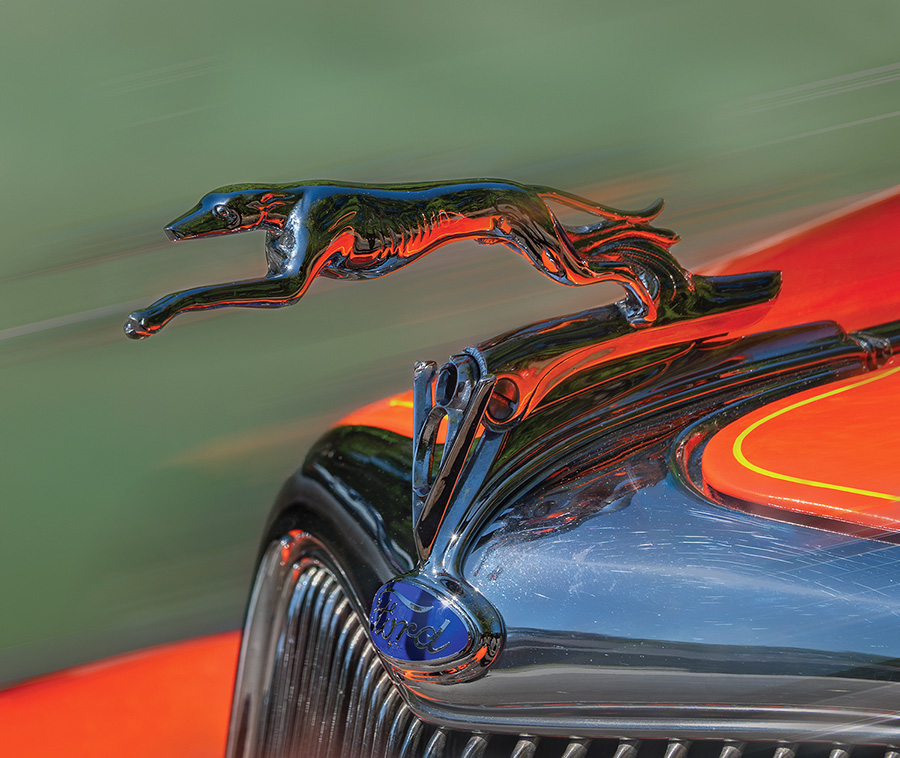
One of the more popular activities was “auto polo,” invented around 1910 by Ralph “Pappy” Hankinson, a Ford dealer from Topeka, Kansas, hoping to increase his sales. Patterned after equestrian polo, matches featured four cars with two players per car: a driver and a “mallet man.” The cars were generally stripped-down Model Ts with no tops, doors or windshields. A regulation-sized basketball was used, although some venues manufactured even larger polo balls. The driver and mallet man had to guide the ball into a 5-foot-tall goal. The mallet men — and, periodically, the driver — were frequently ejected from the vehicle resulting in cuts, broken bones or being run over. Later, the cars were equipped with primitive roll bars above the driver.

The sport caught on in the U.S. but internationally it was viewed with caution and skepticism, being christened “a lunatic game.” Auto polo drew large crowds, but enthusiasm waned during the late 1920s due to the cost of the vehicles and the ensuing necessary repairs.  PS

Audrey Moriarty is the Library Services and Archives director for the village of Pinehurst.

Tea Leaf Astrologer

TEA LEAF ASTROLOGER

Aries

(March 21 – April 19)

This month, you’re giving theatrical bravado — and we’re lapping it up. Mars in your sign from April 9 through mid-May is the energy shot you didn’t need but surely won’t squander. Just don’t move so fast you miss a stellar career opportunity that aligns with yourlong-term goals. A friendly tip: Passion and impulse aren’t always synonymous. Now, channel your inner Freddie Mercury and watch the world respond.

Tea leaf  “fortunes” for the rest of you:

Taurus (April 20 – May 20)

Taste as you go.

Gemini (May 21 – June 20)

Double the recipe. 

Cancer (June 21 – July 22)

Best not to overextend yourself. 

Leo (July 23 – August 22)

Slow down and proceed with wonder.

Virgo (August 23 – September 22)  

Go waffles-for-dinner wild. 

Libra (September 23 – October 22)

Check the expiration date. 

Scorpio (October 23 – November 21)

Try changing the lens. 

Sagittarius (November 22 – December 21)

Two words: flameless candles. 

Capricorn (December 22 – January 19)

It’s time to turn the compost. 

Aquarius (January 20 – February 18)

Read the room, Darling. 

Pisces (February 19 – March 20)

Schedule the oil change. 

Lucky No. 7

LUCKY NO. 7

Lucky No. 7

A future custom-built for family

By Jenna Biter 
Photographs by John Gessner

A checkerboard of grass and pavers leads to the glass-paneled double doors of Charles and Amy Crabtree’s white brick home. “Sebastian, come on, buddy,” says Amy, opening the doors. The 12-year-old miniature schnauzer skates across the wide oak planks running the length of the entry hall. To the right is a blue study lined with books and sports memorabilia. To the left is a music room showcasing a K. Kawai baby grand and a commissioned painting of Charlie Brown and Snoopy.

“This is how it’s supposed to be — I can see through the house,” Amy says, looking from the front doors all the way to sliding glass doors at the back.

The Crabtrees retired to their custom build overlooking Donald Ross’ masterpiece in 2020 after splitting time between Palm Beach Gardens, Florida, and Bethany Beach, Delaware. The Holly Inn in Pinehurst would often be the couple’s stopover on road trips back and forth. The village charmed them off their feet and eventually out of their far-flung homes. “We sold both homes within a two-month period,” says Charles.

Pinehurst was the draw, but family was the clincher. Once the Crabtrees’ daughter, Courtney, moved to North Carolina and had their first grandchild, the future was set. “It was an easy decision,” says Amy. Now Courtney and her brother, Chase, both live in the Forest Creek community with their families. “We have our four grandchildren here, and they’re just a five-minute ride away,” Charles says.

Down the entry hallway, past a bellowing grandfather clock shipped to the States from Germany, the house opens up. A slate-blue built-in displays family photos beside one of the home’s five fireplaces. This one is in the living room. There’s another through the sliding glass doors in the outdoor dining room, which overlooks the wide landing, a grandkid-approved infinity swimming pool and ultimately the golf course fairway.

“We were on our last day looking for property, and we had kind of exhausted everything,” Charles says. “We thought, maybe this isn’t going to work, and then all of a sudden, the Realtor said, ‘These wooded lots here — I think one of them — we might be able to talk to someone to see if they’re interested in selling.’”

“We asked, ‘Well, where is it?’ They said, ‘This is No. 2.’”

They bought the .89-acre wooded lot and Huntley Design Build got to work combining favorite elements of their previous homes into one 6,850-square-foot dream build. It was the COVID era, but fortunately for the Crabtrees, their building materials had already been delivered, so construction wasn’t delayed by the supply chain crisis. “From the time we moved the first tree off the lot, which was July, 2019, to the time we were in the home on June, 2020 . . . ” Charles says.

“Eleven months start to finish,” says Amy, completing the thought.

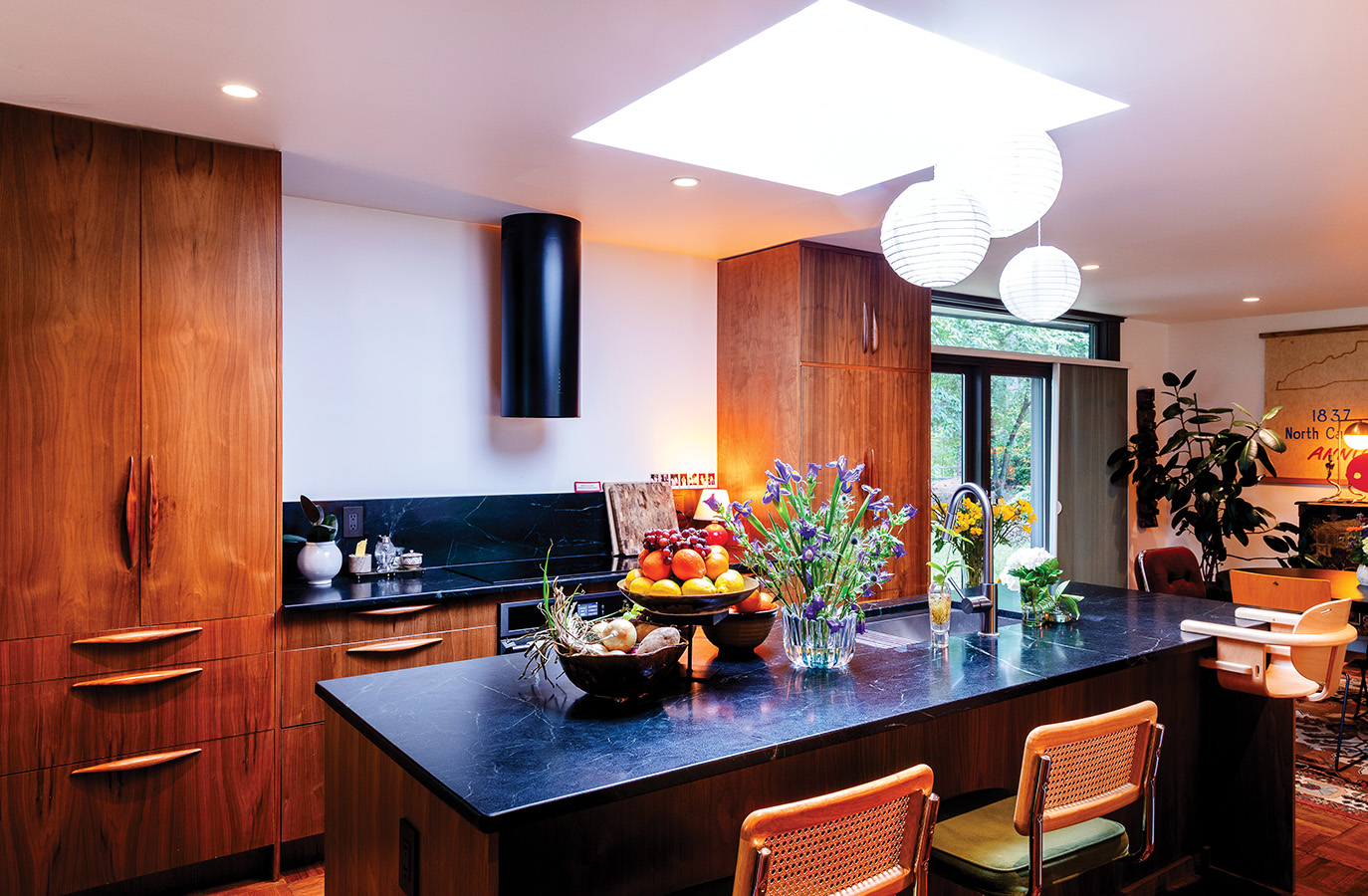
Back inside the living room, turn in one direction to enter the Crabtrees’ personal sports bar with pine wood from the lot lining the ceiling and a wine cellar that holds up to 1,500 bottles. There’s a golf simulator, neon Putter Boy sign paying homage to the Pinehurst Resort and two signed, limited edition prints by sports artist LeRoy Neiman, one of Jack Nicklaus and the other of Cal Ripken Jr. breaking Lou Gehrig’s record for playing the most consecutive games in Major League Baseball. Turn the other way, and you’re in the dining room and kitchen. A long table seats 10, enough to fit the Crabtree family, grandkids and all. “We try to do a Sunday dinner, or some sort of event, once a week if we can,” Amy says.

The upstairs is home to three guest en suites, a gym and a bunkroom for the grandkids. “When they come over, this is where they hang out,” Charles says. There are two sets of bunk beds, a cushy sectional and TV, and plenty of floor space to play. “They’ll be up here having a big old time, all four of them, and then when we come up after they leave, it’s a complete disaster,” he says affectionately, like only a grandfather can.

The Crabtrees themselves don’t spend much time upstairs, only to play with the grandkids, work out or if they need to fix something. “Between the master and the kitchen and this room, everything is right here,” Amy says, sitting at the bar top. It’s as if they built an apartment within a house, enabling maximal time together.

They drink early morning mugs of coffee in the master bedroom and slip out a side door to the hot tub. When they play golf it’s as a couple, and they’re even together in the art on their walls. Mixed-media collages by British artist Tom Butler dot the house, and if you look closely the likeness of Charles and Amy can be seen in many of them. “We said we’re retiring early, and when we retire early, we’re going to be together,” Charles says. Here they are in front of the Eiffel Tower. There they are in New York. It’s a personalized Where’s Waldo. The only thing missing is Sebastian the miniature schnauzer, who has yet to make a cameo.

Backyard Breaks

BACKYARD BREAKS

Backyard Breaks

A miniature Himalayas at home

By Jenna Biter     Photographs by John Gessner

In the neighborhood of Pinehurst No. 9, Bob and Maria Milligans’ white stucco house lounges near the back of a lot shaded by mature pines, oaks and flowering dogwoods. Rhododendrons, hydrangeas, azaleas, camellias — the front yard is a gardener’s dream. The backyard is a golfer’s paradise.

“I love to play golf, so you’ll notice we’re walking from the patio to my . . .” Bob motions with his hands like he’s unveiling the grand prize on a game show “. . . putting green.”

This mini-Thistle Dhu, or micro-Himalayas, was fashioned from a seamless 20-by-20 piece of artificial turf, molded for a natural roll and sped up with hundreds of pounds of sand worked into the surface. There are three cups to aim at and enough contour to keep a tour pro scratching his head. “Sometimes it breaks left, sometimes it breaks right,” says Bob. The longest putt is roughly 15 feet.

McNeill’s Landscaping Services of Aberdeen installed the green when they overhauled the Milligans’ backyard in 2025. Upgrades included a rock garden, patio and walking paths, the continuation of a retaining wall, and in addition to the green, the replacement of the yard’s grass with turf. “I can’t stress enough how good of a job McNeill’s Landscaping did,” says Bob, surveying his domain. The backyard’s facelift was the final step in a home makeover that began just after the Milligans purchased the home in 2021.

“This is our Florida . . . I guess you call it a Carolina Room here,” Milligan says. The outdoor living space is situated on a deck they converted from a split-level to a single tier in 2022. Later they installed a pergola with remote control-operated louvres that can divert the sun any time of day and even keep out the rain. Four or five seating arrangements spill off the deck and into the backyard, ready to accommodate the Milligans’ frequent entertaining. A teakwood dining table seats 14. There are two gas-powered fire pits, plus a grill. “It’s the only thing he’s good at besides golf,” says Maria, grinning.

“We love to have more than just two or three friends over,” she says. They regularly commune with a group of six couples, the self-proclaimed “dirty dozen.” “Our new friends all love to come here because they can just chill, unwind and open a few bottles of good wine,” says Maria. “It’s relaxing.”

Dark blue cushions, pillows and pots finish the backyard. It’s a fitting color for a Navy family. Bob served 27 years in uniform before retiring as a captain in 1999. After their first life moving around the country, overseas and on the seas, followed by a second life in northern Virginia, the Milligans finally settled in Pinehurst. Their home sits across the street from the fairway of the fifth hole of No. 9, the Jack Nicklaus-designed course originally known as Pinehurst National.

“It was fate,” says Maria. Friends were moving to the area and the Milligans traveled south for a visit. “I walked into a shop, and the owner gave a hello-how-are-you,” says Maria, still dumbfounded. “I don’t get that in northern Virginia.”

Pretty soon the Milligans were searching for their own place in Pinehurst. “It took us three months,” says Maria. They liked the floor plan of their now-home and could see the property’s potential. “We could make it our own,” she says.

The Milligans moved into the nearly 4,000-square-foot house in 2021 and immediately got to work updating bathrooms and the kitchen, painting from top to bottom, essentially redoing everything indoors except for the layout. Then they shifted their focus outdoors.

“It was overgrown. It looked more like a jungle than anything else,” says Bob. “The backyard was nothing but pine needles, so it wasn’t really usable.” They hacked, trimmed, shaped and reshaped the potential they saw into reality. Thirteen trees were removed, so the surviving stand could flourish. They left the sprawling azaleas untouched.

“I love flowers. I want flowers,” Maria says. “I have these gorgeous azaleas throughout, I have rhododendrons, I have camelias, I have jasmine, roses, gardenias.” Whites, reds and pinks color the scene. “During the spring, this place is unbelievable as far as the color goes,” Bob says. Plus the Milligans’ home is just under a mile from the clubhouse. “Why do you think we moved down here?” Maria teases as Bob cracks a smile.

“The people I play with say that I have an advantage over them,” he says, eyeing the backyard’s crown jewel. A golfer-gnome watches the emerald turf from his home in a garden bed, lanterns illuminate the playing surface for after-hours practice and a pair of loungers offer respite to tired putters. “They’re older, I keep reminding them, so they putt and they sit,” says Maria.

Pathways puzzled together from geometric pavers circulate guests to and from the main attraction, and a golf-themed bird bath completes the scene. The yard’s full of robins, blue jays, woodpeckers and hummingbirds, especially when the flowers are out. It’s nearly a private aviary. “You can barely see our neighbors through the trees. You can’t see our neighbors at the back. We love it here because we’re in the community, but we can also get up early in the morning, have a cup of coffee on the deck and not worry about golfers.”

Unless they’re playing at Milligans National.