



By Bill Fields
I’m going to wear something green on St. Patrick’s Day.
I’ve never been fully committed to doing so, but upon reviewing my ethnic origins for the first time in a while, I’ve decided that this March 17 I ought to get dressed with more purpose.
An updated DNA report shows there is more Irish in my background that I had thought, with single-digit percentages of my roots linked to each of three areas in Ireland: Connacht, Munster and Donegal. Some 18 percent of my heritage comes from the ancestral region of “Central Scotland and Northern Ireland.” Ancestry doesn’t break down that number; I hope the latter locale is well-represented.
Last summer, for the second time in a decade, I spent an enjoyable week working at The Open Championship in Portrush, Northern Ireland, where the commute from hotel to NBC Sports television compound consisted of a 15-minute walk through town or along the beach. The twice-daily stroll, including stops at friendly establishments for coffee in the morning and Guinness in the evening, was a pleasant antidote to many long drives in snarled traffic to major golf events over the years, trips sometimes punctuated by a parking lot attendant on a power trip.
It felt like luck was on my side in Portrush, including the day that a bat flew around the TV tower while we were on the air, causing analyst Kevin Kisner to duck and cover as it darted right over his head. Having had to receive a series of rabies shots after a close encounter with a bat while I was taking out the trash at dusk on a summer day in 1997, I was grateful our visitor stayed clear of my workspace. Someone purchased a large, long-handled net that we had at the ready the rest of the week, but to the relief of everyone in the tower, the bat never reappeared.
Luck is an apt topic in March, regardless of how one feels about the origins of “Luck of the Irish.” Rather than considering the idiom as ironic or derisive (as was the case when used about the success of Irish miners in the American West during the late 1800s), this seems the right time to simply place it in the context of extremely good fortune.
The enduring Irish symbol of luck and prosperity, the shamrock, is a three-leafed clover. Come March — which not only includes St. Patrick’s Day but marks the start of spring and the arrival of golf season in many places — I think of the much rarer four-leaf variety, believed to be a truly lucky plant.
Years ago, while I was researching a story for Golf World about the legendary golfer Glenna Collett Vare, one of the things people remembered about the record six-time U.S. Women’s Amateur champion, a trailblazing athlete of the 1920s and ’30s, was her uncanny knack for finding four-leaf clovers.
One such instance occurred at the 1950 Curtis Cup at the Country Club of Buffalo when Vare captained the American team that included a young Ohioan, Peggy Kirk, later known as Peggy Kirk Bell, the matriarch of Pine Needles. Kirk trailed late in her singles match when Vare approached to ask her how she stood. Learning of Kirk’s deficit, Vare stepped away for a few minutes, then returned with a four-leaf clover and a message — “Go get her” — for Peggy. Kirk won the match, 1 up.
Given how finely groomed golf courses have become since Collett Vare’s era, it’s harder to find clover of any kind these days, not that modern players haven’t gotten some very good breaks. Less than a month prior to St. Patrick’s Day last year, in a playoff at the Mexico Open, Brian Campbell badly sliced a drive that was surely headed out-of-bounds until it struck a tree and caromed back in play, setting up his subsequent victory.
Campbell’s was as lucky a moment seen on the PGA Tour since 1992 when Fred Couples’ ball defied the odds and clung to the steep bank of Rae’s Creek on Augusta National’s 12th hole; or perhaps The Crosby in 1984 when Hale Irwin’s tee shot, headed toward the ocean left of Pebble Beach’s 18th hole, bounced off the rocks and onto the fairway, the ball appearing as if a seal had headed it to safety. Irwin birdied, then defeated Jim Nelford in a playoff.
From personal experience, I can report those rocks aren’t usually so kind.

In christening gown and bonnet,
he is white and stoic as the moon,
unflinching as the sun burns
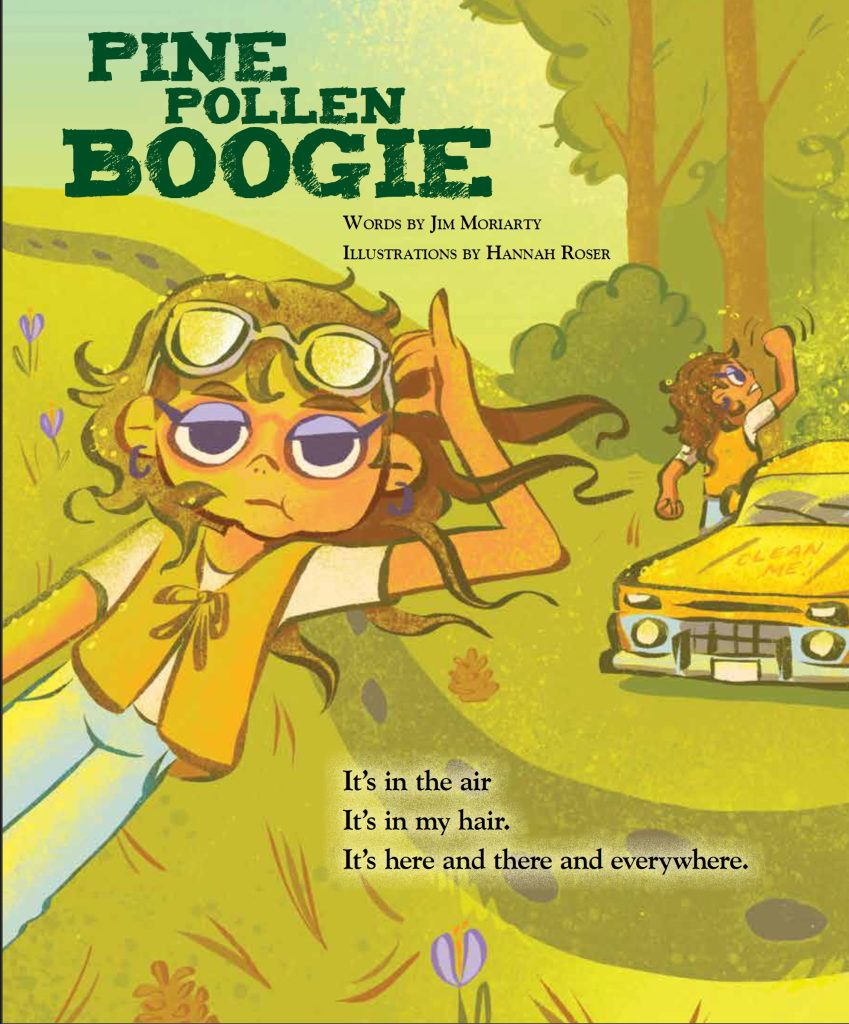
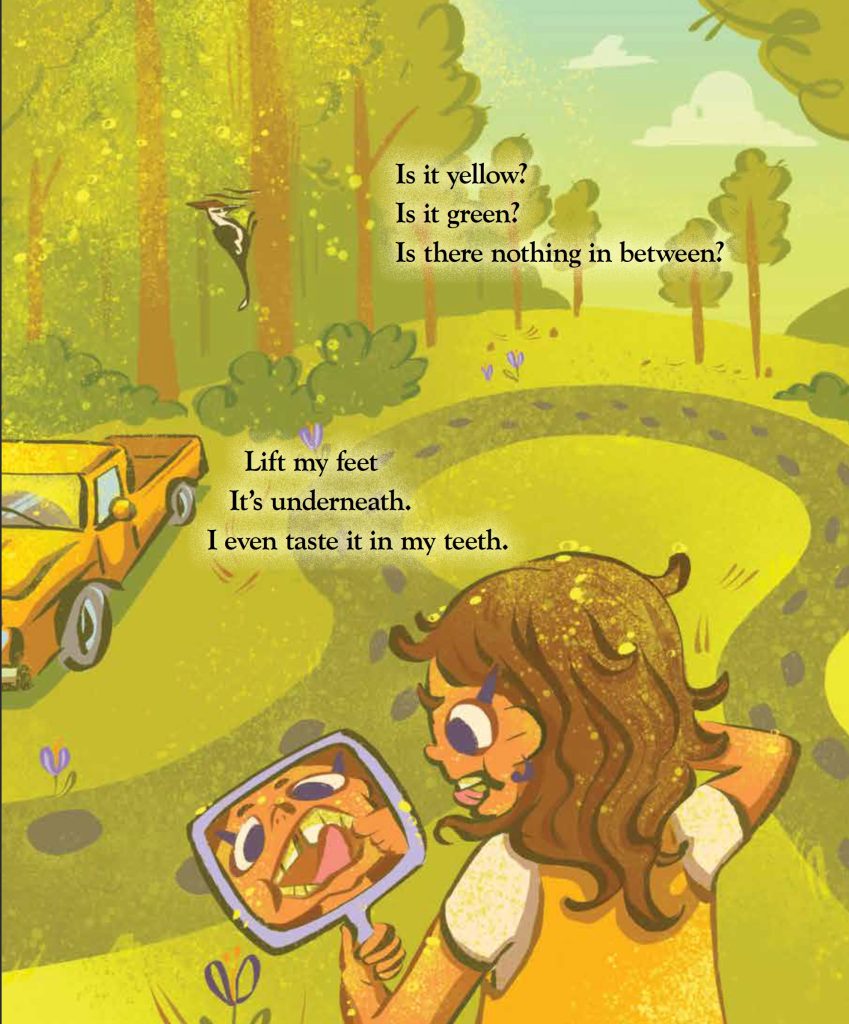
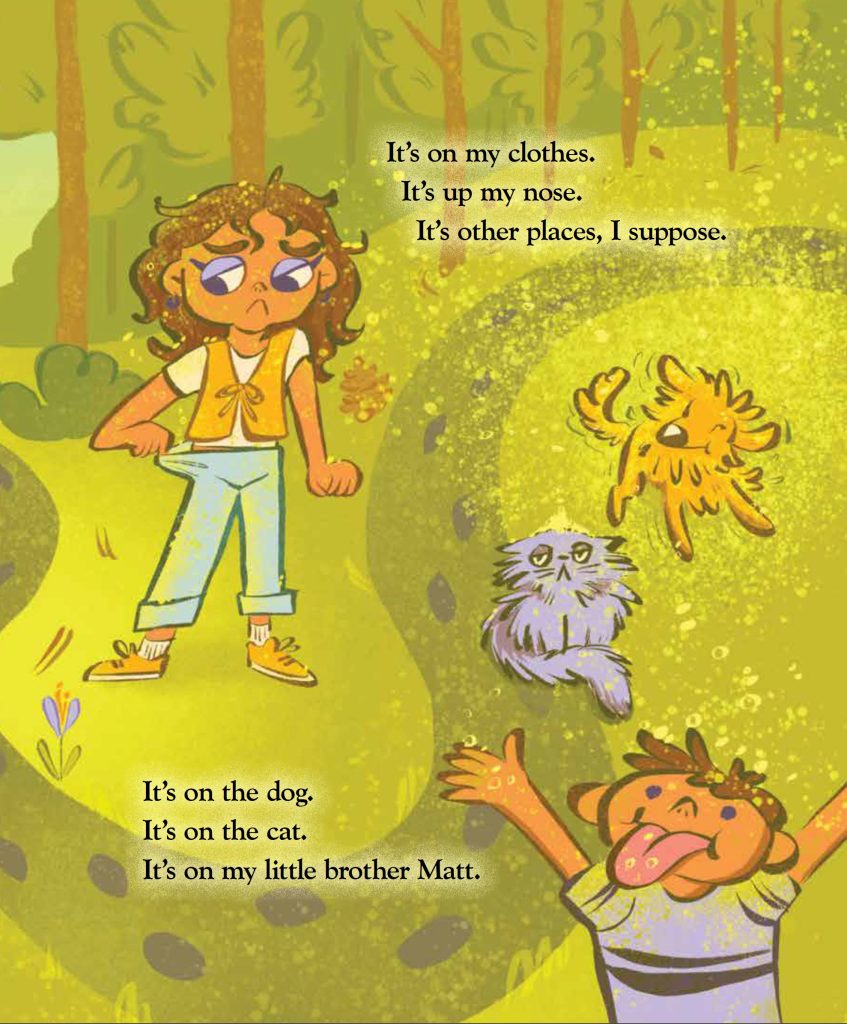
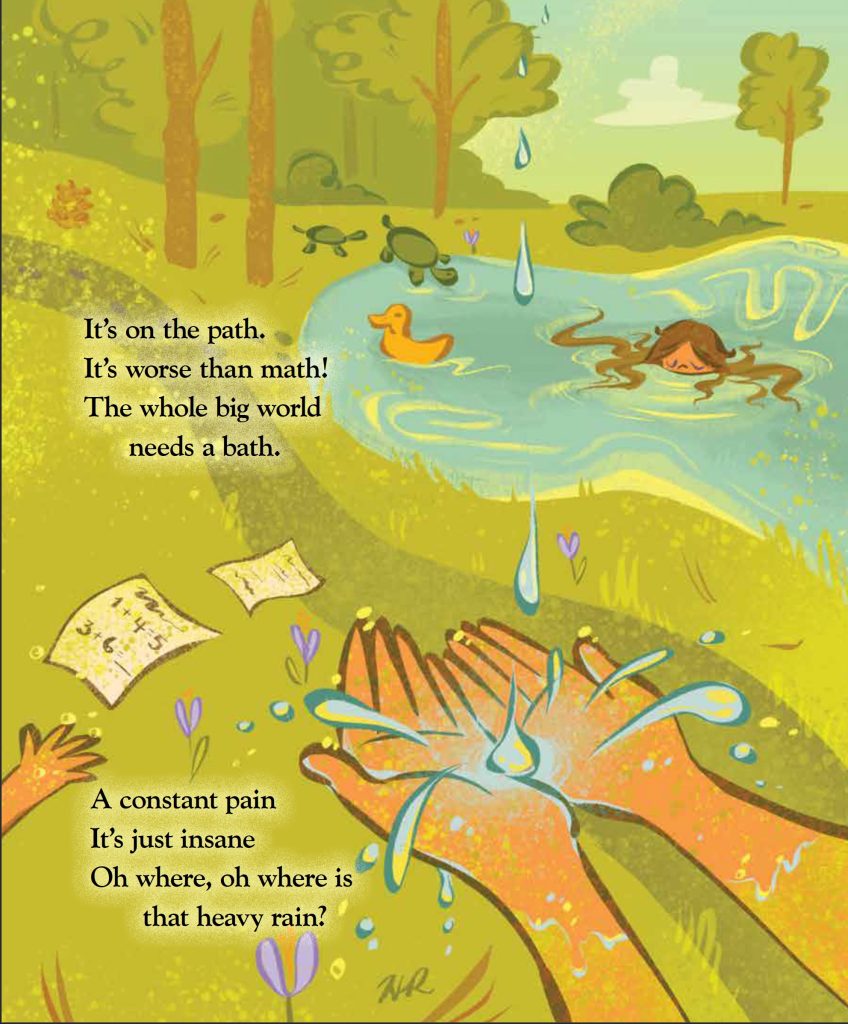
through yellow puffs of pine
pollen gathered at his crown
while I pour onto his forehead
from a tiny blue Chinese rice cup
holy water blessed
by John Paul II himself
and say, “I baptize you, Julian Joseph,
in the name of the Father, and of the Son,
and of the Holy Spirit.”
Nor does he stir when the monarchs
and swallowtails,
in ecclesiastical vestments,
lift from the purple brushes
of the butterfly bush
and light upon him.
— Joseph Bathanti


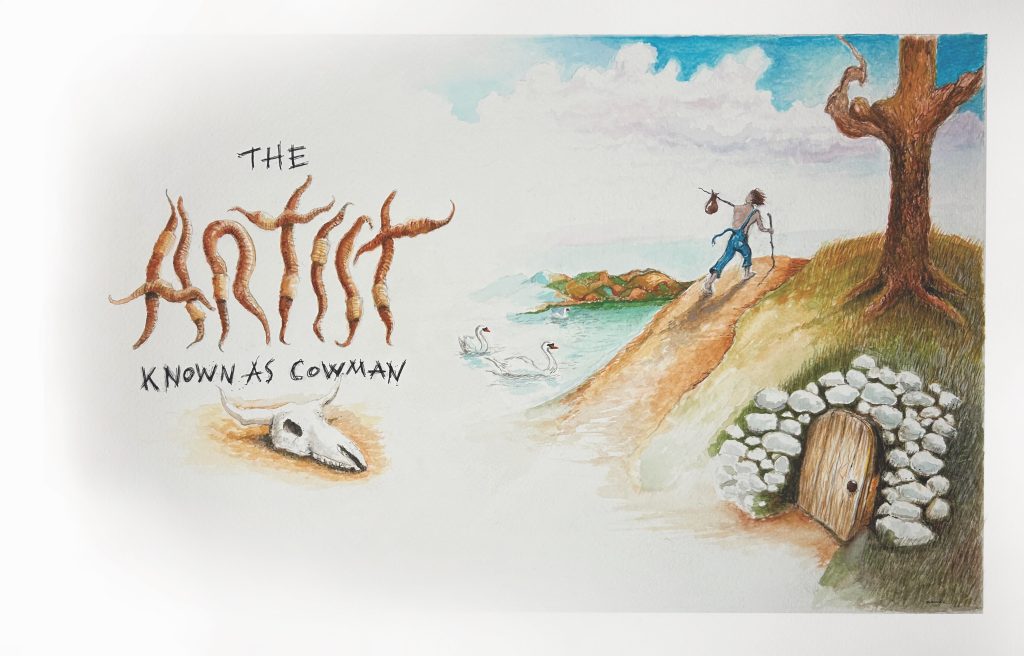
Fiction by Daniel Wallace
Illustrations by Keith Borshak
He wasn’t always Cowman. Before he was Cowman he was just a boy, and like a boy he played in the fields, in the river and the woods, near the lake, and down the road. He worked with his family planting things. In the summertime he didn’t wear shoes or a shirt, just a pair of cut-off jeans passed down from brother to brother, the blue worn nearly white, and sometimes he wore a hat, when the sun bore down so hot he could feel it boiling his brains. This is the way it was from May to the middle of September, and by then he looked less a boy than he looked like something that was once a boy, or that could become a boy, under the proper supervision and a bath.
Near the end of a long afternoon sometimes beneath the spindly towering pine trees that were everywhere, he cleared the pine needles away until he made an open patch of dirt. With the palms of both of his hands he would smooth it out, harder and faster, until the dirt pressed so hard into his skin that no bath would ever get it out completely. His hands would always be a little bit darker than the rest of him and that makes for an interesting biographical detail.
Then he would take a stick and carve a picture into the ground, and maybe some words. In the beginning, he always said, he drew nothing but cows.
This is how it started, becoming what he later became: Cowman.
Now of course he’s known the world over.
But before. Before all this, where was he?
A valley where there was a river — small at times, then bigger, frothy and white, then . . . not. Mountains this way, that. A hill, a dale. No place anyone has ever been, however, nor a place they would want to go, and for precisely this reason it remained undiscovered by the likes of you or us for centuries probably. It had no name, this place. For generations the people there weren’t aware there were other places, so isolated was this little town, quiet and dark in the hills and in the dales, the mountainous extremes of their lives. Why name it? Why name something there is no more of than one?
Home is what he called it. He hasn’t been home in such a long time and knows now he will never see that forgotten patch of soil ever again. But the day he left he knew he never would. All of his work is influenced by what he no longer has.
Dug into the side of a hill was his house. Two-sided wooden walls, the front stone, the back wall a dense red clay, which, true, he grew up eating. Not for the main meals. Just a little something in-between. When a new baby came they just dug deeper into the mountain for room.

Worms were a problem. When it rained the wall dripped. But it mostly did the job it had to do.
The wall in his room had a streak of lime running through it. The pale white against the dull orange was like a late summer sunset, he said. The artist transforms the world with his eyes, even when his world is no more than an ambitious hole.
The fifth of seven, Cowman was. The first three were girls, the second three were boys, and the last was some odd combination of the two but less than either. They called it Tarp. While the others were passing fine in almost every respect — the boys big and strong, the girls industrious, pleasant — all of Tarp’s parts were either bigger or smaller than they were supposed to be, and inside his head was probably not something anyone could actually think with, no better than a peach pit, really, or gravel. Truth be told he never did amount to much and had he amounted to anything no one would have been more surprised than he. Everything surprised him, though. Even chairs and rocks.
The others were named, in order of their birth, Estem, Maudry, Ebee, Root and Mold. The Cowman’s real name is not included in the list, as it has been carefully lost to time. It has variously been suggested to be Remly, Tirk, Lebby, Crop, Moses or Pisky. No one can say. Cowman has thus become Cowman, now and forever, and can avoid the embarrassing parenthetical approximations which attach themselves to the nomenclature of famous geniuses.
Estem, Maudry and Ebee, his sisters, were beyond beautiful. They all had thick auburn hair and perfect freckles. It was said no man could look at any one of them without falling in love, and thus the daughters were never in the same place at the same time. Except once, one time, and a man fell in love with all three of them and courted each on a revolving basis. Finally, they all said no, and his heart was broken once a day for three days running by each of them in turn, repeated on a loop for months, and he did not live long thereafter.
Mold and Root were large — Mold largely fat, and Root like one big muscle. Root’s strength was legendary. He once threw a wild bobcat high into the air using naught but his little finger — and caught it with his face. Before this legendary event he was a handsome man, too. Or handsome enough.
Mold’s girth impressed as well. He was one of those constant growers — ever expanding, like a balloon blown up by God. One morning he overslept and could not leave the room through the same door he entered it and stayed there for several months. He eventually became so big that he filled the room from side to side, floor to ceiling. Root dug him out. He remained an outdoor child after that, and for as long as he lived was never allowed within the dwelling of another human being again. Sad.
Cowman, being the seventh child and the third boy, spent most of his childhood either lost or forgotten. The seeds of art are born within the desolate souls of the suffering. Wagon trips across the wide valley to visit relatives who lived in a holler never failed to exclude him — not out of cruelty, or dislike, but out of pure absentmindedness. His family had a sense of him, but they could never be sure — like something glimpsed quickly out of the corner of your eye — was there a – ? did we have a – ? He was more of an idea, a vague one at that. Maybe he was a dream — a communal dream? Communal dreams were common in that time and place. Hard to conceive of nowadays, that people were too poor to have dreams of their own, but had to share them with their family, sometimes the entire village. But it was true. Dreams were crowded places. Cowman did not help his cause by being quiet in an exceptional way. He was neither small, nor large. He rarely complained, by nature content. When he would wake up and find his entire family had gone he tried to pitch in by cleaning up around the house and doing worm duty on the back wall. Then he might go fishing.
And then, of course, it goes without saying, sometimes he would make his art. He would use a stick, or a piece of charcoal, or pieces of bark crumbled almost into dust, making the line he wanted across the plank wooden floors of the front room. The famous Cowman line, a line that came from his bones and from the rest of him, from all his parts, and flowed into his hand and through whatever he was holding. He knew who he was before anyone else did, but he kept himself to himself. When he came of age he packed a small tote and left the red clay enclosure to parts unknown even to him and was never missed because no one was really sure he had ever been there at all. He did miss the old life, though, from time to time. He was a cave dweller at heart.
Why did he leave that place? No one left, ever, there being no known place to leave to. But he saw a light no one else could see, heard a song sung for him alone, and he smelled something sweet over yonder, something that could not be found in the red-clay, lime-striped box he called home.
He sought it out.
He seeks it still.
Cowman crossed many hills, many dales, and over the last of both came to the first town. So many people, dozens upon dozens, all of them arrayed in colorful garb and shoes made of shiny leather. Some wore hats that looked like clouds and hair that curled and bounced like a small animal living on their heads. Not the sort of people he was used to, and he not theirs. They gave him the side eye and hustled past, as if they were afraid he might bite them, for he looked like someone who lived at the bottom of a swamp, wearing clothes made of mud and dead leaves. A nice woman took him home with her, a young widow named Mary. She gave him a bath and a haircut. He was so handsome then. No one could ever believe he was the same boy who had scared the dogs with his face. She showed him the ways of the world, too — Mary, to whom all thanks are given by him for everything always.
Oh, Mary.
He left at the end of the year, fluent in the ways of human beings, breaking Mary’s heart into so many pieces that no one was able to put it back together again. The first of many broken hearts left in his wake — but what could be done? Not a single thing. He had his work and that was all that mattered. No heart could pine for him more than he pined for the making of great things.
He is most in love with that which has yet to exist.
That’s what mattered to him, and that’s what matters to him still.
(His poor children, though. The less said about them the better.)
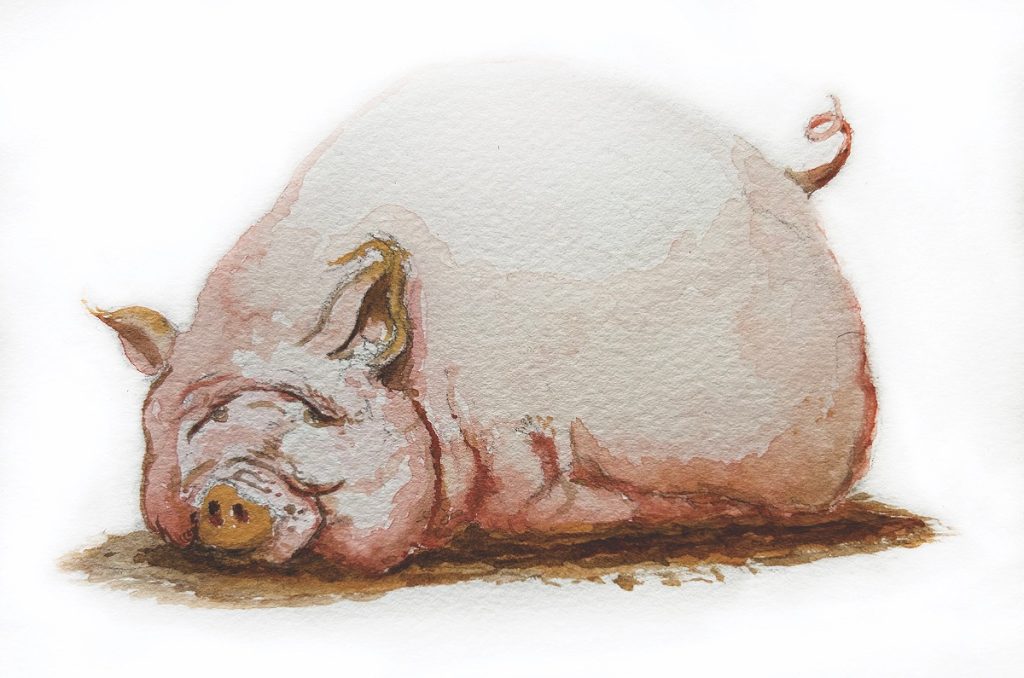
An old man now, crumbling, silent, possibly happy as a clam, but who can say, waiting for death with his trademark wrinkly grin and nursed by his 7th wife, the lovely Sophia, who is 63 years his junior. All Cowman makes now are dreams, dreams made of bits and pieces of clay and leaves, caves and pine trees, rivers, hills and dales and of Mary, of course, to whom all thanks are given by him for everything always. He has regrets, to be sure, but none that really matter. He can’t remember much of what he’s done, the good things or the bad. He can’t remember his friends or his enemies or his children or any of his many wives, including the one at his bedside now. She is quite beautiful, though, this woman. Her skin is smooth and brown and her golden hair shines like sun on water. She reminds him of nothing because there is nothing in his mind. But he could look at her face forever, and so this is what he does.


By Jim Dodson
Every year as March returns and my garden springs to life, I think of the remarkable woman who changed my life.
Her name was Celetta Randolph Jones, “Randy” for short, a beloved figure in the city of Atlanta’s business, arts and philanthropic circles. Five years my senior and leagues ahead of me in terms of spiritual growth, Randy was introduced to me by my editor, Andrew Sparks, during my first week on the Atlanta Journal-Constitution Sunday Magazine staff.
At that time in the spring of 1977, Randy was running The Georgia Trust for Historic Preservation and had stopped by the magazine to introduce herself and plumb my interest in historic preservation.
“Something tells me you two are bound to become best friends,” Andy wryly observed, a prophetic remark if there ever was one.
In short order, Randy became my best friend and confidant, the one person I felt comfortable with discussing matters of life and death, heart and soul. Our love affair was a case of what the ancients called agape, transcending romance and superficial attraction. Besides, Randy was secretly dating an Episcopal priest, which I kidded her about relentlessly. She loved to give the needle back about the young women I went out with in those seven years of our deepening friendship.
Though she never married, “Aunt Randy” was the godmother of half a dozen of her nieces and nephews and, eventually, my own daughter, Maggie.
During my first few years in the so-called “city too busy to hate,” I frequently wrote about the darker side of the booming New South — race violence, corrupt politicians, unrepentant Klansmen, the missing and murdered, and young people who flocked to the city seeking fame and fortune only to lose their way and sometimes their lives.
A life-changing moment came one Saturday night when I was waiting for a squad from the city morgue to pick me up for a story I was working on about Atlanta’s famed medical examiner. As I stood in my darkened backyard waiting for my dog, McGee, to do her business, I witnessed my next-door neighbor, an Emory University med student, being gunned down in an alleged drug hit. He died as we waited for the ambulance to arrive.
Not surprisingly it was Randy who helped me make sense of this. The morning after my neighbor’s murder, I’d opened my Bible to the Book of Matthew for the first time in years and was struck by a reference that Jesus repeatedly makes about the “Kingdom of Heaven.” That evening at dinner, I grumbled, “So where the hell on Earth is the so-called Kingdom of Heaven?”
Randy simply smiled. “It’s already here, my love. Inside us. You just have to see it.”
I was a wee bit annoyed by her calm assurance.
Randy was a classy and calm Presbyterian with an unshakable faith in God’s grace. I was a backslid Episcopalian who hadn’t darkened a church doorway since the murder of my girlfriend during our college days.
Purely because of Randy, however, I attended services the next Sunday at historic All Saints’ Episcopal in downtown Atlanta — a place where the doors were always open to the homeless. I soon took a job writing about the suffering of the Third World for the Presiding Bishop’s Fund for World Relief, and even made a vow that, going forward, I would only write about subjects and people who had a positive impact on life. Randy Jones was my inspiration.
I lived up to that vow, and even briefly entertained taking myself off to the Episcopal Seminary until a crusty old bishop from Alabama suggested that I could “probably serve the Lord much better by writing than preaching.”
My pal Randy gave her famous, sultry laugh when I mentioned his somewhat frank comment — and she agreed with him.
During my final years in Atlanta, Randy and I met at least once a week for lunch or dinner to talk about the events of the day and the mysteries of this world. She also spent several Christmases with my family in North Carolina, attended both of my marriages, visited my young brood in Maine and joined us for a joyous spring vacation at our favorite Georgia beach.
In many ways, she became the Dodson family godmother and probably the closest I’ll ever come to knowing a living saint — though she would respond with her sultry laugh at such a silly notion.
Over the decades, as Southern springtime returned, wherever I happened to be in the world, Randy would track me down by phone. She’d finish our talk with a couple meaningful questions: So, Jim, are we any closer to the Kingdom of Heaven? And . . . How is your beautiful garden growing?
She and I had visited public gardens together many times. Randy hailed from Thomasville, a small South Georgia town known as “City of Roses,” and knew that once I’d swapped big-city life for small-town living, I’d become a committed man of the Earth like my rural kin before me. There was no going back, she knew, on gardening or faith.
As my spiritual life grew and deepened across the years, I’d come to believe the Kingdom of Heaven might indeed be nearby. It’s no coincidence that Jesus mentions it 32 times in the Book of Matthew. His partner, Luke, simply calls it the “Kingdom of God” and makes clear — as Randy did — that it “lies within” everyone.
My favorite reference comes from the Gospel of Thomas, when Jesus’ followers pester him to explain where the “Kingdom” exists:
Jesus said, “If those who lead you say to you, ‘See, the kingdom is in the sky,’ then the birds of the sky will precede you. If they say to you, ‘It is in the sea,’ then the fish will precede you. Rather, the kingdom is inside of you, and it is outside of you.
Wherever it exists, I have my late friend, Randy Jones, to thank for putting me on a winding path to the Kingdom within.
And I’m not alone.
Randy Jones passed away peacefully in October 2022. Her funeral service at Atlanta’s First Presbyterian Church was packed with people whose lives Randy had touched, from business leaders to artists, from church members to childhood friends, including a half a dozen godchildren and yours truly. The sanctuary overflowed with stories of her generosity and quiet wisdom, each person recalling how Randy’s kindness had shaped their own journeys. The service was a testament to the wide effect she had not only in Atlanta but in the hearts of everyone fortunate enough to know her.
Including a former backslid Episcopalian.


By Hampton Williams Hofer
Step into the SECU DinoLab at the North Carolina Museum of Natural Sciences in Raleigh, and you may find yourself shoulder-to-shoulder with a paleontologist dusting off a specimen or examining a slide with a microscope. This high-tech research laboratory is open to the public, a chance for regular folks to see real science in action. And it’s home to a pair of very famous residents: the “Dueling Dinosaurs.”
The Dueling Dinosaurs — thought to be the remains of an intact tyrannosaur and Triceratops that died 67 million years ago — are considered perhaps the most significant fossils ever recovered from Montana’s storied Hell Creek Formation. For one, the specimens were nearly complete and exceptionally well-preserved. For another, these two dinosaurs had interacted, likely even died fighting, as evidenced by teeth fragments embedded in the Triceratops. They were first unearthed in 2006 by Clayton Phillips, a Montana rancher and self-styled dinosaur cowboy, who excavated and stored the specimens while spreading word of his discovery.
By 2016, Dr. Lindsay Zanno, head of paleontology at the North Carolina Museum of Natural Sciences, had heard of the fossils. She and her team traveled to New York, where the Dueling Dinosaurs were being stored, to verify the legitimacy of the fossils, then on to Montana to examine the conditions of the landscape where they were excavated.
Convinced of their importance, Zanno, along with the Friends of the NCMNS, worked to raise the funds to not only bring the Dueling Dinosaurs to North Carolina, but to build them a new home worthy of what she knew would be one of the most significant paleontological finds of the century. The NCMNS acquired the dinosaurs in 2020 — and got to work.

The museum built a new annex to support the Dueling Dinosaurs’ 31,000 pounds of bone, sediment and plaster. Unlike the way fossils have been treated in the past, the Dueling Dinosaurs would not be fully excavated and reassembled but remain within their plaster preparations — all the better to learn clues about how they behaved and appeared. (In the stone surrounding the Triceratops, for example, are impressions left by octagonal formations on its frill, offering insights into how the dinosaur’s skin may have looked and felt.)
While paleontologists had historically spent their research work dusting bones in dark museum basements, their work at the NCMNS would literally be brought to light. Visitors can see them, even talk to them, ask questions and observe their work in real time. The SECU DinoLab at the NCMNS, which opened in spring 2024, revolutionized the visitor experience with this groundbreaking exhibition.
The remarkably preserved fossils and whatever Cretaceous secrets they held were, as Zanno said at the time, like “a big, unopened Christmas present.” Now, less than two years since the museum welcomed the Dueling Dinosaurs, the first gift has been unwrapped. And it’s a whole new species, flipping decades of Tyrannosaurus rex research on its head.
The small tyrannosaur was believed to have been a teenage T. rex for the 20 years since Phillips spotted its pelvis weathering out of the ground. Using CT scans and imaging to look inside the blocks of earth housing the fossils, paleontologists at the NCMNS uncovered characteristics in their tyrannosaur specimen that set it apart from a T. rex, including larger forelimbs, more teeth, fewer tail vertebrae, and distinct nerve patterns. In addition, growth rings and spinal fusion data proved that the specimen was an adult. But at 18 feet long and 1,500 pounds, it is only around a tenth of the body mass and half the length of a full-grown T. rex.
That meant that the small tyrannosaur is, in fact, a mature Nanotyrannus lancensis.
“The implications are difficult to overstate,” says Zanno. “The fact is, much of our current understanding of T. rex was built on three decades of research that unknowingly mixed data from Nanotyrannus with that of Tyrannosaurus — two different tyrannosaurs that aren’t even closely related. Most of that research now needs a second look.”
Along with co-author Dr. James Napoli, a vertebrate paleontologist at Stony Brook University, Zanno published the findings of their study in Nature this past October.
The scientific gift of the Dueling Dinosaurs exhibit will continue to give, as Nanotyrannus changes much of what paleontologists have believed about history’s most famous dinosaur and the world in which it reigned supreme. A longstanding debate in the realm of paleontology questioned whether Nanotyrannus was a distinct species or simply an adolescent T. rex. Zanno and Napoli showed that the Nanotyrannus at the NCMNS is biologically incompatible with a T. rex — meaning that the T. rex’s dominance in the final million years leading up to the asteroid was not unchallenged.
“To me, what’s exciting about this discovery is that it opens the door to a whole new series of questions about how these drastically different predators — one built for brute strength and one built for speed — interacted in the twilight of the dinosaurs. What we can say right now is that life at the end of the Cretaceous was a lot more colorful than we had imagined,” says Zanno.
Though smaller than T. rex, Nanotyrannus was still a valiant competitor, and a quicker, more agile hunter. Its existence proves that predator diversity at the end of the age of the dinosaurs was richer than previous research suggests. Now a new question arises: How many other mistakenly identified dinosaur species could be hiding in plain sight?
“Scientists have long debated whether dinosaurs were thriving or diminishing when the asteroid struck,” Zanno says. “Without understanding the number of dinosaurs alive at the time and the ecological roles they filled, we cannot document how mass extinction events have shaped life on our planet in the past, nor how they are likely to affect us in the future.”
Zanno and Napoli conducted exhaustive research before releasing their findings in Nature, work supported by the State of North Carolina, N.C. State University, the Friends of the North Carolina Museum of Natural Sciences and the Dueling Dinosaurs Capital Campaign. Their process included examining more than 200 other tyrannosaur fossils. One of those, like the specimen at the museum, was originally believed to be a teenage T. rex, but also ended up being a fully-grown Nanotyrannus.
Interestingly, this specimen differed enough from Nanotyrannus lancensis at the museum for them to conclude it was, in fact, a new species entirely. (Zanno and Napoli named it Nanotyrannus lethaeus after the underworld River Nethe in Greek mythology, where souls who drank the water forgot their past lives and were ready to be reborn.)
“Nanotyrannus was clearly an animal capable of speed, darting about on long limbs, unlike its bulkier cousin, T. rex. It also had powerful, dextrous arms, large hands, a shorter tail, and unserrated peg-like teeth at the front of the mouth — oddly, not that dissimilar from yours and mine,” says Zanno. “But how fast could it run? How did it hunt? What was its favorite prey? I am excited to dive into Nanotyrannus itself. We know next to nothing about its biology; in a very real way, this is a dinosaur being reborn to the scientific community.”

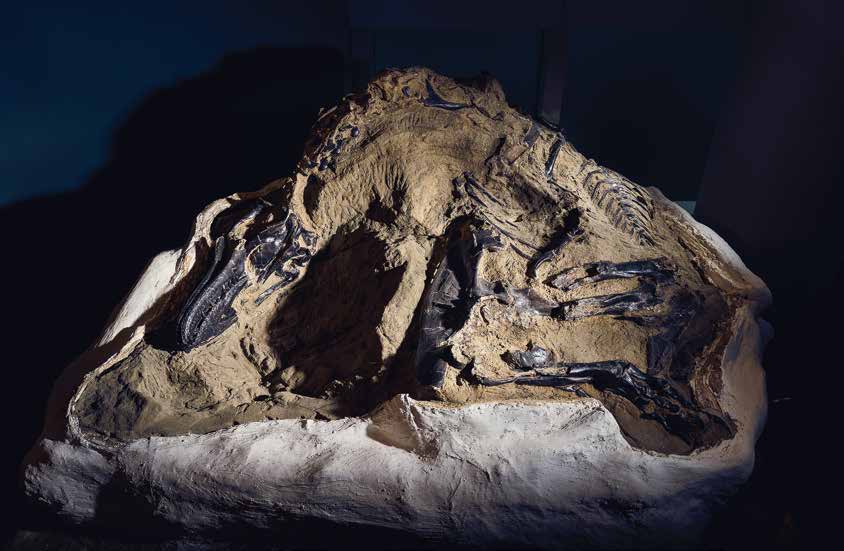

The specimens at the NCMNS have affectionately been named after two North Carolina locations. Murphy, the Triceratops, is named for the westernmost town in the state, signifying the strength and longevity of the Blue Ridge Mountains. Manteo, the Nanotyrannus, is named for the coastal town on Roanoke Island, home to The Lost Colony and the original American mystery. It suits the Nanotyrannus, a name that now represents question, discovery and the spirit of exploration.
Zanno says this is just the beginning. “We have decades of incredible research in the pipeline on the Dueling Dinosaurs. This is all made possible not just by the outstanding preservation of the fossil carcasses and the talent and dedication of the team we have put together, but also by the community backing we have received,” he says, adding, “The people of North Carolina and beyond banded together to protect these fossils for science and the public alike — a powerful force for good that will continue to pay dividends.
“We simply can’t wait to keep sharing the excitement with all.”
The Ruth Pauley Speaker Series welcomes Dr. Lindsay Zanno, PhD, for National Geographic Live: “Rise of T. Rex” on Tuesday, April 28, 2026 at 7:00 PM in Owens Auditorium at the Bradshaw Performing Arts Center (BPAC). Join RPS as Dr. Zanno explores the story behind one of history’s most fascinating creatures. Admission is free, but tickets are required and available at TicketMeSandhills.com.

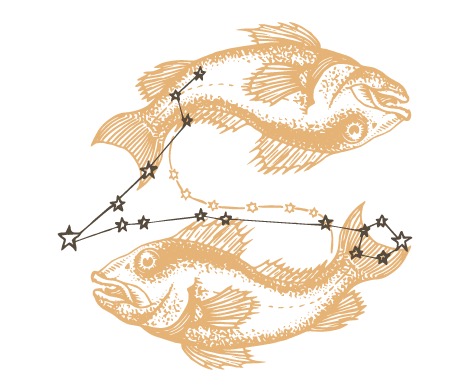
No, you’re not going crazy.
Yes, you know what you know. And, no, you don’t need to explain your so-called prophetic dreams to anyone (they’re not ready to hear them). Here’s what you should do: Cut ties with the friend who makes you feel like a doormat. Get clear on your boundaries — and honor them. And when the new moon graces your sign on March 18, inspiration for a fresh skin care routine could be the glow-up that you never saw coming. Or, maybe you did.
Tea leaf “fortunes” for the rest of you:
Aries (March 21 – April 19)
Try taking a cold shower.
Taurus (April 20 – May 20)
Two words: leafy greens.
Gemini (May 21 – June 20)
You’ll know when you know.
Cancer (June 21 – July 22)
Make a date with the sunrise.
Leo (July 23 – August 22)
The signs won’t be subtle.
Virgo (August 23 – September 22)
Pay attention to your jaw and shoulders.
Libra (September 23 – October 22)
Put your playlist on shuffle and move your feet.
Scorpio (October 23 – November 21)
Pick up where you left off.
Sagittarius (November 22 – December 21)
Prepare to surprise yourself.
Capricorn (December 22 – January 19)
Work with the chaos.
Aquarius (January 20 – February 18)
Explore a different vantage point.


By Stephen E. Smith
The best writers, those gifted beyond the ordinary, harbor obsessions, and when producing their finest work, they transform those obsessions into prose that they share communally with readers. That’s the case with Bill Fields’ A Quick Nine Before Dark. His obsession is golf — and anyone who’s been caught up in the intricacies of the game will want to read Fields’ memoir, front to back.
Fields is a North Carolina boy. Born in Pinehurst in 1959, he attended public schools in Moore County and graduated from the University of North Carolina. For 20 years, he was a senior editor for Golf World and is the recipient of the PGA Lifetime Achievement Award.
A Quick Nine Before Dark is for golfers of all skill levels. Even if you’ve never whacked a golf ball and you surf past reruns of Shell’s Wonderful World of Golf like it’s a Progressive commercial, you’ll likely find yourself swept up by Fields’ beautifully crafted prose, and the personal twists and turns of his life as a golf writer. He comes across as a gentle, earnest and thoughtful human being who has nevertheless tackled life head-on. You’ll find no scandals, no shocking moral shortcomings, no dark musing, no vilifications of former friends — just straight-ahead storytelling at its best.
Writers have tics and twitches of style that identify them as surely as their DNA, but Fields’ flaws are few, if any, and there’s nothing about his writing more rewarding than his efficient use of descriptive prose. When he feels the need to shine, he does precisely that, as with this excerpted Golf World description of Davis Love III as he captured a major title: “The conclusion to the ninety-seventh PGA Championship was soggy and sweet, like strawberries and sponge cake. As quickly as the late afternoon rain had come on Sunday to Winged Foot Golf Club in Mamaroneck, New York, it stopped, and the sun peeked through an angry sky. Two rainbows arched over the course at just the right moment, as if scripted by Frank Capra himself, and for Davis Love III, there wasn’t a burden in sight.”
Fields blends the elation of honest achievement with the whimsy of happenstance. In three carefully crafted sentences, he transports the reader to a significant moment in professional golf, evoking the sweetness of strawberries and sponge cake, and framing the moment of triumph with an allusion to a great filmmaker. Then he concludes with a pithy understatement: “. . . there wasn’t a burden in sight.” Could there be a more endearing description of earned exhilaration?
When the occasional somber moment intrudes, it’s handled with grace and thoughtful solemnity, as when Fields learned that his former wife, Marianne, had died. He was hundreds of miles away, talking with his mother by phone, when he heard the news: “It’s Marianne, Bill. She died. . . . Nothing in divorce-recovery books, the radio talk show advice, or the support of friends in the wake of a failed marriage had prepared me for those words.” The deaths of his mother and father are likewise handled unsentimentally but with a necessary touch of sentiment. “Life is ragged,” he writes. “Voids linger. Loose ends are everywhere.”
Fields’ obsession with sports began when he was a child, gravitating toward any game that involved a ball. When he failed to become a basketball star, he turned to golf after receiving a Spalding starter kit for Christmas in 1969. His focus on the game waxed and waned until he was a student at UNC, where he wrote for the Daily Tar Heel. After graduation, he knocked around the golf world, promoting the game, until he accepted a position with the Athens Banner-Herald, which would evolve into an associate editorship at Golf World. What followed was a series of positions that eventually led back to Golf World, the magazine that started in the same town where he was born.
Fields covered tournaments in the United States and overseas, which brought him into contact with the greatest golfers of our time. How many golfers can boast that they’ve played the game with Sam Snead and Tiger Woods?
But A Quick Nine Before Dark is more than another golf book — it’s also about becoming a writer and what it takes to remain ascendant in a field where technology advances at breakneck speed. From the moment Fields, an elementary school kid, put pencil to paper and wrote “I like to write,” his life had been about arranging the right words in the best possible order.
Fields’ work may require him to live in Connecticut, but he is as much a Southern writer as Faulkner and as romantic about his hometown as Thomas Wolfe was about Asheville.
At 13, Fields worked as a busboy at Russell’s Fish House in Carthage, which recently closed. Describing the restaurant in its heyday, he treats us to magical paragraphs that touch all the senses: “. . . Russell’s was the most clamorous place in creation — more deafening than any argument my sisters ever had, more ear-piercing than the hocking sounds made by my fifth-grade teacher, more thunderous than a Seaboard freight train when it trundled through town . . . Wooden chairs scraping angrily on cement floors. Customers’ animated conversations and guffaws reverberating off cinderblock walls . . . Flatware and platters clanging into busboys’ bins as they and the wait staff dashed about like running backs seeking holes in a defense.”
And like any good Southerner, Fields brings us home, mystified, as most of us are, by the relationship of the past to the present: “Stretches of U.S. 1 and U.S. 15-501 are now blighted by a sprawl of commercial establishments, stores and restaurants. Attempting a left turn without an illuminated green arrow can be risky business. Traffic planners debate solutions. Meanwhile, at certain times of day, dozens of cars idle, waiting to pass the busiest intersections.”
Fields’ writing is unfailingly lucid, exact, and engaging. What’s not obvious is that he’s worked over his prose until that “worked on” feeling is gone. His many readers will be the beneficiaries of that labor.


By Susan Campbell
If you have ever heard what seems to be a squeaky toy emanating from the treetops in the Sandhills or the Piedmont, you may have had an encounter with a brown-headed nuthatch. This bird’s small size and active lifestyle make it a challenge to spot, but once you know what to look and listen for, you will realize it is a common year-round resident.
Brown-headeds are about 4 inches long with grey backs, white bellies and, as the name suggests, brown heads. In this species, males are indistinguishable from females. Their coloration creates perfect camouflage against the tree branches where the birds forage in search of seeds and insects. Their oversized bill allows them to pry open a variety of seeds, as well as pine cones, and dig deep in the cracks of tree bark for grubs.
By virtue of their strong feet and sharp claws, brown-headed nuthatches can crawl head-first down the trunk of trees as easily as going up. Although they do not sing, these birds have a distinctive two-syllable squeak they may roll together if especially excited.
Brown-headed nuthatches do take advantage of feeders. They are very accustomed to people, so viewing at close range is possible, as are fantastic photo opportunities.
This species is one of our area’s smallest breeding birds. It’s a non-migratory resident, living as a family group for most of the year. Unlike its cousin, the white-breasted nuthatch, which can be found across the state, the brown-headed is a bird of mature pine forests. Brown-headeds are endemic to the Southeastern United States, from coastal Virginia through most of Florida and west to the eastern edge of Texas. Their range covers the historic reaches of the longleaf pine. However, this little bird has switched to using other species of pine such as loblolly and Virginia pine in the absence of longleafs.
Brown-headed nuthatches are capable of excavating their own nest hole in small dead trees in early spring. Because so few of the appropriate sized trees are available (due to humans tidying up the landscape), in recent years brown-headed nuthatches have taken to using nest boxes. However, unless the hole is small enough to exclude larger birds, such as bluebirds, they may be outcompeted for space. For this reason, the species is now one of concern across the Southeast, with populations in decline. In addition to reductions in breeding productivity, logging, fire suppression as well as forest fragmentation are causing significant challenges for this feisty little bird.
“Helper males” have been documented assisting parents with raising subsequent generations. Without unoccupied territory nearby, young males may consciously be choosing to stay with their parents in hopes that they may inherit their father’s breeding area over time. If this approach sounds at all familiar to bird enthusiasts in our region, it should. It’s similar to the strategy of the red-cockaded woodpecker, another well-known, albeit less abundant, inhabitant of Southeastern pine forests.


“The best thing about hunting and fishing, is that you don’t
have to actually do it to enjoy it. You can go to bed every night thinking about how much fun you had twenty years ago and it comes back clear as moonlight. It is a kind of immortality, because you’re doing it all over again.”
— Robert Ruark’s Africa
By Tom Bryant
I had been thinking right regularly about mortality and immortality, having been recently diagnosed with cancer. The folks at Duke University performed their miracle, and on my latest scan and workup the cancer had disappeared. When I asked the doc about limits I might have, she replied, “Nothing, you can do whatever you were doing before all this came about.” Naturally Linda, my bride, and I rejoiced, and on the way home from Duke, I was like a kid the day before Christmas.
That night as I was relaxing by the fire reading some old columns I had written years before, I determined that the plan for the immediate future was to categorize things I wanted to do in the field, and things that Linda would enjoy doing with me. I grabbed a yellow legal pad from my desk, and I was off and running.
The musings I had made years before when I was in my prime, climbing over obstacles rather than going around them, got my list started with a flurry.
Ages ago, it seems like, I used to goose hunt, Canada geese, that is. It was before the geese that migrated every year realized they really didn’t have to do that. The ones that used to come down from the frosty North and set up camp in the sunny South would lounge around enjoying all that fresh grass recently planted on golf courses and the fields full of winter wheat just ripe for the picking. But then spring and a little warmer weather would roll around, and it would be time to pack up and wing it back north.
I don’t know how it happened, but I can imagine it went something like this: A couple or three geese were lolling about munching lunch on the 14th green when one of them said, “Well, it’s about time to hit the road back to the old homestead.”
Another of the geese, maybe one with a little more mileage on him, spoke up. “Boys, I’ve been making that trip more times than you are old, and I just made up my mind that I’m gonna stay here this summer. Why do all that flying and wandering about when we have everything we need, plus some, right here? Y’all have a nice trip and I’ll see you next winter.”
Thus it started. Wild Canada geese that were as skittish as bobcats overnight became residents and all but demanded their entitlement — fresh grass for everyone.
That’s what’s happening now. What I wrote about in those aged scribblings that dotted outdoor magazines and sporting pages in newspapers was when the noble Canada goose was a worthy game bird, worth all the notoriety given.
Every January, for about eight or 10 years in the late ’70s and early ’80s, my good friend Tom Bobo and I would head to the Eastern Shore of Maryland and the little town of Easton to goose hunt on the famous Plimhimmon plantation, located on the Tred Avon River close to Oxford, Maryland. The owner was a crusty old guy by the name of Bill Meyers. His land was about 400 acres with the river on one side and an estuary off the Chesapeake Bay on the other. It was as if it was made for goose hunting. We were in high cotton, so to speak, in those days, hunting with the likes of such notables as Bing Crosby, Ted Williams and Phil Harris.
So how can I follow up those ancient days of classic goose hunting in these modern times? Easy, first thing to do is head to Easton and get the lay of the land today. Then the plans will follow.
I made a few notes on my pad and moved on to the next adventure.
When I was a youngster growing up in Pinebluff, I had the best of all worlds as far as outdoor living was concerned. If not camping with the Scouts from old Troop 206, I was scouting on my own, finding likely places to explore. I would hook my Red Flyer wagon to my bicycle, loaded with camping gear, and head to the woods.
That was my first experience pulling a trailer, and I never forgot it. Decades later, the year I retired from my day job, Linda and I bought a little compact Airstream Bambi travel trailer, hooked it up to a Toyota FJ Cruiser, also new that year, and started the trip of a lifetime. Where to? North to Alaska, of course. We were on that special adventure for two months and drove over 11,000 miles.
Since that first epic experience, we have towed and camped in the Bambi several times across the country and to Florida during the winters. In Florida we would camp at a small scale campground on Chocoloskee Island, just south of Everglades City. Linda called it our fish camp.
In the summers we tried — and were usually successful — to camp at Huntington Beach State Park in South Carolina one week out of every month.
I made a few more notes on my pad, put another log on the fire and thought about what it would take to get the little “Stream” back on the road. Not that much really. A detailed check at the Airstream place in Greensboro, maybe a new set of tires, then rig her for running sometime in the late spring.
Linda had gone on to bed and I was ready to hit the hay myself, so I banked the fire to be ready for the next morning and quietly moved down the hall to bed trying not to wake her. Lying there snug under the covers, I thought back over the last year-and-a-half.
Cancer puts a hold on everything. Every day during my experience with the disease we waited for the other shoe to drop, not knowing if it was going to be terminal or just debilitating. The waiting was the hard part.
But just like Robert Ruark said in his book on Africa, I’ve had a lot of experiences in our great outdoors, and thinking about them from 20 or more years ago and reliving them all over again is a kind of immortality.
Now, amazingly, the good Lord, along with the wonderful health professionals at Duke, have made it possible to continue my adventures, hopefully for a few more years. I put together a good start sitting by the fire.
I heard the ship’s clock in the den ding six bells, 11 o’clock. Time to sleep and dream good dreams.
We use cookies to improve your experience on our site. By using our site, you consent to cookies.
Manage your cookie preferences below:
Essential cookies enable basic functions and are necessary for the proper function of the website.
Statistics cookies collect information anonymously. This information helps us understand how visitors use our website.
Google Analytics is a powerful tool that tracks and analyzes website traffic for informed marketing decisions.
Service URL: policies.google.com (opens in a new window)
SourceBuster is used by WooCommerce for order attribution based on user source.