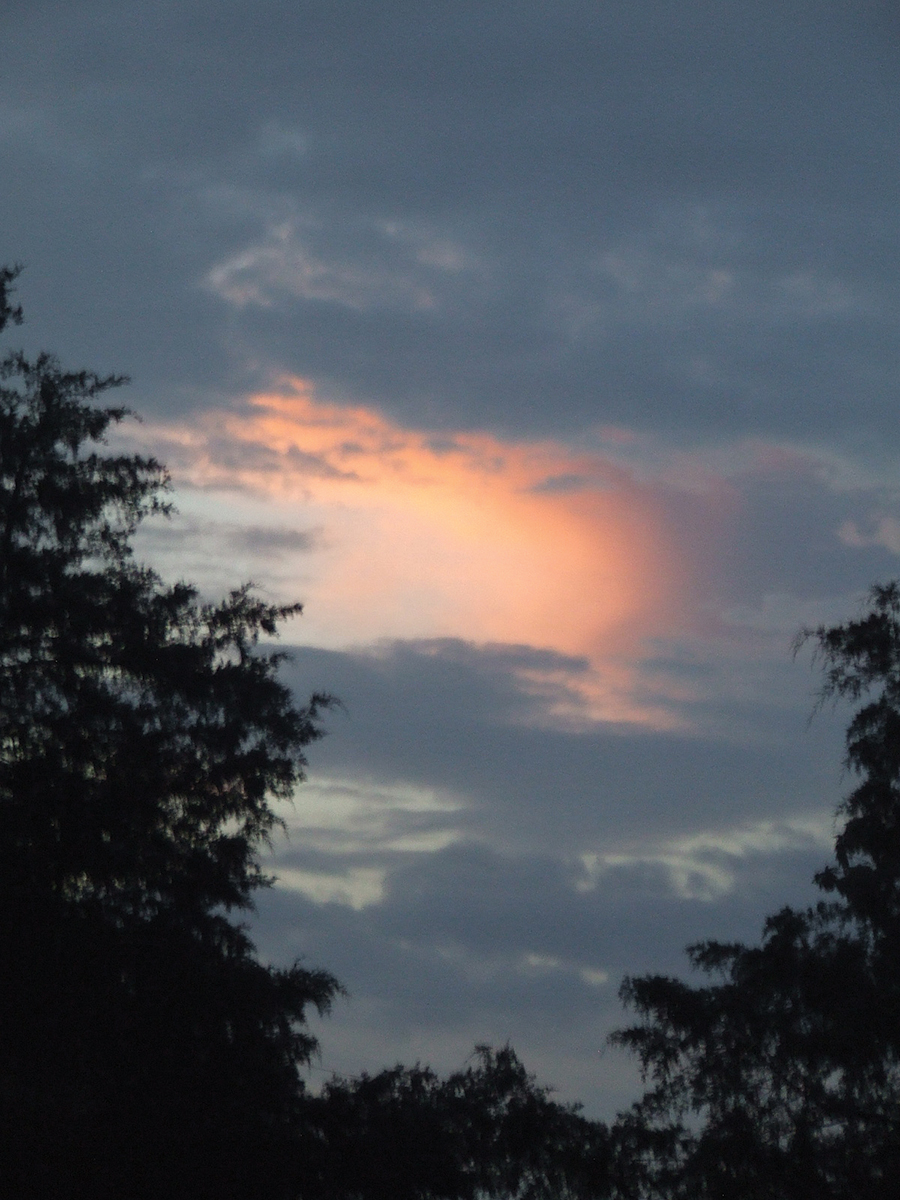
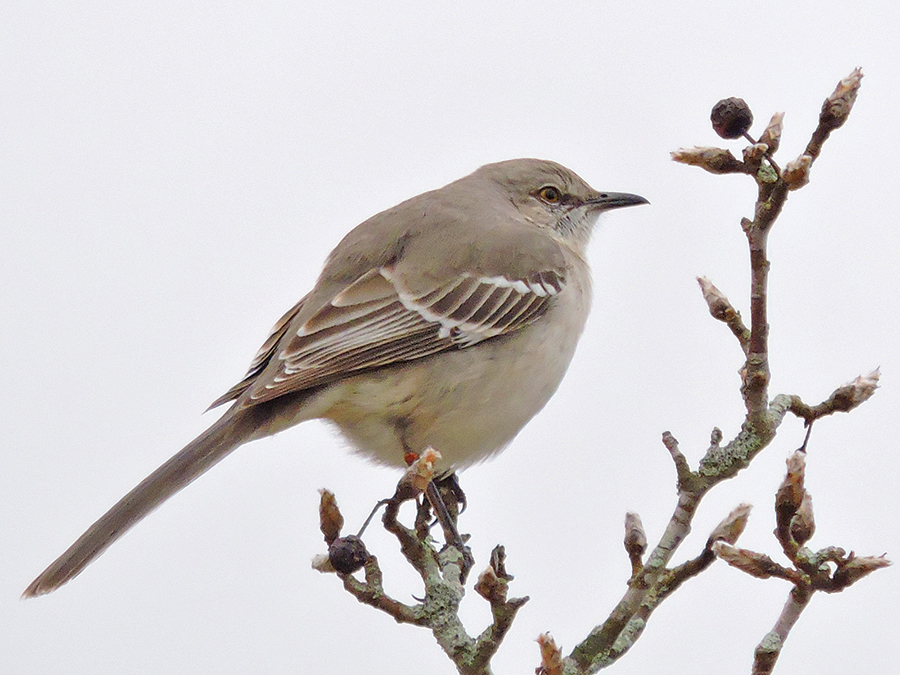
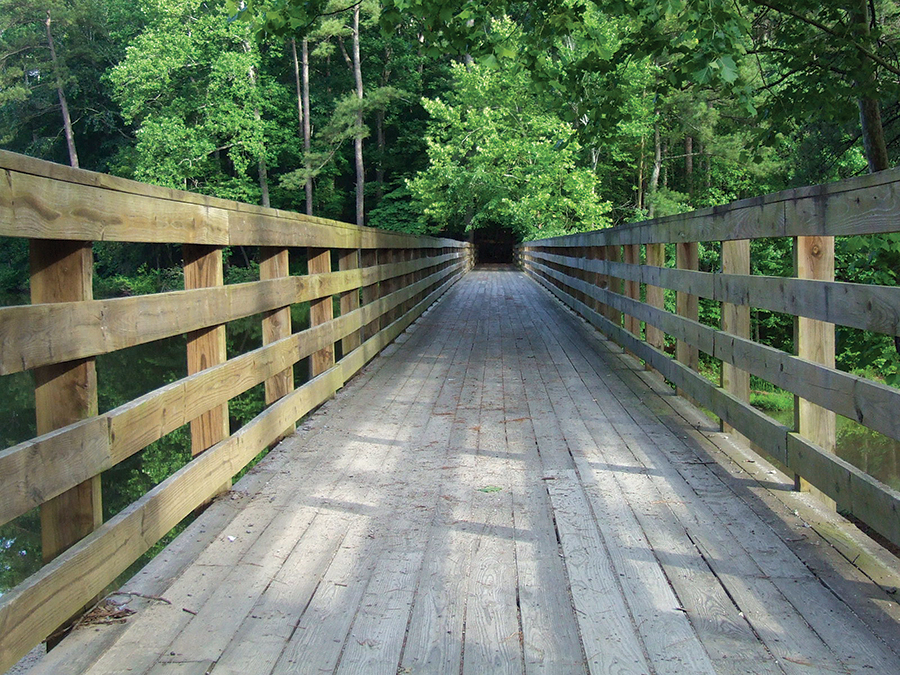
Photos by Joseph Hill

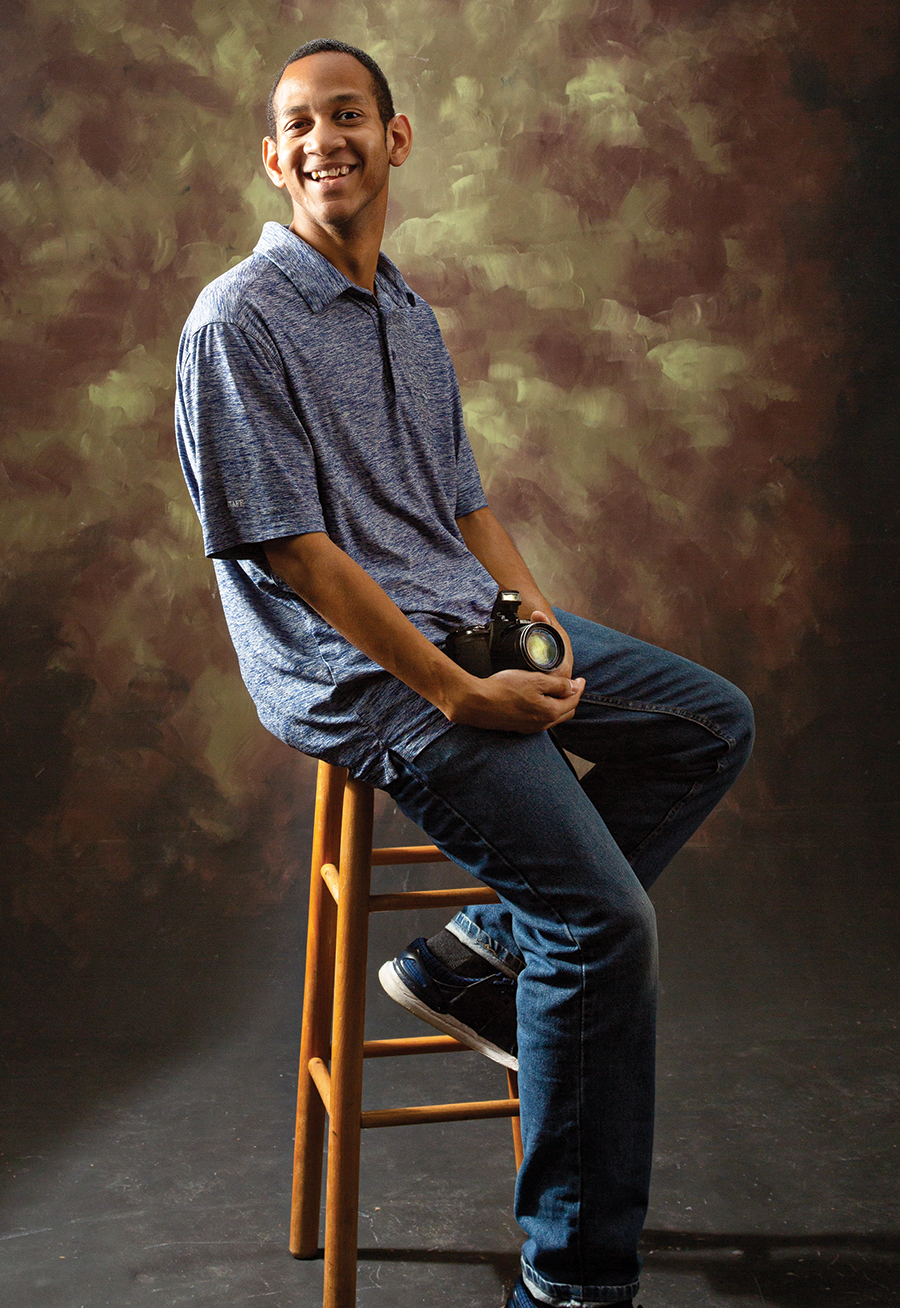
We arranged to meet inside the Welcome Center on the north side of the train station in Southern Pines. “I’ll be the guy with the red scarf,” I said.

“I’ll be the guy with the camera,” Joseph Hill replied.

Most locals are familiar with Hill and his story. He’s become as distinctive in Southern Pines as the Yield to the Left signs that confound visiting drivers at every intersection of the downtown business district. Hill is autistic and, in that long ago pre-COVID era, you would see him most Saturdays — and pretty much any day he had a reason to come to town — wandering around with his Nikon and Fujifilm cameras.

“In a way, it’s peaceful,” he says of his photography. “I can just be wandering around, minding my own business, and I come across something I haven’t seen before — maybe neither of us have seen before — and I take a picture of it. Every day, what you call mundane, that we pass by and see but don’t notice fully, if I happen to see it at just the right angle, looking up or looking down at the ground, hey, I take a picture.”

Hill will turn 27 the month that this magazine appears. “I’m blessed,” he says, “and I hope to make every birthday of each year count.”

Since we’re all still using best practices to avoid the spread of the virus, Hill wears his mask. It says Kindness Is Contagious. The town never had a more good-hearted face.   Jim Moriarty  PS

Portrait by Tim Sayer

For more information about Joseph Hill read Jaymie Baxley’s story in The Pilot at https://www.thepilot.com/3-a-different-angle/image_3c8e794e-281d-11ea-8949-db91e82ba31d.html or go to josephhillphoto.com.

Birdwatch

Hardy Hummers

Rufous hummingbirds are midwinter guests

By Susan Campbell

It may sound odd, but this is a good time to talk about hummingbirds. I have been fielding reports of these tiny, winged jewels for weeks. So far, I have banded 17 and have details on almost 100 more — and counting! Yes, even in the middle of the winter.

Here in North Carolina, hummingbird lovers can find or attract these amazing little fliers any month of the year. And this winter has been a particularly productive season for hardy hummers across the state. Predictably, the bulk of the hummingbirds I have encountered in the Piedmont have been rufous hummingbirds.

Annually, shorter days and cooler temperatures herald the return of rufous hummingbirds from points far to our north and west. The species breeds from the Rocky Mountains up into southern Canada and across to southeastern Alaska. They begin nesting when there is still snow on the ground and vegetation is sparse. In the cooler months, the majority of rufous can be found wintering in southern Mexico. However, it has been discovered in the last few decades that a wintering population exists in the southeastern United States. Across North Carolina, dozens of rufous take up residence between October and April. Many go unnoticed unless they appear at late-blooming plants or sugar water feeders. These are extremely tough little critters.

These tiny birds that spend their summers at high latitudes are well adapted to cold weather. They can forage in below-freezing temperatures, searching thick vegetation for insects with little difficulty. At night and during colder, wet periods, they will seek out thick evergreen cover and use torpor, a nighttime hibernation, to conserve energy. The pines, cedars, hollies and magnolias in central North Carolina make excellent winter habitat for rufous hummingbirds.

The male rufous is very distinctive, having rusty body feathers in addition to a coppery iridescent gorget. Females, however, are a different story. Their size and shape are not very distinctive. Aside from reddish-brown color at the base of their tail feathers, and perhaps a smattering of brownish feathers around the face and flanks, they appear much like immature male ruby-throateds. They also look very similar to a few other species of Western hummers such as the Allen’s, broad-tailed or calliope hummingbird. For those with a good musical ear, the vocalization — a loud series of “stick” notes — may give a rufous away.

It is interesting to note that some of these tiny marvels return to the same feeder from one winter to the next. In fact, some individuals are faithful to the same location over their lifetime, which can be seven years. To date, we have had three females that have done just that, proven by the tiny aluminum bands I placed on their legs the first year. Some individuals choose to overwinter in different locations in the Southeast. This year we have two “foreigners.” One of them was originally banded by a colleague of mine outside Mobile, Alabama, two winters ago.

Furthermore, there have been some extremely lucky folks, including hosts in both the Sandhills and the Triad, who have hosted not one, but multiple rufous over the course of a single season. Last November, both a hostess in Asheville and another at Riverbend County Park outside Hickory each had three female rufous coming in for sugar water. A friend and research colleague who runs that park is investigating a fourth female rufous who turned up on February 1.

And no need to worry: Winter sugar water feeder maintenance is straightforward. Hang it in an open location and simply rinse and refill every two weeks or so. In our area, a feeder hung close to the house will be protected most days and many of the nights. The regular solution (4 parts water; 1 part sugar) will not freeze unless the air temperature drops below 27 degrees.

So, go ahead and hang a feeder any time. It is absolutely never too late to get noticed. Who knows? It may be found by a passing rufous hummingbird or two. PS

Susan would love to receive your wildlife observations and/or photos at susan@ncaves.com.

Golftown Journal

Story Time

Classic voices and classic memories

By Lee Pace

I was merely a babe in the pines in 1990 when the powers that be at Pinehurst Inc. put their historic life in my hands. Why anyone would entrust the concept and execution of a coffee table book on what then was a 95-year-old golf club and resort to the hands of a 33-year-old is beyond me. To write about history, you need a little history yourself, right?

“We were figuring it out as we went along,” says Pat Corso, the man who commissioned that book as part of the club’s branding and campaign to land a major championship on Pinehurst No. 2 — a U.S. Open, PGA Championship or Ryder Cup chief among the targets. Corso, the president and CEO of the resort, was himself not quite 40 at the time.   

And he needed that youthful vigor. In 1990 Pinehurst was in year six of being owned by Robert Dedman Sr. and his Dallas-based company, Club Corporation of America, as it was known at the time. Old-timers today forget the degree of problems Dedman inherited, and newbies don’t even know about them. But the grand old resort that has now been the venue for three U.S. Opens since 1999 and is on the docket for five more was gasping for breath in 1984 after two years being run by a consortium of banks holding the bad paper from the previous owner, the Diamondhead Corp.

“Remember that no one wanted this place,” said Corso, who ran the resort from 1987-2004. “The banks brought every big company in the golf and hospitality business through here and everyone went thumbs-down. They thought it was gone. Literally, the place had died. Now, not all the citizens would agree with that. But to a lot of people inside the game and outside, Pinehurst was dead. It was unredeemable. The banks were going to sell off the golf to someone and the hotel to someone else. They made Robert buy the hotel. He just wanted the golf. But marrying the golf to the hotel kept the whole thing alive. Otherwise, you’d have five or six owners and it would have been a free-for-all.”

Corso and his chief lieutenant, Director of Golf Don Padgett Sr., were diligently trying in the late 1980s to restore the good name Pinehurst enjoyed in the golf universe for 75 years under the founding Tufts family. Staging the U.S. Women’s Amateur in 1989 on No. 2 was one step. Now they wanted the PGA Tour or a men’s USGA championship.

And they wanted to remind the current generation and make them aware of what those before had known of “the St. Andrews of American golf.”

So off I went in October 1990 with exactly one year to write, design and print a book with factual and aesthetic substance for Corso and resort officials to hand to golf’s power brokers, competitors, talking heads and ink-stained scribes and say, “This is our story. This is who we are.”

I was rummaging through the files at the Tufts Archives in the village of Pinehurst just as I was getting started when I found Ben Hogan’s file and learned he won his first professional tournament in Pinehurst in 1940, that he teetered on quitting competitive golf altogether after eight fallow years on tour, and that the injection of confidence and swagger he found in the North and South Open on Pinehurst No. 2 catapulted him to one of golf’s most storied careers.

What about, I mused, a book built around the stories of noted individuals in golf and their experiences at Pinehurst?

The dominoes started to fall, and I set about making arrangements over the next six months to visit some very high-profile golfers who had a good Pinehurst story. Now, exactly three decades later, the images of those visits bound past like 35 mm slides in a vintage carousel projector:

Hogan, the “wee ice mon” himself, sitting nattily attired in a seersucker sports coat in his office in Fort Worth, reflecting on that landmark win half a century before;

Ben Crenshaw the very next day in the grill at Barton Creek in Austin remembering his second PGA Tour event, that 144-hole colossus known as the World Open played on the No. 2 and 4 courses in November 1973 and his second-place finish to Miller Barber;

Bill Campbell having lunch at a meat-and-three diner across the street from his insurance office in Huntington, West Virginia, words like “salutary” and “winsome” rolling from his tongue as he talked of his annual April visit to Pinehurst for the North and South Amateur;

Sam Snead rubbing the head of his golden retriever, Meister, sitting in his living room in Fort Pierce, Florida, ruminating on his three victories in the North and South Open and how he thought the short par-4 third hole on No. 2 “was one of the nicest little holes;”

Frank Stranahan appearing in workout togs drinking a vitamin-laced smoothie in the lobby of The Breakers Hotel in Palm Beach, recounting stroke-by-stroke his North and South Amateur finals matches with Harvie Ward in 1948-49;

Harvie Ward himself with that ever-present twinkle in the eye sitting on the porch of the Carolina Hotel in Pinehurst, having returned home to North Carolina in the twilight of his life and admitting it was a little embarrassing the ruckus his Chapel Hill fraternity brothers made in the gallery of those matches with Stranahan, which they split with one championship apiece;

Arnold Palmer and his vice-like handshake and welcoming demeanor in his office at Bay Hill in Orlando and a self-deprecating story about Stranahan dusting his rear end 12 and 11 in the 1949 North and South Amateur and then offering to give Arnie a lesson on bunker play;

Curtis Strange walking a fairway during a practice round at Doral and talking about all his visits to Pinehurst while on the Wake Forest golf team and how caddie Fletcher Gaines helped manage him around the course in winning the 1975-76 North and South Amateurs;

Golf architect Pete Dye rambling into the wee hours at Kiawah Island during Ocean Course construction and speaking of how the tenets of Donald Ross were never far from his mind on every course design project;

Billy Joe Patton pausing from a conversation at his home in Morganton to leave the room and compose himself, the memories of his salad days in Pinehurst in the 1950s and ’60s with his favorite caddie, Jerry Boggan, washing over him.

And those were just the highlights.

I assembled the fruit of these conversations with essays commissioned from golf writing heavyweights Charles Price, Dick Taylor and Herbert Warren Wind, and the result was Pinehurst Stories — A Celebration of Great Golf and Good Times. I know for a fact the book didn’t make any money, but that wasn’t the goal. Two years later the USGA did, in fact, award Pinehurst the 1999 U.S. Open, and the dominoes have been falling ever since. Not that one caused the other, mind you, but perhaps it factored into the mix.

Thirty years. Roll that around in your mind.

I’ve been chasing another assignment like that for three decades to no avail and with a keen appreciation for the old saw, “Youth is wasted on the young.”  PS

Lee Pace has made countless drives from his home in Chapel Hill, North Carolina, to the Sandhills 70 miles away to chronicle the Pinehurst story, which includes four books, most recently the 2014 volume, The Golden Age of Pinehurst.

Pleasures of Life Dept.

How I Learned to Skate

By Nancy Roy Fiorillo

One night not too long ago, I dreamed I was roller skating. The rink was big, and I was all alone except for my dad. He was standing at the railing. I tried a difficult jump and fell, not once but three times. Then my dad said, “Hold your head up — that will help you keep your balance.”

I tried again and mastered the jump. It was a dream that came from long ago, before I really grew up, before high school and boyfriends and life.

I grew up in a small town in New England. Famous for the manufacture of Frye Boots, Marlborough was an unremarkable haven for first generation immigrants — French, Italian, Irish, Greek and more. I was third-generation French Canadien, my antecedents hailing from Prince Edward Island and Toronto. My parents met at a St. Mary’s Catholic Church youth group and later dated as the King and Queen of the Mardi Gras. I was told the priest attended the crowning of the “royalty,” but the dancing could start only after he made his exit.

Our modest two-bedroom house sat on 12 acres with enough room for two parents, one sister, batches and batches of kittens and me. My paternal grandfather lived two houses away, and both he and my dad raised chickens. Often I accompanied my dad to the chicken coop to feed the squawking birds, eagerly plunging both of my hands down into the mash we mixed for their dinner, and more often than not coming up with nothing much more than an itchy nose. Dad always kept one hand out of the feed, free to scratch my little nose for me.

Receiving the fluffy, yellow chicks we called peepers and putting them in the little room with the bright warming light was a cozy act of faith. On Saturdays my dad was the egg man, and I rode the route with him. His regular job was at a General Electric facility called Telecron. When I asked him what he did, he told me he put faces on clocks. And indeed he did, on an assembly line.

My sister and I walked to school and back. Summertime was a flight of imagination in the large woods behind our house. We buddied up with a couple of kids from across the street and built a bike trail, including jumps. One summer we put together a three-room house with bundling sticks and string. We discovered a pond that we named Crystal Lake and told imaginary stories about who drowned there and who drew their drinking water from this little muddy lagoon. We built a 9-hole cement miniature golf course complete with twists and turns and waterfalls. The architect was the boy across the street (who would become an engineer), and we were his crew. We dug holes, moved rocks, poured cement and cleared paths. We made sandwich signs for our bikes and rode all over town advertising a round of miniature golf, 5 cents. We made enough money that summer to go to the finest amusement park in New England — my dad drove four of us as if he were delivering eggs and we stayed all day.

In the winter we’d sling our ice skates over our shoulders and walk to Lake Williams, as frozen as the concrete we poured. We changed into our skates near the warmth of the burn barrel and stayed on the ice until we couldn’t feel our feet, then returned to the barrel to change into our frozen boots and head home.

Just before fourth grade we found out I needed allergy shots and special shoes. My mother was offered the entire vial of medicine for $85, or we could pay $5 per shot. She took the installment plan and then declared she would be going to work at a factory in Sudbury. My sister and I left public school to attend St. Anne’s Academy adjacent to our church. The academy was both a school and a novitiate, run by the Sisters of St. Anne. Most of the students were boarders, and my sister and I joined the ranks of the day students. School started at 8 a.m. and ended at 5 p.m. We had a half day of French and religion and the other half of the day was for everything else our nuns knew. We diagrammed sentences ad nauseam but learned little history, geography or science. To fill the full day we had 2 1/2 hours for lunch, time used in the winter for skating on Lake Williams, a group of wobbly young girls led by penguins on ice. Our nuns were strict and unyielding, but they could skate like Boston Bruins, gliding along with their hands behind their backs.

My dad eventually closed down the egg business and, with help, dismantled the chicken coop. I remember them removing the baby chick room, then pulling off sides of the troughs. The roof was still standing when they pulled up the floor. Underneath was beautiful hardwood, perfect for roller skating. Our neighborhood engineer was no skater, so he rigged up a bowling alley, too.

One day after watching us, my dad announced that we were good enough skaters to go to the real roller rink, named Lyonhurst, up on the hill above Lake Williams. In earlier days the Big Bands, even some famous ones, performed there. When the music died out, a couple bought it and turned it into a skating rink with smooth flooring, organ music, dances and games. My first Saturday afternoon was pretty scary, but Dad stayed close by leaning against the rail to give me confidence. The rented skates were big and heavy on my skinny legs, and I didn’t have a skating skirt like most of the older girls, but I rolled on, weekend after weekend.

Soon my dad presented me with a used pair of excellent skates — Douglass-Snyder’s — with toe stops. My mom knitted skating skirts for me and bought the panties that go underneath. I took lessons and became a real skater. I won some games and learned some jumps and danced, going over the steps before I slept just to make sure I knew every single one.

Then it happened. I woke one Saturday morning to the news that Lyonhurst, my skating rink, had burned to the ground during the night. I was heartbroken! Other skating rinks were too far away to even think about.

We still ice skated on Lake Williams when it froze over in the winter, but as we grew older, the woods held no interest for us. Our backyard rink was gone and high school was ahead. I was forced to give up my skating and learn to do more grown-up things. But sometimes, even now, I dream about mastering a jump with someone standing against the rail with a free hand.  PS

Nancy Roy Fiorillo, a former mayor of Pinehurst, loves reading and occasionally a little writing.

Southwords

Year of the Fox

The subtle magic of a different kind of circus

By Ashley Wahl

My sweetheart and I share a birthday in February. Last year, same as the year before, we took each other to the circus to celebrate. This year we are training a fox.

OK, the fox is actually a dog. And if we’re being honest with ourselves, we think she might be training us. The point is, it’s a different kind of circus this year, and a timid red dog with large, pointy ears is showing us a thing or two about magic.

In our former life, Alan and I spent the coldest months in Florida, near Sarasota, where the Ringling Bros. and Barnum and Bailey Circus maintained its winter quarters for over 30 years. There, the circus arts are still alive and thriving, and each year — with the exception of this year — its Circus Arts Conservatory puts on Circus Sarasota Under the Big Top, which always falls on our birthday. The show is fantastical. No wild animals, of course. Just a dazzling display of human potential. For us, it felt like the ultimate celebration of life on this strange and beautiful planet. 

Although we were technically living in Asheville (as in, that’s where we got our mail), our Florida home was a no-frills camper van equipped with the bare essentials, including a single-burner camp stove and a portable fridge. Rarely did we stay in one spot for longer than three days, and on weekends, we set up our canopy tent at art and craft festivals up and down the coast, vending our wares alongside fellow travelers.

Suffice it to say there was no room for a dog in our traveling carnival. 

But life twists and turns like a master contortionist. When we put down our stakes in Greensboro last fall, we felt it was time to add a member to our troupe.

Back when we thought we were looking for a guard dog, we hooked up with a German Shepherd rescue that had recently taken in a mama with eight pups. The dam wasn’t exactly a Shepherd — or any other breed that was easily defined. She was smaller — maybe 50 pounds — with a short, red coat and large, pointed ears. Someone found her dodging traffic on a busy road in Fayetteville and, as it turned out, had an unneutered German Shepherd waiting at home. You can guess what happened next.

The whelps were darling — half Shepherd, half whatever their mother was — each one adopted as soon as they were old enough. We brought home mama.

This is a good time to mention that Alan and I are first-time dog owners. And while we had binge-watched several seasons of Dog Whisperer with Cesar Milan, nothing can prepare you for bringing home a shy little fox of a dog who is, quite literally, scared of everything.

And everyone.

While she isn’t exactly the guard dog we envisioned — at least not yet — we named her for the Hindu goddess Durga, protective mother of the universe often depicted perched on the back of a lion or tiger. Talk about a circus act. As for the name, we figured she might grow into it.

Admittedly, watching Dog Whisperer before adopting a dog is a bit like reading Bill Bryson’s A Walk in the Woods before hiking the Appalachian Trail, but our big takeaway is that, often, a dog’s behavior hinges upon its human’s energy. We are witnessing firsthand that Durga’s trust and confidence starts with our own. It’s a wonderful practice — leading by example rather than trying to “fix” what’s “out there.”

And what a beautiful lesson on patience.

Our only expectations are that of our own reactions and yet, by some miracle, our shy little fox is blossoming. 

No, she’s not jumping through hoops or walking a tightrope yet, but what is the circus if not a celebration of the extraordinary?  And isn’t it extraordinary to live life fully and without fear?

We’re getting there.  PS

Contact O.Henry editor Ashley Wahl at awahl@ohenrymag.com.

The Omnivorous Reader

Feeling a Bit Eel

A deep dive into mystery

By Stephen E. Smith

When asked why women found him irresistible, heavyweight boxing champ Jack Johnson responded in the first-person plural: “We eat cold eels and think distant thoughts.”

If you’re wondering what that means (the probable double entendre notwithstanding), you’re not alone. Unfortunately, you won’t find the answer in Patrik Svensson’s The Book of Eels, although this New York Times bestseller and winner of the National Outdoor Book Award contains information aplenty about the enigmatic eel — a fish belonging to the order Anguilliformes, comprised of eight suborders, 19 families, 111 genera and about 800 species.

Unless you’re an unlucky fisherman (eels are not a sought-after game fish) or a bumbling scuba diver, it’s unlikely you’ve come in contact with this squirmy creature that lurks in the darkness at the bottom of oceans, rivers and lakes, and you’re probably wondering why you’d read a book about them. But Svensson’s focus is on an important and timely truth: The lowly eel is linked with every other organism, including the squirmiest of them all, homo sapiens — and that makes The Book of Eels a compelling read, especially in light of the pandemic that has swept the planet.

To this point, Svensson weaves a series of personal vignettes with believe-it-or-not facts (e.g.: The Pilgrims were saved from starvation by eating eels) and biographical sketches of scientists who were determined to discover the eel’s place in the ecosystem.

He opens with a detailed breakdown of the eel’s life cycle, which begins in the Sargasso Sea where fertilized eggs hatch into gossamer leptocephalus larvae known as “willow leaves.” Over a period of years, these delicate organisms drift the ocean currents and are eventually deposited in rivers and lakes (the eel can survive in salt and fresh water and for long periods in the open air), where they transform into elvers and then into yellow eels before becoming the silver eels that return to the Sargasso Sea to spawn and die. This progression can consume decades, and eels have been rumored to live more than a hundred years, suspending the aging process to adapt to environmental stresses.

The personal narratives that frame the story center on Svensson’s father, who worked asphalting roads during the day and fished for eels in the evenings. Recalling the time they shared becomes a metaphor for one’s passage through life. “The stream represented his roots, everything familiar he always returned to . . . (The eels were) a reminder of how little a person can really know, about eels or other people, about where you come from and where you’re going.”

Other narrative threads explore the professional lives of A-list eel fanatics, beginning with no less a personage than Aristotle, who spent years studying eels and believed that they sprang spontaneously from mud (so much for Aristotelian logic). Pliny the Elder, a Roman naturalist and philosopher, guessed that eels reproduced by rubbing up against rocks that loosened particles that turned into baby eels. Other eel aficionados abound — Francesco Redi, Carl Linnaeus, Carlo Mondini and Giovanni Grassi. Even Sigmund Freud was a devoted eel researcher (what could be more Freudian?), who spent four weeks in Trieste, dissecting eels in an unsuccessful search for their male reproductive organs.

It was Johannes Schmidt, a marine biologist, who achieved the great breakthrough concerning the eel’s life cycle. In 1904, he chartered the steamship Thor and launched a determined effort to find the eels’ breeding grounds, spending most of his professional life doggedly trawling for willow leaves in the Mediterranean Sea and the North Atlantic until he tracked them by size back to the Sargasso Sea, an astonishing 18-year exercise in singular obsession.

But it’s Rachel Carson, best known as the author of The Silent Spring and an early heroine of the environmental movement, that garners most of Svensson’s admiration. Despite her proclivity for anthropomorphizing the eel, he finds her writing in The Sea Around Us both inspirational and personally revealing, quoting her extensively: “As long as the tide ebbed, eels were leaving the marshes and running out to sea. Thousands passed the lighthouse that night, on the first lap of a far sea journey . . .  And as they pass through the surf and out to sea, so they also passed from human sight and almost from human knowledge.” Svensson is thus lulled into humanizing eels, speculating that they don’t experience tedium the way humans do, and sliding again into metaphor “. . . life is over in the blink of an eye: we are born with a home and heritage and we do everything we can to free ourselves from this fate . . . but soon enough, we realize we have no choice but to travel back to where we came from, and if we can’t get there, we’re never really finished . . .”

Sprinkled throughout Svensson’s narratives there are tips on eel fishing, a litany of less-than-appetizing eel recipes (the Japanese consider eel a delicacy), a touch of philosophical speculation, and more than enough sentimentality, including a conclusion that borders on mawkish.

So who would enjoy Svensson’s eel book? If you’re a fan of John McPhee’s work — The Control of Nature, Encounters with the Archdruid, Oranges, The Pine Barrens, etc. — you’ll likely find The Book of Eels a compelling and informative read. Like McPhee’s monographs, Svensson’s story is more profound than its technical parts, evolving into philosophical musings on the mysteries of life and death. At the very least, readers will discover a level of environmental awareness that’s timely and valuable. 

Do we know all there is to know about the eel’s life cycle? Despite Schmidt’s intense devotion to discovering the eel’s reproductive behavior, no human has ever seen two eels mate, and no one has seen an eel, alive or dead, in the Sargasso Sea. It remains a mystery. Probably Jack Johnson’s snarky response to inquiries about his love life was right on the money: There are questions that don’t require answers.  PS

Stephen E. Smith is a retired professor and the author of seven books of poetry and prose. He’s the recipient of the Poetry Northwest Young Poet’s Prize, the Zoe Kincaid Brockman Prize for poetry and four North Carolina Press Awards.

The Kitchen Garden

Salad Days

Make them last all spring

By Jan Leitschuh

Though our last frost date is sometime in April, we gardeners want to dig in the damp March dirt — now.

A gardener’s chilled fingers get itchy, imagining that “lamb-like” March exit, oblivious to its rude “lion” start. Those hints of spring wafting our way are intoxicating, and we ordered way too many seeds, of course.

Something has to give! The sap is rising.

If we can’t install heat lovers like tomatoes, peppers and eggplant till sometime in April — when the cold soil warms and the night temps linger softly in the 50s — what can we plant now? Lettuce.

Lettuce resists the cold and is easy to grow, even for those whose garden efforts extend to only a few flower pots or a window box. In fact, those idle porch planters would look mighty spring-like and attractive if you interspersed a few pansies or violas with some colorful lettuce transplants.

Besides your front stoop, you’ll have enough fresh leaves to dress up a sandwich. The cheerful Easter-y colors and textures are perfect for spring. Lettuce comes in lime green, speckled, burgundy, dark green, brown, ruffled, wavy, frilly, flat.

If you have a patch of good earth, so much the better. You can grow your own fresh, organic salads.

Timing is critical. Lettuce gets stressed out in too much heat. It stops growing and lacks good flavor or texture if it’s gotten too hot and stressed. While we often think of vegetables growing faster the hotter it gets, for lettuce the opposite is true.

So, get a move on! You can even try seeding a few rows in late February, sowing again in another week or two, a strategy called succession planting. I like to divide a seed packet up into four weekly plantings. In North Carolina, there are only two windows of time, in fall and spring, when natural conditions are ideal for growing these leafy greens.

One of the oldest food plants known to man, lettuce was served in ancient Greece, and was popular in ancient Rome. The word “lettuce” comes from the Latin word “lac” meaning “milk,” referring to the bitter milky juice found in mature lettuce stems.

When the European explorers sailed to the New World, they brought lettuce seeds. The first Colonial gardens planted on American soil grew lettuce. Now a side salad is ubiquitous; it’s the healthy option at lunch; and in the pre-COVID days, a potluck go-to. And we can raise it in our pots and backyards.

Choices include head and loose-leaf lettuce. I’d warn you off head lettuce for spring — the heat roars down on us, making that type of lettuce harder to grow. Have fun choosing from the colorful varieties of loose-leaf lettuce seed.

Romaine lettuce can withstand more heat than head lettuce, but will “bolt” or switch to its more bitter reproductive phase as days heat up. Butterhead or buttercrunch is a tender type of lettuce that works well here.

Otherwise, the leaf lettuces will stand more brief high temps and have a longer season of production. I plant Black-Seeded Simpson first, since it laughs at the winter cold (but doesn’t care for the heat). Salad Bowl, Slobolt, Grand Rapids, Red Sails, Freckles or Ruby lettuces do well here, among others.

Choose an area that gets four to six hours of sun. As it gets hotter in April and May, plants that get morning sun and afternoon shade will last longer and taste better. The heat can turn lettuce bitter, as the milky white sap rises from the stem into the leaves.

This bitter on the tongue is actually good for our digestion, stimulating the vagus nerve to “talk” to the gut, but bitter is not a popular flavor in modern life, so take care to cut lettuce first thing in the morning as the season lengthens. The bitterness comes from lettuce’s milky sap, activated by heat. Cutting in the cool of the morning on hotter days mitigates this.

The best soils for greens-growing are fertile, high organic matter soils that have good water-holding capacity. Water is important to lettuce, a shallow-rooted plant.

For containers, use a lightweight potting mix with included fertilizer. For the garden, spread some compost and rake it in. Lettuce loves a soil a little “sweeter” than Sandhills’ nature provides; the ideal pH is 6.0 to 6.7, so lime might be needed.

Because of its relative cold tolerance, even lettuce seedlings can handle a little freezing weather, though a hard frost can turn them to mush. An old sheet tossed on a planting bed on cold nights would not be amiss. Just remember to remove first thing in the morning. With pots, bring them into a garage or breezeway for protection on the coldest nights.

If you choose transplants from the garden center, you will have instant gratification and eye appeal. Be sure the transplants have been acclimated, or “hardened off,” and are not right out of the greenhouse.

Seeds will give you much more lettuce if you are patient. You can plant as early as February and continue through late March. Seeds are tiny, so plant about 1/4 inch deep. I sow, then sift some fine soil over the top lightly, then pat the seeds in firmly. Water gently to avoid washing away the little seeds.

After that, regular watering, especially on warm days, will keep your crop thriving and happy. Lettuce is made up of about 95 percent water, so give an inch or two when the spring monsoons aren’t available.

Your seeds will sprout and begin to crowd each other with happy abundance. Do some judicious thinning as your crop grows, and use your fresh and tender thinnings in a salad.

Depending on the weather, you’ll have a salad crop in 40 to 60 days. If you were wise and divided your seeds into two or three timed plantings, you’ll have fresh salads all spring.

As the days heat up, remember to cut your salad greens in the mornings. Cool the cut leaves in your crisper in a loose plastic bag, unwashed. Rinse just before using.

The best way to harvest loose-leaf lettuce is to pick only the outer leaves near the bottom so the plant can keep growing. For romaine or butterhead, cut off the entire head.

It’s a genuine pleasure to wander out to the garden in the morning with a cup of coffee and a knife to cut the evening’s salad greens. Whether you choose a plot, a pot or a window box, enjoy the abundance of spring.  PS

Jan Leitschuh is a local gardener, avid eater of fresh produce and co-founder of Sandhills Farm to Table.

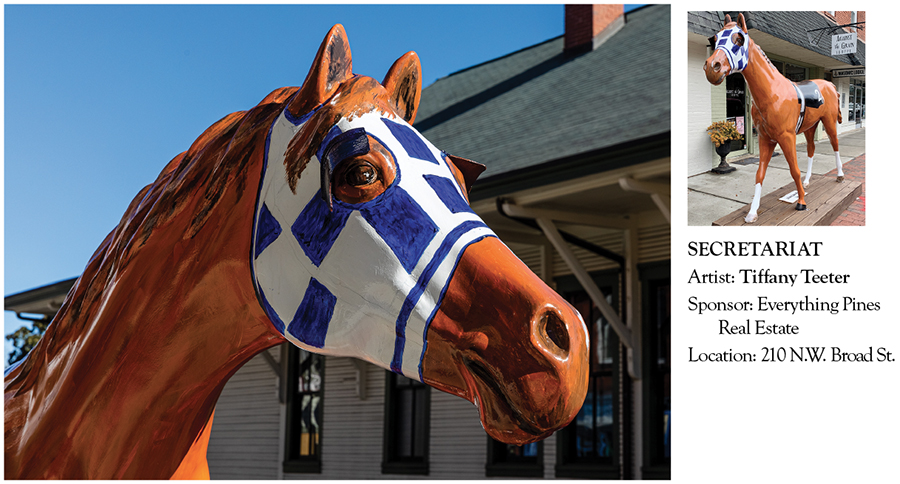
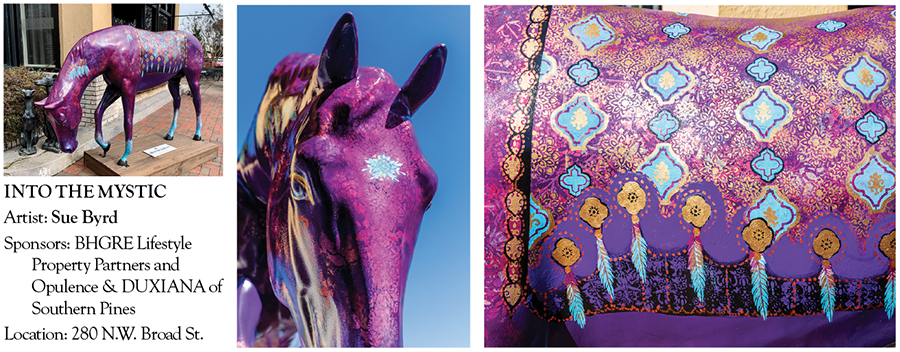
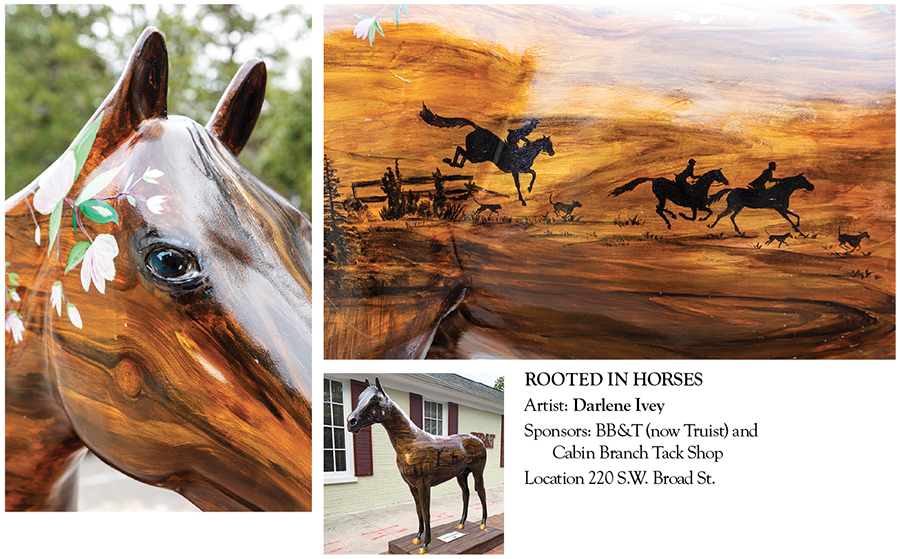
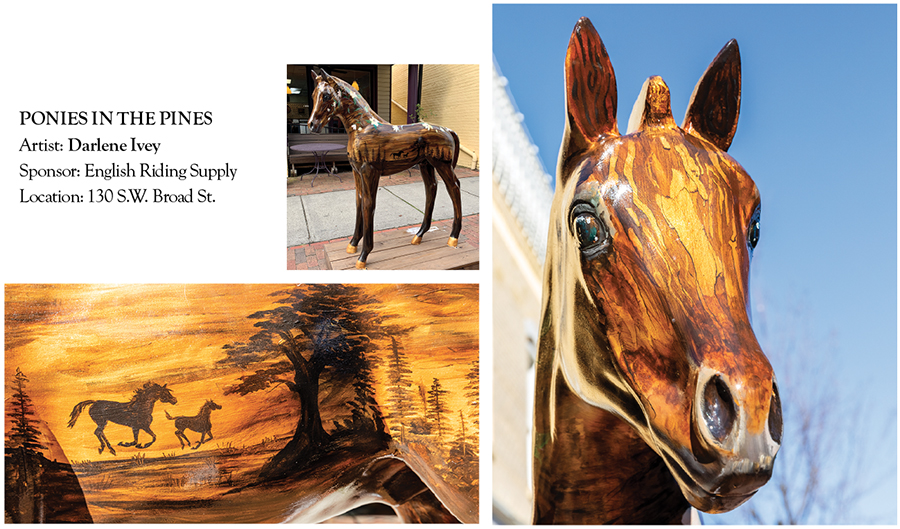
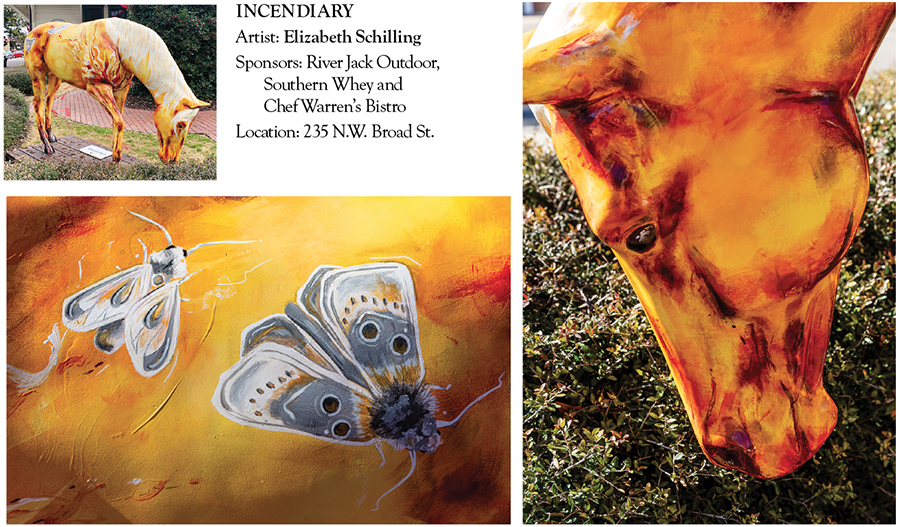
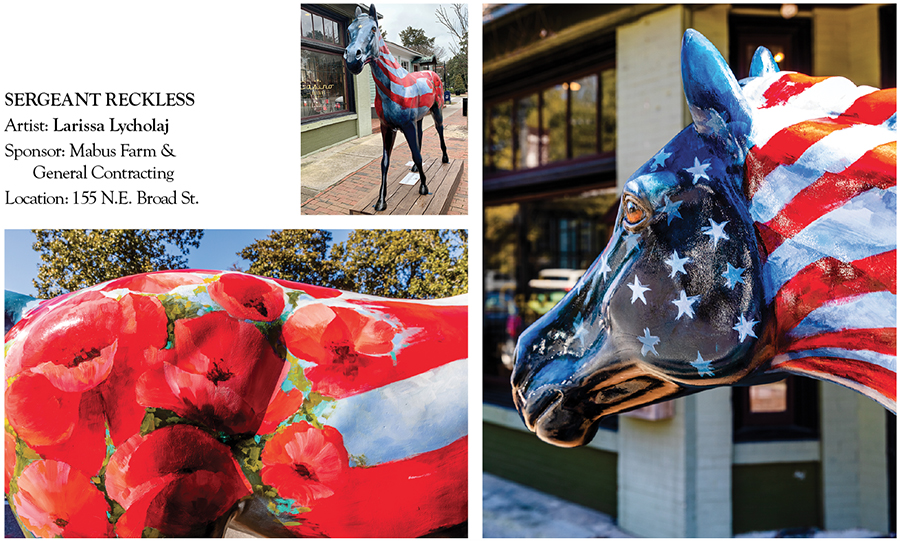
Painted Ponies

Photographs by John Gessner and Mackenzie Francisco

Back in the saddle again

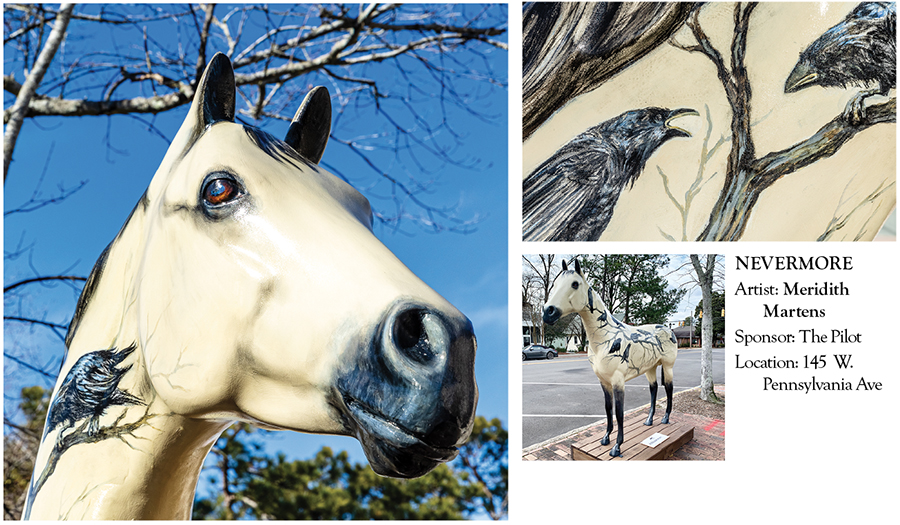
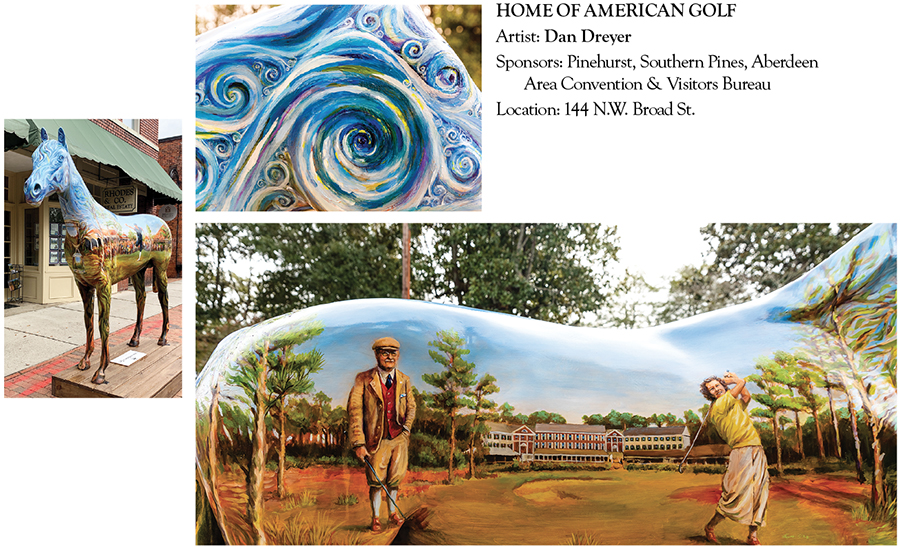
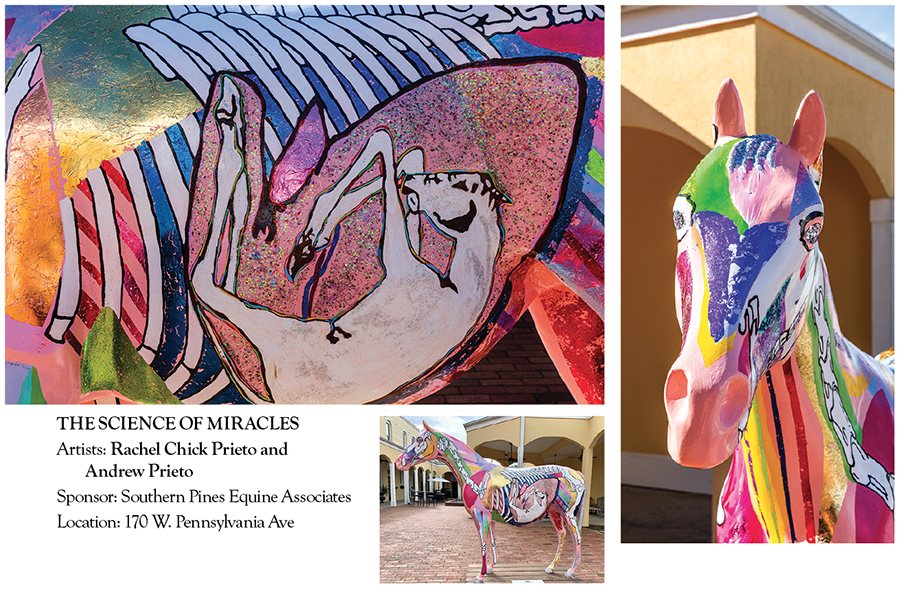
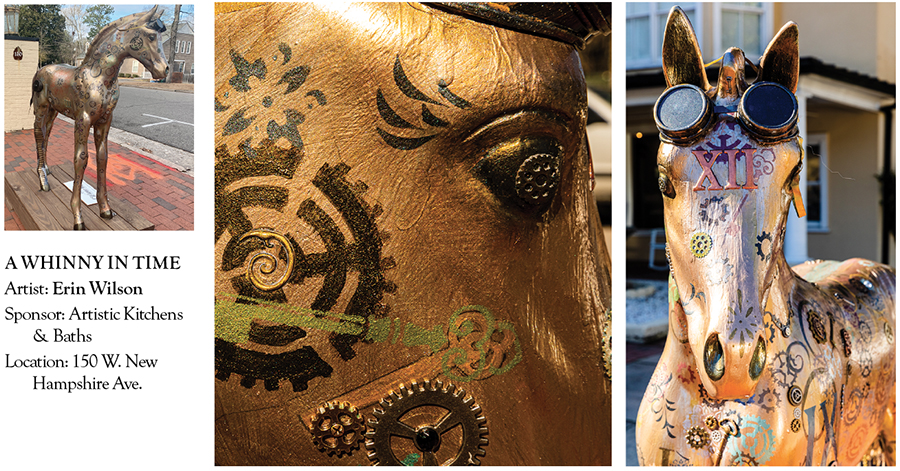
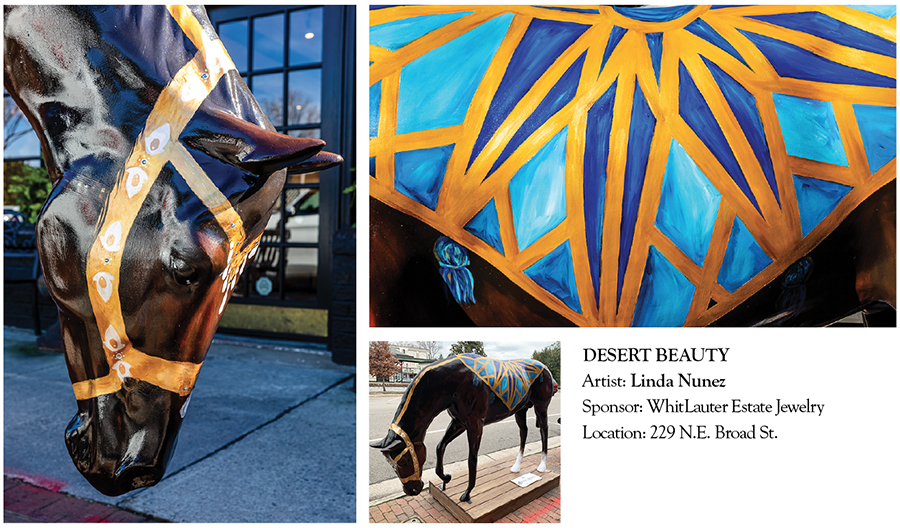
The wild mustangs of the Outer Banks have nothing on us now that the painted ponies have returned to the streets of Southern Pines. They’ll show their creative colors until March 30 or so when the imaginative dozen
will be rounded up and auctioned off on April 3 to benefit the Carolina Horse Park. 

The Creators of N.C.

Welcome Home

How Amarra Ghani became a guiding light for those in need

By Wiley Cash   *   Photographs by Mallory Cash

Amarra Ghani has continually found herself in two roles that are surprisingly in concert with one another: caregiver and outsider. These two roles go hand-in-hand more than one would think. Often, outsiders come from a perspective that allows them to assess the needs of others with fresh eyes, and caregivers tend to take on singular roles that set them apart.

“I’ve always felt different,” Ghani, the founder of Welcome Home in Charlotte, says. “The color of my skin, my name.” After 9/11, these feelings intensified for Ghani, a practicing Muslim whose parents are Pakistani immigrants. “I felt super-ostracized,” she says, despite growing up in ethnically and culturally diverse cities in New York and New Jersey. “People would say hurtful things to me because of what I looked like or how I grew up.” Ghani’s feelings of being an outsider intensified when her family moved to Charlotte halfway through her senior year of high school. Feeling alone, Ghani, began to lean on her faith. “I was isolated from everyone,” she says. “I fell in love with Islam because it was comforting for me. I was praying more. I was reading the Koran and I felt like God was my only friend.”

After high school, Ghani attended community college in Charlotte before transferring to the University of North Carolina-Asheville, where she founded the Muslim Student Association in hopes that other practicing Muslims would not feel as alone as she once had. “That’s where I found my voice,” she says. After college, she moved to Washington, D.C., to work for the U.S. Department of Agriculture, and later as a production assistant at NPR. Ghani was living out her career dreams, but was called home to Charlotte in 2016 after her mother was diagnosed with breast cancer. She became her mother’s caregiver.

She didn’t stop there.

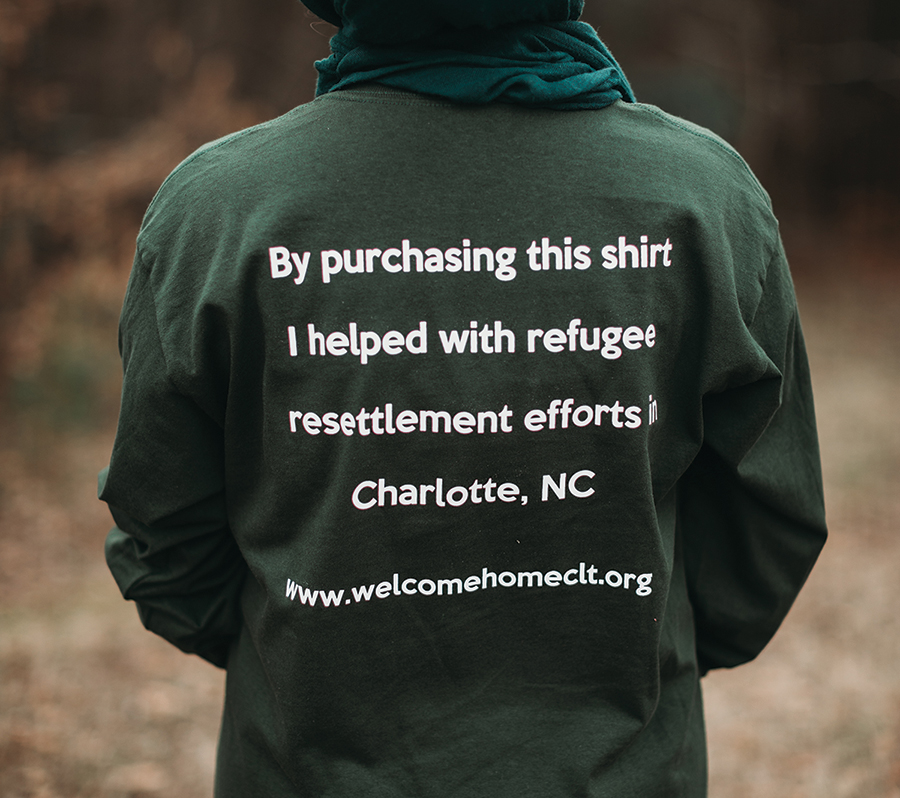
While throwing a “friendsgiving” celebration that year, Ghani encouraged her friends to bring warm winter clothes that she could donate to people in need. She learned that a friend’s mother — a native of Afghanistan who’d been living in Charlotte for 40 years — was gathering clothes for local refugees. When Ghani took her friendsgiving haul to the woman’s house, she asked her what else local refugees needed. She was surprised to learn that most of them needed the basic necessities like utensils, towels and bedding. She told her that she would put out a call on social media, which she had regularly used to make connections during her work in D.C. The response was overwhelming; soon, her parents’ garage was full of donated materials, from used clothing to brand new items to gift certificates. “Once I started, it just kept growing,” she says. When the pool of donors and volunteers swelled from 30 people to over 250, Ghani realized that she needed a better platform, so she set up a WhatsApp group called “Welcome Home.” This seemed like an appropriate name for a group dedicated to welcoming refugees as they bridge the gap between the struggles in their old lives and the challenges of the new.   

While working full-time with Wells Fargo, Ghani set about turning Welcome Home into a functioning organization, complete with a board of directors. Once things became official, the first phase of the organization’s work was to meet the basic needs of the refugee community by furnishing apartments, for example, or taking people on grocery store visits and other errands where assistance was needed. The second phase of operations focused on sustainability, and the organization forged ahead with programs in English language education and services that pair refugees with translators who can accompany them on doctor visits and other appointments where language may be a barrier.

Ghani knows these difficulties firsthand. “English is my second language because my parents would not talk to me in English,” she says. “As the child of immigrants, there’s a time when you become your parents’ parent. I was 11 when I started helping my dad with forms or going to the doctor with them or going to parent-teacher conferences to translate.” What a difference an organization like Welcome Home would have made in the life of her family: “I wish someone had guided my parents,” she says. “My dad could’ve had less pressure on him.” And how were they to know such resources existed? “When you’re someone who doesn’t speak the language and you’ve just arrived and don’t know the community around you, you need someone to guide you. That is what drives me.”

Welcome Home started out with 21 families, and they all eventually graduated from the program, no longer in need of assistance. “We have families who come here and who don’t know English or how to drive and perhaps have a fourth grade education,” Ghani says. Not only are they learning how to survive in a world that feels so foreign, she continues, but they are learning how to thrive. “We have three families who have been able to purchase houses in the last year,” she says. They were able to raise money to cover the rent for another family where the wife was diagnosed with breast cancer. “Earlier this year, we learned that this family was able to buy a house as well.”

But Ghani also recognizes the hesitancy many people have about seeking help, which is why Welcome Home plays such an important role in the lives of refugees from places like Syria, Afghanistan and Myanmar. While many refugee organizations are missionary in nature, Welcome Home is not. Still, Ghani cannot deny the comfort families find in working with an organization largely comprised of people who share the refugees’ religious faith, culture and worldview. “It makes a difference in small ways and big ways,” she says. “For example, during Thanksgiving, our families know that we can provide Halal turkeys. That establishes a level of trust.” Now, perhaps more than ever, trust is paramount as refugees settle into a new community during the coronavirus pandemic.

As the virus takes its toll in communities across the state, Welcome Home finds itself back in their first phase, meeting the basic needs of their families. “It’s all about necessities and fundraising to cover bills,” Ghani says. It’s also about keeping families safe from the virus itself. In mid-February, Welcome Home partnered with the city of Charlotte and the Mecklenburg Department of Health Services to provide vaccinations. “They reached out to us because of the skepticism of the vaccine in refugee and immigrant communities. We’re bridging that gap and bringing familiarity to the process of getting vaccinated,” Ghani says.

Through it all, Ghani, who last month was awarded UNC-Asheville’s Francine Delany Award for Service to the Community, maintains that she is driven by her faith, as well as by the memories she has of being an outsider and her most recent calling to care for those in need. “What did I do to deserve the life that I have?” she asks. “Nothing. I was just born into this family and this faith and this atmosphere. Others aren’t so lucky.” When she works with refugee families, assisting them with everything from getting clothes to learning English, she can’t help seeing a bit of herself in their struggle. “I know where they’re coming from,” she says, “I’ve been in that place.” No matter the place where members of Charlotte’s refugee community find themselves, Amarra Ghani wants to make certain they get home.  PS

Wiley Cash is the writer-in-residence at the University of North Carolina-Asheville. His new novel, When Ghosts Come Home, will be released this year.

In the Spirit

New Digs

Ammo for my arsenal

By Tony Cross

During the holiday season, I tend to go overboard with gifts and usually spend beyond my means. I’m still getting thank-you notes from Visa. I try to outdo myself every year, and it’s clearly becoming a problem. But I love watching family and friends’ faces when they open their presents and, on the flip side, I do a little shopping for yours truly. Here’s what I splurged on (big and small), and a little something I got in the stocking from a North Carolina distillery.

Angostura Cocoa Bitters

After almost 200 years, the House of Angostura released their third bitters. I believe the unveiling happened around August of last year. I remember seeing an ad in a magazine, and thinking, “Oh, (expletive of your choice)!”

Angostura’s aromatic bitters has been the standard in the bitters/cocktail world, and their orange bitters is a must (for me, anyhow) when blending a house bitters for cocktails. Simply put, it was kind of a big deal. So I copped a bottle, and yeah, it’s yum. They use cocoa from Tobago and Trinidad, and blend with gentian spices, water and alcohol. Yes, it is bitter, but with a rich chocolate nuttiness. For those of you who are new to cocktails, think of bitters as salt and pepper to your drink. Since it is an Angostura product, you should have no problem finding this. If your local grocer is only carrying the aromatic and/or orange bitters, just ask them to add this to their shelf — it’s really that simple. Pairs great with an old-fashioned, be it with whiskey or rum. I can see this going great with a lovely aged tequila, too. You can also try the cocoa bitters in a Manhattan.

Manhattan

2 ounces rye whiskey

1 ounce sweet vermouth

2-3 dashes Angostura cocoa bitters

Orange peel

Combine all ingredients in a chilled mixing vessel. Add ice and stir until drink is cold and diluted. Strain into a chilled cocktail coupe. Express oils from an orange peel over the cocktail. Discard peel or add to drink.

Purchase Knob Unaged Corn Whiskey

Elevated Mountain Distilling Co., Maggie Valley, North Carolina

This bottle of unaged whiskey (moonshine, white dog . . . whatever you’d like to call it) was gifted to me last Christmas by one of my best friends. He and his wife were vacationing in Waynesville, took a drive out to Maggie Valley, and found Elevated Mountain Distillery. This corn whiskey is a touch sweet and has only a little bit of heat (a moderate 44 percent ABV). I know I’m going to whip up sours with this whiskey. I’m also going to tinker around with some Collins-style recipes. This is an easy drinker, that’s for sure. From their website, it looks as though Elevated Mountain broke ground in 2017, and they also offer an aged corn whiskey, as well as a small batch, flavored moonshine, and vodka. Elevated Mountain Distillery spirits are available through our local ABC.

El Jolgorio Pechuga Mezcal 2019

This purchase was my ends-justify-the-means moment of clarity after buying gifts for everyone else. If that makes sense. I ordered this online and was excited to try this aged mezcal. I received bottle number 475 of 800 and was delighted when I finally got around to tasting it. First, let’s do a quick recap on Pechuga. Translated as breast in Spanish, it is made when the distilled mezcal is distilled (again) with nuts and local fruits. Then a raw turkey or chicken breast is suspended over the still, which adds to the flavor of the spirit. In the case of this Pechuga, the bottle states: “It is distilled twice in copper stills with seasonal fruits and the breast of a wild turkey native to this region.” On the palate, there is a slight minty/minerality going on; a touch of smoke; a very slight hint of banana. It’s got a bit of heat to it, and I’m hoping time will remedy that. Overall, this mezcal is a delicious sipper and, with a bit of self-discipline, I can make this bottle last the year. I will always recommend Pechuga but know that you’re going to cough up close to $200 a bottle (this one was just under). As always, drink this neat. A lot of the nuances will get lost if you mix this in a cocktail. Just neat. No ice. This particular edition is sold out (where I purchased it online, at least), but don’t fret. With some online searching, I’m sure you can find a bottle somewhere. If not, there are plenty of other beautiful Pechugas on the market.  PS

Tony Cross is a bartender (well, ex-bartender) who runs cocktail catering company Reverie Cocktails in Southern Pines.