Golftown Journal

The Ross That Wasn’t

The lost links of James Barber

By Lee Pace

By the late 1920s, Donald Ross had designed seven golf courses in the Sandhills. There were Nos. 1-4 at Pinehurst Country Club, with the No. 2 course the annual venue for the North and South Open, and North and South Amateur. By 1912, he had designed 18 holes at Southern Pines Golf Club. And Mid Pines in 1921 and Pine Needles in 1928 were positioned on opposite sides of Midland Road on the outskirts of Southern Pines, the former serving as the linchpin of a private club and hotel, and the latter part of a combination resort and real estate venture.

Five of the seven remain today. Pinehurst No. 3 became half Ross/half Ellis Maples in the late 1950s when Maples built 18 new holes on the west side of N.C. 5 and arranged a new Pinehurst No. 5. The No. 4 course was abandoned during the Depression and World War II, later to re-emerge under various iterations, the latest a Gil Hanse redesign that opened in 2018. And Southern Pines, regarded by many knowledgeable design wonks as one of Ross’ finest routings, is under the restoration scalpel as we speak under new ownership and the design and construction acumen of architect Kyle Franz.

But there’s a fascinating story about the eighth Ross course for the Pinehurst area, the course that never was.

In 1927, Ross laid out a course on land now occupied by a housing development and The O’Neal School off Airport Road northeast of the village of Pinehurst. The client was designated on blueprints as “James Barber, Esq.”

Barber was a native of London who came to America at the age of 35 in 1887 and made his fortune with the Barber Steamship Lines, one of the world’s foremost shipping concerns. He loved golf and visited Pinehurst regularly from the early 1900s on, occupying a suite at the Holly Inn for the full winter season and then in the early 1910s building two houses just a short walk from the Carolina Hotel on Beulah Hill and Shaw roads. It was on the grounds around one of these mansions that he added a tennis court, formal gardens and a miniature golf course he called “Thistle Dhu,” which later was among the inspirations for Pinehurst’s immensely popular 18-hole putting course adjacent to the resort clubhouse.

Barber was among a group of prominent businessmen in the Sandhills who joined Leonard Tufts, the owner of Pinehurst and son of founder James W. Tufts, in developing thousands of acres of land between Pinehurst and Southern Pines known as Knollwood. As World War II ended and the 1920s beckoned, they envisioned a posh private club with golf and lodging, and a surrounding residential community. That was the impetus for Mid Pines Inn and Golf Club. The first official meeting of Mid Pines was held in January 1921, and Barber was elected president. Tufts was vice president and general manager. A.S. Newcomb, a real estate agent, was secretary/treasurer. Ross was a founding member, as was L.M. Boomer, a partner with the du Pont family in owning the Waldorf-Astoria in New York City.

“James Barber is a man not heard of as often as some,” The Pilot noted in 1921, “but he is one of the big forces in the development of the Sandhills. His holdings in Pinehurst and Mid Pines are huge, and between the two places he has a small empire.”

That empire in time included the land for his private golf course.

At the time what is now known as Airport Road was called Seals Road. The clubhouse was located on the southwest corner of the tract on land near what in the 1980s would become the 14th hole of Longleaf Golf and Family Club, later changed to the fifth hole when the nines were flipped. Seven holes were on the south side of Seals Road on what is now a housing development accessed by Tall Timbers Drive and Laurel Lane. The Southern Pines Waterworks lake was just to the east.

Both front and back nines crossed Seals Road, and the holes on the north side ran on ground that today includes homes along Chesterfield Drive within the Forest Creek community, and runs eastward to the baseball and soccer fields of The O’Neal School. Ross’ design indicates residential lots alongside some of the holes.

Bill Patton, the course superintendent at Forest Creek from 1994 to 2014, remembers hearing talk that parts of the Forest Creek property once included an abandoned Ross design.

“The president of the Donald Ross Society came sometime around 1996 or ’97, looked at the property near the entrance to The O’Neal School,” Patton says. “He thought it looked like an old golf course. Personally, I couldn’t see it.”

What is certain is that the course was routed on paper by Ross. What is not quite as clear is how much, if any, was actually built, though documents in the Tufts Archives indicate the clubhouse was, in fact, built of native stone and had “a prominent view” of what would later be two small lakes within the back nine of the Longleaf course. There are no remnants of that structure today.

“Mr. Ross has designed a picturesque tract on the summit of the hills which gives a constant outlook over all the country,” The Pilot observed in 1927. “Below the fairways the reservoir with its sixty acres of open lake spreads out along the whole west side of the course. From the high spots on the course, Southern Pines is visible, Carthage, the territory around Vass, Pinehurst and into indefinite distance in all directions.”

Two events derailed Barber’s vision.

First, his death in February 1928.

And second, the Great Depression that began with the October 1929 stock market crash. If his son and heir, Edward, had any designs on completing his father’s plan, they were scuttled during hard economic times.

Edward Barber had little insight into his father’s vision when the elder Barber died. Leonard Tufts wrote to Ross in 1928 and said he had corresponded with Edward, who was at a loss what to do with the land.

“He does of course want to know what his father had in mind in spending all that money out there in the woods,” Tufts wrote. Tufts then conferred with Ross and wrote back to Barber: “Your father’s idea was to build 18 holes of golf and use it for his private course where he could take his friends to play, and eventually to sell this property to a club that would have rooms, in a good deal the same way that we sold the Mid Pines property.”

Author Daniel Wexler included this Barber course in his book Lost Links: “Ross’ design for Barber was serious business, measuring over 6,500 yards and featuring strategic elements generally found only among the architect’s most prominent works . . .  In fact, it probably fell among the upper 10 percent of the celebrated architect’s massive portfolio.”

High cotton, indeed, and worth some mental marinating next time you’re backed up on the roundabout waiting to head for Airport Road.   PS

Lee Pace has written about golf in the Sandhills for three decades. His newest book, Good Walks — Rediscovering the Soul of Golf at 18 Top Carolinas Courses, will be available in May from UNC Press.

Pleasures of Life Dept.

The First Time I Saw Paris

A young man’s trip of a lifetime

By Tom Allen

April in Paris, chestnuts in blossom

Holiday tables under the trees

April in Paris, this is the feeling

No one can ever reprise

In the spring of 1975, I was there. April, in Paris, though I had never heard Yip Harburg’s lyrics to the hit song composed by Vernon Duke for the 1932 Broadway musical Walk a Little Faster. Wouldn’t have known a chestnut tree if I saw one. But the feeling that “no one can ever reprise?” That, I remember; yet my sojourn to the City of Lights almost didn’t happen.

The only foreign language offered at my high school in the ’70s was French. Not a lotta takers. Why I signed up escapes me. Perhaps I thought a language might look good on a college application. By the time I graduated, after three years studying French, I could conjugate verbs, sing a few Christmas songs, and even read a little Victor Hugo.

During my junior year, Madame Arnold, our teacher whose slow, Southern drawl made the language easier to hear and understand, organized a weeklong trip for members of our French Club. The trip would take place over Easter break. 

I wanted to go. More than anything, more than ever, I wanted to go. My parents’ initial response was “no.” It wasn’t the cost as much as the fact I was 16 and had never been out of North Carolina, much less the country. And I’d never flown. My dad was concerned the plane might crash, a carryover from his Army days in Europe 30 years earlier. My mom worried I might wander off, get lost, be kidnapped. My paternal grandmother, who lived next door, shared Dad’s concern. A farm wife who’d never seen the ocean, she questioned why anyone would want to fly across that ocean to someplace where “you can’t understand a word they say.” My maternal grandmother, on the other hand, thought it was a great opportunity: “You can bring me back a bottle of French wine.”

I recall pleading for days, a form of manipulation that rarely worked in my family. I would help pay my way, I promised. My meager checking account still had money from summer tobacco work. I think I even cried, just like I cried the year my buddy got a motor scooter for Christmas and I didn’t. Those tears, I recall, were wasted.

Eventually, my dad caved. Reluctantly, my mother agreed. One grandmother immediately started praying for safety. The other gave me cash for that bottle of wine.

On Easter Monday, five of us, under the watchful eye of Madame Arnold, departed Raleigh-Durham for New York, then an overnight flight to Paris. I savored every moment of the trip, from the plane ride and its preheated meals to the beauty of Paris by night from atop the Eiffel Tower. I was especially proud that I understood the language and happy the French could understand my Southern accent, even when I had to ask, many times,“Parlez plus lentement, s’il vous plaît.” Please speak slower.

We visited sites seen only in classroom film strips or 16 mm movies — the Arc de Triomphe and the Champs-Élysées, the beaches of Normandy and Mont Saint-Michel, the Palace of Versailles, and the château of Chambord. I remember the grandeur of Notre Dame, still heavy with the scent of lilies and incense from Easter Masses, and the taste of éclairs and macaroons from hole-in-the-wall pâtisseries.

Our last night in Paris, we attended dinner and a show at the Moulin Rouge, its cabaret and can-can dancers immortalized on canvas by Henri de Toulouse-Lautrec. Only after pages of permission slips our parents had to sign, were we allowed to see the possibly provocative performances, accompanied by a half-glass of champagne with dessert. But the night was less risqué than we imagined, a classy and colorful evening of great food and lots of laughter.

When I returned from our grande soirée, I packed the small bottles of perfume and lace handkerchiefs I purchased for my mom and grandmothers, a wallet for my dad, and that bottle of Vouvray for Granny Pate. The only souvenir I bought for myself — my caricature by a street artist in Montmartre.

The next day I bid adieu to what had been the trip of my young lifetime. Others would follow — a summer in England during seminary, a honeymoon in Bermuda, a pilgrimage to Israel. But my taste for travel was sparked by that high school journey to République Française, a taste we encouraged in our daughters, both of whom studied abroad during college.

My own college days included more French because I simply loved the language. Sadly, I’ve had few opportunities to converse since. Like anything else, use it or lose it. Two occasions in ministry afforded me the opportunity to say the Lord’s Prayer in French. One was a small, private wedding for a lovely couple, the bride and her family from Québec. The other, the funeral of a parishioner, also French-Canadian, a friend with whom I occasionally conversed. The prayer, in the language of his childhood, was his request, and one I was honored to fulfill.

Every year, the week before Easter, I visit my parents’ graves. Sometimes I stand in silence, but other times I speak. Words of gratitude are always expressed, for their lives, their love, their generosity. And for the gift of giving into my pleas and sending their only kid to the other side of the world.  PS

Tom Allen is minister of education at First Baptist Church, Southern Pines.

Cedarcrest in Bloom

A free-spirited and romantic escape

By Claudia Watson     Photographs by John Gessner

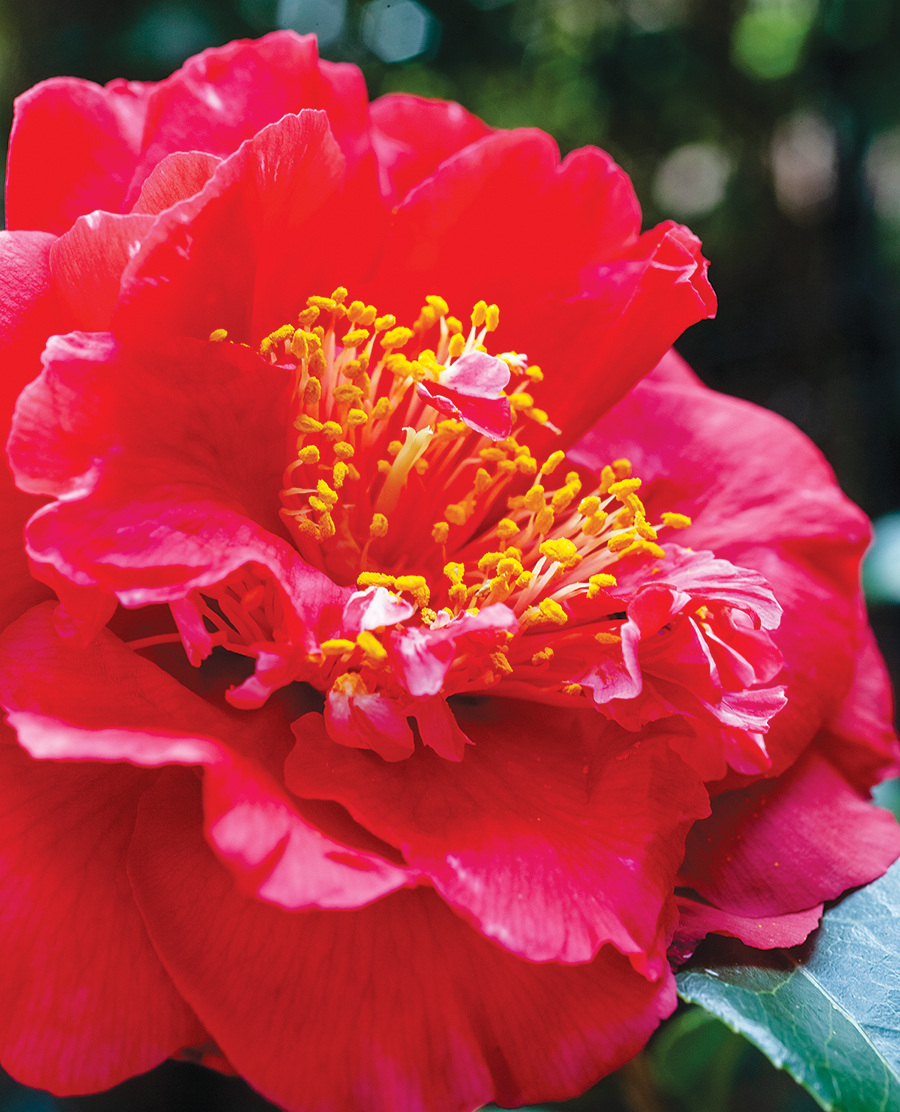
The light snow clinging to the winter-into-spring camellias prompted her early morning call last March. “Oh, you must come and see these camellias before the snow is gone,” said an enthusiastic June Buchele. “The blooms look stunning against the clear blue sky.”

The first signs of spring are the sweetest in Barry and June Buchele’s garden. A warming sun peaks through the treetops as we enjoy the spectacle of hundreds of vibrant large camellia blooms dusted with snow. It’s a stunning prelude to an intoxicating buffet of things that start small. Nearby, winter snowdrops and hellebores peek out from under layers of leaf mulch, and the bright yellow stamens of crocus shout, “Spring is here!”

“Oh gosh, it’s my favorite time of year,” says June, an accredited American Camellia Society (ACS) judge and an energetic N.C. Extension master gardener volunteer. “I can’t wait for the daffodils to bloom,” pointing to the long green stalks reaching for the sun.

The Bucheles’ garden is a free-spirited and romantic escape with only a touch of discipline for Mother Nature. Just steps away from busy Beulah Hill Road, the sound of traffic falls silent. Their property in Old Town Pinehurst is obscured behind a thickly planted border of big old-growth trees and shrubs. “No one knows it’s even back here,” says Barry, who’s quick to share the history.

In 1916, James Wells Barber, an international shipping magnate, purchased the 1.24-acre property. He commissioned Leonard Tufts’ brother-in-law, architect Lyman Sise, to build the home for him and his wife, Kate. According to historical documents, they named the “two-story, weather-boarded, Tuscan-columned cottage, with two large stone chimneys” Cedarcrest.

Barber took a large portion of the property and built the “Lilliputian,” the country’s first nine-hole miniature golf course. Before they moved in, they commissioned Sise to construct a grander Federal Revival mansion across the street. Known as Thistle Dhu, it was the location of the country’s first 18-hole pitch-and-putt miniature golf course. Cedarcrest contributes to Pinehurst’s designation as a National Historic Landmark.

Barry and his late wife, Sarah, purchased Cedarcrest in 1987. An ob/gyn, he founded the Southern Pines Women’s Health Center in 1981. It was a solo practice for nearly three years.

“I was working 80 to 100 hours a week and couldn’t leave Moore County for nearly three years since I was on 24-hour call,” he recalls. “When I had time off, I was usually sleeping. Gardening was not on the top of my list, though I always had my tomato and pepper plants.”

After Sarah’s untimely death in 2012, Barry admits it was a rough time, recalling the empty house, the untended garden, and the loneliness. He met June through an online dating site, and they married 16 months later.

“When we talked about getting married, June said to me, ‘If we get married, I’d like to bring some color to the house and garden,’” he recalls. “I told her, ‘There is no if,’ and I promised her she could. Her love of flowers adds so much to our home and life.”

Now semi-retired, Barry and his bride of seven years share the love of the land and a passion for creating a beautiful space, though he admits he didn’t know what was outside his doors until he met and married June.

“June woke one morning and looked out the window,” he says. “She turned to me, asking, ‘Barry, do you know how many camellias you have out there?’”

He had no idea, so June pulled on her coat and boots and took the better part of the morning to count. She returned to tell him, “There are over 100 on the property.” His astonished reply was, “Huh?”

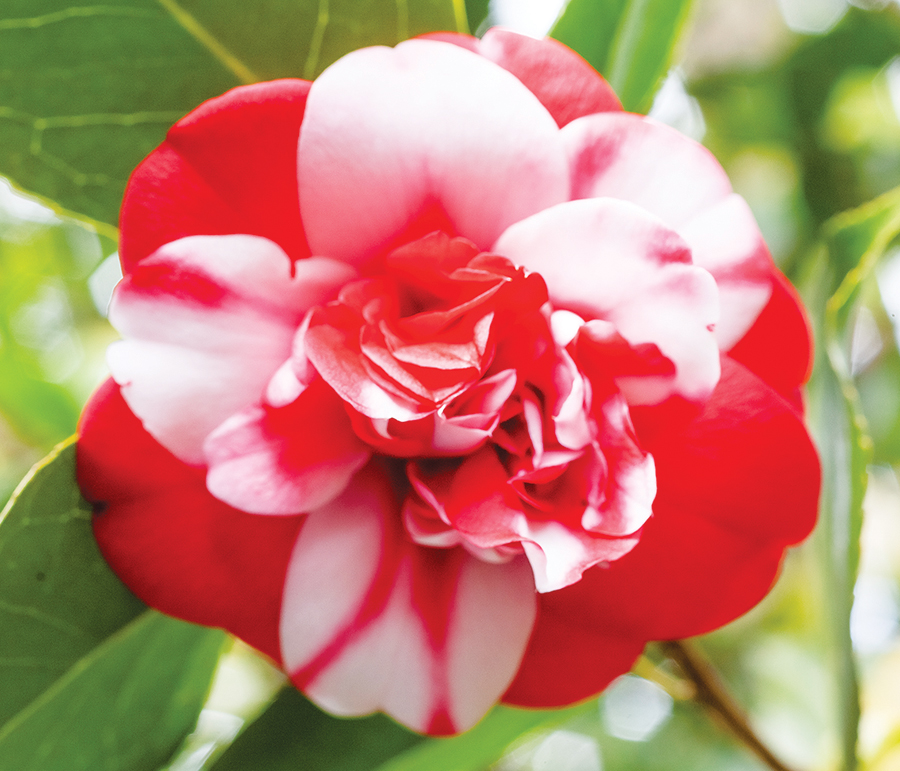
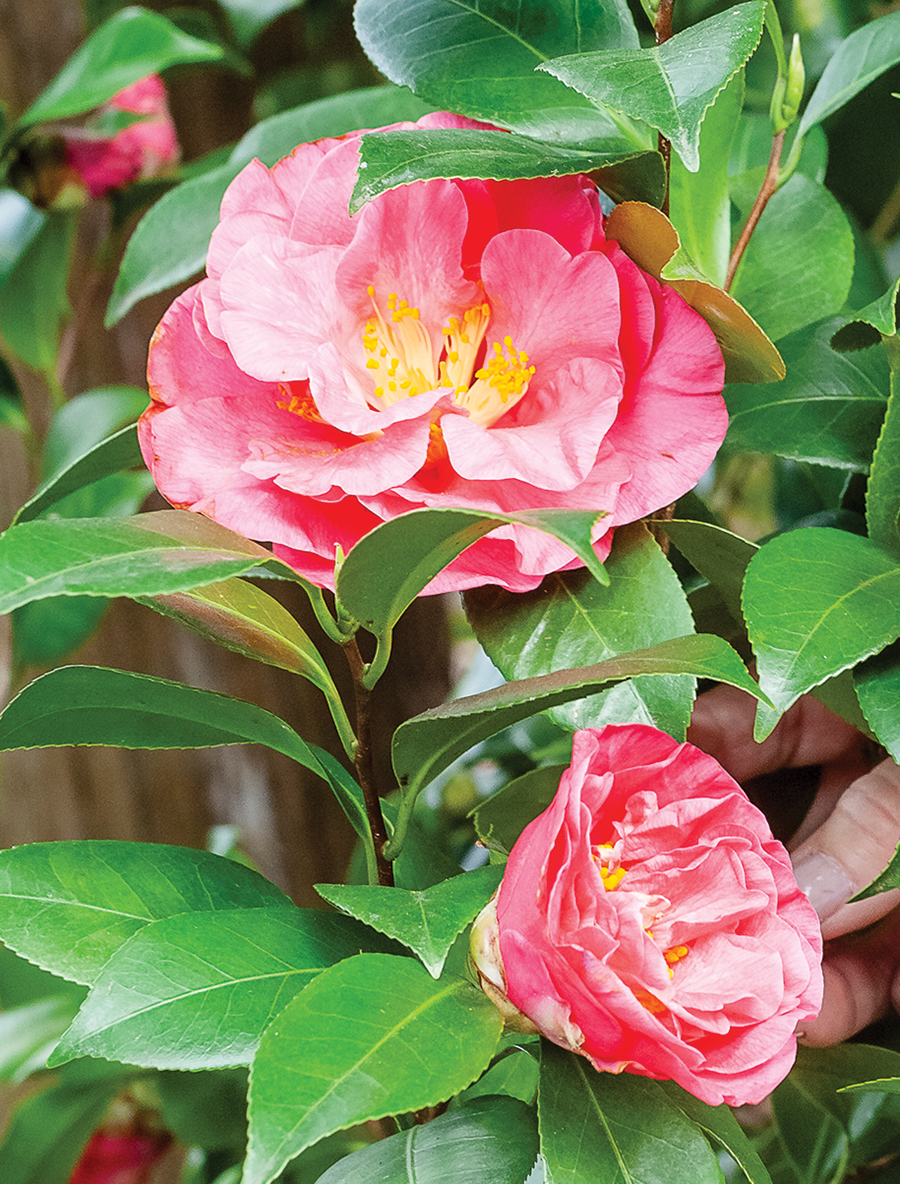
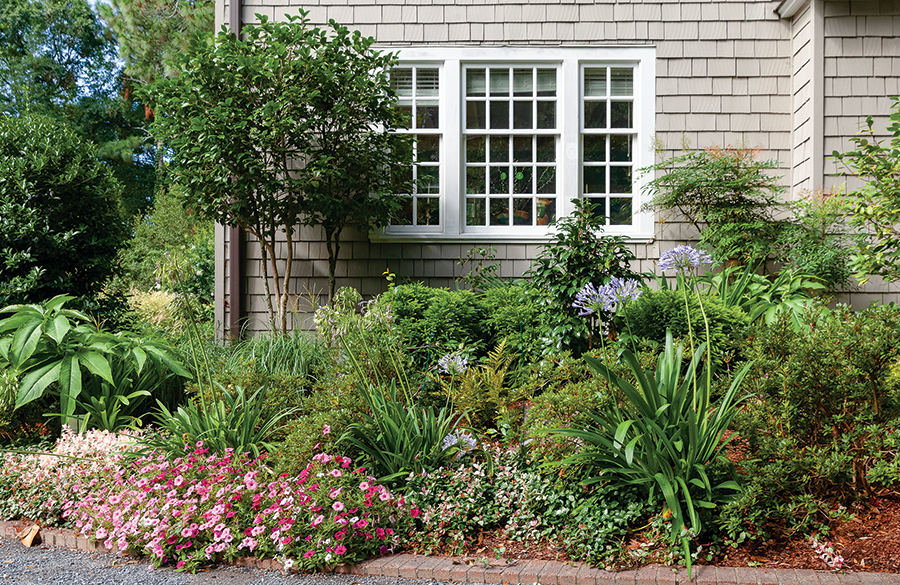
The Bucheles credit the previous owner for planting the garden’s bones with a collection of camellias (Camellia japonica and Camellia sasanqua), hollies and azaleas growing under a canopy of longleaf pines and live oaks, giving it subtle Southern charm. There is a comforting wildness to the place, with an abundance of deciduous trees and evergreen shrubs stretching to the sunlight, providing a secure habitat for a herd of deer, rabbits, an occasional fox and turtle, and numerous birds. When flocks of chattering cedar waxwings arrive in the winter to feed on the holly berries, June hangs out the upstairs windows to watch and photograph them.

With a degree in education from the University of North Carolina-Chapel Hill, she taught elementary and intermediate school science, English and Spanish. She also studied botany with Clifford Parks, a world-renowned camellia expert. That experience developed her knowledge of botany, propagation, and the advantages of good soil fertility. Still, she confesses she didn’t truly appreciate the beauty of camellias until she moved to Pinehurst.

June was raised in Charlotte, where the dark red clay there was not favorable for camellias. Instead, her father and grandfather propagated and grew boxwoods, her first love. Her mother enjoyed flowers and became a talented floral designer who won ikebana (the Japanese art of flower arranging) competitions. “Gardening is in my Southern heritage,” she says.

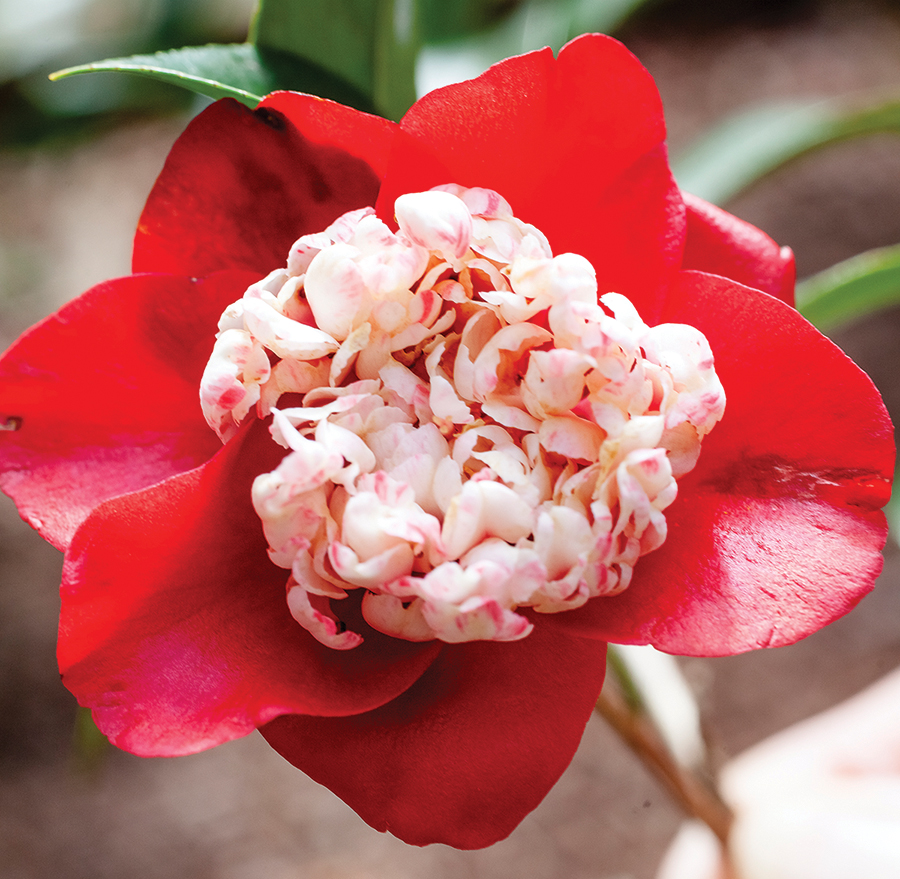
The Bucheles claim 80-90 varieties of camellias among the 100-plus they count today, providing a lush backdrop during the non-blooming months for other shrubs and continuously changing the landscape.

Despite the abundance of the broadleaved evergreens, last winter they built several raised beds for the exclusive purpose of growing new camellias for exhibitions.

“We planted 44 new, rare or unusual camellia japonica varieties,” June explains. “I keep them small and tidy — one plant, one bloom. You enter to win with a spectacular bloom.” She’s won awards two of the past three years.

The new camellia beds receive special care and are situated in six locations to determine the best one for growing each variety. Camellias thrive in the region’s acidic soil. Most prefer understory shade or part shade, but some have adapted to full sun. They grow best in soils high in organic matter, and the Bucheles fill the beds with a blend of Brooks eggshell compost and homemade compost.

Barry, now a seasoned gardener, is often up to his ankles in the compost, checking and turning it as it slowly develops under an ancient live oak. “This is fluffy, rich and ready to go into the beds,” he says while scooping a forkful into the wheelbarrow.

Late winter, they usually pack up their van for the busy camellia judging schedule, attending shows up and down the East Coast. But this year, the format requires photos of entries sent by email and then judged on Zoom. “We’re not sure how this is going to work,” says a dubious June, who’s volunteered to be a judge at the first ACS competition this year, in Fayetteville, via Zoom.

In normal times, Barry volunteers as a show “runner” — carefully delivering the fragile single blooms perched in small cups to the head table for further judging. “Dropping or damaging a bloom is not a good thing,” he says, noting an unblemished track record.

“We’ve learned so much,” adds June. “The people I judge with are very passionate about growing and showing camellias and sharing knowledge. We’ve all become good friends, which makes it enjoyable for both of us. Plus, we get to see a lot of beautiful places.”

The division of labor in their garden is simple, explains Barry. “My main thought about gardening is, ‘What can I eat?’ June is more of, ‘What flowers can I cut and bring into the house?’”

Raised in Texas, Barry’s father, also a doctor, would occasionally take Barry and his brother to their grandfather’s farm in southern Kansas. “Gardening and farming were in our blood,” he explains. “But Dad hated farming and didn’t want to do it. He’d take us there and work our butts off. He wanted us to gain an appreciation for a farmer’s hard work and to understand the importance of staying in school.

“So, now I’m in charge of the compost and varmint control,” he says, laughing as he readjusts his soil-smudged garden hat. Countermeasures used to keep the rabbits and birds out of the vegetable garden include colorful fake snakes hanging from the tomato cages and a chicken-wire fence. Still, he admits, the voles get the best of them, “They ate the entire shade garden last year.”

In addition to the busy camellia season, spring brings a multitude of requisite heavy maintenance and weekly garden chores, which they’ve handed off to Cooley and Co. Landscape. But they stay connected with the essence of Mother Nature.

June plucks wilted foliage and prowls for weeds as she walks. She stops abruptly, reaching for an antique climbing rose. “It’s a Pierre de Ronsard,” the name lilting off her tongue. “The color changes from a soft pink to a deep rose,” she says, inhaling its heavenly fragrance and passing it along for a sniff.

Continuing down the walk, June points out areas for ambitious cleanup and planting projects. “I move plants a lot. If they are not doing well, I dig ’em up and replant. That’s the fun thing about gardening — it’s all an experiment.” She laughs and tugs at a prickly-ivy greenbrier (Smilax rotundifolia) branch that’s entangling her beloved peonies.

She discloses her plans for the azaleas, which she despises. “They bloom once and are done. Then they look leggy and sickly, not at all like camellias with their beautiful thick foliage.” So, last winter she took matters into her own hands and did extensive renovation pruning. “They were this high,” she says, motioning to her shoulders. “Now, they’re a foot high. But they’ll grow out and be pretty again.”

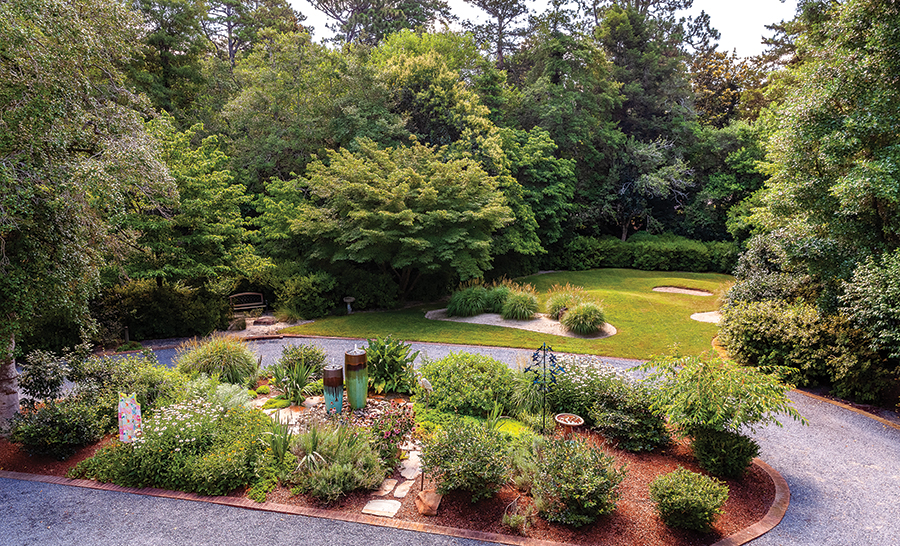
A recent makeover of the front included replacing a forlorn wildflower garden with a chipping green. Carved out of lush Xeon zoysia, it’s surrounded by blossoming redbuds, pink and white dogwoods, azaleas, forsythia, and graceful bridal wreath spirea. A dramatic Kousa dogwood (Cornus kousa) with its profusion of large, white flower bracts and red berries provides an attractive and long-lasting display throughout spring and summer.

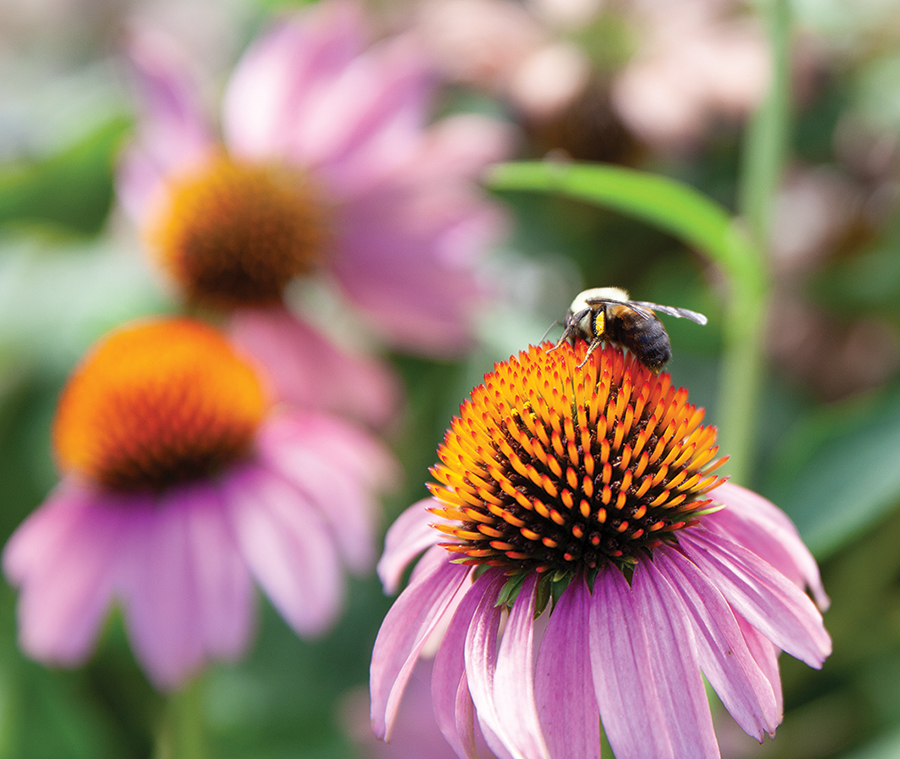
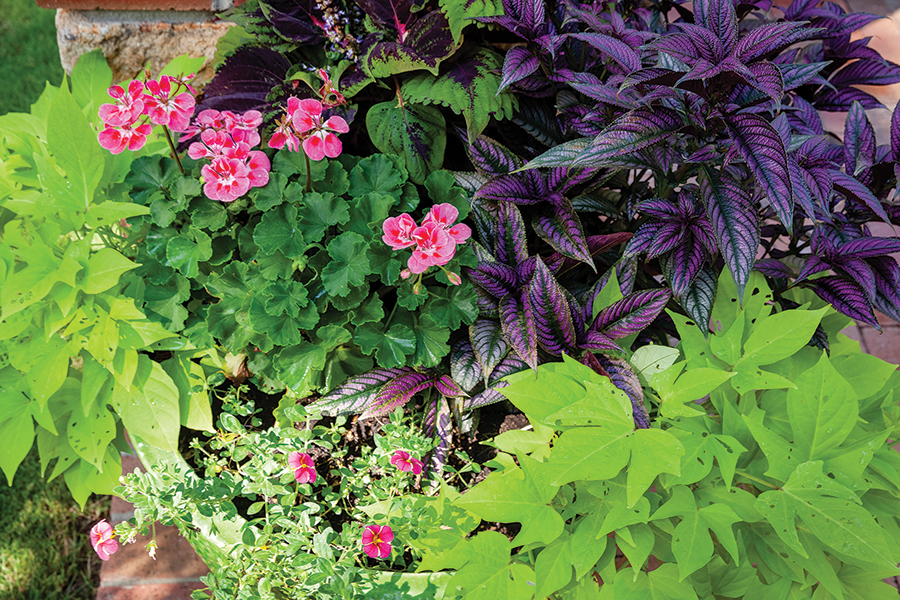
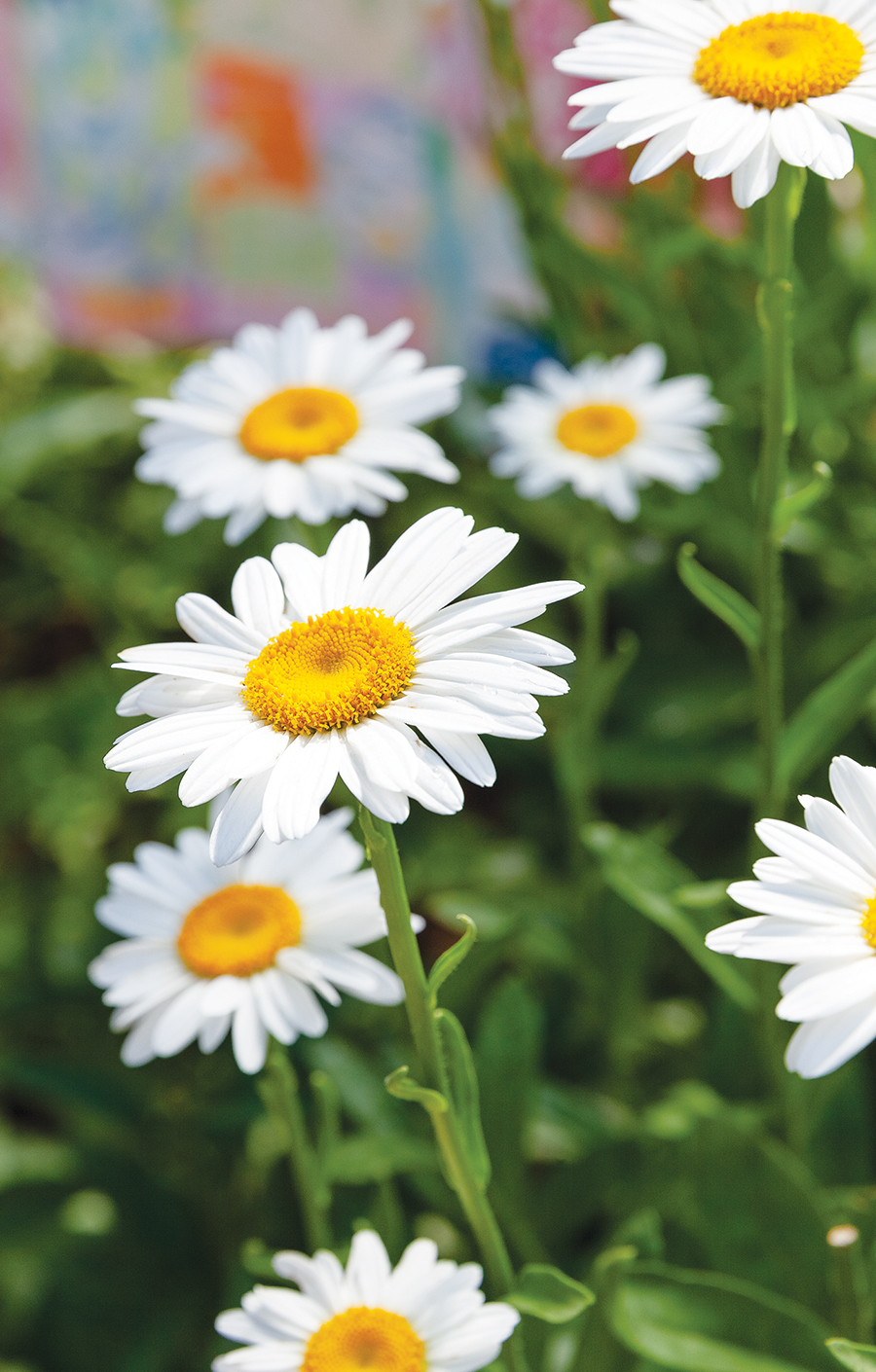
Nearby, a large oval garden graces the house’s entrance. It’s an exuberant mix of daffodil bulbs, hardy camellias, English lavender, mixed ranunculus, and clumps of Shasta daisies and gladiolas. Pollinator-friendly perennials include cheerful Black-eyed Susan (Rudbeckia hirta L.), salvia, coneflowers, and a false wild yellow indigo (Baptisia tinctoria). The spreading habit of several Lantana ‘Chapel Hill’ plants act as groundcover to brighten the area. Free-flowering, ivory-colored calla lilies (Zantedeschia ‘Intimate Ivory’) create drama all season long.

Two towering pottery fountains anchor the bed while a long-legged, sharp-beaked stork poses quietly nearby. “Storks are rumored to bring babies, but Barry’s the one that does that,” says June of the counterfeit bird. “He’s delivered over 11,000 babies, so I had to put one out there in his honor.”

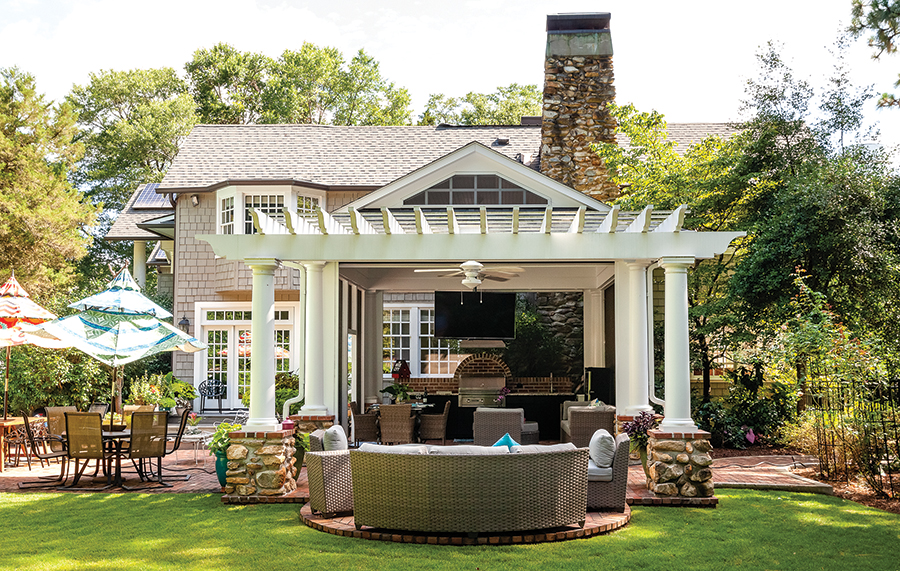
But it’s the back of the property that’s their private oasis. When the old brick patio began to heave from the pressure of nearby tree roots, they asked builder Ken Bonville to design and create an outdoor living space. “It’s functional with an outdoor kitchen, and it’s as welcoming and entertaining as a family room,” notes Barry.

“We made sure we had it screened so we’d enjoy it without being eaten up by the bugs,” he says of the covered space with patio-to-ceiling rolldown screens. The patio extends outside the covered structure to include a cozy fire pit. Twin big-screen TVs, mounted back-to-back, allow sports fans to enjoy the action inside or from the fire pit and pool area.

June enjoys dressing up the outdoor room with her artfully arranged freshly cut flowers. “To me, flowers make a house a home,” she says. “With this area and our pool, it fits how we live. We spend a lot of time together here. It’s relaxing and keeps us connected to the beauty and serenity of our garden.”

Native Bronze Dixie Sweet scuppernong grapes wrap along a trellis in a sunny portion of the backyard. “This variety is wonderful — big, sweet, and very juicy. Since June’s turned over the grapes to me, I handle the pruning, and when we get good grapes, I claim success,” Barry says.

Bordering the vineyard is June’s deer-resistant peony bed, which started with one selection from Tony Avent’s Plant Delights Nursery, a favorite for plant hunters. That peony (Paeonia ‘Scarlet O’Hara’) led to yearly additions, and the bed now has over 30 peonies that bloom in time for Mother’s Day. Closer to the pool, there’s a collection of tropical-looking hardy ginger plants, including an exotic Hedychium coronarium with a fragrance similar to jasmine. Elephant ears (Colocasia), daylilies (Hemerocallis), and specimens of Amorphophallus titanium, known as the ‘Corpse flower,’ and Hippeastrum ‘Voodoo,’ add mystery.

Working side-by-side in the garden, the couple divide and conquer, with each taking on different tasks. Everything doesn’t always go as planned, but they take time to enjoy its beauty and peacefulness.

“A few years ago, I built the simple slate path that threads through the back of the property. It’s bordered by dozens of azaleas and camellias and it’s the most tranquil place when they’re blooming. I get lost in the flowers,” reflects Barry. “If it weren’t for June, there wouldn’t be a garden.”

Their garden — a changeable, renewable paradise that stirs the senses and spirits, igniting a love of life.  PS

Claudia Watson is a frequent contributor to PineStraw and The Pilot and finds the joy in each day, often in a garden.

Almanac

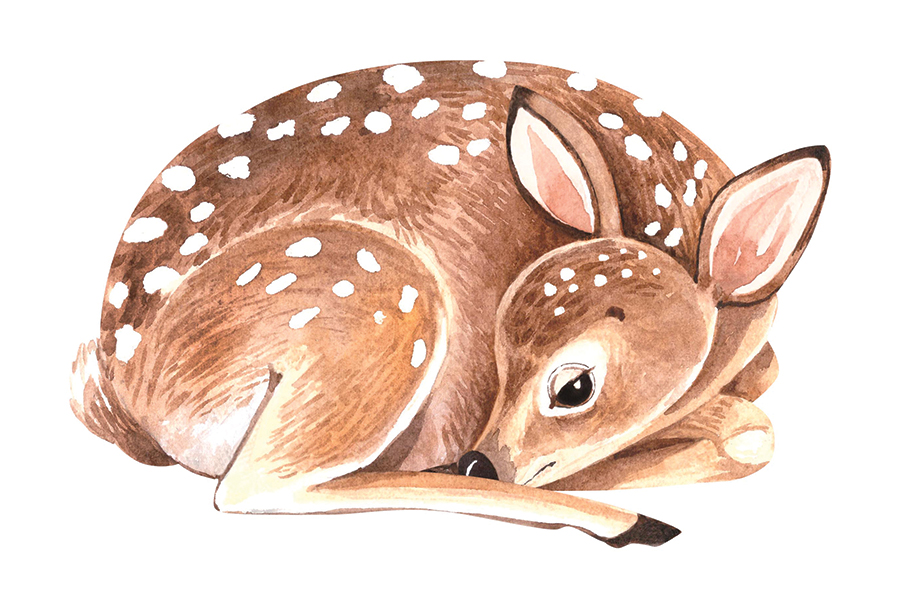
April is the earliest fawn, dewy eyed and trembling, landing in a world so soft and tender you can barely remember the deep silence, the bleak landscape, the icy ache of winter.

The nectar of spring flows steady as milk from the mother. It is the wet kiss from doe to teetering fawn. It is here, now. And it is delectable.

Like the fawn, we’ve awakened to a warm and gracious Earth that simply gives.

A tabernacle of peepers sings out.

In the garden, thin spears of asparagus rise like tiny prayers to the sun, young turnips humming songs of the cool soil. Cottontail rabbit grows plump.

Purple martins chatter inside birdhouse gourds and everywhere — everywhere you look — edible flowers bloom.

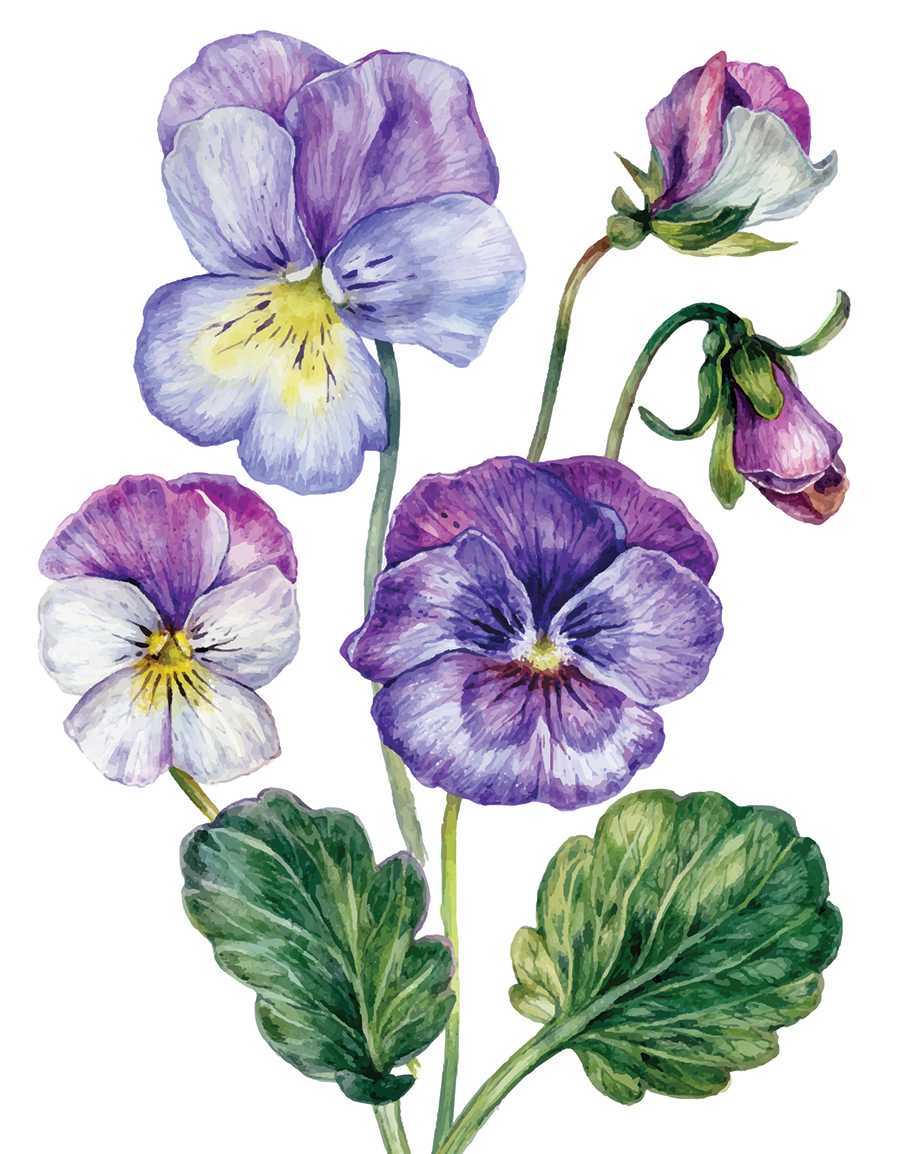
Rosy pink redbud bursting from bare-branched limbs. Violet and clover spilling across lawns. Forsythia and dandelion mushroom like palatable sunshine. 

Even wisteria — sweet, aromatic miracle — twists around fences, buildings and treetops like ruche fringe, a garden party for this tender new world.

The trees are leafing out. There is pollen for the wasps, the beetles, the bees. And, do you hear that?

The chorus frogs have reached a crescendo, their many squeaking voices one.

The canticle of spring is growing stronger. Whitetail baby mews along.

I will be the gladdest thing

Under the sun!

I will touch a hundred flowers

And not pick one.

— Edna St. Vincent Millay

Canticle of the Sun and Moon (flowers) 

Now that we’ve made it past the last frost, bring on the summer bulbs: gladioli (sword lily), flamboyant cannas, caladium (aka, heart of Jesus, angel wings, elephant ears).

Sew the first of the sunflowers.

And — at the end of the month — moonflowers.

Although they look like morning glories, which open at the earliest touch of light, moonflowers blossom beneath the stars — each ephemeral bloom lasting just one night. Kissed by the light of a near-full moon, the fragrant white flowers are nothing short of enchanting. Create your very own Midsummer Night’s Dream, plus or minus a mischievous garden sprite or two.

Poetry Month

What is a flower but a poem? Same of a tree, a nest, an egg.

Of course April is National Poetry Month. Look around. Birds weaving tapestries of needles and grasses. Spring tulips. Dogwoods like angelic flashes of white in naked woods. And, three words: violet blossom jelly.

Harvest wild ones in the morning. Three heaping handfuls. Place them in a pretty bowl.

Add boiling water. Stir, then keep covered for one rotation of the Earth.

Tomorrow, strain the liquid — deep and dark and blue. Add lemon juice; boil. Add cane sugar and pectin; boil and behold: wild fuchsia magic.

Just add toast.  PS

The Suitable Suitors

And a dancing bear

Fiction by Tony Rothwell

Ever since Sir Richard’s untimely death from a sudden stroke there had been an increasing number of enquiries of Lady Fiona as to how she was bearing up, did she need company, that sort of thing. They were kindly of course but, taking stock of those making the solicitations, it became clear that, while they had initially come from her relatives and lady friends, they were now beginning to emanate from gentlemen — single gentlemen. Indeed, when her period of mourning was over, it wasn’t long before the enquiries became invitations. And Fiona, who had at first consoled herself solely in the company of her faithful dog, Jack, found herself seriously considering the opportunities with which she was being presented.

Fiona was someone who loved life, but also someone who had not had what might be called a joyful marriage. It was true Richard had given her a title, a son (currently a soldier waging war against Napoleon in Europe), two well-found houses, one in the country, the other in the city, expensive jewelry and the latest clothes, but little by way of affection or even attention. He was always off with his friends or seeking influence among the aristocracy, leaving her to her own devices. To him she had been little more than an ornament, brought out when the occasion required.

But Fiona was not one to sit at home and wait to be ‘required.’ More and more she found amusement in the soirées of the likes of Georgiana, Duchess of Devonshire, and other members of the smart set in London — a group of aristocratic ladies who dressed in the height of fashion, wore the most exotic, bejeweled and befeathered wigs, and gambled and drank away their husband’s fortunes in a life close to dissipation. In addition, she had taken a cicisbeo*, who accompanied her to parties and other society events. Her choice had been a most willing, and amusing, rake — but she gave him up when Richard died. What was she to do now?

She consulted an old friend and confidante who told her in no uncertain terms, “You, my dear, are what all men seek — good-looking, humorous, well-preserved and well-off. Now that you have no ties, it’s high time you made a tour d’horizon, see what, or rather who, might be available. And you never know, you may find a true soulmate even yet.”

And so, over the next few months, Fiona had a remarkably full diary, accepting many of the invitations that came her way. But eventually, and inevitably, her more persistent suitors, of whom there were five, started to press their case for a more permanent arrangement, along with remarks designed to run down their competition whenever the opportunity arose. This took all the enjoyment out of the situation for Fiona and she realized something had to be done.

One rare evening when she found herself at home with nothing in her diary, she sat down with Jack on her lap to decide on a plan of action. As was her custom, she talked to her dog as though he were a person — he was, after all, very intelligent — and started by describing each of the suitors. Jack was all ears.

“First there’s Gilbert Blunt. A divorcee; rotund, gouty, but a man with something very definitely in his favour — he farms half of Buckinghamshire! The trouble is I always view divorcees as potentially faulty goods, but I have to say his gifts are very generous.

“Then there’s Andrew Duncannon. He’s a bachelor and a barrister. Not sure why he has become one of my favourites as he tends to be rather quiet, but he helped me greatly with Richard’s affairs when I needed it. And just when you least expect it, he utters a witticism or droll remark which never fails to make me giggle. And his pronouncements of affection seem very sincere.

“Next there’s Sir Edward Ponsonby. A retired Major. He is by far the most handsome of the five and I dare say we make a good-looking couple when I am on his arm, no doubt like many a lady before me. He is a bit of a braggard though, constantly regaling me with tales of his derring-do in battle. When he retired, he bought himself a seat in Parliament and is an up-and-comer in Pitt’s Tory Party. He does well on his political connections and service pension, or so he keeps telling me.

“Number four is Spencer Blanchard, a lonely widower if ever there was one. A man who has devoted himself to public service and is currently an Alderman of the City and widely thought to be a future Lord Mayor of London. So, what do you think, Jack, how would you like your mistress to be Lady Mayoress of London — rather grand, don’t you think?

“And lastly there’s Neville Carlisle, a bachelor and a fat one at that! He’s an Oxford don, highly intellectual and obviously lives very well. He dazzles me with his understanding of just about everything, but does he talk! He’s really not my type, but I find it very difficult to say no to him. It’s as though it would somehow reflect badly on my judgment if I did so. Perhaps I fear what he would say of me, but he can be quite sweet when he’s not being brilliant. So, there they are, Jack — my five suitors.”

Jack looked at her, his head cocked to one side in a questioning sort of way. “I suppose you want to know my favourite? Well, if I had to choose now, I would put Sir Edward in the first position and possibly Andrew Duncannon the second, but it’s very difficult — they are all suitable in their own way.”

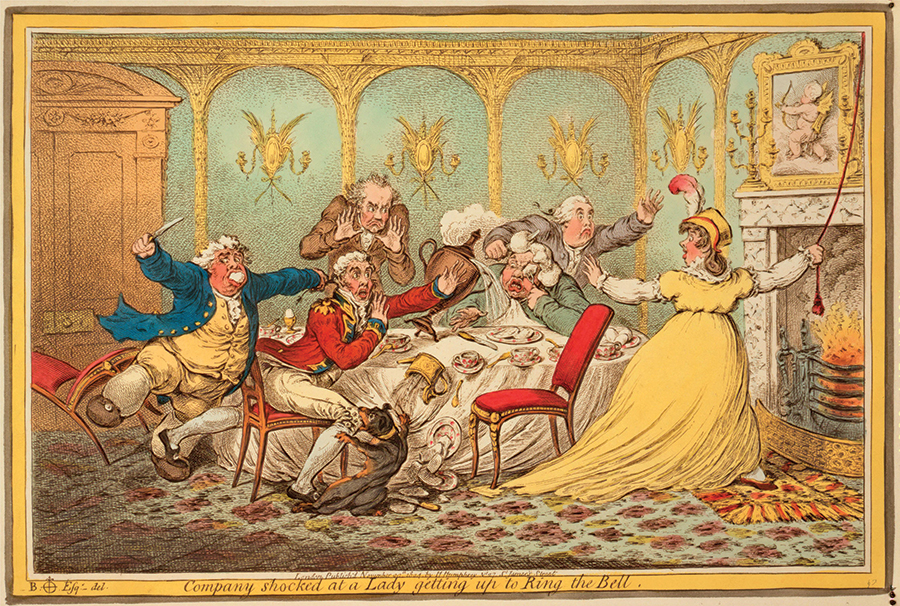
As she looked down at Jack an idea began to take shape. Yes, that was it. She would arrange a tea party at home and invite them all, but in such a way that they would think that they were the only one being invited. For good measure she decided on April 1st as the date. She’d often had fun on April Fool’s Day, so why not? She didn’t know what would happen, but she felt something would come of it, and if nothing else, it would be very amusing.

She had the invitations delivered the very next day.

Lady Fiona Holland

invites you to take tea with her

on April 1st. at four o’clock in the afternoon

to discus matters of mutual interest.

R.S.V.P.

The invitations might as well have been fireworks for the explosive effect they had on each of the recipients. Each knew that this was it. What else could there be to discuss but their betrothal? Five affirmative replies flew back.

Gilbert Blunt started thinking about an expensive ring, “diamonds and rubies I think,” he mused. Major Ponsonby rehearsed a speech as though he were about to address Parliament, or was it his troops? Alderman Spencer Blanchard envisioned a grand reception in Guildhall with the Lord Mayor in attendance, and Neville Carlisle started to get excited about the coming joys of the wedding night.

Only Andrew Duncannon had doubts. It certainly sounded like there was a real chance for him, but after a few minutes of quiet reflection he had convinced himself that Fiona needed more advice on her late husband’s affairs. Yes, that was it, how silly of him to get ahead of himself like that.

Over the next two weeks, Lady Fiona turned down all invitations and left the suitors to their own devices. Of course, they were out and about and when occasionally they saw each other they seemed to be overflowing with bonhomie as they put on their best “I know something you don’t know” smiles, or passed each other with a cheery wave as much as to say, “You don’t know it yet, dear boy, but you have lost the prize.” Andrew Duncannon was very perplexed and was once on the point of asking Blunt why everyone seemed so friendly all of a sudden, but he decided to keep his thoughts to himself. Perhaps Fiona could shed light on it on April 1st.

The day finally came around and the five suitors converged on Lady Fiona’s London residence — three on foot, Carlisle and Blunt in carriages, and all dressed in their very best town clothes and wigs impeccably powdered, except for Duncannon who was damned if he was going to pay the guinea tax imposed lately on powder**.

But what was this? One by one they saw their competitors making for Fiona’s residence. They tried to remember the wording of the invitation. Perhaps they had misunderstood. No, they couldn’t have — it was very plain. Had they been tricked? No, Fiona wouldn’t do such a thing. Nothing for it but to go through with it. Meanwhile Duncannon was wondering about the complete and very sudden disappearance of the bonhomie so recently displayed. No one spoke a word. They just glowered at each other, feeling confused, uncomfortable and very put out.

Carlisle was nearest the door and rang the bell. The door was opened by the butler and there in the foyer stood Lady Fiona, dressed in the latest Paris fashion, a long flowing dress of saffron-colored silk with matching hat, complete with feather. She smiled broadly at each one as she invited them in. Carlisle, who was determined to be the first to kiss the hand of the hostess, advanced, but so did Blunt at exactly the same time. The result was that the two of them got stuck in the door which only served to emphasize their considerable girths. After a swallowed curse Blunt gave way. The afternoon was not getting off to a good start for Buckinghamshire or Oxford.

The rest followed into the foyer and Fiona led the way into her most elegantly appointed dining room. As a husband, Richard had been rather dull, but he had money and he allowed Fiona to spend it. In front of them was a table covered in beautiful china and platters of various tea-time foods, surrounded by six chairs. A painting over the fireplace of Cupid, complete with bow and arrows caught Ponsonby’s eye and set his heart racing. 

Now, where were they to sit? There were no place cards.

All of them of course wanted to sit next to Fiona but while they were making their moves, it was Duncannon who stepped forward to hold a seat out for her which made the others seethe — an opportunity missed! Carlisle and Ponsonby immediately grabbed the seats on either side of her. Duncannon moved her chair in, and as the others sat down, he found the only seat left was behind a giant urn.

Lady Fiona bade them welcome, thanked them for coming and invited them to help themselves to tea; but it was not only muffins but also the atmosphere that could be cut with a knife. No one was making conversation. They looked a bit like children at their first birthday party. Suddenly it seemed, all these gentlemen didn’t know how to behave. Fiona, ever the hostess and not insensitive to the situation, broke the ice saying how mild the weather had been and where were those April showers? Upon which Carlisle began a long treatise on trends in temperatures he had been studying for the last 20 years and “don’t you know each year we are experiencing lower average temperatures,” at which Blunt interrupted saying that’s what must be affecting the yield from his thousands of acres of wheat, while Ponsonby interjected that farmers were asking far too much of the government in this time of war, as he was remarking to the Prime Minister only the other day, when Blanchard cut in with a statement that essential food costs were out of control in London and what he wanted to know was, what was Pitt proposing to do about that?

At this point, manners completely went out of the window with everyone barking over and at each other as though Fiona wasn’t even present. She filled her lungs and bellowed “WOULD ANYONE CARE FOR SOME RUM AND WALNUT CAKE?”

The room instantly fell silent except for Carlisle, who was still droning on about his temperature theories. But the others piped up with “Oh, yes, absolutely,” “indeed good lady,” “if you please,” “just a small piece perhaps,” “delicious tea,” they chorused, suddenly embarrassed by their show of ill-manners.

At that Fiona got up out of her chair and made towards the bellpull to summon the cake.

This was a signal for each of them to raise themselves out of their chairs and hurry to render her a service — no lady should be pulling bellpulls when there were five gentlemen present. As each did so, he realized that he was not the only one with the same thought and the matter then took on the form of a race to the bell — with disastrous results. Blunt fell, having tripped over Ponsonby’s foot, Spencer shot up and somehow impaled Blunt’s wig on his knife causing Carlisle to poke a muffin into his eye while Ponsonby, who had trodden on Jack’s paw, let out an ear-splitting howl as the dog sunk his teeth into the major’s knee. Meanwhile china and cutlery, muffins and eggs, were scattering in all directions, the teapot went flying and the urn was overturned. The gallant suitors then realized that they were, in any case, too late to assist Fiona, as one last china cup fell to the floor with an expensive crash.

Quiet descended on the room, broken in turn by a whimper from Ponsonby, a curse from Carlisle, an apology from Blanchard and an unfortunate noise from Blunt. Duncannon meanwhile picked up the urn and put its lid back on.

The cook and a maid, hearing the cacophony, came running in, the cook carrying the rather delicious-looking rum and walnut cake which she set on the table, while the maid started to clear up the debris. At this point, the gentlemen realized the best thing for them to do was retreat and enjoin the battle for Fiona’s hand on another occasion. They moved towards the door muttering “so sorry, have to go, Fiona,” “appointment in the city,” “vote in the House,” “need attention for my eye,” “my knee” and so on. Fiona, suppressing a smile, thanked them for coming, tried to apologize to Ponsonby for Jack’s behavior, and said goodbye as she watched their backs disappear into the foyer. Only Andrew Duncannon stayed to help clear up the devastation.

When they had brought the room to some sort of order, Fiona offered him a piece of the rum and walnut cake. “At least that didn’t perish in the fray,” she said. “Did you ever see such a thing, Andrew — will they ever forgive me? Will you ever forgive me? But it was funny, don’t you think? What will they say? I know I got you all here under false pretences, but I had no idea Armageddon would ensue, even though it is April Fool’s Day! Thank you so much for staying and clearing up, you are a dear and you seem to be the only one who came away unscathed.”

“It’s the least I could do Fiona, and if I may say so, it was the most entertaining thing I’ve seen since I witnessed a dancing bear, wearing a skirt, walking down Regent Street juggling coconuts.”

Fiona looked at him quizzically for a second, then realized what he had said, and broke out into peals of laughter, finally releasing the emotions bottled up over the last few months, not to mention the teatime debacle. “Andrew, you say the funniest things. You’re the only one who can make me laugh and I do love to laugh. I’m beginning to think you could steal my heart.”

“Really, Fiona, do you mean it? I’d walk down Regent Street wearing a skirt and juggling coconuts if you really did.”

“That won’t be necessary Andrew — just come here and give me a kiss.”  PS

Historical Notes:

The print by James Gillray that inspired the story “Company shocked at a lady getting up to Ring the Bell” was published on November 20th, 1804.

* In the 18th century in England, convention accepted that ladies who had given their husbands a son and heir could take a cicisbeo (Italian for platonic lover) who provided sexual services and escorted them to events their husbands would not be attending, as long as the relationship did not interfere with their marriage.

** The Prime Minister of the day, William Pitt, imposed many taxes during this period to help pay for the expensive war against Napoleon. The names of the gentry who paid the guinea tax on powder for wigs were listed on a notice in their local church and became known as ‘guinea pigs’— the origin of the phrase we use to this day.

Bears were first introduced to Europe in the Middle Ages and proved to be a popular sideshow entertainment in countries where bears were not indigenous. There is no evidence of one being seen in Regent Street juggling coconuts, but we can dream.

Tony Rothwell moved to Pinehurst in 2017. He spent 50 years in the hotel business but in retirement collects caricatures, writes short stories and sings in the Moore County Choral Society.

In the Spirit

Respect

Staying humble and giving credit where it’s due

By Tony Cross

I reminisce from time to time about my days — or nights — as a bar manager and the thrill I got creating a new cocktail menu. I constantly challenged myself to make each menu better than the last. To some, that might mean simply mixing a better tasting cocktail.

Making great-tasting drinks was definitely an end goal, but there was more to it than that. Our ABC system limited what I could play with, spirit- and liqueur-wise. What may have been available in the spring could be unavailable in the fall, and vice-versa. At the time, I usually had to order by the case. Like Tony Shaloub says on Monk, it was a blessing and a curse.

The first time I placed an order for a case of Rittenhouse Rye it was a blessing — our establishment was the first in Moore County to get this great-priced rye whiskey. We crushed sales and, within the month, I needed more. After ordering a truckload of cases, our local ABC decided Rittenhouse Rye deserved a place on their shelves.

On the other hand, there was a case of the Luxardo Maraschino liqueur that sat on our shelf so long it could have grown a beard. When I ordered it I was still learning the ropes and failed to realize that a little bit went a long way — it was going to take a while to go through 12 bottles. Then it dawned on me to take another bartender’s cocktail recipe with said ingredient (that I now possessed by the boatload) and put that drink on my menu. It would showcase two things: the spirits and liqueurs that I was still learning about (I had nobody to bounce ideas off, so you can imagine how long that would take.) while incorporating them into a cocktail that was already a winner.

It also highlighted the bartenders and the bars that I read and obsessed about daily. I noted on the menu next to the ingredients who created it, when and where they worked. Not only did this pay homage to the bartender, but it was always a great conversation piece for my guests. Here are a few of the cocktails I put on my menu, and the bartenders who created them.

Cubed Old Fashioned

Jamie Boudreau, Canon, Seattle, 2011

Jamie Boudreau was one of a few people I watched on a YouTube channel named “Small Screen Network.” His video clips were short and always to the point. Everything from what type of ice you should use and why, to how to shake and stir. In addition to technique, Boudreau had videos on how to make cocktails: barrel-aging, smoking cocktails, carbonating and, one of his signature drinks, the Cubed Old Fashioned. He used three different types of spirits and three different types of bitters. In addition to this spin on the classic old fashioned cocktail, Boudreau also created what he calls an old fashioned syrup, using whiskey, Angostura bitters and demerara sugar. He opened up Canon: Whiskey and Bitters Emporium in the same year that this cocktail was created. When I put it on the menu, it was the first time I worked with a cocktail that was a spin on the classic old fashioned and it was the first time I used Maker’s Mark 46. Boudreau’s original recipe called for equal parts Maker’s 46, Mount Gay Extra Old Rum, and Rémy Martin. It gave me the opportunity to share this new spirit with my guests.

Cubed Old Fashioned

3/4 ounce cognac

3/4 ounce rye

3/4 ounce aged rum

1/4 ounce old fashioned syrup

1 dash each aromatic, orange and chocolate bitters

Orange zest

Cherry

Combine all liquid ingredients in a chilled mixing glass filled with ice. Stir until proper dilution is achieved, and strain into a rocks glass over ice. Garnish with orange zest and a cherry.

Naked and Famous

Joaquín Simó, Death & Co. NYC, 2011

When Death & Co. released their Modern Classic Cocktails in 2014, I couldn’t keep my nose out of it. Loaded with much more than cocktail recipes, this was the best bartender’s manual available — at least I thought so. As for this particular cocktail, the folks over at Death & Co. describe it as “the bastard child born out of an illicit Oaxacan love affair between the classic Last Word and the Paper Plane, a drink Sam Ross created at the West Village bar Little Branch.” I was sold before making it since I love the Last Word.

My affinity for green chartreuse cocktails aside, this drink contains mezcal and yellow chartreuse. I was in possession of a rather large order of Del Maguey Vida mezcal prior to getting my hands on this book and I had also just received three bottles of yellow chartreuse. The Vida mezcal was already an ingredient in one of our margaritas, but I wanted to try something else and this was the drink to do it. I wasn’t thrilled the first time tasting yellow chartreuse and was having a hard time incorporating this liqueur into a cocktail. Naked and Famous was fantastic on the first sip. The smokiness from the mezcal is balanced with the soft bitterness of Aperol and the sweeter, less herbaceous taste of the chartreuse. The lime juice adds the acidity that cuts right through the three other ingredients.

This was the first time I’d done a riff on the Last Word, and it opened the door in my mind on how and why this works. Most of my staff loved the drink, and it went on our menu immediately. Most folks ordered it because of the name. I guarantee 90 percent of our clientele had no clue what yellow chartreuse was, and if they heard of mezcal, it was “tequila with a worm in the bottle, right?”

Naked and Famous

3/4 ounce Del Maguey Chichicapa mezcal (I used Del Maguey Vida at the time.)

3/4 ounce yellow chartreuse

3/4 ounce Aperol

3/4 ounce lime juice

Combine all ingredients into a cocktail shaker with ice and shake hard. Strain into a chilled cocktail coupe. No garnish needed.  PS

Tony Cross is a bartender (well, ex-bartender) who runs cocktail catering company Reverie Cocktails in Southern Pines.

All in the Family

Pinehurst’s Fownes Family left an enduring legacy in golf

By Bill Case

When Bill Fownes faced George Dunlap Jr. on Dec. 31, 1929, in the final match of Pinehurst’s Mid-Winter Tournament, he was a decade past his golfing prime. He had won the 1910 U.S. Amateur Championship and remained a top-ranked golfer for another dozen years — good enough to play on two Walker Cup teams, captaining the U.S. side in the 1922 matches. He won numerous championships in his home state of Pennsylvania, including four state amateur titles. By contrast, the 20-year-old Dunlap, already a four-time Mid-Winter champion, was emerging as one of America’s best amateurs. The Princeton junior would win the 1933 U.S. Amateur, and seven United North and South Amateur titles.

Time had contributed to Bill Fownes’ golfing decline — he was by then 52 — and health issues were dogging him. In 1926, he suffered a heart attack at his Pinehurst winter home after a round. It is unlikely he would have survived but for the quick actions of his caddie, who had been waiting outside to be paid. When Fownes failed to reappear, the caddie rushed inside and found him unconscious next to the doorway.

Notwithstanding the difference in their ages, Fownes and Dunlap shared much in common. Both lived in Pinehurst during the winter season and competed at amateur golf’s highest level. Fownes’ metallurgical engineering degree from Massachusetts Institute of Technology equated with Dunlap’s Ivy League education. Both were sons of amazingly successful and wealthy fathers. George’s father founded the renowned book publishing company Grosset and Dunlap, while Bill’s dad, Pittsburgher Henry C. (H.C.) Fownes, made his millions acquiring and operating an array of enterprises associated with iron, steelmaking, and oil. Furthermore, Bill, George Jr. and their fathers were all active members of The Tin Whistles, Pinehurst’s pre-eminent male golf society.

But the Fowneses had accomplished something that no other family could match. It was H.C. who in 1903 founded Pittsburgh’s Oakmont Country Club, designed its epic course, and fashioned it into the most demanding test in championship golf. Bill then took charge of pushing the penal nature of the course to the max. For decades, he would roam Oakmont’s grounds, plotting the placement of additional harrowing bunkers. The younger Fownes believed that “the charm of the game lies in its difficulties.” He explained his course design philosophy with the pithy aphorism, “A shot poorly played should be a shot irrevocably lost.”

Few of the several hundred spectators gathered at the first tee of Course No. 2 to watch the Mid-Winter’s championship match gave Fownes much of a chance against young Dunlap. The older man began the match unsteadily, losing the first two holes. He righted himself and stood only 1 down as the match reached the eighth green, where Dunlap’s ball rested 4 feet from the pin while Fownes’ checked up nearer the hole. According to the Pinehurst Outlook, “the Princeton golfer slightly hooked his putt and knocked Fownes’ ball into the hole.” This astounding break brought Fownes even with the nonplussed Dunlap.

Thereafter, the battle was nip-and-tuck with neither player gaining better than a 1-up advantage. The match stood all square on the 18th. Dunlap misplayed his approach, and suddenly Fownes faced a 5-foot putt to win the match. To convert it, Fownes’ ball needed to barely miss Dunlap’s, which was partially blocking the line. He nursed the tricky slider past the stymie and into the cup for the upset victory. The Outlook reported it as “one of the most stirring finishes ever seen in a Pinehurst tournament.”

The victory was Fownes’ last hurrah in competitive golf. Within months, he suffered a second debilitating heart attack. More seizures followed and he would lie bedridden for six weeks. Though Fownes would survive the scare, he curtailed his business activities and ceased playing golf altogether.
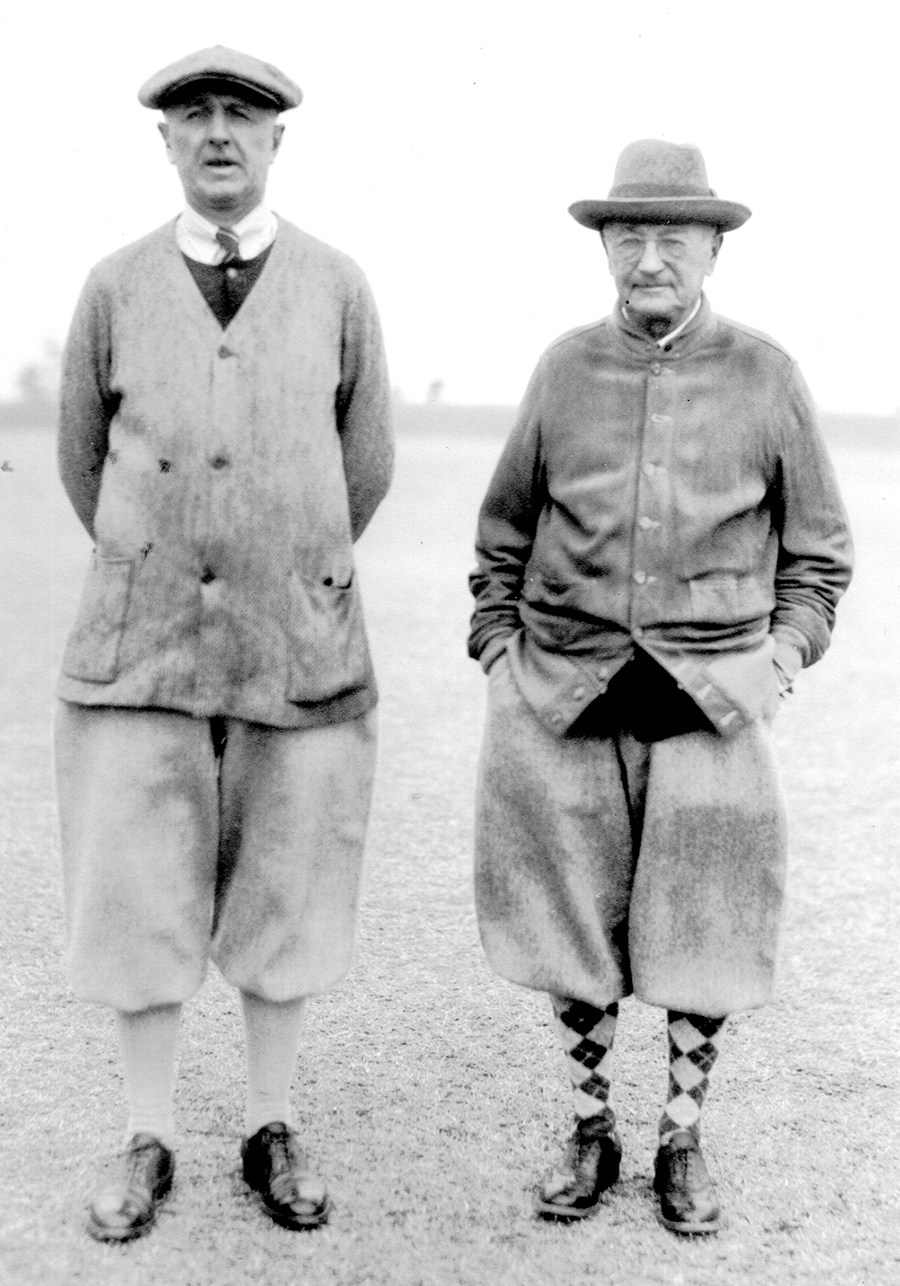
W.C. Fownes’ fragile health in 1930 contrasted markedly from that of his wiry and agile father, H.C., who at 74 still golfed daily and, according to the younger Fownes, “seemed to have almost unlimited stamina and endurance.” H.C. brought this same gusto to driving an automobile. He loved fast cars and motored his flashy Duesenberg from Pittsburgh to Pinehurst with pedal to the metal over the rutted dirt roads of the era.

This zest extended to his social life. A round of golf in Pinehurst was incomplete until he and his Tin Whistles playing partners sipped drinks at the home H.C. built on East Village Green Road in 1914. During the season, eight to 10 visitors usually lodged in its spacious quarters. A widower following his wife, Mary’s, death in 1906, the convivial entrepreneur was usually the last man to depart a party or a card game. H.C. favored bridge and poker, pastimes likewise enjoyed by Bill.

Father and son shared much more. According to Bill, they “went through the bicycling craze together,” and regularly played tennis. “So that from early boyhood . . . and because of (our) close association, I was frequently classed as his brother instead of his son; much to my father’s amusement and gratification.” The son’s premature baldness no doubt contributed to this misapprehension.

The men were inseparable business associates. Two years after his 1898 graduation from MIT, Bill joined his father, and extended family, in operation of their various enterprises. These included an iron casting foundry in Pittsburgh, a modern blast furnace in Midland, Pennsylvania, coal reserves and coke oven near Brownsville, Pennsylvania, and the Standard Seamless Tube Company. In 1929, the Fowneses diversified this portfolio, founding the Shamrock Oil & Gas Company. Bill served as his father’s alter ego in managing these undertakings though “no major decisions were made without his (H.C.’s) guidance and advice which in the last analysis was the determining factor.”

Most of all, the Fowneses, père and fils, shared a passionate love of golf. Though not in the same class as his son, H.C. became an exceptional player despite starting the game in 1898 at the age of 42. By 1901, he was competing in the U.S. Amateur, even winning three matches in the 1905 championship before his elimination. He captured The Tin Whistles club championship of 1906.

H.C.’s greatest playing achievement was winning Pinehurst’s 1918 Spring Tournament at age 62. He defeated son C.B. “Chick” Fownes (Bill’s brother) in the final match. Chick was a fine player despite suffering from palsy. “He is the greatest putter in the world,” marveled Walter J. Travis, America’s best player in the early 19th century, and noted for his own putting chops. The Outlook observed that the Spring Tournament’s all-Fownes final meant that, “not one man (of the 217 in the field) could beat a Fownes. Not one.”

While H.C., W.C., and C.B. may have cornered the initials market, they weren’t the only distinguished Fownes golfers of the period. H.C.’s daughter Mary took home the championship trophy at the 1909 Women’s United North and South Championship, while his niece Sarah finished runner-up in 1919 and 1922.

The family’s many fine golfers might never have chanced to take up the game absent a freak injury H.C. sustained in 1896 that was followed by a botched medical diagnosis. Then 39, H.C. sought to make a patch for a bicycle tire by heating it with a hot wire while neglecting to wear any eye protection. After completing the repair, he became aware of a black spot interfering with his vision. His physician grimly advised it was the result of arteriosclerosis and that H.C. could expect to live at best another two to three years. “This information, of course, was very depressing,” said Bill, displaying something of a gift for understatement. As a result, H.C. ceased his immersion in business ventures and “started traveling about the country seeking relaxation.” One recreational outlet was golf, which he took up at the suggestion of friend and fellow steel titan Andrew Carnegie.

H.C. eventually learned from a specialist that his eye’s blind spot was not, in fact, a death sentence. It had come from the subjection of his eye to the blinding light and heat caused by the tire repair. Given a new lease on life, he returned to work, but now balanced it with time for leisure — mostly golf. He began playing at Pittsburgh Field Club, a small athletic facility located in what is now Fox Chapel. Dissatisfied with the club’s rudimentary course, H.C. helped start Highland Country Club, which featured a nine-hole, 2000-yard layout. It was the venue where H.C. introduced many family members to the game. In fact, four Fowneses playing out of Highland (himself, his two sons, and brother William Clark Fownes, for whom W.C., Jr. was named) won the 1902 Pittsburgh district team championship.
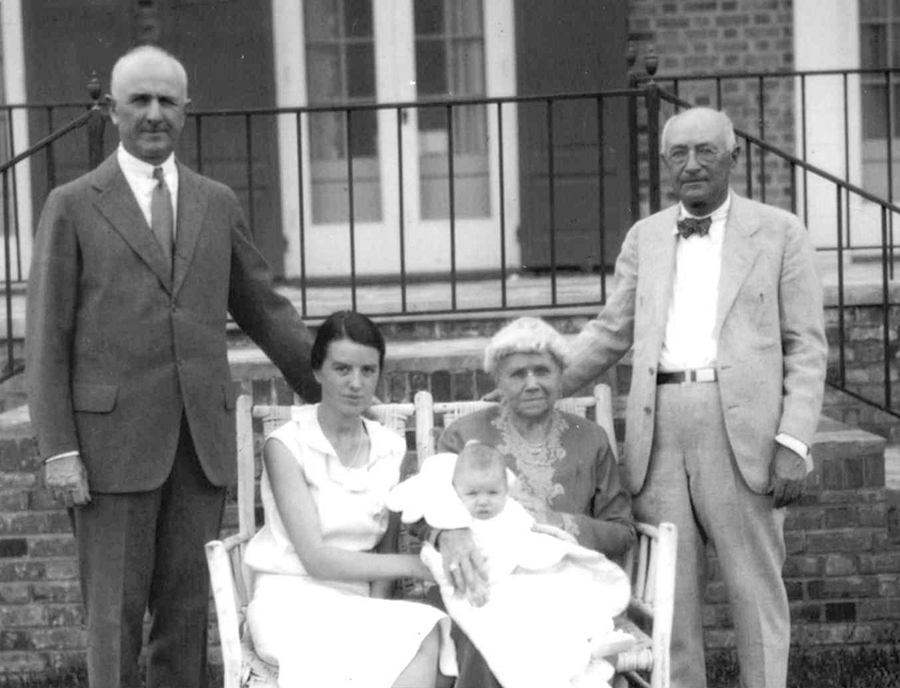
With the game’s popularity on the rise, H.C. decided Pittsburgh deserved a course of challenge and stature. When he learned that farmland above the Allegheny River in Oakmont might provide a suitable location, he rounded up shareholders to buy the property and build a new course. To retain control, H.C. purchased the majority of the shares himself.

Who should design this new behemoth? The self-confident H.C. just happened to have someone in mind — himself. Fownes fashioned a virtually treeless, bunker-strewn course of architectural brilliance containing unique features like the notorious Church Pews bunker between the third and fourth fairways. The humps, moguls and terrorizing speed of Oakmont’s greens would prove humbling to the best putters. In an era when the longest courses topped out at 6,000 yards, Oakmont’s distance at its 1904 opening stretched to a hitherto unimaginable 6,600 yards, with a par of 80.

H.C. also assumed the role of Oakmont Country Club’s president. He adamantly rejected any favoritism toward wealthier, more prominent members. Bill wrote that his father “hated all pretense or show,” and was insistent “that every member in the club was entitled to equal rights.” The club welcomed female members, a rarity during that period. H.C. also took pains to recruit excellent golfers — three members, including Bill, would win the U.S. Amateur.

Bill’s victory in the 1910 championship at the Country Club in Brookline, Massachusetts, featured a sensational semifinal match with legendary Chick Evans. Down two holes with three to play, all seemed lost for 33-year-old Fownes after he bunkered his tee shot on the par-3 16th. But when Bill holed a sizable putt for par and Evans three-putted, the deficit was cut in half. Fownes’ birdie on 17 squared the match, and after the frustrated Evans three-putted the final hole, the resilient Fownes escaped with a win. His 4 and 3 defeat of Warren Wood in the final proved far easier.

Throughout the first quarter of the 20th century, W.C. Fownes remained a mainstay in the U.S. Amateur. A four-time semifinalist, he qualified for the event 19 times in 25 years. His last notable performance came in 1919, held fittingly at Oakmont. He reached the semis before bowing to Bobby Jones.

The honing of his formidable skill had been enhanced in tournaments and exhibitions during Pinehurst winters. The Fownes family’s annual migrations to Pinehurst began around the time that H.C. started the Oakmont project. At first, only H.C. and golfing sons Bill and Chick made the excursion, bunking at the Carolina or the Holly. The Tin Whistles provided an ideal golf and social outlet for the men. Bill and his dad would both become presidents of the organization with H.C. serving in that capacity three times.

In 1908, Mary Fownes, age 24, joined her father and brothers at Pinehurst for the winter season. She often brought along her golfing cohort from Oakmont, Louise Elkins, who, like Mary, would eventually become a North and South champion. A popular social butterfly, Mary enjoyed bridge and hosted card parties for her Pinehurst friends. She also demonstrated formidable dancing acumen with an Irish jig that knew no equal.

From 1909 to 1913, H.C. leased Lenox Cottage on Cherokee Road. Formerly a rooming house, the cottage was large enough to house all the family’s golfers. Bill’s wife, Sara, and the couple’s two children, Louise and Henry (Heinie) C. Fownes II (named after his grandfather), came too. W.C. and Heinie were frequent winners in father-son tournaments. H.C.’s spry mother stayed in Arbutus Cottage next door.

Thus, the Fowneses became integral members of Pinehurst’s wealthy “cottage colony.” The cottagers were a closely knit bunch who hobnobbed with one another throughout the season, even holding their own golf tournament. The Fowneses stood atop the cottage colony’s pecking order following the 1914 completion of Fownes Cottage on Village Green, arguably the most impressive home in the village.

In those days, Pinehurst was essentially a company town run by the Tufts family. Everyone in Pinehurst, including the upper crust denizens of the cottage colony, depended on the Tuftses for staples of daily living. The Tuftses owned and operated the utility services, the local lumber company, laundry, service station and department store. To defray operating costs, they instituted a quasi-governmental taxing system. To avoid outcries of taxation without representation, Pinehurst kingpin Leonard Tufts established an unofficial village council in 1923. In recognition of H.C.’s business acumen, Leonard appointed the steel baron to the new council. H.C. also led other Sandhills’ organizations, serving as president of the Pinehurst Country Club’s Board of Governors and as a member of the Pinehurst Bank’s board of directors. Donald Ross referred to H.C. as “the best citizen in Pinehurst.”

H.C.’s most significant business contribution to Pinehurst, however, occurred during the Great Depression. The unprecedented economic downturn plunged the Tufts family’s holdings into receivership. It appeared doubtful that the family would retain their sizable Pinehurst assets after a creditor bank demanded payment of a $100,000 note. A group of cottagers anted up the funds to purchase the note, thereby keeping the Tuftses afloat. H.C. contributed the largest share — $30,000. This was no small gesture given that H.C.’s own investment in Shamrock Oil was tanking at the time.
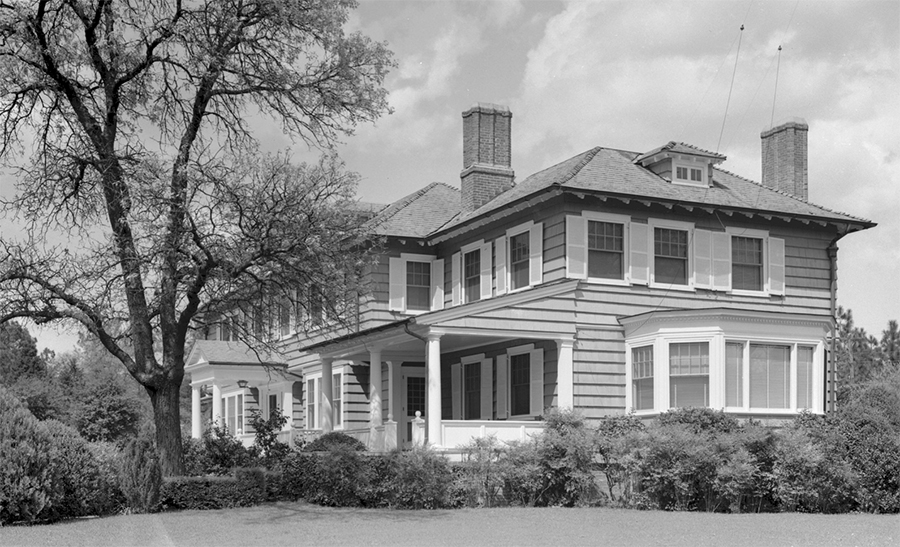
While H.C. immersed himself in Pinehurst’s affairs, W.C. was gaining wide respect in golf for reasons unrelated to his playing ability. Collaborating with several noted golf architects, Bill assisted in finalizing the layout of incomparable Pine Valley after the course’s original designer died in 1918. Gravitating toward a role as golf’s senior statesman, Bill captained American teams in matches against teams from Canada in 1919 and ’20. Then, in 1921, he organized a team of top American amateurs that challenged and beat a British aggregate in an informal competition prior to the British Amateur at Royal Liverpool.

This match served as precursor and catalyst to the first Walker Cup held in 1921 at the National Golf Links on Long Island. The USGA, having taken note of Bill Fownes’ ability to run a team and inspire its players, appointed him playing captain. The U.S. won the cup 8 to 4 with Bill splitting his two matches. He would make the Walker Cup team again in 1924.

W.C. also became active in golf administration, serving on the “Implements and Ball” committee of the USGA during a period in which the advent of steel shafted clubs was about to render hickory shafts as obsolete as buggy whips. Many feared the newfangled clubs would ruin the game. In 1923, Bill’s committee, after exhaustive testing, recommended that steel shafts be approved. This finding was met with resistance by the Royal & Ancient Golf Club, the regulator of golf outside the United States. Six years would pass before the R&A finally permitted steel.

W.C.’s committee worried that the golf ball was traveling too far — a view still common today. To address this concern, the committee recommended that the ball’s minimum diameter be increased from 1.62 inches to 1.68 inches. The USGA adopted the proposal, but the R&A again balked. While the larger “American” ball was made mandatory for the Open Championship beginning in 1974, the governing bodies didn’t officially reach agreement on ball size until 1990.

In 1926, the USGA elected Bill president of the association — the first U.S. Amateur champion so chosen. W.C. was serving in that role when he sailed with the U.S. team to Great Britain for the 1926 U.S. Walker Cup matches at St. Andrews. Wife Sara and the couple’s comely daughter Louise, then 22, accompanied him aboard the ship Aquitania.

During the ocean crossing, Louise got reacquainted with tall, handsome Washingtonian Roland MacKenzie, whom she had met at Oakmont during the ’25 U.S. Amateur. The 19-year-old Brown University phenom had surprised everyone at that championship by winning medalist honors in the qualifier. Roland’s performance at St. Andrews in the ’26 Walker Cup was likewise impressive. The young bomber split his two matches and his thunderous tee shots amazed all.

During their time together aboard ship and in Scotland, Louise and Roland shared a mutual attraction. But the prospect of romance drifted away after the ship reached the New York dock. Instead, Louise married Halbert Blue, whose family owned the Aberdeen & Rockfish Railroad in the Sandhills. The couple would have two children, Bill and Dick. Meanwhile, MacKenzie continued playing amateur golf, making the semifinals of the 1927 U.S. Amateur. Selected to the Walker Cup teams of 1928 and ’30, MacKenzie excelled, winning all four of his matches. He also married but the union did not last.

During the 1930 Walker Cup in England, MacKenzie encountered dashing Hollywood movie star Douglas Fairbanks. At the actor’s invitation, Roland moved to California and caught on as an assistant director of several films. He and Fairbanks “usually played golf every morning before going to the studio, and never wanted for company,” remembered MacKenzie. “Among those who played a lot with us were Bing Crosby and Howard Hughes.”

Tiring of Tinseltown, MacKenzie moved back to Washington in 1932. After a stint in his family’s Dupont Laundry business, he turned pro, and in 1934 became head professional at Washington’s prestigious Congressional Country Club. He entered the 1935 U.S. Open at Oakmont and found himself the early leader with a 72 in the first round, though he would ultimately finish tied for 41st. The course’s notorious furrowed bunkers caused scores to skyrocket in that championship. Pittsburgh local pro Sam Parks wound up winning with a total of 299, the second highest winning score in the Open going back 100 years from today — the highest in that period is Tommy Armour’s 301 in 1927, recorded, naturally, at Oakmont.

Louise, whose marriage to Halbert Blue had gone hopelessly awry, reconnected with Roland at the ’35 Open championship and they started seeing each other. They would marry four years later. H.C. served as the tournament chairman for the ’35 Open, his final contribution to the game as he died three months later. A whirling dervish to the end, H.C. made a 1,600-mile automobile trip to Amarillo, Texas, to check on the status of Shamrock Oil not long before his demise. W.C. Fownes succeeded his father as Oakmont’s president, successfully guiding the club through the tail end of the Depression and the chaotic years of World War II. He ultimately resigned in 1946.
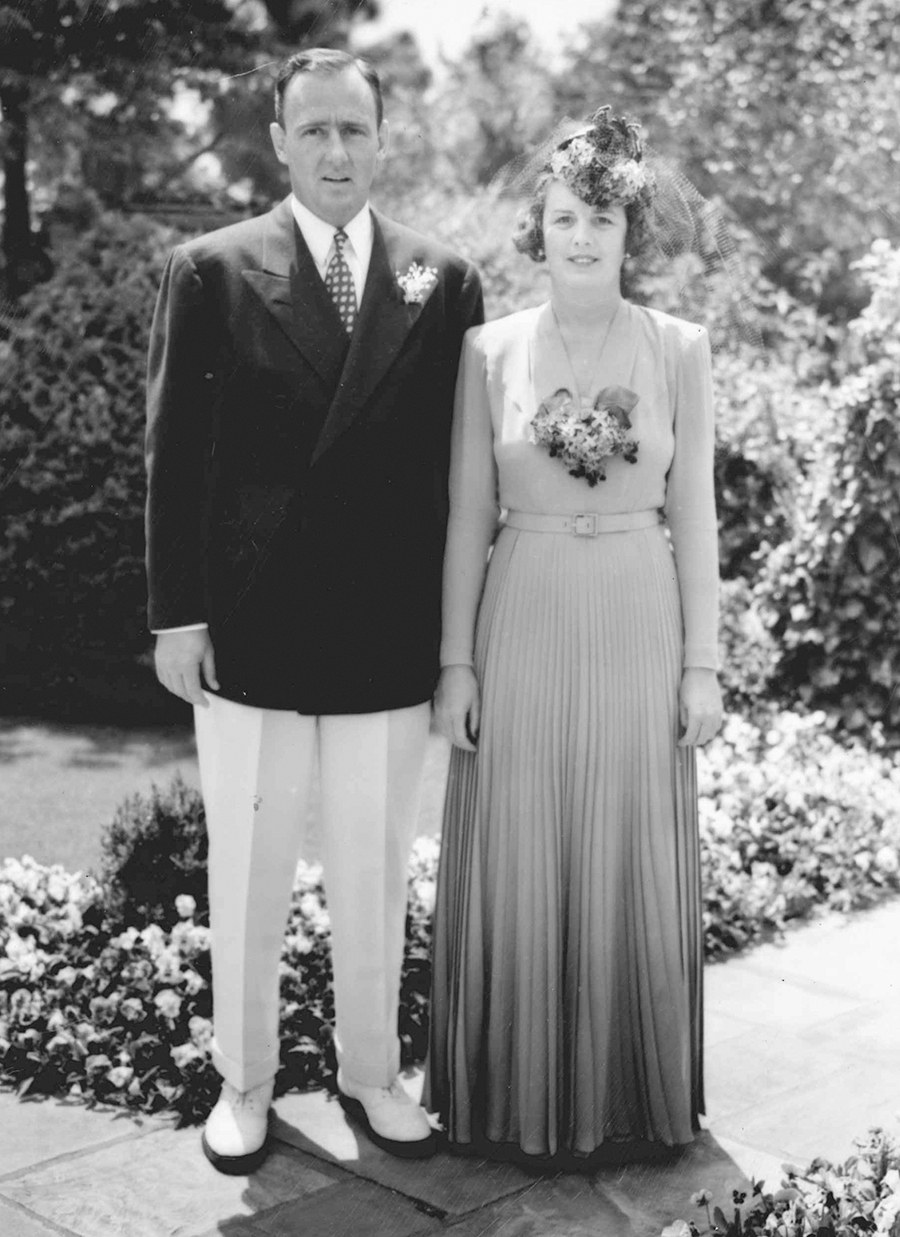
In his later years, W.C. tended to his gentleman farm adjacent to a home he acquired in 1928 on Crest Road in Knollwood, growing dazzling sunflowers. He played in his card club, the “Wolves Den,” collected antiques, served on corporate boards, and traveled. On one European vacation, he and wife Sara encountered a London cab driver who shared Bill’s interest in antiques. The impressed Fowneses spontaneously invited the delighted hack to visit in the Sandhills, all expenses paid.

Charles Goren, perhaps the mid-century’s foremost bridge authority, found himself subjected to a less welcome instance of Sara’s spontaneity. In 1949, the Fowneses invited Goren to stay with them. One afternoon, Charles sat in with Sara’s duplicate bridge group and won handily. When Sara tendered Goren his winnings based on the group’s standard 1/20th cent a point, he complained, stating he never played for less than a penny a point. Sara responded by tendering payment as demanded, but also summoning a cab and telling a flummoxed Goren to pack his bags.
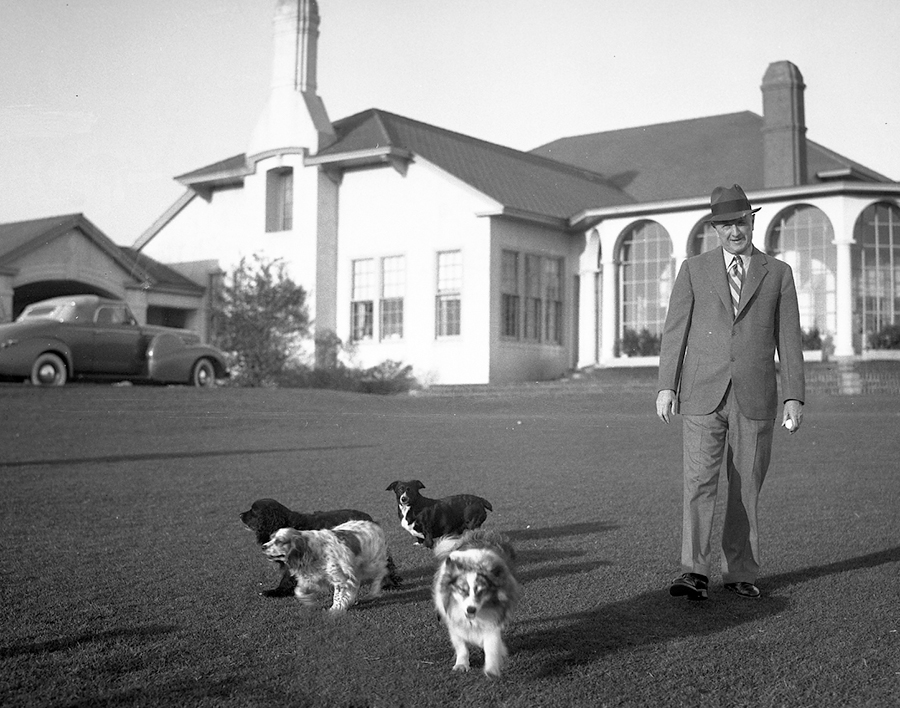
W.C.’s son Heinie, who had played a key role in restoring Shamrock Oil to financial health, passed away from heart trouble in 1948. Two years later, Bill himself succumbed to a heart attack at age 72. The USGA paid W.C. this tribute: “As a friend and sportsman, he bequeathed to his fellows a spirit which will always live.” Wife Sara passed away in 1951. Chick died in Pinehurst in 1954.

The passing of Bill’s generation did not terminate his family’s association with Pinehurst or amateur golf. Bill’s son-in-law Roland MacKenzie found that the pro life was not his cup of tea. He regained his amateur status after he and Louise relocated to the Baltimore area. In 1948, MacKenzie captured the Middle Atlantic Amateur Championship, a tournament he had won 23 years earlier. Roland and Louise maintained the family’s connections with the Sandhills, purchasing a second home in the Old Town section of Pinehurst.

While in Baltimore, Roland had segued into land investment and farming, and he followed the same path in Moore County. In 1955, he acquired a large parcel several miles west of Pinehurst. He transformed the land into a peach farm and vineyard. In the late 1960s, MacKenzie and other associates decided to build golf courses on the property. Foxfire Resort and Country Club’s two courses, opened in 1968, were the happy result. Roland passed away in 1988, followed by Louise’s death in 1996.

The MacKenzie’s two children, Clark and Margot, became superlative golfers. Clark MacKenzie won the 1966 Maryland Amateur Championship and later captured several international seniors’ titles. Margot MacKenzie Rawlings still resides at her parents’ Pinehurst home. She continues to play excellent golf as a member of Pinehurst Country Club’s Silver Foils. Margot’s stellar playing career includes victories in the stroke play championship of the Women’s Golf Championship of Baltimore, and championships of numerous clubs including Country Club of North Carolina.

While these playing exploits through the generations are impressive, the Fownes family’s golfing legacy will always be magnificent Oakmont. The club has hosted a record nine U.S. Opens, two Women’s U.S. Opens, three PGA Championships, and five U.S Amateur Championships. The Amateur will return to Oakmont for the sixth time this year. While the course the Fowneses built in the hills outside Pittsburgh may be their ultimate mark in golf, the family’s footprints are a veritable stampede in Pinehurst.  PS

Pinehurst resident Bill Case is PineStraw’s history man. He can be reached at Bill.Case@thompsonhine.com.

The Naturalist

Requiem for a Dolphin

Pondering extinction in a river far away

Story and Photographs by Todd Pusser

On February 18, 1914, Charles Hoy, the teenage son of an American missionary in the Hunan Province of China, went duck hunting on Dongting Lake, an offshoot to that country’s longest river, the Yangtze. Instead of procuring waterfowl that cold winter day, young Hoy shot and killed an unusual freshwater dolphin. A naturalist at heart, Hoy kept the skull of the dolphin as well as several photos documenting his trophy, which he presented to the Smithsonian Institution upon his return to America.

Gerrit Miller Jr., a scientist at the renowned museum, examined the skull and declared that it belonged to a new genus and species of dolphin, which he christened Lipotes vexillifer in 1923. The name Lipotes comes from the Greek word lipos meaning “fat,” and the difficult-to-pronounce species name vexillifer is Latin for “flagbearer.” Scientific jargon aside, the dolphin is commonly known as the Yangtze river dolphin or baiji (pronounced Bi-gee).

Fast forward 83 years later, to December 2006, when our research vessel pulled into the enormous port city of Wuhan, China, along the shores of the Yangtze River. The city, with a population of more than 11 million people, was still many years away from achieving notoriety as the origin of a global pandemic that continues, as of this writing, to cripple economies and destroy lives.

At the time, despite it being a city larger than New York City, few Americans had ever heard of Wuhan. I confess to only having a vague understanding of where the city sat geographically within the vast country of China before that trip. I had traveled to the bustling city to join a team of two dozen scientists, gathered from around the world, to conduct a survey of the Yangtze River for the dolphin.

Since the species description in 1923, a major revolution and world war had prevented Western scientists from studying the unusual animal in more detail. In 1979, China opened its borders to the outside world, and the first surveys were conducted for the dolphin. A joint team of Chinese and European scientists found the baiji to be exceedingly rare and determined that only a few hundred individuals occupied the Yangtze, the only place in the world where the species is found.

By the time of our survey, it was estimated that the entire population numbered just a dozen individuals, and the baiji was widely considered the most endangered large animal on the planet.

Most people know dolphins, in particular the bottlenose dolphin, from attractions at large aquariums such as Sea World, or (if you are of a certain generation) television shows like Flipper. But few would recognize the baiji as a dolphin. With a long snout filled with scores of needle-sharp teeth, small beady eyes, broad flippers and a tiny fin on its back, the animal looks downright prehistoric.

For six weeks, our research boats, using high-powered binoculars and towing sophisticated underwater hydrophones to record any sounds the dolphins might make, combed the Yangtze River from one end to the other. Twice. We failed to see a single dolphin.

The Yangtze River is the third longest river in the world, behind the Amazon and the Nile, and has dozens of tributaries (most of which are dammed) and two main, large lakes. Aside from its wide mouth near Shanghai, the Yangtze is a relatively narrow river, averaging just over 1 mile in width throughout its course. It is entirely possible we missed an individual baiji or two but, considering the amount of effort involved and the thoroughness of the survey, it seemed unlikely a sustainable population remained in the river.

The results of our survey were published the following year declaring that the baiji was likely extinct in the wild. One of the lead scientists, Samuel Turvey, published a book, Witness to Extinction, chronicling the events of the survey. For a brief time, media outlets ran stories on the demise of the dolphin, both online and in major newspapers. But within a few weeks, the baiji was largely forgotten. The chances are good that — other than its mention here — you have never even heard of a baiji.

Extinction is something that we are taught in elementary school. We know that dinosaurs once walked this planet, and that wooly mammoths are relics of the last Ice Age. But the concept of extinction happening today remains a bit abstract and insignificant.

The loss of the baiji had no effect on global stock markets. There are no days marked on our calendars commemorating its demise. All that is left of the baiji’s time on this planet are a few dusty skeletons and remains preserved in vats of formalin, scattered in museums around the world.

In the nearly 100 years since the baiji was described, we still know virtually nothing about it. Basic questions about its home range, preferred habitat, what it liked to eat, even its average lifespan remain unanswered. What is more certain, the dolphin was a part of the vast tapestry of life unique to this planet, and its untimely demise should provide food for thought. It simply lived its life trying to survive and provide for its own, just like the rest of us.   PS

Naturalist and photographer Todd Pusser works to document the extraordinary diversity of life both near and far. His images can be found at www.ToddPusser.com.

Poem

Beige Wall Telephone, 1960s

Beige Wall Telephone, 1960s

To you who have never known what it is to be tethered

     to the family’s one phone by a corkscrew cord

          filthied by idle fingers twisting it as we talked

and stretched by our efforts to sneak with the handset

away from the dining room where that cheap plastic box

     clung to the wall, my sister and I desperate

          to hide behind curtains or in a nearby room

and mumble dumb endearments to whichever lucky soul

we had a crush on that week: I won’t say how wonderful

     it felt to hear a call’s unexpected tremolo

          and rush to answer that sudden summons,

lifting the receiver’s heavy curve out of its metal hook,

or to dial seven numbers on a whirring analog wheel

     and hear a distant ringing pulse in the ear,

          knowing that actual bells trilled as a body

moved through space to deliver its hopeful Hello? –

no, it was awful, that phone, intended for businesses,

     brisk standing exchanges of information,

          not a home where its too-public anchoring

left adolescent siblings open to each other’s mockery

and the cocked ears of nosy parents straining to decode

     one side of conversations as we curled closer

          to the wall and whispered words downward

into the darkness that our huddling made, not pacing

like a barking dog chained to a stake in the backyard

     but trying our best to vanish, descending

          slow as a diver sipping words like oxygen

from a humming line whose other end kept us breathing.

— Michael McFee, from We Were Once Here,
Carnegie Mellon University Press, 2017

Story of a House

Return of the Native

Speaking fluent mid-century modernism

By Deborah Salomon     Photographs by John Gessner

What’s in a name?

Grandfathered by the Arts and Crafts movement, championed by Frank Lloyd Wright, architectural styles that flourished post WWII answer to contemporary, Scandinavian, modern, post-modern and, finally, mid-century modernism, a style nurtured at the N.C. State University College of Design. Here, famed California architect George Matsumoto inspired disciples Edward Lowenstein and Thomas Hayes.

Go forth, they were challenged, and shock the Georgians, the Taras, Colonials, Tudors, saltboxes and ranches tricked out in cherry highboys, mahogany dining tables, cut glass lamps and brocade upholstery. Out with the drapes. In with the light. Disciple Lowenstein shook up Guilford County while, in 1958, Hayes settled in Southern Pines, built himself a house in the genre’s extreme, opened an office with Calvin Howell, and began designing residences in stark contrast to the brick mansions and summery cottages à la Aymar Embury II. Soon after, Cecil Beith, a founding member of the St. Andrew’s Society of N.C., commissioned a residence on a 2-acre corner lot in Knollwood, where it appeared less Martian than those Hayes built in Weymouth.

Now, after several ownerships but minimal renovations, this Hayes creation, home to bachelor Guy Bailey, speaks modernism starting at the front door. To the left, an exterior wall composed of slate plates laid horizontally and vertically form a decorative pattern. To the right, a goldfish pond with running water. The window wall rising above it reveals the dining room, furnished with a glass table and clear acrylic chairs which, in their transparency, almost levitate. Pale oak floors need only a few area rugs, also pale. In the vestibule, grasscloth wall coverings, a sleek black lacquer case piece and a watery blue painting in a floating frame set an immediate tone — followed by a surprise:

The formal (as opposed to family) living room ceiling is composed of redwood slats, painted the color of beach sand and installed on a slant.

Minimalism reigns here, where less is enough.

Clean lines. Simple forms. Light. Abstract art. White, black, shades of gray, cream, vanilla, occasionally navy. A few books and plants, no clutter. Windows throughout, except for over the kitchen sink, are floor-to-ceiling, most uncovered. Bailey watches deer go by from a picture window set into the master bathroom wall.

Bailey belongs to a select group of mid-life or retired native-borns who have returned to Moore County. “We lived on Country Club Circle, near the Elks Club, in Judge McConnell’s house,” he says wistfully. “I realize now how wonderful it was to grow up in a small community.” His parents owned clothing stores on Broad Street, The Men’s Room and Fancy This. Bailey graduated from Pinecrest in 1979, tried college, worked in fashion/fabrics, lived in Charlotte, where he married and raised two sons.

In 2017 a series of life events (and his elderly parents) drew him back to Southern Pines. But, realizing that people are defined by their digs, where should he live?

“I wasn’t interested in building . . . we’d done that,” Bailey says. He looked around, mainly lakefront properties in Whispering Pines and Pinehurst. A friend discovered the Knollwood house which, coincidentally, belonged to the parents of a high school classmate. Bailey was familiar with the area from playing golf at Mid Pines Inn and Golf Club and visiting Peggy Kirk Bell’s family.

“I’ve always loved Knollwood Heights . . . it’s the antithesis of a typical Moore County neighborhood. When I walked in the house I didn’t want the Realtor to see how excited I was.”

About what, specifically?

The house, listed at 3,587 square feet, seems larger because space is lavished on living areas, not bedrooms, which suits Bailey fine. “I get up, shower, get dressed and leave.” Beyond the “formal” living and dining rooms (with fireplace and built-ins) is an enormous undivided kitchen-eating-relaxing room, nearly 60 feet long, accommodating an 8-by-10-foot island, “where we gather.” Bailey likes to cook, necessitating a few adjustments in the kitchen, namely swapping a flat-top electric range for natural gas. To further increase the spaciousness, Bailey removed a wall surrounding a stairwell leading to the finished basement, allowing even more light to stream through.

The 40-foot shallow lap pool was a huge attraction, as was the landscaping planned strategically to screen off neighbors.

“I love the seclusion so close to a main road,” Bailey says. And, he loves poring over Hayes’ renderings, which he found rolled up in the crawl space.

The basement appealed to an alter ego, eons from modernism. “My man cave,” Bailey calls the underground room containing remnants of his city life and homes: a pool table, office equipment, sports stuff, easy chairs, plaids and a worn leather couch for napping.

Arriving with virtually no furnishings was advantageous, especially since Bailey’s sister, niece and friends volunteered to scour Habitat and Designer’s Showcase for modernist period pieces — many large and showy like the circular étagère, perfect for a wide-open wall in the formal living room.
“I’m not an antiques kind of guy,” Bailey admits, a good thing since family heirlooms “went to the girls.” Exceptions: One hallway is devoted to photos of his children. His grandmother’s set of amber glassware lines a shelf. Otherwise, he forges boldly into abstract art; niece Grace Crawford contributed several sculptural, dimensional hangings made from insulation sprayed on canvas, then painted. Other canvases, some encrusted with sparkly granules, add the only primary colors in an otherwise black and near-white environment where Bailey feels comfortable, after years in high fashion.

In a period piece designed by a notable architect, little things still count. Bailey loves that a door in the master bathroom opens out onto the lap pool deck. Kitsch gets a nod from the white fur bedspreads. And, since he believes Hayes planned this house for entertaining, Bailey enjoys taking advantage by letting the extended family spread out on holidays.

Architecture and décor styles go through a process, from avant garde/trendy to commonplace, then classic. Still pre-classic, mid-century modernism paired with minimalism appears fresh as the azaleas currently ablaze in Knollwood. After four years, Guy Bailey has settled into his stunning surroundings. He acknowledges the serenity simplicity encourages. Practicality, too; open spaces and uncluttered surfaces are easy to clean.

But, should nostalgia surface, Bailey can retreat to his clubby, sporty, leather-and-plaid man cave; the best of two worlds under one roof.    PS