Weekend Away

Port City Adventure

The Madcap Cottage gents “arrive” in Wilmington, literally

By Jason Oliver Nixon

John and I moved to North Carolina from Brooklyn, New York, six years ago and, egads!, had yet to visit the North Carolina coast. Over the years, Florida friends had invited us to their retreats in Highlands and Blowing Rock, but a trip to the shore kept getting shelved in favor of somewhere more far-flung — say, Sicily.

And then . . . Hello, pandemic!

Living in High Point, our Emerywood nabes escape to the Figure Eights and Bald Heads, but we are a bit less fancy and more “beach-adjacent” people who like to savor the strands for a stroll rather than loll about shoreside all day. John and I enjoy a view of the water but we don’t really swim — unless it’s a pool. We love history. Sidewalks. Charming residential architecture. Cool restaurants. And a hotel with a real personality that welcomes dogs and avoids trough-style breakfast situations.

John and I polled our style-setting friends, and, eureka!, Wilmington seemed to fit the checklist perfectly.

Hence, we piled into the trusty Subaru with the four-pound rescue pups, and the “circus” set sail for the easy three-hour drive to downtown Wilmington. Home base for the long weekend: The supremely relaxed-chic ARRIVE Wilmington Hotel.

“You will love it — very Palm Springs,” said an in-the-know pal. And we did.

ARRIVE Wilmington, a bold charcoal-and-white brick, cobbled-together group of buildings, is part of a mini hotel group that stretches from Phoenix to Austin, from Memphis to, yes, Palm Springs. Easy, breezy, modern and yet steeped in history: The motel-like structure is actually one part circa-1915 dye factory meets one part former nunnery. On the dye factory front, the hotel has a colorful history: The historic marker outside the hotel’s main entrance trumpets the aptly named Topsy, the circus elephant who somehow escaped from her circus in the 1920s and ran amuck at the factory. Whew, we sighed, knowing that our high-strung pups would fit right in — but what did happen to Topsy après le déluge, we wondered.

Within the ARRIVE complex, 36 rooms look onto a stunning, verdant garden kitted out with Adirondack and French bistro-style chairs and gas lanterns amidst a cornhole course, fire pits and cozy tables. Enjoy nibbles such as fried beets with whipped goat cheese and ginger-marinated beef skewers whilst sipping a vodka- and Campari-laced Drunken Monk cocktail, proffered from the super-friendly team working the Gazebo Bar. Our suite — #16 — was largely proportioned with a vaguely nautical theme: beadboard paneling, leather sofa, cozy kitchenette (aka mini fridge) and spacious tiled bathroom with the sign “Head” above the door. In summary: The ARRIVE’s location at the corner of South Second Street and Dock is perfect for exploring. The staff couldn’t be more lovely and accommodating. And the rates — we feel — are wonderfully affordable (rooms start at $109/night for two adults).

Factoid: The hotel’s nunnery annex houses a kooky “confessional,” a performance-like living sculpture accessed via your room key card — the perfect tonic after a night of too much sinning out on the town.

After settling in with the pups, John and I walked to nearby Manna for a wonderful dinner. The meal was pricey — almost $225 for two — but beautifully crafted and paired with a level of intuitive, thoughtful service that we rarely, if ever, find in the Triad. John savored his half chicken with Carolina Gold dirty rice and kale, and I lapped up the Vichyssoise with trout roe and crème fraîche, plus smoked pork loin with radicchio and peaches.

Next morning, we explored downtown Wilmington and popped into a few of the charming shops lining ever-gentrifying Front Street before grabbing potent coffees at Java Dog.

For lunch we walked to Indochine, a good 3-mile stroll. “You walked?’ our chic-ster friend later asked, eyes wide, grasping her Chanel pearls. But, yes, these former New Yorkers can handle our own and had a blast stopping in at the several antiques outposts and a hipster coffee shop en route on up-and-coming Castle Street.

Indochine is pure bliss. Fun, funky, irreverent, no pretense, bustling, no reservations and housed within a former public library that’s ablaze with color and pattern — so very us. Plus, our 6-mile round trip adventure burned off the glorious dumpling sampler, papaya salad and crispy bird-nest noodles washed down with a cool Allagash beer. After lunching and before hiking back, we explored the numerous buildings next door to Indochine that comprise The Ivy Cottage consignment store and trundled home a Tiffany vase, blanc-de-chine Chinoiserie figures and an Italian ceramic basket filed with ornamental apples. Yes, that was us.

We toured moss-dripping Airlie Gardens, strolled postcard-perfect Wrightsville Beach at sundown, sipped margaritas with friends who arrived by boat at Wrightsville’s Tower 7, and explored downtown Wilmington with the pups who love wide sidewalks and abundant greenery. Oh, the amazing architecture and history in this port city! Sadly, the city’s many house museums were closed due to COVID, but they will be top of our list on our next visit.
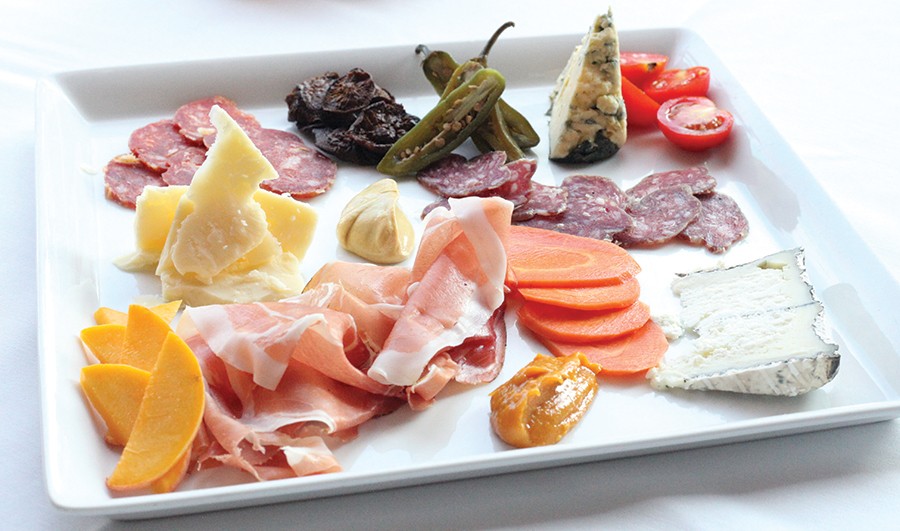
And the epicurean adventures continued at full gallop . . .

Ah, Brasserie du Soleil out near Wrightsville Beach where we supped on knockout French bistro fare (think tuna tartare, steak frites and Scottish salmon with mint yogurt) as tree frogs serenaded us from the fountain on the bustling patio. We loved the cooking at True Blue Butcher and Table, but the strip-mall setting (read, primo view of a Chicken Salad Chick sign) left us aesthetically challenged. But, oh!, the terrific, buttery New York Strip with divine Béarnaise sauce and side of mac and cheese that we split with a glass of spot-on, $9 Tempranillo red. A little more ambience, s’il-vous plaît, or take advantage of the to-go option.

Breakfast at the long-running, dive-ish White Front Breakfast House was a blast, and we walked and walked and then walked some more. On our final afternoon, we kicked back at the ARRIVE’s Gazebo Bar with the dogs scampering about. We sipped a cool rosé and took stock.

Noted John, “I think this is the new Charleston but without the hordes. And there’s more of a range of restaurants here — I get so tired of the same Gullah fare night after night in the Holy City.”

And my take?

It’s still very affordable and a little rough around the edges and that’s part of the magic.

Final assessment?

Impressed.

John and I definitely need to return — and soon — to this little weekend wonderland called Wilmington.  PS

The Madcap Cottage gents, John Loecke and Jason Oliver Nixon, embrace the new reality of COVID-friendly travel — heaps of road trips.


ARRIVE Wilmington, arrivehotels.com

Out of the Blue

Giving Thanks

From the eye of the beholder

By Deborah Salomon

November opens the Season of Lists. Thankful lists for Thanksgiving. Santa wish lists for December. New Year’s resolutions for January. Except this Thanksgiving will look different. For starters, more than 200,000 tables will have an empty chair. Grace over the turkey may sound a somber note. And commentators’ lists will include revisions, beginning with giving thanks for survival. So far.

This has me looking around for good things, useful things, obscure things. Things that — as the trivial saying goes — we take for granted.

I don’t have to look very far.

I am thankful . . .

. . . that all my systems — plumbing, ventilation, battery, pump — are in working order. I hear, see, sleep, think just fine. If it weren’t for arthritis and lingering orthopedic injuries I’d still be running 3 miles a day. With expiration dates fast approaching, I’m doubly grateful.

. . . for hot water. Often, the best moments of my day are spent in the shower. Clean water, both hot for bathing and cold for drinking, is a huge unsung hero.

. . . for the moon and morning star: I rise before dawn, a lifelong habit. Everything is dark, still. Everything except the barren moon, which reminds me that ours is the only inhabitable planet. Confirming its barrenness in 1969 should have made us eternally grateful for Earth’s habitation. But no, we keep raping and plundering, burning and trashing. Remember, you can’t have your cake and eat it too.

. . . for sandwiches. Huh? There is no more convenient and delicious nourishment, whether Spam on mushy white or lobster salad on a Parisian demi-baguette. Quick and easy, too, for breakfast, lunch or supper.

. . . for the internet. No explanation required.

. . . for the professionals who perform scheduled maintenance: an angel dentist, a hairdresser who humors me, and a doctor who smiles and chats awhile. Topping the list, my computer guy who keeps this ancient equipment (the electronic kind) chugging along.

. . . for heat and AC, especially AC, a miracle. Nothing and nobody holds sway over weather. When I open my front door on a steamy July afternoon and feel that blast of cool . . . ahhhh, followed by guilt, remembering conditions in refugee camps in Africa and the Middle East.

. . . for my cats: Animals have always been a part of my life even when I didn’t have any, and pined. Nine years ago I adopted two adult kitties that had been abandoned in the apartment complex where I live. They repay me with affection, diversion, amazement and a few good laughs. Their instincts trump anything innate to humans. I could go on forever.

. . . for my two grandsons. The obnoxious granny is a cliché. I plead special circumstances. The boys’ father — my son — died when they were 5 and 7. Despite the emotional hardship of losing a parent, the older one announced a life plan at 9: travel the world, go to law school, make some money, start a family, go into politics. As of today he has visited 24 countries (including China, Japan, Vietnam, Thailand, Australia, Cuba, and others in both Central America and Eastern Europe) as an exchange student or backpacker. He graduated from law school, passed the bar first try, completed an internship, has a good job and a great girlfriend — a med student, no less. He speaks three languages fluently. He is 23. By age 4 his brother could identify every make of car by its insignia. Since then, he has loved and lived cars. Instead of college, he attended mechanics school, earned a license, got a job at a car dealership but wanted to try sales. The dealership gave him a desk and a chance. He bought a suit and some snazzy shoes and sold five cars his first month. He is 22, speaks two languages, can charm the bark off a tree, or Nanny. They are both exceptionally handsome young men. In these times when young adults face uncertainty I am thankful beyond words.

On a global note, thank (insert name of preferred deity) the election is over, for reasons too numerous to mention. That’s a separate list I cannot bear to undertake. Try Santa.  PS

Deborah Salomon is a contributing writer for PineStraw and The Pilot. She may be reached at debsalomon@nc.rr.com.

Hometown

Hooked on Office

Supplies — not Dunder Mifflin

By Bill Fields

I realized I might have a problem last year during a business trip to South Korea. My hosts were showing me around a shopping mall outside Seoul, and after seeing an array of high-fashion boutiques and stores with the latest tech, I had one request: Take me to the pens and pencils.

I was on the hunt for Korean-made writing tools unavailable back home. The tour guides were helpful, my interpreter, Chris, touting a popular, inexpensive, smooth-writing ballpoint stick pen favored by many Korean students and office workers. In a few minutes, I was checking out of a variety store with a couple of packs of Monami 153s, blue ink with a 1.0 tip. The purchase wasn’t the highlight of a full week in a foreign land but, for an office-supply geek, flying home with those pens certainly was satisfying.

Not that I loiter in my local Staples — weekly visits aren’t over the top, are they? — but I’ve been smitten with stationery for a long time, even before I secured my first pencil case in a loose-leaf notebook with the audible cinching of the three rings.

When the Swingline “Tot,” a tiny version of a desk stapler, appeared in stores, I saved my allowance to buy one. It didn’t take long for me to pop one of the staples into the pad of my left thumb.

That didn’t scare me away from office supplies. Nor did a pencil accident. I was at the time too short and not possessing enough hop to touch the top of the doorframe leading into our dining room. I was only inches away from my goal and figured, correctly as it turned out, that I could touch it while holding a pencil. But I carried it eraser-up, and the point gouged my right palm. More than a half century later, that speck of lead remains just below my middle finger.

Who didn’t love the retractable, push-button splendor of a Bic Clic? The different Flair colors for drawing up football plays? The bold letters that Magic Markers could make on poster projects? When my mother purchased a gross of pencils for me through her bank job and we attached a sharpener to my bedroom wall, it felt better than the Tar Heels winning a big game.

As I got older and into journalism, pens and notebooks were a perk of the profession. I got $150 a week to intern one summer at the afternoon newspaper in Winston-Salem. Being able to procure supplies from an office closet — all you wanted — was a life I could get used to.

My notebook tastes grew more refined. In the 1990s, fellow golf writer Michael Bamberger and I discovered we shared an affinity for a certain model of Boorum & Pease notebook with 48 sewn-in pages. They were small enough to fit in your pocket but large enough for good note-taking and cost only a dollar or so. Michael and I each hoarded a stash, but they don’t make them anymore.

Even during this “Everyday Carry” era with lots of fancy notebooks on the market, I lament that cheap and functional B&P style isn’t available anymore — they’re as extinct as the many little stationery stores in New York City that used to sell them. The Japanese-made Muji brand has some good offerings, about as close as you can get to my old favorite.

I’ve splurged on nice pens from time to time in recent years — mostly rollerballs and ballpoints, having figured out I am not a person for fountain pens no matter how much I admire their beauty. Whether on a legal pad or in a quality journal, putting pen to paper is its own pleasure in this digital age.

Not long ago I retrieved an Aurora rollerball from my desk caddy, a pen I bought not long after I moved to New York decades ago. It’s not old enough to be “vintage” as classified by the collecting world, but using it sure takes me back. For now — this might be as fleeting as April snow — it’s my favorite.  PS

Southern Pines native Bill Fields, who writes about golf and other things, moved north in 1986 but hasn’t lost his accent. Bill can be reached at williamhfields@gmail.com.

The Kitchen Garden

Sage Advice

It’s for more than just stuffing

By Jan Leitschuh

Sage, common culinary sage, is having a “moment” in creative cookery. Yet most of us still associate this undemanding, wooly gray-green herb with the Thanksgiving feast, as the classic, earthy seasoning for stuffing.

Or, of course, you could just use it to ward off negativity and unwelcome spirits. Long used in Native American and other cultures around the world, a smoky sage smudging is considered a space-purifying ritual. (Though white sage is most common, according to many sources, good old common sage will do the trick, too.)

There are many beautiful sages in the salvia world, with over 900 species in this mint-family member. Some are grown for flowers, texture and bulk in the garden. 

But it’s November. In this season of harvest and feasting, common culinary sage is worth a closer look. 

Or is it common?

Besides the classic evergreen perennial herb with the woolly, grayish leaves, you can also find other, more colorful varieties at some garden centers, such as green-gold, white-edged, curly, purple-leaved and tricolor culinary sages. All add texture and interest to the garden, with an edibility bonus.

There are still more edible sages, such as pineapple sage, whose lovely golden leaves and spiky red flowers are beloved by hummingbirds, butterflies and gardeners late summer to frost. But this sage grows faster and much larger than the common sage, reaching 3-4 feet in a single season. As the name suggests, the scent and flavor are reminiscent of pineapple. Fresh leaves are edible, and can be interesting in salads, or dried for a delicious tea.

Sages like our Sandhills soils, but our humidity? Less so. Air circulation will keep it happy. Sage likes a well-drained soil, preferably with a bit of compost worked in before planting. Attractive spikes of purple flowers appear in mid-summer, which attract birds, bees and butterflies. Prune plants back in the spring just as new growth resumes. Harvest leaves through the season as needed. This will keep the plant bushy. Since this resinous herb is evergreen in most zones, you can harvest sage well into late fall.

But how do we use thee? Let us count the ways . . .

First of all, there’s sage toothpaste. Truly. Google it if you don’t believe me. Apparently, studies show that sage contains over 60 useful compounds, many of which are beneficial to the mouth and gums, significantly decreasing mouth ulcers and inflammation of the gums.

Sage also has potent antibacterial, antifungal, antiviral and antimicrobial properties that help destroy cavity-causing bacteria and neutralize microbes that promote dental plaque. Sage also contains healing compounds that ease coughs and accelerate the healing of wounds, helping to soothe sore, swollen or bleeding gums.

Who knew?

A tea made from two tablespoons of dried or fresh sage is said to provide relief from teeth- and gum-related problems such as toothache and sore or swollen gums. (Brew the sage for a few minutes in boiling water, cool for 10 minutes. Swish in the mouth for 30 seconds and spit. Or, enjoy a cuppa.) A sage tea bag can also be placed on the gums to soothe the aching or inflamed area.

But it is the foodie aspects we wish to look at in this season of eating.

First off, meat. Sage was traditionally added to fatty meats. Sage is what makes breakfast sausage so unique in its taste. You can make your own breakfast patties and control the quality, adding a tablespoon of minced sage to a pound of ground pork sausage, also working in some red pepper flakes to taste, a teaspoon each of salt and brown sugar, half a teaspoon of black pepper, perhaps a pinch of cloves or marjoram.

Grilling out? Chicken bathed in an olive oil marinade with chopped sage, lemon balm, oregano, garlic, onion and thyme can lend a flavor similar to lemon herb chicken, say fans. The leftovers can be almost better!

A crusty Parmesan-sage pork chop with a dollop of homemade spicy applesauce on the side can warm up a fall supper. There are a number of such recipes on the internet.

I put sage in with roasts and most of my stews and simmer-dishes, along with other garden herbs like oregano, thyme, rosemary, celery and basil. Why wait for stuffing the whole turkey? I love cooking sage with ground turkey for quiche, or you could use in shepherd’s pie. Or just go ahead and make some dressing — comfort food for a late fall evening. 

Foodies favor their sage leaves fried in brown butter until crispy. Garlic is a common addition. From there, they might toss the buttery mix in with ravioli, in a white wine cream sauce, with pierogi or boiled cheese tortellini.

Others use the fried leaves on top of butternut squash soup — or any soup, for that matter. Another seasonal pairing is oven-baked sweet potatoes, or better yet, baked sweet potatoes and apples. Still others enjoy the fried sage leaves with a beet and goat cheese salad with balsamic vinegar.

A chicken or veal saltimbocca is common in Italian trattorias. The meat is enveloped in a tasty wrap of fresh sage leaves and thin slices of prosciutto. Again, recipes abound online.

Or, to cure what ails you, nothing is better on chilly days than homemade chicken noodle/rice soup with fresh sage. Others go the sweet-savory route, infusing honey with sage and adding to teas.

A sage chimichurri — a green Argentinean pesto-like sauce traditionally made with parsley — can be used as an accompaniment to spinach-stuffed mushrooms, fish, meats or pork sausages. (See recipe below.)

For all its culinary and medicinal properties, common sage should not be ingested in large amounts for a prolonged period of time, say, as essential oils or large quantities of tea. Sage contains small amounts of thujone, a neurotoxin also found in the notorious 19th century liqueur absinthe, thanks to the wormwood used in the recipe. Oregano also contains minute amounts of thujone.

Apparently, thujone is mildly psychoactive. Van Gogh and Picasso were big fans back in the day, claiming inspiration from absinthe. Thujone is actually found in many plants used in cultural spiritual rituals to enhance intuition. (So, back to the whole smudging thing.)

But the amounts ingested in seasonings, flavorings and smudgings are quite minute. Studies have shown three or four cups of sage tea do no harm, although if you have an existing condition that affects the kidneys or liver, or you’re taking some medications that may interact with thujone, you may wish to proceed with some caution and awareness.

If you wish to deploy the culinary benefits of this simple garden herb, perhaps start with the classic dinner sauce chimichurri, adapted for sage. Smudging optional.

Sage Chimichurri

1/4 cup sage leaves and stems, minced finely

1/4 teaspoon red pepper flakes

1/2 teaspoon salt

1 clove garlic, peeled and crushed or minced

1 tablespoon red wine vinegar

1 tablespoon water

3 tablespoons oil

Mix ingredients well and use as a marinade, or serve in a bowl as an accompaniment to spoon over pan-seared fish, sliced flank steak, stuffed mushrooms, grilled meats or pork loin.  PS

Jan Leitschuh is a local gardener, avid eater of fresh produce and co-founder of Sandhills Farm to Table.

Good Natured

Giving Thanks Daily

Why wait for a holiday?

Whose heart is fixed upon the good because it is the good shall fill his soul with good. — Ernest Holmes

By Karen Frye

Why dedicate just one day of the year to be thankful? There are 364 more days to be appreciative for all the things, great and small, in our lives. Giving thanks is a practice that supports us in a positive way.

Gratitude journals are an effective tool to practice being grateful. Once we are focused on the things we appreciate by writing them down daily, we establish a much deeper experience of gratefulness, and no longer need the list. It simply becomes part of our daily routine. You begin to see more goodness and the glass will be half-full rather than half-empty. By honoring the good in our lives, we are creating a lifestyle that will enrich us each day.

Going through challenging times like these puts life into perspective. Giving thanks for our blessings is important and can sometimes change outcomes to our benefit. It will certainly make the journey, and the challenges, easier to tolerate if we grasp some control over our mental outlook.

When we see good all around us and within us, only more good can come to us. If like begets like, then we are drawing to us the very best in life in every respect. When we are grateful for blessings large and small we create a magnetic attraction to more divine and wonderful things: more happiness, more prosperity, good health and, most of all, love.  PS

Karen Frye is the owner and founder of Nature’s Own and teaches yoga at the Bikram Yoga Studio.

PinePitch

TRUST BUT VERIFY: As our communities deal with the challenges presented by the novel coronavirus, please be aware that events may have been postponed, rescheduled or existed only in our dreams. Check before attending.

Munch Some Brunch

Support the Weymouth Center for the Arts and Humanities on Sunday, Nov. 1, by taking home some delicious eats from Thyme and Place Café, or bring a blanket and picnic on the grounds at 555 E. Connecticut Ave., Southern Pines. Boxed brunches are $20 for Weymouth members and $30 for non-members. For more information call (910) 692-6262 or go to www.weymouthcenter.org.

Ted Fitzgerald/The Pilot

Art on Offer

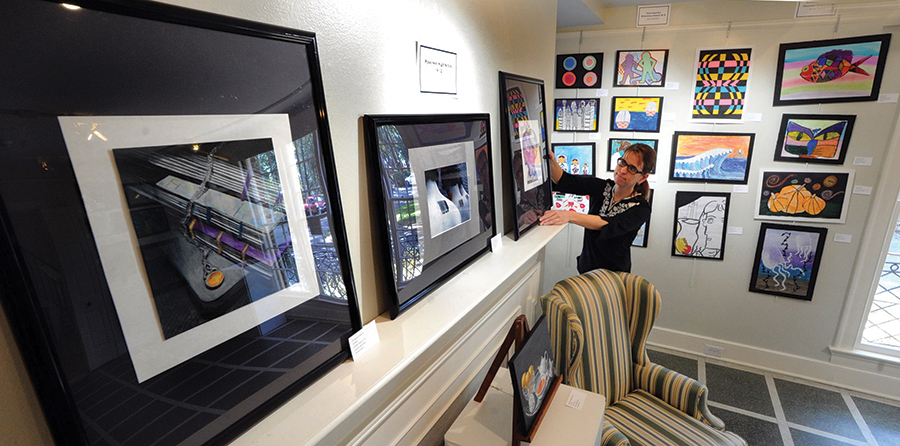
The Artists League of the Sandhills will be opening its 26th annual Art Exhibit and Sale on Friday, Nov. 6, from 10 a.m. to 3 p.m. at 129 Exchange St., Aberdeen. For information visit www.artistleague.org or call (910) 944-3979. The Arts Council of Moore County will also hold its opening reception for “Moore Artful Women” featuring the work of Beth Garrison, Paula Montgomery, Fay Terry and Mary Wright on Nov. 6 from 6-8 p.m. at the Campbell House Galleries, 482. E. Connecticut Ave., Southern Pines. Visitors will need to reserve time slots at 30-minute intervals. Masks will be required. For information go to www.mooreart.org or call (910) 692-2787.

Pop Up in the Pines

A community shopping fair dedicated to bringing together chic boutiques, talented artisans, food trucks and unique handmade goods springs to life on Sunday, Nov. 8, from 11 a.m. to 5 p.m. at the Southern Pines Brewery, 565 Air Tool Drive, Suite E, Southern Pines. Face masks will be required.

Get Your Goat On

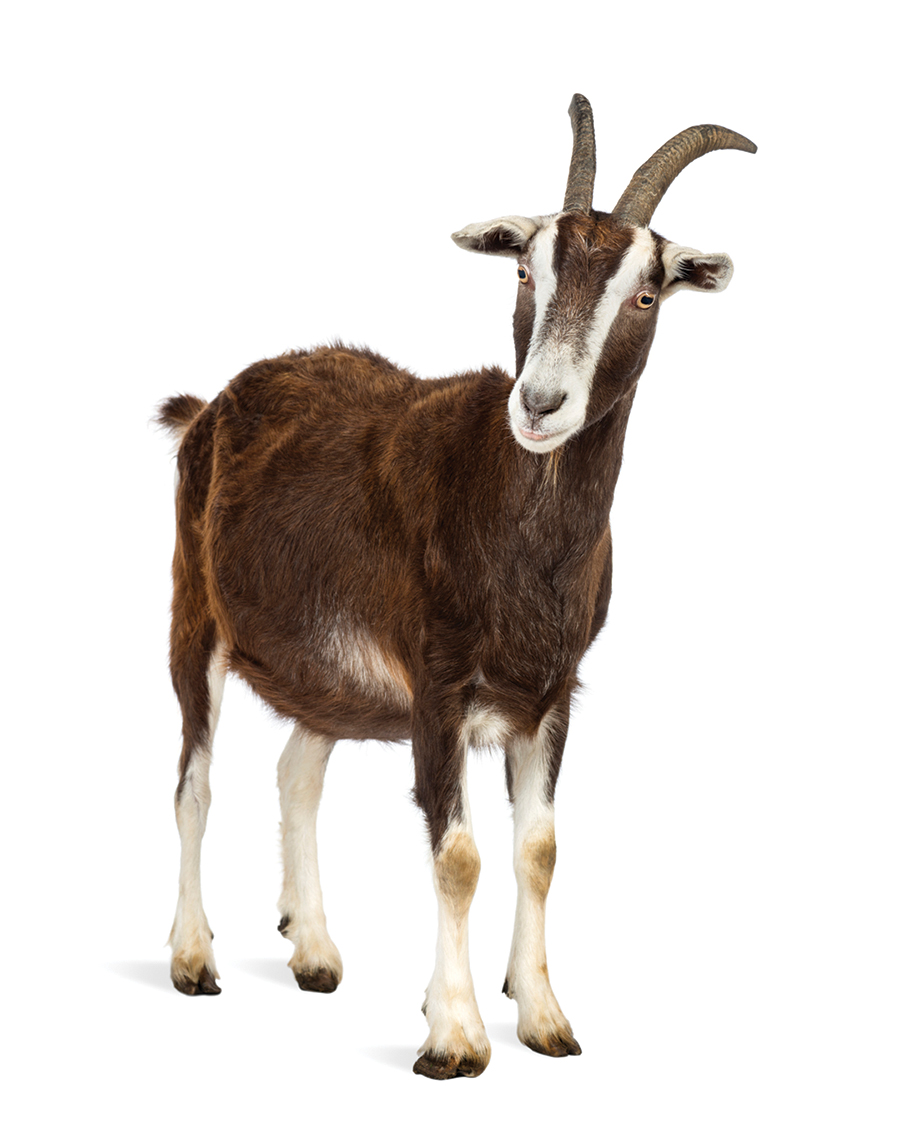
Visit Paradox Farm in November and hang out with the goats, feed some chickens and pigs, and take a peek at the new sheep. Group tours of Paradox Farm Creamery, 449 Hickory Creek Lane, West End, will be available on Friday and Saturday from 10-11:30 a.m. Tickets for 2-10 people are $100; 11-15 are $150. For information call (910) 723-0802 or visit www.ticketmesandhills.com.

Festival of Trees

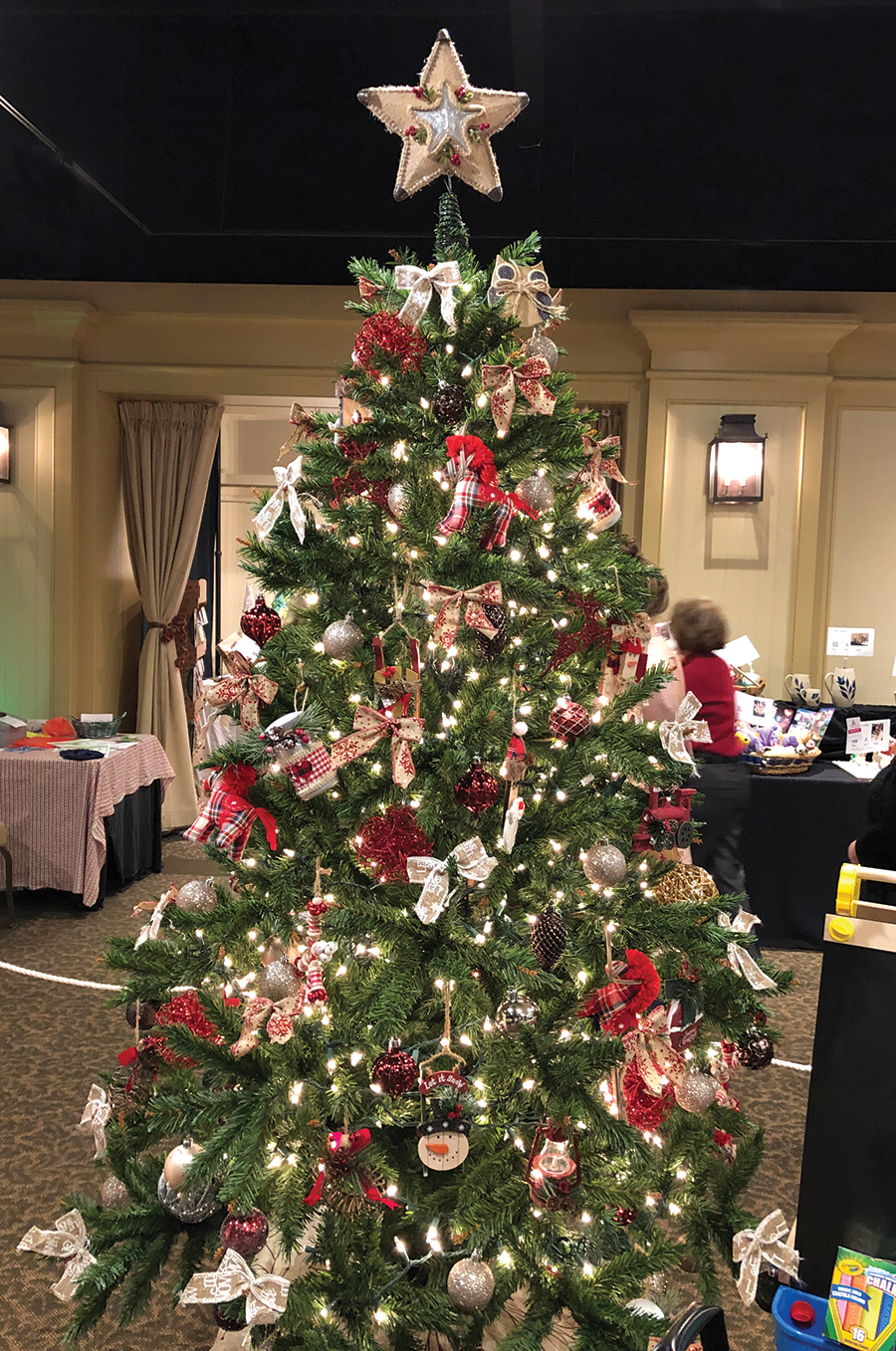
The 24th Annual Sandhills Children’s Center Festival of Trees will take place Nov. 18-22 at The Carolina Hotel, 80 Carolina Vista Drive, Pinehurst. Unlike previous years, the festival will be a ticketed event. For more information and tickets go to www.FestivalofTrees.org.

Spinning Wheel

Thirty pottery shops and almost 100 ceramic artists will come together for the Celebration of Seagrove Potters Tour, the largest sales and collector event of the year. The tour begins on Friday, Nov. 20, from 10 a.m. to 5 p.m. and continues daily through Nov. 22. It starts at Luck’s Cannery, 798 N.C. 705, Seagrove. For more information go to www.discoverseagrove.com/celebration.

A Christmas Carol

The Sunrise Theater will present the radio play of Charles Dickens’ A Christmas Carol on Nov. 28 and 29, times to be determined. There will be matinee and evening performances on both days. For more information visit www.sunrisetheater.com or call (910) 692-8501.

As Seen in the Sway:

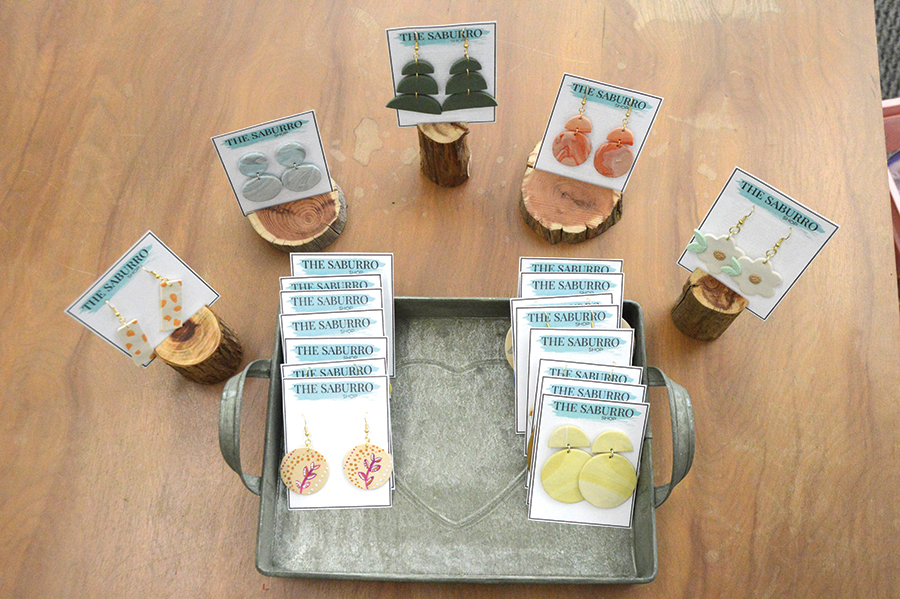
Meet the Maker: The Saburro Shop

Scroll through The Saburro Shop on Instagram and you’ll find a little bit of everything. Bethany Saburro started her business in 2016, selling mostly custom woodwork and hand painted wooden signs, but recently found her niche in the earring world.

“I remember seeing a pair of earrings in a department store and thinking, ‘wait, I could make that,’” Bethany said.

She started out with wooden earrings, but later began experimenting with polymer clay, which have become her best sellers.

Each pair of earrings are uniquely designed by Bethany. From flowers to geometric shapes, each pair is different from the next.

A longtime lover of creating, Bethany used art as an escape. The Saburro Shop started out as mostly a hobby, but without the distractions of daily routines during quarantine, she felt inspired to invest more time in The Saburro Shop.

Bethany mostly sells her work through Instagram and occasionally on Etsy. You can also find it at Pine Scone Cafe in Pinehurst and Southern Pines, and My Sister’s Porch in Aberdeen.

“It’s so satisfying to do something that you love and to find that other people love what you spend your time and efforts on, too,” Bethany said.

Follow The Saburro Shop on Instagram to see what Bethany will come up with next.


Home by Design

Cooking for Julia

Cheesy olives and a smoky homage to one of the greats

By Cynthia Adams

When the spunky Southern writer Julia Reed died in September, it felt personal.

Reed was a character in her own stories, a real hoot and a holler, as my Mama Patty would have said. Her columns, design books and sassy cookbooks (one title was inspired by her mama’s spiking sangria with a kick of vodka) showed a penchant for storytelling and squint-eyed observations. 

Her New Orleans homes — one on First Street and a post-divorce duplex in the Garden District — were crammed with books, family heirlooms, paintings, antiquities but also found-objects like bird nests and turtle shells. She even called the new pad a “Cabinet of Curiosities,” a habit wealthy Victorians famously kept.

Reed’s memoir, The House on First Street: My New Orleans Story, was considered her best work. It was a love letter to post-Katrina New Orleans. (Reed’s Newsweek piece described a sign that advised NOLA looters: “Don’t Even Try. I am Sleeping Inside with a Big Dog, an Ugly Woman, Two Shotguns and a Claw Hammer.”)

Reed was classy — and wealthy — enough to upholster a pair of antique rattan chinoiserie sofas in hand-dyed silks. She bought vintage beauties from Magazine Street, where some of the South’s finest antiques wind up on offer. Her design sense was kicky and admired. 

She wrote One Man’s Folly about Furlow Gatewood, the gifted antiquarian who has restored several of the most beautiful homes to be found, gathering them all on his compound in Americus, Ga.

Reed not only knew Gatewood but stayed in one of his gorgeous homes, each of which are stuffed full of jaw-dropping treasures. They probably ate cheese straws, Gatewood’s favorite, and drank hard liquor. She no doubt brought her own deviled eggs and cheesy olives, which were touted in surprising places like The New York Times.

Cheesy olives, it was said, are the first party fare to be scarfed down.

The week she died of cancer at age 59, we were seeing two friends for Covid cocktails. It was time to drop my envy of Reed, her cool houses, great writing gigs and friendship with 95-year-old Gatewood, my celebrity crush.

I pored over her top five recipes, which the Gray Lady republished, determining to pay homage to Reed.

Even though her father was a Republican operative who worked for the Bush family, she was always diplomatic and her humor was bipartisan.

Once asked about a pol’s chances during a tony Washington, D.C. book tour, sipping vodka-infused sangria from a blue highball glass, Reed quoted Louisiana’s Edwin Edwards: “The only way I can lose this election is if I’m caught in bed with either a dead girl or a live boy.” 

The room dissolved in guffaws, because no matter where you stand on party lines, that was a bon mot.

(Actually, it qualified as a sangria-infused wet quip.)

But I digress. Cheesy olives sounded a lot like pigs in a blanket at first reading. Except, the dough, in addition to flour and egg, contains a block of cheddar and a hunk of butter. (And there is no pig.)

This was to be the virgin run of a stand mixer, bought years ago because of the rare color, a Chinese Chippendale green. It looked good on the counter. 

Thus, learning why, a dough hook, which this mixer didn’t have, is a thing. Cheesy dough clumped like a primordial life form to the beaters, with gleaming chunks of butter grinning through.

Wrestling the goopy dough from the beaters, I fashioned it around each Spanish olive. The results resembled The Little Prince illustrations.

I pried them off my fingers onto a cookie tray. The whole shebang required nearly an hour’s labor, the oven preheating most of those slow-moving minutes. 

The oven was hot enough to singe off my eyelashes, brows and fine facial hair.   

Next up: Reed’s exemplary pralines.

I substituted light brown sugar in the recipe. Measuring, mixing and anticipating the first taste of those olives — I beavered on with the candy.

The whining mixer was nearly up to the task of folding evaporated milk into butter, pecans and sugar. 

I mixed and mixed some more.

In the minutes stolen for a swift bathroom break, smoke had begun to billow from the oven. As in, call the fire station billows.

Turning off the oven I snapped on the oven light; the cheesy olives were pancake flat, bubbling in a screed of oil. That is, what oil wasn’t now pooled in the bottom of the oven. 

It was as if I had just laid eight ounces of cheddar cheese and two ounces of butter on the oven’s bottom and hit “incinerate!” 

The roiling smoke grew denser. I hesitated a second before opening the oven to grab the pan (rimless, another big mistake) and sprinted outside, our two dogs leaping and trying to get a good look.

After much swearing and flapping of towels and deployment of a floor fan, the kitchen smoke began to clear. 

“I have always said that danger — or at least the possibility of it — is a crucial element of any good party,” observed Reed. 

I was succeeding on that score. 

The pralines would cook stove top, thank God. 

I grimly set to melting sugar and copious amounts of butter in a double boiler. Standing over it with a cooking thermometer to gauge the perfect temperature, I couldn’t help but cuss a little. (I’d heard of good cooks who deliberately falsified recipes so nobody could steal their thunder.)

It was suspicious, how much fat burbled out of those disastrous olives, is all I’m saying. Then I noted: There was no mention of a double boiler. 

With lined pans waiting, I finally spooned up the praline goo. Being no fool, I knew better than to make candy on a rainy day; it was dry as a bone outside. But — the pralines never achieved the glistening appearance Reed described.

No matter, I scraped the last, suspiciously granular bits off the side of the saucepan and tasted, burning my index finger and tongue. Yep. They were granular alright.

Setting up rapidly, the pralines looked more like coconut stacks from Cracker Barrel. 

They did not look like pralines.

Earlier, we had made boiled peanuts, more Southern fare, and in a pique, I decided to make a cold soup.

The cheesy olives were misshapen lumps and the pralines were weird. But the peanuts were heavenly. I plunked them in a silver bowl and served up the whole shebang on good platters. Somewhere in the great beyond, Reed was having a belly laugh.   PS

Cynthia Adams is a contributing editor to PineStraw and O.Henry.

Simple Life

“A Story For These Times”

By Jim Dodson

On a lovely evening beneath the trees not long ago, as summer green gave way to autumn gold, my wife, Wendy, shared a charming little story a friend had recently passed along to her via email. She wondered if I’d ever heard it before.

In fact, I had. But it had been many years since I thought of it and the wise soul who first shared it with me decades ago.

Here’s the story.

The Bohemian novelist and short-story writer Franz Kafka was walking home through a park in Prague one afternoon when he passed a little girl who was crying because she’d lost her favorite doll.

The writer, known for stories that fused realism and fantasy, suggested that the two of them search for the missing doll, but the doll was nowhere to be found. Hoping to console her, he suggested that they meet the next day and continue the search.

Upon his return, he presented the girl with a letter he insisted was written by her missing doll. “Please do not mourn for me,” the doll wrote. “I have gone on a trip to see the world. I will write to you about my adventures.”

Over the days and weeks that followed, he presented a stream of “letters” that recounted the doll’s amazing encounters with interesting people she’d met on her journey through the world. The letters provided deep comfort to the little girl.

When their meetings finally came to an end, Kafka presented the girl with a new doll that didn’t look anything like the original. To ease her confusion, he read the girl a final letter from her doll explaining why she seemed so different. “I have been out in the world,” the doll wrote. “My travels have changed me.” The little girl hugged the new doll and carried her home.

Franz Kafka died a short time later from tuberculosis. He was just 40 years old. He never married.

His stories and novels, however, were destined to become some of the best-loved writings of the 20th century, exploring themes of loss, grief and existential anxiety in a rapidly changing world. His very name — Kafka — would become a synonym for a world turned upside down by surreal predicaments. The poet W.H. Auden called him the “Dante of the 20th Century” and novelist Vladimir Nabokov ranked him among the most influential voices of all time.

Many years after her meeting with Kafka in the Prague park, the little girl, now an old woman, found an unread letter secreted in her beloved childhood doll.

“Everything you love will probably be lost,” the letter said. “But in the end, love will return in a different form.”

Though at least one of his biographers later questioned whether the encounter in the park actually happened, it is reported that Kafka, a prodigious letter-writer, put as much time and care into the creation of the doll’s colorful adventures as he did crafting his own wildly imaginative tales.

Regardless, the story outlived its author and has provided comfort to untold numbers of people wrestling with grief and loss, a timeless “healing” story long used by grief therapists and spiritual advisors.

In a year that will be remembered for its incalculable losses of life and livelihood, its Kafkaesque politics and a historic pandemic that will change each of our lives, the doll’s message seems more relevant than ever.

Everything you love will probably be lost. But love will return in a different form.

Hearing the story again gave me a shot of much needed hope. It reminded me of the first person who told me the story over a bowl of soup, a dear old friend named Col. Bob.

During the last decade we lived in Maine, Col. Bob and I met every few weeks for lunch and conversation at a village cafe where the soup was homemade and the community chatter lively.

Bob Day was a decorated veteran of WWII who’d led one of the first Army units over the Rhine into Nazi Germany. After his service, he returned to West Point, where he taught logistics. He made his mark as the pioneering director of admissions who is credited with admitting women to America’s top military academy by convincing his superiors to adopt merit over patronage as a primary means of admission.

We first met one Christmas when Bob played the angel Gabriel in the annual Christmas play at our local Episcopal Church.

My two knee-high nippers had important roles in the pageant. One was playing a lamb, the other a baby cow in the climactic manger scene. As Col. Bob stood hovering over the blessed setting with his goofy, Gary Cooper smile, one of his plaster-of-Paris wings fell off and conked a baby cow on the head. The audience gasped with alarm but erupted with applause when the boy beneath the cow’s head turned out to be laughing. The boy was my son, Jack.

Col. Bob was a volunteer grief counselor with a local organization that worked with families suffering from the loss of a child. As he explained to me over soup one crisp autumn day, his main job was to listen and care and simply “be” with people wrestling with unimaginable grief and loss.

As I learned in time, Bob was uniquely qualified for such soulful service. One day during his early years at West Point, his wife phoned him at the office to report that their youngest son had run outside to play and been run over and killed. Not long after the funeral, Bob returned from work to discover that his grieving wife had packed up and moved out with their two other two boys. The weight of sorrow had become too much.

Bob understood. He set up his wife and kids in a nice house in a neighboring town. Though he and his wife were never fully reconciled, they remained best of friends for the balance of her life. A few years later, a second son set off to see the world before college, contracted a strange virus and died.

Once I learned of these tragedies and others in his life, I understood — and deeply admired — the source of Col. Bob’s easy grace in the midst of so much personal suffering, including his unsinkable sense of humor and belief in the healing power of love. Every year for almost a decade, he showed up at our annual winter solstice party. Guests were invited to perform for their supper — to sing a song or read a poem to lighten the darkest night of the year. Col. Bob read hilarious limericks he spent the year composing.

Bob’s thing was original limericks. Some were sweet, others were poignant. Some were devilishly blue. The solstice crowd loved them all.

Bob loved literature and life. As I said, it was he who first told me the story of Kafka and the little girl with the lost doll. This was not long after my own father died and I was going through a double dose of loss from his death and a divorce that seemed to come out of nowhere, leaving me more than a little discouraged about the future.

It was Bob — using this story — who reminded me that, given time and an open heart, love and laughter would come again in different form.

He was right. Both came in the form of an extraordinary woman who has been the joy of my life for more than two decades — the same woman, I might add, who reminded me of the story of Kafka and the doll as we sat beneath the autumn trees a few weeks back.

Hearing it again also reminded me of the last letter I received from Col. Bob a decade or so ago, inquiring about Wendy and our kids and our new life “back home in the South.” He informed us that he, too, had recently moved home to Connecticut to be close to his surviving son and grandchildren. He was volunteering as a docent at a history museum several days a week and still working with grieving families. The handwritten letter included several pages of his original limericks — the “greatest hits of an angel with a broken wing,” as I like to think of them.

Not long after the letter arrived, I learned that Bob had passed away and drove up to his memorial service at West Point. It was great to meet his son and several of Bob’s old friends, students and colleagues. We all had stories of his amazing grace and healing sense of humor to share.

Folks had a good laugh when I explained how a broken angel’s wing in a Christmas play introduced me to Col. Bob, a gift not unlike the one that Kafka gave the little girl in the Prague park.

It’s still the perfect message for a changing season and Kafkaesque days like these.

Everything you love will probably be lost. But love will return in a different form.  PS

Contact Editor Jim Dodson at jim@thepilot.com.

The Naturalist

The Natural History of Pumpkins

There’s more to the orange gourds then just pie and jack-o’-lanterns

Story and Photographs by Todd Pusser

Pumpkins have always evoked strong memories of childhood and my Moore County home. I vividly recall each fall season my parents taking me to view the giant pumpkin display at the county fair in Carthage. I would stand dumbfounded, staring at the enormous behemoths weighing hundreds of pounds, and wonder how on earth a vegetable could grow so freakishly large.

As October rolled around, pumpkin decorations plastered the halls of West End Elementary School. My class would gather in the library to watch Ichabod Crane dodge a flaming pumpkin tossed by the Headless Horseman in the old 1949 cartoon The Legend of Sleepy Hollow. Speaking of cartoons, I’m pretty sure I can repeat every line from Linus’ Halloween ritual of waiting through the night, in his most sincere of pumpkin patches, for treats from the mythical Great Pumpkin. Thank you, Charles Schulz. 

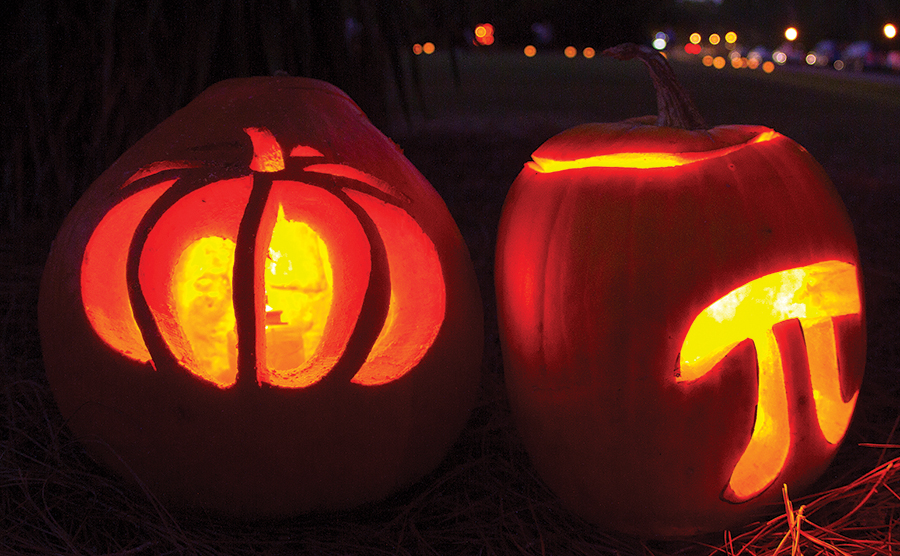
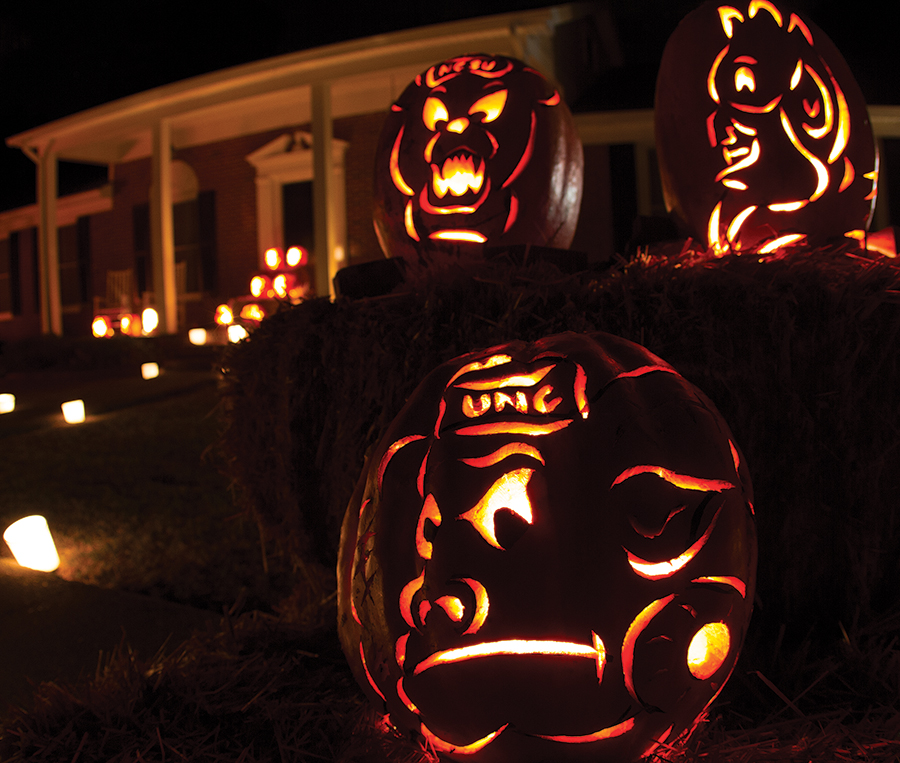
However, it was Otis Boroughs who really sparked my interest in pumpkins. Otis grew several acres of pumpkins, and throughout the 1980s, he, along with his wife, Nancy (who happened to be my kindergarten teacher), hosted an incredible jack-o’-lantern display each Halloween. People would travel from all over the state to their farm in Eagle Springs to see his artfully carved faces of famous cartoon characters, sports mascots and wild creatures. It was a magical feeling, standing beneath starry skies, staring at the flickering light dancing from the jagged cuts of dozens of pumpkins. Heat, given off by candles deep inside the large, orange orbs, created a scent of warm pumpkin pie that permeated the night air.

Realizing how much I liked the pumpkin display, Otis and Nancy invited me over one Saturday, to teach me how to carve jack-o’-lanterns. This was long before the days when you could buy mass-produced pumpkin carving kits at Walmart. For much of that afternoon, Otis, using a special handsaw, patiently taught me how to carve Mickey Mouse and the Demon Deacon mascot of Wake Forest University (my father, a fan, was dismayed when I later attended the University of North Carolina in Chapel Hill). Otis sent me home with a couple of large pumpkins to practice on, and from that day forward, I was hooked on carving jack-o’-lanterns.

When Otis and Nancy finally retired from showing their jack-o’-lanterns to the masses, I wanted to continue the tradition, so I took up the baton and started my own pumpkin show nearby. As well as traditional scary faces, I cut everything from Star Wars characters to rattlesnakes into the orange gourds, some years carving as many as 200 jack-o’-lanterns.

The simple act of placing a candle inside a carved pumpkin has long been a staple of Americana. According to Cindy Ott, author of Pumpkin, the Curious History of an American Icon, one of the first illustrations of a pumpkin jack-o’-lantern appeared in an 1867 edition of Harper’s Weekly. The image depicts a trio of young boys lifting up a carved pumpkin with triangle-shaped eyes, a triangle nose, and a jagged mouth, to the top of a fence post on a family farm. The candlelight emanating from the sinister face appears to frighten two young girls (perhaps their sisters) and a small dog walking down a dirt path.

Today, pumpkins are the quintessential symbols of the fall season, like conifer trees are to Christmas and rabbits are to Easter. Pumpkin pie is a prerequisite for a traditional Thanksgiving dinner. Images of pumpkins adorn horror movie posters and the covers of children’s books. In recent years, a pumpkin spice craze has swept the country, due in large part to the popularity of Starbucks lattes featuring the mix (typically a blend of clove, cinnamon, nutmeg, and ironically, very little, if any, pumpkin). One can find hundreds of pumpkin spice products, everything from beer to granola and doughnuts to potato chips, in the aisles of grocery stores come October. There is even such a thing as (blech) pumpkin spice toothpaste.

Yet, for all its cultural familiarity, have you ever stopped to think about exactly what a pumpkin is or where it comes from?

It is a common misconception to think of a pumpkin as a vegetable. (I even refer to pumpkin as a vegetable at the beginning of this piece, but hey, I was only a kid, so what did I know?) Pumpkins, by botanical definition, are a fruit, just like apples, bananas and berries. They are essentially a seed case covered in a wall of flesh (the plant’s ovaries), formed when the flower of the plant is fertilized through pollination. Vegetables, like lettuce and celery, are just the non-fruit part of plants, such as leaves, stems and roots.

Pumpkins are herbaceous vines of the gourd family found within Cucurbita, a genus of plants that contain well over a dozen species. The true ancestors of pumpkins looked nothing like the head-shaped, orange globes we all know and love today. Originating in Central America and Mexico, early pumpkins were small (just a few inches in diameter), thin, hard-shelled gourds. Archaeologists found 10,000-year-old domesticated pumpkin seeds in the Oaxaca Highlands of Mexico, making them among the first plants to be cultivated by humans in North America.


Since that time, Cucurbita have been selectively bred into many of our grocery store staples, such as zucchini, acorn squash, yellow squash, butternut squash, and, of course, pumpkins. The sheer number of pumpkins cultivated today is mind-blowing. With catchy names such as Ghost Rider, Casper, Sugar Baby, Big Mac, Jack Be Little, and Possum-nosed (a personal favorite), pumpkins come in an infinite variety of colors, shapes, and sizes. Some are even larger than small cars. Consider the current Guinness World Record Pumpkin, which, at a hefty weight of 2,624 pounds, is 600 pounds heavier than a Mitsubishi Mirage.

Of course, if it were not for pollinators, we would not have any pumpkins, or any of our food crops for that matter. The primary, natural pollinators of pumpkins are bees, especially squash bees of the genus Peponapis. Like most native bees, squash bees are solitary and nest in the ground. Typically, they forage for nectar and pollen at pumpkin plant flowers during early morning hours. To help increase yield, farmers often enlist the aid of honeybees, a species native to Europe, to help supplement pollination of pumpkin crops.

Unfortunately, in recent years, honeybees, as well as one-quarter of North America’s 4,000 species of native bees, have seen dramatic declines in their population numbers. As to why so many pollinators are being affected, scientists are not exactly sure. It is likely due to a combination of factors, including the increase use of pesticides, extensive loss of habitat, and a warming climate.

One thing is more certain. Pollinators keep this planet functioning, and without the services they provide, free of charge, crops would fail, ecosystems would falter, and Earth, in general, would be less habitable.

That is a thought more scary then even the most frightening of jack-o’-lanterns.  PS

Naturalist and photographer Todd Pusser works to document the extraordinary diversity of life both near and far. His images can be found at www.ToddPusser.com.

Poem

A Nimble Deer

A doe that was, only a minute

before, quietly munching, leaps over

a wooden fence, nimble

as a goat. She rears up, after reaching

the other side, like a trick dog —

her front hooves dangling from her

useless forelegs, her hind legs

absorbing all the weight. She cranes

her soft, brown neck just far

enough to reach the succulent leaves

of a dogwood tree. But the younger 

deer — smaller, less sure —

stick to low-hanging branches,

their tails flicking like little propellers

that fail to lift them from the earth.

– Terri Kirby Erickson