Out of the Blue

OUT OF THE BLUE

A Snowball for All Seasons

Another cat finds a comfy home

By Deborah Salomon

For the past 14 years, I have devoted this January column to my kitty companions, the last in a long line of adopted foundlings. Or so I thought. I am an animal person, happiest when in a relationship with a warm furball. But when coal-black, super-intelligent Lucky and fussbudget Missy died within six months of each other, I had a good cry, penned eulogies and announced my retirement, vowing not to weaken unless a hungry, sad kitty showed up at my door one frigid night. Which is exactly what happened. I opened the door. She walked in . . . and that was that.

In March I devoted a column to her, prematurely as it happens, since multiple feline traits have emerged since then. So you cat deniers will have to dread January a bit longer.

I named her Snowball for eponymous reasons: She is covered in fine, wispy, pure white fur — a striking contrast to her pink mouth, nose and ears and, especially, her baby blue eyes. I could have bestowed Farrah since her beauty/coloring reminds me of Ms. Fawcett. Names aside, Snowball is the most gorgeous cat I have ever seen. Maybe the most beautiful in the world. Simply staring at her makes me feel better. Even when she has just removed each kitty-food “shred” from the bowl and strewn them around the mat, a bugle blast attracting an ant army.

But that’s OK because she’s so beautiful, especially after loving a lifetime of tabbies, marmalades, tigers and calicos. I am mesmerized, watching her groom out a hundred tufts of milk-white fur which stick to the carpet like Krazy Glue.

After Snowball’s grand entrance I kept things low-key for a while, to let the newcomer adjust before our first visit to the vet. He declared her female, 2-3 years old, in good health. He was reasonably sure she had been spayed.

Hmmm. Then why the restless week when, more talkative than usual, she showed interest in getting out? No neighborhood toms showed up to serenade the damsel. It passed, as did any desire to explore beyond four window perches where she chatters at the birds and squirrels — a kitty version of The View.

Since I work from home, Snowball and I are best buddies. She quickly established a routine: eat, play, nap, window-gaze, snack, play, nap, eat, get under my feet. She takes wicked pleasure in coming between me and the computer. When I coax her off the desk, out come the claws, morphing Farrah Fawcett into Jane Fonda. When I sit down to watch TV she nips at my legs. Some nerve, she hisses, to prefer CNN’s Wolf Blitzer over my pulchritude.

Maybe Snowball needs a playmate, although I’m not sure her ego (or my shins or debit card) would allow. I Googled cat toys, finding one that promised “hours of invigorating and satisfying play for only $10.” Her reaction: a disdainful glance, not even a swat. Turns out she’s more into aluminum foil balls, easily swatted under the sofa. She does adore chasing the disgusting black water bugs that creep in the back door. Being brushed . . . heaven, the equivalent of the full monty at a Pinehurst salon.

Don’t get me wrong. Snowball is affectionate without being mushy. I’ve yet to hear a purr. She sleeps quietly beside me all night, demanding nothing. Early on I was able to get across that the kitchen counter is not her happy place. But Snowball’s attitude indicates that, beauty being in the eye of the beholder, she is an eyeful.

And doesn’t she know it.

Look, I can’t deny missing Pumpkin, Max, Sophie, Sam, Sadie, Shim, Oreo, Lucky and Missy. Each had a distinct personality, as well as long, healthy lives filled with love and chicken livers, as I hope Snowball will.

Because a thing of such beauty should be a joy almost forever.

Crossroads

CROSSROADS

Bowled Over

Finding the right words

By Robert Kowalski

Fifty-one years ago, Ed Miller spoke. He didn’t speak standing at a podium in a crowded auditorium. He spoke sitting down, in a smoked-filled bowling alley, to five teenagers, in front of lane 20. Ed’s speech was brief. He spoke only long enough to utter three one-syllable words in a graveled, Brandoesque voice.

“Don’t get old,” he said.

Competitive league bowling was all the rage when my friends and I joined an adult league. We were still in high school. The grown men wore slacks and monogrammed bowling shirts. We wore bell bottom blue jeans and T-shirts. The adults were annoyed. We were cool. The nights we won they grumbled about those damn kids. When we lost, they wore smiles of satisfaction believing that order had been restored.

Ed Miller was the worst bowler in the league. If they gave a trophy for futility, Ed would have won in a landslide. He had deep-set humorless eyes. His ill-fitting attire made him look wider and shorter than he really was. He always sat at the edge of the bench closest to the rack: silent and stoic. He stared out at the pins seeming to be contemplating 10 personal tragedies. When his turn came, he’d limp to the rack, pick up the ball and, without aiming, take four short uneven steps and, instead of rolling the ball, drop it with a loud thud. It took an eternity to hit the pins. He never seemed as interested in the outcome as he was resigned to it.

We were playing Ed’s team the night he spoke. It was late in the season. If we won all three games, we’d clinch first place in the league. Ed occupied his usual spot at the edge of the bench. We won the first two games by comfortable margins. The third game was close. Due in large part to Ed missing a one pin spare in the last frame, we eked out a victory. My teammates and I were backslapping and trash-talking when Ed looked up and, to no one in particular, said those three little words. “What did that old man say?” one of my teammates asked.

“He said, ‘Don’t get old,’” I replied.

We looked at each other and dismissed Ed with a shrug. He was just a sore loser throwing shade on our parade, I thought. We went on celebrating. From the corner of my eye, I caught a glimpse of him as he struggled with his ball bag. I couldn’t help but stare as he fought to scale the two steps to the main level. I turned away for a moment and when I looked again, I saw the back of his head as he limped out the door.

When he didn’t show up the following week, I assumed he was still suffering from the sting of the previous week’s defeat. I asked one of his teammates where Ed was. I was told he fell at home and broke his hip. “He wasn’t a young man,” his friend said. I never saw Ed Miller again.

Through the years, Ed’s words have nagged at me. What is old? Was old a journey or a destination? Would it happen gradually or all at once? Would I know when it happened to me?

Recently, I was walking off the 18th green when one of the guys in our group said he had to hurry home because it was bowling night. Immediately my mind returned to those days when the kids battled the men for pots of cash and bragging rights. Ed Miller’s ghost returned as well. This time I had an epiphany. Maybe the lesson was less about getting old and more about staying young. If we weren’t so cocky that night long ago and Ed wasn’t so sad, his words might have been different. Instead of a dire warning, he might have said, “Stay young, my friends, as long as you can.”

Wisdom isn’t the only thing that comes with age; it can also bring regrets. If Ed Miller and I could have parted with a smile and handshake that night, our victory over the men would have been so much sweeter.

Focus On Food

FOCUS ON FOOD

This Old Chestnut

Sweet and nutty soup for a frosty day

Photograph and Story by Rose Shewey

Not only is the chestnut tree an icon of the American wilderness, it is also the namesake of the original dad joke. Long before social media shaped everyday speech, a cheesy pun was simply known as an “old chestnut,” going back 200 and some years. Apparently, generations of dads before yours had a cringeworthy sense of humor, imagine that!

All jokes aside, why do foragers, folklorists and foodies go all googly-eyed at the mention of chestnuts? There are many reasons, and the nearly extinct American chestnut tree is one of them. Known as the “redwoods of the East,” these native chestnut trees wouldn’t just grow strong and tall. A fully grown tree was able to produce up to 100 pounds of nuts — try squirreling away that many conkers for the winter!

While American chestnut trees don’t make it past a young age due to various diseases, other varieties are thriving. Fortunately for us, a stately sweet chestnut tree of European descent — such as the ones I grew up with in Germany — is happily growing in the heart of Aberdeen, right along our stomping grounds in the historic district. With permission from the owner, we have made it a tradition to forage a handful of chestnuts in the late fall. Even though these nuts are perfectly edible, they usually end up adorning our seasonal nature table, carefully curated by our 6-year-old.

For actual culinary purposes, we rely on the store-bought variety of edible chestnuts, typically those imported from Italy. If I can get my hands on fresh chestnuts, they will be boiled (not roasted) and enjoyed right out of the pot, but the occasional batch is destined for a creamy chestnut soup. Since chestnuts are mild in flavor, I like to keep the recipe simple, avoiding ingredients that tend to overpower their subtle earthy aroma. A splash of sherry and a pinch of cinnamon turn this soup into a warming, nutty-sweet meal for a frosty winter day.

Wintry Chestnut Soup

(Serves 6)

2 pounds fresh chestnuts or 1 pound roasted and peeled chestnuts from a jar or bag

1/4 cup unsalted butter

1 medium yellow onion, chopped (about 6 ounces)

1/4 cup sherry (optional)

4 cups chicken stock or vegetable broth

1 thyme sprig

1/4 teaspoon ground cinnamon

3/4 cup heavy cream

Freshly grated nutmeg, to taste

Salt and freshly ground pepper, to taste

Directions

You can skip this step if using ready-cooked chestnuts, otherwise, add water to a medium saucepan and bring to a boil. Score the shell of the chestnuts on the rounded side with an X, cutting through to the inner skin of the nut, and add to the boiling water. Cook for 15-20 minutes or until the scored edges expose the nut. Drain and allow the chestnuts to cool for a few minutes, then peel while the nuts are still warm.

Melt the butter in a medium saucepan, add onions and cook on medium heat until softened, about 6-8 minutes. Add the wine and cook over medium heat until the saucepan is almost dry. Add chestnuts, stock or broth, thyme and cinnamon. Cover the pot, bring to a gentle simmer and cook for 15-20 minutes. Puree the soup in a blender (working in batches if needed) or use an immersion blender until you have the desired texture. Return the soup to the pot if using a stand blender and bring to a simmer once more. Add cream, season with nutmeg and adjust to your taste with salt and pepper.

Dissecting a Cocktail

DISSECTING A COCKTAIL

The Classic Martini

Story and Photograph by Tony Cross

Let’s start the year off right with the world’s most sophisticated cocktail, the martini. Although the exact origin is unknown, the movie character James Bond comes to mind whenever this drink is mentioned. Even though the classic “shaken, not stirred” quote is not the way to prepare this cocktail, there is still something very charming about seeing a man dressed to the nines ordering it. To quote bartender and owner John Clark-Ginnetti, “Why is Bond drinking a martini? He needs to be civilized. He’s a mass murderer; he’s an assassin. So how do you take this horrible person and temper him into somebody who’s doing it for the honor of the sovereignty?”

There are a few problems these days when it comes to ordering the martini. For starters, ever since the martini craze of the 2000s, it’s probably inevitable that any liquid in a V-shaped glass will be called “a martini.” It’s not.

Another issue is that most bartenders aren’t making the cocktail correctly. A year ago, I went into a self-proclaimed “craft cocktail bar” only to watch my bartender shake the hell out of the martini I ordered. This cocktail needs to look delicate — you wouldn’t violently shake your bottle of cabernet franc before drinking it, so don’t do it to the vermouth either. And, speaking of vermouth, it has to be refrigerated, or it will spoil.

Consistency is key: A bartender from Thursday night using 3 ounces of Tanqueray to 1/2 ounce of vermouth and another bartender on Saturday mixing a 50:50 ratio reflects a lack of any house specs. What would I recommend? I’ve always used Plymouth gin — it’s soft, slightly citrusy and not juniper-forward. Juniper is the ingredient in gin that technically makes it “gin,” but it’s also the ingredient that turns people off. For the vermouth, I like Dolin Dry, a very fresh and light fortified wine.

The key to a great martini — besides the proper ingredients — is for it to be piercingly cold. Make sure to fill the mixing vessel with plenty of ice, all the way to the top, and stir until it gets as cold as possible. The proper dilution of water is a must when stirring your drink. Some like to freeze their gin (I do) to get a head start on the chilling process.

Lastly, I’ve always preferred a lemon twist to olives in my martini. Smelling the oils of the lemon as you bring your chilled martini glass to your nose lets you know that you’re about to enjoy one of the best cocktails in the world.

Specifications

2 ounces Plymouth gin

1 ounce Dolin Dry vermouth

Execution

Combine gin and vermouth in a chilled mixing glass. Pack with as much ice as possible and stir until the glass is frosted, while allowing proper dilution. Strain into a chilled martini glass. These days, I prefer using a Nick & Nora glass. Take the peel of a lemon, expressing its oils over the cocktail and placing the peel in the glass.

NC Surround Sound

NC SURROUND SOUND

Making Music in the Woods

And putting money in artists’ pockets

By Tom Maxwell

There’s a 63-acre compound on Borland Road, out in the rolling Orange County countryside near Hillsborough. On it is situated a log cabin, a barn, and several other outbuildings stuffed with the kind of gear that only true believers would collect: a Neve 88R mixing desk originally commissioned by New York’s Electric Lady Studios; a live reverb chamber; several isolation booths; and, aurally immersive Dolby Atmos mixing capabilities. This particular compound goes by the name of Sonark Media, and it’s a thoroughly modern complex offering recording, performance and streaming capabilities.

Sonark is the brainchild of Steven Raets, a Belgian-born polymath. Up until 2012, Raets had been working for the “big three” investment firms: Goldman Sachs, Morgan Stanley and JPMorgan Chase. That all changed the following year, when he retired.

“Then basically the question was, what was gonna be the rest of my life?” Raets says. “I’ve always had a big passion for music. I’ve played in all kinds of bands since I was 12 — party bands, original bands, when I lived in Belgium and London. I’ve always been involved in music; that’s always been my destiny. I just happened to be really good at mathematics and statistics, so I ended up in a trading role, but I knew I was going to go back to music. That moment happened in 2013.”

Raets built a home studio in the basement of his Chapel Hill home — he’s married to a UNC professor — and started producing records. Once the kids were out of the house, the couple decided to scale down. They bought a farm not far from where they lived and began fixing up the old log cabin on the property. But Raets wanted to move up, literally, from the basement.

“I said to my wife, ‘You know, I want to keep doing music,’” Raets said. “‘So, if we’re moving from this house, then you have to allow me to build a proper studio.’ And she said, ‘Yeah.’”

Raets’ idea of what constitutes a “proper” studio might differ a little from most industry entrepreneurs. For one thing, he and his partners run three full recording studios on the Sonark property: Studio A, with a huge live room, high ceiling and three isolation booths; the smaller Studio B; and a renovated barn dedicated to rehearsals, live performances and streaming. The rooms sound amazing, and the gear is impeccable. If this was all the Sonark gang did, it would be more than enough. But these people are true believers.

“I think we’re uniquely set up to help the music industry rethink how music should be made, distributed, enjoyed and monetized,” Raets says, “and that is basically what keeps us awake every day. How can we help our musicians make more money in this world where music has become worthless? That’s our mission at Sonark.”

The fact that this question is even being articulated is refreshing. Without getting too technical about it, many of the fundamental revenue streams for musicians have dried up over the last few decades. Unless you’ve established a national touring base, it’s tough to make enough money at each gig to put gas in the van to get to the next town. Vinyl records have made a comeback, but they’re considered merchandise, to be sold along with band T-shirts, posters and hoodies — and many clubs take a percentage of this money. Merch is welcome supplemental income, but it will hardly keep body and soul together. That leaves digital streaming.

In the past year and a half, Spotify’s CEO Daniel Ek has made over $345 million, with his top executives coming in a close second, leaving megastars like Ed Sheeran and Taylor Swift in the dust. This is because a generous calculation of Spotify’s payout is about $0.003 per stream, and that’s allowing for the artist having complete control over their intellectual property, which is seldom the case. So even Swift — the most streamed artist on the platform — has yet to earn the kind of dough Ek has made.

Raets and his colleagues have spent a lot of time on the issue of putting money into musicians’ pockets, and they’ve come up with PIE TV, a subscription platform that allows users to stream Sonark-produced live performances on demand.

“It was inevitable that, as our technology advances and becomes more sophisticated, and as the bandwidth of our wireless devices increases, music will be viewed as well as listened to,” Raets says. “For years, I’ve been thinking of how to do that in a way that could be packaged and make sense for both the artists and those who help produce it. We finally came up with this idea where we would start producing intimate shows with bands but produce them as if you are in the PNC Arena, except with maybe 150 people there. We give the band a very controlled environment with enormous amounts of production value.”

Sonark performances are shot on at least a half-dozen high-definition digital cameras, while the audio is sent to Studio A for mixing. Edited audio and video are then synced and sent out for broadcast on the PIE TV app. Artists are paid guarantees for their performance, and they own part of the intellectual property of the broadcast and so are entitled to an ongoing royalty share from future streaming.

Compare this to the hugely popular YouTube live performances where none of the revenue generated from those videos goes to the artist. Admittedly, this is no different than live television performances in days of yore. “If you were going to play Jimmy Kimmel or Saturday Night Live or Austin City Limits, you would have to do it for cost,” Raets says. “You get very little out of it as a band except for a huge platform and promotional value. But the monetization goes entirely to the network.”

PBS NC has taken note, broadcasting a season of Sonark Sessions: Live from the Barn featuring 10 North Carolina-based artists. As far as Raets is concerned, there’s no reason to stop there. “North Carolina is an incredibly fertile ground for talent,” he says. “But we really don’t have an industry. There’s not a lot of jobs around. I want to create awareness of the fact that the music industry is not a hobby; it’s a valid center of revenue. You have only to look at Austin, Texas, to see how that worked out for them. Twenty-five years ago, it didn’t exist. Now, the music industry contributes hundreds of millions of dollars in tax revenues to the city. My dream is to do something similar to that for North Carolina. There’s a lot of potential here and you can feel it bubbling everywhere.”

Hometown

HOMETOWN

Boogie Oogie Oogie

Till you just can’t boogie no more

By Bill Fields

I went off to college in the fall of 1977, and Saturday Night Fever came out that December. If I was paying attention to the path outside my residence hall any given night during freshman year, I would see Randy walking toward Franklin Street in Chapel Hill.

He was a man on a mission, the closest thing our dorm had to Tony Manero, John Travolta’s character in the hit movie with disco as its core. Randy walked with purpose, dress-shoe soles on brick announcing his presence. Product in his blond hair, a couple of off-duty buttons on a fancy shirt with a substantial collar, he was a striding testimonial to various synthetic fabrics and soon to have a black-light handstamp to enter his favorite night spot.

Randy was headed to the Bacchae, which for a time was called Mayo’s Bacchae, the longer name including that of the establishment’s operator, a small-town North Carolinian with New York City tastes.

In the late 1970s, Tony Manero would have been right at home at the Bacchae. Its black-and-mirrored walls, lighted dance floor, colored strobes and faux fog were a backdrop for the pulsating, four-on-the-floor beat of the disco music: Bee Gees, Donna Summer, Yvonne Elliman, Heatwave, Chic, Wild Cherry.

I didn’t dress the part the way Randy did, although I’m sure I turned up at the Bacchae more than once wearing some residual polyester garment from my golf wardrobe. My clothing deficit notwithstanding, I met a couple of girlfriends there, one of whom I dated for about a year, until it became clear that her affection for Rod Stewart was greater than for me. 

It is jarring to think that the disco days are as far removed from today as the Charleston era was when we were grooving to “Never Can Say Goodbye,” “We Are Family,” “Le Freak” or “Boogie Oogie Oogie.”

Disco peaked in 1978 and ’79, declining soon thereafter, much to the dismay of my dormmate Randy, but not before making an appearance in the then-sleepy Sandhills. 

I was reminded of those times not long ago when I had a sandwich at 715 Broad in Southern Pines. In the mid-1970s that space was Castle of Dreams, which advertised being “The Best in Disco Entertainment.” Tuesday was Teenage Night, when those under 18 gathered to drink Cokes and summon the courage to ask a classmate to dance. The evenings would occasionally end with a beer on the sly out by a pond in Highland Trails, an activity that didn’t make my reply when Mom asked about my night out after I arrived home as the 11 o’clock news was coming on.

But the Castle was D-league disco compared to Crash Landing, which I discovered once I was of legal age. Crash Landing was located on U.S. Highway 1 North in Southern Pines, a large warehouse-style building situated on a slight rise, set back from the thoroughfare with a large parking lot in front sometimes not big enough to hold all the cars.

Many of us came to the Crash on college breaks and during the summer, catching up and doing our best on the dance floor. As was the case in Chapel Hill, there was a cadre of dancers at the Crash who knew what they were doing, who knew the kind of moves Travolta and company did in Saturday Night Fever. Most of us were just moving around, building up a thirst for a Budweiser or a Miller High Life. I had gotten put into a social-dance physical education class after most of the more common P.E. courses were filled up, but my foxtrot experience was of little help. On the very rare occasions I departed the Crash with someone’s phone number, it was harvested by conversation not my skill at the Latin hustle.

The best move I remember from the Crash Landing period involved a friend who was driving me home one winter night. Just as he was making a turn in Manly, it was suddenly like a fog machine was pointed at his sedan’s windshield. With the defroster obscuring his view, he made a left on the wrong side of the frontage road median. A highway patrolman was nearby and, blue light flashing, immediately pulled us over. They talked for five minutes standing in the cold, my buddy and the officer, then we were on our way. No ticket. No written warning. Just advice to be careful and go straight home. A lot has changed beyond the music.

Bookshelf

BOOKSHELF

January Books

FICTION

The Stolen Queen, by Fiona Davis

Annie Jenkins is fed up with living in the shadow of her mother, a former fashion model who never tires of trying to revisit her glory days. She is ready to forge her own life. So when an opportunity to work for iconic former Vogue fashion editor Diana Vreeland falls into her lap, Annie jumps at the chance. Diana wants her to help organize the famous Met Gala, known across New York City as the “Party of the Year,” hosted by the Metropolitan Museum of Art and renowned for its star-studded guest list. Charlotte Cross, leading a quiet life as the associate curator of the museum’s celebrated Egyptian art collection, wants little to do with the upcoming gala. Never much for socializing, she’s consumed with her research on Hathorkare — a rare female pharaoh dismissed by most other Egyptologists as a vicious usurper, one who was nearly erased from history. That is, until the night of the gala, when one of the Egyptian art collection’s most valuable artifacts goes missing . . . and there are signs Hathorkare’s legendary curse might be reawakening. As Annie and Charlotte team up to search for the missing antiquity, a desperate hunch leads the unlikely duo to a place Charlotte swore she’d never return to — Egypt — placing them both directly in danger.

Rosarita, by Anita Desai

Away from her home in India to study Spanish, Bonita sits on a bench in El Jardin de San Miguel, Mexico, basking in the park’s lush beauty, when she slowly becomes aware that she is being watched. An elderly woman approaches her, claiming that she knew Bonita’s mother — that they had been friends when Bonita’s mother had lived in Mexico as a talented young artist. Bonita tells the stranger that she must be mistaken; her mother was not a painter and had never traveled to Mexico. Though the stranger leaves, Bonita cannot shake the feeling that she is being followed. Days later, haunted by the encounter, Bonita seeks out the woman, whom she calls the Trickster, and follows her on a tour of what may or may not have been her mother’s past. As a series of mysterious events brilliantly unfolds, Bonita is unable to escape the Trickster’s presence, as she is forced to confront questions of truth and identity as well as specters of familial and national violence.

The Heart of Winter, by Jonathan Evison

Abe Winter and Ruth Warneke were never meant to be together — at least if you ask Ruth. Yet their catastrophic blind date in college evolved into a 70-year marriage and a life on a farm on Bainbridge Island with their hens and beloved Labrador, Megs. Through the years, the Winters have fallen in and out of lockstep, and out of their haunting losses and guarded secrets, a dependable partnership has been forged. But when Ruth’s loose tooth turns out to be something much more malicious, the beautiful, reliable life they’ve created together comes to a crisis. As Ruth struggles with her crumbling independence, Abe must learn how to take care of her while their three living children question his ability to look after his wife. And once again, the couple has to reconfigure how to be there for each other.
NONFICTION

Beyond Anxiety: Curiosity, Creativity, and Finding Your Life’s Purpose, by Dr. Martha Beck

We live in an epidemic of anxiety. Most of us assume that the key to overcoming it is to think our way out. And for a while it works. But there is always something that sends us back into the anxious spiral we’ve been trying to climb out of. In Beyond Anxiety, Beck explains why anxiety is skyrocketing around you, and likely within you. Using a combination of the latest neuroscience as well as a background in sociology and coaching, she explains how our brains tend to get stuck in an “anxiety spiral,” a feedback system that can increase anxiety indefinitely. To climb out, we must engage different parts of our nervous system — the parts involved in creativity. Beck provides instructions for engaging the “creativity spiral” in a process that not only shuts down anxiety but also leads to innovative problem solving, a sense of meaning and purpose, and joyful, intimate connection with others and the world.

CHILDREN’S BOOKS

To See an Owl,
by Matthew Cordell

To hear an owl takes patience. To see one, well, that’s magical. Caldecott-winning author/illustrator Cordell brings the magic of the woods to life in this stunning picture book just perfect for nature lovers. (Ages 3-7.)

Teapot Trouble: A Duck and Tiny Horse Adventure,
by Morag Hood

Sometimes the best read-alouds are the most ridiculous ones, and any time Duck and Tiny Horse are around, giggles are sure to follow! Join our heroes as they determine the very best way to extricate a crab from a teapot and have a grand adventure along the way. (Ages 3-7.)

On Our Way! What a Day!,
by JaNay Brown-Wood

A birthday! A gift? Hmmm . . . just what would make Gram happy??? A delightful journey ends with a group effort, a celebration of found things and a very happy Gram. This sweet story is a perfect read for families who delight in the joys of nature, music and time together. (Ages 3-7.)

Wings of Fire: Escaping Peril,
by Tui T. Sutherland

Not since Harry Potter has a series had such a wide following of dedicated readers as Wings of Fire. Fantasy, adventure, dragons, intrigue — this series has it all. Now the story evolves through graphic novels. Grab a copy of No. 8 for the Wings of Fire superfan in your life. (Ages 8-14.)

Omnivorous Reader

OMNIVOROUS READER

Endless Fascination

The troubled life of F. Scott Fitzgerald

By Stephen E. Smith

In his 1971 memoir Upstate, literary critic Edmond Wilson grouses about college kids knocking at the door of his “Old Stone House” in Talcottville, New York. “They want to know about Scott Fitzgerald and that’s all,” he writes. Wilson was Fitzgerald’s classmate at Princeton University, and he edited Fitzgerald’s The Crack-Up and the unfinished novel, The Last Tycoon.

If you’re a reader of literary biographies, you can understand Wilson’s peevishness. Bookstore and library shelves are lined with Scott and Zelda Fitzgerald bios. Matthew Bruccoli’s Some Sort of Epic Grandeur is the definitive work. Still, there are many other bios — at least 30 — that are worth considering: Scott Donaldson’s Fool For Love, Arthur Krystal’s Some Unfinished Chaos, Niklas Salmose and David Rennie’s F. Scott Fitzgerald: A Composite Biography, among others.

Robert Garnett’s recent Taking Things Hard: The Trials of F. Scott Fitzgerald contributes significantly to the material available on the Jazz Age author and will be of particular interest to Fitzgerald aficionados with a North Carolina connection.

Garnett, a professor emeritus of English at Gettysburg College, is best known for his biography, Charles Dickens in Love. His Fitzgerald study is less inclusive than his work on Dickens, covering the final 20 years of Fitzgerald’s life, but his research is meticulous and reveals aspects of Fitzgerald’s personality that other biographers have ignored or overlooked.

During his most prolific years — 1924-1935 — Fitzgerald’s primary source of income was his short fiction (he published 65 stories in The Saturday Evening Post alone), and he was paid between $1500-$5,000 per story when a Depression-era income for a high-wage earner was $1,000 a year. Garnett focuses on the better-known stories — “The Ice Palace,” “A Diamond as Big as the Ritz,” “The Intimate Strangers,” “Babylon Revisited,” “One Trip Abroad,” etc. — to explicate the romantic themes and ineffable mysteries that defined Fitzgerald’s checkered life.

The story “Last of the Belles,” written in 1927, exemplifies Fitzgerald’s return to the familiar theme of romantic infatuation and lost love. The story closely parallels Fitzgerald’s time in Montgomery, Alabama, where he served as a young lieutenant during World War I. He incorporates his courtship of his future wife, Zelda Sayre, into the narrative and transforms her into the character of Ailie Calhoun, “the top girl” in town. The narrator, identified only as Andy, is smitten by Ailie, but she becomes enamored of Earl Schoen, a former streetcar conductor disguised in an officer’s uniform.

“The Last of the Belles” plays off Fitzgerald’s strong sense of class, his longing to recapture youthful romance, and his grieving “for that vanished world and vanished mood, Montgomery in 1918 . . . a living poetry of youth, warmth, charming girls, and romance.” “The Last of the Belles” is Fitzgerald’s final attempt to recapture the South of his youth and its alluring women.

A close reading of the stories opens a window into Fitzgerald’s thematic preoccupations, allowing the readers to glimpse aspects of his thinking that are not readily apparent in his less spontaneous, more ambitious novels. But it also presents the reader with a challenge. Garnett provides a synopsis of the stories he cites, but to fully comprehend his explications, it is necessary to read the stories in their entirety, an undertaking that casual readers might find laborious.

Fitzgerald’s North Carolina sojourn is at the heart of Taking Things Hard. In the Fitzgerald papers at Princeton’s Firestone Library, a personal journal kept by Laura Guthrie, a palm reader at Asheville’s Grove Park Inn, draws an intimate, none-too-flattering portrait of Fitzgerald during his saddest period. “The 150-page single-spaced typescript follows him closely, day by day, often hour by hour,” Garnett writes. “Most Fitzgerald scholars are aware of it; few have read it through, fewer still have mined it.” Garnett believes Guthrie’s journal “is the most valuable single source for any period of his (Fitzgerald’s) life.”

In the early spring of 1935, Fitzgerald fled Baltimore for Asheville. He rented adjoining rooms at The Grove Park Inn, where he wrote a series of historical stories for Redbook. Garnett describes these stories as “wooden, simplistic, puerile, awash in cliché and banality, with ninth-century colloquial rendered in a hodgepodge of cowboy-movie, hillbilly, and detective novel.” These amateurish stories were the low point of Fitzgerald’s writing career.

Guthrie became Fitzgerald’s confidant, constant companion and caregiver. He and Guthrie were not physically intimate, but she was enamored. Of their first dinner together, she wrote, “He drank his ale and loved me with his eyes, and then with his lips for he said, ‘I love you Laura,’ and insisted, ‘I do love you, Laura, and I have only said that to three women in my life.’”

The story Guthrie tells is anything but inspirational. Fitzgerald was intoxicated most of the time — she recorded that he drank as many as 37 bottles of beer a day — and he insisted that she remain at his beck and call. “He is extremely dictatorial,” she wrote, “and expects to be obeyed at once — and well.” As the summer progressed, his drinking grew worse, and he eventually turned to gin “with the idea,” Guthrie noted, “that he had to finish the story and that he could not do it on beer, even if he took 30 or so cans a day, and so he would have to have strong help — first whiskey and then gin.”

In June, Fitzgerald headed to Baltimore and detrained briefly in Southern Pines to visit with James and Katharine Boyd. His conduct while visiting with the Boyds was such that he felt compelled to write a letter of apology when he arrived in Baltimore.

In late 1935, Fitzgerald took a room in Hendersonville, North Carolina, and wrote his self-deprecatingly “Crack-Up” articles. Published in Esquire in 1936, these revealing essays marked the end of his career as a popular novelist and short story writer. He would eventually move to Hollywood, spending the remainder of his days toiling for the dream factories and outlining a novel he would never complete. He died there in relative obscurity in 1940 at the age of 44.

A century after its publication, The Great Gatsby remains a mainstay of the American literary canon, and critics and scholars continue re-evaluating Fitzgerald’s life. No matter how many times they retell the story, it will never have a happy ending.

Tea Leaf Astrologer

TEA LEAF ASTROLOGER

Capricorn

(December 22 – January 19)

Write down these words and revisit them often: Just because you can, doesn’t mean you should. We all know you’re capable of scaling treacherous heights. But at what cost? Your life force is precious. When Venus enters your sign toward the end of the month, things look seriously dreamy in the romance department (rock-steady commitment paired with the warm-and-fuzzies). Here’s the catch: You’re going to have to wreck your own heart wall.

Tea Leaf “Fortunes” for the rest of you:

Aquarius (January 20 – February 18)

Dare you to read just for pleasure.

Pisces (February 19 – March 20)

Try googling power pose.

Aries (March 21 – April 19) 

Don’t forget: A seed can lay dormant for years.

Taurus (April 20 – May 20)

Refine your spice cabinet.

Gemini (May 21 – June 20)

The system needs a reboot.

Cancer (June 21 – July 22)

Delete the app.

Leo (July 23 – August 22)

The last sip is the sweetest.

Virgo (August 23 – September 22)

It’s time to dust off the old you-know-what.

Libra (September 23 – October 22)

Conditions are ripe for cuddling.

Scorpio (October 23 – November 21)

Release what wants to go.

Sagittarius (November 22 – December 21)

Consider swapping out that lamp.

PinePitch

PINEPITCH

PinePitch

Zee Zee at the Top

The 2025 Classical Concert Series sponsored by the Arts Council of Moore County hosts the electrifying pianist Zee Zee at the Sunrise Theater, 250 N.W. Broad St., Southern Pines, at 7:30 p.m. on Monday, Jan. 20. An imaginative and electrifying performer, at the age of 5, after beginning her musical training in Berlin, Germany, Zee Zee quickly became one of the most sought-after young artists of her generation. For additional information go to www.sunrisetheater.com or www.mooreart.org.

Happy Birthday to The King

You can get your wiggle on celebrating Elvis’ 90th all day long — we’re talking all day long — on Wednesday, Jan. 8, at the Bradshaw Performing Arts Center, 3395 Airport Road, Pinehurst. From 9 a.m. to 12 p.m. there will be an examination of Elvis’ roots in gospel music. Then, at 3 p.m., watch an expanded version of his comeback 1968 TV special, “Elvis: One Night with You.” Finally, beginning at 7 p.m., Vivian R. Jacobson will discuss the connection between Elvis and Marc Chagall, and their shared passion for life and art. All programs are in the Owens Auditorium. For information and tickets go to www.ticketmesandhills.com.

Four Part Harmony

The North Carolina Harmony Brigade, an elite group of barbershop singers, comes together one weekend a year for the annual Harmony Extravaganza, from 7 – 9 p.m. on Saturday, Jan. 18, in BPAC’s Owens Auditorium, 3395 Airport Road, Pinehurst. Singers come from all over the United States, Canada and Europe to perform songs like “I Can’t Give You Anything But Love,” “Moonlight Becomes You,” “Make ’Em Laugh,” and more. For tickets and info go to www.ticketmesandhills.com.

Zip-a-Dee-Doo-Dah

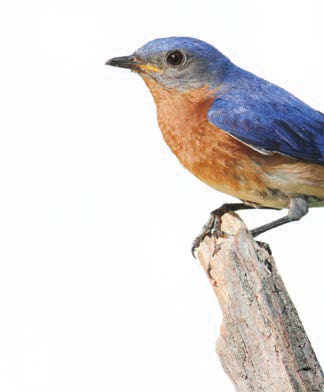
Who doesn’t love a bluebird? David Kilpatrick will answer all your questions about the beloved birds beginning at 10 a.m. on Friday, Jan. 24, at the Ball Visitors’ Center at the Sandhills Horticultural Gardens, 3245 Airport Road, Pinehurst. Then, on Tuesday, Feb. 4, Amanda Bratcher, horticultural agent with the N.C. Cooperative Extension in Lee County, will speak on the subject of decorative ornamental grasses. For additional information or to register for either program go to www.sandhills.edu/horticutural-gardens/upcoming-events.

At the Met

If you can’t get to Cairo this month do the next best thing and attend the Metropolitan Opera’s live streaming presentation of Giuseppe Verdi’s tragic opera in four acts, Aida, at 1 p.m. on Saturday, Jan. 25, at the Sunrise Theater, 250 N.W. Broad St., Southern Pines. For more information go to www.sunrisetheater.com.

One if by Land, Two if by Sea

Join the professional tribute band The British Invaders, dressed in proper black Nehru suits and playing vintage instruments, as they recreate the excitement that swept across America from the other side of the pond in the 1960s. The performance begins at 8 p.m. on Saturday, Jan. 25, at BPAC’s Owens Auditorium, 3395 Airport Road, Pinehurst. For more information got to www.ticketmesandhills.com.

Ruth Pauley Lecture Series

Dr. Katy O’Brien, a past chair of the Brain Injury Association of Georgia, a member of the Academy of Neurological Communication Disorders and Sciences, and a 1994 graduate of Pinecrest High School, will discuss “The Thinking and Talking Brain: Communication, Connection, and Mental Health after Brain Injury and Concussion” on Tuesday, Jan. 21, in BPAC’s Owens Auditorium, 3395 Airport Road, Pinehurst. For more information and tickets go to www.ticketmesandhills.com.

Do You Know That in D Major?

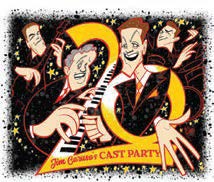
Showbiz superstars hit the stage and things get lively with a few special guests in Jim Caruso’s “Cast Party” with Billy Stritch on the piano at BPAC’s Owens Auditorium, 3395 Airport Road, Pinehurst, on Friday, Jan. 31, at 7 p.m. Every Monday night since 2003, Cast Party’s open mic night and variety show has brought Broadway glitz and wit to the legendary Birdland in New York City. Caruso and Stritch have taken the show on the road, celebrating talent in London, Los Angeles, Las Vegas, San Francisco, Chicago, Austin, St. Louis, Minneapolis, Dallas, Cleveland, Pittsburgh, the Hamptons, Provincetown, Miami, Orlando, Delray Beach and now Pinehurst. For more information go to www.ticketmesandhills.com.

A Good Man

The Sandhills Community College Department of Theater will perform the 1957 off-Broadway production of You’re a Good Man, Charlie Brown based on Charles Schulz’s comic strip Peanuts that first appeared 75 years ago in 1950. Opening night is Friday, Feb. 7, at 7 p.m. in BPAC’s Owens Auditorium, 3395 Airport Road, Pinehurst. There are additional performances on Feb. 8 at 2 p.m. and 7 p.m. and on Feb. 9 at 2 p.m. For information and tickets go to www.ticketmesandhillscom.