Saving the White Rhino

King Trees

Using technology to defeat poachers in Kruger National Park

By Jim Moriarty

Photographs courtesy of Tough Stump Technologies

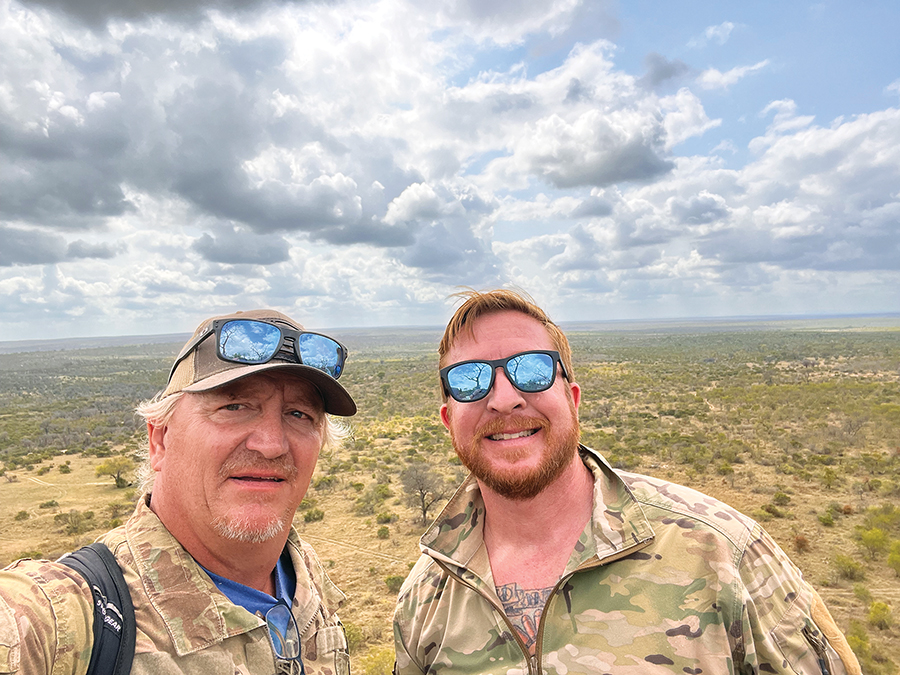
One of them is called Kokwane and the other is Nyeleti. They’re not characters out of The Lion King. Kokwane is Randy Roy, and his African name means grandpa. Nyeleti is Jimmy Larsen, and his African name means night star — the star used for navigation. Together, and with a little help from their friends, they’re doing about as much as two guys nearly 8,900 miles away can do to save the white rhino from extinction.

Last October, in the dark of the new moon, the pair visited Kruger National Park in South Africa to pass along some of the expertise they’d gained in the military to the park rangers who are the sole line of defense between the largest remaining population of white rhino in the world and the people who would destroy them for profit. Roy, a former policeman who worked as a dog trainer for Special Operations on Fort Bragg, made his first trip to Kruger in that advisory capacity in 2016 (though now he’s involved in drone mapping as well), while Larsen, recently retired from the Air Force, was attached to Special Operations and is an expert in telemetry.

It’s not unusual for advances of all types, be they technological or medical, made in war fighting to find peaceful uses, too. “The problem they have in South Africa is very similar to the problem we had in the military: Where the hell is everyone? Where should I go and what should I do?” says Larsen. The phases of the moon are critical because it’s during the full moon, and the days just before and after, when the barbaric poaching of rhino horns is most prevalent, so prevalent, in fact, that it’s called the Poachers Moon.

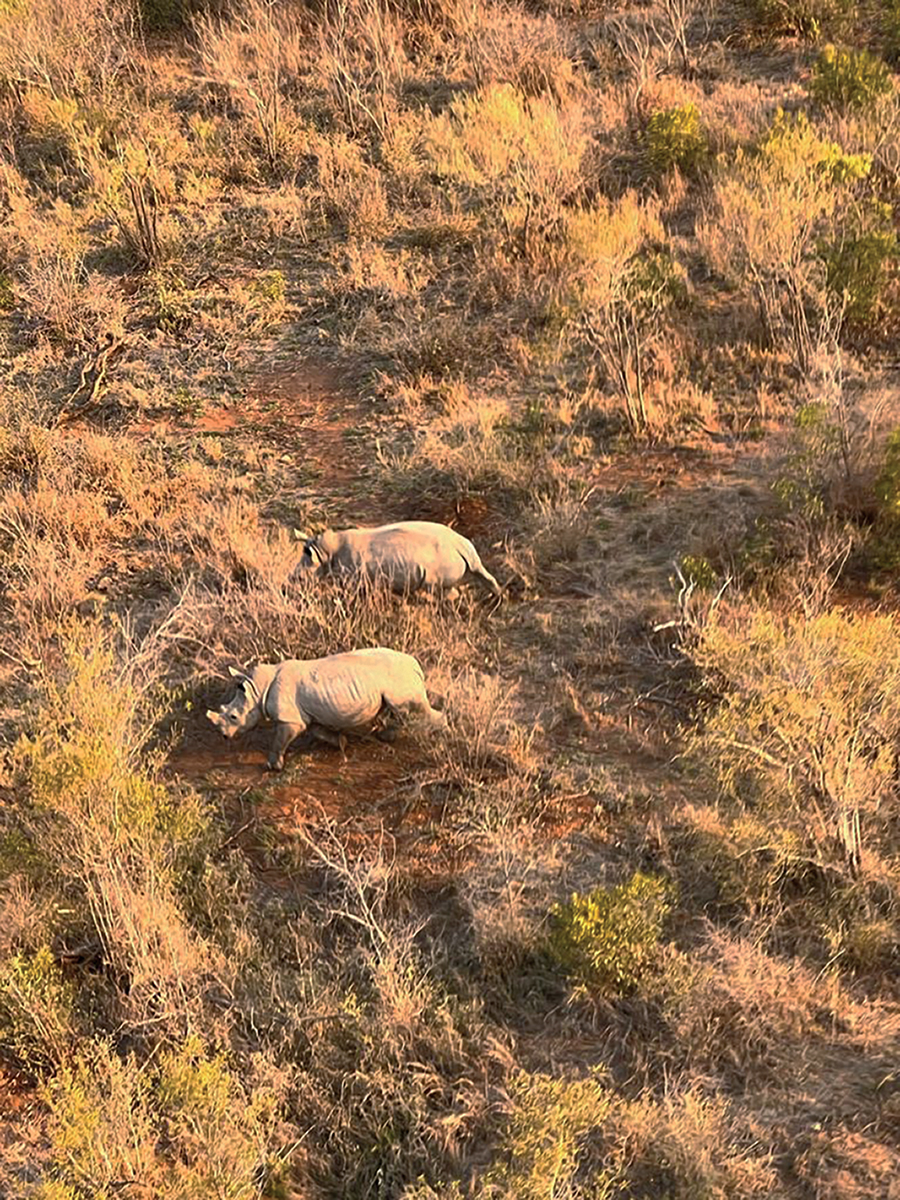
“Sixty percent of the white rhinos left in the world are located on Kruger National Park. The rhino horn is still the most lucrative commodity on Earth — more than gold, more than drugs,” says Roy.


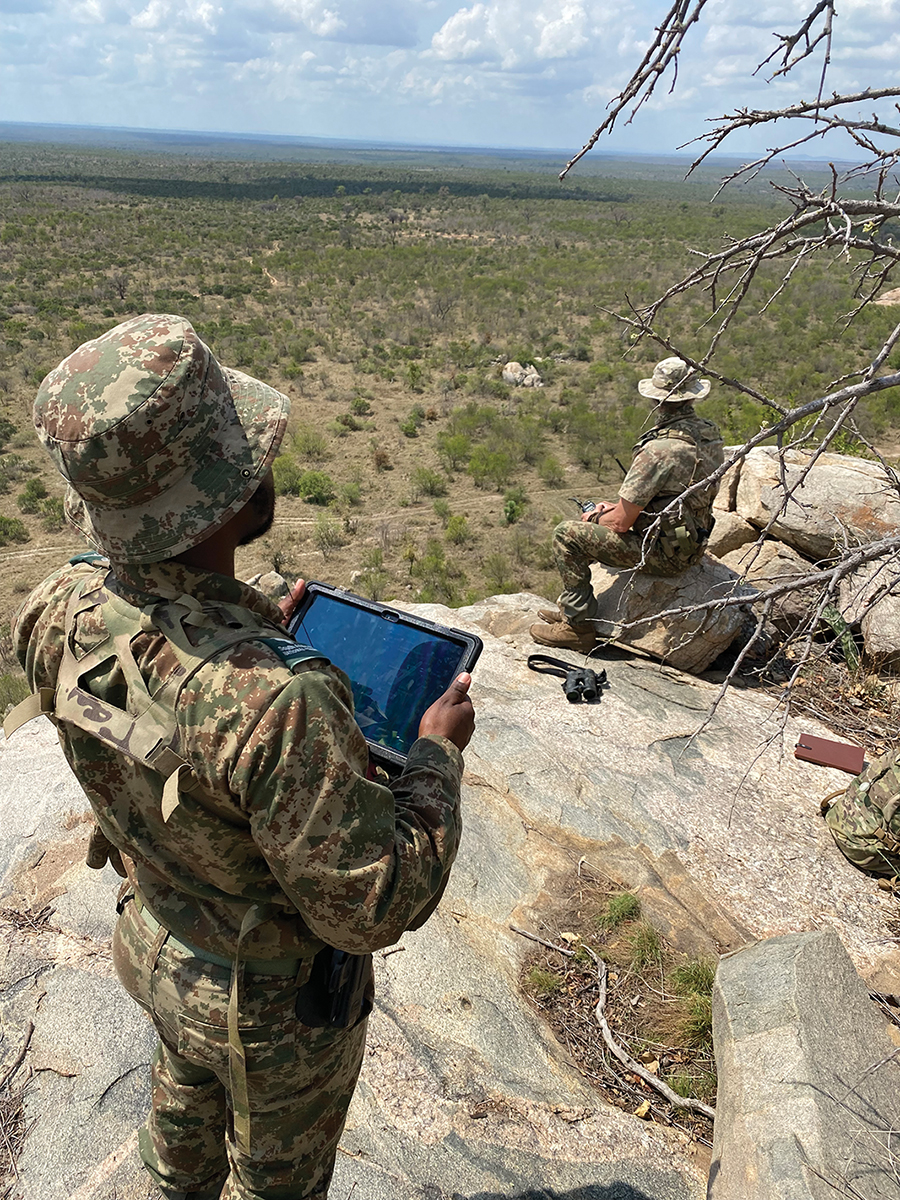
Right: Employing and mastering new technology in Kruger National Park.


Rhino horn is coveted both for its rumored — though debunked — medicinal properties and as a status symbol, using the circular logic that possessing something so valuable is a value in itself. The poaching problem was particularly egregious during the pandemic. The national park was closed, but the poachers were open. “You’ve got the most expensive substance on the planet surrounded by some of the poorest places on the planet, protected by a few dozen people with a budget of next to nothing and a salary of about $500 a month. The fact that there are any rhino left at all is a testament to how good these guys are at their job,” says Larsen. “It’s a wicked problem.”

Kruger National Park is 7,523 square miles, 600 square miles larger than the states of Connecticut and Rhode Island combined. The poachers generally work in teams of three. One carries a rifle, one carries an ax, and one is a runner who carries water. Sometimes they enter the park on foot, easily overcoming fences, and other times they come into the park in one or two private vehicles, pretending to be a family on a day’s outing, then jumping out of the cars to stalk the animals.

The park is not unprotected. Kruger has helicopters donated to it by Warren Buffett, and roughly 300 rangers work in shifts to defeat the poachers. There are sensors that alert the rangers to the sound of a gunshot and seismic cables that can tell them if poachers are in the area. Still, it all comes down to the rangers finding the poachers — hopefully before they’ve downed a rhino and cruelly chopped off most of its face — in the dark, over great distances, when they know the people they’re about to confront are armed.

Randy Roy and Jimmy Larsen


“The poachers are hardened bushmen themselves,” says Roy. “The park is full of lions. It’s full of leopards. It’s full of cape buffalo. Those are dangerous animals. They don’t care. They go in there on foot with the chance of getting a horn. With a poached horn, all of them will make more than they would working at the gas station or working at a restaurant for an entire year.”

During the Poachers Moon park rangers sleep in tents in the bush in teams of their own waiting for an alert. Their dedication to their work is legendary. Two years ago one of them was attacked by a leopard but managed to fight it off. “He shoved his COVID mask into his jugular, wrapped the seatbelt around his neck and drove two hours to a clinic. And came back to do his job when he was healed,” says Larsen.

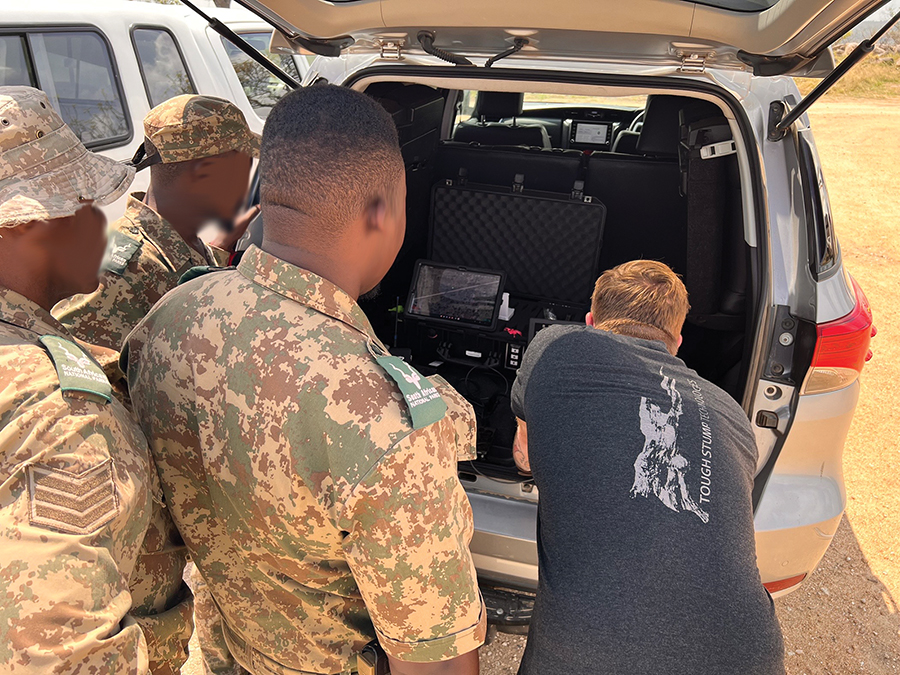
Once the rangers have received an alert is when Roy, Larsen and the company they work for now — Tough Stump Technologies — come into play. “The way the guys were operating, they had the equivalent of a paper map on a table. They say, ‘Go to a point here, a point there,’” says Larsen. With the technology Roy and Larsen left behind on a trial basis, requiring neither Wi-Fi nor cell service, the operations center can send a specific point to a ranger on his cellphone, and he can navigate to it from his position. “Before, there was a guy who talks to another guy who has two radios and one of them is talking to the operations center and the other one is talking to the closest ranger. One is speaking English and one is speaking Swahili. They don’t have coordinates; they’re talking about reference points. Based on what we’d seen (with the new equipment) during a false alarm it went from about 90 minutes to 30 minutes for them to interdict.” In fact, in December, on an actual poaching alert, the response time was five minutes.

The technology leapfrogs language barriers — most of the rangers speak English, but it’s a second or third language to their native Shangaan, Tsonga, Swahili, Afrikaans, etc. — because it’s not necessary to talk. It also minimizes the risk of injury from friendly fire, since all the rangers know where all the other rangers are.


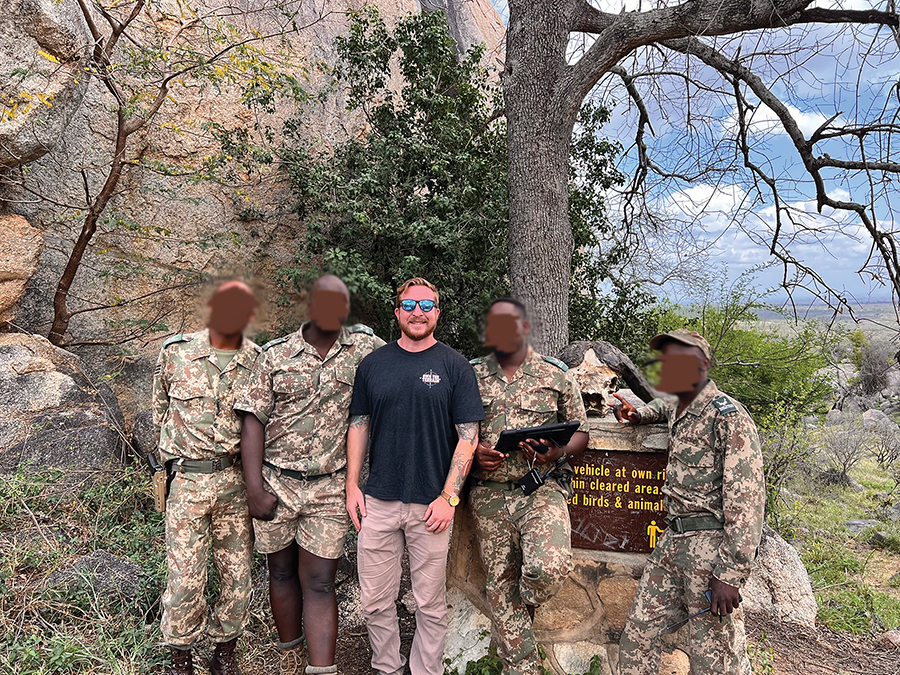
Gathering with the park rangers, their faces obscured for their own protection.


To prosecute the poachers in South African courts, the rangers need to retrieve the gun, the horn and, of course, the poacher. The technology makes the forensics easier, too. “There’s a rhino, there’s a weapon, there’s a horn. Picture, picture, picture. It plots it on the map. There’s no disputing anything,” says Larsen.

The project came about at the suggestion of Stephen Lee, a senior scientist at the U.S. Army Research Laboratory in the Research Triangle Park. Lee, who has a Ph.D. in organic chemistry from Emery University, has traveled to and from Africa for the past 15 years engaged in educational projects and in research, mostly with elephants, whose acute sense of smell led to ways to detect the presence of explosives, narcotics and chemical and biological agents. He became active in both anti-poaching and animal conservation and, because of his Army connections, was aware of the technology Roy, Larsen and Tough Stump had. “I thought this would be ideal,” says Lee. “I thought it would revolutionize how they do counter-poaching.”

The entire technology kit fits in a backpack at a cost of roughly $50,000, money the national park doesn’t have to spare. Because of that Roy and Larsen have begun fundraising, with the help of Southern Pines Rugby Club, for both the technology and the rangers themselves. To help, go to their website, ruggersagainstpoachers.com, where contributions can be channeled through a nonprofit 501(c)3.

The illegal trafficking of rhino horns is done, essentially, by organized crime syndicates. As a result, park rangers and their families can be in extraordinary danger. Their children need to be educated far away from their villages. In this story, as in all communications about the park rangers, their faces are blotted out to protect their identities.

Just like the technology Roy and Larsen left behind, it’s a small step to protect the protectors. And maybe save one of the planet’s most needlessly endangered species.  PS

For more information about the poaching of rhino horns, watch the gritty, tough documentary Stroop: Journey into the Rhino Horn War. Jim Moriarty is the Editor of PineStraw and can be reached at jjmpinestraw@gmail.com.

Tiny Love Stories

Tiny Love Stories

Design by Keith Borshak

The assignment was simple. Well, maybe not so simple. Write a love story in 100 words or less. As the old saying (often attributed to Mark Twain, because if we don’t know where stuff comes from, we always attribute it to Twain) goes, “I apologize for the length of this letter. If I’d had more time it would have been shorter.” The story could be about a significant other, or not. It could be fact or fancy. It just had to be short. As it turns out, wonderful things come in small packages.         Jim Moriarty


It happened on a frigid winter morning, probably sometime around 1965. I was 12. My father was an early riser who loved to cook breakfast. I was too. One morning I wandered out to the kitchen, where he was stirring some kind of white goop in a saucepan.

“What’s that?” I asked.

“It’s called SOS.”

“What’s that?”

“In the Army we called it shit on a shingle. It got me through the war. See if you like it.”

He brought me a plate with the white goop on toast.

I’d never tasted anything so wonderful in my life.

Still haven’t.        — Jim Dodson


She floated through a series of ports over the years, stitched together by a singular guiding thread. A short stretch in her life when she taught piano coincided with a suspended moment in mine when I was in need of a teacher. Shy, stubborn, a fish out of water, piano was my solace. Pat took me in, a boy of 7, sensed a spark and painted a vista of my life in music, as if peering back nostalgically from some future shore. When the time came, she untethered me and set my sail. She loved me. And I loved her.       — David Michael Wolff


He reaches a raisiny hand for hers, squeezes the knotted fingers. The wheelchairs are too far apart for kissing. Second best will have to do. She’s different than six decades ago but still the same. He smiles a golden retriever grin at the blue sky, sunny day. Hibiscuses spill onto the patio. A breeze whistles by. “Oooh.” He winces, like the chill took a bite. Concern lines his forehead. “Is it warm?” He raises a crooked pointer at her bare, bony arms. The words aren’t quite right — but close — momentarily resurfaced from tired gray matter by the habit of love.       — Jenna Biter


In 1999 I was a flight attendant. Returning from Stuttgart, I told a fellow flight attendant about a dream I’d had the night before. In it, I met my husband, who had dark hair, dark eyes and was of foreign descent. We looked all through the plane before take-off but didn’t see him. Before landing, as I was changing my shoes, a man walked up and said, “Excuse me, would you ladies happen to have a lint brush?” The man from my dream was standing right before me. Black hair, brown eyes, of Greek descent. We married 10 months later.       — Cherry Amanatidis


I see Mom’s footprints in the sand, her arches so high only the impression of her toes, the ball of her foot and the heel appear. Her feet turn out at a 5 degree angle, as though she wants to go somewhere else — left? Right? I see her sun-kissed and windswept walking away from me, alone, kicking at sea foam, crouching to admire a shell. She is getting smaller and smaller until she’s a dot on the horizon, and then I see her reappear through wavy heat, returning, defined, getting larger and larger, until she is here with me again.       — Marilyn Barrett


I was recovering from knee replacement surgery and had been sleeping in a recliner in the den. One early morning, just as dawn was starting to gather in the East, Evelyn got up and for some reason came out to check on me. My eyes were closed and she thought I was sleeping. Very gently she tousled my hair and stroked my arm. It felt like I was being touched by an angel. Nearly 56 years into “us” she is still my girlfriend.       — John Dempsey


Early in our relationship, Lisa came with me on a Scottish golf trip — a big stretch for a relatively new player. I got wind of a golf tournament we could play in while there. Lisa was game, provided we would be playing together. “No problem,” I said. Upon arriving, we discovered (to my chagrin) she was on her own, paired with three excellent female players. Had Lisa refused to play and ditched me forever, I wouldn’t have blamed her. Instead she played — as good-natured, endearing and romantic a round of golf as ever there was.       — Bill Case


She watched him from the chair that he placed by the window so that she could “keep an eye on” him. Watch him shovel the snow from the front steps. The kids, he told her, were “coming for the occasion.” What occasion? Was it her birthday? She would ask him later.

“No, my sweet darling, it’s not your birthday yet,” he smiled as he came to her chair side. “It’s the luckiest day of my life, 50 years ago today we said I do.”

Tenderly he cradled her face in his cool hands and kissed her. “Forever, I do.”        — Neville Beamer


“I was there,” Myra said.

I was there,” I said.

That was our last phone call. Feeling the crush of being a first-year med student, Myra was unsure about the relationship with “my favorite sportswriter,” her label on a balloon bouquet I received at the paper.

We talked after she got out of class. I waited at one door of Stone Hall. She waited at another. Each of us left not knowing the other had shown up.

I carried the frustration of that missed connection for 17 years, to another door in another city. When I arrived, Myra was waiting.       — Bill Fields


It was July 3, 2020. Despite COVID cancellations, restrictions and military orders, I had convinced my fiancé to keep our original wedding date. Four days before, he agreed. We secured vendors, rings and cake. The venue? Our apartment.

More than 75 screens with our loved ones’ faces joined our officiant and musicians on Zoom. Two friends used roaming and static cameras to capture it all. I walked down the aisle in our kitchen. We shared our vows in the living room and had our first dance in the dining room. Hope and love found a way. It was virtually perfect.       — Lorelei Colbert


Jackson’s a chocolate Lab. I’ve always wanted a dog, but he’s more for Wylie. We stand under the willow with the water running out the hose, Jackson, Wylie and me. Dandelions cover the lawn: a yellow rebellion.

When Wylie was 4, a pit bull took a tiny chunk of his left cheek.

Wylie turns the bottle of soap upside down and squeezes. You can rub it in, I tell him. It’ll feel good. Wylie’s hand hovers above the river of shampoo, hesitant, and Jackson sits on the wet grass, covered in strawberry-scented soap, straight, still, waiting for my son’s hand.        — Katrina Denza


Having gone on without any rehearsal to cover an actress who had to be out that night, I was shattered from stress. I was dating a fella who said to come “home” to his place after the show.

I rang the doorbell and collapsed into his arms.  He led me to the bedroom, where he had a robe and a hot bubble bath all drawn for me. He settled me in and came back with two glasses of Champagne. He perched on the tub, handed me a glass and said, “Now, tell me everything.”

Why would I not marry him?        — Joyce Reehling


There is a Japanese art of repairing broken pottery by joining together the cracks with gold. It is a reminder to celebrate flaws and missteps in life. Last year every single aspect of my life turned to a misstep. Then slowly, one day at a time, the cracks began to fill with gold. The cracks were filled by little surprises and unexpected moments. Things I would have never conjured up myself. Now I welcome the flaws and missteps because we need to be cracked open! That’s how the light gets in.        — Brady Gallagher


He was 96, drifting in and out of awareness, in a hospital bed in the downstairs of the home he built with his own big hands, the home where I asked him almost 50 years before if I could marry his daughter. She and I were leaving in the morning. As her brother and sisters watched, she took one of those hands in both of hers and, knowing she would never see him alive again, squeezed it softly and said, “I love you, Daddy,” and my heart broke, for her, for him, for us.        — Jim Moriarty


We met in Chapel Hill, on a drizzly Wednesday morning. I tried to postpone, thinking a few more months could do us both good, but you wouldn’t wait. I imagine we were both scared — I certainly was. You were tiny, but that first cry was strong and clear. Every day since then, little girl, I’ve loved you more. Your fearlessness, your voice that has learned to speak and sing and say Mama. I had explored before, across mountains and deserts, combat zones and tourist traps. Now, my favorite adventure is rocking chairs and read-alouds and rainy days with you.        — Amberly Weber


On break from Howard University, I went to a Pinecrest basketball game, where I saw the most beautiful woman in the world. Her cocoa skin, her million-dollar smile, her almond-shaped eyes made time stand still. One of my brother’s friends said, “Don’t waste your time, she won’t give you the time of day!” Not only did she give me her time but she gave me her unconditional love, her hand in marriage, and two wonderful sons. If I could live my life all over again, I would try to find her sooner so I could love her longer.        — Mitchell G. Capel


I was hosting that morning. I wasn’t supposed to be. Usually I served in the evenings. But not today.

The restaurant was empty that morning. It wasn’t supposed to be. Usually Saturday mornings saw lines out the door. But not today.

I saw him when he entered. The man of my dreams. We chatted. I had his server bring him a birthday treat. As he left, I hastily wrote my number on a piece of receipt paper. 

That was 2011.

One day, it might sink in that I get to spend my whole life with this man. But not today.        — Cara Mathis


Not all things begin at the end, but our love story does. After one has their heart shattered into a million tiny pieces, the kind that are so delicate and scatter, like a glass ornament that fell on a hard floor, you don’t ever expect to recover. In a way you don’t. But, if you take two people who suffer the same grief and put them together — much like a punchline — what you end up with is a hopeful and beautiful beginning. You have unbreakable, insane and unexpected love. This I know.        — Beth MacDonald


He’s been gone more than four decades, a victim to that three-packs-a-day habit that snared so many in the mid-1900s. But I loved everything about my dad, Thomas Aiken Pace. He introduced me to Tar Heel sports, Dizzy Dean, Sonny Jurgensen, Frederick Forsyth, a cold Falstaff, a marinated steak, the curveball and a Stingray bicycle. On rainy days, he’d drive me on my paper route, and I think he knew full well I was sneaking looks inside the Playboy magazines in his drugstore. And from this most gentle man I learned there was no good reason to ever raise your voice.        — Lee Pace


I make a big deal of birthdays. Ryan is a Leo, so his comes first between the two of us. “It’s just another day,” he’d say. Naturally, I ignored that for his 23rd and made it my mission to make it the best birthday ever. Giddy was the only way to describe him that day. That’s the smile I hold on to. He repaid the sentiment on my 21st. It’s still the best one. In two more years I’ll catch up to his age, 25, and when I blow out my candles I’ll wish for him.        — Emilee Phillips


We got home from a night at the neighbors. The house was glowing with warm light as we hurried to escape the cold. The dog needed to go out, so I lingered as you went inside. New lights came on and you appeared in the kitchen window in full pajamas and favorite robe. I watched as you danced your funny little dance in the light of the open refrigerator. The dog and I soon returned inside to hear there was no music playing at all. You saw my face and asked me, as you often do, “Why are you smiling?”        — Anthony Parks


1971, London, Soho, lunchtime. I see a large rubber plant walking toward me with attractive, female undercarriage. As it got closer, I recognized its carrier – none other than the beautiful girl in the office I fancied from afar. I asked her if she had had lunch. Two minutes later we were sitting down in an Indian restaurant talking away over the poppadoms like we’d known each other all our lives.  Three months, and quite a few curries later, we were engaged. We just got back from London celebrating our 50th. The Indian is still there. Rubber plant, not so much.        — Tony Rothwell


The curtain rises (if there is one). The stage is set for a love affair unlike any other. The performers rehearsed for this moment when they use their energy and passion to act their hearts out. Tonight’s audience doesn’t care how good you were last night! Something special happens: an electric connection between performer and audience. For well-trained and well-prepared actors, craft and technique disappear. We’re living the performance together. Our love affair transcends time and space. Thriving, flourishing, and changing every night, every matinee . . . everywhere there’s a stage and an audience. Surrender. Let love change us.        — Morgan Sills


You still sport that boyish grin, the same one you used when, after a lovely dinner and seemingly endless tour of Raleigh Christmas lights, you plucked up the courage to ask if I’d “bear your children.” High school, college, Greek parties, Crazy Zacks, and Jimmy V wins. We danced to beach music with sand between our toes, and “With This Ring” still means forever. Sometimes 44 years feels like a lifetime ago until that grin brings me back to our first kiss — stolen while gathering Spanish moss for a Christmas float, when I was 17 and you were 18.        — Kathryn Talton


He was leaning in for a kiss. Should I turn away? I had a boyfriend, after all. Sort of. Everything was happening in slow motion. I’d had a crush on Alan since the day we met, almost three years earlier. As friends, we’d watched each other bend for relationships that never seemed to fit. But love wasn’t supposed to be simple, was it? Being with Alan never seemed like an option. His lips were so close mine were buzzing. Now we were living 300 miles apart. This wasn’t exactly convenient. Yes, it’s what I wanted, but — contact.        — Ashley Walshe

To the Manor Reborn

To the Manor Reborn

A historic hotel transformed

By Deborah Salomon

Photographs by John Gessner

Historical Photographs from The Tufts Archives


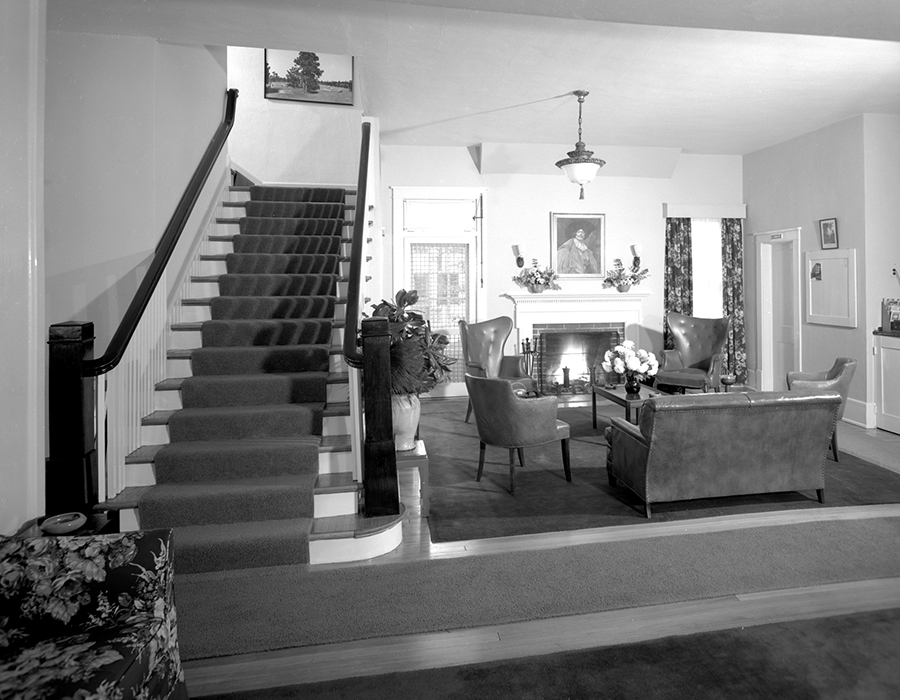
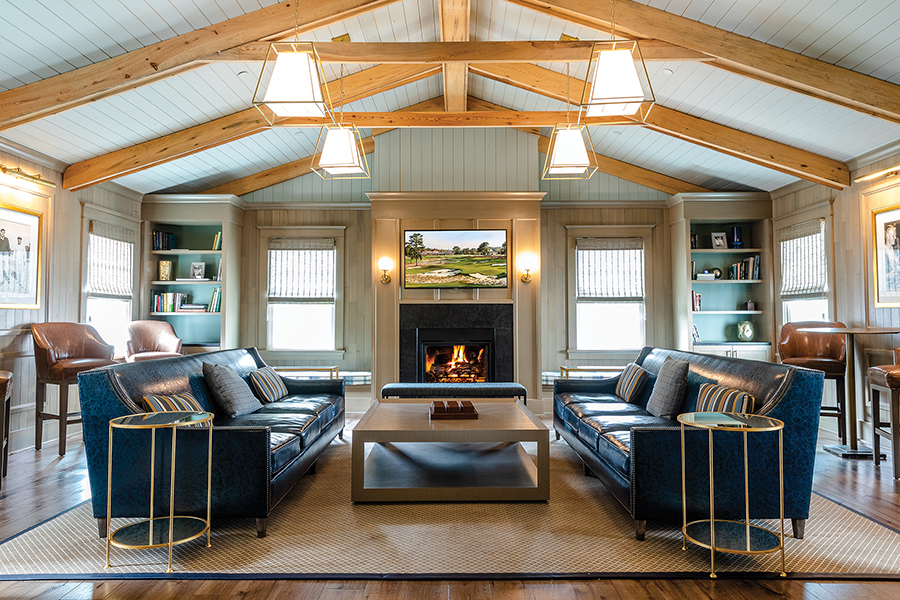
To be memorable, a Christmas pudding needs soaking in brandy. Likewise, a sojourn at Pinehurst’s famed golf courses benefits from après golf immersion: lodgings, décor, potables, camaraderie with fellow-sojourners ready to rehash the day’s round from deeply upholstered chairs at inns where history comes alive via photographs and memorabilia.

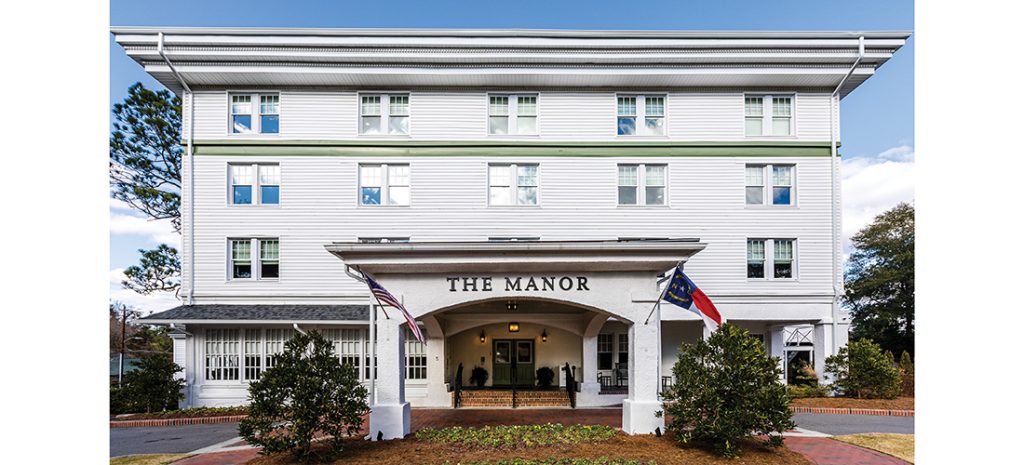
The Manor — a luxury lodge, clubby without being uber-masculine, with a staff imbued with Southern hospitality — is part of this culture. It’s fair to say that, before its massive redo, The Manor had aged to the point it was considered little more than “overflow” lodging for the larger resort. Now it’s an attraction all its own.


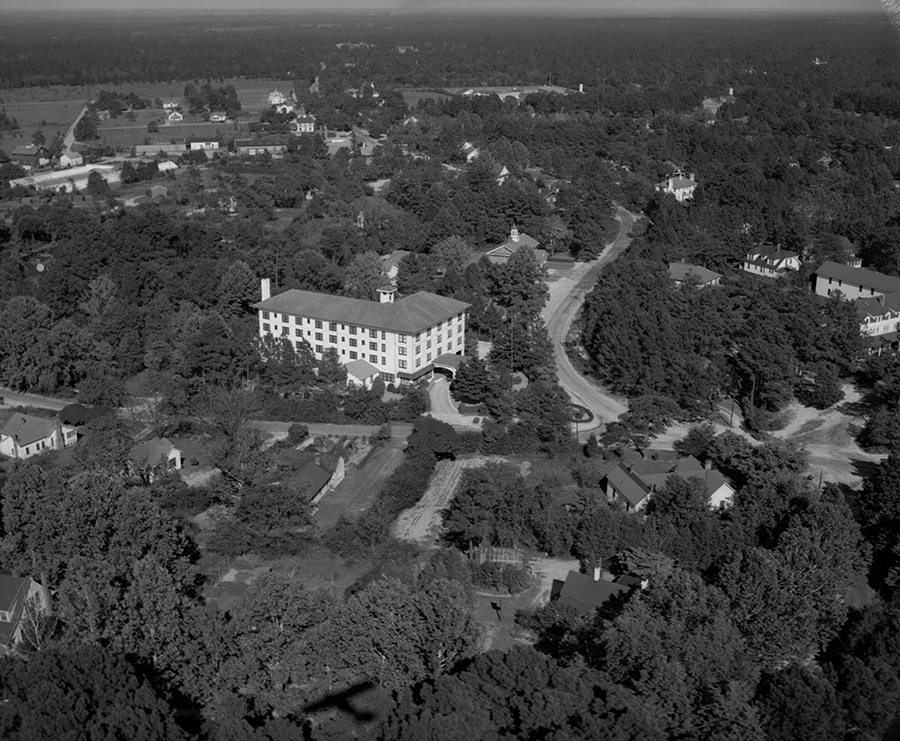
Tucked behind The Pine Crest Inn and almost completely reimaged, The Manor suits groups who require gathering space as well as couples and weekend golfers in search of a game. It’s just far enough from the village center to claim quiet yet close enough to walk to virtually everything, including the wildly successful Pinehurst Brewery just down the hill. It’s intimate enough — 43 rooms — to feel homey yet part of the Pinehurst Resort family giving guests access to pool, spa and all hotel amenities.

And, like her cousin inns Magnolia and Holly, The Manor is steeped in history.


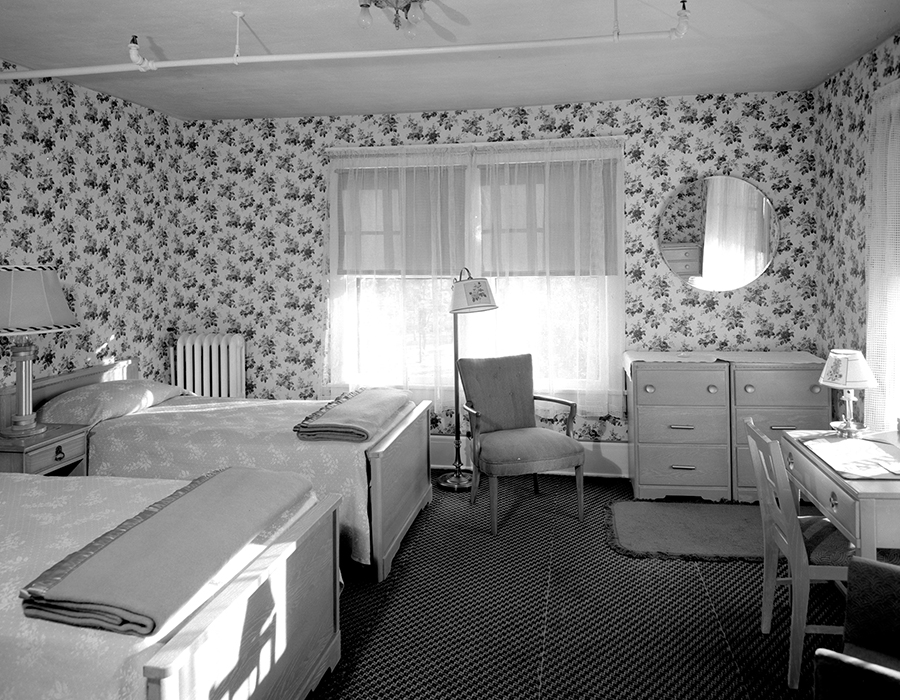
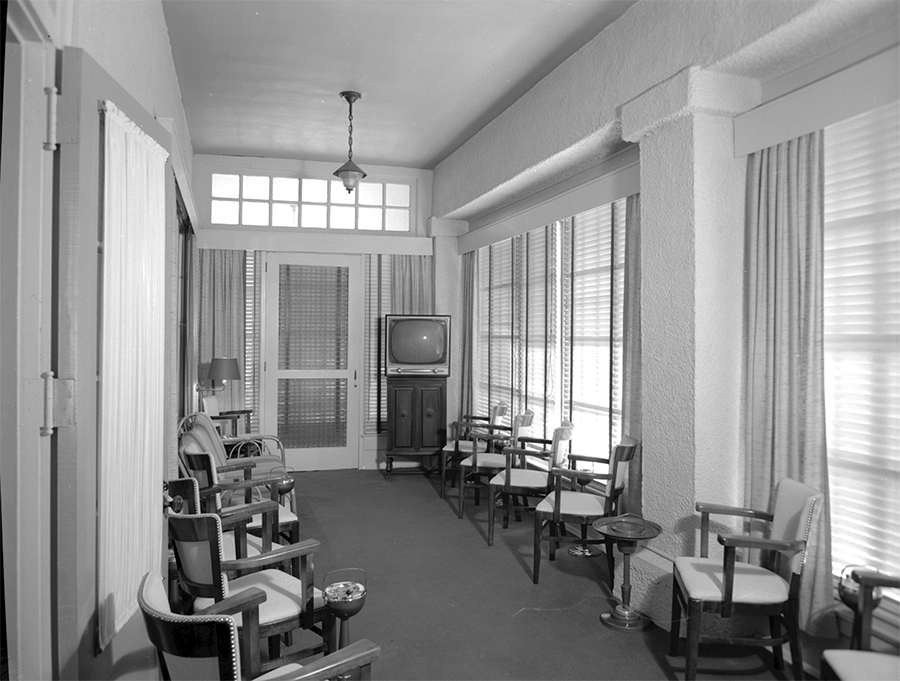
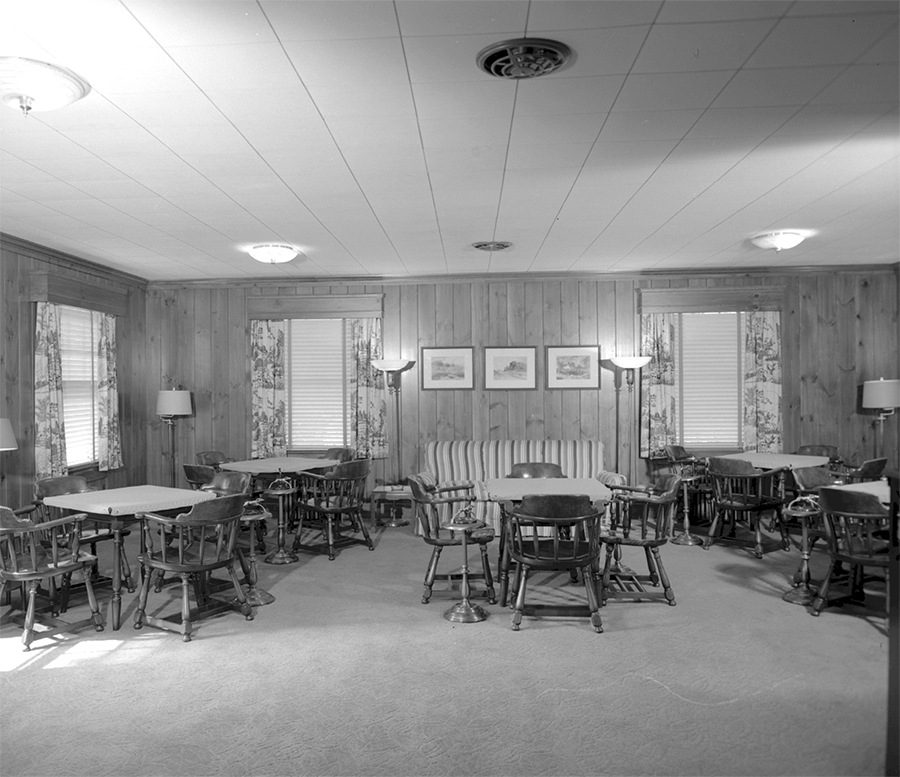
By the early 1900s Pinehurst was gaining popularity as a winter resort, accessible by rail, boasting mild temperatures and upper-crust guests who rented cottages for “the season” or stopped at a hotel. These facilities required staff, and staff required affordable lodgings. In 1899 the Tufts family announced, “A fine new hotel, The Lexington, for employees of the village is being erected.” Here, a single room in the four-story walk-up cost from $17 to $28 monthly; a double, some with bath, $32 to $40. Tufts hired New England hotelier Emma Bliss — also the force behind The Pine Crest Inn — to manage the project. Emma, who is often compared to the Unsinkable Molly Brown, had loftier ideas. In 1922 she applied for a loan to raze, rebuild and gentrify The Lexington. Bankers, aghast at this cheeky woman, finally relented. The Manor opened in 1923 with a sprinkler system, private bathrooms and steam heat. The Pinehurst Outlook described it as “luxuriously furnished, catering to an exclusive clientele with an elevator, also a phone in each room.”

Build it and they will come. “Mrs. H. Guggenheim of New York City has arrived for a week,” the Outlook society page announced.


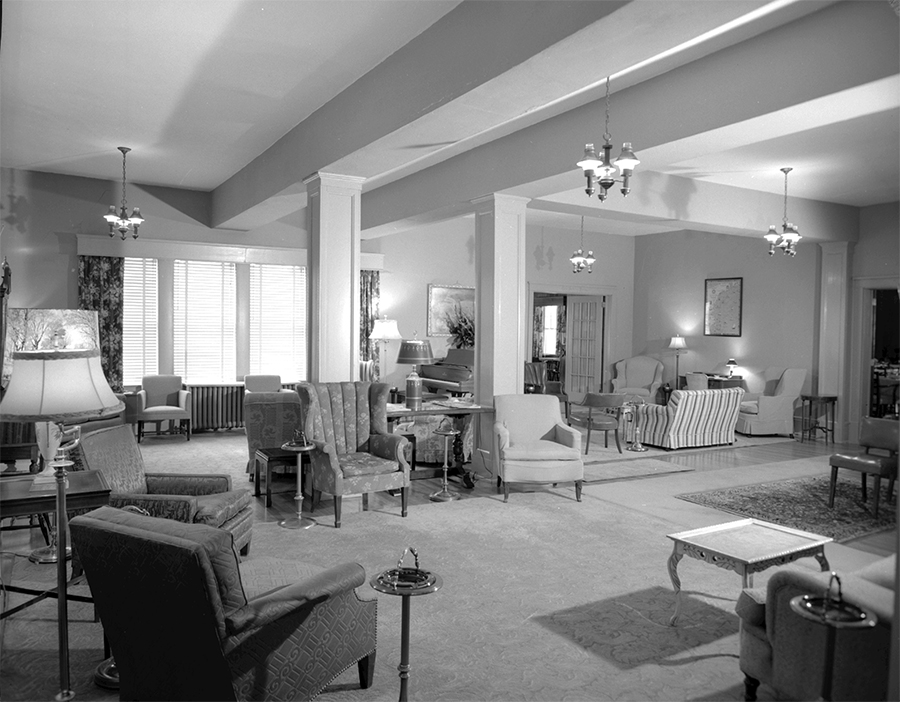
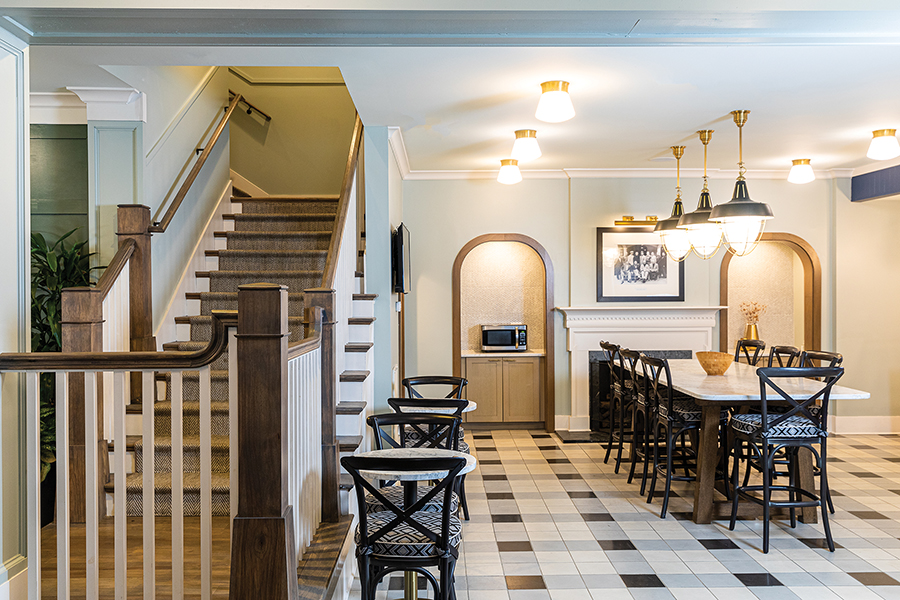
Over the years, The Manor has changed ownership and undergone several renovations. Nothing compares to the last one, begun in 2019, when the building was stripped down to its studs, space reallocated, spa bathrooms installed along with décor based, surprisingly, on blue — a soothing smoky shade midway between UNC Tar Heel pastel and Duke Blue Devil electric. Playing off the blue is a sandy-beige plaid fabric, hereafter dubbed Manor tartan, that appears in both public and guest rooms. Miles of moldings, tray ceilings, multiple columns and a graceful staircase divide the lobby into conversation areas, one with a built-in Scrabble board. Another, The Marketplace, stocks breakfast sandwiches sent over from the hotel kitchen, snacks and beverages.

The frontal exterior, however, remains mostly intact with its circular drive, porte-cochère, and foundation trimmed with Kellarstone, a rough surfaced-material touted for endurance.

The North & South bar anchors the lobby, boasting more than 100 bourbons, whiskeys, craft cocktails plus beer from neighboring Pinehurst Brewing Co., with charcuterie boards to temper absorption. Look up and you’ll see an illustration (circa 1920) of Donald Ross’ first four courses. Look out and you’ll find decks outfitted with fire pits for chilly evenings.


COVID interrupted its introduction, but by mid-January The Manor opened, drop-dead gorgeous, still informal enough to raise Mrs. Guggenheim’s eyebrows.

No matter how comfy the sofas are or how many oversized TVs tuned to sports channels hang from the walls, nothing makes a better first impression than the enthusiastic welcome of Kathy Capel, front desk manager, problem solver, sympathizer, advice giver. Her knowledge of the area becomes crucial during junior competitions, when families arrive from around the globe. After 36 years, first at The Carolina Hotel, then The Manor, Capel’s laugh and twinkle have made her popular with locals and repeat guests alike.

Oh, the tales Capel could tell were she not so discreet. The hands she’s shaken include Sidney Poitier (“He was so handsome.”), Dean Smith, Bobby Knight, Oprah Winfrey, Roy Williams and her buddy Arnold Palmer, whose photograph, with father Deacon Palmer, hangs over the front desk.

Palmer could have stayed anywhere, but The King chose The Manor. “He always had suite 401. He would sit on the porch for hours and sign autographs,” Capel recalls. When Palmer passed away in 2016, “I cried like a baby,” says Capel. “But his daughter came down last year to see our pictures of him.”

In the 1980s central air conditioning, then warmer winters extended the “season,” attracting a clientele seeking a more contemporary setting. In April 2020, the resort’s owner, Bob Dedman Jr., told Business North Carolina magazine: “We’ve always gone back, tried to be more authentic, restore the character of Pinehurst but at the same time, contemporize so that its legacy will last. Part of it is looking backward but another part is always looking forward.”

It means rocking chairs on the porch, craft beers on tap, Wi-Fi, and Kathy Capel calling out “Welcome to The Manor” from her forever position at the front desk.  PS

Monarchs of the Forest

Almanac

The wonder of champion trees

Story and Photographs by Todd Pusser

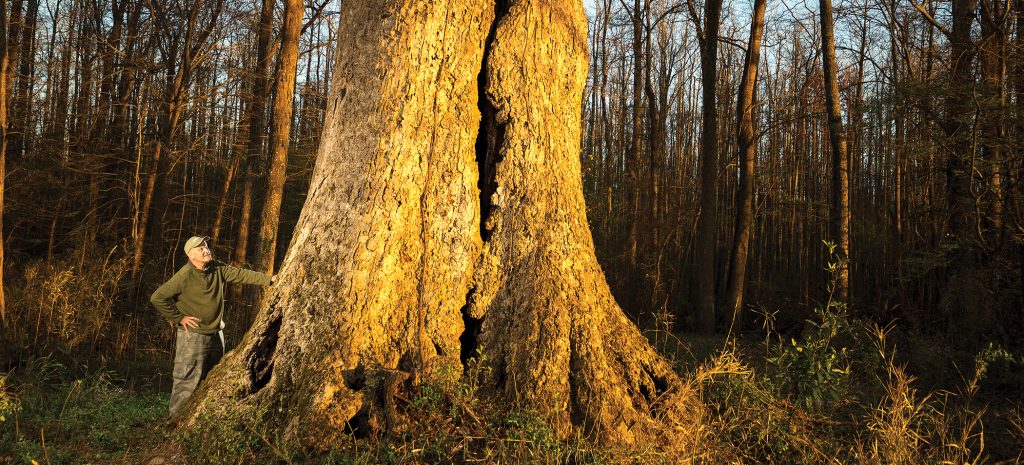
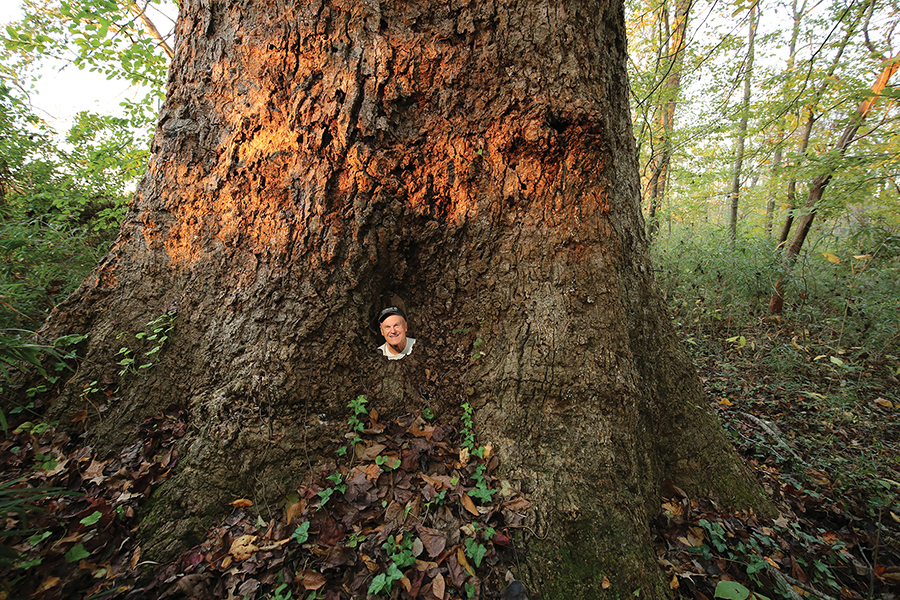
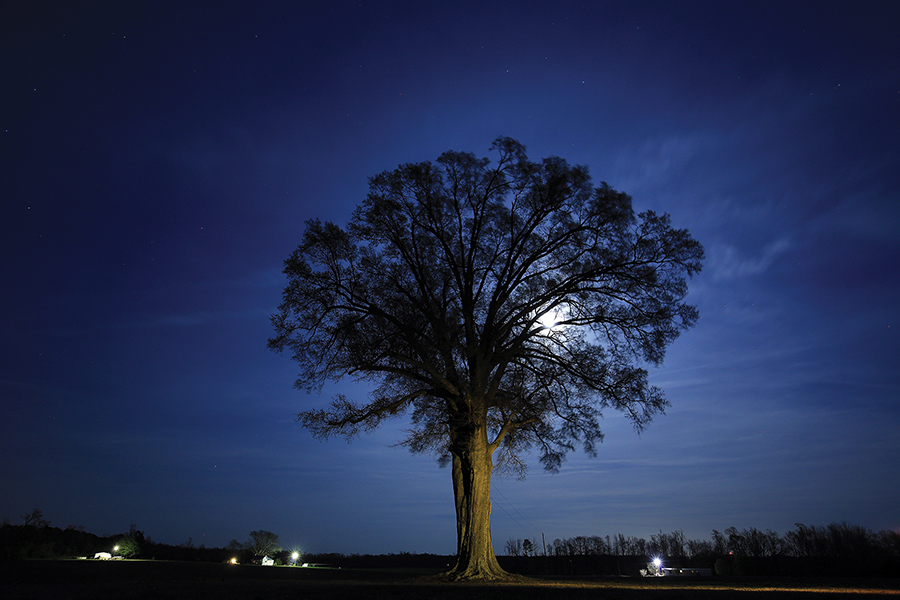
This and above photograph: Gary Williamson and National Champion Tulip Poplar in Chesapeake, VA


It was a tip from a local hunter that first alerted Gary Williamson to the presence of the tree. Standing near the edge of a plowed field, just across the North Carolina line in Chesapeake, Virginia, the tulip poplar dwarfs all other trees nearby. Well over 100 feet tall and 32 feet in circumference, it is the largest of its kind anywhere in the United States.

The tree, while alive and healthy, is hollow on the inside, making it impossible to accurately age. Tulip poplars can live for several hundred years, and it is likely this giant was alive long before the United States declared its independence from Great Britain. Once, while leading a field trip of big tree enthusiasts, Williamson managed to crowd 15 people inside the tree at one time with room to spare. The tree is a survivor, having lived through droughts, wars, hurricanes, and the unrelenting pressure of the saw blade.

Mankind has long been fascinated by trees, especially large trees. The fascination reached a fever pitch in the early 1800s when explorers, searching for gold in California, reported the first encounters with coastal redwoods and giant sequoias, those blue whales of the plant kingdom. Reaching heights of over 350 feet, with diameters well north of 19 feet, these gargantuan trees are the largest living organisms on Earth. It has been estimated that one particular giant sequoia, appropriately nicknamed “The President,” holds over 2 billion leaves among its branches.

National Champion Darlington Oak Tree in Edgecomb County, NC


When Europeans first colonized America, they set about the task of felling the continent’s vast virgin forests with axes and handsaws, using the wood to make houses, barns, ship hulls and railroad ties. The advent of steam-powered logging machinery, followed later by gas-powered chainsaws, served to increase the efficiency of logging, and by the mid-20th century, virtually no acre of forest in the United States remained untouched by the saw blade.

Around this time, in the early 1940s, the American Forestry Association (now called American Forests) created The National Register of Champion Trees to encourage members of the general public to find, document and preserve the largest remaining specimens of this continent’s (approximately) 750 species of trees.  The program (www.americanforests.org) created a unique scoring system to help determine if a tree qualifies as a champion.

The formula is straightforward: Take the circumference of the tree (in inches) at breast height, add the height of the tree (in feet), and then add one-quarter of the average crown spread (in feet) for a total point score. The program is active in all 50 states as well as American territories like Puerto Rico. Each state maintains its own list of the largest trees found within its borders, crowning them state champions. If a state champion tree proves exceptionally large, it may qualify for the Register as a national champion.

Anyone can nominate a tree for the National Register. There is no need to be a botanist, forester or professional arborist. All it takes is a keen eye and a sense of curiosity for the natural world. 

Few people have nominated as many champion trees to the National Register as Virginia natives Gary Williamson and Byron Carmean. For the past four decades, both men (each in their mid-70s) have traversed the backwoods of North Carolina and Virginia, searching for superlative trees. Most weekends will find them kayaking rivers, walking floodplain forests, driving remote backroads, and searching old cemeteries and estates for the next champion.

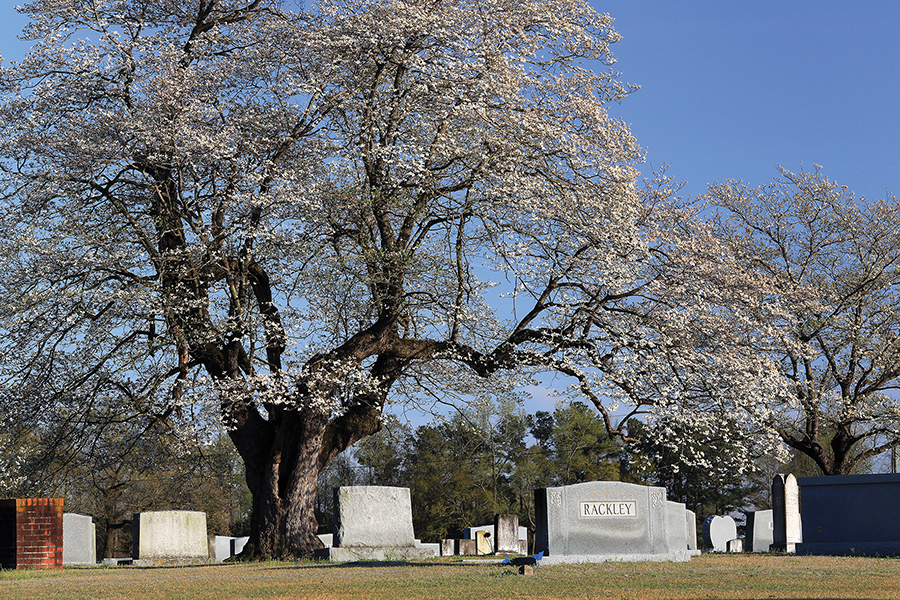
State Champion Flowering Dogwood in cemetary in Clinton, NC


In that time, the pair have nominated some truly extraordinary trees. Among them are North Carolina’s largest tree, a rotund bald cypress (with a total score of 558 points) growing along the Roanoke River in Martin County; the national champion Darlington oak tree (which stands alone in a farmer’s field near Rocky Mount); the national champion silky camellia, whose broad, fragrant flowers brighten up the springtime forest in Merchants Millpond State Park; a state champion Hercules club (an unusual looking tree covered in large thorns) in the town of Duck in the Outer Banks, and a state champ Shumard Oak growing along the nutrient rich soils of the Deep River. Over 142 feet tall, with an average crown spread of 110 feet, the oak can easily be seen on Google Earth.

I recently joined Williamson on a cool winter’s day to see and photograph the national champ tulip poplar growing in Chesapeake. Bearing similarities to European poplars and having white, tulip-shaped flowers gives the tree its common name. However, the tulip poplar is in no way related to poplars or tulips. Instead, it’s a member of the magnolia family and is the tallest hardwood tree in North America.

Taking pictures of a champion tree is inherently difficult. There is simply no way to sufficiently capture the essence of “bigness,” that wow factor, within a two-dimensional frame. No matter what lens is used or at which angle you shoot, the resulting image will inevitably diminish the size of the tree. Nevertheless, I persisted for well over an hour, posing Williamson at various positions around its trunk and even inside the tree. 

Finally, as the sun was sinking below the horizon, I stopped taking photos and simply stood at the base of the living monarch, staring up toward its immense crown. Running my hands over its furrowed bark, I thought of what the forests looked like at the time my ancestors first set foot on this continent. Here, standing before me, was a shining example of that bygone era and one of the true wonders of the natural world.  PS

Naturalist and photographer Todd Pusser grew up in Eagle Springs. He works to document the extraordinary diversity of life both near and far. His images can be found at www.ToddPusser.com.

Ready to Ride

Ready to Ride

A French feel in the Sandhills

By Deborah Salomon


Credit James Boyd, and mild winters, for enticing foxhunters to Moore County. Eventually, some branched out to eventing, dressage, jumping. The Walthour-Moss Foundation furthered the equestrian cause. Soon horse people from Northeastern cities began wintering their steeds in Southern Pines, accessible by rail and so much closer than Florida. They built small apartments — “hunt boxes” — over the barns, graduating to year-round estates.

This tight-knit community created and maintained an active social life. Their houses, located between Connecticut Avenue and Youngs Road, grew bigger, better equipped and less rustic. Positioned near the top of this heap is the retirement home of Chris and Sallie Lowe, 5,000-plus square feet styled à la French chateau, on 10 grassy acres sloping to a pond.

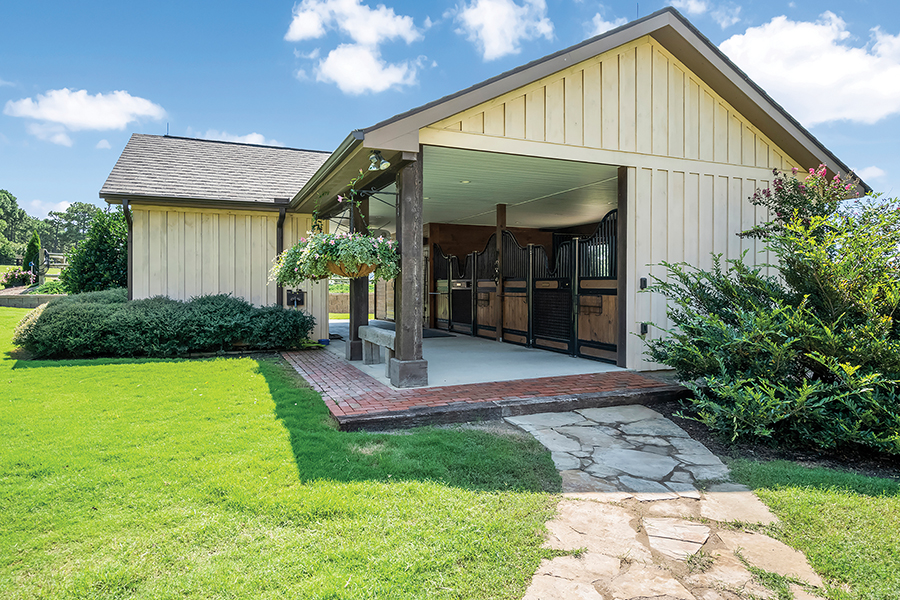
In the barn (with tack room), two stall doors are topped with wrought metal. A full-sized dressage arena borders split-rail pasture fences while a row of tall, thick elaeagnus bushes separates the chateau from a narrow private road.

Sallie rides the horse, Chris rides the tractor, which has its own garage. Both are Virginians by way of Vermont.

How this happened could be a story written by Boyd himself, or maybe his buddy Thomas Wolfe.


Most equestriennes start young. Not Sallie. Her parents, suspicious of the lifestyle, guided her into high school sports, where at 6 feet tall and athletic, she excelled. In 2011, now married, a mother and teacher living in Vermont but hating the cold winters, she won a trip to Southern Pines at a fundraiser. “This is it,” she decided, after driving around. “This is where I want to spend the rest of our lives.”

No problem for Chris, who dubbed her adult riding quest “keeping Sallie sane.” In 2011 they bought a property close to town but with “a country feel,” and rented a place during construction . . . of what?

A year spent in France left its mark on Sallie. She looked for an architect who would interpret her ideas rather than imposing current trends. Research led her to Designing Your Perfect House and other titles by William Hirsch. Perfect! Imagine Sallie’s surprise, discovering that the internationally lauded architect and author lives in Seven Lakes. Chris, whose father was a contractor, worked happily alongside builder Mark Lally’s crew.

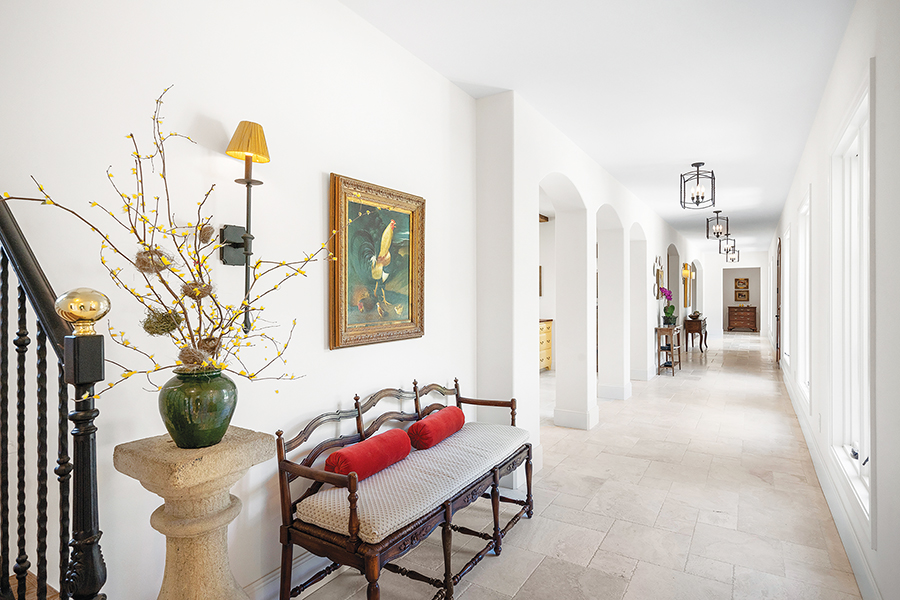
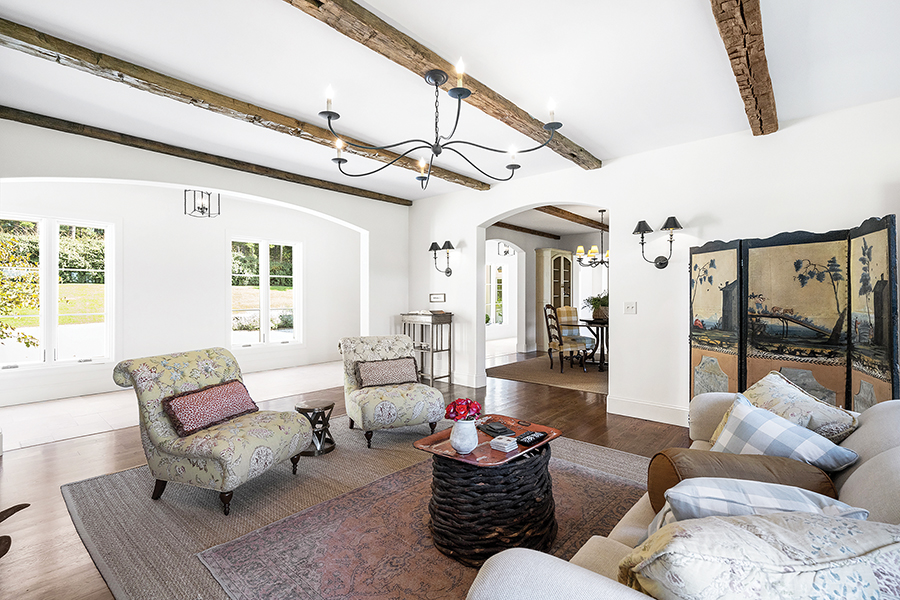
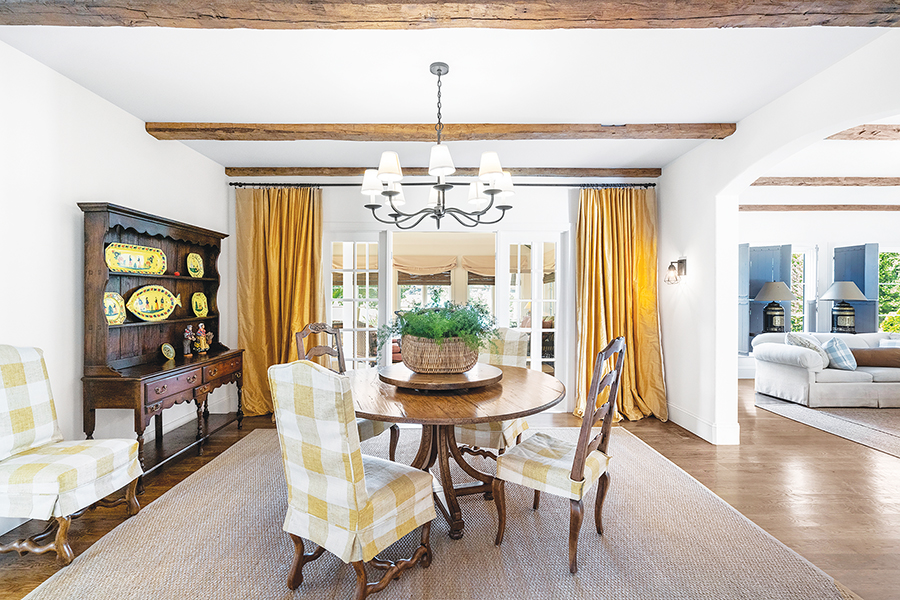
Sallie presented Hirsch with some unusual requests. She had learned that authentic provincial chateaux are not grand at all, but rather informal country homes, sometimes with animals occupying the lower floor. “I’m not a fan of big open spaces,” she says. As a result, the main floor, although enormous, is a succession of moderately sized rooms — workroom, kitchen, sunroom, dining room with unusually small round table and large lazy Susan, living room, all with arches opening onto a 90-foot loggia (front hallway) with white travertine floor blocks arranged randomly.

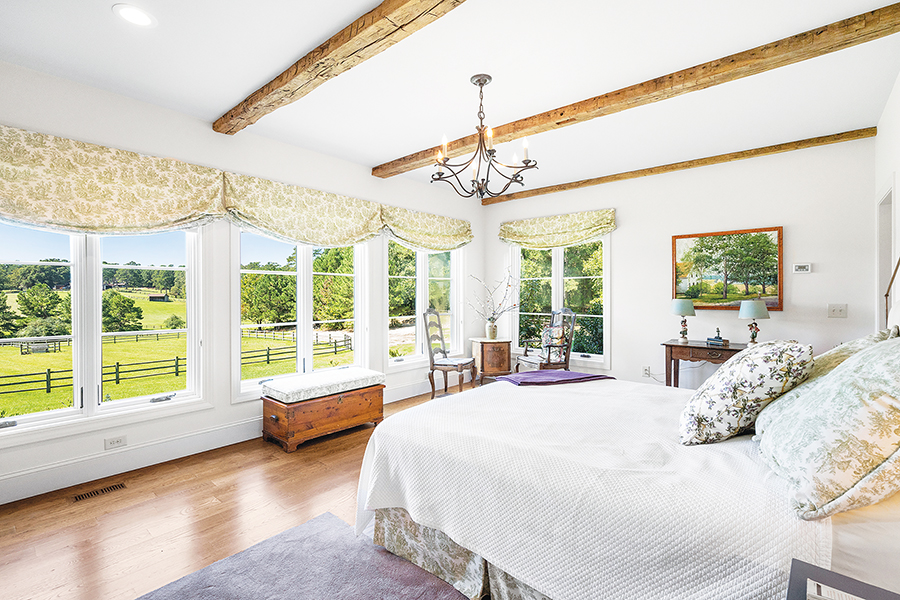
At one end of the loggia, a triple garage; at the other, the master suite. Windows everywhere, allowing unobstructed pasture vistas to become part of the decor. Quimper pottery, made in Brittany for 300 years, hangs from the walls. Paintings depict Parisian scenes. A massive antique French armoire approaching the 9-foot ceiling dominates the master bedroom. Laundry equipment is part of his-and-hers dressing rooms.

“The mother in me needed a room for each son,” Sallie admits. They have three — two are married, one with a grandson — all accommodated upstairs, which includes a guest apartment with sitting room, bedroom, kitchenette and one of five bathrooms which are bright and attractive but hardly spas. 

A French chateau doesn’t do spas.

The French experience also influenced Sallie’s palette, with yellow coming out the winner — not lemon or daffodil but a muted hue, perhaps butter diluted with crème fraîche, or a silky béchamel. This hue covers exterior walls with contrasting purplish-blue shutters and, surprisingly, the footed kitchen cabinets.


Ah, the kitchen, showplace of the American luxury home. Sallie wasn’t interested in sterile white or professional-grade appliances; more important to her, a backsplash composed of weathered, hand-painted tiles in colors and motifs that continue the European country chic feel. Chris points proudly to the top of a Vermont sugar maple chopping-block table inserted into the island. “It’s from my parents’ home. When I was young I would sit on it and talk to them.”

Furnishings combine antiques with spotlight pieces. In the living room, a coffee table contrived from twisted vines is topped by a toile tray, and a pair of oversized, heavily tufted slipper chairs face two Asian lamps made from tea canisters. In the sunroom the drawer of a game table, from Sallie’s lineage, holds a Washington Post front page dated 1882.

“We’re not super-formal,” Sallie concludes, “but we give plenty of dinner parties with china and crystal. I wasn’t ready to give that up.”

Not your ordinary horse farm, even in an area known for elaborate installations. “I knew what I wanted and I held my ground,” Sallie says. Meaning custom-designed and custom-built, right down to the baseboards. Geothermal heating and cooling. A courtyard covered with pebbles, not grass. Splintery decorative ceiling beams from the Amish. A sweet rescue pup named Gracie. Outbuildings — one containing Chris’ man cave — that complement, but don’t detract from the main house which, sadly, Sallie and Chris never got around to naming.

How about Pièce de Résistance?  PS

Towering Inferno

Towering Inferno

Sixty years ago a wildfire ravaged the Sandhills

By Bill Case
The day dawned brilliant and balmy at Tom and Nancy Howe’s Aurora Hills farm in Pinebluff, North Carolina. It was a gorgeous spring morning on Thursday, April 4, 1963, except for the gusty winds that would blow throughout day. Tom finished breakfast with Nancy and the couple’s two young boys, Tommy Jr. and John, climbed into his pickup truck and drove to Pinehurst, where he worked at Clarendon Gardens, owned and operated by his father, Frank Howe.

Today, Clarendon Gardens is an upscale neighborhood off Linden Road, but in 1963, it was a magnificent, nationally acclaimed 160-acre botanical garden, attracting thousands of tourists who marveled at Frank Howe’s vast array of azaleas, rhododendrons and hollies. Springtime was Clarendon Gardens’ high season, and Tom Howe anticipated a busy day. The 25-year-old could never have foreseen the harrowing, grueling hours he and other Moore County residents were about to endure. 

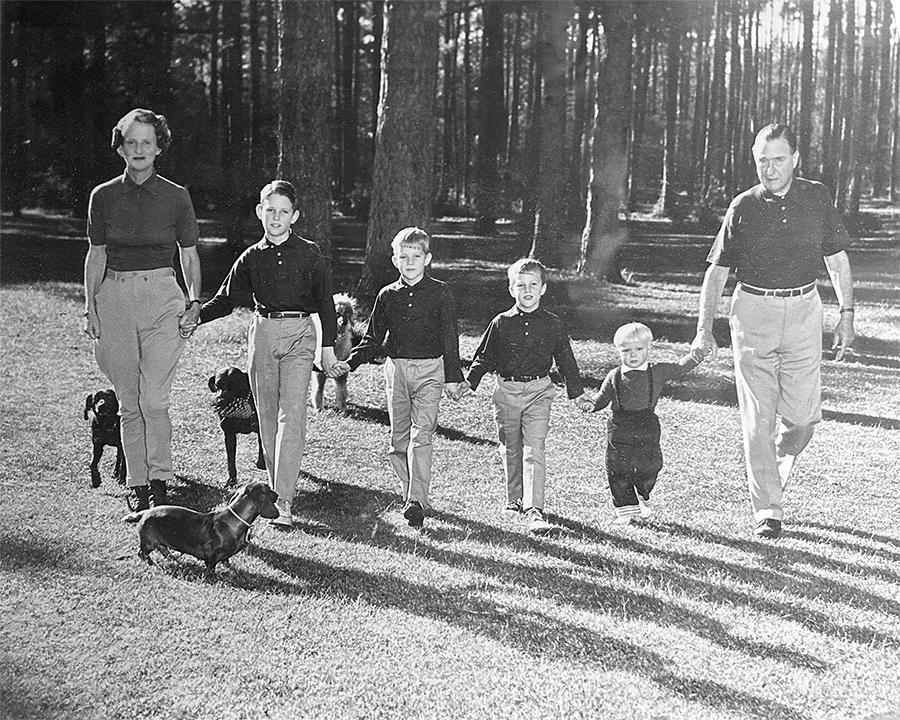
Two miles down Linden Road, west of Clarendon Gardens, lies the nearly 2,000-acre Sandy Woods Farm. Owners Mr. and Mrs. Q.A. Shaw McKean (Shaw and Katharine), having just arrived from Europe, were experiencing a bit of jet lag that morning. Their 6-year-old son, David, was playing in the McKeans’ rambling brick house while his three older brothers — John, Tom and Robert — were away at boarding school in the family’s home state of Massachusetts.

Shaw, a 1913 Harvard University grad and standout polo player, had amassed his fortune in banking and investments. His wife, the former Katharine Winthrop, was descended from Puritan John Winthrop, the first governor of the Massachusetts Bay Colony. She’d been a top-ranked tennis player during the late 1930s and early ’40s, winning the 1944 United States Indoors title.

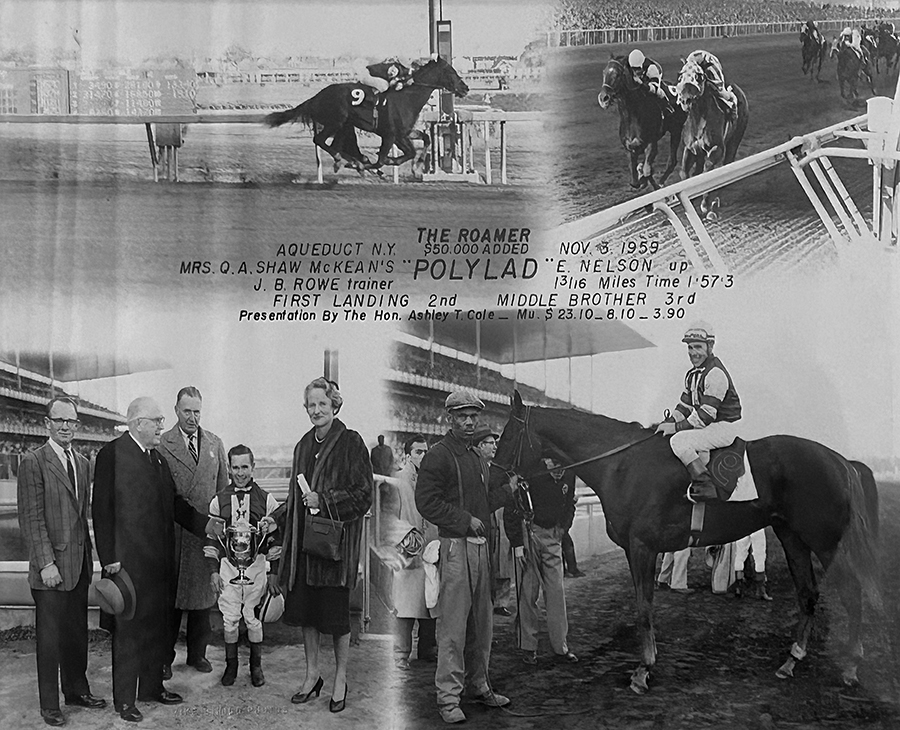
Active participants in big-time Thoroughbred racing, the McKeans maintained an impressive stable of two dozen horses at Sandy Woods. The most prized was Polylad, winner of several important races including the 1961 Massachusetts Handicap in which the 5-year-old horse was spurred to a photo-finish victory by Hall of Fame jockey Eddie Arcaro. With major summer races upcoming, Shaw and Katharine would have been eager to catch up with head trainer John Donahue regarding the fitness of Polylad and his stablemates.

At around 10:30 a.m., when Donahue knocked on the McKeans’ front door, he was carrying more pressing news. A forest fire was burning several miles west of the farm. The operator of a small sawmill in West End had left a saw running while taking a water break. The unattended equipment threw off a spark, which in turn ignited a small brush fire. Before anyone knew what was happening, flames began spreading through the pine forest, supercharged by the wind and tinder box-dry conditions.

There was the prospect that intervening county roads could provide an effective firebreak, keeping the blaze away from Sandy Woods and populated areas. Given the prevailing wind, even if the fire leapfrogged the roads, it seemed likely to follow a path that would keep it north of the farm. While not an immediate threat to Sandy Woods, the situation was worrisome enough that Donahue and the McKeans considered the steps necessary to protect the property and themselves if the fire headed their way.

Meanwhile, Moore County forest ranger Travis Wicker was growing increasingly alarmed. He feared the exceedingly dry conditions, coupled with high winds (gusts between 40-50 miles per hour), were a recipe for disaster. Later, Wicker said the danger became magnified when the towering flames “jumped the old Jackson Springs Road. It got hot (out of control), and we knew we had a monster on our hands.”

It seemed nothing could stop or slow the fire. According to The Pilot, the blaze “skipped over roads and fields as if they weren’t there.” Driven by the wind, long prongs of intense flames licked out in multiple directions. The monster became multi-headed, and it was difficult to predict its precise path. There were fears the fire would strike downtown Pinehurst, then vault into the area’s other populated communities. Moreover, three lesser (albeit substantial) fires were burning in other parts of the county.

Fire departments from Moore County and elsewhere were dispatched to far-flung areas of the Sandhills. Coordinating them presented an organizational nightmare. The emergency code 911 didn’t yet exist, and radios didn’t link the volunteer fire departments to a central command center. “When we needed a rural fire truck to do a particular job, we had to send out another truck to hunt him up and give him the instructions,” said Wicker.

When the wind abruptly swung 45 degrees south, the path of the blaze shifted away from Pinehurst and straight in the direction of Sandy Woods’ stables and kennels. The McKeans and Donahue were suddenly faced with a worst-case scenario. But help was on the way, not only from local fire departments but also the McKeans’ friends and neighbors. Among them was Tom Howe, who hauled Clarendon Gardens’ spraying equipment to the scene.

He and other volunteers endured treacherous drives to the farm, blindly feeling their way down Linden Road through intense, spark-bearing black smoke. Given the near-zero visibility, they risked driving right into the inferno. Two brave responders were forced to dive under their truck and lie flat on the pavement until surrounding flames passed by them.

Donahue’s first priority was the evacuation of the horses. Using Sandy Woods’ own horse trailer along with another furnished by legendary harness racing great Octave Blake, Donahue transported 10 of the McKeans’ 24 horses, including Polylad, to safety. But before the trailers could return for a second load, the flames had reached the paddock area. Donahue faced an intractable dilemma. The remaining horses were doomed if he turned them out into the now fiery paddock. Hoping against hope that the blaze would skirt the stables, the trainer decided holding the frightened horses in their stalls was their best bet for survival.

Tragically, they were doomed. The Pilot reported that “with the gale shifting winds, there was no safety anywhere. In a second’s time, it seemed, the stables were ablaze from heat and flying sparks as well as the kennels, and all were engulfed in the inferno.” 

The wildfire now loomed within striking distance of the McKeans’ brick home, a half-mile from the stables. Responders feverishly dug a firebreak trench around the periphery of the house while Howe, horseman Pappy Moss, and firefighters from Vass and Pinehurst drenched the structure and surrounding vegetation.

David McKean, now 65, has vivid recollections of his mother appearing at the back of the house and telling him, “We have to leave right now!” The anxiety in her voice was in such marked contrast to her usual unflappable demeanor that 6-year-old David realized the situation was gravely dangerous.

The McKeans hustled to the family car. On their way out the door, they managed to grab a silver trophy commemorating one of Polylad’s victories and a cherished 18th century oil painting by English artist George Morland.

Exiting the farm proved more perilous than it would have been to sit tight at the house. The farm’s mile-long drive to Linden Road had become impassable due to the fire at the stables, so Shaw and Katharine chose a seldom-used back way through the property that led to Roseland Road. David recalls that as his mother drove down the remote path, “there was a burning tree in front of the car — I don’t remember if it fell as we were driving, or if it was already there — and she attempted (unsuccessfully) to drive over it.” With the fire spitting at the McKeans from the rear, it was impossible to back the vehicle out of danger. David and his parents abandoned the car and ran to an adjacent field.

They were spotted by Pinehurst Harness Track veterinarian Dr. John Peters, who came to their rescue and transported them to safety. The McKeans’ house, though scorched in places, escaped serious damage, but their automobile was burned to a crisp. Also destroyed were Polylad’s trophy and the Morland painting, both left behind in the trunk.
Returning home from Chapel Hill in the early afternoon, Pinebluff Mayor E.H. Mills noticed black smoke in the sky west of Pinehurst. Mills followed the smoke to its source at Sandy Woods. Arriving at the farm, the mayor witnessed the frenzied efforts of volunteers to create firebreaks and he, too, pitched in to help until he was met by reporter Valerie Nicholson, covering the disaster for The Pilot.

“Mayor,” she said, “you better get to Pinebluff. The fire is headed there. Your town could burn up.” Mills ran to his car and drove through the haze toward home. On the way, he pondered how his community of 600 could marshal the resources to repel the fire. Tom Howe, concerned with the safety of his wife, children and farm, also rushed home after the blaze at Sandy Woods was under control.

As the fire moved south toward Pinebluff, it caused considerable damage. According to the Sandhills Citizen, it “licked out a vicious tongue at the farming community of Roseland, two miles from Aberdeen, gobbling up two homes and nearly all outbuildings with some 10,000 chicks in two farmyards.” At the Country Acres subdivision off Sand Pit Road (then Gravel Pit Road), it consumed a house and trailer. “With the fire burning right into the yards,” reported the Citizen, “the homeowners watched in an anxious group from the highway intersection.” Several houses caught fire and responding firefighters beat out the flames.

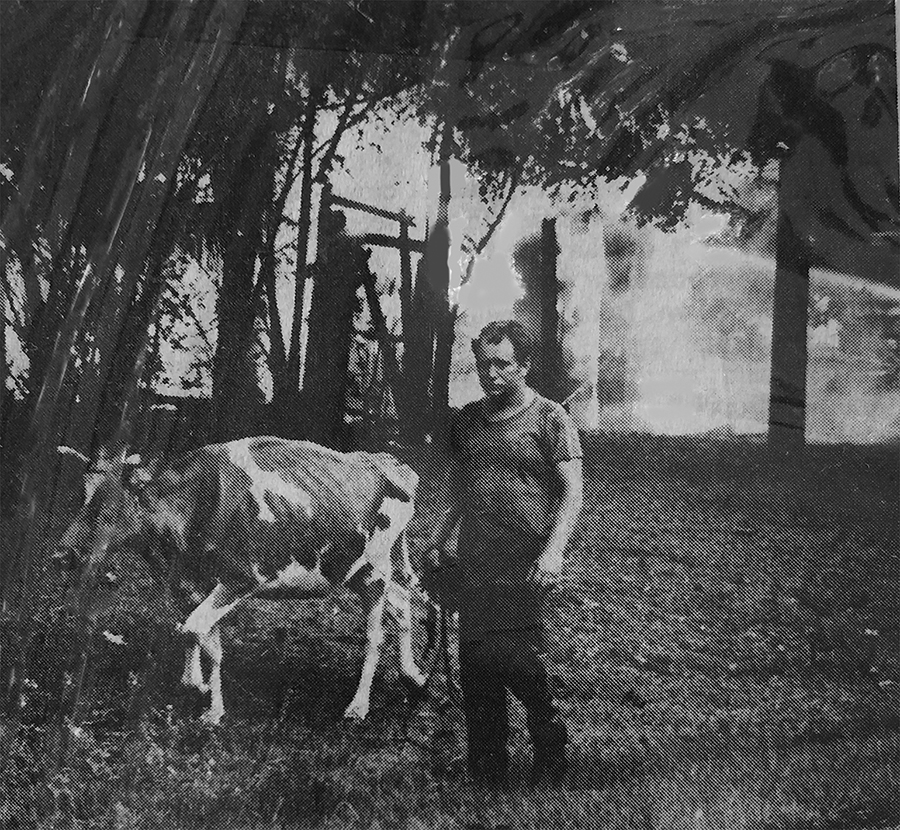
Howe’s route home brought him within sight of Country Acres but, as Tom turned off Route 5 onto Sand Pit Road, he noticed something else. A herd of clearly distressed cows, enveloped by smoke, were straining at the fence alongside the road. A former dairy farmer himself, Tom stopped his truck, cut the fence and freed the cows, who meandered down Route 5 toward Aberdeen.

Back in his pickup, Howe was unable to proceed further because firetrucks blocked progress down Sand Pit. Desperate to assist his family, he maneuvered around the trucks by ramming his pickup through the fence where he’d just freed the livestock, flattening it.

Meanwhile, the fire near Sand Pit Road was bearing down on Elmore Smith’s small dairy operation located off West Baltimore Street just outside Pinebluff. Riding his tractor, Smith, 61, caught sight of approaching dense smoke. Since the blackness seemed far off, he assumed there would be time to take any necessary precautions. Comforted by the fact that his farm and outbuildings were surrounded by open fields and pasture — the woods were 500 feet away — Smith expected his operation would escape serious damage.

Within minutes, a breathtaking tornado of fire catapulted over Smith’s field and came down on his farm. “The sky was filled with fire, boiling in the air, an inferno 100 yards high,” said Smith. The gusty wind had caused the fire to crown, rocketing immense flames skyward a half-mile or more ahead of the heart of the blaze. According to The Pilot, Smith turned out his mule and seven cattle, “smacking them to run off and save themselves.” Elmore’s wife and 18-year-old son ran from the house. The family escaped, but the Smiths’ house, barns, chicken houses, two autos and two pickup trucks were consumed.

After wreaking havoc at Smith’s farm, the fire roared toward downtown Pinebluff. Fire Chief W.K. Carpenter, Jr. sounded the siren. Around 5 p.m., the flames crossed over U.S. 1 at the approximate location of today’s Dollar General Store. It had taken only seven hours for the fire to cover the 14 miles from West End to Pinebluff. According to the Sandhills Citizen, it “leapfrogged from tree to tree and crept relentlessly on the ground through thick pine needles from yard to yard.” A separate prong of the fire jumped the highway south of town.

A veritable army of firefighters from far and near, the District Forester’s office headed by Chief J.A. Pippin, members of rescue squads, as well as ordinary citizens, were poised to fight the blaze in Pinebluff. So, too, were soldiers. It was Tom Howe’s mother, Mary, who persuaded Fort Bragg military brass to authorize aid to the town.

Back at the Howe’s Aurora Hills farm, Nancy was unaware of these happenings when sister-in-law Susan Howe Wain began pounding on her door and shouting, “I need to get on your roof with the garden hose!” According to her memoir titled Dear Owie, when Nancy went outside and looked up, she was aghast to see hot burning embers “falling and dancing on the roof, bouncing up and down, and sailing through the air like they were dissatisfied with my roof and were looking for a better place to land.”

When Tom pulled in the driveway and jumped from the truck, his face, recalled Nancy, was completely blackened and covered with soot, “except for his eyes that peered out from his glasses, like a frog looking for a fly to eat.”

Howe gave urgent instructions, detailed in Dear Owie. “I want you to pack up important papers and a few clothes, food, and water, and be ready to leave. If it gets bad, you all get in the car and drive as hard as you can into the middle of the plowed field across from the house.” Nancy wound up huddled in the field with her boys. While the fire would miss them and their home, Tom’s work was far from over. He rushed to assist others in town where the battle to contain the fire had become a house-by-house struggle.

Hot embers relentlessly dripped from neighborhood pines onto homeowners’ roofs, igniting scores of little fires. Many houses caught fire “again and again only to have the flames put out by workers converging solidly upon them,” wrote the Citizen. Not all the proliferating fires could be extinguished in time to save homes. The residences of Richard Graham and Cad Bennett were destroyed, and countless others sustained severe damage.

Pinebluff’s town council had been scheduled to meet the evening of April 4. Madeline Charles, the town clerk, took the town’s books to her home so she would have them ready for the meeting. The Citizen reported that when the fire jumped the highway, “right in front of the Charles’ home, she searched wildly for a safe place to stash the books.” She wound up stuffing them in the family freezer before running off to fight the fire raging on her lawn.

With a second swath of the blaze threatening the south end of town, the Robbins Rescue Squad and several Fort Bragg soldiers, as a precautionary measure, moved to evacuate residents of the Pinebluff Sanitarium, now long gone. That second swath fortunately failed to reach either the sanitarium or residential areas. Farther south down U.S. 1, David Spence, a machinist whose unique enterprise involved the specialized forging of horseshoes for harness racing horses, was not so lucky. His building and equipment were totally wiped out, causing an estimated loss of $40,000. The Addor area also was hit hard.

So much water was thrown on the fire that the Pinebluff water tank ran dangerously low, and Chief Carpenter ordered his trucks to start drafting from the lake. “We have a fine water system,” said the chief, “but no small town is prepared for a thing like this.”
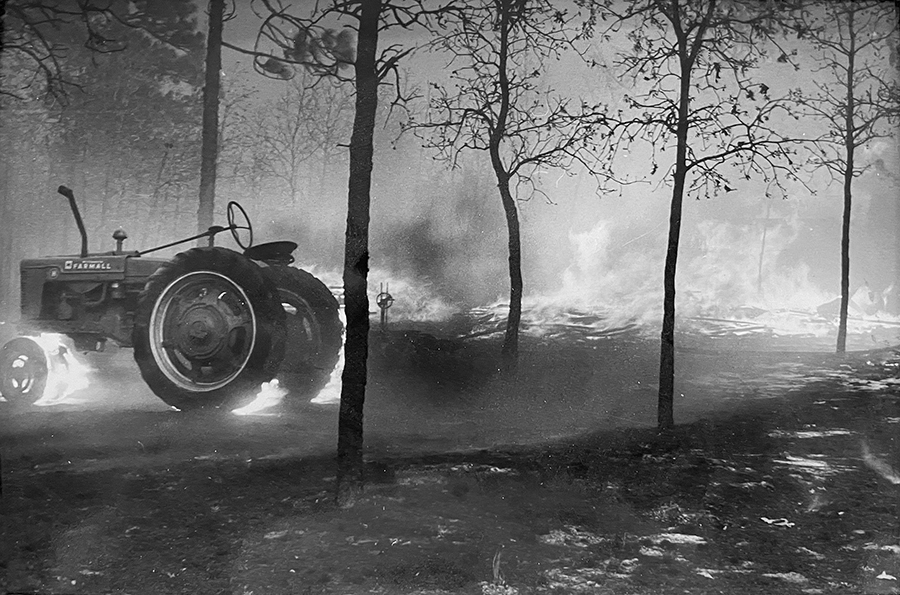
   

Those residents not involved in fighting the fire contributed in other ways, manning the Red Cross food station or retrieving lost pets. Carpenter’s own children, Cathy, 13, and Billy Jr., served food past midnight. “They wanted to help,” remarked their mother, Marion, “and I let them stay up even though they are so young. After all, this is their town.”

By 11 p.m. the danger to the town and Moore County was over as the fire blew farther south, ravaging acreage in Camp Mackall before finally petering out at Drowning Creek. The final toll was staggering: 26,000 acres burned, two-thirds of them woodlands; 5,000 acres of planted areas lost; engagement of 4,000 firefighters; the razing of 14 dwellings, 25 barns, two business buildings, and the death of an untold number of animals. Fortunately, no human lives were lost.

The nightmare wasn’t over for Tom Howe. Katharine McKean asked him to bury the horses destroyed at Sandy Woods. Howe told his wife it was the most gut-wrenching experience of his life.

Howe eventually started a nursery business at Aurora Hills, which he operated until his death in 2015. His two sons still run the business. Nancy continues to live in Moore County, as does Susan Howe Wain.

The McKean family still owns Sandy Woods, though the stables no longer house racehorses. Shaw and Katharine have long since passed on. Son John lived at the farm until his death in 2019. His brother Tom, a retired Massachusetts attorney, now looks over the property. Brother David, who escaped the fire that day, became a diplomat, serving as ambassador to Luxembourg and director of policy planning for the Department of State. He’s a successful author of books about 20th century American history.

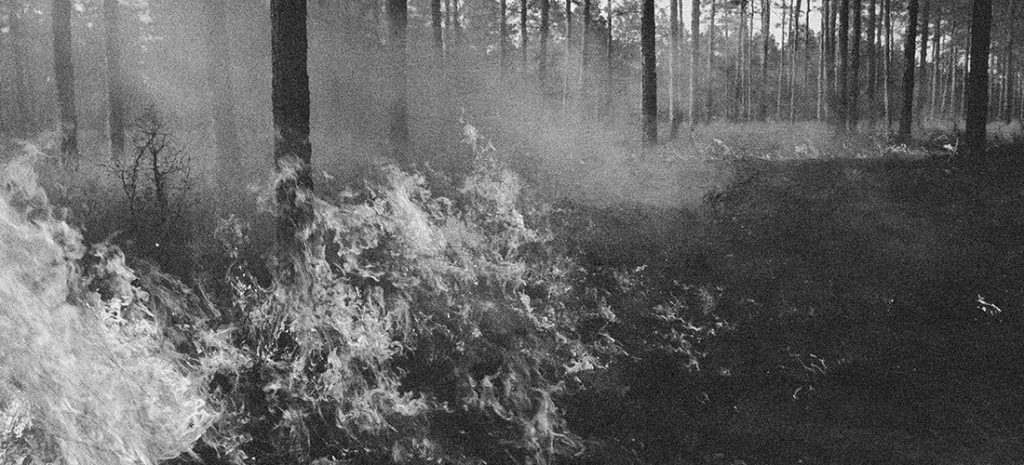
Could the wildfire of 1963 happen today? One factor that reduces the chances of a similar catastrophe is the increased use of controlled burning. Forest fires require fuel to accelerate and, especially in a longleaf pine forest, much of that fuel comes from the wiregrass and scrub oak underlying the trees. Jesse Wembley of West End, whose mission locally is educating area landowners and farmers about the benefits of controlled burning, says, “We have to learn to live with fire. Particularly here in the Sandhills, it is part of the natural process. With it, we get an improved ecosystem and peace of mind.”

There was little piece of mind that day in April. Lifetime Pinebluff resident John Mills, son of the former mayor, says, “It is a miracle the fire missed Pinehurst and a double miracle it didn’t burn all of Pinebluff to the ground.”  PS

Pinehurst resident Bill Case is PineStraw’s history man. He can be reached at Bill.Case@thompsonhine.com.

Shooting the Stars

Shooting the Stars

Spacing out with a Sandhills photographer

By Jenna Biter   

Photographs by Larry Pizzi

Feature photograph: The Western Veil Nebula or Witch’s Broom is the remains of a star that exploded more than 10,000 years ago


Left: Comet NEOWISE C/2020 F3 over Lake Auman in Seven Lakes

Right: NGC 1499 the California Nebula is shaped like the Golden State. It’s a nearby neighbor — only 1,000 light years from Earth.


At the end of another day, the Earth turns its face from the sun, and dusk stretches its long arms over the horizon, tucking half of the globe under the heavy blanket of night. In the thick of North Carolina pine country, drowsy towns go dim but not yet dark, like fires burnt to embers.

Somewhere in Seven Lakes, on a wide corner lot occupied by an agreeable yellow house, one Northerner-come-south seems immune to the lullaby of night.

As a neighbor’s kitchen light goes out, the yellow house stirs. Its garage door rolls up, and a man dressed in a vacation-style shirt fit for Georges Seurat’s La Grande Jatte steps onto his driveway under the purple fresco of Starry Night. He pushes a tripod fixed atop caster wheels into the middle of the blacktop, then steps back to eye the mechanical spider. It has one oculus instead of eight, a 21st-century Cyclops capable of probing the heavens.

Larry Pizzi rolls the telescope forward and back, left to right, manually repositioning the tripod before fine-tuning the focus and field of view with swipes on an iPad.

“My telescopes, you don’t look through them,” Larry explained earlier in the living room inside the agreeable yellow house. Antique clocks chattered from the walls, their pendulums tick-tocking as they waved hello and goodbye. Like a chorus of teakettles whistling with steam, the clocks burst into chirps and chimes and dings at set intervals — like clockwork.

Left: SH2-275, the Rosette Nebula, is a star incubator. Its gasses and dust allow stars to form in it.


“Sorry about that,” Larry said.

“That’s his other hobby,” his wife, Wendy, said, seated on the floor. Beside her, their small pooch, Dibley, champed at a stuffed alligator. He ripped with such enthusiasm that he seemed to understand the irony.

“There are a hundred clocks here, and a hundred still in storage in the garage,” Larry said, then returned to his other passion. “My telescopes, they’re like really big camera lenses.”

Larry’s dad, Joe, surprised him with his first telescope when he was in fourth grade. He didn’t get his first camera until a year later. Of course, Larry unscrewed screws and peeled back metal housings to investigate both gadgets, as little boys are prone to do.

“I was good at taking things apart, not really great at putting them back together,” he admitted. “I ruined that camera.” His tone sagged with momentary regret.

“God bless digital cameras,” Wendy cracked, bringing her husband back.

He grinned. “I had to know how it worked, you know?”

Left: M33, the Triangulum Galaxy

Right: M45, the Pleiades or the Seven Sisters is easy to spot with the naked eye in the constellation Taurus, the Bull.


Larry kept up with photography through three careers and the lion’s share of his almost 70 years, focusing mostly on eye-level wonders, from the covered bridges of Pennsylvania Amish country to Appalachian waterfalls. It was almost as though he had forgotten to look up.

“It was in high school that I really got into astronomy and started a little bit of astrophotography,” Larry said. “But then life intervened for about 40 years.”

It wasn’t until 2018, when the Pizzis moved south to the Sandhills, that Larry resurrected a telescope from the bowels of his garage and days gone by.

“Clear skies,” he said. “We came from New Jersey.”

“Plus, you were retired when you moved here,” Wendy pointed out. “You no longer had your day job.”

After serving in the Army for 21 years and working with nonprofits for another decade, Pizzi retired from his third and favorite career in 2016. A classics major, he taught English and Latin for a dozen or so years in the part of New Jersey that thinks it’s Philadelphia.

Back outside, Larry, though no longer a teacher, diagrams his telescope with the quiet confidence of a veteran professor lecturing on the human skeleton. “This is the main camera,” he says, pointing to a cylinder at the butt of the telescope’s yard-long tube where the eyepiece would normally seat. “This is the guide telescope, and this is a guide camera.” He finishes the anatomical tour before gazing up at the now-black sky.

“Tonight’s target is a nebula,” he says. Like many of the clouds swirling with cosmic dust and gas, this nebula located deep within the Cepheus constellation, beyond the reaches of the naked eye, has no name, only a designation: NGC 7822. Nebulae reveal the life cycle of the gods. Either they’re the birthplaces of the stars, like this night’s target, or they’re like overturned funeral urns, spilling the ashes of luminescent giants into the void. On this particular night, this particular nebula arcs through the band of sky perfectly visible — between rooflines and the crowns of longleaf pines — to the Cyclops in the middle of Larry’s blacktop.


Left: Part of a large complex of nebulae in the constellation of Orion. Upper left is the Flame Nebula. The dark formation is the Horsehead Nebula. The largest is M42, the Great Orion Nebula.

Right: A part of NGC 7000, the North America Nebula. The bright part is called the Cygnus Wall, a formation of very hot gasses and dust actively giving birth to stars.


“Taking the pictures is actually the easiest part,” Larry says. Once the telescope locks onto its target, the oculus, like a landbound guardian angel, watches the cosmic traveler move through the sky, snapping photos all the while.

“When you’re taking a picture, you don’t take a picture,” he says, hanging onto the ‘A.’ “You take dozens if not hundreds of short exposures.” Larry usually shoots 100 to 150 frames in a session. “And sometimes, you do it over multiple nights, the same target.”

After shooting, Larry stacks the frames on top of each other like a digital layer cake. Then he attends to each frame individually, checking them for the taillights of stray aircraft or the glow of the neighbor’s kitchen, before combining the unflawed frames into the final photo.

“It’s at least eight to 12 hours to process the photos,” he says. The process happens on a pair of computer monitors at a corner desk in a corner room that Larry dubbed “the digital darkroom.” Of course, a clock chatters happily from the wall behind.

“The way I take pictures is the exact same way the James Webb Telescope takes a picture,” Larry says. “Webb is just a little more sophisticated.”

Once the telescope finds its target, Larry turns away. He wheels around shooting a green laser into the dark and circles constellations. There’s Draco, Cygnus the Swan, and the W-shaped Cassiopeia. He points out stars like a maestro lost in the music of space and time, conducting the celestial orchestra.

“I think the reason he’s rekindled this passion is that retirement is a challenging season in life, and I think that this has made retirement a plus instead of a minus,” Wendy says.

“This is a great outlet,” Larry says. “I think I’m a frustrated artist.”  PS

Jenna Biter is a writer and military wife in the Sandhills. She can be reached at jennabiter@protonmail.com.
Poem January 2023

Change this heading to match Post Title

Talking in the Dark

Talking in the dark can be a way to begin

falling in love or becoming friends

again after a difficult day

in summer when late light walks away,

when the kitchen knives splayed on the table

hold galaxies that remind us to be playful

despite the sharp edges that the sun showed us.

Paired in the dark, in passion, night knows us

in ways we don’t know ourselves.

Something in us — coded into our cells? —

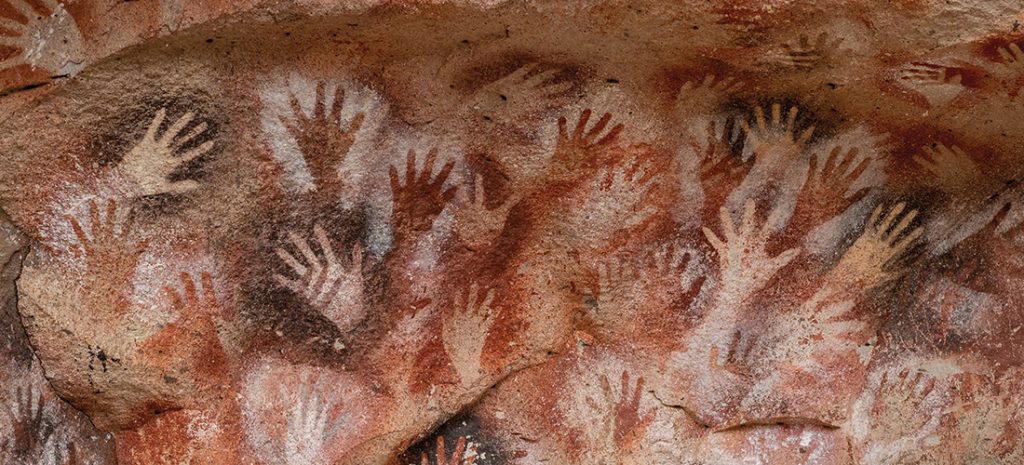
goes back to the time of sleeping in caves

when words were made to be believed,

where the walls were painted for dreams, for magic,

for hunts with spears, daggers, and hatchets.

The people on the walls are working together.

They have no anger. They have only hunger.

  Paul Jones

Paul Jones’ most recent book is Something Wonderful.

December 2022 Poem

Small Prayer

We see this ground as if through a spaceship’s

faceted metal eye. Having seen the blue round

as small as a child’s ball, having solved just enough

of mystery to be lost in what we think

we know. We’ve thought to play with it,

to make the planet smaller yet.

Now we do with it what we will,

forgetting how its vastness left us

speechless, worshipping. We lose

forest and furrow where we began.

And the kindred animals have begun

to leave. The water’s gone

that married time and loved the stone

into a canyon’s grace. We’ve forgotten

how to stay — how to say: this place.

Let the earth grow large enough again

that only clouds and stories can

encircle it entire. Let rockets land

for good, satellites fall dumb,

and wires unspan enough that distances

grow wide to dwarf our wars.

May mystery loom large enough again

to answer prayers and keep us.

  Betty Adcock

Betty Adcock is the author of Rough Fugue.

Story of a House

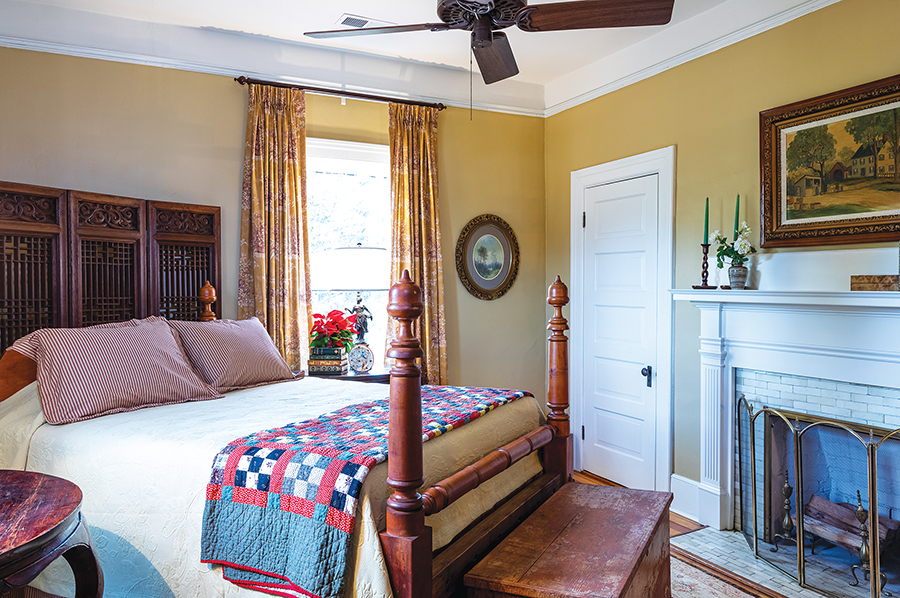
Touch of the Orient

Aberdeen’s John W. Graham House
is a colorful work of art

By Ashley Walshe     Photographs by John Gessner

Christmas Styling by Hollyfield Design


In the late 1990s, Bart Boudreaux was living in Beijing, China, with his wife, Lynel, when a friend invited him to visit Pinehurst.

“It was a lot different back then,” says Boudreaux, a Louisiana native whose work in the oil business had taken him all over the globe. “Very quiet, calm. Not much traffic. That’s what we were looking for . . . especially coming from China.”
Of course, the world-class golf was part of the draw. “Unmatched,” says Boudreaux.

Life in Pinehurst became the pin on the narrowing horizon. In 2012, the couple bought and restored one of the 1895 James Walker Tufts cottages (The Woodbine) in Old Town Pinehurst, where the couple have lived since Bart’s retirement in 2015.

But this isn’t a story about that house, nor is it a story about Pinehurst. Ultimately, this is a marriage story. It begins with one man’s love of old houses.

“I can’t explain it,” says Boudreaux, trying to put his passion for restoration into words. “I needed to find something to do outside of golf.”

Perhaps his time in New Orleans influenced his taste for old houses. “Not everyone’s cup of tea,” he admits.

Regardless, buying and restoring them became his accidental pastime. In addition to the Pinehurst home, Boudreaux revamped the house next door (another one of Tufts’ original 38 cottages), renovated a 1930s Sears Roebuck on Dundee Road, then flipped one, two, three more fixer-uppers, all in Pinehurst.

Which brings us to his seventh and most recent project: a 1909 Victorian in downtown Aberdeen.

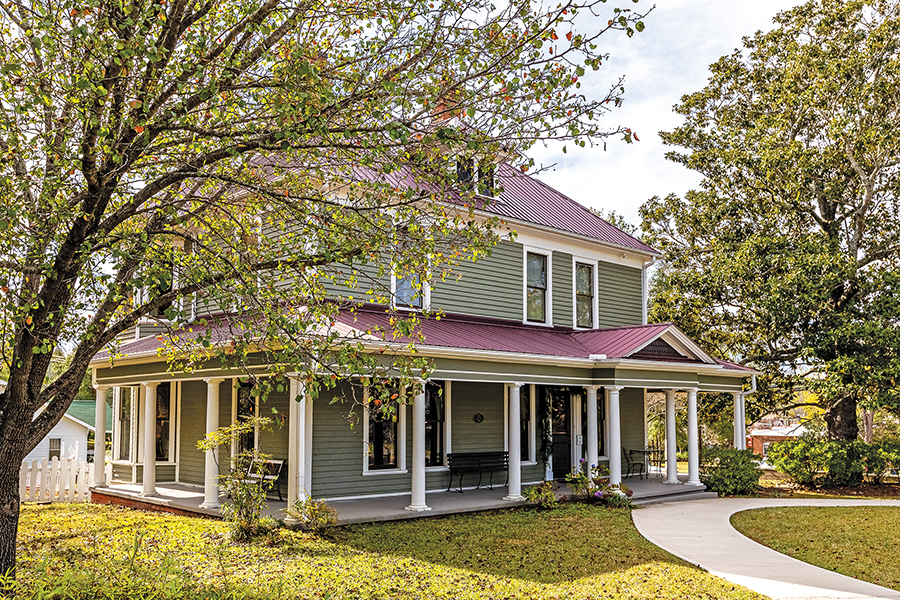
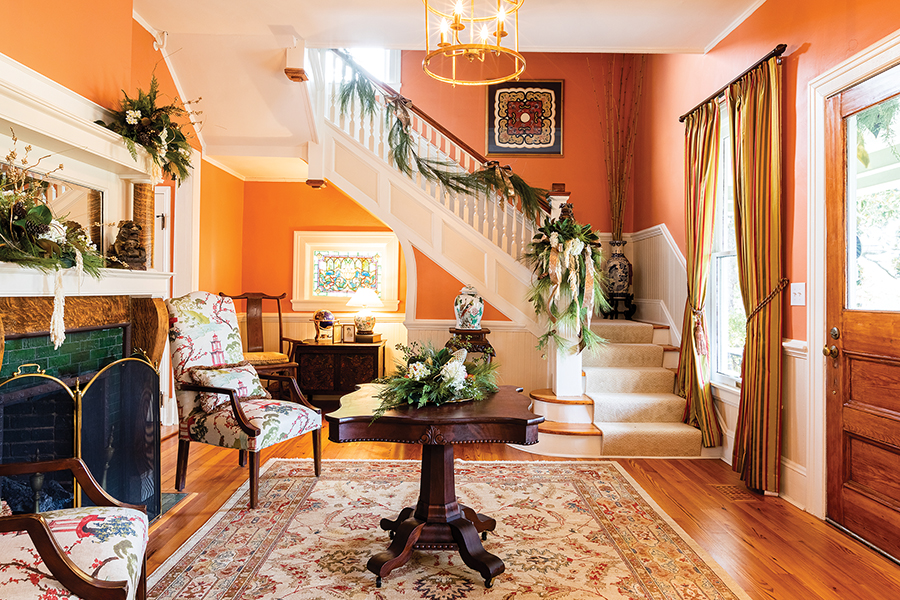
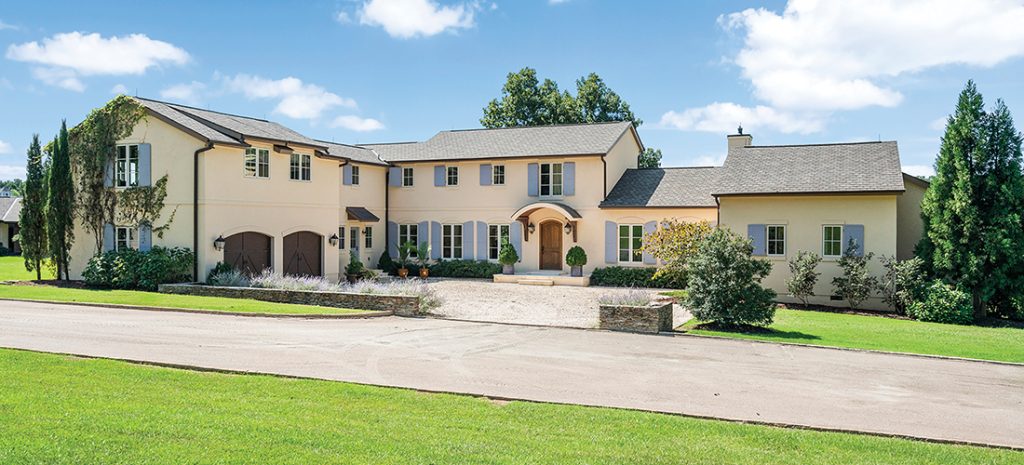
Situated on a spacious corner lot on High Street, the sage green double-pile with the classical Tuscan columns and wraparound porch once belonged to John W. Graham, son-in-law of Aberdeen and Rockfish Railroad founder John Blue. The exterior is grand yet understated, with an air of timelessness and restraint typical of Colonial Revival architecture. Boudreaux bought the National Register property in February of 2021 and devoted one year to its transformation.

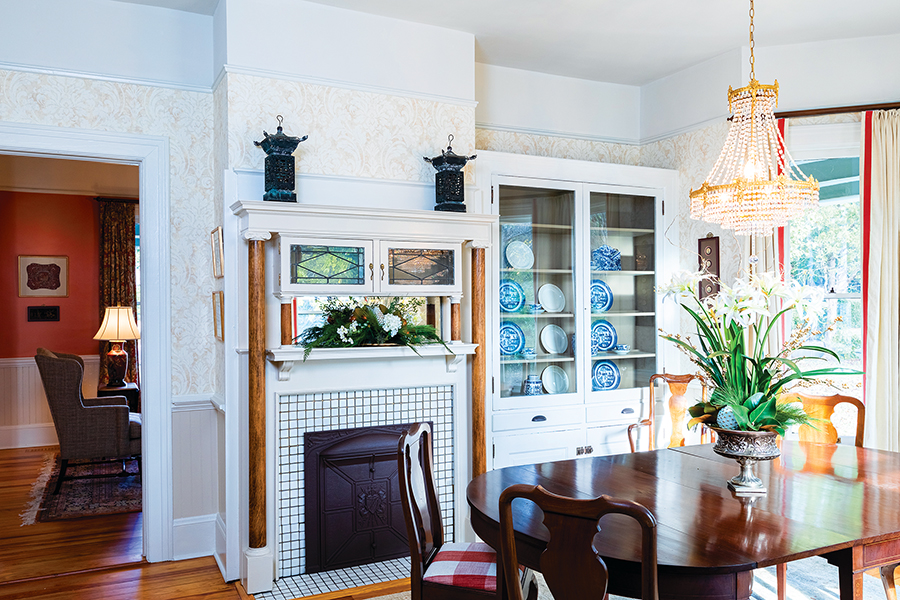
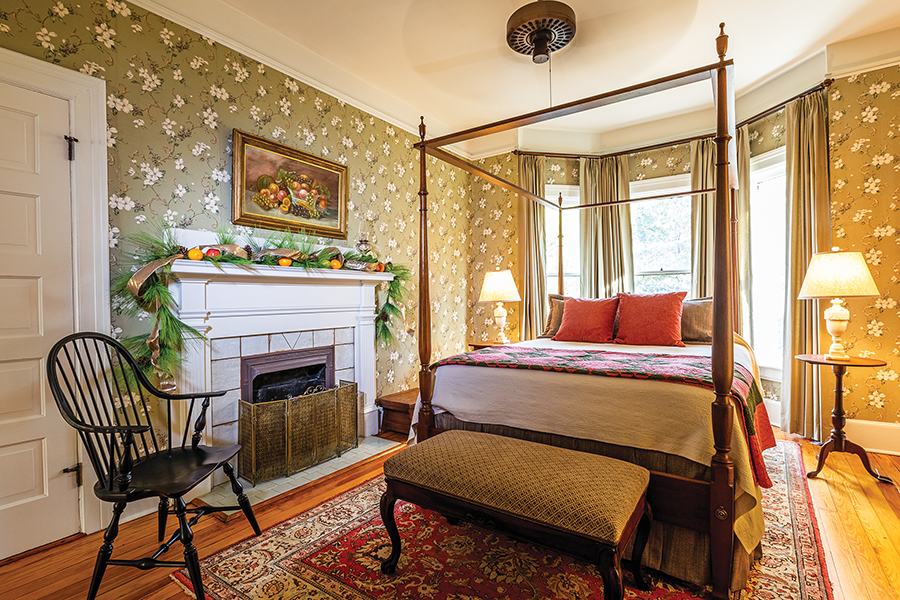
“It’s got tremendous character,” he says, noting the 10-foot ceilings and crown molding, the butler’s pantry, the two-story semi-octagonal bay, original dogwood wallpaper in one of the upstairs bedrooms, and five charming fireplaces throughout.

An original stained-glass window defines the nook beneath the half-turn staircase. Natural light floods every inch of the 2,500-square-foot space. Upstairs, transom windows above bedroom doors offer charm and function.

“I fell in love,” he says.

Heart pine flooring was repaired and restored. Old doors and tiger oak mantels, once hidden beneath layers of paint, are now among the home’s most striking features. Ditto the banister, stairs and newel caps.

“Almost killed me,” says Boudreaux of all the stripping. He did what he could himself and hired help to do the rest.


Boudreaux upgraded and reconfigured the kitchen, reintroducing an old entrance and constructing a small island with salvaged beadboard. He retiled and revamped existing baths (one full and one half); added a full bath upstairs; installed new cabinetry and quartz countertops; tinted original windows; exposed a bit of brick; updated plumbing, electrical wiring and appliances; replaced ductwork; and insulated the crawl space.

But he didn’t stop there.

Throughout the house, period-appropriate light fixtures (complete with ceiling medallions), fabric and furniture complement the architecture. 

“I just love the search for antiques,” he says, which is how he crossed paths with interior designer Jane Fairbanks of The Old Hardware Antiques in Cameron. “I know what I like. Jane’s got it.” 

Fairbanks helped Boudreaux outfit two of his Pinehurst homes in American country décor. “What he truly loves,” says the designer.

The interior of the Graham house is distinctly different. It’s an amalgam of color, texture and Victorian-era furnishings with a heavy emphasis on Oriental antiques —a marriage of tastes, his and hers. Flash back to China in the late 1990s.

“The oil company I worked for allowed us to transport one shipping container full of Chinese furniture back to the States on their nickel,” says Boudreaux.

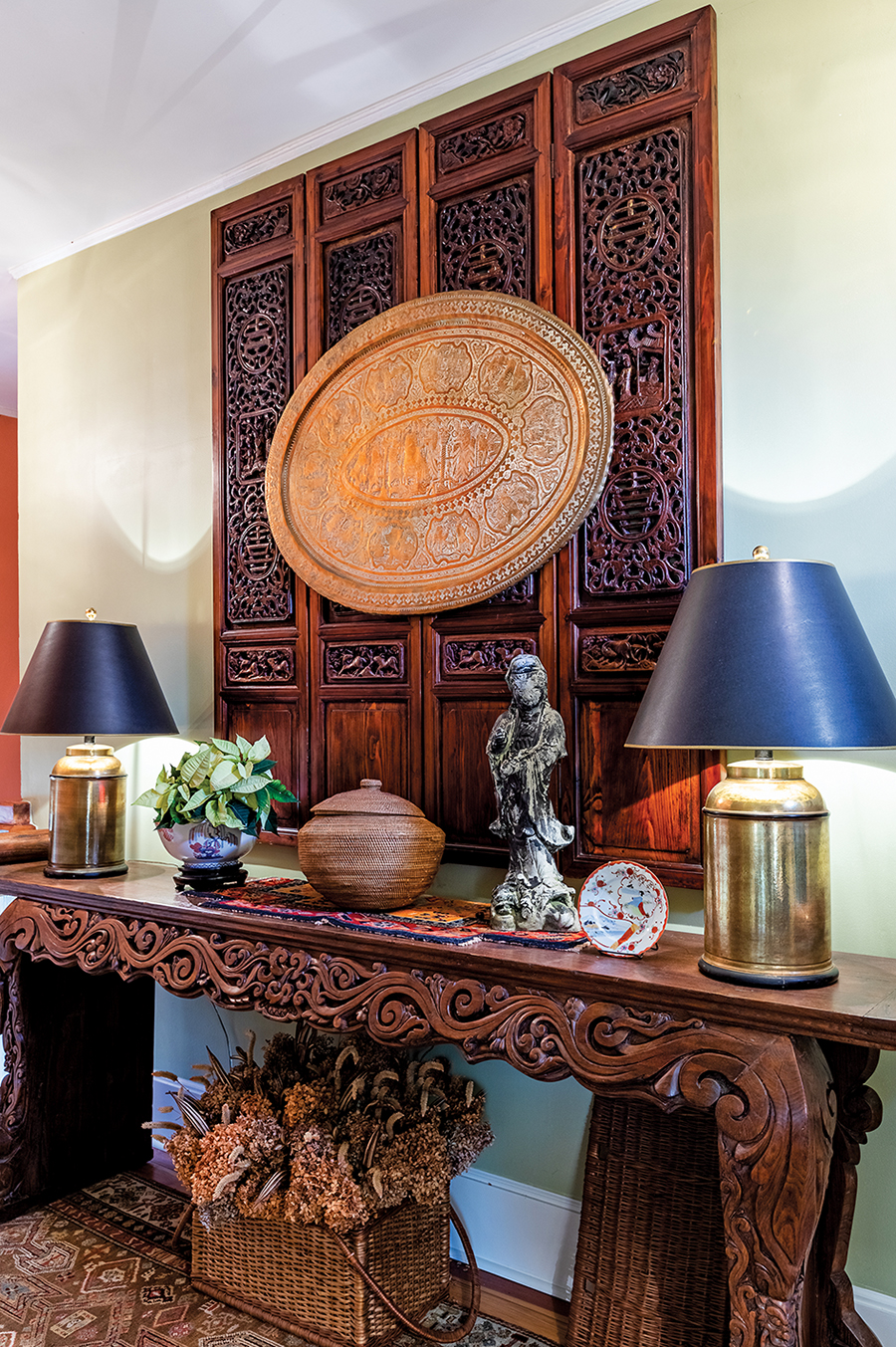
Lynel, who worked as the assistant general manager at the Hilton Beijing, loaded up on ornate altar tables, hand-painted cabinets and intricate Chinese artwork — textiles in particular. Bart took Fairbanks to sift through the haul, in storage for over 20 years. Forgotten treasures were promptly dusted.

“They sort of became the inspiration for everything,” says Fairbanks.

Especially the colors. In the front parlor, coral walls pop against crisp white molding and cream-colored beadboard wainscoting. A hand-embroidered silk opera collar is framed and displayed on the wall above the staircase. Asian accent chairs covered in pagoda-themed fabric flank the fireplace, and a pair of wooden foo dogs (Chinese guardian lions) draw the eye to the quarter-sawn tiger oak mantel.

Beneath the stained-glass, a hinged easel frame displays photos of original homeowners John W. Graham, a cashier and officer of the Bank of Aberdeen, and his bride, Kate Blue Graham.

One wonders what Kate might think of the vibrant paint and forbidden stitch embroidery.


Beyond yellow pine pocket doors — “massive and heavy as led,” adds Fairbanks — coral walls spill into the living room, where a silk rug and custom curtains soften the space with delicate pink hues. This is where worlds begin to collide in a surprising way: an American country cherry corner cupboard (1840s), for instance, opposite a Chinese wedding cabinet featuring traditional brass hardware and a hand-painted imperial dragon.

For Lynel, each piece has a story, like the statuette of Guan Yin (female Buddha), positioned between the living and dining rooms.

“I bought her in a Beijing dirt market from a little blind man,” Lynel recalls. The vendor assured her that the wooden figure was quite old.

“Lǎo de, lǎo de,” he repeated.

It wasn’t. The Buddha split in half a few weeks later. 

“Sounded like a gunshot,” Lynel says between bouts of laughter. “She was new, made to look old . . . but I love her anyway.”

In the upstairs hallway, a teak altar table paired with a carved wooden screen make a bold and elaborate statement. The walls? Georgian Green by Benjamin Moore.

Bedrooms are handsomely outfitted. For one, an 1840s maple rope bed with curly maple headboard. A four-poster bed in another. The third features a faux curly maple queen anchored by an early 1840s blanket chest. Mounted oriental hair pins and an embroidered baby bib (and matching shoes) add color and whimsy.

“It’s just amazing how things can come from so many places and end up working so well together,” Fairbanks says.

The designer played a major role in bringing Bart’s vision for the house to life. “Big time,” he emphasizes.


All parties seem equally delighted by how it turned out. In the past, Boudreaux’s modus operandi has been to revamp and resell. But the John W. Graham house is a keeper. 

“Our Pinehurst house is on the market,” he explains.

Towns and dreams change. Bart and Lynel are moving back to Louisiana to be closer to family. The house on High Street will be their vacation home.

“Aberdeen is having a bit of a Renaissance, don’t you think?” says Lynel.

Bart’s golf clubs are there waiting. The house itself — a harmonious blend of tastes — is a labor of love ready to be enjoyed.  PS

Ashley Walshe, the former editor of O.Henry, lives up country and is dreaming up her next grand adventure.