What’s in a Name?

What’s in a Name?

Cattleya Penny Kuroda and Cattleya Hawaiian Fantasy: Two Splash-Petal Enigmas

By Jason Harpster

What if your birth certificate was wrong? Yikes! You need it to get married, register for school, obtain a driver’s license or a passport. It verifies your age and citizenship. If it’s not the most important document you have sitting in your safety deposit box, it’s in the top three. But if a flower has a mistaken “birth certificate” it’s no big deal, right? This isn’t Little Shop of Horrors. It’s not like you’re going see Audrey II in line behind you at the DMV.

Just as the DMV tracks names and addresses for drivers, Kew Royal Botanical Gardens maintains the Kew World Monocot Checklist, which tracks currently accepted names for over 30,000 orchid species in the wild. The Royal Horticultural Society is the international authority for orchid hybrids and maintains the International Orchid Register that lists over 100,000 orchid hybrids with their seed and pollen parents. Orchid hybrids must be registered to be eligible for shows and awards.

In her article “Cattleya Penny Kuroda By Any Other Name,” published in the April 2014 issue of Orchids, Laura Newton details how Cattleya (C.) Penny Kuroda was originally registered with the wrong parentage. When C. Penny Kuroda was registered in 1976 by Mary Hernlund, the parents were listed as C. Summer Snow x C. guttata. Given that virtually all splash-petal cattleyas have C. intermedia var. aquinii in their background, Newton rightfully questioned where the distinct, peloric, splashed petals of C. Penny Kuroda and its progeny originated. The Royal Horticultural Society found Newton’s argument convincing and subsequently updated the registration to C. Summer Stars x C. guttata that year.

Michael Blietz, an accomplished Hawaiian orchid grower, has uncovered new evidence that shows the registration change for C. Penny Kuroda is incorrect. In his letter to the American Orchid Society in February 2022, Blietz recounts how he recently received the cross book from the Mary Hernlund nursery which shows the parents of C. Penny Kuroda as C. Summer Snow x C. guttata var. alba. Interestingly, the alba form of C. guttata was not found until the early 2000s; only C. tigrina var. alba would have been available in 1976.

After reviewing the many progeny of C. Penny Kuroda and the inventory from Hernlund’s stud book, Blietz concluded that the color, splashing and spots exhibited could only come from C. Interglossa, not C. Summer Snow or C. Summer Stars as Newton espoused. It is not a coincidence that all of the selfings and original plants from the C. Penny Kuroda were bifoliate due to the influence of C. amethystoglossa, C. intermedia, and C. tigrina which are all bifoliate species. The size of the spots and lavender color on the tips of the side lobes of the lip are in line with C. amethystoglossa and its hybrids. The size and length of the splashes on C. Penny Kuroda also match C. Interglossa since the peloric petals are mirroring the color and pattern on the lip.

Prior to the registration change of C. Penny Kuroda in 2014, C. Summer Snow had five F1 offspring with C. Penny Kuroda, by far being the most prolific with 143 F1 offspring and 837 total progeny. A closer examination of C. Summer Snow’s offspring is warranted as it appears a registration error similar to that for C. Penny Kuroda has occurred with C. Hawaiian Fantasy, another prolific splash-petal hybrid with 25 F1 offspring and 114 total progeny as of this writing.

Cattleya Penny Kuroda was registered in 1976 by Hawaiian grower Mary Hernlund while C. Hawaiian Fantasy was registered by Benjamin Kodama of Waianae, Hawaii in 1982. The parents of C. Hawaiian Fantasy are listed as C. Summer Snow x C. Wayndora, though this registration is suspect as neither parent has C. intermedia in their background. Unfortunately, Kodama passed away in 2017, which makes determining the exact parentage of C. Hawaiian Fantasy exceedingly difficult. An attempt to obtain clarification from Kodama Orchids has not been successful.

Correspondence with Roy Tokunaga from H&R Orchids, another longtime orchid grower and breeder in Oahu, in December of 2021 was especially helpful. Tokunaga confirmed that he and other older Hawaiian growers knew C. Hawaiian Fantasy had C. intermedia var. aquinii in its background, though they were unsure of the exact parentage. These hybridizers understood that the peloric form of C. intermedia var. aquinii is dominant and passed on to its progeny.

In discussing Newton’s findings regarding the correct parentage of C. Penny Kuroda and how this would relate to the lineage of C. Hawaiian Fantasy with Tokunaga and Fred Clarke, both gentlemen agreed that the current registration for C. Hawaiian Fantasy is incorrect. The question then becomes what, if anything, should be done about the incorrect registration?

Reviewing Hernlund’s cross book reveals another curious surprise: C. Hawaiian Fantasy and its reciprocal cross were made by Hernlund. Despite being registered by Kodama in 1982, it appears Hernlund made, or at least attempted to create, C. Hawaiian Fantasy as detailed by crosses No. 1247 and 1257. Blietz reached out to Ben Kodama Jr. who confirmed that his father, Benjamin Kodama Sr., received the C. Hawaiian Fantasy flasks from a grower on the Big Island. Blietz agrees that these plants had to come from Hernlund.

Although it is impossible to prove with 100 percent certainty that C. Interglossa is the correct parent of C. Penny Kuroda and C. Hawaiian Fantasy, we can conclude that the registrations for both hybrids are incorrect as C. Summer Snow does not have C. intermedia in its genetic background. It is unlikely that C. Summer Stars is in the background of either of these crosses since Stewart Orchids used alba parents to create C. Summer Stars. Considering the state of hybridizing in Hawaii during the 1970s and ’80s and the push to bring new crosses to market before they were registered, it is easy to see how these errors occurred. Given the new evidence that has come to light since 2014 when the Royal Horticultural Society revised the parentage of C. Penny Kuroda from C. Summer Snow x C. guttata to C. Summer Stars x C. guttata, the registration should be updated to C. Interglossa x C. tigrina, or, alternatively, change the C. Summer Snow parentage to unknown. Moreover, the registration for C. Hawaiian Fantasy should also be updated accordingly since the same parent was used to make C. Penny Kuroda.

Correcting the record and establishing the proper lineage helps honor the numerous contributions of Hernlund, Kodama, Tokunaga and other Hawaiian growers. Thanks to the Hernlunds’ cross journal and Ben Kodama Jr., we know that Hernlund used C. Summer Snow to make both C. Penny Kuroda and C. Hawaiian Fantasy. Blietz agrees that Hernlund’s stud plant that was labeled C. Summer Snow was mislabeled and was actually C. Interglossa. Updating the registrations of C. Penny Kuroda and C. Hawaiian Fantasy would highlight the contributions of this Hawaiian community and ensure that the knowledge they shared is not lost. Mary Hernlund passed away on April 19, 2022 at the age of 103.  PS

Jason Harpster is an accredited American Orchid Society judge and works at his family’s business, Central Security Systems. He hopes to share his collection of 2,000-plus orchids by starting a botanical garden in Southern Pines. 

The Beat Goes On

The Beat Goes On

From the Mountains to the Sea

By David Menconi


Type design by Keith Borshak


Map Illustration By Miranda Glyder


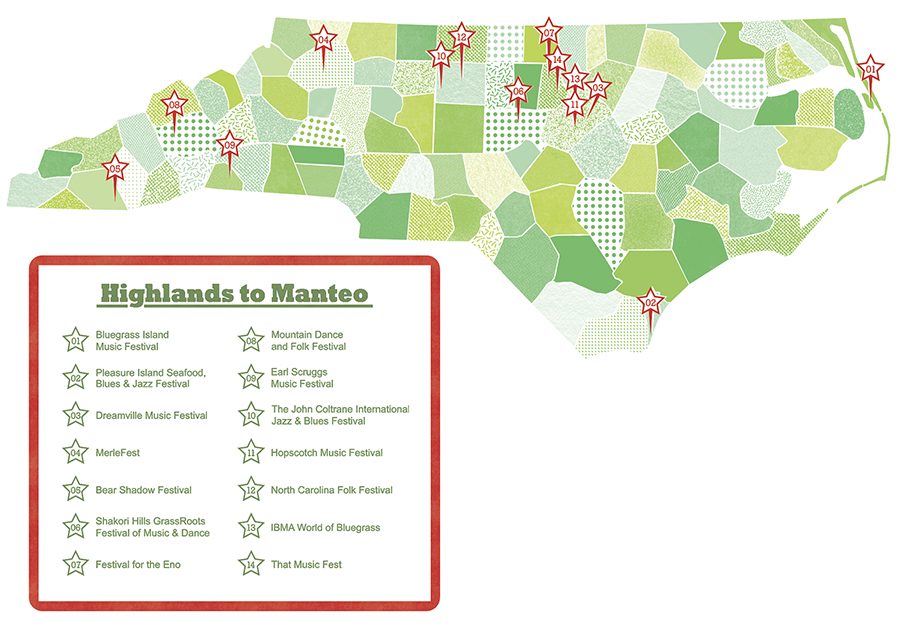
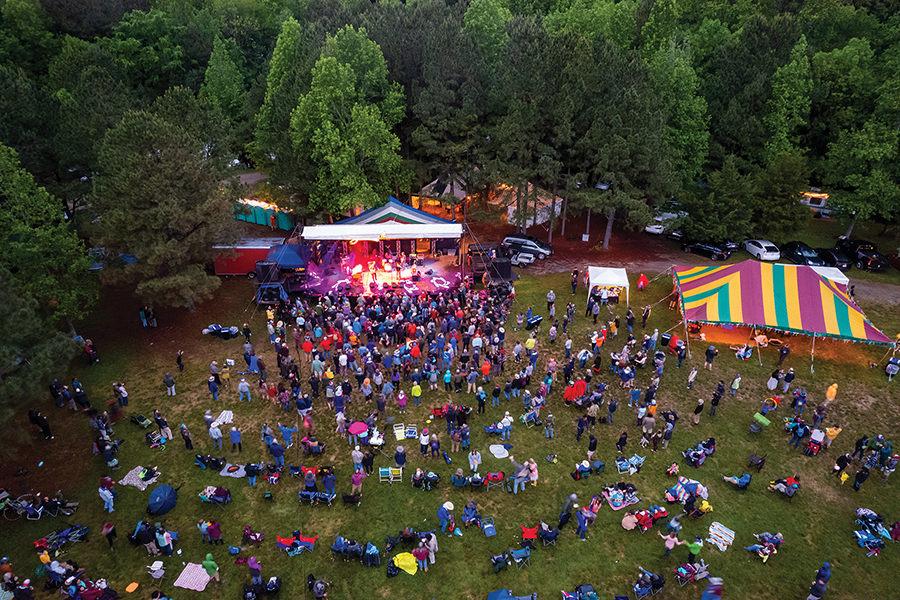
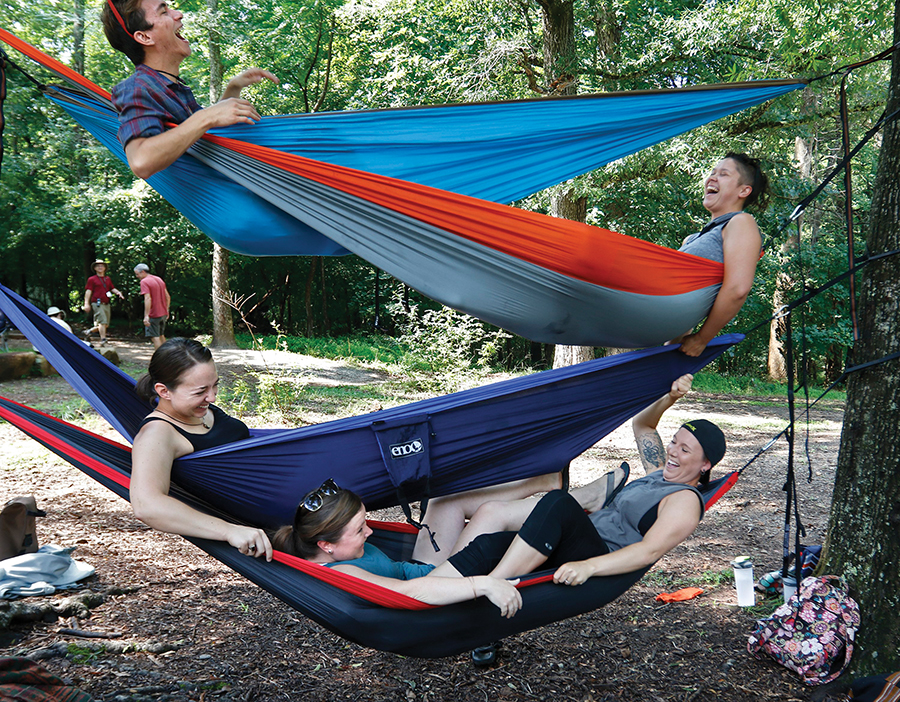
Springtime in North Carolina means college basketball madness, azaleas blooming — and the earliest days of outdoor music. Our state has a staggering array of A-list music festivals spanning numerous genres from now until fall. Here are some of what you should be making plans for.


Dreamville Festival 

Between apocalyptic weather and the coronavirus pandemic, rapper J. Cole’s Dreamville Festival has had a rocky existence in its short history. But in spite of multiple postponements, Dreamville has been a huge success, starting with 2019’s sold-out debut at downtown Raleigh’s Dorothea Dix Park that immediately established it as one of the nation’s top hip-hop festivals. Dreamville’s second edition in 2022 expanded from one day to two with an onstage lineup featuring the entire roster of Cole’s Dreamville Records label, and it also sold out. Round three returns to Dix Park the first weekend of April as another multi-day affair. It should be another big success, with Cole himself in the headline slot.

April 1 – 2, Raleigh; dreamvillefest.com


MerleFest 

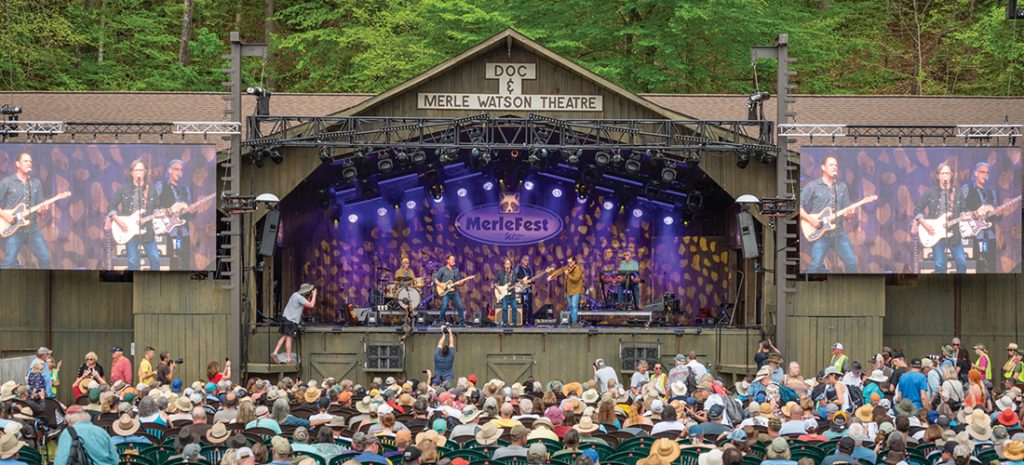
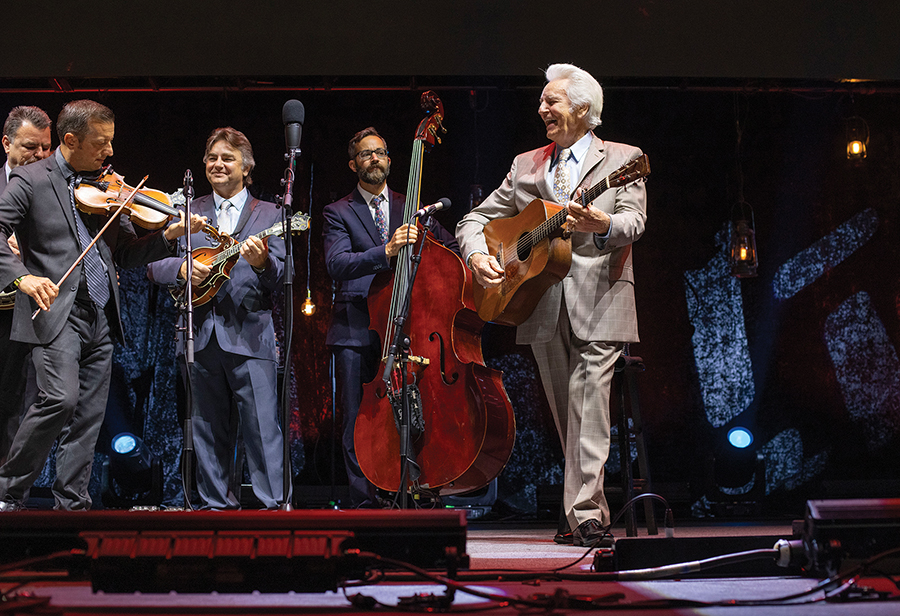
Centered on the multi-style “traditional plus” music played and loved by its late, great founder, Doc Watson, MerleFest has been a tradition at Wilkes Community College since 1988. The venerable roots-music festival is a signpost event on the Americana circuit. And after the same pandemic problems that every other live-music event faced in recent years, it’s back with an impressive lineup featuring the Avett Brothers, Maren Morris, Little Feat, Tanya Tucker and more.

April 27 – 30, Wilkesboro; merlefest.org


Bear Shadow

The mountains of the far western corner of North Carolina are the setting for this springtime festival, which happens the same weekend as MerleFest. First conceived in 2021, this year’s model has a first-rate alternative-leaning lineup featuring Spoon, The Head and the Heart, Jason Isbell and Amythyst Kiah.

April 28 – 30, The Highlands Plateau; bearshadownc.com


Shakori Hills GrassRoots Festival of  Music & Dance 

Started in 2003 as a nonprofit music and dance festival, Shakori Hills takes place on a bucolic 9,000-acre spread in rural Chatham County. It’s probably the top camping festival in the greater Triangle region, with solid Americana lineups. Marty Stuart & His Fabulous Superlatives, Malian singer/guitarist Vieux Farka Touré, beach legends Chairmen of the Board and festival regulars Donna the Buffalo. There’s also a fall version of Shakori Hills, which happens every October.

May 4 – 7, Pittsboro; shakorihillsgrassroots.org


Annual Carolina Beach Music Festival

Dance to beach music with your toes in the sand at the 37th Annual Carolina Beach Music Festival on Saturday, June 3 from 11:00 a.m. to 5:00 p.m. Billed as “the biggest and only beach music festival actually held on the beach on the North Carolina coast,” three bands will be performing. Shows are accessible from the Carolina Beach Boardwalk at Cape Fear Blvd. and Carolina Beach Ave. S. For information on tickets call (910) 458-8434.

June 3, Carolina Beach


Festival for the Eno

The granddaddy of music festivals in the Triangle, Festival for the Eno dates back to 1980 and happens on the grounds of Durham’s West Point Park. Started as a fundraiser for the Eno River Association, the festival — which also offers a craft and food market — has hosted a who’s who of Americana-adjacent and roots artists including Emmylou Harris, Doc Watson and Loudon Wainwright III. Recent years have featured rising regional acts including Mipso, Rainbow Kitten Surprise and Indigo De Souza.

July 1 and 4, Durham; enofest.org


Mountain Dance and Folk Festival 

Reputedly the first event in America to be called a “folk festival,” Asheville’s Mountain Dance and Folk Festival was founded in 1928 by the folk music legend, Bascom Lamar Lunsford. It remains the longest continuously running folk festival in the country, and it’s as much about the folk dance traditions of Western North Carolina as the music.

Aug. 3 – 5, Asheville; folkheritage.org


Earl Scruggs Music Festival 

A newcomer to the North Carolina festival circuit, the Earl Scruggs Music Festival debuted last year at the Tryon International Equestrian Center in Mill Spring. As you’d expect for a festival named after the man who invented the three-finger style of bluegrass banjo, the lineup trends toward classic bluegrass and Americana.

Sept. 1-3, Mill Spring; earlscruggsmusicfest.com


John Coltrane International Jazz and Blues Festival 

Although he made his mark as an artist elsewhere, John Coltrane was born and raised in Hamlet, North Carolina. He was one of the towering figures of 20th century jazz, a key collaborator with Miles Davis, Duke Ellington and his fellow North Carolina native Thelonious Monk. The John Coltrane International Jazz and Blues Festival has been paying tribute to his legacy every Labor Day weekend since 2011 with solid lineups — 2022 featured trumpeter Chris Botti, singer Patti LaBelle and saxophonist Kirk Whalum, among others.

Sept. 2 – 3, High Point; coltranejazzfest.com


Hopscotch Music Festival

Downtown Raleigh has a well-earned reputation for doing music festivals right, and one of the events that helped pave the way is the alternative-slanted Hopscotch. Originally started in 2010 under the auspices of the Indy Week newspaper, it showed off Raleigh’s walkable grid of downtown nightclubs and outdoor stages to fantastic effect. Past headliners have included Flaming Lips, The Roots, Solange Knowles and St. Vincent. Hopscotch director Nathan Price reports that this year’s model should feature “an expanded lineup closer to pre-COVID size.” Here’s hoping.

Sept. 7 – 9, Raleigh; hopscotchmusicfest.com


North Carolina Folk Festival 

In 2015, the National Council for the Traditional Arts brought the long-running National Folk Festival (which has been around since 1934) to Greensboro for a three-year run. It was such a success that, after the national festival’s Greensboro run ended, the city opted to keep it going as the rebranded North Carolina Folk Festival. Last year’s lineup was typically eclectic, featuring everything from George Clinton’s P-Funk All-Stars to the Winston-Salem Symphony String Quartet. Expect more of the same in 2023.

Sept. 8 – 10, Greensboro; ncfolkfestival.com


World of Bluegrass 

The International Bluegrass Music Association moved its annual business convention and festival to Raleigh in 2013, where it has been a huge success. Between the convention, trade show, “Bluegrass Ramble” nightclub showcases, awards show and street festival, total attendance can top 200,000 when the weather’s good. Past headliners have included Steve Martin, Alison Krauss, Béla Fleck and just about every notable picker and singer in the genre. Year in and year out, it’s downtown Raleigh’s biggest music festival.

Sept. 26-30, Raleigh; worldofbluegrass.org


That Music Festival 

Sponsored by Raleigh’s Americana/roots radio station, That Station, 95.7-FM, That Music Festival made its debut in June 2022 at Durham Bulls Athletic Park with an all-North Carolina lineup featuring American Aquarium, Steep Canyon Rangers, Mountain Goats, Rissi Palmer and more. The sophomore edition is tentatively scheduled for October, most likely in Durham again.

October, Durham; thatstation.net/that-music-fest


Annual Bluegrass Island Music Festival 

Music lovers will be flocking to the Outer Banks, beach chairs in hand, for the 12th Annual Bluegrass Island Music Festival October 19-21 held at the Roanoke Island Festival Park overlooking miles of the pristine waters of Roanoke Sound. Buy your tickets and book your lodging well ahead of time. Acts this year include The Goodwin Brothers, Seth Mulder & Midnight Run, Rhonda Vincent & The Rage, Po’ Ramblin’ Boys, Leftover Salmon, The Kody Norris Show, Thunder & Rain, AJ Lee & Blue Summit, The Kitchen Dwellers, The Steeldrivers, Darin & Brooke Aldridge, Breaking Grass, Tim O’Brien and the incomparable Sam Bush. 

October 19-21, Manteo; bluegrassisland.com  PS

A Rude Awakening

A Rude Awakening

Bravery, blunders, and bloodshed at Monroe’s Crossroads

By Bill Case    

Art by  Martin Pate and the Fort Bragg Cultural Resource Management Program
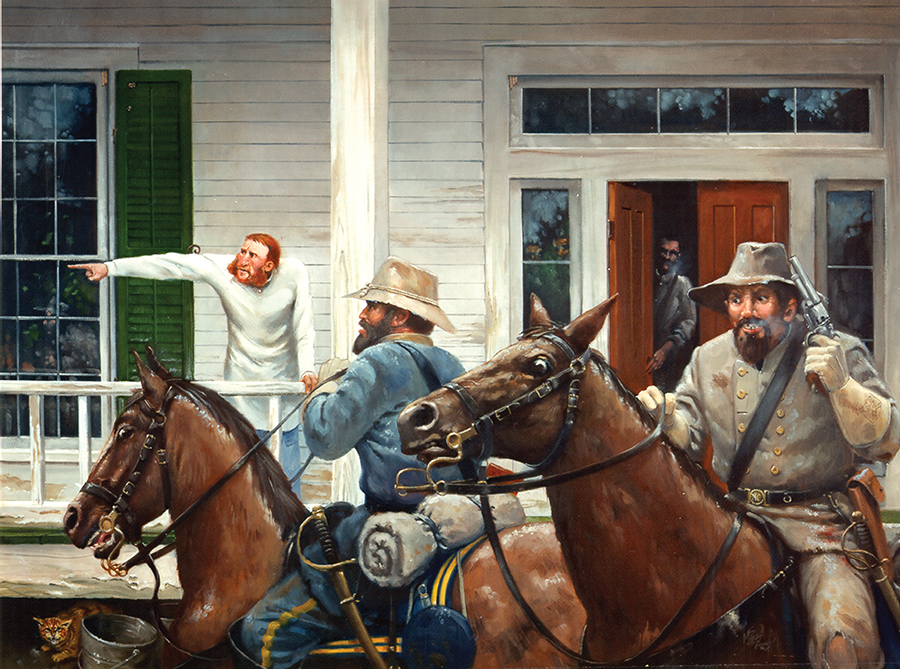
Gen. Kilpatrick misdirects Confederate cavalry.

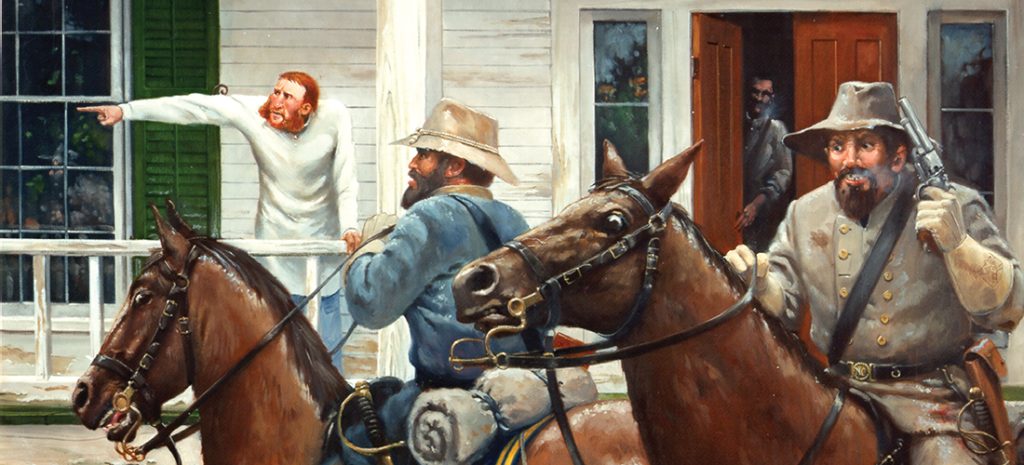
The arrival of dawn on March 10, 1865, became an unwelcome wake-up call for Lt. Gen. Judson Kilpatrick. Stirred from his bed by the sound of thundering hoofbeats, the Union cavalry leader, clad only in his nightshirt and drawers, rushed to the front porch of Charles Monroe’s farmhouse, 8 miles east of present-day Southern Pines on what is now the Fort Bragg — soon to be Fort Liberty — Army reservation. Having commandeered the house for his temporary headquarters, what Kilpatrick saw shocked him. Hordes of Confederate cavalry were swooping down on his sleeping encampment, slashing with sabers and firing point-blank at bleary-eyed Union troops. Thus began “The Battle of Monroe’s Crossroads.”

“In less than a minute,” Kilpatrick would later report, the Confederate horsemen “had driven back my people, and taken possession of my headquarters, captured the artillery (two cannons), and the whole command was flying before the most formidable cavalry charge I ever have witnessed.” The general’s immediate thought was, “Here is four years’ hard fighting for a major general’s commission gone up with an infernal surprise.”

Tagged with the scathing moniker “Kill-cavalry” because of a history of unnecessarily putting his troops in harm’s way, the general’s improvident failure to set pickets and safeguard his headquarters was an especially egregious omission and could well torpedo his military career. It enabled Confederate cavalry, led by Gen. Wade Hampton and subordinate generals Joseph Wheeler and Matthew Butler, to ride undetected and unopposed straight into the Union camp.

Kilpatrick’s attention may have been distracted by the presence of a woman. Depending on the historian consulted, the woman was either the beautiful Marie Boozer or a plain Yankee schoolmarm named Alice. In either case, the woman was believed to be sharing Kilpatrick’s bed at the farmhouse. The general, it seems, was caught with his pants down.

One objective of the Confederate attack was to capture Kilpatrick. A cadre of Georgia cavalry, finding a man still in his bedclothes standing on the porch of Monroe’s farmhouse, demanded to know where the Union general was. It was Kilpatrick, of course, and he quickly pointed to a figure riding off in the distance, “There he goes on that black horse!” exclaimed the general.

The Georgians turned and rode off in pursuit. Leaving either Alice or Marie behind, Kilpatrick scrambled off the porch, climbed aboard a stray horse — not his prized Arabian stallion “Spot” — and promptly hightailed it into the woods, where many of his cavalrymen had retreated. To this day, the general’s flight is disparagingly labeled “Kilpatrick’s Shirt-Tail Skedaddle.”

The Confederates had good reason to target Kilpatrick, whom they had come to despise for his part in the Union Army’s devastating blitz of the South. Six months earlier, on Sept. 2, 1864, Gen. William Tecumseh Sherman’s 60,000 Union soldiers had occupied and burned the city of Atlanta when depleted Confederate forces — commanded initially by Gen. Joseph Johnston, followed by Gen. John Bell Hood — were unable to halt the Union troops’ advance. In response, the president of the Confederacy, Jefferson Davis, installed Gen. P.G.T. Beauregard as the commander of the newly formed Department of the West, comprised of five Southern states that included Georgia, South Carolina and North Carolina.
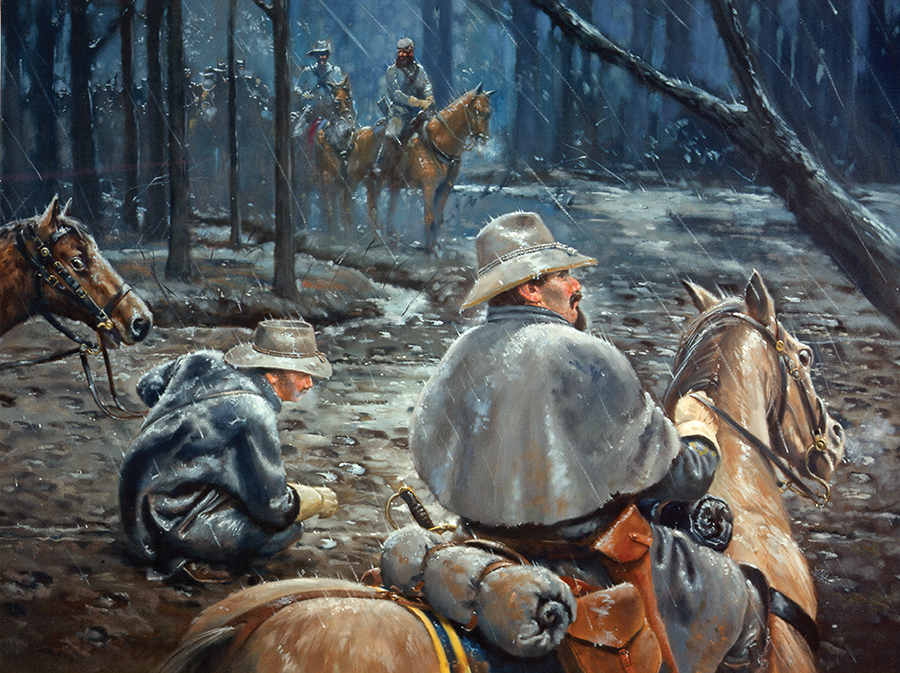
Hampton’s scouts discover tracks to Kilpatrick’s encampment.

But with fewer than 30,000 soldiers scattered over several states, Beauregard was equally powerless to prevent Sherman’s next move, his “March to the Sea,” made during November and December, 1864. During a five-week trek from Atlanta to Savannah, Union soldiers laid waste to military installations, factories and railroads in an effort to choke off the Confederacy’s economic lifeblood. Leading the Union cavalry was Kilpatrick, whose zeal for destroying enemy property made him, according to Sherman, “just that sort of man to command my cavalry on this expedition.” The general, aware of Kilpatrick’s faults, also referred to him as “a damn fool.”

After the Union troops reached Savannah on Dec. 21, 1864, commander-in-chief Gen. Ulysses S. Grant considered having Sherman move his army north by sea to Virginia, where the two generals would combine their forces to finish off Lee in Petersburg. But Sherman had a different plan in mind. He proposed marching his men north through the Carolinas to link up with Grant. Sherman persuaded his commanding general that the maneuver would devastate resistance in both states. Grant agreed, ordering him to “make your preparations to start on your expedition without delay . . . break up the railroads in South and North Carolina, and join the armies operating against Richmond as soon as you can.”

The bulk of Sherman’s army began exiting Savannah at the end of January 1865, soon entering South Carolina. Sherman was not inclined to treat the first state to secede gently. “The whole army is burning with an insatiable desire to wreck vengeance upon South Carolina,” he would write. “I almost tremble at her fate, but feel that she deserves all that seems in store for her.”

Sherman and other Union commanders have been criticized for rebuffing the pleas of numerous former slaves seeking the army’s protection during its Southern campaign. Hungry and fearful of being recaptured (or worse) by their former masters, the liberated, but nonetheless desperate, slaves attempted to attach themselves to the Union force. But the army mostly stiff-armed them on the grounds that the Blacks need for food and supplies would drain available resources and slow the march. In one measure of retribution against the slaveholders in the Deep South, Sherman issued an edict setting aside 400,000 acres of coastal areas in South Carolina, Georgia, and Florida for freed slaves, an order later reversed by Andrew Johnson. 

Gen. Wade Hampton, commanding the cavalry supporting Lee’s army in Virginia, could not bear the thought of being absent from the upcoming fight in his home state of South Carolina. Hampton, deemed by Confederate Gen. James Longstreet the “greatest cavalry leader of our or any age,” was granted leave by Lee to return to the state along with Gen. Matthew Butler and the latter’s cavalry division.

Hampton also convinced Lee to place him in command of the Confederate cavalry in the area. This created friction between Hampton and “Fighting Joe” Wheeler, who had days before led his men to victory over Kilpatrick’s cavalry at Aiken, South Carolina. Hampton and Wheeler managed to put aside any ill feelings and established an effective working relationship, later evidenced at Monroe’s Crossroads.
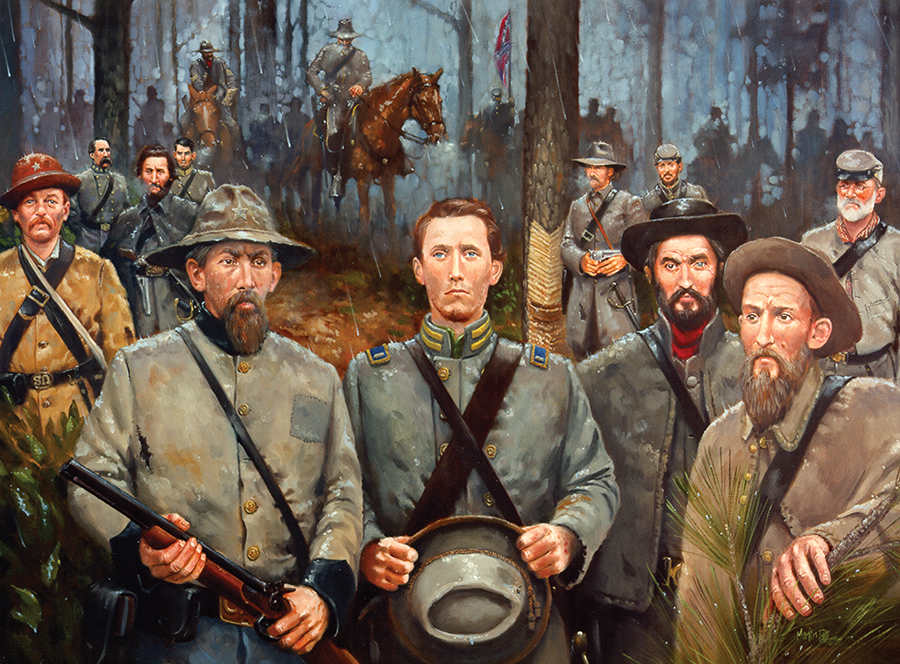
   

Readied for the dawn attack.

In the early stages of the Carolinas Campaign, Sherman kept Beauregard and Hampton guessing where his army was heading. To confuse them, he ordered the Union left wing westward toward Augusta, Georgia, while directing his right wing to feint in the direction of Charleston. Then Sherman brought the troops back together to make a beeline to Columbia, South Carolina. The state capital was lightly defended, and Hampton had no choice but to order his troops to evacuate. On Feb. 17, Sherman’s unopposed army occupied the city.

A massive fire broke out that consumed most of Columbia’s buildings. Arguments raged regarding who caused the conflagration. Did the responsibility lie with fleeing Confederates who allegedly set fire to a storehouse of cotton bales? Or was the fire ignited by vengeful Union soldiers? Sherman pointed the finger at Hampton, who pointed his own, presumably uplifted, digit back at “Uncle Billy.”

The two adversaries exchanged hostile messages regarding the fate of Union foragers, a number of whom Sherman claimed had been murdered by Confederate soldiers after capture. He notified Hampton of his intent to respond in kind by executing a like number of Confederate prisoners. Hampton emphatically denied Sherman’s charge and upped the ante, promising that “for every soldier of mine ‘murdered’ by you, I shall have executed at once two of yours, giving in all cases preference to any officers who may be in my hands.” Both generals got each other’s message, and no further executions of foragers or other captives occurred.

The Columbia debacle accentuated fears of Confederacy higher-ups that annihilation of their cause was at hand. On Feb. 22, a desperate Gen. Lee relieved the beleaguered Beauregard and brought Gen. Johnston back to command the Department of the West. Johnston was under no illusion he could reverse the course of the war. In his memoirs, the general acknowledged that his primary object was “to obtain fair terms of peace; for the southern cause must have appeared hopeless then to all intelligent and dispassionate southern men.”

Given the Confederate Army’s vanishing manpower, achieving any terms beyond the CSA’s unconditional surrender would be a daunting undertaking. At the time Sherman crossed into North Carolina (March 3, 1865), the only Confederate infantry in Sherman’s immediate vicinity was Gen. William Hardee’s corps of 6,000 soldiers. Outnumbered 10 to 1, the most Hardee could be expected to do was shadow Sherman’s advance.

A more workable short term option for Johnston was employing his Hampton-led cavalry to dog the Federals with hit-and-run raids. As author Eric J. Wittenberg explained in his book, The Battle of Monroe’s Crossroads, the 4,000 horse soldiers of Hampton, Wheeler and Butler resisted Sherman by “hovering around the edges of the Federal column like a swarm of angry hornets ready to exact a heavy toll whenever an opportunity presented itself.”

Another dilemma for Johnston was not knowing where the Union Army would head after sacking Columbia. Sherman’s actual next destination was Fayetteville. Once there, his army could obtain supplies transported by steamboats sailing up the Cape Fear River from the coastal port of Wilmington, the latter having fallen into Federal hands in February. After destroying the arsenal at Fayetteville, Sherman intended to cross the Cape Fear and move his army to Goldsboro, North Carolina, where it would link up with Gen. John Schofield’s corps of 30,000 soldiers. Their combined force of 90,000 soldiers would then join Grant in Virginia for the final push against Lee.
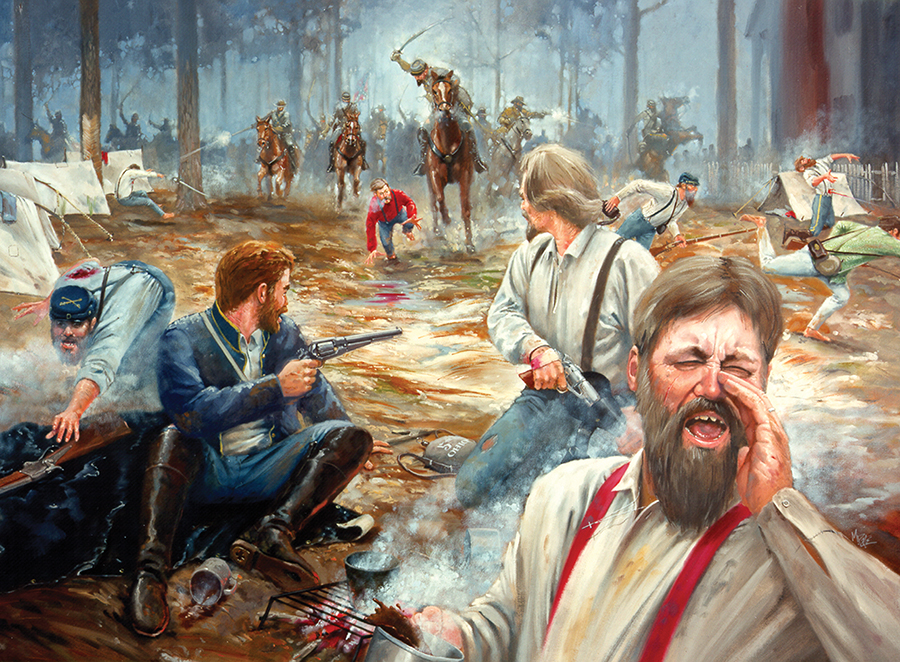
 

The confederate charge at Monroe’s Crossroads.

A critical element of Sherman’s strategy was getting to Fayetteville before Hardee. Doing so would enable him to block or destroy the bridges across the river. Either measure would prevent Hardee’s corps and Confederate cavalry units from joining up with Braxton Bragg’s corps and other remnants of Joe Johnston’s dwindling forces.

Johnston’s strategy was basically a mirror image of Sherman’s. If Hardee reached Fayetteville ahead of the Federals, he was directed to cross the river and blow up the bridges behind him. This would frustrate, or at least delay, Sherman’s own crossing. Meanwhile, Hampton’s cavalry would hound the Union Army, inhibiting its progress.

The race would entail both Federal and Confederate forces passing through Moore County. Exhausted forces on both sides shivered as incessant, near-freezing rains with accompanying spring floods hampered their movements. Moore County was a quagmire! Kilpatrick described the grueling conditions as “the most horrible roads, swamps, and swollen streams.”

When Kilpatrick entered the county on March 7, he was several miles ahead of Sherman, who sent a message directing his cavalry leader “to deal as moderately by the North Carolinians as possible.” The general also counseled Kilpatrick to “keep up the seeming appearance of pushing after Hardee, but really keep your command well in hand, and the horses and men in the best possible order as to food and forage.”

As Kilpatrick consumed a meal of boiled sweet potatoes at the farm of Evander McLeod (near present day Pinebluff) on the evening of March 8, it had become abundantly clear that the West Point grad would be hard-pressed to avoid hostilities with the Confederate cavalry buzzing around him. Wade Hampton’s men had left McLeod’s farmstead just hours before.

The impending danger was compounded by Kilpatrick’s decision to send out scouting parties in search of alternative routes to avoid his troops’ overtaxing of the roads. As Wittenberg writes, “The farther his (4,000) men spread out . . . the more the Federals risked attack by marauding Confederate cavalrymen hovering just beyond the fringes of Kilpatrick’s column.”

At times, Kilpatrick seemed oblivious to these concerns. During the following day’s march, a Confederate prisoner, while walking alongside the carriage of “Little Kil” —he stood 5 feet, 3 inches in height — observed the general laying his head in Alice’s (or Marie’s?) lap and dangling his feet out the carriage window.

Meanwhile, at about 2 p.m. on March 9, Kilpatrick’s Third Brigade, headed by Col. George Spencer, arrived at the small hamlet of Solemn Grove, comprised of Buchan’s post office, a store, a mill and a few houses, including that of Malcolm Blue. Spencer was followed by William Way’s dismounted Fourth Brigade accompanied by 150 Confederate prisoners. Little Kil’s first and second cavalry brigades, commanded by Col. Thomas Jordan and Brig. Gen. Smith Atkins, respectively, were farther behind.
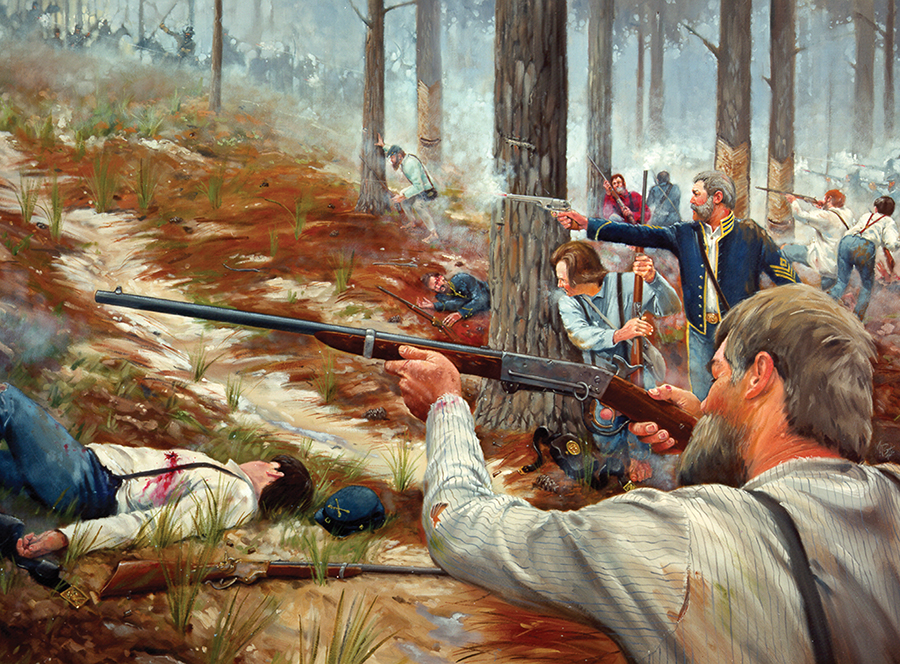
Kilpatrick’s men counterattack.

Upon receiving intelligence that Hampton’s cavalry was heading for Fayetteville, Kilpatrick concocted a scheme. He would seek to intercept the Confederate horsemen and prevent their planned rendezvous with Hardee, now certain to beat the Federals to the Cape Fear. The gambit meant blocking three different roads that Hampton and his subordinates, Wheeler and Butler, might potentially use: Morganton Road, Chicken Road to the south, and Yadkin Road to the north. Kilpatrick ordered Spencer to block the Yadkin Road. Another sortie was assigned to Way’s 400-man dismounted brigade. It marched farther east to block Morganton Road. Atkins, following behind as a rear guard, was urged to close up his brigade’s distance from Spencer and Way. The three brigades were ordered to establish camp at Monroe’s Crossroads, though circumstances would prevent Atkins from arriving there until well after hostilities commenced the following morning.

Way’s brigade reached Monroe’s Crossroads at 9 p.m. and set up camp adjacent to Charles Monroe’s farmhouse at the intersection of Morganton and Blue’s Rosin roads. Spencer’s brigade arrived soon thereafter, setting up its camp on a plateau that sloped toward a dismal swamp. Meanwhile, Jordan’s First Brigade, 3 miles distant, blocked Chicken Road. Kilpatrick’s separation of his brigades carried risk as each unit was rendered more vulnerable to attack. At the time Kilpatrick’s bugler sounded “taps” the night of March 9, there were around 1,400 Union soldiers at Monroe’s Crossroads, but had Kilpatrick played into the enemy’s hands by dividing his brigades?


Meanwhile, Confederate Gen. Butler had an unexpected prize fall into his lap. While patrolling with his division on the evening of March 9, he detected the sound of approaching hoofbeats. Butler called out, “Who goes there?”

“Fifth Kentucky,” came the response. Butler knew the 5th was a Federal unit.

He beckoned the soldiers to come forward and, without firing a shot, Butler promptly disarmed and took into custody 28 unsuspecting Kentuckians. The captives were all members of Kilpatrick’s headquarters escort company. It appeared Kilpatrick had been nearby and had narrowly avoided his own capture, hightailing it to Charles Monroe’s farmhouse. Sharing the residence with Little Kil and Alice (or Marie) were brigade leaders Spencer and Way, who bunked upstairs. Despite his close call and the distressing disappearance of the escort company, Kilpatrick inexplicably neglected to post any guards.

As a gleeful Butler regaled Hampton with the tale of his evening’s adventure, a scout rushed up to inform the generals that the tracking of hoofprints had led him to discover the union cavalry’s encampment at Monroe’s Crossroads. It appeared unguarded to the scout. Hampton, after conferring with Wheeler and Butler, sensed an opportunity to catch Kilpatrick napping (or otherwise occupied) and ordered a dawn attack.

Wheeler thought the attack would be more effective if made on foot. But Hampton overruled him. “General Wheeler,” said Hampton, “as a cavalryman I prefer making this capture mounted.” And so it was that at 5:20 a.m., the oft-wounded Hampton, astride his horse, led his cavalry’s ferocious charge into the Union camp. The 49-year-old master horseman reputedly dispatched three Union soldiers in the process.

It seemed certain Hampton was on the threshold of a glorious victory — one that could demonstrate to all that the war was not yet over. But the unforced errors were not the sole province of Kilpatrick. Several columns led by Wheeler were supposed to attack through an area that was marshy and full of thick vegetation. Wheeler thought the terrain would pose no hindrance, but he was wrong. Approximately half of Wheeler’s troops failed to make it through the muck and were late to the battlefield.

The attack caused the Union soldiers guarding the 120 Confederate prisoners to flee to the woods. Suddenly freed, the now ex-prisoners ran headlong and “frantic with joy” toward their liberators. At first, the cavalrymen thought the men sprinting toward them were retreating soldiers whose forward charge had been repulsed. The resulting confusion caused a temporary blunting of the Confederate assault. Furthermore, one of Butler’s brigades did not take part in the attack as it was ordered to escort the elated, but famished, former captives to the rear.

The newly liberated soldiers weren’t the only hungry ones. The Confederate cavalry soldiers also craved food. Many availed themselves of the opportunity to poke through the Union camp to find and consume whatever edibles they could lay their hands on. They looted belongings, scavenging shoes, blankets, saddles and mounts. The breakdown in discipline stemmed the momentum of Hampton’s onslaught and provided the Union cavalry breathing space to reform and rally. Local Civil War buff Jim Jones believes that the cavalrymen’s attention to the needs and whereabouts of their horses following the initial rush may also have added a distraction that would have been avoided had the charge occurred dismounted.

Hampton made another decision he would regret by not searching the farmhouse. Unknown to the general, Union brigade leaders Spencer and Way were still inside, hidden upstairs. Playacting by Kilpatrick’s paramour prevented the officers’ capture. Adopting the airs of a Southern belle, Alice (or Marie) greeted Hampton at the porch and assured him there were no Union officers inside her home. The chivalrous Hampton, not wanting to further trouble such a fine lady, posted a guard to keep rebel soldiers out of her hair, then bid the woman adieu. Spencer and Way remained grounded in the bedroom until the battle’s conclusion.
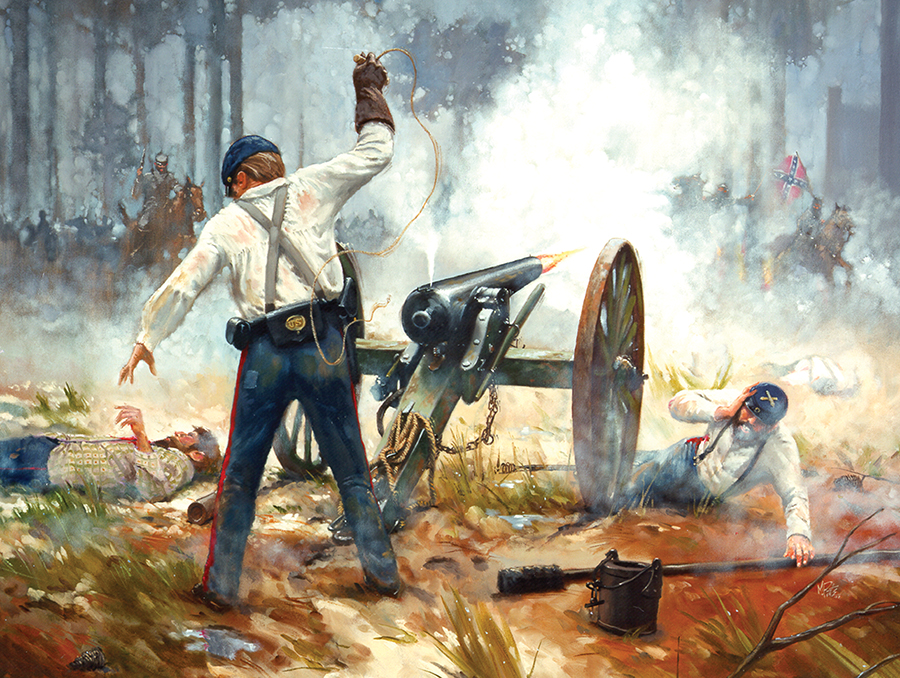
 

Lt. Stetson fires away.

Given the disarrayed and bedraggled appearance of Kilpatrick’s cavalry, it seemed next to impossible they could mount any sort of counterattack. Though they were chilled to the bone and nearly naked, most of Kilpatrick’s men had the presence of mind to grab their guns and ammo before fleeing from the camp. Jones points out that the veterans in Sherman’s army were as battletested as any in the war. “They bent at times but never broke,” says Jones.

According to Ohio horse soldier T.W. Fanning, Little Kil “cobbled together enough men to order an advance.” Then at his command, the horse soldiers “moved up the ridge, firing as they moved.” According to Fanning, the men “with one wild shout, swept down upon the rebels, who were swarming around the captured artillery and Kilpatrick’s former headquarters.” Adding impetus to Kilpatrick’s thrust were Capt. Theodore Northrup and his company of Union scouts. They had rushed to Monroe’s Crossroads upon learning of Kilpatrick’s plight.

Engaged as they were in premature celebration, it was Hampton’s cavalry now caught flatfooted. In the fog of the renewed gunfire, Lt. Ebenezer Stetson, who had been hiding from the Confederates under the farmhouse since the initial attack, surreptitiously crept to one of the cannons just 20 steps away. He loaded it with canister and fired away at the startled Confederates. Several of Hampton’s men were killed instantly. A second artillerist, believed to be Sgt. John Swartz, rushed to the second cannon and fired it to like effect. Together, they were able to inflict considerable damage until the guns were recaptured by Gen. Wheeler, largely through the ultimately fatal charge of Capt. Moses Humphrey. Swartz also died from wounds suffered in the battle.

Gen. Wheeler suddenly made his presence felt, charging into the camp and, according to a Georgian horseman, “killed several Yankees in close encounter.” He and Butler made repeated efforts to drive Kilpatrick’s men back toward the swamp, but they were met with withering gunfire courtesy of the Spencer seven-shot repeating carbines carried by an Ohio unit in the Union cavalry. Southern casualties were exacerbated because Wheeler’s and Butler’s men were packed close together due to the vagaries of the landscape. A disconsolate Butler reported that the carbines “made it so hot for the handful of us we had to retire. In fact, I lost 62 men (wounded and killed) there in about five minutes time.”

Coupled with his belief that Sherman’s infantry would soon be coming to Kilpatrick’s aid, Hampton ordered his cavalry to pull out and move on to Fayetteville. Both sides claimed victory at Monroe’s Crossroads. Kilpatrick boasted that he had driven the Confederate cavalry from the field. However, his negligent preparations would come under fire and Sherman never trusted him again. Hampton claimed his surprise attack freed prisoners and successfully stalled the Union cavalry, thus allowing Hardee to escape unscathed across the Cape Fear. But Hampton’s failure to capitalize on his initial advantage undercuts a claim of Confederate victory.

The precise number of battlefield deaths at Monroe’s Crossroads is unknown. The CSA wasn’t keeping records anymore, and Kilpatrick probably inflated the casualty figures. It would appear from accounts that a total of 150 dead is not far off. It was the last true cavalry engagement of the war.

As a result of Hardee’s escape, Joe Johnston was able to marshal 21,000 troops to battle Sherman at Bentonville on March 19. But Johnston was still outnumbered 3 to 1. As a result of heavy losses in this battle and the futility of further conflict, Johnston ultimately surrendered to Sherman. This followed Lee’s surrender to Grant at Appomattox Court House on April 9th.

Today the Monroe’s Crossroads battlefield can only be accessed by prior arrangement. Happily that’s not difficult. Jonathan Schleier, associated with Fort Bragg’s Cultural Resource Program, offered to provide a guided tour but because the penetrating boom of military munitions can still be felt there 157 years after Lt. Stetson fired a cannon at the site, Schleier had to find a date from Range Control when artillery operations would not be occurring in the area.

On a hot July morning, I met Schleier at Fort Bragg’s Ranger Station No. 2, located at the point where East Connecticut Avenue meets the post’s border. As the roadway continues into the reservation, it’s called Morganton Road, an unimproved pathway little changed since 1865. Riding in Schleier’s Ford F-150 we observed neither vehicles nor people en route to the remote battlefield. Schleier said that present day officers, as part of their training, walk the battlefield to study the tactics and maneuvers of the long-ago fight.

The Monroe farmhouse is gone, but an obelisk marks its location. The battlefield has a surprising number of monuments, all of them installed since 1990. There are combatants’ graves, including those specifically dedicated to unknown soldiers. One memorial is situated at the spot where Lt. Stetson unleashed his cannon. Schleier unfolded maps to aid in comprehending the movements of the antagonists. Walking the ridge-filled terrain and eyeing the steep incline down to the swamp it was possible to visualize the logistical challenges faced by both cavalries.

The old battlefield was eerily quiet. Not a sound to be heard. Just like it must have been before all hell broke loose at 5:20 a.m. on March 10, 1865.

To schedule a tour of the battlefield, call Jonathan Schleier at (910) 396-6680.  PS

Pinehurst resident Bill Case is PineStraw’s history man. He can be reached at Bill.Case@thompsonhine.com.

The Carriage House Rides Again

The Carriage House Rides Again

Style and originality reign in a chic pied-à-terre

By Deborah Salomon     Photographs by John Gessner


Somewhere, over the rainbow, James Walker Tufts and James Boyd can share a high five. They have found the perfect occupants for their respective villages: He plays golf. She rides. They are happily, healthfully retired, spending summers at their primary residence Up North — Ohio, that is. But when winter’s chill descends so do they, to Pinehurst, with her horse, of course.

“Such interesting people here,” says Linda Salvato.

As are they. Guy Salvato is an artist, graphic and otherwise, who worked at Manhattan’s slickest advertising agency during the Mad Men era. Most of his paintings are golf related. Linda was a consultant in health care marketing. Their primary Ohio home is a Cotswolds gatehouse, designed by an architect who traveled to the Cotswolds for inspiration.

Guy’s four sons are grown, married, with grandchildren of their own. So why not search out a pied-à-terre that pushed their respective buttons? Something quaint without being cloying, surrounded by a community of wine-sipping, cheese-nibbling, concert-going, philanthropic world citizens conversant in, well, just about everything.

No need for massive square footage — the great-grandchildren can stay elsewhere. Instead, a massive need for style and originality.

They were not aware of Pinehurst’s suitability until one of Guy’s sons discovered an international golf art seminar at Pine Needles Lodge & Golf Club.

Let’s go!

“I had been here in the ’90s but it was Linda’s first time,” Guy recalls.

While he was putt-erring around the village, Linda inquired if anybody kept horses. A drive down Young’s Road revealed the answer: “Perfect!” she exclaimed.

The “hunt” for lodging was on. Her requirements: stringent, including proximity to the village, with a historic component, maybe a juicy backstory.

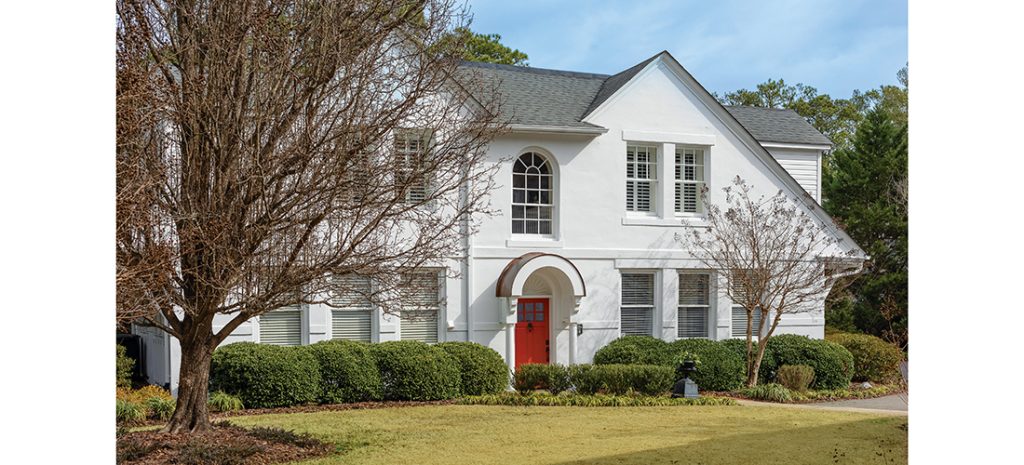
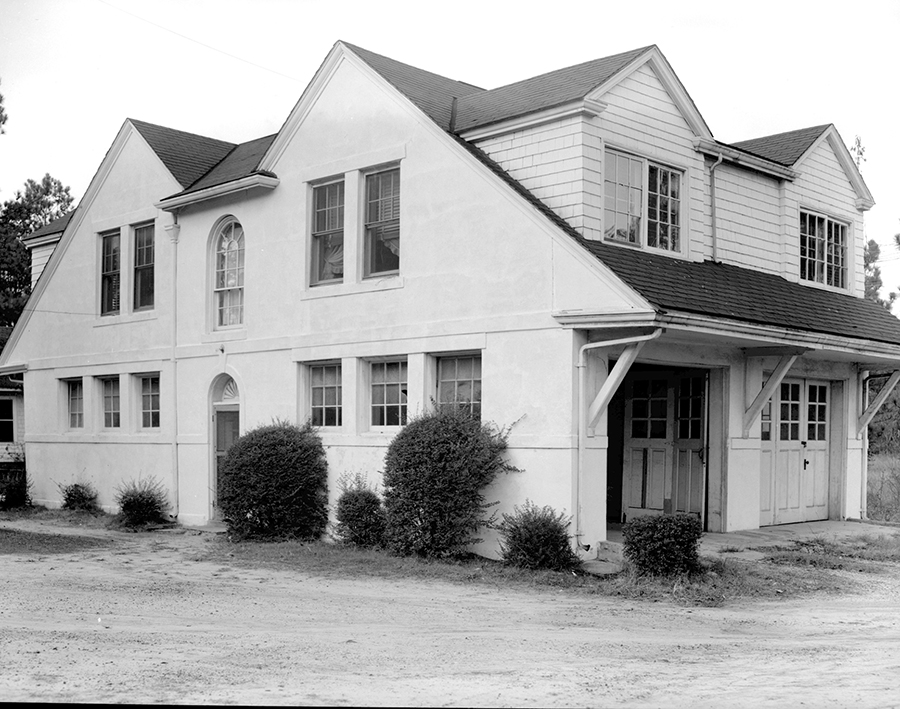
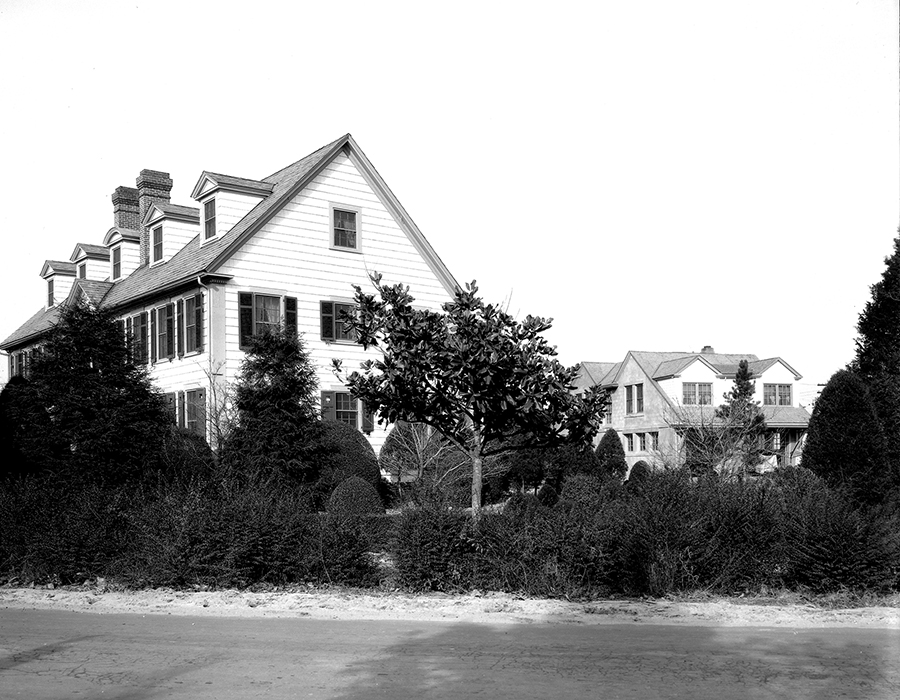
You can’t get much more historic than a wood shingle Colonial Revival multi-unit residence (sounds better than “boarding” or “apartment” house) built by Old Man Tufts himself, in 1896, the same year Pinehurst was founded. The elongated structure stretched across the corner of Palmetto and Cherokee roads. Construction cost: $1,650.


A carriage house with hayloft was added about 1921. When the carriage trade declined, garage doors were installed to accommodate the family roadster. Perhaps because the property attracted more transients than blue bloods, little mention of Palmetto’s history or occupants survives in the society pages.

A subsequent owner renamed it Cloverleaf, described as being located near one of four gates in a fence meant to keep out wild pigs.

The property fell into disrepair. Neighbors (and the village appearance commission) branded it an eyesore until, according to The Pilot, the owner was cajoled into slapping on a coat of paint before the 2005 U.S. Open.

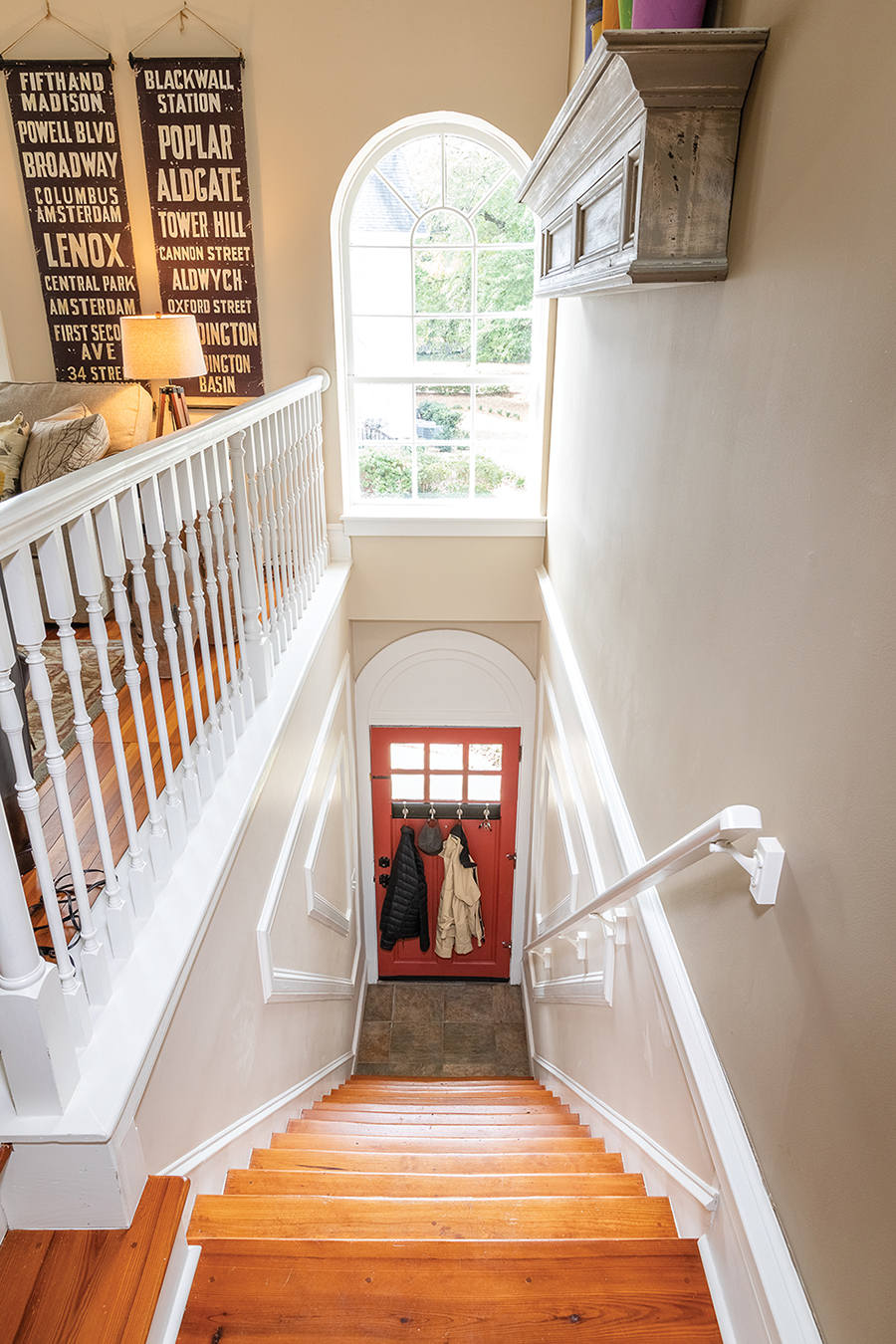
Then, in 2006, a local builder transformed the sad carriage house into two chic pieds-à-terre, adding a Palladian window to the atrium, a tiny skylight and enough moldings, paneled doors and ornate window frames with deep sills to wow a creative retired couple from Ohio.

Linda opened the door and exclaimed, “This is it!”

They snapped up Unit 10 in 2012, made some adjustments to a bathroom and moved in for the 2013 winter season.


Carriage houses, like Manhattan lofts, are rare, therefore precious. Never mind the steep flight of stairs or the modest 1,380 square footage. Concentrate, rather, on the character afforded by original mismatched pine floorboards, wall space for Guy’s golf paintings and a garden plot for this master gardener/cook. On the nights Guy doesn’t prepare an Italian original, village bistros are within walking distance.

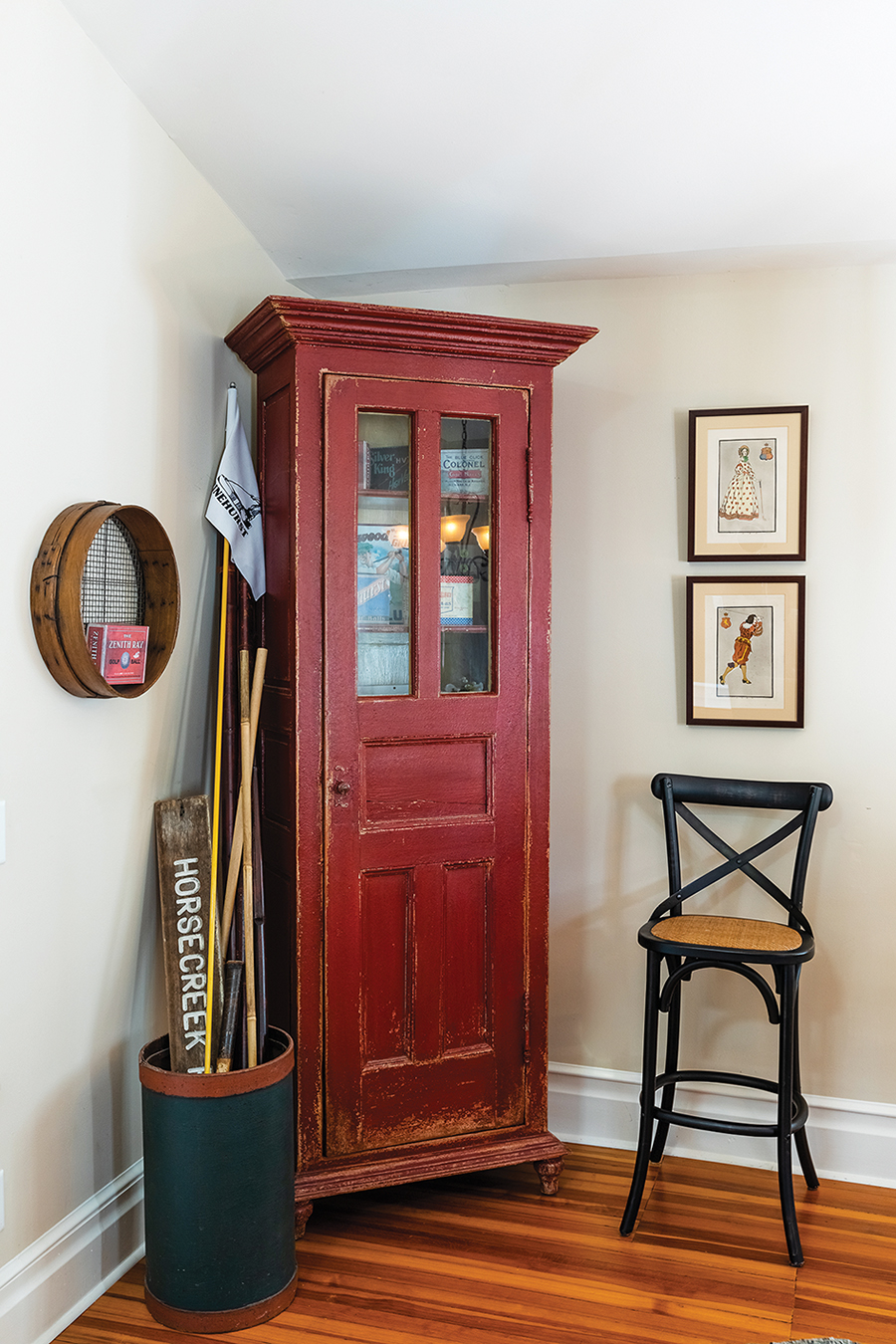
Next came a wicked pleasure enjoyed by mature second homeowners: furnishing rooms from scratch in a breezy style dubbed “Online Eclectic,” with the exception of a rare Wells Fargo (stagecoach company, not bank) desk Linda found while strolling through the shops in Cameron.

“We both have decent design sense,” Guy notes, so no need for an interior designer. Shades of seafoam, sand, gray, vanilla and other pale neutrals flow into each other. Stylized patterns on bedroom fabrics add whimsy, while uncluttered surfaces throughout make small rooms appear larger.


Uncluttered, however, doesn’t mean empty. Or boring. Brightly painted tin cans line one wall shelf. Wood-turned bowls, dramatic examples of craft art, sit center stage on a tall dining area table seating four but folding out to accommodate eight. The kitchen is a little gem. An old-timey Pinehurst equestrian poster speaks for Linda. A golf bag anchors a corner. Guy’s stylized golf tee painting dominates a wall. That he and Andy Warhol traveled in the same New York circles is no surprise since both worked in ad illustration. Nor is Guy’s regret for not saving some of the pop artist’s discards. In 2022, one from a Marilyn Monroe series sold at auction for $195 million.

With the plantation shutters open and sun streaming from the tiny skylight, the residence with multiple ceiling pitches and lovely landscaping feels like a treehouse. To describe interior décor as hard to describe is the ultimate compliment.


The Carriage House beside Palmetto House, after a century of multiple owners and iterations, finished a win-win. The Tufts-Boyd plan worked. Old Town gained another historic reclamation. And two transplants from the Midwest — plus a retired racehorse of championship lineage — discovered nothing could be finer than to winter in Carolina.

“Being here, I feel a sense of relief,” says Linda, who rides almost daily. “I feel energized to do things I wouldn’t do up north.”

“I love doing the exterior work,” and playing golf, of course, Guy adds. “I worked hard for many years. I looked forward to something like this.”

Linda’s summation: “Two beautiful homes and everything else . . . we do have a blessed life.”  PS

King Trees

King Trees

The champions of Moore County

By Tom Lillie     Photographs by John Gessner

This and above Photograph: Turkey oak (Quercus laevis)

Moore County has what it takes to produce champions. The environment is ideal for building endurance and dominating the competition. Four individuals currently living in the Sandhills achieved state, national or world recognition without ever leaving the very spot where they took root and blossomed. They did not seek this recognition. In fact, they were discovered by local admirers and nominated for the crown.

The individuals I am referring to are trees. Three are famous for their size, and one is legendary for its age.

When it comes to size, a tree’s height, trunk circumference and crown spread are used to establish its position in arboreal prominence. The nonprofit group American Forests has the final say. A different process is used to document and recognize the oldest trees. Scientists called dendrochronologists extract a core sample with a special drill bit and count the growth rings to determine a tree’s age.

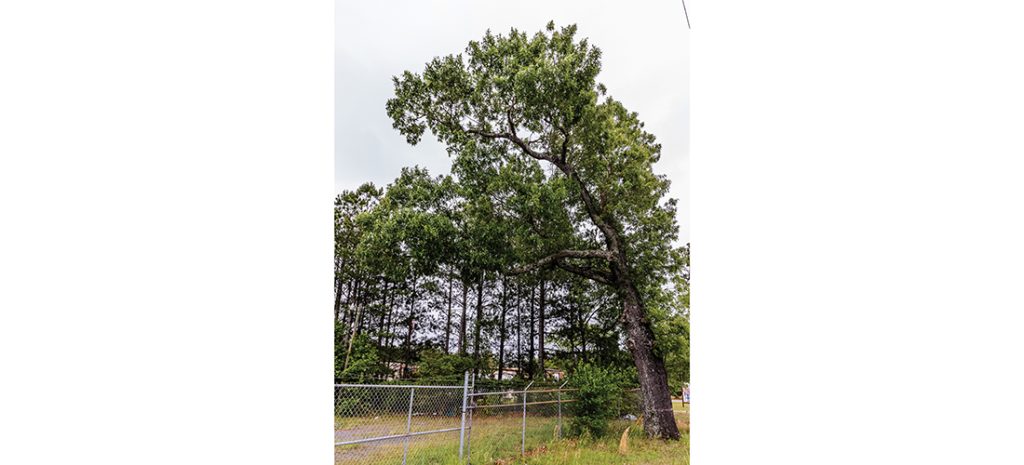
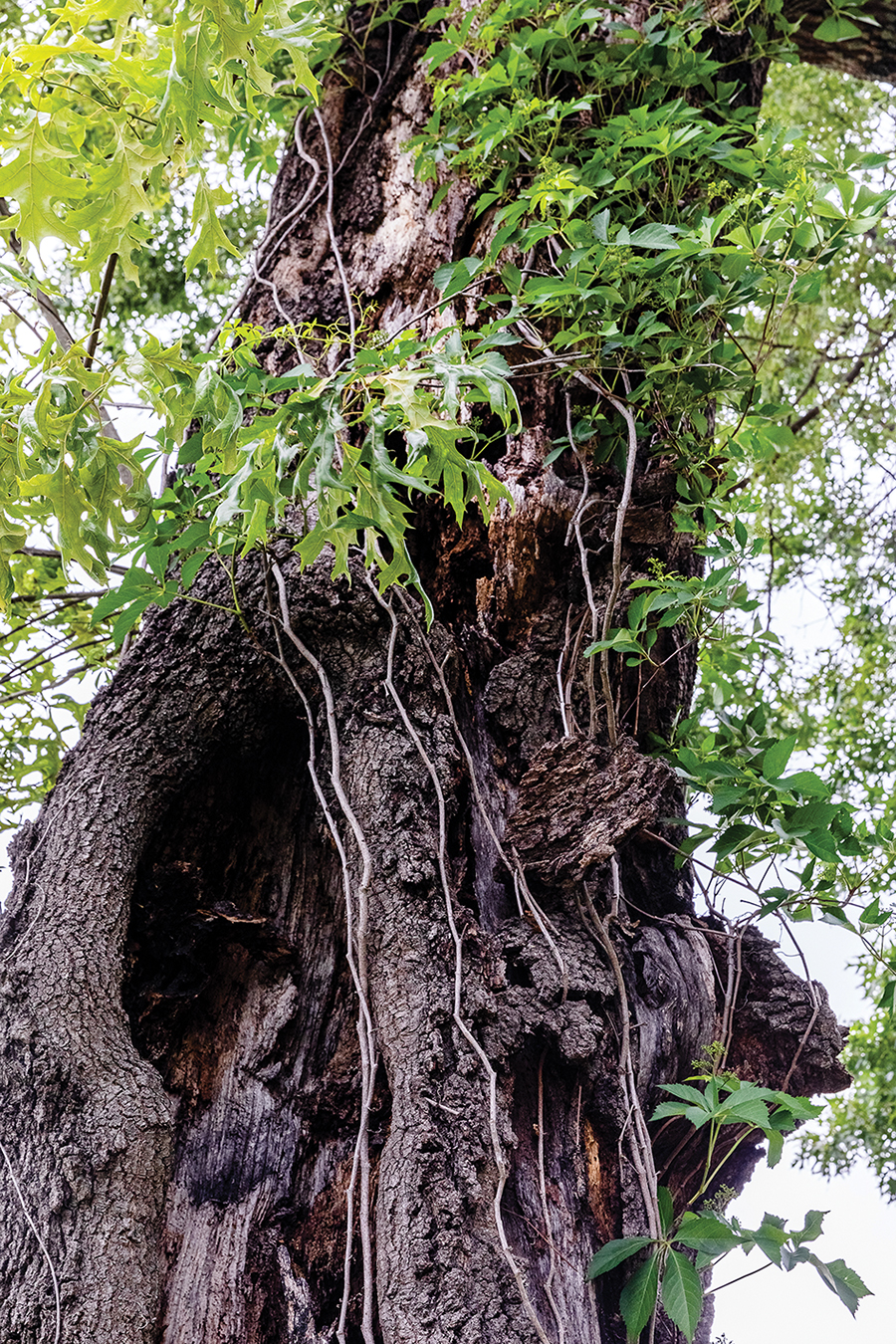
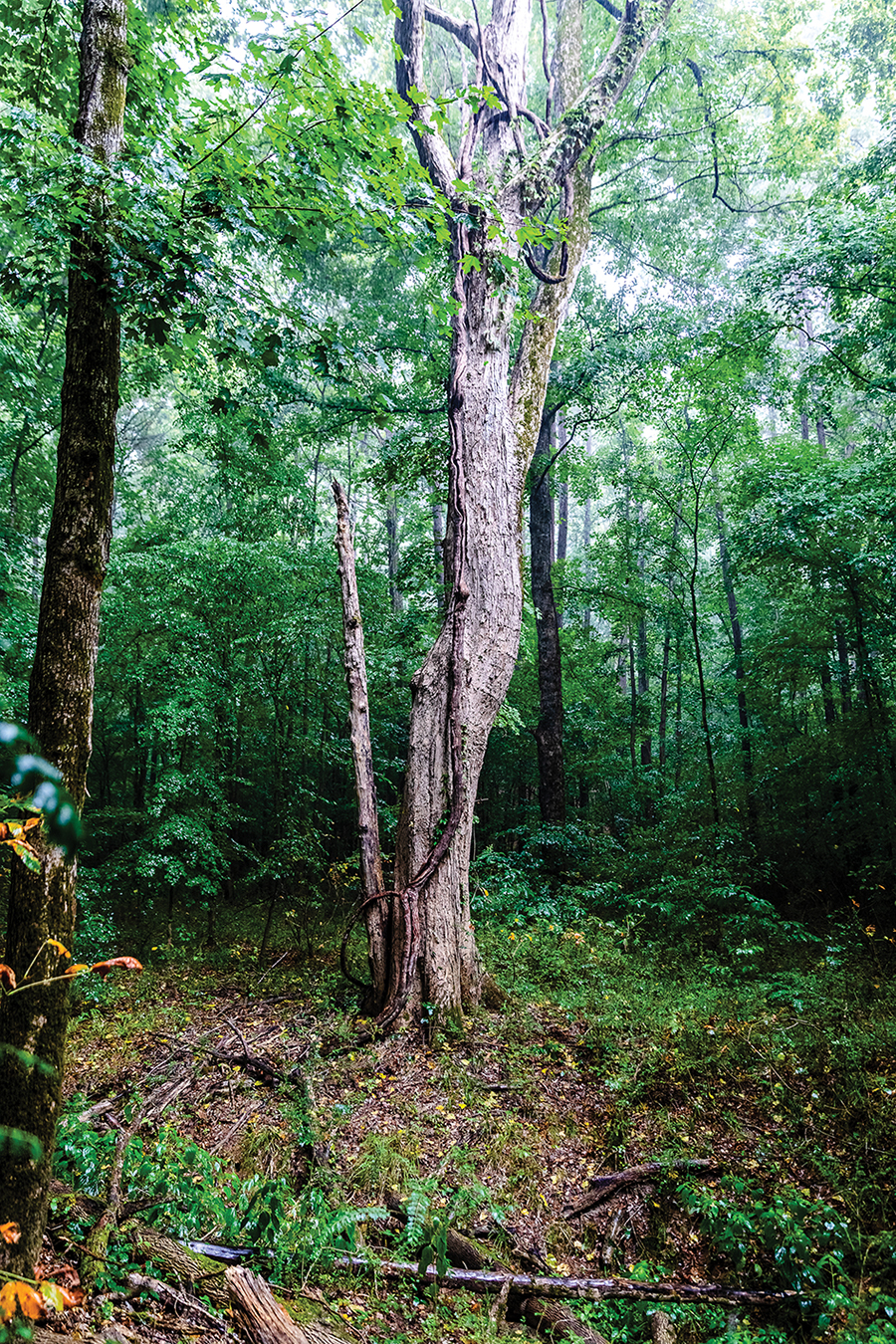
The nation’s largest turkey oak (Quercus laevis) stands at the intersection of N.C. 211 and state Road 2077 in Aberdeen. Worn and weathered, the tree is 64 feet tall with a circumference of 126 inches and a crown spread of 41 feet. Most motorists drive past the deciduous standout every day without knowing they are within sight of a titleholder, but news of plans to widen the road put the tree in the spotlight. The State Department of Transportation considered various alternatives, including rerouting the road to avoid the tree, but decided removal is the only viable option.

DOT is in the process of acquiring the necessary right of way for the project, including land occupied by the champion turkey oak. As a mitigation measure, the DOT will remove and preserve a 10-foot section of the tree for documentation and study. This champion sustained decades of automobile exhaust and inclement weather, but it will be dethroned by human progress and the chainsaw.


Left: Shumard oak (Quercus shumardii) 

Right: Florida maple (Acer barbatum) 

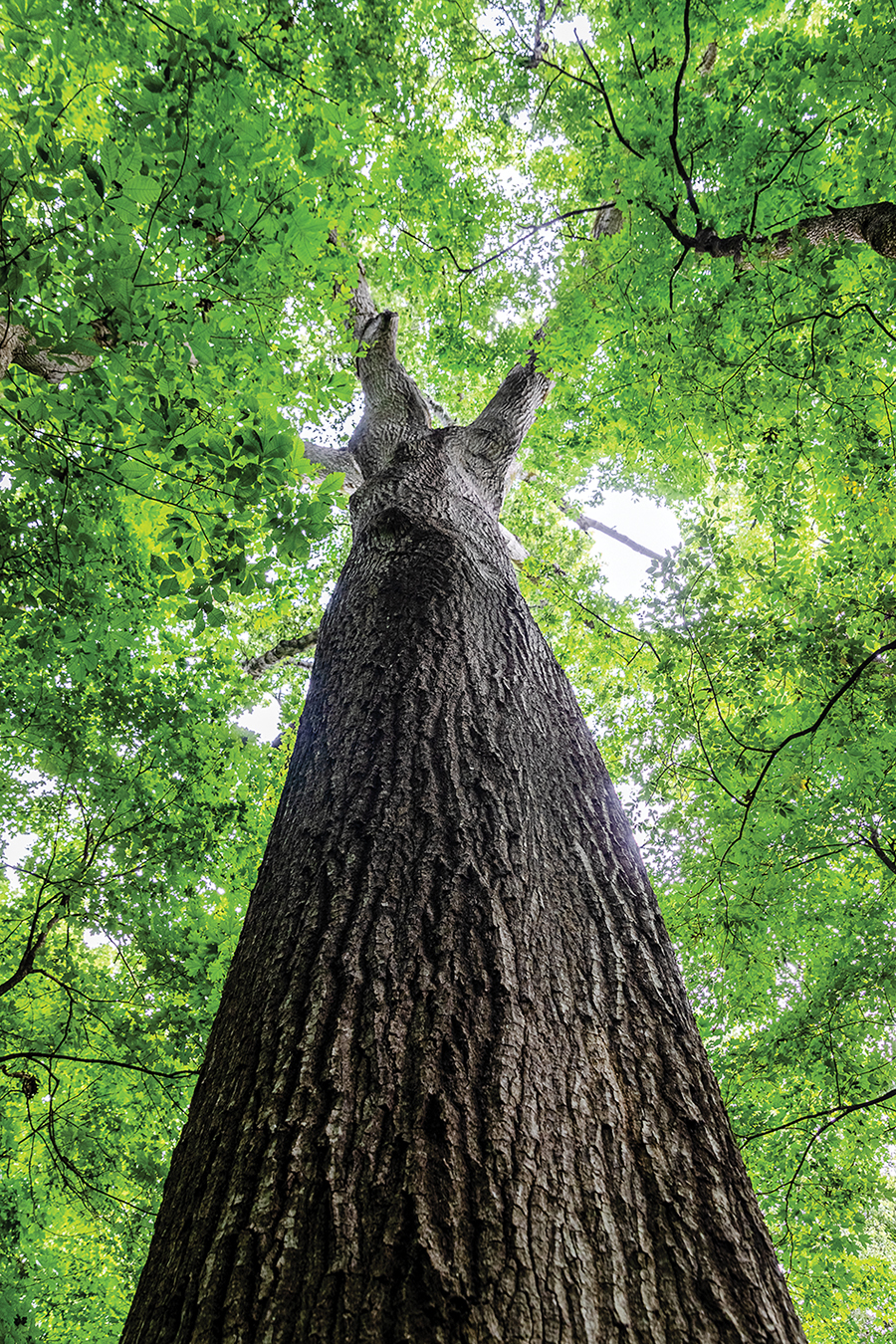
Our next pair of champions are about 15 miles north of the turkey oak on property near Carthage. Both trees are recognized by the North Carolina Forest Service as the largest member of their species in the state. One is a 105-foot Florida maple (Acer barbatum) with a circumference of 113 inches and a crown spread of 70 feet. The other is a Shumard oak (Quercus shumardii) that measures 142 feet tall, 237 inches in circumference, and has a 110-foot crown spread. The future of the Florida maple and Shumard oak is relatively certain, since both grow on property that is managed by the Three Rivers Land Trust.

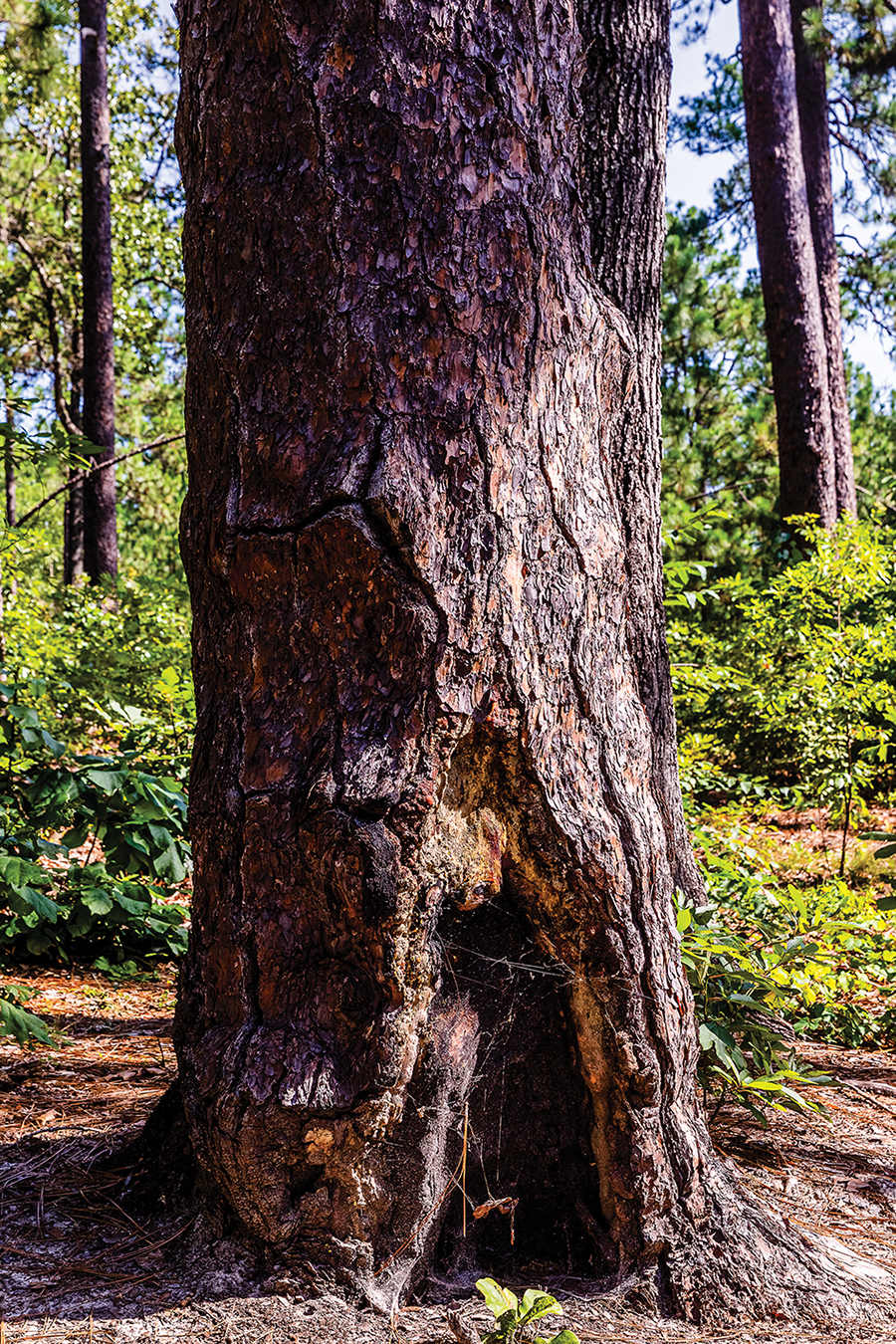
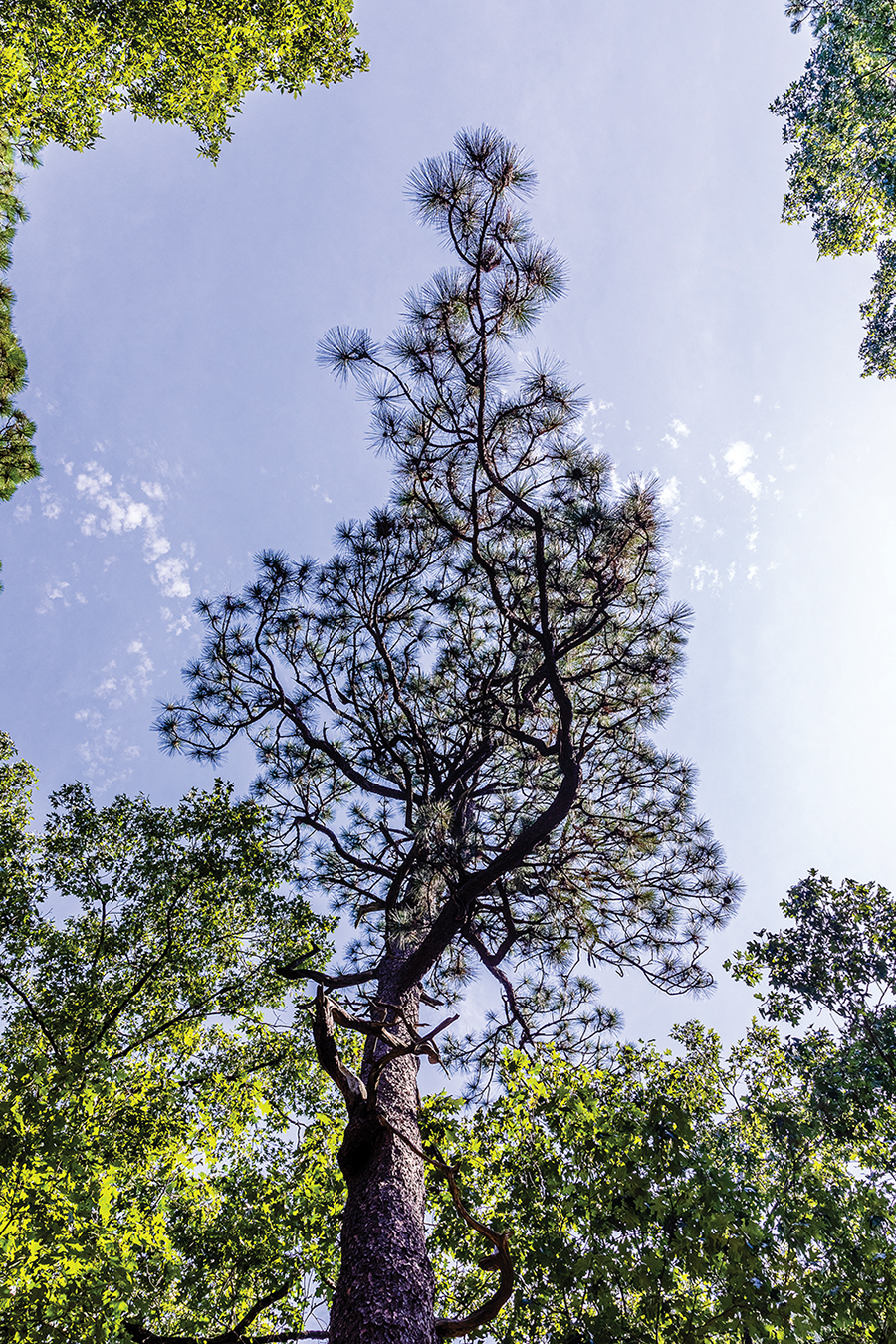
Another Moore County tree of special note is the oldest living longleaf pine (Pinus palustris) in the world. It sprouted in 1548 and became firmly rooted in the sandy soil of what is now the Boyd Tract of Weymouth Woods Sandhills Nature Preserve in Southern Pines. During 474 years of existence, this multi-centenarian somehow managed to escape predation, disease, recurring fires, storms, the ax, the chain saw, resin gathering and growth of a nation. Its age was determined by scientists from the University of North Carolina Greensboro in 2007. Each year, the state pays special tribute to the elderly evergreen by hosting an annual birthday celebration called Party for the Pine, complete with cake, games and other activities.


Left & Right: Longleaf pine (Pinus palustris)

Last year had special meaning for the champion trees of Moore County and all native trees in North Carolina. The Department of Parks and Recreation designated 2022 the Year of the Tree. Displays and educational material recognized the importance of all trees to the natural environment. Details about champion trees can be found at https://www.americanforests.org/champion-trees/ and the North Carolina database of champion trees is posted online at https://www.ncforestservice.gov/Urban/nc_champion_big_trees_database_search.asp.  PS

Tom Lillie is a military veteran and resident of Pinehurst. He received his Ph.D. in medical entomology from the University of Florida and served 26 years as a medical entomologist in the U.S. Air Force.

Saving the White Rhino

King Trees

Using technology to defeat poachers in Kruger National Park

By Jim Moriarty

Photographs courtesy of Tough Stump Technologies

One of them is called Kokwane and the other is Nyeleti. They’re not characters out of The Lion King. Kokwane is Randy Roy, and his African name means grandpa. Nyeleti is Jimmy Larsen, and his African name means night star — the star used for navigation. Together, and with a little help from their friends, they’re doing about as much as two guys nearly 8,900 miles away can do to save the white rhino from extinction.

Last October, in the dark of the new moon, the pair visited Kruger National Park in South Africa to pass along some of the expertise they’d gained in the military to the park rangers who are the sole line of defense between the largest remaining population of white rhino in the world and the people who would destroy them for profit. Roy, a former policeman who worked as a dog trainer for Special Operations on Fort Bragg, made his first trip to Kruger in that advisory capacity in 2016 (though now he’s involved in drone mapping as well), while Larsen, recently retired from the Air Force, was attached to Special Operations and is an expert in telemetry.

It’s not unusual for advances of all types, be they technological or medical, made in war fighting to find peaceful uses, too. “The problem they have in South Africa is very similar to the problem we had in the military: Where the hell is everyone? Where should I go and what should I do?” says Larsen. The phases of the moon are critical because it’s during the full moon, and the days just before and after, when the barbaric poaching of rhino horns is most prevalent, so prevalent, in fact, that it’s called the Poachers Moon.

“Sixty percent of the white rhinos left in the world are located on Kruger National Park. The rhino horn is still the most lucrative commodity on Earth — more than gold, more than drugs,” says Roy.


Right: Employing and mastering new technology in Kruger National Park.


Rhino horn is coveted both for its rumored — though debunked — medicinal properties and as a status symbol, using the circular logic that possessing something so valuable is a value in itself. The poaching problem was particularly egregious during the pandemic. The national park was closed, but the poachers were open. “You’ve got the most expensive substance on the planet surrounded by some of the poorest places on the planet, protected by a few dozen people with a budget of next to nothing and a salary of about $500 a month. The fact that there are any rhino left at all is a testament to how good these guys are at their job,” says Larsen. “It’s a wicked problem.”

Kruger National Park is 7,523 square miles, 600 square miles larger than the states of Connecticut and Rhode Island combined. The poachers generally work in teams of three. One carries a rifle, one carries an ax, and one is a runner who carries water. Sometimes they enter the park on foot, easily overcoming fences, and other times they come into the park in one or two private vehicles, pretending to be a family on a day’s outing, then jumping out of the cars to stalk the animals.

The park is not unprotected. Kruger has helicopters donated to it by Warren Buffett, and roughly 300 rangers work in shifts to defeat the poachers. There are sensors that alert the rangers to the sound of a gunshot and seismic cables that can tell them if poachers are in the area. Still, it all comes down to the rangers finding the poachers — hopefully before they’ve downed a rhino and cruelly chopped off most of its face — in the dark, over great distances, when they know the people they’re about to confront are armed.

Randy Roy and Jimmy Larsen


“The poachers are hardened bushmen themselves,” says Roy. “The park is full of lions. It’s full of leopards. It’s full of cape buffalo. Those are dangerous animals. They don’t care. They go in there on foot with the chance of getting a horn. With a poached horn, all of them will make more than they would working at the gas station or working at a restaurant for an entire year.”

During the Poachers Moon park rangers sleep in tents in the bush in teams of their own waiting for an alert. Their dedication to their work is legendary. Two years ago one of them was attacked by a leopard but managed to fight it off. “He shoved his COVID mask into his jugular, wrapped the seatbelt around his neck and drove two hours to a clinic. And came back to do his job when he was healed,” says Larsen.

Once the rangers have received an alert is when Roy, Larsen and the company they work for now — Tough Stump Technologies — come into play. “The way the guys were operating, they had the equivalent of a paper map on a table. They say, ‘Go to a point here, a point there,’” says Larsen. With the technology Roy and Larsen left behind on a trial basis, requiring neither Wi-Fi nor cell service, the operations center can send a specific point to a ranger on his cellphone, and he can navigate to it from his position. “Before, there was a guy who talks to another guy who has two radios and one of them is talking to the operations center and the other one is talking to the closest ranger. One is speaking English and one is speaking Swahili. They don’t have coordinates; they’re talking about reference points. Based on what we’d seen (with the new equipment) during a false alarm it went from about 90 minutes to 30 minutes for them to interdict.” In fact, in December, on an actual poaching alert, the response time was five minutes.

The technology leapfrogs language barriers — most of the rangers speak English, but it’s a second or third language to their native Shangaan, Tsonga, Swahili, Afrikaans, etc. — because it’s not necessary to talk. It also minimizes the risk of injury from friendly fire, since all the rangers know where all the other rangers are.


Gathering with the park rangers, their faces obscured for their own protection.


To prosecute the poachers in South African courts, the rangers need to retrieve the gun, the horn and, of course, the poacher. The technology makes the forensics easier, too. “There’s a rhino, there’s a weapon, there’s a horn. Picture, picture, picture. It plots it on the map. There’s no disputing anything,” says Larsen.

The project came about at the suggestion of Stephen Lee, a senior scientist at the U.S. Army Research Laboratory in the Research Triangle Park. Lee, who has a Ph.D. in organic chemistry from Emery University, has traveled to and from Africa for the past 15 years engaged in educational projects and in research, mostly with elephants, whose acute sense of smell led to ways to detect the presence of explosives, narcotics and chemical and biological agents. He became active in both anti-poaching and animal conservation and, because of his Army connections, was aware of the technology Roy, Larsen and Tough Stump had. “I thought this would be ideal,” says Lee. “I thought it would revolutionize how they do counter-poaching.”

The entire technology kit fits in a backpack at a cost of roughly $50,000, money the national park doesn’t have to spare. Because of that Roy and Larsen have begun fundraising, with the help of Southern Pines Rugby Club, for both the technology and the rangers themselves. To help, go to their website, ruggersagainstpoachers.com, where contributions can be channeled through a nonprofit 501(c)3.

The illegal trafficking of rhino horns is done, essentially, by organized crime syndicates. As a result, park rangers and their families can be in extraordinary danger. Their children need to be educated far away from their villages. In this story, as in all communications about the park rangers, their faces are blotted out to protect their identities.

Just like the technology Roy and Larsen left behind, it’s a small step to protect the protectors. And maybe save one of the planet’s most needlessly endangered species.  PS

For more information about the poaching of rhino horns, watch the gritty, tough documentary Stroop: Journey into the Rhino Horn War. Jim Moriarty is the Editor of PineStraw and can be reached at jjmpinestraw@gmail.com.

Tiny Love Stories

Tiny Love Stories

Design by Keith Borshak

The assignment was simple. Well, maybe not so simple. Write a love story in 100 words or less. As the old saying (often attributed to Mark Twain, because if we don’t know where stuff comes from, we always attribute it to Twain) goes, “I apologize for the length of this letter. If I’d had more time it would have been shorter.” The story could be about a significant other, or not. It could be fact or fancy. It just had to be short. As it turns out, wonderful things come in small packages.         Jim Moriarty


It happened on a frigid winter morning, probably sometime around 1965. I was 12. My father was an early riser who loved to cook breakfast. I was too. One morning I wandered out to the kitchen, where he was stirring some kind of white goop in a saucepan.

“What’s that?” I asked.

“It’s called SOS.”

“What’s that?”

“In the Army we called it shit on a shingle. It got me through the war. See if you like it.”

He brought me a plate with the white goop on toast.

I’d never tasted anything so wonderful in my life.

Still haven’t.        — Jim Dodson


She floated through a series of ports over the years, stitched together by a singular guiding thread. A short stretch in her life when she taught piano coincided with a suspended moment in mine when I was in need of a teacher. Shy, stubborn, a fish out of water, piano was my solace. Pat took me in, a boy of 7, sensed a spark and painted a vista of my life in music, as if peering back nostalgically from some future shore. When the time came, she untethered me and set my sail. She loved me. And I loved her.       — David Michael Wolff


He reaches a raisiny hand for hers, squeezes the knotted fingers. The wheelchairs are too far apart for kissing. Second best will have to do. She’s different than six decades ago but still the same. He smiles a golden retriever grin at the blue sky, sunny day. Hibiscuses spill onto the patio. A breeze whistles by. “Oooh.” He winces, like the chill took a bite. Concern lines his forehead. “Is it warm?” He raises a crooked pointer at her bare, bony arms. The words aren’t quite right — but close — momentarily resurfaced from tired gray matter by the habit of love.       — Jenna Biter


In 1999 I was a flight attendant. Returning from Stuttgart, I told a fellow flight attendant about a dream I’d had the night before. In it, I met my husband, who had dark hair, dark eyes and was of foreign descent. We looked all through the plane before take-off but didn’t see him. Before landing, as I was changing my shoes, a man walked up and said, “Excuse me, would you ladies happen to have a lint brush?” The man from my dream was standing right before me. Black hair, brown eyes, of Greek descent. We married 10 months later.       — Cherry Amanatidis


I see Mom’s footprints in the sand, her arches so high only the impression of her toes, the ball of her foot and the heel appear. Her feet turn out at a 5 degree angle, as though she wants to go somewhere else — left? Right? I see her sun-kissed and windswept walking away from me, alone, kicking at sea foam, crouching to admire a shell. She is getting smaller and smaller until she’s a dot on the horizon, and then I see her reappear through wavy heat, returning, defined, getting larger and larger, until she is here with me again.       — Marilyn Barrett


I was recovering from knee replacement surgery and had been sleeping in a recliner in the den. One early morning, just as dawn was starting to gather in the East, Evelyn got up and for some reason came out to check on me. My eyes were closed and she thought I was sleeping. Very gently she tousled my hair and stroked my arm. It felt like I was being touched by an angel. Nearly 56 years into “us” she is still my girlfriend.       — John Dempsey


Early in our relationship, Lisa came with me on a Scottish golf trip — a big stretch for a relatively new player. I got wind of a golf tournament we could play in while there. Lisa was game, provided we would be playing together. “No problem,” I said. Upon arriving, we discovered (to my chagrin) she was on her own, paired with three excellent female players. Had Lisa refused to play and ditched me forever, I wouldn’t have blamed her. Instead she played — as good-natured, endearing and romantic a round of golf as ever there was.       — Bill Case


She watched him from the chair that he placed by the window so that she could “keep an eye on” him. Watch him shovel the snow from the front steps. The kids, he told her, were “coming for the occasion.” What occasion? Was it her birthday? She would ask him later.

“No, my sweet darling, it’s not your birthday yet,” he smiled as he came to her chair side. “It’s the luckiest day of my life, 50 years ago today we said I do.”

Tenderly he cradled her face in his cool hands and kissed her. “Forever, I do.”        — Neville Beamer


“I was there,” Myra said.

I was there,” I said.

That was our last phone call. Feeling the crush of being a first-year med student, Myra was unsure about the relationship with “my favorite sportswriter,” her label on a balloon bouquet I received at the paper.

We talked after she got out of class. I waited at one door of Stone Hall. She waited at another. Each of us left not knowing the other had shown up.

I carried the frustration of that missed connection for 17 years, to another door in another city. When I arrived, Myra was waiting.       — Bill Fields


It was July 3, 2020. Despite COVID cancellations, restrictions and military orders, I had convinced my fiancé to keep our original wedding date. Four days before, he agreed. We secured vendors, rings and cake. The venue? Our apartment.

More than 75 screens with our loved ones’ faces joined our officiant and musicians on Zoom. Two friends used roaming and static cameras to capture it all. I walked down the aisle in our kitchen. We shared our vows in the living room and had our first dance in the dining room. Hope and love found a way. It was virtually perfect.       — Lorelei Colbert


Jackson’s a chocolate Lab. I’ve always wanted a dog, but he’s more for Wylie. We stand under the willow with the water running out the hose, Jackson, Wylie and me. Dandelions cover the lawn: a yellow rebellion.

When Wylie was 4, a pit bull took a tiny chunk of his left cheek.

Wylie turns the bottle of soap upside down and squeezes. You can rub it in, I tell him. It’ll feel good. Wylie’s hand hovers above the river of shampoo, hesitant, and Jackson sits on the wet grass, covered in strawberry-scented soap, straight, still, waiting for my son’s hand.        — Katrina Denza


Having gone on without any rehearsal to cover an actress who had to be out that night, I was shattered from stress. I was dating a fella who said to come “home” to his place after the show.

I rang the doorbell and collapsed into his arms.  He led me to the bedroom, where he had a robe and a hot bubble bath all drawn for me. He settled me in and came back with two glasses of Champagne. He perched on the tub, handed me a glass and said, “Now, tell me everything.”

Why would I not marry him?        — Joyce Reehling


There is a Japanese art of repairing broken pottery by joining together the cracks with gold. It is a reminder to celebrate flaws and missteps in life. Last year every single aspect of my life turned to a misstep. Then slowly, one day at a time, the cracks began to fill with gold. The cracks were filled by little surprises and unexpected moments. Things I would have never conjured up myself. Now I welcome the flaws and missteps because we need to be cracked open! That’s how the light gets in.        — Brady Gallagher


He was 96, drifting in and out of awareness, in a hospital bed in the downstairs of the home he built with his own big hands, the home where I asked him almost 50 years before if I could marry his daughter. She and I were leaving in the morning. As her brother and sisters watched, she took one of those hands in both of hers and, knowing she would never see him alive again, squeezed it softly and said, “I love you, Daddy,” and my heart broke, for her, for him, for us.        — Jim Moriarty


We met in Chapel Hill, on a drizzly Wednesday morning. I tried to postpone, thinking a few more months could do us both good, but you wouldn’t wait. I imagine we were both scared — I certainly was. You were tiny, but that first cry was strong and clear. Every day since then, little girl, I’ve loved you more. Your fearlessness, your voice that has learned to speak and sing and say Mama. I had explored before, across mountains and deserts, combat zones and tourist traps. Now, my favorite adventure is rocking chairs and read-alouds and rainy days with you.        — Amberly Weber


On break from Howard University, I went to a Pinecrest basketball game, where I saw the most beautiful woman in the world. Her cocoa skin, her million-dollar smile, her almond-shaped eyes made time stand still. One of my brother’s friends said, “Don’t waste your time, she won’t give you the time of day!” Not only did she give me her time but she gave me her unconditional love, her hand in marriage, and two wonderful sons. If I could live my life all over again, I would try to find her sooner so I could love her longer.        — Mitchell G. Capel


I was hosting that morning. I wasn’t supposed to be. Usually I served in the evenings. But not today.

The restaurant was empty that morning. It wasn’t supposed to be. Usually Saturday mornings saw lines out the door. But not today.

I saw him when he entered. The man of my dreams. We chatted. I had his server bring him a birthday treat. As he left, I hastily wrote my number on a piece of receipt paper. 

That was 2011.

One day, it might sink in that I get to spend my whole life with this man. But not today.        — Cara Mathis


Not all things begin at the end, but our love story does. After one has their heart shattered into a million tiny pieces, the kind that are so delicate and scatter, like a glass ornament that fell on a hard floor, you don’t ever expect to recover. In a way you don’t. But, if you take two people who suffer the same grief and put them together — much like a punchline — what you end up with is a hopeful and beautiful beginning. You have unbreakable, insane and unexpected love. This I know.        — Beth MacDonald


He’s been gone more than four decades, a victim to that three-packs-a-day habit that snared so many in the mid-1900s. But I loved everything about my dad, Thomas Aiken Pace. He introduced me to Tar Heel sports, Dizzy Dean, Sonny Jurgensen, Frederick Forsyth, a cold Falstaff, a marinated steak, the curveball and a Stingray bicycle. On rainy days, he’d drive me on my paper route, and I think he knew full well I was sneaking looks inside the Playboy magazines in his drugstore. And from this most gentle man I learned there was no good reason to ever raise your voice.        — Lee Pace


I make a big deal of birthdays. Ryan is a Leo, so his comes first between the two of us. “It’s just another day,” he’d say. Naturally, I ignored that for his 23rd and made it my mission to make it the best birthday ever. Giddy was the only way to describe him that day. That’s the smile I hold on to. He repaid the sentiment on my 21st. It’s still the best one. In two more years I’ll catch up to his age, 25, and when I blow out my candles I’ll wish for him.        — Emilee Phillips


We got home from a night at the neighbors. The house was glowing with warm light as we hurried to escape the cold. The dog needed to go out, so I lingered as you went inside. New lights came on and you appeared in the kitchen window in full pajamas and favorite robe. I watched as you danced your funny little dance in the light of the open refrigerator. The dog and I soon returned inside to hear there was no music playing at all. You saw my face and asked me, as you often do, “Why are you smiling?”        — Anthony Parks


1971, London, Soho, lunchtime. I see a large rubber plant walking toward me with attractive, female undercarriage. As it got closer, I recognized its carrier – none other than the beautiful girl in the office I fancied from afar. I asked her if she had had lunch. Two minutes later we were sitting down in an Indian restaurant talking away over the poppadoms like we’d known each other all our lives.  Three months, and quite a few curries later, we were engaged. We just got back from London celebrating our 50th. The Indian is still there. Rubber plant, not so much.        — Tony Rothwell


The curtain rises (if there is one). The stage is set for a love affair unlike any other. The performers rehearsed for this moment when they use their energy and passion to act their hearts out. Tonight’s audience doesn’t care how good you were last night! Something special happens: an electric connection between performer and audience. For well-trained and well-prepared actors, craft and technique disappear. We’re living the performance together. Our love affair transcends time and space. Thriving, flourishing, and changing every night, every matinee . . . everywhere there’s a stage and an audience. Surrender. Let love change us.        — Morgan Sills


You still sport that boyish grin, the same one you used when, after a lovely dinner and seemingly endless tour of Raleigh Christmas lights, you plucked up the courage to ask if I’d “bear your children.” High school, college, Greek parties, Crazy Zacks, and Jimmy V wins. We danced to beach music with sand between our toes, and “With This Ring” still means forever. Sometimes 44 years feels like a lifetime ago until that grin brings me back to our first kiss — stolen while gathering Spanish moss for a Christmas float, when I was 17 and you were 18.        — Kathryn Talton


He was leaning in for a kiss. Should I turn away? I had a boyfriend, after all. Sort of. Everything was happening in slow motion. I’d had a crush on Alan since the day we met, almost three years earlier. As friends, we’d watched each other bend for relationships that never seemed to fit. But love wasn’t supposed to be simple, was it? Being with Alan never seemed like an option. His lips were so close mine were buzzing. Now we were living 300 miles apart. This wasn’t exactly convenient. Yes, it’s what I wanted, but — contact.        — Ashley Walshe

To the Manor Reborn

To the Manor Reborn

A historic hotel transformed

By Deborah Salomon

Photographs by John Gessner

Historical Photographs from The Tufts Archives


To be memorable, a Christmas pudding needs soaking in brandy. Likewise, a sojourn at Pinehurst’s famed golf courses benefits from après golf immersion: lodgings, décor, potables, camaraderie with fellow-sojourners ready to rehash the day’s round from deeply upholstered chairs at inns where history comes alive via photographs and memorabilia.

The Manor — a luxury lodge, clubby without being uber-masculine, with a staff imbued with Southern hospitality — is part of this culture. It’s fair to say that, before its massive redo, The Manor had aged to the point it was considered little more than “overflow” lodging for the larger resort. Now it’s an attraction all its own.


Tucked behind The Pine Crest Inn and almost completely reimaged, The Manor suits groups who require gathering space as well as couples and weekend golfers in search of a game. It’s just far enough from the village center to claim quiet yet close enough to walk to virtually everything, including the wildly successful Pinehurst Brewery just down the hill. It’s intimate enough — 43 rooms — to feel homey yet part of the Pinehurst Resort family giving guests access to pool, spa and all hotel amenities.

And, like her cousin inns Magnolia and Holly, The Manor is steeped in history.


By the early 1900s Pinehurst was gaining popularity as a winter resort, accessible by rail, boasting mild temperatures and upper-crust guests who rented cottages for “the season” or stopped at a hotel. These facilities required staff, and staff required affordable lodgings. In 1899 the Tufts family announced, “A fine new hotel, The Lexington, for employees of the village is being erected.” Here, a single room in the four-story walk-up cost from $17 to $28 monthly; a double, some with bath, $32 to $40. Tufts hired New England hotelier Emma Bliss — also the force behind The Pine Crest Inn — to manage the project. Emma, who is often compared to the Unsinkable Molly Brown, had loftier ideas. In 1922 she applied for a loan to raze, rebuild and gentrify The Lexington. Bankers, aghast at this cheeky woman, finally relented. The Manor opened in 1923 with a sprinkler system, private bathrooms and steam heat. The Pinehurst Outlook described it as “luxuriously furnished, catering to an exclusive clientele with an elevator, also a phone in each room.”

Build it and they will come. “Mrs. H. Guggenheim of New York City has arrived for a week,” the Outlook society page announced.


Over the years, The Manor has changed ownership and undergone several renovations. Nothing compares to the last one, begun in 2019, when the building was stripped down to its studs, space reallocated, spa bathrooms installed along with décor based, surprisingly, on blue — a soothing smoky shade midway between UNC Tar Heel pastel and Duke Blue Devil electric. Playing off the blue is a sandy-beige plaid fabric, hereafter dubbed Manor tartan, that appears in both public and guest rooms. Miles of moldings, tray ceilings, multiple columns and a graceful staircase divide the lobby into conversation areas, one with a built-in Scrabble board. Another, The Marketplace, stocks breakfast sandwiches sent over from the hotel kitchen, snacks and beverages.

The frontal exterior, however, remains mostly intact with its circular drive, porte-cochère, and foundation trimmed with Kellarstone, a rough surfaced-material touted for endurance.

The North & South bar anchors the lobby, boasting more than 100 bourbons, whiskeys, craft cocktails plus beer from neighboring Pinehurst Brewing Co., with charcuterie boards to temper absorption. Look up and you’ll see an illustration (circa 1920) of Donald Ross’ first four courses. Look out and you’ll find decks outfitted with fire pits for chilly evenings.


COVID interrupted its introduction, but by mid-January The Manor opened, drop-dead gorgeous, still informal enough to raise Mrs. Guggenheim’s eyebrows.

No matter how comfy the sofas are or how many oversized TVs tuned to sports channels hang from the walls, nothing makes a better first impression than the enthusiastic welcome of Kathy Capel, front desk manager, problem solver, sympathizer, advice giver. Her knowledge of the area becomes crucial during junior competitions, when families arrive from around the globe. After 36 years, first at The Carolina Hotel, then The Manor, Capel’s laugh and twinkle have made her popular with locals and repeat guests alike.

Oh, the tales Capel could tell were she not so discreet. The hands she’s shaken include Sidney Poitier (“He was so handsome.”), Dean Smith, Bobby Knight, Oprah Winfrey, Roy Williams and her buddy Arnold Palmer, whose photograph, with father Deacon Palmer, hangs over the front desk.

Palmer could have stayed anywhere, but The King chose The Manor. “He always had suite 401. He would sit on the porch for hours and sign autographs,” Capel recalls. When Palmer passed away in 2016, “I cried like a baby,” says Capel. “But his daughter came down last year to see our pictures of him.”

In the 1980s central air conditioning, then warmer winters extended the “season,” attracting a clientele seeking a more contemporary setting. In April 2020, the resort’s owner, Bob Dedman Jr., told Business North Carolina magazine: “We’ve always gone back, tried to be more authentic, restore the character of Pinehurst but at the same time, contemporize so that its legacy will last. Part of it is looking backward but another part is always looking forward.”

It means rocking chairs on the porch, craft beers on tap, Wi-Fi, and Kathy Capel calling out “Welcome to The Manor” from her forever position at the front desk.  PS

Monarchs of the Forest

Almanac

The wonder of champion trees

Story and Photographs by Todd Pusser

This and above photograph: Gary Williamson and National Champion Tulip Poplar in Chesapeake, VA


It was a tip from a local hunter that first alerted Gary Williamson to the presence of the tree. Standing near the edge of a plowed field, just across the North Carolina line in Chesapeake, Virginia, the tulip poplar dwarfs all other trees nearby. Well over 100 feet tall and 32 feet in circumference, it is the largest of its kind anywhere in the United States.

The tree, while alive and healthy, is hollow on the inside, making it impossible to accurately age. Tulip poplars can live for several hundred years, and it is likely this giant was alive long before the United States declared its independence from Great Britain. Once, while leading a field trip of big tree enthusiasts, Williamson managed to crowd 15 people inside the tree at one time with room to spare. The tree is a survivor, having lived through droughts, wars, hurricanes, and the unrelenting pressure of the saw blade.

Mankind has long been fascinated by trees, especially large trees. The fascination reached a fever pitch in the early 1800s when explorers, searching for gold in California, reported the first encounters with coastal redwoods and giant sequoias, those blue whales of the plant kingdom. Reaching heights of over 350 feet, with diameters well north of 19 feet, these gargantuan trees are the largest living organisms on Earth. It has been estimated that one particular giant sequoia, appropriately nicknamed “The President,” holds over 2 billion leaves among its branches.

National Champion Darlington Oak Tree in Edgecomb County, NC


When Europeans first colonized America, they set about the task of felling the continent’s vast virgin forests with axes and handsaws, using the wood to make houses, barns, ship hulls and railroad ties. The advent of steam-powered logging machinery, followed later by gas-powered chainsaws, served to increase the efficiency of logging, and by the mid-20th century, virtually no acre of forest in the United States remained untouched by the saw blade.

Around this time, in the early 1940s, the American Forestry Association (now called American Forests) created The National Register of Champion Trees to encourage members of the general public to find, document and preserve the largest remaining specimens of this continent’s (approximately) 750 species of trees.  The program (www.americanforests.org) created a unique scoring system to help determine if a tree qualifies as a champion.

The formula is straightforward: Take the circumference of the tree (in inches) at breast height, add the height of the tree (in feet), and then add one-quarter of the average crown spread (in feet) for a total point score. The program is active in all 50 states as well as American territories like Puerto Rico. Each state maintains its own list of the largest trees found within its borders, crowning them state champions. If a state champion tree proves exceptionally large, it may qualify for the Register as a national champion.

Anyone can nominate a tree for the National Register. There is no need to be a botanist, forester or professional arborist. All it takes is a keen eye and a sense of curiosity for the natural world. 

Few people have nominated as many champion trees to the National Register as Virginia natives Gary Williamson and Byron Carmean. For the past four decades, both men (each in their mid-70s) have traversed the backwoods of North Carolina and Virginia, searching for superlative trees. Most weekends will find them kayaking rivers, walking floodplain forests, driving remote backroads, and searching old cemeteries and estates for the next champion.

State Champion Flowering Dogwood in cemetary in Clinton, NC


In that time, the pair have nominated some truly extraordinary trees. Among them are North Carolina’s largest tree, a rotund bald cypress (with a total score of 558 points) growing along the Roanoke River in Martin County; the national champion Darlington oak tree (which stands alone in a farmer’s field near Rocky Mount); the national champion silky camellia, whose broad, fragrant flowers brighten up the springtime forest in Merchants Millpond State Park; a state champion Hercules club (an unusual looking tree covered in large thorns) in the town of Duck in the Outer Banks, and a state champ Shumard Oak growing along the nutrient rich soils of the Deep River. Over 142 feet tall, with an average crown spread of 110 feet, the oak can easily be seen on Google Earth.

I recently joined Williamson on a cool winter’s day to see and photograph the national champ tulip poplar growing in Chesapeake. Bearing similarities to European poplars and having white, tulip-shaped flowers gives the tree its common name. However, the tulip poplar is in no way related to poplars or tulips. Instead, it’s a member of the magnolia family and is the tallest hardwood tree in North America.

Taking pictures of a champion tree is inherently difficult. There is simply no way to sufficiently capture the essence of “bigness,” that wow factor, within a two-dimensional frame. No matter what lens is used or at which angle you shoot, the resulting image will inevitably diminish the size of the tree. Nevertheless, I persisted for well over an hour, posing Williamson at various positions around its trunk and even inside the tree. 

Finally, as the sun was sinking below the horizon, I stopped taking photos and simply stood at the base of the living monarch, staring up toward its immense crown. Running my hands over its furrowed bark, I thought of what the forests looked like at the time my ancestors first set foot on this continent. Here, standing before me, was a shining example of that bygone era and one of the true wonders of the natural world.  PS

Naturalist and photographer Todd Pusser grew up in Eagle Springs. He works to document the extraordinary diversity of life both near and far. His images can be found at www.ToddPusser.com.

Ready to Ride

Ready to Ride

A French feel in the Sandhills

By Deborah Salomon


Credit James Boyd, and mild winters, for enticing foxhunters to Moore County. Eventually, some branched out to eventing, dressage, jumping. The Walthour-Moss Foundation furthered the equestrian cause. Soon horse people from Northeastern cities began wintering their steeds in Southern Pines, accessible by rail and so much closer than Florida. They built small apartments — “hunt boxes” — over the barns, graduating to year-round estates.

This tight-knit community created and maintained an active social life. Their houses, located between Connecticut Avenue and Youngs Road, grew bigger, better equipped and less rustic. Positioned near the top of this heap is the retirement home of Chris and Sallie Lowe, 5,000-plus square feet styled à la French chateau, on 10 grassy acres sloping to a pond.

In the barn (with tack room), two stall doors are topped with wrought metal. A full-sized dressage arena borders split-rail pasture fences while a row of tall, thick elaeagnus bushes separates the chateau from a narrow private road.

Sallie rides the horse, Chris rides the tractor, which has its own garage. Both are Virginians by way of Vermont.

How this happened could be a story written by Boyd himself, or maybe his buddy Thomas Wolfe.


Most equestriennes start young. Not Sallie. Her parents, suspicious of the lifestyle, guided her into high school sports, where at 6 feet tall and athletic, she excelled. In 2011, now married, a mother and teacher living in Vermont but hating the cold winters, she won a trip to Southern Pines at a fundraiser. “This is it,” she decided, after driving around. “This is where I want to spend the rest of our lives.”

No problem for Chris, who dubbed her adult riding quest “keeping Sallie sane.” In 2011 they bought a property close to town but with “a country feel,” and rented a place during construction . . . of what?

A year spent in France left its mark on Sallie. She looked for an architect who would interpret her ideas rather than imposing current trends. Research led her to Designing Your Perfect House and other titles by William Hirsch. Perfect! Imagine Sallie’s surprise, discovering that the internationally lauded architect and author lives in Seven Lakes. Chris, whose father was a contractor, worked happily alongside builder Mark Lally’s crew.

Sallie presented Hirsch with some unusual requests. She had learned that authentic provincial chateaux are not grand at all, but rather informal country homes, sometimes with animals occupying the lower floor. “I’m not a fan of big open spaces,” she says. As a result, the main floor, although enormous, is a succession of moderately sized rooms — workroom, kitchen, sunroom, dining room with unusually small round table and large lazy Susan, living room, all with arches opening onto a 90-foot loggia (front hallway) with white travertine floor blocks arranged randomly.

At one end of the loggia, a triple garage; at the other, the master suite. Windows everywhere, allowing unobstructed pasture vistas to become part of the decor. Quimper pottery, made in Brittany for 300 years, hangs from the walls. Paintings depict Parisian scenes. A massive antique French armoire approaching the 9-foot ceiling dominates the master bedroom. Laundry equipment is part of his-and-hers dressing rooms.

“The mother in me needed a room for each son,” Sallie admits. They have three — two are married, one with a grandson — all accommodated upstairs, which includes a guest apartment with sitting room, bedroom, kitchenette and one of five bathrooms which are bright and attractive but hardly spas. 

A French chateau doesn’t do spas.

The French experience also influenced Sallie’s palette, with yellow coming out the winner — not lemon or daffodil but a muted hue, perhaps butter diluted with crème fraîche, or a silky béchamel. This hue covers exterior walls with contrasting purplish-blue shutters and, surprisingly, the footed kitchen cabinets.


Ah, the kitchen, showplace of the American luxury home. Sallie wasn’t interested in sterile white or professional-grade appliances; more important to her, a backsplash composed of weathered, hand-painted tiles in colors and motifs that continue the European country chic feel. Chris points proudly to the top of a Vermont sugar maple chopping-block table inserted into the island. “It’s from my parents’ home. When I was young I would sit on it and talk to them.”

Furnishings combine antiques with spotlight pieces. In the living room, a coffee table contrived from twisted vines is topped by a toile tray, and a pair of oversized, heavily tufted slipper chairs face two Asian lamps made from tea canisters. In the sunroom the drawer of a game table, from Sallie’s lineage, holds a Washington Post front page dated 1882.

“We’re not super-formal,” Sallie concludes, “but we give plenty of dinner parties with china and crystal. I wasn’t ready to give that up.”

Not your ordinary horse farm, even in an area known for elaborate installations. “I knew what I wanted and I held my ground,” Sallie says. Meaning custom-designed and custom-built, right down to the baseboards. Geothermal heating and cooling. A courtyard covered with pebbles, not grass. Splintery decorative ceiling beams from the Amish. A sweet rescue pup named Gracie. Outbuildings — one containing Chris’ man cave — that complement, but don’t detract from the main house which, sadly, Sallie and Chris never got around to naming.

How about Pièce de Résistance?  PS