Golftown Journal

Dare to Dream

The message of the U.S. Adaptive Open

By Lee Pace

Mike Whan, the chief executive officer of the USGA, was talking one morning in late July about the decision to recruit the World Golf Hall of Fame in St. Augustine and move it into 9,000 square feet on the second floor of Golf House Pinehurst, the USGA’s new facility under construction and set to open in 2023.

“It was the right thing to do, the right thing for golf,” said Whan.

Then he quickly drew a parallel with the just-completed U.S. Adaptive Open, which the USGA had conducted the week before on Pinehurst’s No. 6 course. Ninety-six players aged 15 to 80 from around the world played 54 holes of golf. Some played with one leg or no legs. Some with one arm. They played despite having cerebral palsy and muscular dystrophy. They found a way to aim and fire even though some were legally blind.

“The Adaptive Open is the same,” Whan continued. “Certain things you do because it’s the right thing to do. That is one of them. I cannot tell you how much money we lost. It’s a staggering number. But I could not feel better about it because it was the right thing to do for the game.”

Whan said he asked a fellow USGA official for the one word that would best describe the week at No. 6, and the word was “joy.”

“I thought he meant the athletes,” Whan said. “I knew they’d appreciate it and enjoy it. But he actually meant the joy of our own team. This was a 25-year employee of the USGA and he said, ‘Mike, this is a top-two experience.’ I said, ‘What’s the other one?’ He said, ‘Give me a minute. There has to be something.’”

The U.S. Adaptive Open came to fruition after decades of the USGA taking incremental steps to provide more opportunity and awareness for golfers with some degree of disability. In 1991 it announced a grant program for golfers with disabilities. In 1997 it published some modifications to the Rules of Golf to accommodate some of the challenges disabled golfers might encounter. To promote opportunities for golfers with disabilities, the USGA in 1999 partnered with trick-shot artist Dennis Walters, sponsoring his golf exhibitions and elevating the message that having a disability should not keep people from achieving their golf dreams. 

And in 2017, the USGA pledged its intent to stage a national championship for disabled golfers. The vision was delayed by COVID-19 until it was announced in late 2021 that the inaugural championship would be held at Pinehurst No. 6 the following July.

“Players in the adaptive space just want to be like everyone else — they just want to be golfers,” said John Bodenheimer, the chief championships officer for the USGA. “We are proud to give them that opportunity. We hope it inspires others in the industry to make the game and its competitions more welcoming to all.”

The golfers came from as far away as Korea, Ireland, Sweden, Belgium, Japan, South Africa, England, and Argentina. Allowances were made for challenges the golfers might have faced. Seated players got four club-length drops from penalty areas and could move the ball 6 inches in bunkers because it could be difficult to find the desired address position in a mechanized scooter. Double par was the max score on any hole.

“When I found out about this, I was intrigued,” Walters said. “It’s a historical event. It’s like 1895 and you’re Horace Rawlins. You’re the first one. That’s why I wanted to be here.”

They were uniformly amazed at the sophistication of the organizational structure — from the bunting and signage around the facility to the volunteer support to a press facility that hosted writers from all the major golf publications.

“This is big time, this is just like the U.S. Open, only smaller,” said Eli Villanueva, a retired Army sergeant from Fort Bragg who plays with a 2-handicap despite an arm impairment. A radial head fracture of his left elbow 30 years ago has left him with limited use of his left arm. Looking around at other competitors, Villanueva marveled at the more severe challenges many have overcome to play golf.

“This is a U.S. Open atmosphere,” he said. “I hope this inspires others. All over the country they’ll see what golfers here have overcome and say, ‘I can do that, too.’ Hopefully it will be the start of more good things to come. An Adaptive British Open? Sounds good to me.”

Two former professional golfers were in the field. Walters was 24 years old and playing the mini tours in 1974 when a golf cart he was driving down a steep incline had brake failure and crashed, leaving him as a T-12 level paraplegic. Ken Green, a five-time winner on the PGA Tour in the 1980s and ’90s, had his lower right leg amputated following a highway crash in 2009. Walters started a traveling trick-shot show that he presents with his dog, Gus, and Green has relearned the game and competed on a sponsor’s exemption in one PGA Tour Champions event and teed it up in the 2019 Senior PGA Championship.

“I am completely captivated and absolutely amazed at what I see,” Walters said. “This is phenomenal. Every one of these people can play golf. They are proving what I have been trying to say for 45 years. I’ve been trying to show, with every swing I make, that golf can be a game for all. This proves it.”

“This is competitive and we’re grinding our tails off,” said Green. “But this is the first event you’ll ever play that if you finish second, fifth or seventh, you’re still walking away smiling. You’ve got an edge in life and that’s what life is about. This is a home run.”

Simon Seungmin Lee, a 25-year-old Korean who was born with congenital autism, won the men’s title with a trilogy of 71s. Kim Moore, a 41-year-old from Michigan who was born without a right foot, a severely clubbed left foot and a slight case of spina bifida, collected the women’s trophy by carding 76-80-76.

“I think what has been seen this week around the world, around the country, is going to elevate the amputee community, the adaptive community, and it’s pretty cool to see,” said Moore.

After the complications arising from the COVID-19 pandemic, Whan said the USGA considered holding off a year or two to give the logistics and protocols more study, but he’s delighted the organization went ahead as scheduled in 2022.

“Sometimes you have to jump off the cliff and not worry about how you splash at the bottom,” he said.

The championship will return to No. 6 again in 2023. After that, the USGA has to decide whether it wants to move it around or establish a permanent home in the Sandhills. No matter, it will have plenty of entries and attention.

“I tell people, have a dream, and if it doesn’t work out, that’s OK. Get another dream,” Walters said.

Green has faced a marriage breakup, clinical depression, financial woes and a son who died of a drug and alcohol overdose. He was driving an RV in rural Mississippi in 2009 when a tire blew, careening the vehicle off the road and killing his brother, girlfriend and dog. He survived but hasn’t had two legs since. The significance of a week in Pinehurst playing in the inaugural U.S. Adaptive Open with 95 other golfers who’d also been dealt a tough hand was huge indeed.

His message to his fellow competitors: Take a bow.

“You were able to pull yourself out of that hole that life gave you,” Green said. “And then you went on to do something really good. You can’t ask for anything more than that. You won both sides of the game — life and golf.”  PS

Lee Pace has written for Pinestraw Magazine since 2008 and is the author of eight books about Sandhills golf history and the people who’ve made it special. Write him at leepace7@gmail.com and follow him @LeePaceTweet. 

Naturalist

The Lords of the Rings

Innovation among dolphins in a salt marsh

Story and Photographs by Todd Pusser

Tucked back in a western Florida salt marsh, far from the open ocean, a trio of bottlenose dolphins swim slowly through shallow waters searching for fish among a labyrinth of small, muddy islands covered in needlerush and a bright blue sky. Herons and pelicans, sensing an opportunity, patiently follow along, hopping from one mud bank to another as the dolphins continue their hunt through waters stained the color of a vanilla latte.

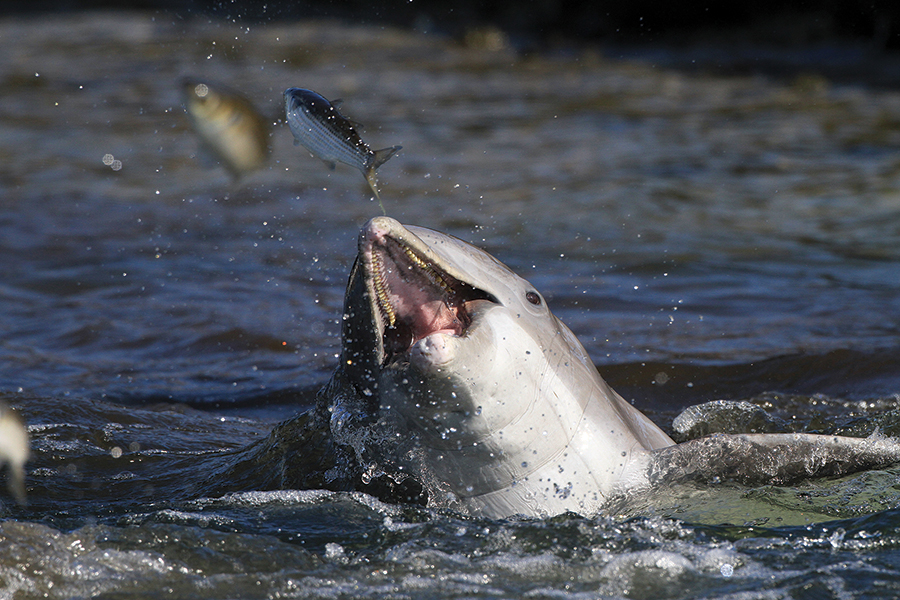
All of a sudden, one dolphin raises its tail high out of the water and brings it down forcibly, creating a massive splash and an audible “thwack” that can be heard throughout the expansive marsh. The predators have found their prey.

In water just a few feet deep, the dolphin starts to swim rapidly in a circle, vigorously pumping its tail up and down, stirring up the muddy bottom, creating a perfectly oval mud ring. The other dolphins swim over and the trio lift their heads out of the water along the edge of the mud ring, open their mouths, and wait.

A school of mullet, trapped inside the rapidly closing mud ring, starts to panic. Not wanting to swim through a wall of mud, the fish opt instead to leap out of the water, over the edge of the mud ring — right into the mouths of the waiting dolphins.

It’s all over in the blink of an eye. Each dolphin, having successfully caught a fish, lowers their head back into the murky water and continues hunting the narrow channels of the salt marsh. Before the morning is over, they will repeat this behavior dozens of times until fully satiated.

Bottlenose dolphins are renowned for their intelligence and adaptability. After humans and a few primates, they have the largest brain-to-body ratio of any living animal. Incredibly social, they have perfected innovative hunting techniques to maximize efficiency in capturing prey, no matter the environment.

In the Bahamas, bottlenose dolphins swim along shallow waters, using echolocation to scan sandy bottoms for buried flounder and razorfish. When prey is located, a dolphin will stick its head into the loose sand and push water out of its mouth to flush the fish from hiding. In tidal marshes along the South Carolina coast, bottlenose dolphins intentionally throw their bodies completely out of the water up onto mud flats, chasing fish they have trapped against the shoreline. In the deep waters surrounding Cocos Island, bottlenose dolphins work as a team to corral schools of baitfish into tight balls against the ocean’s surface, which prevents their prey from escaping. Off North Carolina, bottlenose dolphins have learned to follow shrimp boats, who regularly toss their unwanted bycatch overboard, providing easy meals for the hungry predators.

All of these distinctive feeding strategies reveal rich, sophisticated cultures, shaped by a level of intelligence and creativity not often seen in the animal kingdom, and are passed down from generation to generation.

The bottlenose dolphins that use the mud ring feeding technique do so only along the shores of Florida and nowhere else in the world. The behavior, first described from the shallow waters of the Everglades and the Florida Keys, has since been observed at various spots along the state’s west coast up into the Panhandle. 

I first witnessed mud ring feeding back in the early 1990s when I traveled down to Florida to complete my open water scuba certification with a class from the University of North Carolina.  Since that time, whenever I travel to the coastal waters of the Sunshine State, I keep a sharp eye out for these cunning predators. 

The last time I was fortunate enough to observe mud ring feeding, it involved a group of four dolphins, one of which was a small calf. I was first alerted to their presence by a pair of brown pelicans rapidly diving headfirst into the water along the edge of an immense marsh. The ungainly birds would surface, take wing, fly a few yards, and then dive again into the murky water. It took a minute or two before I saw the telltale grey, shark-like fins of the dolphins out in front of the pelicans.

Knowing immediately what the dolphins were up to, I grabbed my binoculars and settled into the seat on my aluminum jonboat to enjoy the show. Right on cue, the lead dolphin smacked its tail onto the surface of the water and began to swim in a tight circle, stirring up the mud in the process.

The pelicans, seeing the dolphin complete the circle, swoop in just as the other dolphins swim over and lift their heads from the water. Dozens of mullet suddenly burst forth from the surface of the water inside the mud ring, like an erupting volcano. A-free-for-all ensues, as both mammals and birds lunge from side to side trying to catch the leaping fish.

The dolphin calf, too young for solid food just yet, does not lift its head out of the water. It simply stays close to Mom, intently watching her every move. There is no doubt that this is an important teachable moment for the youngster. I can’t help but marvel at how their complex social lives so closely mirror our own.

The dolphins regroup and swim around a sharp bend in the marsh, quietly disappearing into the murky green waters, searching for the next school of fish.  PS

Naturalist and photographer Todd Pusser grew up in Eagle Springs. He works to document the extraordinary diversity of life both near and far. His images can be found at www.ToddPusser.com.

Golftown Journal

All in Good Time

The pause at the top

By Lee Pace

“Beware the fury of a patient man.”   — John Dryden

Over a lifetime I have collected baseball cards, vintage postcards, spy novels, golf headcovers, Matchbox cars and bottles of hot sauce. Now I’m into collecting Instagram posts, most notably those portending to help with the golf swing and within that subculture those addressing the transition at the top of the backswing.

There’s a post with a collage of Fred Couples swings, one per annum over three decades in rapid fire, his buttery move sending balls flying the nation over. Couples has talked over his illustrious career of “gathering” and “buying time” at the top. “One drill I have done is take a 9-iron, hold it at the top for a split second and then go ahead and hit it,” Couples says. “I think slow and lazy swing.”

In another post, Michael Mitnick, an Ohio college student and aspiring club professional, executes this very drill, what he calls “The Pause Drill.” He addresses a ball, takes the club back, holds it at the top about a one-Mississippi breath, then delivers his blow and launches the ball high into the sky. “Having a deliberate pause will help you not rush your swing and develop a fluid tempo,” he offers.

And one I really like is a snippet of Justin Thomas hitting a half-wedge over a bunker and stopping it inches from the cup. “The patience in transition is enviable,” PGA Tour golfer Parker McLachlin says in his Instagram feed, adding a pair of salivating emojis. “There’s not a rush to hit the ball.”

Indeed, in this world rife with kryptonite-laced golf balls and nuclear-tipped driver heads, where college players get home in two with a driver and a 6-iron, where swing speeds are measured on Ferrari dashboards, there remains one corner of the world for calm and quiet.

The top of the backswing.

That’s right. After all, if you’re going one way and then want to go in reverse 180 degrees, you have to stop. It’s science. So what’s your hurry?

The great Bobby Jones once remarked, “No one ever swung a golf club too slowly.” Another talented golfer by the name of Julius Boros, who as a young man married into the Mid Pines Inn and Golf Club ownership family, was nicknamed “Old Man River” for his sweet tempo and even wrote a book titled Swing Easy, Hit Hard.

Renowned instructor Bob Toski tells his students to use the “Coca-Cola Swing,” employing a “pause that refreshes” at the top of the backswing.

“There should be no flash of speed at the top of your swing,” Toski told Golf Digest years ago. “The club should be quiet and not bouncing. This gives you a chance to move the lower body down into the swing. You want to feel that you push the club back and pull it through. Think push, pause, pull.’”

Englishman Justin Rose has fought the tendency to get tense at the top and to rush his transition, so he thinks of “collecting” himself at the top and simply letting his arms “fall from the top, rather than jerking the club down,” he says.

“The transition in the full swing is what separates the good player from the bad player,” says David Orr, the Pine Needles-based instructor who has Rose among his clients.

The famous “secret” espoused by Hall of Famer Ben Hogan has been parsed to a fare-thee-well by golfers, instructors, commentators and biographers. One theory is that the secret was a cupping motion of the left wrist at the top. Another school of thought has that Hogan’s key to the golf kingdom was the way he braced his right knee to initiate the swing, followed by his inward push toward the ball of his knee on the downswing.

A friend and fellow competitor from the mid-20th century pro tour, Tommy Bolt, says Hogan’s secret was actually a trigger he found at the top of his backswing. Bolt went through a period in the late 1950s of hitting everything with a pronounced right-to-left pattern, and Hogan, who battled an incessant hook himself for many years, told him, “Tommy, you’re not going to last long fighting that hook.”

Hogan invited Bolt to visit him at his home in Fort Worth and promised to help Bolt work the hook out of his game. First Hogan weakened Bolt’s grip to take the left side out of play. The second instruction Hogan gave him was to feel both hands secure on the club at the top of the swing.

“It will put your club in great position at the top of the swing,” Hogan said. “It will shorten your swing and allow you to have an accelerated motion coming into the ball.”

After several days of hitting balls and playing the course at Shady Oaks Country Club, Bolt felt he had made progress and prepared to go back out on tour.

“Ben, what do I owe you?” Bolt asked.

“Nothing,” Hogan said. “Well, you owe me one thing. If someone asks you what we worked on, you can tell them I weakened your grip. But as a favor, don’t tell them about keeping both your hands on the club at the top. Tommy, that’s the ‘secret.’ That stays between us.”

Bolt’s face would brighten as he told the story many years later.

“So when they talk about Ben Hogan’s secret,” Bolt said, “I’m the only one who knows what that secret is. At the top of the swing, you make sure you feel both hands secure on that golf club.”

I was reminded of the value of this pause that refreshes during the recent U.S. Women’s Open at Pine Needles. Golfers on the women’s circuit wield silk and syrup as their stocks in trade. Watch Michelle Wie West. She’ll take three beats to the top of her backswing, then one beat to impact. Three-to-one, over and over and over again. Woe to the golfer, particularly the Type-A male, who can’t benefit from a half hour watching these symphonic swings on the practice range.

“Men walk fast, eat fast, drive fast, think fast,” says Ed Ibarguen, a longtime teaching pro at Duke University Golf Club in Durham. “They have very active minds. In the golf swing, that often translates to active hands. They can certainly benefit by watching the elite female player.”

All of these collected perspectives on the transition from backswing to downswing came to mind recently after I’d turned a 1-over through eight holes start into hash with a succession of pull-hooks I instinctively knew had occurred because I didn’t finish my backswing and was rushing to hit the confounded ball.

I took a deep breath hitting three from the fairway on the 15th hole after jacking my tee shot into a lake. Exaggerate your pause at the top on your practice swing. Feel your hands on the club at the top. Push, pause, pull. Collect yourself at the top.

I played the last three holes even par and took my dear sweet time along the way.  PS

Lee Pace has written “Golftown Journal” since 2008. Contact him at leepace7@gmail.com and follow him on Instagram at @leepaceunc.

In the Spirit

Mai Tai

Just another reason to drink rum

By Tony Cross

I’ve got way too many bottles of rum in my closet. Yes, my liquor “cabinet” is a closet — judge if you must. All that rum got me thinking about the drinks I’ll be whipping up this summer, and that got me thinking about the classic Mai Tai. (A mind is a terrible thing to waste.)

Jeff “Beachbum” Berry explains in his book Beachbum Berry Remixed — A Gallery of Tiki Drinks how the origin of the Mai Tai cocktail has been debated over time: “The Mai Tai war has raged for over half a century, and it ain’t over yet,” Berry writes. “Bandleader Harry Owens claimed he introduced the Mai Tai to the world in 1954. Trader Vic claimed he invented the Mai Tai in 1944, and in 1970 won a court case to prove it. That verdict aside, Donn Beach’s widow, Phoebe Beach, insists that Donn invented the Mai Tai in 1933.”

Berry goes on to explain the battle that Victor Bergeron (Trader Vic) pursued and won in court. He also explains Phoebe Beach’s claims, but ultimately settles on Trader Vic being the first to put it on his menu. Berry says that although Donn Beach may have created it, there’s no proof of the Mai Tai popping up on any menu in the 1930s.

So, what’s in a Mai Tai, anyway? There are several recipes below, but the main ingredients are the same: Jamaican and Martinique rums, lime juice (and wedge), orange curaçao, mint and orgeat. The last ingredient, orgeat (pronounced “or-zha”), is a syrup made from almonds. It’s great in a ton of tiki drinks and is also a key ingredient in the classic Japanese Cocktail.


Mai Tai

(Trader Vic recipe)

1 ounce fresh lime juice

1/2 ounce orange curaçao

1/4 ounce orgeat

1/4 ounce sugar syrup

1 ounce dark Jamaican rum

1 ounce amber Martinique rum

Shake well with plenty of crushed ice. Pour unstrained into a double old-fashioned glass. Sink your spent lime shell into the drink. Garnish with a mint sprig.


Mai Tai

(From Shannon Mustipher’s book
Tiki — Modern Tropical Cocktails)

2 ounces aged rum

1/2 ounce rhum agricole blanc 100 proof

1/2 ounce orange curaçao

1/2 ounce orgeat

1/2 ounce lime juice, lime shell reserved

Combine all ingredients in a shaker with cubed ice. Shake and dump into a double rocks glass. Garnish with a mint sprig and the reserved lime shell.


Mai Tai

(From Death & Co: Modern Classic Cocktails)

1 lime wedge

1 ounce El Dorado 15-year rum

1 ounce Appleton Estate V/X rum

1/4 ounce La Favorite Rhum Agricole Blanc

1/2 ounce Rhum Clément Créole Shrubb

3/4 ounce orgeat

1 dash Angostura bitters

Squeeze a lime wedge into a shaker and drop it in. Add the remaining ingredients and short shake with 3 ice cubes. Strain into a snifter filled with crushed ice. Garnish with the mint bouquet and serve with a straw.

There will always be variations on the classics. In the Trader Vic recipe, there’s only 1/4 ounce of orgeat (adding another 1/4 of simple syrup), yet the Death & Co Mai Tai uses 3/4 of an ounce. The use of different rums (even though they are still from Jamaica and Martinique) make for subtle changes on the palate as well.

Last, but not least, the orgeat. Here is Death & Co’s recipe, but feel free to look online or at other great cocktail books and try another. With D&C, your finished product will keep for one month refrigerated.


Orgeat 

12 ounces toasted almond milk (see below)

16 ounces superfine sugar

2 1/2 teaspoons Pierre Ferrand Ambre Cognac (substitute
if necessary)

2 1/2 teaspoons Lazzarone Amaretto (substitute if necessary)

1/4 teaspoon rose water

In a saucepan, combine the almond milk and sugar. Cook over medium-low heat, stirring occasionally and without bringing to a boil, until the sugar is dissolved. Remove from the heat and stir in the Cognac, amaretto, and rose water. Store in the refrigerator.


Toasted Almond Milk

1 cup blanched sliced almonds

2 cups plus 2 tablespoons warm water

In a large, dry saucepan, toast the almonds over medium-low heat, stirring constantly, until golden brown. Transfer to a blender and add the water. Pulse until the almonds are finely chopped, then blend for 2 minutes. Strain through a cheesecloth-lined sieve (a nut milk bag will do the job and save you a lot of mess).   PS

Tony Cross is a bartender (well, ex-bartender) who runs cocktail catering company Reverie Cocktails in Southern Pines.

Tea Leaf Astrologer

Leo

(July 23 – August 22)

Here’s what the other signs struggle to understand about Leos: You’re not seeking the spotlight; you are the spotlight. Nothing delights you more than basking the ones you love most in your incomparable generosity and warmth. Unless it’s your birth month. They should know that one day is not enough to celebrate the vastness of your glory; it’s your turn to be pampered and spoiled. That said, if they happen to blow it — very likely — try channeling your wrath into something productive. Like making better friends.   

Tea leaf “fortunes” for the rest of you:

Virgo (August 23 – September 22) 

Digest this: It’s not your problem to fix.

Libra (September 23 – October 22)

Take your vitamins.

Scorpio (October 23 – November 21)

Just walk away.

Sagittarius (November 22 – December 21)

The miracle isn’t always obvious.

Capricorn (December 22 – January 19)

One word: moderation.

Aquarius (January 20 – February 18)

Try giving a tinker’s damn.

Pisces (February 19 – March 20)

Watch your step.

Aries (March 21 – April 19) 

Dust off your dancing shoes.

Taurus (April 20 – May 20) 

It’s all the same coin.

Gemini (May 21 – June 20)

You’re fooling no one.

Cancer (June 21 – July 22)

The drawing board is your friend.   PS

Zora Stellanova has been divining with tea leaves since Game of Thrones’ Starbucks cup mishap of 2019. While she’s not exactly a medium, she’s far from average. She lives in the N.C. foothills with her Sphynx cat, Lyla. 

Art of the State

Into Being

Painter Herb Jackson creates meticulous, vibrant abstracts

By Liza Roberts

Jester’s Retreat

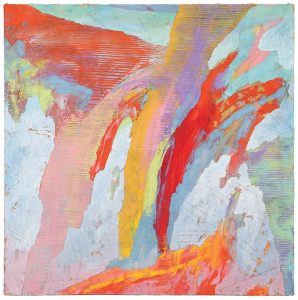
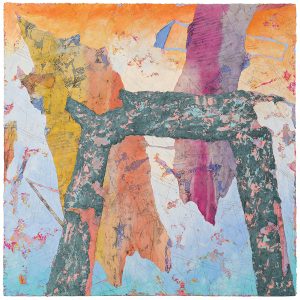
“I don’t want you to know how I work unless I tell you, because I want it to seem spontaneous,” says Herb Jackson. He’s in his Davidson studio, surrounded by the unmistakable works that have made his name; the vibrant, abstract paintings that convey energy and light and appear to have been made with swift, gestural strokes. But in reality, he notes, holding two fingers up in a narrow pinch, “I’m working about that much at a time.”

“The tricky thing is to make it not look like that,” Jackson says. “It’s a little archaeological. There’s a lot of drawing that goes on. I can work for hours on an area, and the next day completely cover it.” These palette-knifed layers accumulate, day by day, sometimes into the triple digits; many he scrapes away or sands with pumice. “If it’s not up to what I want it to be, then I just keep working,” he says. Light and shape and color and texture shift and morph, disappear and re-emerge. About two-thirds of the way through, a painting “will begin to assert itself,” and when they’re finished, “they tell me,” he explains.

Art has been communicating with Jackson since he was a child. He won his first art award when he was still a teenager as part of a juried exhibition at the North Carolina Museum of Art; his work has now been collected by more than 100 museums, including London’s British Museum, has been shown in more than 150 solo exhibitions around the world and has won him North Carolina’s highest civilian honor. After college at Davidson College and an MFA at the University of North Carolina at Chapel Hill, Jackson returned to this college town to teach, eventually serving as chair of the art department at Davidson College for 16 years.

Along the way, Jackson created a prolific and ongoing series he calls Veronica’s Veils, all of the same size (60 by 48 inches) and format. The name refers to the historic Christian relic thought to have received an image of the face of Jesus when Saint Veronica used it to wipe his face at the sixth Station of the Cross. Jackson says these works “have nothing to do with Jesus, but have a lot to do with Veronica and her luck, being at the right place at the right time.” When one of his paintings “comes into being,” Jackson says, “that’s basically my Veronica moment.”

Deep Dive

That moment coheres not any particular concept, but the confluence of everything he’s ever experienced, “which is much bigger than any one idea.” All of that can take some wrangling. “Occasionally, they’ll go beyond what I expected as far as challenging me, and I’ll put them up there and stare at them for several days, to just be absolutely sure,” he explains. “Because once I decide you’re finished, then I don’t go back in.” To do so, he says, would violate a painting’s integrity. “There are paintings from 18 years ago where I spot something I would have done differently — but I was a different artist then.”

For the last 50 years, Jackson has had two or three solo exhibitions of his paintings a year, but has recently decided to curtail those to focus on what matters most: painting for its own sake. “Committing to exhibitions became confining,” he says. “I just want to make my work.”

The Raleigh native has been drawing every day since he was a young child and selling paintings since he was 12, time enough to be many different artists. He’s still amazed by the experience and the process: “Where a painting comes from and how it comes together for me is still mystical, and has been for 60 years.” He credits his subconscious, but assumes some of his inspiration must come from art and travel and nature, from exploring the woods and creek and digging in the earth near his childhood home near the old Lassiter Mill. Some also must come, he says, from the pre-Renaissance and Byzantine paintings of the Kress Collection, which formed the foundational basis of the North Carolina Museum of Art in its original downtown home — works he regularly took the bus to go see.

“Those paintings were so formative for me. If there hadn’t been the North Carolina Museum of Art, I don’t know what would have happened to me.”  PS

This is an excerpt from the forthcoming book Art of the State: Celebrating the Art of North Carolina, to be published by UNC Press this fall.

Out of the Blue

Frozen in Time

The hottest month of all

By Deborah Salomon

August means hot. Serious hot.

Not that hot means much. We’re such weather wimps — dash from AC car to AC house, or store, or office. As the joke goes, were there still phone booths, they would be air-conditioned. A system failure rates emergency status, right up there with a blocked toilet or a computer meltdown.

Meltdown, a good August word when applied to an orange Popsicle that tints the tongue and stains the T-shirt.

In August, you can do without lights but not that icy AC blast.

Global warming will only exacerbate this annual woe.

I am the wimp described above. ’Twas not always so. I remember when the very heat we flee heightened our senses, prescribed our activities.

I spent every childhood summer in Greensboro, with my grandparents, in the house shaded by pin oaks, where my mother was born.

Talk about hot.

This isn’t the first time, or the second or third I’ve dredged up those summers not out of laziness but regret, since icons have drifted away like August afternoon clouds, once their rain has caused steam to rise from the asphalt.

In the North, at least, summer started with spring and the wearing of “spring coats.” Lordy, I haven’t heard that word pairing in years. By late spring, kids were allowed to shed undershirts . . . ah, the freedom, the unbinding. The last day of school meant a trip to the shoe store for sturdy leather sandals or breathable canvas “sneakers.” Both would be in tatters by Labor Day.

Where have all the children’s shoe stores gone?

How delicious, the wiggling of bare toes, unknown to kids shod year-round in “running shoes.”

Polio overshadowed those summers. No large gatherings, no swimming pools or amusement parks. Splash pads had not been invented but oh, what we could accomplish with a garden hose and a variable nozzle. Squeals of horror followed a strong, pulsating stream. “Mmmm . . . ” after a total-body misting. I remember feeling the heat rising up and escaping from my skin, whether bare or covered with shorts and a T-shirt.

Nobody bothered with bathing suits.

Then, somebody told us that holding an ice cube in back of a bended knee would cool the whole body. What giggles, as the melt trickled down our legs. Another granny advised soaking feet in cold water worked the same magic. I can still see the oval tin wash basin we used for soaking.

But nothing — and I mean nothing — cooled better than a nickel Coca-Cola from the big red cooler (with built-in bottle opener) at the corner store.

My mother didn’t allow soft drinks. Granddaddy slipped me nickels when she wasn’t looking.

Those power-guzzling coolers, now prized retro décor, fetch big bucks at antique stores.

Supper on hot nights would be cold: cold fried chicken, potato salad, huge tomatoes from the garden, sprinkled with salt. Maybe biscuits left over from breakfast. I don’t remember the house being unbearable at night, perhaps because of oscillating fans, more likely because children sleep better, especially happy children exhausted from squealing through the sprinkler, catching fireflies in Mason jars, guzzling Kool-Aid, wiggling toes around leather sandal straps, reading comic books on the porch swing, playing stick-ball, dressing paper dolls.

AC? Only at the movie theater where the blast merited a sweater.

We survived August, then returned to the North, where autumn appeared in chilly early mornings and earlier sunsets, when children bought notebooks and pencil-sharpeners, rulers, protractors, lunch boxes, knee socks and saddle shoes for school. Before cellphones and laptops and face masks and lockdowns.

Before schools became dangerous.  PS

Deborah Salomon is a writer for PineStraw and The Pilot. She may be reached at debsalomon@nc.rr.com.

The Creators of N.C.

The Family You Find

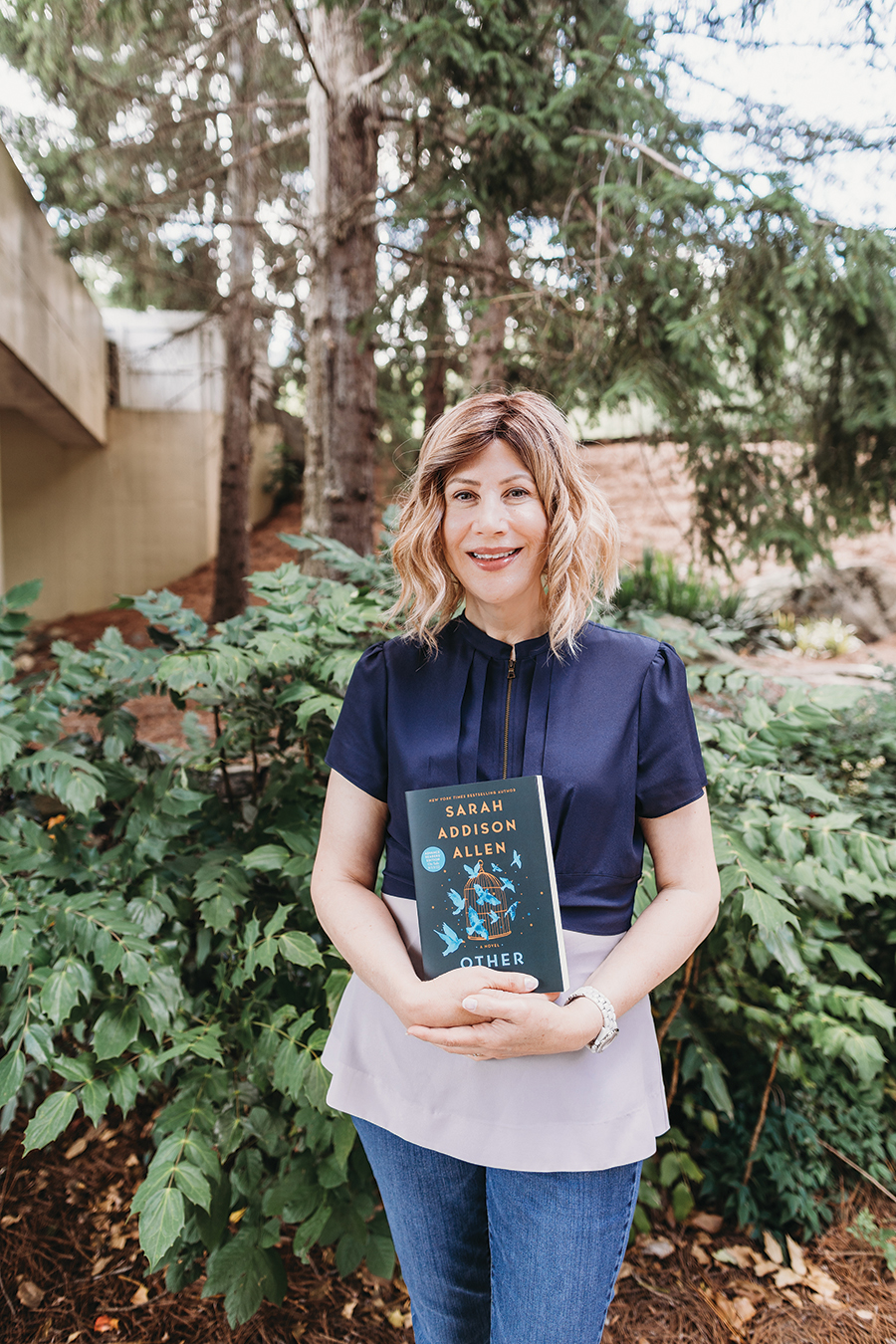
The world of Sarah Addison Allen

By Wiley Cash

Photographs by Mallory Cash

.     

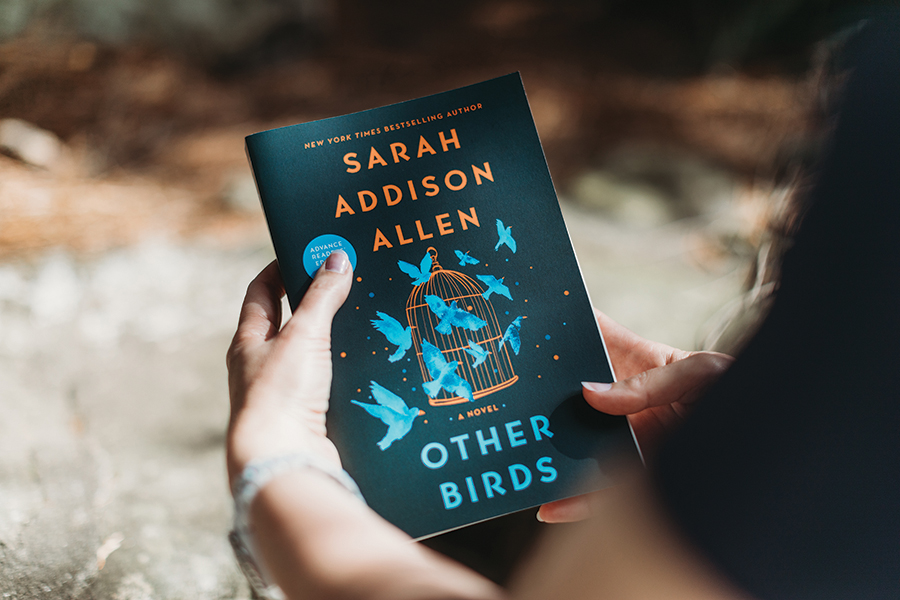
In Sarah Addison Allen’s new novel, Other Birds, an 18-year-old woman named Zoey Hennessey returns to her long-dead mother’s condominium on fictional Mallow Island off the coast of South Carolina to reconnect with her mother’s spirit by tapping into the spirit of the place. Upon her arrival, Zoey finds a historic building that houses a collection of mysterious misfits, all of them bearing their own personal stories driven by pain and longing. Although Zoey is heartbroken to learn that virtually nothing of her mother remains in the condo, she is pleased to make a home among the Dellawisp’s eccentric tenants.

Not only is the Dellawisp haunted by the lives of the people who currently live there, it’s also haunted by the lives of the people who lived there once upon a time, for the living are not alone in the old, rambling complex. Spirits hover on the margins of people’s lives just like the tiny turquoise birds that have overtaken the Dellawisp’s courtyard. While navigating the past and present of these myriad lives, Zoey reclaims her own life, and she learns that family is something you can create when you need it most.

On a Saturday morning in mid-June, I meet Allen in the lobby of Asheville’s historic Grove Park Inn. While tourists and bellhops bustle all around us — the din of voices and laughter carrying along the great lobby’s stone floors — Sarah and I make our way to the verandah that overlooks the golf course. In the distance, the city of Asheville sits like a pink jewel among the swells of misty blue mountains. If the setting sounds magical it’s because it is. It’s also because my head is still buzzing with the possibility of magic after finishing Other Birds. All of Sarah’s previous novels contain magical elements, beginning with her 2007 debut novel, Garden Spells, which tells the story of the Waverley family, whose garden bears prophetic fruit and edible flowers with special powers. The novel was an instant New York Times bestseller. Since then, Sarah has published five novels that have gone on to sell millions of copies.

While Other Birds is certainly as magical as Sarah’s previous novels, it seems much more personal. When I ask her if this is true, she doesn’t hesitate. “Without a doubt,” she says. Just as several characters in Other Birds must confront tragedy and grief, Sarah has had to do the same in her own life.

“I started the book, and then my mom had a catastrophic brain injury,” she says. “For four years I watched her die. It was horrible. And then 10 days before my mom passed away, my sister died. I’d put this book on hold while caring for my mom and going through that grieving process.”

When Sarah returned to work on her novel, she found that not only had her sense of the novel changed, her sense of herself had changed as well. “I came at it from the point of view of learning a lot about life that I didn’t really want to learn,” she says. “I learned a lot about grief, and I learned a lot about what to let go of and how we hang on.”

Sarah explains to me that if this book feels different it’s because she’s different. While Other Birds is just as hopeful as her previous books, it confronts the reality of grief with a stark realism shrouded in elements of magic once ghosts begin to join the chorus of characters.

“My grief came out in those ghost stories,” Sarah says. “Even though the characters don’t know the ghosts of their mothers are there, they’re still there. I like that sort of wishful thinking in terms of losing my mom. Maybe I haven’t really let her go, or maybe she hasn’t really let me go. In some way she’s still here.”

Sarah grows quiet, and I imagine memories of her mother playing through her mind, and I wonder how those memories found their way to the page. “My mom was my best friend,” she finally says. “The characters in the book deal with the losses of the people who are supposed to care for them. But in the end they learn how to let go and move on and find family among themselves.”

Grief is not something new to Sarah’s life. Ten years ago she was diagnosed with stage four cancer, but after losing her mother and sister, her own medical journey was put into perspective. “It’s the difference between the fear of leaving and the fear of being left,” she says.

Sarah’s readers certainly marked her absence during the seven years between the publication of her last novel, First Frost, and her new novel. Once the publication date of Other Birds was announced, online book chatter erupted in celebration. In her own quiet way, Sarah celebrated her return to the page as well. She tells me that getting back to work on Other Birds after losing her mother and sister was a return to something that felt normal. “Getting back into the swing of things felt good,” she says.

Meeting with Sarah in one of Asheville’s most iconic locations feels right because she’s a writer whose identity is inextricably tied to western North Carolina. “My heart is here in Asheville,” she says. “The farther I get away from Asheville, it feels like a rubber band being stretched taut. I need to snap back. I need to come home.

“My sense of belonging is something I want to give to my characters,” she says. “They’re all in search of a place to belong. A lot of times that’s a physical place, but a lot of times it’s an emotional place, and sometimes it’s the people you surround yourself with.”

I understand the point she’s making, both because Asheville feels like home to me, but also because my own writing relies heavily on my characters having a sense of belonging to a particular place. But I also understand Sarah’s ties to Asheville because we are alumni of the University of North Carolina Asheville, where we both majored in literature just a few years apart from one another, studying under the same professors and encountering many of the same books that left lasting impressions on us both, books like North Carolina native Fred Chappell’s novel I Am One of You Forever.

Sarah sees that novel as one of the first books that introduced her to magical realism while showing her that western North Carolina could be a setting for her own work. She says that reading Chappell’s novel at UNC Asheville was like “cracking open a geode and seeing the sparkle inside.” She still remembers how Chappell’s use of folklore and ballads in the novel resonated with her as a native of western North Carolina. “That was my territory,” she says. “That was something that hit close to home.”

I was so affected by Chappell’s novel that I borrowed the name of the main character from I Am One of You Forever for my debut novel, A Land More Kind Than Home. Chappell named his young protagonist Jess Kirkman; I named mine Jess Hall.

When Sarah’s debut Garden Spells was published in 2007 I was entering my final year of graduate school in Louisiana, and the fact that an alumnus of UNC Asheville had hit the publishing big time was both emboldening and daunting for someone like me, who desperately wanted to join her. But in talking with Sarah I learn that her 13-year path to publishing Garden Spells after graduating college was long and hard. According to her, during those years she had written dozens of full-length manuscripts and been rejected by scores of literary agents.

“I was writing as close to full time as I could get,” she says. “I was doing part-time and seasonal jobs. By the time I wrote Garden Spells I was just about ready to give up. I’d gone back to school, and I hated it, and I thought, ‘Let me give it one more go.’ And I wrote Garden Spells, and suddenly, there it was. I sent off 12 or 15 queries to agents, and only one of them wanted to see the novel. That’s the agent I have today.”

Both Sarah’s new novel, Other Birds, and her path to publication prove one thing: If you look, there is a family waiting for you.

“Your tribe is out there,” she says. “Your people are out there. Just keep looking.”  PS

Wiley Cash is the Alumni Author-in-Residence at the University of North Carolina at Asheville. His new novel, When Ghosts Come Home, is available wherever books are sold.

Focus on Food

Chocolate Ice Pops?

Black Forest cake anything!

Story and Photograph by Rose Shewey

Oh, how much I wanted to taste my mom’s homemade Black Forest layer cake when I was a child. “Why not?” I would ask indignantly, my arms crossed over my fuzzy polyester sweater. (It was the 1980s after all.)

“Because,” my mom would respond with a heavy sigh and the patience of a Catalan pack mule, “it has alcohol in it and you wouldn’t like it.”

The temptation was real. The silky, hand whipped cream; the spongy, rich chocolate layers; and the luscious, lip-staining sour cherries spiked with fragrant cherry brandy, “Kirschwasser.” Any time Black Forest cake made an appearance on the buffet, I would ask for a slice, but my mom’s response was typically a resounding “no,” and I’d be rushed off to the kid’s table with a piece of marble cake.

To be clear, most European parents aren’t terribly worried about their children ingesting a little bit of alcohol — to the contrary, the stereotype holds true. My mom simply assumed that my palate wasn’t refined enough to appreciate such grown-up treats. So, why let a precious slice of cake go to waste on immature taste buds?

To this day, I adore Black Forest cake. Aside from the fact that this dessert is the epitome of divine yet sinfully decadent pleasures, I am hopelessly nostalgic. “Schwarzälder Kirschtorte” was, and is, a festive staple in my German homeland during times of celebration.

As baroque in nature as Black Forest cake may be, at its core it is a simple, yet epic, combination of flavors. You don’t have to make the prototypical layer cake to enjoy it — you can make Black Forest cake anything. The essential components of chocolate, cream and boozy cherries are incredibly versatile. My go-to quick fix over the years has been creamy Black Forest chocolate ice pops. With only five ingredients, this frozen treat tops any other ice cream-type dessert and adds a touch of glamour to the otherwise rather ordinary lineup of frozen pops.

By the way, my mom was wrong. When I finally laid my tiny, greedy hands on my first slice of Black Forest cake, it was love at first bite, and I scarfed it all down. Well, I ate all the parts that didn’t taste like cherry brandy. So what if I just licked the cream off the top? My mom was still wrong.

Black Forest Chocolate Ice Pops          

(Makes 6)

You’ll need six ice pop molds and sticks for this recipe.

Ingredients

1 1/2 cups yogurt, coconut cream or heavy cream

2 1/2 tablespoon raw honey (or more, to taste)

2 teaspoons vanilla extract

1/4 cup cacao powder

3/4 cup cherries, fresh or frozen, pitted

2 teaspoon Kirschwasser (optional)

In a bowl, combine yogurt (or cream), honey and vanilla extract and whisk until smooth. Divide into two equal parts; set aside one part and stir cacao powder into the other part. In a food processor, blend cherries to your desired texture; anywhere from coarse to puréed will work (or skip this step and continue with whole or halved cherries). Add Kirschwasser if desired. Add a couple of tablespoons of yogurt mixture to each mold, then add a couple of tablespoons chocolate mix and about one tablespoon of cherries; continue layering until the molds are full. Add sticks, then freeze.  PS

German native Rose Shewey is a food stylist and food photographer. To see more of her work visit her website, suessholz.com.

Bookshelf

August Books

FICTION

The Book Eaters, by Sunyi Dean

Out on the Yorkshire moors lives a secret line of people for whom books are food, and who retain all of a book’s content after eating it. To them, spy novels are a peppery snack; romance novels are sweet and delicious. Eating a map can help them remember destinations, and children, when they misbehave, are forced to eat dry, musty pages from dictionaries. Devon, like all other book eater women, is raised on a carefully curated diet of fairy tales and cautionary stories. But real life doesn’t always come with happy endings, as Devon learns when her son is born with a rare and darker kind of hunger — not for books, but for human minds.

Delphi, by Clare Pollard
An unnamed classics professor looks for guidance in the prophecies of the ancient world when she finds herself confronting chilling questions about control and surrender as COVID-19 descends. Navigating the tightening grip of lockdown, a marriage in crisis, and a 10-year-old son who seems increasingly unreachable, the narrator focuses on different types of prophecy to make sense of her increasingly surreal world. The result is an audacious, ominous novel that embodies the profound tensions of our era.

The Last White Man, by Mohsin Hamid
One morning, a man wakes up to find himself transformed. Overnight, Anders’ skin has turned dark, and the reflection in the mirror seems a stranger to him. At first he shares his secret only with Oona, an old friend turned new lover. Soon, reports of similar events begin to surface. Across the land, people are awakening in new incarnations, uncertain how their neighbors, friends and family will greet them. Some see the transformations as the long-dreaded overturning of the established order that must be resisted to a bitter end. As the bond between Anders and Oona deepens, change takes on a different shading: an opportunity to see ourselves, face-to-face, anew.

Carrie Soto Is Back, by Taylor Jenkins Reid
Carrie Soto retired from professional tennis at the age of 31 with an impressive record, including the most grand slam titles of all time. Now, six years later, a younger set of players is on the court, and one of them, Nicki Chan, is about to break her record — but not if Carrie can help it. At 37 years old, she makes the monumental decision to come out of retirement and be coached by her father for one last year in an attempt to reclaim her record. Even if the sports media says that they never liked “the Battle-Axe” anyway.

Stories from the Tenants Downstairs, by Sidik Fofana
Set in a Harlem housing project, a tight-knit cast of characters grapples with their personal obstacles, ambitions and triumphs while anticipating a looming rent hike that could jeopardize their futures and change life as they know it. The shared stakes in the face of gentrification bind the stories together, delivering an immersive, novel-like reading experience.
Love on the Brain, by Ali Hazelwood
Like an avenging, purple-haired Jedi bringing balance to the universe, Bee Königswasser lives by a simple code: What would Marie Curie do? If NASA offered her the lead on a neuro-engineering project — a literal dream come true after years scraping by on the crumbs of academia — Marie would accept without hesitation. But the mother of modern physics never had to co-lead with Levi Ward. Now, her equipment is missing, the staff is ignoring her, and Bee finds her floundering career in somewhat of a pickle.


CHILDREN’S BOOKS

The Queen of Kindergarten,  by Derrick Barnes

The queen of kindergarten has new braids, a sparkly tiara and a chariot (well, a pickup truck) to take her to school on the first day. She is caring and kind and brightens every room she enters. The first day will be a breeze! This wonderful little book should be required reading for every new kindergartner. (Ages 4-6.)

Who’s in the Picture?,  by Susie Brooks

Art museums don’t have to be stodgy — you can simply look for dogs or horses or your favorite foods in the paintings! Take a closer look at over 20 famous paintings by Frida Kahlo, Henri Rousseau, Winslow Homer and many more in this playful search-and-find book. A fabulous way for kids (and adults) to experience art for fun. (Ages 4 and up.)

The Perfect Rock, by Sarah Noble

Cute and clever and oh, so charming, the three otter siblings each set out to find the perfect rock — a rock to carry in the pouch underneath an arm, to be the tool that they will keep for life. But when all three siblings choose the same rock, they learn a solid lesson about what is truly important. (Ages 3-6.)

Pop Out Around the World: Read, Build and Play from New York to Beijing

Bring the world to your kid’s playroom with this fun, interactive book featuring six world cities with pop-out buildable pieces representing each. Create a hot dog cart in New York; Big Ben in London; The Great Wall in Beijing; the Opera House in Sydney; and much more. Perfect for home-school families and armchair travelers alike. (Ages 4-7.)

Invisible, by Christina Diaz Gonzalez

Community service gains a whole new meaning for five middle school students in this must-have dual language graphic novel. Edgar award-winning author Christina Diaz Gonzalez even adds a signature mystery twist to the story that is sure to resonate with anyone who ever felt lost in the wild world of middle school. (Ages 9-13.)  PS

Compiled by Angie Tally and Kimberly Daniels Taws.