Money Well Spence

A new day for CCNC’s Dogwood Course

By Lee Pace

First impressions stick.

Robert “Ziggy” Zalzneck was a young accounting intern in Raleigh a long way from his Pennsylvania home during the holidays and was given access to the Country Club of North Carolina’s golf course on Christmas Day 1967. He had the place to himself. “I played 36 holes and it was 70 degrees,” Zalzneck says. “It was the prettiest place I’d ever been my whole life. I’ve loved the place ever since.”

Kris Spence was a young green superintendent at Greensboro Country Club in the mid-1980s when club staff and officers held a planning retreat at CCNC, the private, gated community nestled in the center of a triangle formed by Pinehurst, Southern Pines and Aberdeen.

“I’ll never forget coming onto the property the first time,” Spence remembers. “It was so impressive and set a standard you noticed quickly. It was a standard above even the best private clubs in the state.”

And Alex Bowness, a young homebuilder in Southern Pines, was invited to play the Ellis Maples-designed course in 1977 and knew immediately that he wanted to become a member.

“I’ll never forget playing the 15th hole the first time,” he says of the par-4 that kisses against the shore of Watson’s Lake — one of seven holes on the back nine accented by water. “It was April, the dogwoods were in bloom, and some dog ran across the fairway. It was a spellbinding vision. It took my breath away. I can see it today as if it were yesterday.”

Thirty-nine years later, Bowness is sitting in an Adirondack chair nestled in the pine forest between the fourth hole of the Dogwood golf course and his Williamsburg-style home. His cavalier king spaniel, O. Max, cavorts through the pine straw. It’s been home for Bowness and wife Susan since 2000.

“When we drive through the gate, our shoulders fall down,” he says. “It’s very relaxing. We live 2.4 miles from the gate, and it’s a nice, soft ride. From here we see golfers go by, we see little boats go by with fishermen. There’s even a bald eagle who lives near here; sometimes late in the day you’ll see him swoop through the trees. It’s almost like coming into a park.”

This “park” is now 53 years old, but it has a fresh coat of paint (and grass and sand and tree-scape) following a nine-month shutdown for Spence, now a golf course architect, to make significant changes to the course on agronomic, strategic and maintenance fronts. In nearly two decades of golf design, Spence has specialized in restoring and remodeling vintage courses by Golden Age architects like Donald Ross and then, from the next generation, Ellis Maples, the son of Ross’ green superintendent and construction foreman at Pinehurst, Frank Maples.

“Anyone who comes here has an expectation,” says Spence, who supervised the remodeling of the Dogwood course from November 2015 through Labor Day weekend of 2016. “It’s a lofty one. We can’t hit a triple here, we have to hit a grand slam. The expectation level is very high. The expectation was of excellence. When I came here to walk the course before the interview, it was anything but that. Time had just taken a toll on this golf course.”

While the Sandhills golf community had been built since the turn of the 20th century on resort golf and semi-private courses, a group of North Carolina businessmen believed in the early 1960s the state needed a private club centrally located that could draw members from Raleigh to Charlotte and beyond. Raleigh accountant Dick Urquhart, Greensboro investment banker Hargrove “Skipper” Bowles, Greensboro developer and builder Griswold Smith, and Raleigh attorney James Poyner were the four founding members and soon enticed three dozen “charter members” to join the club. They represented a Who’s Who of North Carolina business and philanthropy, among them C.C. Cameron of Raleigh, George Watts Carr of Durham, Frank Kenan of Durham, James Harris of Charlotte ,and Karl Hudson of Raleigh.

“What could be better than a good club centrally located for nearly all of us, ideally suited for golf, horses, hunting or just plain socializing?” Urquhart asked in a 1962 letter to charter members.

Willard Byrd studied landscape architecture at N.C. State in the late 1940s with an emphasis on land planning and had opened a shop in the land-planning business in Atlanta in 1956. He was hired to draw the master plan for CCNC, which would include approximately 300 residential lots averaging two acres apiece. The golf course was routed at the outset, with the lots to be arranged around the best land for golf. Much discussion ensued at the beginning over the issue of wrapping nine holes of golf around Watson’s Lake, thus eliminating some premier lakefront building lots.

At the time, Byrd was not officially a golf architect, so Maples was retained to collaborate on the creation of the golf course, to be named after the preponderance of dogwood trees on the property. The original plans have both the names of Byrd and Maples on the blueprint for each hole. Byrd created the routing and Maples designed the features — the green shapes and undulations, bunkers and placement of hazards.

“The course should be second to none from the very start,” said Urquhart, whose views that the golf course should get the premier lakefront exposure won out in that discussion.

The course opened in 1963 and was one of the original members of Golf Digest’s 100 Greatest Golf Courses and was site of the 1971 and 1972 Liggett & Myers Match Play Championship on the PGA Tour (won by Dewitt Weaver and Jack Nicklaus) and the 1980 U.S. Amateur (won by Hal Sutton). It has hosted six Southern Amateurs (with Ben Crenshaw and Webb Simpson among the winners), and the 110-year-old championship will return in 2017. It has been the venue for the 2010 U.S. Girls’ Junior Championship as well as multiple Carolinas Golf Association championships, including three Carolinas Amateurs and seven North Carolina Amateurs. The course remained in Digest’s rankings until 1999, when it was muscled out by the many outstanding new courses from the 1990s golf boom.

The original course was so popular the club built a second one and named it the Cardinal in keeping with the state of North Carolina theme. The course opened as 18 holes in 1981, a combination of nine holes each from Maples and Robert Trent Jones. The club converted those greens from bentgrass to Champion Bermuda in 2012 and liked the results, so a similar conversion was planned for the Dogwood, among other significant changes.

“We knew for five or six years we had a significant project ahead of us,” says Director of Golf Jeff Dotson. “The irrigation system was antiquated. The bunkers had reached the end of their useful life. It was a struggle every summer to keep the bent greens healthy, and the Bermuda greens on Cardinal were thriving.

“Dogwood had been one of the top courses in Southeast for half a century. We needed to set it up for the next 50 years.”

Much of the work was structural: convert the greens to Bermuda; install a new irrigation system; rebuild all the bunkers with the easier-to-maintain “Better Billy Bunker” system; replant the fairways with zoysia grass; open the vistas with the removal of several hundred trees that encroached over 50 years.

And much was strategic: bunkers repositioned to challenge more aggressive lines on dogleg holes; green approaches re-sculpted to allow run-up shots; a new green on the par-4 fourth built to reflect Maples’ original design that had never actually been built; a new green on the 15th hole positioned some 25 yards back from the original; a cross-bunker added in the landing area of the second shot on the par-5 18th, giving players more food for thought in planning their approach to the green.

“The structural issues have certainly been fixed,” Spence says. “Aesthetically and strategically, I think it reflects and respects Mr. Maples’ work. I wanted to respect his work but still adjust things to better suit the modern game. If you look through old photos of this course and others he designed, this still has that look and character of what I think he would approve of.”

Spence and Zalzneck were in the first foursome to play the remodeled course when it reopened on Sept. 2, Spence because he shepherded the work and Zalzneck because he’s now the club president.

“Kris was like a proud papa playing the course,” Zalzneck says. “And it was very rewarding for those of us who have worked on this project over three to four years. The changes reposition CCNC for a long time to come.”

And they preserve those first impressions that remain vivid in many minds despite the passage of time — not to mention creating new ones for residents like Alex and Susan Bowness from their Adirondack chairs along the fourth fairway.  PS

Lee Pace has written about golf in the Sandhills since the late-1980s; his most recent book is The Golden Age of Pinehurst—The Story of the Rebirth of No. 2.

Happy Thanksgiving, Pilgrim

Norman Rockwell, not John Wayne, informs our Thanksgiving celebrations

By Tom Allen

For Americans, Norman Rockwell’s depiction of a family Thanksgiving is as familiar as Grant Wood’s “American Gothic” or James McNeill Whistler’s portrait of his mother.

But if art imitates life, growing up, I was brushed out of Rockwell’s painting more often than not.

I vaguely recall a few traditional Thanksgivings with family, albeit half the size of Rockwell’s troupe. Our table featured a roasted Butterball, Granny’s dressing, and jellied Ocean Spray.  Sweet tea, laced with ReaLemon Juice, washed down bowls of collards and turnips, taters and snap beans. My Methodist granny occasionally popped the cork on a bottle of “French wine.” Pecan pie (I didn’t have pumpkin until my 30s) completed the feast. Football and a carb-induced nap rounded out the afternoon. Hugs were plentiful but conversation, scant. The celebration ended by 3 p.m.

As grandkids grew and elders’ health declined, meals became more eclectic, less Rockwellian. One Thanksgiving during college, after Santa concluded the Macy’s parade, baked spaghetti greeted Dad and me. Grateful, I bowed my head, smiled at Mom’s aberration, then dug in. Who needs a broad-breasted bird when baked pasta is just as good?

My last year in seminary, a cute brunette I met during study abroad invited me to share Thanksgiving on her family’s Kentucky horse farm. I invested in a haircut and a blue oxford cloth button-down. Alas, my dorm became my Old Kentucky Home for the holiday. At 6 a.m. Thanksgiving morning, Ann called to say her mother came down with strep throat. Maybe next year.

Providence intervened. A motley crew of would-be ministers concocted a Thanksgiving feast. Scott, dumped just days before by a reluctant fiancée, stirred up a bowl of instant mashed potatoes. Dave warmed canned green beans in his microwave. I snagged a Mrs. Smith’s Pecan Pie, reduced for quick sale, at Kroger. Luis, whose family fled Cuba with nothing but the clothes on their backs, roasted the turkey. The dorm smelled of cumin for days. Vernon, deaf and mute from birth, signed grace. We all said, “Amen.”

Years later, our family would include two teenage daughters. We made the every-other-year trek to north Georgia for Thanksgiving with my wife’s folks. Work schedules disrupted Thanksgiving Day, so we dined on Friday. We left Whispering Pines Thanksgiving morning, only to return an hour later for a forgotten suitcase. By afternoon, our nerves were frazzled by traffic and our stomachs groaned from hunger. Restaurants off the interstate were closed. With gas running low, we pulled into a Shell station. Empty booths inside the convenience store provided a place to spread what we’d packed for the road — chicken salad, saltines, grapes and Nabs. We bowed our heads, gave thanks, then washed down our moveable feast with Dr. Pepper, Cheerwine and Diet Coke. We shook our heads, smiled about the day’s happenings, and made a memory we talk about, every year, on the fourth Thursday of November.

Norman Rockwell’s painting depicts three generations gathered around a dining room table. Grandma, aproned and coiffed for the holiday meal, delivers the turkey on, no doubt, her mother’s china platter. Grandpa, in suit and tie, grinning and famished, stands behind her, waiting to pray, carve and eat. The painting was one of four, illustrating a 1943 series of Saturday Evening Post essays. Based on Franklin Roosevelt’s Four Freedoms, outlined in his 1941 State of the Union address, Rockwell appropriately named his Thanksgiving portrait “Freedom from Want.”

Seventy years later American families look different. Yet, Roosevelt’s words and the Rockwell portrayal remain timeless. Thanksgiving is still about gratitude. So, yes, give thanks for all you have while remembering to make room at the table for others, so they, too, experience gratitude.

Then, no matter what your menu or who you consider family, everyone will have a special meal, a reason to smile, and hopefully, because of your kindness, a memory to cherish forever.  PS

Tom Allen is minister of education at First Baptist Church in Southern Pines.

A Southern Commandment

There will be cornbread!

By Jan Leitschuh

Even in these low-carb times, there is cornbread.

It’s not going anywhere.

Moist, lightly golden, aromatic, steam-emitting and firm-yet-crumbly, iconic Southern cornbread is simply a tradition not to be trifled with. This is November, the season of the harvest and Thanksgiving. And there will be cornbread, Paleo diet be damned.

Cornbread has been called the “cornerstone” of Southern cuisine. While we associate cornbread with the tables of the South, the story goes deeper than that. Corn, or maize, is a New World grain, evolved from centuries of careful selection and breeding by indigenous populations of this weedy grass.

Though now it is grown across the world, and bred in laboratories, corn was unknown to Europeans before Columbus. Early settlers naturally tried to grow their familiar wheat in the steamy South. They wanted bread.

But wheat bread did not do as well in Southern fields, while corn did, growing all the way down into Mexico and beyond, where it was domesticated over 10,000 years ago. Several small cobs of several inches developed from a grass that originally produced only one tiny cob an inch long. Now it grows long and prolific, and is the most widely grown grain in the Americas and the most widely grown grain in the world by weight. Over 85 percent of U.S. corn is now genetically modified, under patent, including sweet corn.

Early settlers in the Southeast imitated their native neighbors, learning to process and cook maize from the Cherokee, Creek, Chickasaw and Choctaw. They ground the corn to make a meal, sometimes treating it with alkaline substances to increase nutrition and digestibility. Before long, settlers were adapting recipes to the prolific crop to make the breads and bakery. High in energy, corn became a meal staple. From Colonial days until the present, cornbread has been eaten on Southern tables.

Cornbread rose in popularity during the Civil War. Baking soda became available and was used for leavening. Cornbread was cheap, and it was filling. Meal could be shaped into loaves to bake and rise, or simply fried in some bacon drippings in a cast iron skillet. This latter technique was easy enough for anyone to cook up a mess of fritters, johnnycakes, corn pone and hoecakes that stuck to the ribs and let a body do a hard day’s work.

In fact, with a little water, salt and fat, you could cook a small dense cake right in the field, on a garden hoe blade held over a small fire. As families grew wealthier, the basic recipes expanded to include eggs, buttermilk, flour, yeast and sugar.

Cornbread is considered a quickbread, that is, a bakery leavened with baking powder rather than yeast. Corn lacks the tough gluten proteins that trap gases given off by yeast. Instead, Southern cornbread relies on the protein from eggs to give it structure.

If you grew up in the North, or Midwest as I did, cornbread meant something a little different. Sugar was used, along with a portion of wheat flour, to produce a lighter, more cakey type cornbread. We buttered it lavishly, and drizzled it with honey.

In the South, less sugar is used, and little to no wheat flour. Southern cornbread today can be as simple as corn flour, a little salt, baking powder, milk or buttermilk (clabber) and eggs. Molasses is the traditional drizzle. Leftover cornbread will not go to waste either, sometimes crumbled and served with milk like cold cereal.

The cornbread-like hush puppy is another prized Southern treat, the buttermilk batter being deep-fried, often with the addition of onion powder and seasonings. Served with fish or seafood, you’ll find it on menus up and down the mid-Atlantic coast.

It’s a versatile grain, corn. With different treatments, it’s the basis for cornmeal pudding, masa harina (cornmeal treated with an alkaline lime water) for tamales and tortillas, polenta, posole, hominy, grits, corn muffins, even popcorn, corn flakes and corn dogs. Corn oil and cornstarch, corn syrup and grain alcohol (think moonshine and bourbon whiskey) are further iterations that might show up in our kitchen cabinets.

So now that you’re drooling — you know you are — and have determined to revisit this Southern favorite this November, let us combine the best of the old and the new, the North, the South and the West.

With luck, you are an industrious locavore, and last June and July you bought scads of local, non-GMO sweet corn fresh picked from area markets. You ate sweet corn on the cob, roasted, boiled or steamed, till it came out of your ears, and then sliced the milky, yellow kernels from the remaining cobs and froze batches for chillier times such as these.

That means, clever you, that there is home-frozen sweet corn at your disposal. And if you are going to expend the calories on this starchy, cool weather treat, it’s going to have to be good. That means you are going to add some thawed and drained sweet corn to your cornbread, to help give it tooth and natural sweetness.

If you were unfortunate enough to miss the summer sweet corn train, you could use canned, I guess. Add a small can of drained sweet corn kernels to the mix and fantasize.

There are many variations in cornbread recipes, including those which add cheese, or jalapeños, or pork rinds, onions, even bacon. Native Americans added seeds, or nuts and berries. You do just as your little taste buds dictate.

Mark Twain may be right. This scion of the Midwest may not know how to make a proper Southern cornbread, though we sure do grow a whole heap of corn out there. It’s possible we picked up a tip or two.

The recipe below is a winner, though, and can even be made gluten-free for those holiday visitors who may be avoiding wheat. It has a mild, natural sweetness. If you enjoy an even sweeter cornbread, increase sugar by 1/4 cup.

Stick to the Paleo diet if you must; starchy corn is high in calories. But consider a wee hiatus to whip up a batch of golden-crusted cornbread to have with a winter’s chili, then go for a run. Or permit the odd indulgence at Thanksgiving to celebrate, with gratitude, the season of harvest and abundance.

Buttermilk Cornbread

Ingredients

1/2 cup melted butter

2 eggs

1 cup finely milled yellow cornmeal

1 cup flour (or all-purpose gluten-free baking mix with xanthan gum)

1/4 cup sugar

1/2 teaspoon baking soda

1/2 teaspoon salt

1 cup buttermilk

Kernels from one or two cobs sweet corn, thawed drained.

Instructions

Preheat oven to 375F.

Whisk together melted butter and eggs. Add remaining ingredients except fresh corn. Whisk until just combined and few lumps remain (do not over-mix). Stir in fresh corn kernels.

Pour into a greased 8-inch baking dish. Bake for about 30 minutes, until lightly browned on top and a toothpick inserted into the center comes out clean.  PS

Jan Leitschuh is a local gardener, avid eater of fresh produce and co-founder of the Sandhills Farm to Table Cooperative.

Hillbilly Blues

Poor, white and not quite forgotten

By Stephen E. Smith

The presidential election is either over or is about to be, and, barring an unforeseen catastrophe, we ought to be breathing a collective sigh of relief. But in our hearts we know the truth: It ain’t over yet. The media, including the publishing industry, aren’t about to let us rest. We’ll no doubt be obliged to examine in excruciating detail the cause-and-effect relationships that inflicted this grievous wound on our national psyche.

Publishers, of course, get us coming and going. White Trash; The Making of Donald Trump; Hillary’s America; The Year of Voting Dangerously, etc. — Amazon lists at least 17 books that address the pre-election mêlée, enough reading to keep us bleary-eyed and brain-bruised until the next election cycle, and well beyond.

Of these many offerings, Hillbilly Elegy: A Memoir of a Family and Culture in Crisis, by J. D. Vance, has been the chief beneficiary of our need to grasp the incomprehensible. Published in late June, this Horatio Alger memoir shot to the top of The New York Times and Amazon.com best-sellers lists and stayed there. This was due in large part to promotion by the author and Amazon that fostered the belief that Hillbilly Elegy offers a profound insight into the rise of Donald Trump as a presidential candidate.

A quick read of Amazon’s “Editorial Reviews” is explanation enough: “What explains the appeal of Donald Trump? . . . J.D. Vance nails it” (Globe and Mail); “You cannot understand what’s happening now without first reading J.D. Vance . . . .” (The American Conservative), and so forth. Only The New York Times acknowledged a mild albeit flawed apprehension of fact: “Mr. Vance has inadvertently provided a civilized reference guide for an uncivilized election . . . ,” “inadvertently” being the operative word.

In February, Vance wrote an op-ed for USA Today headlined: “Trump Speaks for Those Bush Betrayed”: “. . . .what unites Trump’s voters,” Vance wrote, “is a sense of alienation from America’s wealthy and powerful.” In a print interview with Rod Dreher, senior editor at The American Conservative, Vance stated, “The simple answer is that these people — my people — are really struggling, and there hasn’t been a single political candidate who speaks to those struggles in a long time. Donald Trump at least tries.” Vance’s appearances on ABC, CNN and NPR only reinforced this perception, and by the time he arrived on the set of “Morning Joe,” Vance’s criticism was even more focused, asserting that Donald Trump is “just another opioid” to many Americans struggling with loss of jobs, broken families and drug addiction.

All of which begs the question: Does Hillbilly Elegy explain the rise of Donald Trump?

It doesn’t. No amount of tortured exegesis can conclude with a calculated degree of certainty that the anecdotal examples offered in Hillbilly Elegy lead to a statistical generalization regarding the wide-ranging support garnered by the Trump candidacy. Despite the claims of critics and the author, the book does not present, directly or indirectly, a viable explanation for the recent national unpleasantness — and the hype surrounding the publication of Hillbilly Elegy amounts to little more than a subtle form of literary bait and switch.

Misrepresentations aside, it’s safe to say that Vance has written an insightful and readable memoir that details the estrangement of a segment of America’s displaced white underclass. His personal story, which comprises most of the text, is straightforward: Poor boy from a broken, drug-befuddled family wants to make good and does. The sociological narrative is also immediately explicable: As “hillbillies” migrated from Kentucky and other Southern mountain states, they clustered in desultory communities around the factories that offered them work. But this relocation came at a price. The traditional culture that once rendered support and stability from birth to death was sacrificed to economic prosperity. When the high-paying jobs disappeared, neighborhoods of poor people were left behind, lacking the social networks that sustained them in their mountain communities.

To his credit, Vance’s message is one of personal responsibility. He has no patience with convenient excuses or the tendency to shift blame to the media, politicians, or the middle and upper classes. Succinctly stated, his advice is to pull up your pants, turn your hat around and make something of your life.

Hillbilly Elegy possesses the same appeal that propelled Rick Bragg’s 1999 All Over but the Shoutin’ onto the best-sellers list — it’s thoughtful, compelling in its grim detail, and ultimately faith-affirming. No red-blooded American can abandon the belief that any lucky, talented, hardworking schmo can become a success, but the wise reader will understand that Vance’s story is not an allegory for life; it’s merely the recounting of a series of random events arranged in such a way as to suggest meaning.

Readers should also bear in mind that better sociological studies have come and gone without notice. One is reminded of Linda Flowers’ 1990 Throwed Away, which detailed the economic exploitation of eastern North Carolina sharecroppers and tenant farmers.

As for articulating the emotional toll taken on those Kentucky mountain people who migrated north, poet Jim Wayne Miller summed up their sense of loss in five lines from his 1980 collection The Mountains Have Come Closer. The final stanza of the poem “Abandoned” reads:

Or else his life became the house

seen once in a coalcamp in Tennessee:

the second story blown off in a storm

so stairs led up into the air

and stopped.  PS

Stephen E. Smith is a retired professor and the author of seven books of poetry and prose. He’s the recipient of the Poetry Northwest Young Poet’s Prize, the Zoe Kincaid Brockman Prize for poetry, and four North Carolina Press awards.

Ration the Passion

For Scorpios, it don’t mean a thing if it ain’t got that sting

By Astrid Stellanova

Scorpios are famously passionate, ambitious, intense and jealous. They will ask but they sure won’t tell. What they should know is that their best day is Tuesday, and to mirror their passion, they should don their best color — red. What you should know is this: They don’t always lay their cards flat out on the table, but they really don’t like it when the tables are turned. Cross a Scorpio and you will unleash the scorpion’s sting. And this: A Scorpio will never forget and may never forgive either.

Scorpios like to use their looks as a means of self-expression and will almost always make a big impression wherever they go and whatever they choose to do. They are as colorful as they are unique, too. Prince Charles is a Scorpio. So is Whoopi Goldberg. Ponder that, Star Children. Ad Astra — Astrid

Scorpio (October 23–November 21)

Friends are tempted to give you novelties on your birthday — things like pillows embroidered with “Drama Queen” or “If You Can’t Say Anything Good about Others, Sit by Me.” Much like the Dowager at Downton Abbey you can dish it out. You have a secret love of bling. Sugar, you also don’t like to admit your tastes are much more Vegas Strip than Park Avenue. This birthday, let go of any desire to be something or someone else and love your own fine self. You are an original, enigmatic and audacious in your ways — traits your friends rely on, Honey. When you blow out the candles on your cake — and there will be a blowout with cake — make a big wish. This just might be your year to win the whole dang shebang!

Sagittarius (November 22–December 21)

The fact is, Honey, you have become the Ernest T. Bass of relationships. You get mad at your beloved and your idea of resolution is to throw rocks at the window and howl like a hound dog during a King Moon. Time to start being the grown-up when it comes to love matters, my wild little Love Muffin. There is nothing or no one you cannot have once you stop trying to muscle your way to a solution.

Capricorn (December 22–January 19)

When everyone else was sitting down, you were just outstanding. Take a star turn and then take a seat. Sweet Thing, a strange turn of coincidence is about to make you glad you had such a fine sense of timing. It is more than going to compensate for a rough patch you have just undergone. It’s (nearly) all over but the shouting, as Rick Bragg likes to say.

Aquarius (January 20–February 18)

Does Fifty Shades of Purple sound like the title of your memoir?  Well, you got all shook up over a loved one, and it sent your blood pressure through the roof. Lordamercy, nobody’s worth all that purple passion you’ve been spending. Spend some time in a meditation class instead, and promise yourself you are going to let that crazy-maker go. Then get a hobby for goodness sake — just not in surveillance or private-eye work. 

Pisces (February 19–March 20)

A life-changing experience has caused you to do some recent soul-searching. Now you are looking deep, trying to find a bigger purpose. You have extra special energy this month, Sugar Pie, and it is going to make you a magnet for special and inspiring experiences. If you have a metal detector, haul it out of the closet, as you are about to find something you believed lost for good.

Aries (March 21–April 19)

You spent your fall second-guessing everything you did and everything your closest friends did. Now, Honey, is a time to downshift and just bury some nuts for the winter ahead. Look on down the road and stop majoring in the minor stuff when you need

to look at the major stuff. When you take stock, you have to admit you have been busy overdoing everything you ever thought worth doing at all — except for the nut thing.

Taurus (April 20–May 20)

Learn something new. Take a friend for coffee. Befriend a stranger. But don’t drink and dial this month, because you are prone to talk too much and listen too little and then pray for rain when all your friendships dry up. The fine print bears reading, Sugar, before you sign that contract, too. Meantime, kiss a baby and indulge your love of sweet tea and a side of lemon pie. But don’t text or dial.

Gemini (May 21–June 20)

As much as you want to step into a situation and take control, try and hold your impulsive self back just a teensy bit. There has been mounting evidence that your involvement is not helpful. Meantime, you have got a big old mess to clean up on Aisle Nine. The mess is one you made; so don’t blame the first one you find to hang it on, Sweet Thing.

Cancer (June 21–July 22)

You are the Richard Petty of speedy karma, repeating a cycle over and over and over again on the roadway of life. Put a cop on anyone’s tail for 500 miles and they’ll get a ticket, too. Want to retire that title? This month gives you a long overdue chance to reevaluate things, Honey, and you are going to find the support you crave to break out. 

Leo (July 23–August 22)

When you step back and look in the mirror, as you secretly like to do, what do you see? Is it the same person everyone around you sees? Your secretive life is at the root of some pain you hold onto and carry around like a precious bag of gold. Trust someone and unburden yourself, Sugar. Self-truth won’t hurt one bit.

Virgo (August 23–September 22)

There’s a new sheriff in town you ain’t so sure you like. Get deputized, Sweet Pants, because you are going to have to deal with them no matter what. Meantime, you calculate your losses and pocket your winnings. You still are going to come out ahead, Darling. But pay attention to a lonely neighbor whose luck ain’t so great right now.

Libra (September 23–October 22)

There’s too many hands around the pottery wheel and it has you all befuddled. In a nice way, tell them to mind their own business, and don’t apologize. Meanwhile, you are the UP in somebody’s 7UP and don’t even know it. Sugar, you have more sex appeal than ought to be allowed throughout this whole dang star cycle.  PS

For years, Astrid Stellanova owned and operated Curl Up and Dye Beauty Salon in the boondocks of North Carolina until arthritic fingers and her popular astrological readings provoked a new career path.

A Better Idea

Coffee on the porch turns into long gowns and tuxedos

By Tom Bryant

“Bryant?”

“Yeah?”

“I’ve got a great idea.”

“Coleman, every time you get a great idea, I either get in a lot o’ trouble or it costs me a lot o’ money.”

We were kicked back on the porch at the Wildlife Club after a great morning jump-shooting ducks on the Haw River. It was a classic kind of hunt. Everything came together at just the right time. The water on the river was at a good level, with the current flowing fast enough to keep us on our toes but still a leisurely speed enabling us to enjoy our surroundings. And what surroundings they were. Hickory trees were decked out in all their yellow glory backed up by golden-leafed oaks.  Bright green-colored cedars added a perfect backdrop, providing a classic early morning fall picture, something that you only see if you’re lucky, or sometimes in sporting magazines.

It’s a classic way to duck hunt, jump-shooting from a canoe. We put the boat in at the mill dam in Saxapahaw, and using an electric kicker, motored upstream to the confluence of the river and a little creek at Swepsonville. We then floated slowly downstream, hunting as we drifted along.

Wood ducks like to swim close to the shore dabbling for fallen acorns or berries that grow near the bank. They silently float under overhanging alders and when disturbed will burst from their feeding space like a covey of quail. The sport, in hunting out of a tipsy canoe, is not to flip over when the duck zips out from under the alders. It’s almost like shooting from a skateboard. One wrong turn and a hunter can hit the drink. Poor form, especially when the temperature is hovering around 40 degrees and the truck is a couple of miles away.

Usually when I’m jump-shooting, I’m all by my lonesome. I’ll only get in a canoe with another hunter if his experience in paddling a boat and his competence with a shotgun is as good or better than mine. You don’t get second chances with a shotgun or a fast flowing river. With Dick Coleman, I had the best of both worlds, a superb canoer and a magnificent gun handler. I’ve marveled more than once at some impossible shots he made in the field. I definitely wouldn’t tell him that, though. We’ve been friendly competitors since our early days, when we became close friends.

With two hunters jump-shooting from a canoe, there are a couple of very important rules — number one, and the most critical, only one shooter at a time. Number two, silence is more than golden, it can be the difference in a successful duck hunt or just a float down the river.

On this trip, Coleman was to be the first shooter. We cut a few branches from a cedar tree and rigged them to overhang the bow of the boat. My canoe was camouflaged anyway, but the cedar would provide a little more cover. We wanted to look like a tree floating downstream.

On the first flush, Dick got his limit of two wood ducks, a hen and a drake. He made a great double, getting both ducks as they were crossing left to right. They actually jumped from the left bank and crossed right in front of the canoe. That’s the fun in jump-shooting; a gunner never knows where they’ll come from.  We rapidly picked up the floating ducks and made it to the bank to change over, Dick now in the stern and me in the bow.

I got my limit with a couple of singles, two wood duck drakes, the last one right at the take-out where we had left the Bronco.

It was too early in the season to try again for mallards; and since we had our limit of wood ducks, we picked up and decided to head to the Wildlife Club and a pot of good coffee.

Dick Coleman, gone too soon, was an amazing individual. I met him early in my settled-down life. I was just out of the service, back in college and married to a beautiful, smart young brunette. I had a part-time job at the local newspaper, and Coleman was busy managing one of his family’s men’s specialty stores. We were friends right off the bat, especially when we found out about our service in the Marines. Dick was at Parris Island about three months after I left the basic training camp, and he coincidently was in the First Battalion and had the same drill instructors. We could really commiserate with one another, and we became fast friends.

Dick got up from his chair to get another cup of coffee. “You want to hear my great idea or what?”

“I hope it’s not like the last great idea that almost got us killed on the same river we got those ducks this morning.”

“Nope, this one’s more sedate, and that river trip last spring was as much your doing as mine.” The trip he was talking about was one we made after careful planning: float the Haw to the Cape Fear River, then to Wilmington and the Atlantic Ocean. A great plan, but with one problem: When we put the canoes in at Saxapahaw the Haw River was at flood stage, and quickly chewed us up and spit us out. On that adventure we learned a valuable lesson about white-water paddling and surviving an angry river.

“Christmas is just a few weeks away. What if we get Vernon and Lasly and the girls, and have a fantastic Christmas game dinner. We’ve got plenty of game. I know you’ve got lots of doves and ducks in your freezer; so have I. Vernon’s got a few pheasants. I think Lasly has some venison somebody gave him, and we could get together the fixin’s with no problem. It would be simple.”

“And where do you plan on having this little cookout? That close to Christmas, I know the ladies would pitch a fit if we suggested having it at one of our houses.”

“No, man. Right here. We’ll have the feast right here at the Wildlife Club.”

“Dick, this place is just a little better than a warehouse. I mean, look at it. It’s all right for a bunch of guys, but to bring Lida and Linda and Vicky and Libby? Man, they would have us scrubbing this place before they’d set foot in it.”

“You’re the writer. Where’s your imagination? We’ll make it a black-tie affair. You know, not a whole lot o’ light, we’ll use candles, white tablecloths, a blazing fire in the fireplace. We’ll decorate, we’ll have a Christmas tree, we can cut one of those cedars up by the skeet range, and holly, there’s plenty of that next to the pond, full of berries. We’ll send fancy invitations to the girls and make it a real dress-up shindig.”

Believe it or not, it all came together the Saturday before Christmas. The ladies came dressed to the nines in long gowns that would be more suitable at the country club than out in the woods at a sportsmen’s simple clubhouse, and the guys cleaned up a lot, sporting tuxedos. It was quite an affair, and turned into the first annual game dinner that I would continue for the next 35 years. It was one of Coleman’s better ideas.  PS

Tom Bryant, a Southern Pines resident,p is a lifelong outdoorsman and PineStraw’s Sporting Life columnist.

The King of Everyman

By Jim Dodson

November’s arrival never fails to put me in a grateful mood, even before the far-flung clan assembles around a Thanksgiving table worthy of a king.

Speaking of kings, in the spirit of giving thanks for the people who have touched our lives, past and present, here’s a grateful little ditty I wrote in the hours after my boyhood sports hero — and quite possibly yours, given his strong connections to this state — passed away.

Around five o’clock on a Sunday afternoon, Sept. 25, my wife, Wendy, and I were watching a late afternoon football game when I suddenly felt overcome by a chill and went upstairs to lie down for an hour before friends arrived for supper.

I’m rarely sick and assumed this peculiar spell was simply brought on by fatigue from working since four in the morning on a golf book I’ve been writing for almost two years, a personal tale called the Range Bucket List.

The first chapter and the last are about my friend, collaborator and boyhood hero Arnold Palmer.

The prologue explains that he was the first name on what I called my Things to Do in Golf List around 1966 after falling hard for my father’s game and reading somewhere that Arnold Palmer started out in golf by keeping a similar list of things he intended to do. Many decades later, while interviewing him early one morning in his workshop in Latrobe, I confirmed this fact with the King of Golf.

The final chapter details an emotional visit I made to see Arnold at home in Latrobe in late summer, about a month before his 87th birthday. I knew he wasn’t doing particularly well. When I walked into his pretty, rustic house sitting on quiet Legends Drive in the unincorporated Village of Youngstown on the outskirts of Latrobe, I found the King of Golf watching an episode of “Gunsmoke,” the No. 1 American TV show about the time Arnold Palmer ruled the world of golf.

He greeted me warmly without getting up. A walker was standing nearby. His wife Kit brought me a cold drink. He turned down the sound and we had a nice time catching up, almost but not quite like many we’ve enjoyed over the past two decades. Arnold’s once seemingly invincible blacksmith body had finally given out, yet his mind and spirit were strong. He insisted on joining Doc Giffin, his longtime assistant, Kit and me for an early supper that evening across the vale at Latrobe Country Club.

The trip was like a homecoming for me — and something I feared would be a farewell.

For two full years, from early 1997 to late 1999, I had the privilege of serving as Arnold Palmer’s collaborator on his autobiography, A Golfer’s Life. I was deeply honored to have been chosen by Arnold and wife Winnie for the project, and touched that he insisted that my name share the cover and title page of the work. I always called the book his book. He always called the book our book.

Not long after we began working on it — both being unusually early risers who often chatted in his home workshop before official business hours — Winnie was diagnosed with a form of ovarian cancer. Arnie, which is what he insisted I call him though I never could quite make myself do so, withdrew from his busy public life so we could get the book completed and published before time took its toll, narrowing the horizon of what was supposed to be a three year project to just under two.

We brought the book out in time to celebrate Arnold’s 70th birthday in September 1999 and the opening of a beautiful, restored red barn that Winnie had always loved just off the 14th fairway at the same club where Arnold grew up under the firm watch of his demanding papa, Deacon Palmer, whom Arnold simply called “Pap.”

Rather than a conventional autobiography of facts and figures and tournament highlights, my objective with Arnold’s book was to create an unusually warm and intimate reminiscence or memoir that read as if Arnold and his fans were simply sharing a drink after a day of golf, and he was quietly relating the 15 or so key moments of his life, revealing how these moments shaped the most influential golfer in history and arguably America’s greatest sportsman.

Both Winnie’s barn and Arnold’s book were a hit. The book was on the bestseller list for almost half a year. The handsome red barn stands in quiet tribute to them both. Winnie passed away less than two months after that special evening Arnold turned 70.

After lying down and lightly dozing for an hour, I heard our guests arriving and got up to go downstairs. The cold and queasiness had passed and I felt much better —  only to find my wife waiting at the bottom of the steps holding out my mobile phone with a very sad look on her face.

A nice person named Molly from NBC News in New York was on the other end, wanting to know if I could confirm a report that Arnold Palmer had passed away.

We spoke for an hour as my incoming call alert continued to light up from news organizations around the world. By midnight I’d spoken with reporters from all the major networks, several cable news organizations, CNN International, a pair of wire services, the Canadian Broadcasting System and Australia’s leading sports call-in show — all of it testament to the drawing power of Arnold Daniel Palmer.

The conversations about his incomparable life and times and seismic impact on popular culture and the world of sports went well into the early morning hours.

Was the chill and queasiness a coincidence, or something more sympathetic in nature?

That’s impossible to say. This much is certainly true: As Winnie commented early in our collaboration, Arnold and I enjoyed unusually strong chemistry and an uncommon connection that is instinctively felt and shared by his millions of adoring fans — and was still apparent in late summer when I visited with him at home.

The morning after our dinner at the club, I also visited with Doc Giffin and Arnold’s amazing staff at Arnold Palmer Enterprises and even saw his younger brother Jerry when he popped in to say hello.

Finally the boss showed up for work around 10 o’clock, trailed by a couple of cheerful young therapists from the local hospital who were planning to do a stretching and exercise session at the Palmers’ home gym aimed at restoring Arnold’s ability to swing a golf club again.

As he signed books and the usual stack of photos and personal artifacts from fans that are always waiting for his immaculate signature every morning of his life, we chatted about various family matters and other things large and small. With Doc and his therapists we even watched a recently colorized CD release of the historic 1960 Masters, where Arnold closed from two shots back to claim his second green jacket, setting off a national frenzy in the process.

At one point as we watched him teeing off on the 72nd hole of the tournament, needing a clutch birdie to secure the win, Arnold declared excitedly — “There, girls! There’s my golf swing!”

The therapy girls were standing directly behind the King of Golf. They were beaming, part of a new generation that never had the pleasure of experiencing the game’s most compelling star in his prime.

Arnold’s eyes were alive with pure joy. There were tears pooling in them.

And even bigger tears pooling in mine.

Doc Giffin, a legend in his own right, just smiled from a few feet away.

A little while later, I did something I’d meant to do for many years.

I handed him my first hardbound copy of A Golfer’s Life and asked him to autograph it.

He accepted the book but gave me what I fondly call The Look — a cross between the scowl of a disapproving schoolmaster and a slightly constipated eagle, one way he loves to needle his friends.

I watched as he took his own sweet time writing something on the title page.

He handed me back the book and said, “Don’t open this until you’re safely home.”

Facing a 9-hour drive home to North Carolina, I somehow managed to wait until I reached my driveway just as the summer day was expiring, at which point I opened the book. He could have written it to 100 million people around the world, all of whom share the same kind of connection with the King of Everyman.

“Dear Jim,” he simply wrote. “Thanks for all your wonderful works. You are the greatest friend I could have — Arnold”

That’s when my waterworks really let loose.

Over the days and week to come, we’ll all be reminded of Arnold Palmer’s extraordinary impact on golf and American life in general, and the mammoth-hearted legacy he leaves behind, especially here in Pinehurst, where his father brought him as a teen to experience the “higher game,” Wilmington, where he won his seventh PGA Tournament, and Greensboro, where he had so many friends but always came up just short of winning the Greater Greensboro Open.   

Still, Arnold’s 62 PGA Tour wins, 90 tournament victories worldwide and seven major championships only partially defined the life of a man from the rural heartland of western Pennsylvania who almost single-handedly pioneered the concept of modern sports marketing, created a business model that turned into an empire stretching from golf tees to sweet tea, and grew to be golf’s most visible and charismatic force, its greatest philanthropist and most beloved ambassador.

During his half-century reign, and largely because of him, in my view and that of many fellow historians, golf enjoyed the largest and longest sustained period of growth in history, a remarkable period that included the formal creation of no less than six professional tours, witnessed television’s incomparable impact, saw the rebirth of the Ryder Cup and revival of European golf, the rise of international stars, and nothing less than a scientific revolution in the realms of instruction, equipment technology and golf course design — all of which Arnold played some kind of role.

How much of this cultural Renaissance was due to this kind, genuine, fun-loving and passionately competitive family man who grew up showing off for the ladies of Latrobe Country Club and earning nickels from them by knocking their tee shots safely over a creek on his papa’s golf course?

Impossible to fully quantify, I suppose. Though I would be inclined to say just about everything.

Golf is the most personal game of all, a solitary walk through the beautiful vagaries of nature. And Arnold Palmer was the most personal superstar in the history of any sport, a true blue son of small town America, the kid next door who grew up to become a living legend, a homegrown monarch for the Everyman in each of us, a King with a common touch.

His charm and hearty laugh and extraordinary undying love of the ancient game he was meant by Providence to elevate like nobody before him will surely live on as long as people young and old tee up the ball and give chase to the game.

His beautiful memorial service at Saint Vincent’s Basilica in Latrobe on Oct. 2 brought out the golf world in force along with hundreds of ordinary folks — the foot soldiers of Arnie’s fabled Army — who in some cases drove all night just to stand and pay homage to their hero on a gorgeous Indian summer afternoon, holding signs that read “Long Live the King of Golf” and “Thank You, Arnie!”

Outside, immediately following the service, as a Scottish bagpiper played “Amazing Grace,” Arnold’s longtime co-pilot Pete Luster made a pair of low passes over the spires of the Basilica in Arnold’s beloved Citation 10 with its signature N1AP registration number, turning sharply toward heaven and flying almost straight up until the airplane was a mere glint in the blue autumn sky.

The woman standing beside me in the silent crowd actually took my arm to steady herself and burst out crying. I hugged her and she kissed me on the cheek like we were old friends saying goodbye.

I’d never seen her in my life but we were friends, as everyone is in Arnie’s Army.  PS

Contact editor Jim Dodson at jim@thepilot.com.

They Dined on Mince

One cook’s recreation of mincemeat pie — without a runcible spoon

By Diane Compton

It wasn’t long after I married that my mother joyously gave up her job as executive producer of Thanksgiving. My husband promptly dismissed the old standbys: green bean casserole, sweet potato casserole, Jell-O salad, mashed potatoes and cranberry sauce “fresh” from the can. Having more faith in my culinary skills than actual evidence, he tagged and circled all sorts of derivative recipes from popular cooking magazines and I, eager to please, attempted them all. The family endured many years of this with great kindness and “compliments” such as, ”I’ve never tasted anything like this before!” But a generous pour of good wine and lively conversation overcame any mistakes and thus the day was declared a success.

The arrival of children and the gift of my grandmother’s cookbook, Pure Cook Book, published by the Women’s Progressive Farm Association of Missouri, heralded a return to the classics of the holiday. A virtual time machine, this worn, torn and faded tome took me into her Depression-era farm kitchen. Page stains and handwritten notes marked favorite recipes, among them mince pie. Why not start a new tradition connecting the generations and add this to the holiday table? My suggestion elicited all kinds of family reactions. From the daughters: “Ewww! Sounds gross!” From the husband:  “Hmmmm, I ate it, once.”  From my parents: “What’s wrong with pecan pie?”

Convinced that anything made from scratch would be far, far superior to packaged stuff, I began a search for the perfect mincemeat recipe. The family promised to try it with all the enthusiasm usually reserved for boiled cabbage.

Pies are the dessert of choice for the creative cook. Imagine, between two layers of pastry an infinite universe of fillings with few rules and, given enough sugar and butter, almost always delicious. Grandmother’s cookbook featured eleven recipes for mincemeat. Where to start? Traditional mincemeat really does contain meat. The first recorded recipes go back to the eleventh century where meat and dried fruits were combined with newly available spices — cloves, nutmeg and cinnamon — then soused with lots of brandy. Over the years mincemeat became sweeter as fruit became the predominate ingredient. All the recipes in grandmother’s cookbook still included meat but not a drop of brandy. Oh, yeah, 1930, the Prohibition era. Today, commercially available mincemeat is heavy on fruit, sugar and spice with nary a whisper of meat or brandy. No wonder this wimpy stuff has been relegated to the bottom shelf of the baking aisle. My challenge: to make authentic mincemeat appealing to modern tastes.

This recipe restores both brandy and meat; specifically beef suet to the ingredient list. Suet is a specialty fat found near the kidneys. With a higher melting point than butter, suet adds deeper and more nuanced flavor to mincemeat, maintaining the connection to its carnivorous history.

Another reason to try mincemeat pie? The filling can be made in advance and so can the crust. If you make your own pastry, line the pie dish with rolled dough, wrap and freeze the dish, and it’s ready to go at a moment’s notice. Mincemeat pie needs a top crust. Roll the dough into a circle on plastic wrap, cover with another layer of plastic and roll the circle into a tube before freezing.

Making the mincemeat filling is a great family activity, with lots of chopping and kid-friendly
ingredients. Also, unlike the sugar bomb known as pecan pie, mincemeat is not cloyingly sweet. Start with a 4- or 5-quart heavy saucepan or Dutch oven on the stove and add the following:

3 pounds of apples, peeled, cored and diced. Use a variety of Golden Delicious, Granny Smith, Jonagold or McIntosh.

2 1/2 cups of dried fruit. Try a combination of raisins, golden raisins, currants and maybe some diced dried cherries for fun.

1/4 cup of chopped candied peel (orange or citron)

2 tablespoons minced crystallized ginger (optional, but lovely)

1/4 pound minced suet. Can’t find suet? Beefaphobic? Substitute butter and you’ve made what Grandmother called “mock mince.”

2/3 cup packed brown sugar

1/4 cup molasses

Zest and juice from an orange and a lemon

Pinch of salt

2 cups apple cider

And now, the spices. Mincemeat uses a small amount of several expensive spices, many that you bought before your first iPhone. Don’t do it! Just 2 to 3 teaspoons of fresh pumpkin pie spice is an economical alternative to separate jars of cinnamon, nutmeg, allspice, mace and cloves.

Remember we’re making pies here so don’t get too caught up in the exact ingredients, add more or less of things as you like. Grandmother used what was available. Got a bit of ground venison in the freezer? Be truly authentic and add some to the pot! Don’t tell the kids.

Bring everything to a boil, reduce heat and simmer on low for 2  hours, stirring occasionally. When the mixture begins to thicken, stir more frequently. Add 1/4 cup of brandy and stir often for 15 minutes until thick and jammy. Cool and refrigerate. Filling can be prepared a week in advance.

On pie day, add the filling to your prepared pie dish. Unroll the top crust and place over the filling. Decoratively flute the edges and don’t forget to cut a few vent holes in the top. For a glossy golden crust, brush the dough with a little beaten egg and sprinkle some coarse sugar on top. Bake in a preheated 400°oven for 20 minutes then reduce oven temperature to 325° for another 30 to 40 minutes. Cool completely. Can be made a day ahead.

Mincemeat filling also makes a great cookie that can be baked ahead of the holiday and frozen till needed. Spread a little caramel frosting on top and make it special.

That first year I took great pains to make the pie’s edges and top beautifully decorative because its true, we “eat with the eye” first. Everyone bravely tried a slice because after all, it was pie!  My daughter confirmed, “This is lovely, it just needs a better name.” Forget it, Darling. This traditional holiday pie is a living link to generations of family celebrations.

I treasure my Grandmother’s cookbook and touch the handwritten notes, imagining her as a new bride learning to cook and care for her own family. It was both cookbook and household guide, full of practical medical advice and handy hints, some guaranteed to horrify (remedies made of kerosene, turpentine and gasoline figure prominently). Unfortunately the back cover along with the last chapter “How to Cook Husbands” is missing. I wonder: Did my grandfather have a hand in that?  PS

Diane Compton is tech class instructor and in-home specialist for Williams-Sonoma at Friendly Center.

Landslide

Memories of a campaign that fired up a budding journalist

By Bill Fields

The 1972 election is remembered mostly as a snoozefest because of the landslide victory by incumbent President Richard Nixon over George McGovern, but it woke up an eighth-grader to politics.

I had paid only sporadic attention earlier. I remember the sadness when my mother told me at the breakfast table that Robert F. Kennedy had died after being shot during the 1968 campaign, when we later had a mock election in fourth grade. I recall having a Bob Scott For Governor button and seeing a rare Eugene McCarthy bumper sticker on a car in Southern Pines, where my parents voted at the firehouse precinct on East New Hampshire. That same year, of course, with the Vietnam War and civil rights on the front burner, Jesse Helms was in peak form delivering his conservative editorials at the conclusion of the WRAL Channel 5 television news broadcast, spewed nightly since the year after my birth.

Four years later, as my interests broadened from the sports section to include the real world, I devoured what political news I could get. That meant the Greensboro Daily News that arrived in our yard each morning and forays to the town library to look at The New York Times. One of the Times’ political columnists, Tom Wicker, I would learn later, was born and raised in Hamlet and graduated from UNC-Chapel Hill.

Some Sundays, I settled down in front of Lawrence Spivak on “Meet the Press” and more closely watched the “CBS Evening News” with Walter Cronkite. Scanning the AM dial on winter evenings looking for basketball games from faraway cities, I paused for reports from primaries in New Hampshire or Iowa.

What really fired up my political passion was the presence downtown of the local Democratic and Republican party offices, each of which rented space on or near Broad Street. Although my views had already begun to lean far away from Helms — if he was Manteo, I was Murphy — I was an equal opportunity collector, taking any button or bumper sticker the volunteers for either side would let me have.

Making return visits, I rounded up what I could until realizing that the people manning the offices weren’t too keen on someone who wouldn’t be old enough to vote for a couple of elections hoarding their stuff. The folks were generous enough, though, that I created my own campaign corner in my bedroom, the buttons with their sharp pins and stickers with their pungent smell taking over my bulletin board, new teams to follow in a larger league.

Election Day, Nov. 7, 1972, was quite a day for the GOP. Nixon routed McGovern, winning everywhere except Massachusetts and the District of Columbia. Helms, parlaying the recognition and support from his decade-plus on TV, defeated Democrat Nick Galifianakis for a United States Senate seat in North Carolina. With Scott unable to run because of term limits, Republican James Holshouser beat Hargrove “Skipper” Bowles for N.C. governor.

My immediate impressions of Nixon’s lopsided victory came from the Greensboro paper and the network news shows. “Nixon Wins Re-Election In Landslide,” the large, eight-column headline on the front page blared on Nov. 8. Wicker, acknowledging the rout and trying to look on the bright side, wrote in his Times “In the Nation” column on Nov. 9: “Those of us who have most seriously questioned Mr. Nixon in his first term and in his re-election campaign are all but compelled by the size of his victory to assume the best from him now.”

Like lots of aspiring journalists, before too long I would immerse myself in two books about the campaign: The Boys on the Bus, by Timothy Crouse, and Fear and Loathing: On the Campaign Trail ’72, by Hunter S. Thompson. Although Crouse’s book in particular skewered the rise of pack journalism, those were glory days for print journalism, and newspaper ink was an intoxicating thing.

During college at Carolina, several of us in an advanced reporting class got to huddle with Wicker over a few Heinekens at Harrison’s bar on a Friday afternoon. It was a fascinating couple of hours with a legend generous with his time and his stories, an opportunity that a boy far from a press bus couldn’t have imagined.  PS

Southern Pines native Bill Fields, who writes about golf and other things, moved north 30 years ago but hasn’t lost his accent.

PinePitch

Get Wind of This

Any member of the Golf Capital Chorus will tell you that it’s always a good day for singing, but what makes Saturday, Nov. 5, extra special is that they’ll be joined by international medalists A Mighty Mind for a 7 p.m. performance featuring barbershop harmonies that are downright electric. Tickets for “It’s a Good Day For Singing A Song” are available at The Country Bookshop, Givens Outpost and Heavenly Pines Jewelers, or by calling Larry Harter at (910) 295-3529 or Marty Matula at (910) 673-3464. Pinecrest High School, Robert E. Lee Auditorium, 250 Voit Gilmore Lane, Southern Pines. Info: www.thegolfcapitalchorus.org.

Vessels Made of Clay

The Fall Studio Sale and Open House at Linda Dalton Pottery will be held on Friday and Saturday, Oct. 28 – 29, and Nov. 4–5, from 9 a.m. to 5 p.m. Silent auction features a 13-by-10-inch saggar fired orb with rare North Carolina-grown black bamboo mechanically attached to the lid. All proceeds from the auction of this piece will go to benefit Habitat for Humanity of the NC Sandhills. The Dalton’s studio is located 10 minutes north of the village of Pinehurst. Linda Dalton Pottery, 250 Oakhurst Vista, West End. Info:  (910) 947-5325.

The Music Rx

The fabled healing properties of the Sandhills have long drawn folks to Moore County. Combine that with the curative qualities of an intimate house concert at Poplar Knight Spot and you’ve got yourself a magical formula. Here’s what’s hot at the Spot this month, a Rooster’s Wife lineup sure to spell tonic for mind, body and soul.

Oct. 2 – Harlem-based soul singer/songwriter Caleb Hawley says his two greatest musical influences are Randy Newman and Prince. We say: Yes, please. Tickets: $12 (advance); $15. Listen: calebhawley.com

Oct. 9 – Headliner Danny Barnes speaks banjo. And wait until you hear what The Buck Stops Here has to say in their inimitable Indie meets folk meets Americana-kinda style. Tickets: $15 (advance); $20. Listen: dannybarnes.com; www.thebuckstopshereband.com.

Oct. 16 – Nashville singer-songwriter Irene Kelley is a musical storyteller with a voice like a bluegrass angel. Christiane Smedley opens the show with honest songs that reveal strength through vulnerability. Tickets: $12 (advance); $15. Listen: www.irenekelley.com; www.iamchristiane.com.

Oct. 23 – Slide guitar player and song poet David Jacobs-Strain redefines roots and blues while modern-day troubadour Beth Wood defies labels. Tickets: $15 (advance); $20. Listen: www.davidjacobs-strain.com/home; www.bethwoodmusic.com.

Oct. 27 –April Verch and Joe Newberry. Fiddle plus banjo equals music that will make you feel like step dancing. Tickets: $15 (advance); $20. Listen: aprilverch.com; joenewberry.me/wordpress.

Oct. 30 – Jason Marsalis of New Orleans’ venerable first family of jazz celebrates the release of Heirs to the Crescent City. Tickets: $25 (advance); $30. Listen: jasonmarsalis.com.

Doors open at 6 p.m. All shows start at 6:46 p.m. The Rooster’s Wife, 114 Knight St., Aberdeen. Info: (910) 944-7502 or www.theroosterswife.org.

Top Shelf

Three North Carolina authors will be inducted into the North Carolina Literary Hall of Fame on Sunday, Oct. 16, at 2 p.m. Inductees include best-selling author Clyde Edgerton, prolific mystery writer Margaret Maron, and Pulitzer Prize-winning poet Carl Sandburg. Program participants include Rhonda Bellamy, H. Tyrone Brandyburg, Talmadge Ragan, Bland Simpson, Shelby Stephenson, George Terll and J. Peder Zane. The Hall of Fame is located in the former study of James Boyd, the historic literary gathering place said to have “launched the Southern Literary Renaissance” in the 1920s and 30s. Reception to follow ceremony. Free and open to the public. Weymouth Center for the Arts & Humanities, 555 E. Connecticut Ave., Southern Pines. Info: (910) 692-6261 or weymouthcenter.org.

ps-pinepitch2-10-16

Shaw Season

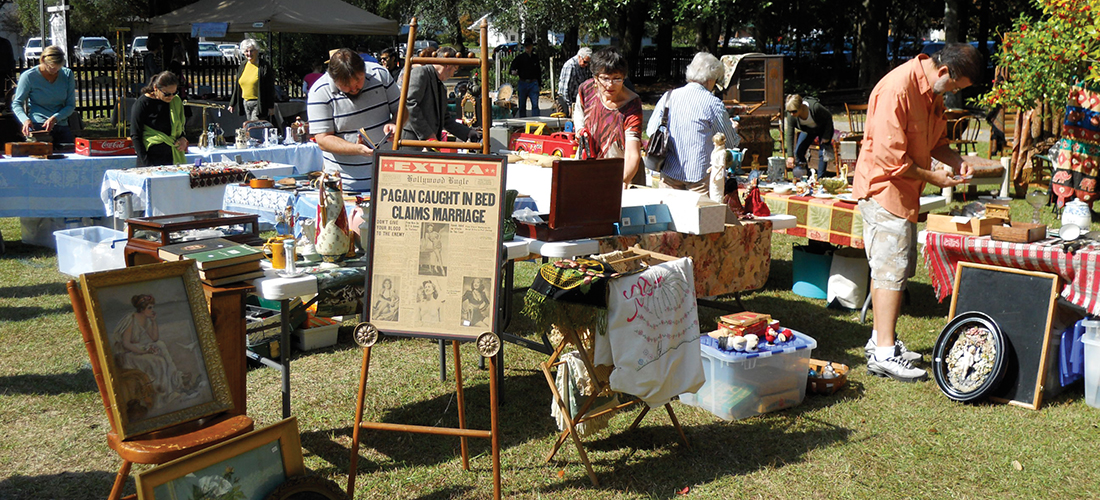
The eighth annual Shaw House Fair of Vintage Collectibles happens on Saturday, Oct. 8, from 9 a.m. to 4 p.m. Located on its original foundation at the crossing of the famed Revolutionary Pee Dee and Morganton roads, the historic Shaw House was built circa 1820 by a first-generation Scottish settler whose son became the first mayor of Southern Pines in 1887. Come for the vendors and collectibles, food and live music, raffle, historical reenactors from Civil War days and frontier times, demos of old-time crafts, and tours of the homestead. Admission: $2. Proceeds go to maintain the Moore County Historical Association’s five house museums from the 1700s and 1800s, located in Southern Pines and Carthage. Shaw House, 110 W. Morganton Road (corner of Broad Street), Southern Pines. Info: (910) 692-2051 or www.moorehistory.com.

Glad We Met

This month, the Sunrise will stream two Metropolitan Opera performances and a Bolshoi Ballet production — live and in HD. 

Saturday, Oct. 8 – Live via satellite, Wagner’s “Tristan und Isolde” runs from 12–5:05 p.m. This three-act opera is widely acknowledged as one of the peaks of the operatic repertoire. Tickets: $27.

Sunday, Oct. 16 – Direct from Moscow, Bolshoi Ballet’s “The Golden Age” runs from 1–3:20 p.m. With its jazzy score, this ballet is a colorful and dazzling satire of Europe in the Roaring 20s. Tickets: $25 (adult); $15 (child).

Saturday, Oct. 22 – Live via satellite, Mozart’s “Don Giovanni” (with English subtitles) runs from 1–4:22 p.m. Based on the legends of Don Juan, a fictional libertine and seducer, this two-act opera blends comedy, melodrama and supernatural elements.

Sunrise Theater, 250 NW Broad St., Southern Pines. Info: (910) 692-8501 or sunrisetheater.com.

All Keyed Up

On Thursday, Oct. 13, 7 p.m., piano and vocal duo Dr. Jaeyoon Kim and Seung-Ah Kim will perform a free concert at Sandhills Community College. A native of Pusan, Korea, Seung-Ah Kim teaches piano at the University of North Carolina at Pembroke (UNCP), where she plays for a guest artist recital series that has included world famous musicians such as Øystein Baadsvik (tuba), New York City opera singers Anna Vikre (soprano) and Rod Nelman (bass), Dr. Terry Everson (trumpet), and Michele Gingras (clarinet). Praised for his lyric tenor repertoire, her husband, Dr. Jaeyoon Kim, is an associate processor at UNCP whose operatic credits include principal tenor roles in “The Tales of Hoffmann,” “La Bohème,” “Don Pasquale,” “The Merry Widow,” “The Merry Wives of Windsor,” “The Magic Flute” and many others. In 2016, the Kims released Romantic Art Songs, an album featuring art songs by Donizetti, Bellini, Turina, Liszt, Duparc, Rachmaninoff and Tosti. You won’t want to miss this free performance. Owens Auditorium, 3395 Airport Road, Pinehurst. Info: (910) 695-3828 or sandhills.edu.

The Wide Blues Yonder

The last First Friday of the season happens this month, which makes us feel kind of blue, but we won’t sulk just yet. On Friday, Oct. 7, from 5–8:30 p.m., don’t miss the chance to experience Blues Music Award-winner Danielle Nicole (singer/bassist/songwriter) and prodigious blues guitarist Lakota John doing what they do best — stirring our blues-loving souls — at this concert series season finale. Danielle Nicole has a voice like chocolate ganache, and you can hear Lakota John’s old soul sing through his slide guitar. Rain or shine, First Friday concerts are free and open to the public. Food and beverages available for purchase. The Preservation Green (grassy lot) adjacent to the Sunrise Theater, 250 NW Broad St., Southern Pines. Listen: www.daniellenicolekc.com; lakotajohn.com. Info: (910) 692-8501 or firstfridaysouthernpines.com.