The Amazing Mr. Whittle

Keeping memories for two

By Jim Moriarty

Near the end of the day, on the top floor at St. Joseph of the Pines, a man who spent much of his working life in a research laboratory places his wheelchair directly behind the wheelchair of his wife, whose mind has wandered into the mists of age, and puts to fair use the laws of force and motion. With him supplying the force and her the motion, they roll in tandem down the hallway to the sunroom, where he parks them side-by-side so they can look through the broad windows at sunset.

Robert Lamar Whittle — “Just like whittling a stick,” he says as if he was saying it for the first time — turned 99 in October. He goes by Lamar because his father had a prior claim on Bob. Edna, his wife, is 97. They met at a church Christmas party in Sylvester, Georgia. So far it’s lasted 74 years.

Mr. Whittle remembers his father’s sawmill near Cedar Key on Florida’s Gulf Coast and the springs near the mouth of the Suwannee River. “The water was so clear you could see the white sand in the bottom 50 feet from the shore,” he says. The lumber business went bust in 1929, sending the family north into Worth County, Georgia.

Mr. Whittle remembers for two now, and he remembers pretty much all of it. He worked his way through Berry College in Rome. “It’s still there,” he says. “Still functioning.” When World War II began, the War Manpower Commission put his name on a list of scientific and technical people. “When the Manhattan Project was begun, I was sent down to Columbia University and I spent the rest of the war years there,” he says. “The only uranium we had was in some barrels that were stored on Staten Island. The British had collected that uranium ore in the Congo. I don’t know if they were afraid the ship was going to be sunk by submarines, but they docked it there on Staten Island and unloaded the uranium. I didn’t play much part in the development of the bomb. I worked mostly on magnetic detection of submarines.”

After the war, Mr. Whittle worked with ITT laboratories in Nutley, New Jersey. He and Edna, the dedicated gardener, had three daughters, who all live in North Carolina now. When the researching days were done, they retired to Georgia to raise peaches. But, the next time your commercial airliner drops out of the clouds and touches down on a wet runway like a butterfly, remember Mr. Whittle. “One of the developments that I think was most important was the instrument landing system for aircraft,” he says. That came shortly after the war, 1946 or so. It’s one of the few details he can’t quite lay his hands on. “That became the worldwide standard for blind landings of aircraft. I participated in the demonstration of that in Indianapolis.”

One of the researchers Mr. Whittle worked with at Columbia was Gene Fubini. “He was scientific adviser to Jack Kennedy when Kennedy was president,” says Mr. Whittle, and then for President Johnson, too. His father was the Italian mathematician Guido Fubini, who has his very own theorem. “I’ve been with a lot of really first-class people. We were sitting around the table one time discussing a project the military wanted us to do and Gene said, ‘Fellas, before we take on any other projects, it ought to meet three criteria. The first is, is it a job that needs to be done? Some of these are just trivial and a waste of time. Number two, are we the ones to do it? Maybe there’s somebody else better equipped than we are. And third, and most important, is there going to be any fun in it? If there’s not going to be any fun in it, don’t do it.’

“So,” says Mr. Whittle, “I remembered that. If there’s not going to be any fun in it, don’t do it.”

Time is the gift wrapped in uncertainty, that we make of what we can. He takes Edna’s hand because hers shakes. “It’s been a good life, I’ll tell you.”  PS

Jim Moriarty is Senior Editor of PineStraw and can be reached at jjmpinestraw@gmail.com.

A Christmas Tale

By Sam Walker

Before Chaptico, Maryland, became a quaint village amid old manor houses and rich farmland, it was a gathering spot for Native Americans to hunt and fish the waters of a tributary of the great river that flows southeast from what would become the nation’s capital.

On high ground beyond the water a church was built in 1640. Fields were cleared and planted as stalwart people began to work the land and waters. They still do. This tract of Lord Proprietary acreage was overseen by High Sheriff Sir Philip Key, great-grandfather of Francis Scott Key, who emigrated from England in 1726. Ten years later the “old” church was replaced with a handsome brick structure designed by Christopher Wren, architect of St. Paul’s in London, or so the story goes. The front porch beneath the steeple and belfry led to high arched 10-inch-thick doors that opened to reveal rows of boxed pews and a raised altar at the east end. The bell tolled each Sunday calling folks to worship. It still does.

The churchyard holds the remains of both gentry and scoundrels, including the pirate Gilbert Ireland, who was buried according to his wishes in the upright position. A wrought iron chair rests beside a family headstone awaiting the ghost of a woman who comes to keep watch. The British savaged the town on their way to burn the capital during the War of 1812, stabling their horses inside the church. During the Civil War a Confederate spy was granted sanctuary there by a church lady from a nearby manor.

Gradually, homes framed the village side roads, a post office opened, and later a country doctor began his practice. The village market, a way station for locals and travelers, justifiably boasted about its fried chicken. One year the doctor organized a way to mark the holiday season by lighting a large evergreen at the main crossroads. Folks gathered for carols and to swap stories, but none better than the time the little church decided to revive the Christmas pageant.

Costumes were sewn. Children cast for parts — though some balked at their assigned role. Rehearsals commenced. The simple design of a narrative accompanying the Nativity tableau, with the organ leading familiar carols, promised all would come off without a hitch.

The steeple bell rang out the Sunday welcome and the church was jam-packed. Lights dimmed and quiet settled in. “O Come, All Ye Faithful” boomed forth. Heads turned and necks craned as angels in white holding tobacco sticks affixed with large glittering stars crowded into the altar area.

Another carol welcomed all sizes of shepherds. The disgruntled one, who had wanted to be Mary, chose that moment to express creative differences and walked out in a huff. While angels and shepherds jostled for position during yet another carol and some reverent narration, the audience beamed as Mary and Joseph arrived. She cradled a swaddled doll to be gently laid in a straw-filled milk crate set between two chairs that ordinarily held the posteriors of clergy, or a visiting bishop.

Even before the three kings finished their march, things began to unravel. It seems Mary had been up all night with a fever and was now falling asleep at her post, nearly dropping the unraveling baby. Ever alert, Joseph snatched the child by one arm then poked Mary with the other to wake her up. She, at that point, simply left. Dismayed, Joseph took this as his cue to follow her, leaving the baby face down in the bishop’s chair.

When the tiniest shepherd loudly appealed — “Daddy, I’ve got to pee!” — all the heavenly host and abiding shepherds came undone and so did the audience.

Everyone stood for a heartfelt “Joy to the World.” The narrator wished all a Merry Christmas, and the little church exploded into thunderous applause with hugs all around as Santa arrived at the top of a ladder on a firetruck. PS

Sam Walker, a retired minister, maintains a curiosity about life and is an old friend of PineStraw.

Legend of the Working Class

When M, a cross-species monster, moves from N.C. to Pennsylvania, the plot thickens

By D.G. Martin

In his insightful review of J.D. Vance’s Hillbilly Elegy: A Memoir of a Family and Culture in Crisis in this magazine last month, Stephen Smith questioned whether that book explains the unexpected success of Donald Trump’s campaign for president.

Meanwhile, I have been thinking that another new book might give us insight into the white male blue-collar world where Trump’s appeal rang loud and clear. North Carolina native Steven Sherrill’s The Minotaur Takes His Own Sweet Time tells how a fictional and Greek legendary half-bull, half-man called the Minotaur adapts to life in a modern white working-class community.

In case you do not remember the Minotaur, he was the offspring of a queen of Crete, who, subject to a curse from a vengeful god, fell madly in love with her husband’s prize bull. The resulting offspring grew up to be a feared monster that devoured children. In the Greek legend the Minotaur was killed to end his evil ways.

But, in Sherrill’s story, the Minotaur has survived and lived for thousands of years, roaming from place to place. He is immortal and destined to struggle forever to live as an outsider alongside fully human colleagues.

Back in 2000, in his novel, The Minotaur Takes a Cigarette Break, Sherrill brought the fictional Minotaur to our state as a line cook in a seedy restaurant called Grub’s Rib just off the interstate near Charlotte. The Minotaur lived in a mobile home in a rundown trailer park. His co-workers called him M and got used to his bullhorns, funny-looking face, and tortured way of speaking. They had their own set of challenges, not unlike those described in Hillbilly Elegy.

Just as his co-workers adapted to M and accepted him as a fellow-worker, readers set aside disbelief, identify with the creature, and observe the world of a struggling working class through his eyes. Still, M is destined always to be something of an outsider, a condition that painfully troubles and enriches his story and his relationships with the blue-collar characters that surround him.

This September, 16 years after The Minotaur Takes a Cigarette Break, its sequel, The Minotaur Takes His Own Sweet Time, hit bookstore shelves. Sherrill, who now lives in Pennsylvania, teaches at Penn State-Altoona. M has moved up there, too. He is now a professional Civil War re-enactor in a tourist-centered “historic village.” Every day M puts on his Confederate uniform and goes out on the field to do his job. He dies. Over and over again.

In the rustbelt around the village and battlefield near Altoona in central Pennsylvania, M observes and interacts with the struggles of the working and out-of-work people he encounters. Almost all are at the edge. One broken car away from a financial crisis. One lost job away from disaster.

M’s struggles are special. Only half-human, he still has fully human desires and aspirations. He is lonely and longs for companionship. He is helpful and considerate. He adapts to disappointment. But, as Sherrill leads us to understand in this, his second Minotaur masterpiece, M is always going to be “other.” Always an outsider.

M lives at the Judy-Lou Motor Lodge, a shabby motel just off a busy highway and within walking distance of the historic village and battlefield. The motel owner, Rambabu Gupta, gives M a place to stay in return for M’s handyman repair work. M can fix almost anything, including automobiles.

When a dirty, filthy, broken down Honda Odyssey van careens into a parking lot near the motel, an attractive redheaded woman and her wild, brain-damaged brother get out, and a weird love story begins. M sets about to fix the car. He wanders through his favorite places, auto junkyards, to find the right parts. As he fixes her car, the appreciative redhead and M begin to develop feelings for each other.

Could a cross-species friendship work into something more? Sherrill uses his great storyteller gifts to make his readers wonder, and maybe hope. But the poignant climax is dark and sad.

Back to the recent election, M seems to have no interest in politics, but his desperate, disillusioned, and angry co-workers and neighbors in Pennsylvania’s rustbelt could understandably have found hope in Donald Trump’s message. If they had made it to the polls on November 8, their votes would almost certainly have helped Trump steal Pennsylvania from the Democrats and Hillary Clinton.  PS

D.G. Martin hosts North Carolina Bookwatch, which airs Sundays at noon and Thursdays at 5 p.m. on UNC-TV.

The Fazio Tradition

North Carolina’s dean of golf course architects reflects on his very productive life

By Lee Pace

To an 18-year-old in the summer of 1975, Hendersonville was Hicksburg USA and a town lacking any distinction beyond having an excellent high school basketball team (the Bearcats bounced Pinecrest High, yes, that Pinecrest High, in the 1972 state 3-A title game in Durham) and a convenience store on Sixth
Avenue quite liberal in dispensing beer to minors. We’d stock up on Budweiser and Slim Jims and cruise up and down Main Street between a city recreation park on the north and the Hardees on the south. I was off to Chapel Hill in the blink of an eye.

“I couldn’t get out of this town fast enough,” I told one of its newer residents some years later.

“And I couldn’t get here fast enough,” the fellow replied.

It was the early 1990s and golf architect Tom Fazio was showing me around the office he’d opened in Hendersonville in 1985 when, after discovering the appeal of the western North Carolina mountains in designing Wade Hampton in Cashiers in the mid-1980s, he and his wife, Sue, decided the environment was better suited to raise their six children than their previous home in the Palm Beach area of South Florida. Fazio looked out his office window to the west toward the crest of Laurel Park Mountain, golden-tinged on this particular autumn afternoon.

“Main Street with a view,” he mused. “What more could you want?”

As I mellowed and matured over the years and returned to visit my mother and marvel over the evolution of downtown Hendersonville — with its serpentine traffic pattern, ceramic bear statues, meticulous landscaping and neat confluence of restaurants and antique shops — I had to admit that Fazio had a point.

Often I’d work in a trip back home with a visit to Fazio’s golf architecture firm. Things were so flush as the 1990s golf boom evolved and Fazio had become arguably the world’s foremost modern architect that in 1998 he bought an entire four-story, 1923 neo-classical building at the corner of Main Street and Fourth Avenue and moved his firm’s headquarters to the top floor.

I witnessed Fazio Golf Course Designers’ operation in thick and thin. One afternoon in the mid-1990s, Fazio and his staff worked furiously to get some design drawings and documents printed and packaged in time to ship overnight.

“Everything builds to a climax waiting for the FedEx guy to come,” Fazio said.

And a dozen years later I sat with him in a quieter environment, the golf design business slowing to a crawl during the 2008-09 recession and his staff being lopped off in the aftermath.

“What’s different?” he asked rhetorically, cocking his head as if to listen. “The phones aren’t ringing.”

On my most recent trip to Hendersonville, on the last Friday of October, I found Fazio in his office signing copies of his 2000 book, Golf Course Design, and minding one of his granddaughters and one of the family dogs. He spoke of the annual winter sojourn to Florida planned for the following week now that all six children are grown and he’s semi-retired — but not until after Halloween night.

“Two of my daughters and four grandkids are here,” says Fazio, who lives nearby in Lake Toxaway at least half the year. “We’ll be on Main Street on Halloween night. They block off the streets and have games, trick-or-treating, music, lots of stuff for the kids. The kids have a blast.”

Exactly four decades ago, Fazio and his uncle and golf-design mentor, former PGA Tour player George Fazio, were trying to jump-start a struggling architecture business that had been relegated to remodeling jobs for U.S. Open courses during the early 1970s recession. They were asked to design Pinehurst No. 6 — the resort’s first course away from the village proper — and that course opened in 1979. Soon after Tom took on an ambitious project on the South Carolina coast near Charleston. Wild Dunes was a major success and, presto, his solo career (with George now in retirement) was off and running.

On this afternoon, Fazio is ruminating about one simple question: Where have all the years gone?

“You blink and all of sudden, your life’s flown by,” he says.

He nods toward Nina, his granddaughter. “Just yesterday I was rushing home to see a dance recital. Now that little girl has grown up and has children of her own.”

It pains him to look around his universe of friends and clients and see some of his favorites having passed, among them William McKee, the founder of Wade Hampton, dying in 2014 at the age of 62, and Billy Armfield, the founder of Eagle Point in Wilmington, passing this July at the age of 81.

“One of my fun jobs over so many years was helping people fulfill their dreams,” Fazio says. “A golf course is a dream for them. We literally build their dreams. It’s really tough for me when we lose guys like this. Every day I go to Wade Hampton, and I can’t believe William McKee is not there. He was younger than me. There’s a vacuum with him not there.”

Fazio’s oldest son, 39-year-old Logan, is now leading the design efforts on much of the firm’s work, and long-time associate Tom Marzolf is in charge of a new course at Adare Manor in Ireland, a job where the client essentially has instructed Fazio and Marzolf to build “the Augusta National of Ireland.” Fazio continues as a consulting architect at Augusta National and Pine Valley, and the firm has just completed a course at Davant Plantation near Ridgeland, S.C., and one called Silo Ridge Field Club two hours north of Manhattan. Construction is continuing on The Summit, a high-end residential community outside Las Vegas, and two courses that will occupy the firm in 2017 are set for Long Island and the Abaco Islands in the Bahamas.

Logan recently supervised a major renovation to Kasumigaseki Country Club’s East course, the host layout for the 2020 Tokyo Olympic Games. The course opened for play in 1929 and was designed by one of the Golden Age’s leading architects, Charles Hugh Alison.

Now at the age of 71, Fazio talks with wide-eyed amazement at the next chapter in travel, technology and the business of designing golf courses. Years ago he refused to travel beyond the boundaries of getting back home for dinner; now he views drone clips from Logan of ongoing construction work from far-flung locales.

“I show my phone to Sue and say, ‘Can you imagine this? This is live, this is Logan sending us this. We’re looking at a golf hole,’” Fazio says. “He’s showing me how he’s shaping a bunker or moving a tree. Look at this big tree going across the stream, that’s live. It’s unbelievable the technology available. You don’t have to travel as much and go as often.”

Fazio has long cast a huge design shadow in the Carolinas and certainly in the Sandhills. There are 18 courses across North Carolina and 22 in South Carolina with the Fazio shingle. In Moore County he’s designed Nos. 4, 6 and 8 at Pinehurst, and 36 holes at Forest Creek Golf Club.

“You could take the courses we’ve done in North Carolina or those in South Carolina, and either list would be a nice career for someone,” he says.

Next year is going to be an interesting one for Fazio’s North Carolina portfolio as Eagle Point, his 2000 design in Wilmington, will be the site of the Wells Fargo Championship in May, and Quail Hollow in Charlotte, where he has done significant remodeling over the last two decades, will be the venue for the PGA Championship. Then the U.S. Amateur comes to Pinehurst in 2019, with stroke play qualifying being split on Nos. 2 and 8. The latter opened 20 years ago this fall and was dubbed “The Centennial Course” to celebrate Pinehurst’s 100th anniversary.

“I was at the Masters one year and I called the office for messages,” Fazio says. “I had a note to call (Pinehurst owner) Bob Dedman. I called him and he asked if I’d be interested in designing No. 8. I was sitting there in one of the great places in golf, Augusta National, and got a call to do a course in another great place in golf, Pinehurst. It was like I had won the Masters. It was a great feeling.”

Grandkids, playing golf, some design consultations — it’s a busy life even today for Tom Fazio. We say so long and on my way out of town, I drive past the sprawling Boys & Girls Club complex on Ashe Street, just east of downtown. Over two decades, Fazio has funneled untold dollars into the facility and recently wrote a check toward a new gymnasium. Fazio’s interest piqued in the mid-1990s when he noticed bored teenagers loitering on street corners after school. The clubs touch thousands of youngsters annually with tutoring, arts classes, recreation, athletics and mentorship.

“It’s an unbelievable place,” Fazio says. “Of all the things I’ve ever done, nothing comes close to that. Some people have boats and hobbies. I have golf, which is my business. Then I have my kids and the kids of the Boys & Girls Clubs. That’s been plenty for me.”  PS

Hendersonville native, Chapel Hill resident and longtime golf writer Lee Pace has contributed to PineStraw since 2008.

The Gift of Giving

What and how to give? Our field expert wraps up the subject

By Deborah Salomon

The art of gifting is a gift — but one that can be learned. Or at least improved.

The whole Black Friday shopping extravaganza gives me the willies; this puzzles, since my list is short and usually complete long before Turkey Day. I do enjoy watching people shop, however, while questioning their motives. Are the gifts required? Are they governed by price? What catches the eye? Do children even know about toys that don’t come doubled shrink-wrapped in a box?

I gladly share my gift giving and receiving experiences, which apply not only to Christmas, but birthdays, anniversaries and other occasions. Some you won’t like.

When in doubt, be practical: I’ll never forget the Mothers Day when I begged the family, please no flowers, overpriced restaurant dinner or bathrobe. I really, really needed a good vacuum cleaner. With three small kids and a shaggy dog I would use it every day. They were appalled, which meant whatever they planned suited them, not necessarily me. To this day, when I tell the story, people express sympathy. Rubbish. I loved that vacuum cleaner.

Listen: I guarantee that sometime during the year your recipient will drop hints. “I burned another skillet — just can’t seem to find a good one.” I exchange small gifts with a high school friend in Atlanta. She travels in the dinner-party fast lane, tells me she loves to bring an unusual wine. Lo and behold, I found some adorable wine totes in the supermarket — even an insulated one — at about $7 apiece. Three bags made a lovely gift.

Never “surprise” your honey with something expensive but difficult to return: My daughter’s car was in dire straits so I gave her mine, figuring I’d keep the terminal one going, somehow. It died. I was stranded for weeks. Then one night my husband drove up in a new car, which sent me over the moon, except it was bottom-of-the-line sub-sub-compact, two-door, no radio or AC. So sweet, but for the same price, I could have found a better deal.

Dollars don’t count: We were invited to a 50th birthday party. I was instructed to purchase a gift that looked its substantial price. Instead, I suggested digging up some old photos (mainly sports teams), having them blown up (with funny captions) and laminated to fiberboard. My idea got shot down, in favor of a cashmere sweater. Well, didn’t somebody else do a similar collage that was the life of the party, at half the price.

Vow today to shop all year: Last summer I saw a wooden box, about 7-by-10 inches, with the letter M carved into the top, on a clearance shelf, for $6. I filled it with old-timey candies from Fresh Market and gave it to my “M” buddy. She was thrilled! Haven’t you walked through a store — any store — and spotted a beach towel, a scarf, a fancy flashlight, a college or professional team T-shirt, a canvas grocery tote, a golf head cover, a pottery coffee mug usually on sale, all right there, no Google or Amazon required? Then you can get up at 2 a.m., stand in line, stampede the doors and grab that obscenely huge TV, go home and enjoy it because your shopping’s done.

Make a dream come true: One gift-giving experience stands out. My father loved watching sports. From a desperately poor background, he didn’t just pinch pennies, he hugged them. In the mid-1950s, we were the last on the block to buy a TV. Twenty years later, my father resisted replacing it with color because, “Color hasn’t been perfected.” Football, boxing, baseball remained monochromatic. I knew the real reason. So on his 80th birthday I contacted a Zenith (“The best,” he believed) dealer and arranged to have a color model with remote control delivered and installed. I could hear the smile in his voice when he called. “Y’know, I think color’s been perfected,” he said, above the roar in the background.

Suffer the children: I pity them their surfeit of riches. I grew up in New York City, in the 1940s, as World War II ended and post-war prosperity reigned. Manhattan was a magical place, a secular cathedral to Christmas for people of all faiths. The animated department store windows along Fifth Avenue; the Rockettes at Radio City Music Hall followed by the Nativity Pageant with real donkeys; gorgeous shopping bags from Lord & Taylor, B. Altman, Best & Co.; real chestnuts roasting over real fires tended by vendors in raggedy gloves. Ice skating at Rockefeller Center followed by ridiculously expensive hot chocolate and almond bear claws at the café surrounding the rink. But my happiest memory was knowing that P.L. Travers had published a new Mary Poppins in time for Christmas. I could hardly wait. For the first few days I flipped pages, glancing at illustrations, to preview the joy. Then I read it at one sitting, again and again, until memorized.

I hope today’s children can tear themselves away from Kindle and similar electronic devices to savor — nay, worship — a book the way I worshipped Mary Poppins.

Please find one for the child on your list. Minimal gift wrapping. No shipping, handling, downloading or charging. Season-spanning. One size fits all.

Pure magic in a format that although not new, has definitely been perfected.  PS

Deborah Salomon is a staff writer for PineStraw and The Pilot. She may be reached at debsalomon@nc.rr.com.

The Spirit of Giving

A little tippling under the tree

By Tony Cross

This time of year is stressful. I don’t think I need to delve into the reasons why, but one thing is for sure: Alcohol consumption increases during the holidays. Everyone has his or her reasons, and many are the same, but I’ll tell you mine. Even though I gripe about all the Christmas commercials in every advertisement from mid-October through the new year, the truth is, I like it. I enjoy gift-giving too much; I put an extreme amount of pressure on myself to get the “perfect” gift for my friends and loved ones. If you are like me, I hope these gift ideas will please the budding mixmaster on your list.

Fair Game Beverage Co. Carolina Agricole Rum
375 ml, $23

Distiller Chris Jude from Fair Game Beverage Co. has been in the distilling biz for about two years now, and keeps surprising me with his fantastic new spirits. In June, he released an amber rum made with Panela cane sugar. In September, Fair Game released a very small batch (887 bottles only) of North Carolina’s first rum agricole. Now, rhum agricole (the French term) is typically produced in the Caribbean and translates to “agriculture rum.” Fresh sugarcane is used when making this rum, and Chris gets his from Catoe Farm, in Middendorf, South Carolina. He describes this rum as “slightly sweet, grassy, and just a little bit funky.” I couldn’t agree more. This is a great sipper, and a lovely base for any rum-style cocktail or punch. Ask your local ABC to get you a bottle before they’re all gone!

Ice Cube Trays, Southern Whey

Some might find large ice cube molds a bit odd, or even pretentious. Ice is ice, right? Wrong. Having the wrong type of ice in your glass can definitely ruin your drink. How’s that? Let’s first start with your freezer. If your ice is exposed to different odors from some dinner experiment that you froze back in 2015, those aromas will seep into your ice. Make sure to keep a tidy freezer, and use filtered water. It does make a difference. The style and size of your ice is a crucial element when playing bartender. Shaved ice is wet, and will quickly over-dilute your drink. What’s the point of shelling out extra money for a fine spirit when all you’re going to do is ruin it with bad ice? Easy fix: Take a stroll over to Southern Whey in downtown Southern Pines. In addition to brandied cherries, bitters and my own TONYC syrup, they carry ice molds. Large blocks of ice (think 2×2 inch) keep your fine whiskey cold, while slowly diluting your drink as time travels on.

Yarai Mixing Glass, Koriko Hawthorne Strainer,
Hoffman Barspoon, Cocktailkingdom.com, $77

For the negroni, old-fashinoned, or Manhattan lover, this is the gift for them. Let’s start with the mixing glass. The Yarai has many different styles and sizes. I’m recommending their more basic style. It holds 19 ounces, so when ice is added, you can stir a couple of cocktails at a time. The glass is thick, and dishwasher safe. I’ve had mine for almost four years. The barspoon is made from stainless steel, and is very lightweight. Paired with the mixing glass, you’ll be able to stir cocktails with ease. I’m choosing the Koriko strainer for two reasons, the first being it’s a perfect fit into the Yarai glass when you’re about to strain the liquid into the glass. Another reason to pick this strainer is that the coils are tightly wound to catch the smallest of ice granules, herbs or anything else you wouldn’t want floating on top of your shaken cocktail. Bonus use: The two holes above the coils allows you to do a split pour. Go ahead, and show off.

Barolo Chinato, Nature’s Own, $42

A few years back, I toyed around with the idea of putting a “Baller Manhattan” cocktail on my menu. The thought was to use a high-end rye whiskey, with a touch of hard-to-get absinthe, and the finest vermouth. The vermouth would have been Barolo Chinato. This really is luxury, folks: a D.O.C.G. (Denominazione di Origine Controllata e Garantita) Barolo that’s infused with rhubarb, cardamom, ginger, cinchona bark, cocoa, and spices. This fortified wine is incredible on its own, but pair it with homemade chocolate pudding, and forget about it. Now, back to that Manhattan: The complexity of this vermouth elevates the cocktail to another level. Wine distributing company Bordeaux Fine & Rare can deliver this to any bar and restaurant, but for the home imbiber, we’ve got you covered at Nature’s Own. Needless to say, I opted out of the high-end Manhattan drink, but instead used the Barolo for another drink, The Green Beret, in honor of my father, friends and other ass-kickers of the nation. I have two versions of this cocktail; one is shaken and the other is stirred. Both contain Green Chartreuse. Here’s the recipe of the stirred version that includes Barolo Chinato.

The Green Beret

Green Chartreuse

1 1/2 ounce TOPO Eight Oak Whiskey

3/4 ounce cocoa nib-infused Campari

1/2 ounce Dolin Rouge

1/4 ounce Barolo Chinato

Lemon peel

Take a double old-fashioned glass and rinse it with Green Chartreuse. Do this by pouring the Chartreuse (or misting it) into the glass, swirling it around so it touches almost every interior surface, before tossing it out. Be sure to use the minimal amount, so you do not waste any of this goodness. In a mixing glass (like the Yarai), combine all other ingredients, add ice, and stir until liquid is cold, and proper water dilution is achieved. Place a large cube of ice in your rinsed glass, and strain the liquid from the mixing vessel into the glass. Express the oils from a peel of lemon over the cocktail, dropping the peel into the drink afterward. PS

Tony Cross is a bartender who runs cocktail catering company Reverie Cocktails in Southern pines. He can also recommend a vitamin supplement for the morning after at Nature’s Own.

Who Grabs First?

It all depends

By Clyde Edgerton

The following conversation took place at Rosehaven Assisted Living in rural North Carolina between three Papadaddys:

“What do you do when the TV news is on and your granddaughter is around?”

“Or grandson?”

“What I do is change the channel.”

“What I do is give a lecture. I tell my grandson if he’s not charming, he will lead a sad life, maybe even become greedy, and start thinking he’s got to grab, grab, grab. Greedy men grab. Charming men charm. In the South, real men charm.”

“In the North, too.”

“I wouldn’t know.”

“Well, real women charm, too.”

“Who grabs first if everybody’s standing around charming each other?”

“Who’s on first?’”

“What’s on second.’ I remember that one. Abbott and Costello.”

“No, who grabs first?”

“Grabs what?”

“I don’t know — depends.”

“I’ll slap anybody that grabs my Depends.”

“I heard they leak.”

“Powerful men know how to grab. That’s what made America great. We came over here as illegal aliens and stole all the land and went on to get even greater. Onward Christian Soldiers! Women wouldn’t have done that.”

“Aw come on.”

“Wouldn’t you like to see your granddaughter grow up to be president?”

“Of what?

“Walmart?”

“What’s on second?”

“Bobby Riggs won that tennis match.”

“That’s right. He beat Billy Bob Thornton.”

“Billie Jean King.”

“Billie won.”

“That’s what I said.”

“I’ll be glad when this match is over.”

“Me, too.”

“Me, too.”

“People would rather watch a car wreck than a pretty sunset.”

“They’ll slow down for a car wreck.”

“TV executives get real rich by knowing that.”

“People used to buy what they knew they needed, like flour and potatoes and green beans. Now they shop for stuff that some slick commercial convinces them they want.”

“Now you can stay home and buy, buy, buy.”

“Walter Cronkite was different — he was calm.”

“Wolf Blitzer talks like his name sounds.”

“I listen to PBS.”

“Why?”

“I like calmness.”

“Now PBS has commercials, too.”

“Selling is an art and a science that is the bedrock of communism.”

“Nobody teaches our kids how to detect lies.”

“We teach kids how to take tests. They learn to shut up, sit still for three hours, and then line up.”

“That’s what we do around here.”

“Don’t badmouth teachers.”

“Right. A lot them are afraid of losing their jobs because they won’t shut up, sit still, and stay in line.”

“Let’s go eat.”

“I vote for that.”

“What are we having?”

“Depends.”

“Count me out.”  PS

Clyde Edgerton is the author of 10 novels, a memoir and most recently, Papadaddy’s Book for New Fathers. He is the Thomas S. Kenan III Distinguished Professor of Creative Writing at UNCW.

Special Sandhills Delivery

Remembering the happiest week of the year

By Bill Fields

A plastic rocking horse was as close as I ever came to getting a pony for Christmas, which is not to say Santa Claus didn’t deliver.

He was as reliable as a birthday, whether we had spoken at Collins Department Store in Aberdeen, at a gathering in the Sunrise Theater for the children of Proctor-Silex workers, or somewhere in Sanford on an out-of-town trip. It didn’t matter if his weight was down or his beard was spotty or his footwear looked more like cheap galoshes than proper North Pole fashion.

I gave him a list, and he gave me a candy cane. But during the weeks leading up to Christmas, the anticipation was sweeter than any treat.

There was no internet in the 1960s, of course, no method where a world of toys and sporting goods was within a few swipes or keystrokes. But there was no shortage of ways for a kid to discover what was out there, what to pine for.

In the run-up to Christmas, the content of commercials on the Saturday morning cartoons shifted from breakfast to playtime, from Frosted Flakes to G.I. Joe. Other things we could see up close, too. I had read most of Great Quarterbacks of the NFL on a shelf in The Country Bookshop before I got it as a gift. I don’t think my parents ever grasped my fascination with a pair of genuine Wilson wristbands at Patch’s Tog Shop. I kept going back to the electronics aisle at the Western Auto, where a reel-to-reel tape recorder seemed like the neatest thing in the world. Stopping in a Sky City discount store while visiting relatives during the holidays offered a wide look at athletic gear, including individual golf clubs that were my start in the game.

No place, though, was better than Aberdeen 5 and 10, which had a back room called “Toyland” open during holiday season and was full of Tonka trucks, board games of every stripe and Daisy B-B guns — the kind of things for which the money from an allowance and doing chores would never be enough.

That well-stocked dime store was as close as it got to seeing the Sears Wish Book come to life. It was this annual catalog of What-Seemed-Like-Everything that, once it arrived on the heels of Halloween, I pored over until the pages were crinkled, favorite items circled in Magic Marker. His baseball days over, I knew Ted Williams from the Sears book as a pitchman for the company’s fishing and hunting equipment.

How smart Santa Claus must have been, given that he was likely relying on a folding map from a filling station not designed for a presbyopic old fellow. But in a town full of streets named for states up north, he always found mine, regardless if — for my family — it had been a year of college tuition, car repairs or a stove that unexpectedly went on the blink.

Santa’s visits were always comfortably complete. He never forgot to fill the red felt stockings with our green-glittered names, and there was a thrill in dumping out the contents to discover a 19-cent ballpoint pen, a few new marbles or a ChapStick. There would be bags of candy, fruit and nuts under the tree, more than we’d see the other 364 days of the year — Hershey’s Kisses and thin mints, navel oranges and tangerines, whole walnuts, pecans and Brazil nuts.

After a morning of savoring what Santa had brought — his presents were never wrapped — the afternoon was about sharing with the other kids in the neighborhood. It was the best kind of Show-and-Tell, as long as a Super Ball didn’t go down the storm drain or the Twister mat didn’t get torn during its maiden game. No toy ever quite lived up to its billing on TV or a catalog listing. Some came close, including the tape recorder that Santa splurged on. But if someone can tell me today how to make an Electric Football runner dart for a long gain instead of moving in a wobbly circle, I’m all ears.

A real football game, the Orange Bowl, signaled the sad end of the school break. As a new year started, though, we were fueled not only by citrus but a bit of magic that lasted longer than any toy. PS

Southern Pines native Bill Fields, who writes about golf and other things, moved north 30 years ago but hasn’t lost his accent.

December Books

By Romey Petite

Forever Words, The Unknown Poems, by Johnny Cash

Very rarely are we permitted a window into the imagination, craft and creative process of one of the true greats, in this case, the Man in Black himself. Forever Words is a treasury of dusted-off relics and artifacts unearthed from the Cash family’s archives. It contains the debut of 40-50 poems, and a trove of new songs penned by the singer-songwriter and legendary lyricist. The book also includes reproductions from Cash’s diary, including his original sketches and conceptual art. The collection is edited by and contains a foreword written by poet Paul Muldoon (Pulitzer Prize for Poetry and T.S. Elliot Prize). Die-hard fans of Cash — this is one to watch out for.

George Lucas: A Life, by Brian Ray Jones

The author of New York Times best-seller Jim Henson: The Biography tasks himself with delving into the legacy of another creative visionary — the mind behind the Jedi, the Force, adventures to vast worlds beyond galaxies far, far away and lost treasures that lie in arks, tombs and temples of doom. This isn’t just about Lucas’ blockbuster hits, though. Jones charts Lucas’ transformation from a struggling student to pioneer of film and visuals, beginning with his earlier experimental films at the University of Southern California. Jones shows how he nurtured his passion of combining words with visuals and learned from fellow masters of the art, whether telling us how Francis Ford Coppola whipped the young director into shape or the handshake that began his partnership with Spielberg. Fans, aspiring artists, and those nostalgic for the movie magic of this wizard of special effects will appreciate Jones’ thorough, moving, definitive portrait of the artist.

Metaphors Be With You, by Dr. Marty Grothe

Dr. Marty Grothe, whose forte is the category of words and language, has compiled a list of no less than the finest and most formidable examples of metaphor usage for dabblers and language enthusiasts alike. Grothe, a resident of Southern Pines, will be celebrating his release party at The Country Bookshop at 5 p.m. on Dec. 8. Metaphor is one of the most effective flowers of rhetoric, the bedrock of both homespun wisdom and eloquent, persuasive writing. This event is a rare bloom — not to be missed!

The Undoing Project, by Michael Lewis

With The Undoing Project Michael Lewis returns to make his newest foray into the realm of financial journalism. Lewis has written numerous other New York Times best-sellers, including the book that inspired the critically acclaimed film The Big Short (2015) — which ran at the Sunrise back in February. In The Undoing Project Lewis tells the tale of the two key figures that reshaped Big Data Studies, illuminating the collaboration between a pair of psychologists specializing in mathematics and behavior, Amos Tversky and Daniel Kahneman. He traces their truly seamless partnership — one that resulted in the publication of seminal studies on the process of decision making, cognitive bias, and predicting reoccurring system errors — research that has influenced much of the author’s own body of work.

A Most Improbable Journey, by Walter Alvarez

Professor Walter Alvarez, scientist, historian, one of the foremost minds in geology today and originator of impact theory, has taken aim at presenting the big picture. His enthralling new read, A Most Improbable Journey, concerns an exercise in mapping out time itself by positing the concept of big history. He categorizes the vastness of time and space into four categories: the cosmos, earth, life and humanity. The book begins with an anecdote of Alvarez chasing the fragments of the Mimbral discovery in 1991 — an asteroid that smashed into the Gulf of Mexico at the end of the Cretaceous period (66 million years ago) and prompted the dinosaur’s mass extinction. Through putting the Earth, even the universe, in perspective, Alvarez reminds us that human history itself is only a fraction of what the past can teach us.

Grape, Olive, Pig, by Matt Goulding

Grape, Olive, Pig, an Anthony Bourdain book, is written by Matt Goulding, co-founder and editor of Roads and Kingdoms online journal and author of the bestselling Eat This, Not That! series. A sequel of sorts to Rice, Noodle, Fish, Goulding has returned with a book navigating a plethora of tastes as numerous as there are cultural identities in Spain. It’s a whirlwind of dishes, destinations, histories, myths and meals meant to be enjoyed over long conversations late into the night — bread, blood sausage, fried pork, salads doused in olive oil and coarse salt. It’s a book for the hungry, but not the faint of heart as it gives the reader a look into the “sacrifice” required to bring such delicious food into being. It is also very much the love story of how Matt Goulding met and wooed his wife, Laura, a native Catalan. Read it and dream of the Iberian Peninsula, whether it’s the winding alleyways of Barcelona or the rustic Basque Country.

Rao’s Classics, by Frank Pellegrino Jr.

In Rao’s Classics, Frank Pellegrino Jr. debuts more than 140 new recipes — creative yet quintessential approaches to linguini, lobster, eggplant and veal. Pellegrino, owner and operator of the famous New York family business and food product line, has published previous entries in this series of cookbooks, including The Rao’s Cookbook, Rao’s: Recipes from the Neighborhood and Rao’s on the Grill. His newest entry tells of the family’s restaurant and this third generation proprietor’s family history. Tables at East Harlem’s Rao’s may be in high demand, but with these recommendations from the chef, you can bring their delightful Southern Italian recipes home to your very own table.

CHILDREN’S BOOKS

By Angie Tally

The Christmas Fox, by Anik McGrory. One by one, field and forest, the animals make their way to the barn, bearing gifts for the newborn baby. The cow brings hay, the bluebird brings a sweet song and the lamb brings cozy wool, but the shy little fox seemingly has nothing to offer, or does he? This beautiful take on the Nativity story from the animals’ point of view is the perfect addition to every family’s Christmas collection. Ages 3-6.

Penguin Problems, by Jory John. Some problems are serious, some are silly and some, well, some are just penguin problems. When the water is too salty, the sea too dark, when you are a bird that cannot fly and when everyone you know looks EXACTLY THE SAME, well, those are penguin problems. This fun picture book is sure to make even the grumpiest young reader giggle. Ages 3-6.

Land of Stories: A Treasury of Classic Fairy Tales, by Chris Colfer. Holiday gift-giving time is the perfect time to revisit much-loved classic tales, and what are more loved than classic fairy tales? New York Times best-selling author Chris Colfer has compiled a collection of 35 stories, including Cinderella, Sleeping Beauty and Jack and the Beanstalk. Readers young and older will enjoy curling up in front of a fireplace in a deep leather chair with this stunningly illustrated book. Ages 3-adult.

The Sweetest Christmas Eve, by Annie Hallinan. It is Christmas Eve and after a long search, the mouse family has finally found a house of its own. With pink, green, purple and yellow walls, a fireplace of brown bricks surrounded by shiny tiles and room for everyone, it seems perfect. But when they are discovered by a (gasp) human, the mouse family’s holiday peace is threatened. As often happens on Christmas Eve, something magical secures the mouse family’s sweet home forever. Annie will be signing copies of The Sweetest Christmas Eve at The Country Bookshop from 12-2 p.m. on Dec. 10. (ages 3-8)  PS

PinePitch

Holly & Ivy Time Travel

Go back in time for a good cause when Given Tufts celebrates the season at its annual Holly & Ivy Dinner, Tuesday, Dec. 6, at 6:30 p.m. in the Evergreen Room of the Holly Inn. The evening includes “old-fashioned” parlor entertainment (magic, songs and readings) and a delicious meal recreated from a menu at the Holly Inn circa 1915. Period dress is encouraged but not necessary to have a great time. Tickets are $125 per person and are available now, online only, at www.giventufts.org. For additional information, call (910) 295-3642. Space is limited.

Will Ferrell and a Winter Wonderland

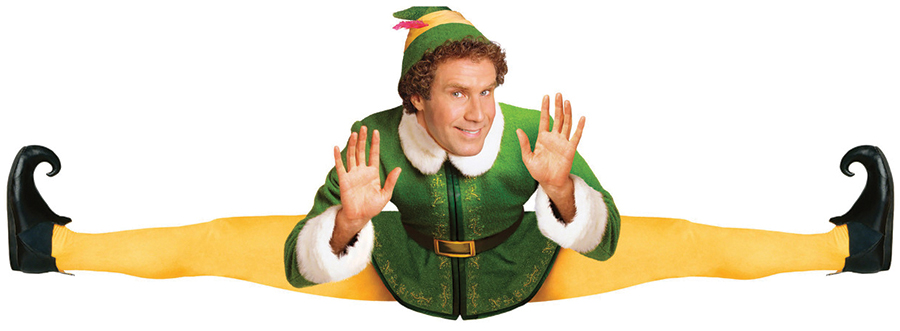
The Arc of Moore County’s fifth annual Christmas Movie and Snow Spectacular is Saturday, Dec. 17, beginning 11 a.m. at the Sunrise Theater, 250 N.W. Broad Street, Southern Pines. There will be caroling, a visit from Santa, a screening of Elf at 11:30 a.m. and refreshments, too. A winter festival on the green (white) space — covered with snow for sledding — will follow the movie. A bouncy house, face painting, live entertainment and food trucks Stacks Cheddar, Dawg Wagon and Ouida’s Wildfire Pizza will make it a fun day for the whole family. Tickets are $10 with all proceeds benefiting individuals with intellectual and developmental disabilities. Access to the green space activities only is $5. For tickets and more information, visit www.thearcofmoore.org or The Arc of Moore County, 673 S. Bennett St., Southern Pines, or call (910) 692-8272. Tickets will be available at the event but seating at the Sunrise Theater is limited, so booking in advance is recommended.

ps-pinepitch1-12-16

Holidays at The Rooster’s Wife

Dec. 2: Jeanne Jolly and the Mistletoes in the Jolly Holiday Review bring a big voice to the season with the band to match. There will be mistletoe, and a special holiday cocktail from Reverie’s Tony Cross.

Dec. 4: Jonathan Byrd and Corin Raymond put the low in loneliness, and the high in hijinks with their unforgettable stories, poetry and guitar slinging.

Dec. 11: A new album brings jazz wonder Peter Lamb and his Wolves to Aberdeen. Horns, vocals, keys and more horns! Full band show for your holiday pleasure.

Dec.31: Perennial favorites and two-time International Bluegrass Music Association performers of the year, the Gibson Brothers, end the year with a matinee and full-blown New Year’s Eve party. The afternoon show begins at 2:46 p.m. The New Year’s festivities begin at 8:46 p.m., with a break for Champagne and tasty treats from Thyme and Place. Hold onto your party hat, as the Brothers are joined for an all-star jam with Hank and Pattie, Laurelyn Dossett, Alex McKinney, Alex Bingham to ring in 2017.

Elvis Christmas

Vision 4 Moore presents “An Elvis Christmas Special” featuring Todd Allen Herendeen, whose drive, dynamic voice and excellent showmanship have earned him wide acclaim, including the No. 1 hit “My Name is America” during his 15 years of performing professionally. Join him on Sunday, Dec. 18 at the Robert E. Lee Auditorium at Pinecrest High School, 250 Voit Gilmore Lane, Southern Pines. Music begins at 2 p.m. General admission tickets are $20, reserved seating section $30. Group rates are available for 10 or more. Purchase your tickets in advance at The Country Bookshop, Southern Pines; Sandhills Winery, West End; or Given Memorial Library, Pinehurst; or by credit card on our website, www.vision4moore.com (no additional fees added). For additional questions call (910) 365-9890 or email info@vision4moore.com.

First Eve

Bring friends and family to celebrate the New Year with music, games, activities and entertainment — then a countdown to the Pinecone Drop — on Dec. 31 (naturally) from 6-to-8 p.m., downtown Southern Pines, at the train station. No possums will be endangered

Reindeer Fun Run

A community event for everyone from serious runners to recreational walkers, families and pets. The 5k Reindeer Fun Run/Walk beginning at 9:30 a.m. curves through Aberdeen’s historic downtown neighborhoods with rolling hills and wide turns. The 12ks of Christmas Run beginning at 9 a.m. incorporates the 5k route along with a scenic tour of Bethesda and the Malcolm Blue Farm. Both courses finish on a sloping downhill toward downtown and the historic Union Station. For kids, the 1/2 Mile Egg Nog Jog & Kids Zone at 10:30 a.m. is a holiday must and fan favorite. Costume judging begins at 9:30 a.m. Awards presentation begins at 11 a.m. All proceeds go to the Boys & Girls Club of the Sandhills. Register at http://reindeerfunrun.com.

Murphy Family Encore

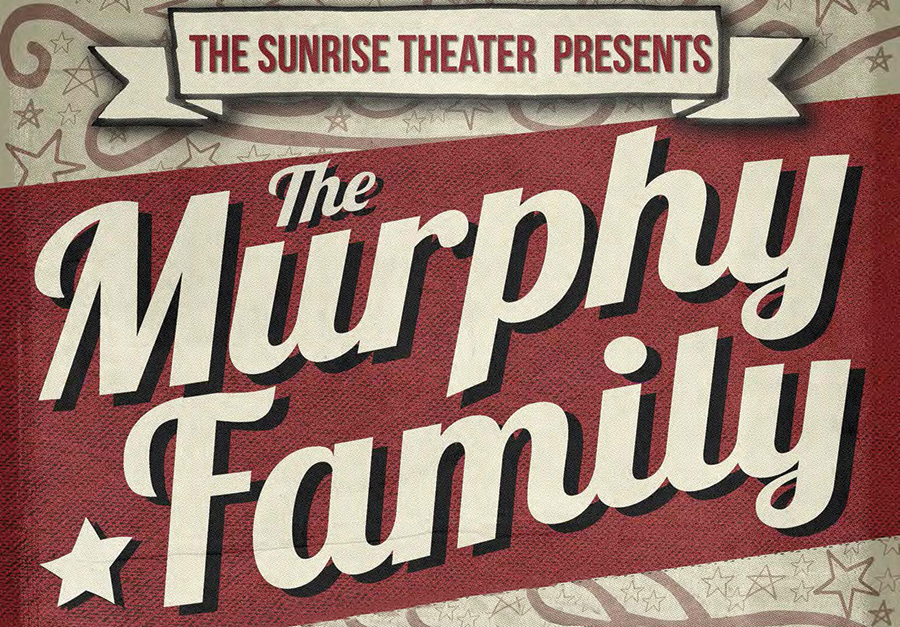
The annual Murphy Family Christmas Concert is Dec. 4 at 3 p.m. Doors open at 2:15 p.m. General admission tickets are $15 and VIP tickets are $20. Proceeds benefit the Sunrise Theater. The family will be performing American popular standards, jazz, alternative rock, gospel-influenced Christmas arrangements, traditional carols, and Brazilian bossa nova and samba.

ps-pinepitch2-12-16

Christmas at Shaw House

Enjoy period decorations, warm apple cider and homemade cookies at the annual Christmas Open House at the historic Shaw House, Friday, Dec. 9, through Sunday, Dec.11, from 1 to 4 p.m. Tour three house museums built between the 1700s and 1800s to see how early Southern Pines and Sandhills residents lived. Admission is free. Shaw House is located at 110 W. Morganton Road and South West Broad Street in Southern Pines. For information, call (910) 692-2051, email info@moorehistory.com, or visit www.moorehistory.com.

Open House at Bryant House

Get into the old-time Christmas spirit with the annual open house at the historic Bryant House and McLendon Cabin, from 1 to 4 p.m. Saturday, Dec. 4. The Moore County Historical Association and Friends of the Bryant House host the event free of charge so every Yule visitor can get a little taste of how early settlers celebrated Christmas. Decorations are based on old-timey materials and traditions. There will be refreshments, live music, a historical interpretation and tours. The Bryant House and McLendon Cabin are at 3361 Mount Carmel Road, in Carthage. Built in the 1760s, the cabin is the county’s oldest dwelling remaining on its original site. Next door on the same lot is the Bryant House, a bigger dwelling dating back to the 1820s. For information, call (910) 692-2051, email info@moorehistory.com, or visit www.moorehistory.com.

Sound of Sandhills

Classical guitarist Dr. Adam Kossler performs Thursday, Dec. 1, at 7 p.m., at Sandhills Community College, Owens Auditorium. Kossler has been a top prize-winner in a number of international guitar competitions, including the Boston Guitarfest, Columbus Guitar Symposium, East Carolina Guitar Competition, Music Academy of North Carolina Guitar Competition, Texas International Guitar Competition, Music Teacher National Association Competition, and the Appalachian Guitarfest Competition. Kossler performs regularly as a solo artist, as a member of the NOVA Guitar Quartet, and with the Kossler Guitar Trio alongside his father, Bill, and brother John. He has been featured on several prestigious concert series, including the John E. Marlow Guitar Series (Bethesda, Maryland), Isle Newell Concert Series (Appalachicola, Florida), and the Seven Hills Guitar Series (Tallahassee, Florida). Admission is free.